Your hotline vendor lives in one place. Policy attestations sit in a shared drive. Disclosures pile up in an inbox. Investigations run on a spreadsheet that only one person understands. When the board asks how the compliance program is actually performing, you spend two days stitching numbers together instead of answering in two minutes.
That fragmentation is not a minor annoyance. It is audit exposure. When regulators or an acquirer come asking whether your program works, disconnected systems produce a disconnected story, and a disconnected story reads as weak controls.
The market has matured to fix exactly this. The broader compliance software market is expected to grow from roughly USD 40.82 billion in 2026 to USD 74.12 billion by 2031, a 12.67% CAGR, with cloud deployments already holding over 69% of share, according to Mordor Intelligence (2024). Adoption of specific capabilities is nearly universal too: a 2024 EQS survey found 96% of European companies now run whistleblowing systems. The category is no longer optional infrastructure.
This guide compares the eight platforms serious buyers shortlist most often. If your team is evaluating adjacent operational tooling too, our roundups of contract lifecycle management software and audit management software pair naturally with a compliance stack. For the ethics and compliance platform itself, keep reading.
What's inside
This is a buyer's guide to centralized ethics and compliance software: tools that consolidate hotline intake, case management, policy workflows, disclosures, screening, reporting, and risk oversight into one system. It is written for founders and compliance leaders who want a single source of truth, not another silo.
We selected platforms on four criteria: breadth of workflow coverage, depth of compliance workflow automation, audit readiness (including a defensible audit trail), and implementation fit for teams that want to scale without adding headcount. Every vendor here occupies the ethics and compliance software category directly and appears on real buyer shortlists.
TL;DR
- Best overall for a human-centered compliance operating system: Ethico.
- Best for global programs needing whistleblowing plus policy and approvals: EQS.
- Best for integrated ethics, ABAC, and third-party risk management: GAN Integrity.
- Best for case management, intake, and disclosures in one place: Case IQ.
- Best for no-code GRC configuration and control libraries: Onspring.
- Best for enterprise risk and governance scale: Diligent.
- Best for broad governance and trust workflows across the enterprise: OneTrust.
- Best for an established, modular compliance suite: NAVEX.
What ethics and compliance software is
Ethics and compliance software is a category of corporate compliance solutions that centralizes how an organization intakes concerns, investigates issues, manages policies, tracks disclosures, screens third parties, and reports on program effectiveness. It replaces scattered spreadsheets, email chains, and standalone hotline services with one auditable system of record.
Buyers moving from manual processes to an ethics and compliance management software platform typically expect the following core capabilities:
- Hotline and intake: multichannel reporting including web, phone, and mobile, with anonymous reporting support.
- Case management software: structured investigation workflows from intake to resolution, with role-based access and a defensible audit trail.
- Policy management software: version control, distribution, and policy attestations so you can prove who acknowledged what and when.
- Disclosure management: conflicts of interest, gifts, entertainment, and approval routing.
- Screening and monitoring: sanctions, credential, and third-party checks with continuous third-party risk management.
- Benchmarking and dashboards: real-time analytics, risk assessment, and board-ready reporting.
Why it matters now
The cost of fragmentation is not abstract. When intake, investigations, and reporting live in different systems, cases slip, deadlines get missed, and nobody can produce a clean timeline on demand. That is the exact scenario DOJ compliance evaluation criteria probe: prosecutors ask whether a program is well designed, adequately resourced, and working in practice. A defensible, connected workflow trail is how you answer yes.
There is also a scale problem. Regulatory demand keeps climbing, and global regulatory compliance management software is forecast to rise from USD 5.8 billion in 2025 to USD 14.2 billion by 2034, a 10.8% CAGR, per Dataintelo (2024). Buyers want to meet that demand with better systems, not more staff. If your program is heavy on policy and contract obligations, pairing this stack with contract management software closes another common gap.
When to use ethics and compliance software
Replace spreadsheets and email-based compliance tracking
Manual routing works until it doesn't. Once you handle more than a handful of cases a quarter, spreadsheet tracking breaks: version conflicts, missed follow-ups, and no reliable record of who did what. A dedicated ethics and compliance platform enforces consistent handling and produces the timeline you need when someone asks.
Centralize hotline, disclosures, and case handling
If reporters use one channel, disclosures live in another, and investigators work in a third, context is lost at every handoff. Centralizing confidential reporting, conflict disclosures, and investigation follow-up in one place keeps the full lifecycle intact and searchable.
Build board-ready compliance reporting
Boards and auditors want trend lines, not anecdotes. Real-time dashboards, benchmarking and dashboards, and an immutable audit trail let you show program effectiveness on demand instead of assembling it under deadline pressure. Teams standardizing broader monitoring often look at application performance monitoring tools and best AI cybersecurity solutions alongside compliance reporting.
Comparison table
Here is the decision-oriented view. Pricing across this category is quote-based, so treat published tier names as directional and confirm figures with each vendor.
| # | Product | Intent | Key differentiation | Pricing | G2 rating |
|---|---|---|---|---|---|
| 1 | Ethico | Human-centered ethics and compliance platform | Integrated intake, cases, screening, and services | Tailored quote | 4.8/5 |
| 2 | EQS | Global compliance and governance suite | Whistleblowing plus policy, approvals, and third parties | Request pricing | 4.5/5 |
| 3 | GAN Integrity | Integrated ethics and third-party risk | ABAC, conflicts, and due diligence in one platform | Contact sales | 4.4/5 |
| 4 | Case IQ | Investigative case management | Configurable workflows and audit trails | Quote-based | 4.5/5 |
| 5 | Onspring | No-code GRC automation | Configurable apps across compliance and risk | Quote-based (tiered) | 4.7/5 |
| 6 | Diligent | Enterprise GRC and board governance | Unified board management and GRC | Request pricing | 4.4/5 |
| 7 | OneTrust | Enterprise trust and governance | Privacy, AI, and third-party governance in one | Usage-based quote | 4.4/5 |
| 8 | NAVEX | Established compliance suite | Hotline, policy, training, and risk modules | Request pricing | 3.7/5 |
1. Ethico
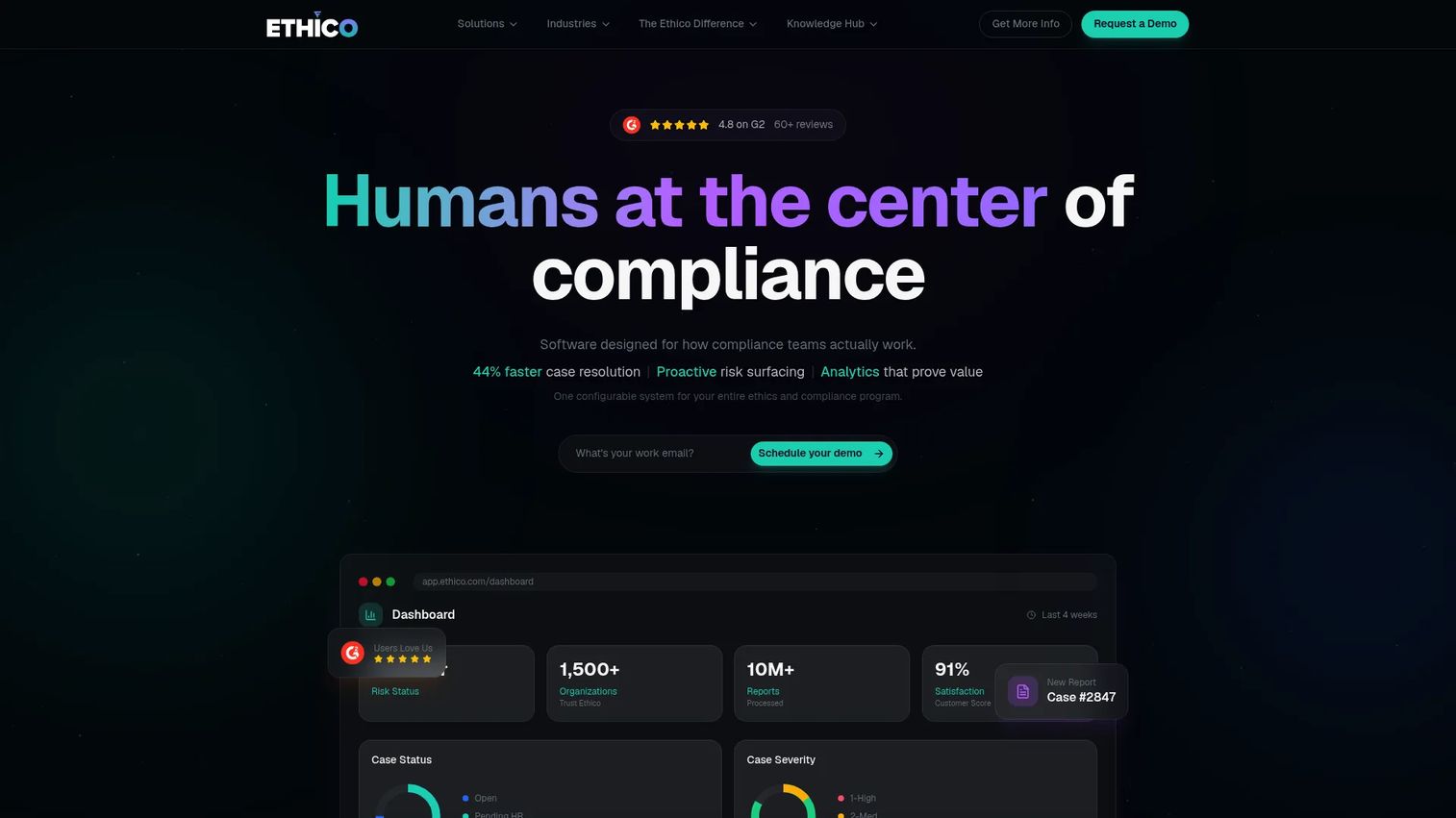
Ethico frames its platform around putting humans at the center of compliance, and that shows up in how tightly reporting, investigations, and services connect. It combines hotline and intake, case management, screening, disclosures, and analytics into a single ethics and compliance management software system, backed by a services team that helps run the program rather than just hand you a login.
Best for: mid-market to enterprise compliance teams that want an integrated platform plus hands-on service support.
Key strengths
- Case management and investigations: guides each matter from intake to resolution with a clean audit trail and role-based access.
- Multichannel and mobile intake: hotline, digital, and mobile reporting channels with strong anonymous reporting support.
- Sanction and credential screening: continuous screening and monitoring to catch third-party and workforce risk early.
Why choose Ethico: if your team is small relative to your caseload, Ethico's blend of software plus managed services reduces the amount of program you have to run alone. It fits founders who want fast implementation and a partner that answers quickly, not a self-serve tool you configure in isolation.
Ethico pricing: Ethico does not publish list pricing. Quotes are tailored to organization-specific factors like size and program scope, so plan to request a proposal. It holds a 4.8/5 rating on G2.
2. EQS
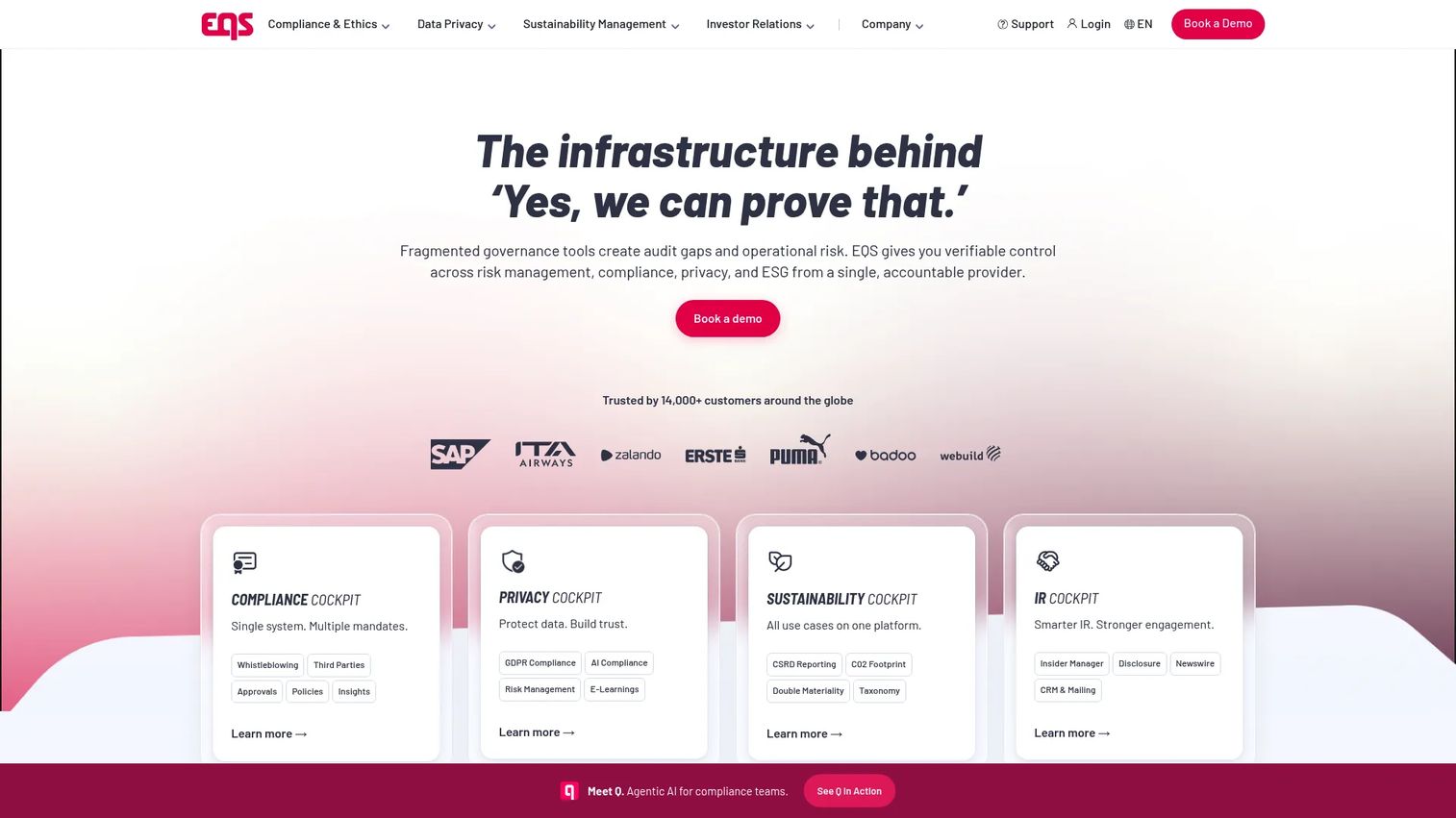
EQS positions its compliance cockpit as a single place to run whistleblowing, policies, approvals, and third-party workflows across a distributed organization. Its Integrity Line is a widely deployed whistleblowing software offering, and the platform layers policy management software, disclosure management, and third-party risk management on top for programs that span multiple jurisdictions.
Best for: global compliance teams that need secure whistleblowing plus policy attestations and approvals in one suite.
Key strengths
- Whistleblowing and case management: secure, multilingual intake with structured investigation handling and evidentiary rigor.
- Third-party screening and due diligence: built-in screening and monitoring for vendors and partners.
- Policy and approvals with AI assistance: distribute policies, capture policy attestations, and route approvals with AI-assisted workflows.
Why choose EQS: for programs operating across many countries and languages, EQS is built for scale and secure evidence capture that aligns with DOJ compliance evaluation criteria. It fits teams that need distributed reporting without losing a defensible central record.
EQS pricing: EQS does not list public prices; its pages route to a demo and pricing request. It carries a 4.5/5 rating on G2.
3. GAN Integrity
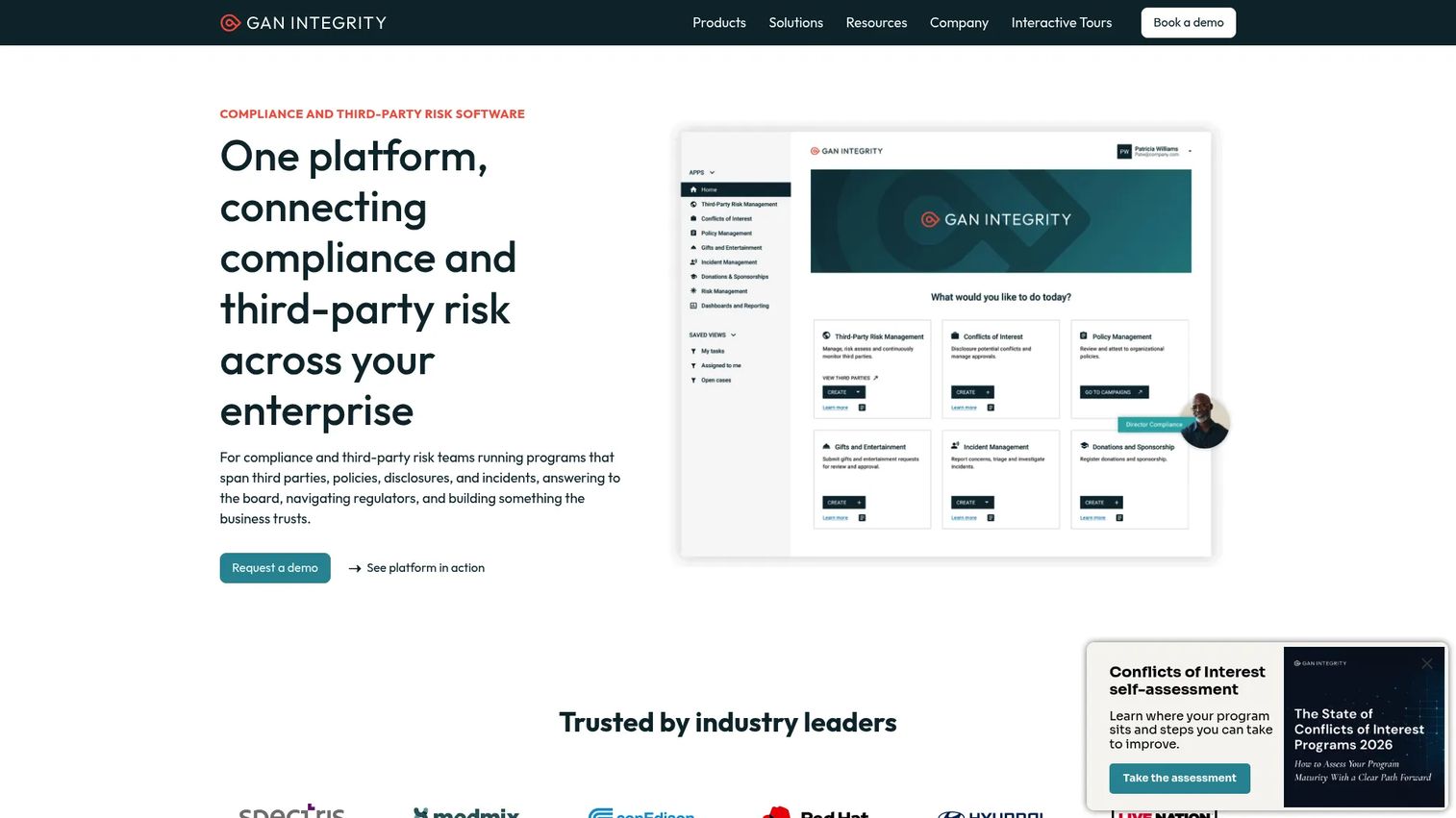
GAN Integrity brings ethics, compliance, and third-party risk management together in one integrity platform. It covers anti-bribery and corruption (ABAC), conflicts of interest, gifts and entertainment, supply chain due diligence, and policy management software in a connected system built for multi-jurisdictional risk.
Best for: enterprise compliance teams managing cross-border risk and rising ESG and supply chain scrutiny.
Key strengths
- Third-party risk management: onboarding, screening, and ongoing monitoring of vendors and partners in one place.
- Integrity due diligence: structured investigation and vetting workflows for higher-risk relationships.
- Conflicts of interest management: disclosure capture and review routing that keeps the full history auditable.
Why choose GAN Integrity: if your risk profile is concentrated in third parties and cross-border operations, GAN's integrated design means screening, due diligence, and disclosures share one data model instead of living in separate tools. That connection is what makes program-wide risk assessment defensible.
GAN Integrity pricing: GAN Integrity is demo-led and does not publish pricing publicly. Expect a sales conversation to scope a quote. It holds a 4.4/5 rating on G2.
4. Case IQ
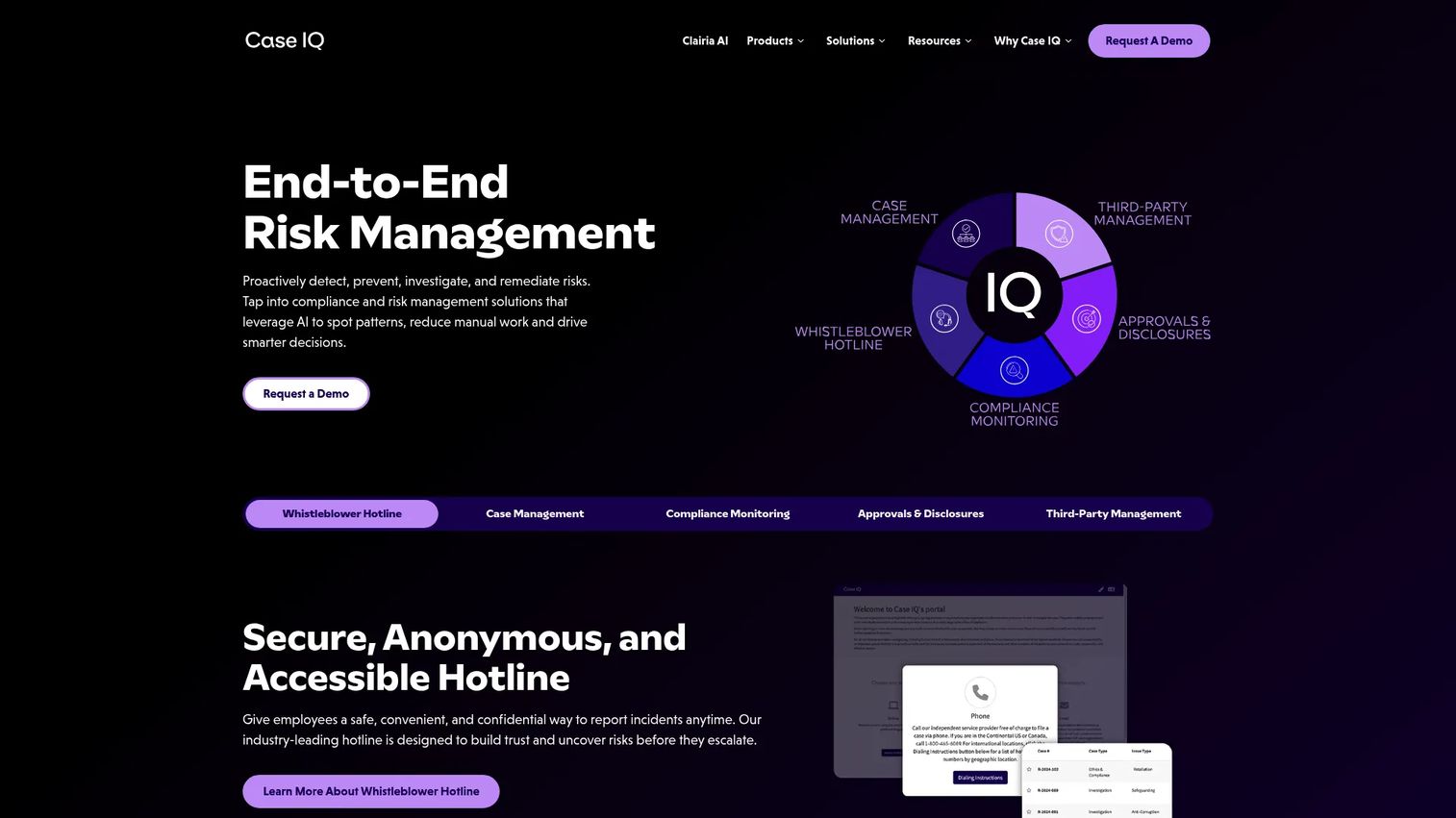
Case IQ is built around the investigation lifecycle. Its case management software handles multichannel intake, anonymous reporting, approvals and disclosure management, compliance monitoring, and third-party management, with configurable workflows that adapt to how your team actually investigates.
Best for: mid-sized to enterprise teams that want strong incident and investigation lifecycle management.
Key strengths
- Multichannel intake with anonymous reporting: capture concerns through multiple channels while protecting reporter identity.
- Configurable case workflows and audit trails: tailor investigation steps and keep a defensible audit trail on every action.
- Dashboards, reporting, and analytics: surface trends and produce the reporting boards and regulators ask for.
Why choose Case IQ: if investigations are the heart of your program, Case IQ's configurability lets you match the tool to your process instead of the reverse. It serves organizations across financial services, healthcare, education, energy, and government that need rigorous, repeatable case handling.
Case IQ pricing: Case IQ pricing is quote-based with no public price page. It carries a 4.5/5 rating on G2.
5. Onspring
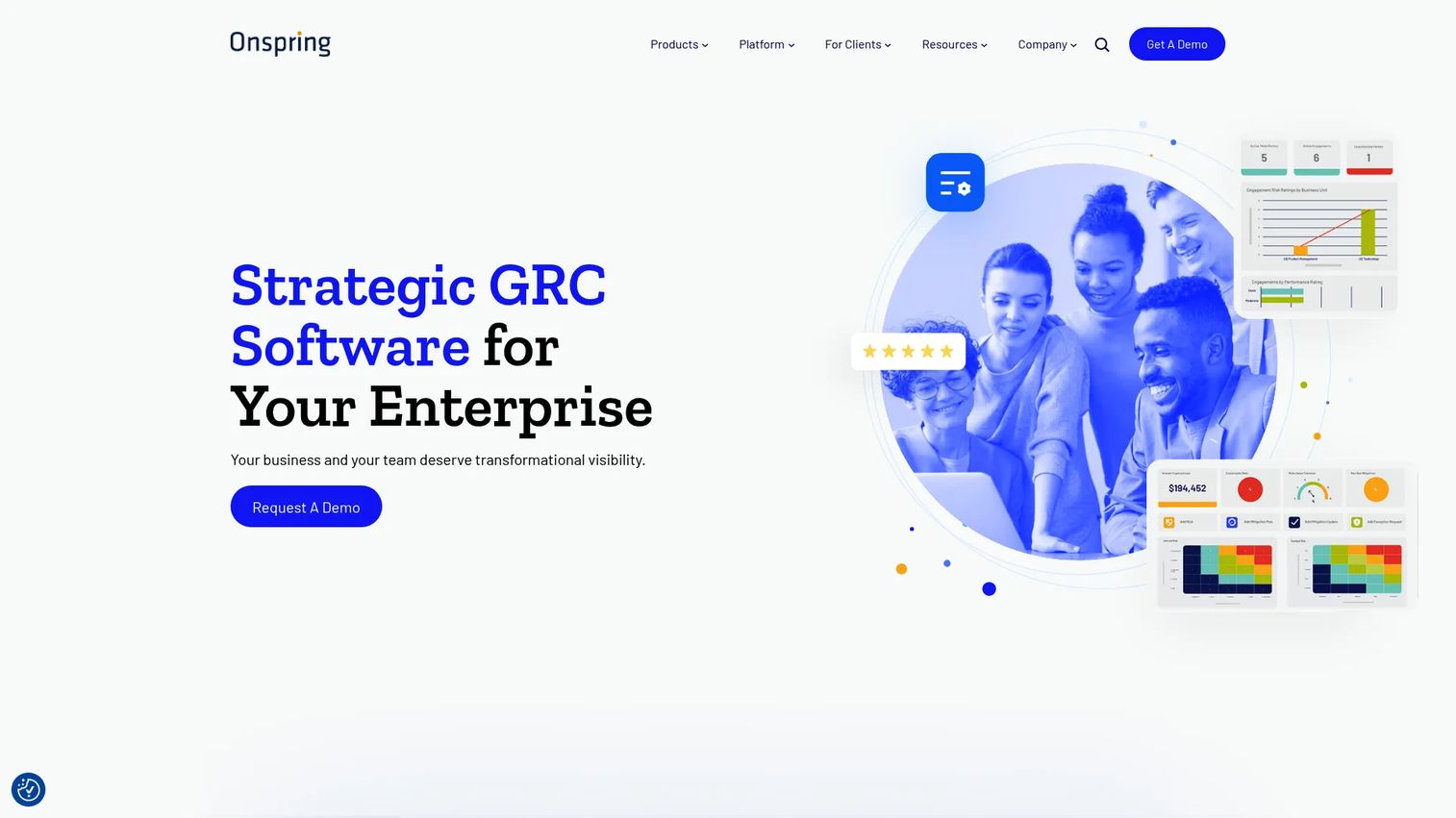
Onspring is a no-code GRC software platform that lets teams build and automate their own compliance processes without engineering support. It handles compliance tests, policy attestations, risk registers, dashboards, and automated alerts, with the flexibility to extend into adjacent risk workflows as your program grows.
Best for: teams that need highly configurable compliance and risk operations across multiple functions.
Key strengths
- No-code workflow and application building: design and adjust compliance apps yourself, without waiting on developers.
- Automated messaging and alerts: keep tasks, attestations, and reviews moving with compliance workflow automation.
- Analytics and reporting: build the dashboards and risk assessment views your program needs.
Why choose Onspring: if your compliance architecture is unusual or spans several risk domains, Onspring's configurability is the draw. It licenses users, products, and platform levels (Bronze, Silver, Gold, Platinum) separately, which suits teams that want to shape the system around their operations rather than adapt to a fixed template.
Onspring pricing: Onspring uses quote-based pricing with published plan tiers but no public dollar figures; licensing models cover by users, by products, or hybrid. It holds a 4.7/5 rating on G2.
6. Diligent
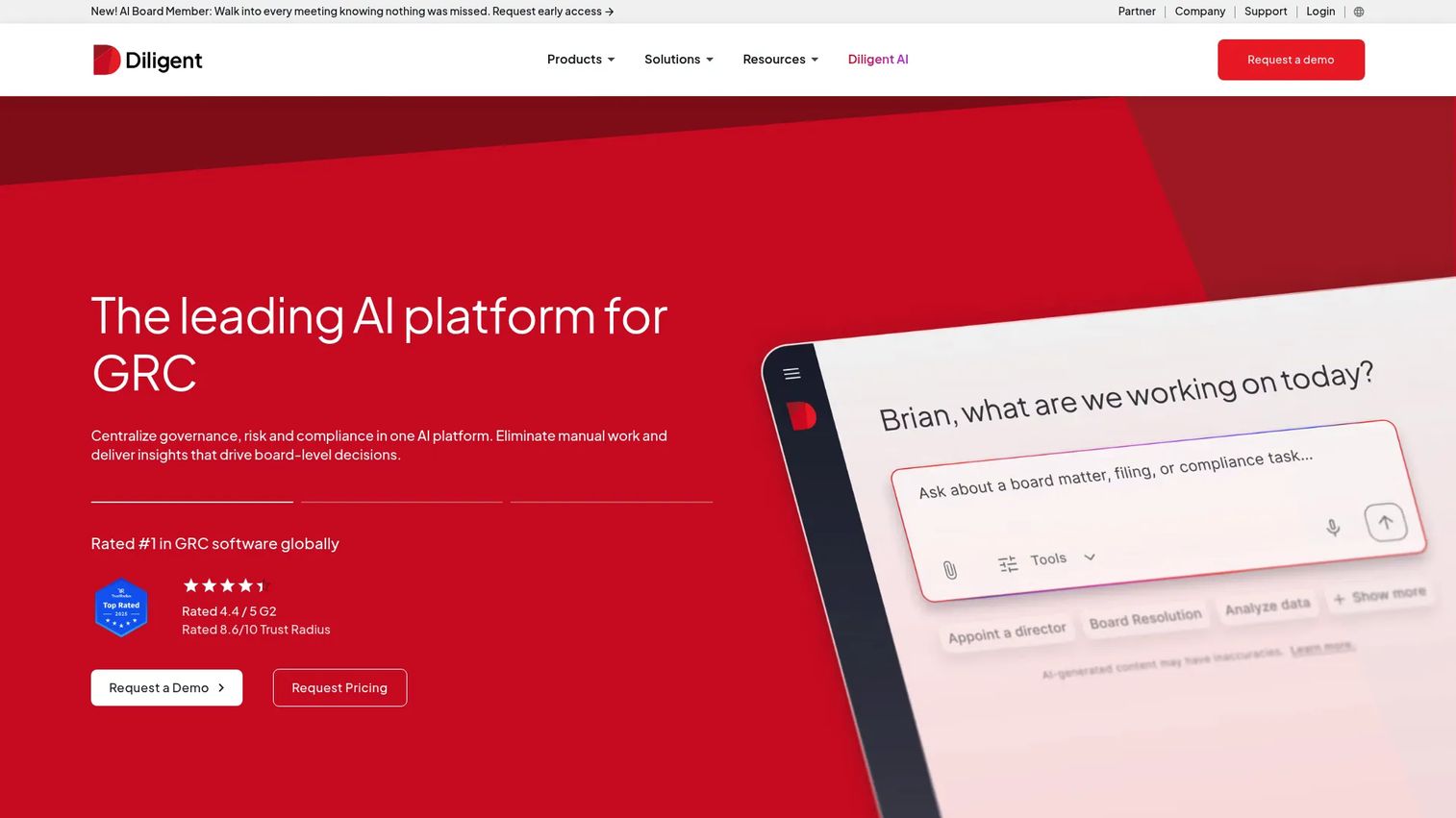
Diligent pairs governance, risk, and compliance with board management in one platform. For larger organizations, that means compliance workflows sit alongside board reporting, secure documents, and executive oversight, giving leadership a connected view of risk and regulatory compliance management across the enterprise.
Best for: boards and governance teams that need unified GRC and board management at enterprise scale.
Key strengths
- AI-powered board management: meeting prep, secure documents, voting, and reporting in one governed environment.
- Governance, risk, and compliance platform: connect compliance data to board-level oversight and remediation.
- Secure collaboration: messaging, document control, and reporting built for sensitive governance work.
Why choose Diligent: if your compliance program reports up to a board that wants a single governance view, Diligent's breadth links day-to-day compliance to executive oversight. It fits larger organizations where governance visibility matters as much as case handling.
Diligent pricing: Diligent does not expose public numeric pricing; its pricing page routes to a request. It carries a 4.4/5 rating on G2.
7. OneTrust
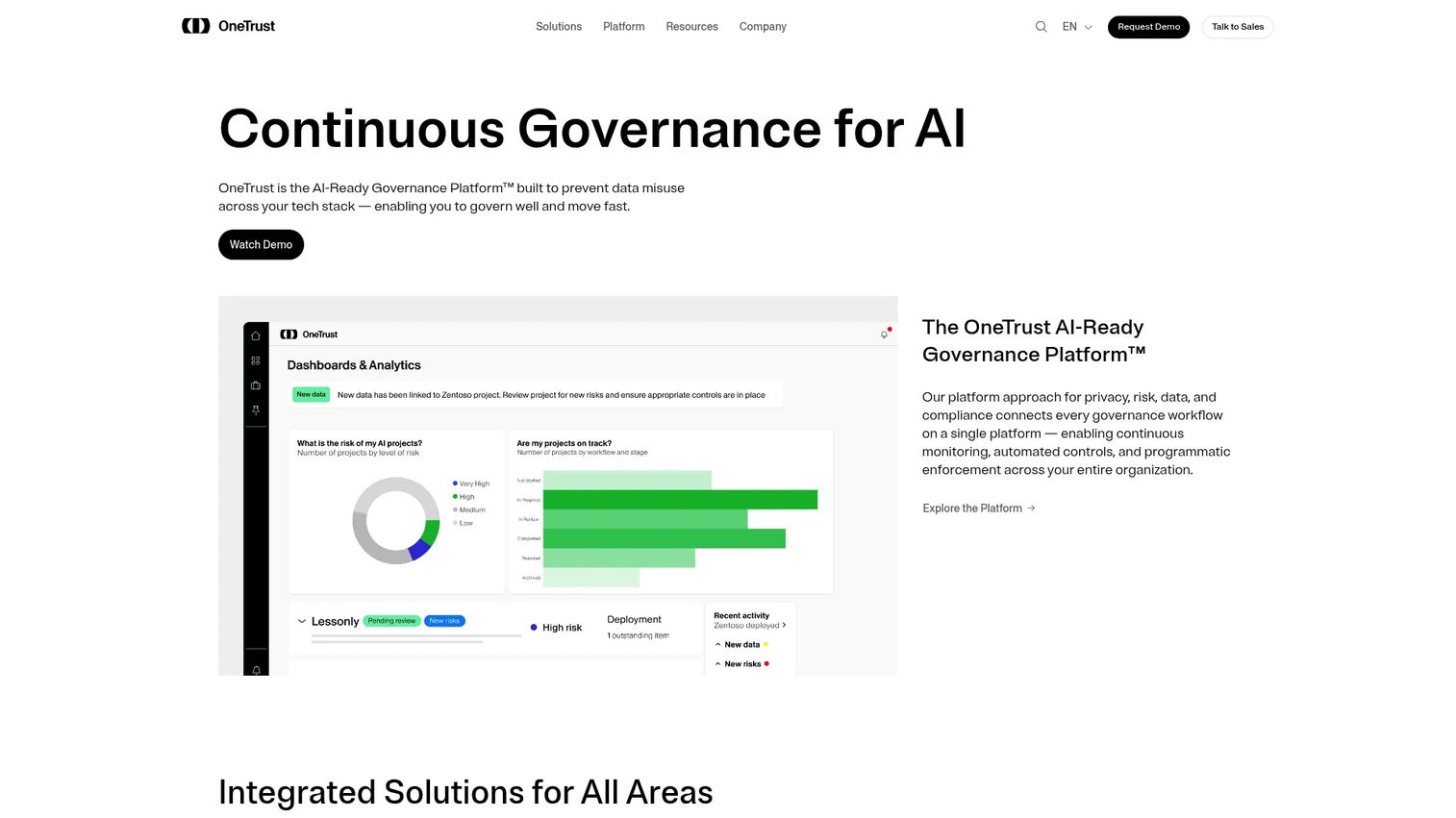
OneTrust is an enterprise governance platform spanning privacy, AI governance, third-party management, and tech risk and compliance. Its ethics and compliance capabilities sit inside a larger trust infrastructure, which makes it a strong fit for companies that want disclosure management, screening and monitoring, and policy governance under the same roof as privacy and data programs.
Best for: enterprises that want privacy, AI, and third-party risk governance unified in one platform.
Key strengths
- AI governance: manage AI risk and inventory alongside traditional compliance obligations.
- Privacy automation: connect data privacy workflows to broader governance and compliance.
- Third-party management: onboarding, due diligence, and ongoing third-party risk management at enterprise scale.
Why choose OneTrust: if your organization is already standardizing on OneTrust for privacy or AI governance, extending into ethics and compliance keeps everything on one platform. It fits companies whose compliance needs are one part of a broader governance mandate.
OneTrust pricing: OneTrust uses customized, usage-based pricing metered on admin users and inventory size, with quotes provided after contact. Its solution packages cover AI Governance, Privacy Automation, Tech Risk & Compliance, and Third-Party Risk Management. It holds a 4.4/5 rating on G2.
8. NAVEX
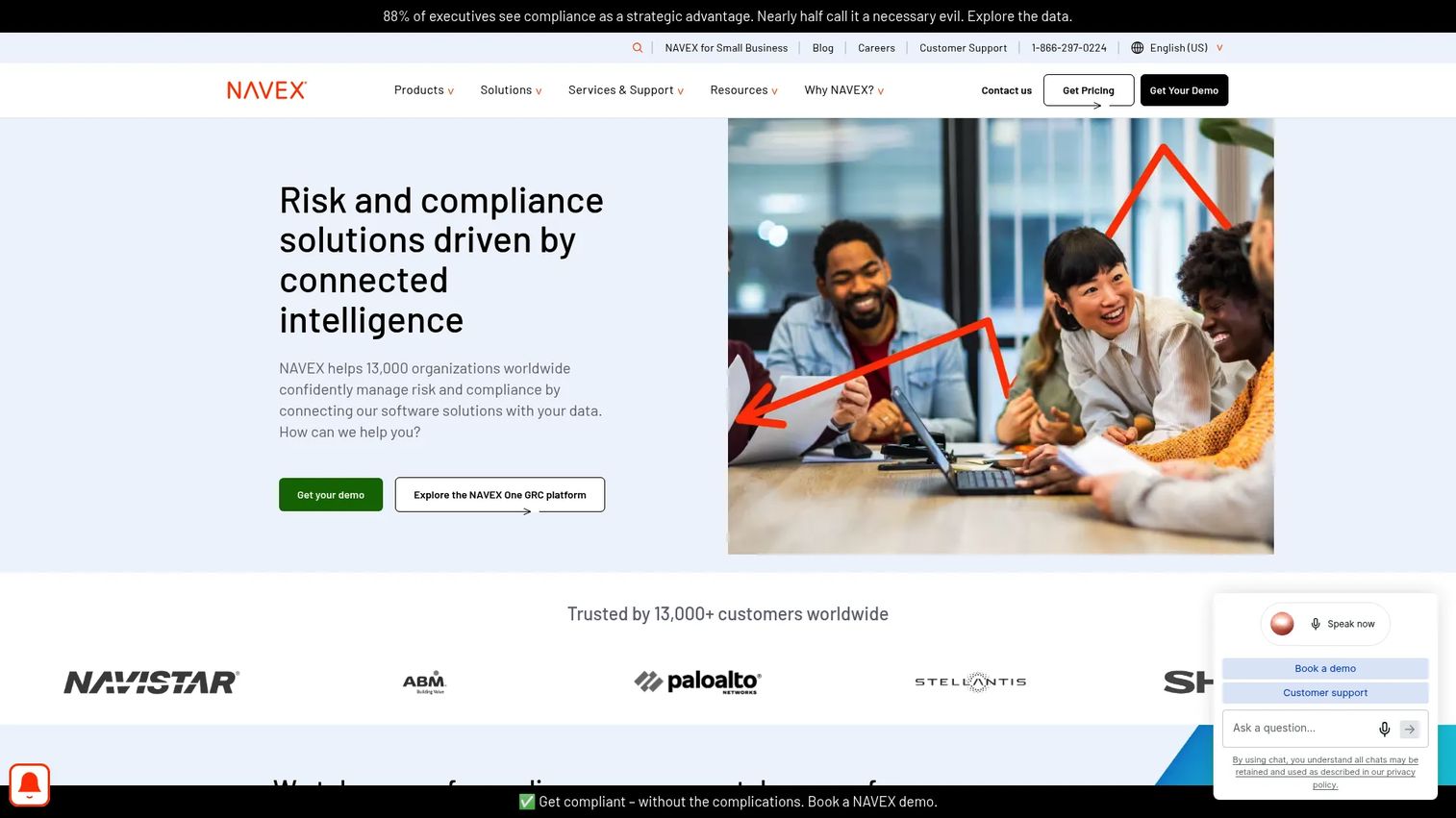
NAVEX is one of the longest-standing names in ethics and compliance, offering an AI-powered platform that spans whistleblowing, incident management, policy, training, and risk governance. Its modular packaging lets teams assemble the pieces they need, from hotline and intake through policy attestations and enterprise risk workflows.
Best for: mid-market to enterprise teams that want a broad, established compliance suite.
Key strengths
- AI-powered risk and compliance automation: streamline intake, triage, and reporting with compliance workflow automation.
- Whistleblowing and incident management: capture and investigate concerns across the organization.
- Policy, training, and risk governance: distribute policies, run ethics training, and track attestations in one suite.
Why choose NAVEX: if you want a category incumbent with wide module coverage and the option to add capabilities over time, NAVEX's breadth and long track record are the appeal. It fits teams that value an established, modular suite over a newer point solution.
NAVEX pricing: NAVEX tailors pricing to organization size, program needs, and selected solutions, and directs buyers to request a quote. It carries a 3.7/5 rating on G2.
How to choose the right platform
The category splits into three buyer types, and knowing which you are narrows the field fast.
Match the tool to your primary workflow
If your program lives or dies on investigations, prioritize a case-first platform like Case IQ or Ethico. If policy, approvals, and disclosures dominate, a suite like EQS or NAVEX fits better. If third-party risk is your biggest exposure, GAN Integrity or OneTrust lead there. Buy for the workflow you run most, not the longest feature list.
Weigh implementation effort honestly
A platform you cannot get live in a quarter is a platform that delays your program. Ask each vendor for a realistic timeline, what your team owns versus what they handle, and whether managed services are available. For lean teams, service-heavy options like Ethico reduce the internal lift; for teams that want to build their own logic, Onspring's no-code approach fits.
Confirm the audit trail is defensible
Every vendor claims an audit trail. Verify it. You need immutable records, timestamped actions, and reporting that maps to DOJ compliance evaluation criteria so you can prove the program works, not just that it exists.
Check reporting and benchmarking depth
Board-ready reporting is not a nice-to-have. Confirm the platform produces the dashboards, trends, and benchmarking and dashboards your leadership expects, and that you can export clean data for auditors and acquirers.
Conclusion
The right ethics and compliance platform depends on where your risk concentrates. Hotline-first and case-first buyers should shortlist Ethico and Case IQ. Platform-first buyers who need whistleblowing plus policy and approvals across borders should look at EQS and NAVEX. Broad GRC-first buyers who want governance, third-party risk, and privacy in one place should evaluate GAN Integrity, Onspring, Diligent, and OneTrust.
The practical next step is simple: pick your dominant workflow, shortlist two or three tools that lead in that area, then run each through the same implementation and reporting questions. The goal is one auditable source of truth for ethics compliance software, so the day the board or a regulator asks how your program is doing, you answer in minutes instead of days.
FAQs
Ethics compliance software centralizes hotline intake, case management, policy administration, disclosures, screening, and reporting into one auditable system. It replaces disconnected spreadsheets, email chains, and standalone hotline vendors so a compliance team can run and prove its program from a single source of truth.
At minimum: multichannel hotline and anonymous reporting, case management with a defensible audit trail, policy management with attestations, disclosure and approval workflows, screening and monitoring, and dashboards for board-ready reporting. The strongest platforms connect these so data flows between them instead of sitting in separate modules.
Whistleblowing software focuses on the intake side: secure, often anonymous channels for reporting concerns. Case management software handles what happens next: investigation workflows, evidence, approvals, and resolution. Most modern platforms combine both, so a report flows directly into a structured case without manual re-entry.
Look for immutable, timestamped records of every action, role-based access controls, and reporting that maps to DOJ compliance evaluation criteria. The test is whether you can produce a clean, defensible timeline of any case on demand, plus trend dashboards that show program effectiveness over time.
Yes. GRC software covers governance, risk, and compliance broadly, including enterprise risk, internal audit, and controls. Ethics and compliance software is a focused slice centered on hotline, cases, policy, disclosures, and screening. Broader platforms like Diligent, Onspring, and OneTrust span GRC, while tools like Ethico and Case IQ concentrate on the ethics and compliance workflow.
The core four are intake (hotline and reporting), investigation (case management), policy (distribution and attestations), and disclosure or approval routing. Screening and monitoring plus reporting sit alongside them. Centralizing these first delivers the biggest reduction in manual work and audit exposure.
Ask for a realistic go-live timeline, a clear split of what your team owns versus what the vendor handles, and whether managed services are available. Lean teams often favor service-heavy options; teams that want to shape their own logic favor no-code configuration. The right answer depends on internal bandwidth, not just the feature set.
Multilingual intake, secure and jurisdiction-aware data handling, distributed reporting that still rolls up to one central record, and evidentiary rigor aligned with regulatory expectations. For programs spanning many countries, the ability to keep a consistent, defensible audit trail across regions matters more than any single feature.