It's 7:40 on a Friday. The waitlist is 45 minutes deep, three call-aheads just walked in early, and the floor plan on your host stand stopped matching reality twenty minutes ago. Table 12 shows "occupied" but the party left. Table 7 shows "open" but the server hasn't cleared it. Two hosts are arguing over who gets the next four-top.
That gap between what the screen says and what's actually happening on the floor is where covers get lost. Every minute a clean table sits marked wrong is a minute you can't sell.
Most operators think they're buying "software." They're not. They're buying fewer bottlenecks at the door, fewer mis-seated parties, and faster table turns during the exact 90 minutes that make or break a service. The global table management software market is projected to reach $4.0 billion by 2026, growing at a 15.2% CAGR, according to Data Insights Reports (2024). That growth tracks with a simple operational truth: guests expect to be seated fast, and manual host-stand math no longer keeps up.
This guide ranks eight restaurant table management systems on the criteria that actually move service: floor plan control, reservation integration, waitlist management, guest profiles, and reporting that holds up across one location or fifty.
What's inside
This guide is for restaurant operators, owners, and hospitality managers comparing systems that handle reservations, seating, waitlists, and guest flow. We evaluated each tool on the factors that matter at the host stand and in the back office.
- Floor plan management: drag-and-drop layouts, table combining, and live table status tracking
- Reservation and waitlist handling: online bookings, walk-ins, call-aheads, and no-show tools
- Guest profiles: visit history, preferences, VIP tags, and notes
- Reporting and analytics: turn time, covers, table utilization, and idle time
- Fit by scale: single independents through multi-location groups
No fluff, no feature dumps that don't map to guest flow.
TL;DR
- Best overall for enterprise and multi-location groups: Infor Table Reservations Solution (TRS)
- Best for guest data and shift operations: Eat App
- Best for high-volume mainstream restaurants: OpenTable
- Best for upscale dining and strong guest profiles: Resy
- Best for loyalty-rich, hospitality-heavy operations: SevenRooms
- Best for European restaurant groups: TheFork Manager
- Best for simpler independent restaurant workflows: Resos
- Best for budget-conscious independents: Tablein
Every pick here handles reservations, seating, and waitlist management. The difference is how much guest data you want to manage, and how many locations you're running booking software for restaurants across.
What is table management software?
Table management software is a restaurant table management system that controls how guests move from the door to the table, tracking reservations, walk-ins, waitlists, seating, and table status in one live view.
At its core, it replaces the paper reservation book and the mental math a host does during a rush. It answers three questions in real time: which tables are open, which are about to turn, and which party goes where next.
The essential capabilities cover:
- Floor plan management: visual, drag-and-drop layouts that mirror your actual dining room, with table combining for large parties
- Table status tracking: color-coded states (seated, ordered, check dropped, needs bussing) so hosts see the room at a glance
- Reservation and waitlist management: online bookings, walk-in queues, call-aheads, and accurate quoted wait times
- Guest profiles: visit history, allergies, seating preferences, and VIP flags
- Seating optimization: logic that assigns parties to the right table and balances server sections
- Reporting: turn time, covers, table utilization, and no-show trends
One distinction worth drawing early: restaurant reservation software and a table management system overlap but aren't identical. Reservation software focuses on getting the booking. A full table management layer focuses on what happens after the booking lands, seating the party, tracking the table, and turning it cleanly. The strongest platforms do both.
When to use table management software
Reduce wait times at peak service
The value of a table management system shows up during the dinner rush, not at 3 p.m. When walk-ins, call-aheads, and reservations all hit at once, floor control and live waitlist management keep the door moving. Accurate quoted wait times cut walkaways. No-show handling frees tables you'd otherwise hold empty. And when a table turns, the host sees it the moment it's ready, not five minutes later.
Seat guests faster without losing control
Speed at the door only helps if you seat the right party at the right table. Table assignment logic, color-coded table status tracking, and server section management let a host seat quickly without overloading one station or dropping a large party onto tables that won't combine. This is where service pacing lives: seat too fast and the kitchen drowns, too slow and covers evaporate.
Standardize reporting across one or many locations
Analytics matter most when you can't stand at every host stand yourself. Turn time, covers, idle tables, and guest flow data tell you whether a slow Saturday was staffing, seating, or demand. For multi-location groups, consistent KPI definitions across sites let operators compare locations fairly and spot the room that's leaving covers on the table.
Table management software comparison
Here's how the eight platforms stack up on best fit, key differentiator, pricing, and G2 rating. Pricing and ratings were verified at publishing.
| # | Product | Best for | Key differentiator | Pricing | G2 rating |
|---|---|---|---|---|---|
| 1 | Infor Table Reservations Solution (TRS) | Enterprise and multi-venue hospitality groups | Multi-tenant cloud built for hotels, casinos, and leisure | Custom | 3.5/5 |
| 2 | Eat App | Guest data and shift operations | Reservations plus deep CRM and analytics | Free; paid from $69/mo | 4.7/5 |
| 3 | OpenTable | High-volume mainstream restaurants | Largest diner network plus proven table tools | From $149/mo | 4.4/5 |
| 4 | Resy | Upscale dining and guest profiles | Service-flow tools for premium venues | From $249/mo | 4.1/5 |
| 5 | SevenRooms | Loyalty-rich hospitality operations | CRM and marketing automation in one system | Custom | 4.7/5 |
| 6 | TheFork Manager | European restaurant groups | Discovery network plus no-show protection | Ask for pricing | 5.0/5 |
| 7 | Resos | Simpler independent workflows | Freemium booking with no commission fees | Free; paid from €23/mo | N/A |
| 8 | Tablein | Budget-conscious independents | All features on every plan | From €67/mo | N/A |
1. Infor Table Reservations Solution (TRS)
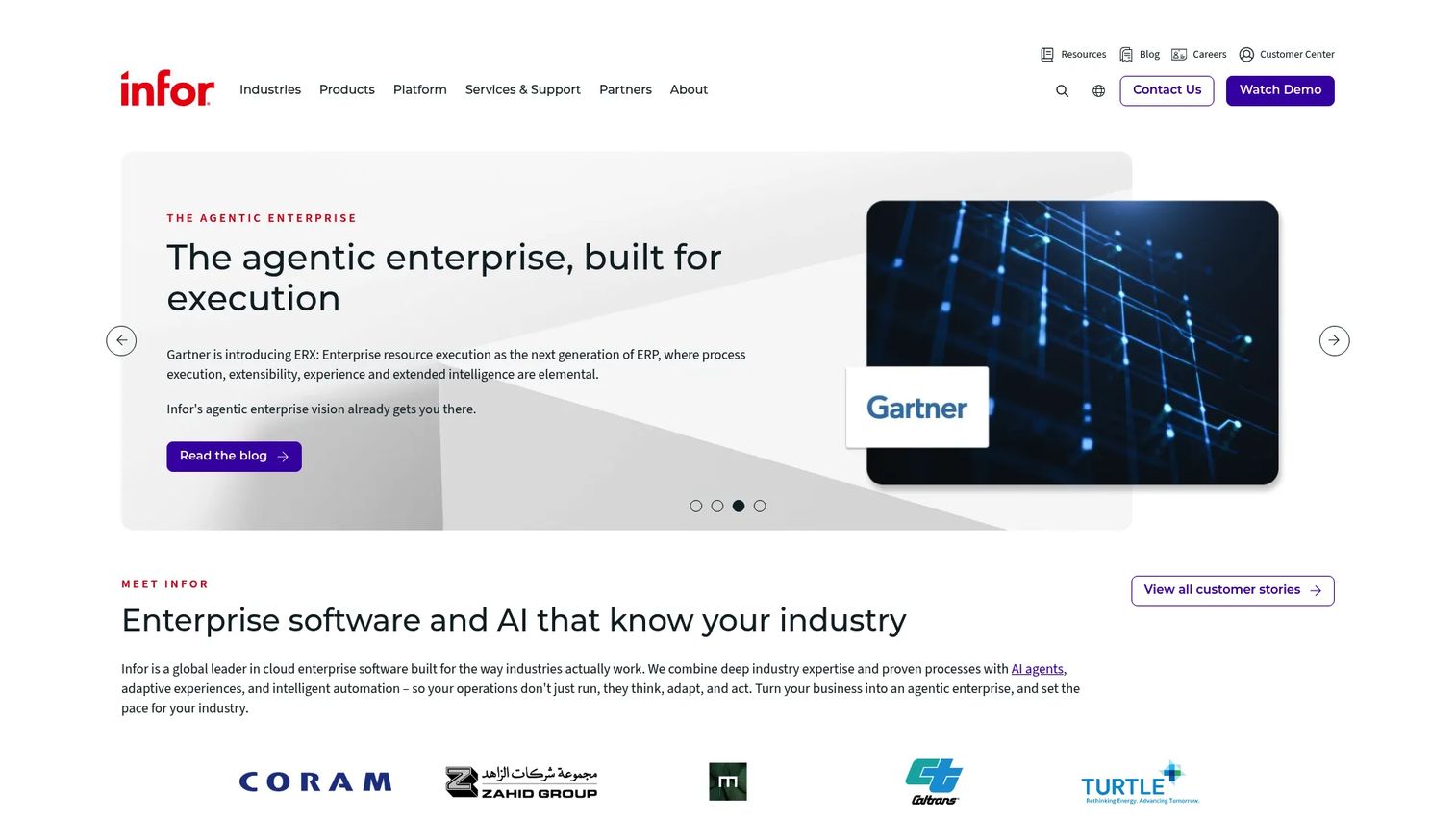
Infor Table Reservations Solution is cloud-based table management software built for hospitality at scale. It covers restaurants, hotels, casinos, and leisure venues from a single multi-tenant platform, which is what separates it from tools built for a single dining room. Larger groups pick it because centralized controls and customizable floor plans work the same way across every property.
The system handles walk-ins, call-aheads, reservations, and no-shows in one view, with a visual floor plan and timeline for seating. SMS-based guest alerts keep parties informed while they wait, and reporting rolls up so regional operators can compare venues.
Best for: Enterprise and multi-venue hospitality groups running restaurants, hotels, casinos, or leisure operations that need one system across properties.
Key strengths
- Multi-tenant cloud architecture for multi-property groups
- Customizable visual floor plans and seating timeline
- Walk-ins, call-aheads, reservations, and no-shows in one view
- SMS/text guest alerts and centralized reporting
Why choose Infor TRS: If you run more than a handful of venues, or a mix of restaurant, hotel, and gaming floors, the centralized architecture is the draw. It's built for operators who need consistent controls and reporting across sites, not a single independent room.
Infor TRS pricing: Infor does not publish a public price for TRS. Pricing is custom and quoted through their sales team based on venue count and requirements.
2. Eat App
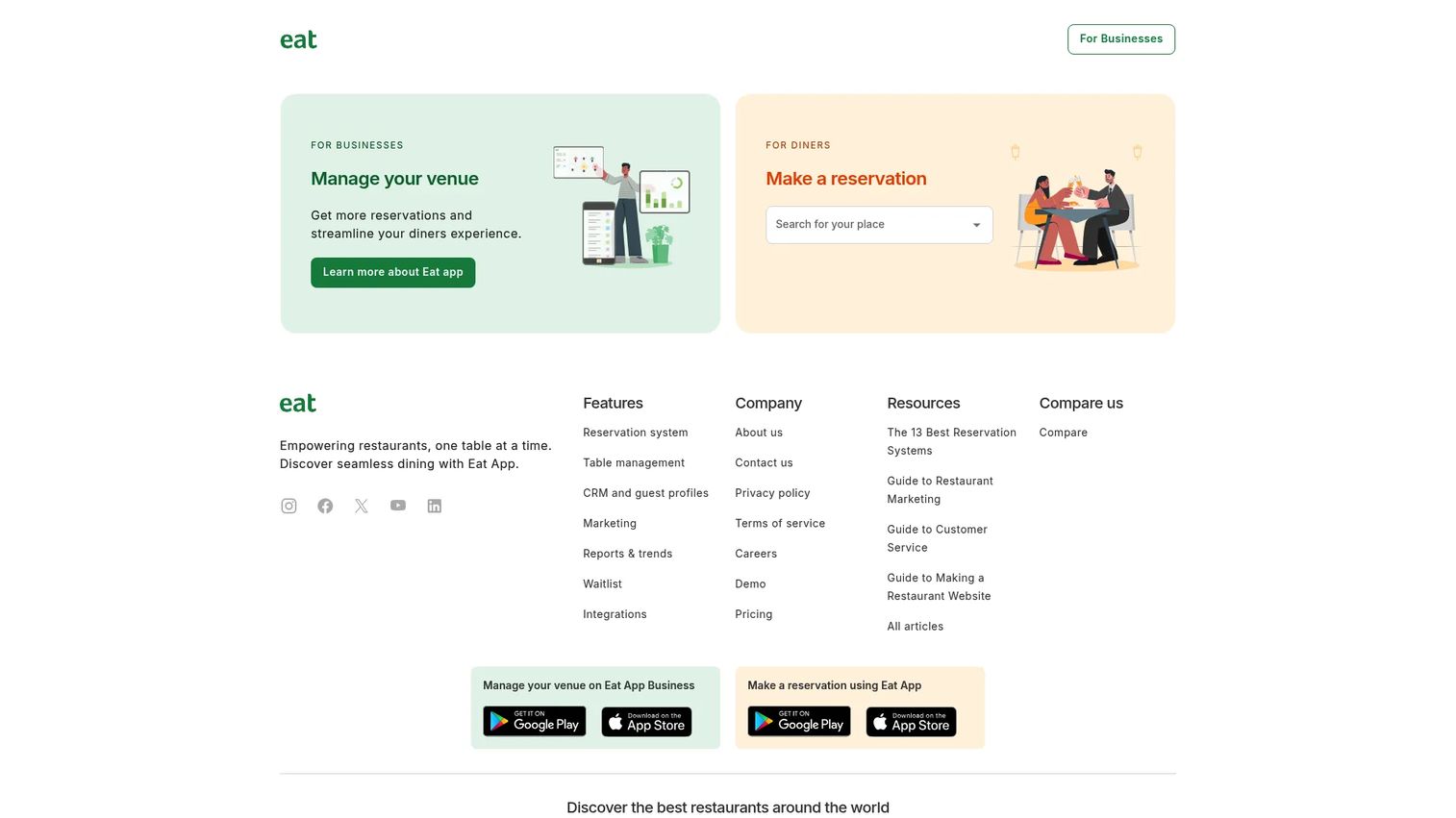
Eat App pairs reservations and table management with a genuinely useful guest CRM. Where it stands out is the combination of live floor management and guest data, so hosts can seat efficiently while the system quietly builds a profile on every guest. That data feeds shift planning, marketing, and no-show reduction.
The availability calendar, waitlist management, and analytics give operators a full picture of how the room is performing. Guest messaging handles confirmations and reminders, which cuts no-shows before they cost you a table.
Best for: Restaurants that want reservations, table management, and guest messaging in one system, with real depth on guest profiles.
Key strengths
- Online reservations and live table management
- Waitlist management and walk-in tools
- Guest CRM with visit history and preferences
- Analytics plus guest communication for confirmations
Why choose Eat App: The freemium entry point lowers the risk of trying it, and the guest data depth pays off for operators who care about repeat visits. It fits independents and small groups that want CRM strength without an enterprise contract.
Eat App pricing: A free plan is available. Paid tiers run $69/mo (Starter), $199/mo (Essential), and $389/mo (Pro), with an Enterprise tier and add-ons offered separately.
3. OpenTable
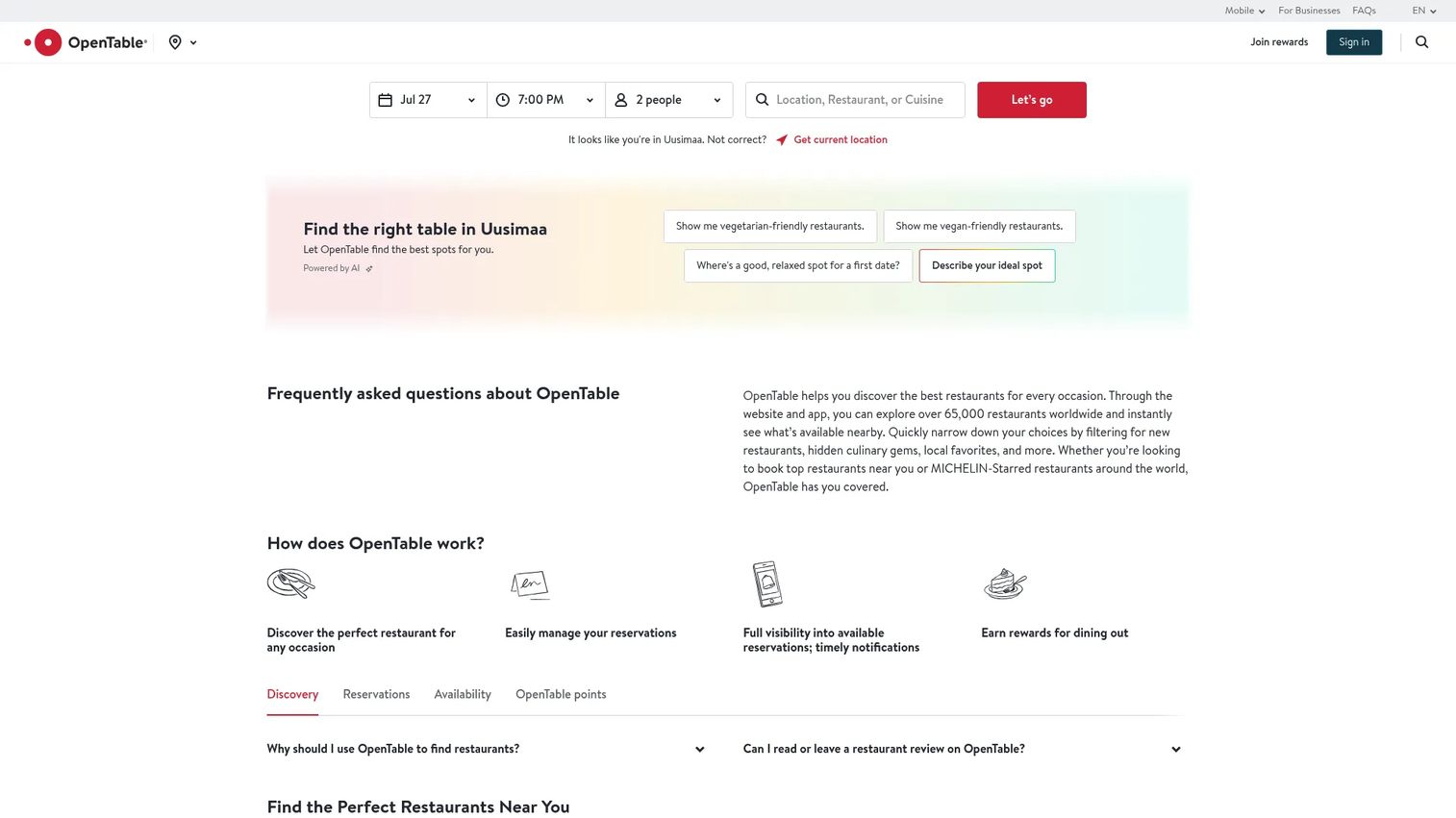
OpenTable is the name most diners already know, and that network is the point. For high-volume mainstream restaurants, the diner discovery engine fills seats while the table management layer keeps the floor moving. Custom floor plans, table inventory, table assignment, and waitlist tools sit alongside POS-driven status updates.
The familiarity matters operationally. New hosts often already know the workflow, which shortens training. Reporting covers the metrics operators check daily, and the reservation network reach is hard to match.
Best for: High-volume restaurants that want a proven reservation workflow plus the largest diner network driving covers.
Key strengths
- Largest diner discovery and booking network
- Custom floor plans and table inventory
- Waitlist and table assignment tools
- POS-driven table status updates and reporting
Why choose OpenTable: If filling seats from the network matters as much as managing them, OpenTable's reach is the differentiator. The tradeoff is per-cover fees on network bookings, so run the math on volume before committing.
OpenTable pricing: Three plans: Basic at $149/month, Core at $299/month, and Pro at $499/month. Per-network cover fees and website reservation fees vary by plan.
4. Resy
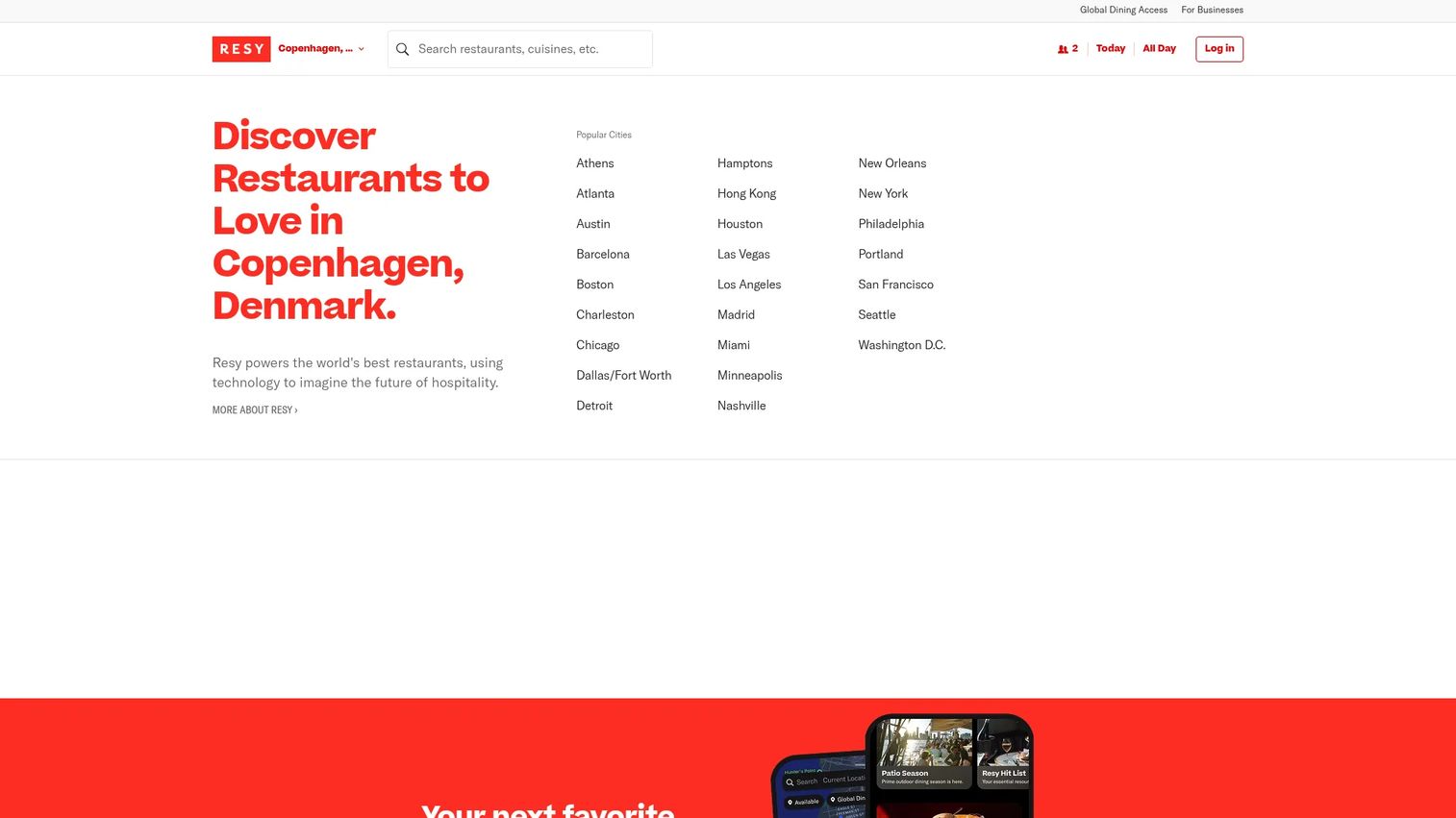
Resy built its reputation on upscale and buzzy dining, and it shows in how the platform handles guest experience. Reservations, waitlist and walk-in tools, and guest profiles all work toward the same goal: making a returning guest feel recognized. For restaurants where brand perception and service polish drive repeat business, that depth of guest data is the draw.
Event management and analytics round out the platform, and the no-per-cover-fee pricing model appeals to operators who'd rather pay a flat monthly fee than a fee on every seated diner.
Best for: Restaurants and hospitality groups where service flow, guest recognition, and brand perception matter as much as raw covers.
Key strengths
- Reservation and table management with service-flow tools
- Waitlist and walk-in handling
- Guest profiles with visit history and preferences
- Event management and analytics
Why choose Resy: Resy fits premium and reservation-driven venues that trade on guest experience. The flat monthly pricing suits restaurants that seat enough covers that per-cover fees would add up fast.
Resy pricing: Four plans, all charged as a flat monthly fee with no per-cover fees: Platform at $249/month, Essential at $269/month, Platform 360 at $399/month, and Premium at $399/month.
5. SevenRooms
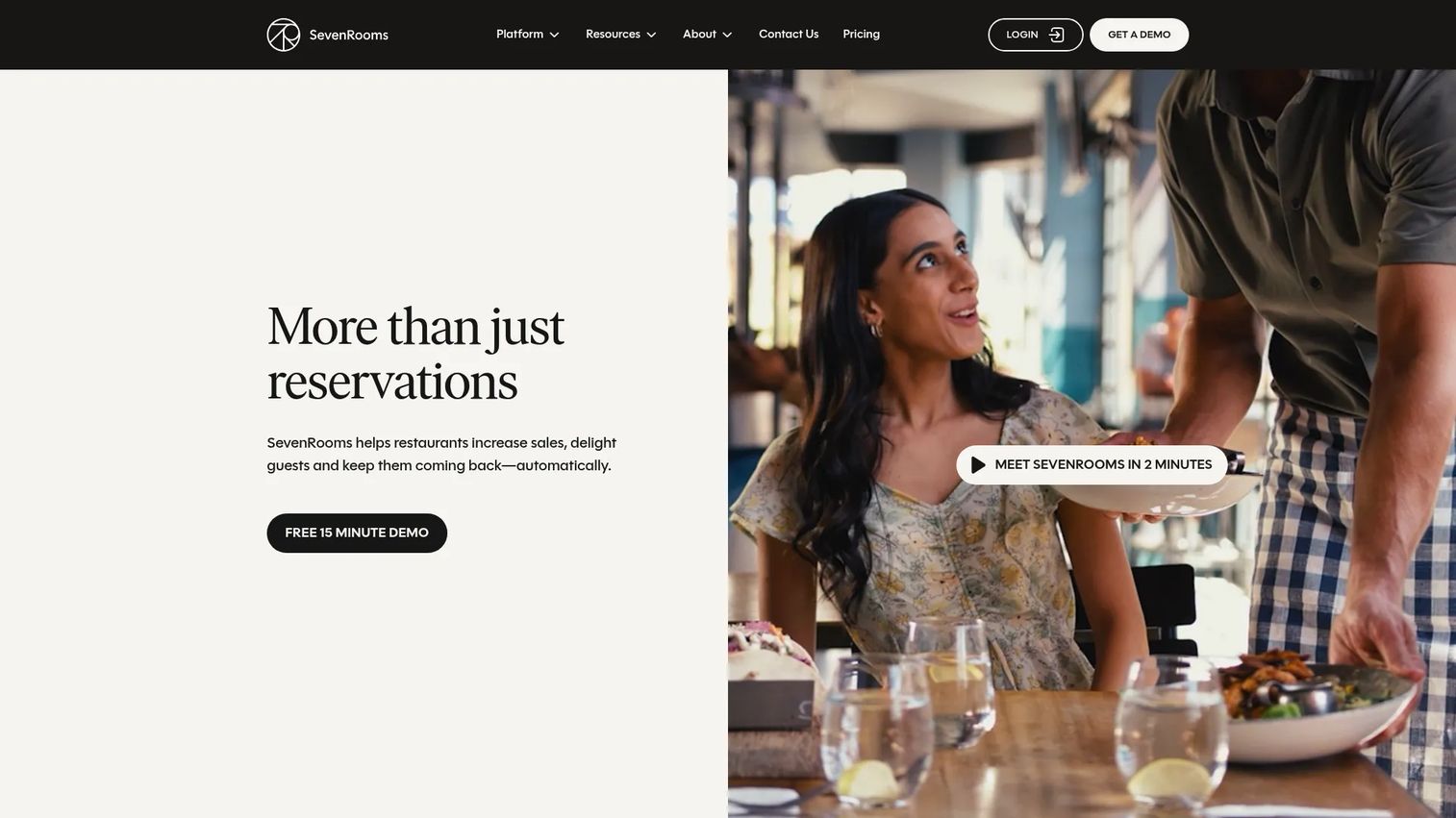
SevenRooms is a hospitality CRM first and a table management tool second, which is exactly why loyalty-heavy operators choose it. Reservations, waitlist management, and table management sit on top of a deep guest profile system and marketing automation. For groups that want to turn a first visit into a fifth, the guest intelligence is the engine.
This is more than a host-stand tool. It's built for venues that run marketing campaigns off guest data, segment VIPs, and want the front-of-house and marketing motions connected. That makes it a strong fit for higher-touch restaurants and hospitality groups.
Best for: Hospitality operators who need reservations, guest CRM, and marketing automation working together in one platform.
Key strengths
- Reservations and waitlist management
- Deep CRM with detailed guest profiles
- Marketing automation tied to guest data
- Table management for full front-of-house control
Why choose SevenRooms: Choose it when guest data and marketing are as central as seating. It's the pick for operators who want to drive repeat visits and loyalty, not just fill tables tonight.
SevenRooms pricing: SevenRooms does not publish public pricing. Plans are quoted through their sales team.
6. TheFork Manager
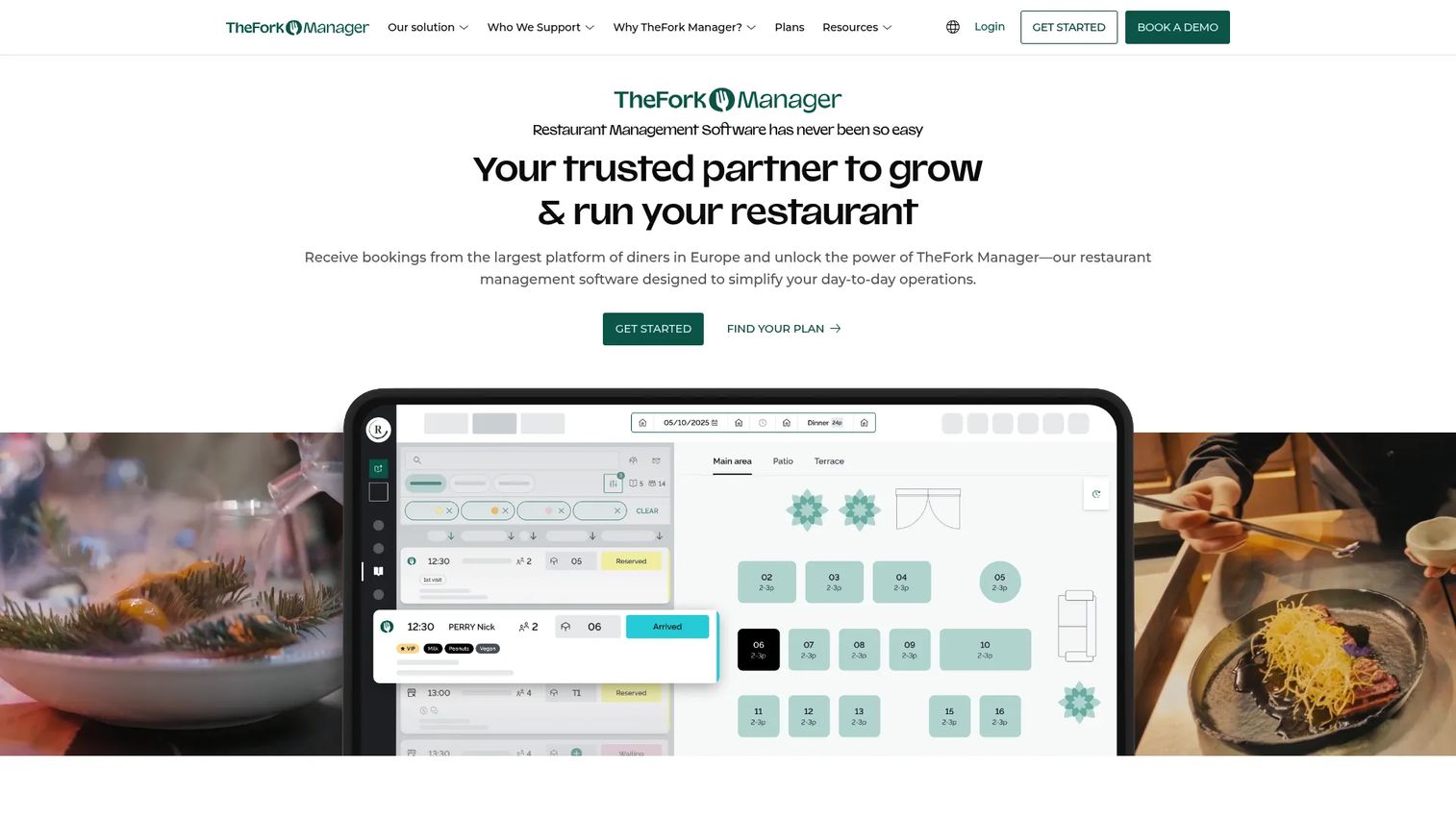
TheFork Manager is the strongest fit for European restaurant groups that want discovery and booking in one workflow. It pairs a large diner network across European markets with a smart floorplan and centralized reservation management. Restaurants that want channel reach plus operational control get both.
No-show protection and reconfirmations are a real strength here, cutting the empty tables that quietly drain revenue. Seating optimization and centralized bookings support operators managing reservations across multiple sites.
Best for: Restaurants in European markets that want discovery-driven bookings alongside seating optimization and no-show reduction.
Key strengths
- Centralized reservations and bookings
- Smart floorplan and table management
- No-show protection and reconfirmations
- Diner discovery reach across European markets
Why choose TheFork Manager: If your covers come from European diners searching for a table, the network reach plus no-show tools make it a natural fit. Reservations from TheFork and Tripadvisor partners are fee-based as a percentage of the average bill.
TheFork Manager pricing: Two plans, Performance and Enterprise, both quoted on request. Partner-network reservations carry a fee based on a percentage of the average bill per guest.
7. Resos
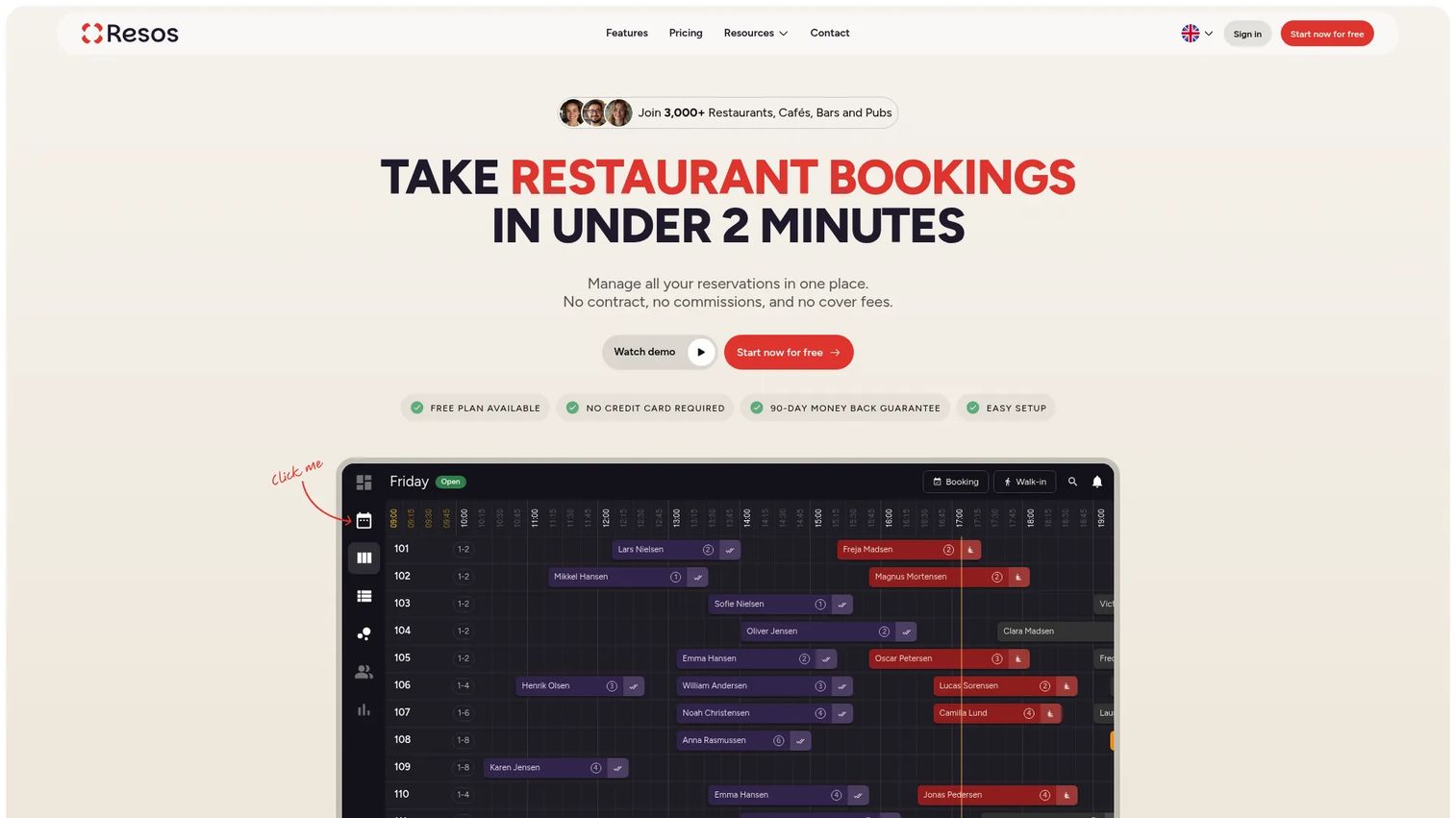
Resos keeps things straightforward for independent restaurants that want a clean reservation and table management workflow without commission fees. The freemium model lets a smaller venue run real bookings before paying anything, and the visual floor plans with multiple areas or rooms cover most independent layouts.
Automations handle the repetitive work: confirmations, reminders, and overbooking warnings. Integrations and an API give operators room to connect other tools when they're ready. It's a fit for teams that want capability without complexity.
Best for: Independent restaurants that want a freemium booking system with floor plans, automations, and no commission or cover fees.
Key strengths
- Full reservation features on a free plan up to 25 bookings/month
- Visual floor plans with multiple areas and rooms
- Confirmations, reminders, and overbooking warnings
- Integrations and API access
Why choose Resos: The no-commission, no-cover-fee model is the appeal for independents watching margins. Start free, then move up only when booking volume calls for it.
Resos pricing: A free plan covers 25 bookings/month. Paid plans are Basic at €23/month, Plus at €43/month, and Unlimited at €63/month, with no commission or cover fees.
8. Tablein
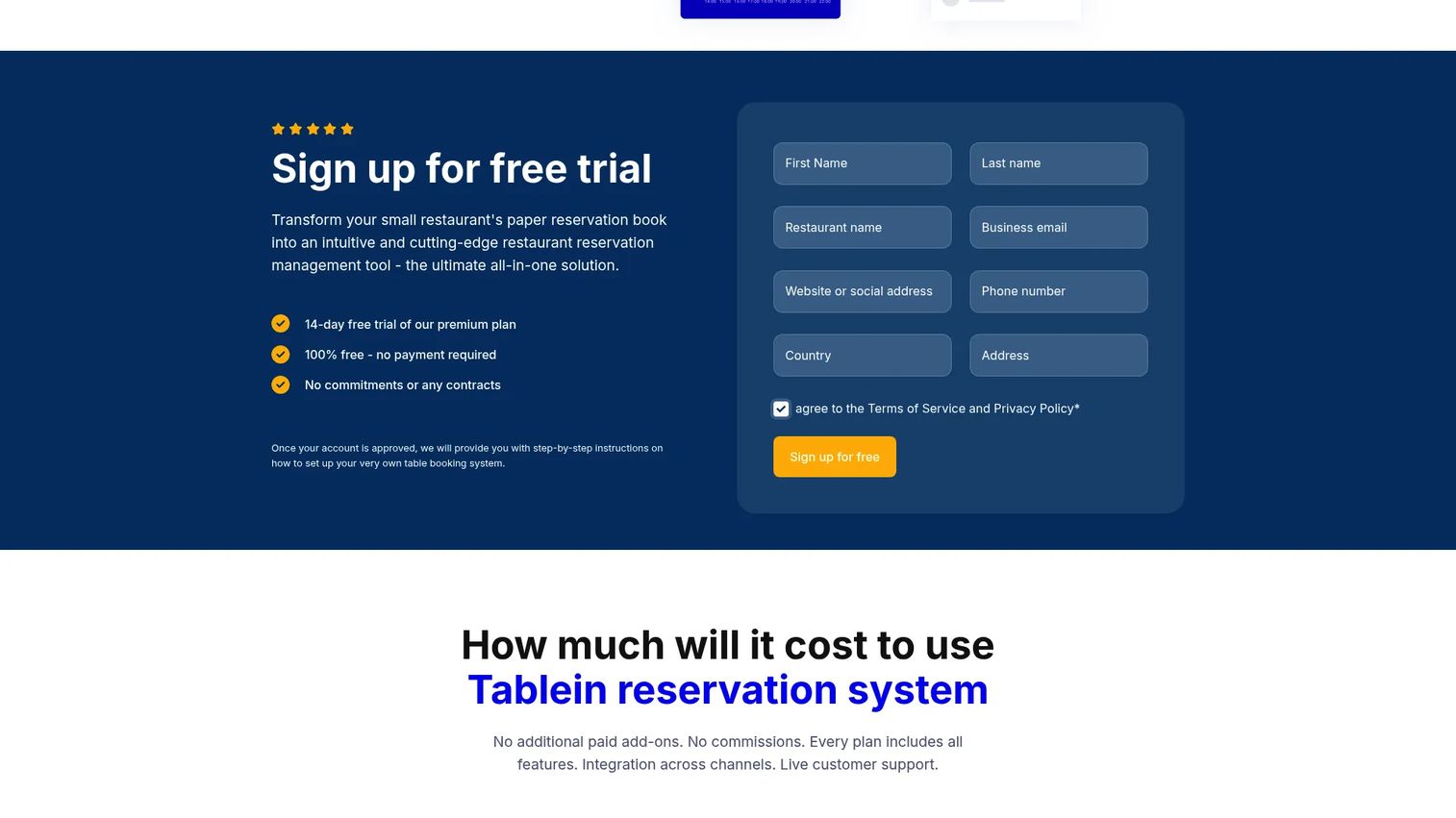
Tablein is built for small restaurants that want an all-in-one reservation system without enterprise complexity or cost. Online reservations, reservation management, and floor plan setup cover the core jobs a single independent venue needs. Lower operational overhead is the whole point.
Every plan includes every feature, so the only variable is reservation volume. That simplicity makes it easy to pick a tier and get running, with a free trial to test the workflow before committing.
Best for: Small independent restaurants that want an all-in-one reservation system with online bookings and basic reporting at a lower price.
Key strengths
- Online reservations and reservation management
- Floor plan setup for the dining room
- All features included on every plan
- 14-day free trial
Why choose Tablein: For a small venue that doesn't need CRM depth or multi-location controls, Tablein delivers the essentials at a lower monthly cost. It's the budget-conscious independent's pick.
Tablein pricing: Three plans, all including every feature: Starter at €67/month (50 reservations), Growth at €117/month (150 reservations), and Success at €177/month (unlimited reservations). A 14-day free trial is offered.
Considerations before you buy
Floor plan control
Verify how the floor plan editor actually works before you commit. Look for drag-and-drop layout editing that mirrors your real dining room, table combining for large parties, and clear status colors. If the editor can't represent your patio, bar, and main room accurately, hosts will fight the tool during every rush.
Waitlist and guest communication
A waitlist is only as good as its guest communication. Check for SMS or email updates, accurate estimated wait times, and clean no-show handling. Guests who get a text when their table is ready walk away less often, and accurate quotes protect your reputation at the door.
Reporting and analytics
Push past vanity metrics. You want turn time, covers, table utilization, idle time, and no-show trends broken out clearly. These numbers tell you whether a slow night was demand, staffing, or seating, and they're the difference between guessing and managing.
Guest profiles and notes
Guest profiles turn a first visit into a relationship. Preferences, VIP tags, visit history, and server notes let staff deliver consistent service without relying on memory. For venues that live on repeat business, this is where a system earns its cost.
Multi-location reporting
If you run more than one site, insist on consistent KPI definitions and centralized controls. Turn time measured differently at two locations tells you nothing. Standardized reporting lets you compare rooms fairly and spot the one leaving covers on the table.
Conclusion
The right table management software depends less on the top rank than on your scale and how much guest data you want to run.
For enterprise and multi-venue groups, Infor Table Reservations Solution (TRS) is built for the job. Eat App wins on guest data and shift operations, while OpenTable brings the largest diner network for high-volume mainstream restaurants. Resy fits upscale, service-driven venues, and SevenRooms is the pick when loyalty and marketing sit at the center. TheFork Manager suits European groups needing discovery plus booking, Resos serves independents wanting a clean freemium workflow, and Tablein covers budget-conscious small venues.
Next step: shortlist two finalists that match your scale, then test them at the host stand during a real rush. The tool that keeps your floor plan matching reality at 7:40 on a Friday is the one to buy.
FAQs
Restaurant table management software controls how guests move from the door to the table. It tracks reservations, walk-ins, waitlists, seating, and live table status in one view, replacing the paper book and the host's mental math. The goal is faster seating, fewer mis-seated parties, and cleaner table turns.
They overlap but aren't identical. Restaurant reservation software focuses on capturing the booking, while a table management system focuses on what happens after, seating the party, tracking the table, and turning it cleanly. Most strong platforms now do both, but if seating and floor control are your bottleneck, prioritize the table management layer.
At peak service, four features carry the weight: accurate floor plan management, live waitlist management, color-coded table status tracking, and guest communication for wait-time updates. These keep the door moving and the floor honest when walk-ins and reservations hit at once.
It improves turn time three ways: smart table assignment seats the right party at the right table, accurate status updates show hosts the moment a table is ready to reseat, and pacing logic keeps the kitchen from drowning. Together, they let you fit more covers into the same seats without rushing guests.
Multi-location groups should insist on centralized reporting, standardized KPI definitions across sites, and consistent controls. Turn time and table utilization only mean something when every location measures them the same way. Centralized floor plan management and guest profiles across venues also keep service consistent.
For repeat-business venues, guest profiles are central. Preferences, allergies, VIP tags, and visit history let staff deliver recognized, consistent service without relying on memory. Platforms like SevenRooms and Resy build much of their value on this depth, which is what turns a first visit into a loyal regular.
Choose OpenTable if diner-network reach and high booking volume matter most. Choose Resy for upscale, service-driven venues where guest experience and flat monthly pricing fit. Choose SevenRooms when guest CRM and marketing automation are as important as seating, since it's built for loyalty-heavy hospitality operations.
Yes. Booking software for restaurants reduces no-shows through automated confirmations, reminders, and reconfirmations, and some platforms add deposits for high-demand slots. Accurate waitlist management also recovers tables fast when a party doesn't show, so an empty seat gets filled instead of sitting idle.