
Your dashboards are lying to you. Or at least, they're all telling different stories.
You're running campaigns across 6 channels. Leadership asks "what's actually driving pipeline?" and you're toggling between Google Analytics, your CRM, and ad platform reports that each claim credit for the same conversion. Last-click attribution hands the win to whatever happened last. Ad platforms self-report and double-count. The spreadsheet you built takes 4 hours to update weekly, and nobody in the room trusts it anyway.
Attribution software exists to connect marketing touchpoints to revenue outcomes so you can prove what works, cut what doesn't, and make budget decisions with data instead of gut feel. The marketing analytics software marketing attribution software market hit $5.4 billion in 2026, nearly doubling from $3.1 billion in 2021 (Marketing Attribution Software.io). That growth tells you something: teams are tired of guessing.
This guide covers 12 tools evaluated for B2B marketers and growth teams, with honest assessments of strengths, limitations, and fit. No rankings by "best overall," because the best attribution software for marketers depends on your model needs, stack, and budget.
What's inside
- 12 tools organized by attribution approach: multi-touch, marketing mix modeling, and hybrid
- Evaluation criteria covering integrations, models supported, implementation complexity, pricing, and team size fit
- A side-by-side comparison table for quick shortlisting
- Attribution model explanations connected to tool selection
- Buying criteria and honest guidance on when attribution software is and isn't worth the investment
TL;DR
- Attribution software connects marketing touchpoints to actual revenue, so you can see which channels drive deals, not just clicks.
- Best multi-touch attribution tools for B2B: HubSpot Attribution, Dreamdata, and Ruler Analytics each handle CRM-connected, multi-touch tracking for lead-gen and pipeline-focused teams.
- Best MMM and paid media tools: Rockerbox, Northbeam, and Triple Whale are strongest for teams with heavy paid spend who need measurement beyond pixel-based tracking.
- Implementation reality check: expect 2 to 8 weeks for most tools, not "quick setup." Enterprise platforms like Bizible can take 2 to 3 months.
- Free and low-cost options exist. HubSpot (with Marketing Hub Pro) and GA4 offer attribution reporting, but both have real B2B limitations around revenue data and offline channels.
- The best attribution tools depend on your attribution model needs, stack, and team size, not feature count. A $99/month tool that doesn't integrate with your CRM is worthless.
What is attribution software?
Attribution software tracks and assigns credit to the marketing touchpoints (ads, emails, content, events, demos) that influence a prospect's journey from first interaction to closed revenue. It's the layer between your marketing activity and your revenue data that answers "what's actually working?"
A marketing attribution platform typically includes these core capabilities:
- Touchpoint tracking: Captures interactions across channels, including paid ads, organic search, email, events, and direct traffic
- Attribution modeling: Applies rule-based or algorithmic models to distribute credit across touchpoints
- CRM and revenue integration: Connects marketing data to actual deal and revenue outcomes in your CRM
- Cross-channel reporting: Consolidates data from multiple platforms into a single view of the customer journey
- ROI and ROAS calculation: Ties marketing spend to revenue generated, by channel, campaign, or content asset
- Cohort and journey analysis: Shows how groups of prospects move through the funnel over time
Attribution software is not the same as web analytics, ad platform reporting, or marketing automation reporting. GA4 tracks website behavior but doesn't connect to CRM revenue data natively. Ad platforms like Google Ads and Meta self-report conversions and tend to over-count. Marketing automation tools like HubSpot and Marketo track email and form engagement but don't provide full cross-channel attribution reporting on their own. Attribution software sits on top of these tools, connecting their data to revenue outcomes.
When to use attribution software
When you're spending across 3+ channels and can't prove which ones work
You're past the point where UTM parameters and GA4 last-click data tell the full story. You're running paid search, paid social, content, and events, but you can't answer which combination drives pipeline. Multi-channel spend needs multi-touch visibility.
When leadership asks for pipeline attribution and you're building spreadsheets
If your attribution process is manual (exporting CSVs, running VLOOKUPs, spending 4 hours on weekly updates), it's slow, error-prone, and not trusted by the people making budget decisions. Software automates what you're already trying to do by hand.
When you need to justify or reallocate budget
Attribution data is the evidence you need for budget conversations. Without it, budget decisions are political, not analytical. "Should we move $20K from Google Ads to LinkedIn?" Without attribution data, that's a guess.
When you probably DON'T need attribution software (yet)
If you're running 1 to 2 channels with a simple funnel and under $50K/month in total marketing spend, native analytics and disciplined UTM tracking may be enough. Don't buy a tool to solve a process problem. If your CRM data is messy and your UTMs are inconsistent, fix those first. No attribution tool can produce reliable insights from unreliable inputs.
Attribution models explained (quick reference)
Before you evaluate tools, you need to know which attribution model fits your business. This is the decision most listicles skip, and it's the one that matters most for tool selection. Here's a quick reference for the 5 models you'll encounter in attribution modeling software.
First-touch attribution
Credits the first interaction entirely. Best for understanding which channels generate initial awareness. The limitation: it ignores everything that happens after first contact. Common in early-stage companies with simple funnels.
Last-touch attribution
Credits the final interaction before conversion. Best for short sales cycles where one touchpoint dominates. The limitation: it ignores the entire journey that built intent. Still the default in many ad platforms.
Multi-touch attribution (MTA)
Distributes credit across multiple touchpoints. Models include linear (equal credit), time-decay (more credit to recent touches), U-shaped (40% first, 40% last, 20% middle), and W-shaped (adds a middle milestone). Best for B2B with longer sales cycles. Requires user-level tracking data. Multi-touch attribution tools are the most common category for B2B teams.
Algorithmic / data-driven attribution
Uses machine learning to assign credit based on actual conversion patterns in your data. More accurate than rule-based models but requires significant data volume, typically 100+ conversions per month minimum. Best for mature teams with high traffic and conversion volume.
Marketing mix modeling (MMM)
A statistical approach using aggregate data, not user-level tracking. Works without cookies or tracking pixels. Can measure offline channels like TV, events, and direct mail. Marketing mix modeling tools are best for teams with heavy paid media or brand spend. Less granular than MTA but more privacy-resilient.
Best attribution software comparison table
Here's how the 12 best attribution tools compare across primary use case, key differentiator, pricing, and G2 rating.
Pricing and G2 ratings verified as of early 2026. Check vendor sites for current pricing.
1. HubSpot

HubSpot is the built-in marketing attribution platform for teams already running their CRM, marketing automation, and sales pipeline inside HubSpot. It's not a standalone product. It's a feature set within Marketing Hub Professional and Enterprise.
The core value is zero integration overhead. Attribution data lives where contacts, deals, and campaigns already live. You don't need to connect a third-party tool to your CRM because the attribution engine reads directly from HubSpot's contact and deal records. Available models include first interaction, last interaction, linear, U-shaped, W-shaped, full path, and custom attribution reporting configurations.
Best for: B2B teams with their entire marketing and sales stack inside HubSpot who want attribution without adding another tool.
Key strengths
- Native CRM connection: attribution data pulls directly from contact and deal records
- Multiple models included: 7 built-in models plus custom model configuration
- No implementation overhead: works with existing HubSpot tracking and forms
- Revenue-tied reporting: connects marketing touches to closed-won deal revenue
- Campaign-level attribution: shows which HubSpot campaigns influence pipeline
Why choose HubSpot Attribution: if your marketing, sales, and CRM data already live in HubSpot, this is the path of least resistance. You skip the integration project entirely and get attribution data in the same interface your team uses daily. For teams where 80%+ of marketing activity runs through HubSpot, the data coverage is strong.
The trade-off: it only tracks touchpoints within or tracked by HubSpot. If significant activity happens outside the HubSpot ecosystem (events tracked in Splash, ads managed outside HubSpot's ad tool, partner channels), you'll have blind spots. It's also limited to HubSpot's own tracking pixel, which means offline and non-web interactions need manual workarounds.
When to choose something else: if your stack includes Salesforce, Marketo, or significant marketing activity outside HubSpot's tracking reach.
Pricing: Included in Marketing Hub Professional ($890/month) and Enterprise ($3,600/month). No separate attribution fee.
2. Dreamdata
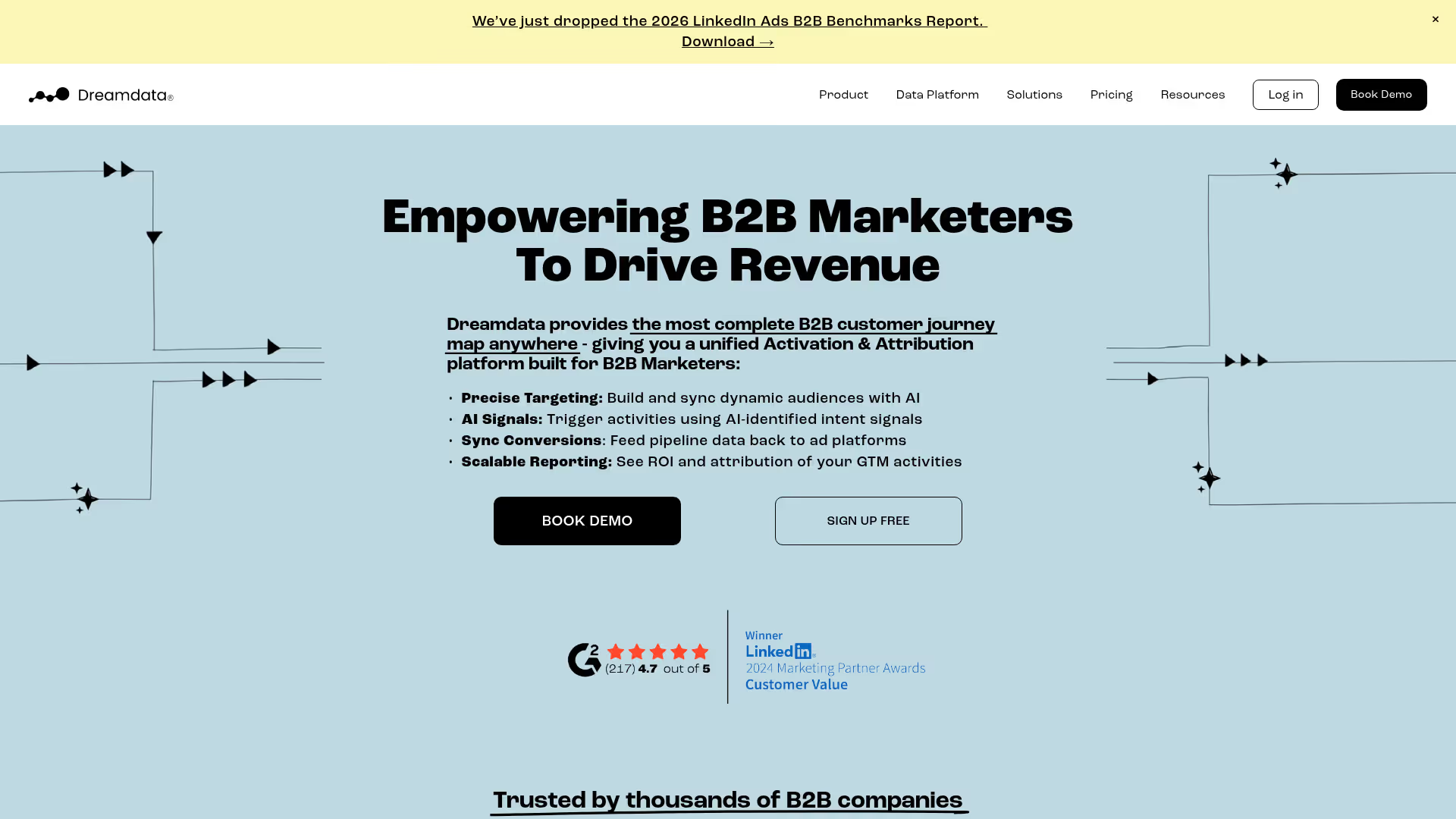
Dreamdata is purpose-built B2B attribution software designed for companies with long, multi-stakeholder sales cycles. Most attribution tools were designed for B2C or e-commerce, tracking individuals to purchases. Dreamdata tracks account-level journeys, connecting anonymous website visits, ad impressions, content engagement, and outbound touches to the account that eventually becomes a deal.
The platform automatically builds visual timelines of every touchpoint an account encounters before converting. It integrates natively with Salesforce and HubSpot CRMs, and its LinkedIn Ads offline conversion syncing is a standout feature for B2B teams running LinkedIn campaigns. Teams running account-based marketing strategies will find Dreamdata's account-level tracking particularly aligned with their workflow.
Best for: B2B SaaS companies with $50K+ ACV, 30+ day sales cycles, and B2B buying committees of 3+ stakeholders.
Key strengths
- Account-level attribution: tracks the full buying group, not just individual leads
- Automatic journey timelines: visualizes every touchpoint per account from first touch to close
- LinkedIn Ads integration: syncs offline conversions back to LinkedIn for campaign optimization
- CRM-native revenue data: pulls deal and pipeline data directly from Salesforce or HubSpot
- Content attribution: shows which blog posts, pages, and assets influence pipeline
Why choose Dreamif you're a B2B SaaS team where 5 people from the same account visit your site over 3 months before a deal opens, Dreamdata is built for that exact scenario. It connects the dots that individual-level attribution tools miss entirely. The B2B attribution software category is small, and Dreamdata is one of the few tools designed from the ground up for account-based buying.
The trade-off: pricing starts at $999/month, which puts it out of reach for early-stage teams. And the value increases with data volume. Small teams with low website traffic and fewer than 50 deals per quarter may not generate enough data for the platform to deliver meaningful insights.
When to choose something else: if you're e-commerce, DTC, or a B2B company with short sales cycles and single-buyer decisions.
Pricing: From $999/month. Free tier available with limited features.
3. Ruler Analytics
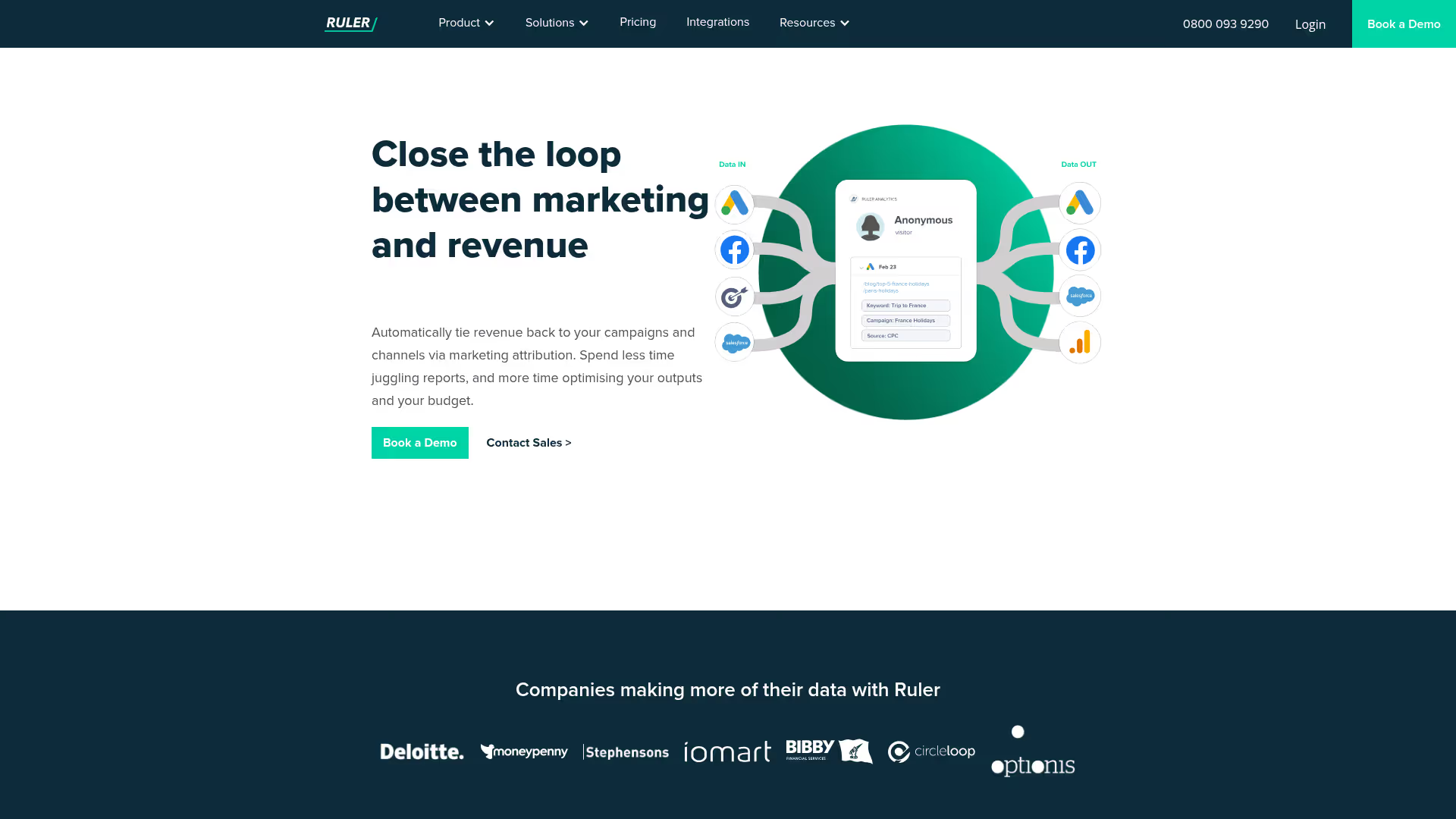
Ruler Analytics is a closed-loop attribution tool built for lead-gen businesses where phone calls, form submissions, and live chat are primary conversion actions. The core value: it tracks these conversions back to the original marketing source, then pushes revenue data into your CRM and back to ad platforms (Google Ads, Facebook Ads, GA4) so you can optimize on revenue, not just conversion count.
For teams where a significant percentage of leads come through phone calls, Ruler's built-in call tracking is a differentiator. It connects the call to the marketing source without requiring a separate call tracking tool.
Best for: Lead-gen businesses (agencies, professional services, SaaS with sales-assisted models) where calls and forms drive pipeline.
Key strengths
- Call, form, and chat tracking: captures offline-ish conversions most tools miss
- Revenue attribution to ad platforms: pushes closed-deal revenue back to Google and Meta for optimization
- CRM integration: sends attribution data to Salesforce, HubSpot, and Pipedrive
- Multi-touch models included: first-click, last-click, linear, and position-based models
- Visitor-level tracking: ties anonymous website sessions to named leads when they convert
Why choose Ruler Analytics: if your revenue attribution tools need to account for phone calls and form fills, not just e-commerce transactions, Ruler fills a gap that most attribution platforms ignore. The closed-loop reporting (marketing source to CRM deal to revenue pushed back to ad platforms) is the specific workflow that makes budget optimization possible for lead-gen teams.
The trade-off: Ruler is strongest for lead-gen businesses with clear conversion events (calls, forms, chats). Product-led growth companies or self-serve SaaS models with complex in-app conversion paths will find it less suited.
When to choose something else: if you're product-led with in-app conversions, or if phone calls aren't a meaningful part of your funnel.
Pricing: From $239/month.
4. Triple Whale
Triple Whale is the default ad attribution software for e-commerce and DTC growth marketers running heavy paid media on Shopify. The key differentiator is a proprietary first-party pixel that tracks independently of ad platform self-reporting, giving you a single source of truth for which ads actually drive purchases.
Beyond attribution, Triple Whale provides creative-level analysis (which ad creatives drive revenue, not just clicks), a real-time profit and loss dashboard, and cohort-based LTV analysis. It's built for marketers who think in terms of ROAS and contribution margin, not just MQLs.
Best for: E-commerce and DTC brands on Shopify spending $30K+ per month on paid media across Meta, Google, and TikTok.
Key strengths
- First-party pixel: tracks conversions independently of ad platform reporting
- Creative-level attribution: shows revenue per ad creative, not just per campaign
- Real-time P&L dashboard: connects ad spend to profit in a single view
- Cohort and LTV analysis: tracks customer lifetime value by acquisition source
- Multi-platform support: covers Meta, Google, TikTok, Snapchat, and Pinterest
Why choose Triple Whale: if you're an e-commerce team and you've lost trust in what Meta and Google report, Triple Whale's first-party pixel gives you an independent measurement layer. The creative-level attribution is particularly useful for teams running 50+ ad variations and needing to know which creatives drive revenue, not just engagement.
The trade-off: Triple Whale is heavily e-commerce focused. B2B SaaS teams or companies without Shopify will find limited value. Pricing also scales with revenue, so costs grow as your store grows.
When to choose something else: if you're B2B, don't use Shopify, or your primary conversions aren't online purchases.
Pricing: From $129/month. Scales with store revenue.
5. Northbeam
Northbeam is an ML-powered media mix modeling platform for paid-media-heavy growth teams. The key differentiator versus traditional MMM: near real-time model updates. Traditional marketing mix modeling tools require weeks of data accumulation before producing insights. Northbeam's models update daily, giving paid media teams actionable data on a timeline that matches their optimization cadence.
The platform combines first-party data with statistical modeling to estimate incremental impact per channel. This approach is increasingly important as pixel-based attribution degrades post-iOS 14.5. Cloud-based deployment models now account for 67.5% of the multi-touch attribution market (OpenPR, 2026), and Northbeam sits squarely in this trend.
Best for: Growth teams spending $100K+ per month on paid media who need measurement that works despite signal loss from privacy changes.
Key strengths
- Near real-time MMM: models update daily instead of requiring weeks of data
- Incrementality measurement: estimates true incremental impact, not just attributed credit
- Privacy-resilient approach: works without relying on cookies or tracking pixels
- Channel-level budget recommendations: suggests where to increase or decrease spend
- Custom model calibration: adjusts models based on your specific business data
Why choose Northbeam: if you're spending heavily on paid media and you've noticed that pixel-based attribution numbers don't match your actual revenue trends, Northbeam offers a statistical alternative. The daily model updates mean you can act on insights within the same week, not wait for a quarterly MMM report.
The trade-off: Northbeam requires meaningful ad spend volume ($50K+ per month minimum) for models to produce reliable outputs. Statistical estimation also requires a cultural trust shift from deterministic tracking. Teams used to seeing "this click led to this purchase" may find probabilistic models uncomfortable at first.
When to choose something else: if your monthly ad spend is under $50K, or if your team needs deterministic, click-level attribution data.
Pricing: Custom pricing. Contact Northbeam for a quote.
6. Rockerbox
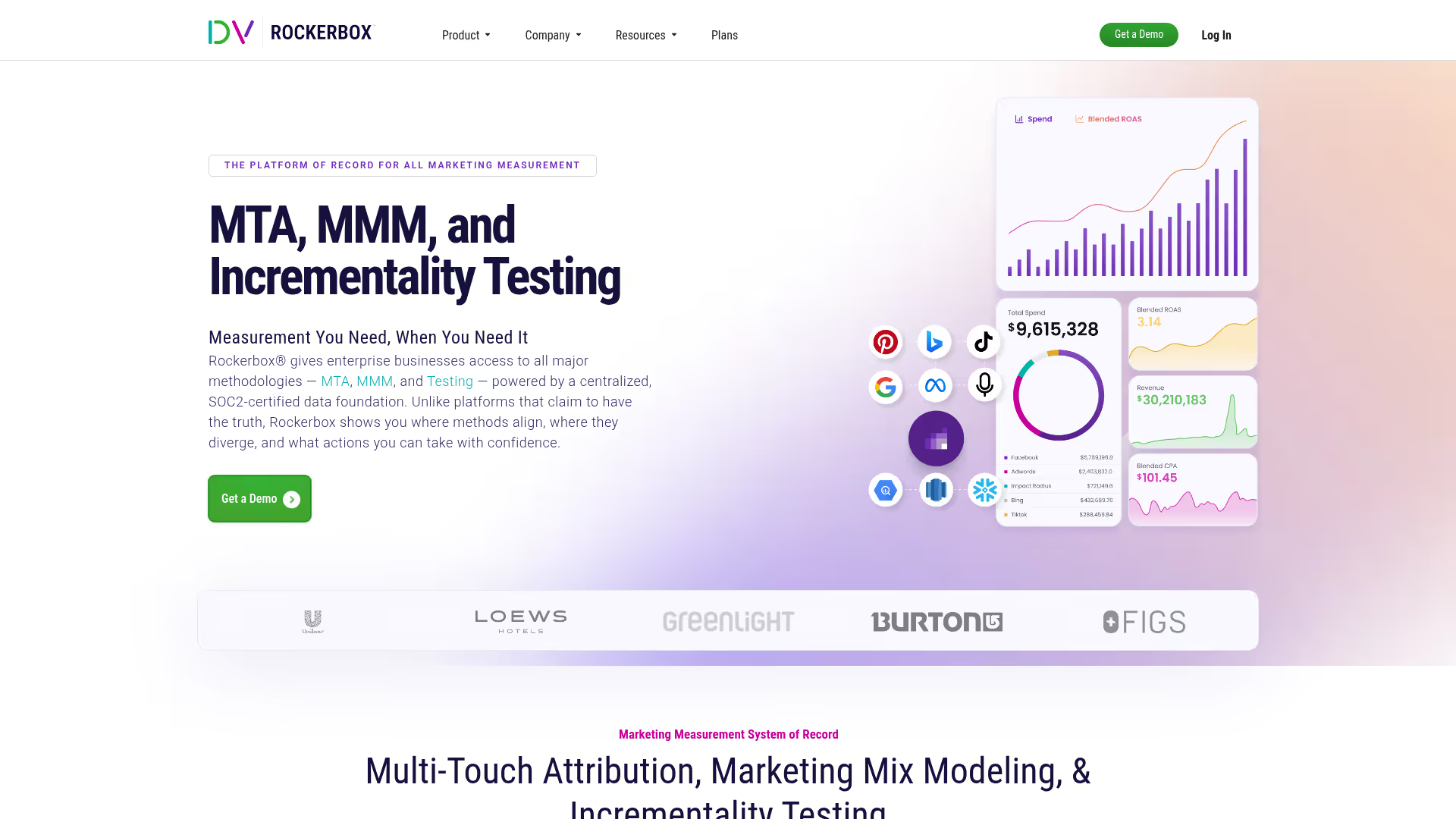
Rockerbox is a unified measurement marketing attribution platform for brands with diversified media mixes that include offline channels. The key differentiator: it tracks and attributes both digital and offline touchpoints (direct mail, TV, podcast ads, OOH) within a single platform. Most attribution tools handle digital only. Rockerbox handles both.
The platform combines MTA, MMM, and incrementality testing, giving teams multiple measurement lenses instead of forcing a single methodology. It also provides log-level data access and 150+ integrations for cross-channel attribution analysis.
Best for: Mid-market to enterprise brands spending across digital and offline channels who need unified measurement across all media types.
Key strengths
- Digital and offline attribution: tracks direct mail, TV, podcasts, and OOH alongside digital
- Three measurement methods: MTA, MMM, and incrementality testing in one platform
- 150+ integrations: connects to ad platforms, CRMs, and data warehouses
- Log-level data access: raw data available for custom analysis
- New visitor and customer journey reporting: shows full acquisition paths
Why choose Rockerbox: if your media mix includes offline channels and you're tired of treating them as unmeasurable, Rockerbox is one of the few platforms that brings everything into a single view. The combination of MTA, MMM, and incrementality testing means you're not locked into one methodology.
The trade-off: Rockerbox is more complex than point solutions and carries enterprise-grade pricing. Teams with purely digital, low-budget campaigns may find it more than they need.
When to choose something else: if your spend is entirely digital, under $50K/month, and you don't need offline channel measurement.
Pricing: Custom pricing. Contact Rockerbox for a quote.
7. Attribution (by Digioh)
Attribution is a mid-market algorithmic multi-touch attribution tool that offers more sophistication than rule-based models without enterprise pricing or implementation complexity. The key differentiator: ML-based attribution with spend optimization recommendations. It doesn't just tell you which channels get credit. It tells you where to increase or decrease spend.
The platform handles cross-device tracking and identity resolution, connecting the same user across mobile, desktop, and tablet sessions. This is a specific gap that simpler multi-touch attribution tools often leave open.
Best for: Mid-market B2B and B2C teams that want algorithmic attribution and spend optimization without enterprise-level pricing.
Key strengths
- ML-based attribution modeling: assigns credit based on actual conversion patterns
- Spend optimization recommendations: suggests budget reallocation by channel
- Cross-device identity resolution: connects users across multiple devices
- Custom attribution windows: configurable lookback windows for different conversion types
- Multi-channel support: covers paid, organic, email, and referral channels
Why choose Attribution: if you've outgrown rule-based models (first-touch, last-touch, linear) but don't have the budget or data volume for enterprise platforms, Attribution sits in a useful middle ground. The spend optimization angle is practical: it connects attribution data directly to budget decisions.
The trade-off: as part of the Digioh ecosystem, the product roadmap and support are tied to a parent company's priorities. Check recent product updates and support responsiveness before committing. Integration depth with specific CRMs and ad platforms varies.
When to choose something else: if you need deep Salesforce or Marketo integration, or if you require account-level B2B attribution.
Pricing: Custom pricing. Contact Attribution for a quote.
8. Bizible (Marketo Measure)
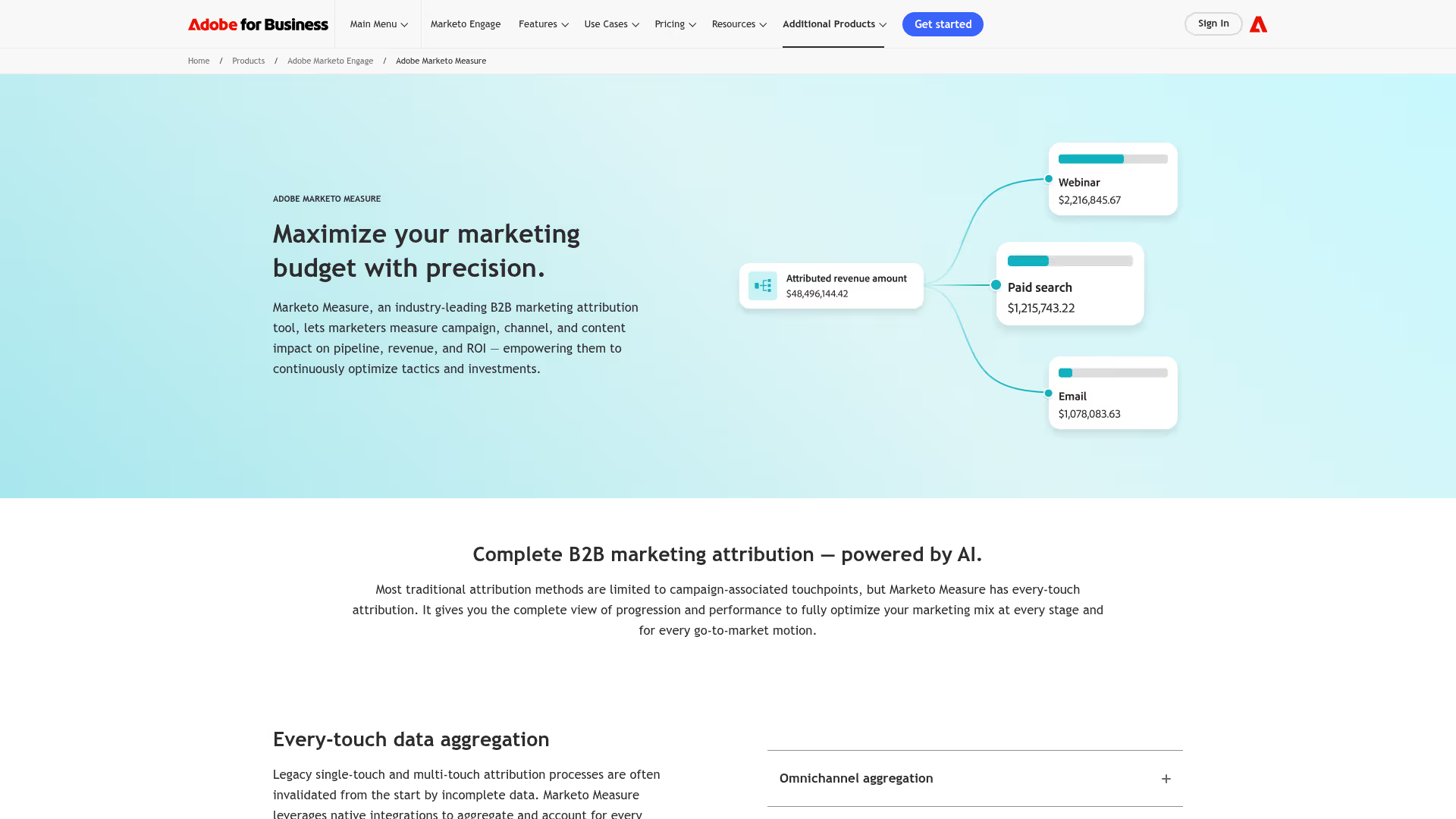
Bizible, now called Marketo Measure, is the enterprise B2B attribution software for organizations deep in the Salesforce and Marketo stack. The key differentiator: attribution data appears directly on lead, contact, opportunity, and account records in Salesforce. Sales and marketing see the same data in the CRM they use daily.
Bizible tracks boomerang stage transitions, which matters for non-linear B2B journeys where prospects move backward and forward through funnel stages. Overall company adoption of attribution software reached 57% by 2025, with 73% adoption among companies with over $250M in revenue (Marketing Attribution Software.io). Bizible is built for that enterprise segment.
Best for: Enterprise B2B organizations (500+ employees) running Salesforce and Marketo who need attribution data embedded in CRM records.
Key strengths
- Native Salesforce integration: attribution touchpoints appear on lead, contact, and opportunity records
- Boomerang stage tracking: handles non-linear B2B journeys where prospects move between stages
- Multiple attribution models: first-touch, lead creation, U-shaped, W-shaped, full path, and custom
- Offline touchpoint tracking: captures events, conferences, and sales-assisted touches
- Account-based attribution: rolls individual touchpoints up to the account level
Why choose Bizible: if your organization runs on Salesforce and Marketo, and you need attribution data visible to both marketing and sales teams inside the CRM, Bizible is the most deeply integrated option. The boomerang tracking is specifically useful for B2B teams where deals don't follow a clean linear path.
The trade-off: implementation is complex (4 to 8 weeks minimum, often with consulting support), pricing is enterprise-level ($30K+ per year), and the product is tightly coupled to Adobe/Marketo. If you're not on Marketo, the value proposition weakens significantly.
When to choose something else: if you're not on Salesforce and Marketo, or if your team is under 100 people and can't absorb a multi-month implementation.
Pricing: Included with Marketo Engage. Custom pricing, typically $30K+ per year.
9. Windsor.ai
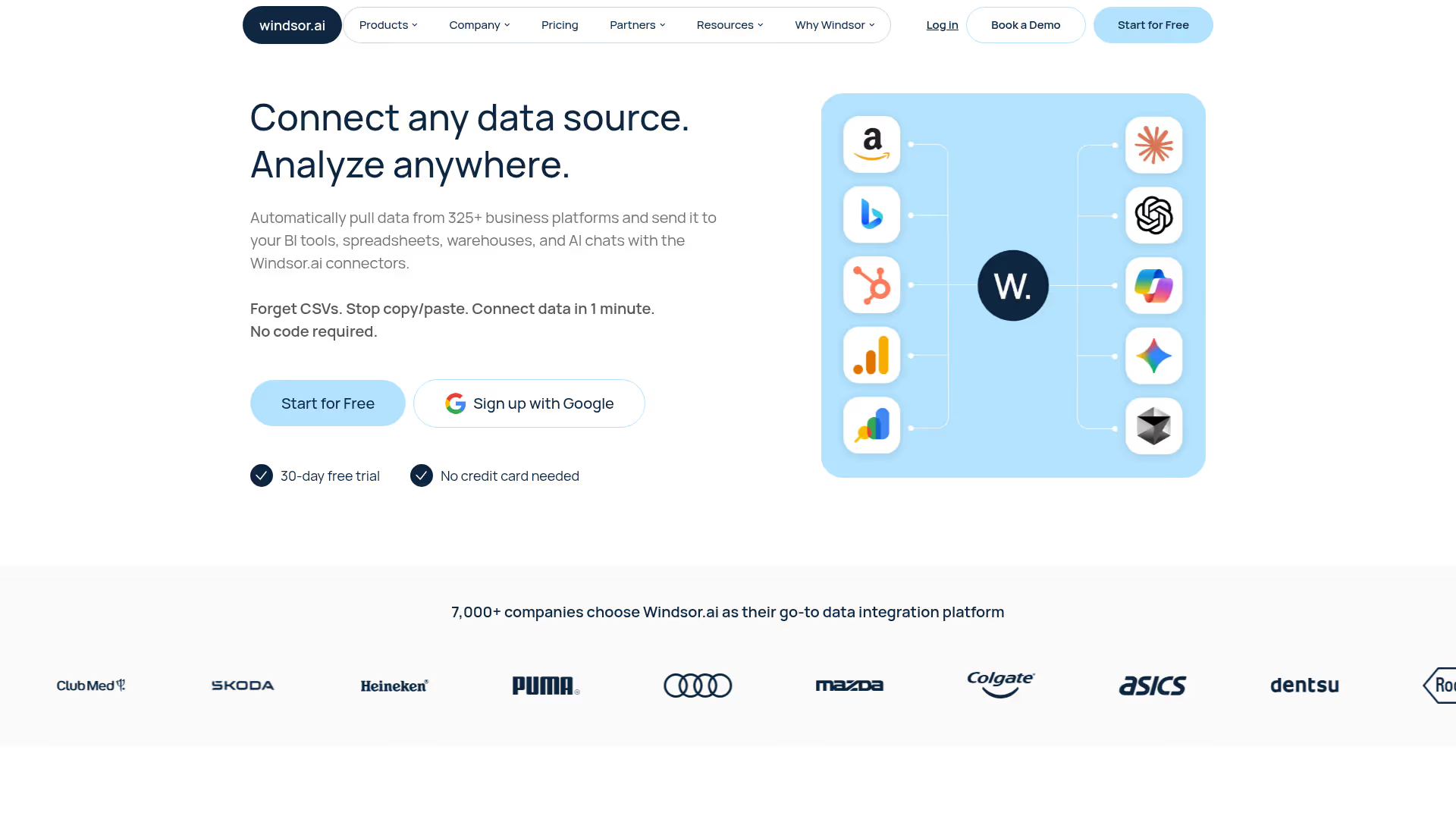
Windsor.ai is the most accessible ML-based marketing attribution software on this list. The key differentiator: machine learning attribution at a $19/month entry point, connecting 70+ data sources. For small-to-mid-market teams and agencies that want attribution beyond last-click without enterprise budgets, Windsor.ai fills a specific gap.
The platform pushes attribution data into the reporting tools you already use: Google Sheets, Looker Studio, Power BI, and Looker. Instead of building another dashboard you need to check, it feeds data into your existing reporting workflow.
Best for: Small-to-mid-market teams and agencies that want ML-based attribution at a budget-friendly price point.
Key strengths
- 70+ data connectors: pulls from ad platforms, CRMs, and analytics tools
- ML-based attribution: algorithmic credit assignment, not just rule-based models
- Reporting tool integration: pushes data to Google Sheets, Looker Studio, and Power BI
- $19/month entry point: the most affordable ML attribution option available
- ROI and ROAS tracking: calculates return on spend by channel and campaign
Why choose Windsor.ai: if you need attribution beyond what GA4 offers but can't justify $500+ per month, Windsor.ai is the most affordable ML attribution option we found. The data connector library and reporting tool integrations mean you can add attribution data to existing dashboards without building a new reporting workflow.
The trade-off: the lower price point means less dedicated support and a more self-serve implementation experience. Complex B2B account-level attribution is not its strength. It's better for lead or conversion-level attribution where individual user journeys are the unit of analysis.
When to choose something else: if you need account-level B2B attribution, deep CRM integration, or hands-on implementation support.
Pricing: From $19/month.
10. Hyros
Hyros is a server-side ad attribution software platform built for high-spend direct-response advertisers. The key differentiator: server-side tracking that bypasses ad blockers and iOS restrictions, with attribution windows up to 365 days. For businesses where each conversion is worth hundreds or thousands of dollars, the accuracy difference between Hyros and ad platform self-reporting can directly impact spend decisions.
The core audience is info-product businesses, coaching companies, and high-ticket B2C brands. These are businesses where misattributing even a handful of conversions per month means thousands of dollars in misallocated ad spend.
Best for: High-spend direct-response advertisers ($50K+ per month in ad spend) selling high-ticket offers ($500+ per conversion).
Key strengths
- Server-side tracking: bypasses ad blockers and browser-level privacy restrictions
- 365-day attribution windows: tracks long customer journeys common in high-ticket sales
- AI-powered ad optimization: feeds accurate conversion data back to ad platforms
- Call and funnel tracking: captures phone sales and multi-step funnel conversions
- Long-term LTV tracking: measures customer value over months, not just initial purchase
Why choose Hyros: if you're spending $50K+ per month on ads for high-ticket offers and you've noticed a growing gap between what ad platforms report and your actual revenue, Hyros' server-side tracking closes that gap. The 365-day attribution window is specifically valuable for businesses with long consideration periods.
The trade-off: Hyros is built for direct-response advertising. B2B SaaS teams with complex, multi-stakeholder buying processes will find it less suited. Setup requires careful implementation, and the learning curve is steeper than simpler ad tracking tools.
When to choose something else: if you're B2B SaaS with multi-stakeholder deals, or if your average conversion value is under $100.
Pricing: From $199/month.
11. Cometly
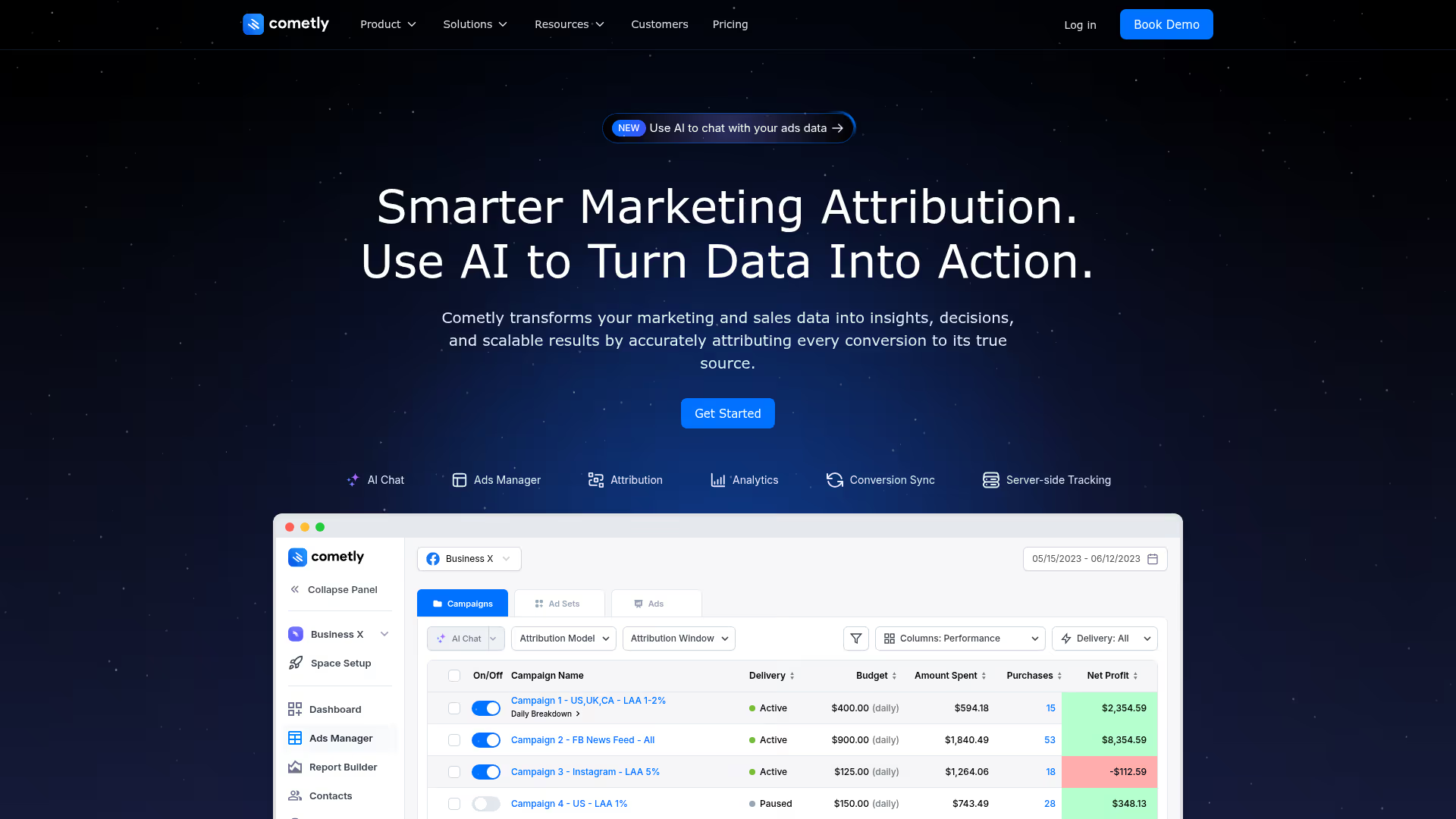
Cometly is a simpler, more affordable alternative to Hyros and Triple Whale for paid media ad attribution software. The key differentiator: fast setup (under 30 minutes for basic tracking) and a clean UI that doesn't require a dedicated analyst to interpret.
The platform provides first-party server-side tracking, real-time conversion data, and AI optimization recommendations. For teams that want accurate paid media attribution without a complex implementation project, Cometly offers a lower barrier to entry.
Best for: Small-to-mid-market paid media teams that want accurate ad attribution with minimal setup time and a clean interface.
Key strengths
- Fast setup: basic tracking live in under 30 minutes
- Server-side tracking: first-party data collection that bypasses browser restrictions
- Real-time conversion data: see attribution data as conversions happen
- AI optimization recommendations: suggests budget and targeting adjustments
- Multi-platform support: covers Meta, Google, TikTok, and Snapchat
Why choose Cometly: if you want the accuracy benefits of server-side tracking without the implementation complexity of Hyros or the e-commerce focus of Triple Whale, Cometly is the fastest path to reliable paid media attribution. The 30-minute setup claim is realistic for basic tracking.
The trade-off: Cometly focuses specifically on paid media attribution. If you need full-funnel multi-channel attribution including organic, content, and offline, Cometly won't cover those. It's also a newer player in the market, so evaluate integration maturity with your specific ad platforms and CRM before committing.
When to choose something else: if you need full-funnel attribution beyond paid media, or if organic and content attribution are priorities.
Pricing: From $99/month.
12. Google Analytics 4 (GA4)
Google Analytics 4 is the free baseline that every team should use, but that most B2B teams will outgrow. Let's be direct: GA4 is not a dedicated attribution platform. It's a web and app analytics tool with attribution capabilities bolted on.
What it does well: it's free, uses data-driven attribution as its default model, shows cross-channel conversion paths, and integrates deeply with Google Ads. For teams on tight budgets with simple funnels, it provides useful attribution reporting at zero cost.
Best for: Teams on tight budgets with simple funnels and primarily Google-driven acquisition who need a free starting point.
Key strengths
- Free: no subscription cost for the standard version
- Data-driven attribution default: ML-based model applied automatically
- Cross-channel conversion paths: shows multi-touch journeys for website conversions
- Google Ads integration: deep connection for campaign optimization
- Event-based tracking: flexible event model for custom conversion tracking
Why choose GA4: if you're spending under $50K per month on marketing and your primary conversions are website-based (form fills, signups, purchases), GA4 provides a solid attribution foundation at no cost. The data-driven attribution model is a meaningful upgrade from the old Universal Analytics last-click default.
The trade-off: GA4 does not connect to CRM revenue data natively. It tracks website conversions (form fills, signups) but not closed-won deals. The learning curve is steep, custom reporting requires significant configuration, and the interface frustrates even experienced analysts. For B2B teams, the gap between "someone filled out a form" and "that deal closed for $50K" is the gap GA4 can't bridge on its own.
When to choose something else: if you need CRM revenue attribution, account-level tracking, or offline channel measurement.
Pricing: Free. GA4 360 starts at approximately $50K per year.
How to choose the right attribution software
Match the tool to your attribution model needs
MTA for B2B with defined funnel stages. MMM for heavy paid media with privacy signal loss. Hybrid for teams that need both. Reference the models table earlier in this article. Your model choice narrows the tool list before you evaluate a single feature.
Check CRM and ad platform integrations first
Attribution software is only as good as the data it connects. Before evaluating features, verify the tool integrates with your specific CRM (Salesforce, HubSpot), ad platforms (Google, Meta, LinkedIn), and marketing automation. Integration depth matters more than integration count. The best CRM software should serve as the foundation your attribution tool connects to.
Be realistic about implementation timeline
Most tools claim "quick setup." The reality: basic tracking takes 1 to 2 weeks. Full CRM integration and validated data takes 4 to 8 weeks. Enterprise platforms can take 2 to 3 months. Ask vendors for implementation timelines from customers at your company size.
Consider data volume requirements
ML-based and algorithmic attribution models need meaningful data volume. If you're generating fewer than 100 conversions per month, simpler rule-based models (first-touch, last-touch, linear) may be more trustworthy than algorithmic models that don't have enough signal.
Evaluate total cost, not just subscription price
Factor in implementation time, ongoing maintenance, training, and integration costs. A $99/month tool that requires 40 hours of setup costs more in year one than a $500/month tool with guided onboarding. Ask vendors: "What does a typical customer spend in the first 90 days, including internal time?"
How trackable content improves attribution data
Attribution models work best when marketing touchpoints generate clean, trackable engagement signals. Content formats that capture interaction data, like interactive product demos, ROI calculators, and assessments, provide richer attribution inputs than static assets like PDFs or blog posts. The more granular your touchpoint data, the more accurate your cross-channel attribution becomes. Teams investing in conversion rate optimization often find that interactive content simultaneously improves both conversion rates and attribution data quality. This is where the quality of your marketing content directly impacts the quality of your attribution data.
Conclusion
Attribution software connects marketing activity to revenue so you can make budget decisions with data, not gut feel. The right tool depends on your situation.
B2B with CRM revenue tracking: Dreamdata, HubSpot Attribution, or Bizible. Paid media-heavy: Triple Whale, Northbeam, or Cometly. Budget-conscious: Windsor.ai and GA4 as starting points.
Start with your biggest attribution gap. Don't try to measure everything at once. Pick the channel or funnel stage where better data would change a real budget decision. The tools generating the cleanest attribution signals are the ones where prospects actively engage, not passively scroll. Interactive demos, tracked content, and measurable touchpoints all feed better data into whatever attribution software you choose.