You run a fleet, and the visibility problem never really goes away. One vessel is overdue for maintenance, another is burning fuel above plan, a third has a compliance form sitting unsigned, and none of it lives in the same place. You find out about problems after they cost money, not before.
That fragmentation is the real friction. Most maritime teams do not have a control problem so much as a systems problem: workflows for maintenance, compliance, crew, routing, and emissions all live in separate tools, spreadsheets, and inboxes. The global maritime software market was valued at $3.8B in 2025 and is projected to reach $7.9B by 2034 at an 8.5% CAGR, according to Dataintelo (2025). That growth is buyers trying to replace scattered processes with a single operational backbone.
This guide is built for the person doing that consolidation. If you have evaluated other operational categories before, the logic here is familiar: the same way teams shortlist audit management software or best contract lifecycle management software by mapping tools to outcomes, maritime software should be chosen by which operational job it removes from your plate. We looked at breadth of functionality, fleet and compliance relevance, real-time visibility, automation, and scalability, then ranked seven vendors that maritime operators actually deploy.
What's inside
This is a decision guide for maritime operators, ship managers, fleet leads, and compliance teams comparing maritime software companies in 2026. It is organized around operational outcomes, not feature dumps, so you can pattern-match to your own situation fast.
We selected each tool against four criteria:
- Functional breadth: how much of fleet, compliance, voyage, maintenance, and crew work it covers
- Fleet and compliance relevance: whether it maps to real maritime fleet management software and maritime compliance software needs
- Real-time visibility and automation: live vessel data, alerts, and workflow automation
- Scalability: whether it holds up from a handful of vessels to enterprise fleets
TL;DR
- Best for broad fleet operations: Helm CONNECT covers maintenance, compliance, logistics, and personnel in one modular system.
- Best for compliance and decarbonization: ABS Wavesight pairs recordkeeping and emissions validation with fleet ERP.
- Best for voyage and market intelligence: AXSMarine focuses on chartering, trade flows, and vessel data.
- Best for maintenance and procurement control: SpecTec AMOS is an operational backbone across asset and inventory workflows.
- Best for modern operational visibility: NauticScope delivers live fleet maps, predictive maintenance, and CII/EU ETS compliance tracking.
- Best for freight and voyage management: Veson Nautical connects commercial freight contracts, voyage execution, and market data.
- Best for enterprise ship management: DANAOS offers financial, commercial, and technical suites for large-scale operations.
What is maritime software?
Maritime software is the category of B2B operations software that manages shipping, fleet, compliance, voyage, and vessel workflows across a maritime organization. It replaces scattered spreadsheets, email chains, and standalone tools with a connected system for running vessels and shore operations.
Marine shipping software spans several core functional areas. Most platforms combine some mix of the capabilities below, and the strongest maritime fleet management software connects them so data flows across teams instead of sitting in silos.
- Fleet and vessel visibility: live position, telemetry, and status across every vessel in one view
- Compliance and safety tracking: drills, audits, forms, corrective actions, and document control for maritime compliance software needs
- Voyage planning and route optimization: route planning and optimization tied to fuel, weather, and schedule
- Sustainability and emissions reporting: sustainability and emissions tracking for CII, EEXI, EU ETS, and MARPOL
- Cloud and mobile access: ship-to-shore data sync and access from any location
- Predictive analytics and automation: predictive maintenance, anomaly detection, and automated workflows
The market is shifting decisively toward cloud. Cloud platforms already hold 54.88% of the marine management software market and are growing at 15.05% CAGR, per Mordor Intelligence (2025). Fleet management applications are the leading use case segment at 34.7% of maritime software revenue, according to Dataintelo (2025). That tells you where the category is investing: connected, cloud-first fleet operations.
When to use maritime software
The category earns its place when manual coordination stops scaling. Here are the three most common trigger points.
Manage fleet operations across vessels
When you run more than a handful of vessels, spreadsheets and email stop giving you a reliable picture. Centralized fleet control matters because scheduling, maintenance, and real-time visibility all depend on the same underlying data. Maritime fleet management software puts vessel status, work orders, and crew assignments in one place, so a delay on one ship does not blindside the rest of the fleet. The payoff is fewer surprises and faster decisions.
Standardize compliance and safety workflows
Audits, forms, drills, and corrective actions are where risk hides. When each vessel handles compliance its own way, you cannot prove consistency to a regulator or a class society. Maritime compliance software standardizes these workflows: digital logbooks, structured audit trails, and automated corrective-action tracking. That reduces the scramble before an inspection and gives shore teams a live view of where every vessel stands against requirements.
Improve voyage planning and emissions control
Fuel is the largest controllable cost in most voyages, and emissions are now a reporting obligation, not an afterthought. Route planning and optimization tied to weather and schedule cuts fuel burn, while sustainability and emissions tracking keeps you aligned with CII and EU ETS. Together they turn voyage decisions into cost and compliance levers you can actually measure, instead of estimates you defend after the fact.
Comparison table
Here is the shortlist at a glance. Sort by which operational job matters most to you: fleet breadth, compliance depth, voyage intelligence, or enterprise scale. Pricing in maritime software is largely quote-based and licensed per vessel, so treat the figures below as starting reference points and confirm with each vendor.
| # | Product | Intent | Key use case | Pricing | G2 rating |
|---|---|---|---|---|---|
| 1 | Helm CONNECT | Broad fleet operations | Maintenance, compliance, logistics, and personnel | From $99 vessel/month* (billed annually) | Not rated |
| 2 | ABS Wavesight | Compliance and decarbonization | Fleet ERP, emissions validation, digital logs | Custom pricing | Not listed |
| 3 | AXSMarine | Voyage and market intelligence | Chartering, trade flows, vessel data | Custom pricing | Not listed |
| 4 | SpecTec AMOS | Maintenance and procurement | Maintenance, procurement, inventory control | Custom pricing | 3.9/5 |
| 5 | NauticScope | Operational visibility | Live fleet map, predictive maintenance, compliance | Contact us per vessel/month | Not listed |
| 6 | Veson Nautical | Freight and voyage management | Freight contracts, voyage execution, market data | Custom pricing | 4.5/5 |
| 7 | DANAOS | Enterprise ship management | Financial, commercial, and technical suites | Custom pricing | Not listed |
The list below expands each pick with strengths, best-fit context, and pricing notes.
1. Helm CONNECT
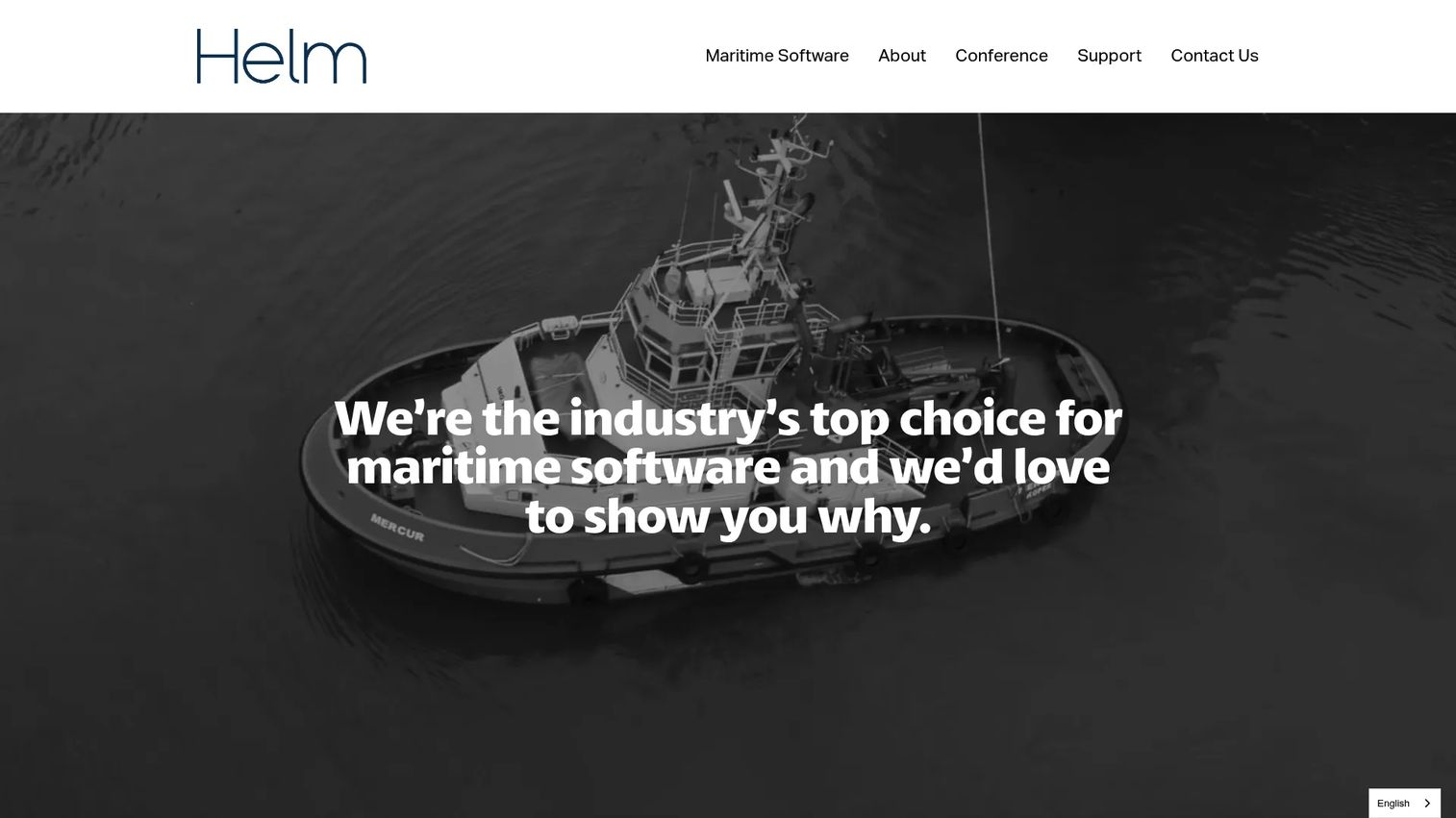
Helm CONNECT is maritime fleet management software built around maintenance, compliance, logistics, and personnel. Its modular design means you can start with one area, like maintenance, and expand into compliance and crew workflows as your operation grows. That makes it a fit for operators who want a single system that scales with the fleet rather than a set of disconnected point tools.
The platform leans into practical, day-to-day vessel operations. Maintenance is handled with tasks, inventory, requisitions, predictive maintenance, and logbook integration, so shore and ship teams work from the same data. Compliance covers drills, safety meetings, forms, audits, corrective actions, and document management, which is exactly what you need when an audit lands. Logistics and personnel round it out with dispatching, billing, crew scheduling, certifications, and payroll.
Best for: Maritime operators managing vessel maintenance, compliance, and crew workflows who want one system that can expand over time.
Key strengths
- Maintenance management: Tasks, inventory, requisitions, predictive maintenance, and logbook integration in one workflow.
- Compliance tooling: Drills, safety meetings, forms, audits, corrective actions, and document control for audit readiness.
- Logistics and personnel: Dispatching, billing, crew scheduling, certifications, and payroll across the fleet.
Why choose Helm CONNECT: If your priority is broad fleet operations rather than a single niche, Helm CONNECT is the most complete starting point on this list. The modular approach lets you adopt what you need now and add compliance, logistics, or personnel later without switching platforms.
Helm CONNECT pricing: Public pricing was not visible on Helm's own site during review, so figures come from G2 as a third-party source. G2 lists module-based pricing for Helm CONNECT Jobs, including Maintenance from $99 vessel/month* (billed annually), Crew Certifications at $50 per month (billed annually), and Vessel Certifications at $50 per month (billed annually). There is no free tier, and pricing is best confirmed directly with the vendor for your fleet size.
2. ABS Wavesight
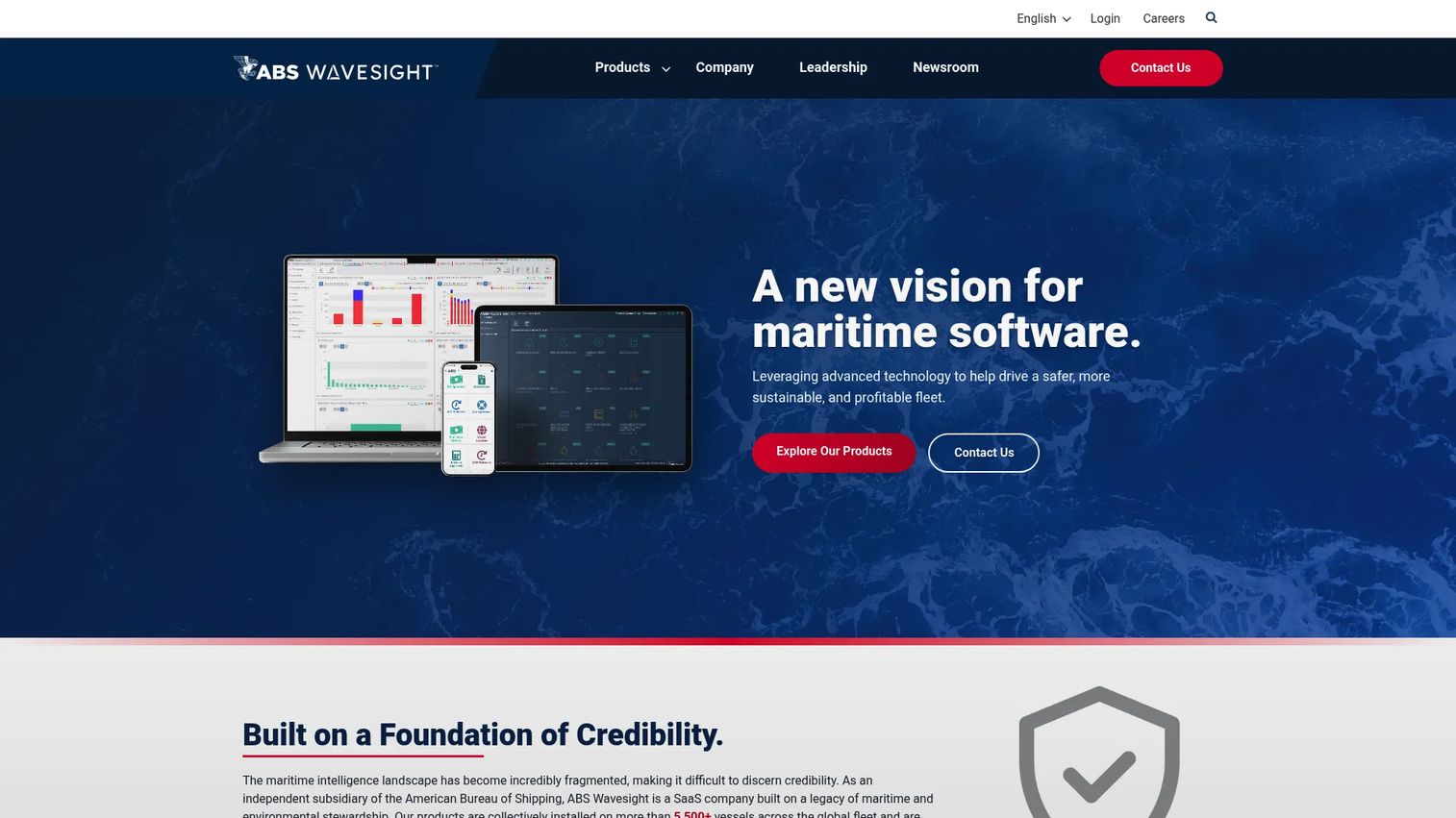
ABS Wavesight is a maritime SaaS suite focused on fleet digitalization, compliance, emissions, and crew and asset management. It stands out for teams that put recordkeeping and decarbonization at the center of fleet-wide decision-making. If your operation is judged on compliance consistency and emissions reporting, this is a strong fit.
The suite brings several products together. ABS Wavesight Advantage handles emissions validation and decarbonization KPIs, which matters as CII and EU ETS obligations tighten. Nautical Systems is a full marine ERP covering fleet and crew management, giving you an operational core beyond compliance alone. eLogs provides digital logbooks with compliance and reporting support, so the paper trail becomes a live, queryable record.
Best for: Maritime operators needing fleet-wide compliance and operational software with strong emissions visibility.
Key strengths
- Emissions validation: ABS Wavesight Advantage tracks decarbonization KPIs against regulatory targets.
- Marine ERP: Nautical Systems covers fleet and crew management as an operational backbone.
- Digital logbooks: eLogs replaces paper records with compliance-ready reporting.
Why choose ABS Wavesight: For teams prioritizing maritime compliance software and emissions visibility, ABS Wavesight combines the recordkeeping rigor of digital logs with the operational depth of a marine ERP. The decarbonization focus makes it especially relevant as sustainability reporting becomes non-negotiable.
ABS Wavesight pricing: Public pricing was not published on the ABS Wavesight site during review, and the vendor directs interested teams to contact sales. Expect quote-based pricing scoped to fleet size and the specific products you deploy. Confirm current terms directly with ABS Wavesight before shortlisting.
3. AXSMarine
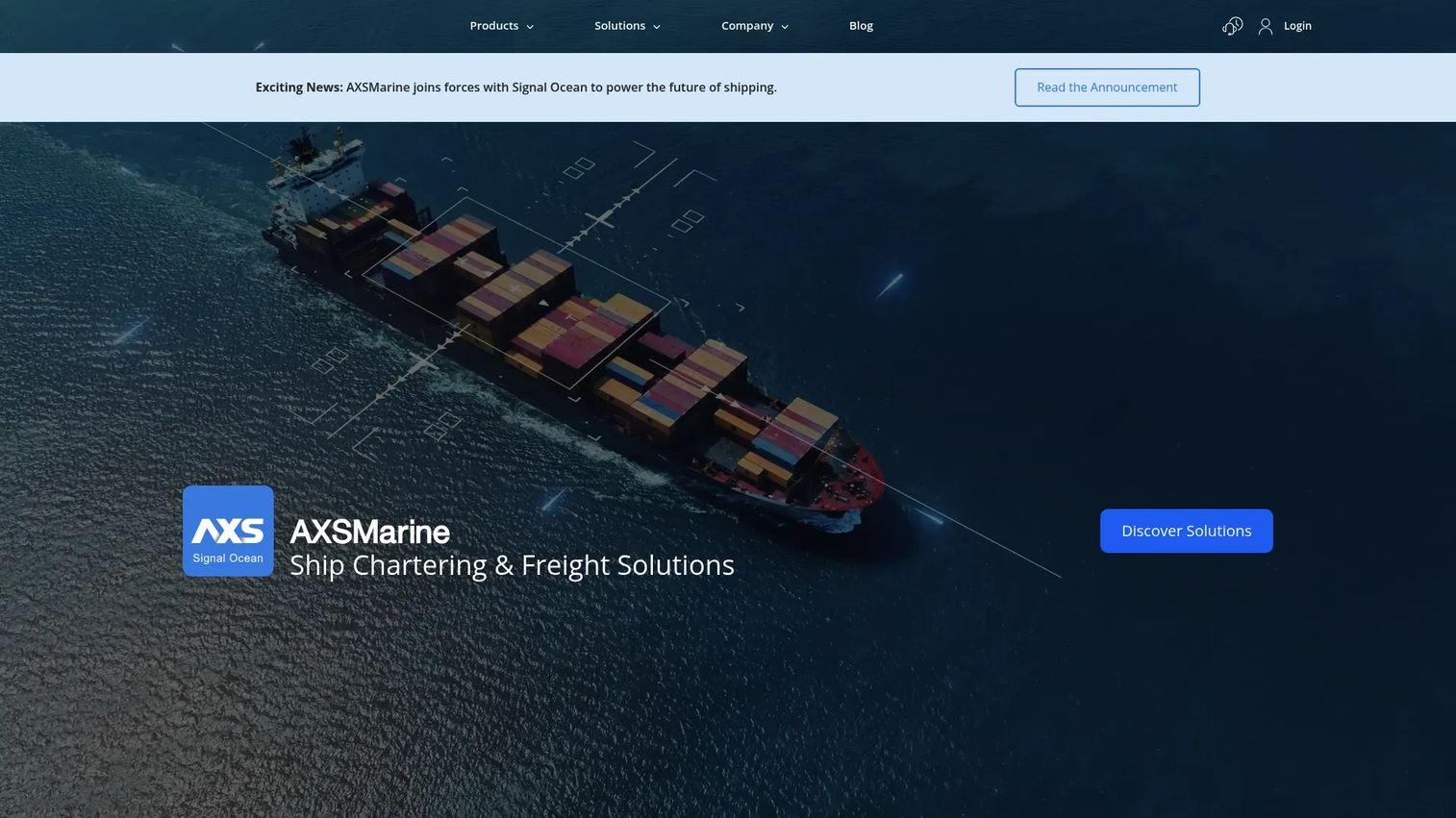
AXSMarine is a maritime software and data provider built for shipping and commodity markets. It leans toward voyage, cargo, and market-intelligence work rather than shipboard maintenance, which makes it a fit for commercial and chartering teams that live in data. If your decisions hinge on trade flows and vessel positioning, this is the data-heavy option.
The platform combines chartering, market insight, and raw data access. Ship chartering and freight solutions support the commercial side of voyage decisions. Interactive shipping insights and trade flows give analysts a live view of the market, useful for route planning and optimization at the commercial level. API and raw data extracts for AIS, vessel, and voyage data let you feed maritime intelligence into your own models and systems.
Best for: Shipping and commodity teams needing chartering, market intelligence, and vessel data tools.
Key strengths
- Chartering and freight: Ship chartering and freight solutions for commercial voyage decisions.
- Market intelligence: Interactive shipping insights and trade-flow analysis.
- Data access: API and raw data extracts for AIS, vessel, and voyage data.
Why choose AXSMarine: When your maritime software needs are data-first rather than maintenance-first, AXSMarine delivers the trade-flow insight and vessel data that commercial teams rely on. The API access is a differentiator for teams that want to pipe maritime data into their own analytics stack.
AXSMarine pricing: AXSMarine does not publish public pricing, and its general terms reference applicable fees without listing figures. Pricing is quote-based and scoped to the data and modules you need. Contact AXSMarine directly to scope a plan for your commercial team.
4. SpecTec AMOS
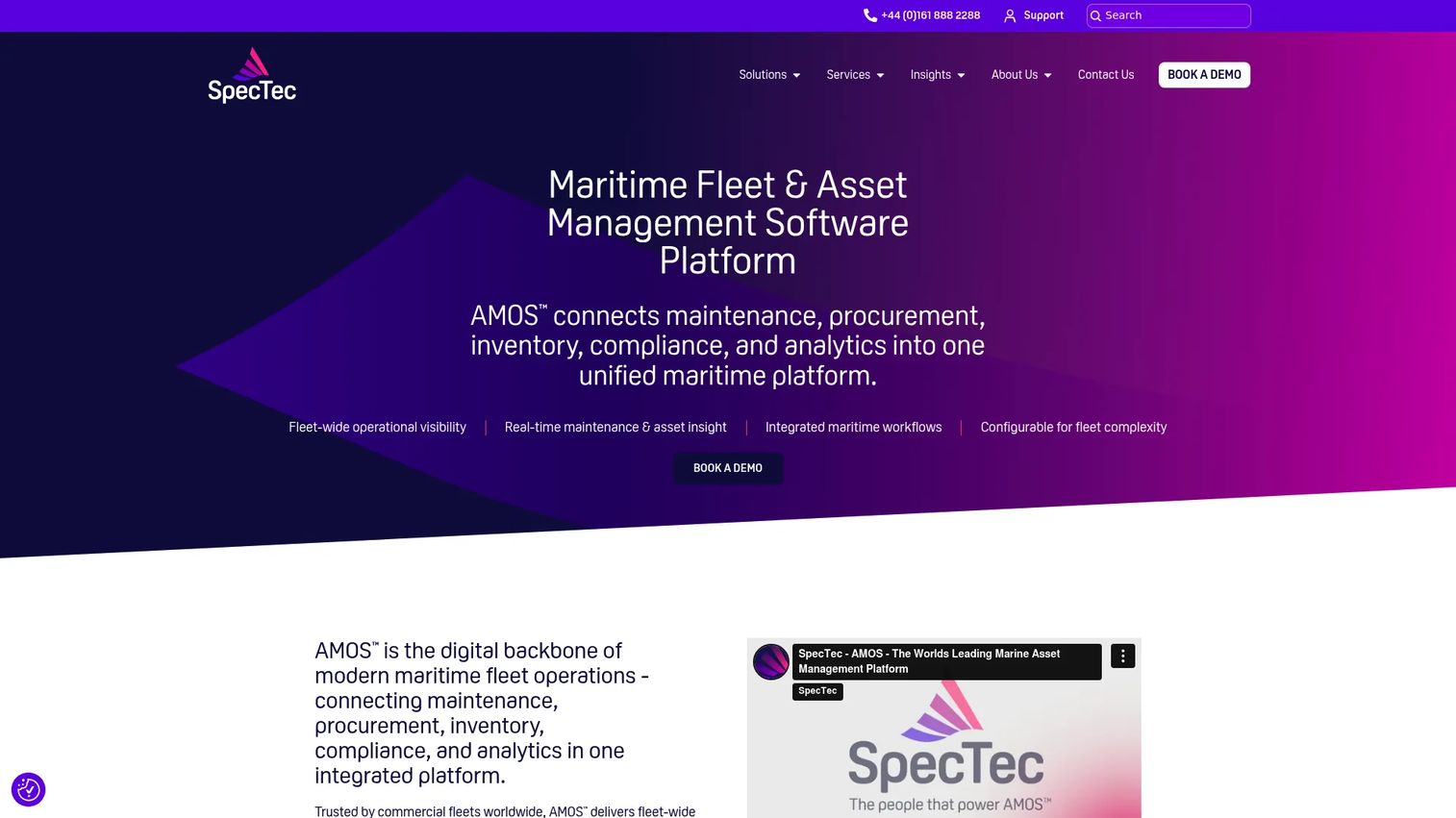
SpecTec AMOS is a maritime fleet and asset management platform for ship owners and operators, built around maintenance, procurement, and inventory control. It functions as an operational backbone for both ship and shore teams. Organizations that need tighter control across asset and fleet processes tend to gravitate here.
AMOS covers the operational core in depth. Maintenance management keeps planned and corrective work organized across vessels. Procurement and procure-to-pay workflows handle the full purchasing cycle, which matters when spares and requisitions span a global fleet. Inventory control and spare parts tracking close the loop, so maintenance and procurement work from the same stock data instead of guessing.
Best for: Maritime fleets needing integrated maintenance, procurement, and inventory control.
Key strengths
- Maintenance management: Planned and corrective maintenance organized across the fleet.
- Procurement workflows: Procure-to-pay covering the full purchasing cycle.
- Inventory control: Spare parts tracking tied directly to maintenance needs.
Why choose SpecTec AMOS: If maintenance and procurement are where your operational risk and cost concentrate, AMOS is a purpose-built backbone. It connects work orders, purchasing, and inventory so teams stop reconciling three systems by hand.
SpecTec AMOS pricing: SpecTec does not publish public pricing for AMOS, and the vendor handles pricing through sales conversations scoped to fleet size and modules. On G2, AMOS holds a 3.9/5 rating across 19 reviews, which gives some third-party signal on user experience. Confirm current pricing directly with SpecTec.
5. NauticScope
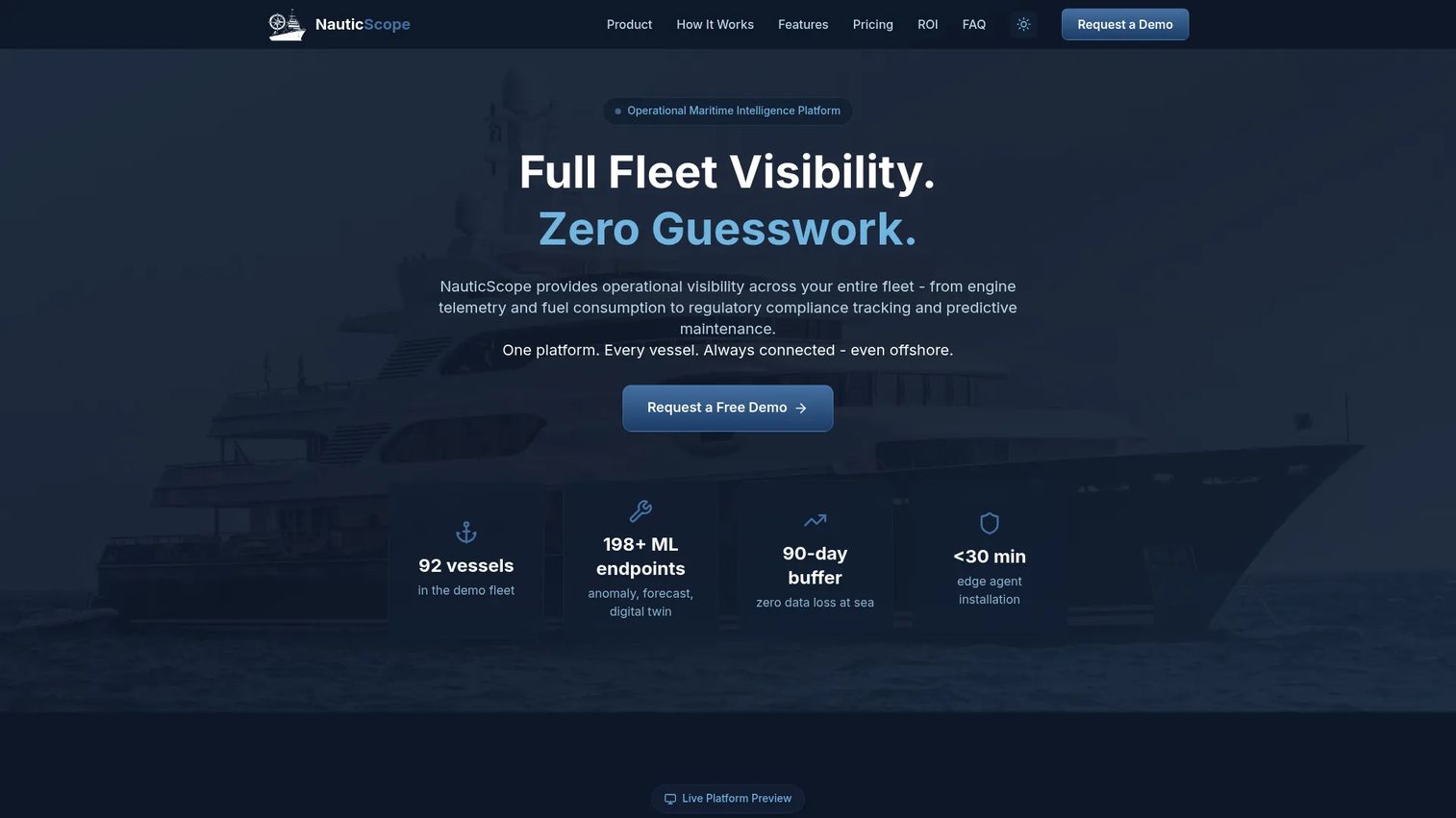
NauticScope is an operational maritime intelligence platform focused on fleet visibility, telemetry, compliance, and predictive maintenance. It is built for teams that want modern, real-time visibility and automation rather than legacy interfaces. If live operational data and compliance monitoring are your priorities, NauticScope is a modern fit.
The platform centers on live operational awareness. A live fleet map with real-time vessel telemetry gives shore teams an at-a-glance picture of the whole fleet. Predictive maintenance and anomaly detection surface problems before they become failures, which is where downtime costs get controlled. Compliance tracking for CII, EEXI, EU ETS, and MARPOL keeps sustainability and emissions tracking front and center, tying operational data directly to regulatory obligations.
Best for: Maritime operators needing fleet-wide operational visibility and compliance monitoring.
Key strengths
- Live fleet map: Real-time vessel telemetry across the fleet in one view.
- Predictive maintenance: Anomaly detection that flags issues before failure.
- Compliance tracking: CII, EEXI, EU ETS, and MARPOL monitoring built in.
Why choose NauticScope: For teams that want a modern operational picture with emissions compliance baked in, NauticScope pairs live telemetry with predictive maintenance and regulatory tracking. That combination suits operators modernizing away from fragmented legacy tooling.
NauticScope pricing: NauticScope licenses per vessel, per month, and lists an Essential plan with pricing available on request. There is no free tier, and the vendor tailors pricing to your fleet. Contact NauticScope to scope a plan for your vessel count and needs.
6. Veson Nautical
Veson Nautical is a maritime software and data platform for freight management, voyage operations, collaboration, and market intelligence. It fits commercial maritime teams that care about voyage performance, trade intelligence, and freight efficiency. If chartering and voyage economics drive your business, Veson is built for that motion.
The platform connects commercial and operational data. Commercial freight contract management and voyage execution keep the money side and the operational side on the same page, which reduces the gap between what was chartered and what actually happened. Maritime email and collaboration keep distributed teams aligned on fast-moving deals. Validated vessel and bunker insights give commercial decisions a data foundation, so voyage estimation and market calls rest on real numbers.
Best for: Commercial maritime teams needing an integrated platform for voyage management and trade data.
Key strengths
- Freight and voyage: Commercial freight contract management with voyage execution.
- Collaboration: Maritime email and collaboration to keep teams aligned.
- Data foundation: Validated vessel and bunker insights for commercial decisions.
Why choose Veson Nautical: When freight efficiency and voyage performance are the commercial levers you manage, Veson connects contracts, execution, and market data in one place. That integration is where chartering teams recover margin that otherwise leaks between systems.
Veson Nautical pricing: Veson does not publish public pricing and directs visitors to contact sales or request a demo. On G2, Veson Nautical shows a 4.5/5 rating, though based on very limited review volume, so weigh it accordingly. Confirm pricing and current terms directly with Veson.
7. DANAOS
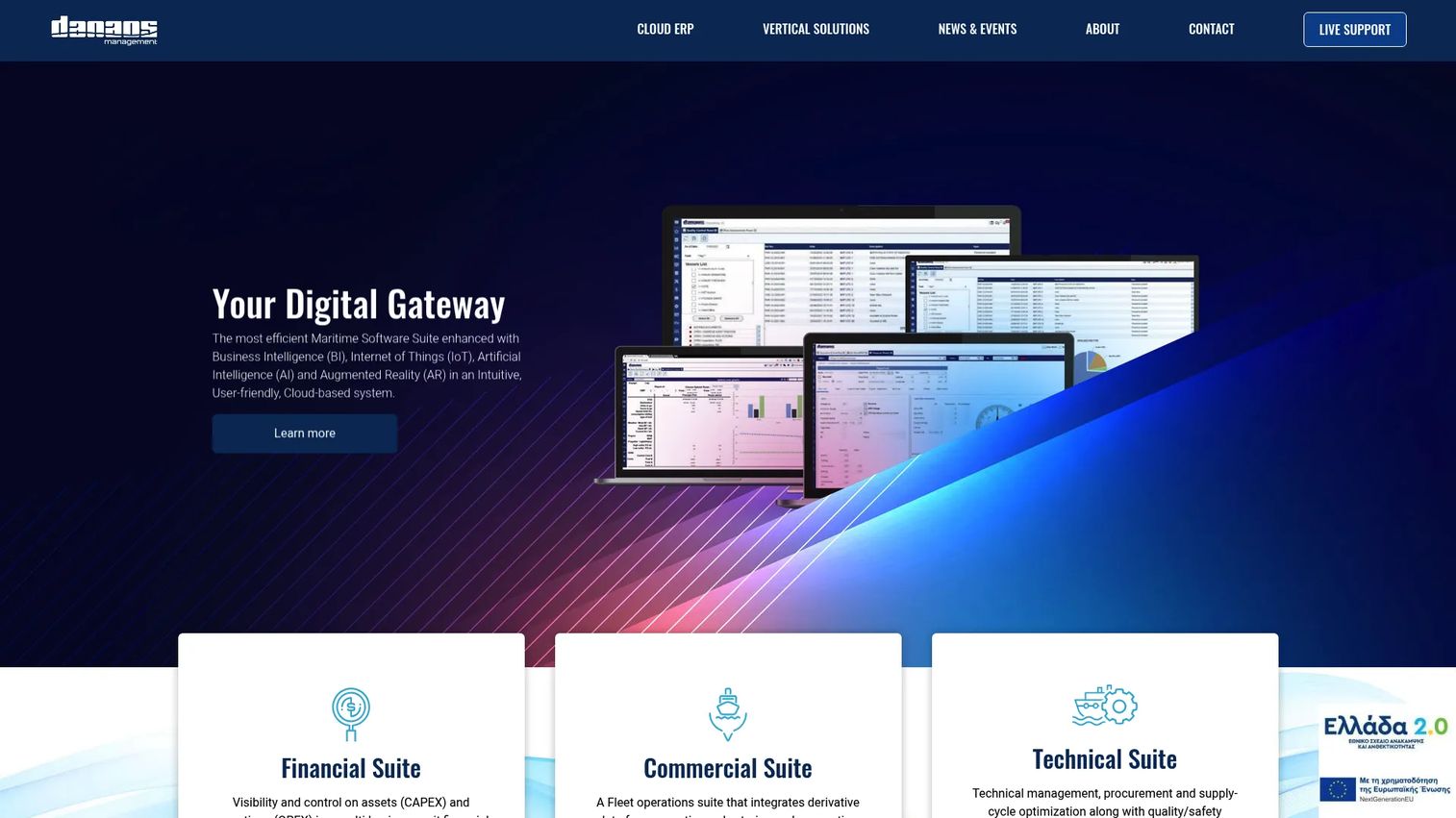
DANAOS is a maritime software suite provider for ship management and related operations, positioned for enterprise-scale shipping. It suits large fleets with broader systems requirements around integration and operational control. If you run at enterprise scale and need financial, commercial, and technical coverage in one provider, DANAOS is built for that footprint.
The suite is organized into three coordinated areas. The Financial Suite handles the accounting and financial control that large operations demand. The Commercial Suite supports the commercial side of ship management, from chartering to voyage economics. The Technical Suite covers technical operations, maintenance, and asset management. Together they give enterprise operators a single provider across the functions that would otherwise span multiple vendors.
Best for: Maritime operators seeking enterprise-grade ship-management software across financial, commercial, and technical operations.
Key strengths
- Financial Suite: Accounting and financial control for large-scale operations.
- Commercial Suite: Chartering and voyage economics for the commercial side.
- Technical Suite: Technical operations, maintenance, and asset management.
Why choose DANAOS: For enterprise fleets that need one provider spanning finance, commercial, and technical operations, DANAOS offers the integrated breadth that large-scale ship management requires. That consolidation matters most when you are trying to reduce vendor sprawl at scale.
DANAOS pricing: DANAOS does not publish public pricing on its site, and pricing is handled through direct sales conversations scoped to fleet size and suite selection. Given the enterprise positioning, expect a consultative, quote-based process. Contact DANAOS directly to scope the suites your operation needs.
Considerations
Before you shortlist, run each candidate against the operational realities of your fleet. These criteria separate a good demo from a good fit.
Fleet size and operating model
A tool that suits five vessels may strain at fifty, and enterprise suites can be heavy for a small operator. Match the platform's modularity and pricing model to your actual fleet size. If you expect to grow, weight scalability heavily so you are not re-platforming in two years.
Compliance and audit needs
If audits and class-society requirements drive real risk, prioritize maritime compliance software depth: digital logbooks, corrective-action tracking, and audit trails. The same way teams lean on structured audit management processes in other functions, maritime compliance rewards standardized, provable workflows over ad hoc ones.
Voyage and route intelligence depth
If commercial performance depends on chartering and voyage economics, weigh route planning and optimization and market-intelligence depth. A data-first platform earns its place when voyage estimation and trade-flow insight directly affect margin.
Integration with ERP, HR, or finance systems
Maritime software rarely lives alone. Check how each tool connects to your finance, HR, and existing operational systems. Just as buyers scrutinize integration when evaluating contract management or marketing resource management platforms, integration scope determines whether maritime software reduces fragmentation or adds to it.
Cloud, mobile, and offline access
With cloud platforms now the majority of the market, confirm ship-to-shore sync, mobile access, and offline capability for connectivity gaps at sea. Reliable access from any location is what turns fleet visibility from a promise into a daily reality.
Conclusion
The right maritime software depends less on ranking and more on which operational job you most need solved. If you want the broadest fleet operations coverage, Helm CONNECT is the most complete starting point. For compliance and decarbonization, ABS Wavesight leads. AXSMarine and Veson Nautical suit commercial and voyage-intelligence teams, while SpecTec AMOS anchors maintenance and procurement. NauticScope brings modern operational visibility with emissions compliance built in, and DANAOS covers enterprise ship management end to end.
Do not try to boil the ocean. Pick the two or three tools that map to your top operational priority, whether that is fleet visibility, compliance, route optimization, or enterprise control, and put them through a real evaluation against your own fleet data. The best way to know if a platform fits is to test it against the workflows that actually consume your team's time. Shortlist two to three, request demos, and let your operational reality make the call.
FAQs
Maritime software is B2B operations software that manages shipping, fleet, compliance, voyage, and vessel workflows. It centralizes fleet management, maintenance, crew, route planning, and emissions reporting so maritime operators run vessels and shore operations from connected systems instead of scattered spreadsheets and email.
At minimum, look for fleet and vessel visibility, maintenance management, compliance and safety tracking, crew management, and reporting. Stronger maritime fleet management software adds route planning and optimization, predictive maintenance, emissions tracking, and cloud and mobile access so ship and shore teams work from the same live data.
Maritime compliance software standardizes drills, forms, corrective actions, and document control into structured, provable workflows. Digital logbooks and audit trails replace paper records, so shore teams can show consistency across the fleet and prepare for class-society or regulatory inspections without last-minute scrambling.
A maritime ERP covers broad enterprise functions like finance, procurement, and crew across the whole organization. Fleet management software focuses more tightly on vessel operations, maintenance, compliance, and scheduling. Many suites blend both, so evaluate whether you need enterprise financial depth or operational fleet control first.
Yes. Many platforms include sustainability and emissions tracking for CII, EEXI, EU ETS, and MARPOL. They tie fuel and voyage data to regulatory targets, validate decarbonization KPIs, and generate compliance-ready reporting, turning emissions from an after-the-fact estimate into a measurable operational metric.
Prioritize route planning and optimization that factors in weather, fuel consumption, and schedule, plus emissions impact. The best marine shipping software connects routing to voyage estimation and real-time visibility, so commercial and operational teams can weigh cost, timing, and compliance in the same decision.
For most multi-vessel operations, cloud-based platforms make ship-to-shore data sync, real-time visibility, and remote access far easier. Cloud already holds the majority of the marine management software market and is growing fastest, per Mordor Intelligence (2025). Confirm offline capability for connectivity gaps at sea before committing.