You measured the lot twice, keyed the numbers into a spreadsheet, and still missed a line item on trucking. The bid went out low. You either eat the margin or lose the job explaining the change order. Every paving contractor knows this loop, and it repeats on every estimate that lives in a spreadsheet and a stack of printed plans.
That friction is why paving software has stopped being optional. The category has grown into a real market: analysts at Dataintelo project the paving software market to expand from USD 1.2 billion in 2023 to USD 3.8 billion by 2032, a 13.4% CAGR. The reason is simple. Contractors running integrated asphalt paving software close bids faster, protect margin, and stop rebuilding the same estimate from scratch on every job.
The problem is not that estimating tools do not exist. It is that paving is its own animal. Trucking calculations, tonnage, striping, crack repair, and crew scheduling do not map cleanly onto generic construction estimating software. So contractors end up stitching together a spreadsheet for takeoff, a separate CRM, a whiteboard for scheduling, and QuickBooks for the money. Nothing talks to anything. The owner becomes the integration layer.
This guide compares seven paving estimating software options built for contractors who want to move from lead to job execution with less manual work. Whether you need faster bids, cleaner crew handoffs, or one system instead of five, there is a fit here for your team size and process maturity.
What's inside
This is a shortlist for paving and asphalt contractors, estimators, and operations owners comparing software to replace spreadsheets and disconnected tools. We picked seven options and evaluated each on five criteria that matter when you are running a real crew:
- Estimating depth, including asphalt, maintenance, striping, and trucking logic
- Workflow coverage across takeoff, scheduling, CRM, and job costing
- Mobile usability for estimators and field crews
- Integration fit with accounting and existing tools
- Support and training to get a team live without a six-month rollout
The list favors tools that reduce manual work between winning a bid and finishing the job. Where pricing or ratings are public, we included them. Where a vendor keeps pricing behind a sales call, we said so instead of guessing.
TL;DR
- Best all-in-one paving ops: Bitumio combines estimating, scheduling, job costing, and customer management in one paving-specific platform, with map measurements and automated proposals built in.
- Best for lead-to-job flow with light admin: PavementSoft covers CRM, estimating, proposals, scheduling, and invoicing as a cloud paving job management software.
- Best for takeoff-heavy teams: STACK centers on digital plans takeoff, assemblies, and measurement tools for teams that live in specs.
- Best for complex preconstruction: HCSS HeavyBid and B2W Estimate both serve established contractors with heavy-bid estimating needs.
- Best for small crews wanting simplicity: Jobber handles scheduling, quotes, and client communication for lighter operations.
- Best for back-office control: Jonas Premier focuses on job costing and construction accounting for teams that need financial visibility first.
What paving software is
Paving software is a category of tools that help asphalt and paving contractors estimate jobs, manage bids, schedule crews, track costs, and coordinate field work from one system. It typically combines estimating and takeoff, proposal generation, scheduling and work orders, CRM and customer management, mobile crew communication, and post-job costing so a contractor can run the full lifecycle from lead to invoice without bouncing between disconnected tools.
The best asphalt estimating software understands paving-specific math. Generic construction tools treat a bid as a list of line items. Paving work depends on tonnage, square footage, trucking cycles, mobilization, striping, and sealcoat coverage. When the software knows that logic, an estimator stops rebuilding formulas by hand and stops missing the items that quietly kill margin.
Core features to expect
- Estimating and bid preparation with asphalt, maintenance, and striping logic
- Digital plans takeoff and map measurements to size lots and roads accurately
- Proposal automation that turns an estimate into a branded, sendable quote
- Scheduling and work orders to assign crews and equipment to jobs
- CRM and customer management to track leads, follow-ups, and repeat clients
- Mobile crew communication for field updates, notifications, and inspections
- Job costing to compare estimated versus actual cost after the job closes
Why the category matters now
Spreadsheets and paper bids do not scale. They work when the owner does every estimate, but they break the moment you hire a second estimator or run three crews at once. The numbers back the shift toward integrated tools: research cited by TruTec AI projects the construction estimating software market for paving professionals to reach USD 1.72 billion by 2026 at a 9.9% CAGR, with firms using integrated software reporting 15 to 25% higher bid-win rates.
For a growing contractor, consolidation is the real buying motive. One system means faster bids, cleaner handoffs between office and field, and reporting the owner can trust. That is repeatability, and repeatability is what lets a business grow without the founder in every estimate.
When to use paving software
When you need faster, more accurate bids
If your estimates live in a spreadsheet, you are one distracted afternoon away from a missed line item. Paving estimating software reduces that risk by carrying asphalt, maintenance, and striping logic so tonnage, trucking, and coverage calculate automatically. That matters most for teams bidding a high volume of maintenance work, where crack repair and patching estimates repeat and small errors compound across many jobs.
When scheduling and field coordination keep breaking down
The bid is won, then the wheels come off. The crew shows up short a truck, the work order lives in someone's head, and the customer calls asking for an update nobody has. Paving job management software with a mobile app fixes the handoff. Crew notifications, work-order visibility, and field crew communication keep everyone on the same page when teams are spread across multiple sites.
When leadership needs one system instead of five
When the owner is the only person who knows where the numbers live, the business cannot scale. Pulling CRM, proposals, scheduling, job costing, and accounting handoffs into one platform gives leadership operational control and cleaner reporting. This is the consolidation case: fewer tools, more signal, and the ability to hand a working system to a new operations lead on day one.
Comparison table
Here is a quick side-by-side. Ratings and pricing reflect verified public sources at the time of writing; where a vendor keeps pricing private, we noted it rather than estimating.
| # | Product | Intent | Key differentiation | Pricing | G2 rating |
|---|---|---|---|---|---|
| 1 | Bitumio | All-in-one paving ops | Paving-specific estimating, scheduling, and job costing with map measurements | $149/user/month | Not listed on G2 |
| 2 | PavementSoft | Lead-to-job flow | Cloud CRM, estimating, proposals, scheduling, and invoicing for paving | Custom (apply for pricing) | Not listed on G2 |
| 3 | HCSS HeavyBid | Complex estimating | Heavy civil bid management with historical data and automated calculations | Custom quote | 4.6/5 |
| 4 | STACK | Takeoff-first estimating | Cloud takeoff, assemblies, and field collaboration | From $599/user/year | 4.4/5 |
| 5 | B2W Estimate | Enterprise estimating | Shared license pool and multi-database bid management | Custom (contact sales) | 4.5/5 |
| 6 | Jobber | Lightweight field ops | Scheduling, quoting, and client communication for small teams | From $29/month | 4.6/5 |
| 7 | Jonas Premier | Back-office control | Construction accounting and detailed job costing | Custom | 4.7/5 |
1. Bitumio

Bitumio is asphalt paving estimation and job management software built specifically for paving contractors. It pulls estimating, scheduling, job costing, and customer management into one platform, so the office and the field work from the same source instead of a spreadsheet and a whiteboard. The paving-specific logic is the differentiator here: it handles asphalt, sealcoat, striping, and maintenance work, and it calculates trucking and material automatically rather than making an estimator do the math by hand.
Best for: Paving contractors who want a consolidated operations stack rather than a pile of single-purpose tools.
Key strengths
- Paving-specific estimating: Handles asphalt, maintenance, and line striping logic with automatic trucking and material calculations.
- Map measurements: Size lots and roads directly on a map so takeoff does not depend on a separate measurement tool.
- All-in-one operations: Scheduling, job costing, customer management, and automated proposals live in the same platform.
Why choose Bitumio: If your main problem is that estimating, scheduling, and job costing live in three different places, Bitumio is the most direct answer on this list. It is purpose-built for paving, so the estimating math already knows how paving works, and the mobile app keeps field crews connected without extra tools. It fits owners who want to stop being the integration layer between office and field.
Bitumio pricing: Bitumio charges $149 per user per month on a month-to-month plan with full access to all features. Yearly agreements are available with savings, and mobile app access for certain field employees is offered at no additional cost. That flat per-user model makes the cost easy to forecast as you add estimators or crew leads.
2. PavementSoft

PavementSoft is cloud-based pavement and concrete management software for paving contractors who want lead-to-job flow without heavy admin. It covers CRM and client management, estimating and proposal generation, and scheduling, work orders, and invoicing in one place. The appeal is workflow consolidation: a lead comes in, gets estimated, turns into a proposal, then flows into scheduling and invoicing without the owner rekeying data at each step.
Best for: Owners who want visibility across the pipeline without a long, heavy implementation.
Key strengths
- Paving CRM software: Track leads, clients, and follow-ups so customer management for paving contractors lives in the same system as the bids.
- Estimating and proposals: Build estimates and turn them into proposals with proposal automation that keeps quotes consistent.
- Scheduling to invoicing: Move from work orders through invoicing without switching tools, with accounting integrations to close the loop.
Why choose PavementSoft: PavementSoft fits paving and concrete contractors who want an industry-specific operations platform but do not want to run a six-month rollout to get there. Its lead-to-job continuity is the draw for owners who care more about pipeline visibility than deep custom configuration. The accounting integrations keep the books connected without manual double entry.
PavementSoft pricing: PavementSoft does not publish a public price. The company states that pricing varies based on the customer's needs and asks prospects to apply for pricing details. If you are evaluating it, treat the sales conversation as a scoping exercise and ask directly about setup time and which integrations are included at your tier.
3. HCSS HeavyBid
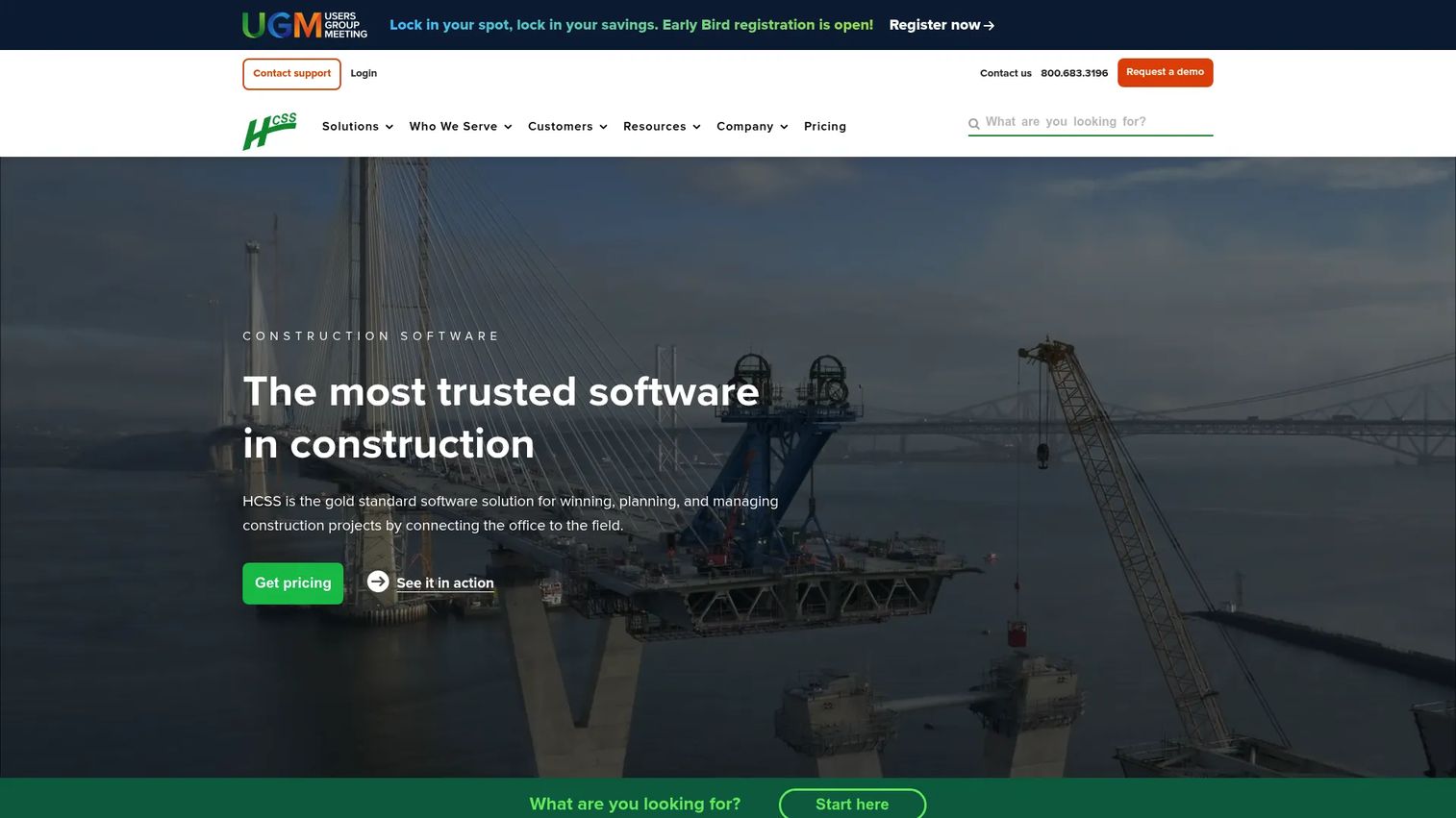
HCSS HeavyBid is construction estimating and bidding software for heavy civil and infrastructure contractors, including asphalt and concrete paving work. It is built for teams with serious preconstruction needs: opportunity tracking, bid management, quick pricing from historical data, and automated calculations. Where lighter tools stop at a single estimate, HeavyBid is designed to manage a pipeline of competitive bids at volume.
Best for: Established contractors with complex estimating needs who bid heavy civil work alongside paving.
Key strengths
- Bid management: Track opportunities and manage competitive bids across a full pipeline, not one job at a time.
- Historical data pricing: Reuse past job costs and quick pricing to build estimates faster and defend them with real numbers.
- Stack integration: Connects with HeavyJob and takeoff tools so estimating flows into field operations.
Why choose HCSS HeavyBid: HeavyBid earns its place when estimating is complex enough that a general tool creates more work than it saves. It sits inside the broader HCSS ecosystem, so it fits contractors who want estimating that connects to field and operations software rather than a standalone estimator. For serious preconstruction teams, that depth is the point.
HCSS HeavyBid pricing: HCSS does not publish HeavyBid pricing publicly and directs prospects to request a custom quote through a demo. Reviewers on Capterra rate HeavyBid 4.6/5. When you scope it, ask how pricing scales with estimator seats and whether HeavyJob or takeoff modules are bundled or priced separately.
4. STACK
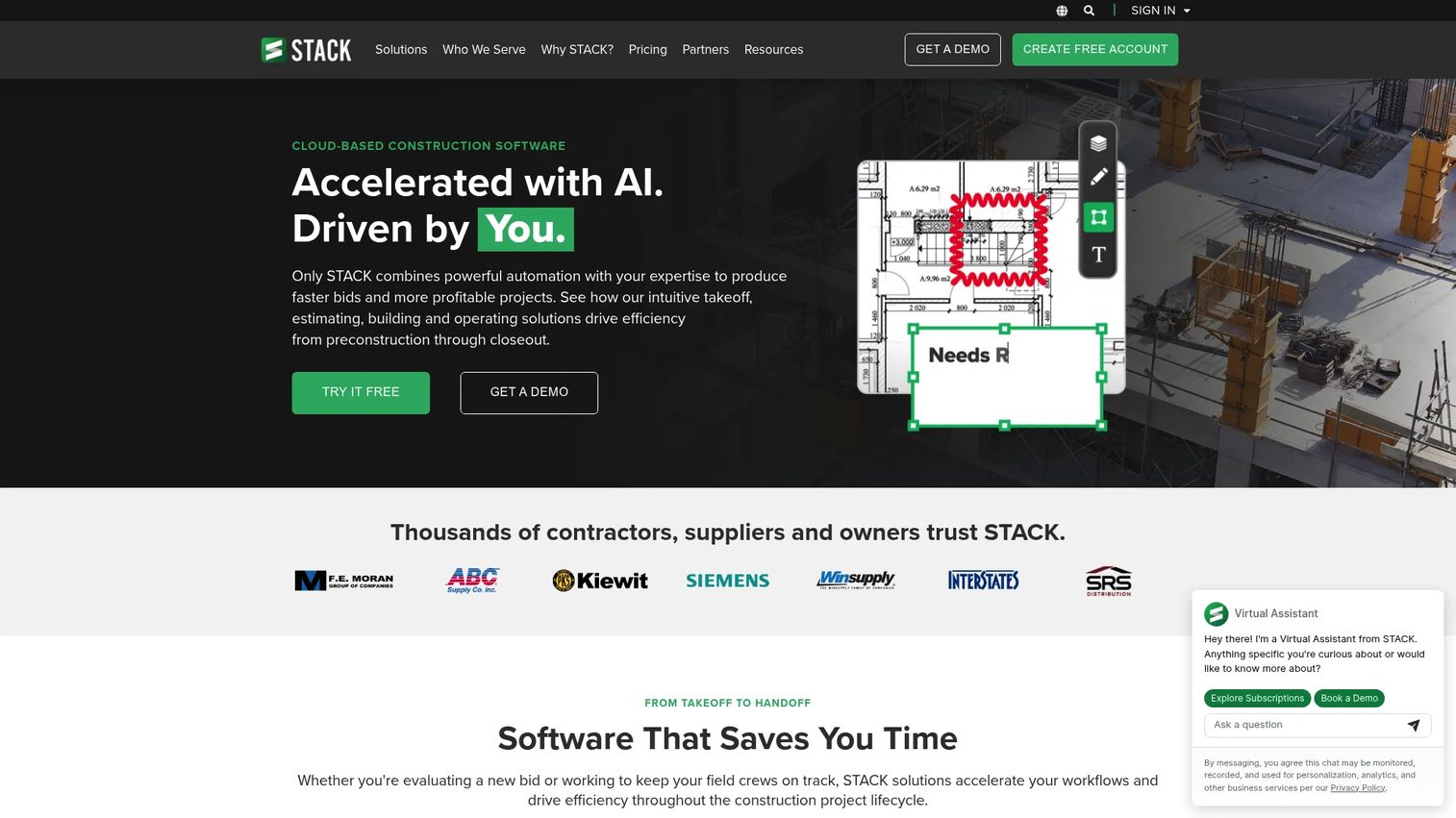
STACK is cloud-based construction software focused on takeoff, estimating, project collaboration, and field operations. For paving teams, its strength is takeoff software for paving that lives in the plans: measure directly on digital drawings, build assemblies, and carry those measurements straight into an estimate. It is the tool for teams whose estimating starts with specs and plan sheets rather than a lot walk.
Best for: Teams centered on takeoff accuracy and plan-based estimating.
Key strengths
- AI-powered takeoff: Measure areas and quantities on digital plans quickly, then reuse assemblies across estimates.
- Document management: Sheet versioning and compare tools keep the whole team working from the current plan set.
- Field collaboration: Issues, daily reports, workflows, and mobile app support connect office estimating with field execution.
Why choose STACK: STACK stands out when accuracy on the plans is where jobs are won or lost. The digital plans takeoff and permissions let office and field collaborate without version confusion. It fits paving contractors who bid off engineered drawings and want takeoff, estimating, and field workflows in one cloud platform.
STACK pricing: STACK's Build & Operate plans are priced per user per year: Essential at $599, Pro at $699, and Enterprise as a custom quote. A 30-day free trial is available with no credit card required, and the Takeoff & Estimate product offers a short free trial of Pro-level features. STACK holds a 4.4/5 rating on G2. The per-user-per-year model rewards teams that keep a stable estimating headcount.
5. B2W Estimate
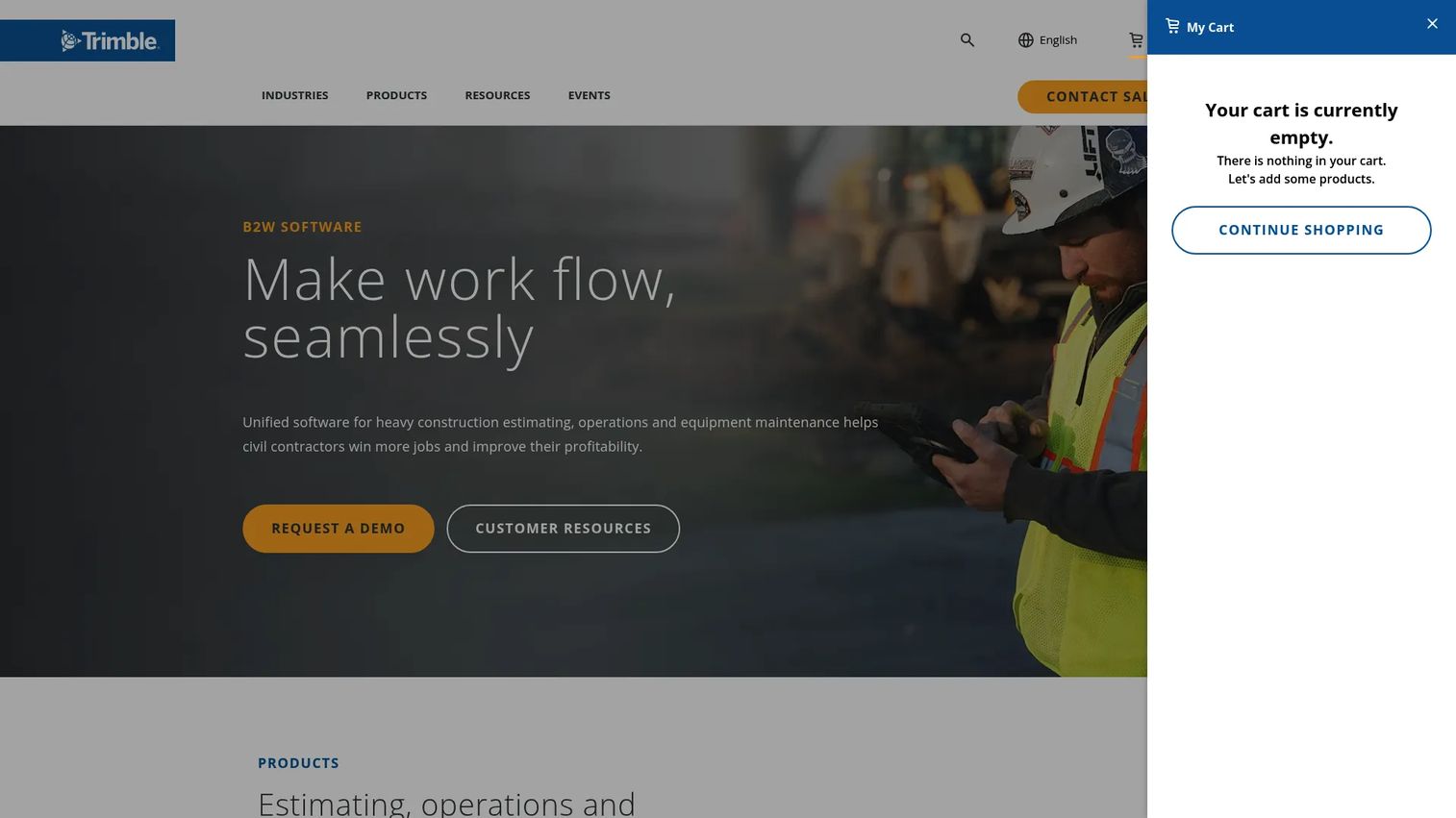
B2W Estimate is heavy civil construction estimating and bidding software that overlaps with paving in the estimating workflow. It is built for larger operations that need consistency and control across many estimators: a shared license pool, support for multiple databases, and advanced estimate security. If your paving work sits inside a broader heavy civil operation, B2W keeps estimating standardized across the whole team.
Best for: Contractors already running the broader B2W platform or a similar operations stack.
Key strengths
- Shared license pool: Let a team of estimators work from a common pool of licenses rather than fixed per-seat assignments.
- Multiple database support: Maintain separate cost databases for different job types or regions in one system.
- Estimate security: Control who can view and edit estimates so bid data stays protected across a large team.
Why choose B2W Estimate: B2W makes the most sense when paving is one part of a larger heavy civil business that already values estimating standardization. It is broader than a pure paving estimating app, so a small asphalt-only contractor may find it more platform than they need. For teams that want estimating consistency across many crews and job types, that breadth is the strength.
B2W Estimate pricing: B2W does not list public pricing and directs prospects to a demo and sales conversation. It holds a 4.5/5 rating on G2. Because pricing is quote-based, ask how the shared license pool is counted and whether estimating connects to the rest of the B2W operations platform at your scale.
6. Jobber
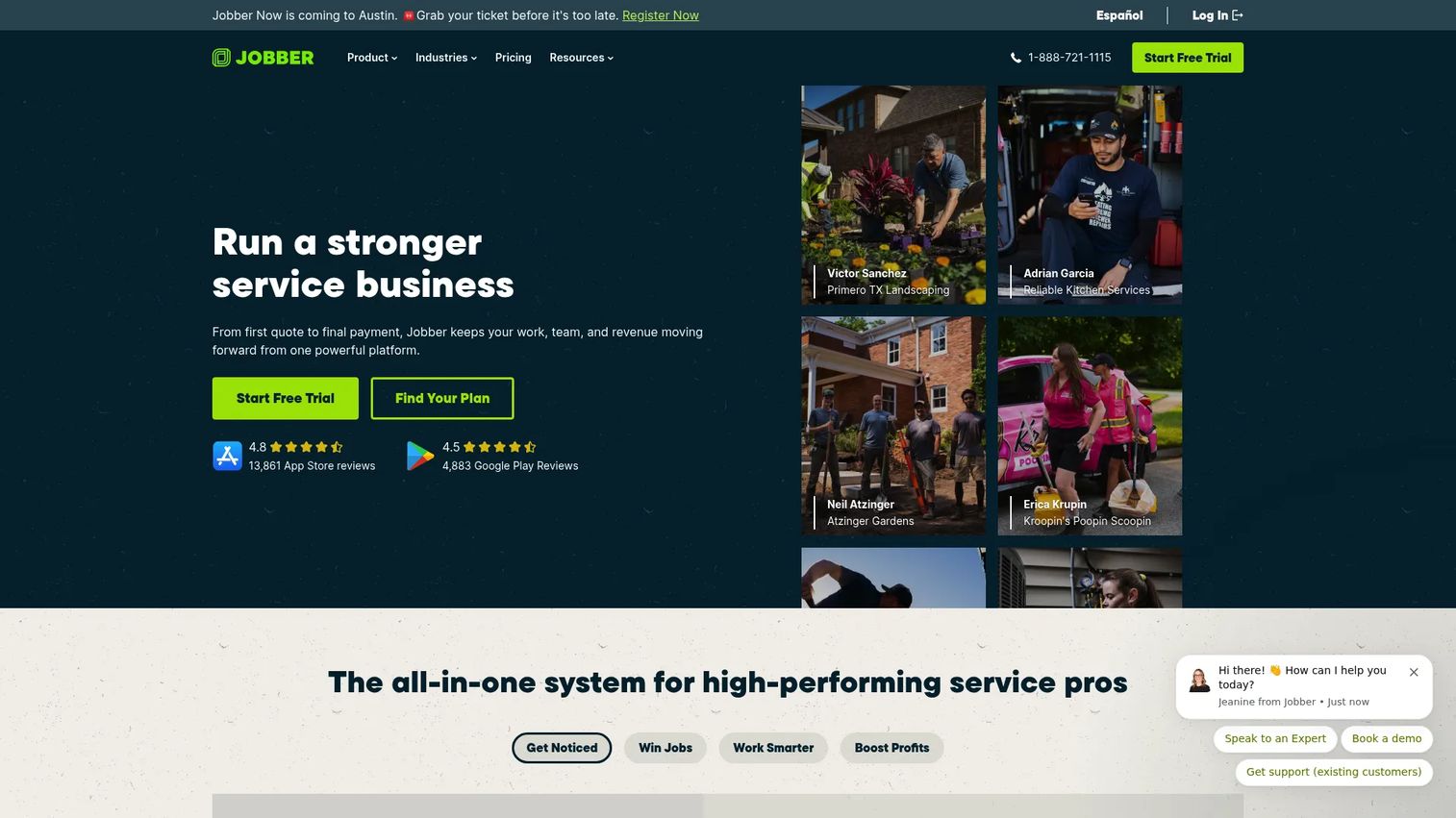
Jobber is field service management software for service businesses, including smaller paving and sealcoat operations. It is not a purpose-built paving estimator, and it is honest to say so: Jobber covers scheduling and dispatch, quoting, invoicing and payments, and client communication rather than tonnage math or trucking logic. For a small crew that needs operational control more than deep paving-specific estimating, that trade is often worth it.
Best for: Small contractors who need simple operations control more than paving-specific estimating logic.
Key strengths
- Scheduling and dispatch: Assign crews and jobs from a clean calendar with a strong mobile app for paving contractors on the move.
- Quoting and payments: Send quotes, invoice, and take payment in one flow to shorten the cash cycle.
- Client communication: A client portal and automated messages keep customers informed without manual follow-up.
Why choose Jobber: Jobber is the practical pick for a small paving or maintenance business that wants to get organized fast without adopting a heavy estimating platform. It will not calculate asphalt tonnage for you, so a bid-heavy contractor will outgrow it. For a two-crew operation drowning in paper schedules, it is a fast, affordable way to run the day.
Jobber pricing: Jobber publishes four plans billed monthly: Core at $29, Connect at $89, Grow at $149, and Plus at $499. A free trial is offered, though there is no permanent free tier. Jobber holds a 4.6/5 rating on G2. The tiered structure lets a small team start cheap and add features like automation as they grow.
7. Jonas Premier

Jonas Premier is cloud-based construction accounting and project management software for contractors and developers who need back-office control first. Its strength is financial: streamlined financial statements, inter-company allocations, and detailed job costing for paving contractors who want to know actual cost against estimate on every job. It is less a front-line estimator and more the system of record for the money.
Best for: Teams that need back-office control and financial visibility across complex operations.
Key strengths
- Detailed job costing: Track actual versus estimated cost at the job level so margin never becomes a guess.
- Financial statements: Generate clean, contractor-ready financials without exporting to a separate accounting tool.
- Inter-company allocations: Manage multiple entities and allocate costs across them, useful for larger operations.
Why choose Jonas Premier: Jonas Premier fits when the back office, not the estimate, is the bottleneck. Larger paving businesses with multiple entities and complex admin get financial visibility a general accounting tool struggles to match. Pair it with a dedicated estimating tool when you need both strong bids and strong books.
Jonas Premier pricing: Jonas Premier does not publish public pricing and works through a demo and quote process. The Premier Construction Software listing holds a 4.7/5 rating on G2. Because it is an accounting-led platform, scope implementation carefully and ask how it connects to whatever estimating tool your crews already use.
Considerations before you buy
Picking paving software is less about the feature list and more about which manual work it removes from your current stack. Run every option through these criteria.
Estimating fit for your work mix
A striping-heavy maintenance contractor and a highway paving firm need different math. Confirm the tool handles your actual work: asphalt tonnage, sealcoat coverage, crack repair, striping, and trucking. If the estimating logic does not match your jobs, you will end up back in a spreadsheet anyway.
Office-to-field handoff
The bid is only half the job. Check how cleanly an estimate becomes a work order, how the crew receives it, and whether field updates flow back to the office. A mobile app that field crews actually use is worth more than a feature no one opens.
Integration with your accounting
If job costing lives in one tool and invoices live in another, someone rekeys data and mistakes creep in. Verify the accounting integration you need, whether that is QuickBooks or something else, and confirm it is included at your pricing tier rather than an upsell.
Speed to first win
You do not have a quarter to wait for value. Ask how long onboarding takes and what the first useful output looks like in week one. For a growing contractor, a tool that produces a clean bid fast beats a deeper platform that takes months to configure.
Total cost as you scale
Per-user, per-seat, and flat pricing scale very differently. Model the cost at your headcount a year from now, not today. A flat monthly plan may be cheaper at two estimators and pricier at ten, and the reverse can also be true.
Conclusion
Paving software choices sort into three buckets. If estimating and takeoff accuracy is where you win or lose, look at STACK, HCSS HeavyBid, or B2W Estimate depending on how complex your bids get. If you want all-in-one paving ops, Bitumio and PavementSoft pull estimating, scheduling, CRM, and job costing into one platform built for paving. If back-office control is the bottleneck, Jonas Premier leads on job costing and construction accounting, while Jobber gives small crews simple operational control.
The practical move is to start with the tool that removes the most manual work from your current stack. If you rebuild the same estimate on every job, fix estimating first. If bids are fine but crews and cash are chaos, fix operations first. Pick one high-friction workflow, pilot the tool that owns it, and expand from there.
Shortlist two options, run a real bid through each, and let the estimate quality and the office-to-field handoff decide.
FAQs
Small contractors usually get the most from tools that prioritize simplicity, low cost, and fast setup over deep configuration. Jobber is a strong lightweight option for scheduling, quoting, and client communication, while Bitumio suits a small team that still wants paving-specific estimating. Most small crews prioritize estimating, scheduling, and mobile access above everything else.
At minimum, look for takeoff and map measurements, proposal automation, job costing, CRM, and crew coordination. The right mix depends on whether your team is sales-led, where CRM and proposals matter most, or operations-led, where scheduling and field crew communication carry the day. Asphalt-specific logic for tonnage, trucking, and striping separates a real paving estimating app from a generic estimator.
Yes, especially because maintenance work repeats. Asphalt maintenance estimating software that understands crack repair, patching, sealcoat coverage, and recurring service saves time on every bid and reduces the small errors that compound across many small jobs. For a business built on repeat maintenance contracts, that consistency protects margin.
Paving software is more workflow-specific. General construction estimating software treats a bid as line items, while paving tools carry logic for asphalt tonnage, striping, trucking cycles, and field coordination. If most of your work is asphalt and maintenance, a paving-focused tool will match your jobs more closely than a broad construction estimator.
Yes, for teams that need repeatable bids and better visibility. Software removes the manual formula-building and version chaos that spreadsheets create as soon as you add a second estimator. When you migrate, start with the highest-friction workflow, usually estimating or scheduling, rather than trying to move everything at once.
If your crews and estimators work across multiple sites, a mobile app for paving contractors is close to essential. It lets the field send job updates, receive work orders, log inspections, and stay in sync with the office without phone tag. Mobile matters most when teams are spread out and information has to move in real time.
Match the choice to team size, process maturity, and reporting needs. All-in-one paving software like Bitumio or PavementSoft wins when your workflow is fragmented and consolidation would remove the most manual work. Best-of-breed tools like STACK for takeoff or Jonas Premier for accounting make sense when one function is complex enough to justify a specialist. For growing contractors with a fragmented stack, consolidation usually pays off first.