
You ran a 45-minute discovery call last Tuesday. You asked about pain points, budget, and timeline. The prospect nodded along, said all the right things, and promised to "loop in the team." Three months later, the deal died to no-decision. Your CRM still shows it as "Closed Lost: No Decision."
The problem wasn't your questions. It was what happened (and didn't happen) after you asked them. According to Sales Benchmark Index, demos without a proper sales discovery process are 73% less successful than those with thorough discovery. And most of that gap isn't about uncovering pain. It's about understanding how the company actually buys, who needs to say yes, and what structural steps sit between "we like it" and "we can buy it."
This article covers a repeatable discovery process built for SaaS deals with multiple stakeholders, long cycles, and complex buying processes. What to do, in what order, and how to use what you learn to move deals forward.
TL;DR
- Discovery isn't a single call. In SaaS, it's an ongoing process that runs through the entire deal cycle, from first meeting to close.
- The questions that shorten sales cycles aren't about pain. They're about how the company buys: who signs, what reviews are required, and what's killed deals like this before.
- Mapping the buying committee in the first two calls prevents the single biggest cause of late-stage stalls: a new stakeholder appearing in week eight with concerns nobody anticipated.
- Discovery findings only matter if they change what happens next. Every discovery output should directly shape your demo, your follow-up, and your mutual action plan best practices for B2B sales.
- Measuring discovery quality by stage conversion rate (not just "did we do discovery") is how teams identify where deals actually stall.
What is the sales discovery process
The sales discovery process is a structured method for uncovering a prospect's pain points, decision-making process, success criteria, stakeholders, and buying timeline before proposing a specific product or pricing.
That definition applies everywhere. But what is discovery in sales when you're selling SaaS? It's more than a single conversation. The discovery process in sales for SaaS is a series of research activities and conversations that happen throughout the entire deal cycle, not just at the beginning.
Here's the distinction that matters: SDR or BDR qualification confirms basic fit. Does this prospect match your ICP? Do they have budget? Is there a timeline? That's necessary, but it's not discovery. AE-led sales discovery goes deeper. It maps the buying committee, quantifies business impact, identifies the internal champion, and surfaces the process steps (security review, legal, procurement) that will determine the real timeline.
Most content online treats discovery as a single call. That's incomplete. In SaaS deals with 3 to 15 stakeholders, a single discovery call captures maybe 30% of what you need to close the deal. New information surfaces throughout the cycle: a new stakeholder joins, the budget timeline shifts, a competitor enters the conversation.
Discovery call vs. discovery process
One more misconception worth addressing: discovery is not an interrogation. The best discovery meetings feel like collaborative conversations where the prospect leaves with a clearer understanding of their own problem. You earn the right to propose by demonstrating you understand their situation better than they expected.
This article covers the full process because that's what actually determines whether deals close.
Why discovery quality determines deal outcomes
Discovery quality connects directly to the numbers you report on every week. Here's how.
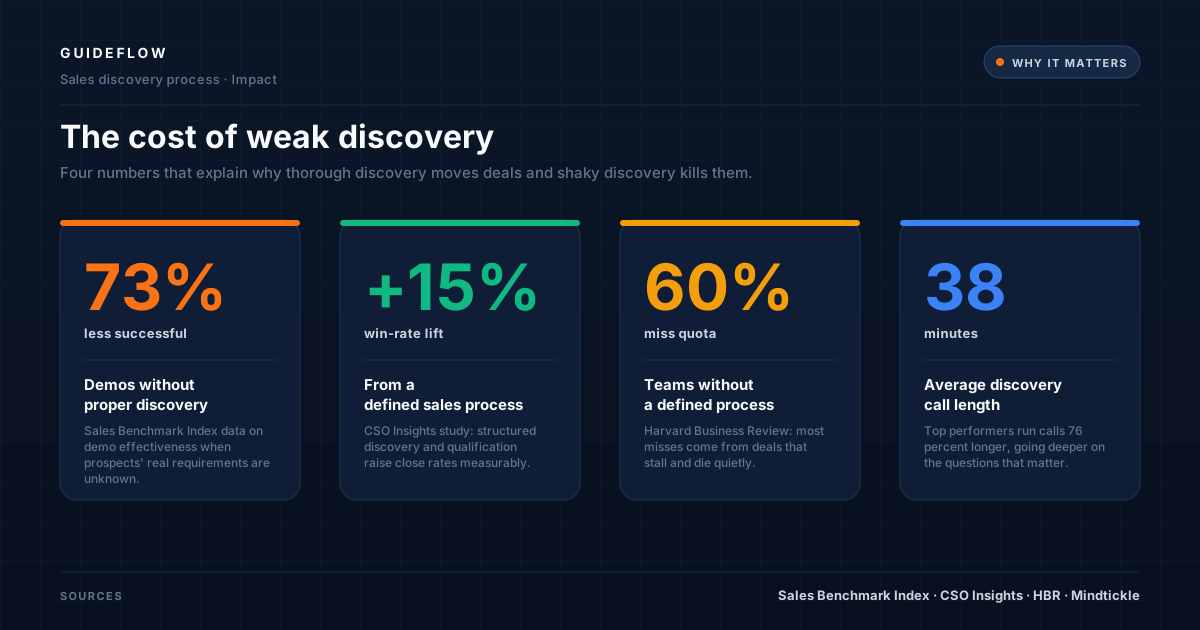
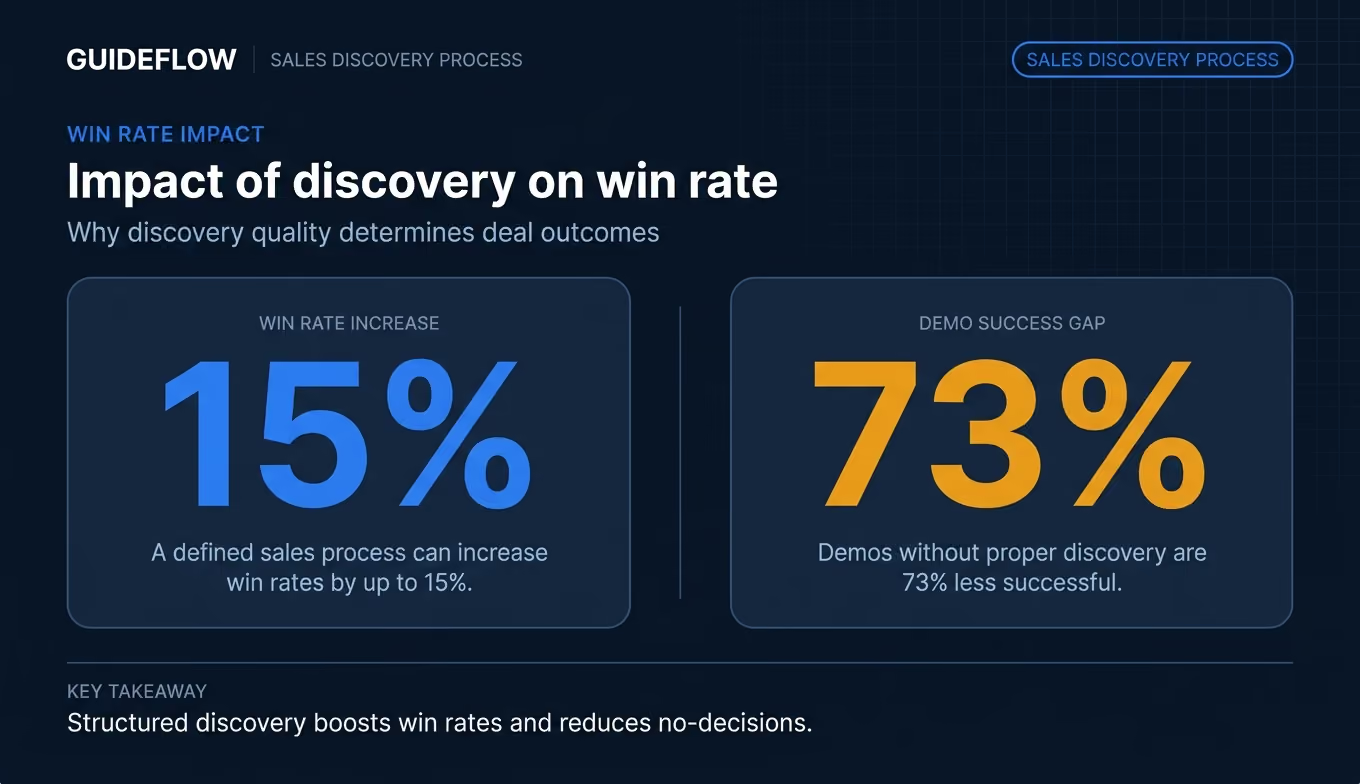
Win rate. A defined sales process can increase win rates by up to 15%, according to a CSO Insights study on defined sales processes. That makes sense: when your proposal, demo, and business case are built on real requirements instead of assumptions, you're competing on relevance, not features. Sales Benchmark Index data shows demos without proper discovery are 73% less successful than those with it. The gap is significant because discovery-informed demos address what the prospect actually cares about.
Deal velocity. Discovery that surfaces the buying process early (security review timeline, procurement steps, budget cycles) prevents the late-stage surprises that add weeks or months to the cycle. When you know in week two that the security review takes three weeks and procurement needs another two, you plan for it. When you discover this in week eight, you lose the quarter.
No-decision reduction. Most no-decisions aren't "no." They're "we couldn't figure out how to buy." Discovery that maps the buying committee and internal approval process directly reduces this outcome. Sales teams without a defined process miss quota roughly 60% of the time, per the Harvard Business Review. A huge portion of that miss comes from deals that stall and die quietly. Investing in buyer enablement strategies can help prospects navigate their own internal buying process more effectively.
Forecast accuracy. When you know the real timeline, the real stakeholders, and the real decision criteria, your forecast reflects reality instead of hope. Among high-performing sales teams, 50% measure process efficiency by conversion rates and 29% by forecast accuracy. Both improve when discovery is thorough.
The bottom line: fewer stalled deals and more closed-won. Clear next steps and stakeholder alignment. That's what discovery quality buys you.
Key principles of effective sales discovery
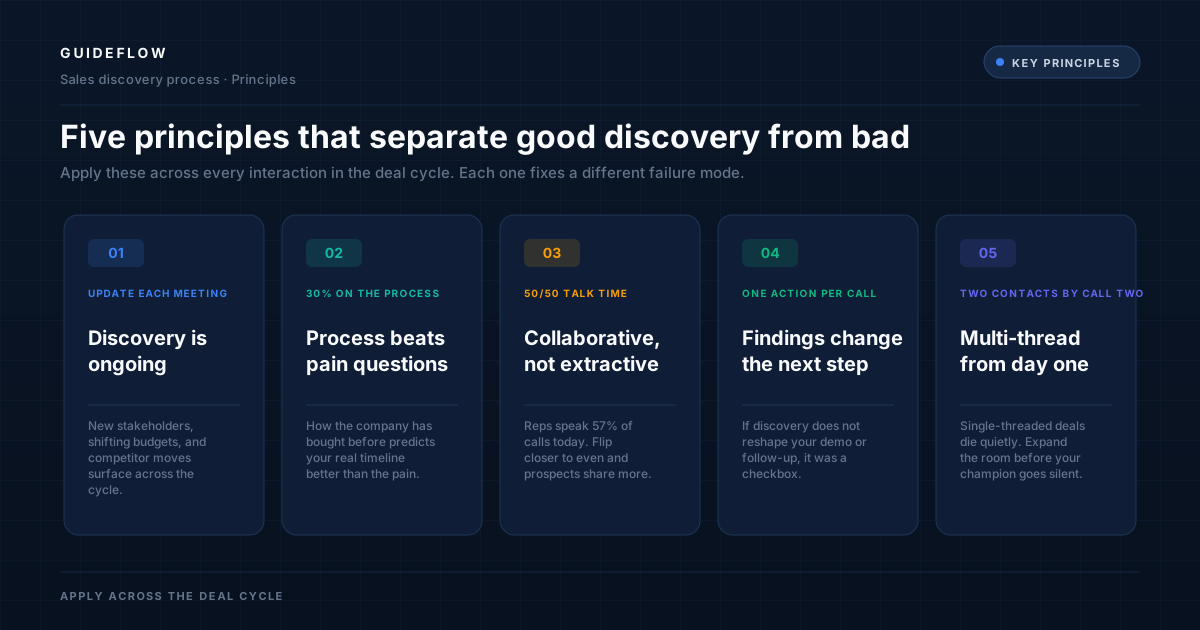
1. Discovery is ongoing, not a one-time event
In SaaS deals (especially mid-market and enterprise), new information surfaces throughout the cycle. A new stakeholder joins. The budget timeline shifts. A competitor enters the conversation. The best AEs treat every interaction as a discovery opportunity, not just the first call.
Application: after every meeting, update your stakeholder map and deal plan with new information. If you're only doing discovery in week one, you're flying blind by week four.
2. Process questions matter more than pain questions
Most AEs are trained to ask about pain. Good. But the questions that actually shorten cycles are about process: "How has your company bought software like this before?" "Who signs the contract?" "Is there a security review, and how long does it typically take?"
Research from Gong shows that discovery calls using slides were 17% less likely to book a follow-up meeting than those that went slide-free. Why? Because slides push you into presentation mode. Process questions keep you in conversation mode.
Application: dedicate at least 30% of your sales discovery call time to understanding the buying process, not just the business problem.
3. Discovery is collaborative, not extractive
Frame discovery as a conversation where both sides learn. The prospect should leave the call with a clearer understanding of their own problem, not feeling like they were interrogated. On average, reps talk for 57% of discovery calls, leaving prospects just 43% of the airtime. The best AEs flip that ratio closer to 50/50.
Application: share a relevant insight or benchmark during discovery ("Other companies in your space typically see X") to demonstrate expertise and build trust. When you give value, you earn deeper answers.
4. Every discovery output should change what happens next
If discovery doesn't change your demo, your proposal, or your follow-up, it was a checkbox, not a process. The information you gather should directly shape how you sell for the rest of the deal.
Application: after every discovery call, write down one specific thing you'll do differently in the next interaction because of what you learned. If you can't name one, you didn't go deep enough.
5. Multi-threading starts in discovery, not after it
Don't wait until your champion goes quiet to find other contacts. Use discovery to naturally expand the conversation: "You mentioned your CISO will need to review this. Would it help to include them in our next conversation so we can address security questions early?"
Application: aim to have at least two contacts engaged by the end of the second discovery meeting. Single-threaded deals with one contact have a high rate of ending in no-decision because the entire opportunity depends on one person's availability, motivation, and political capital.
Step-by-step sales discovery process for SaaS deals
Step 1. Research the account before the first conversation
Review the company's website, recent news, LinkedIn profiles of likely attendees, and any intent data or product usage signals (for PLG motions). Check CRM notes from the SDR handoff. Identify the company's industry, size, likely buying process, and any known competitors in the account.
Asking questions you could have answered with 10 minutes of research wastes the prospect's time and erodes credibility. Pre-call research lets you ask smarter, more specific questions. Top performers' discovery calls are 76% longer than those of average performers, not because they ask more basic questions, but because they go deeper on the ones that matter.
Output: A one-page account brief with:
- Company context (industry, size, recent news)
- Likely pain points based on role and industry
- Probable stakeholders beyond your initial contact
- 3 to 5 specific questions you want answered on this call
Research sources to check: company website and blog, LinkedIn profiles of attendees, CRM notes from SDR, G2 or Glassdoor reviews (for internal culture signals), recent press releases or funding announcements, and any product usage data if you have a PLG motion. Leveraging buyer intent data providers can also surface valuable signals about where the account is in their buying journey.
Step 2. Set the agenda and earn the right to ask
Open the discovery call by setting a clear agenda. Explain what you'd like to cover, how long it will take, and what the prospect will get out of the conversation. Ask permission to ask questions.
This sounds basic, but it changes the dynamic from "sales interrogation" to "collaborative planning." Prospects are more open when they understand the structure and feel in control. An agenda also prevents the call from drifting into a premature demo or feature discussion.
Output: A verbal or written agenda shared at the start of the call.
"I'd love to spend the first 20 minutes understanding your current situation and what you're trying to solve. Then I can share how other companies in [industry] have approached this, and we can figure out together whether it makes sense to keep talking. Sound good?"
Step 3. Uncover the business problem and its impact
Ask open-ended questions about the prospect's current situation, the specific problem they're trying to solve, and the business impact of that problem. Go beyond "what's your challenge?" to quantify the cost.
Quantified pain becomes the foundation of your business case. "We waste time" is a complaint. "We spend 15 hours per week on manual data entry, which costs us roughly $12,000 per month in fully loaded salary" is a business case.
Key sales discovery questions for this step:
- "What's the biggest challenge your team faces with [process] today?"
- "How are you solving this today, and what's not working about that approach?"
- "What happens when this process breaks down?"
- "How much time does your team spend on this per week?"
- "How does this affect your team's ability to hit their targets?"
- "What have you already tried to fix this?"
- "If you could quantify the cost of this problem, what would it look like?"
Output: A documented pain statement with quantified impact. Example: "[Company] currently spends [X hours/week] on [process], costing approximately [$Y/month], which delays [business outcome] by [Z]."
Step 4. Map the buying committee and decision process
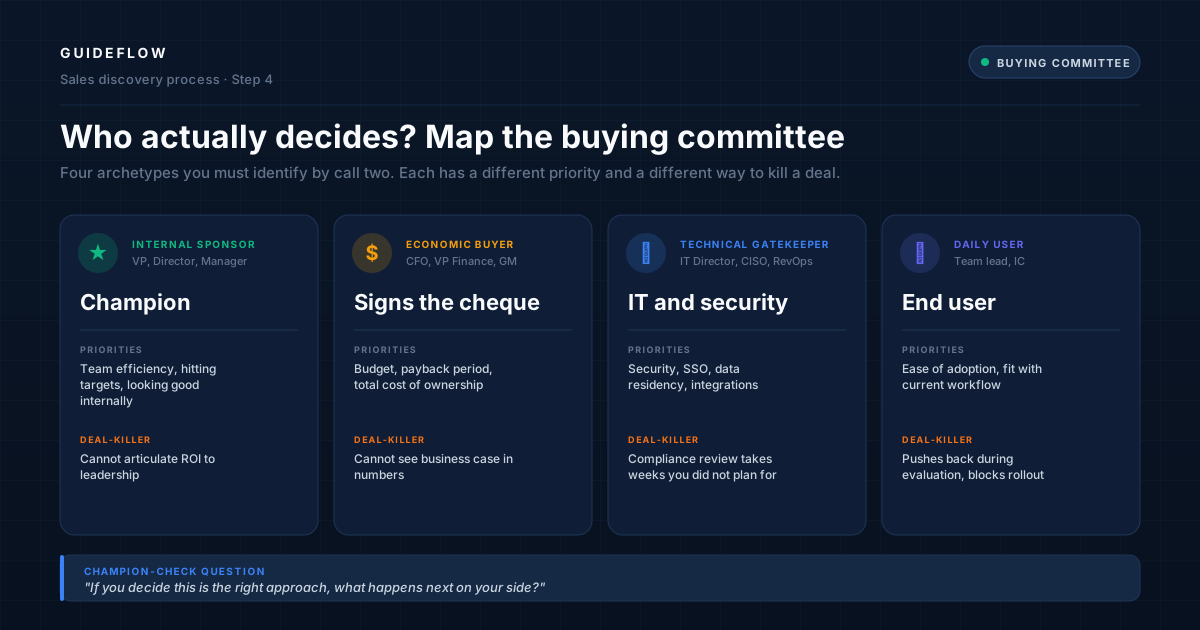
Ask directly about the buying process. This is where most AEs under-invest. Knowing the pain is necessary but not sufficient. You need to know how the company buys, who has veto power, and what structural steps sit between "we like it" and "we can buy it."
Research shows that only 33% of sales pros say 50% of initial prospects turn out to be a good fit. The rest either aren't qualified or can't navigate their own buying process. Discovery that maps the committee and process early prevents you from investing weeks in deals that were never going to close.
Key discovery questions for sales process mapping:
- "Who else is involved in this decision?"
- "Walk me through how your company has bought software like this before."
- "Is there a security or compliance review? How long does that typically take?"
- "Who signs the contract, and are they aware this evaluation is happening?"
- "Are there budget cycles or approval windows we should be aware of?"
Output: A stakeholder map and preliminary timeline.
Step 5. Identify the champion and test their influence
Determine whether your primary contact can actually drive this deal internally. A real champion can articulate why the company should buy, navigate internal politics, and get you access to other stakeholders, a concept central to the champion selling methodology in complex B2B deals.
A champion who can't sell internally isn't a champion. They're a fan. Single-threaded deals with a fan (not a champion) have a high rate of ending in no-decision because the entire opportunity depends on one person's availability, motivation, and political capital.
Champion-testing questions:
- "If you decide this is the right approach, what happens next on your side?"
- "Have you sponsored a purchase like this before? What did that process look like?"
- "What would make this a clear win for you personally?"
- "What concerns do you think [decision-maker] will raise?"
Output: A champion assessment. Can this person articulate the business case, get you access to power, and drive the internal process? If not, identify who can.
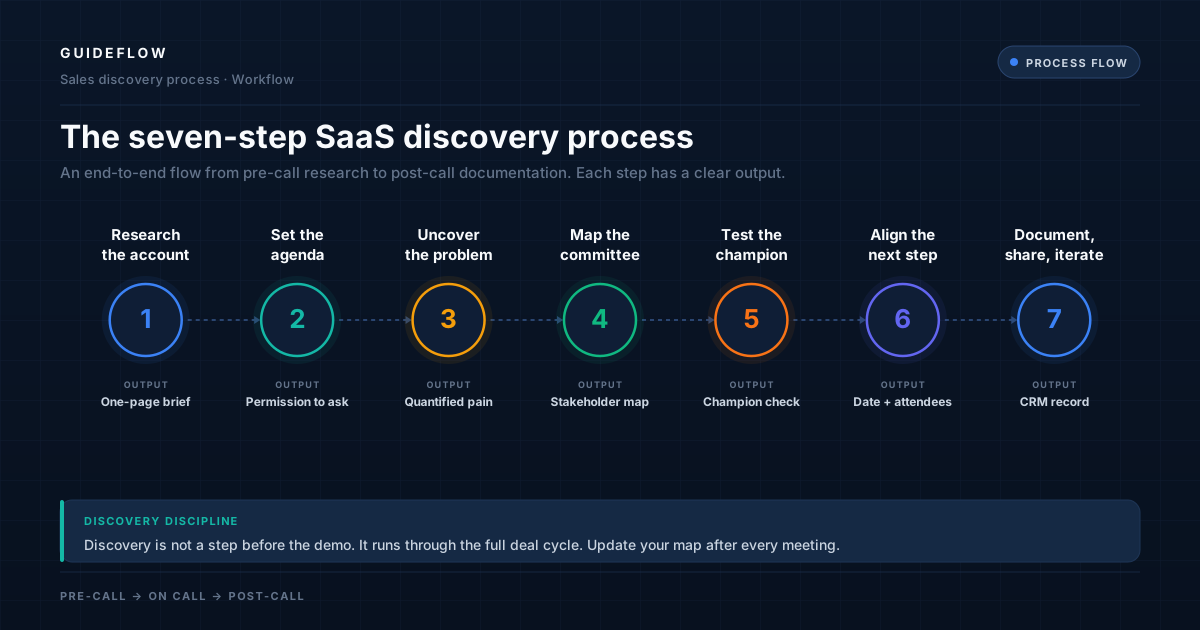
Step 6. Align discovery findings to your next step
Before ending the call, summarize what you heard and confirm your understanding. Then propose a specific next step based on what you learned. If the prospect mentioned a technical concern, suggest a technical deep-dive with your SE. If they need to build internal consensus, offer to help with a business case or a shareable product experience they can circulate to stakeholders.
This is where interactive demos become a practical tool. Instead of scheduling five separate live demos for five different stakeholders, you can send a personalized, clickable product walkthrough that each person explores on their own time. Interactive demos perform best when multiple stakeholders need to evaluate the product asynchronously. The champion shares a link. The VP of Engineering reviews the integration flow Thursday evening. The CFO checks the ROI dashboard Friday morning. No scheduling required. And you get engagement analytics that reveal what each stakeholder cares about most.
Discovery without a clear next step is a conversation, not a process. The next step should be directly informed by what you learned, not a generic "I'll send over some information."
Example next-step proposals based on discovery findings:
- "You mentioned security is a top concern for your IT team. Would it help to set up a 20-minute call with our security engineer and your IT director next week?"
- "Since your VP needs to see the reporting workflow before signing off, I'll send over a personalized interactive demo they can explore on their own time. I'll follow up once they've had a chance to review it."
- "Based on what you've shared, I think the most useful next step would be building a draft business case together. Can we block 30 minutes on Thursday?"
Output: A confirmed next step with a specific date, specific attendees, and a specific purpose.
Step 7. Document, share, and iterate
Immediately after the call, document your findings in the CRM: pain statement, stakeholder map, buying process, champion assessment, and next steps. Share relevant context with your SE, your manager, and anyone else involved in the deal. Then update your discovery as new information surfaces throughout the deal cycle.
Discovery findings that live in your head don't help your SE prep a tailored demo, don't help your manager forecast accurately, and don't survive if you're out sick on the day of the next call. Documentation is what turns individual discovery into team-wide deal intelligence. Using the right CRM software makes this documentation seamless and accessible to the entire team.
Post-call documentation checklist:
- [ ] Quantified pain statement
- [ ] Stakeholder map (updated with any new names)
- [ ] Buying process steps with estimated timelines
- [ ] Champion assessment (can they sell internally?)
- [ ] Competitive landscape (who else are they evaluating?)
- [ ] Confirmed next step with date and attendees
- [ ] Any open questions to address in the next interaction
Output: A CRM record that any team member can read and understand the deal's current state, key risks, and next actions.
Sales discovery questions that move deals forward
This section is a reference asset. Bookmark it. Screenshot it. Use it before your next discovery call.
Questions about the business problem
- "What's the biggest challenge your team faces with [process] today?"
- "How are you solving this today, and what's not working about that approach?"
- "What happens when this process breaks down? What's the downstream impact?"
- "How much time does your team spend on this per week?"
- "If you could quantify the cost of this problem, what would it look like?"
- "What have you already tried to fix this, and why didn't it work?"
- "How does this problem affect your ability to hit your team's targets this quarter?"
Questions about the buying process
- "Walk me through how your company has evaluated and purchased software like this before."
- "Is there a security or compliance review required? How long does that typically take?"
- "Who signs the contract, and are they aware this evaluation is happening?"
- "Are there budget cycles or approval windows we should be aware of?"
- "What's killed deals like this internally before? What made them stall?"
- "Is there a procurement team involved, and at what stage do they typically engage?"
- "What documentation does your team need to move forward (SOC 2 compliance requirements for SaaS vendors, DPA)?"
Questions about stakeholders and decision criteria
- "Who else will be involved in this decision?"
- "What does success look like for your team? For your leadership?"
- "What would make you confident this is the right choice?"
- "Are there people on your team who might push back on this? What would their concerns be?"
- "If you had to pitch this internally in two sentences, what would you say?"
Questions about timeline and urgency
- "Is there a business event or deadline driving this evaluation?"
- "What happens if you don't solve this in the next 6 months?"
- "Are there budget cycles we should be aware of?"
- "When would you need to be live to hit your goals?"
- "What's the cost of waiting another quarter to address this?"
How to adapt discovery by deal segment
No competitor covers this, but it matters. The same discovery framework applied identically to a $5K SMB deal and a $200K enterprise deal will waste time on one and miss critical information on the other.
SMB: Speed matters. Keep discovery tight and focused on two questions: can they buy, and will they buy this month? The decision-maker is usually on the call. Don't over-engineer the process. A 15-minute discovery conversation that confirms pain, budget, and timeline is enough. The risk is spending 45 minutes on a deal that was never going to close.
Mid-market: Champion coaching is the discovery output that matters most. Your contact needs to sell this internally to 3 to 7 people. Discovery should equip them with the language, the business case, and the answers to objections they'll face. Ask: "If your CFO pushes back, what would you say?" If they can't answer, help them build that answer during discovery.
Enterprise: Map the full buying committee and every structural gate (security, legal, procurement) in the first two calls. Enterprise deals have the longest cycles and the most stakeholders. The AE who maps the committee in week one has a plan. The AE who discovers the CISO in week eight has a problem. Having a well-structured presales process ensures your team is aligned before and after every discovery interaction.
Best practices for running discovery in SaaS
Prepare a pre-call brief for every discovery meeting
Spend 10 minutes before every call reviewing the account. Check the company's recent news, LinkedIn profiles of attendees, CRM history from previous interactions, and any intent signals from your marketing team. This investment changes the quality of every question you ask. Instead of "Tell me about your company," you ask "I saw you recently expanded into the European market. How is that affecting your compliance requirements?"
Spend 30% of discovery time on the buying process, not just the problem
Most AEs over-index on pain and under-index on process. The buying process is what determines your real timeline. A prospect can have urgent pain and still take six months to buy if their procurement process requires three rounds of vendor review and a security audit. Ask about the process early and often.
Use silence after asking a question
After asking a question, wait. Count to five in your head before speaking. The prospect will fill the silence with more specific, more honest information than their first answer. The average discovery call is 38 minutes, and the best AEs use silence strategically within that time to draw out deeper responses. Resist the urge to rephrase or offer multiple-choice answers. Let the silence work.
Summarize and confirm before moving on
After each major topic, paraphrase what you heard and ask "Did I get that right?" This builds trust, prevents misunderstandings, and gives the prospect a chance to add context. It also creates natural transition points in the conversation that keep both sides oriented.
Send a discovery recap within 24 hours
Write a short email summarizing what you discussed, what you understood as their priorities, and the agreed next step. This serves three purposes: it confirms alignment, it gives the champion a document they can share internally, and it creates a written record for your deal file. A good recap email is one of the most underrated tools in a sales discovery call.
Use interactive product experiences to extend discovery
After discovery, send a personalized interactive demo that reflects what you learned. If the prospect mentioned reporting as a top priority, send a walkthrough of the reporting workflow with their company name and relevant metrics. Interactive demos perform best when the AE wants to extend discovery insights into a personalized product experience that stakeholders can explore asynchronously. This lets people who weren't on the call experience the product in context, and gives you engagement analytics that reveal what they care about most. Tools like Guideflow let you capture product flows, personalize them per account, and track engagement at the session level.
Common sales discovery mistakes (and how to fix them)
Treating discovery as a single call instead of an ongoing process
Why it happens: Most sales training frames discovery as "step 1" before demoing. The discovery call script becomes a checkbox. In reality, new information surfaces throughout the deal. A stakeholder you didn't know about appears in week six. The budget timeline shifts because of a reorg.
What to do instead: Update your stakeholder map and deal plan after every interaction. Treat every meeting as an opportunity to validate what you know and learn what's changed.
Asking about pain but not about process
Why it happens: AEs are trained on frameworks like BANT or MEDDIC sales qualification framework and focus on pain, budget, and authority. They skip the structural questions about how the company actually buys. The result: you know the prospect has a problem, but you don't know the six internal steps between "we want this" and "we can buy this."
What to do instead: Dedicate at least 30% of every discovery conversation to buying process questions. "Walk me through how your company has bought software like this before" is the single most valuable question most AEs never ask.
Demoing before discovery is complete
Why it happens: The prospect asks "can you just show me the product?" and the AE complies to avoid friction. Running a full demo before understanding requirements means you're showing features, not value. The prospect watches a 45-minute walkthrough, nods politely, and then needs another meeting to discuss "how it applies to their specific situation."
What to do instead: Offer a brief preview or send a self-serve interactive demo to satisfy curiosity, then redirect to completing discovery so the full demo addresses their specific situation. "I'd love to show you the product. To make sure I show you the parts that matter most to your team, can I ask a few more questions first?"
Single-threading the entire discovery
Why it happens: The AE builds rapport with one contact and doesn't want to go around them. This feels respectful, but it's risky. If that person goes on vacation, changes roles, or loses internal credibility, the deal stalls with no backup path.
What to do instead: Use discovery to naturally expand the conversation. "You mentioned your VP of Ops will need to sign off. Would it help to include them next time so we can address their questions directly?" Frame multi-threading as helping your champion, not going around them.
Not documenting discovery findings in the CRM
Why it happens: Admin overhead. The AE knows the information but doesn't log it. When the SE needs context, when the manager needs to forecast, or when the champion goes quiet, the information is locked in the AE's head.
What to do instead: Spend 5 minutes after every call updating the CRM with your pain statement, stakeholder map, and next steps. This isn't admin. It's deal insurance. The 5 minutes you spend documenting saves hours of reconstruction later.
How to measure your discovery process
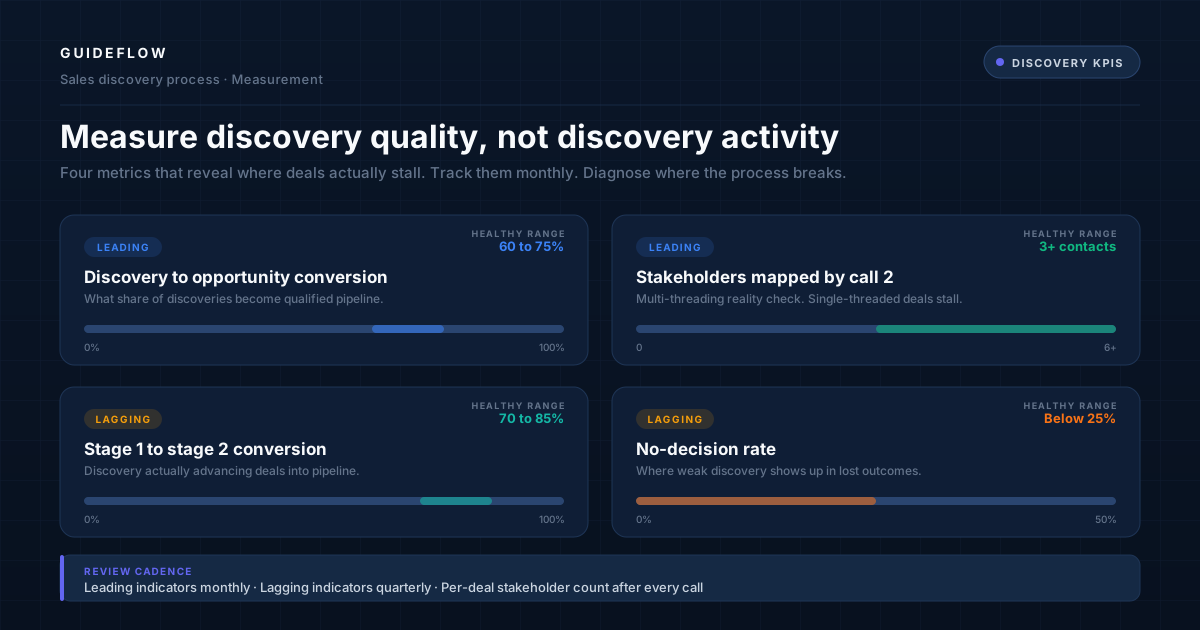
You can't improve what you don't measure. But most teams only track "did we do discovery?" as a yes/no checkbox. That tells you nothing about quality.
Leading indicators
- Discovery-to-qualified-opportunity conversion rate: Are your discovery conversations producing real pipeline, or are deals dying right after?
- Number of stakeholders identified by end of discovery: Multi-threading effectiveness shows up here. If you're still single-threaded after two calls, the process needs work.
- Percentage of deals with a documented buying process: If you can't describe the prospect's internal approval steps, discovery isn't complete.
Lagging indicators
- Win rate for deals with thorough discovery vs. deals without: This is the ultimate proof. Compare deals where the AE documented pain, stakeholders, and process against deals where they didn't.
- Sales cycle length by discovery depth: Deals with thorough early discovery should close faster because the AE anticipated and planned for structural gates.
- No-decision rate: If deals consistently end in no-decision, discovery is missing critical information about buying intent or process. Leveraging sales analytics software can help you track these metrics systematically across your team.
Review these monthly. When a metric improves, look for what changed in your process. When it drops, diagnose which step of discovery is breaking down.
Conclusion
Discovery isn't a call. It's the system that determines whether your pipeline converts or stalls.
The AEs who win consistently are the ones who treat discovery as an ongoing, multi-stakeholder process, not a checkbox before the demo. The highest-leverage takeaway: map the buying process (not just the pain) in the first two calls, and use what you learn to shape every interaction that follows.
When discovery is thorough, the product experiences that follow (demos, evaluations, stakeholder reviews) are personalized, relevant, and shareable. Tools like Guideflow help AEs turn discovery findings into interactive product experiences that move deals forward, giving every stakeholder a way to evaluate the product on their own terms while providing engagement analytics that inform your next conversation.
Start your journey with Guideflow today