A single one-star review sits on page one of Google longer than most marketing campaigns run. For businesses where trust drives revenue, that visibility gap between what customers find and what you actually deliver becomes expensive fast - 94% of consumers have avoided a brand because of negative reviews.
This guide covers 15 reputation management tools that help you monitor brand mentions, respond to reviews across platforms, and track sentiment shifts before they become problems.
What's inside
This guide walks through everything you need to pick the right online reputation management software. Here's what you'll find:
Definition and core capabilities: What reputation management tools actually do
Situational guidance: When your business genuinely benefits from ORM software
Comparison table: Side-by-side view of 15 tools with pricing, ratings, and best-fit use cases
Detailed tool reviews: Honest breakdowns of each platform's strengths and ideal users
Selection criteria: How to match tools to your specific challenges
Feature explanations: What each capability means in practice
TL;DR
Online reputation management tools monitor brand mentions, manage reviews across platforms like Google and Yelp, and analyze customer sentiment from a centralized dashboard
Sprout Social leads for social listening, Birdeye excels at multi-location review management, and Podium works best for local businesses consolidating customer conversations
Free options exist (Google Alerts), though paid platforms typically deliver better coverage, automation, and analytics
Choose based on your primary goal: review generation, social monitoring, competitive intelligence, or multi-location management each require different tool strengths
Integration matters: verify compatibility with your existing CRM and marketing automation software before committing
What is online reputation management software
Online reputation management software tracks what customers say about your business across review sites, social media, forums, and news outlets. Platforms like Birdeye, Podium, Brand24, Sprout Social, and Yext pull mentions from Google, Yelp, Facebook, and industry-specific review sites into one dashboard where teams can monitor sentiment, respond to feedback, and measure reputation trends over time.
The core value here is visibility and speed. Without a centralized tool, you're manually checking dozens of sites, missing negative reviews until they've already influenced potential customers, and struggling to prove whether your reputation efforts actually move the needle.
Key capabilities include:
Review aggregation: Collect reviews from Google, Yelp, Facebook, TripAdvisor, and industry-specific sites in one view
Real-time alerts: Get notified immediately when new reviews or mentions appear
Sentiment analysis: Automatically classify mentions as positive, negative, or neutral to spot trends
Response management: Reply to reviews across platforms from a single interface
Listing management: Keep business information accurate across directories
When to use reputation management tools
Monitor brand mentions across review sites and social media
If customers are talking about your business on platforms you're not actively watching, you're flying blind. Reputation monitoring tools become essential when your brand appears on more than three or four review sites, or when social media conversations happen faster than your team can manually track.
The trigger point: you discover a negative review weeks after it was posted, or a customer complaint went viral before anyone on your team noticed.
Respond to customer reviews at scale
Manual review response works fine when you're getting five reviews a month. Once that number climbs to 20, 50, or 100+ reviews monthly, the math stops working. Response templates, team assignment, and approval workflows become necessary to maintain quality and speed - similar to how interactive guides help customer success teams scale their support without sacrificing personalization.
Improve local search rankings through review management
Review signals directly impact local search visibility. Google considers review volume, recency, and rating quality when ranking local businesses - reviews now account for 20% of local pack ranking factors. Active review management isn't just about reputation; it's an SEO investment that compounds over time, working alongside demand generation tools to convert improved visibility into pipeline.
Manage reputation for multiple business locations
Franchise operators and multi-location brands face a coordination problem. Each location generates its own reviews, but brand standards require consistent response quality. Centralized reputation management software lets you maintain oversight while giving local teams appropriate autonomy.
Track competitor reputation and benchmark performance
Understanding your reputation in isolation tells you less than understanding it relative to competitors. Reputation monitoring software can reveal gaps and opportunities by showing how your ratings, review volume, and sentiment compare to similar businesses.
Online reputation management tools comparison
No. | Product | Best for | Key differentiator | Pricing | G2 rating |
|---|---|---|---|---|---|
1 | Sprout Social | Social listening | AI-powered sentiment analysis | Custom | 4.4/5 |
2 | Podium | Local businesses | Unified inbox for SMS, reviews, chat | Custom | 4.6/5 |
3 | Birdeye | Multi-location brands | AI-powered review management | Custom | 4.7/5 |
4 | Yext | Listing accuracy | Manages listings across 200+ platforms | Custom | 4.4/5 |
5 | Trustpilot | Ecommerce social proof | Verified customer review collection | Free + paid | 4.3/5 |
6 | Brand24 | Real-time monitoring | Tracks mentions across social, blogs, forums | $79/mo | 4.6/5 |
7 | Mention | Media monitoring | Brand mention tracking | $41/mo | 4.3/5 |
8 | Broadly | Small business automation | Automated review generation | Custom | 4.7/5 |
9 | Meltwater | Enterprise media intelligence | Large-scale brand monitoring | Custom | 4.0/5 |
10 | ReviewTrackers | Customer insights | In-depth review analytics | Custom | 4.6/5 |
11 | BrightLocal | Local SEO | Citation management | $39/mo | 4.6/5 |
12 | Reputation.com | Enterprise ORM | AI-powered reputation experience | Custom | 4.5/5 |
13 | NiceJob | Service businesses | Automated review marketing | $75/mo | 4.8/5 |
14 | SOCi | Franchises | Localized marketing with central control | Custom | 4.5/5 |
15 | Google Alerts | Budget monitoring | Free basic brand mention tracking | Free | N/A |
15 best online reputation management tools
The tools below were selected based on review site coverage, social monitoring capabilities, ease of use, and integration options. Each serves a distinct use case, so the "best" choice depends entirely on your specific situation.
1. Sprout Social
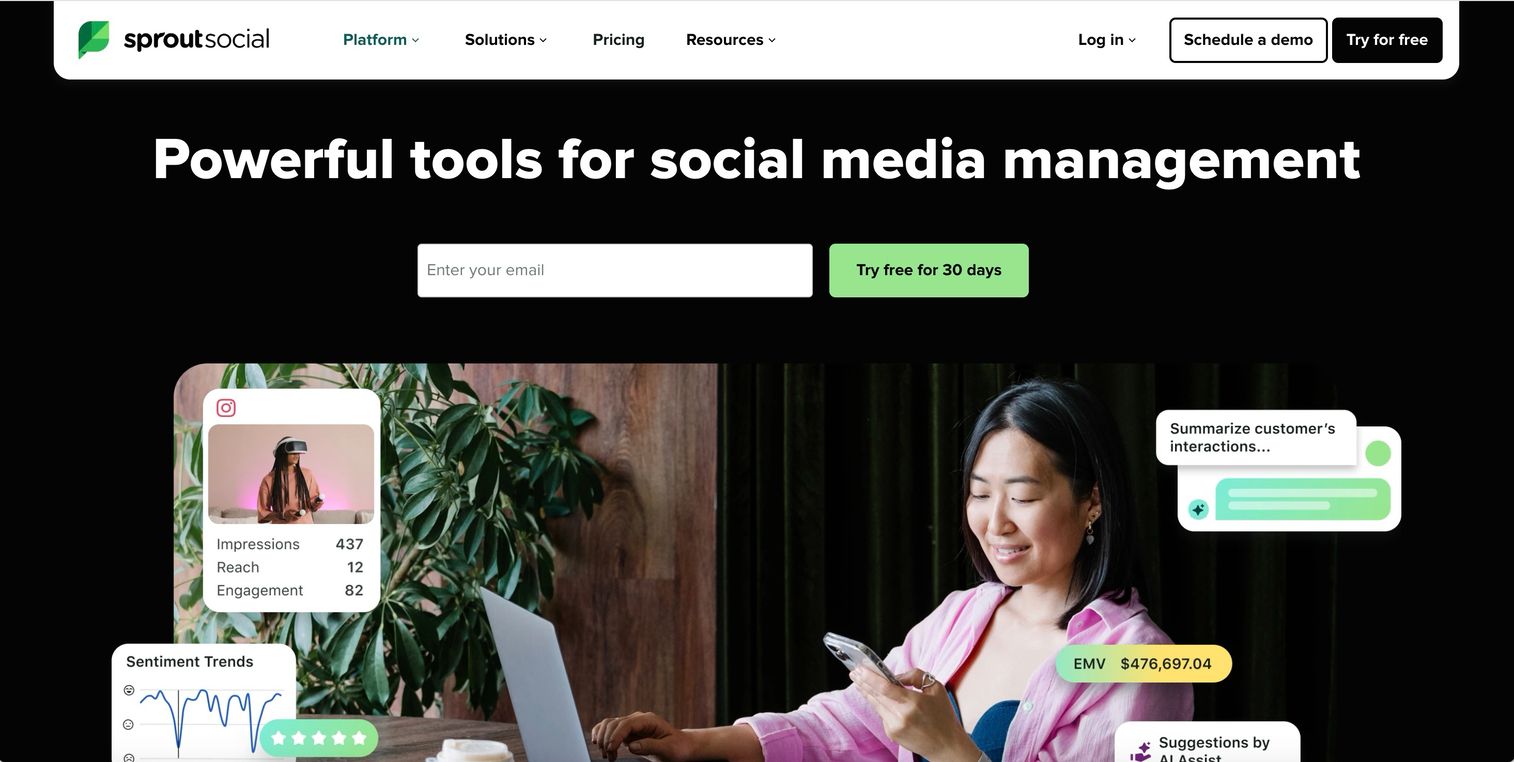
Sprout Social combines social media management with deep reputation monitoring capabilities. The platform brings together publishing, engagement, and analytics with AI-powered social listening that tracks brand mentions, competitor activity, and industry conversations across major social networks.
Best for: Marketing teams prioritizing social media reputation management who want publishing and monitoring in one platform.
Key strengths
AI sentiment analysis that classifies mentions as positive, negative, or neutral
Competitive benchmarking against similar brands
Unified inbox for all social conversations and reviews
Custom reporting tied to business outcomes
Pricing: Custom pricing based on team size and features.
2. Podium
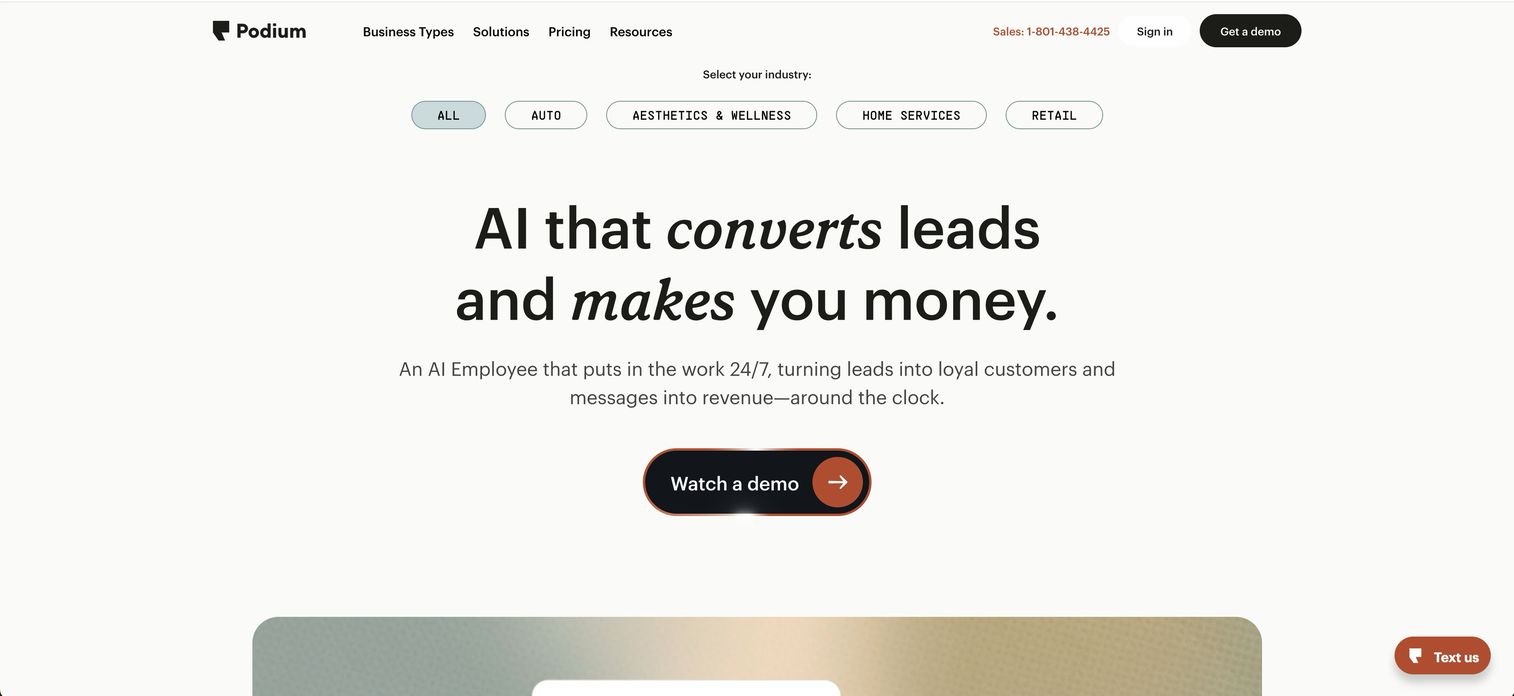
Podium consolidates customer conversations into a single inbox, combining SMS, reviews, website chat, and payments. The platform focuses on helping local businesses capture more reviews and convert conversations into revenue.
Best for: Local service businesses like dental practices, auto shops, and home services.
Key strengths
Unified messaging across texts, reviews, and website chat
Automated SMS review requests
Payment collection through conversation threads
Webchat to text conversion
Pricing: Custom pricing, positioned for small to mid-sized businesses.
3. Birdeye
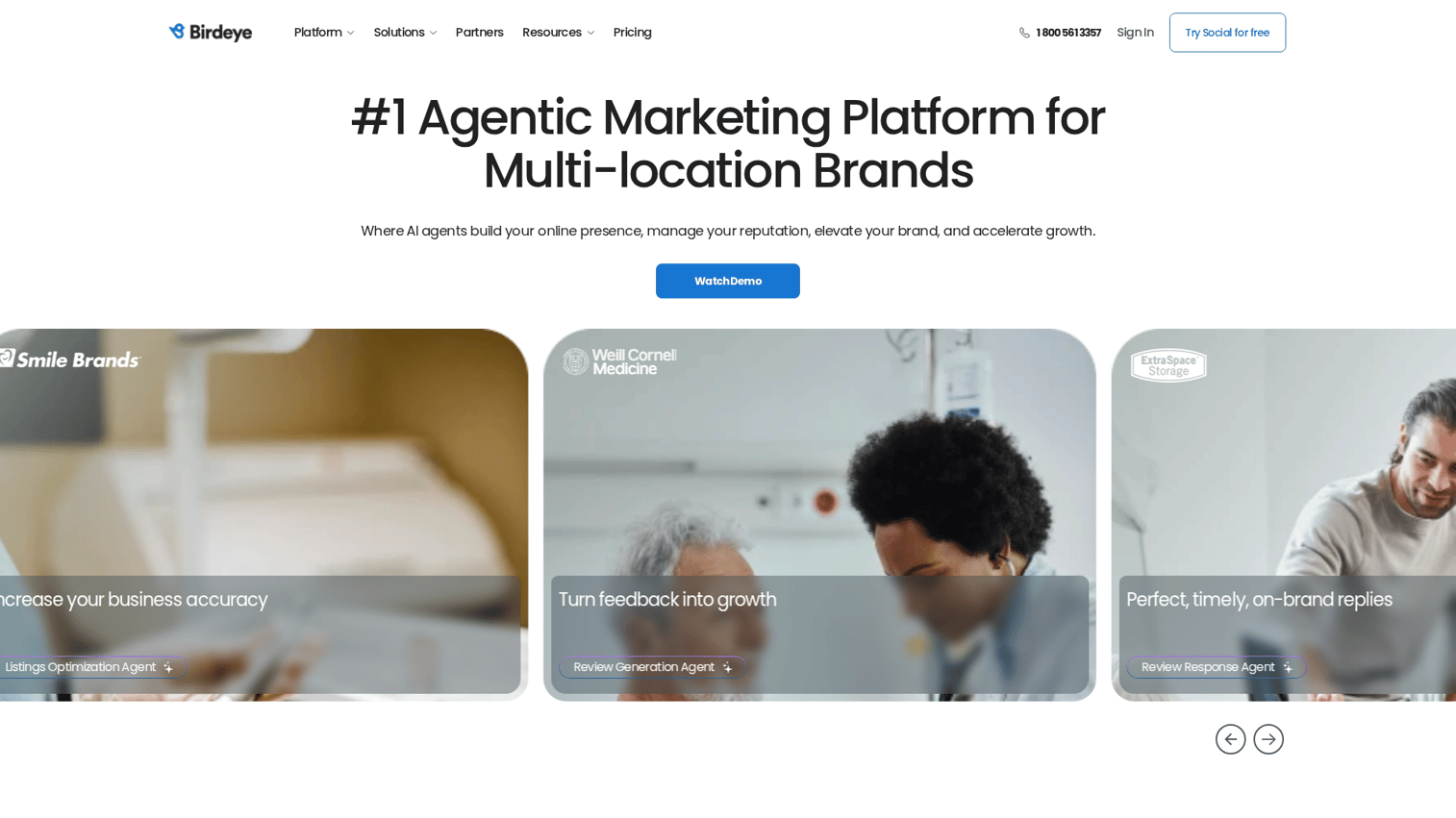
Birdeye is an AI-powered platform designed for businesses managing reputation across multiple locations. The platform combines review management, customer surveys, and listing accuracy into one system.
Best for: Multi-location businesses like healthcare networks, retail chains, and franchise operations.
Key strengths
Multi-location dashboard comparing reputation metrics
AI-powered response generation
Survey integration to catch issues before they become public reviews
Competitive intelligence on competitor ratings
Pricing: Custom pricing based on locations and features.
4. Yext
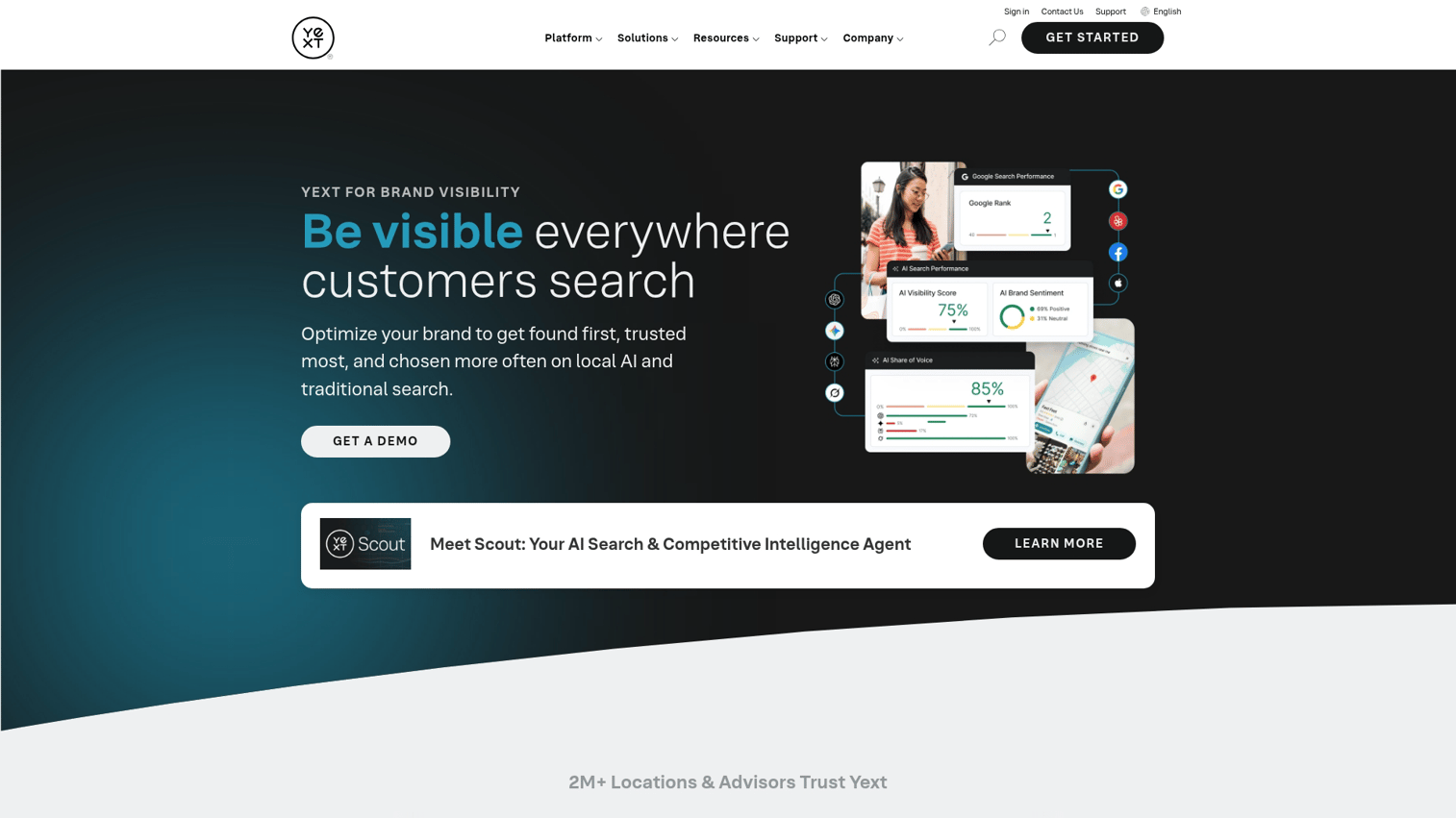
Yext specializes in managing business listings and information across 200+ platforms. The platform ensures customers find accurate details wherever they search.
Best for: Enterprises with complex location data needing consistent business information across directories.
Key strengths
Direct integrations with 200+ publishers including Google, Apple, and Facebook
Duplicate listing suppression
Review monitoring with response capabilities
Analytics tracking how listing accuracy impacts search visibility
Pricing: Custom enterprise pricing.
5. Trustpilot
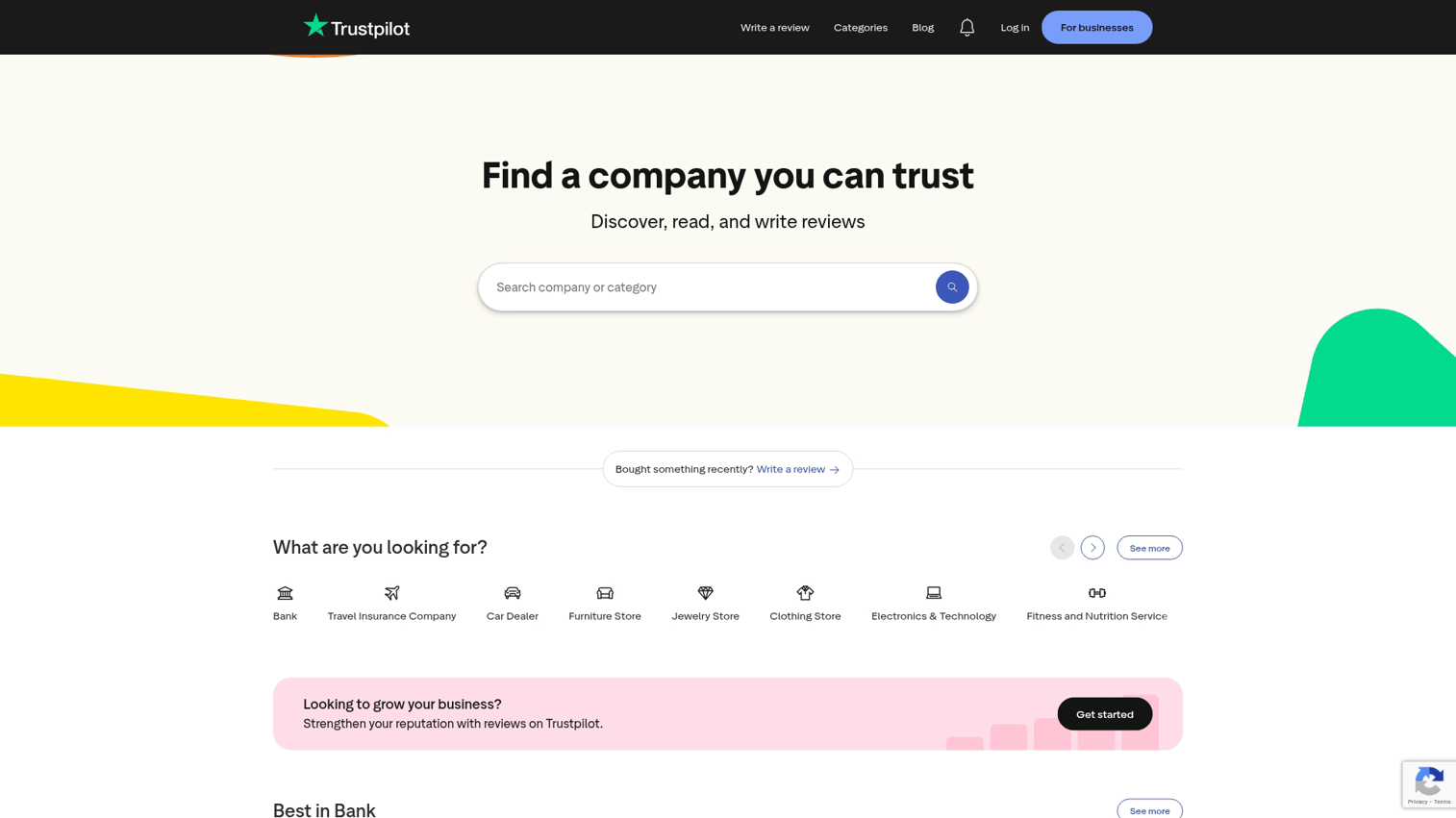
Trustpilot focuses on collecting and showcasing verified customer reviews. Unlike monitoring tools, Trustpilot creates a dedicated review destination while providing widgets to display social proof across your digital presence.
Best for: Ecommerce and B2C businesses building trust through verified customer reviews.
Key strengths
Verified review authentication process
Review widgets for websites, emails, and ads
Google integration for search results and Shopping ads
Automated review request timing
Pricing: Free plan available. Paid plans start around $250/month.
6. Brand24
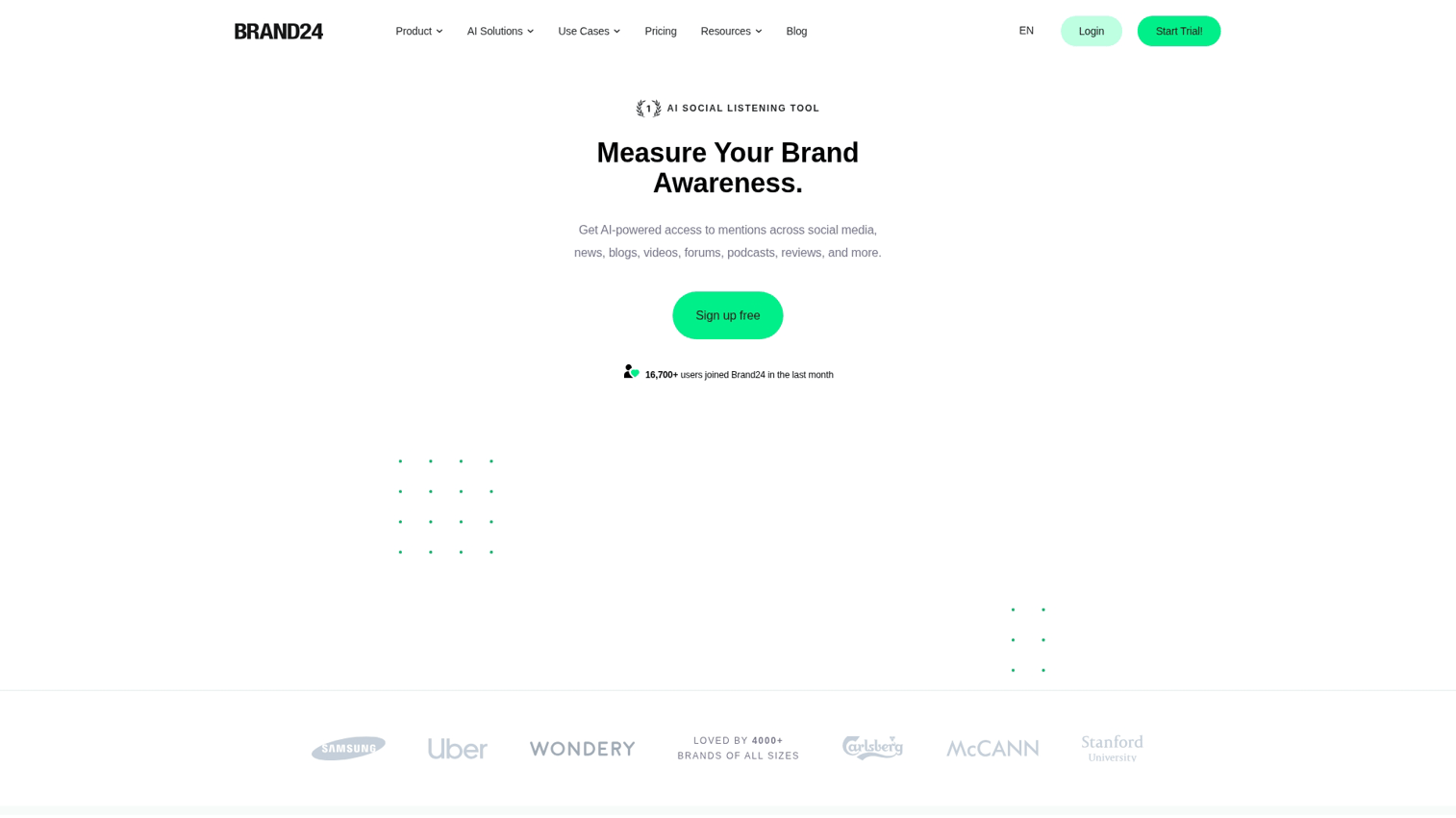
Brand24 monitors brand mentions across social media, news sites, blogs, forums, podcasts, and review sites in real time. The platform focuses on comprehensive coverage and fast alerts.
Best for: PR teams and marketers tracking brand conversations across the entire web.
Key strengths
Broad coverage across social media, news, blogs, forums, videos, and podcasts
Real-time notifications for brand mentions
Sentiment analysis with AI-powered classification
Influencer identification showing who's talking about your brand
Pricing: Plans start at $79/month, scaling to $499/month for enterprise features.
7. Mention
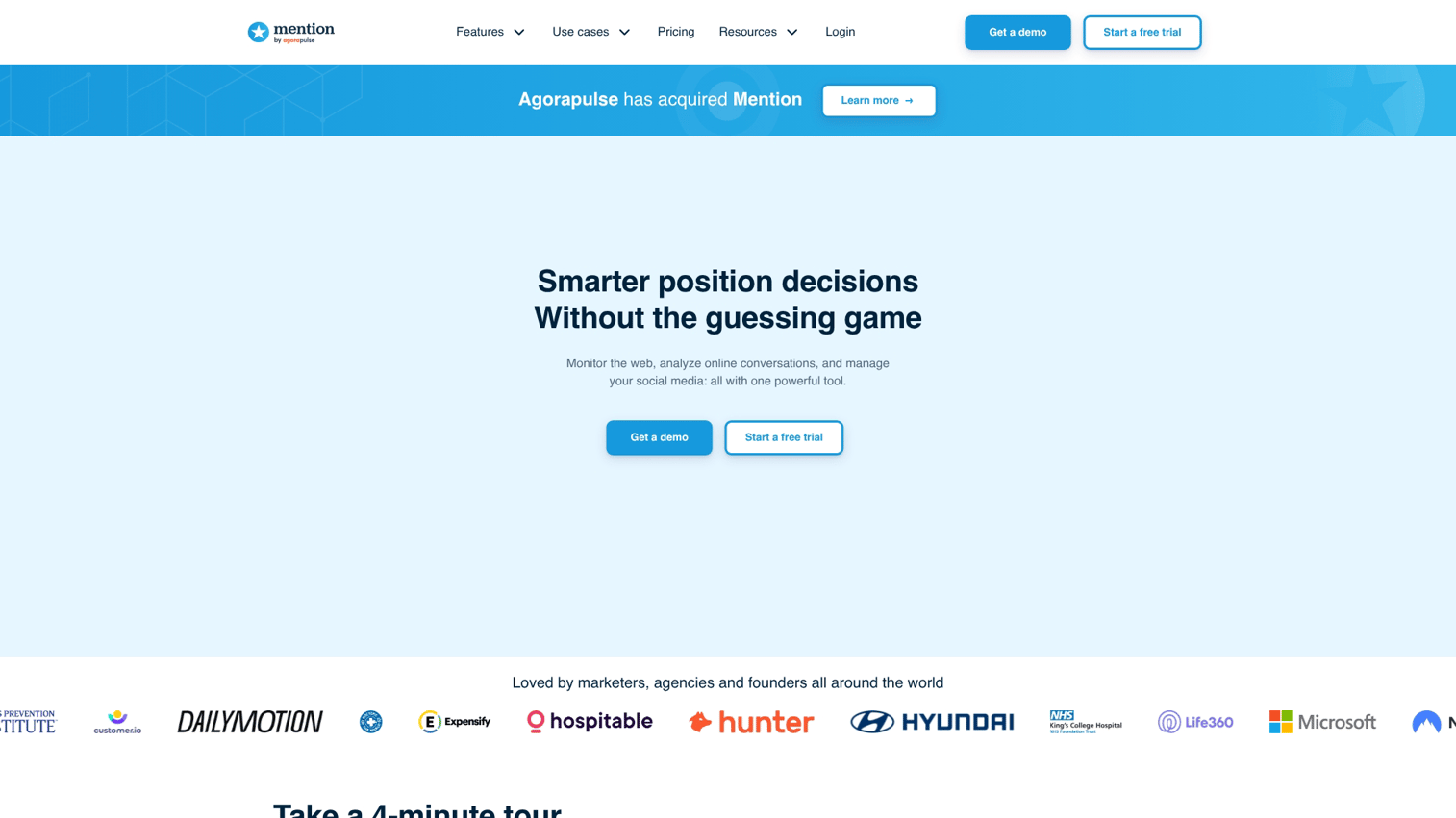
Mention tracks brand mentions across social media, news, blogs, and forums while helping teams identify influencers and manage social publishing.
Best for: Marketing teams wanting mention tracking combined with basic social publishing.
Key strengths
Multi-source monitoring across social, web, and news
Boolean search for precise monitoring queries
Influencer scoring for high-impact accounts
Social publishing alongside monitoring
Pricing: Solo plan at $41/month, Pro at $83/month.
8. Broadly
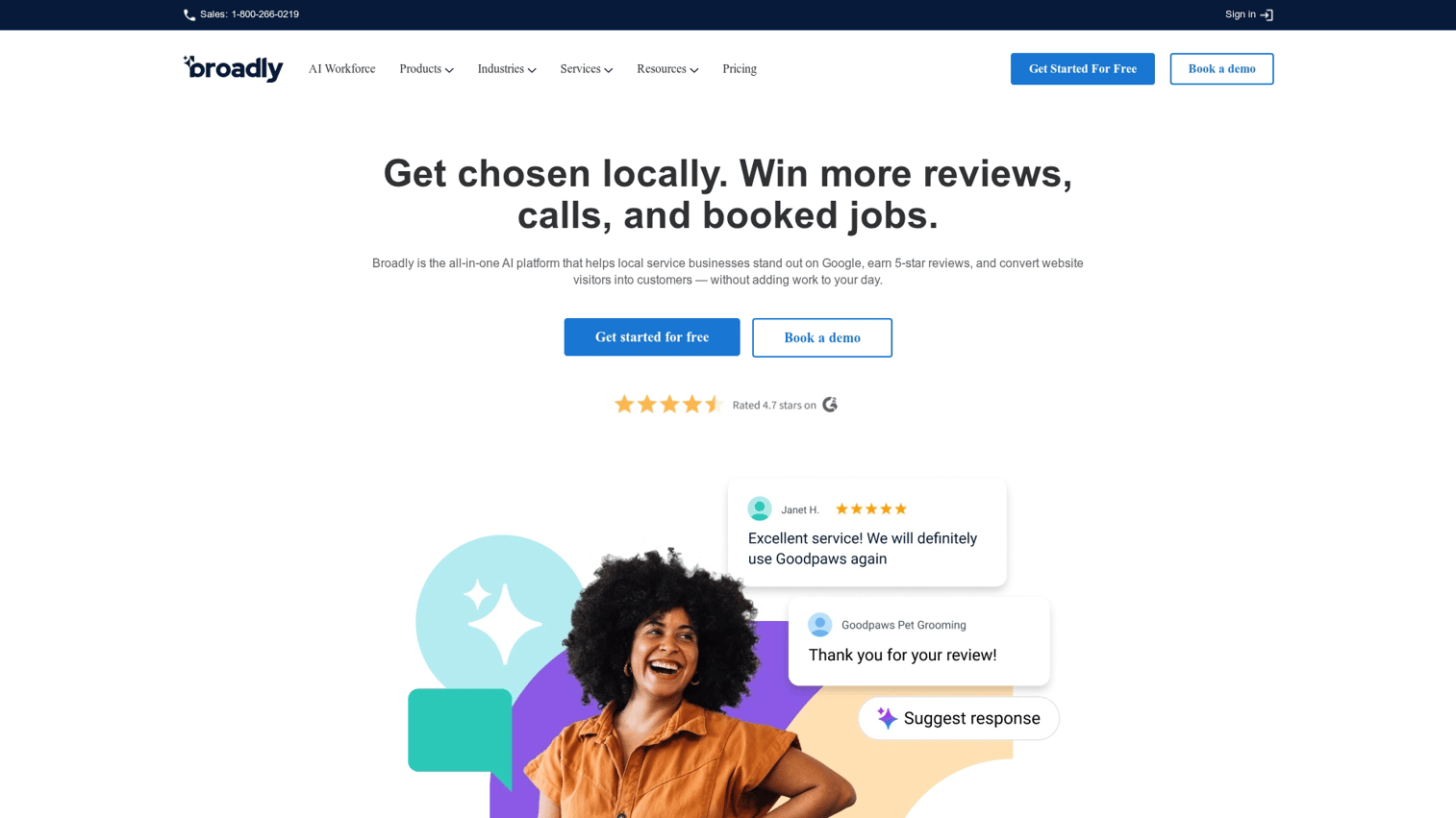
Broadly automates review generation and customer communication for small service businesses. The platform makes it easy for satisfied customers to leave reviews while streamlining follow-up communication.
Best for: Small service businesses like contractors, salons, and repair shops.
Key strengths
Automated review requests via text after service completion
Webchat converting website visitors into leads
Payment request links through communication channels
Review monitoring across Google, Facebook, and industry sites
Pricing: Custom pricing for small business budgets.
9. Meltwater
Meltwater provides enterprise-grade media intelligence covering news, social media, podcasts, and broadcast. The platform serves large organizations needing comprehensive monitoring with PR measurement.
Best for: Enterprise communications and PR teams managing brand reputation at scale.
Key strengths
Global media coverage across 190+ countries
PR analytics measuring campaign impact
Crisis detection with early warning systems
Executive reporting on brand health
Pricing: Custom enterprise pricing.
10. ReviewTrackers
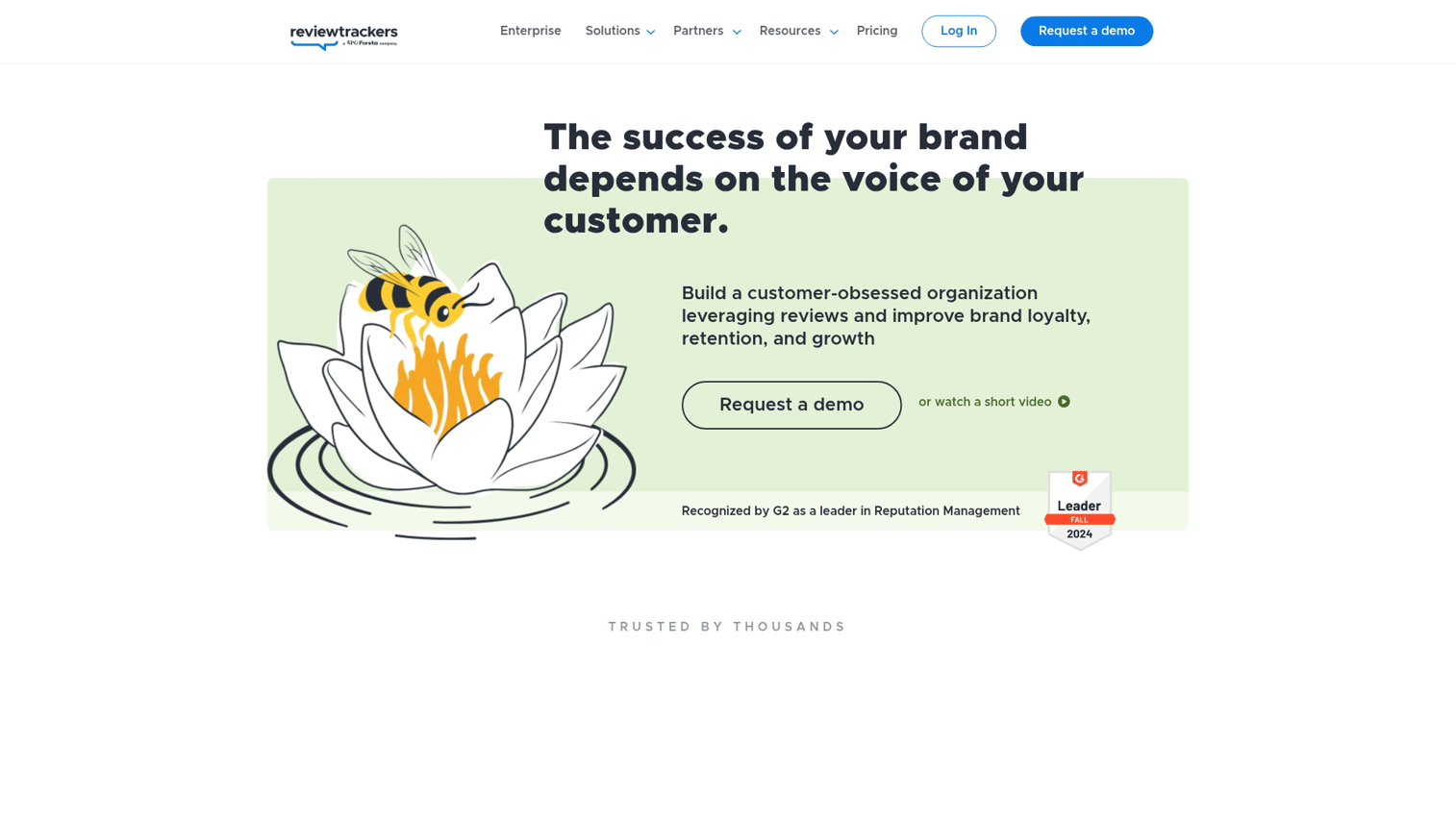
ReviewTrackers focuses specifically on review management and customer feedback analysis. The platform aggregates reviews from 100+ sites and provides detailed analytics.
Best for: Businesses wanting deep insights from customer reviews, not just monitoring.
Key strengths
Review aggregation from 100+ sites including industry-specific platforms
Sentiment analysis revealing themes in customer feedback
Competitive benchmarking against local competitors
Location analytics identifying which locations need attention
Pricing: Custom pricing based on locations and features.
11. BrightLocal
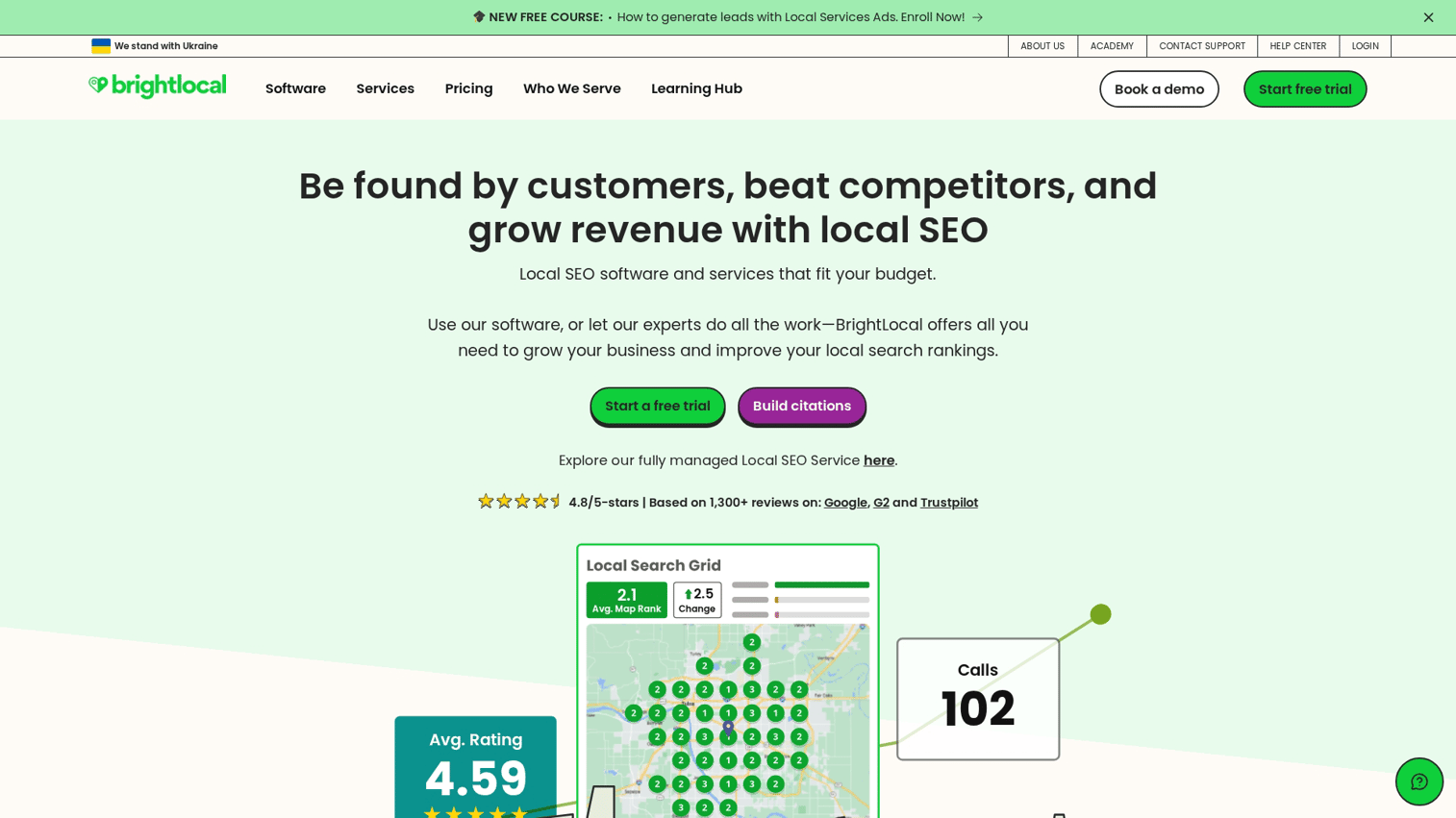
BrightLocal combines local SEO tools with reputation management, focusing on citation building, rank tracking, and review monitoring.
Best for: Local businesses and SEO agencies integrating reputation management with local search optimization.
Key strengths
Citation management for local directory listings
Local rank tracking for keyword positions
Review monitoring with alerts
White-label reporting for agencies
Pricing: Plans start at $39/month for single businesses.
12. Reputation.com
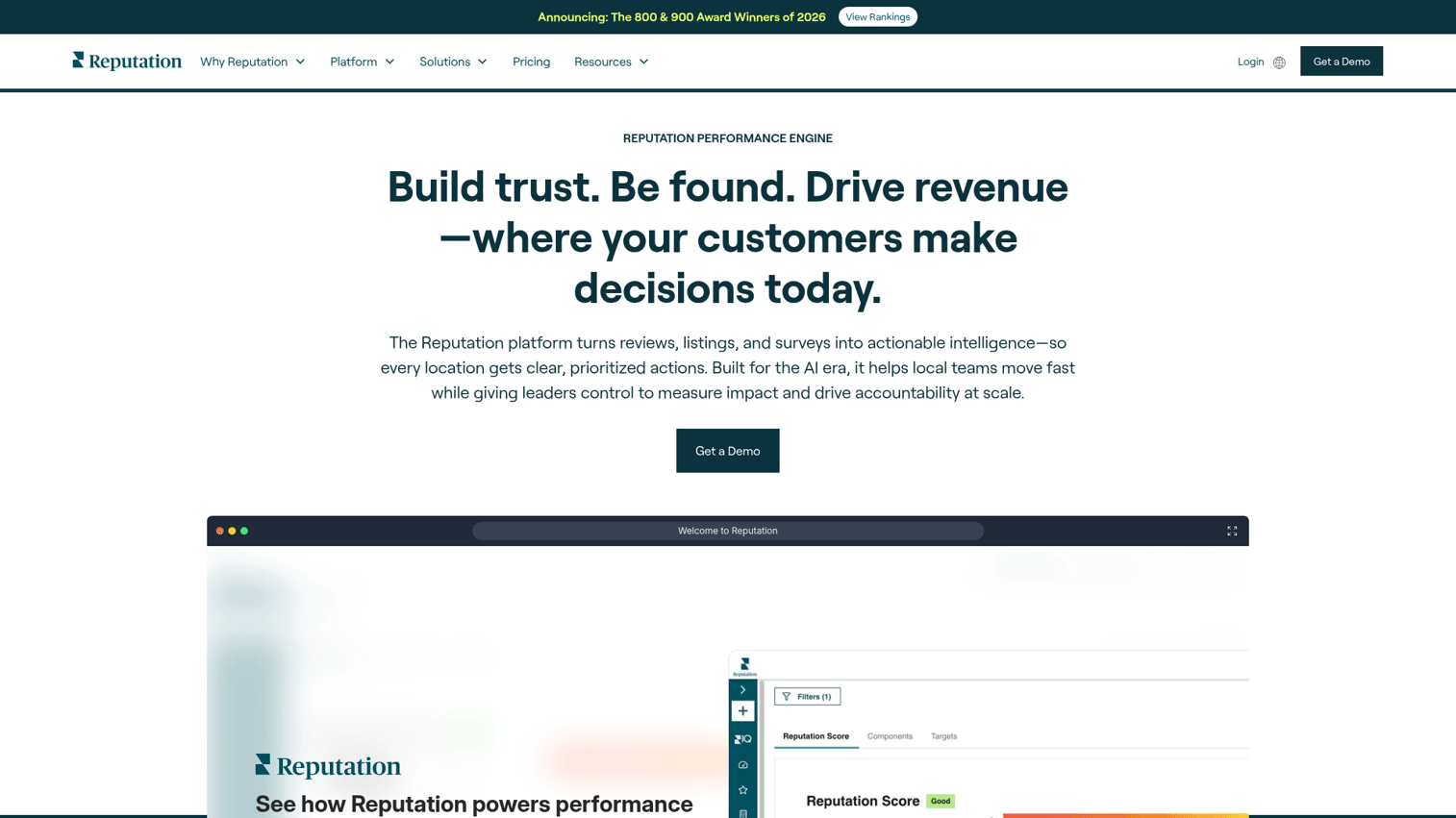
Reputation.com offers an AI-powered platform for enterprise reputation experience management. The platform combines review management, surveys, social monitoring, and business listings.
Best for: Large enterprises with complex reputation management across many locations.
Key strengths
Proprietary Reputation Score quantifying overall brand reputation
AI-powered insights on feedback patterns
Multi-channel management across reviews, surveys, social, and listings
Industry benchmarks for performance comparison
Pricing: Custom enterprise pricing.
13. NiceJob
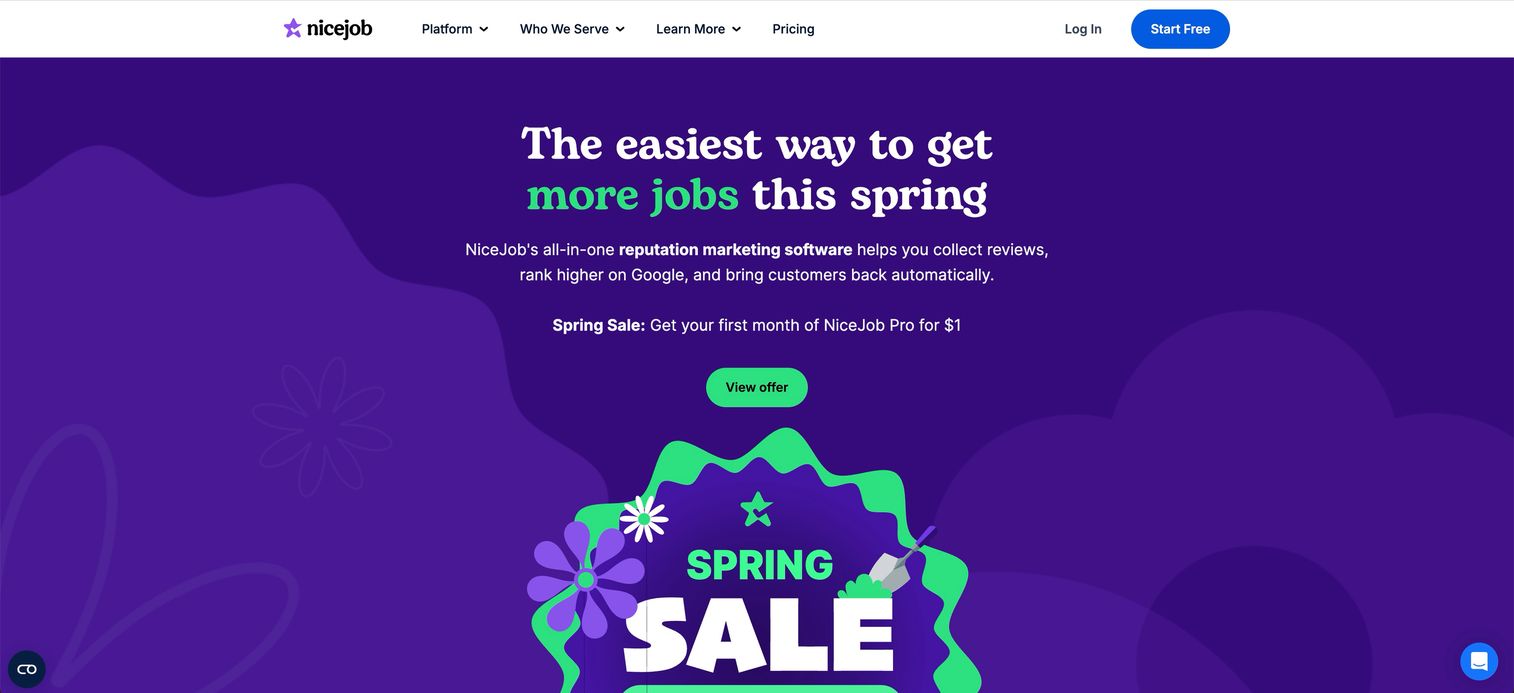
NiceJob automates review collection and reputation marketing for service businesses. The platform turns happy customers into reviews and social proof with minimal manual effort.
Best for: Home service businesses, contractors, and local service providers.
Key strengths
Automated review funnels maximizing review conversion
Social proof widgets for websites
Automatic sharing of positive reviews to social media
SMS and email campaign options
Pricing: Plans start at $75/month.
14. SOCi
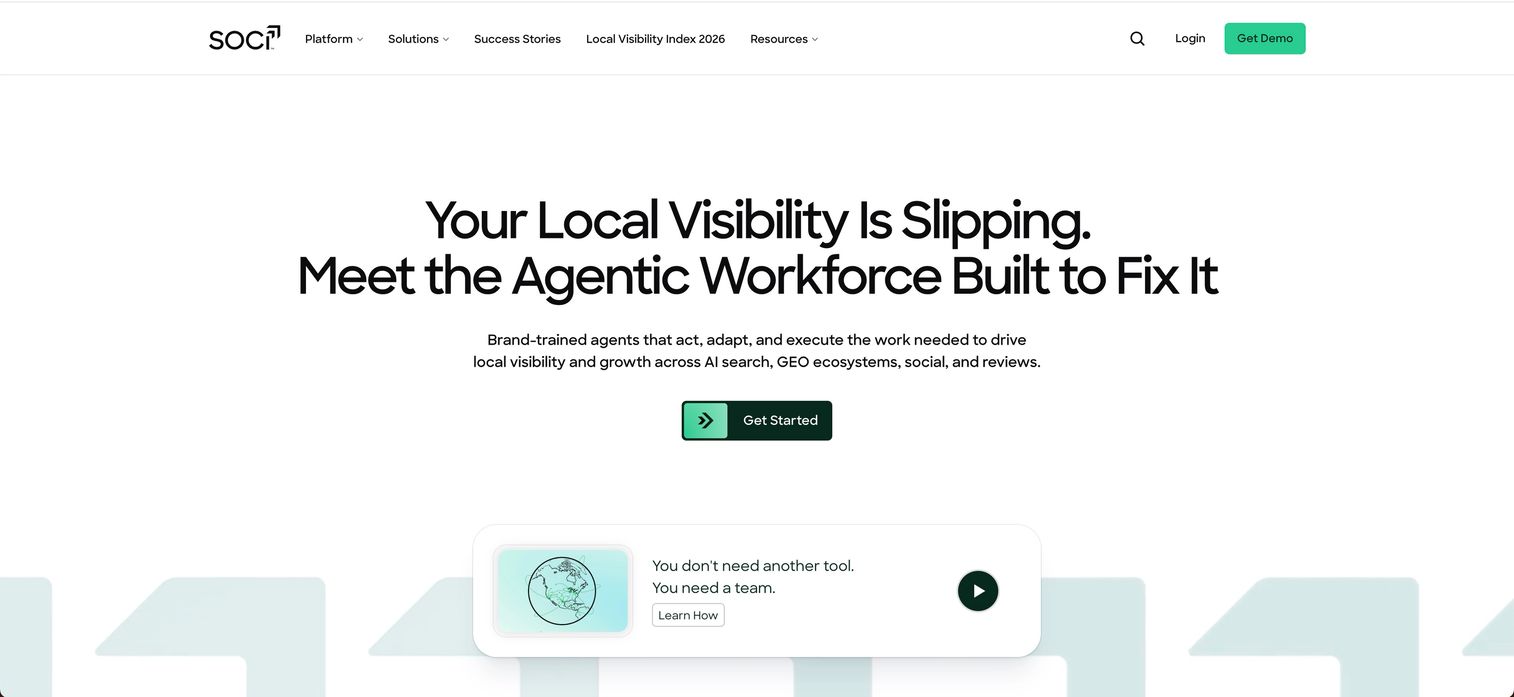
SOCi provides localized marketing and reputation management for multi-location brands and franchises. The platform balances centralized brand control with local execution.
Best for: Franchise operations and multi-location brands needing consistent reputation management with local flexibility.
Key strengths
Localized content customization while maintaining brand standards
Centralized monitoring with location-level response capabilities
Social publishing across all locations from one platform
Performance analytics comparing locations
Pricing: Custom pricing based on locations.
15. Google Alerts
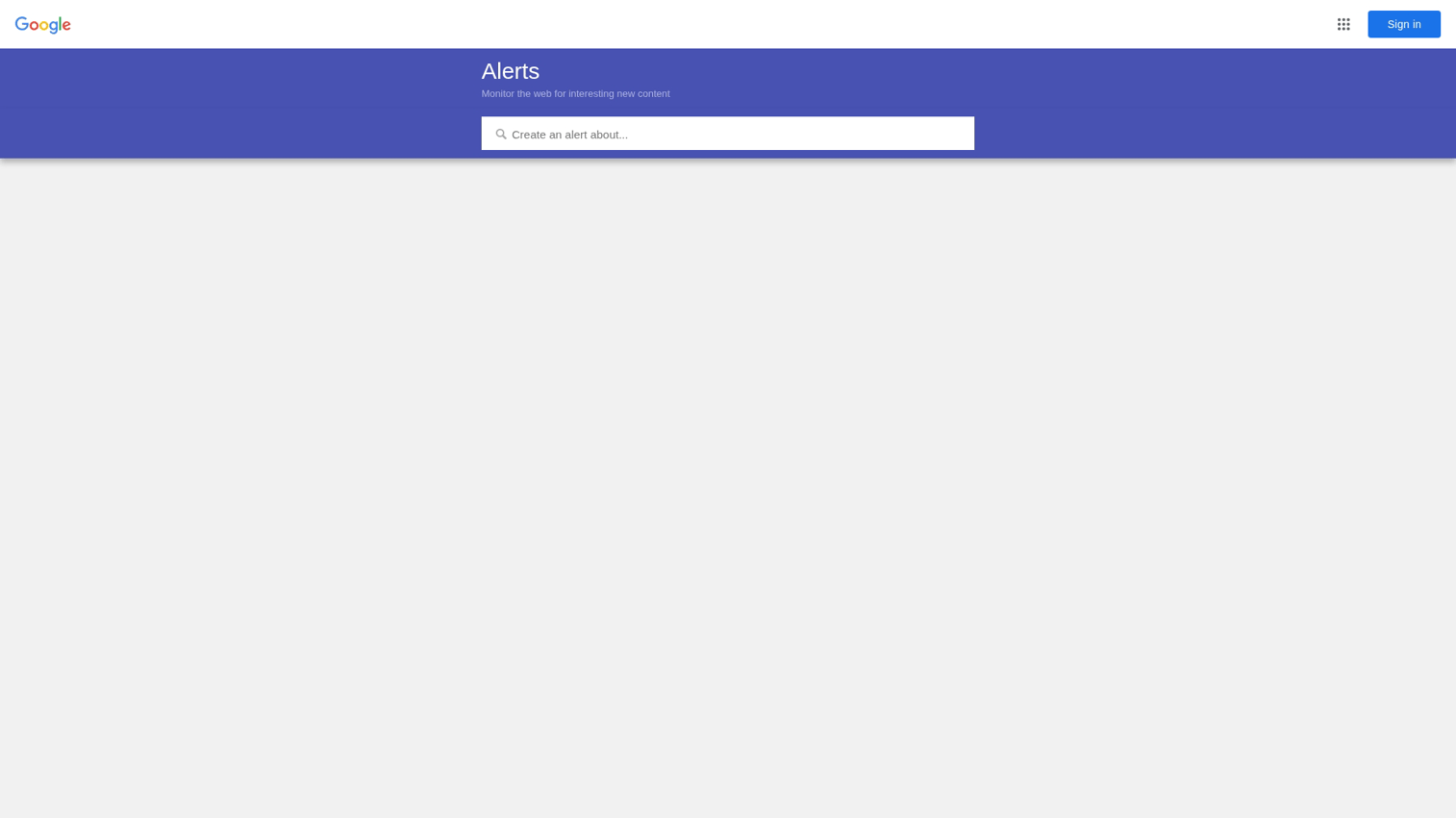
Google Alerts sends email notifications when new content matching your search terms appears in Google's index. While basic, it provides a starting point for brand monitoring without any cost.
Best for: Small businesses or anyone starting with reputation monitoring on a budget.
Key strengths
Free with no cost for unlimited alerts
Simple setup in seconds
Web coverage across news, blogs, and web pages
Keyword flexibility for brand names, competitors, or industry terms
Pricing: Free.
Limitations: No social media monitoring, no sentiment analysis, no response capabilities, and delayed notifications compared to paid tools.
How to choose the right reputation management software
Define your primary reputation management goal
Different tools excel at different things. Review generation platforms like NiceJob and Broadly focus on increasing positive review volume. Social listening tools like Sprout Social and Brand24 prioritize mention tracking and sentiment analysis. Multi-location platforms like Birdeye and SOCi solve coordination challenges.
Start by identifying your biggest reputation problem, then match tools to that specific challenge.
Evaluate review site and social channel coverage
Not all reputation software monitors the same sources. Some focus heavily on Google and Facebook while missing industry-specific review sites. Others excel at social monitoring but lack review management features.
Make a list of the platforms where your customers actually leave feedback, then verify each tool covers those sources.
Assess AI and automation features
AI capabilities vary significantly across platforms. Some offer basic sentiment classification while others provide automated response drafting, trend detection, and predictive alerts.
Consider how much manual work your team can realistically handle. If you're getting hundreds of reviews monthly, AI-assisted responses become valuable.
Verify CRM and marketing stack integrations
Reputation data becomes more valuable when it connects to your other systems. Review sentiment can inform sales conversations. Mention data can trigger marketing automation workflows.
Check integration options with your existing CRM, marketing tools, and communication platforms before selecting a reputation management solution.
Consider multi-location scalability
If you're managing reputation for one location today but planning to expand, choose a platform that scales. Migrating reputation management tools is painful, so it's worth selecting something that grows with your business.
Key features in online reputation management platforms
Review monitoring and real-time alerts
Review monitoring means the platform automatically checks review sites and notifies you when new reviews appear. Real-time alerts ensure you can respond quickly to negative feedback before it influences other potential customers.
Sentiment analysis and reputation scoring
Sentiment analysis uses AI to classify mentions and reviews as positive, negative, or neutral. Reputation scores aggregate multiple signals into a single metric tracking overall brand health over time.
Review response and workflow management
Response management features include templates, approval workflows, and team assignment capabilities. For software companies, pairing reputation management with interactive demos helps convert the trust built through positive reviews into actual product engagement.
Local listings and citation management
Listings management ensures your business information stays accurate across directories like Google Business Profile, Yelp, Apple Maps, and industry-specific sites - 76% of "near me" searches result in a business visit within a day.
Social media reputation monitoring
Social listening capabilities track brand mentions beyond review sites, covering Twitter, Facebook, Instagram, LinkedIn, Reddit, and other platforms where customers discuss brands.
Competitive intelligence and benchmarking
Competitive monitoring tracks competitor reviews, ratings, and sentiment. Benchmarking helps contextualize your own performance by showing how you compare to similar businesses.
Reporting and reputation analytics
Dashboards and reports track metrics like review volume, average rating trends, response times, and sentiment distribution.
Build your online reputation management strategy
The right reputation management tool depends on your specific situation: business size, location count, primary channels, and biggest reputation challenges. Start by identifying your most pressing problem, then evaluate tools that specifically address that need.
For most businesses, the progression looks like this: start with basic monitoring (even free tools like Google Alerts), then add review management as volume grows, then layer in social listening and competitive intelligence as your reputation program matures.
Start your journey with Guideflow today!
Frequently asked questions about reputation management software
Review management focuses specifically on collecting, monitoring, and responding to customer reviews on platforms like Google and Yelp. Reputation management is broader, encompassing social media monitoring, news coverage tracking, sentiment analysis, and overall brand perception across all channels.
Pricing ranges from free (Google Alerts) to several thousand dollars monthly for enterprise platforms. Most mid-market tools fall between $50-500/month depending on features, locations monitored, and user seats.
Reputation software cannot delete legitimate negative reviews. However, tools help you respond professionally to negative feedback, flag fraudulent or policy-violating reviews for platform removal, and generate more positive reviews to improve your overall rating distribution.
Response time improvements happen immediately since you're getting faster alerts. Measurable changes in overall ratings typically emerge over 3-6 months of consistent effort.
Many comprehensive platforms include both capabilities, though depth varies. Some businesses prefer specialized tools for each function, particularly if social media is a primary reputation channel.
Focus on review volume trends, average rating changes, sentiment distribution, response rate, response time, and share of voice compared to competitors.
Review signals including volume, recency, rating quality, and response activity are confirmed ranking factors for local search. Active review management directly supports local SEO performance.
Small businesses typically benefit from tools like Podium, Broadly, or NiceJob that focus on review generation and basic monitoring without enterprise complexity or pricing. Google Alerts provides a free starting point.