Revenue intelligence software uses AI to automatically capture sales calls, emails, and meetings, then analyzes that data to give you accurate forecasts and a clear view of your pipeline. It replaces manual CRM entry and gut-feel predictions with signals based on what's actually happening in your deals.
This guide breaks down 15 of the best revenue intelligence platforms for 2026, comparing them by use case, pricing, and the specific problems they solve.
What's inside
This guide covers what revenue intelligence software actually does, when your team might benefit from it, and a detailed comparison of 15 platforms for 2026. We compare each solution by primary use case, pricing model, and G2 rating. Our selection criteria focused on CRM integration depth, forecasting accuracy, and conversation intelligence quality.
TL;DR
- Revenue intelligence software uses AI to capture sales interactions and analyze them for pipeline visibility, forecasting, and coaching insights.
- Best for conversation intelligence: Gong leads the market for call analysis and deal analytics.
- Best for pipeline forecasting: Clari excels at revenue management and inspection.
- Best for Salesforce-centric teams: Revenue Grid and Salesforce Revenue Intelligence offer deep native integrations.
- Key evaluation criteria: CRM integration depth, AI accuracy, pricing model fit, and implementation timeline.
What is revenue intelligence software
Revenue intelligence software is a category of tools that uses artificial intelligence to automatically capture, analyze, and act on data from sales interactions. Think of it as the system that replaces manual CRM entry and gut-feel forecasting with automated activity capture and predictive analytics.
These platforms record calls, sync emails, and track meetings. Then they surface patterns that help teams understand what's actually happening in their pipeline. The goal is a complete, unbiased view of deal health and sales performance.
Core capabilities include:
- Conversation intelligence: Records, transcribes, and analyzes sales calls to surface topics, objections, and competitor mentions.
- Pipeline visibility: Shows real-time deal health and predicts revenue outcomes based on engagement signals.
- Activity capture: Automatically syncs emails, calendar events, and touchpoints to the CRM without manual entry.
- Actionable insights: Recommends next steps to move deals forward based on historical patterns.
- Deal risk alerts: Flags at-risk opportunities before they slip, giving managers time to intervene.
When to use a revenue intelligence platform
Revenue intelligence solutions add the most value in specific business situations. The following scenarios can help you determine whether your organization is ready for this category of software.
Sales forecasts miss the mark
If your team relies on rep-submitted forecasts that consistently over- or under-predict - Abacum's research found 93% of sales leaders can't forecast within 5% accuracy with two weeks left in the quarter - a revenue intelligence system can help. These platforms use real-time deal signals and historical data to create data-backed projections that are far more accurate than manual methods.
Pipeline visibility is limited
Many sales leaders struggle with not knowing which deals are healthy versus which ones are stalled. Revenue intelligence tools surface engagement patterns, identify multi-threading gaps, and automatically flag deals that need attention. You get a clear view of your entire pipeline without chasing reps for updates.
Rep coaching lacks objective data
Without call recordings and analysis, managers are forced to coach based on anecdotes and secondhand information. Conversation intelligence provides objective data on specific skill gaps, talk patterns, and adherence to sales methodology.
CRM data is incomplete or outdated
Manual data entry is time-consuming and often fails, leading to an inaccurate CRM. Validity's 2025 report found 76% of organizations say less than half their CRM data is accurate and complete. The activity capture feature in revenue platforms automatically logs all interactions, ensuring your CRM reflects the true state of your deals and customer relationships.
Revenue intelligence platform comparison table
| # | Product | Intent | Key differentiation | Pricing | G2 rating |
|---|---|---|---|---|---|
| 1 | Gong | Conversation intelligence | Market leader for call analysis and deal analytics | Contact for pricing | 4.7/5 |
| 2 | Clari | Pipeline forecasting | Revenue management and inspection | Contact for pricing | 4.7/5 |
| 3 | Salesloft | Sales engagement + intelligence | Combines cadences with revenue analytics | Contact for pricing | 4.5/5 |
| 4 | People.ai | Activity intelligence | Automated activity capture and account insights | Contact for pricing | 4.4/5 |
| 5 | Revenue.io | Real-time guidance | Live call coaching and conversation AI | Contact for pricing | 4.7/5 |
| 6 | Revenue Grid | Salesforce-centric teams | Guided selling with deep SFDC integration | Contact for pricing | 4.6/5 |
| 7 | InsightSquared | Revenue analytics | Reporting and forecasting dashboards | Contact for pricing | 4.3/5 |
| 8 | Chorus by ZoomInfo | Conversation intelligence | Call recording with ZoomInfo data enrichment | Contact for pricing | 4.5/5 |
| 9 | Aviso | AI forecasting | Predictive analytics and pipeline management | Contact for pricing | 4.6/5 |
| 10 | BoostUp | Forecasting + deal intelligence | Revenue operations and rep coaching | Contact for pricing | 4.7/5 |
| 11 | Scratchpad | Pipeline management | Lightweight Salesforce overlay for reps | Free tier available | 4.8/5 |
| 12 | Mediafly | Revenue enablement | Content intelligence + deal analytics | Contact for pricing | 4.6/5 |
| 13 | HubSpot Sales Hub | CRM-native intelligence | Built-in forecasting for HubSpot users | Starts at free tier | 4.4/5 |
| 14 | Salesforce Revenue Intelligence | Salesforce ecosystem | Native Einstein analytics for SFDC | Add-on pricing | 4.1/5 |
| 15 | Outreach | Engagement + intelligence | Sequences combined with deal insights | Contact for pricing | 4.3/5 |
Best revenue intelligence platforms for sales teams
This section provides a detailed look at the top 15 revenue intelligence platforms. For each tool, we cover an overview, ideal use case, key strengths, and pricing information.
1. Gong
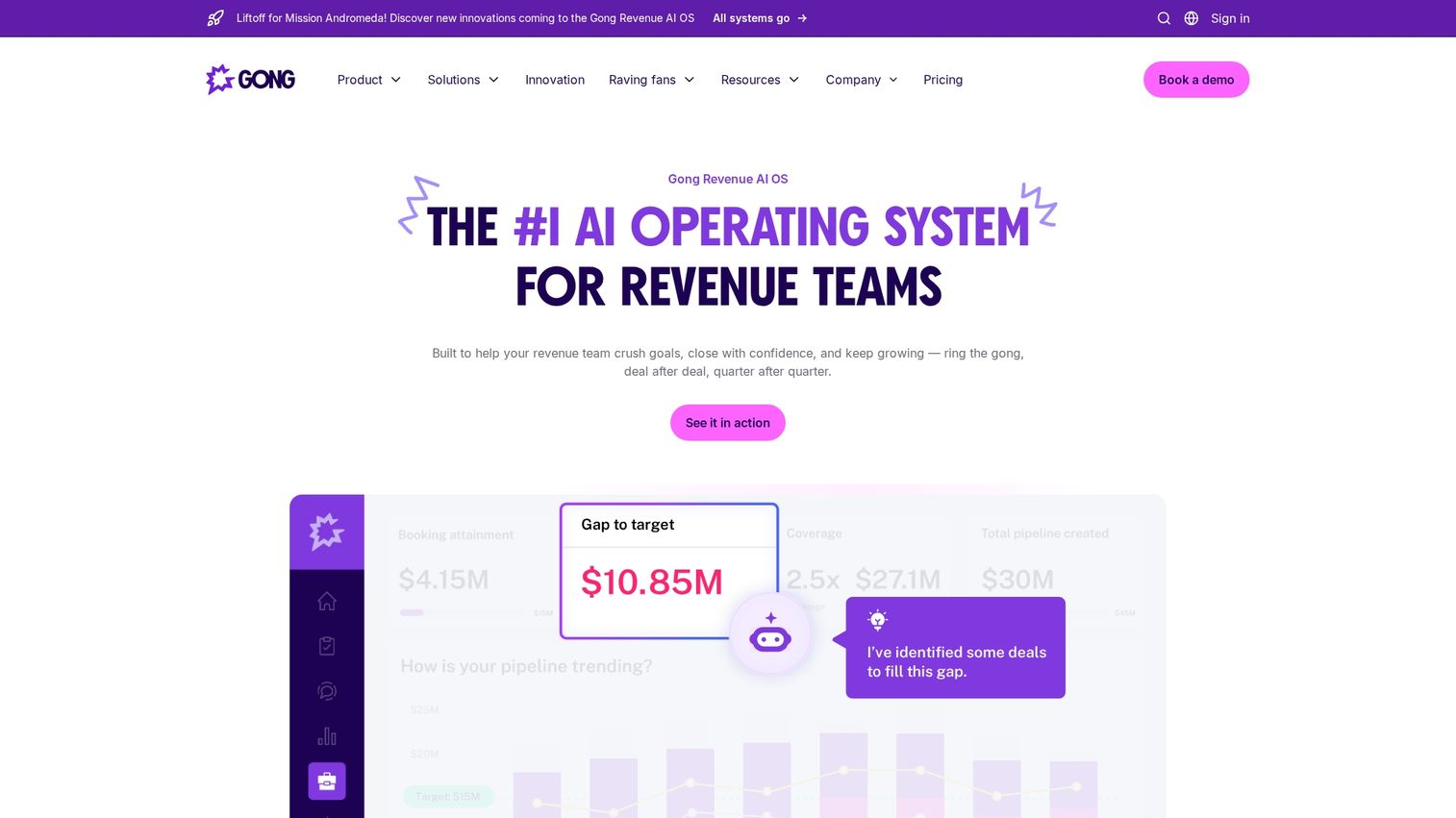
Gong is the market leader in conversation intelligence, capturing and analyzing every customer interaction to provide deep insights into deals and team performance. It records, transcribes, and uses AI to analyze sales calls, meetings, and emails to uncover risks and opportunities.
Best for: Teams that want deep call analysis and AI-driven insights to improve coaching and deal execution.
Key strengths
- Market-leading conversation intelligence with high transcription accuracy
- AI-powered deal boards and risk analysis that surface problems early
- Actionable coaching insights for managers based on actual call data
- Competitor and market tracking across all recorded conversations
- Deep integrations with major CRMs like Salesforce and HubSpot
Why choose Gong: Choose Gong if your primary goal is to understand what's happening in your customer conversations. Its analytics engine helps you clone your top performers, identify coaching moments, and get an unbiased view of your pipeline based on actual interactions.
Pricing: Contact for custom pricing.
2. Clari
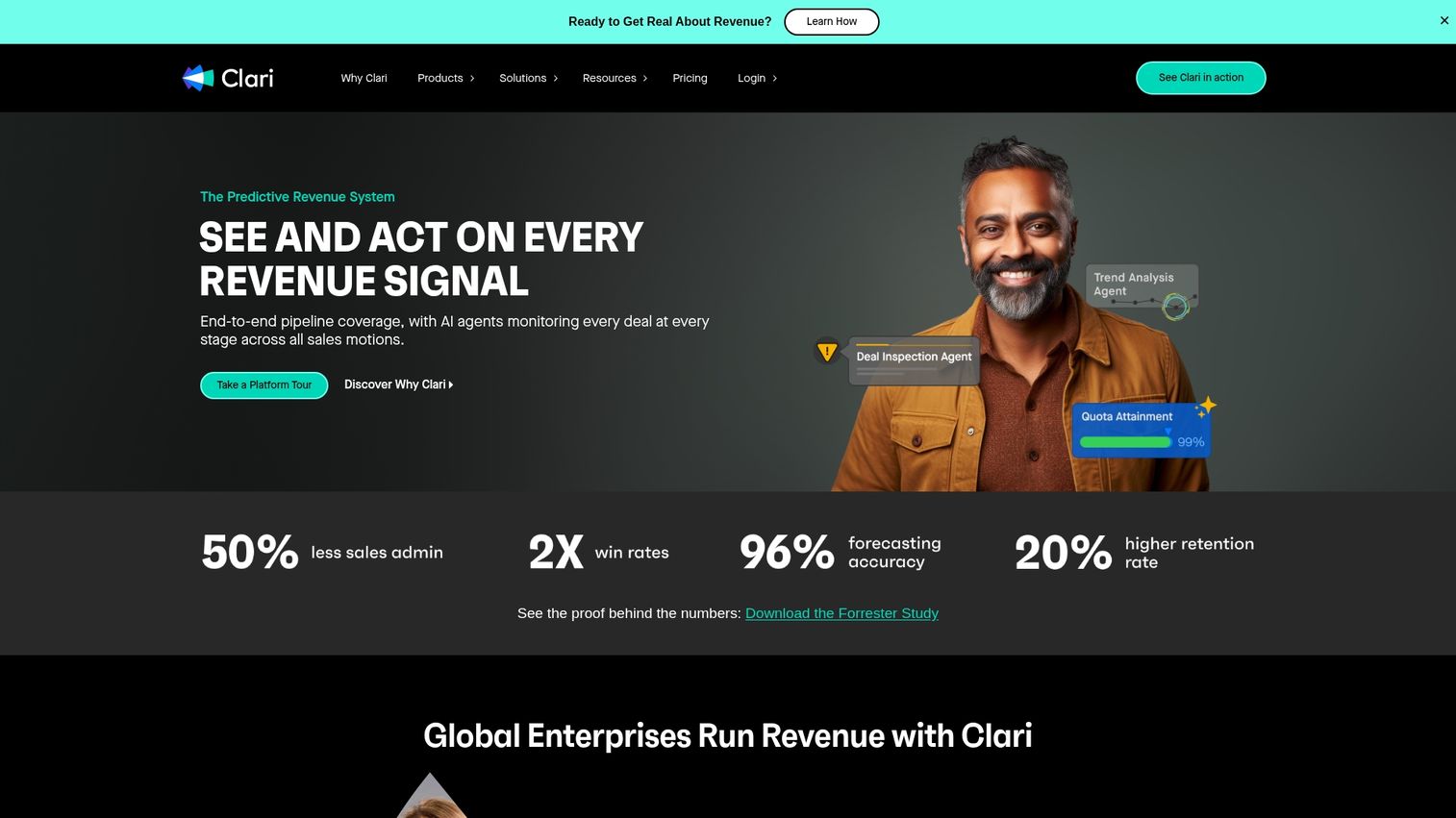
Clari is a leader in pipeline inspection and revenue forecasting, designed for revenue leaders who need to predict outcomes with high accuracy. It combines automated activity capture with AI to provide a clear, real-time view of deal health and forecast projections.
Best for: Revenue leaders and operations teams who need accurate forecasts and comprehensive deal visibility.
Key strengths
- Highly accurate AI forecasting that learns from your historical data
- Detailed pipeline analytics and health scoring
- Deal inspection and progression tracking
- Revenue operations dashboards for leadership
- Automated activity and contact capture
Why choose Clari: Clari excels at transforming messy CRM data into a predictable revenue engine. If your biggest challenge is inaccurate forecasting and a lack of visibility into which deals will close, Clari provides the inspection tools and predictive insights to run your revenue process with confidence.
Pricing: Contact for custom pricing.
3. Salesloft
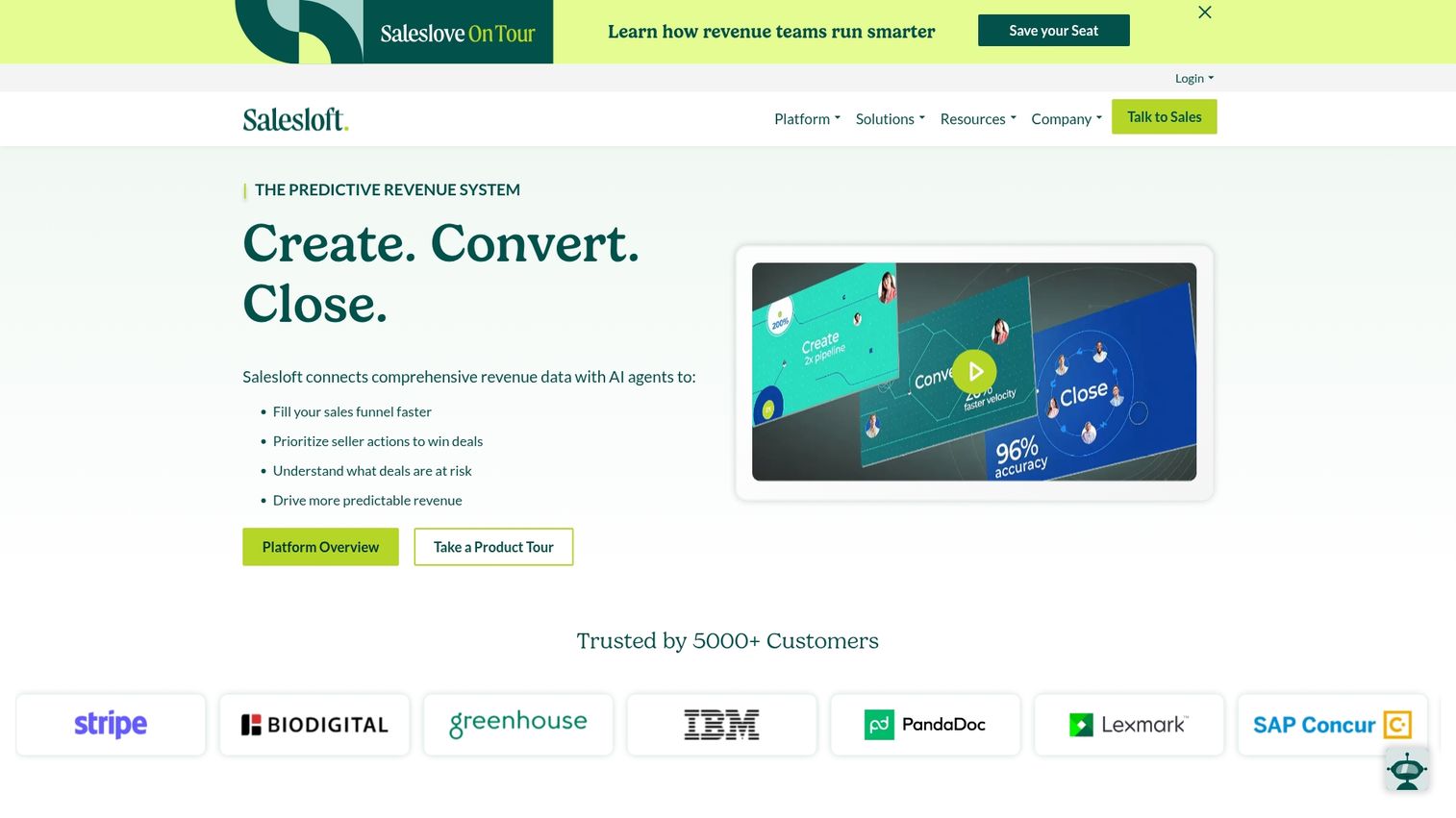
Salesloft is a comprehensive revenue intelligence platform that combines powerful sales engagement capabilities with analytics and forecasting. It provides a unified solution for executing sales cadences and analyzing their impact on revenue.
Best for: Sales teams already using Salesloft for cadences who want to add a unified intelligence layer.
Key strengths
- Cadence and email engagement analytics
- Integrated conversation intelligence
- Forecasting and pipeline management tools
- Deal management and health scoring
- In-platform coaching tools
Why choose Salesloft: If your team lives in Salesloft for prospecting and customer communication, adding its revenue intelligence features creates a workflow without friction. It connects the dots between sales activities and outcomes, allowing you to see which cadences are driving results.
Pricing: Contact for custom pricing.
4. People.ai
People.ai positions itself as the leader in activity intelligence, focusing on automatically capturing all sales activities and mapping relationships. It's built for enterprise teams that need to eliminate manual data entry and gain deep insights into account engagement.
Best for: Enterprise teams that need automated activity capture and account-level engagement insights.
Key strengths
- Best-in-class automated activity capture
- AI-driven relationship mapping
- Account intelligence software capabilities
- Automatic CRM data enrichment
- Revenue analytics and pipeline dashboards
Why choose People.ai: People.ai is the solution for organizations plagued by poor CRM data hygiene. By automatically capturing every touchpoint and mapping key stakeholder relationships, it provides a foundation of clean data that powers more accurate analytics and account planning.
Pricing: Contact for custom pricing.
5. Revenue.io
Revenue.io is a real-time guidance platform that provides live coaching and conversation AI during sales calls. It helps teams reinforce sales methodology and improve performance by offering in-the-moment suggestions and feedback.
Best for: Inside sales teams that want live, AI-powered coaching during calls.
Key strengths
- Real-time call guidance and checklists
- Conversation AI with transcription and analysis
- Automated note-taking and CRM sync
- Reinforcement of sales methodologies like MEDDIC
- Integrated dialer and communication tools
Why choose Revenue.io: Unlike platforms that focus on post-call analysis, Revenue.io actively helps reps while they are on the phone. If your goal is to ramp up new hires faster and ensure consistent execution of your sales process on every call, its real-time guidance is a key differentiator.
Pricing: Contact for custom pricing.
6. Revenue Grid
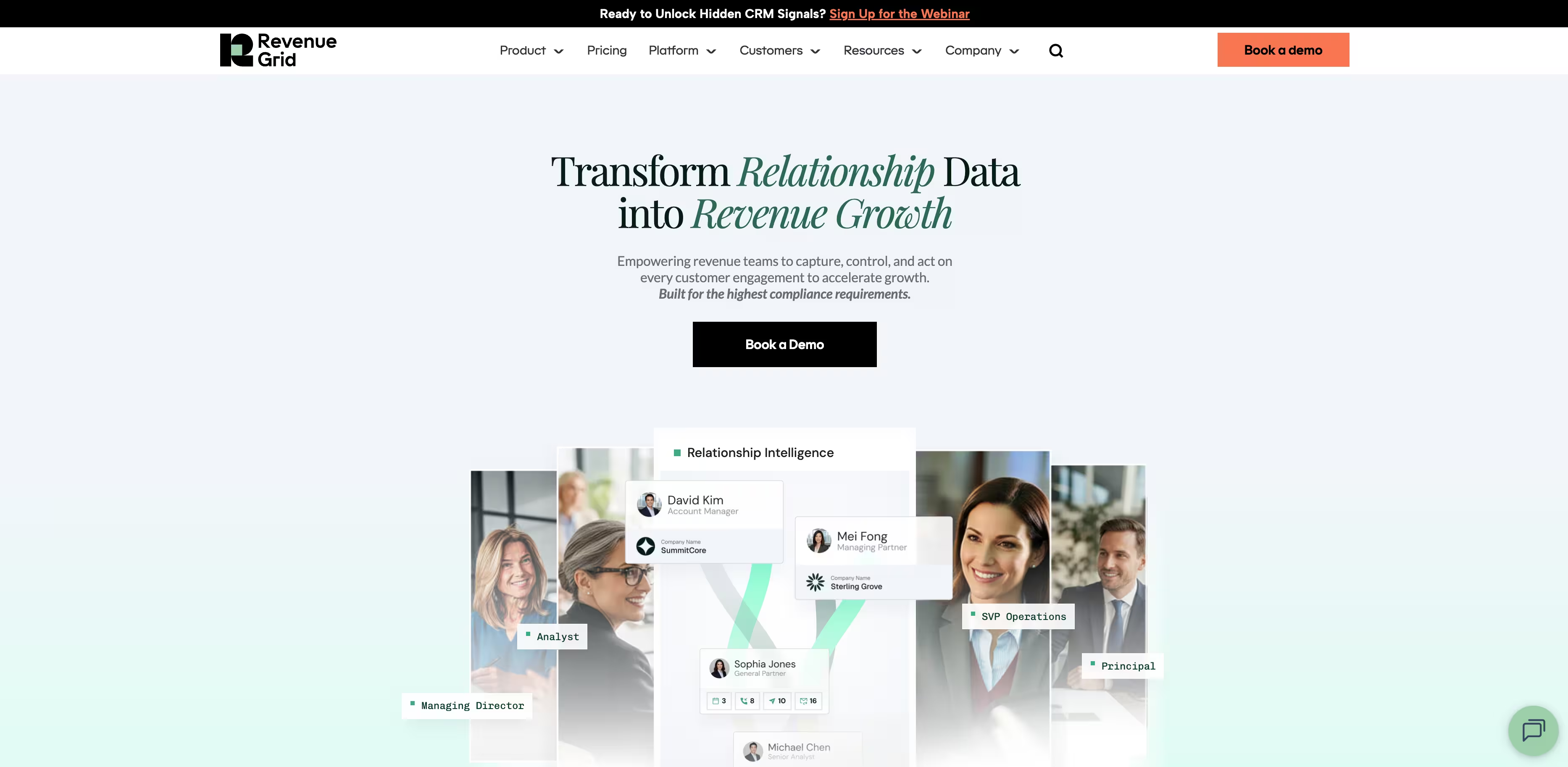
Revenue Grid is a revenue intelligence platform designed for teams deeply invested in the Salesforce ecosystem. It provides guided selling signals and sequence tracking directly within the Salesforce user interface.
Best for: Salesforce-centric teams who want guided selling and deep native integration.
Key strengths
- Deep, native Salesforce integration
- Email and sequence tracking
- AI-powered deal guidance and "next best action" signals
- Revenue signals to identify at-risk deals
- Relationship intelligence and contact mapping
Why choose Revenue Grid?
If your team lives and breathes Salesforce, Revenue Grid is a natural extension. It enhances the native SFDC experience with actionable signals and automation, guiding reps on what to do next without forcing them to learn a new platform.
Revenue Grid pricing
Contact for custom pricing.
7. InsightSquared
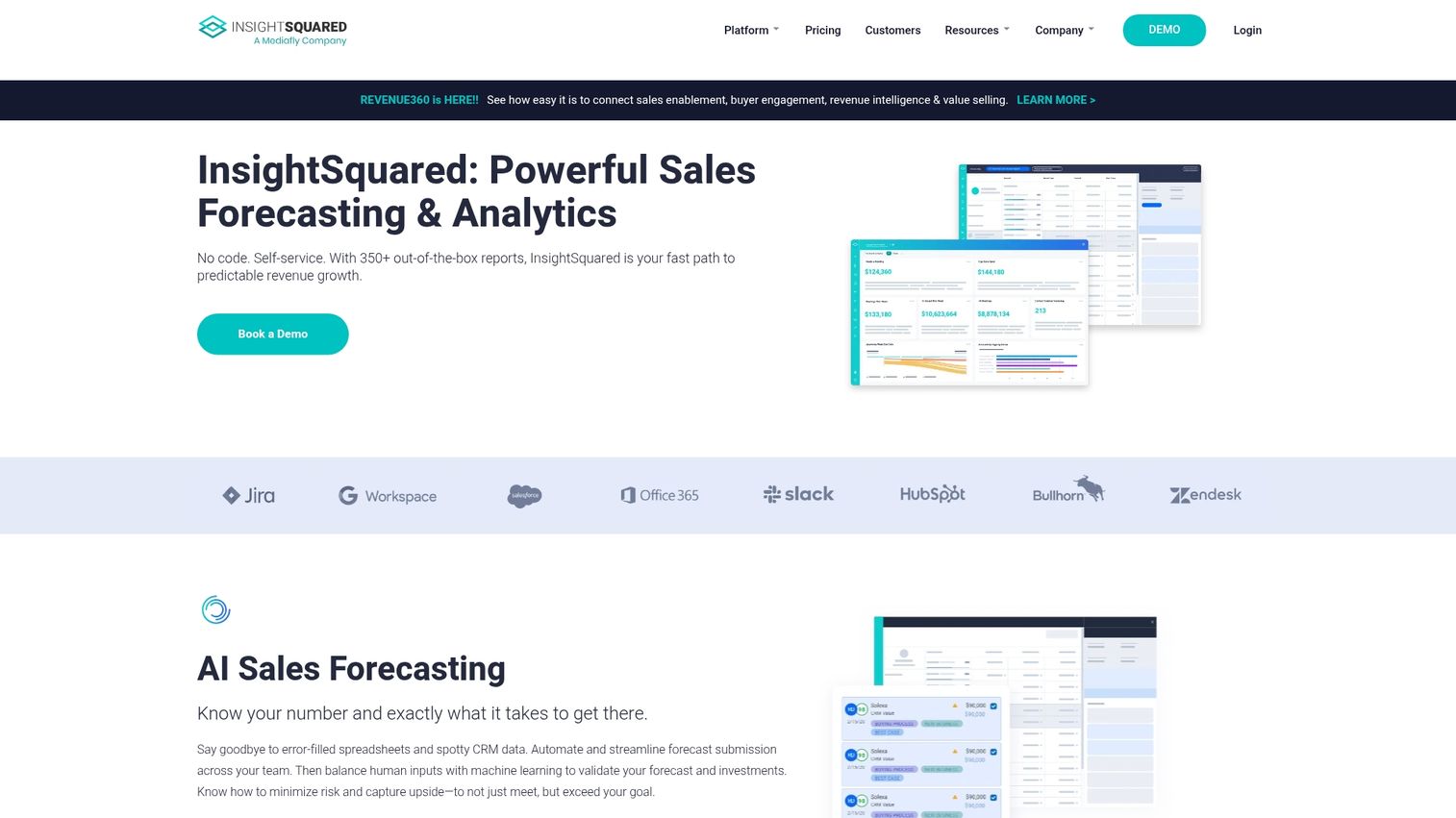
InsightSquared is a revenue analytics and reporting platform that excels at creating powerful dashboards and historical analysis. It helps revenue operations teams and leaders visualize sales performance, forecast trends, and diagnose pipeline issues.
Best for: Teams that prioritize customizable dashboards and deep historical reporting.
Key strengths
- Advanced revenue analytics software
- Customizable forecasting reports and dashboards
- In-depth pipeline analytics
- Sales activity and performance tracking
- Historical trend analysis
Why choose InsightSquared?
While many platforms focus on real-time insights, InsightSquared is particularly strong at board-level reporting and long-term trend analysis. If you need to answer complex questions about sales cycle length or conversion rates over time, its reporting engine is a top choice.
InsightSquared pricing
Contact for custom pricing.
8. Chorus by ZoomInfo
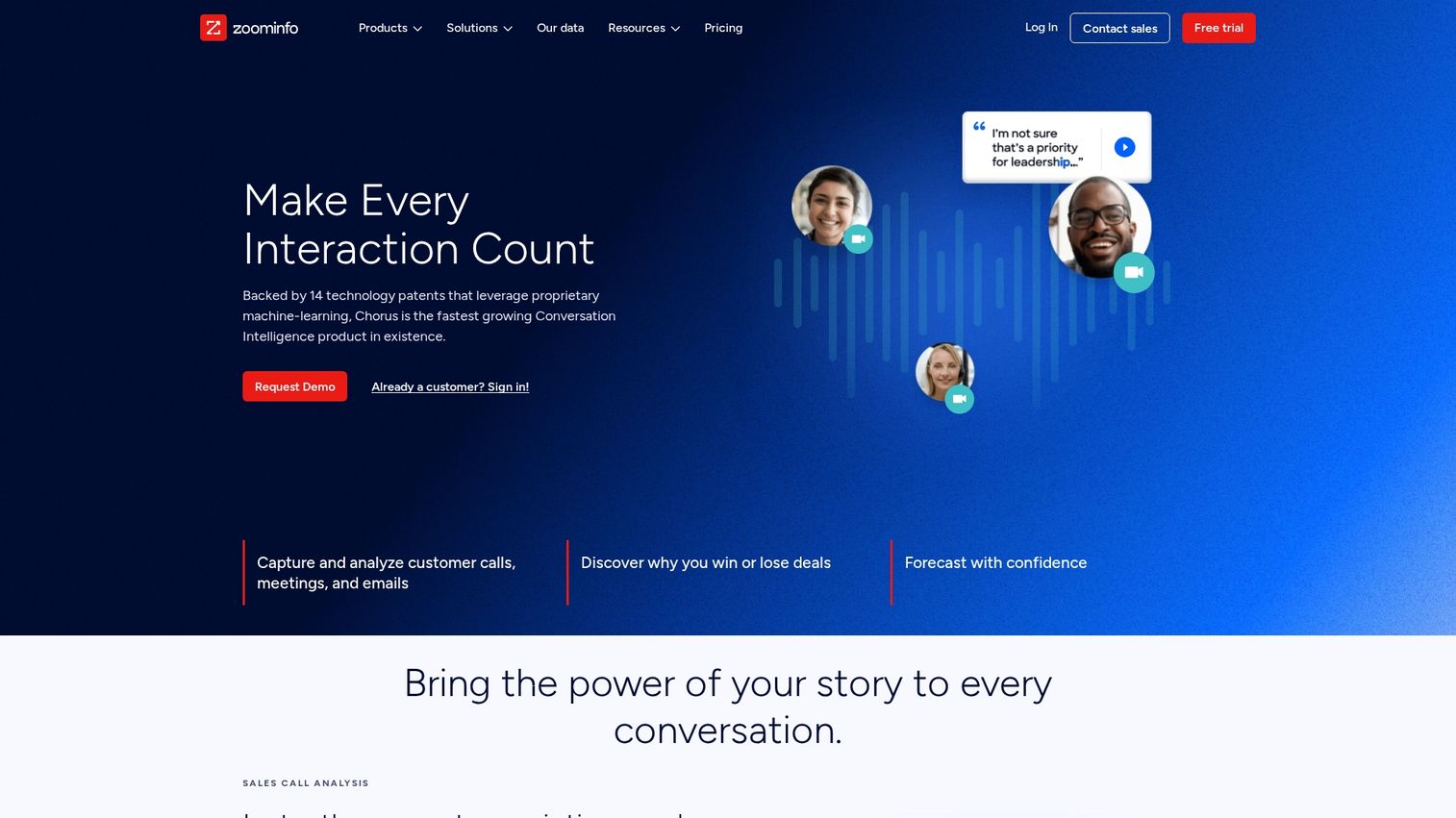
Chorus is a leading conversation intelligence platform that is now part of ZoomInfo. It combines rich call recording and analysis with ZoomInfo's best-in-class B2B data, providing context on who you're talking to directly within your call analysis.
Best for: Teams that want top-tier call analysis enriched with ZoomInfo's contact and company data.
Key strengths
- High-quality call recording and transcription
- AI-driven deal intelligence and risk scoring
- Integration with ZoomInfo's data
- Competitive insights and market intelligence
- Strong coaching and collaboration features
Why choose Chorus?
The key advantage of Chorus is its native integration with ZoomInfo. This allows you to not only analyze what was said in a meeting but also get instant context on the participants, their roles, and their company's tech stack.
Chorus pricing
Contact for custom pricing.
9. Aviso
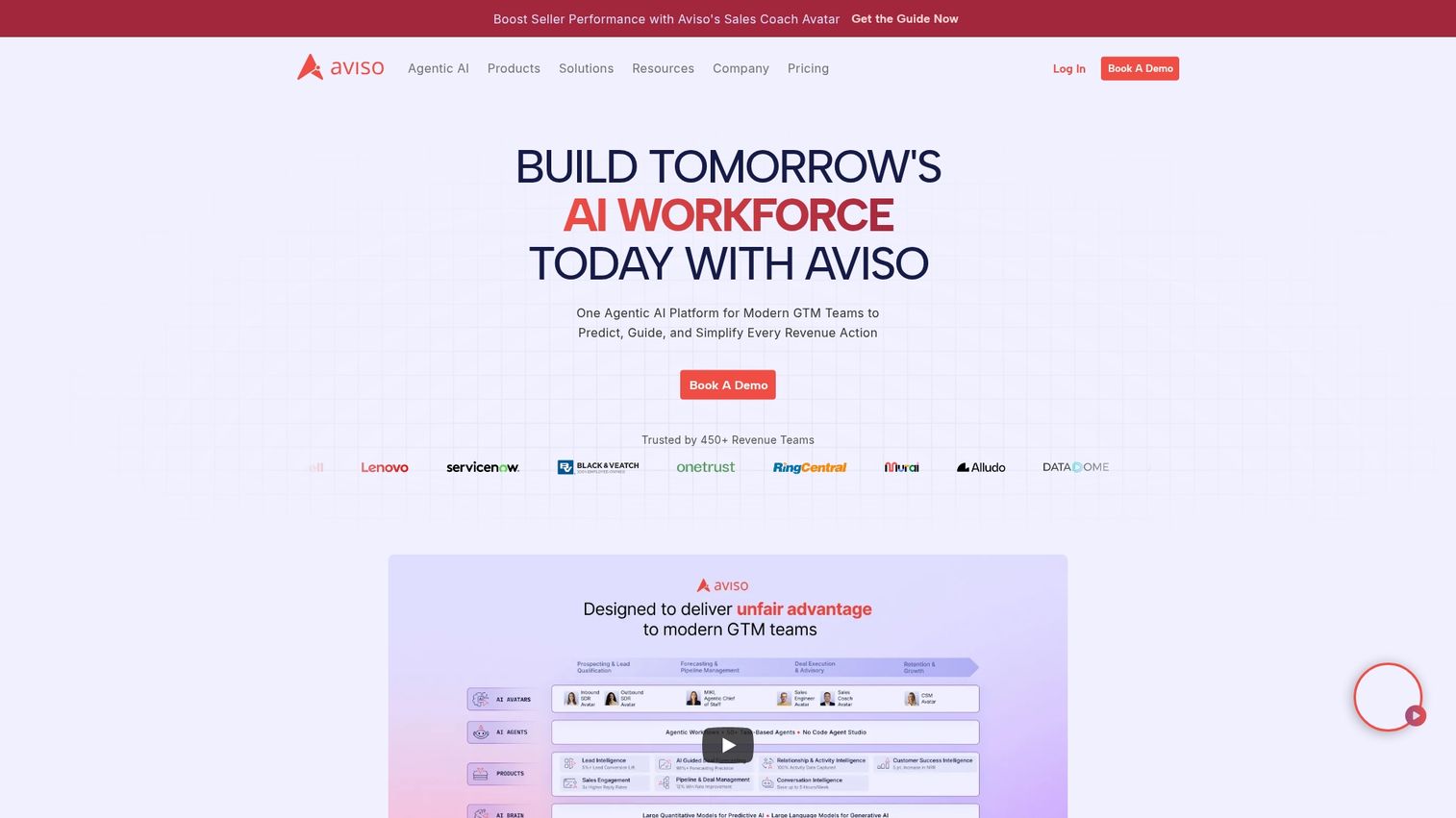
Aviso is an AI-first forecasting and pipeline management platform. It uses predictive analytics to help revenue teams achieve their goals by providing highly accurate forecasts, deal guidance, and insights into pipeline health.
Best for: Enterprise teams that want a dedicated, AI-powered platform for predictive forecasting.
Key strengths
- Advanced AI forecasting engine
- Pipeline health and deal scoring
- AI-driven deal guidance and next best actions
- Comprehensive revenue AI platform capabilities
- Strong CRM integration and data management
Why choose Aviso?
Aviso is built from the ground up as a predictive engine. It's designed for organizations that are serious about moving beyond manual forecasting and want a purpose-built AI tool to manage their entire revenue lifecycle.
Aviso pricing
Contact for custom pricing.
10. BoostUp
BoostUp combines forecasting, deal intelligence, and rep coaching into a unified platform for revenue operations. It focuses on providing accurate predictions while also giving managers the tools to inspect deals and coach their teams effectively.
Best for: Revenue operations teams who need a single platform for accurate predictions and rep coaching.
Key strengths
- AI-powered forecasting and projection
- Deep deal inspection and health analysis
- Integrated rep coaching workflows
- Pipeline analytics and risk alerts
- Email and calendar activity capture
Why choose BoostUp?
BoostUp bridges the gap between high-level forecasting and front-line deal execution. It provides the data RevOps needs to call the number accurately, while also surfacing the engagement insights managers need to help their reps win more deals.
BoostUp pricing:
Contact for custom pricing.
11. Scratchpad
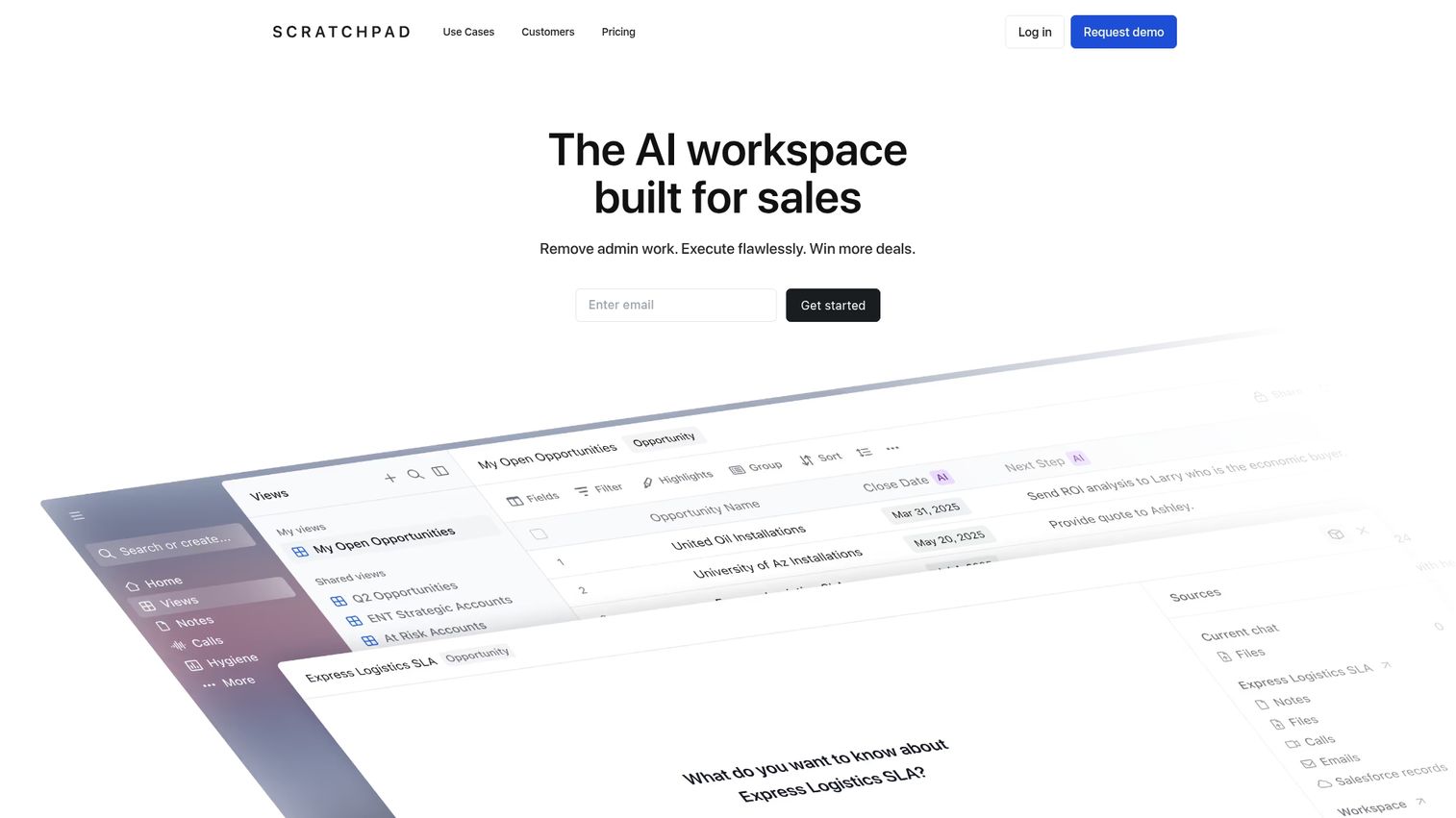
Scratchpad is a lightweight pipeline management tool that acts as a fast, modern overlay for Salesforce. It's designed for reps who want a quicker way to update their pipeline and take notes, without the complexity of a full-scale intelligence platform.
Best for: Sales reps who want a faster, more intuitive Salesforce experience for pipeline management.
Key strengths
- Instant-on Salesforce overlay
- Spreadsheet-like pipeline views for easy updates
- Centralized notes, tasks, and deal data
- Real-time, bi-directional sync with Salesforce
- Generous free tier available
Why choose Scratchpad: Scratchpad solves a simple but critical problem: reps hate updating Salesforce. By providing a fast and user-friendly interface connected directly to SFDC, it dramatically improves data hygiene and saves reps hours per week.
Pricing: Free tier available; paid plans offer more advanced features.
12. Mediafly
Mediafly is a revenue enablement platform that connects content intelligence with deal analytics. It helps teams understand how buyer engagement with content like presentations and proposals impacts deal outcomes.
Best for: Teams that want to connect content engagement and buyer behavior to deal outcomes.
Key strengths
- Content analytics and engagement tracking
- Integrated deal intelligence and forecasting
- Buyer engagement tracking across the sales cycle
- Interactive presentation and value-selling tools
- Bi-directional CRM sync
Why choose Mediafly: Mediafly answers the question, "Is our content actually helping us sell?" It provides unique insights into which assets are being viewed, by whom, and for how long, linking content performance directly to pipeline progression.
Pricing: Contact for custom pricing.
13. HubSpot Sales Hub
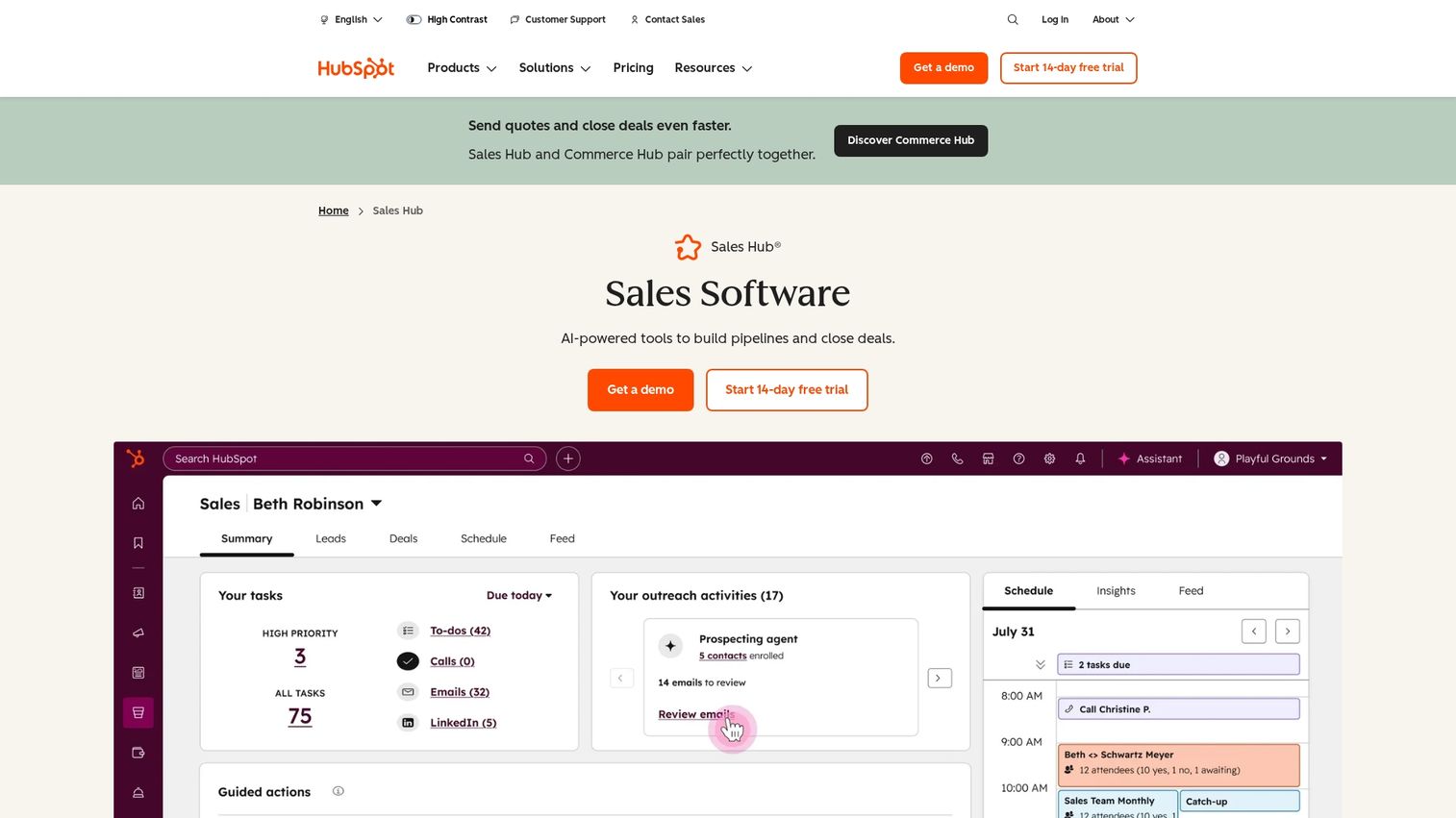
HubSpot Sales Hub offers CRM-native revenue intelligence for teams already using the HubSpot platform. Its forecasting, analytics, and conversation intelligence tools are built directly into the CRM.
Best for: Small to mid-sized sales teams already on the HubSpot platform who want built-in intelligence features.
Key strengths
- Native integration with HubSpot CRM
- Built-in forecasting and deal pipeline tools
- Email and activity tracking
- Conversation intelligence available as an add-on
- Part of a unified platform for marketing, sales, and service
Why choose HubSpot Sales Hub: For teams committed to the HubSpot ecosystem, Sales Hub is the most logical choice. The revenue intelligence tools are included in higher tiers, offering powerful capabilities like forecasting and call analysis without the need to integrate a third-party tool.
Pricing: Starts with a free tier; advanced intelligence features are in Professional and Enterprise plans.
14. Salesforce Revenue Intelligence
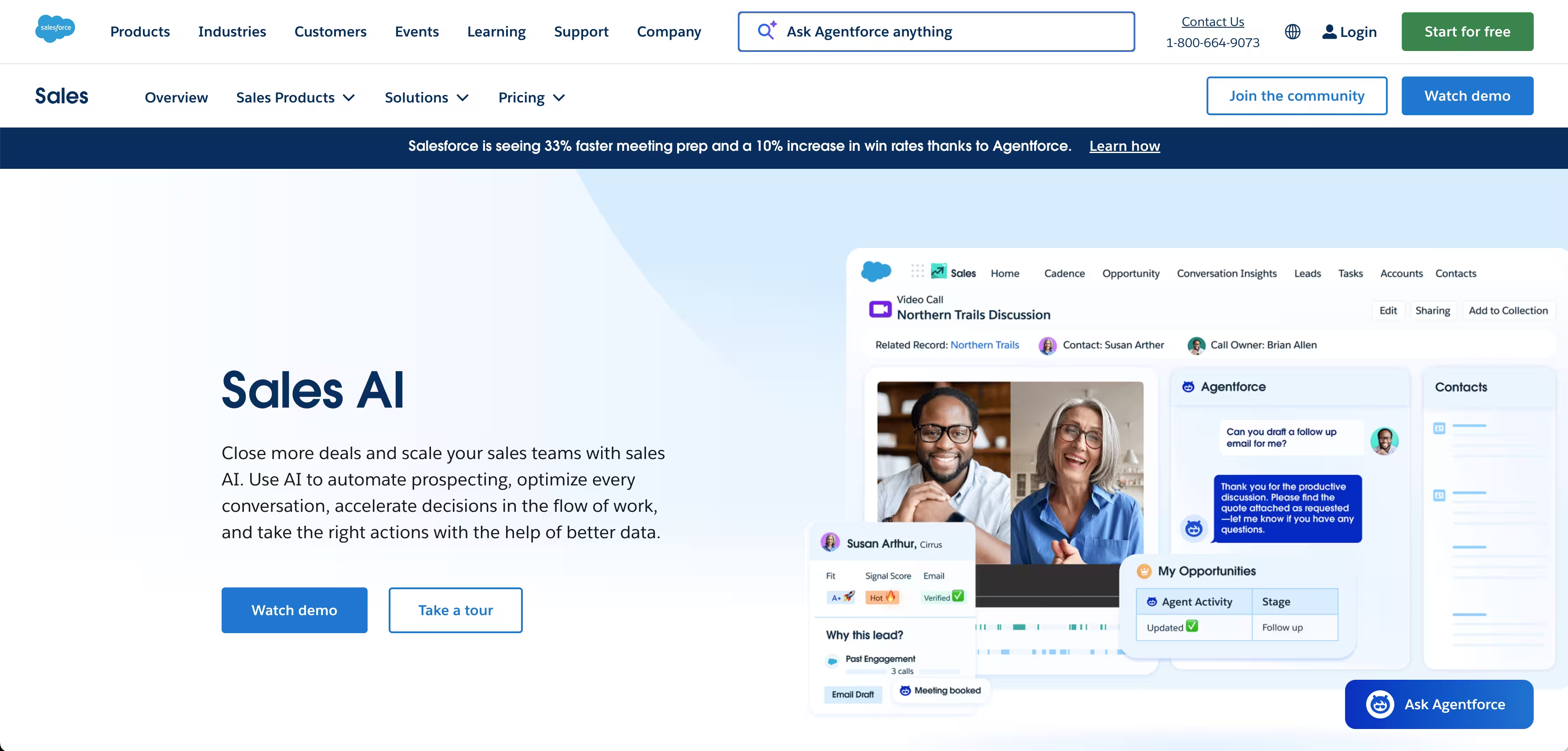
Salesforce Revenue Intelligence is the native intelligence solution for the Salesforce ecosystem, powered by Einstein AI and Tableau. It's designed for teams that want to leverage their existing Salesforce data for analytics and forecasting.
Best for: Enterprise teams deeply embedded in the Salesforce ecosystem who want native analytics.
Key strengths
- Powered by Einstein AI analytics
- Pipeline inspection and flow diagrams
- Native forecasting within Sales Cloud
- Deeply integrated with the core Salesforce platform
- Optional integration with Tableau for advanced visualization
Why choose Salesforce Revenue Intelligence: This is the go-to option for Salesforce purists. It leverages the data you already have in SFDC to provide predictive forecasts and pipeline insights, maximizing your investment in the Salesforce platform.
Pricing: Add-on pricing to an existing Salesforce subscription.
15. Outreach
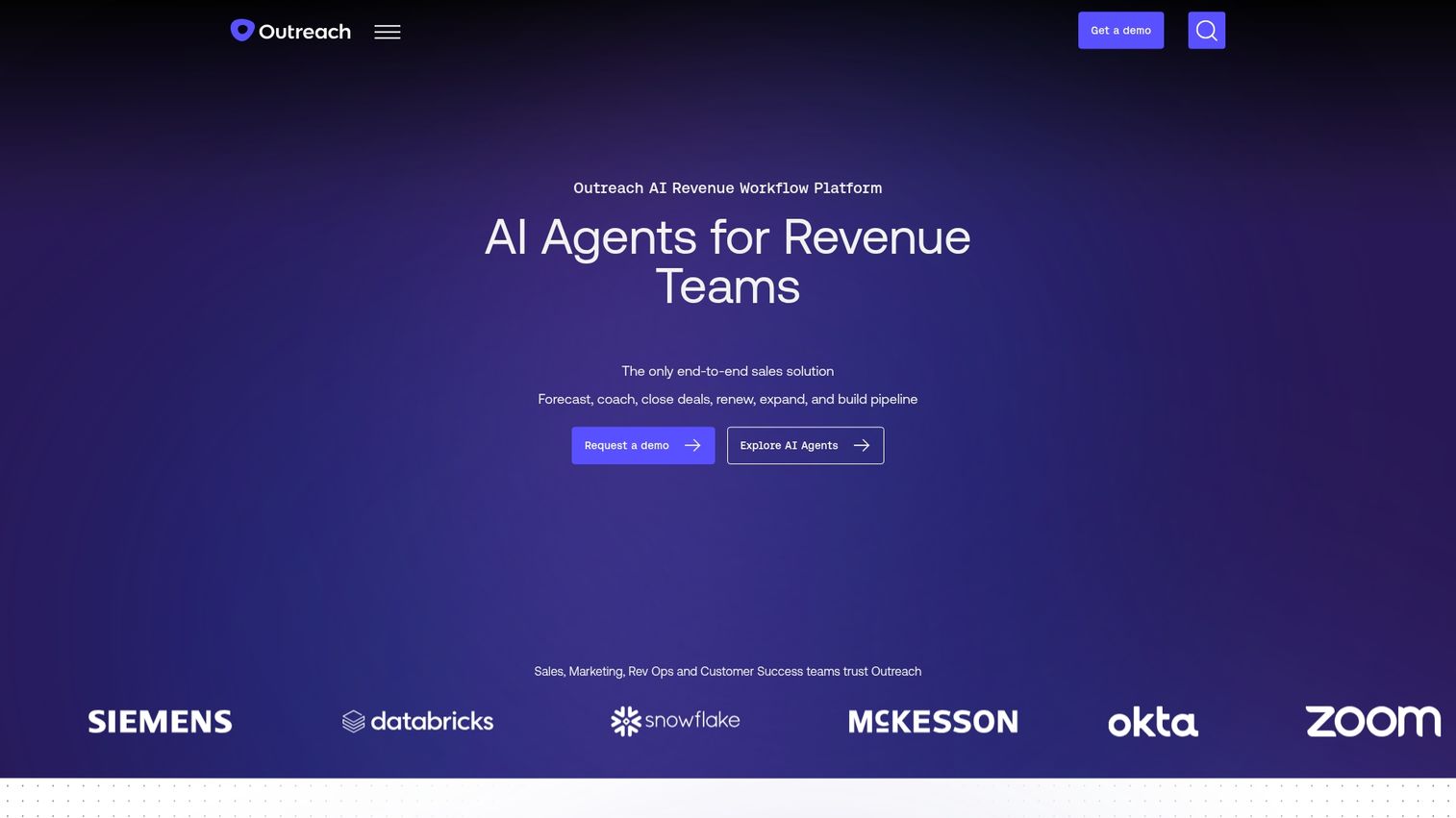
Outreach is a leading sales engagement platform that has built a powerful intelligence layer on top of its sequencing capabilities. It helps teams understand deal health and forecast outcomes based on rich engagement data.
Best for: Sales teams using Outreach for sequences who want to add integrated deal insights and forecasting.
Key strengths
- Sequence and engagement analytics
- AI-powered deal health scoring
- Integrated conversation intelligence (Kaia)
- Pipeline visibility and management
- Rich engagement data from email, calls, and meetings
Why choose Outreach?
Similar to Salesloft, Outreach provides a unified platform for both sales execution and analysis. If your team relies on Outreach for prospecting and communication, its intelligence features offer a connected view that links rep activity directly to deal health.
Outreach pricing
Contact for custom pricing.
Key features of revenue intelligence tools
When evaluating platforms, buyers typically look for a few core capabilities. This section explains the key features that matter most for first-time buyers.
Conversation intelligence and call recording
This is a foundational feature of most modern revenue intelligence platforms. It captures, transcribes, and analyzes sales calls and virtual meetings. The AI surfaces key moments like talk patterns, objection handling, competitor mentions, and action items.
AI forecasting and pipeline analytics
Instead of relying on subjective rep input, intelligent revenue platforms use thousands of deal signals to predict revenue outcomes. Signals include email sentiment, meeting frequency, and stakeholder engagement. This is often presented in pipeline health dashboards that show trends and flag risks.
Deal scoring and risk alerts
Deal scoring algorithms assign a health rating to each opportunity based on real-time engagement and activity data. When a deal shows warning signs like stalled communication or a missing executive sponsor, the system automatically sends risk alerts.
Activity capture and CRM sync
Cirrus Insight reports that 32% of sales reps spend over an hour each day on manual data entry. This feature eliminates that burden by automatically logging emails, meetings, and calls directly to the correct contact, account, and opportunity records in your CRM. Clean data powers better analytics and forecasting.
Revenue reporting and dashboards
Revenue analytics software includes customizable dashboards that provide a single source of truth for the entire revenue team. Dashboards visualize key metrics like forecasting accuracy, pipeline coverage, rep performance, and deal velocity.
How to evaluate revenue intelligence solutions
Use this practical checklist to compare revenue intelligence tools and select the right one for your business.
CRM and GTM stack integration
First, check for deep, native integrations with your core systems, especially your CRM like Salesforce or HubSpot. Also consider integrations with your marketing automation and sales engagement tools. Smooth integration reduces friction and increases user adoption.
Primary use case fit
Determine your biggest pain point. Do you primarily need conversation intelligence to improve coaching? More accurate forecasting? Or a combined sales engagement and intelligence platform? Match the revenue platform to your most critical business gap.
AI capabilities and accuracy
Evaluate how the platform uses AI. Ask vendors for benchmarks on transcription accuracy, the signals used for deal predictions, and the quality of their next-step recommendations.
Pricing model and total cost of ownership
Understand the pricing structure. Is it per-seat, platform-based, or usage-based? Factor in all potential costs, including implementation fees, training, and ongoing customer support.
Implementation timeline and adoption support
Ask about the typical time-to-value, the resources provided during onboarding, and the level of ongoing customer success support. A revenue intelligence tool only delivers ROI if reps actually use it.
Revenue intelligence pricing overview
Pricing for revenue intelligence platforms varies significantly based on the vendor, feature set, and team size. Most enterprise-grade platforms like Gong and Clari are quote-based and require a conversation with their sales team. However, some platforms like HubSpot and Scratchpad offer starter tiers or free versions.
Key factors that affect pricing:
- Number of user seats: Most platforms charge per user, so costs scale with team size.
- Specific features required: Forecasting, conversation intelligence, and activity capture are often priced separately.
- Depth of integrations: Enterprise-grade CRM and data warehouse integrations can add to the cost.
- Level of customer support: Premium support and dedicated customer success managers are typically add-ons.
| Tier | Examples | Pricing model |
|---|---|---|
| Enterprise platforms | Gong, Clari, People.ai | Contact for custom pricing based on team size and features |
| Mid-market options | Revenue Grid, InsightSquared | Often tiered pricing with per-user costs |
| CRM-native tools | HubSpot, Salesforce | Add-on pricing to an existing CRM subscription |
| Lightweight tools | Scratchpad | Free tier available with paid upgrades |
Build your revenue intelligence business case
Choosing the right revenue intelligence platform depends on your primary pain point and your existing tech stack. Whether it's inaccurate forecasting, a lack of coaching data, or poor CRM hygiene, the right tool can make a measurable difference.
To ensure success, start with a clear use case and pilot your chosen solution with a small, engaged team before a full company-wide rollout. When seeking internal buy-in, use interactive demos to clearly show stakeholders the value and user experience of your chosen platform. This makes the business case tangible and compelling, rather than relying on static slides or lengthy documentation.
FAQs about revenue intelligence software
Implementation time varies, ranging from a few days for lightweight tools like Scratchpad to several weeks for enterprise platforms that require deep CRM integrations and custom configurations.
No, revenue intelligence platforms work alongside your CRM. They enrich it with captured activities, deal insights, and AI-driven analytics rather than replacing its core contact and opportunity management functions.
Conversation intelligence focuses specifically on analyzing sales calls and meetings. Revenue intelligence is the broader category that includes conversation analysis plus forecasting, pipeline visibility, and activity capture.
To increase adoption, start with a pilot group of engaged reps, demonstrate clear time savings or deal wins from the insights, and integrate the tool into existing workflows rather than adding new, separate steps.
Most vendors offer personalized demos, and some provide limited trial periods. However, enterprise platforms typically require a sales conversation before granting any trial access.
Smaller teams often find success starting with CRM-native options like HubSpot Sales Hub or lightweight, rep-focused tools like Scratchpad before investing in more comprehensive enterprise platforms.