Your partners signed the agreement three months ago. Two have closed deals. The rest are still asking for the same product walkthrough your SE gave them on day one.
Most SaaS companies try to fix this with a shared Google Drive folder, a monthly partner call, and good intentions. It does not work. Partners lack the interactive demos, training, content, and deal registration infrastructure to sell your product independently. And when they cannot sell, they stop trying.
The numbers tell the story. According to Forrester, roughly 75% of world trade flows through indirect channels. Yet structured channel enablement reduces the time from partner onboarding to first deal from 12 months to 90 days and shortens sales cycles by 28%. The gap between companies that invest in partner enablement software and those that wing it shows up directly in pipeline.
We evaluated these 15 channel enablement tools on four criteria: partner adoption speed (do partners actually use it?), CRM integration depth with Salesforce and HubSpot, pricing transparency for companies between $3M and $50M ARR, and the delegation test (can your VP of Partnerships run this without you?).
What's inside
This guide covers 15 channel enablement tools across five categories: interactive demos and product experiences, partner training and LMS, sales enablement and content management, partner relationship management (PRM), and partner ecosystem and analytics. Each tool was chosen based on real G2 ratings, publicly available pricing, integration depth with Salesforce and HubSpot, and fit for SaaS companies scaling their partner channel.
TL;DR
- Guideflow is the top pick for giving partners self-serve, interactive product demos they can personalize and share without SE involvement.
- For partner training at scale, WorkRamp and Docebo cover different segments (mid-market vs. enterprise).
- If you need a full PRM with deal registration and MDF management, Impartner and Channeltivity are the strongest options.
- Most tools on this list integrate with Salesforce and HubSpot, but integration depth varies significantly. Check the comparison table.
- Channel enablement is not one tool. It is a stack of 2-3 tools that cover demos, training, and partner ops.
What are channel enablement tools
Channel enablement tools are software platforms that help companies equip, train, and support their channel partners (resellers, VARs, MSPs, referral partners, and affiliates) to sell and deliver the company's product independently. The term is used interchangeably with "partner enablement software" and "channel partner enablement platforms." They all point to the same problem: your partners need the right resources to represent your product without you in the room.
A PRM is a subset of channel enablement, not a synonym. Channel enablement is the broader system. Here is how the five subcategories break down:
- Interactive demos and product experiences: Let partners show the product without live environments or SE support
- Partner training and LMS: Certify partners on product knowledge, sales methodology, and technical skills
- Sales enablement and content management: Give partners the right decks, battlecards, and collateral at the right time
- Partner relationship management (PRM): Manage deal registration, MDF, partner tiers, and co-selling workflows
- Partner ecosystem and analytics: Track partner performance, account overlap, and attribution
Understanding which subcategory addresses your biggest bottleneck is the first step. A company where partners cannot demo the product has a different problem than a company where partners close deals but nobody can track them.
When to use channel enablement tools
You just hired a VP of Partnerships or Head of Channel. They need infrastructure on day one, not a shared folder and a "we'll figure it out" conversation. Without tools, their first quarter is wasted building spreadsheets instead of building pipeline.
Partners are asking for the same demo over and over. Your SE team is the bottleneck, and it does not scale. Every partner call that requires an SE is a call your SE is not spending on direct deals. Sharing interactive demos in your partner portal solves this at scale.
Partner-sourced pipeline is inconsistent. Some partners close deals. Most go quiet after onboarding. You have no visibility into why, because there is no system tracking partner activity between the kickoff call and the deal registration email.
You are preparing for a fundraise and need to show efficient GTM diversification. Channel revenue is a board-level narrative, and you need the data to back it. "We have 30 partners" means nothing without activation rates and partner-sourced pipeline numbers.
Your direct sales motion is working and you want to extend it without proportionally scaling headcount. Partners are the multiplier, but only if they can sell without you. The best channel partner programs are the ones where the founder and SE team are not the bottleneck on every deal.
Best channel enablement tools comparison table
| # | Product | Intent | Key differentiation | Pricing | G2 rating |
|---|---|---|---|---|---|
| 1 | Guideflow | Interactive demos for partners | No-code demo creation with personalization at scale | From $49/mo | 4.7/5 |
| 2 | Seismic | Sales enablement and content | AI content recommendations and analytics | Custom pricing | 4.7/5 |
| 3 | Highspot | Sales enablement for partners | Content performance analytics and guided selling | Custom pricing | 4.7/5 |
| 4 | WorkRamp | Partner training and LMS | Purpose-built learning platform for revenue teams | Custom pricing | 4.4/5 |
| 5 | Docebo | Enterprise partner LMS | AI-powered learning with deep customization | From $25K/yr | 4.4/5 |
| 6 | Impartner | Full PRM platform | End-to-end partner lifecycle management | Custom pricing | 4.5/5 |
| 7 | Channeltivity | Lightweight PRM | Fast setup, deal registration, MDF | From $1,399/mo | 4.5/5 |
| 8 | PartnerStack | Partner ecosystem management | Automated payouts and marketplace | Custom pricing | 4.7/5 |
| 9 | Allbound | Partner portal and enablement | Unified partner portal with content and training | Custom pricing | 4.5/5 |
| 10 | Crossbeam (Reveal) | Account mapping and overlap | Identify shared accounts across partner networks | Free tier available | 4.7/5 |
| 11 | Showpad | Content enablement and training | Combines content management with coaching | Custom pricing | 4.6/5 |
| 12 | LearnUpon | Multi-audience LMS | Separate portals for customers, partners, employees | From $599/mo | 4.6/5 |
| 13 | Kiflo PRM | PRM for SMB and mid-market | Affordable PRM with partner portal and automation | From $799/mo | 4.6/5 |
| 14 | TalentLMS | Budget-friendly partner training | Simple LMS with gamification and fast setup | Free tier, from $89/mo | 4.6/5 |
| 15 | Salesforce PRM | PRM for Salesforce-native orgs | Native CRM integration, deal registration, analytics | Included in some Salesforce plans | 4.3/5 |
1. Guideflow
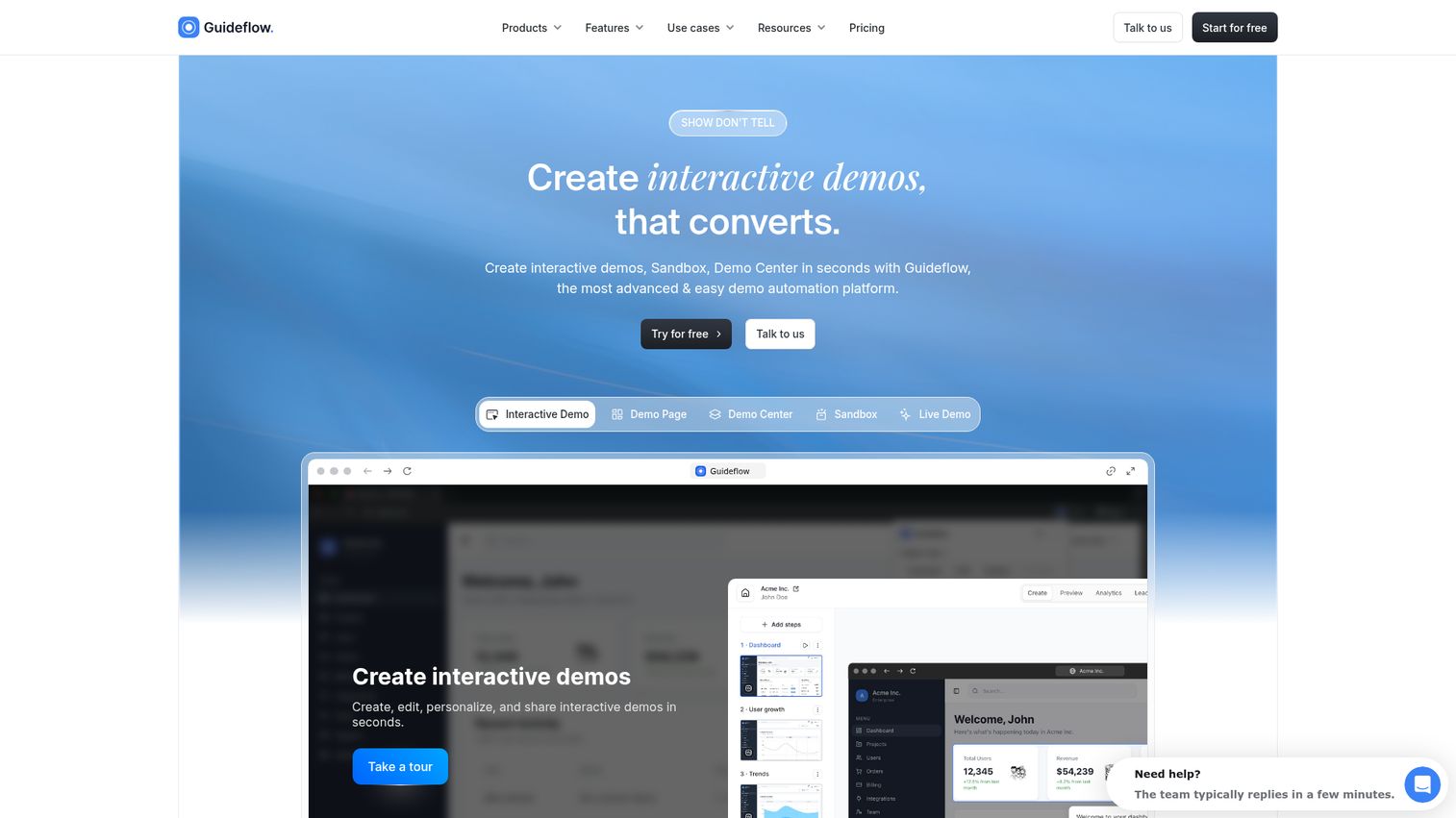
Here is the core problem Guideflow solves for channel partner enablement: your partners cannot demo your product without an SE on the call. That means your partner channel does not scale past the number of SEs you can assign to it. And at a 50-person SaaS company, that number is small.
Guideflow lets you create interactive, clickable product demos that partners can personalize and share with their prospects without needing a live environment, login credentials, or SE support. Partners capture attention with a hands-on product experience instead of a static PDF or a recorded video that prospects skip after 30 seconds.
Best for: SaaS companies that want partners to demo the product independently at scale.
Key strengths
- No-code demo creation (capture your product flow in a browser, edit in a visual builder)
- Personalization at scale (swap text, images, and graphs per partner or prospect using CRM variables)
- Multi-format distribution (public links, embeds, email, social, ads)
- Advanced analytics (track which partners use which demos, completion rates, and prospect engagement)
- AI-assisted editing (auto-generated steps, translations, and voiceovers for multi-geo partner networks)
- CRM and Slack integrations for engagement signals
Why choose for channel enablement: Your partners are not your sales team. They do not have access to your staging environment. They cannot run a live demo without breaking something. Guideflow gives them a controlled, branded, always-up-to-date product experience they can share in seconds. You see exactly how prospects interact with it. Companies using structured enablement like this see partner activation rates between 30-50% within 90 days.
Pricing: Free tier available. Paid plans from $49/month. See full pricing details.
Start your journey with Guideflow today!
2. Seismic

When your partner network grows past 50 partners, content governance becomes a real problem. Partners use outdated decks. They go off-brand. They send prospects a case study from two product versions ago. Seismic centralizes sales content and uses AI to recommend the right asset for each deal stage and partner profile.
This is the enterprise-grade sales and channel enablement platform for companies that need to control what partners say and measure whether the content actually moves deals.
Best for: Mid-market to enterprise SaaS companies with 50+ partners who need content governance and usage analytics.
Key strengths
- AI content recommendations that match assets to deal stage and partner profile
- Content automation and personalization through LiveDocs (dynamic content generation)
- Deep CRM integration with Salesforce and HubSpot at the opportunity level
- Analytics on content performance: which assets partners use, which drive pipeline, which collect dust
- Partner-specific content portals with access controls
Why choose for channel enablement: If your partners are sending prospects a deck you retired six months ago, Seismic enforces consistency at scale. The analytics show you which content drives deals and which gets ignored. The trade-off: this is an enterprise tool with enterprise pricing and implementation timelines. Not a fit for a company with 10 partners and a $5M ARR.
Pricing: Custom pricing (typically enterprise contracts starting at $30K+/year).
3. Highspot
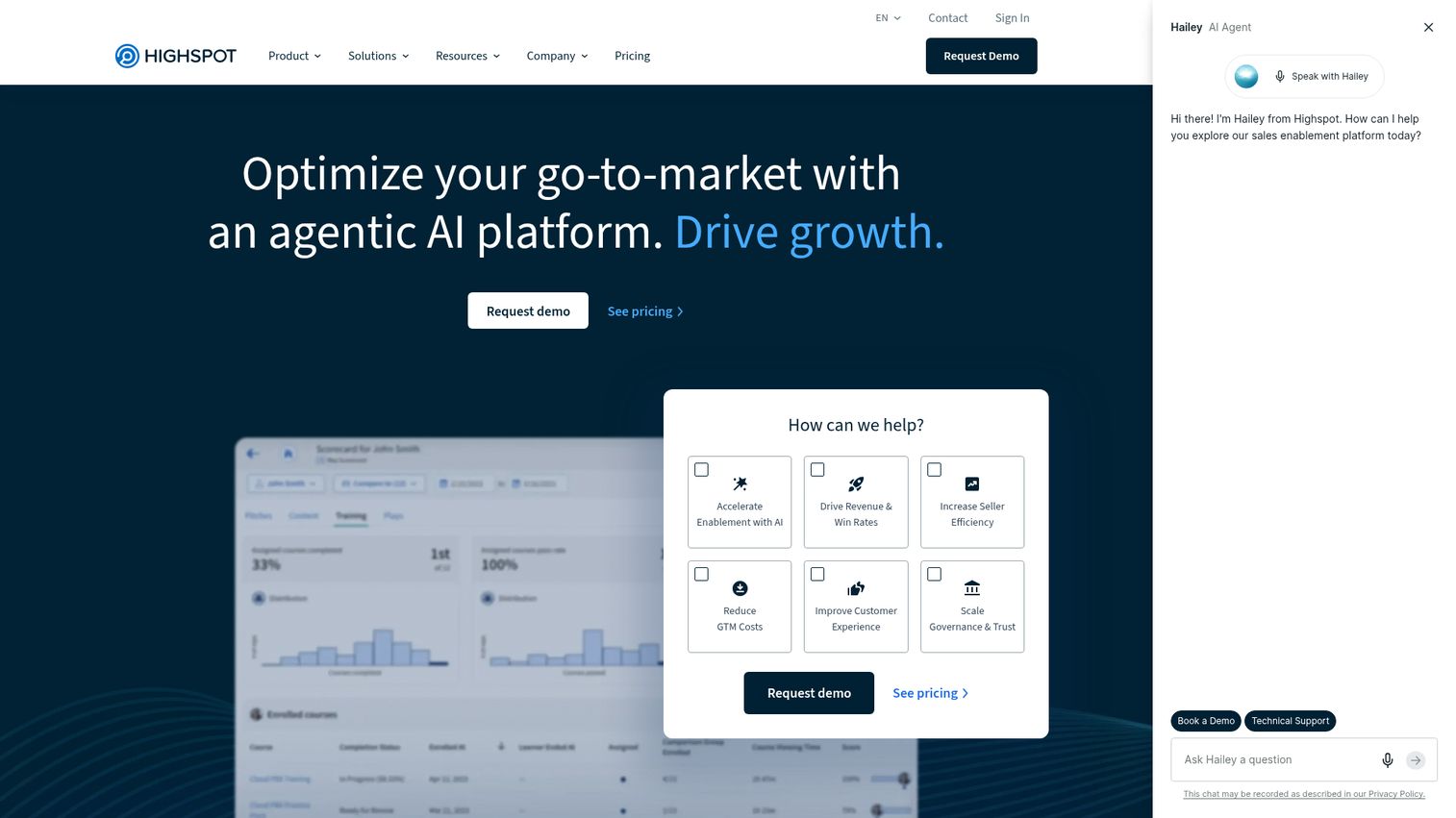
Highspot competes directly with Seismic in the sales enablement space but is often cited for better UX and faster adoption. For channel partner enablement specifically, Highspot combines content management with guided selling playbooks and built-in training, which means partners get content, coaching, and deal guidance in one platform instead of three.
Best for: Companies that want sales enablement and partner training in one platform to reduce tool sprawl.
Key strengths
- Content management with AI-powered search (partners find what they need without browsing folders)
- Guided selling playbooks that walk partners through deal stages with recommended actions and content
- Built-in training and coaching modules (no separate LMS required for basic partner certification)
- Partner portal capabilities with role-based access
- Integrations with 100+ tools including Salesforce, HubSpot, and Slack
Why choose for channel enablement: Highspot reduces the number of logins your partners need. Content, training, and deal playbooks live in one place. For a VP of Partnerships evaluating tools, the pitch is simple: one platform your partners actually log into, instead of three they ignore. The limitation: like Seismic, this is enterprise-priced and not built for a 20-person company with five partners.
Pricing: Custom pricing (enterprise contracts).
4. WorkRamp
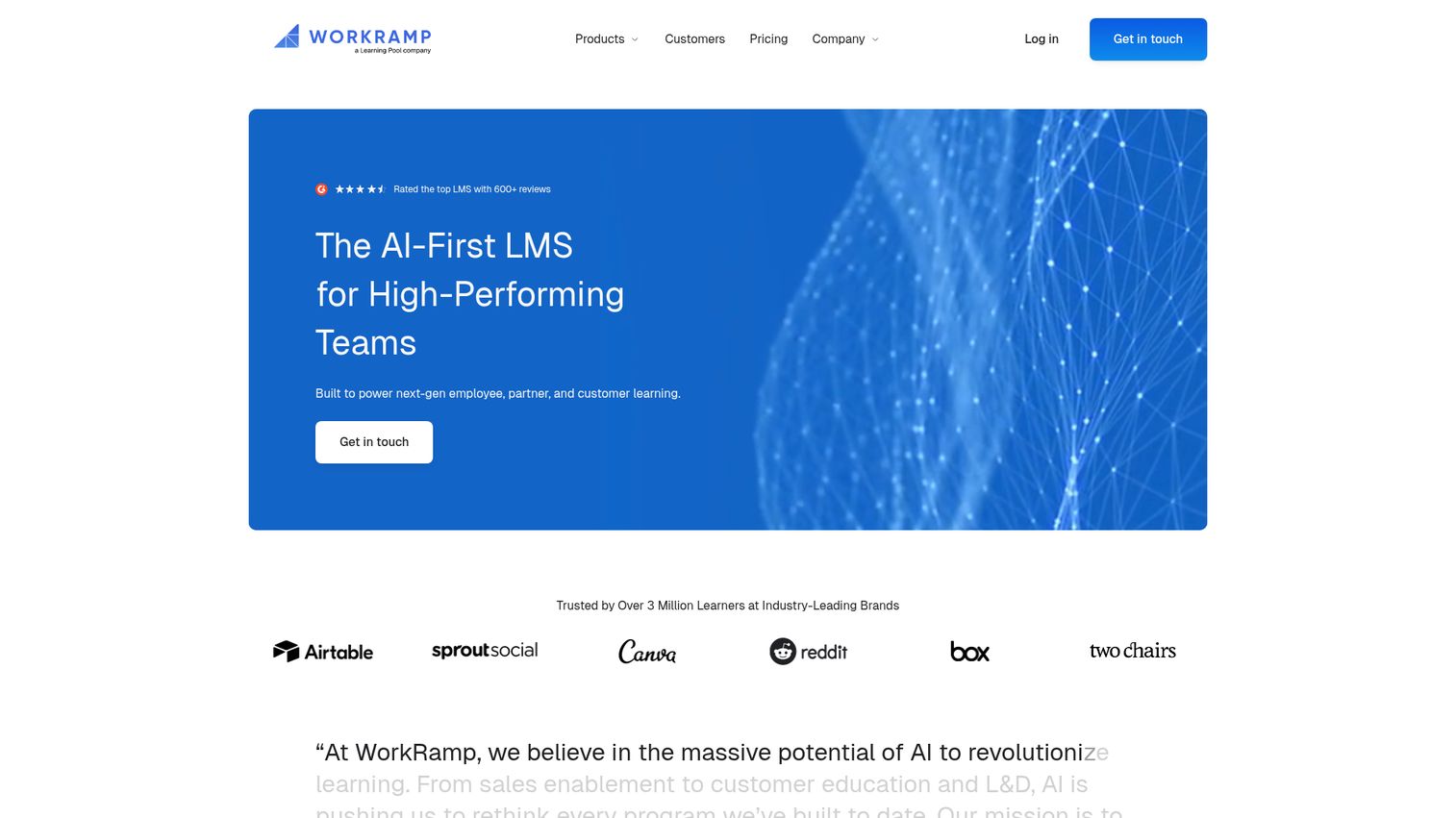
Generic LMS platforms were built for HR compliance training. WorkRamp was built for revenue teams. That distinction matters for partner training and certification because the content structure, analytics, and integrations are designed around sales outcomes, not course completion checkboxes.
Best for: SaaS companies that want structured partner certification programs tied to revenue performance.
Key strengths
- Partner academies with branded portals (your partners see your brand, not WorkRamp's)
- Content authoring built for GTM use cases (product training, competitive positioning, objection handling)
- Certifications and compliance tracking with automated reminders
- Integrations with Salesforce and Slack for training completion signals
- Analytics on partner learning progress and correlation to deal performance
Why choose for channel enablement: WorkRamp connects partner training to revenue data. You can see whether partners who complete certification actually close more deals, which lets you justify the investment to your board. The trade-off: WorkRamp is mid-market priced, so it is more than TalentLMS but less than Docebo. If you need basic partner training running this week, it is probably more than you need. If you need a certification program that ties to pipeline, it is the right weight class.
Pricing: Custom pricing (mid-market contracts).
5. Docebo

Docebo is the enterprise LMS for companies with large, global partner networks that need granular control over learning paths by partner tier, region, and certification level. If you have 100+ partners across multiple countries and languages, Docebo handles the complexity that lighter tools cannot.
Best for: Enterprise SaaS with 100+ partners across multiple regions requiring multi-language support and deep customization.
Key strengths
- AI-powered content recommendations and auto-tagging (reduces manual content curation)
- White-label partner academies that look like your product, not a third-party LMS
- Multi-language support for global partner networks
- Deep reporting and compliance tracking with exportable dashboards
- Marketplace of integrations for CRM, HRIS, and communication tools
Why choose for channel enablement: Docebo is the right choice when your partner training needs outgrow what WorkRamp or TalentLMS can handle. The depth of customization and multi-language capabilities make it the default for companies with partners in 10+ countries. The trade-off: implementation takes months, not weeks. Starting at $25K/year, this is not a tool you buy to test whether partner training works. It is a tool you buy when you know it works and need to scale it.
Pricing: From $25K/year (enterprise contracts).
6. Impartner
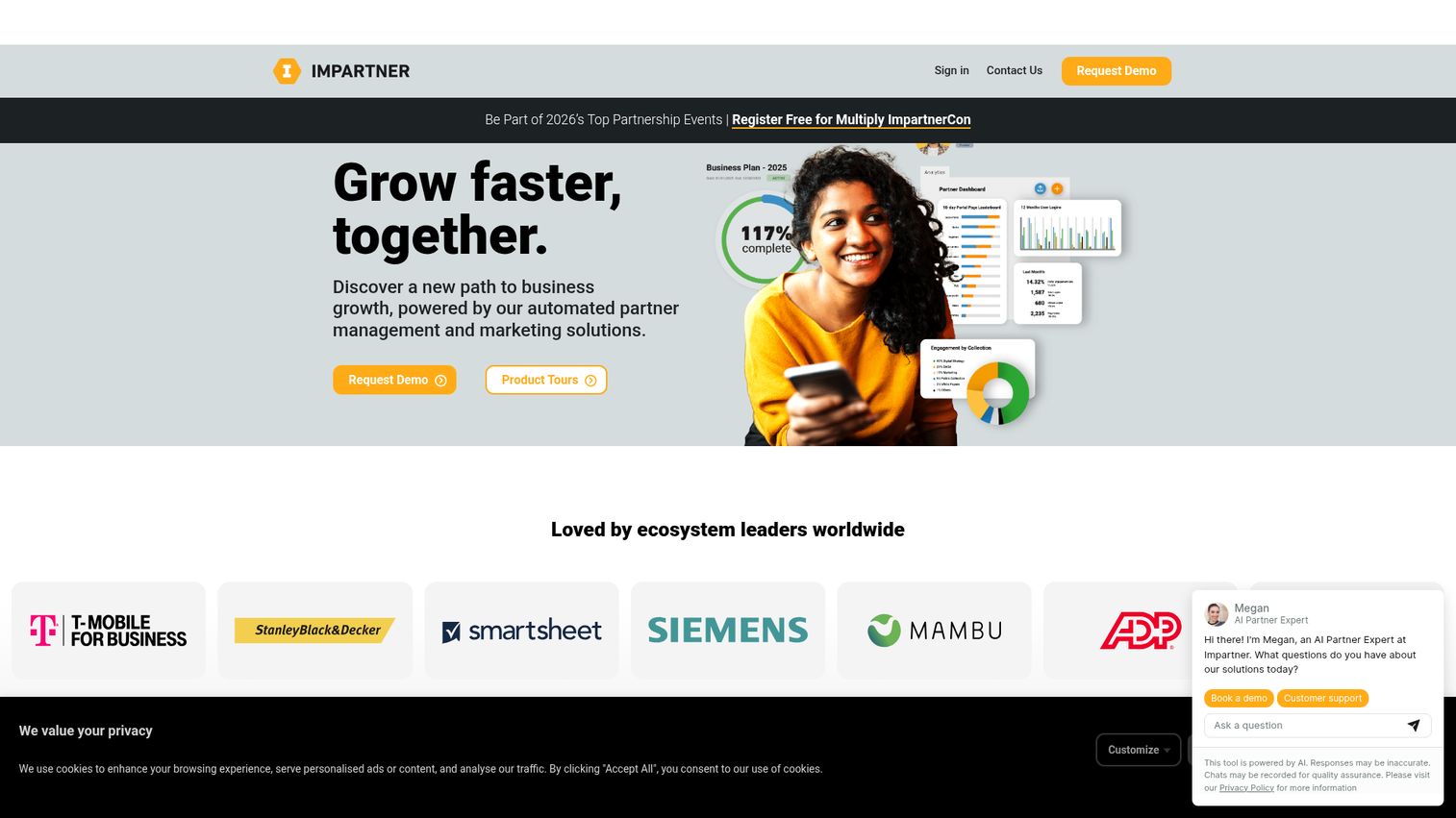
Impartner is the full-lifecycle PRM platform. Think of it as the Salesforce of partner relationship management: deal registration, lead distribution, MDF and co-op fund management, partner tiering, incentive programs, and a self-service partner portal. If your partner program has outgrown spreadsheets and email threads, Impartner is the system of record for the channel.
Best for: Companies with mature partner programs (20+ active partners) that need operational infrastructure for the entire partner lifecycle.
Key strengths
- Partner portal with self-service access to content, deal registration, and MDF requests
- Deal registration and lead distribution with automated routing rules
- MDF and co-op fund management (track requests, approvals, and ROI)
- Partner tiering and incentive programs with automated qualification
- Deep Salesforce integration and journey automation
Why choose for channel enablement: Impartner is the right tool when your channel operations are the bottleneck, not your content or training. If you are tracking deal registration in a spreadsheet and managing MDF requests over email, Impartner replaces that chaos with a system. The trade-off: this is enterprise-priced with a significant implementation timeline. A company with 5 partners does not need Impartner. A company with 50 partners that cannot track deal overlap and MDF spend probably does.
Pricing: Custom pricing (enterprise contracts).
7. Channeltivity
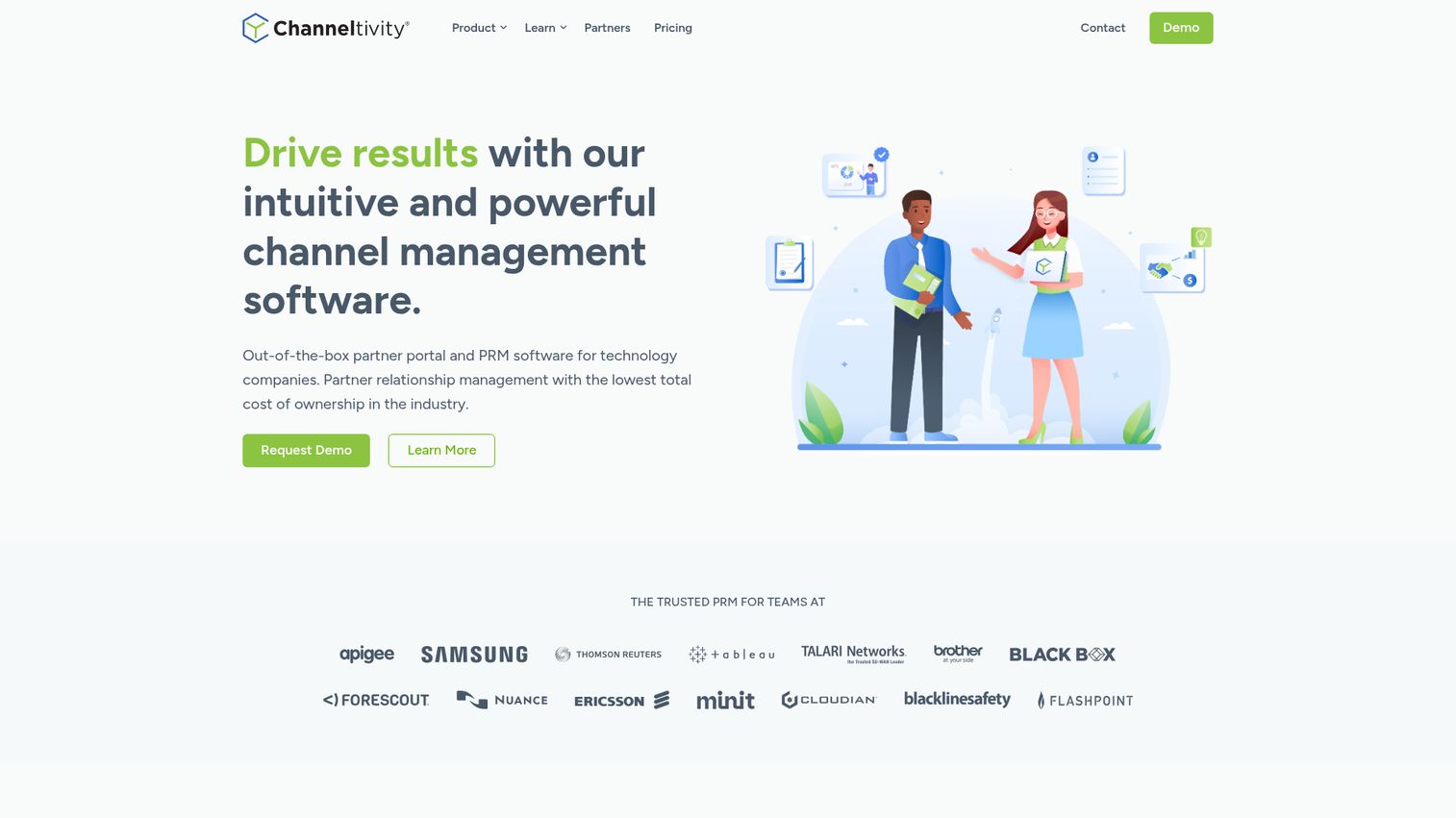
Channeltivity is the lightweight PRM for companies that need the basics (deal registration, MDF management, partner portal) without the 6-month implementation and enterprise pricing of Impartner. If you are a SaaS company at $5M-$20M ARR launching or scaling a partner program, Channeltivity gets you running in weeks.
Best for: Mid-market SaaS companies that want PRM fundamentals without enterprise complexity or timeline.
Key strengths
- Deal registration with approval workflows and conflict resolution
- MDF management with request tracking and ROI reporting
- Partner portal with content distribution and co-branded collateral
- CRM integration with Salesforce and HubSpot (bi-directional sync)
- Fast setup: weeks, not months
Why choose for channel enablement: Channeltivity passes the delegation test. Your VP of Partnerships can set it up and run it without pulling in IT or RevOps for a multi-month project. The feature set covers 80% of what most mid-market companies need from a PRM. The trade-off: it lacks the depth of Impartner's tiering, incentive management, and journey automation. If your partner program is simple (deal registration, MDF, content sharing), Channeltivity is the right weight. If you need complex partner tiers with automated qualification, you will outgrow it.
Pricing: From $1,399/month.
8. PartnerStack
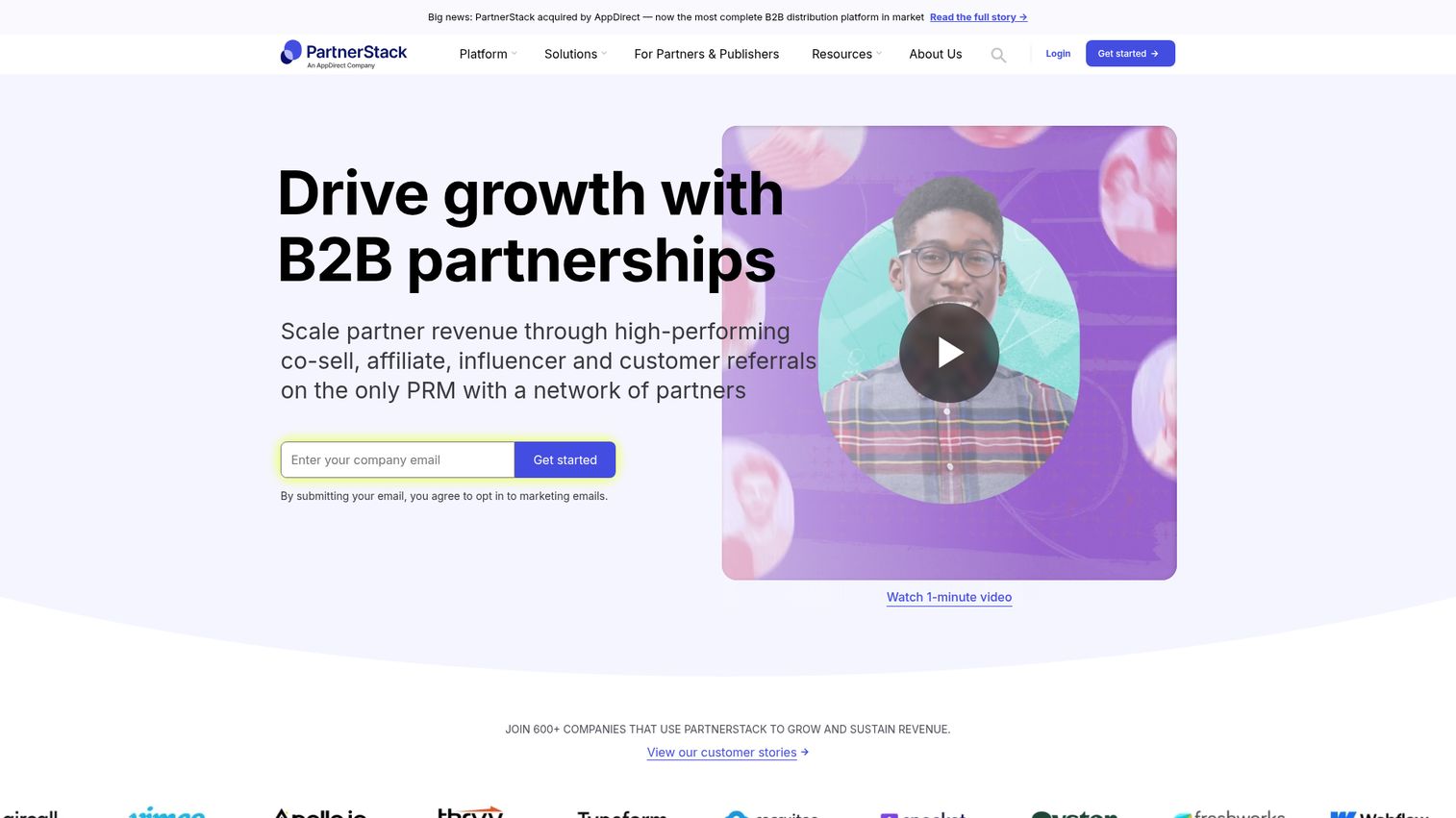
PartnerStack is built for SaaS companies running multi-type partner programs where automated payouts are a core requirement. If you have affiliates, referral partners, and resellers in the same program and need to track commissions, automate payments, and recruit new partners through a marketplace, PartnerStack handles the financial operations that PRMs like Channeltivity and Impartner were not designed for.
Best for: SaaS companies running affiliate, referral, and reseller programs that need automated commission tracking and payouts.
Key strengths
- Automated partner payouts and commission tracking (no more manual spreadsheet calculations)
- Partner marketplace for recruitment (partners discover your program alongside other SaaS companies)
- Deal and lead tracking with attribution across partner types
- Integrations with Stripe, Salesforce, and HubSpot
- Multi-program management (run affiliate, reseller, and referral tracks from one platform)
Why choose for channel enablement: PartnerStack is the right tool when the financial side of your partner program is the bottleneck. If you are spending hours each month calculating commissions, chasing payment approvals, and reconciling partner payouts, PartnerStack automates that. The trade-off: it is stronger on the financial and recruitment side than on enablement (training, content, demos). You will likely pair it with other tools for the full channel enablement stack.
Pricing: Custom pricing.
9. Allbound
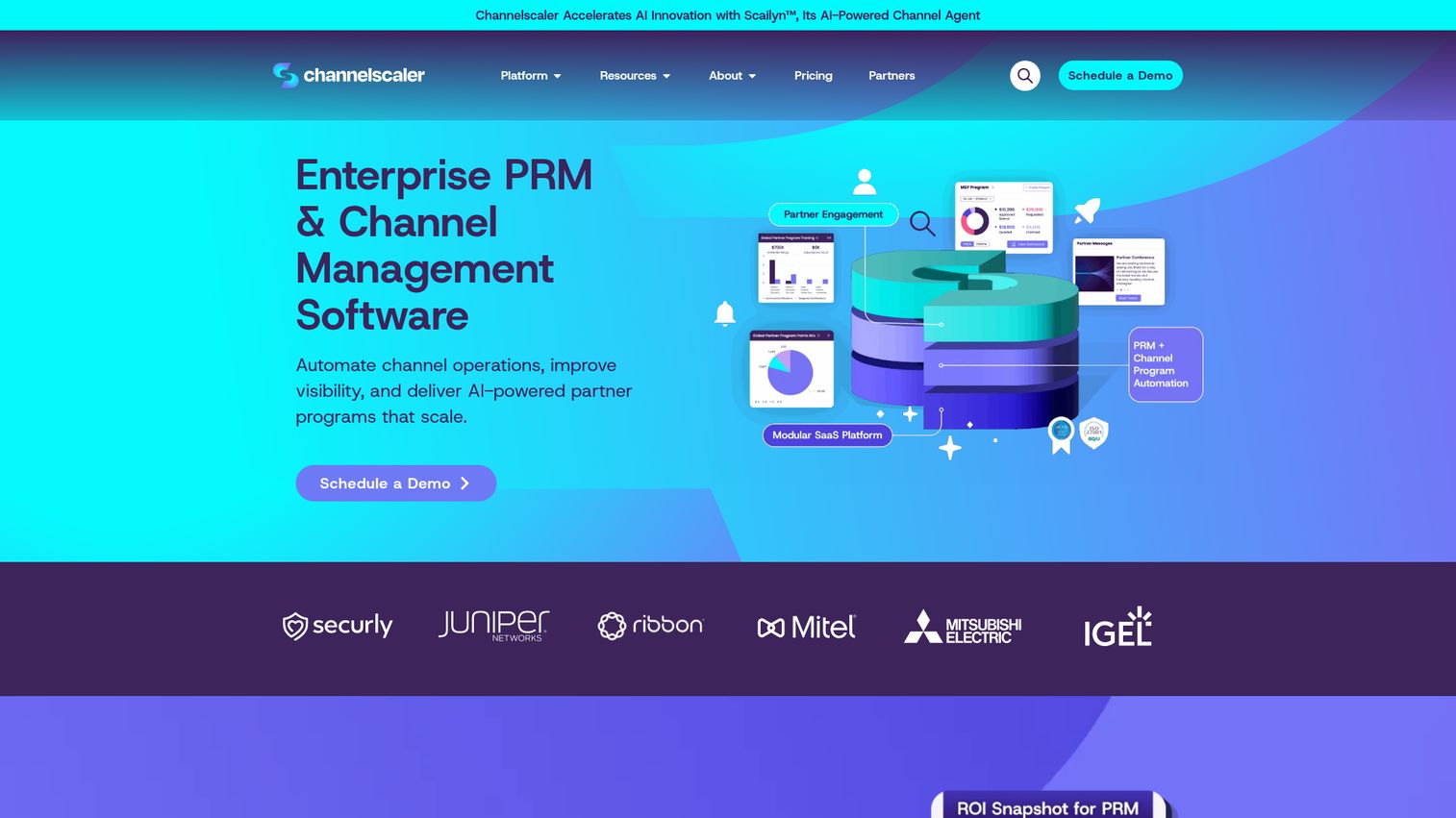
Allbound takes a different approach from pure PRMs by building a unified partner portal that combines content, training, deal registration, and co-selling in one interface. The pitch is simple: reduce the number of tools your partners need to log into.
Best for: Companies that want a single partner-facing portal combining enablement and operations.
Key strengths
- Unified partner portal with content management and playbooks
- Deal registration and pipeline tracking with CRM sync
- Partner learning and certification modules built into the portal
- Co-selling collaboration tools for joint opportunity management
- Channel insights and partner performance dashboards
Why choose for channel enablement: Allbound works well when your partners are complaining about logging into four different tools. By combining content, training, and deal ops in one portal, partners have one place to go. The trade-off: the breadth means each individual capability (training, content, deal registration) is not as deep as a dedicated tool. If your training needs are complex, you will still want a dedicated LMS. If your partners need a simple, consolidated experience, Allbound reduces friction.
Pricing: Custom pricing.
10. Crossbeam (Reveal)
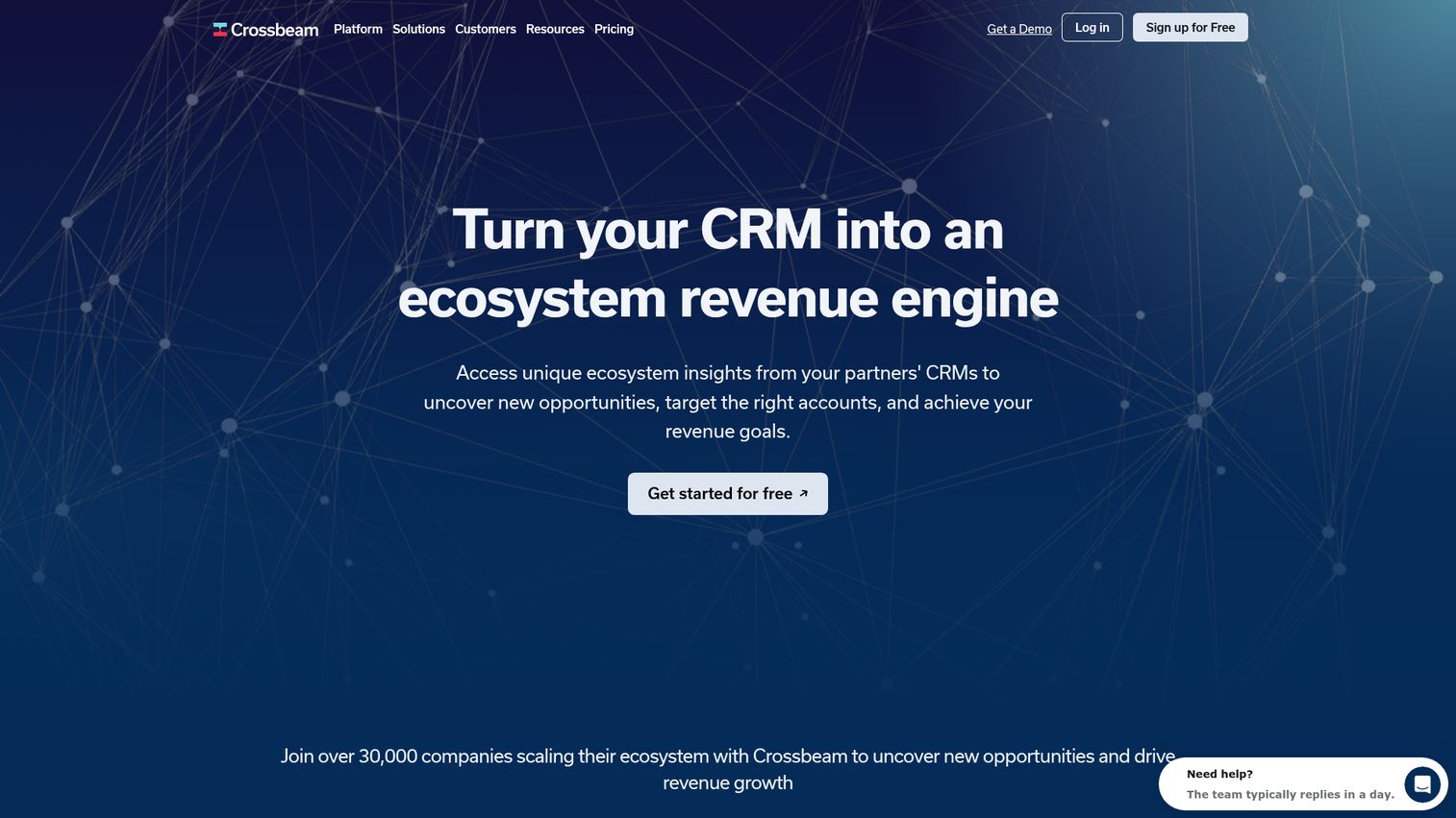
Crossbeam (now Reveal) is not a PRM or an enablement platform in the traditional sense. It answers a specific question: "Which of my prospects are already customers of my partners, and vice versa?" This account mapping data drives co-selling prioritization and is the foundation of ecosystem-led growth.
Best for: SaaS companies that want data-driven co-selling with ecosystem partners.
Key strengths
- Account mapping across partner networks (see overlap without sharing raw CRM data)
- Overlap identification for co-selling prioritization
- Integration with Salesforce and HubSpot at the account and opportunity level
- Free tier for getting started with basic account mapping
- Ecosystem analytics for tracking partner influence on pipeline
Why choose for channel enablement: If your partner program is strong on relationships but weak on data, Crossbeam shows you exactly where the overlap is. Instead of guessing which partners can help on which deals, you see it in a dashboard. The trade-off: Crossbeam does one thing well (account mapping) and does not replace your PRM, training, or content tools. It is an intelligence layer that sits on top of your existing stack.
Pricing: Free tier available. Paid plans for advanced features and larger partner networks.
11. Showpad
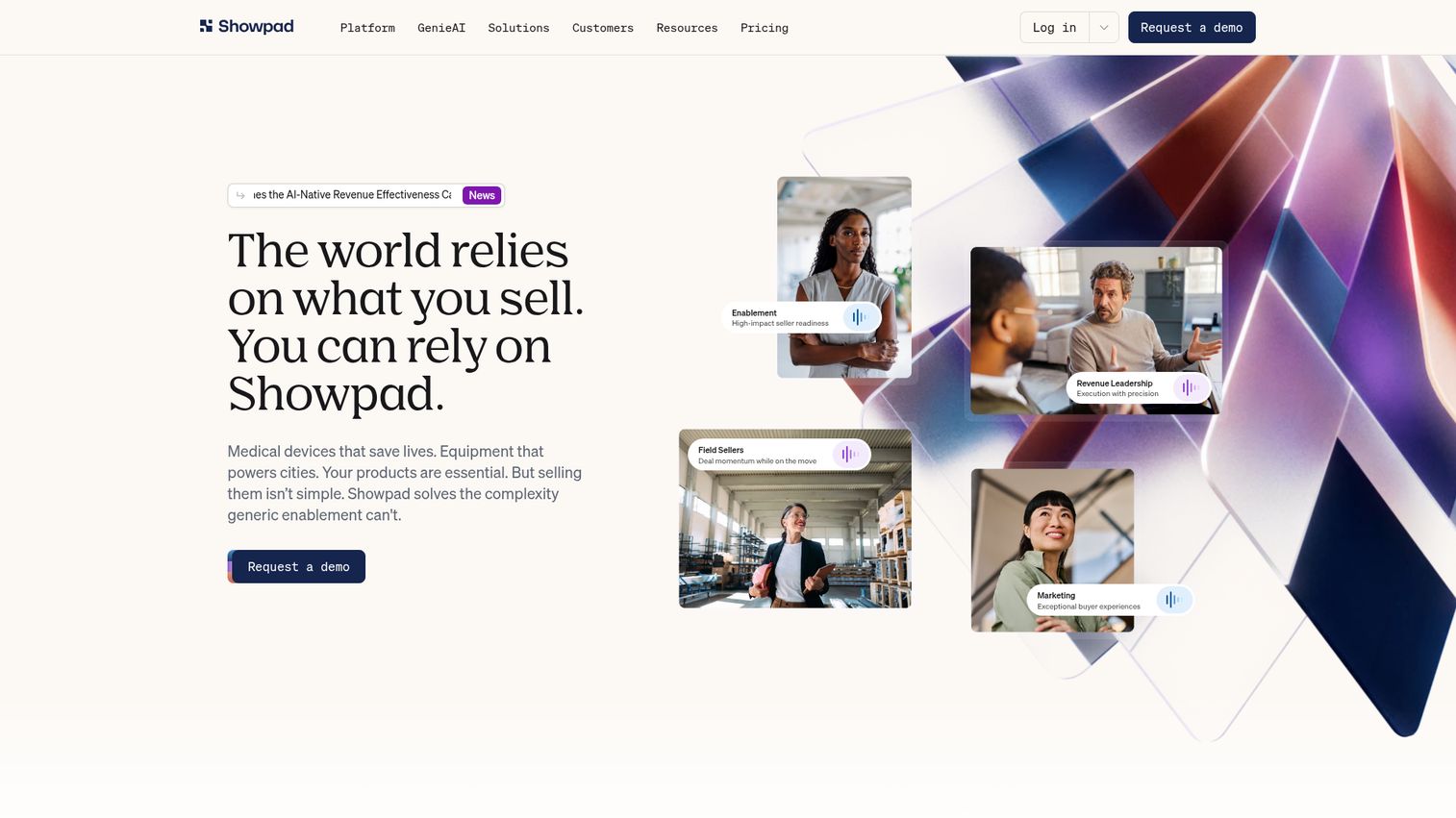
Showpad bridges the gap between content enablement and partner coaching. Where Seismic and Highspot focus primarily on content governance and distribution, Showpad adds coaching and practice tools that help partners not just find the right content but learn how to use it.
Best for: Companies that want content management combined with partner coaching and practice capabilities.
Key strengths
- Content management with AI-powered recommendations for deal-stage-appropriate assets
- Coaching and practice tools (video role-play, pitch practice, and peer feedback)
- Shared spaces for buyer collaboration (partners and prospects interact with content together)
- Analytics on both content effectiveness and coaching completion
- CRM integration with Salesforce and HubSpot
Why choose for channel enablement: Showpad is the right choice when your partners have access to content but do not know how to use it. Giving a partner a battlecard is one thing. Coaching them to handle the top three objections is another. The trade-off: the coaching features add value but also add complexity. If your partners just need the right deck at the right time, Seismic or Highspot are simpler. If they need coaching on how to deliver the message, Showpad fills that gap.
Pricing: Custom pricing.
12. LearnUpon
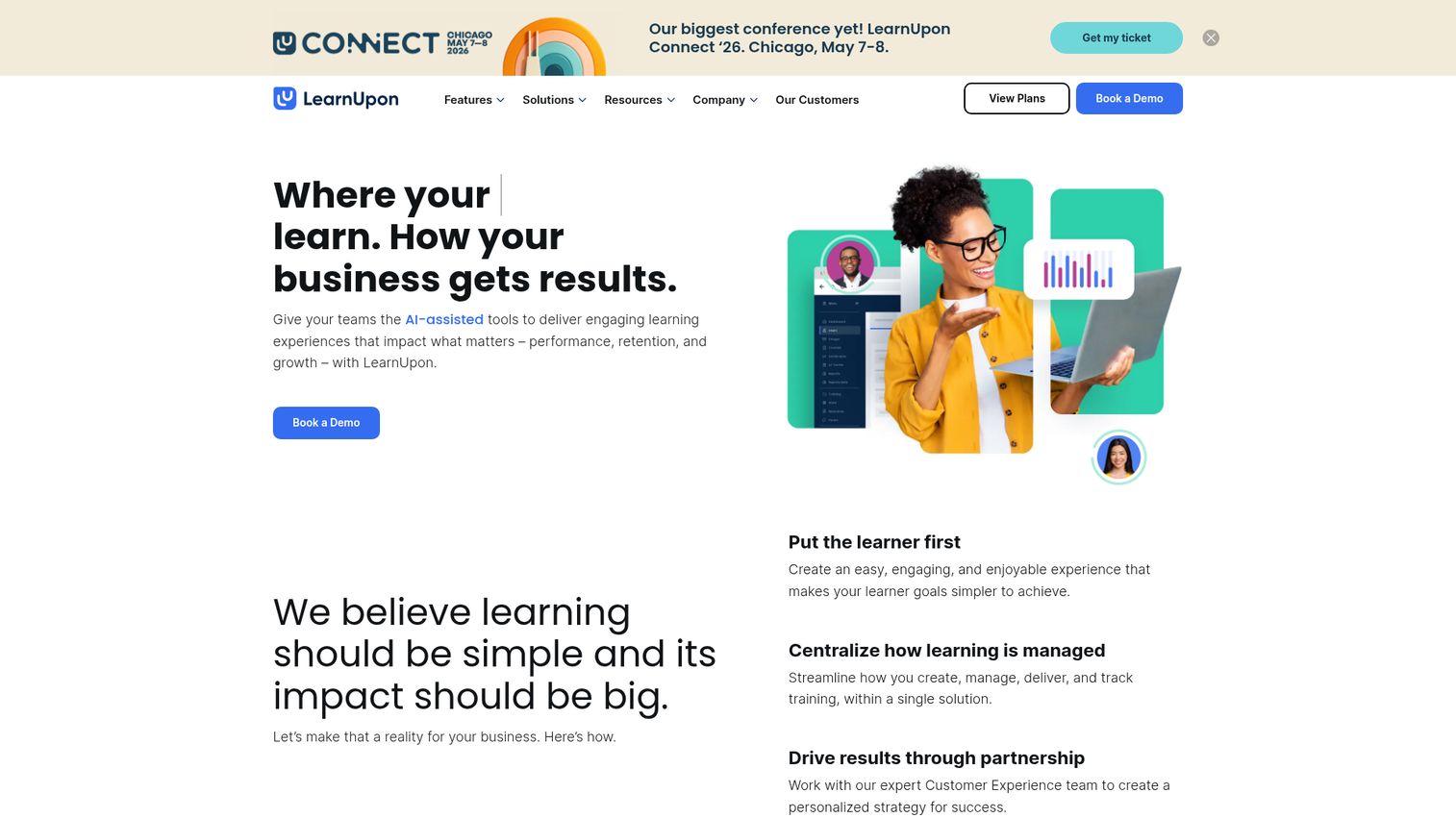
LearnUpon is a multi-audience LMS that lets you run separate learning portals for partners, customers, and employees from one platform. If you need partner training and customer education and do not want to manage two separate LMS tools, LearnUpon consolidates both.
Best for: SaaS companies that need partner training AND customer education from one LMS.
Key strengths
- Multi-portal architecture (separate branded portals per audience, managed from one admin)
- SCORM and xAPI support for importing existing training content
- Webinar integrations for live training sessions
- Automated enrollment and notifications based on partner tier or role
- Solid reporting with exportable dashboards
Why choose for channel enablement: LearnUpon saves you from buying and managing two LMS platforms. Your partner training portal and customer education portal share one admin backend but present completely different branded experiences. The trade-off: LearnUpon is simpler than Docebo and less GTM-focused than WorkRamp. If your training needs are straightforward (product knowledge, certification, compliance), it handles them well. If you need deep AI-powered content recommendations or revenue-correlated analytics, look at Docebo or WorkRamp instead.
Pricing: From $599/month.
13. Kiflo PRM
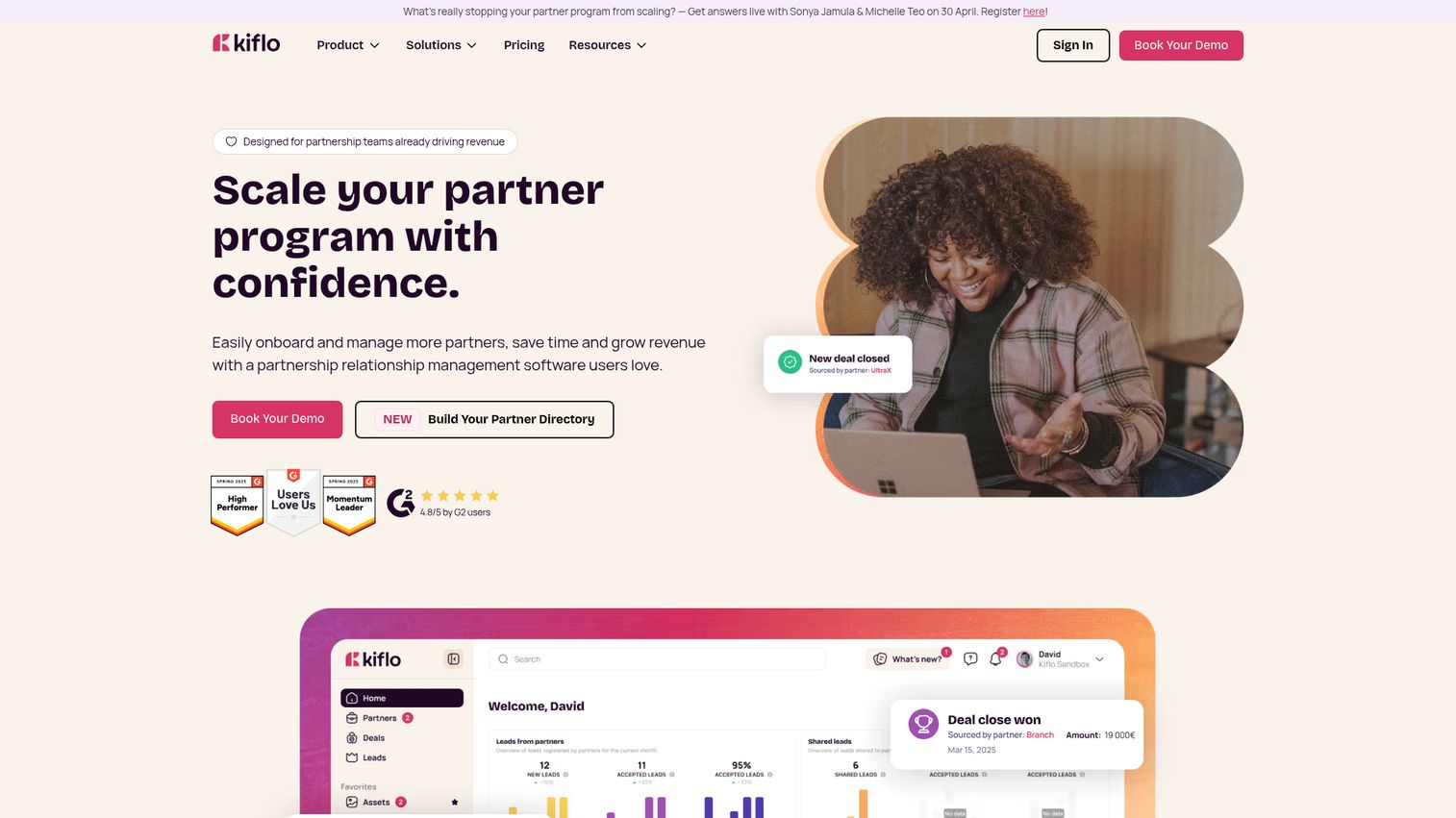
Kiflo PRM is the entry-level PRM for SMB and early mid-market SaaS companies. If you are launching a partner program at $3M-$10M ARR and need PRM basics without the pricing of Impartner or Channeltivity, Kiflo gives you a partner portal, deal registration, and lead distribution at a price point that makes sense for a small program.
Best for: Early-stage partner programs at $3M-$10M ARR that need PRM basics without enterprise pricing.
Key strengths
- Partner portal with self-service access
- Deal registration and lead distribution with approval workflows
- Partner onboarding workflows with automated task sequences
- Affordable pricing relative to Impartner and Channeltivity
- HubSpot and Salesforce integration
Why choose for channel enablement: Kiflo is the right PRM when you have 5-20 partners and need to move beyond spreadsheets but cannot justify $1,400+/month for Channeltivity or enterprise pricing for Impartner. It covers the fundamentals: portal, deal registration, lead routing. The trade-off: you will outgrow Kiflo as your partner program matures. MDF management, complex tiering, and advanced automation are limited. Think of it as the PRM you use for the first 12-18 months while you prove the channel works.
Pricing: From $799/month.
14. TalentLMS
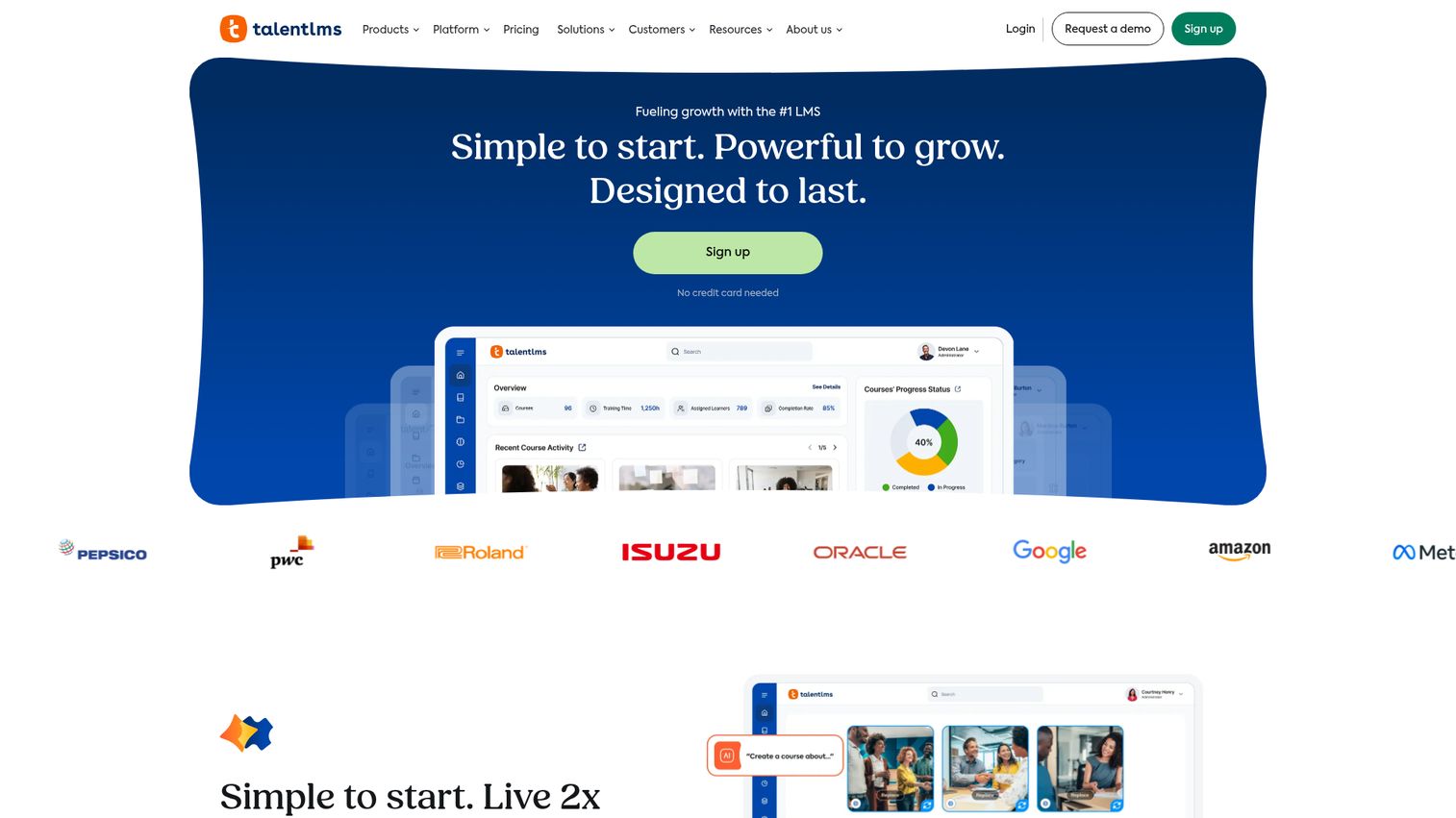
TalentLMS is the budget-friendly LMS for companies that need partner training running this week, not this quarter. If your partner program is new and you need basic certification without the complexity of Docebo or the GTM focus of WorkRamp, TalentLMS gets you there fast.
Best for: Companies that want simple partner training with minimal setup time and budget.
Key strengths
- Intuitive course builder that non-technical users can operate
- Gamification features (badges, leaderboards, points) that drive partner engagement
- SCORM support for importing existing training content
- Branded learning portals per audience
- Free tier for up to 5 users (enough to test with your first partners)
Why choose for channel enablement: TalentLMS is the right tool when speed and budget matter more than depth. You can have a partner training portal live in a day, not a month. The gamification features (leaderboards, badges) are surprisingly effective at driving partner engagement with training content. The trade-off: it lacks the revenue-correlated analytics of WorkRamp and the enterprise customization of Docebo. If you need to prove that partner training drives pipeline, TalentLMS does not connect those dots. If you need partners certified on your product by next Friday, it does.
Pricing: Free tier available. Paid plans from $89/month.
15. Salesforce PRM
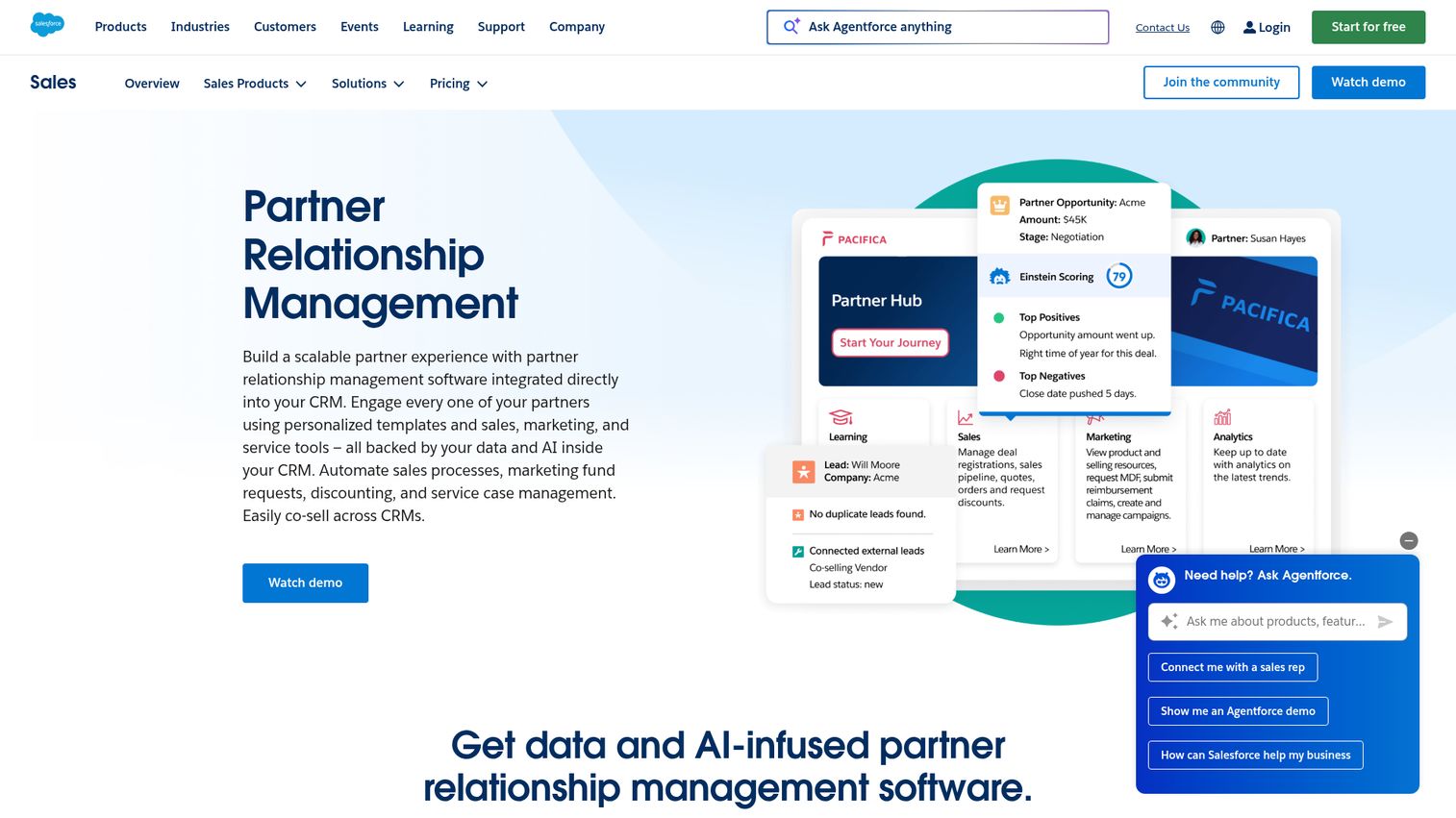
Salesforce PRM is the native partner management option for companies already deep in the Salesforce ecosystem. The advantage is obvious: partner data lives in the same system your sales team already uses. No data sync issues, no middleware, no reconciliation.
Best for: Companies with Salesforce as their CRM that want native partner management without adding another vendor.
Key strengths
- Native Salesforce integration (partner data, deal registration, and lead routing live in your CRM)
- Deal registration and lead routing with Salesforce workflow rules
- Partner portal built on Salesforce Experience Cloud
- Reporting through Salesforce dashboards (same reports your VP of Sales already uses)
- AppExchange access for extending functionality
Why choose for channel enablement: If your CRM is Salesforce and you want partner data in the same system your sales team uses, Salesforce PRM eliminates the integration headache. Your RevOps team can build partner pipeline reports without learning a new tool. The trade-off: setup and customization require Salesforce admin expertise. This is not a turnkey partner enablement platform. It is a set of Salesforce features that need configuration. If you do not have a Salesforce admin (or budget for one), the implementation cost can exceed the cost of a dedicated PRM.
Pricing: Included in some Salesforce editions. Experience Cloud licenses required for partner portal (additional cost varies by edition).
How to choose the right channel enablement tools
Start with the bottleneck, not the category. If partners cannot demo the product, you need interactive demos before you need a PRM. If partners close deals but you cannot track them, you need deal registration before you need an LMS. Diagnose first.
Check CRM integration depth, not just "integrates with Salesforce." Does the tool push partner engagement data into your CRM at the contact or opportunity level? Can your RevOps team build reports on partner-sourced pipeline without manual entry? Shallow integrations create more work, not less.
Evaluate partner adoption, not admin features. The best PRM in the world is useless if partners do not log in. Ask vendors for partner adoption rates, not just customer logos. Tools with low friction (shareable links, no login required, mobile-friendly) get used. Research shows only 40-60% of partners access enablement content monthly, so reducing friction is the priority.
Price for your stage. Enterprise PRMs with $50K+ annual contracts are not built for a 50-person SaaS company with 15 partners. Match the tool to your current partner count and growth trajectory, not where you hope to be in three years.
Plan for a stack, not a single tool. Channel enablement is not one platform. Most scaling SaaS companies run 2-3 tools: one for demos/content, one for training, one for partner ops. Make sure they connect.
Test the delegation question. Can your VP of Partnerships or Partner Manager run this tool without you? If the founder has to stay involved, the tool fails the most important test.
Conclusion
Channel enablement is a system, not a single tool. The right stack depends on your bottleneck: partners who cannot demo the product need interactive demos, partners who do not understand the product need training, and partners who close deals without a system need partner ops infrastructure.
For Series B SaaS companies, the priority is giving partners the ability to sell independently so the founder and SE team are not the bottleneck on every partner deal. Companies with structured enablement cut the time from partner onboarding to first deal from 12 months to 90 days.
Identify your biggest partner bottleneck. Pick one tool from the relevant category. Test it with your top 3 partners this quarter. Then expand the stack based on what you learn.
Start your journey with Guideflow today!
FAQs about channel enablement tools
Channel enablement is the broader category that includes everything partners need to sell effectively: training, demos, content, deal registration, and performance tracking. PRM is a subset focused on the operational layer: deal registration, lead distribution, MDF management, and partner tiering. You need both, but they are not the same thing. Buying a PRM without addressing training and demo gaps is like building a CRM without training your sales team.
Most tools on this list integrate with Salesforce and HubSpot, but integration depth varies significantly. Some push full engagement data to CRM records (contact-level demo views, training completions, deal registration status). Others only sync basic lead data. Ask vendors specifically what data flows into your CRM and whether your RevOps team can build reports on partner-sourced pipeline without manual work.
Track three metrics: partner-sourced pipeline (deals partners bring in), partner-influenced pipeline (deals where partners accelerated an existing opportunity), and partner activation rate (percentage of partners who close at least one deal within 90 days of onboarding). Benchmark activation rates sit between 30-50%. Map tool spend against these numbers quarterly.
Sales enablement equips your internal sales team. Channel enablement equips external partners who sell on your behalf. The core difference: partners do not attend your all-hands, do not sit in your Slack, and do not have access to your internal tools. Channel enablement has to work for people outside your organization, which means lower friction, self-serve access, and less assumption of product knowledge.
Most scaling SaaS companies ($5M-$15M ARR) run 2-3 tools: one for product demos or content (so partners can show the product), one for training (so partners understand the product), and one for partner ops (deal registration, lead tracking, payouts). Trying to solve all three with one platform usually means compromising on at least one.
Yes, and this is often the highest-ROI use case. Structured enablement reduces time from partner onboarding to first deal from 12 months to 90 days. Interactive demos reduce onboarding time because partners learn by doing instead of reading a 40-page partner guide. The faster a new partner can demo your product, understand your ICP, and register their first deal, the more likely they are to stay active.
For companies with fewer than 20 partners, start with a lightweight stack: Guideflow for interactive demos (free tier available), TalentLMS for basic training (free tier for up to 5 users), and Kiflo PRM for deal registration and partner portal (from $799/month). You can upgrade each layer as the program scales without ripping out the foundation.
Partners who can show the product close more deals than partners who can only describe it. Interactive demos give partners a controlled, always-current product experience they can share with prospects in seconds, without needing a live environment or SE support. The result: faster deal cycles, more consistent messaging, and fewer "can you get on a call with my prospect?" requests back to your team. Enabled channels see 28% shorter sales cycles and 12% higher lead conversion rates.