Your partners want to sell your product. But they can't demo it, don't have sandbox access, and your team doesn't have bandwidth to join every call. So deals stall, partners get frustrated, and revenue that should be yours goes to competitors with better-enabled channels.
Partner ecosystem platforms solve the coordination problem, but most teams underestimate the enablement gap. This guide covers 9 platforms for 2026, from account mapping tools to full-suite PRMs. It also covers how to equip partners to close deals without constant hand-holding from your team.
What this guide covers
This guide covers what partner ecosystem platforms actually do and when your team might benefit from one. It also includes an honest evaluation of 10 tools for different program types.
We selected platforms based on integration depth, the variety of partner types supported, and how well each handles revenue attribution. You'll also find guidance on matching the right tool to your specific partner motion.
TL;DR
- Partner ecosystem platforms: manage relationships, track revenue, and enable collaboration across all partner types (affiliates, resellers, referrals, tech partners) in one unified system.
- Primary use cases: scaling beyond spreadsheets, managing multiple partner types, enabling partners to sell, and attributing revenue accurately.
- Key differentiator: the ability to manage diverse partner types and provide cross-program analytics, not just reseller deal registration.
- For partner enablement, teams use Guideflow to provide partners with interactive product demos, helping partners show and sell your product without needing live support.
What is a partner ecosystem platform
A partner ecosystem platform is software that manages relationships, tracks revenue, and enables collaboration across all partner types in one system. Think affiliates, resellers, referrals, and technology partners, all coordinated from a single hub rather than scattered across spreadsheets and disconnected tools.
This goes beyond what a basic CRM or standalone affiliate tracker can do. You get a centralized place for everything from onboarding and deal registration to commission payouts and performance analytics.
Core capabilities of partner ecosystem software
- Partner onboarding: Automated workflows bring new partners into your program without manual back-and-forth
- Deal registration: Track partner-sourced opportunities and prevent channel conflict when multiple partners touch the same account
- Revenue attribution: Connect closed deals back to the originating partner with clear audit trails
- Content and asset distribution: Share sales materials, product info, and training with partners through a centralized portal
- Commission management: Calculate and pay partner incentives automatically based on your program rules
- Performance analytics: Monitor partner activity, pipeline contribution, and ROI across your entire ecosystem
Types of partners managed by partner ecosystem platforms
- Affiliate partners: Commission-based promotion, typically driving traffic or leads
- Referral partners: Lead passing for rewards, often informal relationships
- Reseller and VAR partners: Sell your product directly to their customers
- Technology and integration partners: Build on or connect to your platform
- Agency and consulting partners: Implement or recommend your solution to their clients
Most companies with mature partner programs manage multiple partner types simultaneously, and Forrester reports expansion is expected across all partner types. That's exactly why single-purpose tools fall short. You end up with data silos, inconsistent reporting, and no clear picture of which partnerships actually move the needle.
When to use a partnership platform
Scaling beyond spreadsheets and manual tracking
The pain of managing partner data in spreadsheets becomes acute as your program grows. When your partner count exceeds what one person can manually track, errors multiply and data becomes siloed. A partnership platform centralizes where partner ecosystem data lives and who owns it.
Running multiple partner programs in one system
Companies often start with one partner type, like affiliates, and later add resellers or tech partners. A dedicated partnership platform lets you run different program structures with unique commission models side-by-side. Your finance team will thank you when commission calculations and payouts happen in one place.
Enabling partners to demo and sell your product
Partners often lack deep product knowledge and effective sales tools - and certified partners earn 6× more revenue than those who skip training. But most partnership teams can't scale live enablement sessions for every partner. Some teams use interactive demos to let partners show the product to prospects without needing live support or complicated sandbox access.
Tracking partner-sourced revenue and attribution
The pipeline attribution challenge is a major hurdle. When multiple partners touch a deal, you need clear attribution rules. The same applies when a partner influences but doesn't close a deal.
A platform makes ecosystem partner contribution measurable and demonstrates ROI to leadership. The Future of Revenue Report found that companies investing in ecosystem-led growth are 24% more likely to exceed revenue targets.
Partner ecosystem platforms comparison table
| # | Product | Intent | Key use case | Pricing | G2 rating |
|---|---|---|---|---|---|
| 1 | PartnerStack | B2B partnerships | Affiliate, referral, reseller management | Custom pricing | 4.7/5 |
| 2 | Impact.com | Enterprise partnerships | Multi-partner type management | Custom pricing | 4.5/5 |
| 3 | Crossbeam | Account mapping | Co-selling and data sharing | Free + paid tiers | 4.7/5 |
| 4 | PartnerTap | Co-selling activation | Enterprise channel sales | Custom pricing | 4.5/5 |
| 5 | Impartner | Full-suite PRM | Traditional channel programs | Custom pricing | 4.4/5 |
| 6 | Allbound | Partner enablement | Content and deal registration | Custom pricing | 4.5/5 |
| 7 | Kiflo | Growing programs | Affordable PRM for SMBs | From $249/mo | 4.7/5 |
| 8 | PartnerPortal.io | Lightweight portal | Simple partner hub | From $399/mo | 4.6/5 |
| 9 | Channeltivity | Channel management | Reseller programs | Custom pricing | 4.4/5 |
10 partner ecosystem platforms evaluated for your program
1. PartnerStack
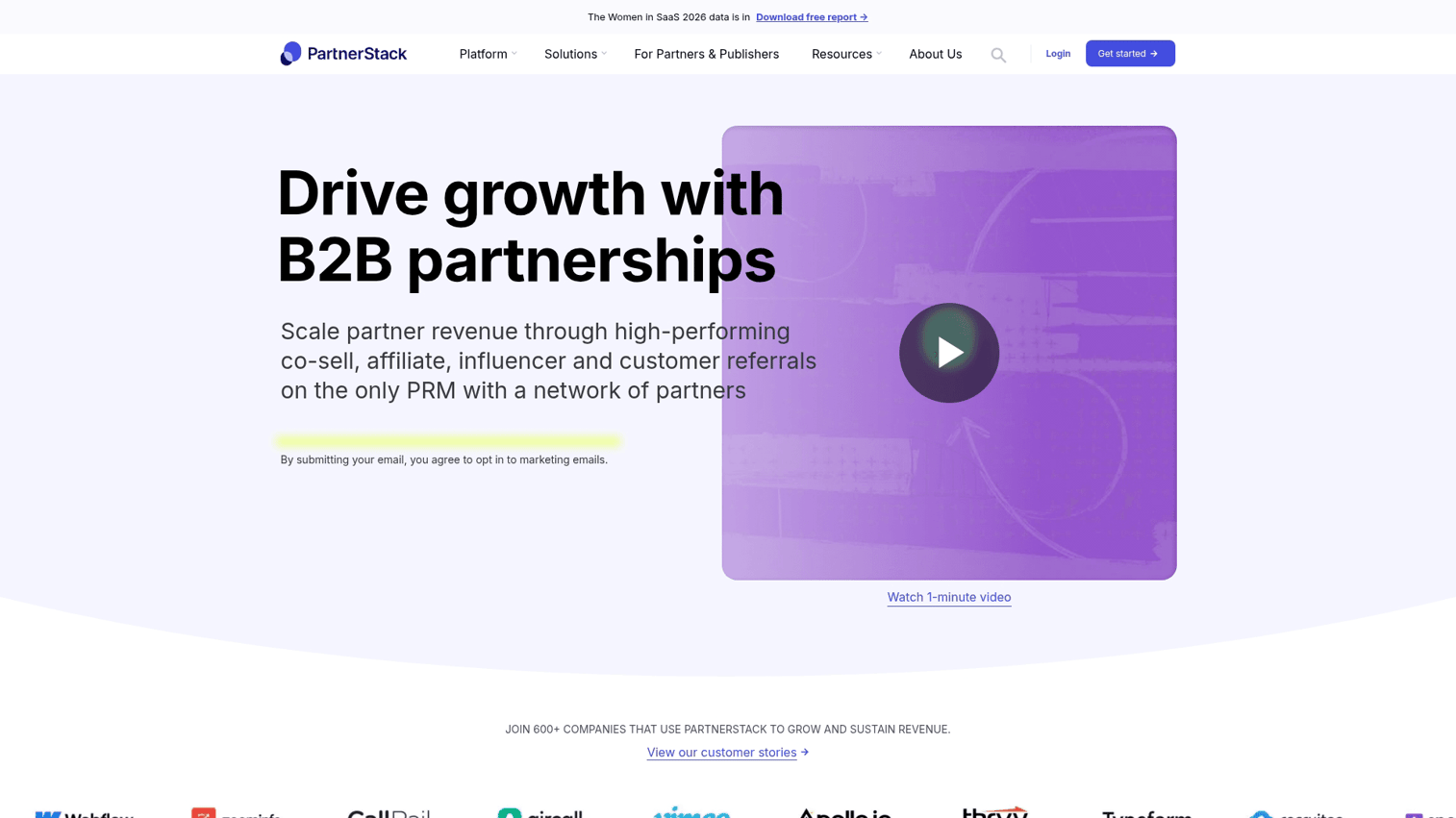
PartnerStack positions itself as the leading B2B partnership platform, excelling at managing affiliate, referral, and reseller programs. It provides access to a network of active B2B partners, automated payouts, and a marketplace listing to promote your program.
Best for: B2B SaaS companies running multiple partner program types
Key strengths
- Partner marketplace: Access to a network of active B2B partners looking for programs to join
- Automated payouts: Handle commission calculations and payments without manual work
- Multi-program support: Run affiliate, referral, and reseller programs side-by-side
Pricing: Custom pricing based on program size and requirements.
2. Impact.com
Impact.com is an enterprise-grade partnership management platform for affiliates, influencers, and strategic business partners. It features robust contract automation, fraud protection, and cross-channel attribution.
Best for: Large programs with a complex mix of partner types and enterprise compliance requirements
Key strengths
- Contract automation: Manage partner agreements and terms at scale
- Fraud protection: Detect and prevent fraudulent partner activity
- Cross-channel attribution: Track partner influence across multiple touchpoints
Pricing: Custom pricing, typically enterprise-level investment.
3. Crossbeam
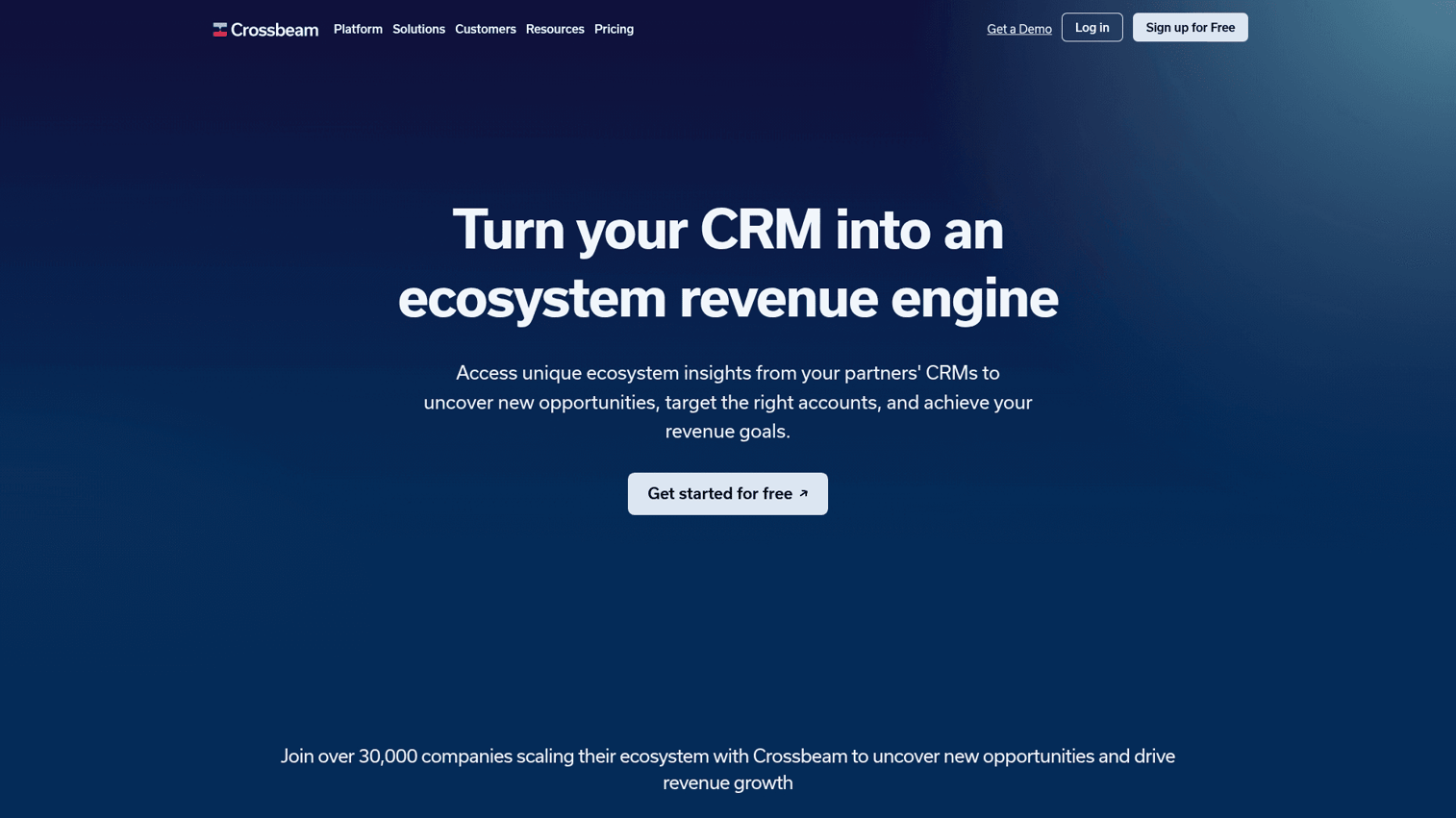
Crossbeam is an account mapping and ecosystem data platform. It lets you and your partners securely share account data to find overlapping customers and prospects for co-selling opportunities.
Best for: Tech partnerships and co-selling motions where partner ecosystem mapping drives pipeline
Key strengths
- Secure account mapping: Share data with partners without exposing your full customer list
- Overlap identification: Find accounts where you and your partners both have relationships
- CRM integration: Sync insights directly into Salesforce or HubSpot
Pricing: Free tier available. Paid plans for advanced features.
4. PartnerTap
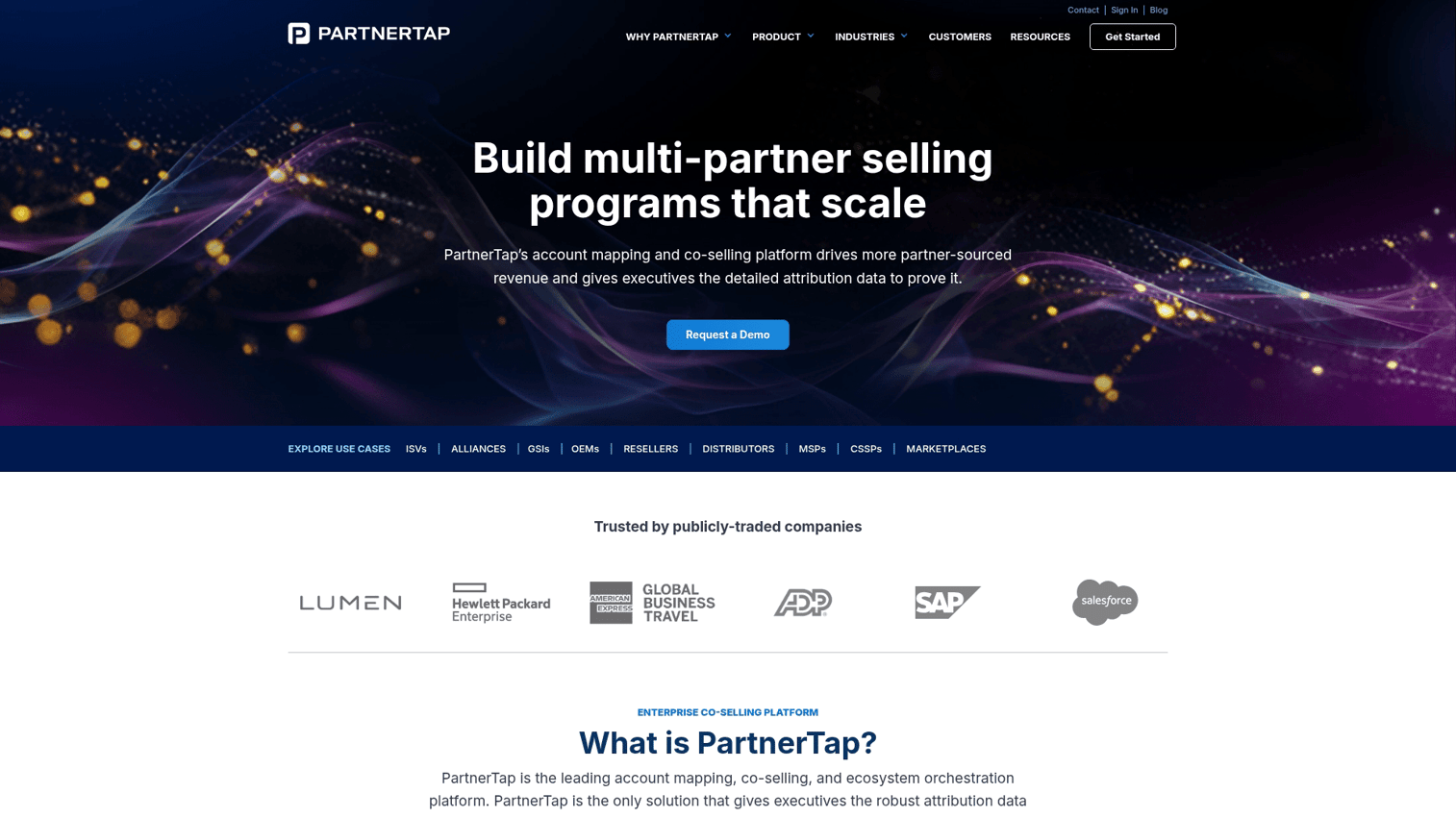
PartnerTap is a co-selling activation platform designed for enterprise sales teams. It combines mapped ecosystem data with partner-sourced pipeline tracking and tools for channel teams to activate co-sell motions with large strategic partners.
Best for: Enterprise sales teams with large strategic partners
Key strengths
- Co-sell activation: Tools to coordinate joint selling efforts with partners
- Pipeline tracking: Monitor partner-sourced and partner-influenced deals
- Channel team tools: Purpose-built for channel managers and partner account managers
Pricing: Custom pricing based on requirements.
5. Impartner
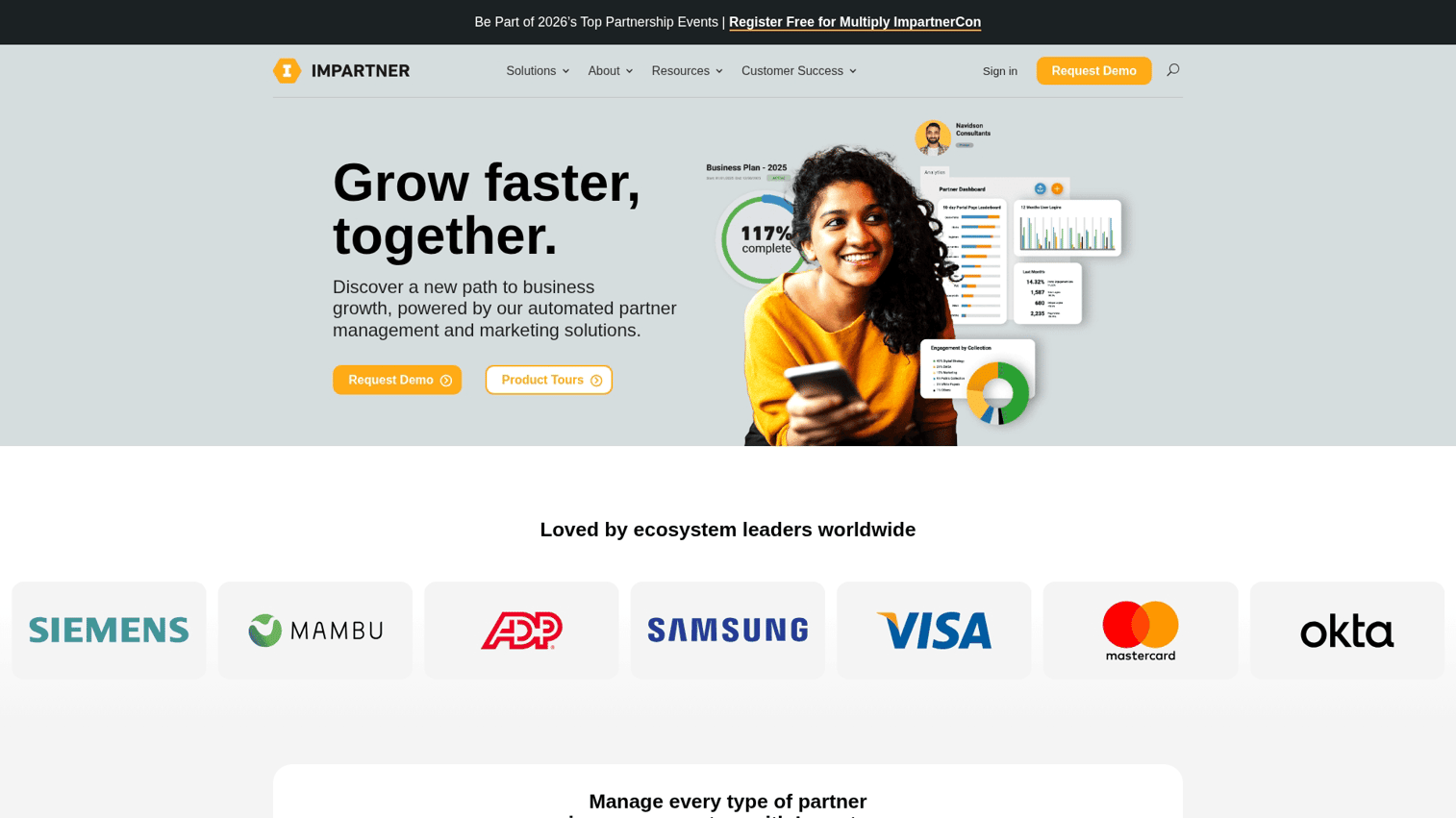
Impartner is a full-suite PRM (Partner Relationship Management) platform for traditional channel programs. It provides a comprehensive partner portal, deal registration, MDF (Market Development Funds) management, and a learning management system.
Best for: Companies with established reseller or VAR channels needing robust portal infrastructure
Key strengths
- Partner portal: Full-featured self-serve portal for partners
- Deal registration: Purpose-built for reseller deal tracking
- MDF management: Allocate and track market development funds
Pricing: Custom pricing, typically enterprise-level.
6. Allbound
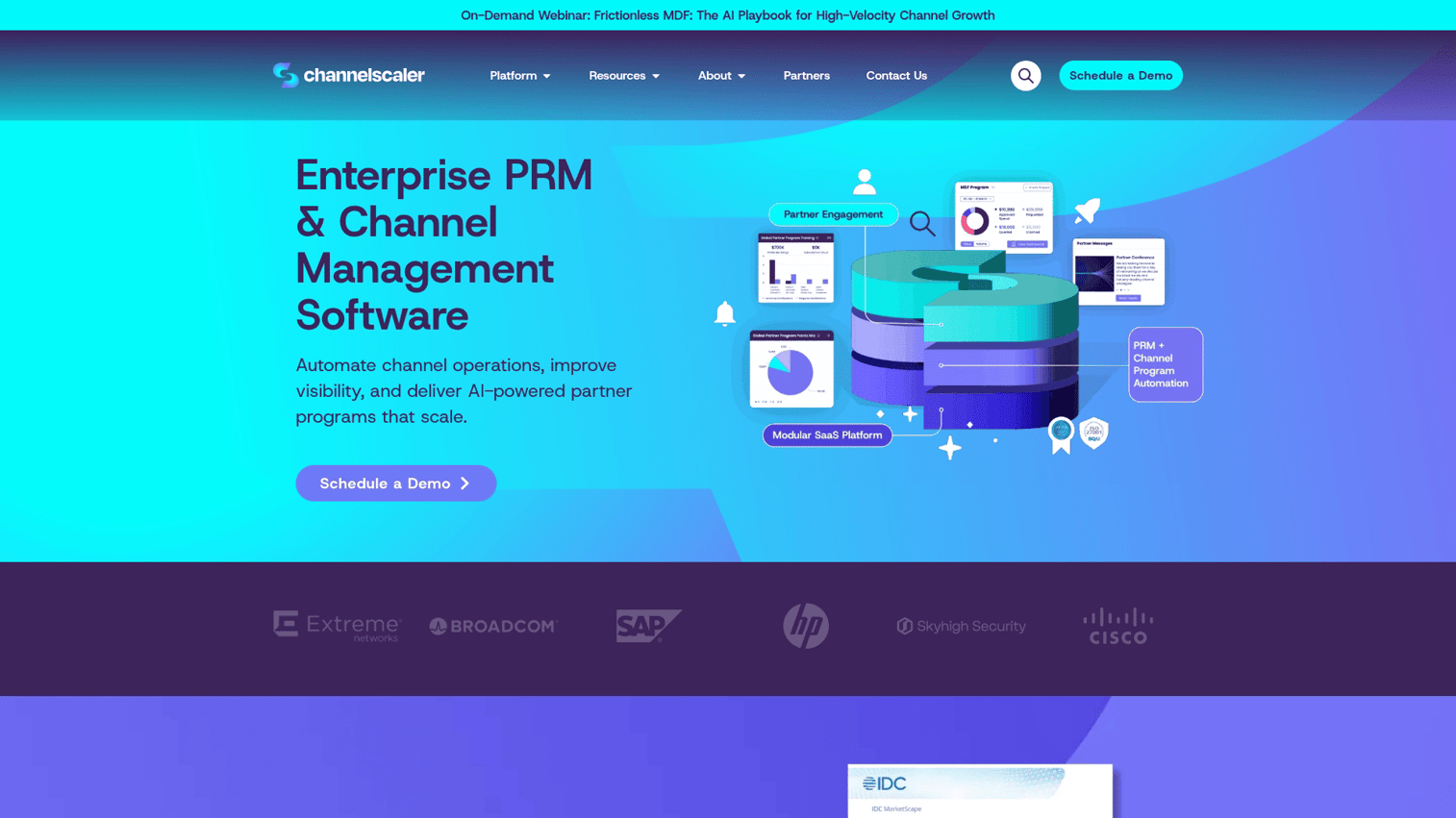
Allbound is a partner relationship management platform focused on content and enablement. It offers a partner portal, content management system, and deal registration capabilities.
Best for: Mid-market companies looking to build structured channel programs with strong enablement
Key strengths
- Content management: Organize and distribute partner-facing materials
- Partner portal: Self-serve access for partners
- Enablement tools: Training and certification capabilities
Pricing: Custom pricing based on requirements.
7. Kiflo

Kiflo is an affordable PRM designed for growing partner programs. It covers partner onboarding, deal tracking, and commission management in a straightforward package.
Best for: Startups and SMBs launching their first formal partner program
Key strengths
- Affordable pricing: Accessible for smaller teams and budgets
- Core PRM features: Onboarding, deal tracking, commissions
- Easy setup: Get started without extensive implementation
Pricing: Plans start at $249/month.
8. PartnerPortal.io
PartnerPortal.io is a lightweight partner portal solution known for its ease of setup. It provides basic partner management features without enterprise-level complexity.
Best for: Small teams needing a simple, partner-facing hub without enterprise-level complexity
Key strengths
- Quick setup: Get a partner portal live in days, not months
- Simple interface: Easy for partners to navigate
- Affordable: Lower price point than full PRM platforms
Pricing: Plans start at $399/month.
9. Channeltivity
Channeltivity is a channel management platform built for reseller programs. Its core features include deal registration, MDF management, and partner learning modules.
Best for: B2B companies with traditional channel sales models
Key strengths
- Deal registration: Purpose-built for reseller deal tracking
- MDF management: Allocate and track market development funds
- Partner learning: Training and certification for channel partners
Pricing: Custom pricing based on requirements.
How to choose the right partner ecosystem software
CRM and tech stack integration
A partnership platform connects to your CRM (like Salesforce or HubSpot) to sync partner-sourced deals and contacts. Check for native integrations versus middleware like Zapier. Also consider how it connects to other parts of your GTM stack, like marketing automation tools.
Partner program complexity and scale
| Program stage | Characteristics | Tool category |
|---|---|---|
| Early stage | One partner type, small volume | Lightweight PRM or CRM features |
| Growing | Multiple partner types, increasing volume | Dedicated partnership platform |
| Enterprise | Global partners, complex compliance | Full-suite PRM with advanced workflows |
Attribution and pipeline reporting
Ask the critical attribution question: how does the platform credit partners for influenced versus sourced deals? Look for support for first-touch, last-touch, and multi-touch models. The platform's reporting shows partner ROI clearly, which helps justify program investment to leadership.
Partner enablement and content distribution
Partners often lack more than just a portal login to be successful. They benefit from sales content, product training, and effective ways to demonstrate your product through demo centers. Some teams supplement their partnership platforms with dedicated demo tools that let partners self-serve interactive product walkthroughs rather than waiting for internal support.
Build your partner ecosystem with the right tools
The best partnership platform depends on your partner types, program maturity, and enablement approach. There's no universal answer, only the right fit for your specific situation.
For teams where partner success depends on effective product demonstrations, interactive demos reduce the support burden. They also help partners convert prospects faster.
FAQs about partner ecosystem platforms
PRM (Partner Relationship Management) software typically focuses on portal access and deal registration for reseller channels. Partner ecosystem platforms support multiple partner types, including affiliates, referrals, and tech partners, with unified attribution across all program types.
Most partnership platforms focus on tracking and payouts rather than product enablement. Teams often pair them with separate demo tools that let partners access and share interactive product experiences without requiring live support or sandbox access.
Yes, modern partnership platforms like PartnerStack and Impact.com support multiple program types with different commission structures. You can run affiliate payouts alongside reseller deal registration in one system.
Implementation ranges from a few days for lightweight tools to several months for enterprise PRM deployments. The timeline depends on CRM integration complexity, partner data migration, and custom workflow requirements.
Leading programs typically combine a partnership platform for tracking and payouts with an account mapping tool for co-selling data. They also add an enablement tool for partner training and product demos. The specific combination depends on partner types and program maturity.
Partner data typically syncs bidirectionally with your CRM so sales teams can see partner-sourced opportunities. However, the partnership platform remains the system of record for partner profiles, commissions, and program-specific workflows.