You quoted a 40x60 frame tent on Tuesday. By Friday you can't remember if the poles are already committed to a wedding across town. The deposit link never went out. The driver has no load sheet. And the spreadsheet that used to hold all of this together now has three versions floating around your inbox.
That is the operational reality most tent, party, and event rental businesses run on. The U.S. party supply rental industry is expected to generate roughly $8.5 billion in revenue in 2026 across about 7,390 active businesses, according to a 2025 industry statistics roundup from Kande Photo Booths. That is a fragmented, hands-on market where margins live and die on availability accuracy, quote turnaround, and whether the truck shows up with the right gear. The global rental software market hit $850 million in 2025 and is forecast to reach $1.6 billion by 2032 at a 9.5% CAGR, per PW Consulting, with cloud deployments already at 72.6% of the market. Operators are moving off spreadsheets fast.
The right tent rental software replaces the manual patchwork with one system that tracks inventory in real time, turns quotes into signed contracts, plans deliveries, and lets customers book online. This guide is a buyer's comparison, not a sales pitch. We look at industry fit, inventory control, quoting and contracts, delivery logistics, integrations, and customer-facing booking so you can pick the system that actually reduces chaos.
What's inside
This is a shortlist for operators running tent, event, and party rental workflows, not a generic roundup of accounting or CRM tools. We selected six platforms based on four things that matter when the truck has to leave at 6 a.m.: industry fit for tent and event logistics, inventory and availability accuracy, quoting and contract speed, and customer-facing booking plus integrations. Each pick below is judged on how well it handles the actual jobs a rental operator does every day, from the first quote request to the pickup after the event. Pricing and ratings are drawn from vendor pages and public review sources where available.
TL;DR
- Best for small and growing rental operators: Booqable, all-in-one inventory, website, and payments starting at $29/month.
- Best for established, multi-location operations: Point of Rental, deep inventory and dispatch depth with custom pricing.
- Best for tent-specific specialization: Tent Rental Systems, cloud-native online ordering built for tent companies.
- Best for inventory-heavy event teams: IntelliEvent, quoting, availability calendars, and labor scheduling in one place.
- Best for online booking plus website: Rental Software and Event Office, both pair booking pages with back-office workflows.
- Bottom line: Match the tool to your size and operating complexity. Do not overbuy, and do not underbuy against seasonal demand.
What is tent rental software?
Tent rental software is a rental management platform that helps tent, event, and party rental businesses track inventory, build quotes and contracts, schedule deliveries, take payments, and let customers book online, all from one system. It replaces spreadsheets, email threads, and paper contracts with a single source of truth for what you own, what is committed, and what is going out the door tomorrow.
Think of it as the operating layer for a rental business. Instead of stitching together a calendar, an accounting file, and a stack of signed PDFs, the software connects availability, pricing, documents, and logistics so nothing falls through a crack.
Core capabilities buyers expect from tent rental management software:
- Inventory management and availability tracking: real-time counts of tents, tables, chairs, and accessories, with double-booking prevention across overlapping event dates.
- Quotes, proposals, contracts, and e-signatures: turn an inquiry into a branded proposal and a signed agreement without leaving the platform.
- Scheduling, delivery routing, and load sheets: plan who goes where, in what order, with what gear on the truck.
- Reporting, analytics, and dashboards: utilization, revenue by item, seasonal demand, and outstanding balances.
- Integrations and payments: QuickBooks for accounting export, Google Calendar for scheduling, maps for routing, and secure online payments.
- Online booking and a customer-facing website: branded ordering pages so customers can check availability and reserve on their own.
The category is about operational control, not just order taking. A good system tells you what you can promise before you promise it.
When to use tent rental software
Not every operator needs the same depth. Here is how to know you have outgrown your current setup.
Replace spreadsheets and phone-based booking
Manual tracking works until it does not. The breaking point usually arrives with volume: two events on the same weekend competing for the same 20x40 tent, a customer calling to confirm a reservation nobody logged, or a double-booking you catch only when the truck is half loaded. When availability, contracts, and follow-up all live in someone's head or a shared sheet, errors compound. That is the moment a real system pays for itself, because it prevents the promise you cannot keep.
Manage quotes, contracts, and deposits at scale
Email threads and hand-built PDFs create errors and slow you down. A customer wants three revisions, the deposit terms live in a separate document, and the signed copy is buried in someone's inbox. Rental booking software with built-in quotes, proposals, and e-signatures cuts the back-and-forth. You send a branded proposal, the customer signs, the deposit posts, and the reservation locks. Speed and consistency here directly shorten your sales cycle and reduce disputes later.
Coordinate delivery, pickup, and event logistics
Field execution is where rental businesses win or lose repeat customers. Delivery routing, load sheets, and dispatch planning turn a chaotic morning into a sequence. The driver knows the route, the gear is staged and checked against the order, and pickup is scheduled before the event even starts. When you run multiple crews across a busy Saturday, this is the difference between smooth days and frantic ones.
Comparison table
Here is the shortlist at a glance. Pricing reflects publicly listed vendor figures where available; several vendors quote custom pricing based on inventory size and business needs.
| # | Product | Intent | Key use case | Pricing | G2 rating |
|---|---|---|---|---|---|
| 1 | Booqable | All-in-one for small and growing operators | Inventory, website, and payments in one system | From $29/month | 4.8/5 |
| 2 | Point of Rental | Established multi-location operations | Deep inventory and dispatch logistics | Custom | 4.8/5 |
| 3 | Tent Rental Systems | Tent-specific specialization | Cloud-native online ordering for tent companies | From $279.95/month | Not listed |
| 4 | IntelliEvent | Inventory-heavy event and production teams | Quoting, availability, and labor scheduling | Custom | 4.0/5 |
| 5 | Rental Software | Online booking plus back office | Industry-specific rental workflows and booking | Free plan available | Not listed |
| 6 | Event Office | Booking, contracts, and inventory workflows | Quotes, bookings, and digital contracts | Free plan; paid from $215/month | Not listed |
The 6 best tent rental software platforms
1. Booqable
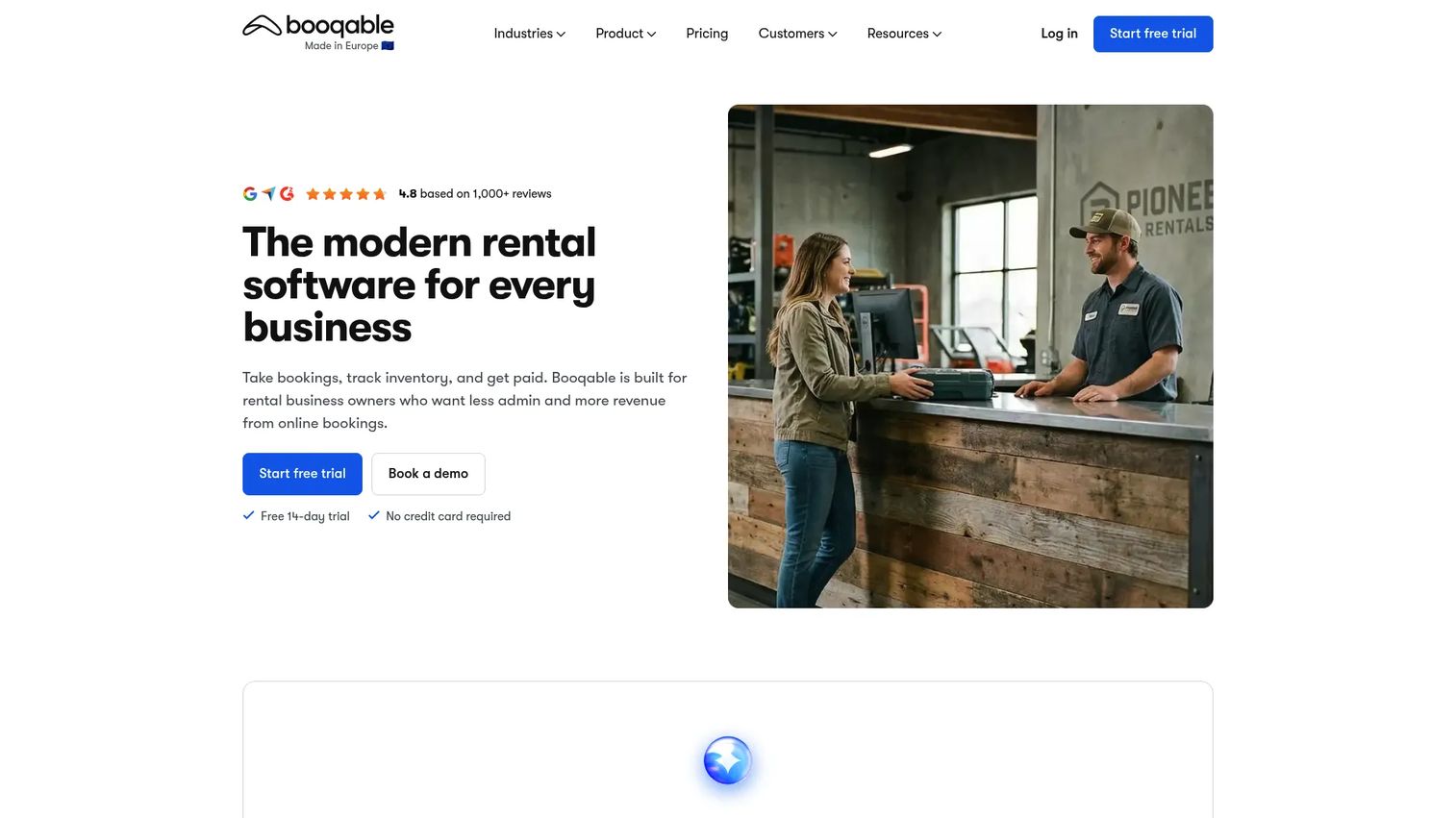
Booqable is cloud-based rental software that brings inventory, online bookings, payments, and a customer-facing storefront into one system. It is built for rental businesses that want their website and their back office to run off the same data, so a reservation made online instantly updates availability. For a tent operator juggling a growing catalog of tents, tables, chairs, and linens, that single source of truth removes the guesswork from what is actually free on a given weekend.
Best for: Small and growing rental operators who want an all-in-one system without a heavy implementation.
Key strengths
- All-in-one rental workflow: Inventory, orders, quotes, contracts, invoices, and payments live together, so nothing gets re-entered.
- Website and booking builder: A branded booking page lets customers check real-time availability and reserve without a phone call.
- Mobile point of sale and API access: Manage orders from the warehouse floor or the delivery truck, and connect to other tools when you outgrow the basics.
Why choose Booqable: If you are moving off spreadsheets and want fast time-to-value, Booqable earns its place because it covers the full order lifecycle without forcing you to bolt on a separate website or payment tool. It scales cleanly from a one-person shop to a small team, which matters when you are trying to build a repeatable operation rather than a founder-dependent scramble.
Booqable pricing: Booqable offers a 14-day free trial with no credit card required. Paid plans start with Start at $29/month, Grow at $69/month, and Scale at $149/month, with roughly 20% savings on annual billing. There is no free tier, but the trial lets you test the full workflow before committing.
2. Point of Rental
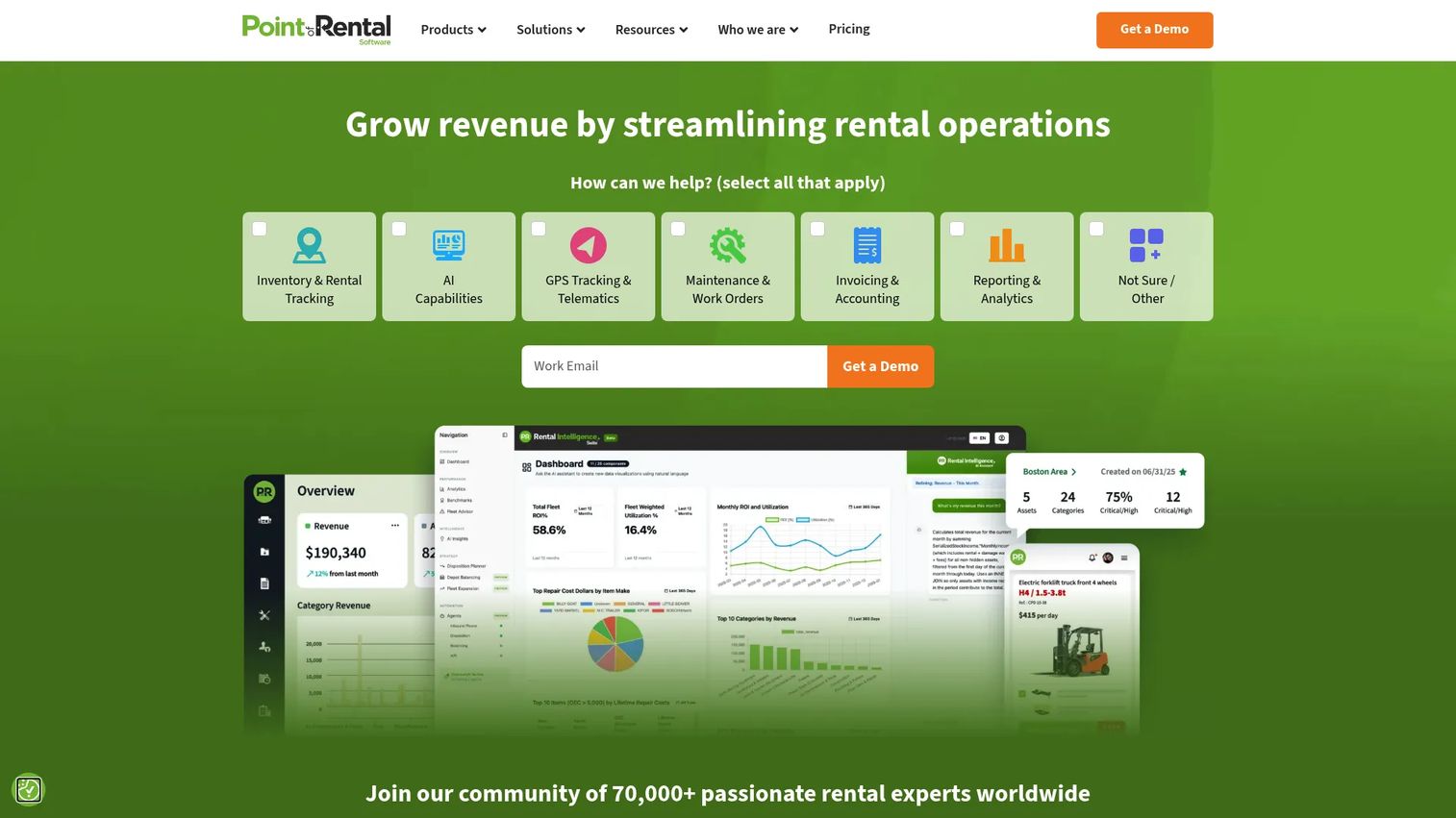
Point of Rental is rental and inventory management software built for equipment, event, tool, and specialty rental businesses, with a long track record in the category. Where lighter tools stop, Point of Rental keeps going into multi-location dispatching, logistics, and deeper inventory control. That operational depth is why it tends to show up in more established rental operations that have outgrown a single warehouse and a simple calendar.
Best for: Established rental businesses that need scalable, multi-location operations software.
Key strengths
- Ecommerce catalog and storefront: Publish your inventory online so customers can browse and order from a branded catalog.
- Multi-location dispatching and logistics: Coordinate gear, trucks, and crews across warehouses and event sites.
- Mobile apps with offline use: Keep working in the field even when connectivity drops, then sync when you are back online.
Why choose Point of Rental: For operators managing complex logistics across multiple locations, the trade-off is depth over simplicity, and that depth is the point. It is the system you grow into when availability accuracy, dispatch coordination, and reporting have to hold up under real volume. Legacy credibility in the rental space also means a mature support and integration ecosystem.
Point of Rental pricing: Point of Rental uses custom, tailored pricing rather than public tiers. The company provides quotes based on your business size and needs, so you will need to contact them for a figure. This is common for operations-heavy platforms where scope varies widely between a small tent company and a regional rental firm.
3. Tent Rental Systems
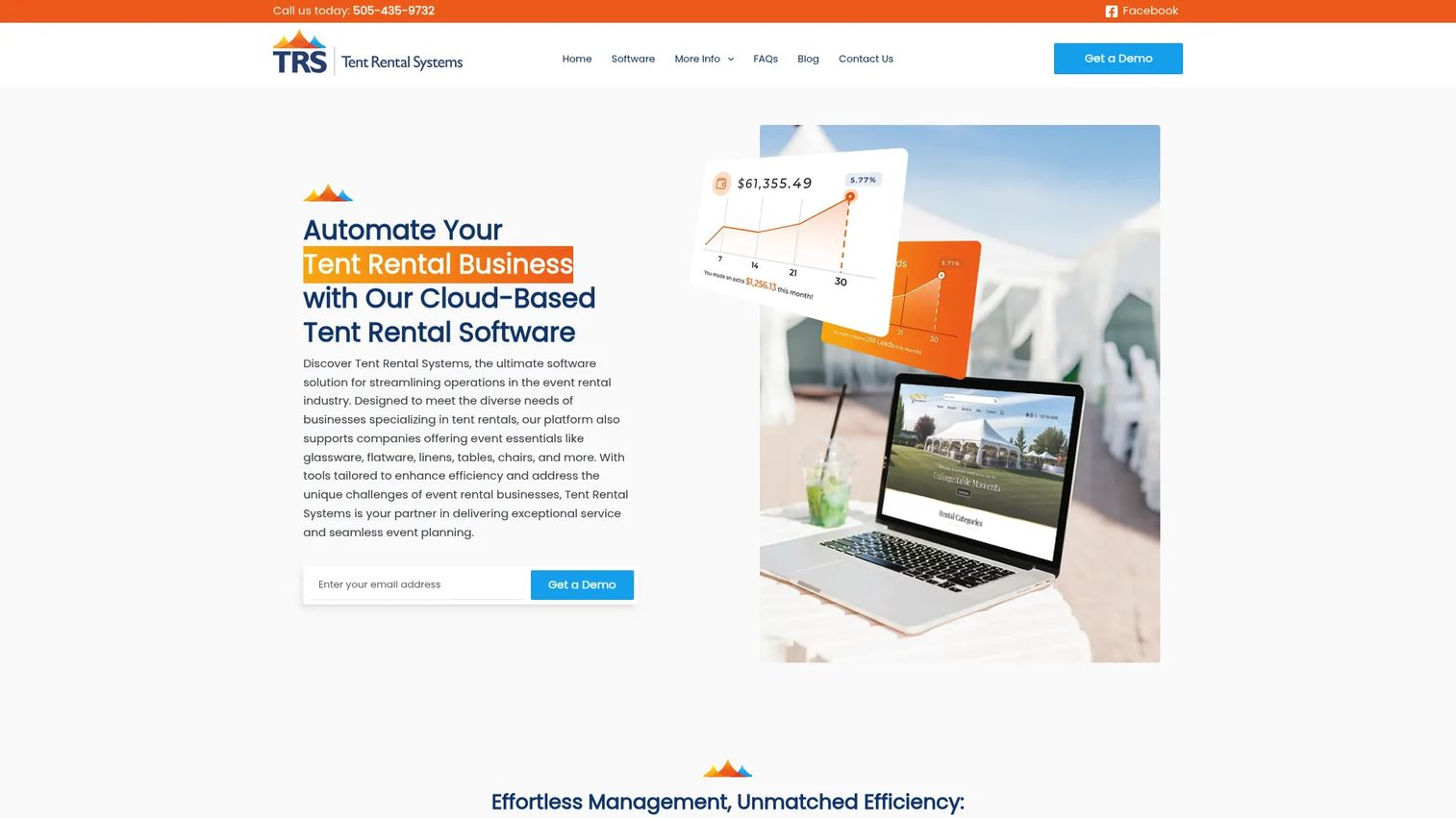
Tent Rental Systems is cloud-based software purpose-built for tent rental businesses, with online ordering, real-time inventory management, payments, and CRM tools. The tent-first focus shows in the workflow: real-time online reservations, automated contracts, surveys, and email communications are shaped around how tent companies actually sell and deliver. If your catalog is dominated by frame tents, pole tents, sidewalls, and staging, a purpose-built tool speaks your language out of the box.
Best for: Tent and event rental companies that want online booking, inventory control, and automated customer workflows.
Key strengths
- Real-time online ordering and reservations: Customers place and confirm orders online while inventory updates instantly.
- Real-time inventory management: Availability reflects committed gear across overlapping event dates, reducing double bookings.
- Automated contracts, surveys, and communications: Contracts, follow-up surveys, and email touchpoints fire automatically instead of by hand.
Why choose Tent Rental Systems: When you want software that already understands tent-specific logistics rather than a generic rental tool you have to bend into shape, the specialization pays off. Automated customer communications also lighten the administrative load, which matters when a small team is running a packed event calendar.
Tent Rental Systems pricing: Pricing is public and tiered. Essentials starts at $279.95/month and Premier at $399.95/month, with higher bands for larger inventories, for example $329.95/month for Essentials and $499.95/month for Premier above 50 items. Plans also carry a $499 setup fee and a $99/year hosting fee, and Premier requires a one-year contract.
4. IntelliEvent
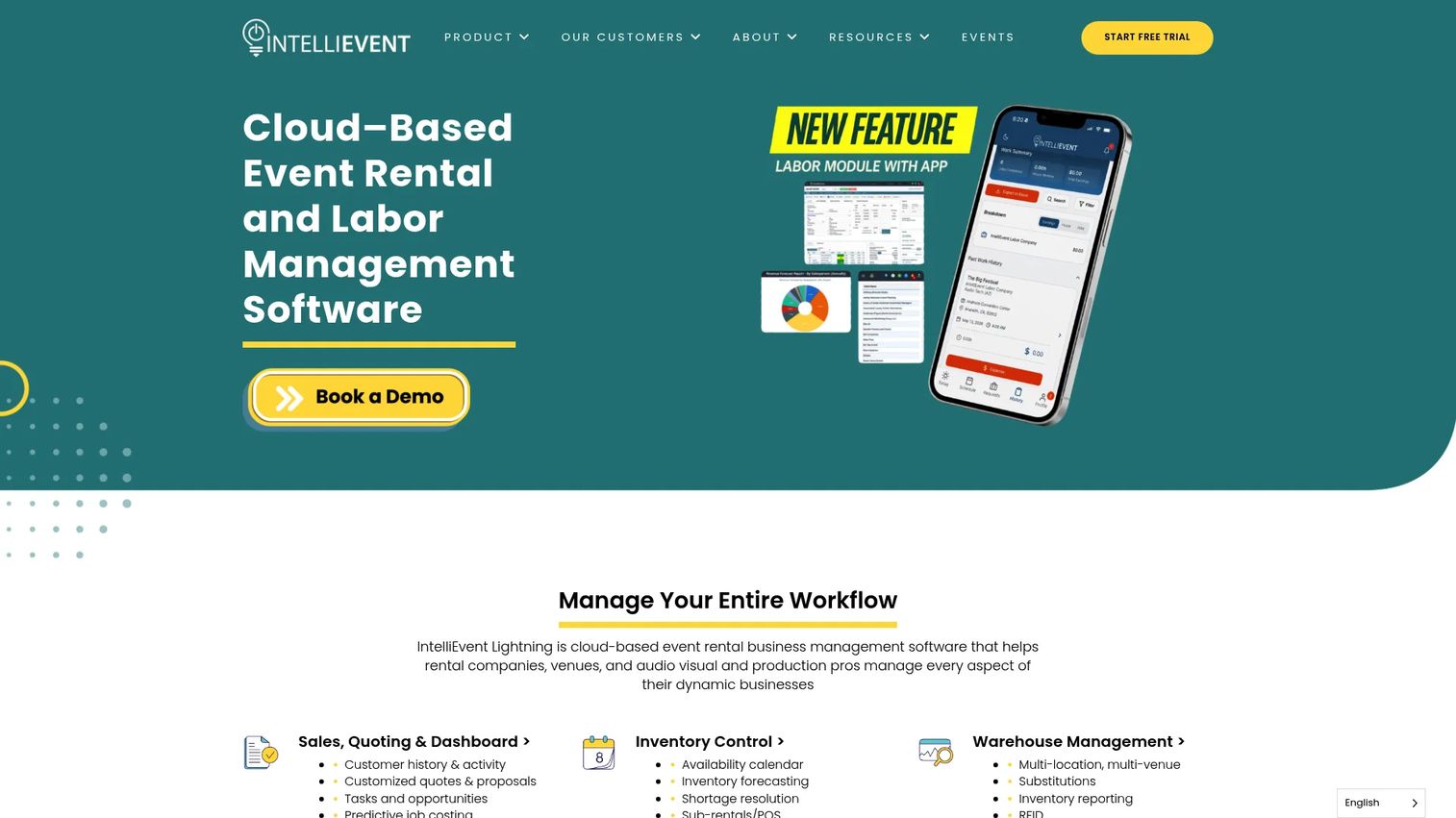
IntelliEvent is cloud-based event rental and labor management software for rental companies, venues, and AV or production teams. It leans into the operational complexity that inventory-heavy event businesses face: sales and quoting, availability calendars, and labor scheduling under one roof. For a tent operator who also rents staging, lighting, or AV and has to schedule crews alongside gear, that combined view keeps quoting and dispatch aligned.
Best for: Event rental businesses and production teams that need end-to-end operational management.
Key strengths
- Sales, quoting, and proposals: Build branded quotes and proposals quickly, then convert them to booked orders.
- Inventory control and availability calendar: See what is committed and what is free across a visual calendar to prevent conflicts.
- Labor scheduling and logistics: Assign and schedule crews alongside equipment so staffing and gear stay in sync.
Why choose IntelliEvent: For teams managing bundled inventory and crews, the value is faster quoting paired with stronger operational control. When your events depend on both the right equipment and the right people showing up, having quoting, inventory, and labor in one platform reduces the handoffs where details get lost.
IntelliEvent pricing: IntelliEvent uses contract-based pricing, and the company does not publish numeric figures on its site. You will need to request a quote based on your operation. It carries a 4.0/5 rating on G2, based on a limited number of reviews, so weigh that against a hands-on evaluation.
5. Rental Software
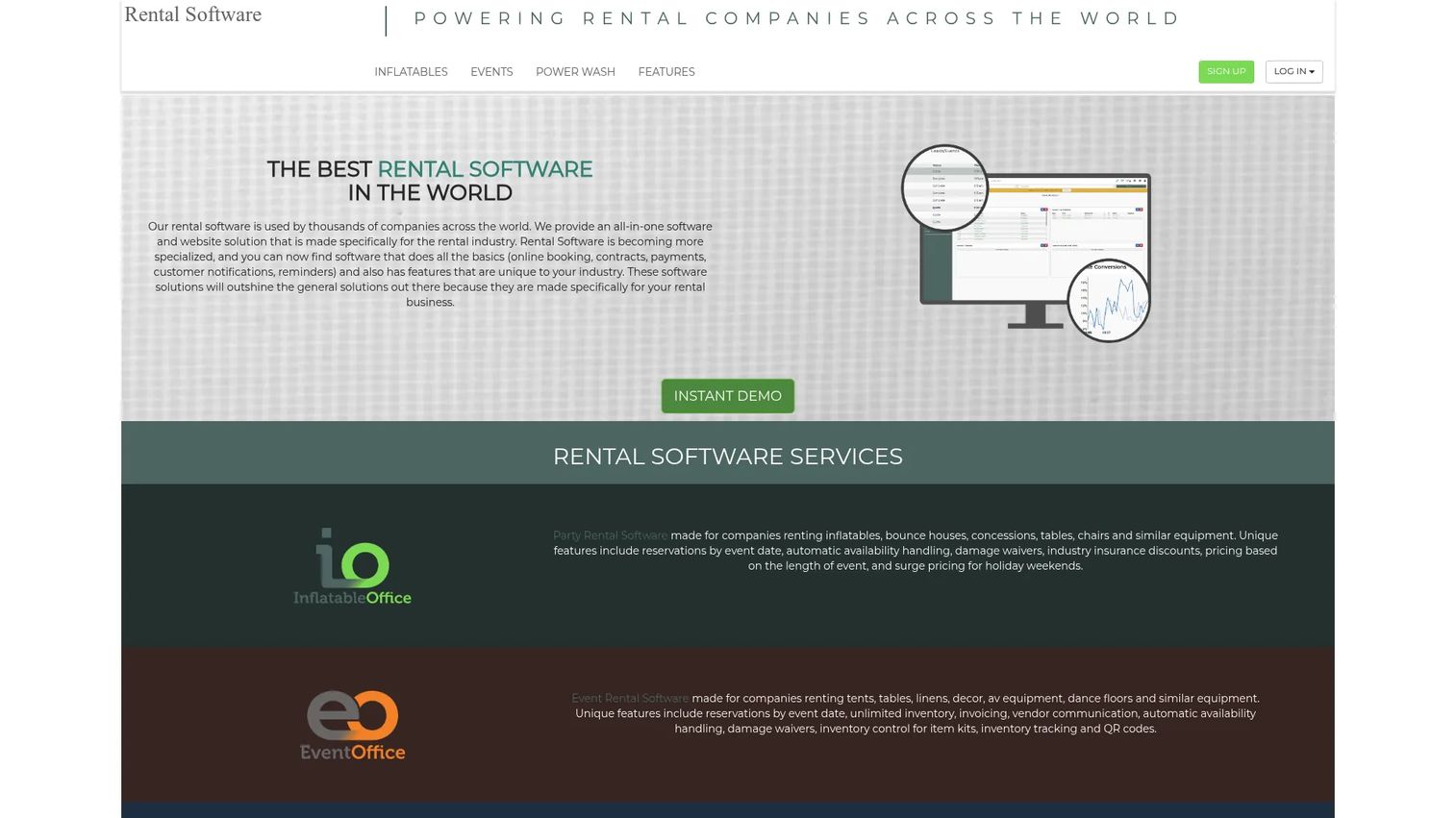
Rental Software is a cloud rental management platform covering party, event, tent, equipment, and even pressure washing businesses, with industry-specific workflows for each. The breadth is the draw: online booking, contracts, payments, notifications, and reminders sit alongside inventory, routing, reporting, CRM, and worker scheduling. For a tent operator who wants a customer-facing booking experience and a coordinated back office without buying two separate tools, that combination is practical.
Best for: Party and event rental operators who need booking, inventory, and workflow automation in one place.
Key strengths
- Online booking, contracts, and payments: Customers reserve online, sign digitally, and pay, with automated notifications and reminders.
- Industry-specific workflows: Preconfigured flows for party and event rentals mean less setup to match how you actually work.
- Inventory, routing, and CRM: Availability tracking, delivery routing, reporting, and worker scheduling coordinate the operational side.
Why choose Rental Software: The benefit is broad vertical coverage with a real emphasis on web presence and online ordering. If your growth plan leans on customers self-serving their reservations online while you keep dispatch and reporting tight behind the scenes, this platform is built for that combination.
Rental Software pricing: Publicly visible plan names include Free, Basic, Plus, and Premium, tiered by the number of rentals or items you manage. The Free plan supports up to 10 items and one user. Numeric pricing for the paid tiers is not fully published, so confirm current figures with the vendor before committing.
6. Event Office
Event Office is event rental software for managing quotes, bookings, inventory, payments, and related operations. It targets rental teams that want more than inventory tracking: online quotes and bookings, real-time availability with auto inventory sync, and digital contracts with e-signing and customer notifications. For a tent and party rental operator, that means the quote-to-signed-contract path stays inside one system, and availability stays accurate as orders come in.
Best for: Event and rental companies that need booking, inventory, and contract workflows without a heavy platform.
Key strengths
- Online quotes, bookings, and payments: Move from inquiry to paid reservation in one connected flow.
- Real-time availability and auto inventory sync: Availability updates automatically as orders are placed, cutting double bookings.
- Digital contracts and notifications: Send and sign contracts digitally, with automated customer notifications along the way.
Why choose Event Office: For operators who want a broader platform approach with a free entry point, Event Office lets you start small and scale into paid tiers as volume grows. The combination of booking, inventory, and contract workflow suits teams that want a modern, web-first setup without a large upfront commitment.
Event Office pricing: Event Office offers a free Starter plan. Paid plans are Pro at $215/month, Master at $315/month, and Enterprise at $415/month, with add-ons available separately. The free tier makes it easy to test the core workflow before upgrading.
What to evaluate before you buy
Picking tent rental software is less about feature counts and more about fit with how you actually operate. Run every candidate through this checklist.
Industry specialization
Generic rental features are not the same as tent and event workflows. Verify the system handles event-specific pricing, scheduling across multi-day setups, and the logistics of tents, staging, and accessories. A tool built for tools or vehicles may not model a frame tent, its sidewalls, and its stakes as a bundled item the way you need. Ask to see a tent-style order built end to end during your evaluation.
Inventory and availability accuracy
This is the core of the category. Confirm the platform tracks live availability, supports kits and item bundling, and prevents double bookings across overlapping event dates. Seasonal demand is brutal in this business, so ask how the system handles peak weekends when the same 20x40 tent is requested three times. If availability is not accurate to the minute, everything downstream inherits the error.
Quoting, contracts, and e-signatures
Speed to a signed contract shortens your cash cycle. Make sure the platform builds customer-ready proposals, supports e-signatures, and can clone recurring event contracts so a repeat client does not require a rebuild every year. Fewer manual documents means fewer disputes and faster deposits.
Delivery planning and routing
Field execution is a common failure point, so confirm support for load sheets, dispatch, and route coordination. The system should tell your driver what to load, where to go, and in what order, then track pickup after the event. When you run multiple crews on a busy Saturday, this is where a platform earns or loses your trust.
Integrations and website experience
You should not need extra tools just to collect orders and sync the back office. Verify accounting export to QuickBooks, calendar sync with Google Calendar, maps for routing, secure online payments, and a customer-facing website with online booking. Clean integrations keep your data consistent and your reporting trustworthy, which is exactly what you need for weekly operating decisions.
Which tent rental software should you choose?
The best choice comes down to your size, operational complexity, and how much you lean on online booking. If you are a small or growing operator moving off spreadsheets, Booqable gives you inventory, a website, and payments in one system at an accessible price. If you run established, multi-location operations with heavy logistics, Point of Rental has the depth to match. Tent Rental Systems is the specialist pick when you want software that already thinks in tents, while IntelliEvent fits inventory-heavy teams that also schedule labor and production crews. For web-first booking paired with a coordinated back office, Rental Software and Event Office both deliver online ordering with a free or low-cost entry point.
Whatever you pick, the goal is the same: one system that reduces manual work and gives you clearer control over inventory and delivery. Shortlist two candidates, build a real tent order in each during the trial, and pick the one that removes the most friction from your busiest day. The right platform earns its place in your first busy season.
FAQs
Tent rental software is a rental management platform that helps tent, event, and party rental businesses track inventory, build quotes and contracts, schedule deliveries, take payments, and let customers book online, all in one place. It replaces spreadsheets, email threads, and paper contracts with a single source of truth for what you own and what is committed.
Prioritize real-time inventory and availability tracking, quoting and contracts with e-signatures, delivery routing and load sheets, and a customer-facing booking site. Reporting and integrations with accounting and payments round out the essentials. The exact weighting depends on whether your bottleneck is booking accuracy, quote speed, or field logistics.
Many platforms do. Booqable, Tent Rental Systems, Rental Software, and Event Office all offer customer-facing booking pages where customers can check availability and reserve online. If online ordering is central to your growth plan, confirm that reservations update inventory in real time so you never oversell a tent.
Yes. Most modern tent rental management software builds branded proposals, converts them to contracts, and supports e-signatures inside the platform. Look for the ability to clone recurring event contracts if you serve repeat clients, since that removes a rebuild every season.
Delivery features typically include load sheets, dispatch planning, and route coordination, sometimes with maps integration. The system tells drivers what to load and where to go, then tracks pickup after the event. This is where operators reduce missed items and late arrivals on busy weekends.
Small operators should prioritize fast setup, an all-in-one workflow, and clear pricing over deep enterprise features. A tool like Booqable, starting at $29/month, or a free entry tier from Event Office or Rental Software lets you replace spreadsheets without a heavy commitment. Focus on inventory accuracy and online booking first.
Very, if you want clean books without double entry. Look for accounting export to QuickBooks or a similar tool so revenue, deposits, and invoices sync automatically. Reliable integrations keep your financial reporting trustworthy and save hours of manual reconciliation each month.
Compare on total cost, not just the headline monthly figure. Factor in setup fees, hosting fees, contract terms, and item-count or user limits that trigger higher tiers. Some vendors, like Point of Rental and IntelliEvent, use custom pricing, so request a quote scoped to your inventory size before you decide.