You searched "IDX software" and landed on a mess of results. Healthcare billing. Identity theft protection. A marketing agency. An enterprise revenue cycle platform. None of them agree with each other.
That's not your fault. IDX is one of the most overloaded three-letter names in software. The letters get reused across unrelated industries, and search engines pile them all into one SERP.
So what does IDX stand for? It depends entirely on which company you mean. In one context it's athenaIDX, an enterprise revenue cycle management platform. In another it's a consumer identity protection service. In a third it's a digital communications and marketing firm. The IDX meaning shifts with the company behind it.
This guide maps the four that actually matter. We'll cover the modern billing platform, the identity brand, the marketing company, and the parent ecosystem that ties several of these threads together. By the end you'll know exactly which IDX you were looking for.
Software disambiguation is boring until it costs you a wrong purchase or a wasted afternoon. This is the shortcut.
What's inside
This guide is for anyone trying to figure out what is IDX software before they evaluate, buy, or write about it. We picked the four entities based on three things:
- Current relevance: brands and products people can still find, buy, or use in 2026.
- SERP prominence: the entities that actually surface when you search the keyword.
- Buyer confusion: the pairs and lookalikes most likely to send you to the wrong website.
We did not treat IDX as a single product. Each entry is a distinct company or product family with its own use case, audience, and status.
TL;DR
Short on time? Here's the map in four lines.
- athenaIDX: modern enterprise revenue cycle management software, now sold under athenahealth. This is the current product most healthcare finance teams mean.
- IDX identity theft protection: a consumer identity and privacy service. Monitoring, recovery, and data breach protection. Not healthcare software.
- IDX (digital communications and marketing): a trusted digital communications and marketing company. Corporate comms, performance marketing, HubSpot work. Not healthcare software either.
- athenahealth: the parent ecosystem around athenaIDX, spanning EHR, practice management, and billing.
What IDX software means and where the name comes from
"IDX software" is an ambiguous term. It does not refer to one product. It refers to a cluster of unrelated companies and product families that share the same three-letter name across healthcare, consumer security, and marketing.
The confusion has real history behind it. The most cited source of the name in software is a legacy healthcare software heritage, whose clinical, financial, and administrative systems for hospitals and large physician groups moved through corporate chapters over the years, eventually landing at athenahealth as athenaIDX. That single lineage explains why "IDX" and "athenaIDX" both surface for healthcare billing searches.
Then there are the entities that share the name but not the history: IDX identity theft protection (consumer security) and IDX, the digital communications and marketing company. Same letters, different businesses.
Here's the fast entity map:
| Entity | Category | Status in 2026 |
|---|---|---|
| athenaIDX | Revenue cycle management | Active, sold via athenahealth |
| IDX identity theft protection | Consumer identity and privacy | Active |
| IDX (communications and marketing) | Digital comms and marketing | Active |
| athenahealth | Healthcare software ecosystem | Active parent brand |
If you remember one thing: the healthcare thread (athenaIDX → athenahealth) is one family. The identity brand and the marketing company are separate companies that happen to share the acronym.
When you're likely looking for each one
Match your situation to the right entity before you click anything.
You're a healthcare finance or RCM buyer. If you're evaluating billing, claims, and collections software today, you mean athenaIDX. This is the modern revenue cycle management product.
You had a data breach or want identity monitoring. If your search involves credit monitoring, breach response, or identity recovery, you mean IDX identity theft protection. This is consumer security, not clinical software.
You need marketing, comms, or HubSpot help. If you landed on services like corporate communications, performance marketing, or CMS builds, you mean IDX, the digital communications and marketing company.
You're evaluating an EHR platform. If you want an integrated electronic health record with billing and patient engagement, you mean athenahealth, the parent brand.
IDX software comparison at a glance
The four entities differ on almost every axis: industry, buyer, status, and pricing model. Here's the side-by-side so you can rule out three of them quickly.
| # | Brand / product | What it refers to | Primary use case | Current status |
|---|---|---|---|---|
| 1 | athenaIDX | Enterprise revenue cycle management | Billing, claims, and collections for large health systems | Active, sold through athenahealth |
| 2 | IDX identity theft protection | Consumer identity and privacy service | Monitoring, recovery, breach response | Active |
| 3 | IDX (communications and marketing) | Digital communications and marketing firm | Corporate comms, performance marketing, HubSpot, CMS | Active |
| 4 | athenahealth | Cloud healthcare software ecosystem | EHR, practice management, billing, patient engagement | Active parent brand |
Read the rows as two groups. Rows 1 and 4 are the healthcare lineage. Rows 2 and 3 are unrelated companies that share the name. That grouping resolves most of the confusion on its own.
1. athenaIDX
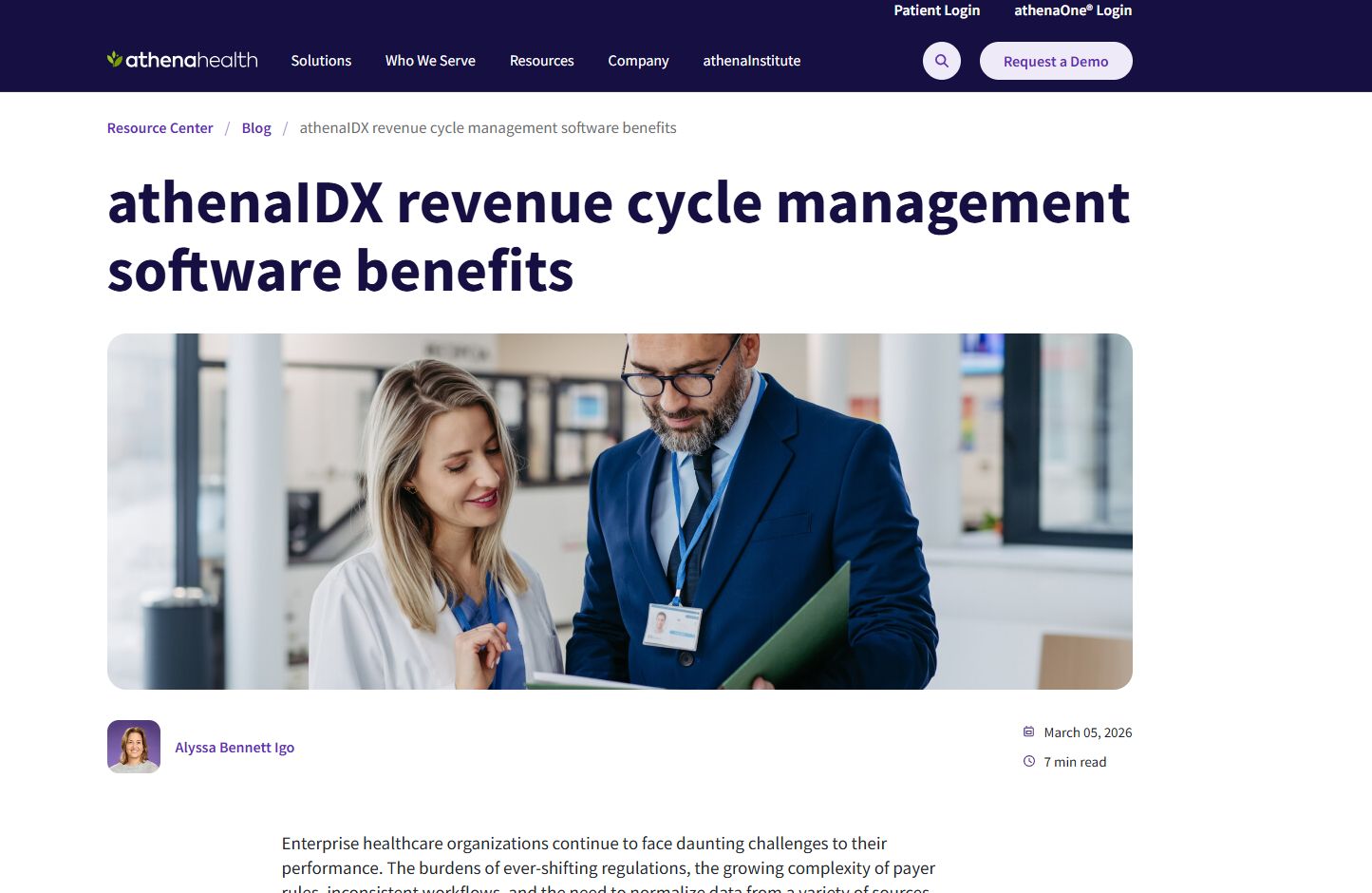
athenaIDX is the modern descendant of that legacy healthcare line. It's enterprise revenue cycle management software for healthcare organizations, now sold under athenahealth. When a healthcare finance team says "IDX," this is usually the product they mean in 2026.
Best for: large health systems and specialty networks that need enterprise-grade revenue cycle management.
Key strengths
- Secure end-to-end revenue cycle management in a single platform
- Automated census ingestion, reconciliation, eligibility verification, and payment estimation
- Intelligent charge capture, coding, rules engines, and denial management
The product covers the full billing lifecycle: patient access, charge capture, claims, denials, and collections. The automation around eligibility verification and payment estimation is what separates it from older systems, cutting manual work across the revenue cycle. athenahealth positions it for organizations with complex, high-volume billing needs.
Pricing is not published as a public number. athenahealth quotes athenaIDX individually, based on a percent of collections, and provides customized quotes through its sales team. That model is common in enterprise RCM, where volume and payer mix change the math for every customer. On G2, athenahealth as a seller carries a 3.6 out of 5 rating, though that reflects the broader company rather than athenaIDX alone.
Why choose athenaIDX: it's the current, supported product for enterprise revenue cycle management, with direct lineage back to the original IDX billing systems. If you're evaluating healthcare billing software today and the word "IDX" keeps appearing, this is almost certainly your destination.
2. IDX identity theft protection
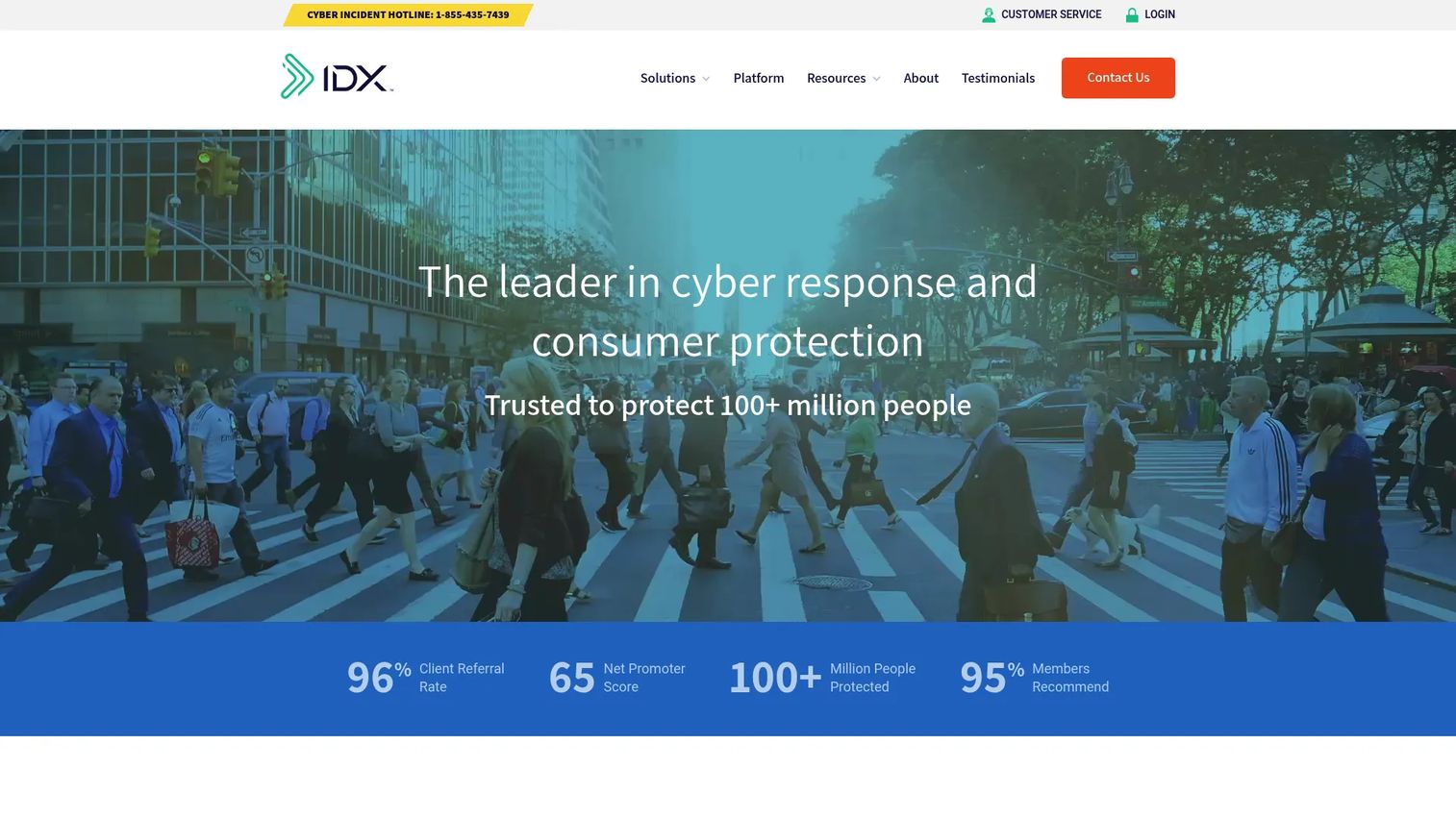
IDX identity theft protection has nothing to do with healthcare software. It's a consumer identity and privacy service that offers monitoring, recovery, and data breach protection. Same three letters, entirely different business.
Best for: individuals or families who want identity theft monitoring plus recovery support.
Key strengths
- Credit and identity monitoring with actionable alerts
- Password manager and secure browsing privacy tools
- Identity recovery support and a recovery guarantee
This is often the IDX people find after a company data breach. Many breach-response programs enroll affected consumers in identity monitoring, and IDX is a common provider for that service. The offering combines proactive monitoring with hands-on recovery help if your identity is actually compromised.
Pricing is public and consumer-friendly. IDX runs three plans: Identity Essentials starts at $8.96 per month billed annually ($9.95 monthly), IDX Privacy at $11.66 per month billed annually ($12.95 monthly), and IDX Complete at $29.61 per month billed annually ($32.90 monthly). Each plan shows individual and family pricing, with annual and monthly billing options. There's no free tier. On G2, the IDX product carries a 4.4 out of 5 rating.
Why choose IDX identity theft protection: if your search was driven by a breach notice, credit monitoring, or personal privacy, this is your answer. It's a security product for people, not a system for hospitals.
3. IDX trusted digital communications and marketing company

IDX is a trusted digital communications and marketing company. This is the third distinct entity sharing the name, and again, it has no connection to healthcare software or identity protection. It's an agency-style firm serving enterprises with communications, marketing, and investor-relations work.
Best for: enterprises that need integrated digital communications, performance marketing, and investor-relations support.
Key strengths
- Corporate communications and investor-relations tools
- Performance marketing and e-commerce
- Creative, brand, websites, and CMS work
- HubSpot partnership and onboarding services
The service range is broad. It spans corporate communications, performance marketing, live events, digital asset management, a marketing talent network, IR tools and feeds, and its own Insight by IDX offering. As a HubSpot partner, it also runs structured onboarding programs, which is where the company shows public pricing.
For those onboarding services, IDX lists fixed rates: Marketing Hub Professional onboarding at $2,500, Marketing Hub Enterprise onboarding at $5,500, Sales Hub Professional onboarding at $1,500, and Sales Hub Enterprise onboarding at $3,000, each a one-time fee. Its other solutions direct you to contact IDX for a custom quote. There's no free tier.
Why choose IDX (marketing): if you landed here looking for a partner to run corporate comms, build a CMS, or onboard your team onto HubSpot, this is the IDX marketing company you want. It is not a software product you install; it's a services firm you hire.
4. athenahealth
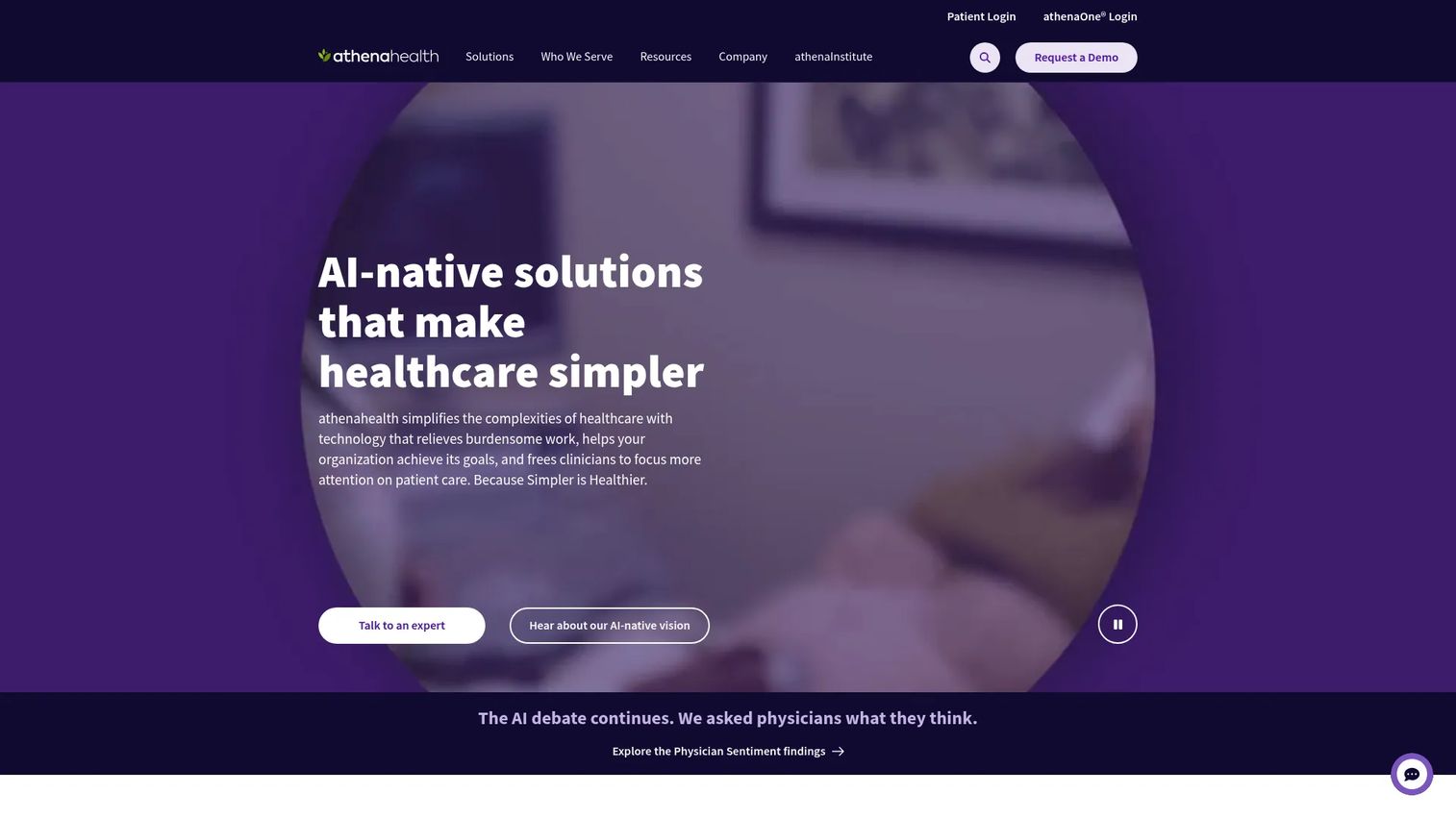
athenahealth is the parent ecosystem that now owns athenaIDX and the wider revenue cycle line. It's a cloud-based healthcare software company built around athenaOne, its integrated platform for EHR, practice management, patient engagement, and revenue cycle support.
Best for: ambulatory medical practices that want an integrated EHR, billing, and patient engagement platform.
Key strengths
- AI-native EHR and documentation tools
- Practice management and medical billing
- Patient engagement, portal, and mobile capabilities
athenahealth matters to the IDX story because it's the current home of the legacy IDX revenue cycle lineage. The billing software that carried the IDX name now sits within the athenahealth portfolio as athenaIDX. If you understand that chain, the whole "why does IDX point to athenahealth" question resolves.
Like athenaIDX, athenahealth does not publish a public starting price. Pricing is individualized and based on a percent of collections, and prospects request a quote or demo rather than seeing a fixed rate. As a seller, athenahealth carries a 3.6 out of 5 rating on G2, reflecting its full product range rather than any single module.
Why choose athenahealth: if you want the broader platform, not just billing, athenahealth is the ecosystem. It's also the correct entity to research if you're trying to trace where the original IDX healthcare software lives today.
What to check before you commit
Before you sign anything or send an email, run through this short checklist. It keeps you from confusing one IDX for another.
Confirm the industry
Healthcare, consumer security, and marketing are three different worlds. Read the homepage headline first. If it talks about hospitals or billing, you're in the athenaIDX or athenahealth lane. If it talks about credit monitoring, you're at IDX identity theft protection. If it talks about campaigns and comms, you're at the marketing company.
Match the buyer
Are you buying as an individual, a healthcare CFO, or a corporate marketing lead? The identity product serves people. athenaIDX and athenahealth serve healthcare organizations. The marketing company serves enterprise brands and IR teams.
Check the pricing model
Consumer identity plans show clear monthly prices. Enterprise healthcare software quotes on a percent of collections. Marketing services mix fixed onboarding fees with custom quotes. The pricing shape alone often tells you which IDX you've found.
Verify the URL
The domains differ. Confirm you're on the right one before you enter any data, especially for the identity protection service, where phishing lookalikes are a known risk.
Which IDX did you mean?
Here's the plain-language recap. "IDX software" is not one thing, and the fastest way to get unstuck is to sort by the two big groups.
If your search is about healthcare, you're in one family: athenaIDX is the modern revenue cycle management product, and athenahealth is the parent ecosystem that holds it all today. Most healthcare searches for "IDX" end at athenaIDX.
If your search is about protecting yourself after a breach, you want IDX identity theft protection, the consumer security service with public monthly pricing and data breach protection.
And if your search is about marketing, comms, or HubSpot, you want IDX, the digital communications and marketing company.
Two groups, one acronym. Sort by industry first, then by buyer, and the right IDX becomes obvious. Bookmark the entity map above so the next confusing SERP takes you thirty seconds instead of thirty minutes.
FAQs
IDX software is an ambiguous term that refers to several unrelated companies and products sharing the same three-letter name. The main meanings are athenaIDX (revenue cycle management), IDX identity theft protection (consumer security), and IDX (a digital communications and marketing company). What IDX stands for depends entirely on which of these you mean.
Not exactly, but they're related. athenaIDX is the modern revenue cycle management product descended from a legacy healthcare billing software heritage. The legacy IDX billing line moved through corporate ownership changes before landing at athenahealth as athenaIDX. So athenaIDX is one branch of the IDX healthcare lineage, not the whole story.
No. IDX identity theft protection is a consumer identity and privacy service offering monitoring, recovery, and data breach protection. It shares the three-letter name with the healthcare entities but is a completely separate business. If your search involves credit monitoring or a breach notice, this is the IDX you want, not the healthcare software.
athenaIDX is used by large health systems and specialty networks that need enterprise revenue cycle management. These are healthcare organizations with complex, high-volume billing, claims, and collections workflows. Pricing is individualized and based on a percent of collections rather than a public rate.
Yes. athenahealth is the parent ecosystem that now owns the legacy IDX revenue cycle lineage, sold today as athenaIDX. The original IDX billing software moved through corporate ownership changes before ending up inside athenahealth. athenahealth also offers a broader platform spanning EHR, practice management, and patient engagement.
Sort by industry first. If it's about hospitals or billing, you mean athenaIDX or athenahealth. If it's about credit monitoring or a breach, you mean IDX identity theft protection. If it's about marketing, comms, or HubSpot, you mean IDX, the digital communications and marketing company. Then confirm the URL before entering any data.