An airline sells the same seat through a dozen channels at once. A direct website booking, a call center reservation, a corporate travel desk, a GDS terminal, an NDC connection, and a codeshare partner can all touch the same inventory in the same minute. When those channels run on disconnected systems, you get oversells, fare mismatches, and passengers who booked something the airline can no longer honor.
That is the operational problem airline reservation software exists to solve. One system holds the schedule, the seat inventory, the fare rules, the passenger record, and the ticket, then keeps every channel in sync as availability changes. Get it right and you control route economics, distribution reach, and the passenger experience from search to boarding. Get it wrong and every downstream team pays for it in manual work.
The market signal backs the urgency. The airline reservation software market is projected to grow from USD 5.2 billion in 2024 to USD 11.1 billion by 2032, a 9.9% CAGR, according to Credence Research (2024). Broader aviation software is heading from USD 12.5 billion in 2026 to USD 22.5 billion by 2033, with cloud deployments already at 66% share in 2025, per Grand View Research (2025). The category is consolidating around cloud-native, distribution-ready platforms, and the buying decisions being made now will shape a decade of operations.
If you are evaluating adjacent operational tooling categories, our guides to event management software, loyalty management software, and contract lifecycle management software cover the same buyer discipline applied to different parts of the stack.
What's inside
This guide compares 9 airline reservation software platforms across the full spectrum, from airline-native passenger service systems to corporate travel booking tools and broad travel technology suites. It is written for airline operators, travel tech buyers, product leaders, and operations teams who already understand the category and are now comparing vendors, architecture, and workflow fit.
We selected platforms based on four criteria: booking workflow coverage (online, call center, corporate, charter, freight), distribution support (GDS, NDC, direct channels), ticketing and fare depth, and airline suitability by size and operating model. Pricing and ratings reflect the most recent verified figures available at the time of writing.
TL;DR
- Best airline-native passenger service system: SabreSonic Res and Amadeus Altéa handle reservations, inventory, ticketing, and distribution for scheduled carriers at scale.
- Best for low-cost and hybrid carriers: Radixx Galaxy offers modular retailing and PSS functions built for the LCC model.
- Best for regional, charter, and cargo operators: Takeflite covers scheduled, corporate, charter, and freight booking plus e-ticketing in one cloud platform.
- Best for regional carrier reservations and check-in: Videcom VRS integrates reservations, inventory, fares, and departure control.
- Best for corporate travel booking overlap: TravelPerk, Navan, and Egencia manage flight reservations inside broader business travel workflows.
- Best all-in-one travel tech suite: Trawex Cloud Suite bundles reservations, inventory, and channel management for travel businesses.
What is airline reservation software?
Airline reservation software is the system that manages flight schedules, seat inventory, fare rules, passenger records, ticketing, and distribution so an airline can sell and service seats across every channel from a single source of truth.
It sits at the center of the airline technology stack alongside a few related layers. The airline reservation system (ARS) handles booking and inventory. The passenger service system (PSS) is the broader suite that wraps reservations together with inventory, ticketing, and departure control. The computer reservation system (CRS) historically referred to the airline-owned booking database. The global distribution system (GDS) connects airline inventory to travel agents and third parties. NDC (New Distribution Capability) is the modern XML-based standard that lets airlines distribute richer content and ancillaries directly.
Core functions of any airline reservation system:
- Inventory and schedule management - control seats, classes, and flight schedules across the network.
- Availability display - show real-time seat availability to every channel.
- Fare quoting and rules - apply pricing, fare classes, and booking conditions.
- Reservation lifecycle and PNR handling - create and manage the passenger name record from booking through changes.
- Ticketing and e-ticketing - issue, reissue, and settle tickets electronically.
- Distribution and channel integration - sync inventory across direct, GDS, NDC, and partner channels.
The distinction that trips up most buyers is scope. A basic airline booking software product handles reservations and payment. A full passenger service system extends into ticketing, check-in, boarding, and disruption handling. Knowing which layer you actually need is the first real decision.
What airline reservation software should handle
Before comparing vendors, get clear on the workflows a reservation system for airlines must own end to end.
Booking flow
The booking flow is the path from search to confirmed reservation. It has to hold up under concurrent demand across channels without double-selling the same seat. That means real-time availability checks, a locked PNR at the point of purchase, and clean handoff to payment and ticketing. A flight reservation software product that gets this wrong creates oversells that cost money and goodwill.
Inventory control
Inventory control governs how many seats sell in each fare class on each flight. Revenue management leans on this layer to open and close classes as demand shifts. The airline system has to reflect those changes instantly everywhere a seat is sold, or the network leaks revenue through mispriced availability.
Fare and ticketing logic
Fares are not a single number. They are rules: advance purchase, minimum stay, change penalties, routing restrictions, and fare class mappings. The airline ticketing system applies those rules at quote time, then issues an e-ticket that carries the fare basis, tax breakdown, and conditions. Reissues and refunds have to respect the original rules. This is where thin booking tools and true airline systems separate.
Channel distribution
Distribution is how inventory reaches buyers. Direct web and mobile, call center, corporate desks, GDS terminals, NDC connections, and interline or codeshare partners all need consistent availability and pricing. An online airline ticket reservation system that only serves the direct channel leaves reach on the table. NDC support is now a baseline expectation for carriers that want to distribute ancillaries and personalized offers.
Passenger servicing and operations
After booking, the airline management system services the passenger: changes, seat selection, ancillaries, check-in, boarding, and irregular operations. A full PSS ties reservations to departure control so a schedule change or cancellation flows automatically to affected passengers. Basic booking software stops at the reservation; operational carriers need the servicing layer too.
When to use airline reservation software
Different operating models push you toward different parts of the category. Here is how to pattern-match your situation.
Manage online bookings without manual intervention
If most of your volume comes through your own website and app, you need an online airline ticket reservation system that handles search, availability, fare quoting, payment, and PNR creation without a human in the loop. Direct-channel efficiency is where margin lives for low-cost and hybrid carriers, so real-time inventory and clean e-ticketing matter most here.
Support call center and corporate reservations
Call centers and corporate travel desks need agent-facing tools: fast availability lookups, complex itinerary building, group handling, and policy enforcement. Corporate reservations add approval workflows and spend controls. If a meaningful share of your bookings routes through agents or managed travel programs, prioritize a reservation system for airlines with strong agent and corporate booking coverage.
Handle charter and freight-specific booking workflows
Charter, tour, and cargo operations do not fit the scheduled-seat model. Charter booking works by aircraft and block, freight books by weight and volume, and both need dispatch and operations integration. If this is your business, look for airline booking software built for these workflows rather than a scheduled-passenger system you have to bend.
Comparison table
Here is how the 9 platforms compare across intent, primary use case, pricing, and rating. Pricing and ratings reflect the most recent verified figures available; several airline-native systems are sold through sales conversations rather than published price lists.
| # | Product | Intent | Key use case | Pricing | G2 rating |
|---|---|---|---|---|---|
| 1 | SabreSonic Res | Airline-native PSS | Reservations, ticketing, check-in for scheduled carriers | Custom / not public | 3.4/5 |
| 2 | Amadeus Altéa | Airline-native PSS | Reservations, inventory, departure control, NDC | Custom / not public | Not listed |
| 3 | Radixx Galaxy | LCC retailing PSS | Modular reservations and e-commerce retailing | Custom / not public | Not listed |
| 4 | Videcom VRS | Regional airline PSS | Reservations, inventory, fares, departure control | Usage-based, no license fee | Not listed |
| 5 | Takeflite | Regional / charter / cargo | Scheduled, charter, freight booking, e-ticketing | Custom / not public | 4.8/5 |
| 6 | Trawex Cloud Suite | Travel tech suite | Reservations, inventory, channel management | From $5,000 one-time | Not listed |
| 7 | TravelPerk | Corporate travel booking | Business travel booking, policy, spend | From $0/month | 4.6/5 |
| 8 | Navan | Corporate travel + expense | Travel booking and expense in one platform | Free up to 300 employees | 4.7/5 |
| 9 | Egencia | Managed corporate travel | Enterprise travel booking, compliance, risk | Request pricing | 4.5/5 |
The table sorts by relevance to airline reservation workflows. Airline-native passenger service systems lead, followed by the operator-focused and travel-suite platforms, then the corporate travel tools that overlap on booking but sit outside airline-native passenger service depth.
1. SabreSonic Res

SabreSonic Res is Sabre's airline passenger service system covering reservations, ticketing, check-in, and ancillary services. It is a full PSS, not a booking layer, which means it manages the passenger from the moment a seat is reserved through issuance, servicing, and airport check-in. Sabre has decades of airline distribution behind it, and SabreSonic runs the reservation backbone for carriers that need proven scale and deep GDS connectivity.
Best for: Scheduled carriers that need a proven passenger service system with reservations, ticketing, and check-in in one suite.
Key strengths
- Full PSS coverage: Reservations, ticketing, and check-in handled in a single connected system.
- Ancillary services: Native support for selling and servicing add-ons beyond the base fare.
- Distribution depth: Backed by Sabre's long-standing GDS reach and airline connectivity.
Why choose SabreSonic Res: If you run a scheduled passenger operation and want a PSS with a long operational track record, SabreSonic sits in a small group of systems trusted to run at airline scale. It fits carriers that value proven reliability and broad distribution over lightweight, low-cost tooling.
SabreSonic Res pricing: Sabre does not publish public pricing for SabreSonic Res. The product is sold through account managers and structured as an enterprise engagement, so expect a scoped commercial conversation rather than a price list. Its G2 rating stands at 3.4/5.
2. Amadeus Altéa
Amadeus Altéa is Amadeus's airline passenger service and departure control suite. It combines reservations, inventory, and departure control with customer management for check-in, boarding, and disruption handling. Altéa is one of the major airline stack platforms globally, running the passenger workflows for a large share of the world's scheduled seat capacity.
Best for: Airlines and ground handlers that need an integrated passenger service system spanning reservations through departure control.
Key strengths
- Departure control automation: Flight management and departure control built into the same suite as reservations.
- Customer management: Check-in, boarding, and disruption handling tied to the passenger record.
- Inventory and NDC capabilities: Inventory, reservation, and NDC-related airline functions in one platform.
Why choose Amadeus Altéa: Altéa is a fit for carriers that want reservations and operations under one roof, with disruption handling that flows automatically from a schedule change to the affected passengers. It suits airlines and ground handlers operating at meaningful scale who value one integrated system over stitched-together modules.
Amadeus Altéa pricing: Amadeus does not publish public pricing for Altéa. The suite is sold via account managers and contact-sales engagement, so pricing is scoped per carrier. No G2 rating was verified for Altéa specifically.
3. Radixx Galaxy
Radixx Galaxy is a modular airline retailing and passenger service system built for low-cost and hybrid carriers. Now part of Sabre, Radixx breaks the PSS into components: Radixx Res for reservations, Radixx EzyCommerce for e-commerce retailing, Radixx Insight for customer data, and Radixx Go for departure services. That modularity lets carriers adopt the retailing and reservation pieces that match their model.
Best for: Low-cost and hybrid carriers that want modular passenger service and e-commerce retailing tools.
Key strengths
- Modular architecture: Adopt reservations, retailing, and departure components independently.
- Retailing focus: EzyCommerce is built for direct e-commerce and ancillary selling.
- Customer data access: Radixx Insight surfaces passenger data for personalization and merchandising.
Why choose Radixx Galaxy: The LCC model runs on ancillary revenue and direct distribution, and Radixx is designed around exactly that. If you are a low-cost or hybrid carrier that wants retailing-first reservations rather than a legacy scheduled-carrier PSS, Radixx fits the operating model.
Radixx Galaxy pricing: Radixx Galaxy pricing is not published publicly; the product directs buyers to contact sales. A third-party Capterra listing exists, but no first-party price or verified G2 rating was confirmed.
4. Videcom VRS
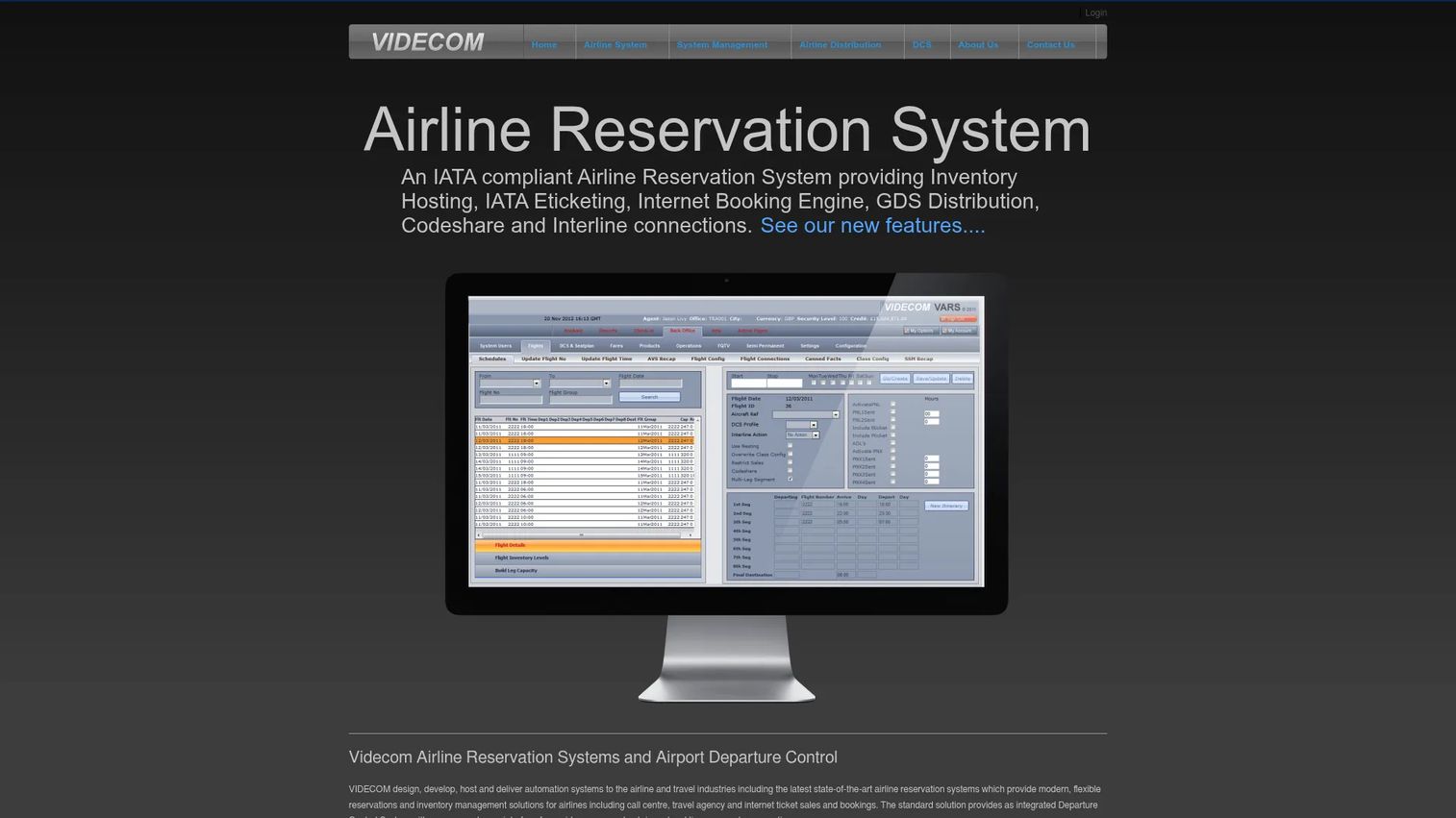
Videcom VRS is airline passenger processing software covering reservations, inventory control, fare pricing, departure control, and online check-in. It is built as an integrated reservation and passenger-processing platform, which makes it a practical fit for regional and independent carriers that want reservations and check-in in one system without the footprint of a global megasuite.
Best for: Regional and independent airlines that need integrated reservations, inventory, and passenger processing.
Key strengths
- Reservations and booking: Full booking management with real-time inventory control.
- Fare pricing: Fare rules and pricing applied inside the reservation flow.
- Departure control and check-in: Online check-in and departure control built into the platform.
Why choose Videcom VRS: Videcom appeals to regional carriers that want an integrated system with reservations, fares, and check-in without enterprise-scale complexity. Its usage-based commercial model can suit operators that would rather avoid a large upfront license.
Videcom VRS pricing: Videcom states there is no license fee and that billing is based on ongoing usage, though it does not publish a numeric starting price. A third-party Capterra listing exists; no G2 rating was verified.
5. Takeflite
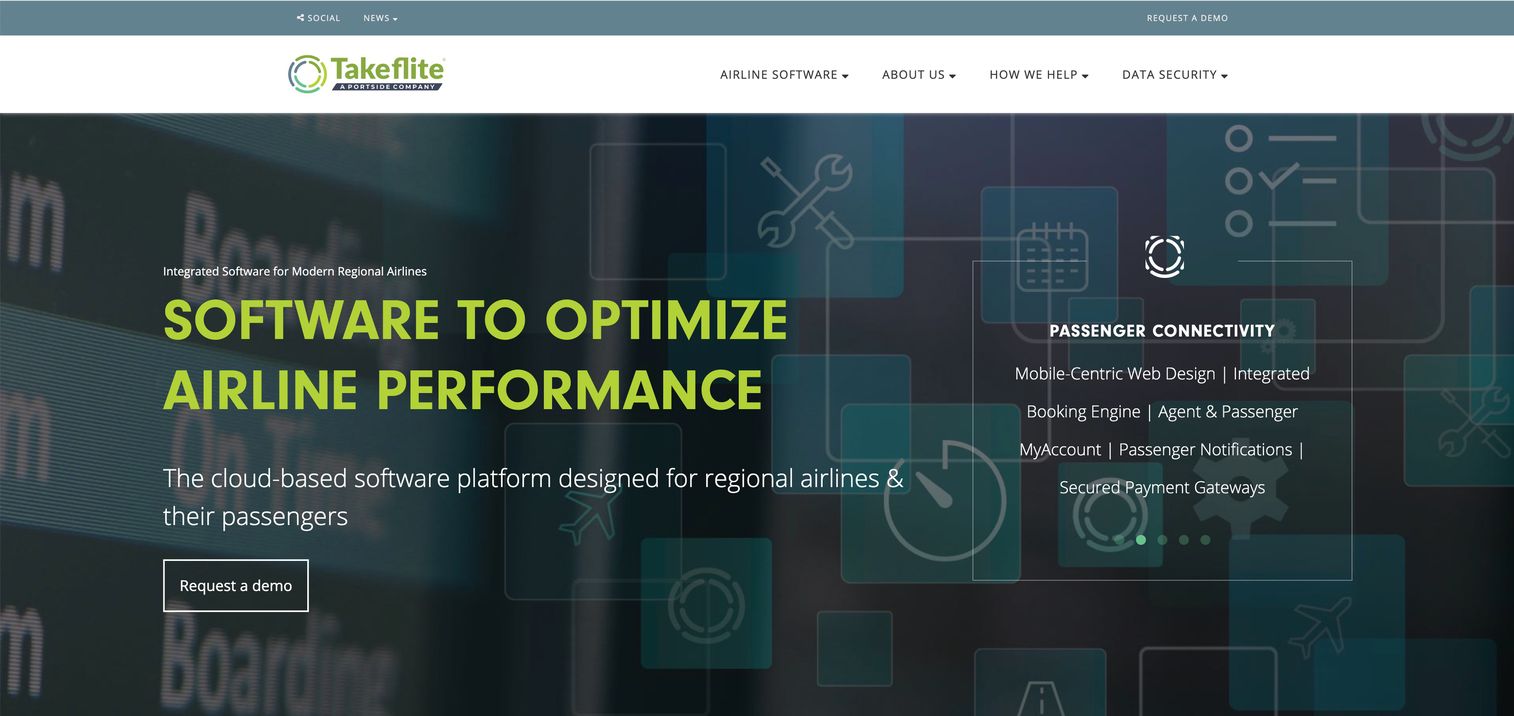
Takeflite is cloud-based airline and aviation operations software for regional, cargo, charter, tour, and maintenance operators. Now part of Portside, it bundles a passenger service system, departure control, and an operations manager into one platform. This is the most workflow-versatile option on the list for operators whose business does not fit the pure scheduled-seat model.
Best for: Regional airlines and aviation operators that need reservations, dispatch, and operations across scheduled, charter, and cargo workflows.
Key strengths
- Passenger service system: Reservations and ticketing for scheduled and non-scheduled operations.
- Departure control: Check-in and boarding integrated with the reservation record.
- Operations manager: Dispatch and operations tied to the same platform as booking.
Why choose Takeflite: Takeflite covers a spread of workflows that most airline systems ignore. Scheduled booking, corporate booking, charter booking, freight booking, and e-ticketing live in one system, so a regional operator running mixed traffic does not need to bolt three tools together. That workflow breadth is its differentiator.
Takeflite pricing: Takeflite does not expose public pricing; plans are scoped through sales. Its G2 rating is a strong 4.8/5, the highest airline-native rating on this list.
6. Trawex Cloud Suite
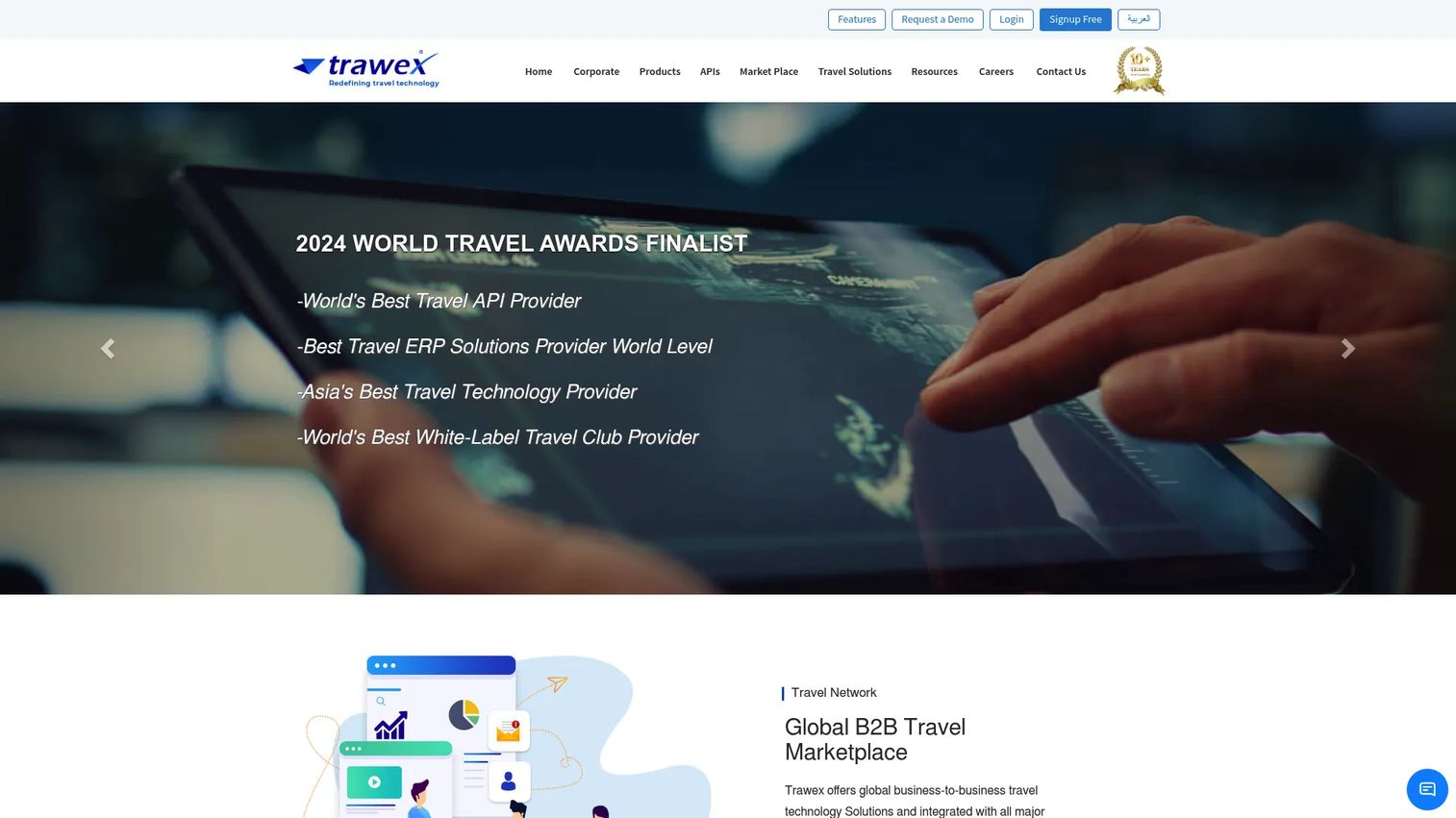
Trawex Cloud Suite is a cloud-based travel technology suite covering booking management, a central reservation system, and channel management. It is broader than an airline-only PSS, aimed at travel businesses that need reservations, inventory, and multi-channel distribution across flights and other travel products. A broad cloud suite makes sense when your reservation needs span more than airline seats.
Best for: Travel businesses that want an all-in-one cloud platform for reservations, inventory, and channel distribution.
Key strengths
- Central reservation system: One reservation core across travel products.
- Booking management: End-to-end booking workflows in the cloud.
- Channel management: Multi-channel distribution built into the suite.
Why choose Trawex Cloud Suite: If you are a travel business or aggregator rather than a pure airline, Trawex bundles reservation and distribution capabilities into one platform instead of specialized airline-native passenger service depth. It fits teams that want breadth across travel products over deep departure control and PSS operations.
Trawex Cloud Suite pricing: A third-party Capterra listing shows a starting price of $5,000 one-time, though Trawex's own site directs buyers to request a demo rather than publishing pricing. No G2 rating was verified.
7. TravelPerk
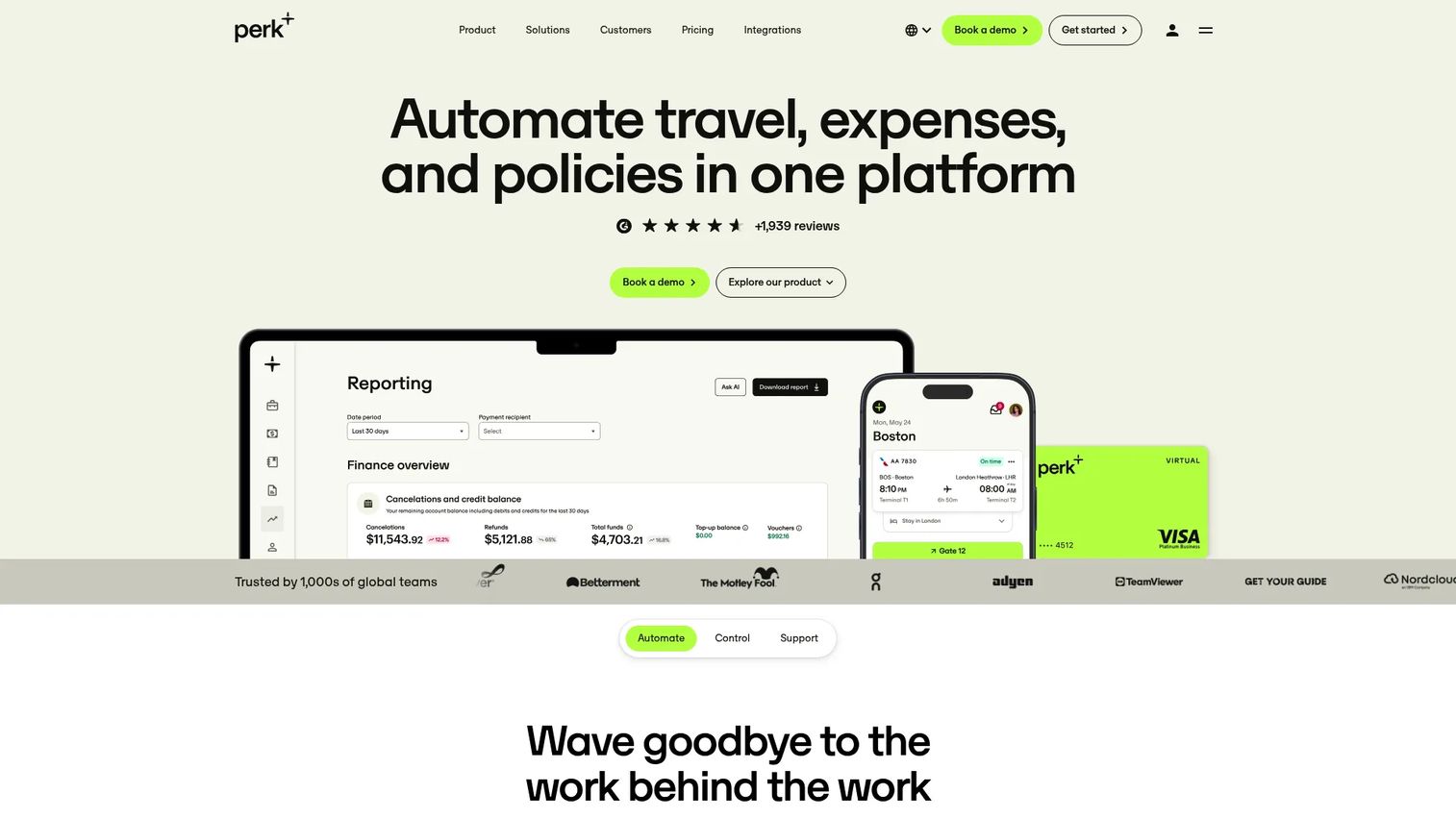
TravelPerk is a business travel and spend management platform, now branded Perk, that handles booking flights, hotels, trains, and cars alongside travel policies and centralized reporting. It is not an airline-native reservation system. It sits on the buyer side, managing flight reservations inside a corporate travel program rather than running an airline's own inventory.
Best for: Companies that want to manage business travel booking with policy controls and spend visibility.
Key strengths
- Multi-modal booking: Flights, hotels, trains, and cars in one workflow.
- Policy and approvals: Travel policies and approval flows built in.
- Spend visibility: Centralized reporting across all travel spend.
Why choose TravelPerk: If your need is corporate travel booking rather than airline-side inventory and ticketing, TravelPerk manages the reservation and policy layer for travelers. It is relevant to this list only when the buyer wants broader travel booking, not an airline reservation system to run their own flights.
TravelPerk pricing: The Starter plan is $0/month with a 5% booking fee. Premium is $99/month plus 3% per booking, and Pro is $299/month plus 3% per booking. Its G2 rating is 4.6/5.
8. Navan
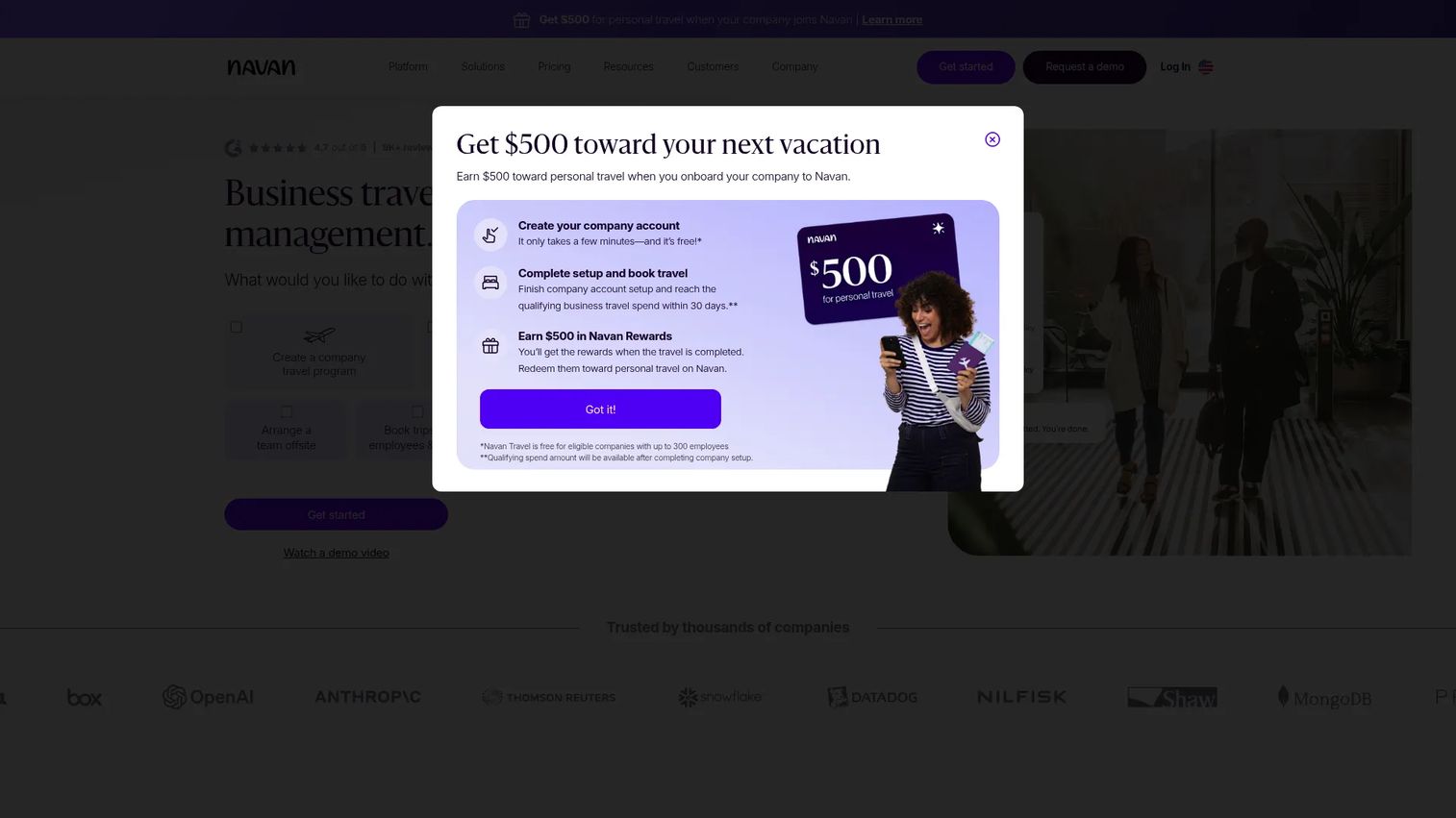
Navan is an AI-powered business travel and expense management platform that pairs travel booking with expense management and automated reconciliation. Like TravelPerk, it operates on the corporate buyer side, orchestrating flight reservations within managed travel and spend workflows rather than running airline-native passenger service depth.
Best for: Companies that want one platform for travel booking and expense management.
Key strengths
- Travel booking: Flight, hotel, and ground booking in one flow.
- Expense management: Expenses handled in the same platform as bookings.
- Automated reconciliation: Payments and reconciliation automated end to end.
Why choose Navan: Navan fits companies that want travel reservation orchestration and expense in a single tool. It belongs on this list for corporate booking overlap; airlines running their own inventory and ticketing will still need an airline-native reservation system alongside it.
Navan pricing: Navan Business is free for companies up to 300 employees. Navan Expense is free for the first 5 monthly expensing users, then $15 per user per month, and larger organizations are directed to request a quote. Its rating is 4.7/5.
9. Egencia
Egencia is a business travel management platform for booking, compliance, risk management, and expense workflows. Now part of American Express Global Business Travel, it focuses on managed corporate travel: booking, policy compliance, and traveler risk tracking for enterprise travel programs. It manages flight reservations from the corporate side rather than the airline side.
Best for: Enterprises that need managed corporate travel booking with compliance and risk controls.
Key strengths
- Trip management: Travel booking and trip management for enterprise programs.
- Policy compliance: Approvals and policy enforcement across travelers.
- Traveler risk management: Risk tracking and duty-of-care tools.
Why choose Egencia: Egencia suits enterprises with mature managed travel programs that need compliance, approvals, and risk management around flight booking. Where airline-specific reservation needs like inventory control and ticketing come in, those still require a dedicated airline-native system.
Egencia pricing: Egencia does not publish numeric pricing; the site asks visitors to request pricing or a demo. Its G2 rating is 4.5/5.
Considerations before you buy
Use this checklist to pressure-test any airline reservation system before committing.
Booking workflow coverage
Map your actual booking mix first. Scheduled seats, corporate desks, charter blocks, and freight all book differently. Confirm the platform handles every workflow you run today and the ones you plan to add, rather than forcing a scheduled-passenger model onto charter or cargo operations.
Distribution and NDC readiness
Availability is only worth as much as its reach. Check GDS connectivity, direct-channel support, and NDC capability. If you plan to distribute ancillaries and personalized offers, NDC support is a baseline, not a nice-to-have. Weak distribution caps your revenue no matter how good the booking engine is.
Ticketing and fare depth
Confirm the system applies real fare rules, not just prices: advance purchase, penalties, routing, and fare class logic. Then check reissue, refund, and e-ticketing handling. This is the layer where thin booking tools and true airline systems separate, so test it against your most complex fares.
Operations integration
Decide whether you need reservations only or a full passenger service system. If a schedule change must flow automatically to check-in, boarding, and affected passengers, you need PSS-grade operations integration. Reservation-only tools will leave that servicing work manual.
Deployment and scale fit
Match the platform to your size and operating model. A global megasuite fits a large scheduled carrier; a modular or usage-based system fits a regional or low-cost operator. Cloud deployment now dominates the category, so weigh hosting, uptime, and total cost against your growth plan.
Conclusion
The right airline reservation software depends on what kind of airline you run. Large scheduled carriers that need proven passenger service depth gravitate toward SabreSonic Res and Amadeus Altéa, which run reservations, inventory, ticketing, and departure control at global scale. Low-cost and hybrid carriers built on ancillary revenue and direct distribution fit Radixx Galaxy's modular retailing model. Regional, charter, and cargo operators get the widest workflow coverage from Takeflite, with Videcom VRS a strong integrated option for regional reservations and check-in.
If your need is corporate travel booking rather than running your own inventory, TravelPerk, Navan, and Egencia manage flight reservations inside broader business travel and expense programs. And travel businesses that need reservations and distribution across more than airline seats can look at Trawex Cloud Suite.
Your next step is to separate the decision: do you need airline-native PSS depth, or broader travel booking orchestration? Answer that first, then shortlist the two or three platforms that match your operating model and put your most complex fares and workflows in front of them before you sign.
FAQs
Airline reservation software is the system that manages flight schedules, seat inventory, fare rules, passenger records, ticketing, and distribution from a single source of truth. It lets an airline sell and service seats consistently across direct, call center, corporate, GDS, and NDC channels without overselling or mispricing inventory.
An airline reservation system (ARS) handles booking and seat inventory. A computer reservation system (CRS) historically referred to the airline-owned booking database that later evolved into distribution systems. A passenger service system (PSS) is the broader suite that wraps reservations together with inventory, ticketing, and departure control, so it covers the full passenger journey rather than just the booking.
At minimum: inventory and schedule management, real-time availability display, fare quoting with rules, PNR and reservation lifecycle handling, ticketing and e-ticketing, and distribution across direct, GDS, and NDC channels. Operational carriers should also expect departure control and disruption handling so schedule changes flow automatically to affected passengers.
For direct online bookings, the system runs search, checks real-time availability, quotes fares with rules applied, processes payment, and creates a locked PNR without human intervention. It then issues an e-ticket and syncs the updated inventory across every other channel so the same seat cannot be sold twice.
Call center agents need fast availability lookups, complex itinerary building, and group handling through an agent-facing interface. Corporate booking adds policy enforcement, approval workflows, and spend controls on top of the reservation, which is why managed travel programs often route through corporate travel tools that layer those controls over the underlying inventory.
NDC (New Distribution Capability) is an XML-based standard that lets airlines distribute richer content, ancillaries, and personalized offers directly to travel sellers rather than through legacy GDS message formats. It matters because it unlocks merchandising and offer personalization that older distribution channels cannot carry, and it is now a baseline expectation for carriers competing on ancillary revenue.
Fare rules are the conditions attached to a price: advance purchase, minimum stay, change penalties, and routing restrictions. The airline ticketing system applies those rules at quote time, then issues an e-ticket carrying the fare basis, tax breakdown, and conditions. Reissues and refunds must respect the original rules, which is why fare and ticketing logic is where thin booking tools separate from true airline systems.
An airline needs a full passenger service system once operations depend on reservations connecting to check-in, boarding, and disruption handling. If a schedule change or cancellation must automatically reach affected passengers and departure control, a reservation-only tool will leave that servicing manual. Scheduled carriers running real airport operations almost always need PSS-grade coverage, while a booking-only product can suit simpler or purely direct-sale models.