

Managing local visibility across locations is a mess. You're updating listings in one tab, responding to reviews in another, checking local rankings in a spreadsheet, and running geo-targeted ads through yet another dashboard. Now multiply that by every location you manage.
Most local marketing software promises to consolidate this chaos. Some actually do. This guide covers 12 local marketing tools, with honest trade-offs for each, current pricing, and a framework to match the right tool to your situation, whether you run a single location, a multi-location brand, or an agency. Businesses with accurate listings across directories are 70% more likely to attract local visits, according to BrightLocal. The right tool makes that accuracy automatic instead of manual.
What's inside
This guide covers 12 local marketing software tools for 2026, selected based on feature depth, pricing transparency, verified user reviews, and fit across 3 buyer profiles: single-location businesses, multi-location brands, and agencies.
- Side-by-side comparison table with pricing and G2 ratings
- Individual reviews with specific trade-offs for each tool
- Buyer-profile framework to match tools to your scale
- Buying criteria checklist for evaluation
- 8 FAQs addressing real objections
If you're also evaluating tools specifically for search visibility, check out our dedicated guide to the best local SEO software for a deeper dive into that subset.
TL;DR
- Local marketing software consolidates listings, reviews, local SEO, ads, and analytics into one platform instead of 5 separate tabs.
- Birdeye is the top pick for review-driven SMBs; SOCi fits multi-location enterprise; BrightLocal and Vendasta serve agencies best.
- Google Business Profile is the free baseline every business should start with before paying for anything.
- The 2026 differentiator is local marketing automation: AI-powered review responses, automated listing sync, and predictive ad optimization separate current tools from legacy platforms.
- Your scale determines your tool. A single-location business doesn't need a $500/month enterprise platform, and an agency can't run on a single-location plan.
What is local marketing software
Local marketing software is a platform that helps businesses manage their visibility, reputation, and advertising within a specific geographic area. It consolidates the tasks that drive local customers to physical locations or local service providers: keeping listings accurate, responding to reviews, tracking local search rankings, and running geo-targeted campaigns.
You'll see related terms used interchangeably. A "local marketing platform" and "local marketing tool" refer to the same broad category. "Local SEO software" is a subset focused specifically on search visibility (rank tracking, citation building, Google Business Profile optimization). A "location marketing platform" tends to emphasize the physical store visit journey. The full local marketing software category covers all of these plus advertising, social, lead generation, and sometimes CRM.
The 6 core components:
- Listing management: Push accurate business info (name, address, phone) to directories automatically
- Review management: Monitor, respond to, and generate reviews across Google, Yelp, Facebook, and more
- Local SEO tracking: Track rankings in the local pack and map results across geographic areas
- Google Business Profile management: Manage posts, photos, Q&A, and attributes from one dashboard
- Local advertising: Run and optimize geo-targeted ads across search and social
- Analytics and reporting: Connect local marketing activity to leads, calls, and revenue
In 2026, local marketing automation software has become the dividing line. AI-generated review responses, predictive listing sync, and automated local ad optimization are what separate current-generation tools from legacy platforms. If you're exploring the broader marketing automation software landscape, the same AI-driven trend applies across categories.
When to use local marketing software
Single-location businesses
You run one location. Your needs are straightforward: manage your Google Business Profile, collect and respond to reviews, and make sure your NAP data is accurate across directories. The pain point is time, not scale. Google Business Profile (free) or an entry-level paid plan ($14-50/month) is usually enough. Don't overpay for multi-location features you'll never use.
Multi-location brands and franchises
You manage 5-500+ locations. The pain point shifts from time to control at scale: consistent brand presentation, accurate listings across every location, uniform review response quality, and corporate-level reporting with location-level drill-down. Look for tools with location-level dashboards, approval workflows, and centralized content management. Budget: expect $200-500+/month depending on location count.
Agencies managing local clients
You manage local marketing for multiple clients across different industries. The pain point is efficiency and reporting. You need white-label capabilities, client-facing dashboards, per-client pricing that doesn't destroy margins, and reporting that justifies your retainer. Look for local SEO software for agencies built around the agency model, not enterprise tools with an agency bolt-on.
Local marketing software comparison table
Here's how the 12 local marketing software tools compare across the dimensions that matter most: primary use case, key differentiator, starting price, and verified user rating.
| # | Product | Best For | Key Differentiator | Starting Price | G2 Rating |
|---|---|---|---|---|---|
| 1 | Birdeye | Review-driven SMBs | AI review responses + 200+ listing integrations | From $299/mo | 4.8/5 |
| 2 | SOCi | Multi-location enterprise | Centralized control across 100s of locations | Custom pricing | 4.5/5 |
| 3 | BrightLocal | Agency local SEO | White-label reports + local rank grid tracking | From $39/mo | 4.6/5 |
| 4 | Yext | Listing accuracy at scale | Direct publisher API integrations for NAP sync | From $199/mo | 4.4/5 |
| 5 | SE Ranking | SEO teams needing local | Map grid tracking + full SEO suite | From $65/mo | 4.8/5 |
| 6 | Thryv | SMB all-in-one | CRM + marketing + payments in one platform | From $228/mo | 4.6/5 |
| 7 | Surefire Local | Local lead generation | Unified marketing + lead-to-revenue attribution | Custom pricing | 4.7/5 |
| 8 | Uberall | Brand foot traffic | "Near me" brand experience platform | Custom pricing | 4.3/5 |
| 9 | Synup | Budget-friendly listings | Automated listing sync + review workflows | From $34.99/mo | 4.7/5 |
| 10 | Vendasta | White-label agencies | Full agency platform with product marketplace | From $79/mo | 4.5/5 |
| 11 | Moz Local | Listing fundamentals | Listing distribution + duplicate detection | From $14/mo | 4.5/5 |
| 12 | LocaliQ | Managed local ads | Google Premier Partner with managed campaigns | Custom pricing | 4.3/5 |
Detailed reviews with trade-offs for each tool below.
12 best local marketing software tools reviewed
Each review below covers what the tool does well, where it falls short, and which buyer profile it fits. No press releases. No feature dumps. Just what you need to decide.
1. Birdeye
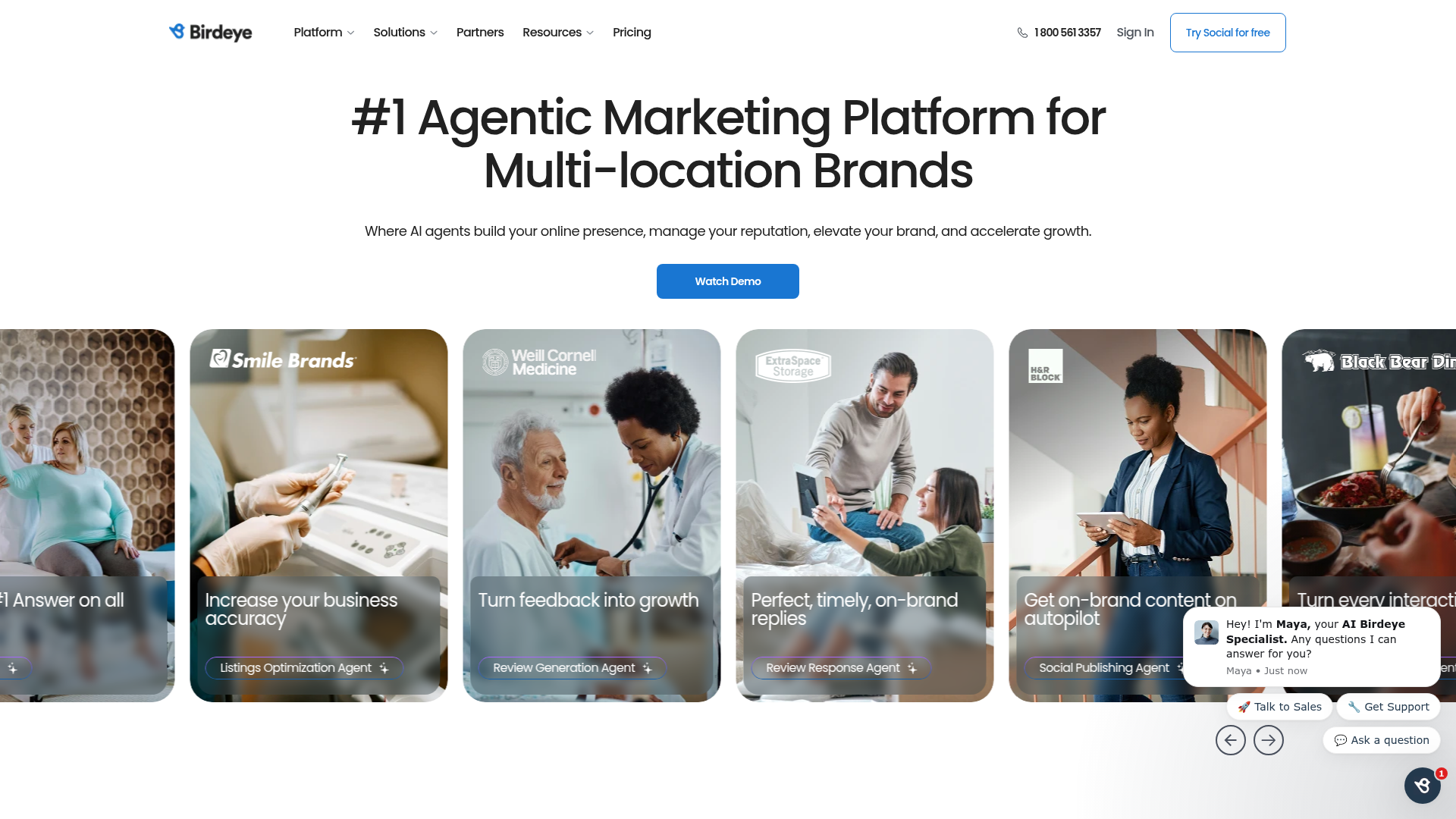
Birdeye started as a review management tool and expanded into listings, messaging, surveys, and local SEO. Reviews remain its strongest capability. Over 150,000 businesses use it, and the AI review response feature is the standout for 2026, turning local marketing automation from a buzzword into a daily time-saver.
It works particularly well for SMBs and multi-location businesses where online reviews directly drive revenue: healthcare, home services, automotive, and hospitality.
Best for: Businesses where review volume and rating directly impact revenue.
Key strengths
- AI-powered review response generation across Google, Yelp, Facebook, and 200+ sites
- Automated review request campaigns via text and email
- Listing management with direct directory integrations
- Webchat and messaging inbox for lead capture
- Surveys and customer experience tracking tied to location performance
Why choose Birdeye: If reviews are your primary growth lever, Birdeye's depth in review generation, response, and monitoring is hard to match. The AI response feature saves hours per week across multiple locations. The trade-off: Expensive for single-location businesses at $299/month starting. Listing management is solid but not as deep as dedicated listing tools like Yext. Some features (webchat, surveys) feel bolted on rather than purpose-built.
Pricing: From $299/month. Custom pricing for multi-location.
2. SOCi
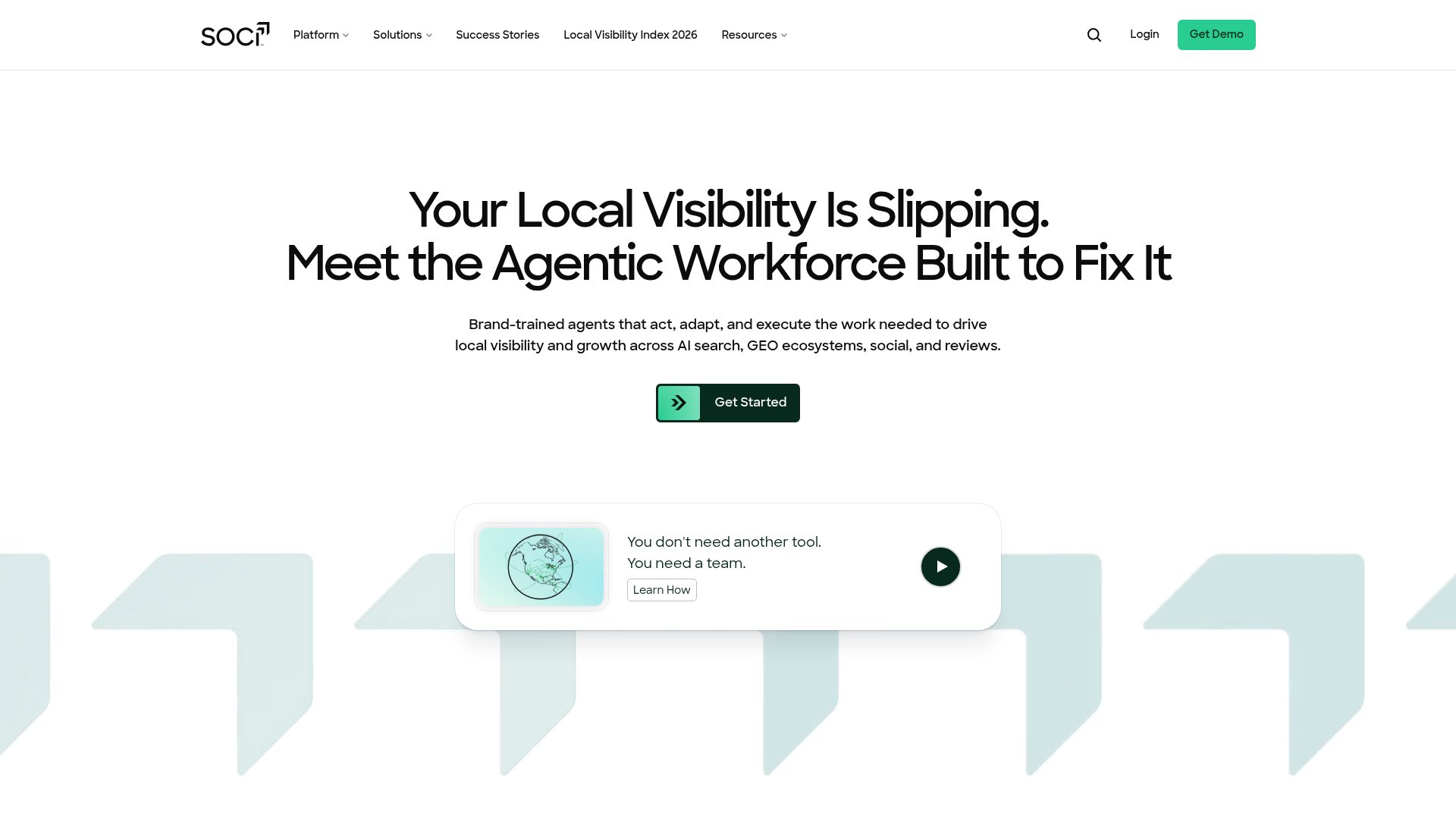
SOCi is the local marketing platform built for brands managing dozens or hundreds of locations. It's designed for centralized corporate control with local execution, and it's strong in franchise and multi-location retail. SOCi Genius AI handles automated review responses and social media marketing content generation across all locations from one dashboard.
The platform's value isn't any single feature. It's the integration across listings, reviews, social, and local pages under one roof with enterprise-grade controls.
Best for: Multi-location brands and franchises with 20+ locations needing centralized control.
Key strengths
- Centralized dashboard for listings, reviews, and social across all locations
- SOCi Genius AI for automated review responses and social content
- Local pages builder for location-specific landing pages
- Localized social media management with approval workflows
- Enterprise-grade reporting and benchmarking across locations
Why choose SOCi: When you're managing 50, 100, or 500 locations, the ability to maintain brand consistency while allowing local customization is the core challenge. SOCi handles that well. The trade-off: Overkill and overpriced for businesses with fewer than 20 locations. Implementation takes weeks, not days. No single feature is the best in its category; it's the breadth that justifies the price.
Pricing: Custom pricing. Expect enterprise-level investment.
3. BrightLocal
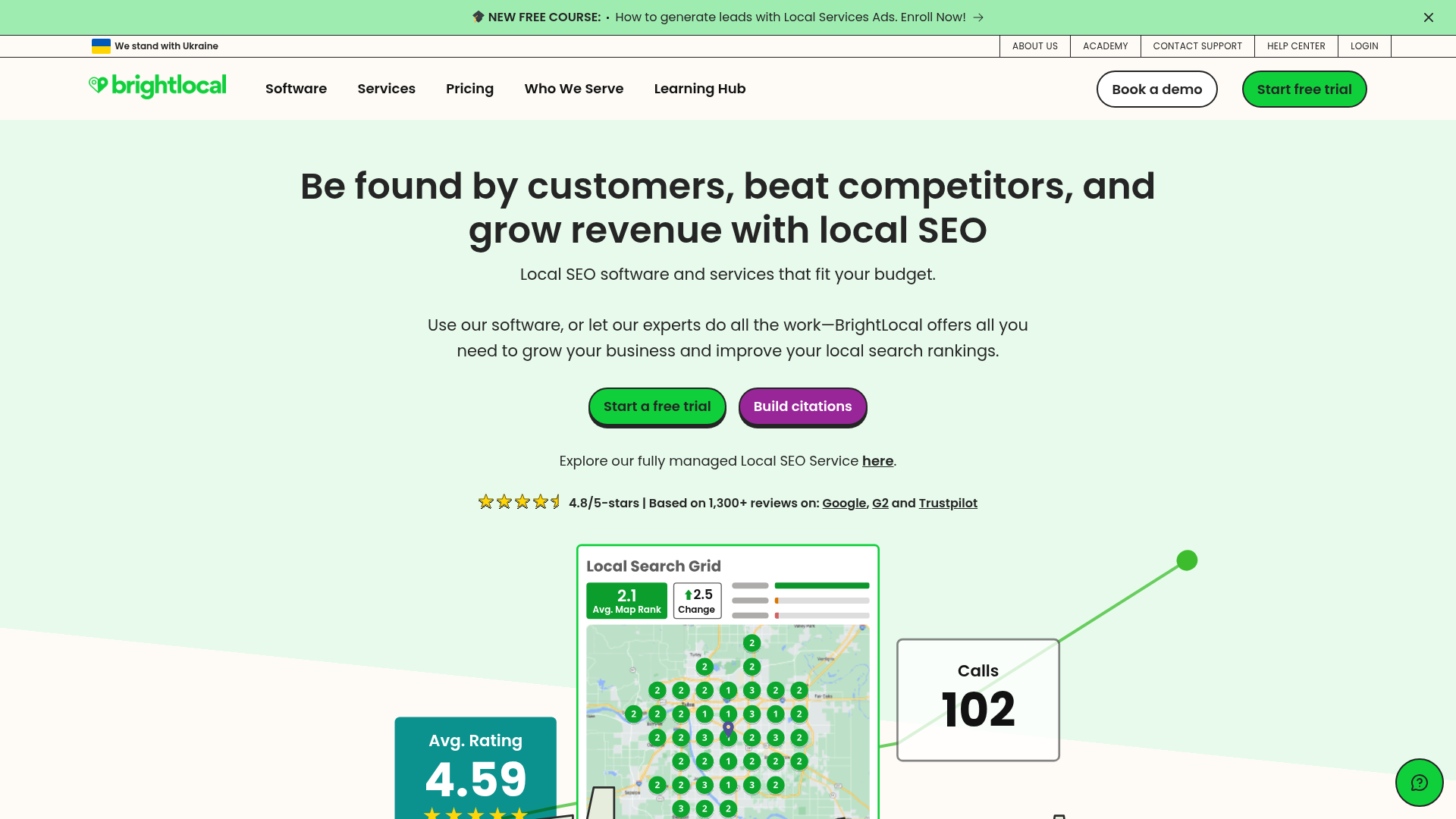
BrightLocal is the local SEO software for agencies that need to manage multiple clients without losing their margins. It combines local rank tracking, citation building, review monitoring, and audit tools with white-label reporting built for client presentations. The GeoGrid rank tracker provides local SEO analysis at a granular level, showing how rankings shift across a geographic area.
If your agency's value proposition centers on local search visibility, BrightLocal is likely already on your shortlist. For a broader comparison of local search tools, see our roundup of the best SEO tools.
Best for: Agencies managing local SEO for multiple clients who need white-label reporting.
Key strengths
- Local search grid rank tracking (GeoGrid) for granular visibility data
- Citation tracker and builder for listing management
- White-label reports and client-facing dashboards
- Google Business Profile audit and optimization tools
- Review monitoring and generation campaigns
Why choose BrightLocal: The combination of GeoGrid tracking, white-label reports, and per-client management makes it the most agency-friendly local SEO tool at this price point. The trade-off: It's an SEO tool, not a full local marketing platform. No ad management, no social media management, no messaging. If you need more than local SEO, you'll need additional tools in your stack.
Pricing: From $39/month. Agency plans with multi-client support available.
4. Yext
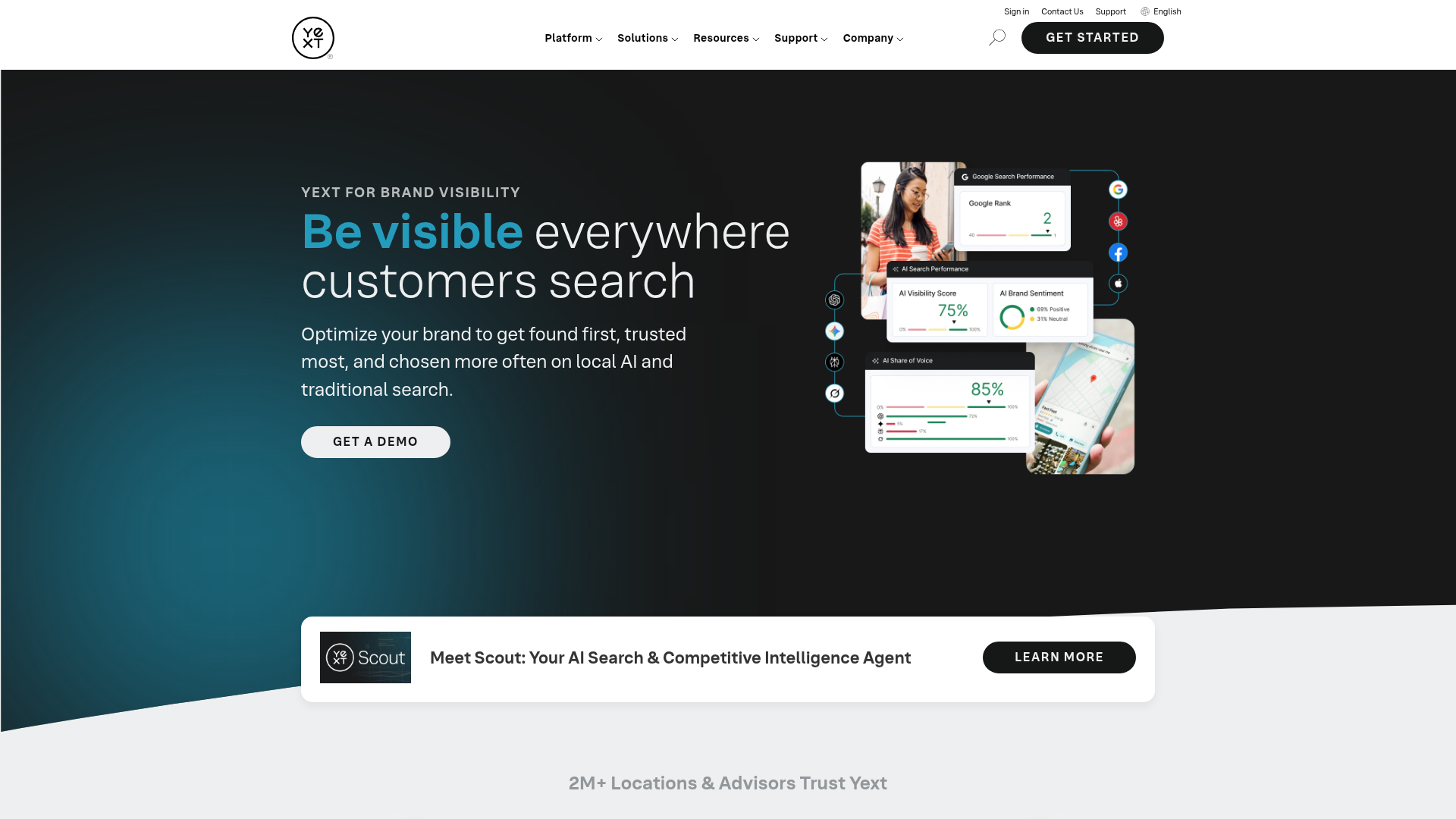
Yext is the listing accuracy specialist. Its direct publisher integrations push business information directly to Google, Apple, Facebook, Bing, and 200+ directories via API, not through data aggregators. That distinction matters: direct connections mean faster updates and fewer discrepancies. Yext has expanded into reviews, pages, and search experiences, but listing management remains its core strength.
For multi-location businesses where a wrong phone number or outdated address costs real revenue, Yext's precision is worth the premium.
Best for: Multi-location businesses that need guaranteed listing accuracy across 200+ directories.
Key strengths
- Direct API integrations with major publishers for real-time listing updates
- Duplicate listing suppression and monitoring
- Review management across major platforms
- Local pages for location-specific landing pages
- Knowledge Graph that structures business data for search engines
Why choose Yext: If listing accuracy is your top priority and you can't afford discrepancies, Yext's direct publisher connections are the most reliable in the category. The trade-off: Expensive relative to alternatives. Contract terms are rigid (annual commitments standard). If you stop paying, listing corrections can revert. The platform has expanded into many areas, which dilutes its core listing strength.
Pricing: From $199/month per location. Annual contracts standard.
5. SE Ranking
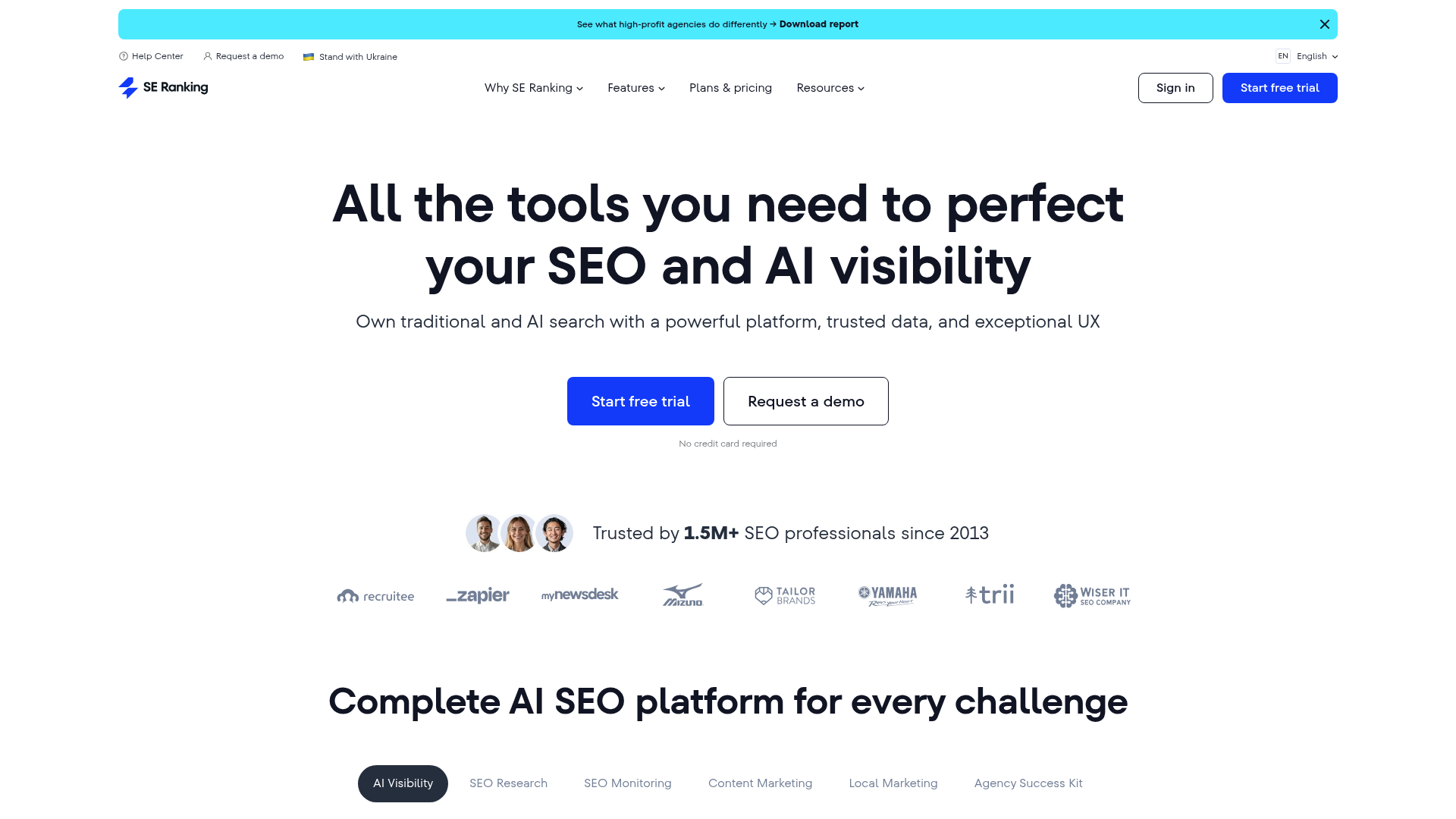
SE Ranking is a full-suite SEO platform with a strong local module. Unlike dedicated local marketing tools, it gives you local rank tracking, listing management, and GBP management alongside traditional SEO capabilities: keyword research, site auditing, and backlink analysis. For teams that want local SEO analysis as part of a broader SEO workflow, it avoids the need for separate tools. You can explore an interactive demo of SE Ranking to see the interface firsthand.
The local SEO software module includes map pack tracking and grid-based rank visualization, putting it on par with dedicated local tools for search visibility.
Best for: SEO teams that need local tracking integrated into a broader SEO workflow.
Key strengths
- Local map pack and grid rank tracking by location
- Google Business Profile management with post scheduling
- Listing management across major directories
- Review monitoring and response management
- Full SEO suite (keyword research, site audit, competitor analysis) included
Why choose SE Ranking: You get local SEO and traditional SEO in one platform at a competitive price. No need to pay for 2 separate tools. The trade-off: The local marketing features are a module within an SEO platform, not a dedicated local marketing tool. Review management and local ad capabilities are less developed than purpose-built alternatives like Birdeye or SOCi.
Pricing: From $65/month. Local marketing module available on higher-tier plans.
6. Thryv
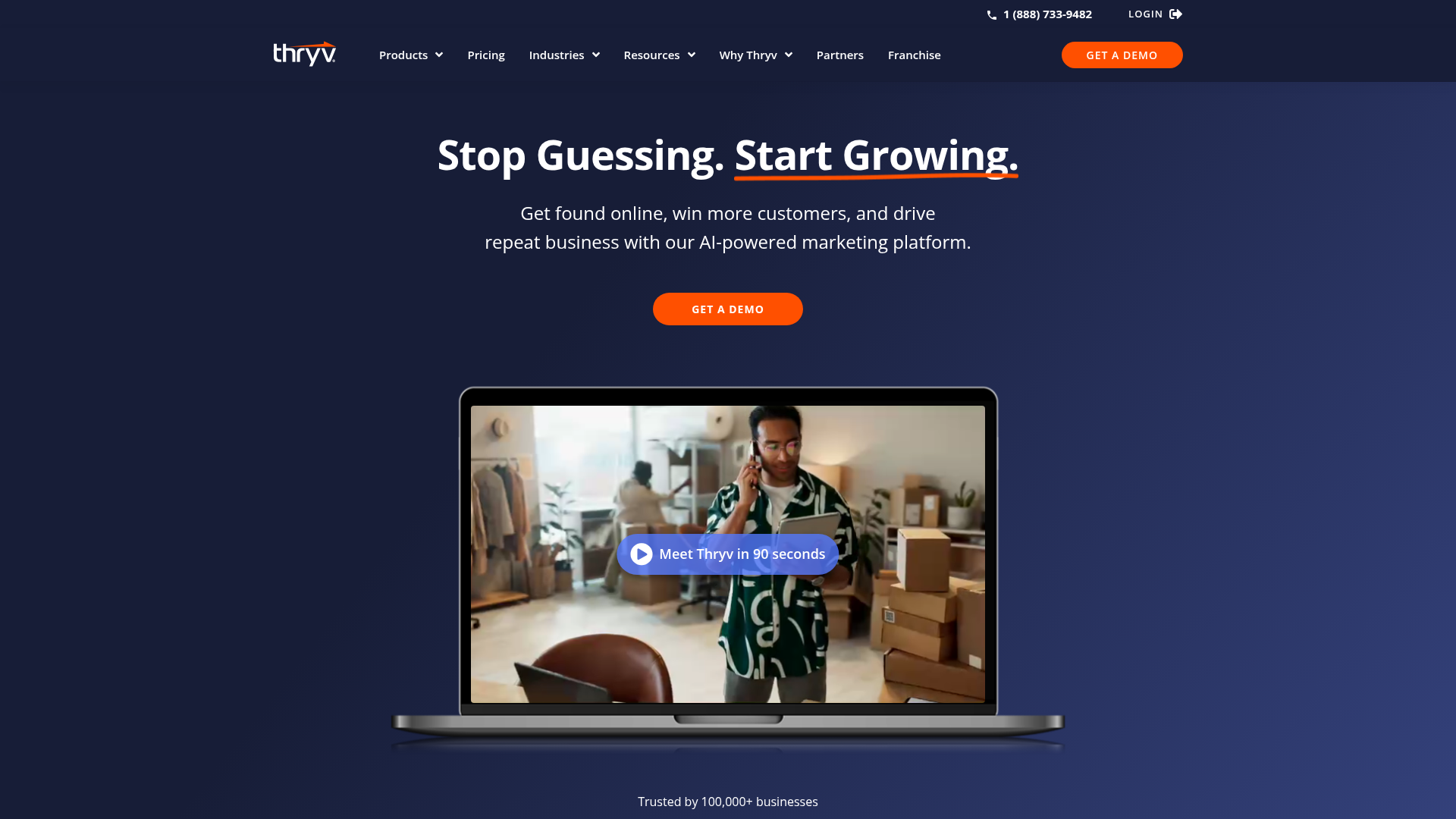
Thryv is the all-in-one business management platform for small business owners who don't have a marketing team. It bundles local marketing with CRM, scheduling, payments, invoicing, and communication. Think of it as the single dashboard for a home services company or a small medical practice that needs to manage everything from appointment booking to review collection. If you're evaluating the CRM component specifically, our guide to the best CRM software covers dedicated options.
The trade-off is depth for breadth. You get a lot of capabilities, but none of them are as deep as a dedicated tool.
Best for: Small business owners who need CRM, marketing, scheduling, and payments in one platform.
Key strengths
- CRM with contact management and automated follow-ups
- Online presence management (listings, social, reviews)
- Appointment scheduling and online booking
- Invoicing and payment processing
- Marketing automation with email and SMS campaigns
Why choose Thryv: If you're a small business owner wearing every hat, Thryv consolidates your operational and marketing tools into one login. That simplicity has real value. The trade-off: Marketing capabilities are broad but shallow compared to dedicated local marketing tools. Local SEO features won't satisfy an agency or a marketer who needs granular rank tracking. At $228/month starting, it's steep for what is essentially a small business operations platform with marketing features attached.
Pricing: From $228/month. Tiered plans based on feature access.
7. Surefire Local
Surefire Local is the lead-generation-focused local marketing platform. It combines listings, reviews, content marketing, local ads, and analytics with a specific focus on connecting marketing activity to actual leads and revenue. Popular in home services, legal, and healthcare verticals where proving ROI on marketing spend is a constant conversation.
The lead attribution capability is the standout: you can trace a customer inquiry back to the specific channel and campaign that generated it. For teams focused on measuring marketing performance, our list of the best marketing analytics software covers complementary tools.
Best for: Local service businesses (home services, legal, healthcare) that need to tie marketing spend to revenue.
Key strengths
- Lead attribution that ties marketing channels to actual customer inquiries
- Unified dashboard for listings, reviews, social, and ads
- Content marketing tools with local SEO optimization
- Industry-specific playbooks for home services, legal, healthcare
- ROI reporting that connects marketing activity to revenue
Why choose Surefire Local: If your primary question is "which marketing channel is actually generating customers," Surefire Local's attribution model answers it directly. The trade-off: Less flexible than modular alternatives. Pricing requires a sales conversation (no self-serve signup). The UI can feel dated compared to newer platforms. Limited agency or multi-client capabilities.
Pricing: Custom pricing. Contact sales for a quote.
8. Uberall
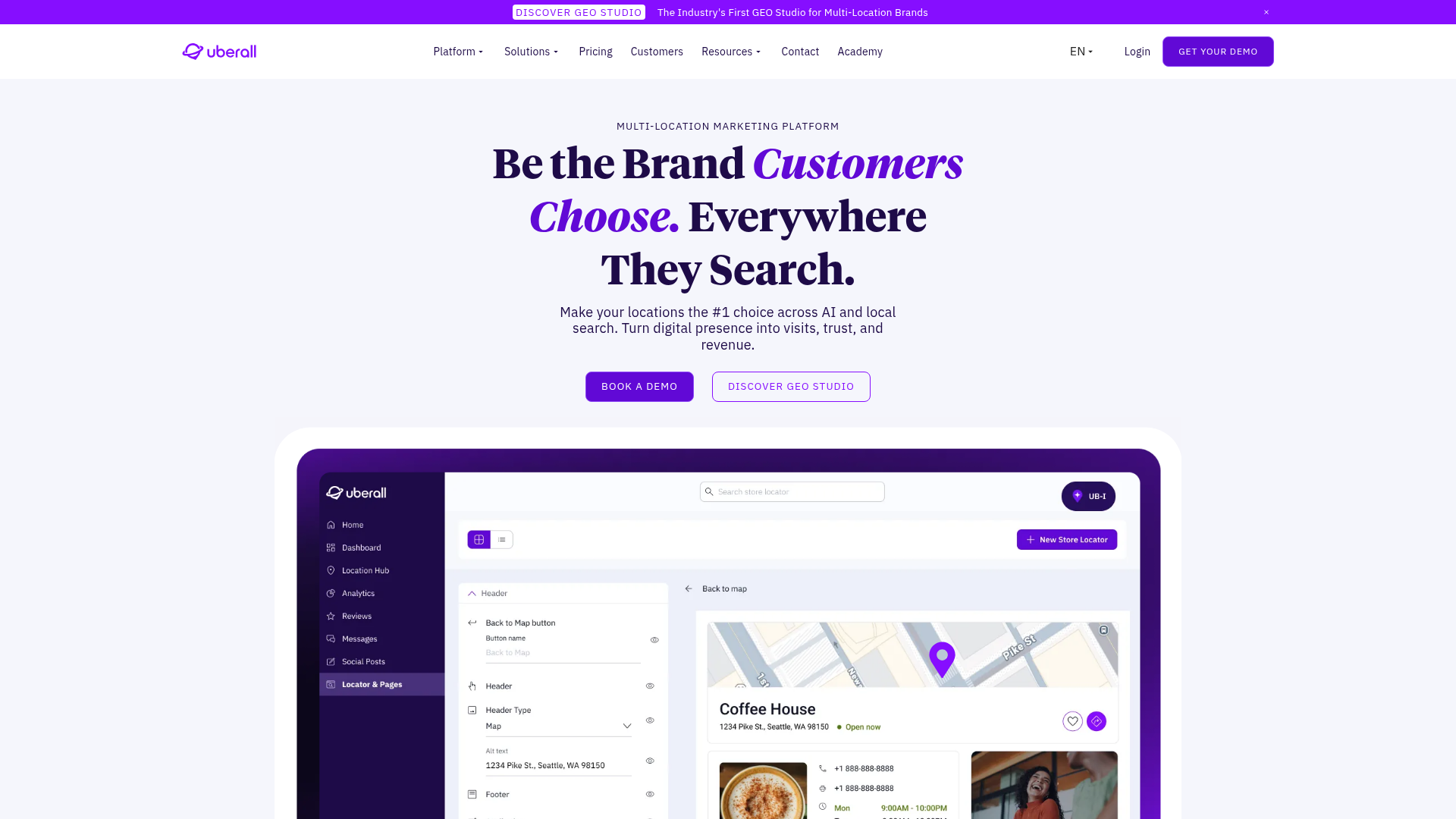
Uberall is the location marketing platform for brands focused on the "near me" consumer journey, from search to store visit. It covers listings, reviews, local social, and store locator pages with a specific focus on driving foot traffic to physical locations. If your success metric is store visits rather than phone calls or form fills, Uberall is built for that journey.
The platform connects online visibility data to offline store visit analytics, giving retail and restaurant brands a clearer picture of how digital presence drives physical traffic.
Best for: Retail and restaurant brands focused on driving foot traffic from "near me" searches.
Key strengths
- "Near me" brand experience optimization across search and maps
- Listing management with direct publisher connections
- Review management with AI-assisted responses
- Store locator and local landing pages
- Analytics connecting online visibility to offline store visits
Why choose Uberall: For brands where the goal is getting people through the door, Uberall's focus on the search-to-visit journey is more targeted than general-purpose local marketing platforms. The trade-off: Enterprise-focused, so pricing and implementation are heavy for smaller businesses. More focused on brand consistency and foot traffic than lead generation. If your primary metric is leads or calls (not store visits), other tools are a better fit.
Pricing: Custom pricing. Enterprise contracts.
9. Synup
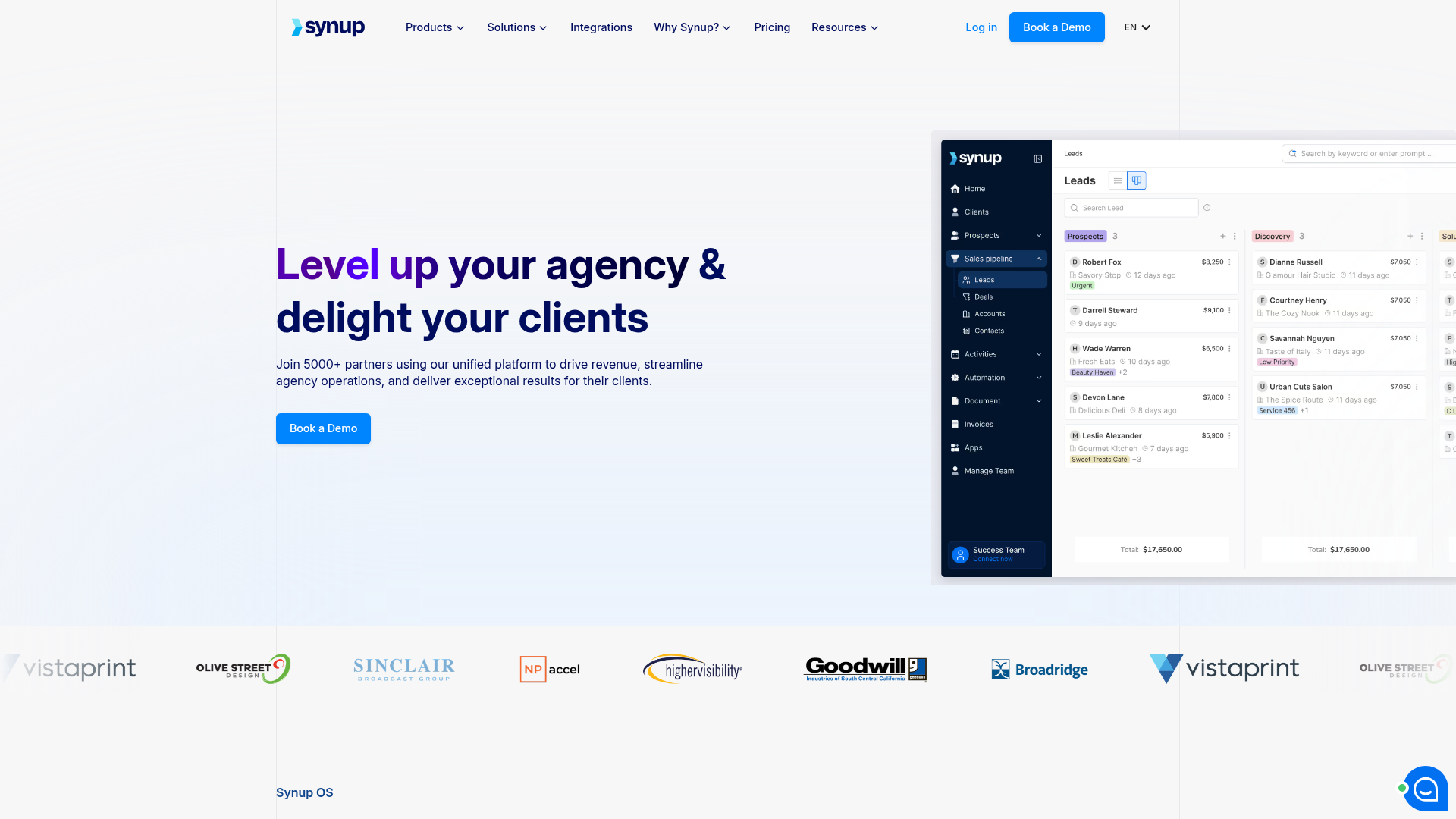
Synup is the budget-friendly listing and reputation management platform. It offers strong automation at a price point that won't strain a small business budget or an agency's per-client margins. Listing sync, review management, and local SEO tracking are all covered, with a focus on reducing manual work through automation.
For businesses that need the core local marketing capabilities without the enterprise price tag, Synup hits a good balance.
Best for: Budget-conscious businesses and agencies that need core listing and review management at a competitive price.
Key strengths
- Automated listing sync across 60+ directories
- Review monitoring and response workflows
- Local SEO grid rank tracking
- Social media management with scheduling
- White-label options for agencies
Why choose Synup: At $34.99/month per location, it's one of the most affordable options that still covers listings, reviews, and local rank tracking. The automation reduces manual work without requiring an enterprise budget. The trade-off: Less mature than larger competitors. Ad management capabilities are limited. Analytics aren't as deep as Birdeye or SOCi. The platform is growing fast, which means the feature set is evolving (good for roadmap, risky for stability).
Pricing: From $34.99/month per location.
10. Vendasta
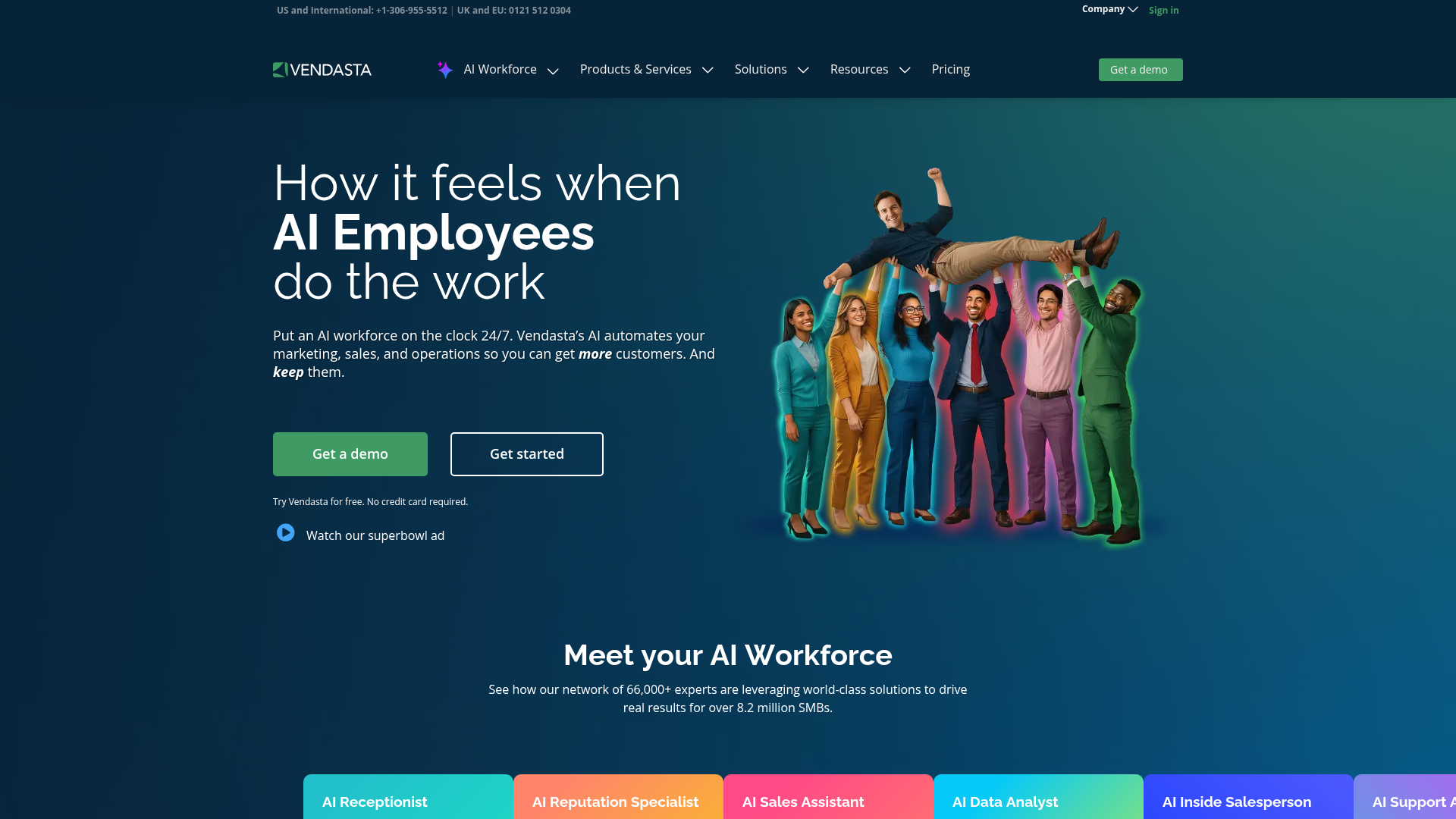
Vendasta is the white-label agency platform. It's built for agencies and media companies that resell local marketing services under their own brand. The platform includes a marketplace of local marketing products that agencies can rebrand and sell, plus CRM, billing, and fulfillment tools. It's not a tool for doing local marketing; it's a platform for running an agency that sells local marketing. You can explore the Vendasta demo to see how the white-label dashboard works.
If you're an agency owner evaluating local SEO software for agencies, Vendasta is the only option on this list built entirely around your business model.
Best for: Agencies and media companies that resell local marketing services under their own brand.
Key strengths
- Full white-label platform with customizable branding
- Marketplace of local marketing products and services
- Built-in CRM, sales pipeline, and billing for agency operations
- Reputation management and listing sync
- Fulfillment services for agencies that need execution support
Why choose Vendasta: No other platform on this list is as purpose-built for the agency reseller model. White-label everything, per-client billing, and a product marketplace make it a business platform, not just a marketing tool. The trade-off: It's a platform for running an agency, not a tool for doing local marketing yourself. The learning curve is steep. Pricing adds up quickly as you add products and clients. If you're a single business (not an agency), this is the wrong tool entirely.
Pricing: From $79/month. Usage-based pricing for marketplace products.
11. Moz Local
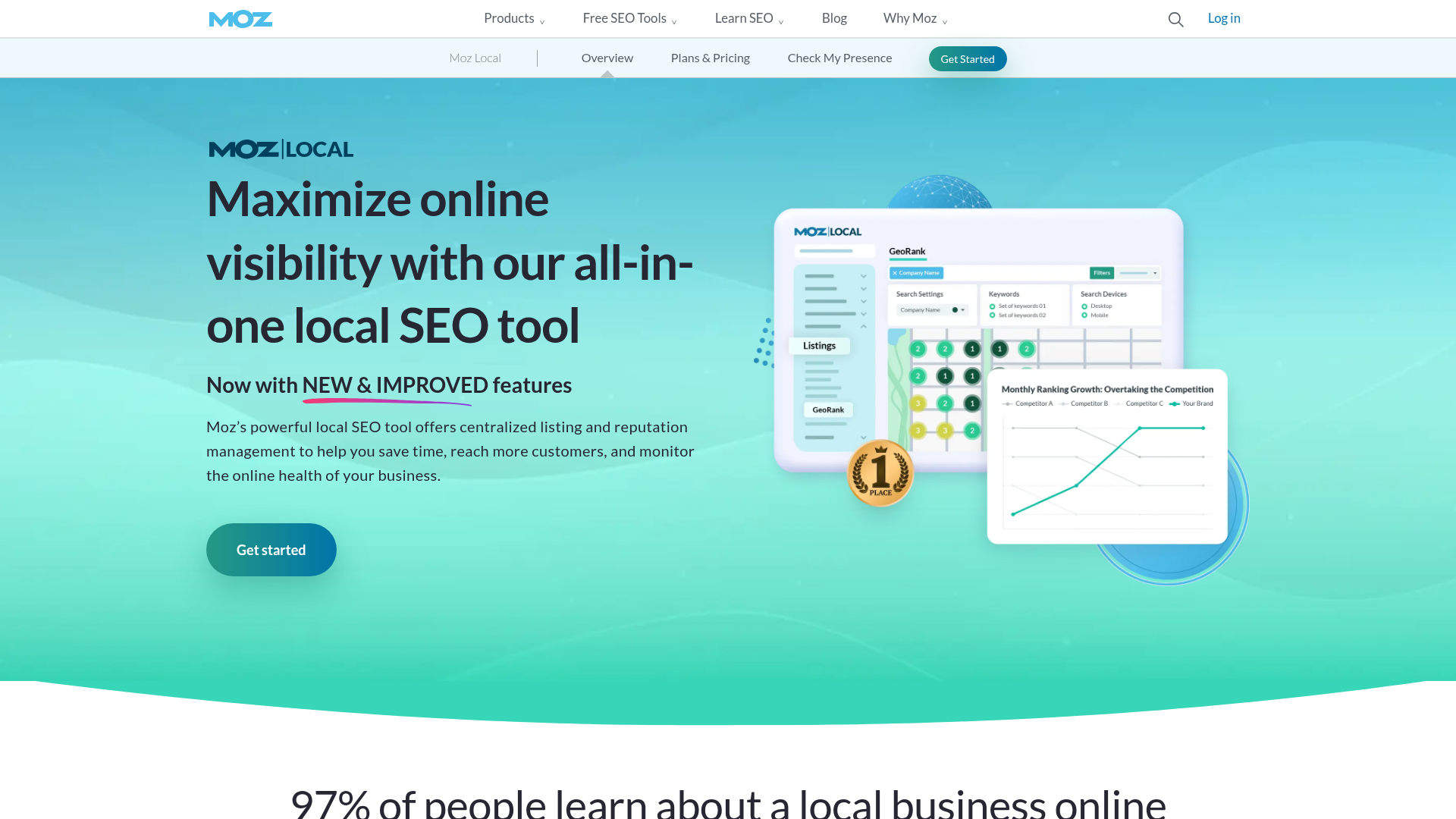
Moz Local is the simple, affordable listing management tool from the well-known SEO company. It focuses on distributing business information to directories, detecting duplicate listings, and monitoring local search presence. If you need local SEO software that handles listing fundamentals without the complexity of a full marketing platform, Moz Local keeps it focused.
At $14/month per location, it's the most affordable paid option on this list.
Best for: Single-location businesses or small teams that need affordable listing management and duplicate detection.
Key strengths
- Automated listing distribution to major directories and data aggregators
- Duplicate listing detection and removal
- Review monitoring across major platforms
- Google Business Profile sync and management
- Local search visibility reporting
Why choose Moz Local: If your primary need is getting your listings accurate and monitoring for duplicates, Moz Local does that at the lowest price point on this list. Simple, focused, no bloat. The trade-off: It's a listing tool, not a marketing platform. Feature depth is limited compared to Birdeye, SOCi, or Surefire Local. Moz has been through ownership changes, and the product roadmap has been uncertain. If you need review generation, ad management, or social tools, look elsewhere.
Pricing: From $14/month per location.
12. LocaliQ
LocaliQ is the managed local advertising platform. Unlike most tools on this list that focus on organic local presence, LocaliQ focuses on running and optimizing local paid campaigns across Google, Facebook, and other channels. It's a managed service with a technology layer, not a pure self-serve software product. As a Google Premier Partner, it has access to advanced ad features and support.
For businesses without in-house marketing expertise who want someone else to run their local ads, LocaliQ fills that gap.
Best for: Businesses without in-house marketing teams that want managed local ad campaigns.
Key strengths
- Google Premier Partner with access to advanced ad features
- Cross-channel local ad management (search, social, display)
- Lead management dashboard with call tracking
- Marketing intelligence with competitive benchmarking
- Managed service option for businesses without in-house marketing
Why choose LocaliQ: If you don't have the expertise or time to manage local ad campaigns yourself, LocaliQ's managed service model handles execution for you. The competitive benchmarking data is a useful bonus. The trade-off: More of a managed service than a self-serve software tool. Pricing is opaque. Contracts can be rigid. You're dependent on their team for execution. Not a fit for agencies or teams that want hands-on control over campaigns.
Pricing: Custom pricing. Managed service model.
Key considerations when choosing local marketing software
Match the tool to your scale
Single location: basics only, don't overpay. Multi-location: centralized control, location dashboards, approval workflows. Agency: white-label, per-client pricing, reporting efficiency.
Evaluate listing integrations, not just listing count
There's a difference between data aggregator integrations (indirect, slower) and direct API connections to publishers. Direct integrations are faster and more reliable. Ask: "How does this tool actually push my data to directories?"
Check review management depth
Basic monitoring is table stakes. Look for AI-assisted responses, review generation campaigns, and sentiment analysis. For multi-location, look for response templates with location-level customization.
Assess local SEO tracking granularity
Grid-based local rank tracking (showing rankings across a geographic area, not just one point) is the standard for 2026. Tools without it are a generation behind. BrightLocal's GeoGrid and SE Ranking's map tracking are the benchmarks.
Understand the pricing model
Per-location pricing adds up fast. Some tools charge per feature module. Others bundle everything. Model the cost at your actual scale (number of locations × per-location price × 12 months) before committing.
Test integration with your existing stack
CRM integration (Salesforce, HubSpot), Google Analytics, and ad platform connections matter. A local marketing software tool that creates a data silo defeats the purpose. Check integration documentation before signing up for a trial. Many of the tools on this list also pair well with content marketing tools and social media analytics tools for a complete local marketing stack.
Conclusion
The right local marketing software depends on your scale, your primary growth lever (reviews vs. listings vs. ads vs. SEO), and how much you want to manage yourself vs. outsource. Birdeye for review-driven businesses. SOCi for multi-location enterprises. BrightLocal or Vendasta for agencies. Thryv or Surefire Local for SMBs that need everything in one place. Yext or Moz Local for listing accuracy.
Most platforms offer free trials or demos. Test 2-3 before committing to an annual contract. Pay attention to how the tool handles your specific workflow, not just the feature list.
If you're evaluating local marketing software and want to see how interactive product demos can improve your own conversion rates, start with Guideflow.
FAQs about local marketing software
Local marketing software is a platform for managing local visibility, reputation, and advertising in a specific geographic area. It serves brick-and-mortar stores, service-area businesses (plumbers, lawyers, dentists), franchises with 10-500+ locations, and agencies managing local clients. Google Business Profile is the free starting point, and paid local marketing tools add automation, scale, and reporting on top of it.
Accurate and consistent listings across directories signal trust to Google. Review velocity and average rating influence local pack rankings. GBP optimization (posts, photos, Q&A, attributes) improves visibility. Local SEO software automates these tasks, but doesn't guarantee rankings. Results depend on competition, category, and market. The software handles execution; strategy still matters.
It depends on your time and budget. Google Business Profile is free and covers the basics. If you're spending more than 3-4 hours per week on listings, reviews, and local visibility manually, a paid tool at $14-50/month (Moz Local, Synup) likely pays for itself in time saved. If you're under that threshold, start with free tools and upgrade when the manual work becomes a bottleneck.
Rank by impact: (1) listing management with direct publisher integrations, (2) review management with response automation, (3) local rank tracking with grid/map view, (4) GBP management from one dashboard, (5) reporting that connects marketing activity to leads or revenue. Everything else (social scheduling, ad management, CRM) is secondary and depends on your specific workflow.
Entry-level (Moz Local, Synup): $14-35/month per location. Mid-tier (BrightLocal, SE Ranking): $39-100/month. Full platforms (Birdeye, Yext, Surefire Local): $199-300+/month. Enterprise (SOCi, Uberall): custom pricing, typically $500+/month. Per-location pricing means costs scale linearly with your location count. Annual contracts are common at the enterprise tier.
For single-location businesses with marketing knowledge, often yes for core tasks (listings, reviews, basic SEO). For multi-location brands, the software handles execution, but you still need someone managing the platform and setting strategy. For businesses with no marketing expertise, a managed service (like LocaliQ) or an agency may be a better starting point. The software replaces manual labor, not strategic thinking.
Local SEO software focuses on search visibility: rank tracking, listing management, citation building, GBP optimization. Local marketing software is broader, including local SEO capabilities plus review management, local advertising, social media, lead generation, and sometimes CRM. BrightLocal and SE Ranking lean toward the local SEO side. Birdeye, SOCi, and Thryv are full local marketing platforms.
Track 5 specific metrics: (1) listing accuracy score before and after implementation, (2) review volume and average rating over time, (3) local pack ranking changes using grid tracking, (4) leads or calls attributed to local channels, (5) time saved on manual tasks (hours per week × hourly cost). The strongest ROI signal is lead attribution: can you connect a new customer to a specific local marketing activity? If the tool can't show that connection, it's a reporting gap you need to address.