Google processes over 8.5 billion searches daily, and the difference between page one and page two is often the tools you use to get there. Most teams either overpay for features they don't use or cobble together free tools that don't talk to each other.
This guide covers 15 SEO tools worth considering in 2026, from all-in-one platforms to specialized crawlers, with honest takes on pricing, use cases, and which combinations actually work together.
What's inside
This guide covers the best SEO tools for 2026, from all-in-one platforms like Semrush and Ahrefs to free options like Google Search Console. We selected tools based on real-world use cases, pricing transparency, G2 ratings, and how well they fit different team sizes. You'll find keyword research tools, technical audit crawlers, content optimization platforms, and rank trackers organized by what they actually do best.
TL;DR
- Semrush and Ahrefs lead as all-in-one SEO platforms for teams that want keyword research, audits, and competitor analysis in one place
- Google Search Console remains essential and free for every website, providing first-party data no paid tool can replicate
- Screaming Frog is the standard for technical SEO audits, catching broken links and missing tags that hurt rankings
- Surfer and Clearscope help content teams optimize pages for search intent using AI-powered recommendations
- Most teams combine a core platform with specialized tools rather than relying on a single solution
What is an SEO tool
Top SEO tools in 2026 include comprehensive platforms like Semrush and Ahrefs for research, Google Search Console and Analytics for performance tracking, and specialized tools like Surfer for content optimization. SEO tools help increase organic search rankings through keyword research, technical audits, and competitor analysis.
SEO tools are software platforms that help websites rank higher in search engines, part of a market projected to reach $108 billion in 2026. They range from free browser extensions to enterprise platforms costing hundreds per month.
- Keyword research: Finding search terms your audience uses, along with volume and competition data
- Technical audits: Identifying site errors like broken links, slow pages, and missing meta tags
- Backlink analysis: Tracking links from other websites to yours and analyzing competitor link profiles
- Rank tracking: Monitoring where your pages appear in search results over time
Types of SEO tools
Different SEO challenges call for different tools. Here's how the main categories break down.
Keyword research tools
Keyword research tools identify search terms with volume and competition data. They help you find long-tail keywords and question-based queries that match what your audience actually types into Google. Ahrefs and AnswerThePublic are common choices here.
Rank tracking tools
Rank trackers monitor your keyword positions across Google, Bing, and increasingly AI search platforms. Gartner predicts traditional search volume will drop 25% by 2026 due to AI chatbots and virtual agents. Tracking matters because you can't improve what you don't measure, and rankings shift constantly.
Technical SEO and site audit tools
Site crawlers scan your website to find broken links, missing H1 tags, duplicate content, and redirect chains. Screaming Frog is the industry standard, catching problems that silently hurt your rankings.
Backlink analysis tools
Backlink tools analyze your link profile and reveal where competitors get their links. Building domain authority depends on understanding which sites link to you and why.
Content optimization tools
AI-powered content tools help match your pages to user intent. They score your content against top-ranking pages and suggest improvements for on-page optimization.
Competitor research tools
Competitor research tools reveal competitor keywords, rankings, and content strategies. They're useful for finding gaps in your own content and understanding what's working in your market.
Local SEO tools
Local SEO tools help businesses appear in local search results and Google Maps. They handle Google Business Profile optimization and local rank tracking.
All-in-one SEO platforms
Platforms like Semrush and Ahrefs combine keyword research, audits, tracking, and backlink analysis into a single subscription. They work best for teams who want everything in one place.
How to choose the right SEO tool
Picking the right tool depends on your situation more than feature lists.
- Budget: Free tools like Google Search Console cover basics, while premium platforms run $100-400+ monthly
- Team size: Solo marketers benefit from simpler interfaces; agencies benefit from multi-user access and client reporting
- Primary use case: Match the tool to your main activity, whether that's content, technical audits, or link building
- Integration needs: Check if the tool connects with your CRM, analytics, and marketing automation software
- Learning curve: Some tools take weeks to master; others work out of the box
Best SEO tools comparison table
| # | Product | Intent | Key use case | Pricing | G2 rating |
|---|---|---|---|---|---|
| 1 | Semrush | All-in-one | Keyword tracking and competitor research | From $139/mo | 4.5/5 |
| 2 | Ahrefs | All-in-one | Backlink analysis and site audits | From $129/mo | 4.5/5 |
| 3 | Moz Pro | All-in-one | Domain authority and link research | From $99/mo | 4.3/5 |
| 4 | seoClarity | Enterprise | AI-powered SEO recommendations | Custom pricing | 4.5/5 |
| 5 | Surfer | Content | AI content optimization | From $89/mo | 4.8/5 |
| 6 | Mangools | Beginner | Affordable keyword research | From $29/mo | 4.6/5 |
| 7 | SEOptimer | Audit | Quick website SEO reports | From $19/mo | 4.5/5 |
| 8 | Clearscope | Content | Content research and grading | From $189/mo | 4.9/5 |
| 9 | SE Ranking | All-in-one | Mid-market keyword tracking | From $65/mo | 4.8/5 |
| 10 | Screaming Frog | Technical | Website crawling and audits | Free / £199/yr | 4.7/5 |
| 11 | BuzzSumo | Content | Content ideation and social research | From $199/mo | 4.5/5 |
| 12 | AnswerThePublic | Keyword | Question-based keyword research | From $11/mo | 4.4/5 |
| 13 | SpyFu | Competitor | PPC and SEO competitor intelligence | From $39/mo | 4.5/5 |
| 14 | Ubersuggest | Keyword | Budget-friendly keyword research | From $12/mo | 4.2/5 |
| 15 | Yoast SEO | On-page | WordPress content optimization | Free / $99/yr | 4.6/5 |
1. Semrush
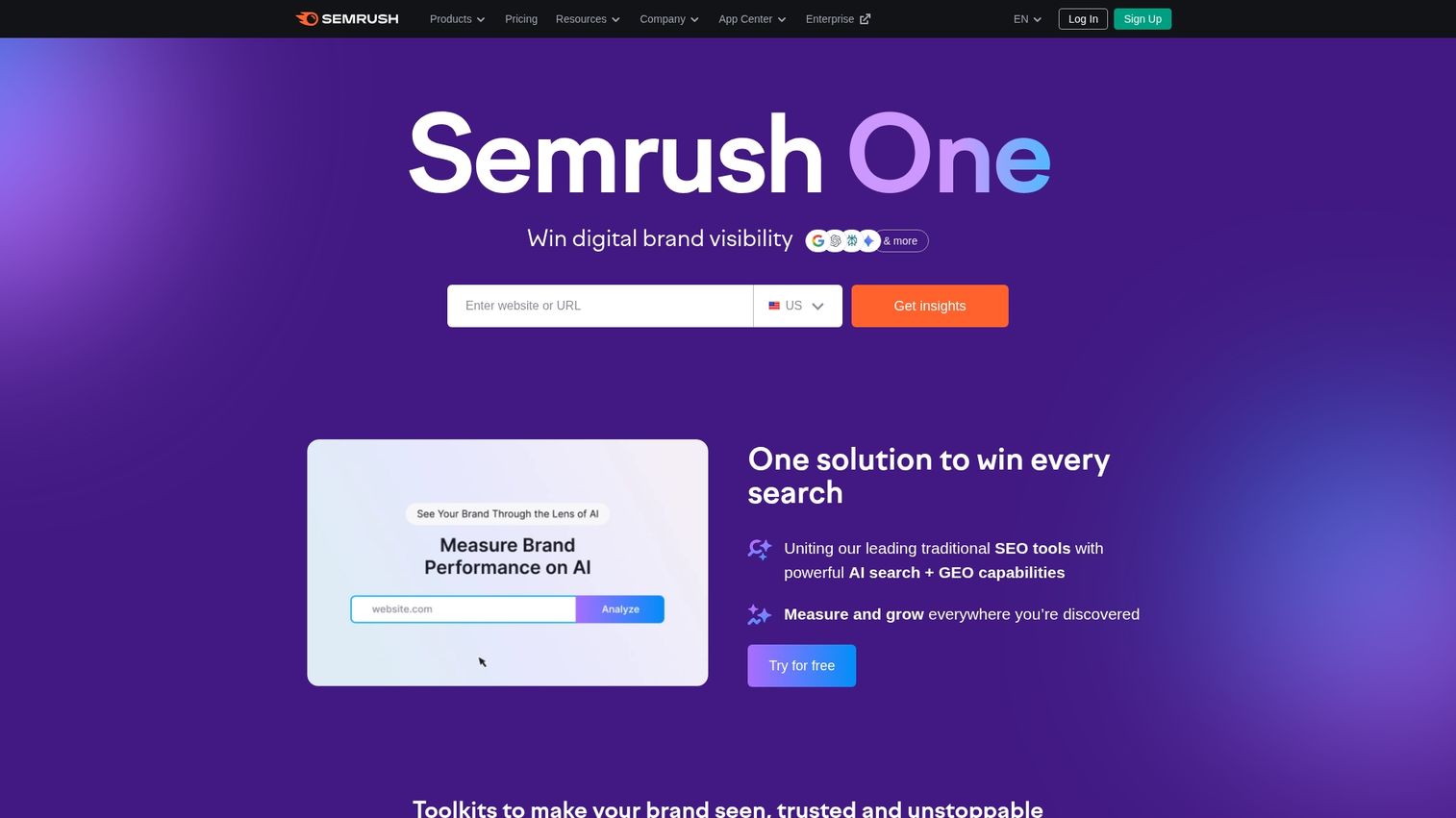
Semrush is the most comprehensive all-in-one SEO platform for teams that want keyword tracking, site audits, and competitor research in a single dashboard. It tracks rankings across Google, Bing, and AI search platforms, which matters as search behavior fragments across different interfaces. SE Ranking research found AI traffic nearly doubled in 2025, reinforcing the need for cross-platform tracking.
The platform includes over 26 billion keywords in its databaseThe platform includes over 26 billion keywords in its database accessible through tools like the Keyword Magic Tool. You can run technical audits, track backlinks, analyze competitors, and optimize content without switching tools.
Key strengths
- Keyword database with 26+ billion terms and daily rank updates
- Position tracking across traditional and AI search platforms
- Competitor gap analysis showing keywords rivals rank for that you don't
- Content optimization tools with AI writing assistance
- Site audit crawler that catches technical issues automatically
Why pick Semrush? It works well for marketing teams running SEO alongside paid search, since it handles both organic and PPC research. The learning curve is moderate, but the depth justifies it for teams serious about search.
Pricing: Plans start at $139/month for Pro, $249/month for Guru, and $499/month for Business.
2. Ahrefs
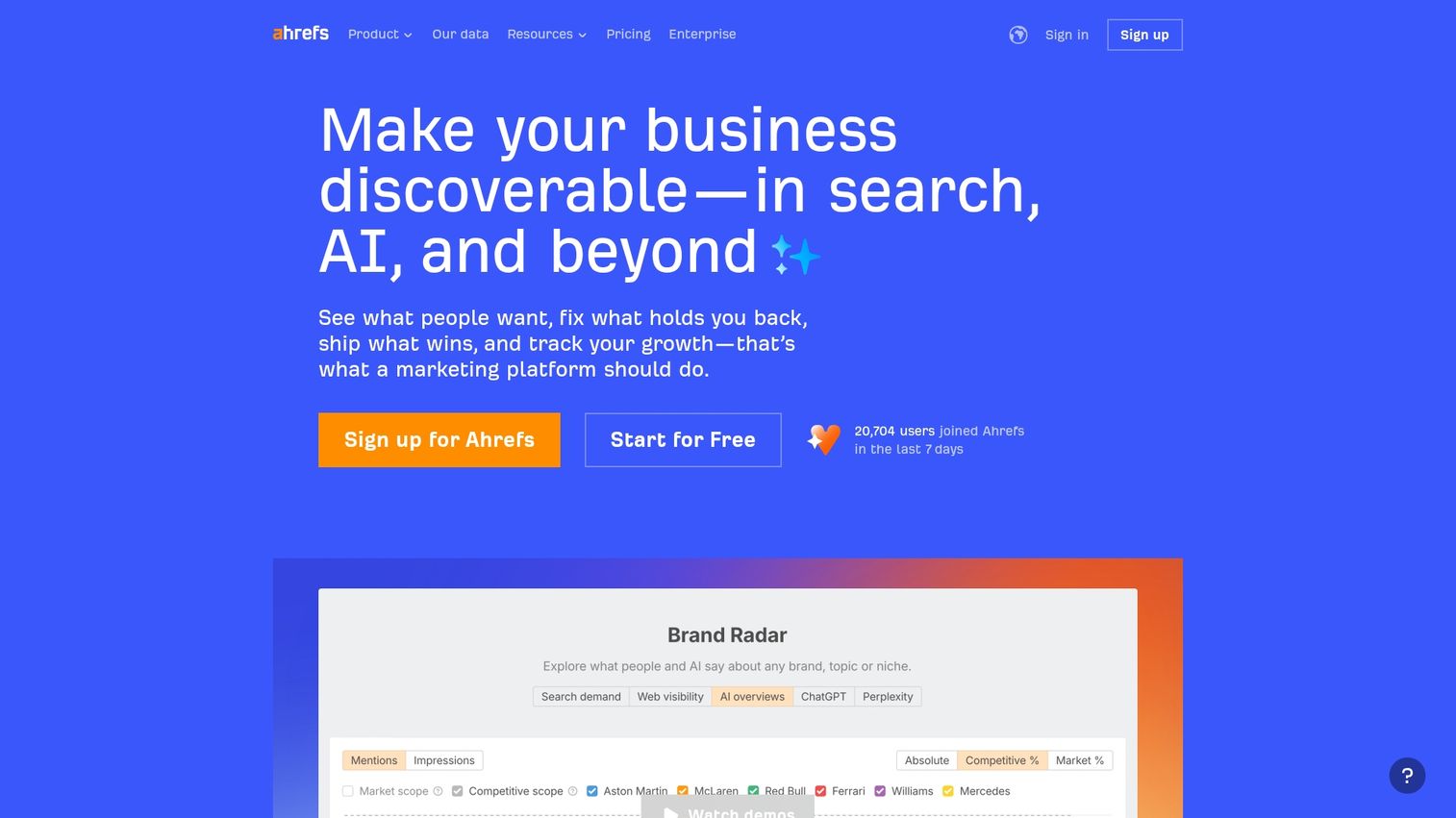
Ahrefs built its reputation on backlink analysis and maintains one of the largest link indexes in the industry. The Site Explorer tool shows exactly which pages link to any domain, how those links were acquired, and which anchor text they use.
Beyond backlinks, Ahrefs offers keyword researchBeyond backlinks, Ahrefs offers keyword research, content exploration, and site audits. The Content Explorer feature helps you find top-performing content in any niche by analyzing social shares and backlink counts.
Key strengths
- Backlink index updated every 15-30 minutes with historical data
- Site audit tool that crawls your site and prioritizes issues by impact
- Keyword difficulty scores based on actual backlink requirements
- Content gap analysis comparing your site against competitors
- Rank tracker with SERP feature monitoring
Why pick Ahrefs? Teams focused on link building and competitive analysis often prefer Ahrefs for its backlink depth. The interface is cleaner than some alternatives, though it takes time to learn the full feature set.
Pricing: Lite starts at $129/month, Standard at $249/month, Advanced at $449/month, and Enterprise at $14,990/year.
3. Moz Pro
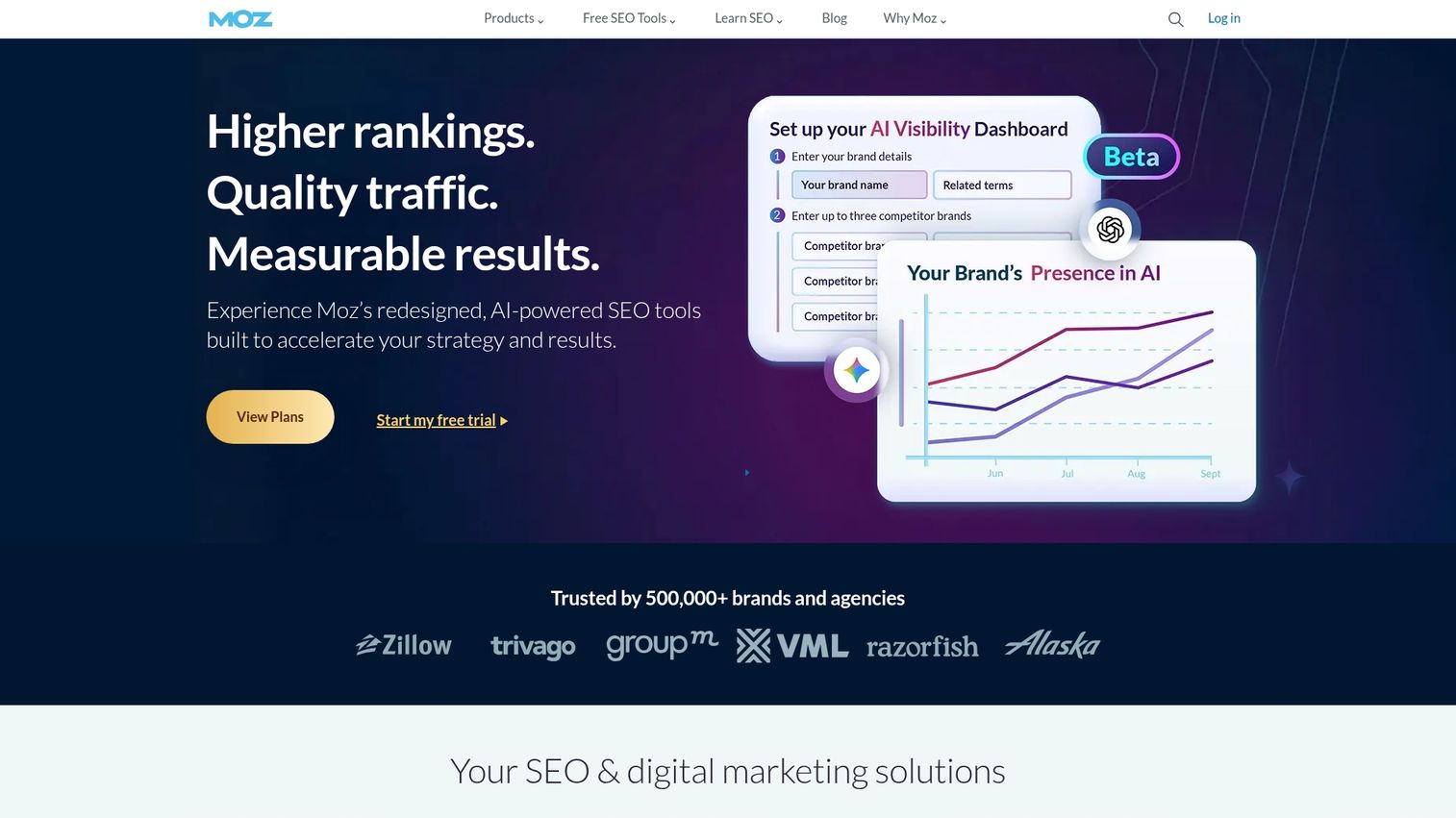
Moz created the Domain Authority metric that became an industry standard for measuring site strength. Moz Pro combines keyword research, link analysis, and site crawling with a focus on making SEO accessible to teams without deep technical backgrounds.
The platform's Link Explorer shows your backlink profile alongside spam scores, helping you identify potentially harmful links. Moz also offers a browser extension that displays SEO metrics directly in search results similar to backlink analysis in Ahrefs. Moz also offers a browser extension that displays SEO metrics directly in search results.
Key strengths
- Domain Authority and Page Authority metrics widely recognized in the industry
- Link Explorer with spam score analysis
- Keyword Explorer with priority scores combining volume, difficulty, and opportunity
- On-page optimization recommendations
- SERP analysis showing ranking factors for any keyword
Why pick Moz Pro? It's a solid choice for teams new to SEO who want reliable data without overwhelming complexity. The community resources and educational content also help teams build SEO knowledge.
Pricing: Standard starts at $99/month, Medium at $179/month, Large at $299/month, and Premium at $599/month.
4. seoClarity
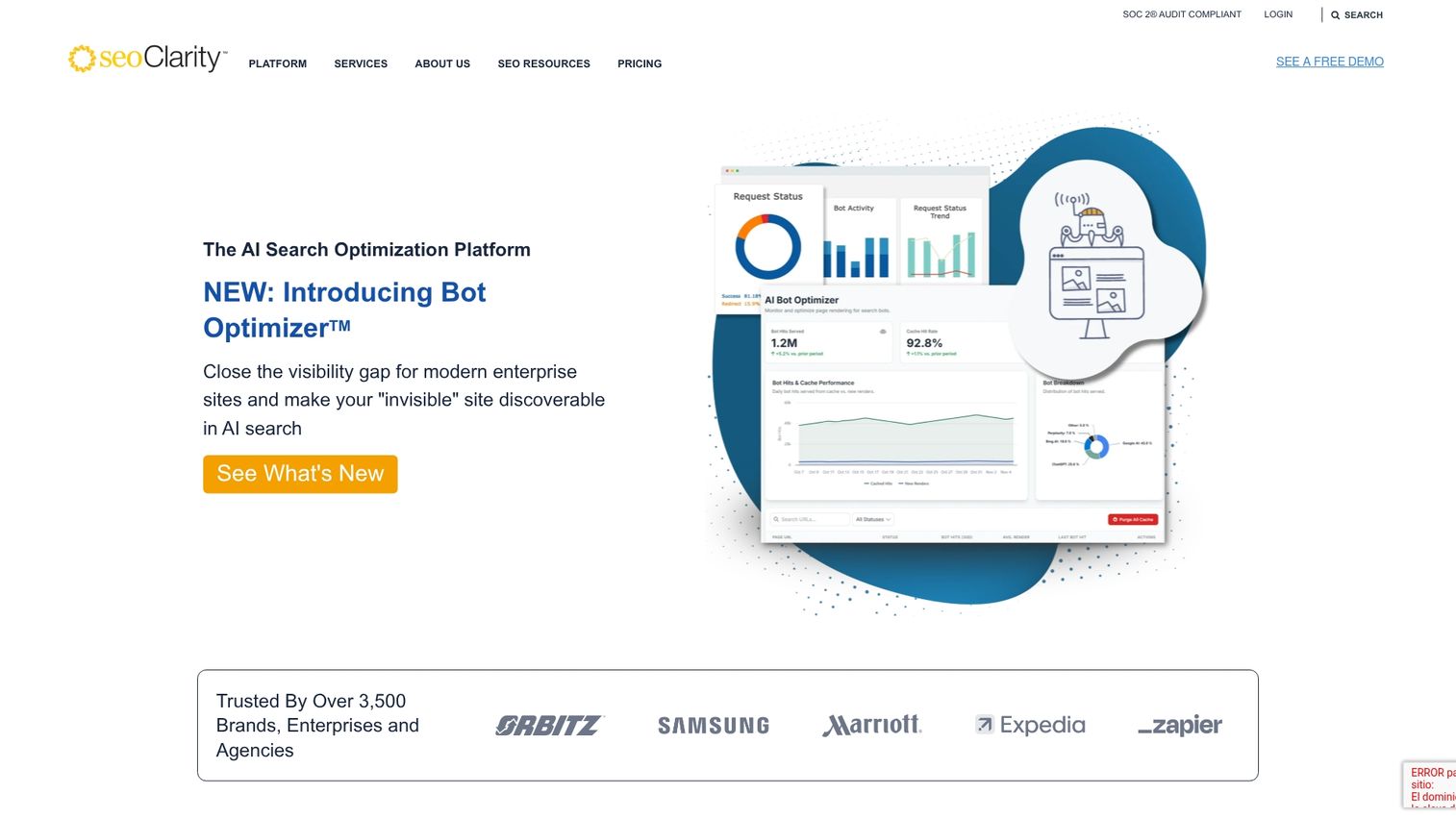
seoClarity targets enterprise teams with AI-powered recommendations and large-scale data processing. The platform analyzes billions of data points to surface actionable insights rather than just raw metrics.
The AI assistant, Sia, answers SEO questions in natural language and generates recommendations based on your specific site data. This helps larger teams move faster without waiting for analyst interpretation.
Key strengths
- AI assistant that answers SEO questions using your site data
- Enterprise-scale crawling for sites with millions of pages
- Content optimization with AI-generated briefs
- Rank tracking across 180+ countries
- Custom reporting and API access for integration
Why pick seoClarity? Large organizations with complex sites and dedicated SEO teams benefit most. The platform handles scale that would overwhelm smaller tools, though it's overkill for most small businesses.
Pricing: Custom pricing based on site size and feature requirements.
5. Surfer
Surfer focuses specifically on content optimization, analyzing top-ranking pages and telling you exactly what your content needs to compete. The Content Editor scores your writing in real-time against SERP competitors.
The platform uses AI to generate content briefs, suggest headings, and recommend word counts based on what's actually ranking. This takes guesswork out of content creation and helps writers hit SEO targets without sacrificing readability.
Key strengths
- Real-time content scoring against top-ranking competitors
- AI-generated content briefs with suggested headings and topics
- SERP analyzer showing what ranking pages have in common
- Keyword clustering to organize content strategy
- Integration with Google Docs and WordPress
Why pick Surfer? Content teams and agencies producing high volumes of SEO content see the clearest ROI. It pairs well with an all-in-one platform like Semrush or Ahrefs for a complete workflow.
Pricing: Essential starts at $89/month, Scale at $129/month, Scale AI at $219/month, and Enterprise is custom.
6. Mangools
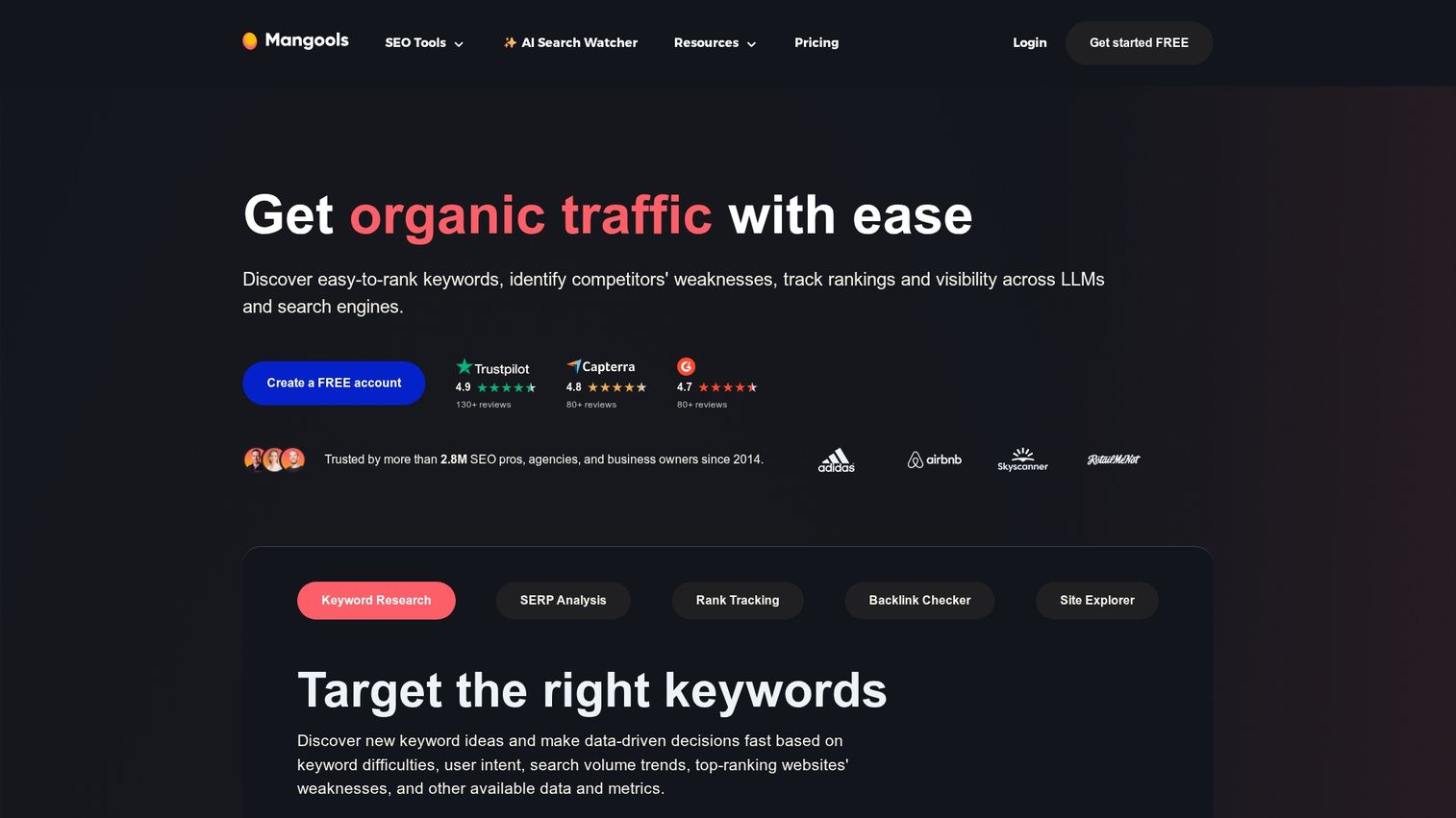
Mangools packages five SEO tools into an affordable suite designed for beginners and small teams. KWFinder handles keyword research, SERPChecker analyzes search results, and the other tools cover backlinks, rank tracking, and site profiling.
The interface prioritizes simplicity over feature depth. You won't find the advanced capabilities of Semrush or Ahrefs, but you also won't spend weeks learning the platform.
Key strengths
- KWFinder with keyword difficulty scores and search trends
- SERPChecker showing ranking factors for any search result
- LinkMiner for backlink analysis
- SERPWatcher for daily rank tracking
- SiteProfiler for quick competitor overviews
Why pick Mangools? It's the best entry point for teams with limited budgets who want real SEO data without enterprise pricing. The tools cover fundamentals well, even if they lack depth for advanced users.
Pricing: Entry starts at $29/month, Basic at $49/month, Premium at $69/month, and Agency at $129/month.
7. SEOptimer
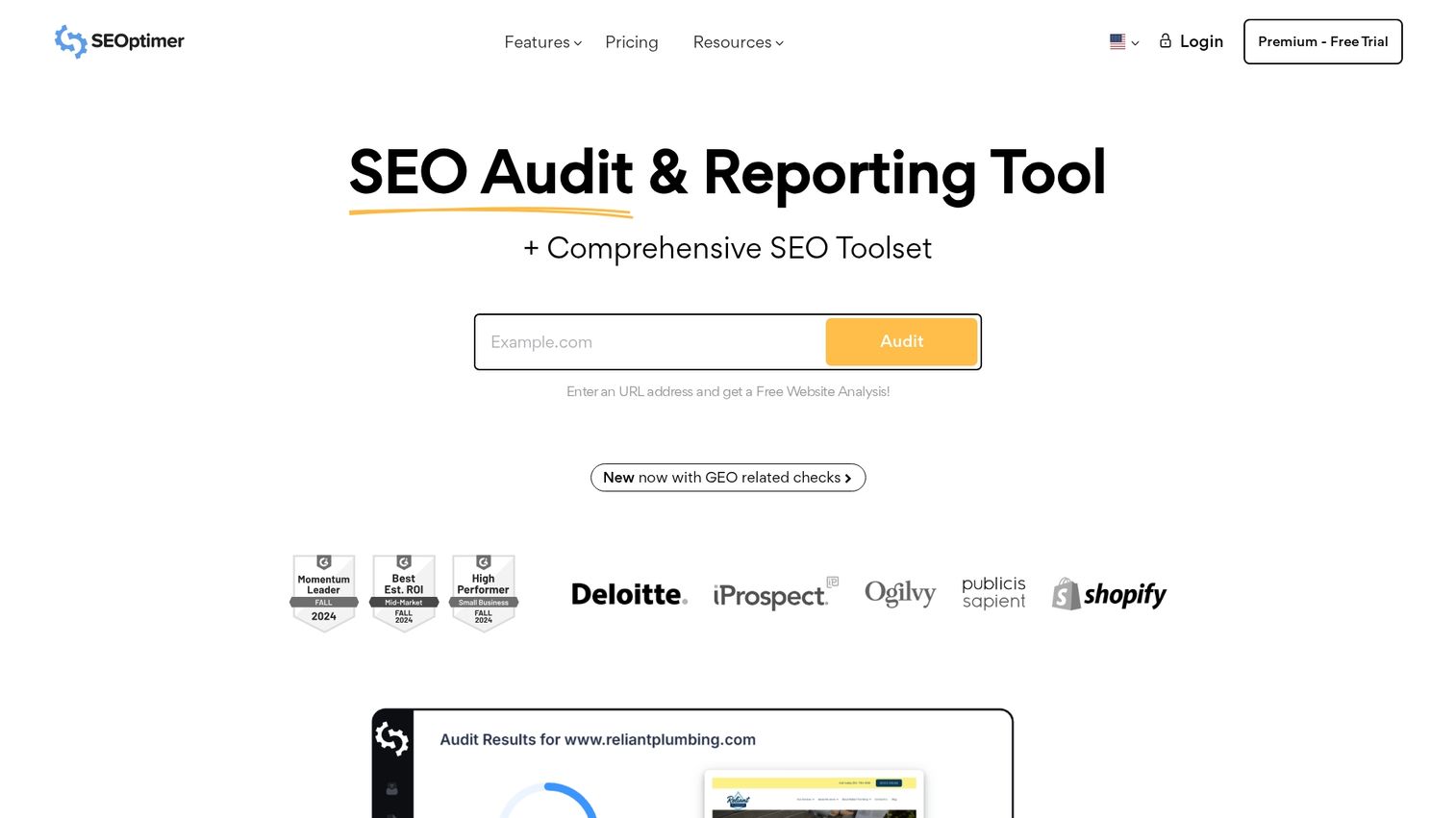
SEOptimer generates quick SEO audits and PDF reports, making it useful for agencies pitching prospects or teams needing fast site assessments. Enter a URL and get a scored report covering on-page SEO, performance, and mobile usability.
The white-label option lets agencies brand reports with their own logo. This turns SEOptimer into a lead generation tool as much as an SEO tool.
Key strengths
- Instant website SEO audits with actionable recommendations
- White-label PDF reports for client presentations
- Embeddable audit widget for agency websites
- Bulk site analysis for multiple domains
- DIY SEO recommendations for non-technical users
Why pick SEOptimer? Agencies using audits for prospecting and small businesses wanting quick health checks get the most value. It's not a replacement for deeper tools but works well alongside them.
Pricing: DIY SEO starts at $19/month, White Label at $39/month, and White Label & Embedding at $59/month.
8. Clearscope
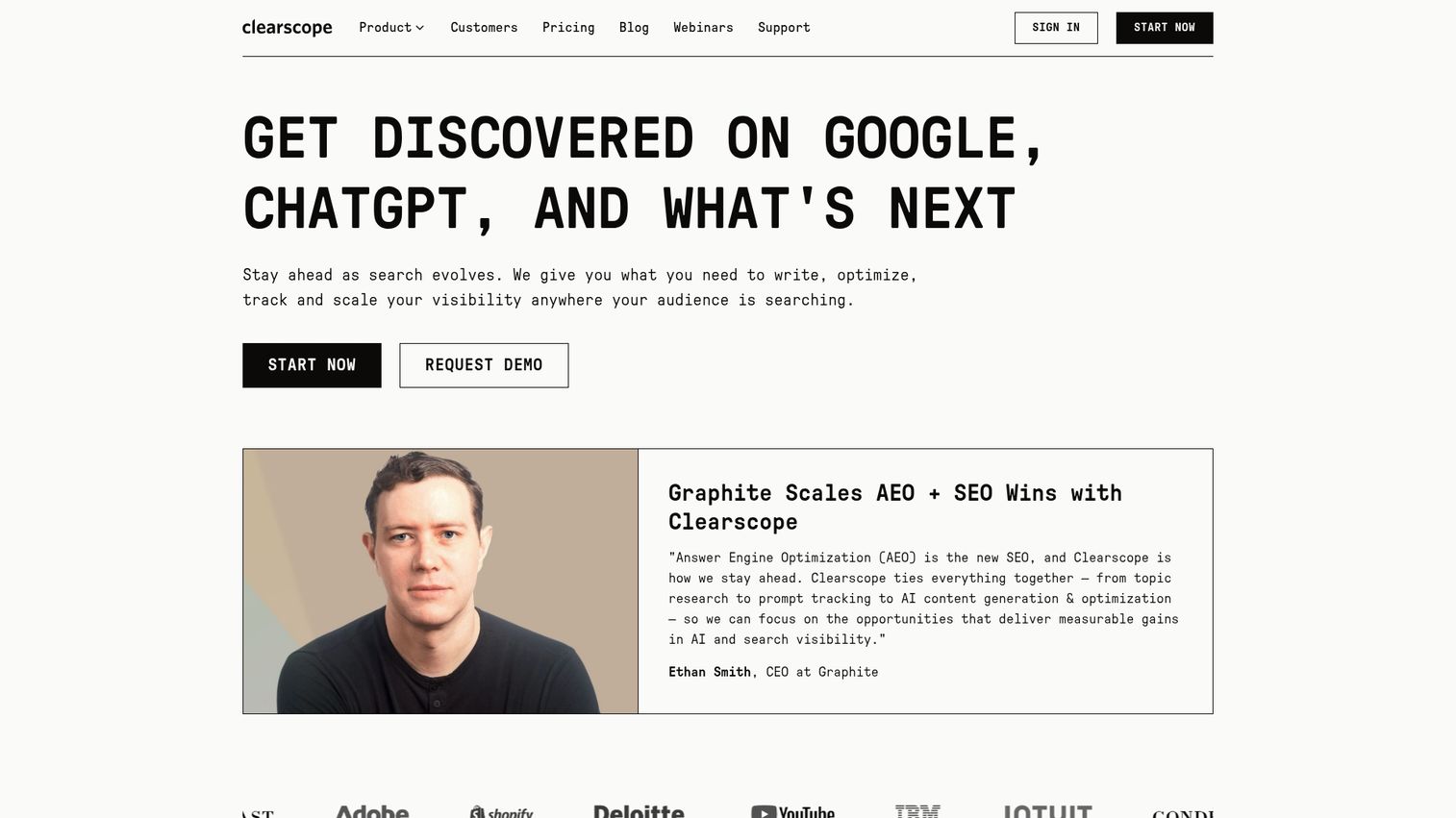
Clearscope helps content teams create pages that match search intent by analyzing what top-ranking content covers. The platform grades your content and shows exactly which terms and topics to include.
Writers use Clearscope to ensure their content is comprehensive without keyword stuffing. The tool focuses on semantic relevance rather than exact-match keywords, aligning with how modern search engines evaluate content.
Key strengths
- Content grading based on top-ranking page analysis
- Term recommendations showing what topics to cover
- Google Docs and WordPress integrations
- Competitor content comparison
- Search intent analysis for any keyword
Why pick Clearscope? Teams producing long-form content for competitive keywords see measurable ranking improvements. The price point makes it better suited for established content operations than beginners.
Pricing: Essentials starts at $189/month, Business at $399/month, and Enterprise is custom.
9. SE Ranking
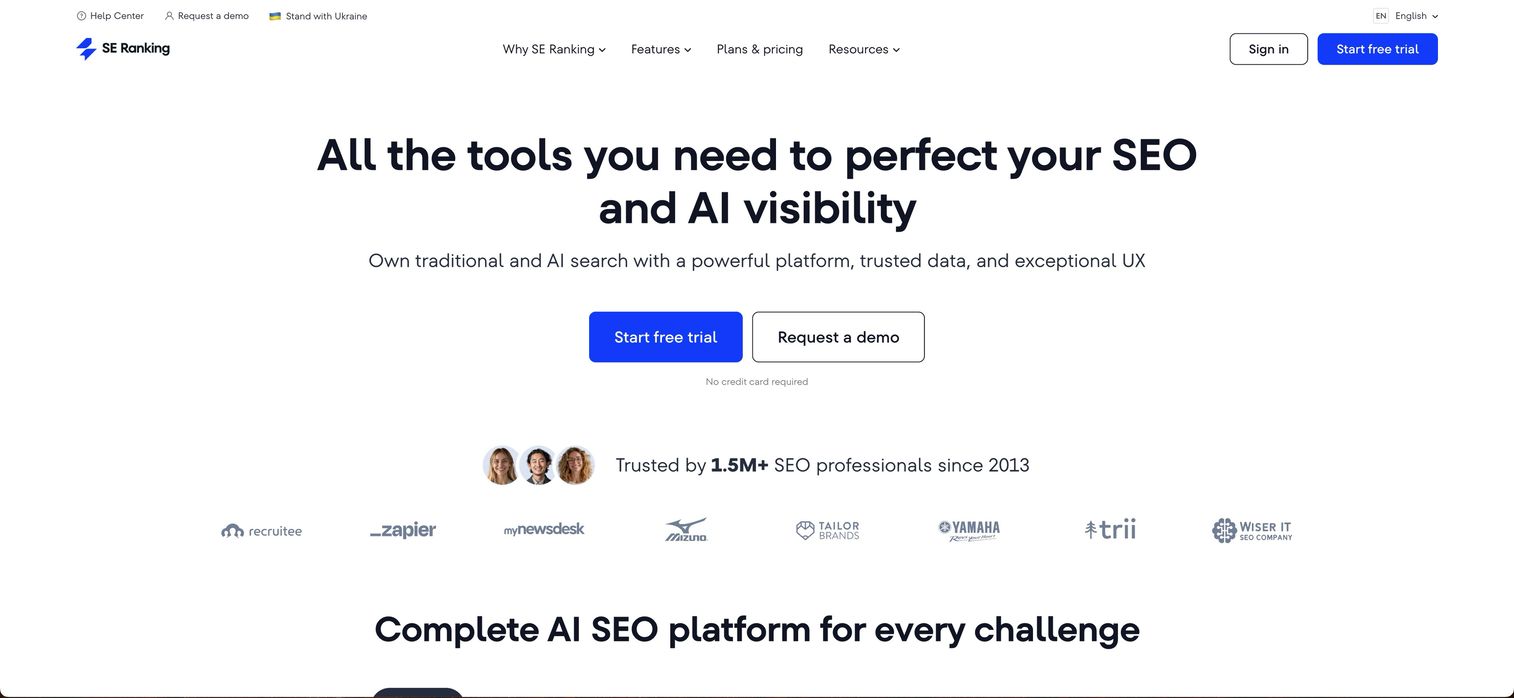
SE Ranking offers a comprehensive SEO platform at mid-market pricing, combining keyword tracking, site audits, and competitor research. The platform includes AI-powered features for content optimization and automated reporting.
The flexible pricing model lets you pay based on ranking check frequency and keyword volume, making it more affordable for teams with modest tracking needs.
Key strengths
- Keyword rank tracking with customizable check frequency
- Site audit with issue prioritization
- Competitor research and backlink monitoring
- AI content tools for optimization
- White-label reporting for agencies
Why pick SE Ranking? It hits a sweet spot between budget tools and enterprise platforms. Teams outgrowing Mangools but not ready for Semrush pricing often land here.
Pricing: Essential starts at $65/month, Pro at $119/month, and Business at $259/month.
10. Screaming Frog SEO Spider
Screaming Frog is the industry-standard website crawler for technical SEO audits. It crawls your site like a search engine would, identifying broken links, missing meta tags, duplicate content, and redirect chains.
The free version crawls up to 500 URLs, which covers most small sites. Larger sites benefit from the paid license for unlimited crawling and advanced features like JavaScript rendering.
Key strengths
- Comprehensive site crawling that catches technical issues
- Broken link and redirect chain detection
- Duplicate content identification
- XML sitemap generation
- Integration with Google Analytics and Search Console
Why pick Screaming Frog? Every SEO professional uses it for technical audits. The desktop application runs locally, giving you full control over crawl settings and data.
Pricing: Free for up to 500 URLs, £199/year for unlimited crawling and full features.
11. BuzzSumo
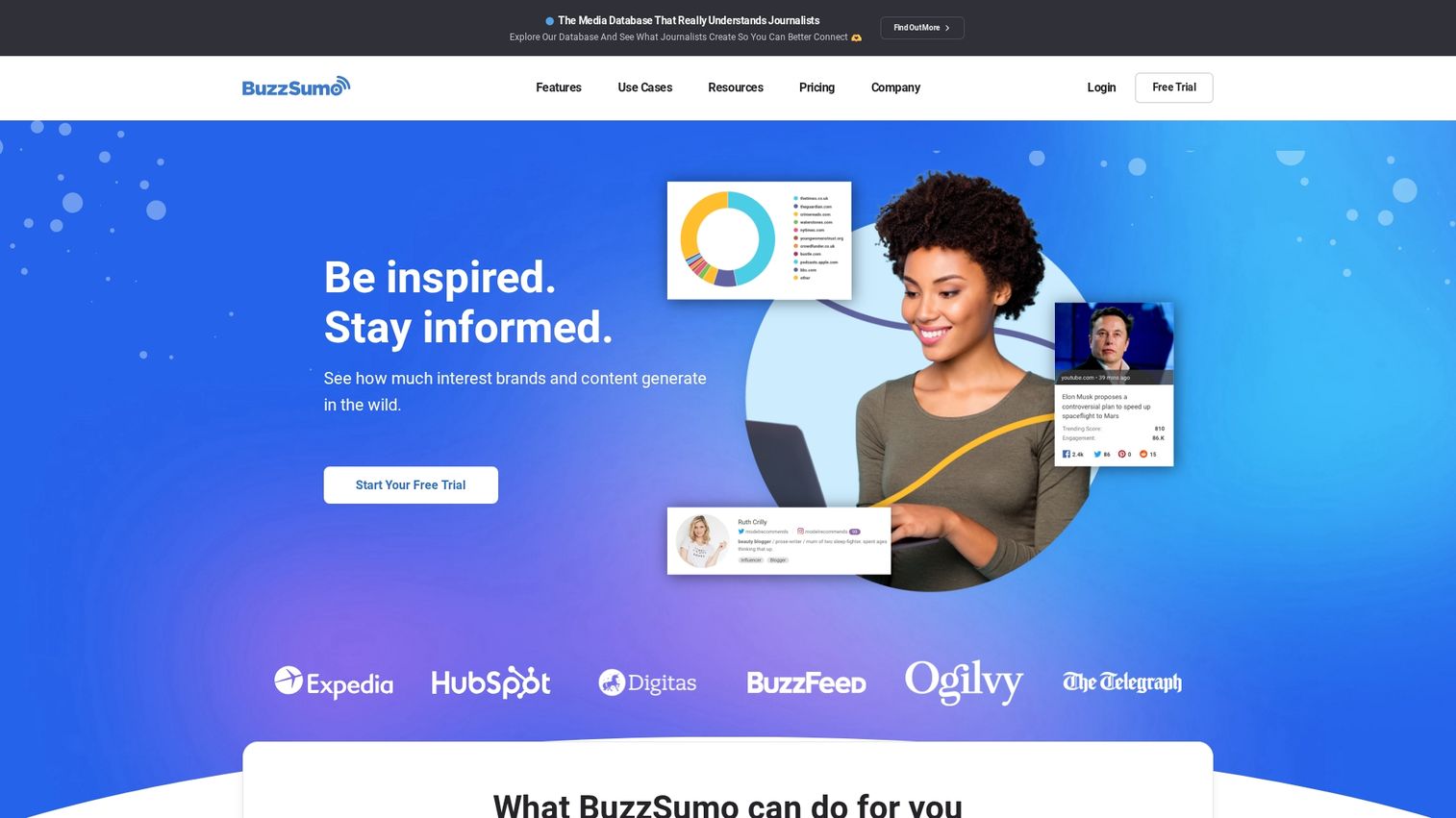
BuzzSumo helps you find content ideas by showing what's already performing well in your niche. The platform tracks social shares, backlinks, and engagement across millions of articles.
Content teams use BuzzSumo to identify trending topics, find influencers, and analyze competitor content strategies. It's more about ideation than optimization.
Key strengths
- Content discovery showing top-performing articles by topic
- Influencer identification for outreach campaigns
- Content alerts for brand mentions and competitor tracking
- Question analyzer finding what people ask about any topic
- Backlink tracking for content pieces
Why pick BuzzSumo? Teams struggling with content ideation or running influencer outreach campaigns benefit most. It complements technical SEO tools rather than replacing them.
Pricing: Content Creation starts at $199/month, PR & Comms at $299/month, Suite at $499/month, and Enterprise at $999/month.
12. AnswerThePublic
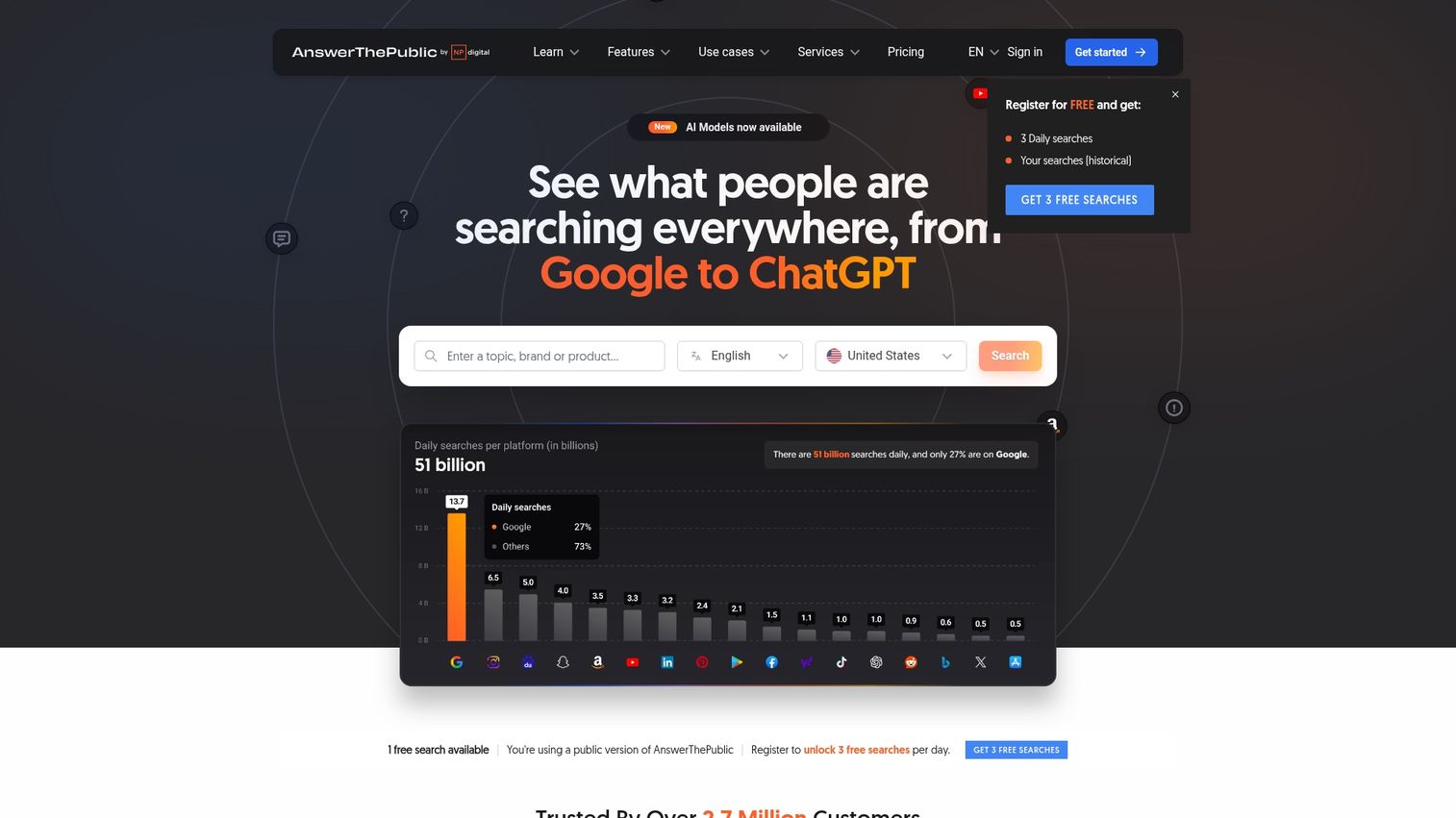
AnswerThePublic visualizes search questions around any keyword, showing what people actually ask. The tool organizes queries into questions, prepositions, comparisons, and alphabetical lists.
This helps you find long-tail keywords and understand user intent. The visual format makes it easy to spot content opportunities that keyword volume tools might miss.
Key strengths
- Visual keyword maps organized by question type
- Long-tail keyword discovery
- Search listening alerts for new questions
- Comparison queries showing "vs" searches
- Export options for content planning
Why pick AnswerThePublic? It's excellent for content ideation and understanding how people phrase searches. The free tier provides enough for occasional use, while paid plans add alerts and unlimited searches.
Pricing: Individual starts at $11/month, Pro at $99/month, and Expert at $199/month.
13. SpyFu
SpyFu specializes in competitor intelligence, showing every keyword your competitors rank for and every ad they've run. The platform tracks historical data going back years, revealing long-term strategy patterns.
The PPC research features make SpyFu valuable for teams running both organic and paid search. You can see competitor ad copy, estimated budgets, and keyword targeting.
Key strengths
- Competitor keyword history going back 16+ years
- PPC competitor research with ad copy examples
- Backlink analysis and outreach tools
- Rank tracking with competitor comparison
- SERP analysis showing ranking changes over time
Why pick SpyFu? Teams focused on competitive intelligence and those running PPC alongside SEO get the most value. The historical data depth is unmatched by most alternatives.
Pricing: Basic starts at $39/month, Professional at $79/month, and Team at $299/month.
14. Ubersuggest
Ubersuggest offers keyword research and site audits at budget-friendly pricing, including a lifetime deal option. Neil Patel's tool provides enough functionality for small businesses and solo marketers without enterprise complexity.
The free tier includes limited daily searches, making it accessible for teams just starting with SEO. Paid plans unlock more searches and features like rank tracking.
Key strengths
- Keyword research with volume, difficulty, and CPC data
- Site audit with SEO health scoring
- Backlink data and competitor analysis
- Content ideas based on top-performing pages
- Chrome extension for on-the-go research
Why pick Ubersuggest? Budget-conscious teams and beginners find it approachable. The lifetime deal makes it cost-effective for long-term use, though data depth doesn't match premium tools.
Pricing: Individual starts at $12/month, Business at $20/month, Enterprise at $40/month, or lifetime deals from $120.
15. Yoast SEO
Yoast is the most popular WordPress SEO plugin, helping site owners optimize content directly in their editor. The plugin analyzes readability, keyword usage, and technical elements like meta descriptions and schema markup.
For WordPress sites, Yoast handles on-page optimization without requiring a separate tool. The free version covers basics, while Premium adds internal linking suggestions and redirect management.
Key strengths
- Real-time content analysis in WordPress editor
- Readability scoring and suggestions
- Schema markup for rich search results
- XML sitemap generation
- Social media preview optimization
Why pick Yoast? WordPress site owners get immediate value from the free plugin. It's not a replacement for keyword research or technical audit tools, but it ensures your content follows on-page best practices.
Pricing: Free plugin available, Premium at $99/year for one site.
Free SEO optimization tools online
Many essential SEO tools cost nothing. Google's suite provides first-party data that paid tools can't replicate.
Google Search Console
Search Console shows how Google sees your site, including indexing status, search queries driving traffic, and technical issues. Every website owner with SEO goals uses this tool.
Google Analytics 4
GA4 tracks user behavior, traffic sources, and conversions. Connecting it to Search Console gives you a complete picture of how organic search drives business results.
Google Keyword Planner
Originally built for advertisers, Keyword Planner provides search volume ranges and competition data for free with a Google Ads account. The data comes directly from Google.
Google Trends
Trends shows how search interest changes over time, helping you spot seasonal patterns and emerging topics. It's useful for timing content and understanding relative interest.
Screaming Frog free version
The free tier crawls up to 500 URLs with full functionality. Small sites can run complete technical audits without paying anything.
Google SEO tools you still need
Even with premium subscriptions, Google's free tools remain essential. Search Console provides first-party indexing data no third-party tool can access. Analytics shows actual user behavior on your site. Keyword Planner gives volume data straight from the source.
Google tools work alongside paid platforms rather than replacing them. The combination of Google's first-party data and third-party analysis tools gives you the complete picture.
What to consider when buying an SEO tool
Before committing to a subscription, think through a few factors:
- Current SEO maturity: Beginners benefit from simpler interfaces; advanced users benefit from depth and customization
- Primary workflow: Match the tool to your main activity, whether that's content creation, technical fixes, or link building
- Reporting needs: Agencies benefit from white-label client reports; in-house teams benefit from internal dashboards
- API access: Teams building custom workflows or integrating with other tools benefit from API availability
- Support and training: Some platforms include onboarding; others assume you'll figure it out
Tip: Most SEO tools offer free trials or limited free tiers. Test with your actual site and workflows before committing to annual plans.
Build your SEO analysis stack
Start with Google's free tools: Search Console for technical insights, Analytics for traffic data, and Keyword Planner for volume research. Google tools form your foundation regardless of budget.
Next, add one all-in-one platform based on your primary use case. Semrush works well for teams balancing organic and paid search. Ahrefs suits those focused on backlinks and competitive analysis. SE Ranking or Mangools fit tighter budgets.
Then layer in specialized tools as needed. Screaming Frog for technical audits. Surfer or Clearscope for content optimization. SpyFu for competitive intelligence.
The goal isn't collecting tools. It's building a workflow that helps you find opportunities, create better content, and fix technical issues faster. SEO tools drive traffic, but converting that traffic into customers often requires showing your product's value clearly. Interactive demos help visitors understand what you offer without scheduling a call.
Start your journey with Guideflow today!
FAQs about SEO tools
Technical SEO covers site structure, speed, and crawlability. On-page SEO focuses on content and HTML elements. Off-page SEO involves backlinks and external signals. Local SEO targets geographic search visibility.
ChatGPT can analyze content and suggest improvements, but it cannot crawl websites or access real-time ranking data. Dedicated SEO tools like Screaming Frog and Semrush handle technical audits that require actual site crawling.
Roughly 80% of your organic traffic typically comes from 20% of your pages or keywords. Focus optimization efforts on high-impact content rather than spreading resources thin across every page.
Pricing ranges from free (Google tools, Screaming Frog limited) to $100-500+ monthly for comprehensive platforms. Some tools offer lifetime deals, while enterprise solutions require custom quotes.
Google Search Console provides the most valuable free data since it shows exactly how Google sees your site. Pair it with the free Screaming Frog tier for technical audits.
SEO changes typically take weeks to months to reflect in rankings. Tools help you track progress and identify opportunities, but rankings depend on content quality, competition, and consistent optimization work.
No tool guarantees rankings. SEO tools provide data and recommendations, but results depend on content quality, technical implementation, competition, and how well you execute on the insights.