
You open five carrier portals. You copy a weight into each one. You compare service levels by hand, pick the cheapest that lands on time, then print the label in a separate tool. Then the next order lands, and you do it again. And again.
That manual rate-checking loop is exactly what multi carrier shipping software removes. Instead of jumping between UPS, FedEx, USPS, and regional carriers, a single platform pulls live rates, applies your shipping rules, prints shipping labels, and pushes tracking back to your store. For a product or operations team, this is infrastructure. It reduces manual work, standardizes carrier selection, and keeps fulfillment reliable as order volume climbs across warehouses and channels.
The category is growing fast. The global multi-carrier shipping software market was valued at $5.2 billion in 2025 and is projected to reach $12.8 billion by 2034 at a 12.3% CAGR, according to MarketIntelo (2025). Cloud-based deployment already accounts for 72.5% of revenue, and roughly 60% of U.S. SMEs used shipping or logistics management software by 2023 per SNS Insider. If you evaluate operational systems the way you'd evaluate a marketing automation or contract lifecycle management stack, this guide compares tools by rate shopping, carrier integrations, label workflows, compliance, shipping analytics, and scale.
What's inside
This guide is for ecommerce operators, warehouse teams, logistics managers, founders, and product managers building or replacing a multi-carrier shipping solution. We picked tools based on four criteria that matter most in real operations: carrier coverage and rate shopping depth, automation and shipping rules, integration fit with ecommerce, ERP, OMS, and WMS systems, and pricing clarity relative to shipment volume. The list spans SMB ecommerce, high-volume warehouse fulfillment, and enterprise carrier orchestration, so you can pattern-match to your own stage before shortlisting. Every entry notes pricing, strengths, tradeoffs, and the best-fit use case.
TL;DR
- Best for global ecommerce with checkout rate logic: Easyship, which pairs discounted carriers with duties and taxes handling.
- Best for growing ecommerce workflows: ShipStation, with published pricing, multi-location fulfillment, and deep shipping automation.
- Best free entry point: Rollo, a no-subscription platform for small sellers who want labels and rate comparison.
- Best for operations-heavy scale: DigitalShipper, built for complex carrier logic, LTL, and hazmat.
- Best for fulfillment-embedded shipping: ShipHawk, which runs shipping logic inside warehouse and ERP workflows.
- Best for enterprise compliance and global delivery: ConnectShip for carrier-compliant integration, and Metapack for international delivery orchestration.
What is multi carrier shipping software?
Multi carrier shipping software is a platform that connects your business to multiple shipping carriers through one interface, so you can compare rates, print labels, automate service selection, and track shipments without logging into each carrier separately.
At its core, carrier management software handles a repeatable set of jobs:
- Compare carrier rates: Pull live rates from UPS, FedEx, USPS, DHL, and regional carriers, then rank them by cost and service level (rate shopping).
- Generate shipping labels: Produce carrier-compliant labels, packing slips, and documents in bulk, often through thermal label printing.
- Automate service selection: Apply shipping rules that choose the right carrier and service based on weight, destination, cost, or delivery promise.
- Create manifests and documents: Build end-of-day manifests and customs documents for domestic and international shipments.
- Connect systems: Integrate with ecommerce platforms, OMS, ERP, and WMS through prebuilt carrier integrations and APIs.
- Track and analyze: Monitor shipments in transit and surface shipping analytics on cost, carrier performance, and delivery times.
The strongest parcel shipping software treats these as one connected workflow, not six disconnected tools. That is the difference between a label printer with rate lookup and a true shipping management system that scales with volume.
When to use multi carrier shipping software
Reduce shipping costs without manual rate checks
Every manual rate comparison is time you don't get back, and every default-carrier shipment risks overpaying. Rate shopping automates the comparison across your connected carriers, then applies logic to pick the cheapest option that still meets the delivery promise. At scale, automatic service selection shaves real margin off each shipment without adding headcount. For a PM, this is the classic opportunity-cost win: less manual work, more predictable unit economics.
Centralize shipping across teams and systems
When you run multiple warehouses, sales channels, or 3PL relationships, fragmented shipping creates fragmented data. A single platform standardizes carrier selection, label generation, and tracking across every location. That centralization matters most when finance wants clean shipping analytics and operations wants one source of truth. It also reduces onboarding friction when new fulfillment sites come online, since the shipping rules already exist.
Improve compliance and international shipping
Global shipping adds customs documents, duties and taxes, hazmat handling, and carrier-specific compliance rules. The right platform generates commercial invoices, harmonized codes, and manifests automatically, so a mis-keyed customs form doesn't hold a container at the border. For teams shipping internationally, compliance automation is not a nice-to-have. It is the difference between smooth cross-border flow and stalled shipments.
Comparison table
Here is how the seven tools compare by intent, key use case, verified pricing, and G2 rating. Pricing reflects what each vendor publishes; several enterprise tools route pricing through sales.
| # | Product | Intent | Key use case | Pricing | G2 rating |
|---|---|---|---|---|---|
| 1 | Easyship | Global ecommerce shipping | Rate shopping with duties, taxes, and checkout rates | Free plan; paid tiers via sales | Not listed |
| 2 | ShipStation | Ecommerce shipping | Multi-location fulfillment and shipping automation | From $14.99/month | Not listed |
| 3 | Rollo | SMB ecommerce shipping | Free multi-carrier labels and rate comparison | Free software; printer from $199.99 | 4.0/5 |
| 4 | DigitalShipper | Enterprise fulfillment | Complex carrier logic, LTL, and hazmat | Contact sales | Not listed |
| 5 | ShipHawk | Enterprise fulfillment | Shipping logic inside ERP and WMS workflows | Contact sales | 4.3/5 |
| 6 | ConnectShip | Enterprise compliance | Carrier-compliant labels, rates, and manifests | Contact sales | 4.0/5 |
| 7 | Metapack | Global shipping | International delivery orchestration and tracking | Contact sales | 3.8/5 |
Best multi carrier shipping software for 2026
Below is a closer look at each tool, with strengths, tradeoffs, pricing, and the buyer it fits best.
1. Easyship
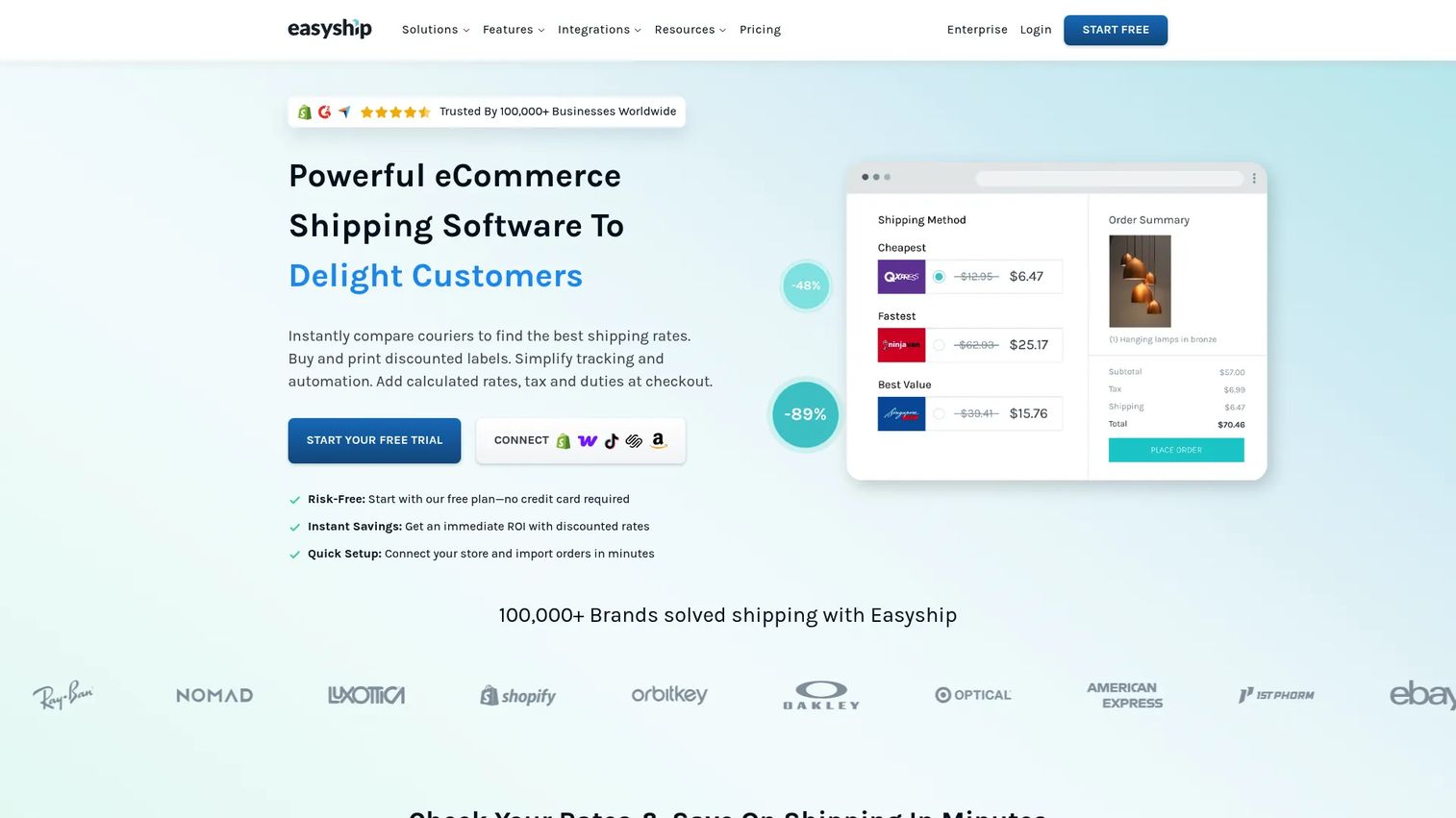
Easyship is cloud-based shipping software and an API built for ecommerce merchants who need to compare carriers, buy labels, and handle duties and taxes in one place. It leans into the global use case, surfacing live rates and delivery estimates at checkout so buyers see accurate costs before they pay. That checkout-level rate logic is what separates it from tools that only handle the back end.
Best for: Ecommerce teams selling internationally who want discounted rates and transparent duties and taxes.
Key strengths
- Discounted carrier network: Access negotiated rates across a wide network without volume commitments of your own.
- Rate comparison and checkout rates: Compare carriers side by side and show real-time rates to shoppers at checkout.
- Shipping rules and automation: Automate carrier selection and label generation with configurable shipping rules.
Why choose Easyship: If your growth depends on cross-border sales, the combination of discounted carriers, automated customs documents, and multi-carrier comparison removes most of the friction that kills international conversion. It resonates with teams who want shipping automation without negotiating carrier contracts themselves.
Easyship pricing: Easyship offers a free-forever plan plus paid tiers (Plus, Premier, Scale, and Enterprise). Subscription plans include a 14-day free trial, and annual billing is listed as saving 20%. Numeric prices for the paid tiers are not published on the plans page, so confirm current figures with Easyship before committing volume.
2. ShipStation
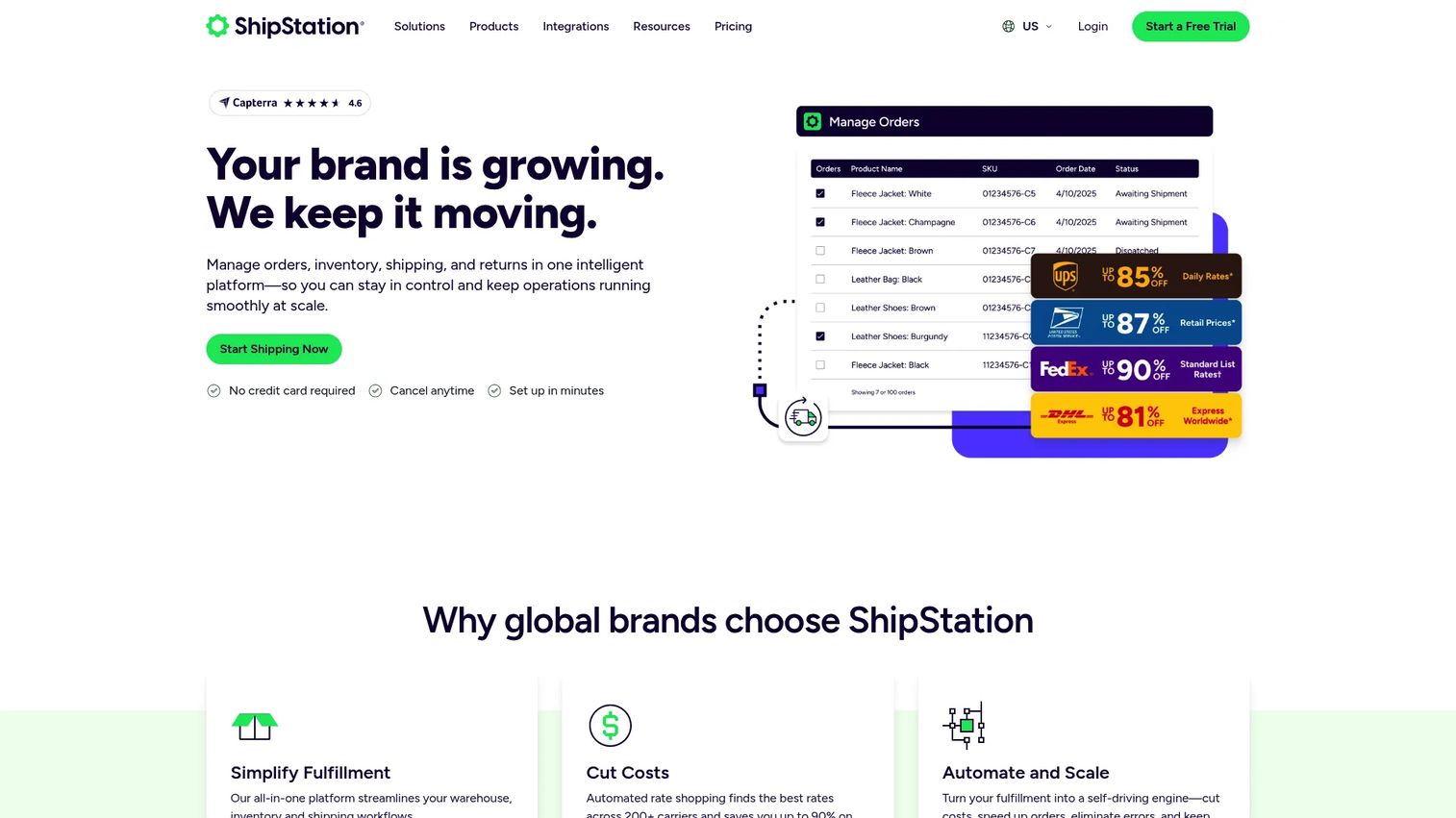
ShipStation is a broad shipping platform for ecommerce fulfillment, order management, and multi-carrier label printing. It is one of the few tools in this category with fully public pricing, which makes it easy to model against your shipment volume. Growing sellers use it to consolidate orders from multiple stores, apply automation, and print shipping labels in batches.
Best for: Growing ecommerce teams that want one workflow platform spanning orders, carriers, and returns.
Key strengths
- Automated rate shopping: Compare carrier rates and let rules pick the best service per order.
- Order management and automation: Import orders from multiple channels and apply shipping rules at scale.
- Returns and exchanges: Manage returns workflows alongside outbound shipping.
Why choose ShipStation: The published pricing and deep automation make it a low-risk pick for teams graduating from manual shipping. Multi-location fulfillment and returns handling mean it grows with you rather than becoming a bottleneck at higher volume.
ShipStation pricing: Plans start with a Starter tier at $14.99/month, a Standard tier at $29.99/month, and a Premium tier at $349.99/month, with higher shipment-volume price points shown on the pricing page. A 30-day free trial is available, and both monthly and annual billing are offered.
3. Rollo
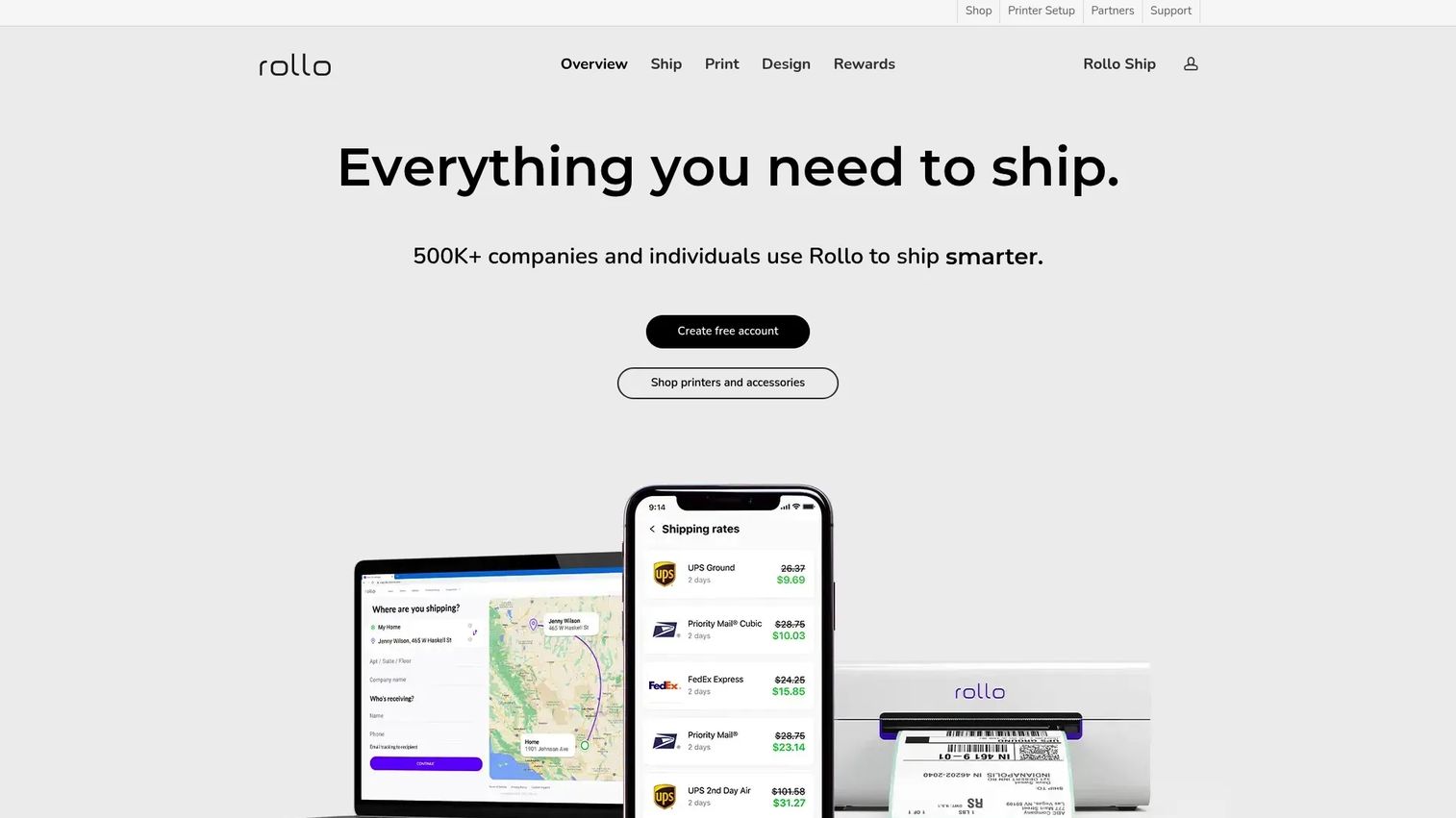
Rollo pairs free multi-carrier shipping software with thermal label printers, aimed at ecommerce sellers who want a no-subscription entry point. The Rollo Ship platform imports orders, compares rates, and prints labels, while the hardware handles high-volume thermal printing without ink or toner. It is the simplest on-ramp on this list for small teams.
Best for: Small businesses and solo sellers who want free shipping software plus reliable label printing.
Key strengths
- Free multi-carrier software: Compare rates and print labels with no monthly subscription fee.
- Thermal label printers: Print shipping labels without ink or toner, with free label designer and supplies.
- Order import and basic automation: Pull orders in and apply lightweight automation for repeat shipments.
Why choose Rollo: When budget is the constraint and volume is modest, a free platform with strong label printing covers the essentials. It is the natural starting point before a business grows into a paid workflow platform.
Rollo pricing: Rollo Ship software is free with no monthly fees. The Rollo USB Label Printer is a one-time purchase at $199.99. Rollo carries a 4.0/5 rating on G2, though that reflects a small number of reviews.
4. DigitalShipper
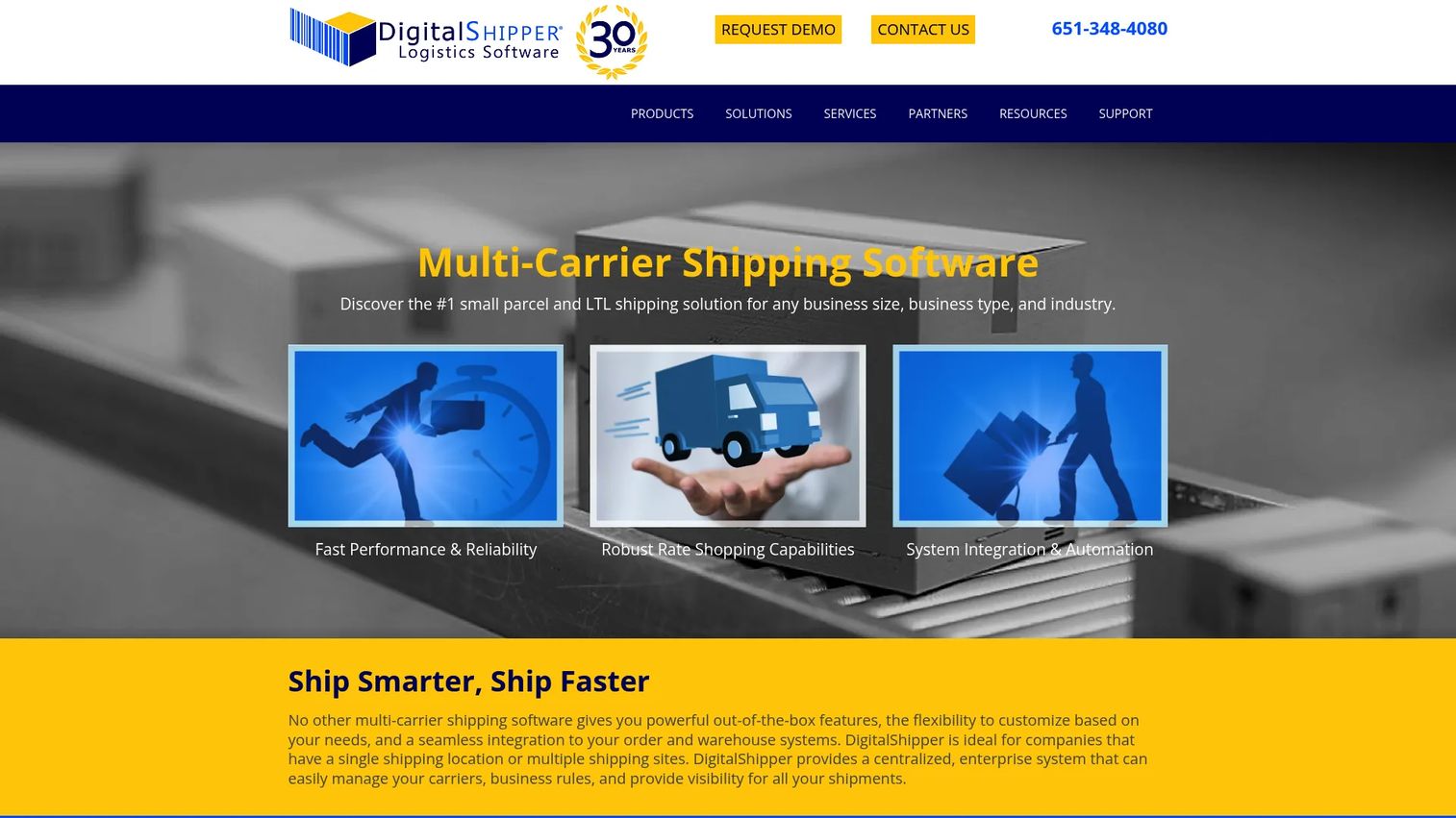
DigitalShipper is enterprise multi-carrier shipping software built for parcel and freight automation at scale. It targets operations-heavy teams that need complex carrier logic, LTL and TL freight rating, and hazmat handling in one system. Cloud deployment and a custom carrier module let it flex to unusual carrier and compliance requirements.
Best for: Operations teams shipping at scale who need advanced carrier logic across parcel and freight.
Key strengths
- Rate shopping and service optimization: Compare carriers and services to optimize cost and delivery automatically.
- LTL and TL freight rating: Rate small parcel and freight side by side in the same workflow.
- Carrier-compliant labels, manifests, and EDI: Generate compliant shipping labels, manifests, and EDI documents.
Why choose DigitalShipper: For teams whose shipping logic is genuinely complex, the depth around freight, hazmat, and compliance matters more than a slick UI. Direct sales support and ERP and WMS integrations make it a fit for warehouses with heavy manifesting needs.
DigitalShipper pricing: DigitalShipper is sold directly and does not publish numeric pricing. The company asks prospects to contact sales for a quote, so plan for a sales-led evaluation rather than self-serve signup.
5. ShipHawk
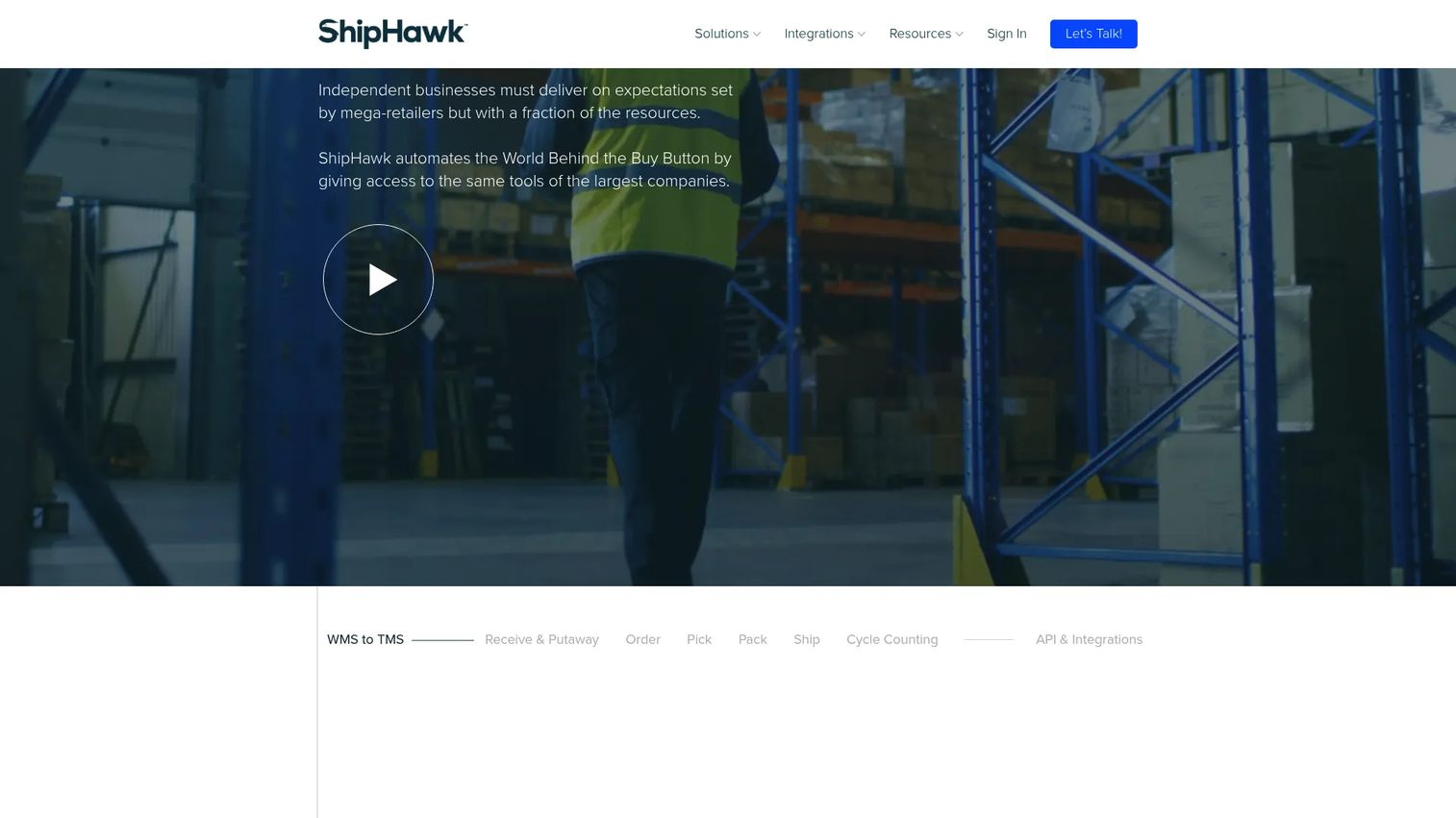
ShipHawk is enterprise shipping and warehouse automation software covering parcel, LTL, and FTL fulfillment. Its differentiator is embedding shipping logic inside broader warehouse and ERP workflows, so rate shopping and order routing happen where the work already lives. A business rules engine and smart rating drive automation across shipping modes.
Best for: Companies that want shipping decisions running inside their fulfillment and ERP systems, not beside them.
Key strengths
- Multi-carrier across parcel, LTL, and FTL: Rate and ship across every mode from one platform.
- Warehouse management: Run WMS functionality alongside shipping for connected fulfillment.
- Shipping analytics and audit: Access shipping data, analytics, and audit and reconciliation tools.
Why choose ShipHawk: When shipping is one step in a larger warehouse and ERP flow, embedding the logic there reduces handoffs and errors. It carries a 4.3/5 rating on G2, and its ERP and WMS integrations make it a fit for teams standardizing fulfillment operations.
ShipHawk pricing: ShipHawk does not publish public pricing and routes prospects to a demo and contact flow. Expect a sales-led process scoped to your warehouse and integration requirements.
6. ConnectShip

ConnectShip is enterprise multi-carrier shipping software focused on carrier compliance and systems integration. It generates compliant labels, rates, and manifests across a global carrier network, and offers flexible deployment through local installation, cloud, or container. That deployment flexibility appeals to teams with strict IT or security requirements.
Best for: Medium to enterprise shippers who need carrier compliance plus deep integration into existing systems.
Key strengths
- Multi-carrier execution and workflow: Run compliant shipping execution across a global carrier network.
- Flexible deployment: Choose local installation, cloud, or container to match IT and security needs.
- Labels, rates, manifests, and tracking: Generate carrier labels, rates, manifests, and international documents.
Why choose ConnectShip: For enterprises where carrier compliance and integration control are non-negotiable, the on-premise and cloud options plus a strong partner ecosystem make it dependable infrastructure. It holds a 4.0/5 rating on G2 and offers analytics and integration services to support complex rollouts.
ConnectShip pricing: ConnectShip does not publish numeric pricing on its site, though it notes that pay-as-you-go pricing is available. Contact the vendor to scope pricing against your deployment model and volume.
7. Metapack
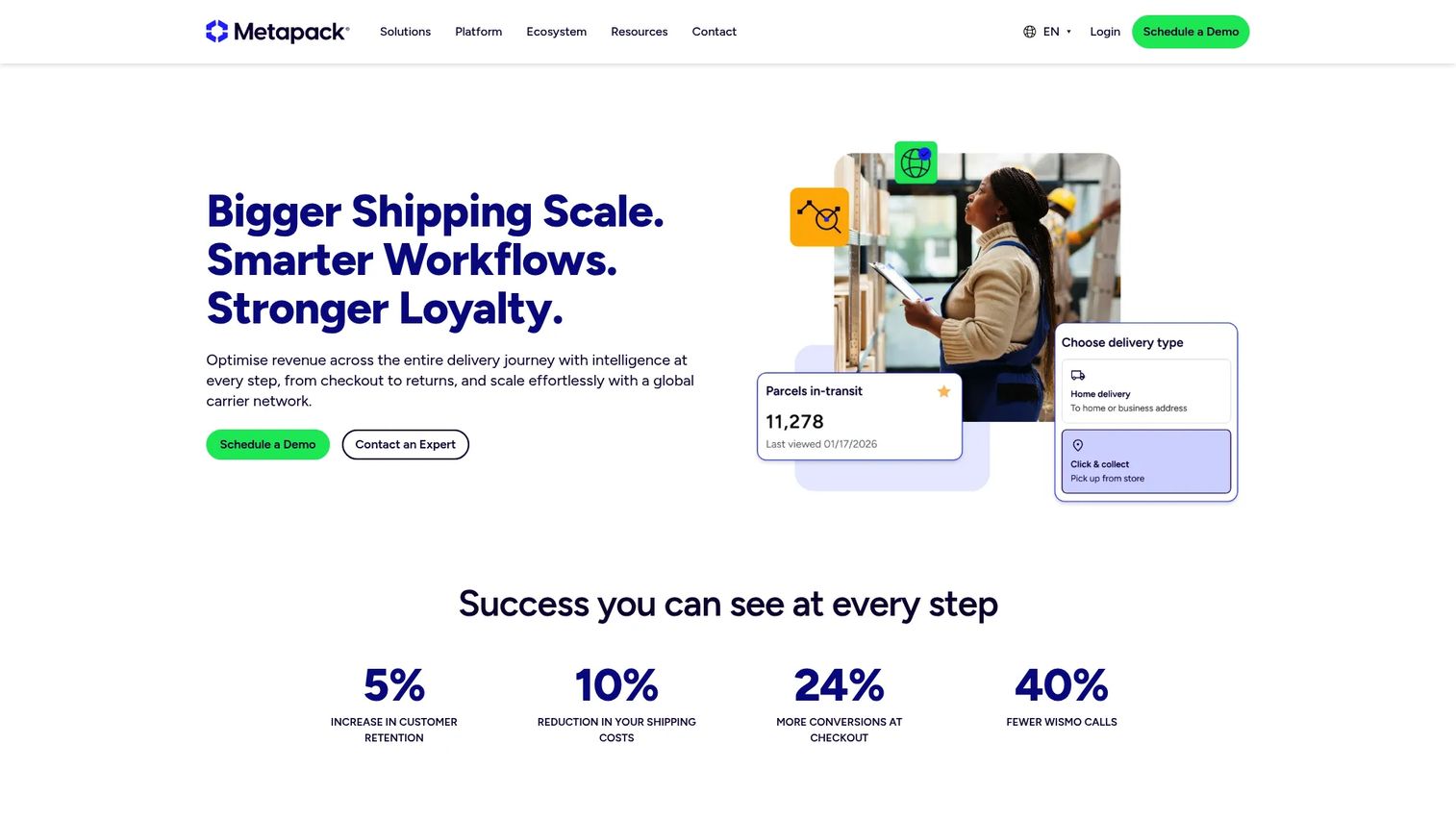
Metapack is enterprise ecommerce delivery management software spanning shipping, checkout delivery options, tracking, returns, and delivery intelligence. It is built for international retailers and brands that need to orchestrate complex delivery choices across many carriers and regions. A global API, shipping rules, and carrier selection sit at the core, with branded tracking and returns layered on top.
Best for: Enterprise and mid-market retailers managing global delivery, tracking, and returns at scale.
Key strengths
- Delivery options and orchestration: Present delivery choices at checkout and orchestrate carrier selection through Delivery Manager.
- Branded tracking and returns: Give customers branded tracking and a managed returns experience.
- Intelligence Hub: Surface operational intelligence and shipping analytics on delivery performance.
Why choose Metapack: For global retailers, the strength is breadth of carrier coverage plus delivery intelligence that turns raw tracking into decisions. Its checkout, tracking, and returns modules make it a full delivery layer rather than a labels-only tool.
Metapack pricing: Metapack offers Essential, Professional, and Enterprise plans, but does not publish numeric pricing publicly. It directs prospects to contact sales for details. Metapack carries a 3.8/5 rating on G2.
What to evaluate before buying
Shortlisting is easier when you score each tool against the operational realities that will define your setup. Use these criteria to pressure-test any option before you commit.
Carrier coverage and rate shopping depth
Confirm the platform supports every carrier you use today, plus the regional and freight carriers you'll likely add. Then check how rate shopping actually works: does it rank by cost, service level, and delivery promise, or just list rates? Coverage gaps force you back into manual portals, which defeats the point.
Automation and shipping rules
Look at how granular the shipping rules can get. Can you route by weight, destination, value, SKU, or customer tier? The deeper the automation, the less manual intervention per order. This is where the ongoing time savings live, so weight it heavily.
Integration fit with your stack
Map the platform against your ecommerce platform, OMS, ERP, and WMS. Prebuilt carrier integrations and clean APIs reduce implementation cost and prevent brittle handoffs. A tool that fits your existing systems ships value in weeks, not quarters.
Compliance and international support
If you ship internationally or handle hazmat, verify customs documents, duties and taxes, and compliance automation up front. Manifesting and carrier-compliant labels should be built in, not bolted on. Compliance gaps surface as stalled shipments, not error messages.
Pricing against shipment volume
Model total cost at your real volume, not the entry price. Some tools charge per shipment, some per seat, some via annual contracts, and enterprise pricing often lives behind sales. Compare against projected volume so the tool that looks cheap today doesn't become the expensive one at scale.
Conclusion
The right multi-carrier shipping solution depends on where you are. For ecommerce teams selling globally, Easyship and Metapack lead on carrier coverage, duties and taxes, and delivery orchestration. For growing ecommerce workflows, ShipStation offers the clearest pricing and deepest automation, while Rollo gives smaller sellers a free entry point. For enterprise operations, DigitalShipper, ShipHawk, and ConnectShip bring the carrier logic, ERP and WMS integration, and compliance depth that high-volume fulfillment demands.
Your next step is practical: shortlist two or three tools that match your intent, compare their carrier coverage against the carriers you actually use, and validate pricing against your projected shipment volume. Run a short pilot with real orders before you migrate everything. The best shipping management software is the one that disappears into your workflow and quietly cuts cost on every shipment.
FAQs
Multi carrier shipping software connects your business to multiple shipping carriers through one platform, so you can compare rates, print shipping labels, automate carrier selection, and track shipments without logging into each carrier's portal. It acts as carrier management software that centralizes shipping operations and reduces manual work.
Rate shopping pulls live rates from all your connected carriers for a given package weight and destination, then ranks the options by cost and service level. Shipping rules can automatically pick the cheapest carrier that still meets your delivery promise, so you stop overpaying on default-carrier shipments.
For growing ecommerce teams, ShipStation stands out for its published pricing, multi-channel order management, and shipping automation. For global ecommerce with duties and taxes at checkout, Easyship is a strong fit. Small sellers watching budget often start with Rollo's free platform.
Enterprise teams should prioritize carrier compliance, deep carrier integrations, ERP and WMS integration, manifesting, and support for parcel and freight in one system. Deployment flexibility and order routing across warehouses also matter. ConnectShip, DigitalShipper, and ShipHawk are built around these enterprise requirements.
Yes. Enterprise-focused tools like ShipHawk, DigitalShipper, and ConnectShip offer ERP and WMS integration so shipping logic runs inside broader fulfillment workflows. This lets rate shopping, label generation, and order routing happen where the work already lives, reducing handoffs and data errors.
Most multi-carrier platforms handle global shipping, generating customs documents, commercial invoices, and duties and taxes calculations automatically. Easyship and Metapack are especially strong for international delivery, with checkout-level rate logic and delivery orchestration across many carriers and regions.
Model total cost at your projected shipment volume rather than the entry price. Check whether the tool charges per shipment, per seat, or via annual contract, and factor in enterprise pricing that lives behind sales. A plan that looks cheap at low volume can become the expensive option once you scale, so compare against real numbers.