Business email is the most targeted attack surface in enterprise security. The Anti-Phishing Working Group tracked 3.8 million phishing attacks worldwide in 2025, and the Association for Financial Professionals found that 74% of surveyed organizations were affected by business email compromise that same year. Native Microsoft 365 and Google Workspace controls catch a lot, but they were not built to stop targeted executive impersonation, vendor fraud, QR phishing, or account takeover at the sophistication level attackers now operate.
Security teams, IT admins, and the presales engineers who support technical validation conversations all need a clear picture of the email security market before they can build a credible shortlist. This guide gives you that picture. It covers threat coverage, deployment models, platform fit, remediation depth, and pricing direction for each product, so you can walk into a security review or a proof-of-value conversation with something concrete to say.
What's inside
This guide compares 15 cloud email security solutions for 2026. It is written for security teams, IT admins, and presales engineers who support technical discovery, security reviews, and RFP responses.
Items were selected based on:
- Threat coverage: Phishing, BEC, malware, account takeover, impersonation, and QR phishing protection
- Platform fit: Microsoft 365, Google Workspace, Exchange Online, and hybrid environment support
- Remediation depth: Automated investigation, message clawback, abuse mailbox triage, SIEM and SOAR integration
- Deployment flexibility: API-native, gateway, SaaS, hosted, and appliance options
Pricing and G2 ratings in this guide come from each vendor's own pricing page and its G2 listing as of October 2026. Both change often, so check them again before you make a final shortlisting decision.
TL;DR
- Best native Microsoft 365 fit: Microsoft Defender for Office 365 integrates directly with Microsoft 365 licensing and security workflows, starting at $2.00/user/month for Plan 1
- Best behavior-based BEC defense: Abnormal AI models human identity and communication patterns to catch social engineering that signature-based tools miss
- Best enterprise threat protection suite: Proofpoint covers email threats, DLP, compliance, and people-risk analytics across a broad enterprise portfolio
- Best continuity and archiving fit: Mimecast combines threat protection with email continuity, archiving, and insider risk management in one vendor relationship
- Best explainable detection and proof-of-value testing: Sublime Security gives security teams transparent, customizable detection logic and a free tier for the first 100 mailboxes
- Best security awareness plus collaboration security: KnowBe4 Email & Collaboration Security links AI-based email threat detection to point-of-risk user coaching
What are cloud email security solutions?
Cloud email security solutions are software platforms that protect cloud-hosted email environments such as Microsoft 365, Google Workspace, and Exchange Online from phishing, business email compromise, malware, ransomware, impersonation, data loss, and account takeover.
Most organizations rely on native platform controls as a baseline. Specialist cloud email security platforms extend that baseline with capabilities the native controls do not cover at the same depth:
- Advanced phishing and BEC detection: Behavioral AI, identity modeling, and relationship analysis to catch targeted social engineering
- Malware and ransomware scanning: Attachment sandboxing, static analysis, and dynamic detonation for zero-day threats
- Account takeover detection: Suspicious login monitoring, identity threat response, and anomaly detection across mail behavior
- Impersonation and domain spoofing protection: Executive name spoofing, lookalike domain detection, and DMARC enforcement
- URL rewriting and link analysis: Time-of-click protection and QR-code phishing detection
- DLP and outbound email controls: Misdirected-send protection, content inspection, and data classification for regulated environments
- Encryption and policy enforcement: Automated encryption, policy-based routing, and compliance controls
- Post-delivery remediation: Message clawback, automated investigation, and campaign-level remediation
- SIEM and SOAR integrations: Alert forwarding, playbook triggers, and bidirectional data exchange with security operations tools
- User reporting and abuse mailbox triage: Phishing report buttons, automated triage, and case management for user-submitted threats
Deployment models
Cloud email security platforms deploy in several ways. API-based tools connect directly to cloud mailboxes without changing mail flow. Secure email gateways sit in front of the mail server and inspect messages before delivery. Hybrid models combine both. SaaS and hosted options are cloud-managed by the vendor. Virtual appliance and hardware appliance options support on-premises and data-sovereignty requirements. The right model depends on your mail environment, security architecture, and compliance constraints.
When to use cloud email security solutions
Protect Microsoft 365 and Google Workspace from targeted attacks
Microsoft 365 and Google Workspace include baseline spam and malware filtering, but neither was designed to stop sophisticated BEC, executive impersonation, vendor fraud, or QR phishing at scale. Organizations that process high volumes of external email, operate in regulated industries, or carry outsized risk from wire fraud typically add a specialist layer. Presales engineers covering enterprise deals should expect technical buyers to ask what controls sit above the native defaults.
Reduce manual triage and post-delivery cleanup
Security operations teams spend significant time on user-reported suspicious emails, post-delivery remediation, and SIEM alert routing. Platforms with automated investigation, message clawback, abuse mailbox triage, and SOAR playbook support can cut that manual workload. Buyers will often measure this as a reduction in mean time to remediate, so be ready to discuss how each platform measures and reports that metric.
Support compliance, DLP, and secure outbound workflows
Email is a primary channel for data exfiltration and compliance exposure. Organizations in financial services, healthcare, legal, and government frequently require outbound DLP, encryption, archiving, data residency controls, audit logs, and policy reporting. When a security questionnaire or RFP asks about these capabilities, you need to know which platforms address them natively and which treat them as add-ons.
Cloud email security solutions comparison
The table below gives you a quick shortlist view across all 15 platforms. Use it to orient your evaluation, then read the individual entries for deployment details, pricing structure, and fit guidance.
Ownership matters when you read this list as a set of independent options. Proofpoint, Sophos, and Darktrace are all Thoma Bravo portfolio companies. Check Point Email Security is the former Avanan, Cloudflare's email product is the former Area 1 Security, and KnowBe4 Email & Collaboration Security is the former Egress. Each entry below notes its ownership where that affects the comparison.
| # | Product | Best for | Key differentiator | Pricing | G2 rating |
|---|---|---|---|---|---|
| 1 | Microsoft Defender for Office 365 | Microsoft 365 environments | Native Microsoft security integration | From $2.00/user/month (Plan 1, annual) | 4.5/5 |
| 2 | Abnormal AI | Behavior-based BEC defense | Human behavior and identity modeling | Quote-based | 4.7/5 |
| 3 | Proofpoint | Enterprise threat and compliance | Broad email threat, DLP, and compliance coverage (Thoma Bravo owned) | Quote-based | 4.6/5 |
| 4 | Mimecast | Continuity and resilience | Email security plus archiving and continuity | Quote-based | 4.4/5 |
| 5 | Barracuda Email Protection | Mid-market bundled protection | Integrated protection, backup, and continuity | Quote-based | 4.5/5 |
| 6 | Cisco Secure Email Threat Defense | Cisco security stack users | AI-driven gateway and API-based deployment | Quote-based | 4.3/5 |
| 7 | Sophos Email | Lean IT and security teams | Email protection tied to endpoint security (Thoma Bravo owned) | Quote-based | 4.2/5 |
| 8 | Check Point Email Security | Prevention-first security architecture | AI-native inline protection for email and collaboration (former Avanan) | Quote-based | 4.6/5 |
| 9 | KnowBe4 Email & Collaboration Security | Human risk reduction | Security awareness tied to email defense (former Egress) | Quote-based | 4.5/5 |
| 10 | Darktrace / EMAIL | Adaptive threat detection | Self-learning behavior analysis (Thoma Bravo owned) | Quote-based | 4.2/5 |
| 11 | FortiMail | Hybrid deployment flexibility | Cloud, virtual, appliance, and hosted options | Quote-based | 4.3/5 |
| 12 | IRONSCALES Email Security Platform | Phishing response automation | AI-assisted detection with automated user-report triage | Quote-based, free trial | 4.7/5 |
| 13 | Cloudflare Cloud Email Security | Zero Trust security stacks | Email security inside a broader Zero Trust platform (former Area 1) | Quote-based | Not listed on G2 |
| 14 | CrowdStrike Falcon Email Protection | Falcon users correlating third-party email data | No CrowdStrike email product exists; email data reaches Falcon from other vendors | No product, so no price | Not listed on G2 |
| 15 | Sublime Security | Explainable detection engineering | Customizable detection logic with a free tier | Free for first 100 mailboxes | 4.8/5 |
The 15 cloud email security platforms in detail
1. Microsoft Defender for Office 365
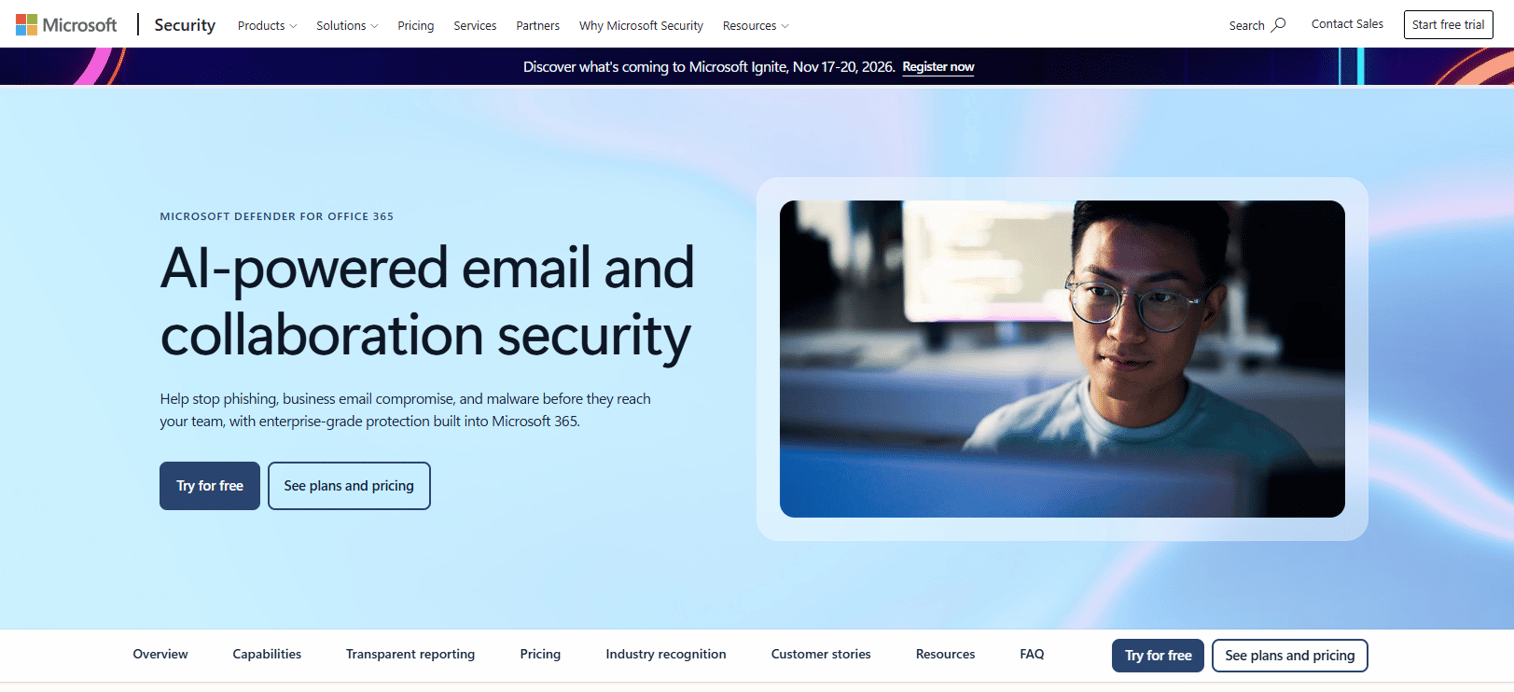
Microsoft Defender for Office 365 is Microsoft's native email and collaboration security product for organizations running Microsoft 365 and Exchange Online. It covers protection across email, Teams, SharePoint, and OneDrive, with Safe Links, Safe Attachments, and anti-phishing policies forming the core of the inbound protection layer. Plan 2 adds advanced threat hunting, automated investigation and response, attack simulation training, and cross-domain XDR capabilities that connect email signals into Microsoft's broader security stack.
Best for: Organizations already standardized on Microsoft 365 and Microsoft security tooling.
Key features
- Safe Links and Safe Attachments protection across email and collaboration workloads
- Anti-phishing policies with executive impersonation protection
- Automated investigation and response (Plan 2)
- Attack simulation training with realistic phishing scenarios
- Cross-domain XDR integration with Microsoft Sentinel and Defender XDR (Plan 2)
Why choose Microsoft Defender for Office 365: If your environment is Microsoft-native, this is the path of least friction. It removes the integration overhead that comes with third-party tools and keeps security workflows inside the Microsoft security portal. Teams evaluating it should compare Plan 1 and Plan 2 capabilities carefully, since key remediation and threat-hunting features gate on the higher plan.
Microsoft Defender for Office 365 pricing: Plan 1 runs at $2.00 per user per month on an annual subscription. Microsoft's own documentation does not publish a Plan 2 figure; resellers commonly list Plan 2 at around $5.00 per user per month on an annual subscription, so confirm that number with Microsoft or your licensing partner rather than quoting it from a third party. Plan 1 is included in Microsoft 365 E3, G3, and Business Premium, and Plan 2 is included in Microsoft 365 A5, E5, and G5, so check your existing licensing before buying either as an add-on.
G2 rating: 4.5/5
2. Abnormal AI
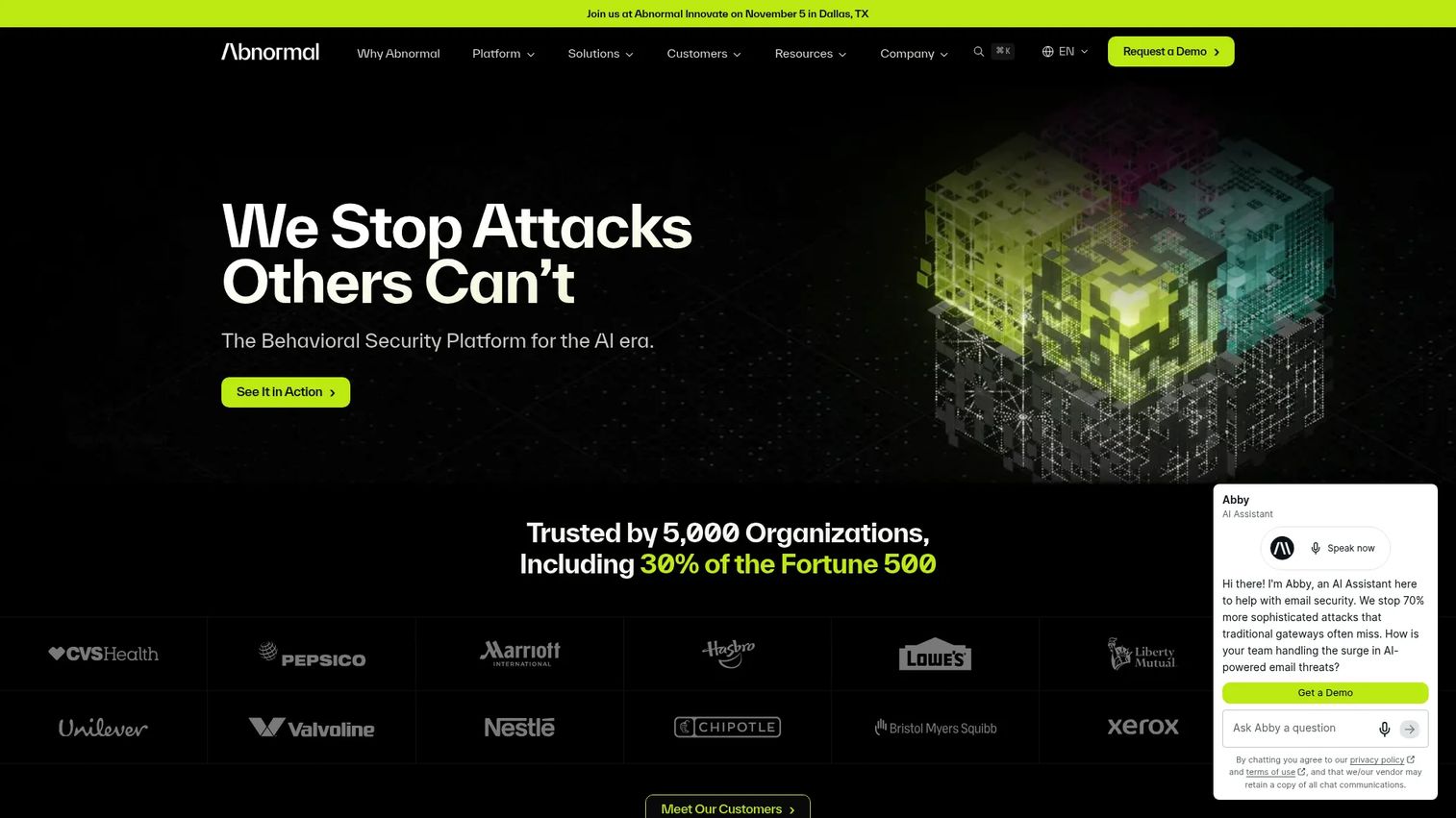
Abnormal AI is a behavioral email security platform built to detect and stop BEC, vendor fraud, executive impersonation, account takeover, and socially engineered attacks that bypass signature-based controls. The platform builds an identity baseline for every user and every known relationship, then flags messages that deviate from expected behavior. It extends beyond email into identity security, covering account compromise containment, identity posture management, and AI security governance. Abnormal AI is independently held and is the trading name of the company previously called Abnormal Security.
Best for: Security teams focused on sophisticated social engineering, vendor fraud, and account takeover in Microsoft 365 or Google Workspace environments.
Key features
- Behavioral AI detection for phishing, BEC, fraud, and social engineering
- Vendor relationship modeling to catch third-party impersonation and fraud
- Account takeover detection with identity threat response
- AI security governance and agent security capabilities
- Automated remediation with campaign-level clawback
Why choose Abnormal AI: The behavioral approach catches attacks that have no signature, which is the category where most BEC losses occur. If your buyers are asking about protection against targeted executive impersonation or supplier fraud, this is one of the strongest answers on this list.
Abnormal AI pricing: Abnormal AI prices by quote and publishes no tiers. The cost drivers are mailbox count, modules selected, and environment size. Request pricing directly from the vendor; no reliable public range exists.
G2 rating: 4.7/5
3. Proofpoint
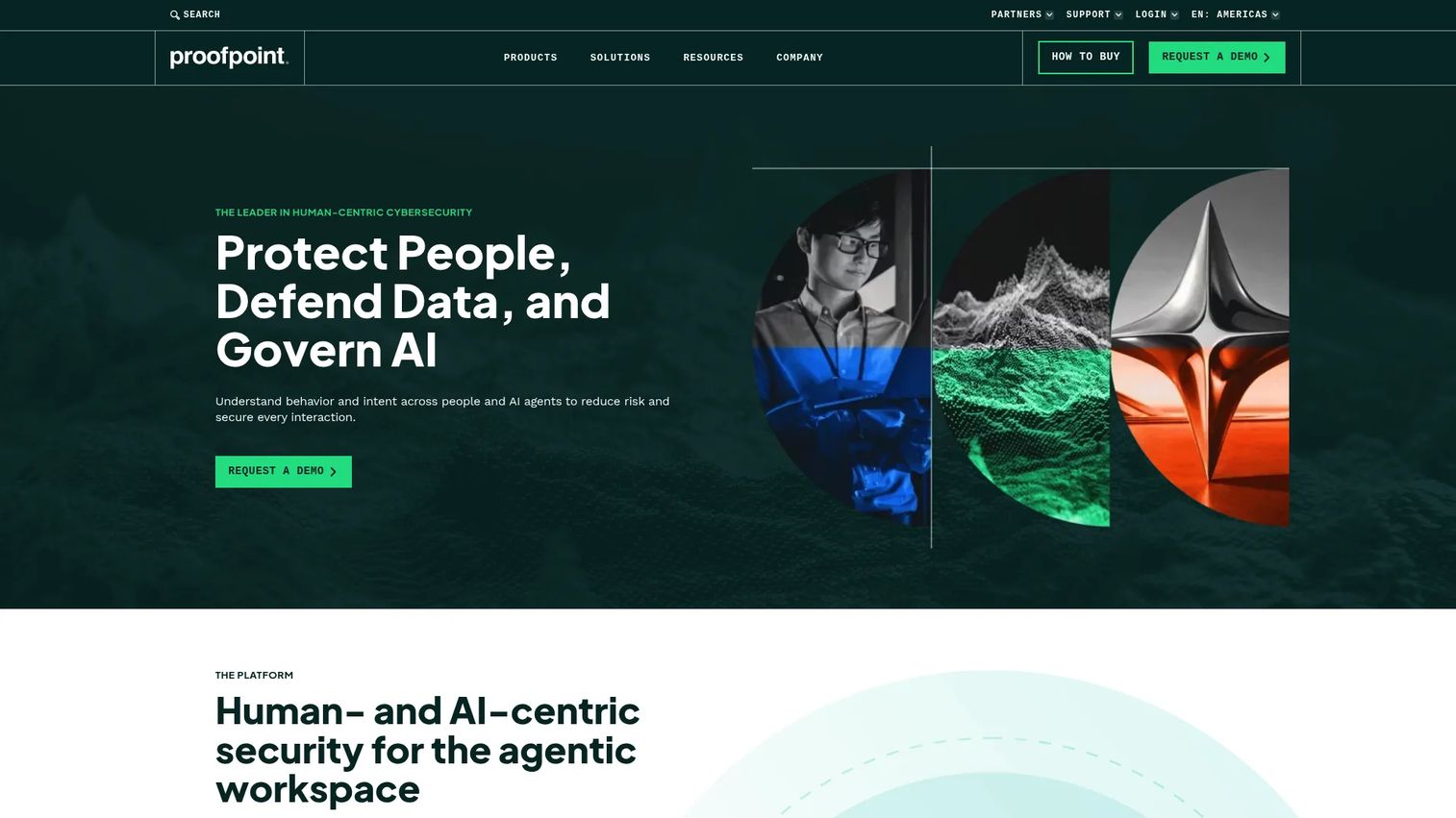
Proofpoint is a broad enterprise cybersecurity and compliance vendor with one of the largest email security portfolios in the market. Its email protection covers AI-powered threat detection, URL Defense, Attachment Defense, email DLP, and people-risk analytics that surface which employees are the most targeted. The platform also addresses digital communications compliance, archiving, and supervision for regulated industries.
Proofpoint has been owned by Thoma Bravo since 2021, which also owns Sophos and Darktrace on this list, and it completed its acquisition of the SMB-focused Microsoft 365 security vendor Hornetsecurity in December 2025. If you shortlist Proofpoint alongside Sophos Email or Darktrace / EMAIL, you are comparing three products under one investor, not three unrelated companies.
Best for: Large enterprises that need broad email security, compliance, and threat intelligence across a mature security organization.
Key features
- AI-powered email threat detection across phishing, malware, and BEC
- URL Defense and Attachment Defense for click-time and attachment-level protection
- Email DLP for outbound data loss prevention
- People risk analytics to identify very attacked people (VAPs)
- Digital communications capture, retention, and e-discovery
Why choose Proofpoint: The portfolio depth suits enterprise security teams that need email, compliance, and people-risk addressed from a single vendor. Buyers should validate module packaging carefully, since Proofpoint sells many capabilities as separate products that combine into a broader suite.
Proofpoint pricing: Pricing is quote-based. The cost depends on user count, modules selected, data volume, support tier, and contract term. Contact Proofpoint sales or a reseller for a scoped quote.
G2 rating: 4.6/5, listed on G2 as Proofpoint Core Email Protection
4. Mimecast
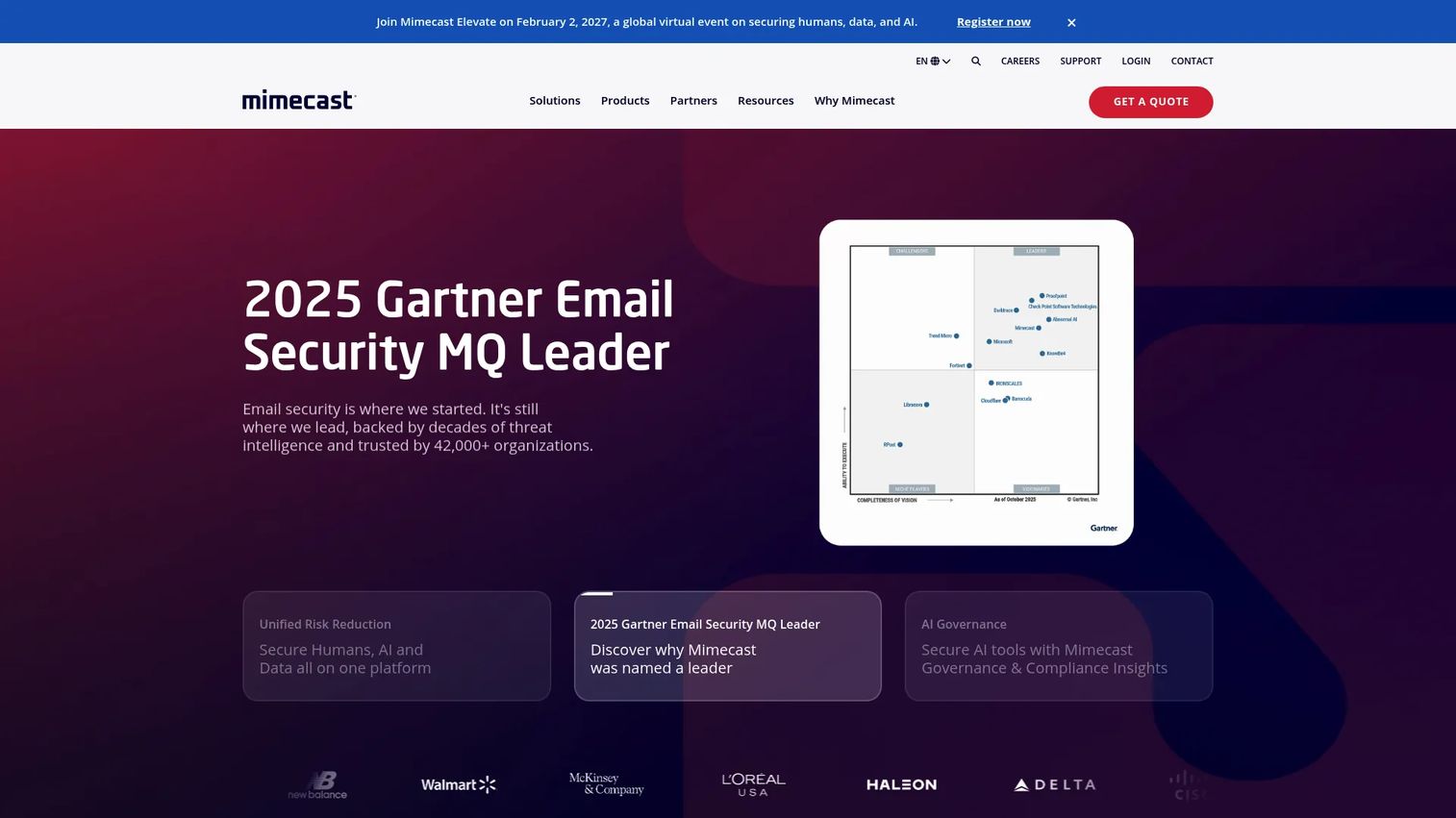
Mimecast combines email and collaboration threat protection, human risk management, data protection, and compliance into one cloud platform. On the email security side, it covers phishing, BEC, malware, ransomware, zero-day threats, impersonation protection, and URL protection. Beyond threat prevention, Mimecast offers email continuity so users can send and receive during an outage, plus cloud archiving and e-discovery for compliance workflows.
Mimecast has been owned by the private equity firm Permira since 2022, and its insider risk capability came in through the acquisition of Code42. That history matters during an evaluation because the insider risk and email security modules were built by different teams and are packaged separately.
Best for: Organizations that treat email as mission-critical infrastructure and want security, continuity, archiving, and insider risk addressed by one vendor.
Key features
- AI-powered phishing, BEC, malware, and impersonation protection
- Email continuity for uninterrupted operations during outages
- Cloud archiving, governance, and e-discovery
- Insider risk management and data protection
- Security awareness training and human risk management
Why choose Mimecast: The continuity and archiving combination makes Mimecast a practical fit for organizations in regulated industries or those that have experienced email outages. Teams buying purely for threat detection may find the broader suite more than they need, but the bundled value is strong for buyers who would otherwise license continuity and archiving separately.
Mimecast pricing: Mimecast structures its plans across Critical, Advanced, and Premium email security tiers, with separate tiers for insider risk and security behavior management. No tier prices are posted, so all plans require a sales conversation.
G2 rating: 4.4/5, listed on G2 as Mimecast Advanced Email Security
5. Barracuda Email Protection
Barracuda Email Protection is a bundled email security suite covering inbound threat protection, post-delivery remediation, Microsoft 365 backup, cloud archiving, and security awareness training across its plan tiers. The Integrated Email Protection plan addresses phishing, BEC, malware, and account takeover. Moving to Premium and Premium Plus adds Microsoft 365 data protection and awareness training. Barracuda Networks has been owned by KKR since 2022, having previously been a Thoma Bravo portfolio company.
Best for: Mid-market IT teams that want email security, backup, archiving, and incident response in one subscription.
Key features
- Behavioral AI, intent analysis, and social graph analysis for inbound threat detection
- Post-delivery automatic remediation and continuous remediation
- Account takeover protection with suspicious-login monitoring
- Domain fraud protection using SPF, DKIM, and DMARC
- Cloud-to-cloud backup for Microsoft 365 (Premium and above)
Why choose Barracuda Email Protection: The bundled approach reduces the number of vendor relationships mid-market teams need to manage. If your evaluation includes email backup and archiving alongside threat protection, Barracuda covers all three without separate licensing negotiations.
Barracuda Email Protection pricing: Barracuda documents six plans in two groups. The Integrated Email Protection group covers Integrated Email Protection, Integrated Email Protection Premium, and Integrated Email Protection Premium Plus. The Email Protection group, which includes Email Gateway Defense, covers Email Protection Advanced, Email Protection Premium, and Email Protection Premium Plus. No numeric prices appear on Barracuda's site, so every tier requires a customized quote based on mailbox count, plan, and contract length.
G2 rating: 4.5/5
6. Cisco Secure Email Threat Defense
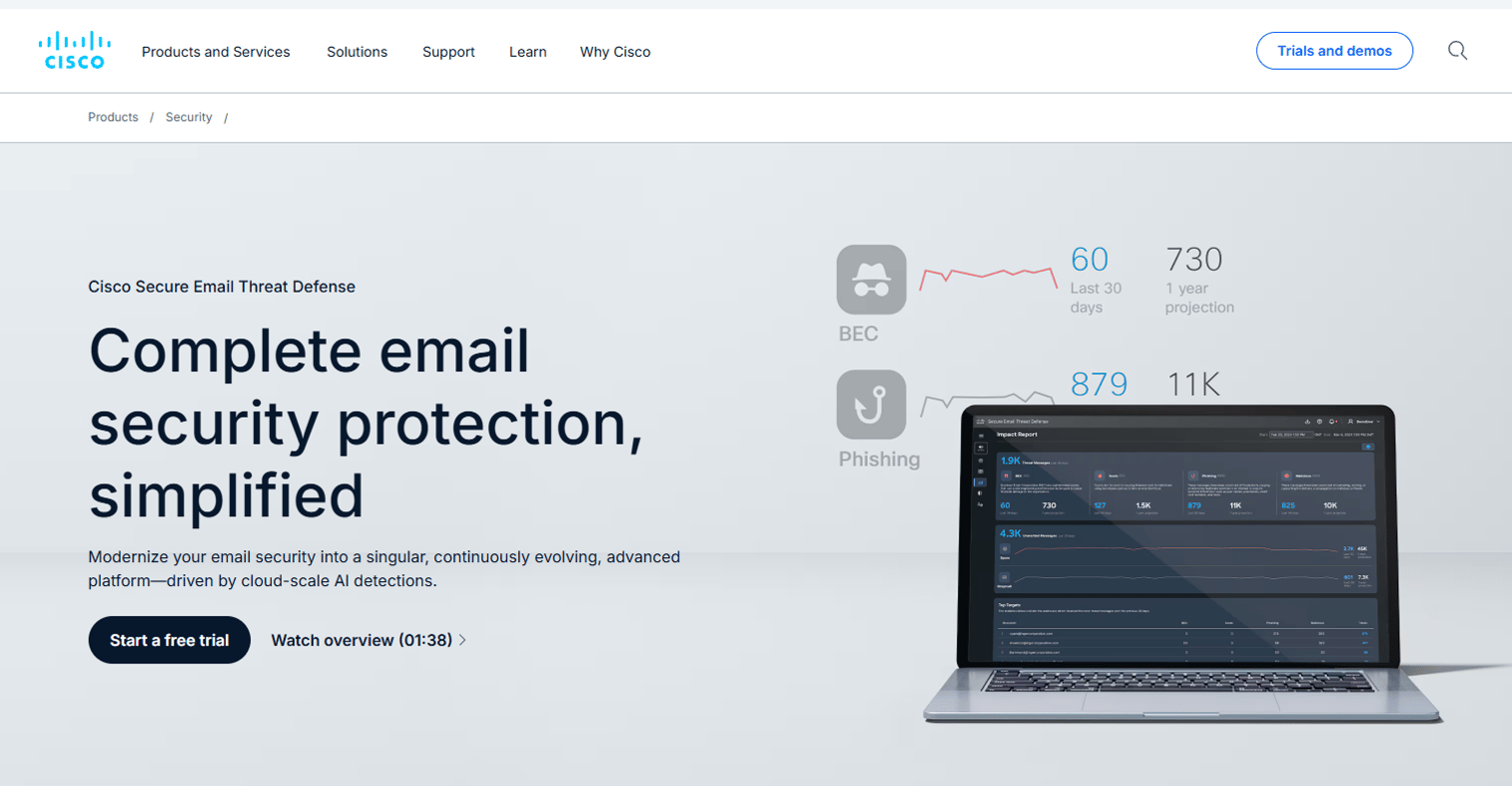
Cisco Secure Email Threat Defense is a cloud email security platform using AI-driven detection alongside a unified inline gateway and API-based deployment. It covers phishing, BEC, ransomware, QR-code phishing, and account takeover across Microsoft 365, Google Workspace, Exchange, and other mail environments. The platform provides searchable threat telemetry and real-time remediation, making it practical for SOC teams that need to investigate and respond from within a single interface.
Best for: Organizations already invested in Cisco security tooling and looking for email threat coverage that connects to their existing security operations workflows.
Key features
- AI-driven gateway and API-based deployment supporting pre-delivery and post-delivery protection
- BEC detection, malware analysis, and ransomware protection
- QR-code and account takeover protection
- Searchable threat telemetry for investigation and hunting
- Post-delivery remediation and real-time alert triage
Why choose Cisco Secure Email Threat Defense: Cisco buyers benefit from consolidated operations and threat intelligence that flows across their existing stack. Teams should compare this product with Cisco's broader secure email gateway offering to avoid redundant coverage.
Cisco Secure Email Threat Defense pricing: Cisco offers ETD Essentials and ETD Advantage plans on per-user, subscription terms of one, three, or five years. Numeric prices require a quote from Cisco or a Cisco partner. A free trial is available.
G2 rating: 4.3/5
7. Sophos Email
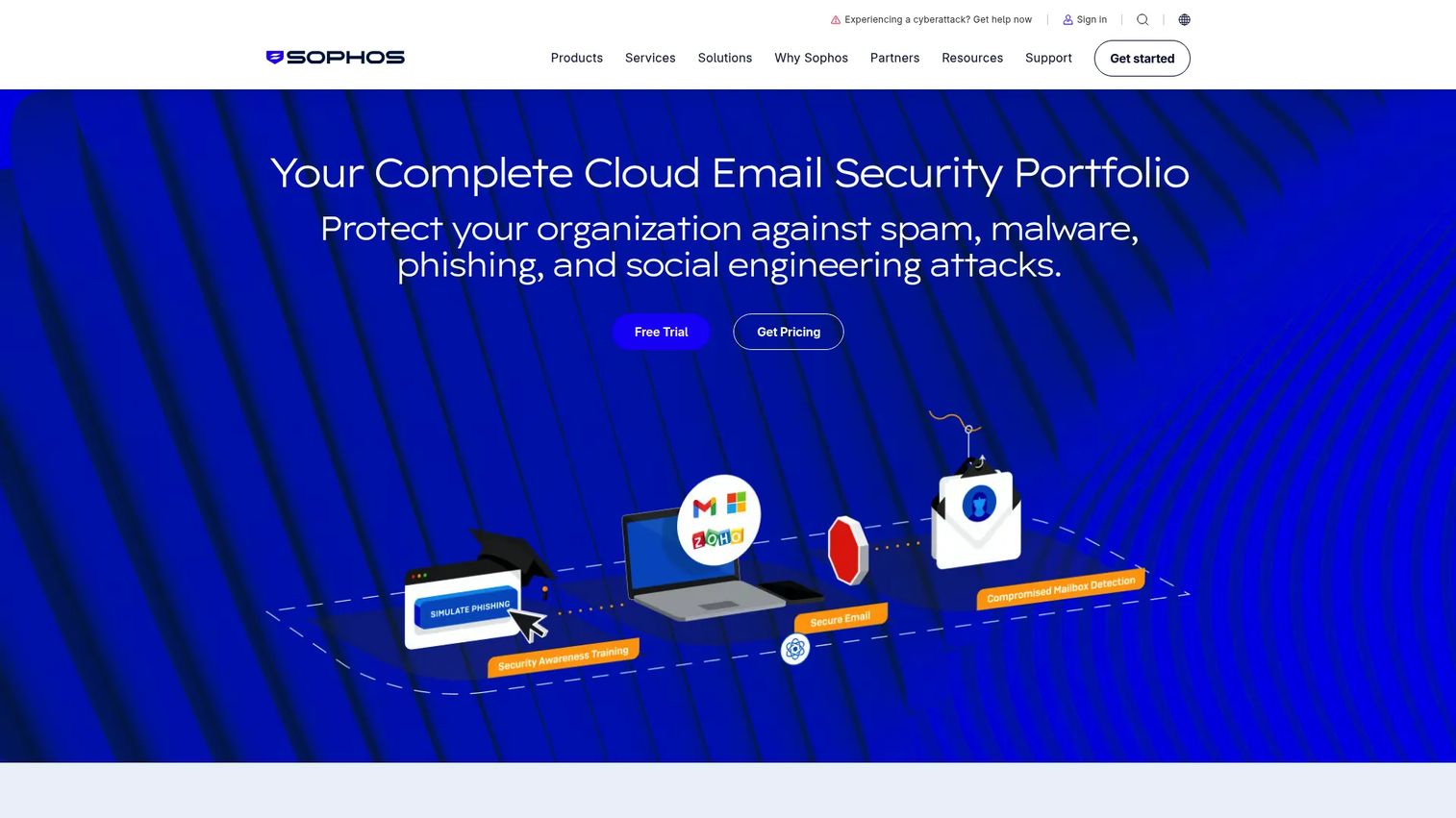
Sophos Email is a cloud email security product for Microsoft 365 and Google Workspace, managed through Sophos Central alongside endpoint and network security controls. It covers anti-phishing, AI-powered BEC and impersonation detection, malware scanning, QR-code and image-based threat detection, time-of-click URL rewriting, and post-delivery message clawback. The platform also includes DLP, encryption, and integrated phishing simulation. Sophos has been owned by Thoma Bravo since 2020, the same investor behind Proofpoint and Darktrace on this list.
Best for: Lean IT and security teams using Sophos for endpoint or network security who want email protection managed in the same console.
Key features
- AI-powered anti-phishing and BEC detection
- Impersonation protection with SPF, DKIM, and DMARC enforcement
- Zero-day attachment protection using static and dynamic analysis
- QR-code and image-based threat detection
- Post-delivery malicious email clawback and DLP
Why choose Sophos Email: Consolidating email protection into Sophos Central reduces console switching and simplifies reporting for lean security teams. Organizations that are not already Sophos users should weigh the operational benefit against the depth of specialist email security vendors.
Sophos Email pricing: Sophos offers two plans, Sophos Email and Sophos Email Plus, licensed per user and shared mailbox. Pricing requires a quote. A free trial is available. MSP Flex licensing is also available for managed service providers.
G2 rating: 4.2/5
8. Check Point Email Security
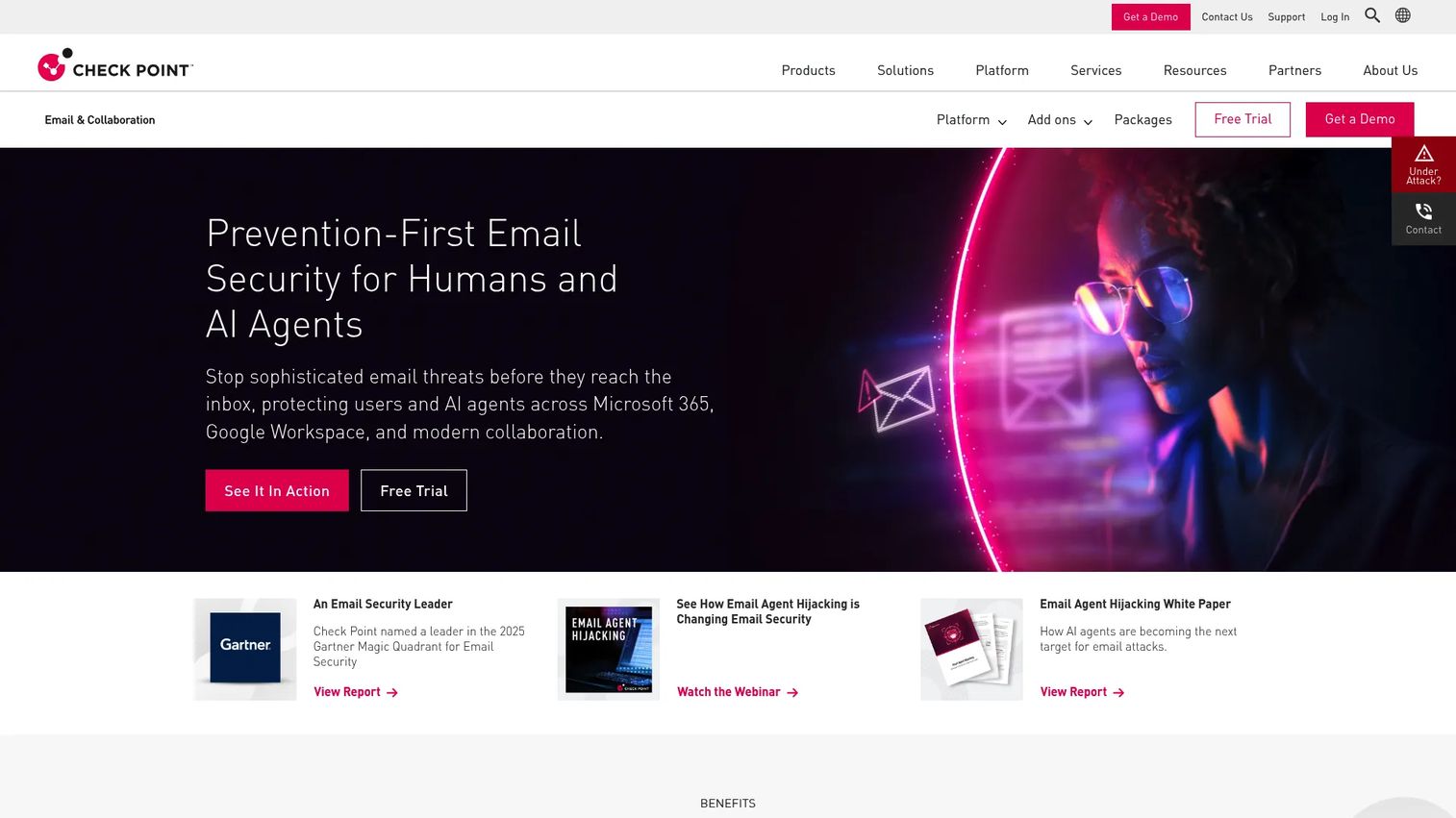
Check Point Email Security is an AI-native, prevention-first email security platform for Microsoft 365, Google Workspace, and collaboration applications. It uses more than 50 AI engines combining behavioral, identity, language, and threat-intelligence analysis to block phishing, malware, zero-day threats, and BEC before delivery. The platform also covers DLP, DMARC management, account takeover protection, URL sandboxing, and content disarm and reconstruction.
This product came to Check Point through its 2021 acquisition of Avanan, and it has also been sold as Check Point Harmony Email & Collaboration. Expect to meet all three names in vendor documentation and in older review data.
Best for: Organizations aligned to a prevention-first security philosophy that want email protection extending into collaboration applications.
Key features
- Inline pre-delivery protection using 50+ AI detection engines
- URL protection, sandboxing, and content disarm and reconstruction
- DLP and DMARC management
- Account takeover protection and archiving options
- Email-only and email-and-collaboration packages
Why choose Check Point Email Security: The prevention-first architecture and collaboration coverage make this a good fit for teams with Check Point security products elsewhere in the stack. A 14-day free trial lets buyers test against their own mail flow before committing.
Check Point Email Security pricing: Check Point offers four packages: Email Only Advanced Protect, Email Only Complete Protect, Email and Collaboration Advanced Protect, and Email and Collaboration Complete Protect. All require a custom quote. Archiving, incident response as a service, and DMARC management are listed as add-ons.
G2 rating: 4.6/5
9. KnowBe4 Email & Collaboration Security
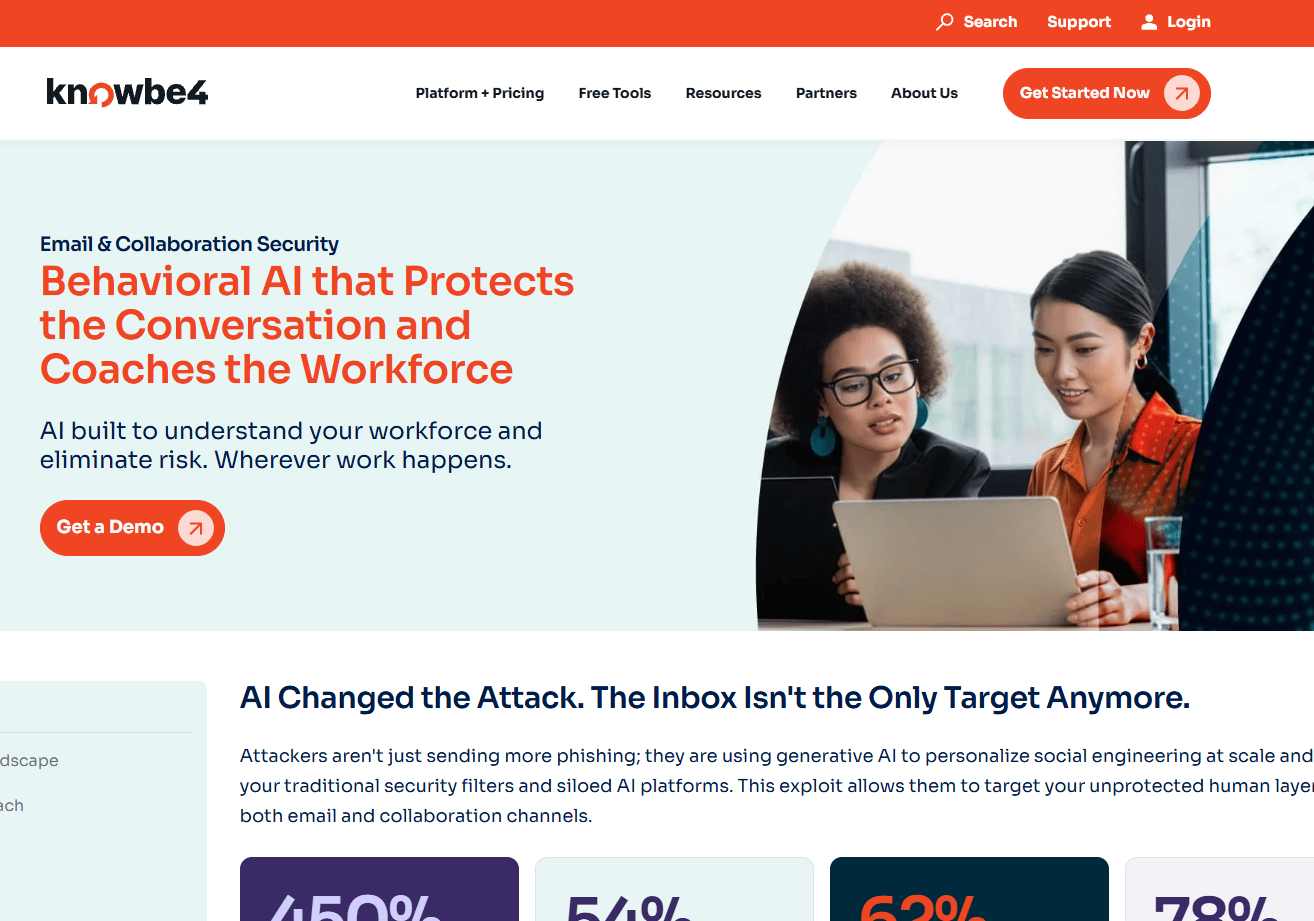
KnowBe4 Email & Collaboration Security combines multi-engine behavioral AI detection for phishing, BEC, impersonation, links, and attachments with point-of-risk user coaching. When a risky message is detected, the platform delivers a contextual warning to the user in their inbox, turning a threat event into a teaching moment. It also covers outbound DLP and misdirected-send protection.
The email security engine here is the former Egress platform, which KnowBe4 agreed to acquire in April 2024. G2 still carries two overlapping listings, one for KnowBe4 Email & Collaboration Security and one for KnowBe4 Cloud Email Security (Formerly Egress), so match the listing to the module you are actually buying when you read review data.
Best for: Organizations that want technical email controls and employee behavior change addressed by the same platform.
Key features
- Multi-engine behavioral AI detection across phishing, BEC, and impersonation
- Contextual in-inbox coaching with localized warning banners
- Outbound DLP and misdirected-send protection
- Microsoft 365 protection through API integration
- Collaboration channel protection alongside email
Why choose KnowBe4 Email & Collaboration Security: Buyers who already use KnowBe4 for security awareness training get email threat detection that reinforces user behavior directly in the inbox. For teams evaluating email security and awareness training separately, this removes one vendor relationship.
KnowBe4 Email & Collaboration Security pricing: KnowBe4 offers Defend and Prevent module options and directs buyers to request a demo for a scoped quote.
G2 rating: 4.5/5
10. Darktrace / EMAIL
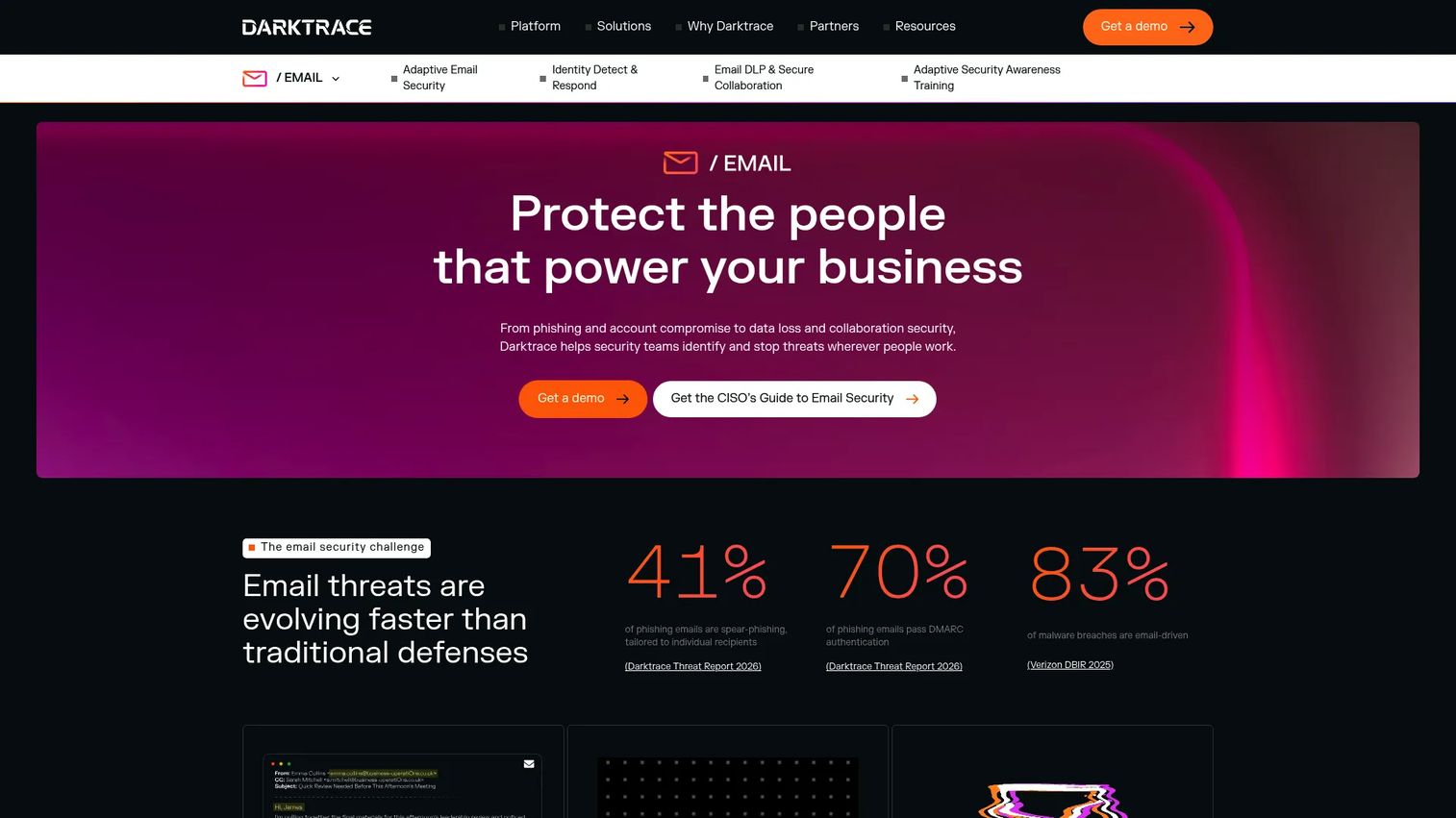
Darktrace / EMAIL uses self-learning AI to model individual communication patterns and organizational relationships, then flags messages that deviate from what is normal for each user. It covers phishing, BEC, executive impersonation, account compromise, and data loss, with an autonomous response capability that can take containment action without waiting for a human decision. The platform also extends to collaboration tools including Teams, Slack, Zoom, and SharePoint. Darktrace was taken private by Thoma Bravo in October 2024, which also owns Proofpoint and Sophos on this list.
Best for: Security teams that want adaptive, anomaly-based detection for email threats that change too fast for signature-based controls.
Key features
- Self-learning behavioral AI for email and collaboration
- Identity Detection and Response with autonomous account-compromise containment
- Phishing, BEC, impersonation, and social engineering detection
- Email DLP across email and collaboration platforms
- Link protection and autonomous response
Why choose Darktrace / EMAIL: The self-learning model is well suited to environments where the threat profile changes frequently and security teams want detection that adapts without manual rule updates. Buyers should ask specifically about autonomous response scope and tuning options during a proof of value.
Darktrace / EMAIL pricing: Cost depends on environment size, modules, and contract terms. Contact the vendor for a scoped quote.
G2 rating: 4.2/5
11. FortiMail
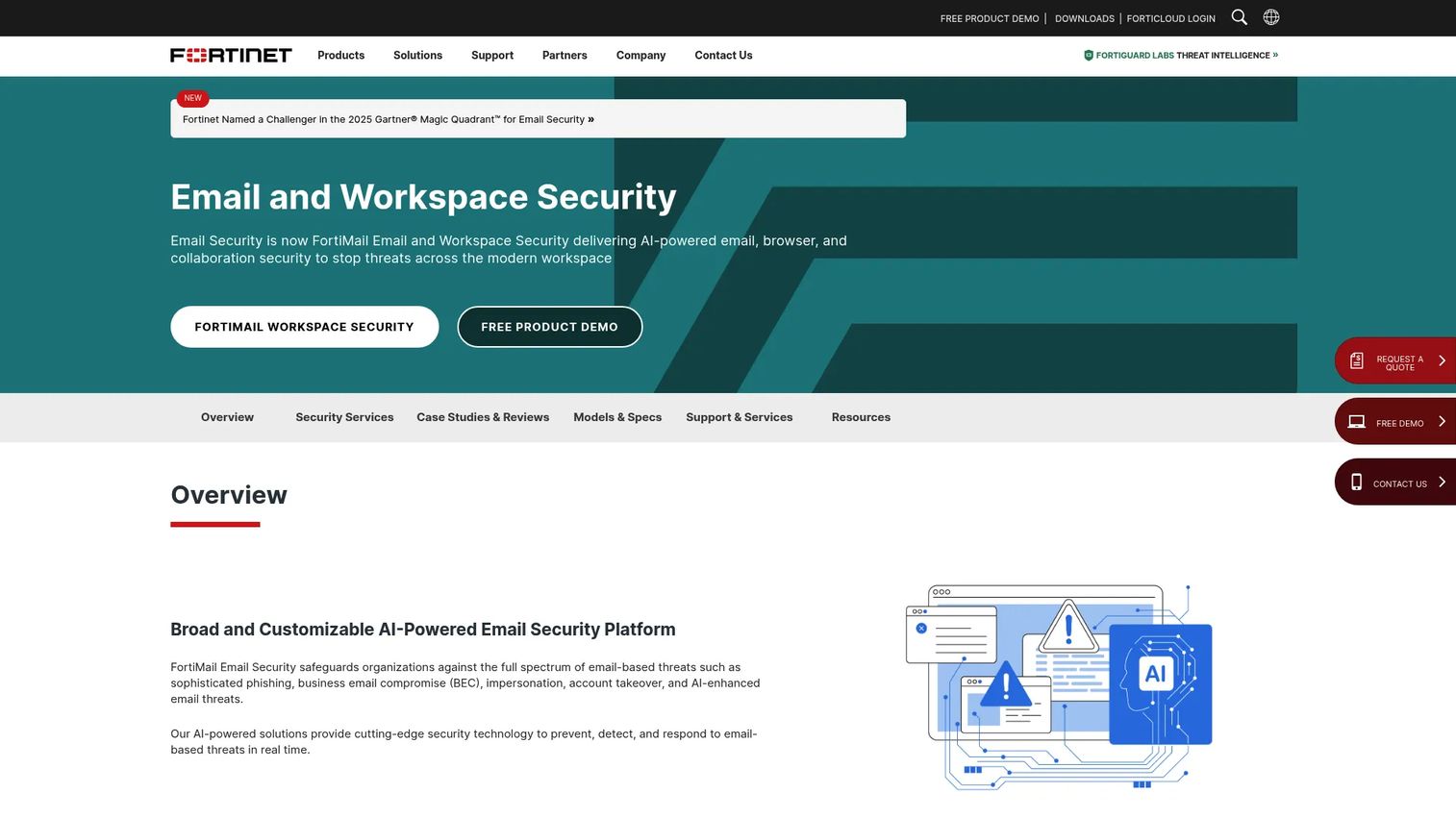
FortiMail is Fortinet's AI-powered email security platform available as a hardware appliance, virtual machine, hosted cloud, or SaaS deployment. It covers anti-spam, anti-malware, phishing protection, impersonation detection, DLP, outbound email encryption, and integration with the Fortinet Security Fabric. Microsoft 365 and Google Workspace protection is available through both gateway and API integrations.
Best for: Organizations that need deployment flexibility across cloud, hybrid, and on-premises environments, or those with existing Fortinet Security Fabric investments.
Key features
- AI-powered multilayered email threat detection
- Inbound and outbound protection with anti-spam and anti-malware
- Microsoft 365 and Google Workspace gateway and API support
- DLP and outbound email encryption
- Hardware, virtual, hosted, and SaaS deployment options
Why choose FortiMail: Deployment breadth is the main differentiator here. Organizations with regional data residency requirements, on-premises infrastructure, or hybrid Exchange environments benefit from the ability to run the same platform across multiple deployment modes. Fortinet Security Fabric integration adds value for teams already running Fortinet elsewhere.
FortiMail pricing: Fortinet describes perpetual licensing with annual subscriptions for appliance and virtual models, per-mailbox annual subscriptions for hosted cloud, and per-user annual subscriptions for SaaS. No numeric prices appear on the product page. Contact Fortinet or a reseller for a scoped quote based on mailbox count and deployment model.
G2 rating: 4.3/5, from a small review base of roughly two dozen reviews
12. IRONSCALES Email Security Platform
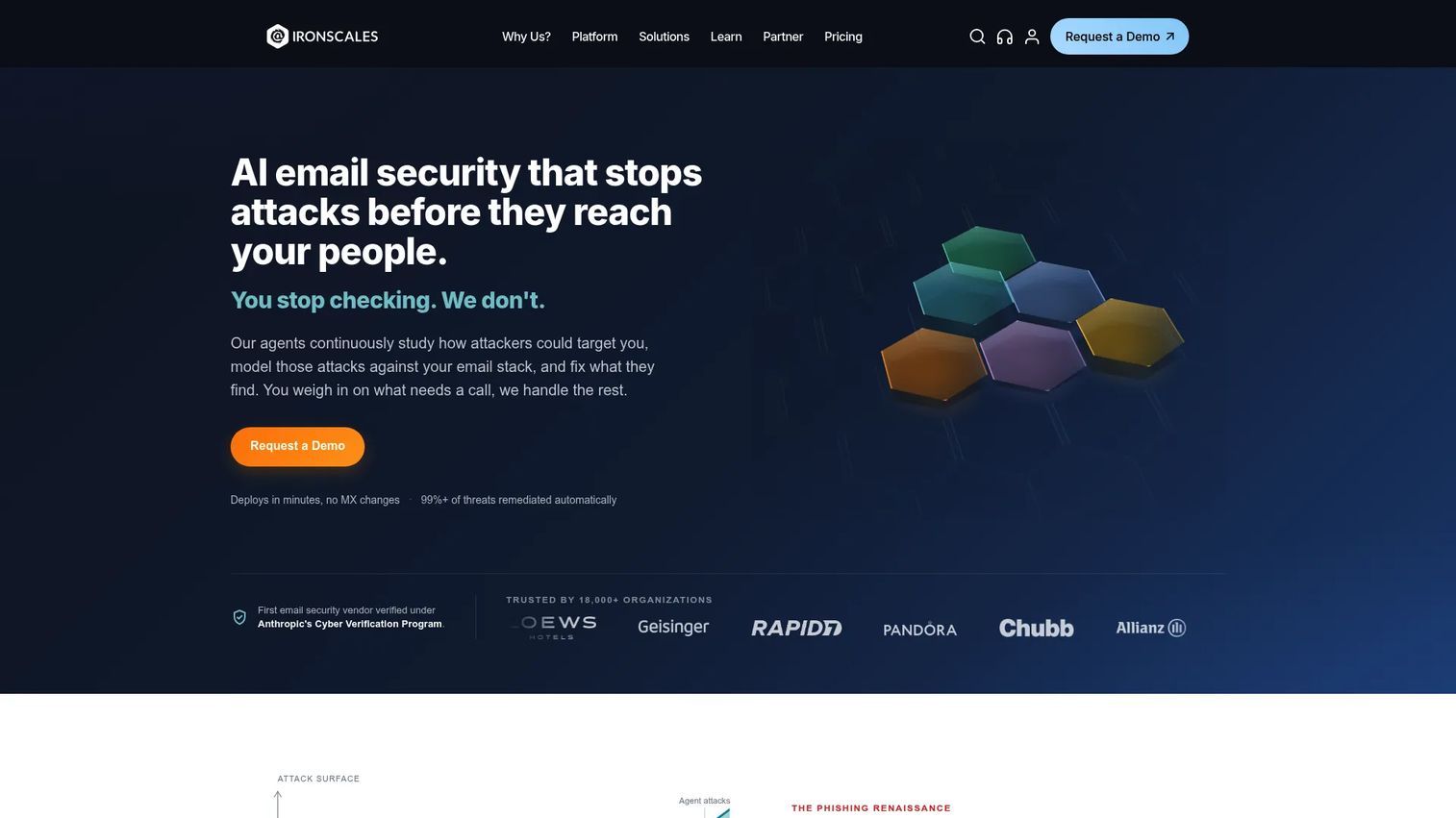
IRONSCALES is an AI-powered email security platform for Microsoft 365 and Google Workspace, focused on phishing detection, automated remediation, continuous mailbox behavioral analysis, and integrated phishing simulation. A distinguishing feature is the user-reporting workflow: when a user flags a suspicious email, IRONSCALES triages, investigates, and remediates at campaign scale automatically. The platform also includes email encryption, DLP, and security awareness training.
Best for: Security teams with high volumes of user-reported suspicious emails who want automated triage and response rather than a manual analyst queue.
Key features
- AI-powered phishing, BEC, and impersonation detection
- Automated email threat remediation including campaign-level clawback
- QR-code and image-based attack protection
- User reporting with automated triage and incident response
- Phishing simulation and security awareness training
Why choose IRONSCALES: Automated triage is the reason to shortlist IRONSCALES, since it is built to close user-reported threats rather than route them to an analyst queue. A free trial of the paid platform lets security teams evaluate detection and remediation against their own mail flow before committing to a contract.
IRONSCALES pricing: IRONSCALES publishes six plans: Email Essentials, Email Protect, Email Protect 360, Email Protect Pro, Complete Protect, and Human Risk Management. None of them carries a published price, and all require a quote based on mailbox count, modules, and support tier. A separate free IRONSCALES Starter plan exists for Microsoft 365, but it covers phishing simulation, a Report Phishing button for Outlook, and reporting dashboards rather than inbound mail filtering, and it caps training at four campaigns a year. Treat Starter as an awareness-training entry point, not as free email protection.
G2 rating: 4.7/5
13. Cloudflare Cloud Email Security
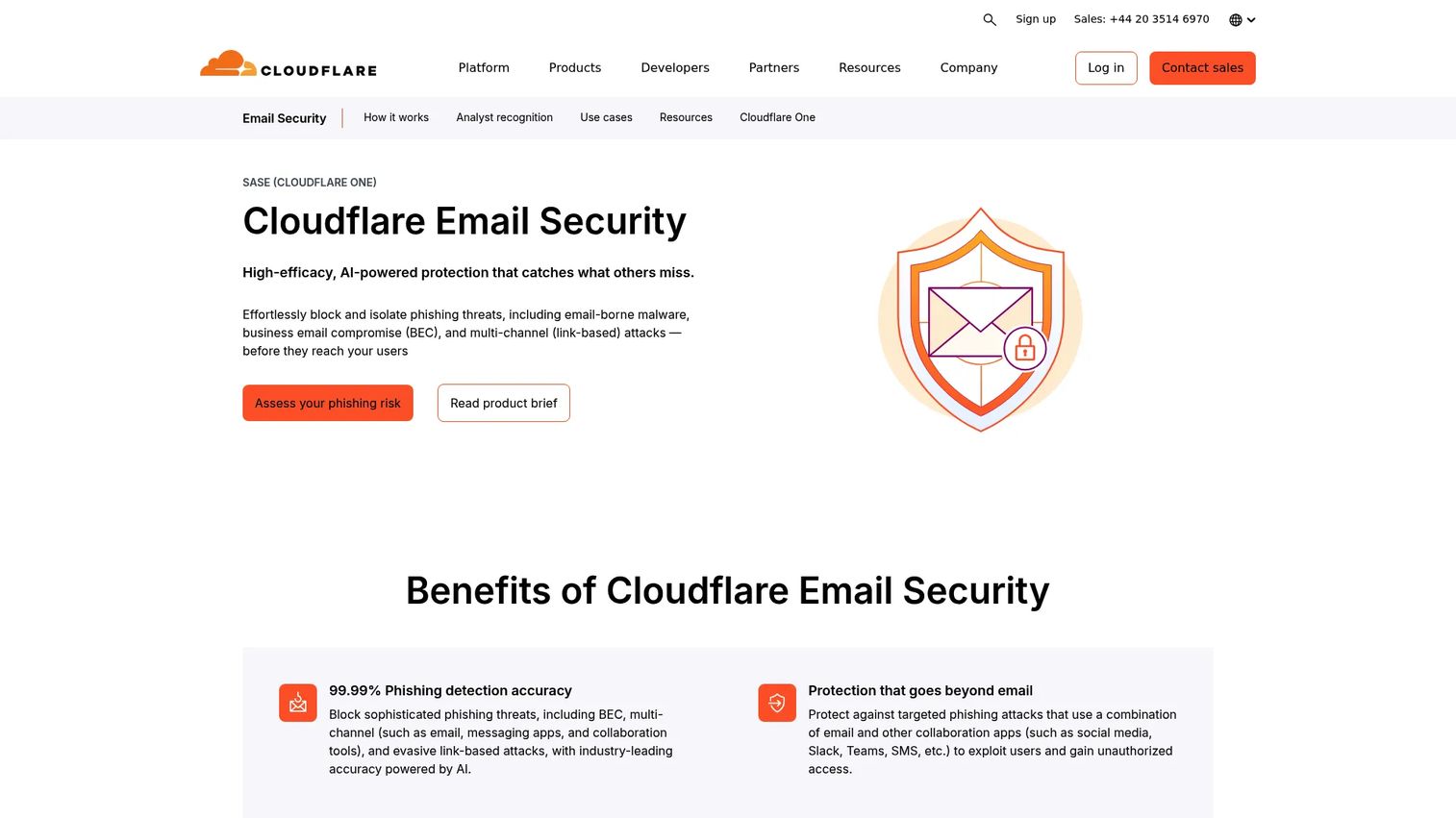
Cloudflare Cloud Email Security delivers AI-powered phishing detection, BEC protection, domain spoofing defense, and link analysis as part of Cloudflare's broader Zero Trust platform. Deployment options include inline, API-based, and hybrid modes with pre-delivery filtering and post-delivery retraction. The integration with Cloudflare One (SASE) means email risk signals can flow into the same security posture data used for access, network, and application controls.
Cloudflare built this product on Area 1 Security, which it acquired in 2022, and the service has also been marketed as the Advanced Email Security Suite and simply as Cloudflare Email Security. Older review and analyst data may still sit under the Area 1 name.
Best for: Cloud-first organizations consolidating security operations around Cloudflare's Zero Trust and SASE platform.
Key features
- AI-powered phishing and BEC detection with domain spoofing defense
- Protection against multi-channel attacks including email-borne malware
- Inline, API, or hybrid deployment with pre-delivery and post-delivery options
- Link analysis and post-delivery retraction
- Integration with Cloudflare One and broader Zero Trust controls
Why choose Cloudflare Cloud Email Security: If your security architecture already runs on Cloudflare, adding email protection through the same platform simplifies policy management and threat correlation. Teams not standardized on Cloudflare should compare the email security feature depth against specialist vendors before choosing this route.
Cloudflare Cloud Email Security pricing: Cloudflare offers Advantage, Enterprise, and Enterprise + PhishGuard packages.
14. CrowdStrike Falcon Email Protection
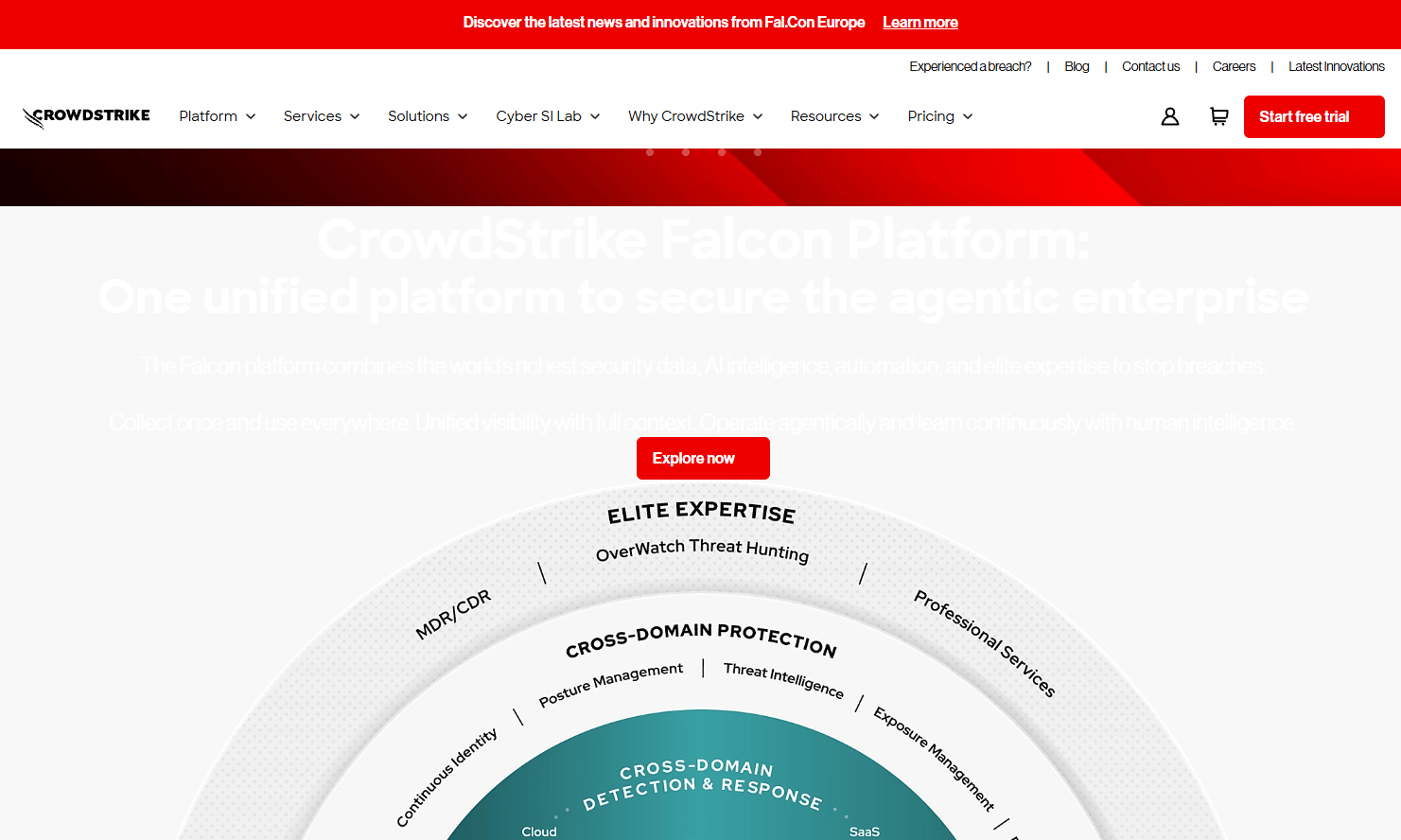
CrowdStrike Falcon Email Protection appears on vendor shortlists under a name CrowdStrike does not use for a product it does not sell. As of October 2026, CrowdStrike publishes no standalone email security product: its platform and pricing pages cover endpoint security, identity security, cloud security, SaaS security, data security, exposure management, and Falcon Next-Gen SIEM, with no email protection module among them.
Email coverage on the Falcon platform comes from specialist email security vendors that stream their telemetry into Falcon Next-Gen SIEM and Falcon Insight XDR through CrowdStrike Marketplace connectors. Mimecast, Proofpoint, Check Point, IRONSCALES, Abnormal, Egress, and Sublime Security all publish integrations of this kind. Teams that want email risk visible alongside endpoint and identity data get there by keeping a specialist email security platform and connecting it to Falcon, not by buying email protection from CrowdStrike.
Best for: Organizations running CrowdStrike Falcon that want detections from a specialist email security platform correlated inside Falcon Next-Gen SIEM.
Key features
- No first-party CrowdStrike email security product as of October 2026
- Falcon Next-Gen SIEM ingestion of email security telemetry from third-party platforms
- Falcon Insight XDR data connectors published by email security vendors
- Correlation of email detections with endpoint, identity, and cloud signals in one investigation surface
- CrowdStrike Marketplace listings that carry and document the integrations
Why this entry still matters: Falcon customers are frequently told that email is covered by their existing CrowdStrike investment. It is not. The practical decision for a Falcon shop is which email security vendor to pair with Falcon, which makes the integration quality and the SIEM data format part of the evaluation criteria rather than an afterthought.
CrowdStrike Falcon Email Protection pricing: Budget instead for a specialist email security platform plus the Falcon modules you already license.
15. Sublime Security
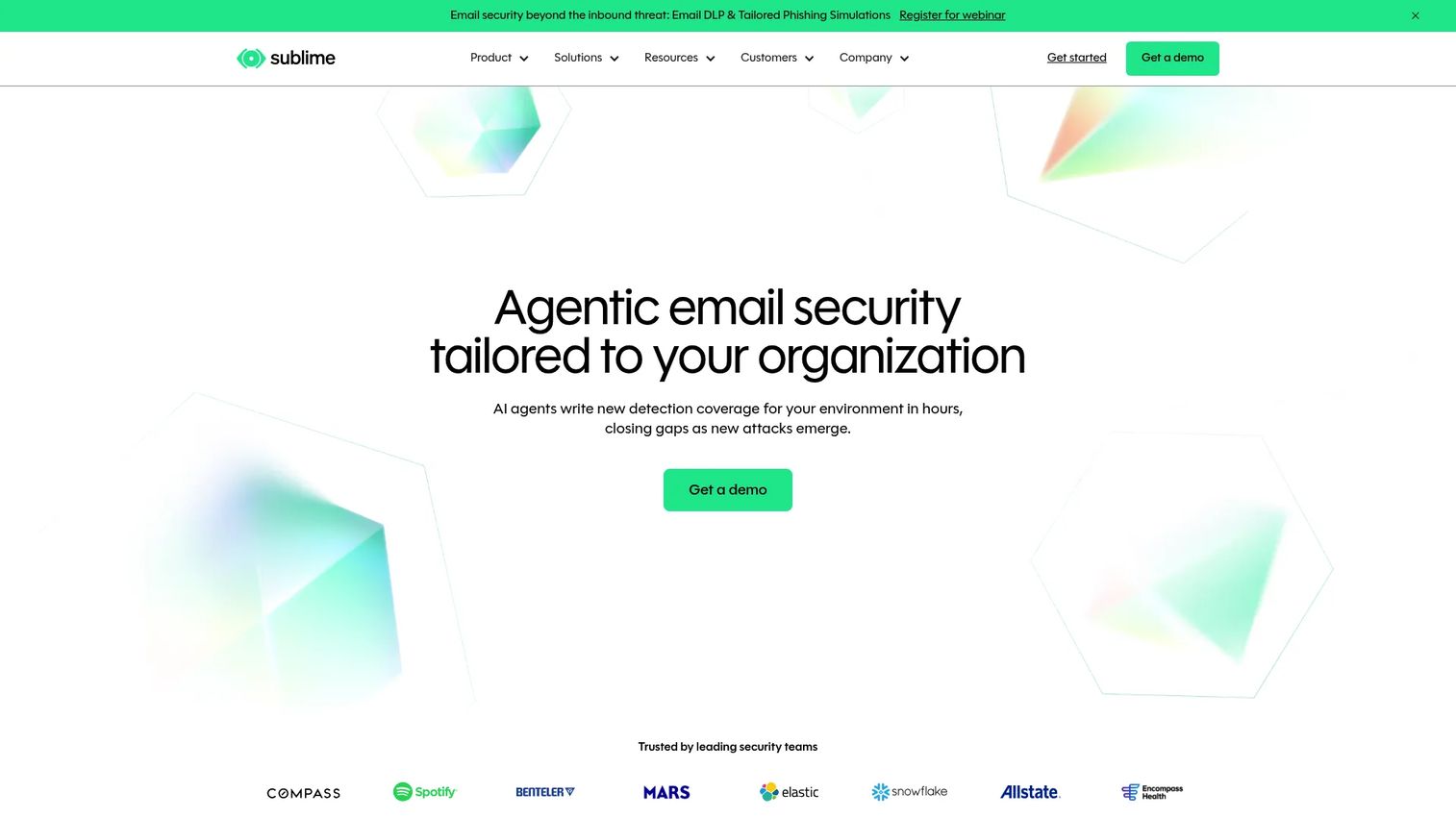
Sublime Security is an AI-powered cloud email security platform for Microsoft 365 and Google Workspace built around explainable, customizable detection logic. Its Autonomous Detection Engineer (ADE) and Autonomous Security Analyst (ASA) capabilities generate and refine detection rules automatically, while giving security teams full visibility into why each message was flagged. Historical message search, threat hunting, and backtesting let analysts validate rules against past mail flow before deploying them.
Best for: Mature security teams that want to understand and control their detection logic, run proof-of-value tests against their own mail flow, and tune rules to their specific environment.
Key features
- AI-powered detection for phishing, BEC, and malware with transparent rule logic
- Autonomous Detection Engineer and Autonomous Security Analyst capabilities
- Historical message search, threat hunting, and detection backtesting
- API-based deployment with Microsoft 365, Google Workspace, and IMAP connectors
- Remediation including quarantine, warning banners, and campaign-level clawback
Why choose Sublime Security: Explainability is the differentiation that matters for security engineers who need to justify detections to compliance teams or tune coverage to reduce false positives. The free Core tier for the first 100 mailboxes makes it practical to run a proof of value before committing to an enterprise contract.
Sublime Security pricing: The Core plan is free for the first 100 mailboxes, covering individual practitioners and lightweight deployments. The Enterprise plan provides the full platform, premium support, and advanced controls at pricing that requires a demo request.
G2 rating: 4.8/5
Considerations when choosing cloud email security solutions
Match the deployment model to your mail environment
API-native tools connect to cloud mailboxes without touching mail flow, which simplifies deployment in Microsoft 365 and Google Workspace environments. Secure email gateways sit in front of delivery and provide more control over pre-delivery filtering but require MX record changes. Hybrid organizations running Exchange on-premises alongside cloud mailboxes often need a gateway that supports both modes. Multi-region or regulated environments may require hosted or appliance options for data residency. Confirm the deployment model before you start a proof of value.
Test against your actual mail flow
Proof-of-value testing should use realistic scenarios drawn from your own environment. Ask vendors to demonstrate detection against targeted phishing, BEC, vendor fraud, QR phishing, and malware samples. Equally important: measure false positives against legitimate business email. Security teams that define written success criteria before a proof of value starts, including acceptable false-positive rates, remediation time targets, and SOC alert volume, get more useful comparisons than those who evaluate informally.
Check remediation and SOC workflow depth
Detection is table stakes. What varies significantly across platforms is what happens after a threat is identified. Evaluate automated investigation scope, message clawback speed, campaign-level remediation, abuse mailbox triage, SIEM alert format, and SOAR playbook compatibility. Ask whether the platform reduces analyst workload or simply routes alerts to another queue.
Validate DLP, encryption, and retention requirements
Email security and compliance requirements frequently overlap. If your organization needs outbound DLP, encryption, archiving, data residency, or audit logs, confirm whether each platform covers these natively or as separately licensed add-ons. Regulated industries often require all of these, and the total cost changes significantly when add-ons are included.
Check who owns the vendors on your shortlist
Email security has consolidated heavily. Proofpoint, Sophos, and Darktrace are all held by the same private equity firm. Check Point's email product was Avanan, Cloudflare's was Area 1 Security, and KnowBe4's was Egress. A shortlist of five products can easily mean three vendor relationships, which affects negotiating leverage, roadmap risk, and what happens if one platform is folded into another.
Compare pricing by protected mailbox
Sticker pricing comparisons rarely reflect total cost. Evaluate pricing per protected mailbox after accounting for modules, support tier, data retention, DLP, archiving, and any managed services. Some platforms bundle these; others price each separately. The mailbox-level unit cost is the most reliable basis for comparison across vendors with different packaging structures.
Conclusion
The 15 platforms on this list cover most serious email security requirements across Microsoft 365, Google Workspace, Exchange Online, and hybrid environments. Here is how to read the shortlist:
Microsoft Defender for Office 365 is the natural starting point for Microsoft-native environments, especially at Plan 2 capability level. Abnormal AI and Darktrace / EMAIL are the strongest answers when the concern is behavioral detection for sophisticated BEC and social engineering. Proofpoint, Mimecast, and FortiMail suit enterprise buyers who need breadth across threat protection, compliance, and deployment flexibility. Barracuda, Sophos, and IRONSCALES serve teams that want practical, operationally manageable protection without large-enterprise complexity. Sublime Security stands apart for security engineering teams that want explainable detection and a clear proof-of-value path.
Build a shortlist of three to five platforms based on your deployment model, threat priorities, and compliance requirements. Then run a structured proof of value against your own mail flow before committing. That conversation, with clear success criteria defined upfront, is where the real evaluation happens.
For a broader look at the security tools landscape relevant to presales and technical validation workflows, the best AI cybersecurity solutions and application security testing software guides on the Guideflow blog cover adjacent categories worth having in your research stack.
Every platform on this list asks a security buyer to understand a detection and remediation workflow before they will agree to a proof of value. If your own team sells technical security software, interactive demos let presales and product marketing teams show those workflows in the browser, so evaluators can follow the remediation path at their own pace ahead of a live call. Start your journey with Guideflow today!
FAQs
Cloud email security solutions are software platforms that protect cloud-hosted email environments such as Microsoft 365, Google Workspace, and Exchange Online from phishing, business email compromise, malware, ransomware, impersonation, data loss, and account takeover. They extend native platform controls with advanced detection, automated remediation, DLP, encryption, and SIEM and SOAR integrations.
Native controls in both platforms provide a baseline against spam and known malware. Most organizations that face targeted BEC, executive impersonation, vendor fraud, QR phishing, or account takeover add a specialist layer for deeper behavioral detection, post-delivery remediation, and compliance coverage. The decision depends on your threat profile, compliance requirements, and SOC capacity.
API-based tools integrate directly with cloud mailboxes through the platform's API. They inspect messages without changing mail flow, which makes deployment faster in pure-cloud environments. Secure email gateways sit in the mail flow path before delivery and require an MX record change. Gateways offer more control over pre-delivery filtering and work well for hybrid and on-premises environments. Several platforms offer both modes, which is worth confirming during evaluation.
No single platform universally outperforms the others on BEC. The strongest BEC protection combines behavioral AI that models identity and communication patterns (as Abnormal AI and Darktrace / EMAIL do), impersonation detection with vendor relationship modeling, account takeover detection, and fast post-delivery remediation. Ask vendors specifically how they detect BEC that has no malicious link or attachment, since that is the category where signature-based tools fail.
Test against realistic phishing samples, targeted BEC scenarios, vendor fraud simulations, QR phishing, and malware samples. Measure false positives against legitimate business email, not just detection rates. Evaluate remediation speed, message clawback reliability, abuse mailbox triage throughput, SIEM alert quality, and admin usability. Define written success criteria before the proof of value begins so you can compare vendors objectively.
Most enterprise-grade email security platforms are quote-based. The main cost drivers are mailbox count, modules selected (DLP, encryption, archiving, awareness training), support tier, data retention period, and contract length. Microsoft Defender for Office 365 Plan 1 is an exception at $2.00/user/month (annual). Sublime Security offers a free Core tier for the first 100 mailboxes. IRONSCALES offers a free Starter plan, but it covers phishing simulation and reporting rather than mail filtering, so treat its paid plans as the comparable option. Every other platform on this list requires a scoped quote. Compare cost per protected mailbox after accounting for required add-ons, not list price alone.
AI detection significantly improves catch rates for novel and behavioral threats, but it is one component of a complete program. Buyers should also evaluate policy controls, threat intelligence integration, remediation depth, detection explainability, reporting quality, and human review workflows. AI that cannot explain why a message was flagged creates friction in regulated environments and makes tuning difficult. Platforms like Sublime Security address this directly; others vary in how much transparency they provide.
Enterprise evaluations typically prioritize outbound DLP, email encryption, archiving, data residency controls, audit logs, and role-based admin permissions. SIEM and SOAR integration quality determines how well the platform fits existing security operations. Identity context, including account takeover detection and integration with identity providers, increasingly matters as email attacks target credentials rather than inboxes. Scalable remediation that handles campaign-level threats without manual analyst effort is a practical differentiator at enterprise volume.