Your POS says you have 14 units. Your warehouse spreadsheet says 9. Your online store sold 3 of them an hour ago. So which number is real?
This is the daily tax of running retail on disconnected systems. The POS lives in one place, inventory in another, ecommerce in a third, and accounting in a fourth. Every reconciliation is a manual stitch, every stockout is a surprise, and every cross-channel decision rests on numbers nobody fully trusts. The retail management software market is growing from roughly $9 billion in 2025 to over $47 billion by 2030 at a 14% CAGR, according to The Business Research Company via the National Law Review (2026). That growth is not hype. It is retailers paying to stop guessing.
For a product manager or operator evaluating retail software, the real job is not "run a store." It is reducing friction across teams, systems, and channels so one set of numbers drives every decision. That means a platform where POS, inventory, order management, and ecommerce share one operational layer instead of fighting each other.
2026 is a sensible year to evaluate, because the category has matured past basic transaction logging into full omnichannel retail coordination. The same way teams use interactive product demos to let buyers experience software before committing, the platforms below let you map your operational reality to a system before you sign. If you are also weighing adjacent stacks, our roundups of loyalty management software and marketing analytics tools pair naturally with a retail platform decision.
What's inside
This guide covers retail management software for store operations, inventory visibility, order orchestration, customer relationship management, and omnichannel retail. It is written for operators and product managers comparing platforms before they replace fragmented POS, inventory, and ecommerce tools.
We selected the eight platforms below on four criteria that matter most for mid-funnel buyers:
- Breadth of functionality across POS, inventory, orders, and CRM
- Ease of integration with ecommerce, payments, accounting, and analytics
- Scalability for single stores up to multi-location retail networks
- Pricing clarity, including whether public pricing exists at all
Each section includes verified pricing, a G2 rating where available, and a buyer-fit read so you can shortlist fast.
TL;DR
A quick decision shortcut by buyer type:
- Best for enterprise retail networks: Manhattan Associates, for order management and omnichannel fulfillment orchestration at scale
- Best for unified commerce on one platform: Priority Software, for retailers wanting ERP, POS, and CRM in a single operational layer
- Best POS-first system: Lightspeed Retail, for omnichannel point of sale with multi-store controls
- Best for inventory-heavy multi-channel sellers: Cin7, for centralized inventory and order management across ecommerce and physical stores
- Best for lean and growing SMBs: Square for Retail, for fast setup with a free starting tier
- Best for finance-tied retail operations: NetSuite, for retail ERP that ties inventory and orders to accounting in one single source of truth
What is retail management software?
Retail management software is a platform that unifies the core operational systems a retailer runs, point of sale, inventory, order management, customer data, and ecommerce, into one connected system so stock, sales, and customer information stay accurate across every channel.
The strongest retail management systems software pulls these modules together rather than bolting them on:
- POS: Process in-store and mobile transactions, returns, exchanges, and discounts
- Inventory management software: Track stock levels, transfers, and reorder points in real time
- Order management: Capture, route, and fulfill orders across channels
- Customer relationship management: Store purchase history, loyalty, and segmentation data
- eCommerce integration: Sync products, pricing, and inventory between online and physical stores
- Retail analytics and reporting: Surface sales, margin, and inventory performance
- Integrations and APIs: Connect accounting, payments, shipping, and marketing tools
The difference between a stack of point solutions and a true retail management system is where the truth lives. With disconnected tools, each system holds its own version of inventory and sales, and someone reconciles them by hand. Unified commerce flips that: one operational layer owns products, orders, inventory, and customers, and every channel reads from and writes to it. That single source of truth is what turns retail software from a record-keeping cost into a decision engine. For multi-location retail and modular retail platform buyers, that distinction is the whole reason to switch.
When to use retail management software
Unify store and online operations
Omnichannel sellers need one source of truth for products, orders, and inventory. When a customer buys online and returns in store, or reserves online and picks up in person, the system has to reflect that instantly across channels. A retail management system gives store operations and ecommerce a shared inventory pool, so you stop overselling and stop disappointing customers with phantom stock.
Replace spreadsheet-heavy inventory workflows
Growing retail teams outgrow manual tracking fast. Spreadsheets break the moment you add a second location, a third channel, or seasonal volume. Inventory management software inside a retail platform automates counts, transfers, and reorder triggers, so your team spends time selling instead of reconciling. The payoff shows up as fewer stockouts, less dead stock, and inventory visibility you can actually act on.
Standardize operations across multiple locations
Multi-location retailers need repeatable processes, consistent reporting, and role-based visibility. A district manager should see performance across stores without logging into five systems. A retail management system standardizes pricing, promotions, and fulfillment rules across locations while giving each store the local control it needs. That consistency is what makes scaling from three stores to thirty feel like growth rather than chaos.
Comparison table
The table below sorts the eight platforms by relevance to general retail management buyers. Use it to narrow by business size and operational complexity before reading the full sections. Pricing and ratings are verified from each vendor's site or G2 listing as of mid-2026.
| # | Product | Intent | Key use case | Pricing | G2 rating |
|---|---|---|---|---|---|
| 1 | Retail Pro | Configurable multi-location retail | POS, inventory, and customer management for specialty retailers | From $119/mo per location | 3.8/5 |
| 2 | Priority Software | Unified commerce ERP | Single platform across retail ops and finance | Service-based, quote driven | 4.1/5 |
| 3 | Manhattan Associates | Enterprise retail operations | Order management and omnichannel fulfillment at scale | Custom pricing | Not listed |
| 4 | Lightspeed Retail | POS-first omnichannel | Cloud retail POS with multi-store controls | From $89/mo | 4.0/5 |
| 5 | Square for Retail | Lean and growing SMBs | Fast POS setup with online selling | From $0/mo per location | Not listed |
| 6 | Cin7 | Inventory-heavy multi-channel | Centralized inventory and order management | From $349/mo | 3.8/5 |
| 7 | NetSuite | Finance-tied retail ERP | Retail ops linked to accounting | Custom pricing | Not listed |
| 8 | Epos Now | Approachable store operations | All-in-one POS with hardware | From $349 upfront | 4.0/5 |
1. Retail Pro
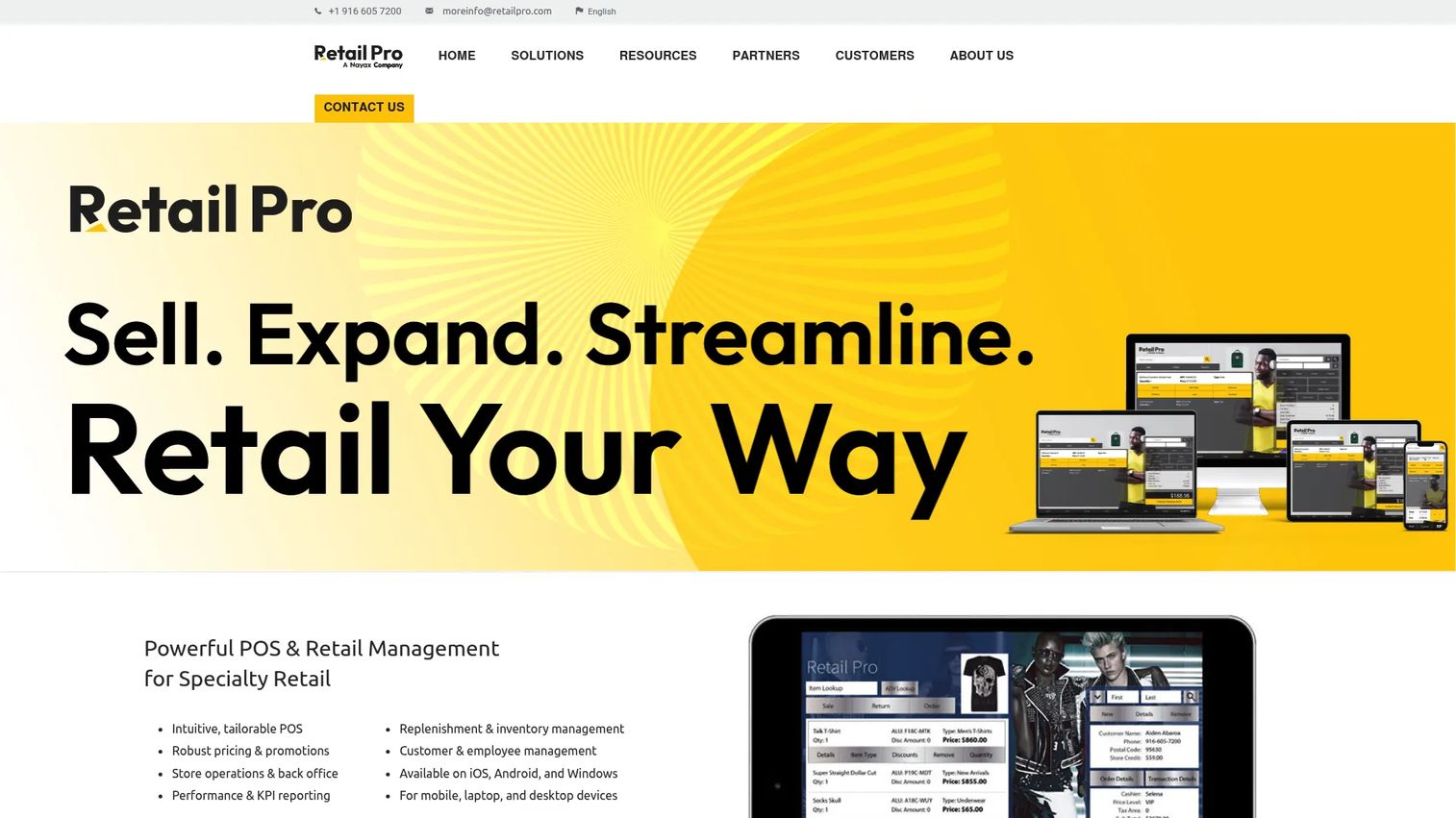
Retail Pro is a retail management platform built for specialty and multi-location retailers who need configurable point of sale for retailers, deep inventory control, and customer management in one system. It has a long track record with international retailers and a partner-driven implementation model, which makes it a fit for businesses that need localization and flexibility rather than a one-size template.
Best for: Multi-location and multi-country retailers who need configurable POS, inventory, and customer management.
Key strengths
- Flexible POS and retail management: Adapt the retail POS workflow to how each store and region actually sells.
- Total inventory control: Manage stock, transfers, and reorder logic across every location from one system.
- Customer management, loyalty, and marketing: Hold purchase history and loyalty data so CRM connects to the register.
Why choose Retail Pro: If you operate across regions or run specialty retail with non-standard workflows, Retail Pro's configurability is the draw. The partner network handles localization and tax complexity that off-the-shelf systems struggle with, which matters when you sell across multiple countries.
Retail Pro pricing: Public subscription pricing is listed at $119 USD monthly for the initial user at each location and $99 USD monthly for each additional user per location. The minimum initial subscription term is 24 months. There is no free tier listed on the pricing page, and implementation typically runs through a partner.
2. Priority Software
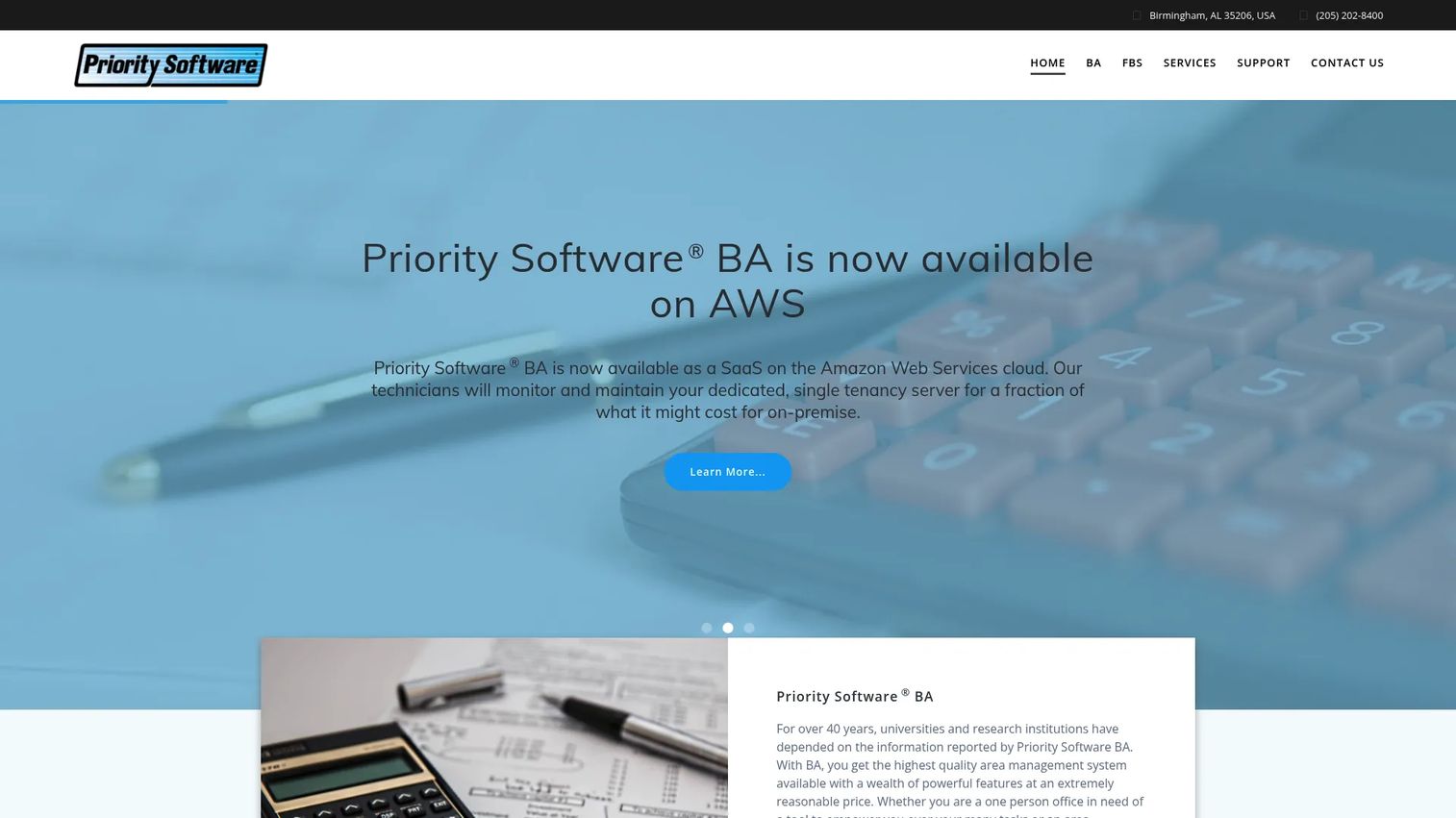
Priority Software positions itself as a modular retail ERP that brings unified commerce, inventory, CRM, and operations onto one platform. The appeal for retailers is consolidation: instead of stitching a POS to a separate ERP to a separate inventory tool, you run them as connected modules with shared data underneath.
Best for: Retailers who want a single platform spanning store operations, inventory, and finance rather than a stack of point tools.
Key strengths
- Web-based access: Reach the system from any browser-enabled device, which suits distributed teams.
- Interactive reporting and projections: Read burn-rate projections and interactive graphs without exporting to a spreadsheet.
- Modular operations coverage: Add the modules you need across billing, accounting, and operational workflows.
Why choose Priority Software: The single-platform argument is strongest when fragmented systems are your actual pain. Running unified commerce on one operational layer reduces the reconciliation work that eats team hours, and a modular retail platform lets you scope what you turn on. Expect an implementation conversation rather than a self-serve signup.
Priority Software pricing: Priority's public pricing page lists service fees rather than a single software subscription price. Documented line items include training and software services for its accounting and facility billing products, with figures such as $251 for training and $205 for form customization. The software itself is quote-driven, so plan for a sales conversation to scope your configuration.
3. Manhattan Associates
Manhattan Associates operates at the enterprise end of the category, with software for supply chain, warehouse, transportation, order management, and commerce. This is more than a storefront tool. It is the fulfillment orchestration and order management backbone for complex retail networks that move inventory across warehouses, stores, and channels.
Best for: Large enterprises that need integrated supply chain and commerce execution across a complex retail network.
Key strengths
- Warehouse management: Run distribution centers and store backrooms as coordinated fulfillment nodes.
- Transportation management: Plan and optimize freight and last-mile movement across the network.
- Order management: Capture and route orders to the optimal location for fulfillment orchestration.
Why choose Manhattan Associates: When your bottleneck is supply chain and omnichannel fulfillment rather than the register, Manhattan is built for that scale. Its order management system gives enterprise retailers inventory visibility across every node, so a customer order can be sourced from wherever it ships fastest or cheapest. This is an enterprise commitment, not a quick install.
Manhattan Associates pricing: Manhattan does not publish list pricing. Enterprise deployments typically combine subscription or license fees with implementation and support, scoped to the retailer's network. Plan for a custom quote and a structured evaluation cycle.
4. Lightspeed Retail
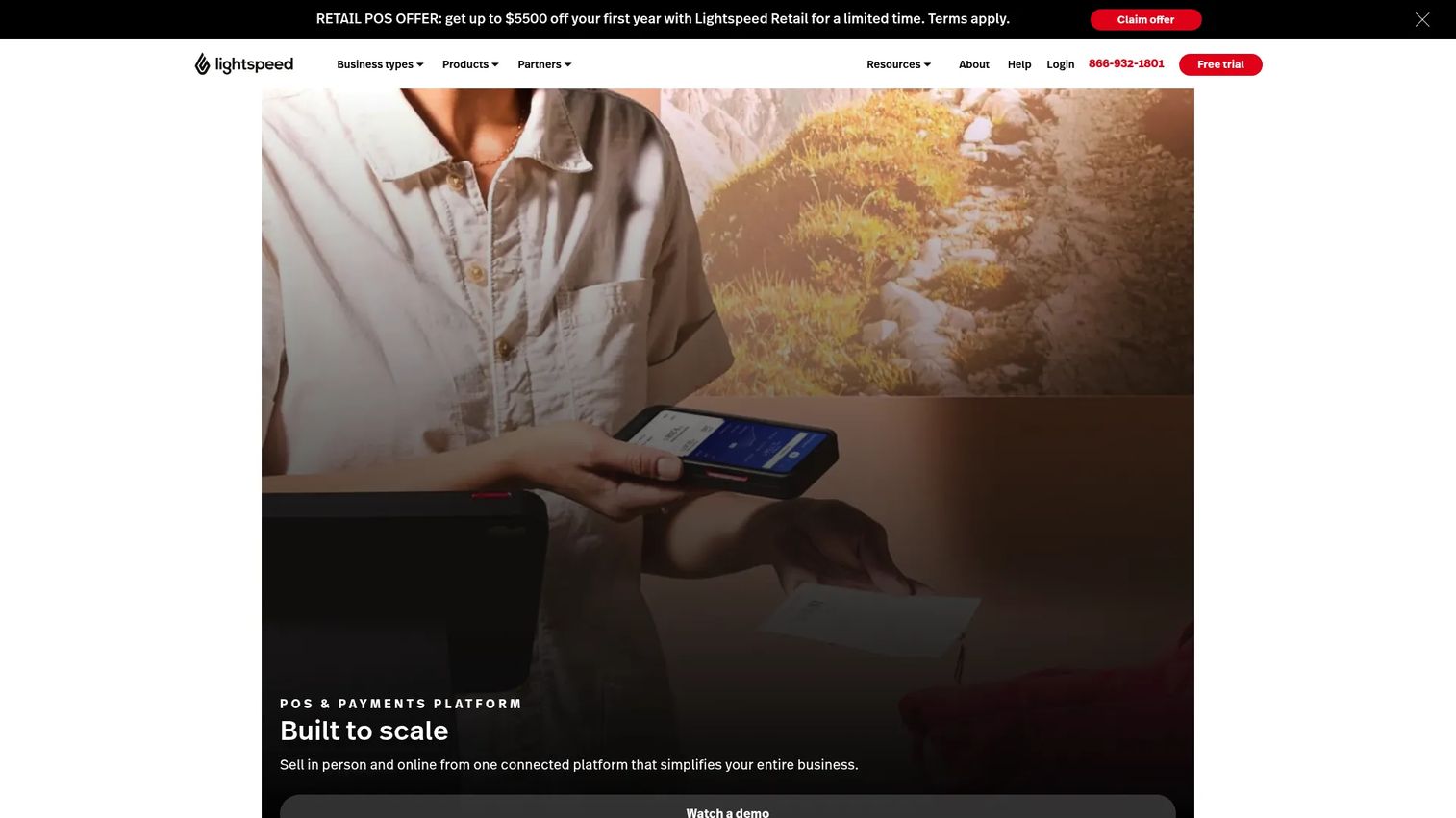
Lightspeed Retail is a cloud retail software platform centered on POS, inventory, ecommerce, and multi-location operations. It hits a sweet spot for small to mid-sized retailers who want a modern point of sale for retailers without the weight of an enterprise ERP, while still supporting multi-store inventory and pricing.
Best for: Retailers who want an omnichannel POS with inventory and multi-store controls.
Key strengths
- Barcode scanning: Speed up checkout and receiving with native scanning workflows.
- Inventory management: Track stock across locations with transfers and reorder support.
- Multi-location pricing: Set and control pricing per store from one cloud system.
Why choose Lightspeed Retail: Lightspeed excels when point of sale is the heart of your operation and you want it cloud-native and omnichannel from day one. The multi-store controls scale with you, so a two-store retailer can grow without re-platforming. Buyers should check eCommerce integration depth against their specific online stack during evaluation.
Lightspeed Retail pricing: The US pricing page lists three plans billed monthly: Basic at $89 USD/mo, Core at $149 USD/mo, and Plus at $289 USD/mo. All include one register, with enterprise and custom needs handled through a sales conversation. There is no free tier listed.
5. Square for Retail
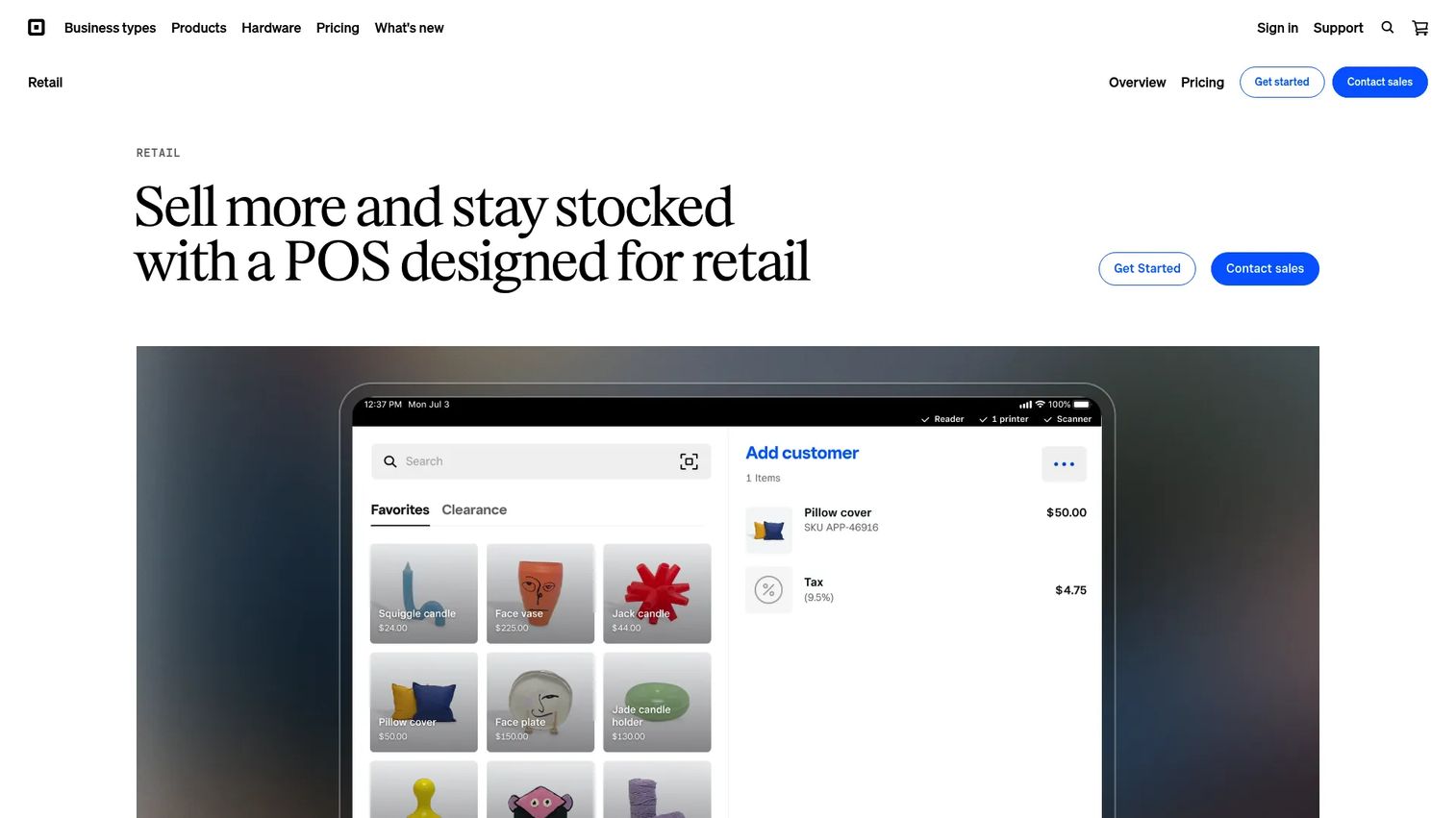
Square for Retail is the retail POS from Square, built for selling in store and online with inventory, checkout, and reporting in one package. Its appeal for lean teams is speed: you can get a retail POS running quickly, with payments, catalog, and reporting bundled into the same ecosystem.
Best for: Retail businesses that need a POS with inventory and omnichannel selling without a heavy setup.
Key strengths
- Real-time inventory across locations and channels: Keep stock accurate whether you sell in store or online.
- Full checkout tools: Handle discounts, refunds, exchanges, and multiple payment types out of the box.
- Sales reporting and COGS tracking: See margin and performance, plus catalog tools with bulk import and barcode scanning.
Why choose Square for Retail: Square is the pragmatic pick when you want to be selling this week, not next quarter. The free starting tier lets small retailers begin without a software bill, then scale into paid plans as inventory and reporting needs grow. The same ecosystem covers payments and ecommerce, which keeps the stack simple for lean teams.
Square for Retail pricing: Square lists three plans per location: Free at $0/mo, Plus at $49/mo, and Premium at $149/mo. Plus and Premium include a 30-day free trial, and Premium uses custom pricing for some larger sales organizations. The free plan makes it one of the lowest-friction entry points on this list.
6. Cin7
Cin7 is cloud-based inventory management and ERP software built for multi-channel product sellers. It earns its place for retailers selling across ecommerce plus physical locations, where the hard problem is keeping one accurate inventory and order picture across every channel and warehouse.
Best for: Businesses that need centralized inventory, sales, manufacturing, and multi-channel operations management.
Key strengths
- Real-time inventory tracking: Maintain one accurate stock count across channels and locations.
- Automation and demand forecasting: Trigger reorders and forecast demand instead of guessing.
- Manufacturing, order, and warehouse management: Coordinate production, orders, and fulfillment in one system.
Why choose Cin7: Cin7 is the inventory-first choice when your business runs across marketplaces, your own store, and physical retail at once. Its integration ecosystem connects the sales channels and shipping tools retailers already use, so order management and inventory visibility stay synced. That makes it strong for sellers whose complexity lives in the supply chain, not just the register.
Cin7 pricing: Cin7 Core lists three plans billed monthly: Standard at $349/month, Pro at $599/month, and Advanced at $999/month. Cin7 Omni, the higher-end multi-channel tier, is quote-based. There is no free tier listed on the pricing page.
7. NetSuite
NetSuite is a cloud retail ERP that ties retail operations to financial management, inventory, and ecommerce connectivity. It fits teams that want store and channel operations tied directly to accounting, so the same system that records a sale also handles the ledger, the inventory asset, and the revenue recognition.
Best for: Retailers who want retail operations connected to accounting and broader ERP in one platform.
Key strengths
- Unified retail ERP: Run finance, inventory, and orders on one data model as a single source of truth.
- Inventory and order management: Track stock and orders alongside the financials they affect.
- eCommerce connectivity: Link online channels to the same backend that runs the business.
Why choose NetSuite: NetSuite is the right call when finance is as important as the storefront and you want retail ERP rather than a POS with add-ons. The trade-off, common to ERP, is implementation effort and governance, so it suits teams ready to invest in setup for long-term consolidation. For multi-entity or finance-heavy retailers, that investment buys real operational clarity.
NetSuite pricing: NetSuite does not publish list pricing. Cost is typically built from a base platform license, the modules you enable, the number of users, and implementation, then quoted per retailer. Expect a custom proposal and a structured rollout rather than a self-serve start.
8. Epos Now

Epos Now is cloud-based POS software and hardware for retail and hospitality businesses, with inventory, reporting, CRM, and an app marketplace for extending the system. It is positioned for smaller retailers or those standardizing store operations who want an all-in-one POS with the option to bolt on capabilities through integrations.
Best for: Retail and hospitality businesses that want an all-in-one POS system with hardware options.
Key strengths
- Inventory management and sales reporting: Track stock and read sales performance from one dashboard.
- Customer relationship management: Keep customer and purchase data tied to the point of sale.
- Payment processing and app integrations: Take payments and extend the system through a marketplace of add-ons.
Why choose Epos Now: Epos Now is approachable for retailers who want hardware and software together and a modular path to add features. The app marketplace covers eCommerce integration, accounting, and more, so you can start lean and expand. Buyers should validate the exact subscription mechanics and which add-ons carry extra cost before signing.
Epos Now pricing: Epos Now's US site shows the Complete Electronic Point of Sale System starting from $349 as an upfront hardware and system price, with a discounted price that requires a monthly subscription starting at $79. There are multiple hardware bundles, and no free tier is listed on the official site.
Considerations
Before you shortlist, run every candidate through this checklist. The goal is to match the platform to your operational reality, not to the longest feature list.
POS and payment fit
Check whether the retail POS handles your real-world transactions: returns, exchanges, partial refunds, multiple payment types, and offline mode if your connectivity is shaky. Confirm whether payments are bundled or bring-your-own, since processing fees can outweigh the software cost over a year.
Inventory depth
Good inventory management software gives you real-time counts, transfers between locations, reorder points, and a shared pool across channels. Verify it handles your SKU count, variants, and any manufacturing or bundling you do, not just simple stock-on-hand.
Order management and fulfillment
If you sell across channels, confirm the order management and fulfillment orchestration logic. Can it route an order to the best location, support buy-online-pickup-in-store, and reflect returns instantly? This is where omnichannel retail either works or breaks.
Integration stack
Map your existing ecommerce, accounting, payments, shipping, and marketing tools, then confirm native eCommerce integration and APIs exist for each. A modular retail platform is only as good as its connections to the rest of your stack.
Implementation and support
Ask who implements, how long it takes, and what support looks like after go-live. Cloud retail software with strong onboarding reduces the time before your team sees value. For enterprise retail ERP, scope the project plan before you commit.
Scalability and pricing model
Confirm the pricing model scales sanely as you add locations, users, and channels. Read whether retail analytics and advanced features sit behind higher tiers, and model the total cost at the size you expect to be in two years, not just today.
Conclusion
The best retail management software is the one that gives your team a single source of truth across POS, inventory, ecommerce, and order fulfillment. The right pick depends on where your complexity lives.
For enterprise complexity and supply chain depth, Manhattan Associates and NetSuite handle order management, fulfillment orchestration, and finance at scale. For omnichannel coordination on one platform, Priority Software brings unified commerce together as a modular system. For SMB simplicity and fast setup, Square for Retail and Epos Now get you selling quickly, while Lightspeed Retail leads for POS-first cloud retail software. For inventory-first operations across channels, Cin7 keeps stock and orders synced, and Retail Pro suits configurable multi-location and multi-country retail.
Next step: shortlist three vendors that match your operational reality, then compare their inventory, POS, and integration models side by side. Ask each for a working walkthrough against your actual workflows, products, and channels before you commit, so you are buying the system you will run, not the one in the brochure.
FAQs
Retail management software unifies the core systems a retailer runs, point of sale, inventory, order management, customer data, and ecommerce, into one connected platform. It keeps stock, sales, and customer information accurate across every channel, so your team works from one set of numbers instead of reconciling separate tools by hand.
No. A POS system handles transactions at the point of sale, while retail management software is the broader category that often includes POS as one module alongside inventory, order management, CRM, and ecommerce. A POS tells you what sold; a retail management system connects that sale to stock, customers, and fulfillment across the whole business.
Start with a reliable retail POS, real-time inventory management, clear sales reporting, and simple integrations to your ecommerce and accounting tools. A small retailer rarely needs full retail ERP on day one, so prioritize fast setup and accurate inventory, then add depth as you grow into multi-location retail.
It gives every channel a shared inventory pool and shared order visibility, so online and in-store sales draw from the same stock. That enables cross-channel fulfillment like buy-online-pickup-in-store, returns across channels, and accurate stock counts everywhere, which is the operational core of omnichannel retail.
Unified commerce means one operational layer owns products, orders, inventory, and customers, and every channel reads from and writes to it in real time. Unlike disconnected point solutions that each hold their own data, unified commerce creates a single source of truth, so there is no reconciliation gap between your store, your site, and your back office.
Pricing ranges widely. Entry SMB plans start free or under $100 a month, as with Square for Retail and Lightspeed Retail, while inventory-heavy systems like Cin7 begin around $349 a month. Enterprise platforms such as Manhattan Associates and NetSuite use custom pricing built from licenses, modules, users, and implementation, so budget for both subscription and setup.
The highest-value integrations are ecommerce platforms, accounting, payments, CRM, and shipping. These connections are what let a retail management system act as a single source of truth, since a sale online should update inventory, hit the ledger, and inform marketing without manual data entry between systems.
Choose a retail-focused platform when store operations, POS, and inventory are your center of gravity. Move to retail ERP, like NetSuite, when finance, multi-entity accounting, and broader operations need to live in the same system as sales and inventory. The deciding question is whether you need retail depth or full financial and operational consolidation.