Most B2B marketing teams waste 25% of their budget reaching accounts that will never buy. The data exists to fix this problem, but it's scattered across dozens of tools, half of it outdated before anyone acts on it.
Marketing account intelligence software pulls firmographic, technographic, and intent signals into one place. It helps you identify which companies fit your ICP and show buying behavior. This guide breaks down what these platforms do, the features that matter, and 12 tools worth evaluating for your stack.
What this guide covers
This guide covers what marketing account intelligence software actually does and the features that separate useful platforms from noise generators. It also includes a ranked breakdown of 12 tools worth evaluating. Selection criteria focused on data quality, CRM integration depth, intent signal accuracy, and real-world usability for B2B marketing teams.
TL;DR
For enterprise ABM programs: ZoomInfo, 6sense, and Demandbase offer the deepest data and predictive capabilities
For mid-market teams: Apollo.io, Cognism, and HockeyStack balance functionality with accessible pricing
Key differentiator: Intent data accuracy and native CRM integration separate useful tools from noise generators
Action step: Match platform complexity to your team size and existing stack before committing
What is marketing account intelligence software
Marketing account intelligence software compiles, analyzes, and delivers actionable data on target accounts to help B2B marketers identify high-fit prospects, prioritize outreach, and personalize engagement. Rather than tracking individual visitor behavior, account intelligence focuses on the company level, connecting signals across multiple stakeholders within the same organization.
Three core data types power account intelligence platforms:
Firmographic data: Company size, industry vertical, annual revenue, headquarters location, employee count
Technographic data: Software and tools currently in use, recent technology purchases, infrastructure signals
Intent data: Content consumption patterns, search behavior, third-party research signals indicating buying interest
The practical outcome? Marketing teams using marketing account intelligence software stop wasting budget on accounts that will never convert. They focus resources on companies actively researching solutions in their category.
Why B2B teams invest in account intelligence
Most B2B leads never convert because only 5% of accounts are actively buying at any given time. Traditional lead generation casts a wide net and hopes for the best. Marketing account intelligence software flips that approach by identifying which companies show purchase intent before your team reaches out.
The alignment benefit matters just as much. When marketing and sales work from the same prioritized account list, handoffs improve and finger-pointing decreases. Marketing can prove pipeline contribution with cleaner attribution, and sales stops complaining about lead quality.
Key features of marketing account intelligence platforms
Intent data and buying signals
Intent data reveals which accounts are actively researching solutions in your category. Sources include content consumption across publisher networks, search behavior patterns, and third-party data cooperatives. The best platforms show topic-level intent, so you know not just that a company is researching, but what specific problems they're trying to solve.
Account identification and visitor tracking
Account identification tools de-anonymize website traffic to reveal which companies are browsing your site, typically through IP-based identification combined with other signals. You might discover that a target account visited your pricing page three times last week without anyone on your team knowing.
Data enrichment and contact discovery
Platforms append missing firmographic and contact data to existing CRM records. Quality varies significantly between vendors, so verification methods and data freshness matter when evaluating options.
Lead-to-account mapping
Lead-to-account mapping connects individual leads to their parent company records. In account-based strategies, approximately 10 stakeholders from one company often engage separately through different channels. Without proper mapping, you might treat the same buying committee as five unrelated leads.
Account scoring and prioritization
Platforms combine multiple signals into a single score indicating purchase likelihood. Account scoring helps teams focus on high-fit, high-intent accounts rather than spreading resources thin across every company that matches basic firmographic criteria.
CRM and marketing automation integration
Data only creates value when it flows into existing workflows. Key integration points include Salesforce, HubSpot, and Marketo. Bi-directional sync matters for smooth sales handoffs.
If you're evaluating marketing automation software, check how well your account intelligence platform connects.
Reporting and attribution
Account-level attribution differs from lead-level by tracking the full buying committee journey, not just individual touchpoints. Reporting tools connect marketing activity to pipeline and revenue outcomes.
How to evaluate marketing account intelligence software
Data quality and accuracy
Outdated or inaccurate data creates wasted outreach and erodes sales trust quickly. Evaluate data freshness, verification methods, and coverage for your specific target markets. A platform with great North American data might have significant gaps in EMEA or APAC.
Integration with your existing stack
Account intelligence tools connect to your CRM, marketing automation, and ad platforms. Weak integrations create manual work that kills adoption. Ask about native connectors versus relying on third-party middleware.
Usability and time to value
Complex tools with long implementation cycles often fail to gain traction. Evaluate onboarding support and how quickly teams can extract actionable insights. If it takes three months before anyone uses the platform daily, something's wrong.
Security and compliance
Enterprise buyers verify data sourcing practices and privacy controls before procurement approval. GDPR, CCPA, and SOC 2 requirements matter. Ask vendors specifically how they source contact data and what consent mechanisms exist.
Pricing and scalability
Common pricing models include per-seat, per-contact, and platform fees. Watch for hidden costs around data credits or premium features. Understand what happens to pricing at 2x and 5x your current scale.
Marketing account intelligence software comparison table
# | Product | Intent | Key differentiation | Pricing | G2 rating |
|---|---|---|---|---|---|
1 | ZoomInfo Marketing | Enterprise ABM | Comprehensive B2B database | Contact for quote | 4.4/5 |
2 | 6sense Revenue AI | Enterprise ABM | AI-powered predictive analytics | Contact for quote | 4.3/5 |
3 | Demandbase One | Enterprise ABM | Unified ABM and advertising | Contact for quote | 4.3/5 |
4 | Apollo.io | SMB prospecting | All-in-one data and engagement | Freemium, from $49/mo | 4.8/5 |
5 | Cognism | EMEA prospecting | GDPR-compliant verified data | Contact for quote | 4.6/5 |
6 | HockeyStack | Mid-market attribution | Attribution-first intelligence | Tiered plans | 4.5/5 |
7 | Bombora | Intent data provider | Topic-level intent co-op | Contact for quote | 4.4/5 |
8 | Clearbit | Data enrichment | Real-time HubSpot enrichment | Included in HubSpot | 4.4/5 |
9 | HubSpot Marketing Hub | All-in-one platform | Native CRM integration | From $800/mo | 4.4/5 |
10 | LeanData | Lead routing | Advanced lead-to-account mapping | Contact for quote | 4.6/5 |
11 | Lusha | SMB prospecting | Browser extension simplicity | Freemium, from $36/mo | 4.3/5 |
12 | DemandScience | Demand generation | Intent data plus lead gen services | Contact for quote | 4.3/5 |
12 top marketing account intelligence software tools by features and pricing
1. ZoomInfo
ZoomInfo operates the largest B2B contact and company database, with over 100 million business contacts and extensive firmographic coverage. The platform combines data with intent signals, website visitor identification, and advertising capabilities for full-funnel ABM execution.
Best for: Enterprise teams running comprehensive ABM programs who require deep data coverage and multi-channel activation.
Key strengths
Massive B2B database with direct dials, verified emails, and org charts
Intent data from multiple sources including Bombora partnership
Native advertising platform for account-based display campaigns
Deep Salesforce and HubSpot integrations with bi-directional sync
Why choose ZoomInfo: The platform's breadth means fewer gaps when building target account lists, though pricing reflects that comprehensiveness.
Pricing: Enterprise pricing, contact sales for quotes. Expect significant annual commitments.
2. 6sense Revenue AI
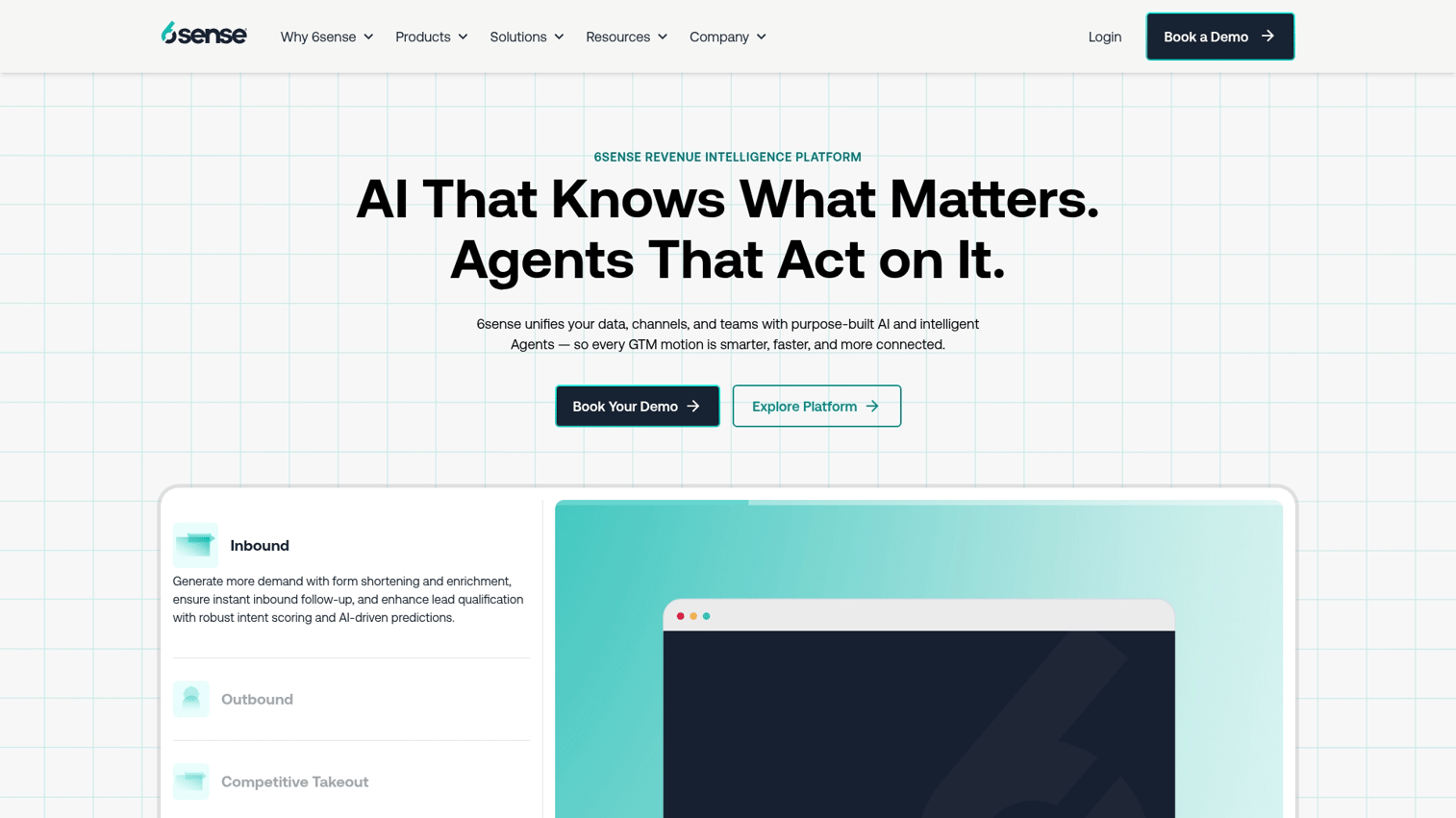
6sense built its platform around AI-powered predictions of which accounts are in active buying cycles. The system analyzes intent signals, engagement patterns, and historical data to surface accounts before they raise their hands. It often identifies buying committees months before they fill out a form.
Best for: Enterprise revenue teams wanting predictive capabilities to identify and prioritize accounts showing early buying signals.
Key strengths
Predictive analytics that identify accounts in buying cycles before direct engagement
Anonymous visitor identification with account-level insights
Buying stage predictions that help time outreach appropriately
Orchestration capabilities for coordinated multi-channel campaigns
Why choose 6sense: The platform excels at the "dark funnel" problem, surfacing accounts researching your category through third-party channels.
Pricing: Enterprise pricing with annual contracts. Implementation typically requires dedicated resources.
3. Demandbase One
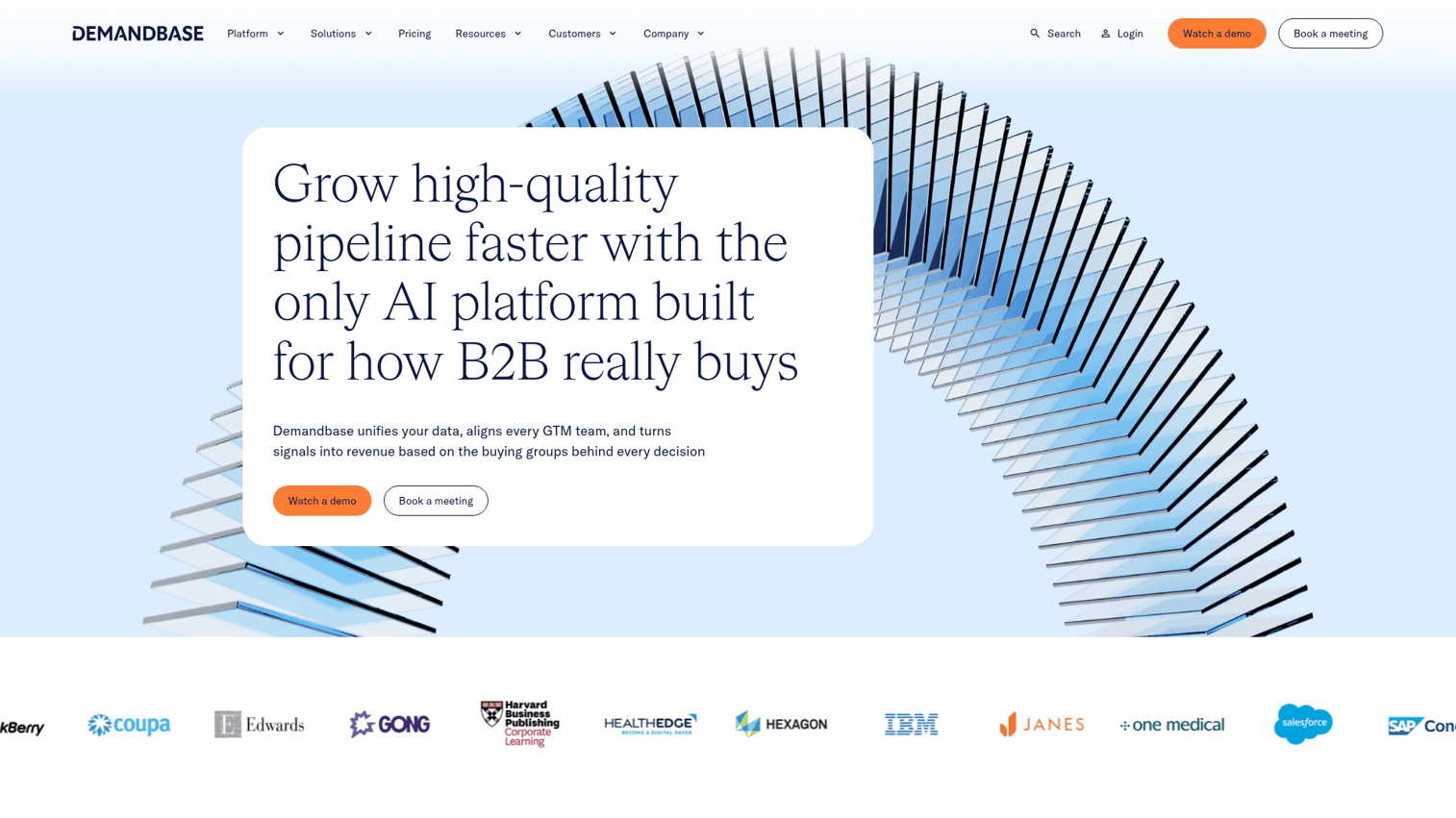
Demandbase combines account intelligence with advertising and engagement capabilities in a unified platform. The system identifies target accounts, enriches them with intent and firmographic data, then enables coordinated campaigns across display, LinkedIn, and owned channels.
Best for: Marketing teams running coordinated ABM campaigns across multiple channels who want intelligence and activation in one platform.
Key strengths
Unified platform combining data, advertising, and engagement
Account identification across web, advertising, and third-party intent
Cross-channel orchestration for coordinated account experiences
Strong analytics connecting account engagement to pipeline
Why choose Demandbase: The platform reduces tool sprawl by combining capabilities that often require multiple vendors.
Pricing: Enterprise pricing, contact for custom quotes based on account volume and features.
4. Apollo.io
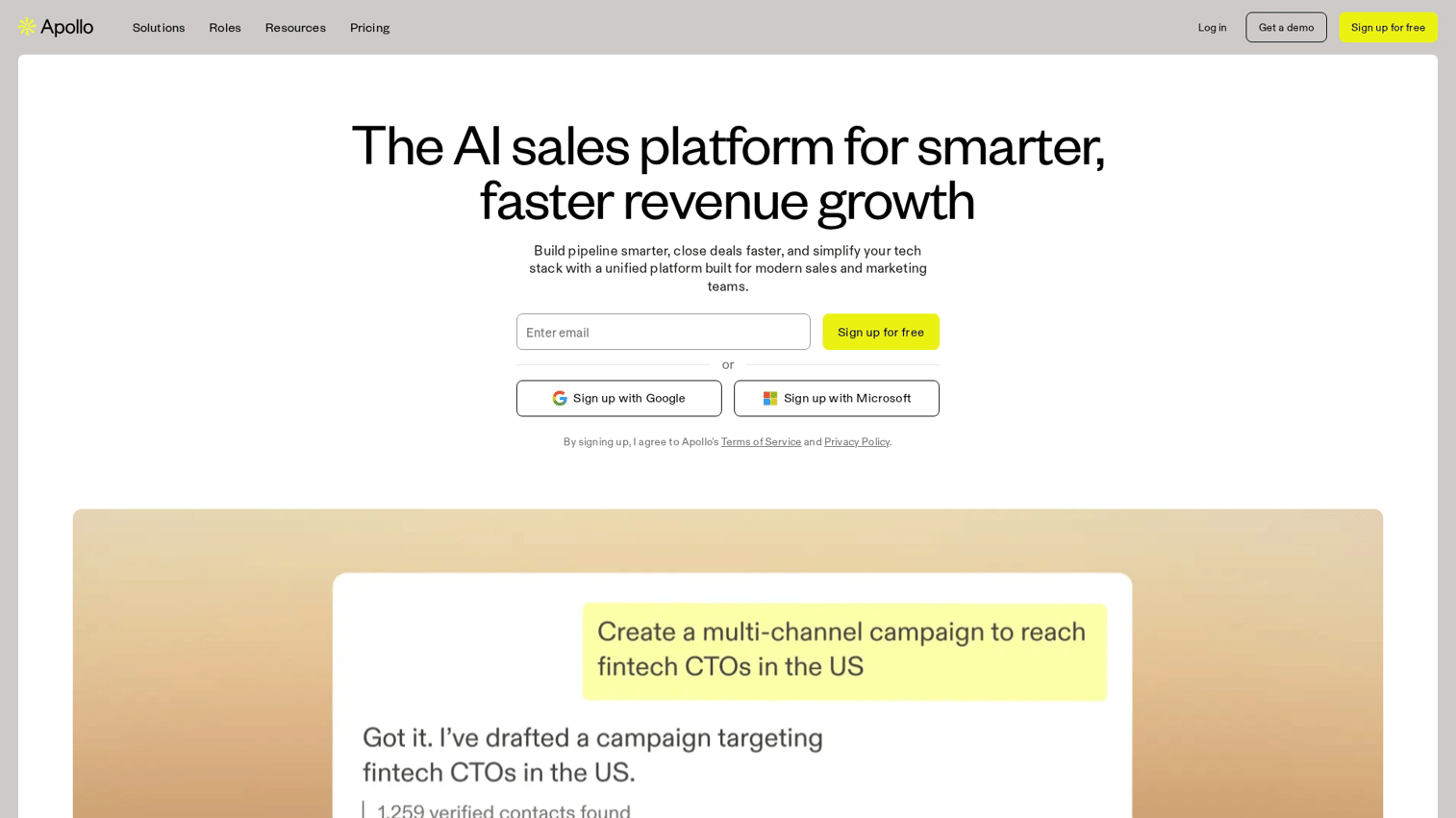
Apollo.io combines a prospecting database with built-in engagement tools, offering contact data alongside email sequencing and dialer capabilities. The platform has gained significant traction with mid-market companies who want data and outreach in one place without enterprise pricing.
Best for: Growing teams that require contact data and outreach capabilities in one platform without enterprise budgets.
Key strengths
270M+ contacts with email and phone data
Built-in sequencing and dialer for immediate outreach
Intent data and job change alerts for timing signals
Accessible pricing with functional free tier
Why choose Apollo: The platform delivers strong value for teams who want to move quickly from identification to outreach.
Pricing: Free tier available. Paid plans from $49/month per user, scaling with features and credits.
5. Cognism
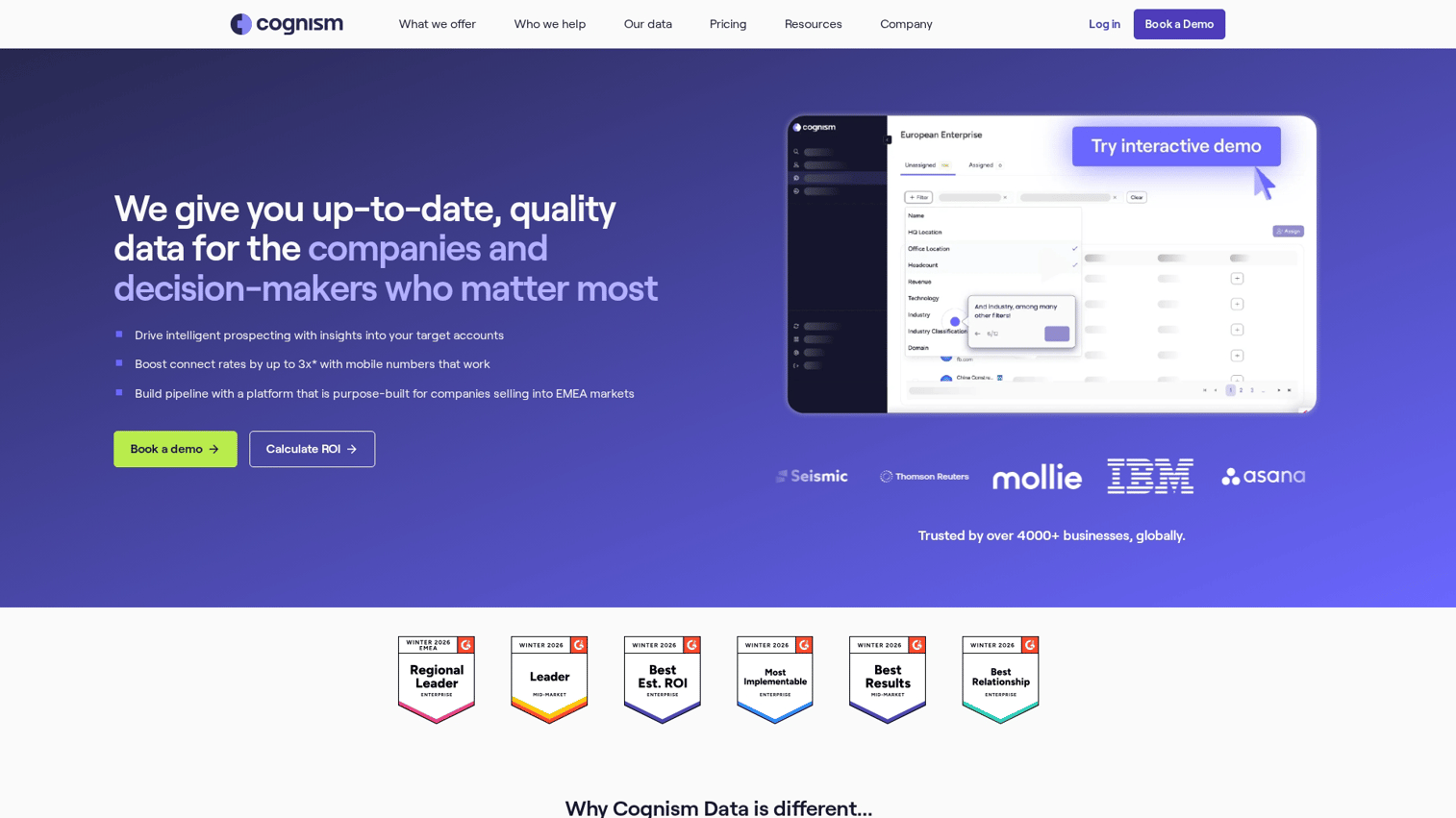
Cognism focuses on GDPR-compliant B2B data with particular strength in European markets. The platform's Diamond Data offering includes phone-verified mobile numbers, addressing a common pain point for sales teams tired of bounced calls and outdated contact information.
Best for: Teams targeting European markets or requiring verified direct dials with strong compliance credentials.
Key strengths
Phone-verified mobile numbers with high connection rates
Strong GDPR and CCPA compliance built into data sourcing
European market coverage that competitors often lack
Intent data integration for prioritization
Why choose Cognism: The platform solves the verified contact problem better than most competitors.
Pricing: Contact for quotes. Pricing typically based on user seats and data credits.
6. HockeyStack
HockeyStack approaches account intelligence from an attribution-first perspective, connecting marketing touchpoints to revenue outcomes while surfacing account-level insights. The platform helps marketing teams prove pipeline impact while identifying which accounts are engaging across channels.
Best for: Marketing teams focused on proving pipeline impact and understanding the full account journey.
Key strengths
Multi-touch attribution connecting marketing to revenue
Account journey visualization across touchpoints
Intent signals derived from engagement patterns
Clean integration with major CRMs and ad platforms
Why choose HockeyStack: The platform works well for teams whose primary pain is attribution and proving marketing ROI.
Pricing: Tiered plans based on traffic and features. Contact for specific quotes.
7. Bombora
Bombora pioneered the intent data cooperative model, aggregating anonymous research behavior across 5,000+ B2B websites to identify which companies are actively researching specific topics. Many other platforms license Bombora data, but going direct provides the freshest signals.
Best for: Teams wanting pure intent data to layer into existing tools and workflows.
Key strengths
Topic-level intent data showing specific research interests
Data cooperative model with broad coverage
Company Surge scores indicating research intensity
Integrations with major CRM and marketing platforms
Why choose Bombora: The platform makes sense when you already have contact data and engagement tools but lack visibility into which accounts are actively researching.
Pricing: Contact for quotes. Pricing varies by data access level and integration requirements.
8. Clearbit
Clearbit, now part of HubSpot, provides real-time data enrichment that appends firmographic and contact information to leads as they enter your system. The platform excels at form shortening and instant lead qualification.
Best for: HubSpot users wanting seamless data enrichment without managing a separate vendor relationship.
Key strengths
Real-time enrichment as leads enter your system
Form shortening that improves conversion rates
Native HubSpot integration
API access for custom implementations
Why choose Clearbit: The platform makes sense for HubSpot customers who want enrichment built into their existing workflow.
Pricing: Included in HubSpot Marketing Hub Professional and above. Standalone pricing available.
9. HubSpot Marketing Hub
HubSpot Marketing Hub includes account intelligence capabilities within its broader marketing automation platform. Target accounts, company insights, and ABM tools come built into the same system handling email, landing pages, and CRM.
Best for: Teams already in the HubSpot ecosystem wanting unified data without adding vendors.
Key strengths
Native CRM integration with no sync issues
Target account features built into existing workflows
Company insights and scoring
Unified reporting across marketing activities
Why choose HubSpot: The platform works well when consolidation matters more than best-of-breed capabilities.
Pricing: Marketing Hub Professional from $800/month includes ABM tools. Enterprise tier adds advanced features.
10. LeanData
LeanData specializes in lead routing and account matching, solving the operational challenge of connecting leads to accounts and routing them to the right owners. The platform handles complex territory structures and matching logic.
Best for: Teams with sophisticated territory structures and routing requirements who struggle with lead-to-account matching.
Key strengths
Advanced lead-to-account matching algorithms
Complex routing logic for enterprise territories
Round-robin and weighted distribution
Salesforce-native architecture
Why choose LeanData: The platform solves a specific operational problem that generic tools handle poorly.
Pricing: Contact for quotes. Pricing based on Salesforce org size and routing complexity.
11. Lusha
Lusha provides accessible contact finding through a browser extension and web platform. The tool focuses on simplicity, letting individual contributors find contact data quickly without enterprise procurement processes.
Best for: Individual contributors and small teams requiring quick contact data without complex implementations.
Key strengths
Browser extension for LinkedIn and web prospecting
Simple interface with minimal learning curve
Accessible pricing for small teams
API access for integrations
Why choose Lusha: The platform works well for teams who require contact data without the overhead of enterprise platforms.
Pricing: Free tier available. Paid plans from $36/month per user.
12. DemandScience
DemandScience combines intent data with lead generation services, offering both the intelligence layer and done-for-you demand generation. The platform serves teams who want leads delivered rather than just data to act on.
Best for: Teams wanting done-for-you lead generation alongside intent data rather than pure software.
Key strengths
Intent data identifying in-market accounts
Content syndication and lead generation services
Verified leads delivered to specifications
Global reach across markets
Why choose DemandScience: The platform fits teams who want outcomes (leads) rather than just tools.
Pricing: Contact for quotes. Pricing varies by lead volume and targeting requirements.
Turn account intelligence into pipeline with interactive demos
Knowing which accounts are in-market only matters if you can engage them effectively. The gap between identification and conversion is where many teams struggle.
61% of B2B buyers prefer to evaluate your product on their own terms before committing to sales calls. This makes a demo center essential for self-service exploration.
Interactive demos let target accounts experience your product immediately, without scheduling friction. When your account intelligence platform surfaces a company researching your category, send them a personalized product walkthrough. Skip the "let's find time to chat" email.
Guideflow helps marketing teams convert identified accounts by embedding personalized product experiences directly in outreach. The analytics show exactly which features each account explored, giving sales context for follow-up conversations.
FAQs about marketing account intelligence software
Account intelligence focuses on data collection and insight generation, identifying which accounts fit your ICP and showing buying signals. ABM software handles campaign execution and orchestration across channels. Many platforms now combine both capabilities, though some teams prefer best-of-breed tools for each function.
Intent data reveals which accounts are actively researching solutions like yours, based on content consumption and search behavior across third-party sites. Marketing teams can focus resources on accounts with demonstrated buying interest rather than guessing based on firmographics alone.
Yes, though tool selection matters significantly. Smaller teams benefit most from marketing account intelligence software with quick setup and built-in workflows rather than enterprise solutions requiring dedicated operations resources. Apollo.io and Lusha serve this segment well, while 6sense and Demandbase typically require more infrastructure to extract value.
Basic implementations of marketing account intelligence software with native CRM integrations can be active within days. Complex enterprise deployments with custom integrations, data migrations, and workflow configuration typically require 4-8 weeks. The bigger variable is often internal adoption rather than technical setup.
CRM integration is non-negotiable for sales alignment. Marketing automation integration enables automated nurture based on intent signals.
Ad platform connections allow account-based advertising activation. Slack or Teams integrations help surface insights where teams already work.
Common approaches include personalized outreach sequences, account-based advertising, and self-serve product experiences. Interactive demos let prospects explore your product without scheduling calls. This often converts better than traditional "book a meeting" CTAs for accounts still in research mode.