You kicked off an RFP six weeks ago. Twelve suppliers responded. Now you have a folder of PDFs, three spreadsheets with different scoring rubrics, and a stakeholder committee that cannot agree on who actually won. The award slips another two weeks while someone rebuilds the comparison from scratch.
This is the daily reality for sourcing teams running high-stakes events across email threads and manual scorecards. The cost is not just time. It is inconsistent decisions, weak audit trails, and savings that leak out because no one can defend the award logic when finance asks.
Sourcing software exists to fix exactly this. The category is growing fast because the problem is getting more expensive: the global sourcing software market is projected to grow from about USD 11.6B in 2025 to USD 20.1B by 2030, an 11.2% CAGR, according to The Business Research Company (2026). Cloud deployments are pulling most of that growth, with Market Research Future (2025) estimating cloud-based sourcing software will expand at roughly 25% CAGR over the next five years.
For teams that evaluate internal tooling the way a product manager evaluates a build-versus-buy decision, that matters. You are not just buying features. You are buying repeatable process, segmentation across categories, clean data for analysis, and governance that survives an audit. The same lens that helps you scope contract lifecycle management or an audit management software rollout applies here: workflow reliability, analytics depth, and maintainability across releases. Sourcing connects tightly to contract management and downstream e signature workflows, so the platform you pick shapes far more than a single event.
What's inside
This guide compares seven sourcing software platforms built for teams running RFx events, supplier evaluations, and award decisions at scale in 2026. It is written for procurement leaders, sourcing managers, and operations owners comparing strategic sourcing platforms, not for someone learning what sourcing is from scratch.
We selected and ordered platforms on six criteria that decide real outcomes: RFx workflow depth, supplier collaboration and response management, analytics and spend visibility, bid optimization and scenario modeling, governance and audit trails, and source-to-contract or source-to-pay coverage. Every platform here is enterprise-grade. The differences that matter are how each one handles the actual sourcing workflow.
TL;DR
- Best overall for enterprise sourcing workflows: Coupa, for spend intelligence tied directly to sourcing, award, and value capture.
- Best for source-to-pay breadth in the SAP ecosystem: SAP Ariba, for buyers who need supplier network reach and procurement integration.
- Best for complex categories and optimization: JAGGAER ONE and Zycus, for multi-round events and advanced bid scenario analysis.
- Best for configurable source-to-pay: Ivalua and GEP SMART, for teams balancing sourcing, analytics, and supplier governance.
- Best for connecting sourcing to broader procurement operations: Basware, for finance-led teams prioritizing spend visibility and compliance.
- Best for governance and audit-heavy environments: Ivalua and Coupa, for strong approval workflows and defensible audit trails.
What is sourcing software?
Sourcing software is a category of procurement tools that helps teams run structured supplier selection: creating RFIs, RFPs, and RFQs, collecting and comparing bids, scoring suppliers, running reverse auctions, and making defensible award decisions. It is the strategic front end of procurement, sitting upstream of purchasing and payment.
A true sourcing platform standardizes what usually lives in spreadsheets and inboxes. It gives you reusable RFx templates, a single place for supplier communication, and consistent scoring across every event. Most modern e-sourcing software also connects into source-to-contract software or full source-to-pay suites, so the award decision flows straight into a contract and, eventually, an invoice.
The core capability set most buyers evaluate:
- RFx creation and automation: reusable templates for RFIs, RFPs, and RFQs, with automated timelines and reminders.
- Supplier collaboration and response management: a shared portal for questions, clarifications, and structured bid submission.
- Bid scoring and scenario analysis: weighted scorecards, side-by-side comparison, and optimization across award scenarios.
- Spend visibility and analytics: spend analysis software features that show where money goes and where savings sit.
- Compliance, audit trails, and approval workflows: documented decisions, role-based approvals, and defensible records.
- Source-to-contract or source-to-pay integration: a clean handoff from award into contract lifecycle workflows and downstream procurement.
Reverse auction software capabilities matter too. Many strategic sourcing platforms include live, competitive bidding events where suppliers underbid each other in real time, which can compress price on commoditized categories.
When to use sourcing software
Not every purchase needs a formal event. Sourcing software earns its place when the stakes, frequency, or complexity of your sourcing outgrow manual methods.
Run structured RFx events
When you run recurring RFIs, RFPs, and RFQs, you need reusable templates, controlled supplier communication, and standardized scoring. RFx software removes the rebuild-from-scratch tax on every event. It also keeps every supplier working from the same brief, so responses are comparable instead of a mess of formats.
Compare suppliers with less manual work
When spreadsheets start breaking down and decision confidence drops, that is the signal. Supplier evaluation software applies weighted scorecards consistently, surfaces gaps, and lets stakeholders score independently without version-control chaos. You move from arguing about the rubric to trusting it.
Reduce cycle time and improve compliance
When sourcing events are frequent and governance matters, cycle time reduction and audit readiness become the whole game. Automated approvals, documented decisions, and integrated compliance and audit trails mean you can defend an award months later. This is where sourcing connects to contract analytics and downstream reporting.
Comparison table
The table below orders the seven platforms by relevance to buyers whose primary job is sourcing, not just broad procurement. Every option is enterprise-grade and quote-priced, so we focus on intent, key use case, and verified G2 ratings. Public numeric pricing was not available from first-party sources for these vendors at the time of writing, so pricing is listed as quote-based throughout.
| # | Product | Intent | Key use case | Pricing | G2 rating |
|---|---|---|---|---|---|
| 1 | Coupa | Enterprise sourcing tied to spend intelligence | Sourcing with spend analytics and value capture | Quote-based | 4.2/5 |
| 2 | SAP Ariba | Source-to-pay with supplier network reach | Procurement collaboration and supplier enablement | Quote-based | Not listed |
| 3 | Ivalua | Configurable source-to-pay suite | Sourcing, contracts, and supplier governance | Quote-based | 4.3/5 |
| 4 | GEP SMART | Unified source-to-pay for enterprise | Sourcing waves, analytics, and contract workflows | Quote-based | 4.3/5 |
| 5 | JAGGAER ONE | Sourcing plus category and supplier depth | Complex sourcing with optimization | Quote-based | 4.1/5 |
| 6 | Zycus | AI-driven source-to-pay | Multi-round events and structured bidding | Quote-based | 4.4/5 |
| 7 | Basware | Sourcing connected to AP and finance ops | Spend visibility and S2P compliance | Quote-based | 4.2/5 |
1. Coupa
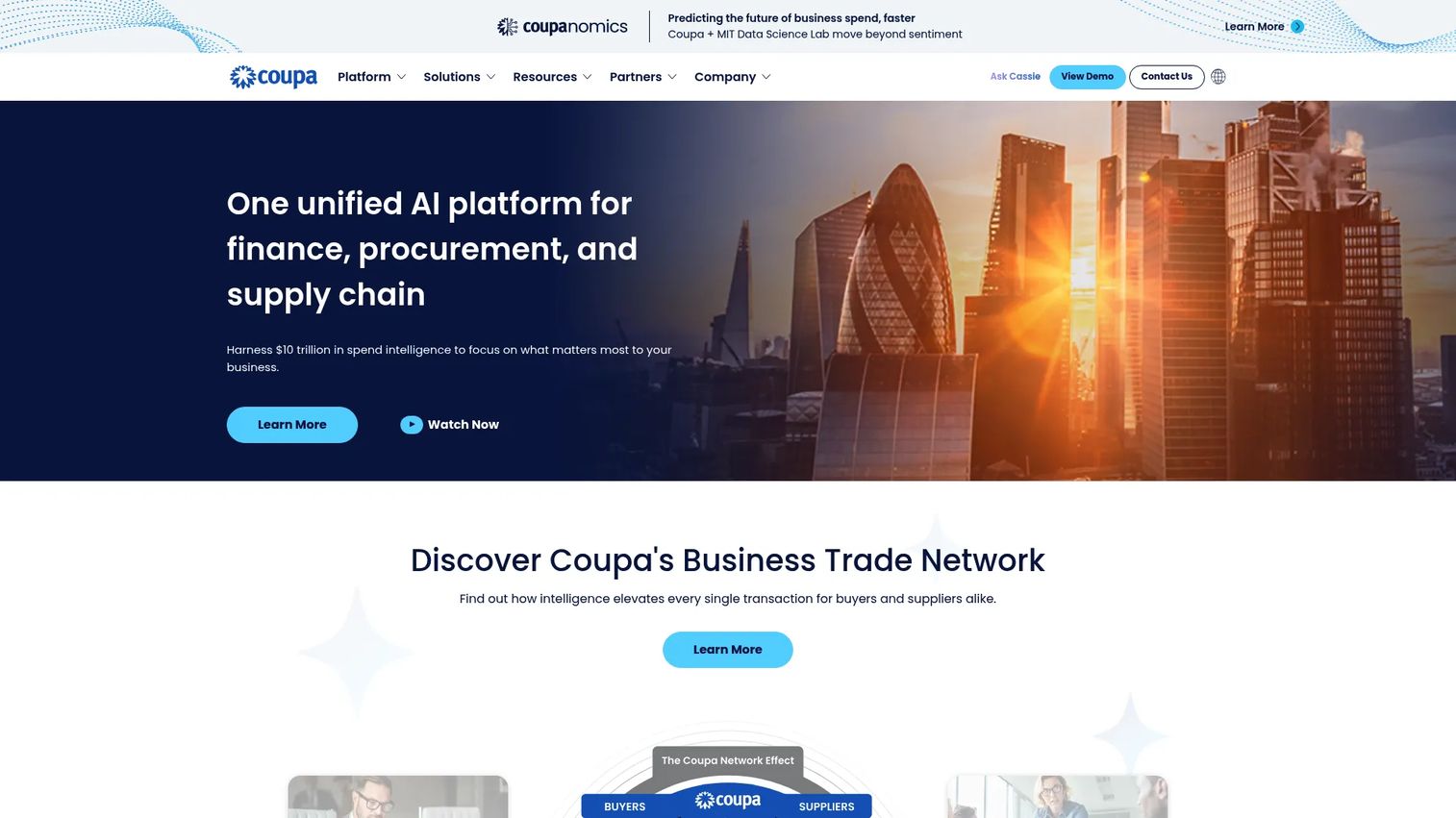
Coupa is a cloud-based spend management platform that covers procurement, invoicing, expenses, sourcing, and supplier collaboration in one system. For sourcing teams, its differentiator is not the RFx form itself but what surrounds it: spend intelligence that shows where money moves, scenario modeling that helps you test award splits, and a direct line from sourcing decision to realized savings.
That connection is why Coupa fits large teams that want sourcing tied to award, contract, and invoice value capture. You run an event, award it, and Coupa tracks whether the negotiated savings actually land in real spend. For a buyer who has to prove ROI to finance, that closed loop is the pitch.
Best for: Mid-market to enterprise procurement and spend management teams that want sourcing decisions anchored to spend data.
Key strengths
- Procurement workflow and approvals: structured routing and role-based approvals that keep sourcing defensible and auditable.
- Invoicing and AP automation: downstream procure-to-pay coverage so the award flows into purchasing and payment.
- Sourcing and spend analytics: spend visibility that ties negotiated savings to actual realized spend.
Why choose Coupa: Choose Coupa when your core problem is not just running events but proving that sourcing decisions translate into measurable savings. Teams that already struggle to connect award logic to real spend get the most value here. It is a broad platform, so the strongest fit is organizations ready to use sourcing as one part of a wider spend management motion.
Coupa pricing: Coupa uses quote-based, custom pricing. No public numeric pricing was available from Coupa's first-party pages at the time of writing, so plan on a sales conversation to scope cost against your spend volume and modules. Coupa holds a 4.2/5 rating on G2.
2. SAP Ariba
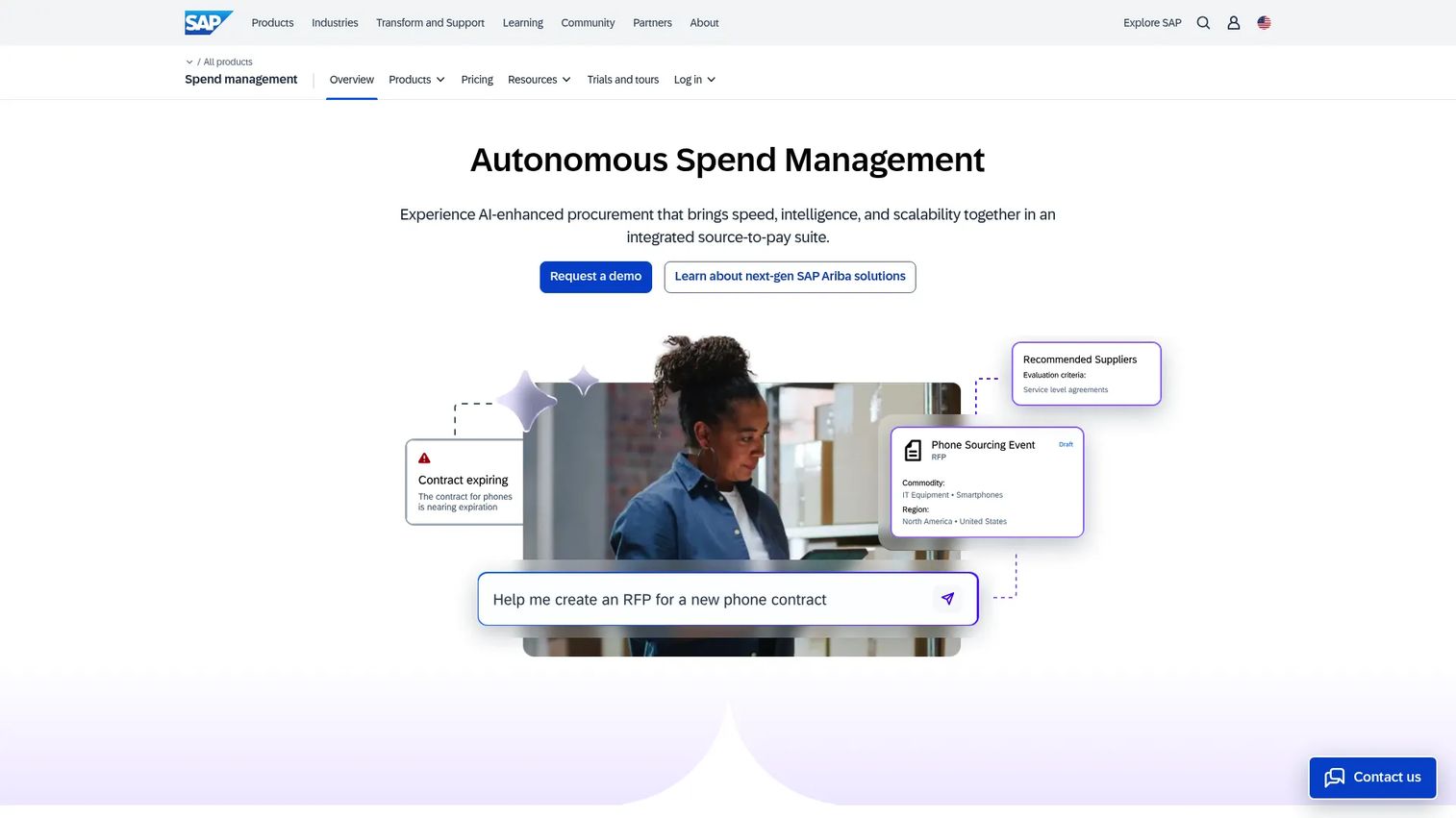
SAP Ariba is SAP's business network and procurement collaboration platform, connecting buyers and suppliers across sourcing events, catalogs, and transactions. Its defining strength is the Ariba Network, one of the largest supplier ecosystems in enterprise procurement, which means supplier onboarding and enablement can move faster when your target suppliers already transact on it.
For sourcing specifically, Ariba covers the full strategic sourcing suite: sourcing events, supplier qualification, and tight integration back into SAP procurement and ERP. That makes it a natural pick for organizations already standardized on SAP, where the value is less about a single event and more about sourcing living inside one connected procurement and finance backbone.
Best for: Enterprises managing procurement, supplier collaboration, and business network transactions, especially existing SAP customers.
Key strengths
- Supplier enablement and integration: large supplier network plus onboarding tools to bring vendors into events quickly.
- Catalog management and order routing: structured catalogs that connect sourcing outcomes to ongoing purchasing.
- Invoicing and payment support: remittance and payment handling that extends sourcing into full source-to-pay.
Why choose SAP Ariba: Choose Ariba when you are already in the SAP ecosystem or need broad procurement coverage with deep ERP integration. The network reach is a real advantage if your suppliers already use it. Implementation is a genuine enterprise project, so it fits teams with the appetite for a platform-level rollout rather than a point sourcing tool.
SAP Ariba pricing: Ariba uses quote-based pricing scoped to modules and transaction volume. SAP documents indicate some supplier accounts are free while enterprise or high-usage accounts may incur fees, but no public numeric price table was available from first-party pages at the time of writing. A current third-party rating was not verified in this run.
3. Ivalua
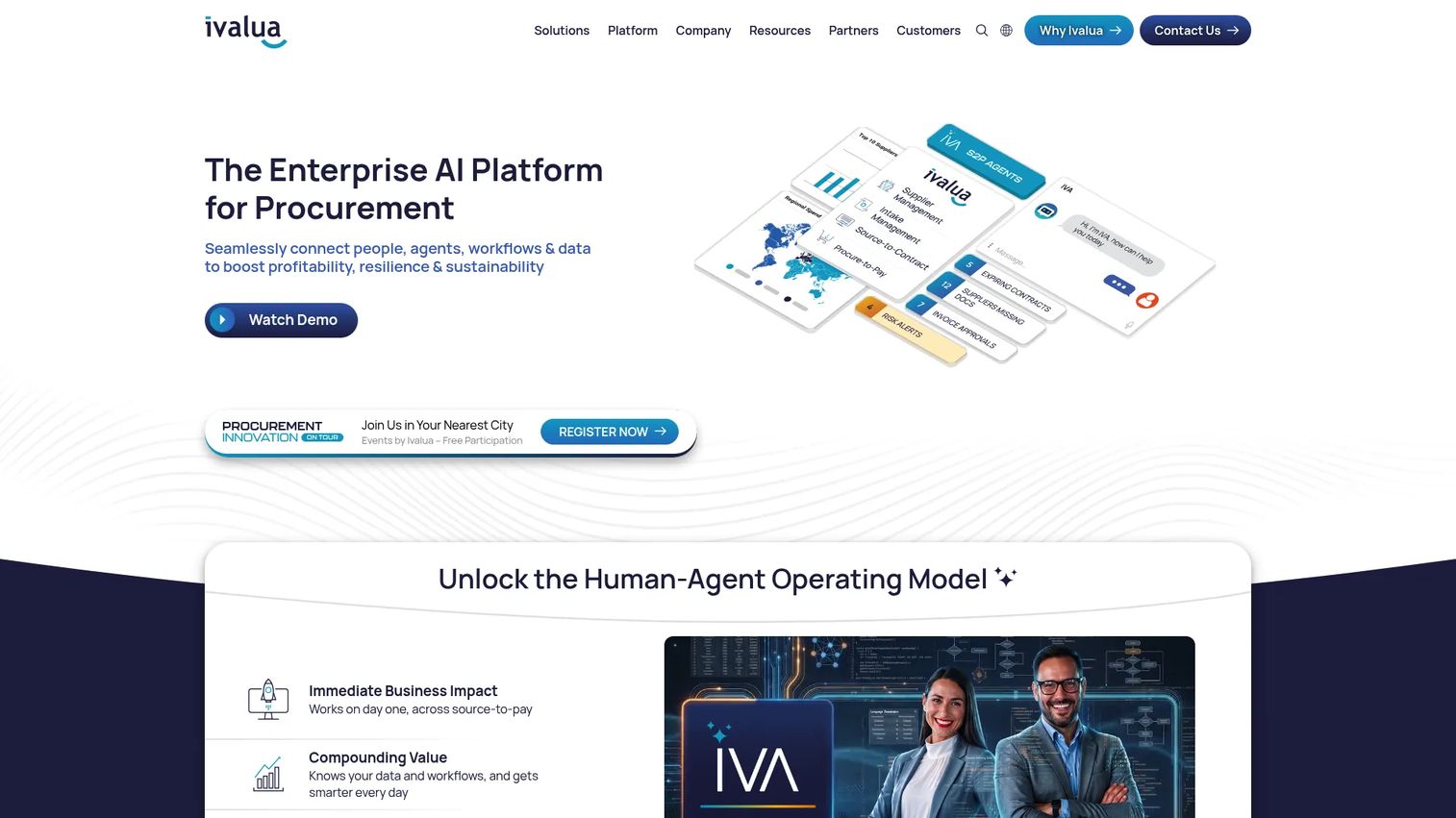
Ivalua is an enterprise AI platform for procurement, spend, and supplier management, built around a single source-to-pay data model. Its calling card is configurability: a unified platform spanning intake, sourcing, contracts, supplier management, procure-to-pay, AP automation, and spend analysis, with no-code and low-code tools to shape workflows to your process rather than the other way around.
For sourcing teams that also carry supplier governance and risk, this breadth is the point. You can run events, evaluate supplier performance, and manage risk on the same platform, with one data model feeding your spend analysis. That suits organizations balancing sourcing depth with analytics and supplier oversight across many categories.
Best for: Large enterprises needing a configurable source-to-pay procurement suite that adapts to their process.
Key strengths
- Full source-to-pay coverage: one platform from intake and sourcing through contracts, procure-to-pay, and AP automation.
- AI agents and workflow orchestration: governed automation with no-code and low-code configuration for custom sourcing flows.
- Unified data model and integration hub: a single data layer plus ERP connectivity for clean spend analysis and reporting.
Why choose Ivalua: Choose Ivalua when configurability and a unified data model matter more than out-of-the-box speed. Teams with non-standard sourcing processes or heavy supplier governance needs get the most from its flexibility. It rewards organizations willing to invest in tailoring the platform to how they actually source.
Ivalua pricing: Ivalua uses quote-based pricing and directs buyers to contact sales rather than publishing numbers. No public numeric pricing was available from first-party pages at the time of writing. Ivalua holds a 4.3/5 rating on G2.
4. GEP SMART

GEP SMART is an AI-powered source-to-pay platform built for enterprise procurement teams that need configurable workflows across many categories. It unifies sourcing, spend analysis, supplier management, and contract management in one system, with sourcing waves and structured events designed to scale across a large category portfolio.
Where GEP SMART earns attention is the combination of analytics and workflow configurability. Teams that run sourcing across dozens of categories can standardize the process while still adapting scoring, approvals, and contract authorization to each category's reality. That balance of standardization and flexibility fits enterprises managing broad, complex sourcing programs.
Best for: Large enterprises needing a unified source-to-pay platform with configurable, category-spanning workflows.
Key strengths
- Source-to-pay procurement workflows: end-to-end coverage from sourcing waves through contract and purchasing.
- Spend analysis and reporting: spend visibility that informs category strategy and savings targets.
- Supplier and contract management: supplier evaluation plus contract authorization inside the same platform.
Why choose GEP SMART: Choose GEP SMART when you need one platform to handle sourcing, analytics, and contracts across a wide category set without stitching tools together. It fits enterprises that value configurability across categories. The strongest fit is teams treating sourcing as a standardized, repeatable program rather than a series of one-off events.
GEP SMART pricing: GEP SMART uses quote-based pricing scoped to your requirements. Public numeric pricing was not visible on GEP's product pages at the time of writing. GEP SMART holds a 4.3/5 rating on G2.
5. JAGGAER ONE
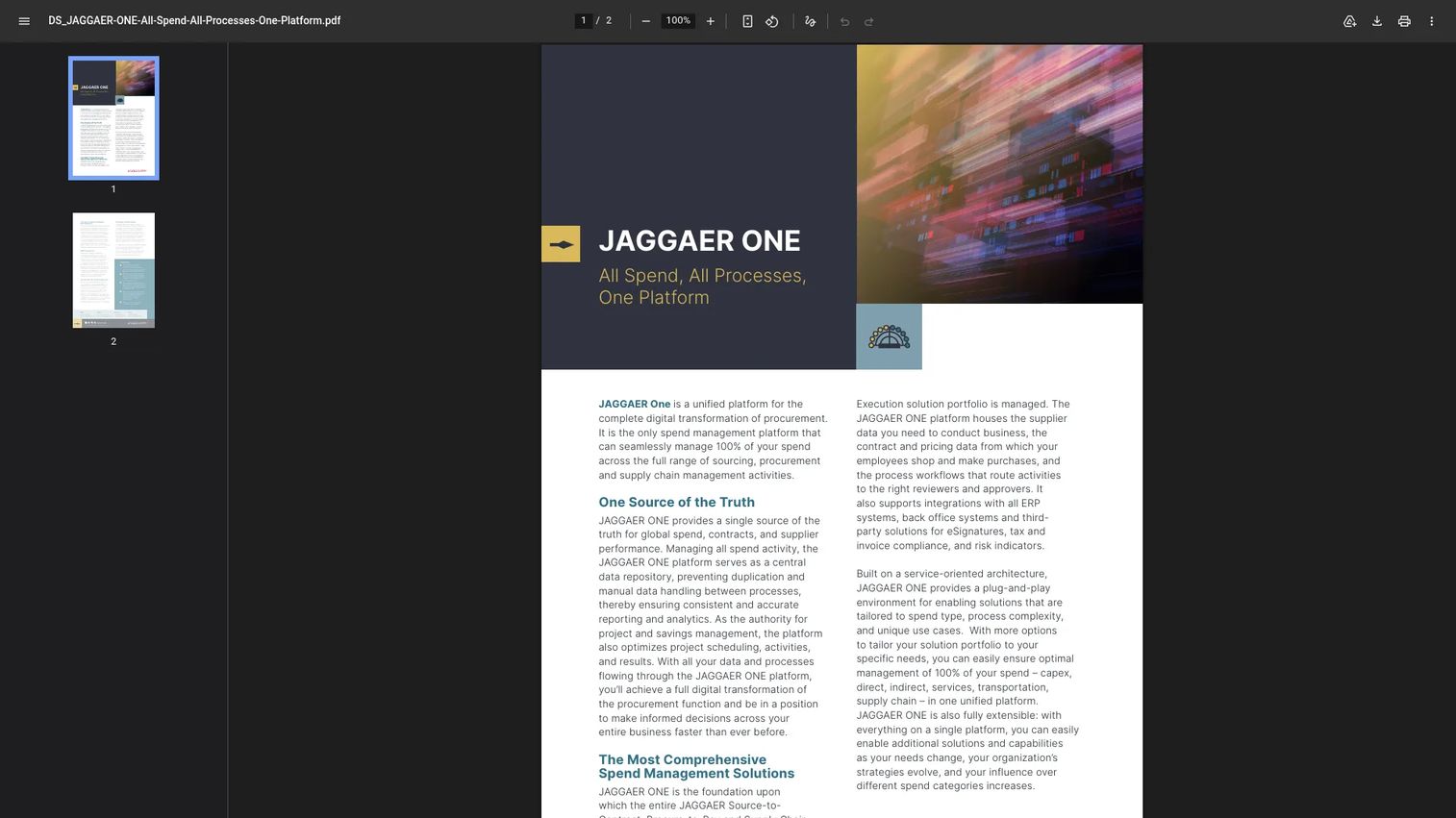
JAGGAER ONE is an AI-enabled source-to-pay platform covering spend management, sourcing, procure-to-pay, and supplier collaboration. Its differentiator for sourcing teams is depth in optimization and category management. The sourcing optimizer handles complex, multi-variable events where the best award is not the lowest single bid but the smartest combination across lots, volumes, and constraints.
That makes JAGGAER ONE a strong fit for teams whose sourcing is genuinely complex: direct materials, multi-lot events, and categories where scenario analysis changes the outcome. Pair that with supplier intelligence and risk visibility, and it suits organizations that want strategic sourcing plus real category and supplier depth on one platform.
Best for: Enterprise procurement teams needing a unified source-to-pay platform with advanced sourcing optimization.
Key strengths
- Source-to-contract workflows: structured sourcing events feeding directly into contract creation and management.
- Procure-to-pay automation: downstream purchasing and payment coverage that completes the source-to-pay loop.
- Supplier intelligence and risk visibility: supplier data and risk signals that inform award and ongoing management.
Why choose JAGGAER ONE: Choose JAGGAER ONE when your sourcing involves complex, multi-variable award decisions that spreadsheets and basic scorecards cannot handle. Teams sourcing direct materials or running multi-lot events get the most from its optimization depth. It fits organizations that treat sourcing as a strategic, analytical discipline.
JAGGAER ONE pricing: JAGGAER uses quote-based pricing with no public numeric figures available from first-party pages at the time of writing. Plan on a sales conversation to scope modules and scale. JAGGAER holds a 4.1/5 rating on G2.
6. Zycus
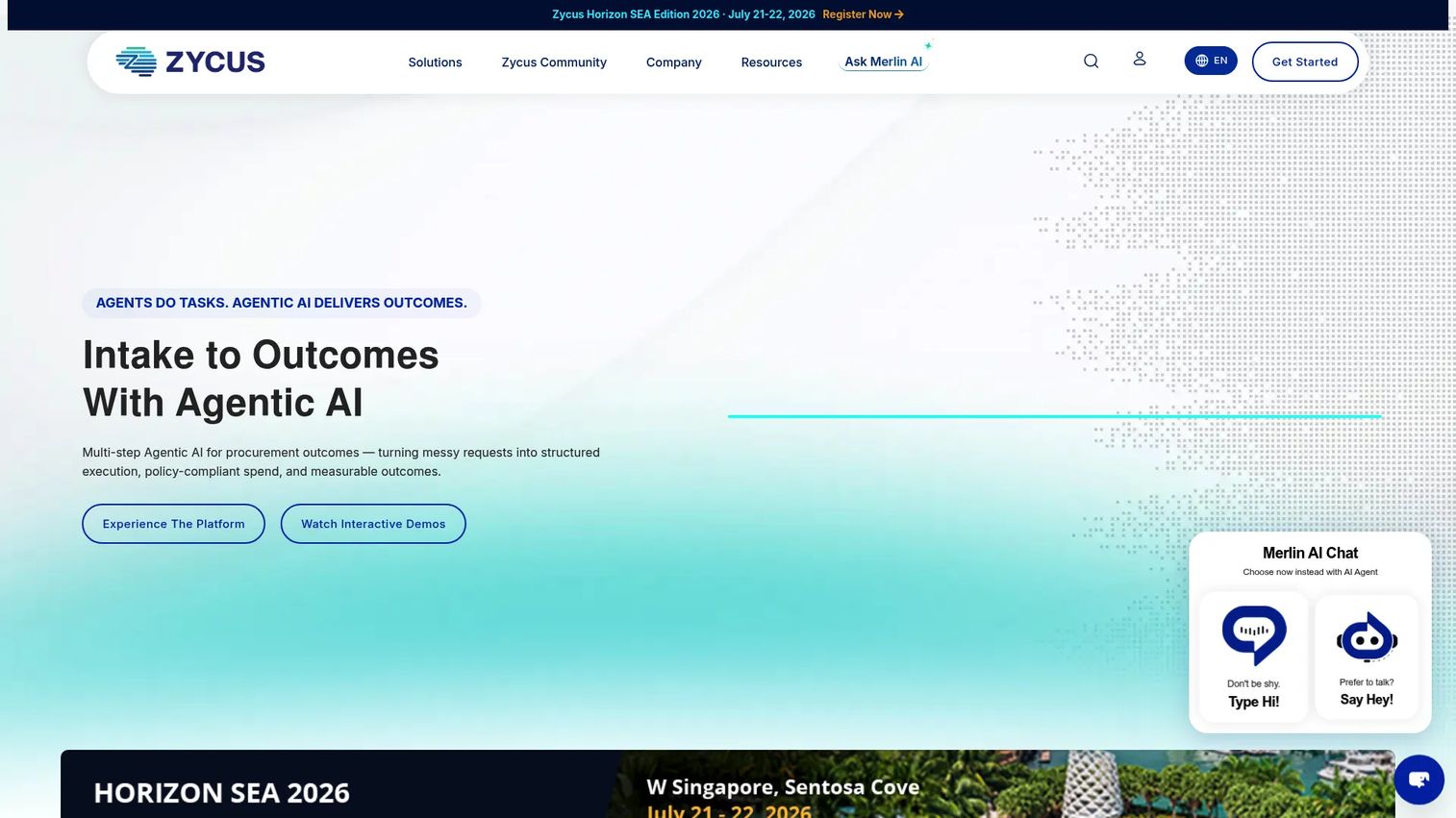
Zycus is an AI-powered source-to-pay platform spanning sourcing, supplier management, contract lifecycle management, procurement, and AP automation. Its iSource module is built for structured, high-volume sourcing: multi-round events, conditional workflows, and features like surrogate bidding that help teams run sophisticated events at scale.
For programs that push high bid volume or highly structured event logic, that depth matters. Zycus is designed to scale to complex bid loads without the process falling apart, which fits enterprises running frequent, rules-heavy sourcing across many events. Its agentic AI workflows and built-in intake automation extend that structure across the wider source-to-pay flow.
Best for: Large enterprises seeking an AI-driven source-to-pay platform for high-volume, highly structured sourcing.
Key strengths
- Agentic AI procurement workflows: automation across sourcing and the broader source-to-pay flow.
- Full source-to-pay suite: sourcing, supplier management, contract lifecycle management, procurement, and AP automation in one platform.
- Built-in intake and workflow automation: structured intake that routes requests into the right sourcing process.
Why choose Zycus: Choose Zycus when you run high volumes of structured, multi-round events and need conditional logic and advanced bidding features. Teams with rules-heavy sourcing programs benefit most from iSource's depth. It fits enterprises that want AI-driven automation layered across the full source-to-pay cycle.
Zycus pricing: Zycus uses quote-based pricing and routes buyers to request a demo rather than publishing numbers. No public numeric pricing was available at the time of writing. A 4.4/5 rating is displayed on a Zycus page referencing Gartner Peer Insights.
7. Basware
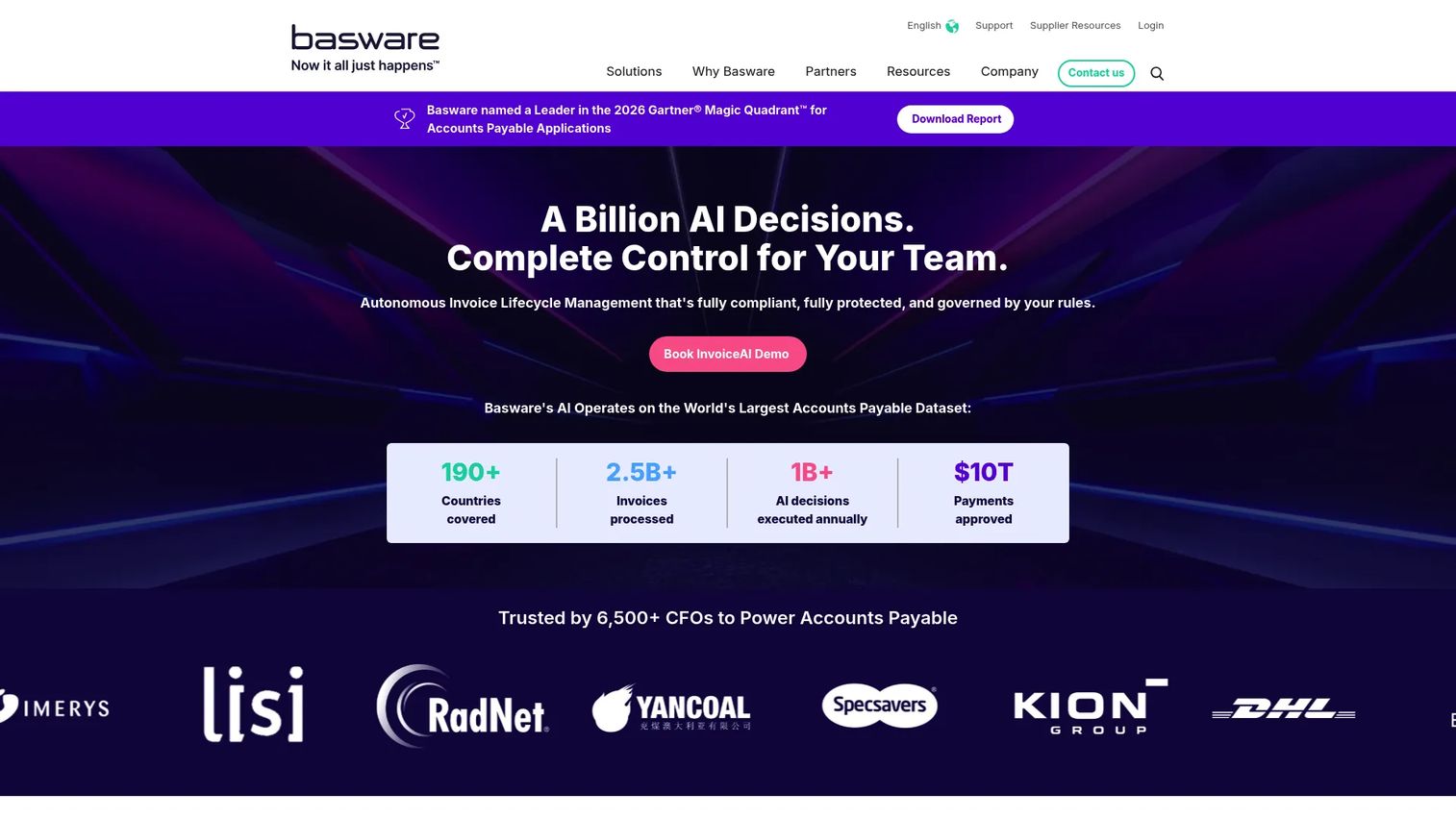
Basware is a cloud-based invoice lifecycle management and AP automation platform for finance teams, with procurement and spend capabilities that connect sourcing tightly to downstream operations. Its center of gravity is the invoice lifecycle: AI and machine-learning-powered invoice receipt, matching, coding, and routing, plus strong compliance and audit trail support.
For organizations that want sourcing connected to broader procurement and finance operations, that finance-forward orientation is the fit. Basware suits teams where the priority is spend visibility, supplier collaboration, and source-to-pay compliance flowing cleanly into AP. If your pain lives as much in the invoice-and-compliance layer as in the RFx itself, Basware speaks that language.
Best for: Enterprise and midmarket finance teams needing AP automation, e-invoicing, and sourcing tied to spend operations.
Key strengths
- AI-powered invoice processing: machine-learning receipt, matching, coding, and routing across the invoice lifecycle.
- Touchless invoice processing: automation that reduces manual handling from award through payment.
- Compliance, archive, and audit trails: documented, defensible records that support audit readiness.
Why choose Basware: Choose Basware when sourcing needs to connect tightly to AP automation, spend visibility, and finance-side compliance. Finance-led teams and organizations prioritizing the invoice-and-compliance layer get the most value. It fits buyers who see sourcing as one input into a broader, finance-anchored procurement operation.
Basware pricing: Basware says pricing scales with organizational needs and directs visitors to contact the team. No public numeric price was shown on its pricing page at the time of writing. Basware holds a 4.2/5 rating on G2.
Considerations before you buy
Feature lists blur together fast in this category. These are the criteria that actually separate a good fit from an expensive mismatch.
RFx workflow depth
Look at how the platform handles your real event types, not the demo scenario. Can you build reusable templates for RFIs, RFPs, and RFQs? Does it support the reverse auction software formats your categories need? Weak template management is the tax you pay on every future event.
Supplier collaboration and evaluation
Supplier management software is only as good as the collaboration layer. Check how suppliers submit responses, ask clarifying questions, and get scored. Weighted scorecards that stakeholders can use independently prevent the version-control chaos that kills decision confidence.
Analytics and spend visibility
Sourcing decisions are only as good as the data behind them. Evaluate whether the platform gives real spend analysis software depth, ties negotiated savings to realized spend, and exports cleanly into the reporting your finance team trusts. Sourcing automation without visibility just moves the guesswork.
Governance, compliance, and audit trails
For regulated or audit-heavy environments, compliance and audit trails are non-negotiable. Confirm role-based approvals, documented decision logic, and records you can defend months later. This connects directly to audit management and downstream compliance reporting.
Source-to-contract coverage
Decide how far downstream you need to go. If the award has to flow into a contract and beyond, source-to-contract software or full source-to-pay coverage matters. If you already run strong contract management software tools, a tighter sourcing tool may integrate rather than replace.
Conclusion
The right sourcing software depends on which part of the workflow is breaking, not on feature count. Coupa fits teams that need sourcing tied to spend intelligence and value capture. SAP Ariba fits SAP-standardized enterprises that want supplier network reach. Ivalua and GEP SMART suit teams that need configurable source-to-pay coverage across many categories.
For complex, multi-variable sourcing, JAGGAER ONE and Zycus bring the optimization and multi-round event depth that spreadsheets cannot match. Basware fits finance-led organizations that want sourcing connected tightly to AP automation and compliance.
Pick the platform that matches your current workflow maturity, not the longest feature list. If your bottleneck is inconsistent scoring and slow cycle time, prioritize RFx depth and supplier collaboration. If it is proving savings to finance, prioritize analytics and value capture. If it is defending decisions in an audit, prioritize governance. The best sourcing platform is the one that fixes your actual constraint and integrates cleanly with the contract lifecycle management software and reporting you already run.
FAQs
Sourcing software is a category of procurement tools that helps teams run structured supplier selection: creating RFIs, RFPs, and RFQs, collecting and comparing bids, scoring suppliers, running reverse auctions, and making defensible award decisions. It standardizes what usually lives in spreadsheets and inboxes into a repeatable, auditable process.
Sourcing software focuses on the strategic front end: finding, evaluating, and awarding suppliers through RFx events and negotiations. Broader procurement software covers everything downstream too, including purchasing, invoicing, and payment. Most strategic sourcing platforms in this list are actually source-to-pay suites that include sourcing as one module among many.
Yes. Every platform here supports RFIs, RFPs, and RFQs as core RFx software functionality. Most also include reverse auction software capabilities, where suppliers bid competitively in real time to drive price down on commoditized categories. Depth of bid management and optimization varies, so confirm the specific event types you run.
Prioritize RFx workflow depth, supplier collaboration and response management, weighted bid scoring, spend analysis software depth, and compliance and audit trails. For teams sourcing complex categories, scenario optimization matters most. For finance-led teams, source-to-contract and source-to-pay integration usually carries more weight.
Supplier evaluation software applies consistent, weighted scorecards across every bid, so stakeholders score independently against the same criteria instead of arguing about the rubric. It surfaces gaps, compares suppliers side by side, and documents the logic behind each award for later defense.
Yes. Reusable templates, automated timelines, structured supplier communication, and sourcing automation cut the manual rebuild work that slows every event. Combined with automated approvals, this drives real cycle time reduction while improving the consistency and defensibility of decisions.
Enterprise buyers should weigh workflow configurability across categories, analytics depth, governance and audit readiness, integration with existing ERP and contract systems, and scalability across high event volumes. Since e-sourcing software in this tier is quote-priced, scope cost against your spend volume and required modules during evaluation.
Prioritize source-to-contract software when award decisions must flow directly into contracts and downstream procurement without manual re-entry. If your team already runs strong contract lifecycle workflows separately, a focused sourcing tool that integrates cleanly may serve you better than a full suite you only partly use.