You can see the redemptions. You cannot tell whether the campaign found future buyers, discount seekers, or people who never touched the product again.
That's the real problem with most product sampling programs. Distribution is the easy part. The hard part is proving that a free sample, cashback reward, or retail offer created qualified trial, generated credible reviews, and produced a repeat purchase signal worth acting on.
The product sampling platform market reached $3.2 billion in 2025 and is projected to reach $8.7 billion by 2034, according to Dataintelo (2025). Software now accounts for 58.3% of that market, and online channels represent 63.8% of all product sampling distribution activity. Digital product sampling software is no longer a niche tactic for CPG teams. It's a measurable acquisition channel that growth marketers need to evaluate seriously.
This guide covers the tools that treat sampling as a campaign system, not a giveaway program.
What's inside
This guide is for digital marketers at consumer brands, ecommerce teams, retail media buyers, and growth managers who need to justify sampling spend with hard performance data. Tools were selected based on four criteria:
- Targeting and audience quality: Does the platform reach likely buyers, not just anyone who wants free product?
- Redemption and fulfillment mechanics: Does it support your campaign model, whether that's in-home delivery, cashback, or retailer offer?
- Reviews and first-party data: Does it produce usable content and opted-in consumer profiles after the sample lands?
- Attribution and analytics: Can you connect trial to verified purchase, repeat buying, and retail velocity?
TL;DR
- Best overall for consumer brand sampling: Sampl, for brands running targeted in-home delivery and cashback purchase campaigns with full-funnel reporting
- Best for reviews and UGC: Bazaarvoice, for enterprise brands that need sampling tied to shopper content and retailer syndication
- Best for retail activation and purchase verification: Social Nature, for CPG brands measuring trial by retailer, region, and store
- Best for turning trials into review volume: PowerReviews Product Sampling, for brands focused on product page content and review recency
- Best for loyalty-linked product trial: TrueLoyal, for consumer brands connecting samples to existing customer programs and repeat purchase data
What is digital product sampling software?
Digital product sampling software helps consumer brands target potential buyers, deliver a product trial or incentive, verify redemption or purchase, collect consumer feedback, and measure campaign results across the full acquisition funnel.
How digital product sampling software works
A typical campaign follows this sequence:
- Define the audience and eligibility rules
- Promote a sample, rebate, coupon, product trial, or retailer offer
- Capture opt-in data, shipping details, or proof of purchase
- Deliver a sample, digital incentive, or redemption instruction
- Collect reviews, UGC, survey feedback, or repeat purchase signals
- Report on redemption, conversion, retail performance, and return on spend
Core capabilities to look for
- Audience targeting and eligibility screening
- Offer creation and redemption management
- Fulfillment or purchase verification
- Retailer and ecommerce destination support
- Review, UGC, and feedback collection
- First-party data capture and consent management
- Attribution, analytics, and reporting
- [CRM, loyalty, review, and media integrations
How this category differs from coupon software](https://www.guideflow.com/blog/best-crm-software)
Coupon tools issue incentives. Digital sampling platforms manage the broader campaign: Who qualifies, how the sample or offer reaches them, what consumer data gets captured, how reviews and repeat signals are tracked, and what the final attribution story looks like. The reporting gap between these two approaches is where most marketing teams lose defensible ROI. If you're evaluating campaign management software more broadly, that distinction matters across every channel.
When to use digital product sampling software
Launch a product without broad discounting
Early-stage product launches benefit from targeted sampling because they let brands reach likely category buyers, test messaging with a real audience, and collect social proof before scaling paid media. A sample campaign creates first-party opt-ins and early reviews that support conversion well after the launch window closes.
Turn retail expansion into a measurable campaign
When a brand enters a new retailer or geography, sampling activity can be tracked by store, region, and account to show whether consumer trial is supporting distribution and velocity. Retailer-level redemption data tells you which markets are converting and which need more activation support.
Generate reviews and first-party data after product trial
Sampling should not end when the item ships. Platforms that build review collection and opt-in capture into the post-trial flow create an owned audience and usable product content that continue working long after the sample leaves the warehouse. This is where product analytics software tools and sampling platforms can work together to track downstream behavior.
Digital product sampling software comparison
These tools serve different campaign models. Compare the job each platform does first, then evaluate features, pricing, and integration fit. Platforms like Sampl and Odore cover full-campaign operations. Others, like PowerReviews and Bazaarvoice, are strongest at the review generation end. Mercatus fits grocery and retail commerce teams. Match the platform to your motion before requesting demos.
| # | Product | Best for | Key differentiator | Pricing | G2 rating |
|---|---|---|---|---|---|
| 1 | Sampl | Consumer brands needing multiple sampling models | In-home sampling and cashback purchase campaigns | Custom pricing | N/A |
| 2 | Bazaarvoice | Enterprise brands focused on reviews and UGC | Sampling tied to shopper content and retailer syndication | Custom pricing | 4.2/5 |
| 3 | Social Nature | Retail activation and purchase verification | Retailer, region, and store-level redemption analysis | From $69/mo | N/A |
| 4 | PowerReviews Product Sampling | Turning trials into review volume | Sampling tied to ratings, reviews, and product content | Custom pricing | 4.4/5 |
| 5 | Samplits | Digital ad-based offer activation | Consumer qualification inside paid media campaigns | N/A | N/A |
| 6 | EasyCheck | Field execution and CPG team verification | Photo-verified field workflows with GPS and timestamps | Custom pricing | N/A |
| 7 | Odore | Beauty brands seeking creator and sampling operations | Creator CRM, digital sampling, and fulfillment combined | Custom pricing | 5.0/5 |
| 8 | Recess | CPG brands needing turnkey experiential sampling | Targeted sampling tied to retailer and sales lift | Custom pricing | 4.5/5 |
| 9 | TrueLoyal | Loyalty-linked product trial programs | Receipt scanning, rewards, and advocacy combined | Custom pricing | 4.6/5 |
| 10 | Mercatus Digital Commerce | Grocery and retail commerce teams | Personalized commerce, promotions, and fulfillment | Custom pricing | 4.5/5 |
Best 10 digital product sampling software tools for 2026
The tools below are ordered by fit for the category, not alphabetically.
1. Sampl
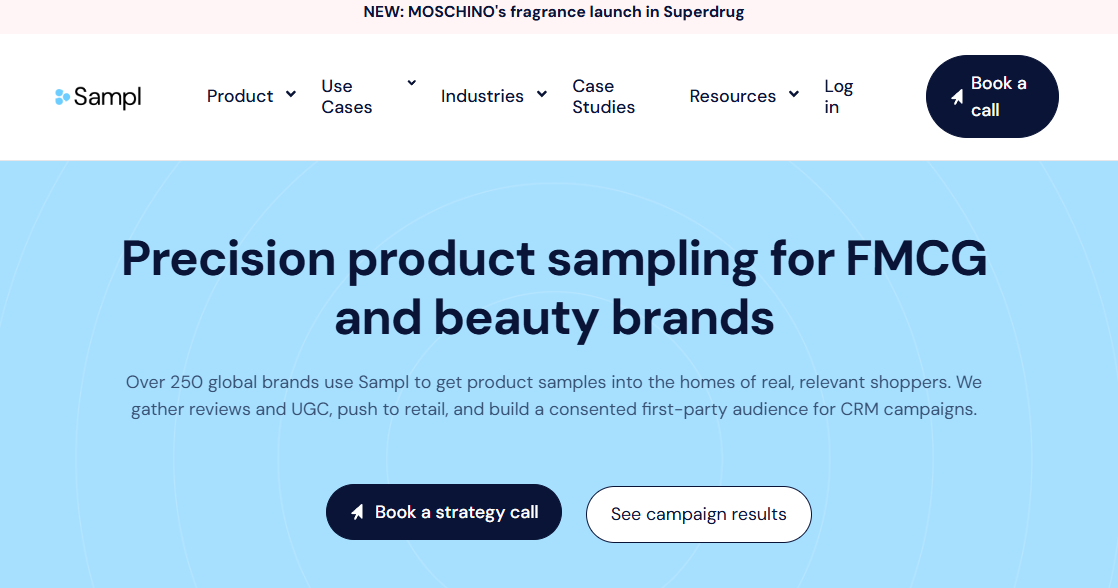
Sampl is a consumer brand sampling platform built for targeted campaigns across in-home delivery and cashback purchase activation. It's most relevant for CPG, FMCG, beauty, personal care, and other consumer categories that need a measurable path from trial to verified conversion.
The platform's two core campaign types are SamplSend for physical in-home sampling and SamplPay for cashback purchase reimbursement. Both feed into the same reporting infrastructure, so brands can compare which sampling motion drives better trial quality and downstream behavior.
Best for: FMCG and consumer brands running targeted campaigns that need one partner for product delivery, cashback, opt-ins, and attribution.
Key features
- In-home sampling through SamplSend
- Cashback purchase activation through SamplPay
- Validated audience targeting and consumer qualification
- Marketing opt-ins and first-party data capture
- Real-time full-funnel reporting and dashboards
Why choose Sampl: It fits marketers who need to test more than one sampling motion without building separate workflows for physical delivery, retail purchase incentives, and performance reporting. If you're running both shipped samples and purchase-based cashback campaigns, this avoids the coordination overhead of two separate platforms.
Sampl pricing: Pricing is customized based on campaign goals, consumer targeting requirements, sample volume, and campaign setup. Contact Sampl directly for a quote tied to your specific launch scenario.
2. Bazaarvoice
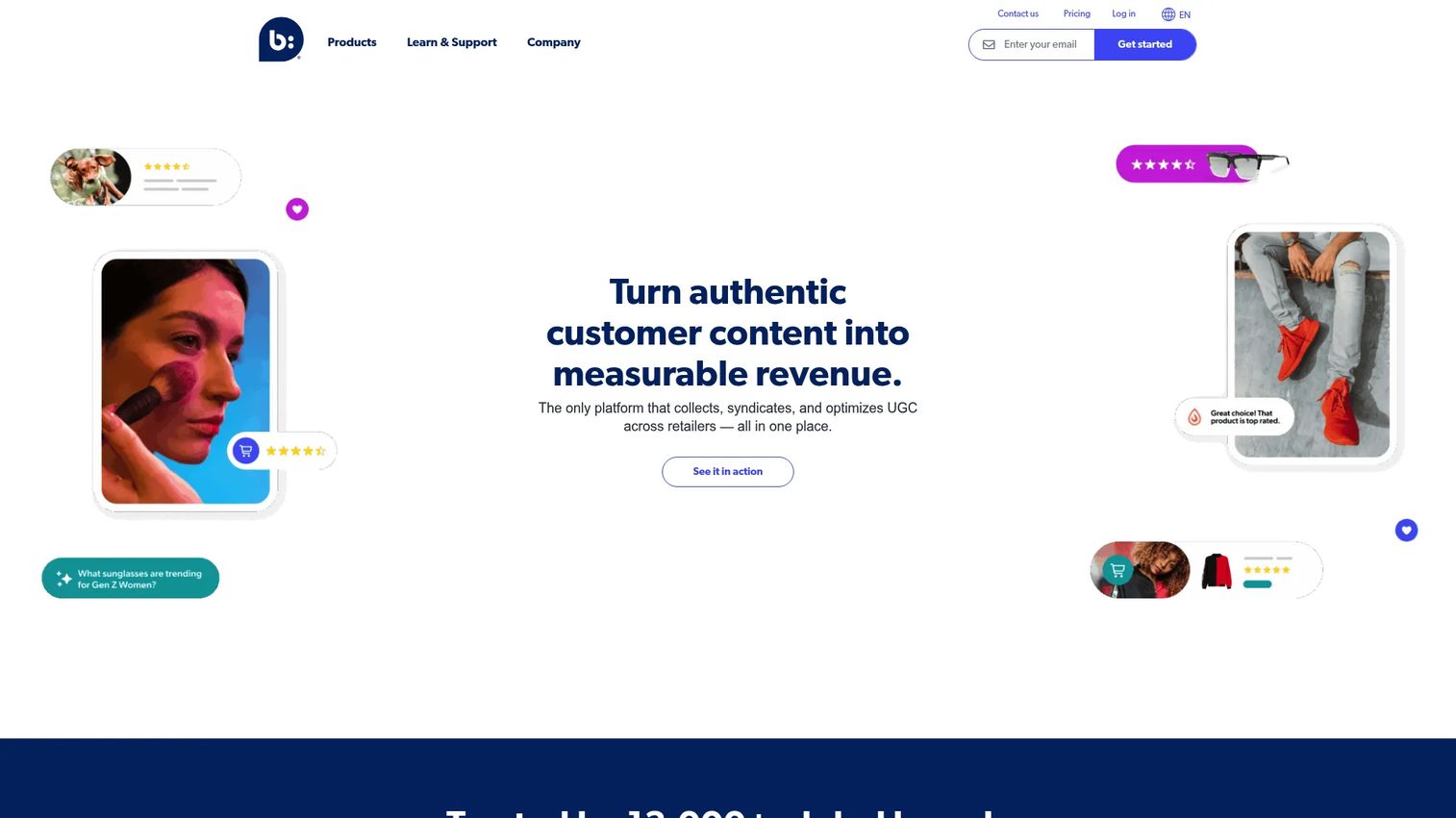
Bazaarvoice is a shopper content and digital commerce platform with sampling capabilities built around review and UGC generation. Its strongest fit is enterprise brands that want product trial to produce ratings, reviews, photos, and other consumer proof that supports ecommerce conversion and retailer syndication.
The platform covers ratings and reviews collection, user-generated content distribution across retailer and media networks, social commerce, consumer insights, and review moderation. Sampling sits within this broader content ecosystem, which means trial campaigns are designed to generate content outcomes, not just fulfillment volume.
Best for: Enterprise brands and retailers that need sampling connected to review generation, shopper content, and product detail page syndication across retail partners.
Key features
- Digital product sampling campaigns tied to review outcomes
- Ratings, reviews, and UGC syndication across retailer networks
- Social commerce and shoppable visual content
- Consumer insights, sentiment analysis, and content reporting
- Review moderation and authenticity controls
Why choose Bazaarvoice: The relationship between product trial and durable commerce content is its primary strength. It makes most sense when the campaign goal extends beyond immediate redemption into product detail page proof, retail partner content, and ongoing shopper trust at scale.
Bazaarvoice pricing: Bazaarvoice offers a free Connections Basic tier for answering shopper questions. Deeper capabilities, including sampling programs and full review syndication, require a paid plan. Contact Bazaarvoice for pricing specific to your product catalog size, campaign volume, and syndication scope.
G2 rating: 4.2/5
3. Social Nature
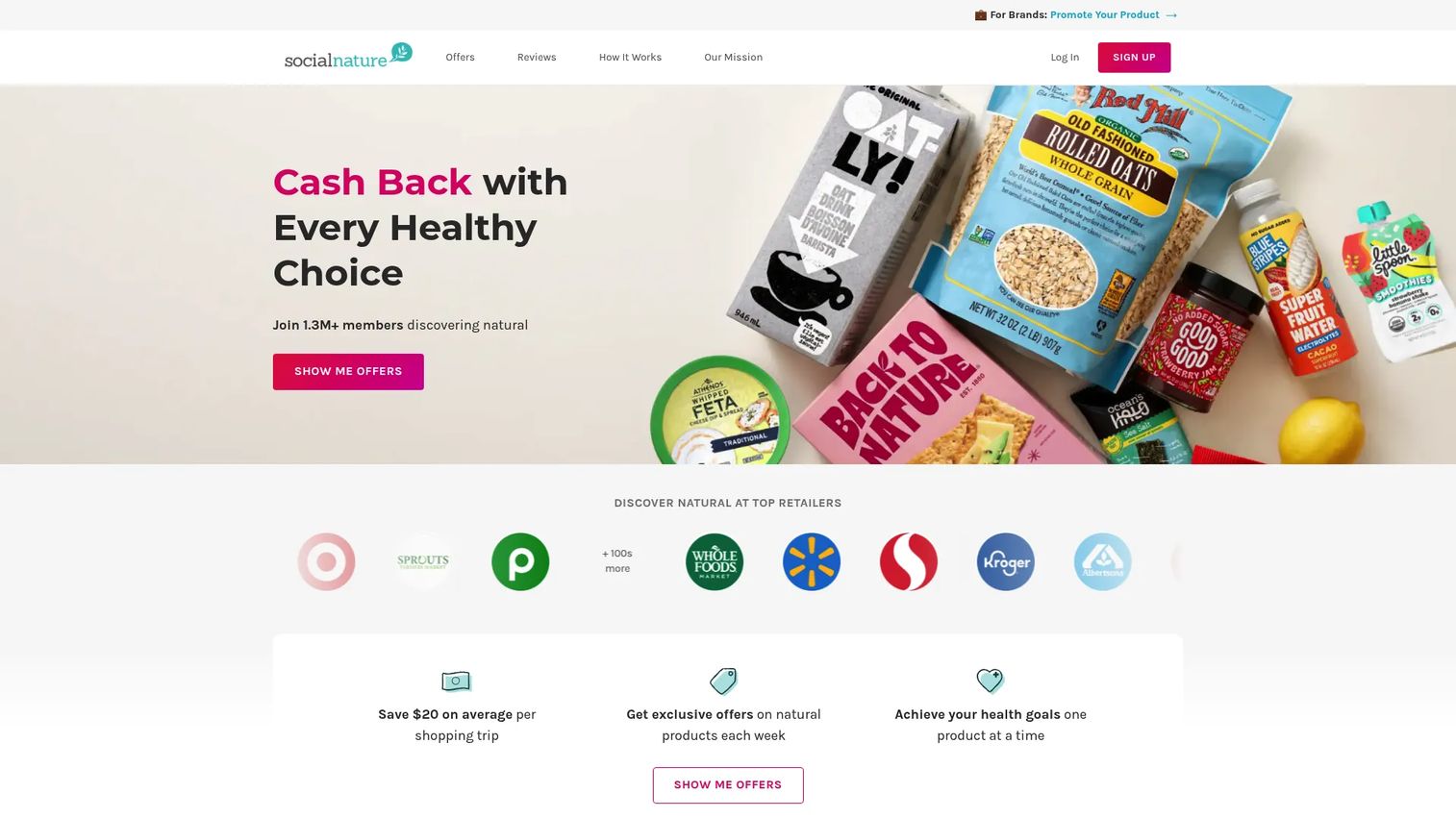
Social Nature is a consumer activation platform with digital sampling programs focused on natural, wellness, and better-for-you consumer brands. Its core differentiation is retailer-connected offers, purchase verification through receipt uploads, and redemption analytics reported by retailer, region, and store.
Brands use Social Nature to run in-store cashback offers and digital sampling campaigns that let shoppers discover and try products tied to specific retail accounts. The platform generates verified purchase reviews and captures geo-targeted shopper insights.
Best for: Natural and better-for-you CPG brands that sell through retail partners and need proof that trial activity reached shoppers in target stores or markets.
Key features
- Geo-targeted retail and account targeting
- In-store cashback offers with receipt upload verification
- Purchase-verified product reviews and ratings
- Retailer, region, and store-level redemption analytics
- Shopper insights and first-party consumer data
Why choose Social Nature: If you need to connect trial campaigns to retail distribution and product velocity, this is the clearest option in this list. Its strongest differentiation is visibility past top-line redemptions into which stores and markets are converting.
Social Nature pricing: A Premium plan is available at $69/month for business use. Campaign and managed service pricing for larger programs requires direct contact with their business team.
4. PowerReviews Product Sampling
PowerReviews Product Sampling is a managed sampling service designed for brands that want product trials to generate fresh, credible product content. The service connects to the BzzAgent consumer community for targeting and fulfillment, with review collection and product page impact built into the post-trial flow.
It covers end-to-end campaign management, targeted sampling, and content generation for product launches, review coverage gaps, and review recency campaigns. Ecommerce and retail teams use it when review volume is the primary campaign outcome rather than fulfillment optimization.
Best for: Brands and retailers needing managed, high-volume review generation for launches, seasonal products, or products with sparse or outdated reviews.
Key features
- End-to-end campaign management and fulfillment
- Targeted sampling through the BzzAgent community
- Ratings, reviews, and consumer image collection
- Product-launch and review-recency campaign types
- Reporting on review submission and publication rates
Why choose PowerReviews Product Sampling: Choose this when the campaign's primary output is review creation and product page content, not fulfillment optimization or retail offer management. It's a focused option, and that focus is its advantage for teams with a clear review-volume objective.
PowerReviews Product Sampling pricing: Pricing is not displayed and requires a demo request. Cost factors include product count, campaign size, review volume targets, and implementation scope.
G2 rating: 4.4/5
5. Samplits

Samplits is positioned as a digital offer activation platform for placing sample or offer qualification directly inside media campaigns. The premise is connecting paid social, display, or video traffic to trial actions without redirecting users through a separate landing page.
At the time of research, the Samplits homepage was displaying a site refresh notice with limited product detail available through first-party sources. G2 lists the platform with no current reviews.
Best for: Performance marketers who want to turn paid media clicks into qualified sample or offer applicants, subject to confirming current platform availability.
Key features
- Ad-embedded sampling campaign activation
- Consumer qualification flows within paid media
- Offer and sample request collection
- Digital media channel integration
- Campaign response reporting
Why choose Samplits: It should appeal to teams already buying paid traffic who want a more direct path from ad engagement to product trial. Verify current product availability and feature set directly with the vendor before including it in a formal evaluation.
Samplits pricing: Pricing details were not available through first-party sources at the time of research. Contact Samplits directly for current campaign and pricing information.
6. EasyCheck
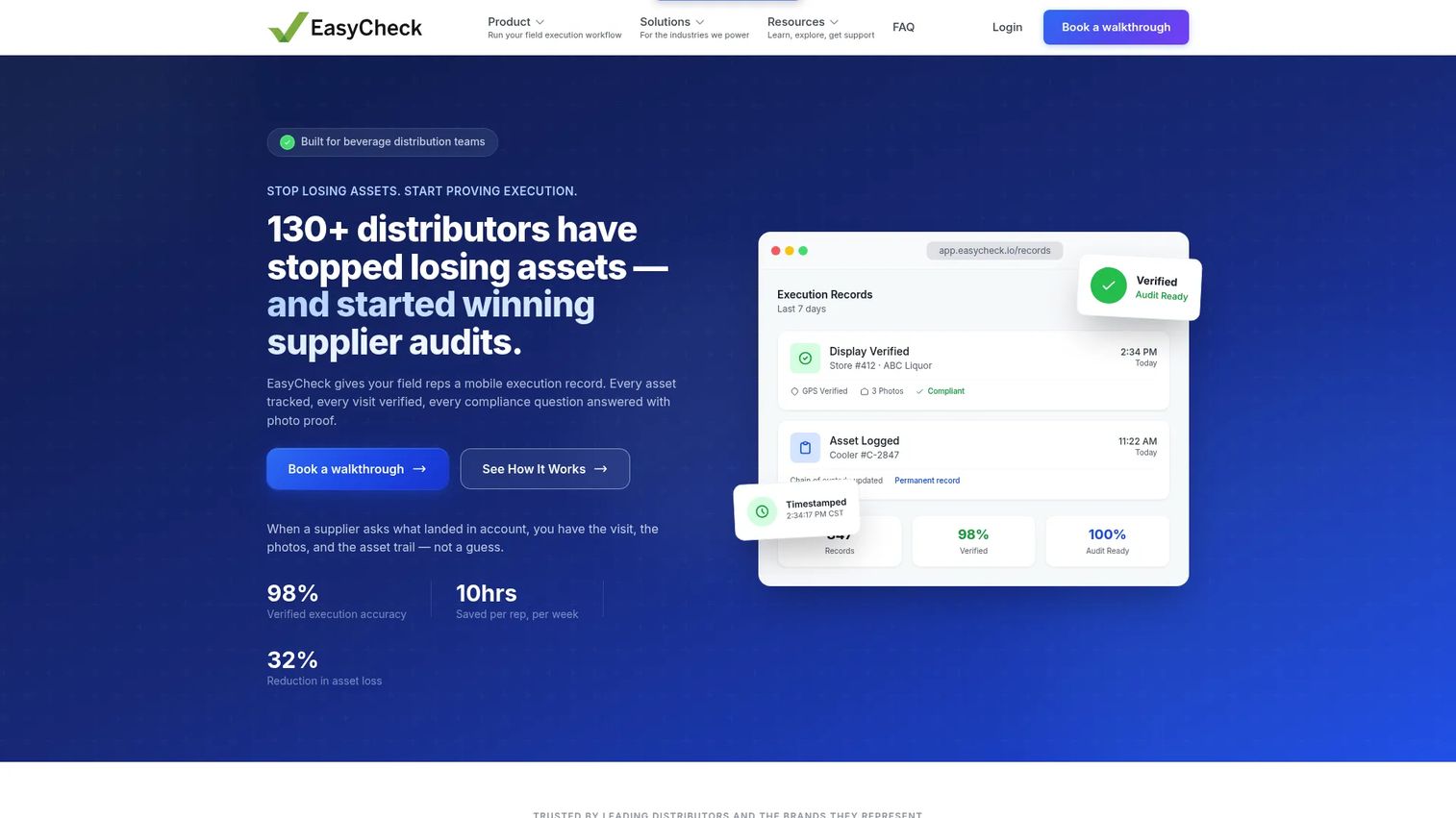
EasyCheck is a field execution and POS tracking platform built for beverage distributors, retail teams, and CPG field operations. It handles asset tracking, photo verification with GPS and timestamps, guided field workflows, and audit-ready execution records.
Its fit within a digital sampling comparison is specific: It addresses verification and field execution rather than consumer-facing offer delivery. Teams that need to verify that display placements, cooler placements, or retail sampling activations were executed correctly are its primary users.
Best for: Beverage distributors and CPG field teams needing verified field execution, asset accountability, and audit-ready records tied to retail sampling activations.
Key features
- Photo verification with GPS and timestamps
- Asset tracking and chain of custody
- Guided field workflows and task completion tracking
- Display and placement verification
- Corrective action and follow-up tracking
Why choose EasyCheck: If your sampling program includes a field activation component where trade spend or display placement needs to be verified, EasyCheck fills a gap that most consumer-facing sampling platforms leave open. It's not a consumer trial platform; it's the operational layer that sits behind one.
EasyCheck pricing: Pricing is based on a custom quote, with cost factors including field user count, verification complexity, integrations, and onboarding scope. Annual subscriptions are standard.
7. Odore
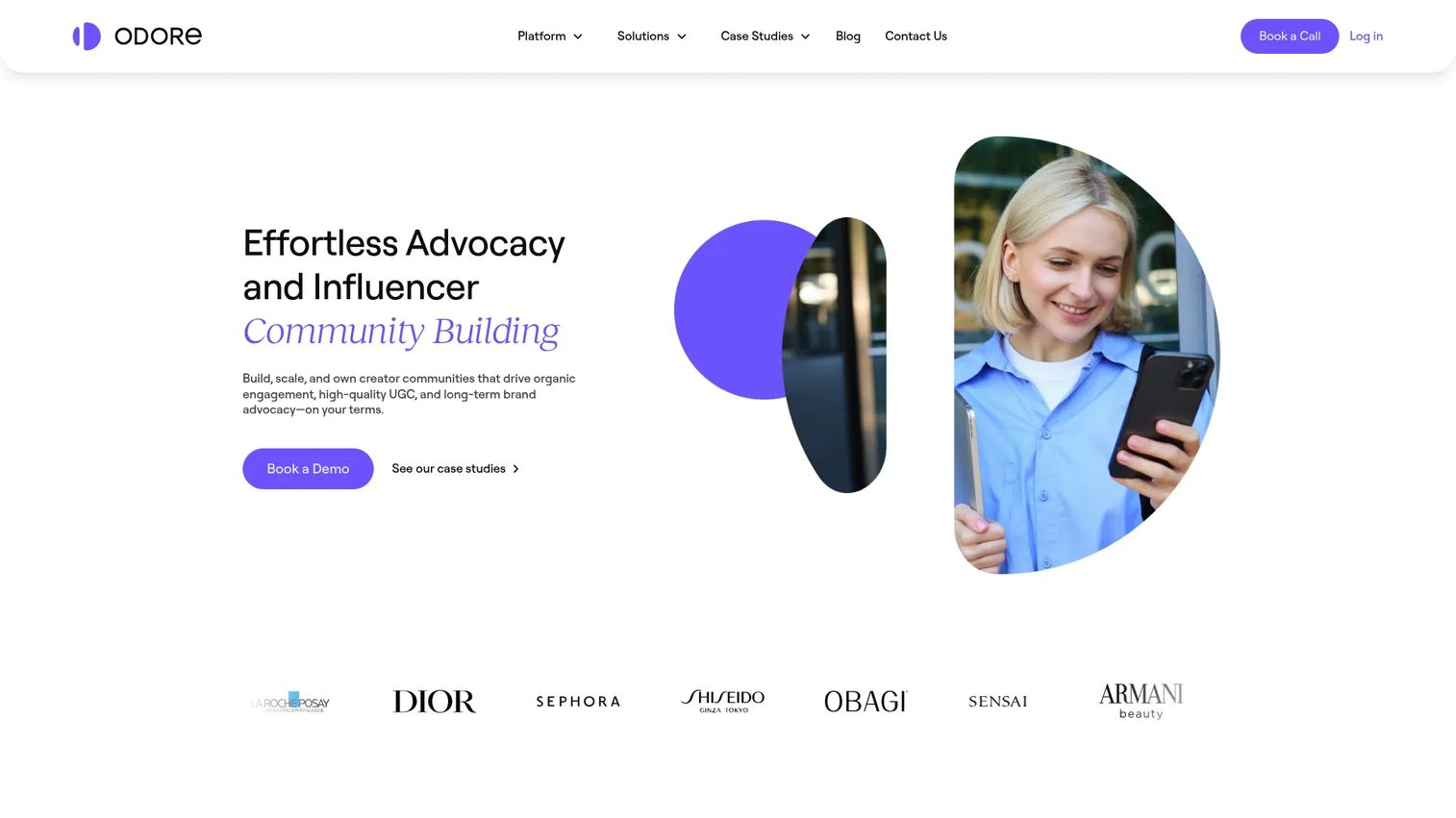
Odore is an AI-powered creator and customer engagement platform for beauty brands. It combines creator discovery and recruitment, community management, digital product sampling, full-service fulfillment, and customer acquisition campaigns across paid media and social networks.
The platform connects creator outreach with always-on engagement programs, digital sampling campaigns, and consumer acquisition, making it relevant for beauty brands that want creator-driven trial and community building to run from a single operational layer.
Best for: Beauty and consumer brands seeking creator-community management, digital sampling, advocacy, and influencer-driven customer acquisition from one platform.
Key features
- Creator discovery, CRM, and outreach automation across YouTube, TikTok, and Instagram
- Digital sampling campaigns with fulfillment and post-trial follow-ups
- Always-on engagement programs with tiered missions and exclusive drops
- Full-service fulfillment, product seeding, and global logistics
- Customer acquisition across paid media, social, publishers, and retailers
Why choose Odore: The combination of creator management and digital sampling is its primary differentiator. If your sampling strategy is tied to creator seeding and community advocacy rather than mass retail activation, Odore covers more of that workflow than the retail-focused tools in this list.
Odore pricing: Plans are built around contacts, campaigns, social channels, CRM and CDP integrations, review platforms, packaging, and geographic markets. Contact Odore directly for a plan estimate.
G2 rating: 5.0/5
8. Recess
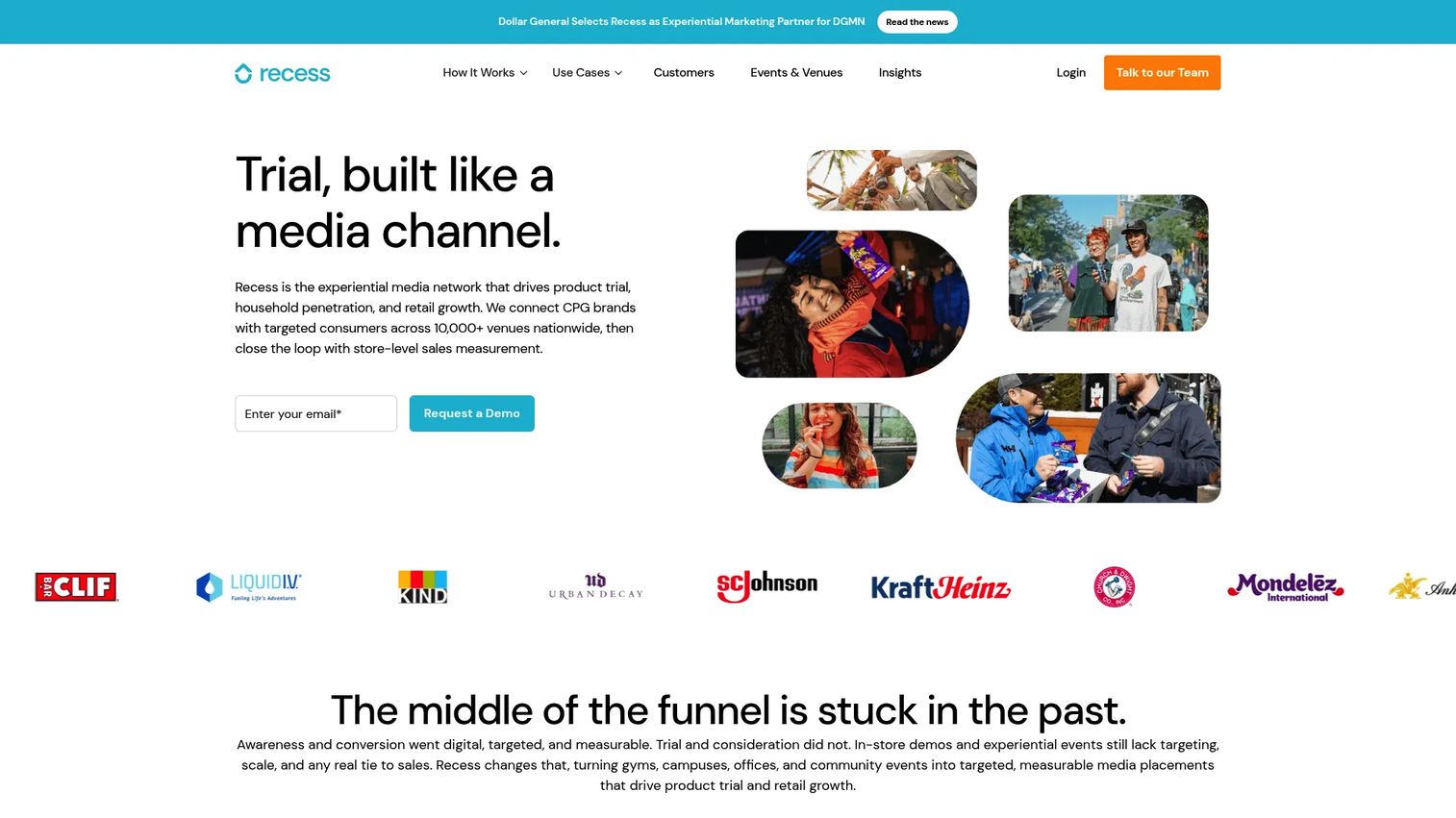
Recess is an experiential media network for CPG brands. It enables targeted product sampling and brand activation across a venue network, with reporting on brand awareness, purchase intent, incremental sales lift, and return on ad spend.
Campaigns run across audience, geographic, and retailer targeting dimensions. Recess provides turnkey activation support including shipping, signage, branded note cards, and digital coupons. Its measurement layer reports iROAS and incremental sales, which makes it relevant for teams who need to tie experiential sampling directly to retail performance.
Best for: CPG brands seeking targeted, turnkey product-sampling campaigns tied to retailer targeting and measurable sales impact.
Key features
- Audience, geographic, and retailer targeting
- Turnkey sampling activations with shipping and branded materials
- Digital coupon distribution
- Reporting on brand awareness, purchase intent, and incremental sales
- iROAS and sales lift measurement
Why choose Recess: Its experiential sampling network fills a gap between shipped consumer sampling and retail in-store programs. If measurable sales lift tied to venue or retailer activation is the metric that matters, Recess addresses it more directly than platforms that focus on review generation or cashback.
Recess pricing: Campaign pricing varies by venue type, geography, and campaign scale. Contact Recess for a quote specific to your retailer targets and campaign size.
G2 rating: 4.5/5
9. TrueLoyal
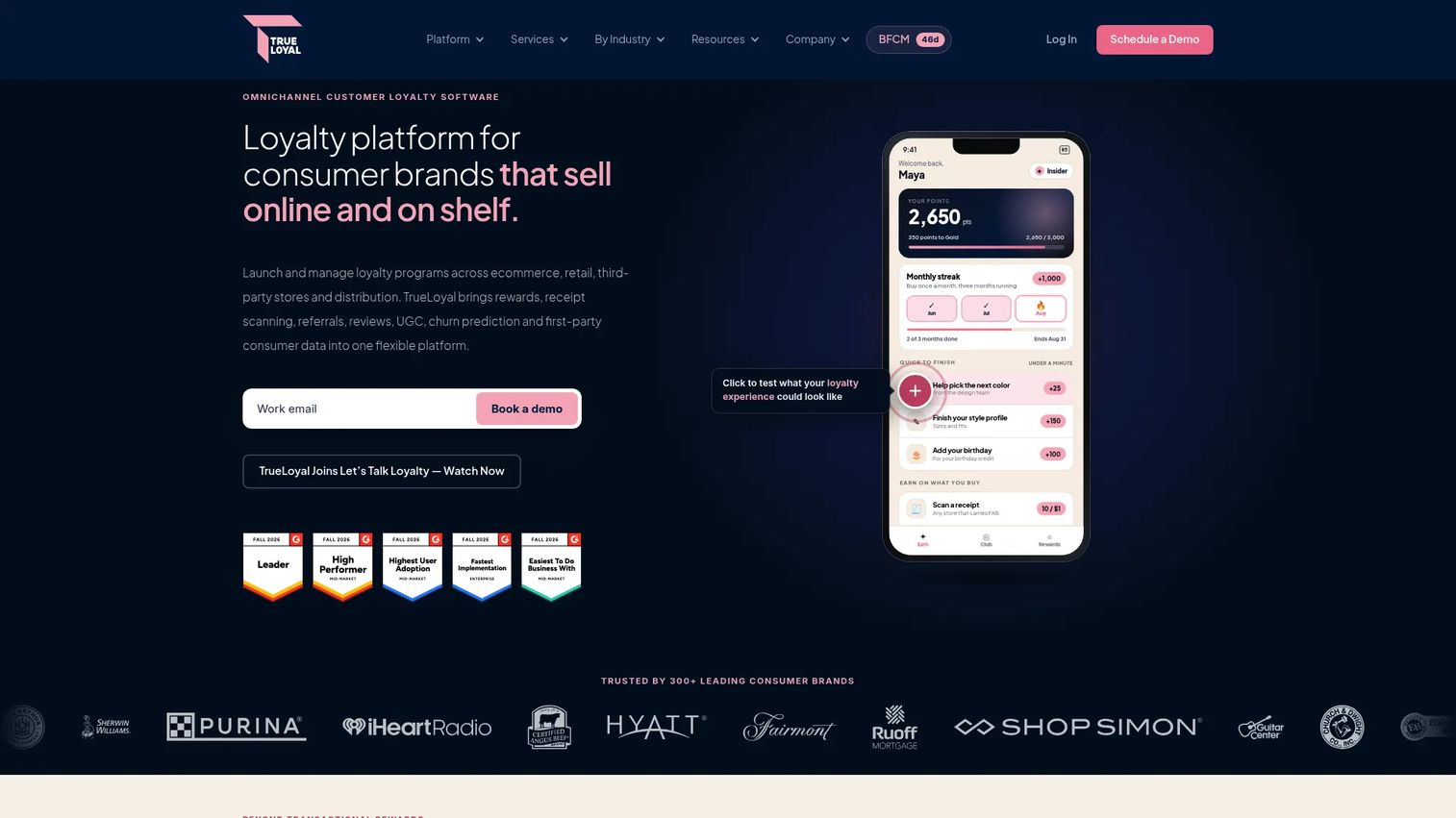
TrueLoyal is customer loyalty software for consumer brands that combines rewards, advocacy, user-generated content, communities, and first-party consumer profiles. It's built for mid-market brands selling through ecommerce, retail, distributors, and third-party channels.
Its sampling relevance comes from receipt scanning for offline and third-party purchases, rewards tied to trial behavior, referrals, reviews, and AI-powered churn prediction. For brands that want product trial campaigns connected to existing loyalty infrastructure rather than standalone offer management, TrueLoyal brings the two together.
Best for: Consumer brands that want to connect sampling offers to loyalty, retention, referrals, and existing customer engagement programs.
Key features
- Rewards, points, and tiered status programs
- Receipt scanning for offline and third-party purchase verification
- Referrals, reviews, and UGC collection
- AI-powered churn prediction and customer segmentation
- Ecommerce, CRM, ERP, POS, review, and marketing integrations
Why choose TrueLoyal: Loyalty data provides an advantage over standalone sampling when the campaign goal is retention and repeat purchase rather than pure acquisition. If you're trying to activate existing customers into trial of a new product line and track repeat behavior afterward, TrueLoyal connects those signals in a way that a standalone sampling platform typically won't.
TrueLoyal pricing: Pricing is customized according to program goals, scale, and integrations. Contact TrueLoyal directly for current pricing.
G2 rating: 4.6/5
10. Mercatus Digital Commerce
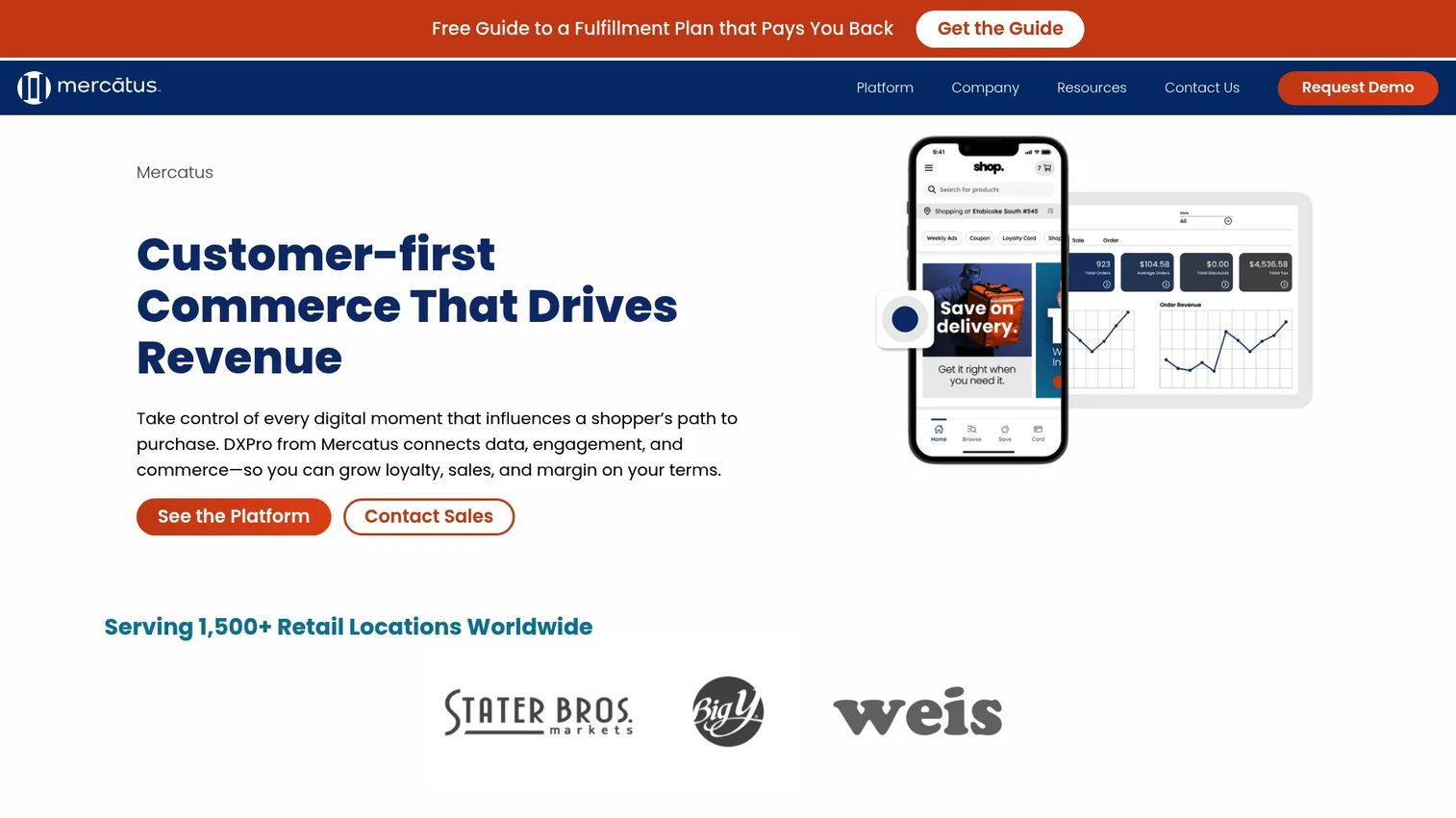
Mercatus Digital Commerce is a unified digital commerce and experience platform for grocery retailers. It combines a customer data platform, personalized promotions, loyalty offers, ecommerce, checkout, order management, and fulfillment into one infrastructure layer.
For grocery retailers running digital offer activation and personalized promotions tied to their own ecommerce experience, Mercatus provides the commerce infrastructure that connects customer data to personalized sampling or offer delivery. It's not a standalone sampling platform; it's the operating layer for grocery retailers who want sampling tied to their digital commerce stack.
Best for: Regional and enterprise grocery retailers building product trial and offer activation into their owned digital commerce experience.
Key features
- Unified customer data and embedded customer data platform
- Personalized promotions, recommendations, loyalty offers, and communications
- Grocery ecommerce, checkout, payments, and order management
- Pickup and delivery fulfillment
- Customer intelligence and engagement reporting
Why choose Mercatus Digital Commerce: This is the right tool when the sampling motion is tied to grocery or retailer digital experience rather than direct-to-consumer shipping or third-party offer networks. If you're a retailer, not a brand, it belongs in your evaluation. Brands should confirm whether their retail partners use Mercatus before including it in a sampling stack conversation. See our guide on best ecommerce platforms for related commerce infrastructure options.
Mercatus Digital Commerce pricing: Contact sales for pricing. Cost factors include retailer scale, digital commerce modules, order volume, and implementation services.
G2 rating: 4.5/5
Considerations when choosing digital product sampling software
Match the platform to your sampling model
Digital offers, cashback, mailed samples, retail promotions, and loyalty rewards produce different economics and data. A platform optimized for in-home fulfillment won't give you retailer-level redemption analytics, and a review generation service won't manage cashback reimbursement. Confirm which campaign mechanic you plan to run first, then filter from there.
Protect audience quality before spend goes out
Evaluate eligibility rules, duplicate controls, purchase verification, and methods for filtering low-intent applicants. Redemption volume can look strong while hiding significant wasted spend on consumers who churned immediately. Ask vendors specifically how they detect duplicate submissions and household limits.
Connect sampling to measurable commercial outcomes
Require reporting on the metrics your team needs to defend: Verified purchase, repeat purchase rate, review publication, retailer velocity, opt-in rate, or incremental revenue. The right attribution software stack matters here. A platform that shows impressions and redemptions without tying them to downstream behavior won't survive a CFO review.
Check where consumer and campaign data goes
Confirm integrations with your CRM, loyalty platform, review system, retailer reporting, and data warehouse. Ask who owns audience data after the campaign ends. First-party consumer profiles collected during sampling are valuable for retargeting and lifecycle campaigns, and data portability terms vary significantly across vendors. If you're building a customer data platform strategy, this question belongs in every vendor conversation.
Price the full campaign, not only the software
Compare software fees against media, sample production, shipping, cashback reimbursement, review incentives, and managed service costs. The cheapest platform subscription can still create the most expensive campaign when those variable costs are factored in. Ask vendors for a fully-loaded cost estimate using your actual campaign parameters. You can also see how campaign planning software fits into this evaluation process.
Conclusion
Digital sampling is only defensible as an acquisition channel when you can answer: Who received the sample, did they purchase, what did they say about it, and did they buy again?
Sampl is the broadest fit for brands running multiple sampling models under one reporting framework. Bazaarvoice is strongest when trial, reviews, and retailer content distribution must work together at enterprise scale. Social Nature is a focused option for retail activation and purchase verification with store-level visibility. PowerReviews Product Sampling fits review-centered programs where content output is the primary measure of success.
Beyond those four, the remaining platforms require closer evaluation against your specific campaign model, geographic coverage, integration requirements, and reporting depth. Odore fits beauty brands with creator-led trial programs. Recess addresses experiential and venue-based activation. TrueLoyal is the right conversation when loyalty and repeat purchase are the outcome metrics, not just first trial. EasyCheck belongs in evaluations that include field execution verification. Mercatus fits grocery retailers more than brands.
Build a two or three vendor shortlist around your campaign model, then request a reporting walkthrough using one of your actual launch or retail activation scenarios.
Start your journey with Guideflow today!
FAQs
Digital product sampling software coordinates the full campaign lifecycle from audience selection to offer delivery, redemption, feedback, and measurement. It handles eligibility screening, sample or offer logistics, consumer data capture, review collection, and outcome reporting in one system rather than stitching together separate tools for each step.
Coupon software issues a discount code or voucher. Digital sampling software manages the broader campaign: Who qualifies, how the sample or offer reaches them, what consumer data is captured, how reviews and repeat purchase signals are tracked, and what the attribution story looks like at the end. The reporting capability is the meaningful operational difference for growth marketers trying to prove CAC.
Yes, several platforms support retailer offers, receipt-based purchase verification, cashback reimbursement, and store-level reporting. Social Nature, TrueLoyal, and Recess each address in-store or retail-connected use cases in different ways. Validate specific retailer coverage and verification methodology directly with any vendor before selecting based on in-store capability.
The core metrics are verified purchase rate, repeat purchase rate, review publication rate, retailer velocity, opt-in volume, and incremental revenue versus a control group. Reach and redemption volume matter, but they're inputs, not outcomes. Setting a baseline before launch, rather than measuring against nothing, is what makes post-campaign reporting defensible to finance and leadership.
Several platforms build review collection directly into the post-trial flow. Bazaarvoice and PowerReviews Product Sampling are specifically designed around this connection. For other platforms, review generation may be a secondary feature or require integration with a separate review tool. Evaluate review moderation workflow, retailer syndication capability, and compliance controls, not just raw review volume, when comparing options.
Most platforms in this category price by custom quote rather than a fixed monthly plan, because campaign costs depend on audience size, sample volume, shipping, cashback reimbursement, retailer coverage, media, and managed operations. Software fees are often the smallest component. Social Nature has a Premium tier starting at $69/month for smaller programs. Enterprise platforms like Bazaarvoice, Sampl, PowerReviews, and Odore require direct pricing conversations. Build a fully-loaded campaign cost model before comparing platforms on subscription price alone.
The strongest controls are eligibility screening questions, audience qualification filters, purchase verification for cashback campaigns, household limits on redemptions, and duplicate submission detection. Post-campaign behavior analysis, specifically whether samplers purchased again, is the clearest indicator of audience quality. Platforms that show you downstream repeat purchase rates alongside redemption volume give you the most complete picture. Ask vendors specifically how they handle duplicate applications and what verification steps apply to fulfillment or reimbursement.
The answer depends on where your team measures acquisition and repeat purchase. For most digital marketing teams, CRM integration matters first because it connects consumer opt-ins to lifecycle campaigns. Loyalty platform integration matters for brands with existing programs. Review platform connections matter when content output is a campaign objective. Retail media and ecommerce integrations matter for redemption tracking. Customer data platform or data warehouse connections matter for teams building attribution models across channels. See our guide to best growth marketing tools for related stack evaluation guidance.