

You get a 60-page tender on Monday. It's due Friday. Half the answers already exist somewhere, buried in a Google Doc from last quarter, a Slack thread, or a PDF nobody can find. So your team rewrites them from scratch, again.
That is the real cost of scattered tender responses. Not the drafting. The hunting.
The tender management software market was estimated at roughly USD 1.2 to 2.14 billion in 2024 and is forecast to grow at around 9 to 11% CAGR through 2033, according to Verified Market Reports and Business Research Insights (2024). The closely related bid management software market reached USD 1.13 billion in 2025 and is projected to hit USD 1.81 billion by 2030 at 9.8% CAGR, per The Business Research Company (2025). Teams are spending on this category because manual response work does not scale.
Good tender response software fixes the repeatability problem: one governed source of truth, answers you can trust, and drafting that gets faster instead of slower as volume climbs.
What's inside
This guide is for teams evaluating tender software to respond to RFPs, RFIs, security questionnaires, and public-sector bids without founder-level firefighting on every submission.
We picked these seven tools based on four filters that actually matter when you shortlist:
- Response automation and drafting quality: how well the tool speeds up first drafts, including AI drafting
- Knowledge library or content governance: whether answers stay current, sourced, and reusable
- Integrations and workflow fit: how the tool plugs into your docs, CRM, and knowledge sources
- Pricing transparency and implementation effort: whether the pricing model matches your response volume
No banned or off-topic tools. Just genuine tender management platforms worth your time.
TL;DR
- Best for enterprise procurement and source-to-pay: Jaggaer, for teams that need supplier management and tender orchestration in one governed platform
- Best for public-sector bid discovery: Bonfire, for vendors chasing government RFPs
- Best for broad spend and procurement control: Coupa, for teams standardizing procurement operations
- Best for AI-assisted drafting with source traceability: SiftHub, for response teams that want speed without losing accountability
- Best for a shared content library: Loopio, for high-volume RFP and questionnaire operations
- Best all-in-one tendering software: Responsive, for enterprise response teams that need library, collaboration, and automation together
What is tender management software?
Tender management software is a centralized system that helps teams create, manage, respond to, review, and submit tenders or bids from one place instead of scattered docs and inboxes.
Think of it as the operating layer for your entire bid and tender lifecycle. Instead of rebuilding every response, your team pulls approved content, drafts faster, routes reviews, and submits with a clear trail.
Core capabilities of most tender management platforms include:
- Centralized content library: approved answers, boilerplate, and past responses in one searchable place
- AI-assisted drafting and reuse: generate and adapt first drafts from existing content
- Collaboration and approvals: assign owners, route reviews, and lock final copy
- Submission tracking and governance: version control, permissions, and source traceability
- Integrations: connections to docs, CRM, and knowledge sources your team already uses
The best tender bid management software does not just store content. It keeps that content fresh, attributes it to a source, and makes the next response faster than the last.
Here is the difference in plain terms:
| Factor | Manual docs and inboxes | Tender management software |
|---|---|---|
| Finding past answers | Search across tools and people | One searchable library |
| Content freshness | Nobody owns updates | Assigned owners and review cycles |
| Drafting speed | Rewrite from scratch | Reuse plus AI drafting |
| Review and approvals | Email threads | Structured workflows |
| Audit trail | Fragmented | Version control and source traceability |
When to use tender management software
Not every team needs a dedicated platform on day one. These three signals tell you when it earns its place in your stack.
When response volume keeps growing
You are answering the same questions across RFIs, RFPs, and security questionnaires, over and over. Each one feels new, but 70% of the content already exists. Software turns that repetition into reuse, so volume stops meaning more manual hours.
When your content is scattered across docs and inboxes
Your best answers live in someone's sent folder or a doc three versions out of date. A central library ends the treasure hunt. Instead of asking around for approved copy, your team pulls it, adapts it, and moves on.
When governance and approval trails matter
Deal size rises. Compliance pressure rises with it. Now you need version control, permissions, and source traceability on every answer. Governance stops being a nice-to-have the moment a wrong claim in a tender becomes a legal or reputational risk.
Comparison table
Here is how the seven tools compare at a glance. Pricing and G2 ratings reflect verified values at publication and can change, so confirm current figures before you commit.
| # | Product | Best for | Key differentiator | Pricing | G2 rating |
|---|---|---|---|---|---|
| 1 | Jaggaer | Enterprise procurement teams needing unified source-to-pay | AI source-to-pay with supplier collaboration | Custom (contact sales) | 4.3/5 |
| 2 | Euna Supplier Network | Supplier connectivity and public procurement workflows | Supplier network and sourcing connectivity | Custom (contact sales) | Not listed |
| 3 | Bonfire | Vendors chasing government contracts and RFPs | Public-sector bid discovery across North America | $499 USD / year | 4.3/5 |
| 4 | Coupa | Mid-market and enterprise business spend | End-to-end business spend management | Custom (contact sales) | 4.2/5 |
| 5 | SiftHub | Sales and presales handling RFPs and DDQs | AI drafting with source attribution | Custom (free trial) | 4.5/5 |
| 6 | Loopio | High-volume RFP and questionnaire teams | Content library with generative AI answers | Custom (contact sales) | 4.6/5 |
| 7 | Responsive | Enterprise all-in-one response management | Library, collaboration, and automation combined | From $5,000/year for 5 users | 4.5/5 |
1. Jaggaer
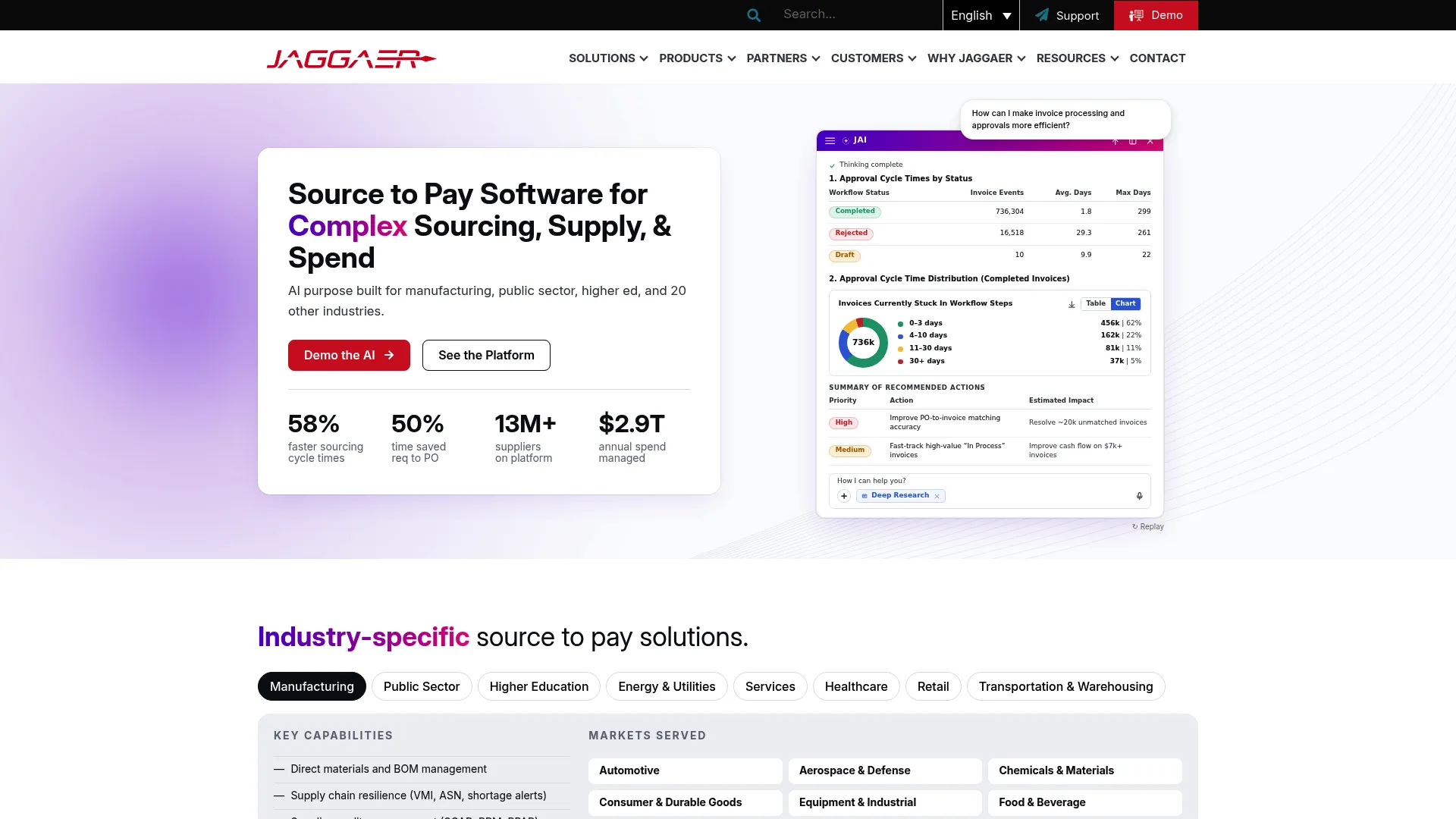
Jaggaer is an AI-powered source-to-pay and supplier collaboration platform built for enterprise procurement teams. It handles sourcing, contract lifecycle management, analytics, and payments in one governed system. For tender-heavy operations, the value is orchestration: supplier management and bid workflows sit inside the same platform, so nothing lives in a silo.
This is the tool for teams where procurement complexity, not just response drafting, is the bottleneck. If you run large supplier networks and need compliance and visibility across the source-to-pay cycle, Jaggaer covers that ground. It leans enterprise, which shows in both depth and setup.
Key features
- Source-to-pay procurement platform
- Contract lifecycle management
- Sourcing, analytics, and payments in one system
- Supplier collaboration and visibility
Why choose Jaggaer: Choose it when tender management is one part of a broader procurement mandate, and you need supplier orchestration, governance, and analytics under one roof rather than a standalone bid writing software point tool.
Jaggaer pricing: Jaggaer does not publish public pricing on its site. The platform uses a contact-sales model, so pricing depends on scope, modules, and user count. Request a quote for figures that match your team.
2. Euna Supplier Network

Euna Supplier Network fits teams focused on supplier connectivity and public procurement workflows. It positions around sourcing and portal-style processes where buyers and suppliers connect through a structured network rather than ad hoc email chains.
For public-sector and supplier-network use cases, this connectivity is the point. Instead of managing supplier relationships across disconnected tools, teams route sourcing and tender activity through one channel. That structure helps with process control and keeps supplier interactions consistent.
Key features
- Supplier network connectivity
- Public procurement and sourcing workflows
- Portal-style buyer and supplier processes
Why choose Euna Supplier Network: Choose it when your workflow centers on supplier connectivity and structured public procurement, and you want a network model rather than a standalone drafting tool.
Euna Supplier Network pricing: Public pricing was not available on the brand site during this review. Contact Euna directly for pricing that reflects your procurement scope and user requirements.
3. Bonfire
Bonfire is strategic sourcing and public-sector procurement software built for vendors chasing government contracts and RFPs. If your growth depends on winning public bids, Bonfire helps you find opportunities before your competitors do, then track them through submission.
The standout is discovery. Bonfire surfaces public-sector bid opportunities across North America, sends daily RFP alerts, and gives you a dashboard to track what matters. That turns bid hunting from a manual scan into a monitored pipeline. Smart search and filtering keep the noise down, and submission tools handle the last mile.
Key features
- Public-sector bid opportunity discovery across North America
- Daily RFP alerts, recommendations, and dashboard tracking
- Smart search and filtering
- Bid submission tools
Why choose Bonfire: Choose it when your priority is finding and winning government tenders, not just drafting responses. It is built for the discovery side of public-sector bidding, where visibility into new RFPs drives revenue.
Bonfire pricing: Bonfire publishes a Premium Vendor subscription at $499 USD per year, billed annually. That is one of the few transparent public prices in this category, which makes budgeting straightforward for vendors evaluating the tool.
4. Coupa
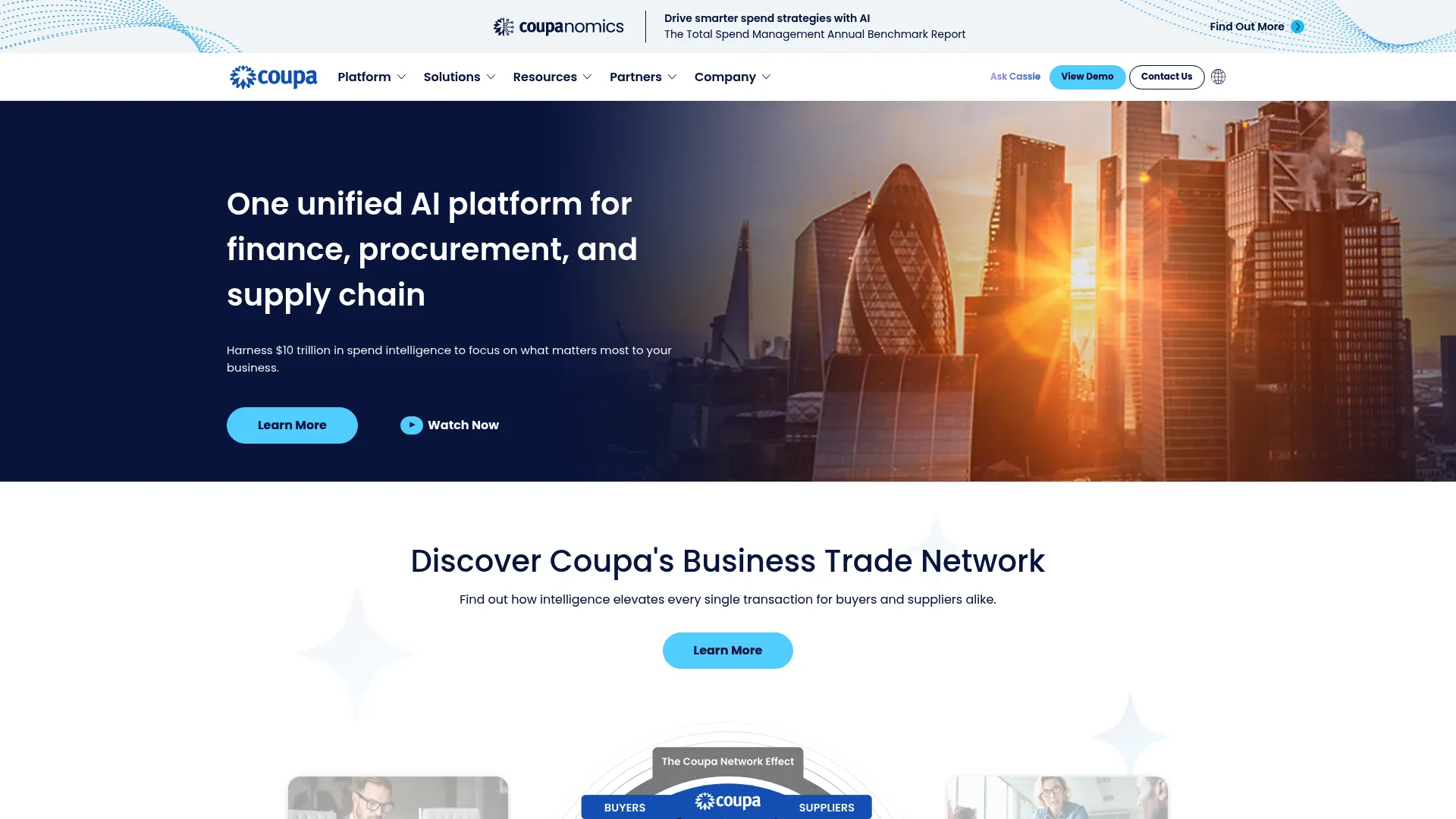
Coupa is business spend management software covering procurement, invoicing, payments, sourcing, and spend visibility. For teams that treat tendering as one thread inside a wider procurement operation, Coupa brings that thread into a single platform with the rest of spend.
The fit here is breadth. Sourcing and supplier management live alongside invoicing and payments, so tender activity connects to spend data instead of sitting apart from it. That matters when leadership wants visibility into where money goes and how sourcing decisions ladder up to spend control.
Key features
- Procurement and spend management
- Invoicing and payments
- Sourcing and supplier management
- Spend visibility and analytics
Why choose Coupa: Choose it when you want tender and sourcing activity inside a full spend management platform, and procurement visibility across the organization matters as much as individual bid responses.
Coupa pricing: Coupa uses a sales-led pricing model and does not publish plan prices on its site. Pricing scales with modules and organization size, so contact Coupa for a quote matched to your spend and team.
5. SiftHub
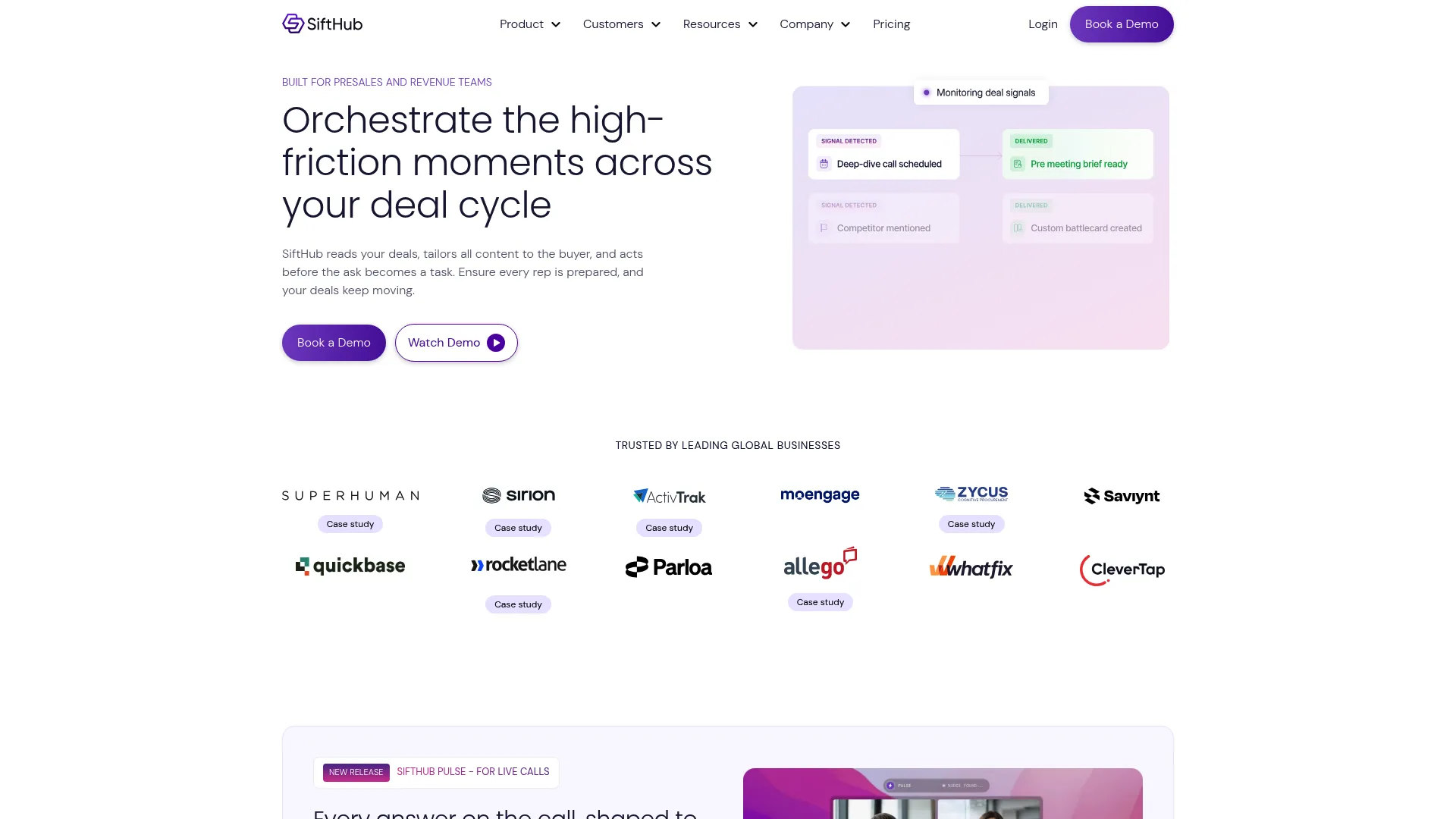
SiftHub is AI RFP software and a deal orchestration platform for sales and presales teams handling RFPs, DDQs, and security questionnaires. This is the tool for teams that want faster first drafts without losing track of where each answer came from.
The differentiator is source attribution. SiftHub runs AI enterprise search across product docs, past RFPs, CRM, call transcripts, and team knowledge, then generates responses that show their sources. That traceability is the difference between AI drafting you can trust and AI drafting you have to re-verify line by line. It also works where your team already works, inside Word, Excel, Google Docs and Sheets, Slack, Teams, and the browser.
Key features
- AI enterprise search across docs, RFPs, CRM, and call transcripts
- Automated response generation with source attribution
- In-workflow support in Word, Excel, Google Docs, Slack, and Teams
- Connected knowledge across your existing stack
Why choose SiftHub: Choose it when response velocity matters but accountability matters more. The source attribution means faster drafts do not become a governance headache, which is exactly the tension mid-market and enterprise presales teams feel.
SiftHub pricing: SiftHub uses quote-based pricing and does not publish public plan prices. A 14-day free trial is available for its Pulse offering, so you can test the drafting and search before committing to a quote.
6. Loopio
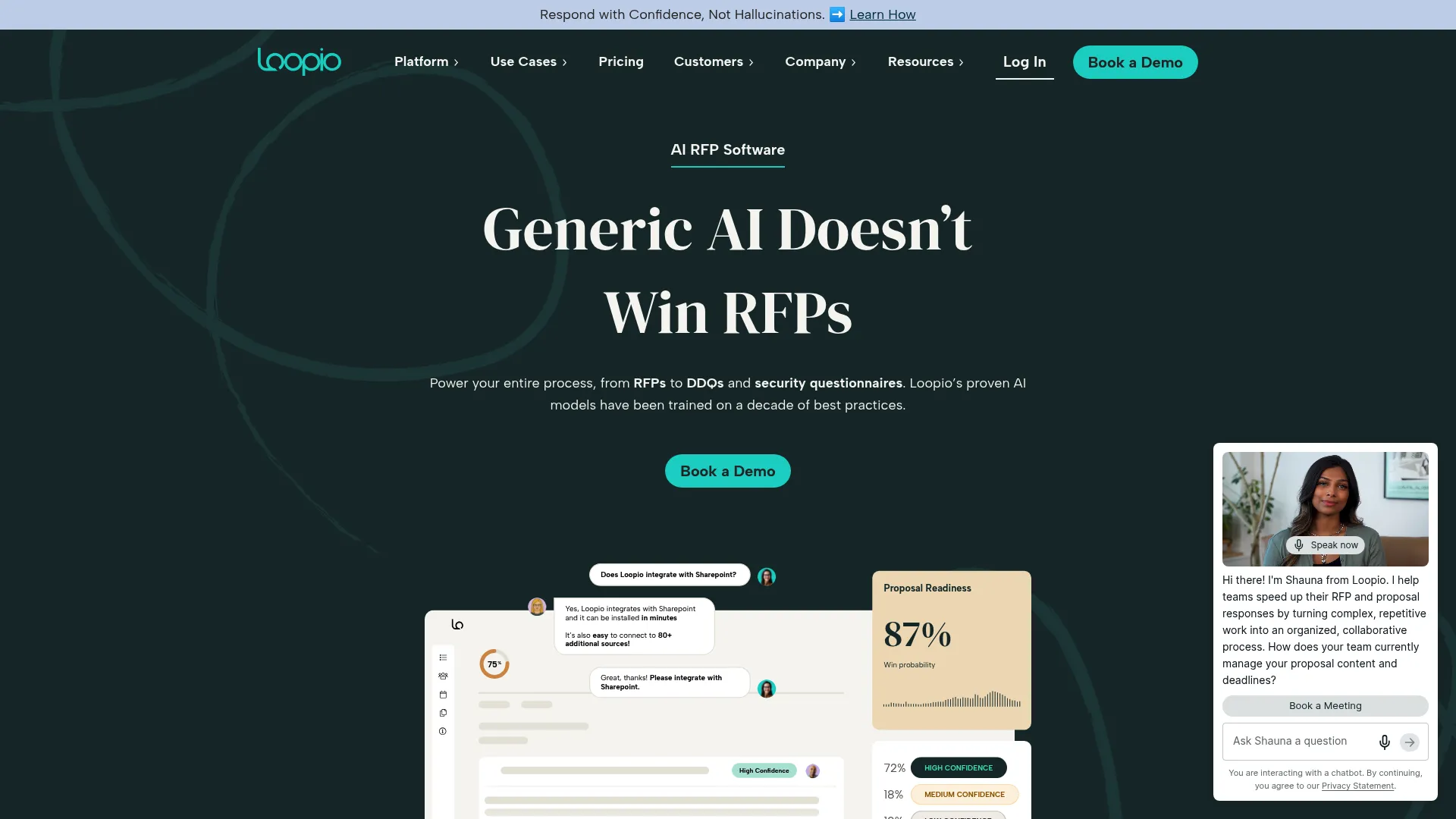
Loopio is AI-powered response management software for RFPs, RFIs, DDQs, and security questionnaires. It is built for teams that answer a high volume of the same questions and need a content library that makes reuse the default, not the exception.
The core strength is library governance. Loopio centralizes approved answers, layers generative AI and automated answers on top, and runs multi-step reviews so content stays current and accountable. That combination is what turns a growing response volume into a repeatable operation instead of a scramble. Unlimited projects and library entries mean the system scales with you.
Key features
- Unlimited projects and library entries
- Generative AI and automated answers
- Multi-step reviews and collaborative workflows
- Content library governance for RFPs and questionnaires
Why choose Loopio: Choose it when a shared, governed content library is your priority and you handle enough volume that answer reuse and freshness directly affect win rates. It is a library-first platform for repeatable response operations, useful bid writing software for teams drowning in questionnaires.
Loopio pricing: Loopio does not disclose public pricing. It lists Foundations, Enhanced, and Enterprise plans and directs you to contact sales for a custom quote based on your team and volume.
7. Responsive
Responsive is AI-powered strategic response management software for RFPs, RFIs, DDQs, security questionnaires, and related information requests. It positions as an all-in-one platform: content library, collaboration, and automation together, built for enterprise readiness.
The fit is completeness. Response Projects manage the full RFP and questionnaire workflow with collaborative reviews. LookUp pulls trusted content from your workplace apps, and the Trust Center publishes security and compliance information for buyers who ask. That range makes Responsive strong tender bid management software for teams that want one system to cover the whole response lifecycle.
Key features
- Response Projects for RFPs, RFIs, and DDQs with collaborative workflows
- LookUp for trusted content from workplace apps
- Trust Center for publishing security and compliance info
- AI response support and integrations
Why choose Responsive: Choose it when you want library, collaboration, automation, and integrations in one enterprise-ready platform, and you manage high enough response volume to justify a full response management system.
Responsive pricing: Responsive publishes a Lite Edition starting at $5,000 per year for 5 users, billed annually. Emerging, Growth, and Enterprise editions are quote-based, so contact sales for pricing on larger deployments.
Considerations
Before you shortlist, run each tool through this checklist. The differences that matter show up here, not in feature lists.
Content library quality
A library is only useful if answers stay current. Check whether the tool assigns owners, flags stale content, and makes updates propagate. Searchable is not the same as usable. Test how fast a real team member finds and adapts an approved answer.
Workflow and approvals
Look for review loops, clear ownership, and version control. A tender wrong on one claim can cost a deal or trigger a compliance problem. The tool should route reviews, lock final copy, and show who approved what and when.
Integration depth
Confirm the tool fits the systems your team already uses. Weak integrations mean copy-paste, and copy-paste means errors and drift. Check connections to your docs, CRM, and knowledge sources before you commit, not after.
AI traceability
If the tool drafts with AI, evaluate whether generated answers show sources, ownership, and freshness. AI drafting without traceability just moves the verification work downstream. Source attribution is what makes AI speed safe to use in a governed response.
Pricing and implementation
Match the pricing model to your response volume and team size. Transparent public pricing, like Bonfire's annual vendor fee or Responsive's Lite Edition, makes budgeting easier. Sales-led pricing is common for enterprise procurement platforms, so factor in evaluation time when a quote is required.
Conclusion
The right tender management software depends on three things: your response volume, your governance needs, and how mature your content already is.
Enterprise procurement teams should start with governance-first platforms. Jaggaer and Coupa handle supplier orchestration and spend control where tendering is one part of a bigger procurement mandate. Vendors chasing public contracts should look at Bonfire for bid discovery, or Euna Supplier Network for supplier connectivity.
Response-heavy teams should prioritize drafting and traceability. SiftHub leads on AI drafting with source attribution when speed and accountability both matter. Teams with scattered or maturing content should prioritize a library-first platform: Loopio for governed reuse, or Responsive for an all-in-one response management system.
Next step: pick two tools that match your volume and governance needs, then run a real tender through each. The one that gets your team to a trusted first draft fastest is the one worth buying.
FAQs
Tender management software helps teams create, manage, respond to, review, and submit tenders or bids from one centralized system. It replaces scattered docs and inboxes with a content library, drafting tools, approval workflows, and submission tracking. The goal is repeatable, governed responses that get faster as volume grows.
Tender software is built around structured, often compliance-heavy responses to RFPs, RFIs, and public-sector bids, with strong emphasis on content libraries and governance. Proposal software leans more toward sales-driven, design-forward documents. The lines blur, since many platforms handle both, but tender tools prioritize accuracy, reuse, and audit trails.
The features that matter most are a governed content library, AI drafting with source traceability, collaboration and approval workflows, submission tracking, and integrations with your docs and CRM. Together they turn repetitive answering into reuse. Prioritize content freshness and traceability over raw feature count.
AI speeds up first drafts by pulling from your existing approved content and generating responses you can adapt. The best implementations show sources for every answer, so speed does not sacrifice accountability. AI also powers enterprise search across docs, past RFPs, and knowledge sources, so answers surface faster.
Look at content library quality, workflow and approvals, integration depth, AI traceability, and whether pricing matches your volume. Test how fast a real user finds and adapts an approved answer. Strong governance and clean integrations separate tools that scale from tools that add friction.
Pricing varies widely. Some tools publish transparent figures, like Bonfire at $499 USD per year for a vendor subscription or Responsive's Lite Edition at $5,000 per year for 5 users. Most enterprise procurement platforms, including Jaggaer, Coupa, Loopio, and SiftHub, use quote-based pricing that scales with modules, users, and volume.
Yes, if response volume justifies it. Small teams answering frequent RFPs or security questionnaires benefit most from a content library and reuse, which cut repeat work. Tools with transparent entry pricing or free trials let smaller teams start without a large upfront commitment. If you tender rarely, manual workflows may still be enough.
The most important integrations connect your content sources and review tools: document editors like Word and Google Docs, CRM systems, and collaboration platforms like Slack and Teams. These let your team draft where they already work and keep the content library synced with source knowledge, which reduces copy-paste errors and content drift.