Security teams can run scans all week and still miss the one flaw that stalls an enterprise deal, fails an audit, or exposes production data. The problem is rarely a shortage of tools. Most teams already have too many. The real gap is choosing tools that match the asset type, the depth of testing required, and the evidence quality that technical buyers actually trust.
According to the Cobalt State of Pentesting report (2025), 94% of security leaders say penetration tests are foundational to a strong security posture. Yet tool selection remains scattered, and the line between vulnerability scanning, exploit validation, and managed testing is drawn inconsistently across organizations. For presales and sales engineering teams, understanding where those lines sit matters: Security questionnaires increasingly ask for methodology, tooling, and remediation evidence, not just scan scores.
This guide cuts through the noise with a practical shortlist organized by testing job.
What's inside
This guide is for security practitioners, presales engineers, and technical teams evaluating penetration testing software. Items were chosen from tools appearing in top-ranked security resources and validated against real penetration testing workflows.
Selection criteria:
- Testing scope: Web, network, wireless, password, browser, exploit, or managed coverage
- Evidence and reporting quality: Screenshots, request/response pairs, remediation guidance, retest tracking
- Skill level required: Open-source practitioner tools versus commercial platforms with guided workflows
- Pricing and deployment model: Free open-source, licensed commercial, or PTaaS managed service
TL;DR
- Best overall exploit validation framework: Metasploit, for teams needing a mature, controlled exploitation workflow with over 4,000 modules
- Best for web application testing: Burp Suite, for manual web and API testing through a powerful intercepting proxy
- Best open-source toolkit: Kali Linux, for practitioners who want a full security-focused operating system ready to go
- Best for network discovery: Nmap, for fast host enumeration, port scanning, and service fingerprinting before deeper testing
- Best for enterprise vulnerability scanning: Nessus, at $4,790 per year for Professional, covering broad infrastructure assessment
- Best for managed PTaaS: BreachLock, combining human-led testing with platform-delivered reporting starting at $2,500
What are penetration testing tools?
Penetration testing tools are software applications, frameworks, scanners, and testing environments used to identify, validate, exploit, document, and retest security weaknesses in authorized systems.
One rule applies to all of them without exception: These tools should only be used with explicit written authorization, a documented scope, and agreed rules of engagement. The tools themselves are neutral; the authorization and methodology around them are not optional.
They help across the full testing lifecycle:
- Asset discovery and host enumeration
- Port and service scanning
- Web request interception and manipulation
- Vulnerability detection and prioritization
- Exploit validation and proof generation
- Password hash auditing
- Wireless security assessment
- Packet capture and protocol analysis
- Evidence collection and remediation reporting
No single tool covers every job. A mature assessment program typically combines tools from different categories:
- Manual tools: Best for experienced testers who need fine-grained control over traffic, payloads, and attack paths
- Automated scanners: Best for recurring checks, triage at scale, and reducing false-positive burden
- Commercial platforms: Best for reporting workflows, governance, team collaboration, and audit-ready deliverables
- Managed services: Best when internal capacity is limited and expert human testing is required
Understanding these distinctions helps presales teams field security questions with precision. A buyer asking "how do you test your application?" deserves a more specific answer than "we run scans."
When to use penetration testing tools
Validate security before a release
Teams use web proxies, scanners, and exploit frameworks to test applications, APIs, and authentication flows before shipping. This evidence carries weight during enterprise evaluations: A presales engineer who can point to a completed pre-release pentest report moves a security questionnaire forward faster than one who cannot.
Investigate a suspected exposure
Scanners, packet analyzers, and exploit frameworks help confirm whether a reported vulnerability is actually exploitable. The key discipline here is containment: Testing stays inside authorized scope, and findings are documented before any remediation begins.
Prepare evidence for buyers or auditors
Technical stakeholders trust structured evidence over verbal assurances. Reports with request/response pairs, reproduction steps, affected asset lists, and retest confirmations answer security review questions before they become deal blockers. This is where application security testing software choices directly affect enterprise sales cycle length.
Penetration testing tools comparison
No single tool wins across every category. Most teams need a stack: A discovery tool, a validation framework, a scanner for web surfaces, and something to handle reporting. The table below reflects verified pricing and G2 ratings from vendor pages and live G2 listings.
| # | Product | Best for | Key differentiator | Pricing | G2 rating |
|---|---|---|---|---|---|
| 1 | Metasploit | Exploit validation | 4,000+ module exploitation framework | Free (Pro: Contact sales) | 4.6/5 |
| 2 | Burp Suite | Web app and API testing | Intercepting proxy with manual and automated scanning | Free / $499 (Pro) | 4.8/5 |
| 3 | Kali Linux | Full practitioner toolkit | Security-focused Linux distribution | Free | 4.5/5 |
| 4 | Nmap | Network discovery | Fast port scanning and service fingerprinting | Free | 4.5/5 |
| 5 | Wireshark | Packet analysis | Deep protocol inspection and traffic capture | Free | 4.7/5 |
| 6 | Invicti | Automated web and API scanning | Proof-based vulnerability detection with ASPM | $500 max per agentic pentest / custom quote | 4.5/5 |
| 7 | John the Ripper | Password auditing | Multi-mode hash cracking across hundreds of formats | Free (Pro from $39.95) | N/A |
| 8 | Aircrack-ng | Wireless security testing | WEP and WPA/WPA2 key cracking and monitoring | Free | N/A |
| 9 | Acunetix | Web vulnerability scanning | Proof-based detection for modern web apps and APIs | $500 max per agentic pentest / custom quote | 4.1/5 |
| 10 | Aikido Security | Developer-first AppSec | Code, cloud, dependency, and runtime scanning in one | Free to $600/month | 4.6/5 |
| 11 | AppTrana | Managed web app security | Web scanning combined with WAF protection | Contact sales | 4.8/5 |
| 12 | BeEF | Browser exploitation testing | Client-side and browser attack vector assessment | Free | 4.4/5 |
| 13 | BreachLock | PTaaS and managed testing | Human-led testing with platform-based delivery | From $2,500 | 4.6/5 |
| 14 | Core Impact | Enterprise exploitation | Commercial exploit library with multi-vector validation | From $9,450/user/year | 4.2/5 |
| 15 | Nessus | Infrastructure vulnerability scanning | Credentialed scanning with CVSS v4 and EPSS scoring | From $4,790/year | 4.5/5 |
Best 15 penetration testing tools for 2026
1. Metasploit
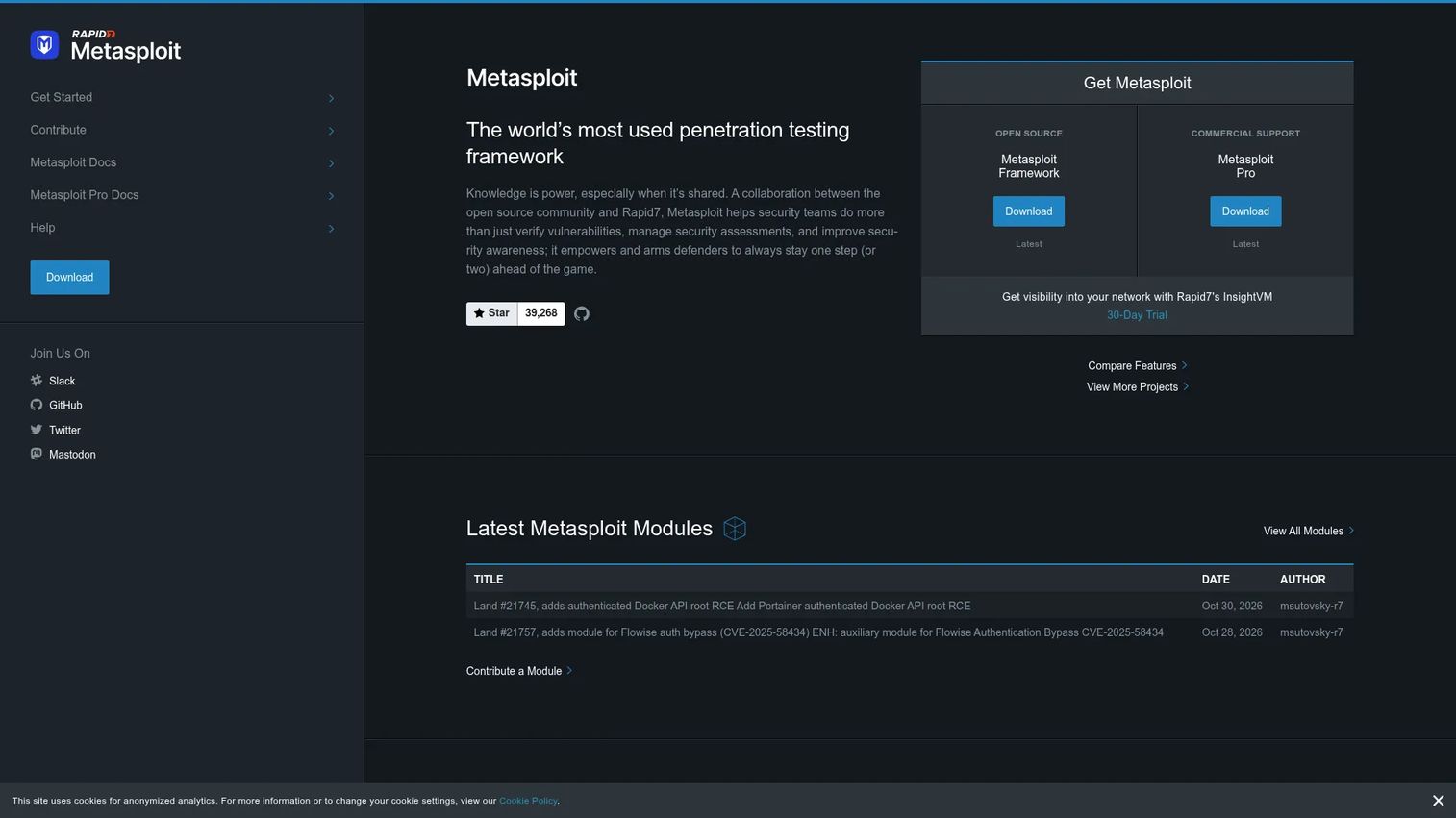
Metasploit is the most widely used exploit validation framework in the industry. The open-source Metasploit Framework gives practitioners access to over 4,000 exploit modules for testing whether discovered vulnerabilities are genuinely exploitable under controlled conditions. Metasploit Pro, the commercial edition, adds campaign wizards, antivirus evasion modules, InsightVM integration, and a reporting layer suited to team workflows.
Best for: Security teams and consultants who need to move beyond scanner output and confirm whether a vulnerability can be weaponized.
Key features
- 4,000+ exploit modules covering known CVEs
- Payload generation with antivirus evasion options
- Post-exploitation modules for lateral movement testing
- Phishing and USB-drop campaign wizards (Pro)
- InsightVM integration for closed-loop remediation (Pro)
Why choose Metasploit: Choose it when the question is "can this actually be exploited?" rather than "did the scanner flag it?" It pairs well with Nmap for initial discovery and Nessus for triage before moving into controlled exploitation.
Metasploit pricing: The Metasploit Framework is free and open source. Metasploit Pro is a commercial edition with a free trial; pricing requires contacting sales.
G2 rating: 4.6/5
2. Burp Suite
Burp Suite from PortSwigger is the go-to tool for manual web application and API security testing. Its intercepting proxy lets testers inspect, modify, and replay HTTP and WebSocket traffic with precise control, making it ideal for finding business logic flaws that scanners miss entirely. The Community Edition covers manual testing; Professional adds automated scanning, Intruder, Collaborator, and access to a wide extension marketplace via BApp.
Best for: Penetration testers and AppSec professionals running manual web and API assessments who need fine control over every request.
Key features
- Intercepting proxy for HTTP/S and WebSockets
- Repeater and Intruder for manual and customized attacks
- Automated web vulnerability scanner (Professional and above)
- API scanning with authentication support
- Extensible via BApp extensions, Bambdas, and BChecks
Why choose Burp Suite: It excels when testers need to understand exactly what moves between a browser and a server. The learning curve exists, but no other tool gives the same depth for manual web testing workflows.
Burp Suite pricing: Community Edition is free. Professional is $499 (billing period not specified on the public page). DAST enterprise pricing requires contacting sales.
G2 rating: 4.8/5
3. Kali Linux
Kali Linux is not a single tool; it is a Debian-based operating system purpose-built for security assessment work. It ships with hundreds of pre-installed pentesting tools covering network discovery, web testing, password auditing, wireless assessment, and forensics. You can run it from a live USB, install it bare metal, deploy it in a virtual machine or container, or spin it up in the cloud.
Best for: Practitioners who want a ready-to-use security testing environment without assembling a toolkit from scratch.
Key features
- Hundreds of pre-installed security and pentesting tools
- Live USB boot with optional persistence and encryption
- Support for bare metal, VM, cloud, WSL, ARM, and Android
- Customizable ISO images and metapackages
- Kali NetHunter mobile pentesting platform
Why choose Kali Linux: It removes setup friction for practitioners who already know what tools they need. Having a curated, maintained environment matters on engagements where time is the constraint. Tool selection and methodology still drive quality; the OS just gets you there faster.
Kali Linux pricing: Free and open source. No paid tiers exist for the distribution itself.
G2 rating: 4.5/5
4. Nmap
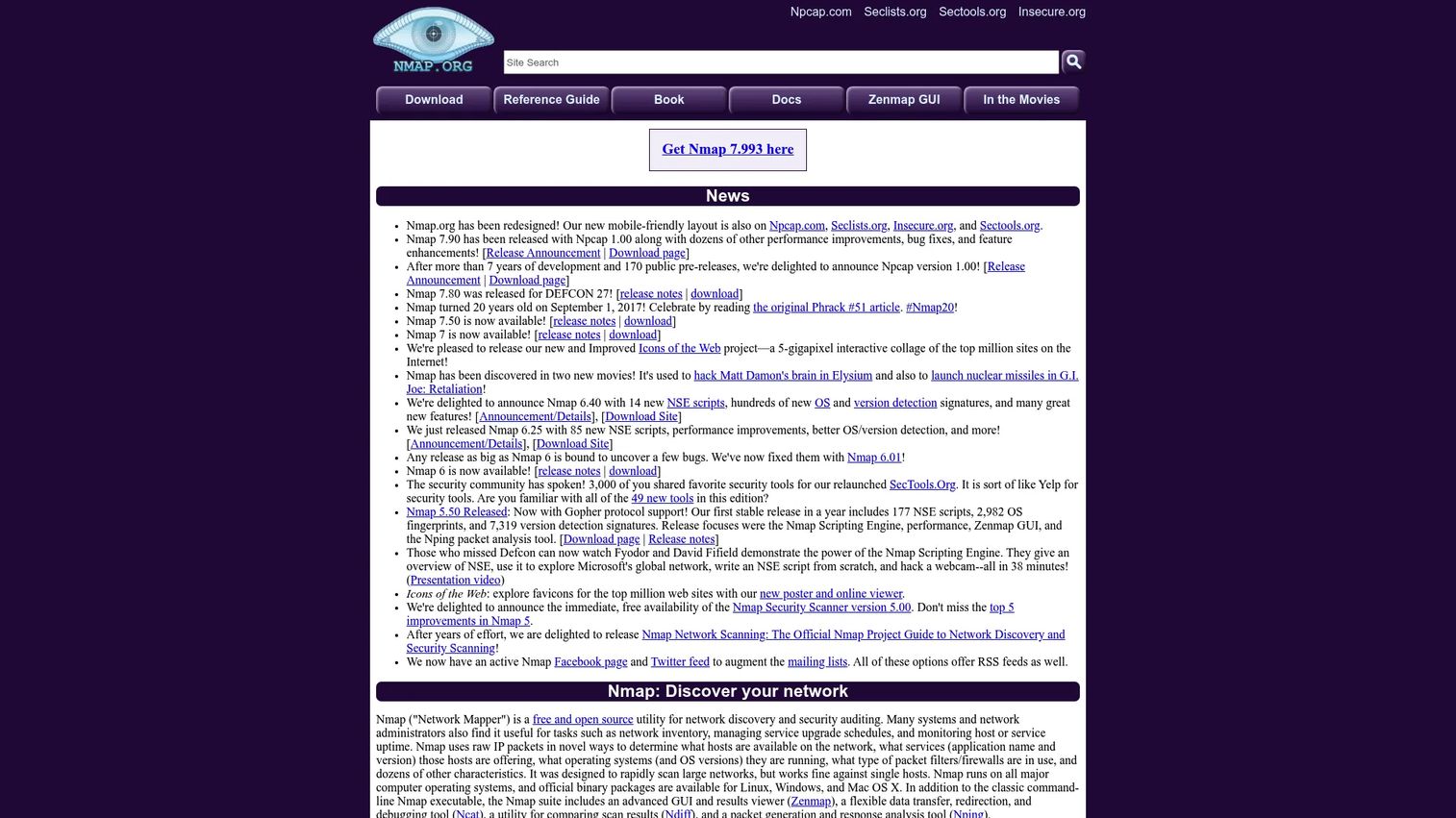
Nmap is the standard starting point for network reconnaissance. It discovers live hosts, scans TCP and UDP ports, detects operating systems, identifies service versions, and runs scripts through the Nmap Scripting Engine (NSE). Most pentests begin here, and many network penetration testing workflows use Nmap output to feed directly into Metasploit or Nessus for deeper assessment.
Best for: Network administrators and security professionals who need a fast, reliable picture of what is reachable before deeper testing begins.
Key features
- Host discovery across large networks
- TCP and UDP port scanning
- OS fingerprinting and service/version detection
- Nmap Scripting Engine for custom and automated checks
- Zenmap graphical interface for visual analysis
Why choose Nmap: Nmap is the diagnostic layer that feeds every other tool. Without accurate discovery, manual testing and scanning both waste time on the wrong targets. It complements vulnerability scanners and packet analyzers across any assessment scope.
Nmap pricing: Free for end users. OEM redistribution licenses are available; contact Nmap for commercial pricing.
G2 rating: 4.5/5
5. Wireshark
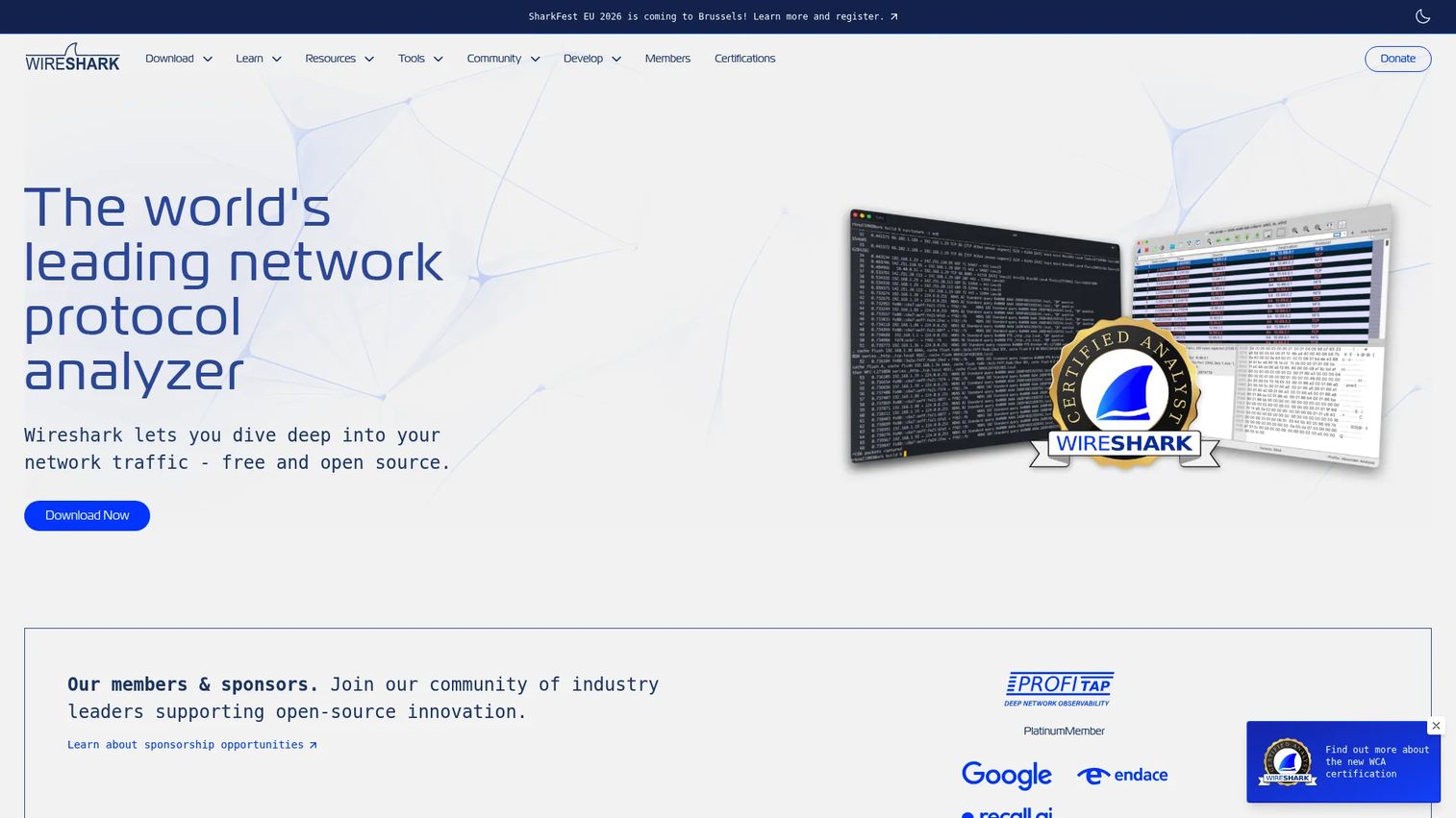
Wireshark captures and dissects network traffic at the packet level. It is not a scanner or exploit tool; its job is to show exactly what traveled across the wire. Security teams use it to validate findings, debug protocol behavior, inspect encrypted traffic where keys are available, and collect packet-level evidence for remediation reports.
Best for: Security engineers and network professionals who need granular, protocol-level evidence of network behavior during or after a test.
Key features
- Live packet capture across hundreds of protocols
- Deep protocol dissection and display filters
- Offline analysis from saved capture files
- VoIP analysis and stream reassembly
- Protocol decryption where keys are available
Why choose Wireshark: Use it when findings need packet-level proof, not just a scanner alert. Presales teams presenting security evidence to technical buyers benefit from showing actual traffic artifacts rather than generic scan reports.
Wireshark pricing: Free under the GNU General Public License version 2.
G2 rating: 4.7/5
6. Invicti
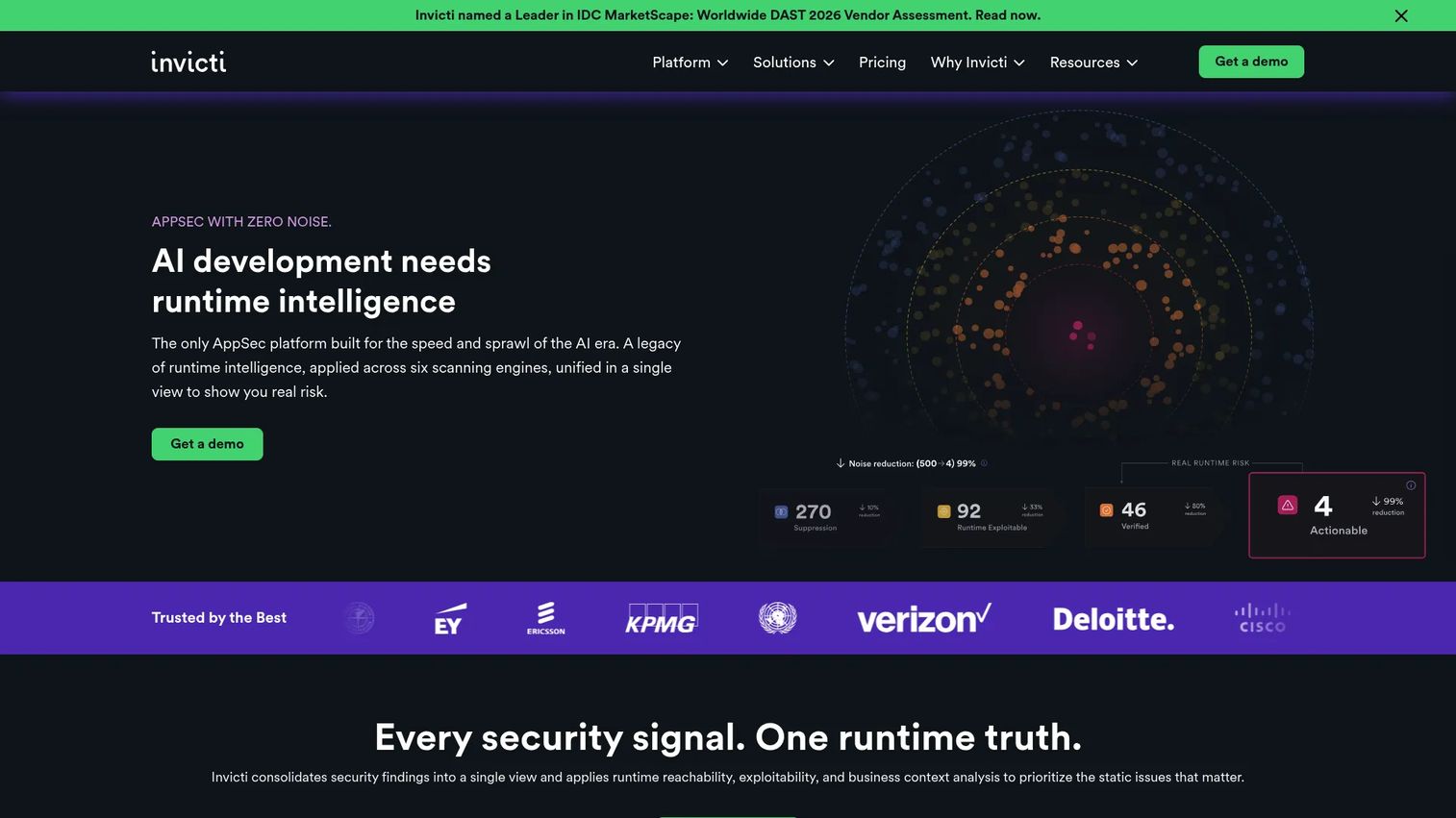
Invicti is an application security platform covering web and API vulnerability scanning with proof-based detection. Its distinguishing approach confirms that flagged vulnerabilities are actually exploitable, reducing the false-positive burden that slows remediation cycles. Beyond DAST, Invicti also integrates SAST, SCA, container scanning, and infrastructure-as-code checks into a broader ASPM layer for enterprise DevSecOps teams. For API testing tools coverage, Invicti handles authenticated API scanning natively.
Best for: Enterprise security and DevSecOps teams that need proof-backed web and API scanning with application security risk management built in.
Key features
- Proof-based vulnerability scanning to confirm exploitability
- Web and API discovery with authenticated scanning
- DAST, SAST, SCA, IaC, secrets, and container security
- CI/CD and developer-workflow integrations
- ASPM layer for risk prioritization and management
Why choose Invicti: It reduces the time security teams spend chasing false positives. The proof-based approach means fewer back-and-forth conversations between security and development over whether a finding is real.
Invicti pricing: The Agentic Pentest offering is priced at a maximum of $500 per pentest. Web + API, AppSec Core, and AppSec Flex plans require a quote from sales.
G2 rating: 4.5/5
7. John the Ripper
John the Ripper is a password security auditing tool for testing hash strength after authorized capture. The community version supports hundreds of hash and cipher types; the Jumbo version extends that significantly. Teams use it to validate whether password policies produce hashes that resist dictionary and rule-based attacks, which is a direct input to compliance reviews and security assessments.
Best for: Security professionals performing authorized password auditing and hash testing against captured credentials within a defined scope.
Key features
- Supports hundreds of hash and cipher types (Jumbo version)
- Wordlist, incremental, single-crack, and rule-based cracking modes
- Parallel and distributed processing via OpenMP and node options
- Cross-platform: Linux, macOS, Windows, and more
Why choose John the Ripper: Use it when a pentest includes password policy validation. It answers whether the hashes your system generates would survive a real attack, which is a more useful finding than "the password policy requires 12 characters."
John the Ripper pricing: The open-source version is free. Commercial Pro packages for Linux start at $39.95 for the introductory tier, with upgrade and support bundles reaching $185.00 (all one-time pricing).
G2 rating: N/A
8. Aircrack-ng
Aircrack-ng is an open-source suite for wireless penetration testing. It covers WEP and WPA/WPA2-PSK key recovery, packet capture, monitoring mode management, replay testing, and compatibility checks for wireless adapters. Wireless testing is a specialized scope item; teams that include Wi-Fi environments in their assessment charter will need a dedicated tool for this surface.
Best for: Authorized wireless security assessments covering WEP and WPA/WPA2 environments.
Key features
- WEP and WPA/WPA2-PSK key cracking
- 802.11 packet capture and monitoring mode support
- Packet injection and replay for active testing
- Wireless card monitor-mode management
- Wi-Fi compatibility and capability checks
Why choose Aircrack-ng: It covers a testing surface that general-purpose scanners and exploit frameworks do not address well. Most teams use it alongside broader network tools, adding it to scope specifically when wireless infrastructure is in scope.
Aircrack-ng pricing: Free and open source. No paid tiers are available.
G2 rating: N/A
9. Acunetix
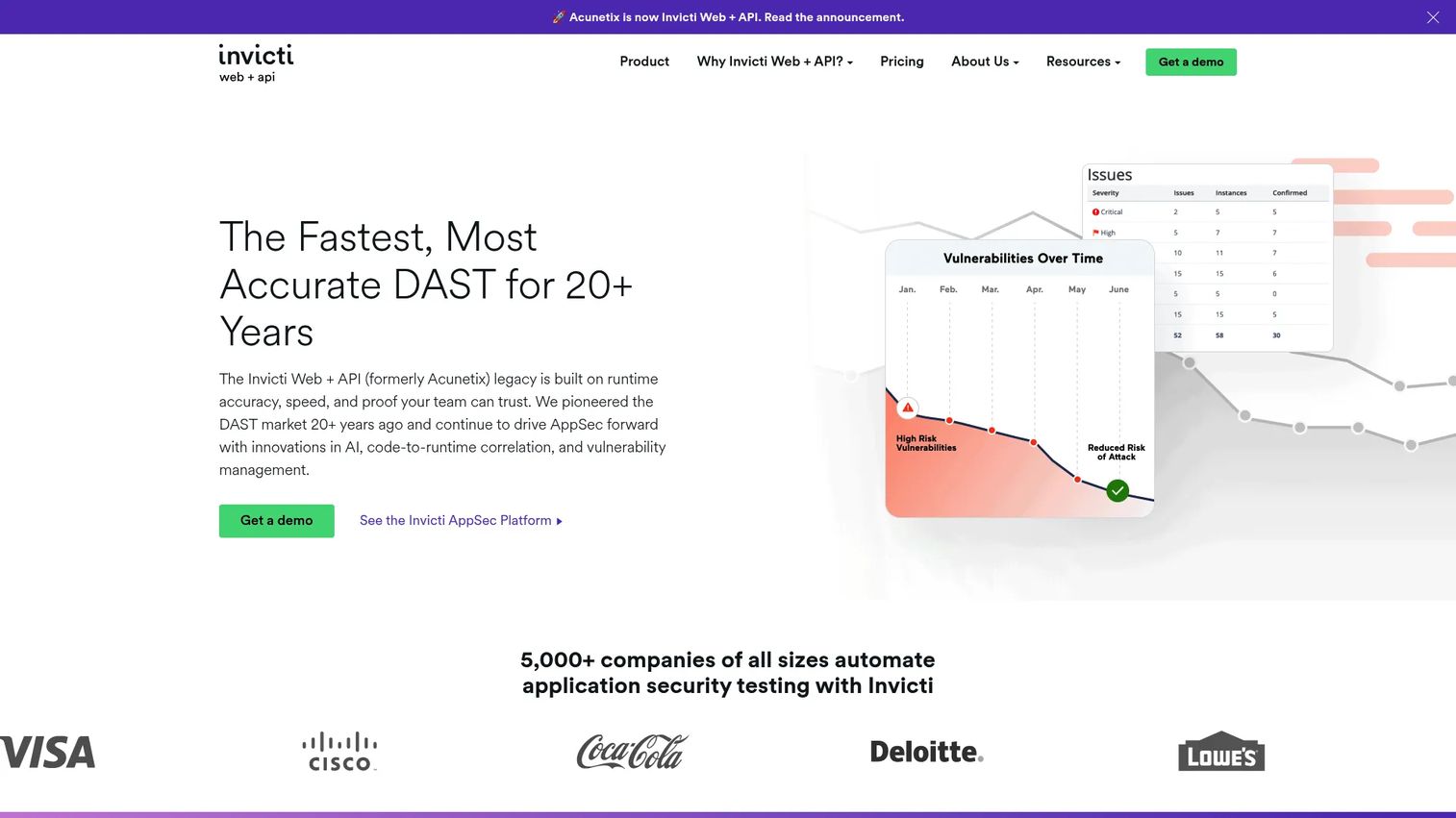
Acunetix, now part of the Invicti platform as Invicti Web + API, is a dynamic application security testing solution for web applications and APIs. It handles authenticated scanning, crawling of single-page applications, JavaScript-heavy sites, and modern API surfaces. Integrations with CI/CD pipelines and issue trackers feed findings directly into developer workflows for faster remediation.
Best for: Security and development teams that need automated, recurring web vulnerability scanning with structured remediation output.
Key features
- Web application and API vulnerability scanning
- Proof-based validation of exploitable vulnerabilities
- Authenticated scanning for modern SPAs and JavaScript apps
- CI/CD, WAF, and issue-tracker integrations
- Continuous automated application security testing
Why choose Acunetix: Strong for teams running recurring web app checks who need clear evidence and remediation output without requiring a manual testing specialist for every scan cycle. Manual testing remains essential for business logic coverage.
Acunetix pricing: The Agentic Pentest option is priced at a maximum of $500 per pentest. Web + API subscription pricing requires a quote from sales.
G2 rating: 4.1/5
10. Aikido Security
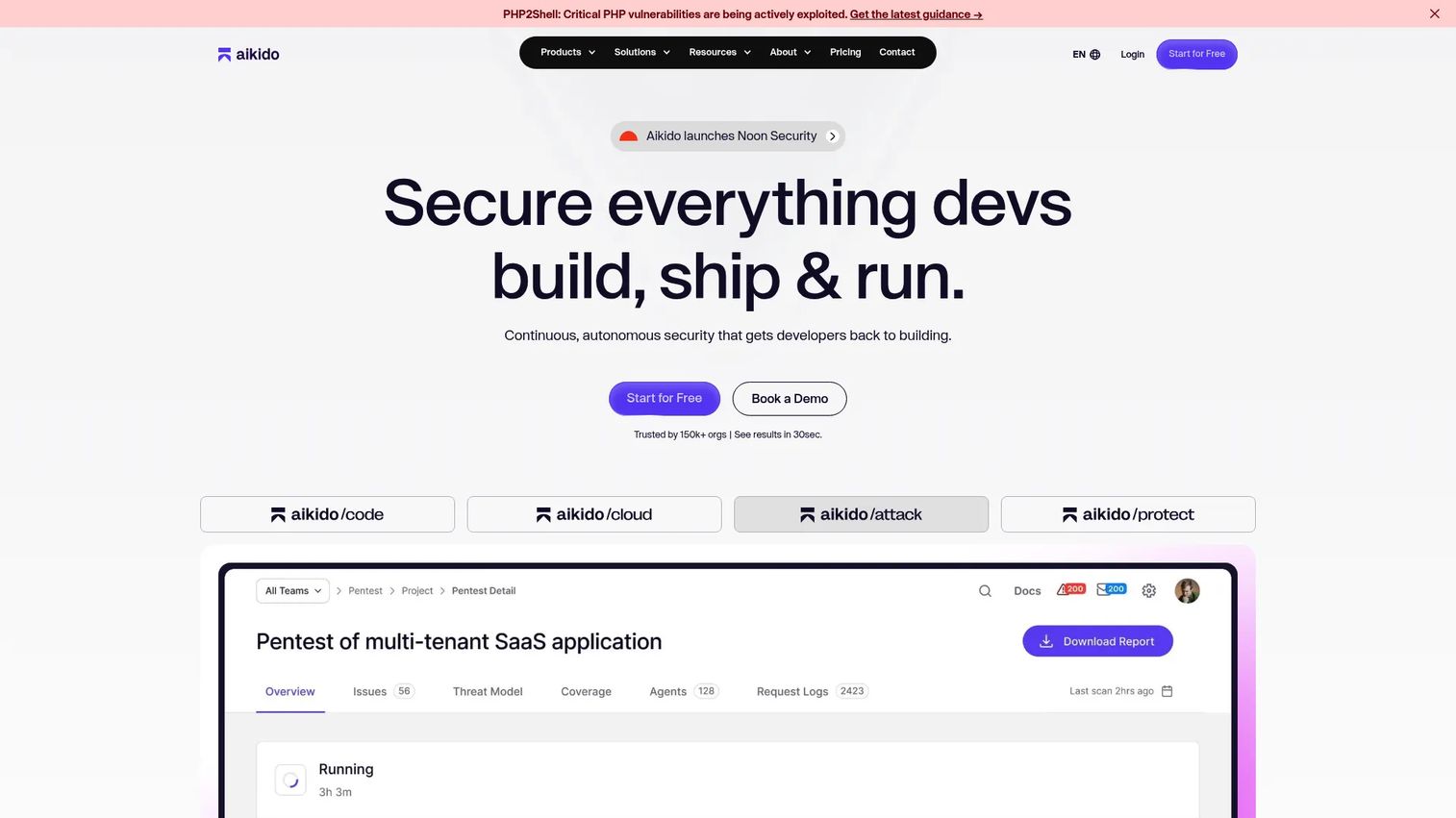
Aikido Security is a developer-first security platform that consolidates code, cloud, dependency, container, and runtime scanning in a single dashboard. Its positioning is pentest readiness and ongoing vulnerability management rather than active exploitation. For DevSecOps teams preparing for external pentests, Aikido helps close the gap between code push and clean security posture. It also offers AI-assisted and continuous penetration testing capabilities. See also: ai software testing tools for adjacent coverage.
Best for: DevSecOps teams that want security findings routed into developer workflows before and after external penetration testing.
Key features
- Dependency scanning (SCA) across packages and libraries
- SAST and AI-assisted code analysis
- Cloud posture and infrastructure-as-code scanning
- Container scanning
- AI and continuous penetration testing capabilities
Why choose Aikido Security: It positions security inside the development workflow rather than bolted on afterward. Use it to reduce the finding volume before an external pentest, which shortens the post-engagement remediation cycle significantly.
Aikido Security pricing: Developer plan is free. Basic is $300/month, Pro is $600/month, and Advanced is $600/month. Enterprise pricing is custom.
G2 rating: 4.6/5
11. AppTrana
AppTrana is a managed web application security platform combining scanning, testing support, web application firewall protection, and risk prioritization in one offering. It fits organizations that want a managed layer around web application risk rather than assembling individual tools and analysts themselves.
Best for: Teams that want managed web app security with scanning and WAF protection without building an internal security operations capability.
Key features
- Web application scanning and risk prioritization
- Managed security expert support
- Web application firewall with protection workflows
- Risk-based vulnerability prioritization
- Compliance and audit reporting
Why choose AppTrana: It suits lean security teams that need findings translated into fixes, not just reported. The managed model reduces the gap between scanner output and actual remediation action.
AppTrana pricing: Pricing requires contacting sales. G2 reviewers report the platform as enterprise-focused with custom pricing by coverage scope.
G2 rating: 4.8/5
12. BeEF
BeEF (the Browser Exploitation Framework) focuses on client-side attack vectors and browser vulnerabilities. Its web-based control panel manages hooked browsers and launches command modules for information gathering, social engineering simulations, and browser-based exploitation. It belongs in a pentest scope only where client-side attack paths are explicitly authorized.
Best for: Experienced penetration testers conducting authorized browser-focused and client-side security assessments.
Key features
- Web-based control panel for managing hooked browsers
- Browser command modules: Information gathering, social engineering, exploitation
- Network discovery and internal mapping via WebRTC extensions
- Pivot capabilities from compromised browser sessions
- Extension support for custom module development
Why choose BeEF: Use it when scope explicitly includes browser-based attack paths and user-side exposure. It covers a surface that network scanners and web proxies do not address, making it a specialized but necessary addition for thorough client-side testing.
BeEF pricing: Free and open source.
G2 rating: 4.4/5
13. BreachLock
BreachLock delivers penetration testing as a service (PTaaS) with CREST-certified human testers working through a platform that manages findings, remediation tracking, retesting, and audit-ready reporting. Its Autonomous Breach360 capability adds exploit verification and attack surface discovery. For organizations that need testing capacity beyond what internal teams can provide, BreachLock covers the full managed workflow.
Best for: Organizations that need expert human-led penetration testing combined with platform-based delivery, remediation tracking, and compliance evidence.
Key features
- Autonomous Breach360 testing with exploit verification
- CREST-certified expert-led penetration testing
- Continuous attack surface discovery
- Dark-web credential exposure detection
- Audit-ready finding reports with remediation and retest tracking
Why choose BreachLock: Strong for compliance-driven buyers and organizations preparing for SOC 2, ISO 27001, or similar frameworks where structured, repeatable testing with documented remediation evidence is non-negotiable.
BreachLock pricing: One-time validation starts at $2,500. Annual validation starts at $5,000. Continuous validation uses custom pricing.
G2 rating: 4.6/5
14. Core Impact
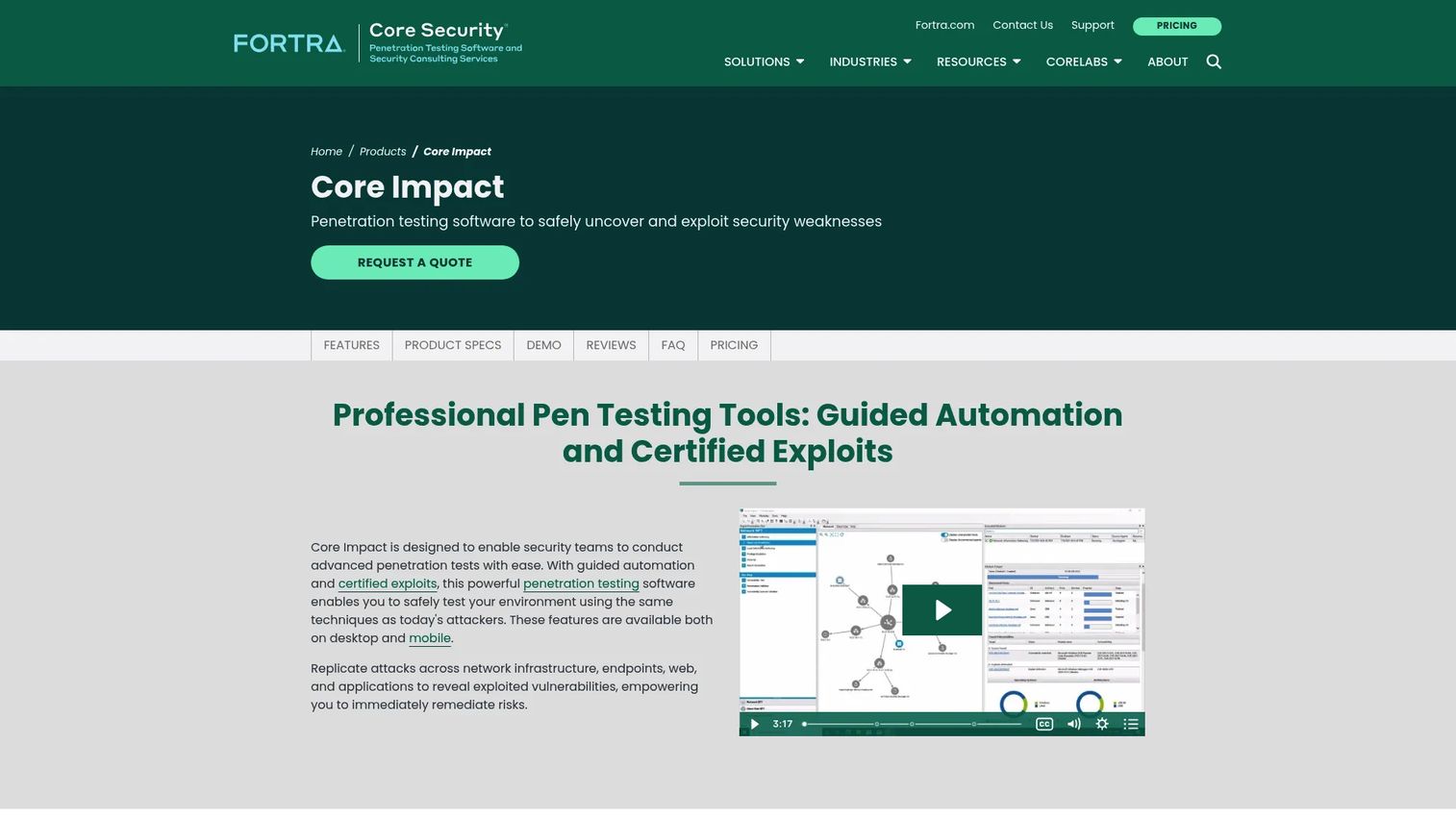
Core Impact is a commercial penetration testing platform from Core Security, covering multi-vector exploitation across networks, endpoints, web applications, Wi-Fi, and mobile environments at the Enterprise tier. Its certified exploit library, guided Rapid Penetration Test workflows, and customizable reporting give enterprise teams a repeatable validation capability that open-source tools require more manual effort to replicate.
Best for: Security teams running repeatable, multi-vector penetration testing with enterprise reporting and remediation validation needs.
Key features
- Multi-vector testing: Network, endpoint, client-side, web, Wi-Fi, and mobile (Enterprise)
- Guided Rapid Penetration Tests with automation
- Certified commercial exploit library
- Encrypted, self-destructing agents for safe testing
- Vulnerability scanner and red-team tool integrations
Why choose Core Impact: Choose it when procurement, repeatability, and formal reporting matter as much as raw capability. Open-source alternatives require more assembly; Core Impact provides a governed, documented testing environment. The cost reflects that.
Core Impact pricing: Basic is $9,450 per user per year (network testing). Pro is $12,600 per user per year (adds client-side, pivoting, post-exploitation). Enterprise uses varied pricing; contact sales.
G2 rating: 4.2/5
15. Nessus
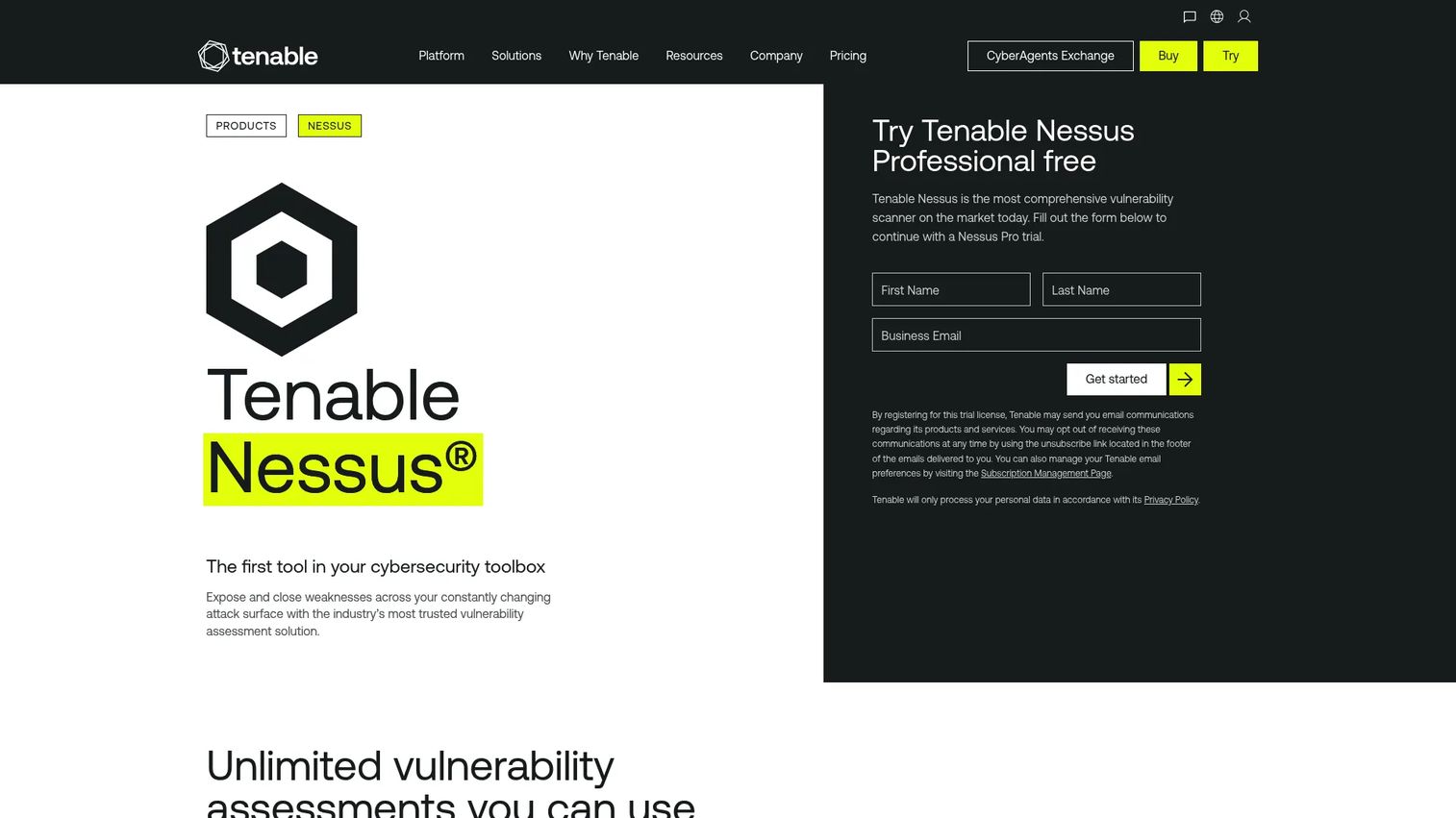
Nessus from Tenable is one of the most deployed vulnerability scanners for infrastructure assessment. Credentialed scanning gives it visibility into misconfigurations, missing patches, and compliance gaps that unauthenticated scans miss entirely. Nessus Professional covers unlimited vulnerability assessments; Nessus Expert adds external attack surface scanning and web application scanning on top. A free tier, Nessus Essentials, is available for non-commercial educational use with a five-IP limit.
Best for: Security teams, consultants, and SMBs needing broad infrastructure vulnerability assessment with credentialed scanning and structured reporting.
Key features
- Unlimited IT vulnerability assessments (Professional and Expert)
- CVSS v4, EPSS, and VPR vulnerability scoring
- Credentialed scanning for deep configuration and compliance audits
- Configurable reporting for technical and executive audiences
- Web app and external attack surface scanning (Expert)
Why choose Nessus: It gives a thorough triage layer before manual testing. Teams use Nessus output to prioritize which findings Metasploit or Core Impact should validate, reducing wasted exploitation attempts on non-critical targets.
Nessus pricing: Nessus Professional is $4,790 for a 1-year license. Nessus Expert is $6,790 for a 1-year license. Multi-year discounts are available. Nessus Essentials is free for non-commercial educational use (five IPs).
G2 rating: 4.5/5
Considerations when choosing penetration testing tools
Match the tool to the asset type
Web applications, APIs, network infrastructure, wireless environments, and password stores each need different tooling. A web scanner will not discover wireless key weaknesses; a network scanner will not find business logic flaws in an API. Map your asset inventory to the testing surfaces before buying.
Decide how much manual control you need
Experienced testers often need intercepting proxies, script-based exploit frameworks, and packet captures. Lean security teams without dedicated penetration testing staff may get more value from automated scanning or a managed PTaaS service. Both approaches are valid; the skill level of the team drives the decision.
Prioritize evidence quality
Look for tools that produce screenshots, request/response pairs, affected asset lists, reproduction steps, remediation guidance, and retest status. Audit committees and security-conscious enterprise buyers do not accept "we ran a scan" as evidence. Structured, verifiable artifacts move deals and audits forward. For presales teams fielding RFPs, best presales software tools often include this kind of evidence generation as a core requirement.
Check reporting and remediation workflows
The tool should route findings to owners, track fix status, and confirm retesting. A finding with no owner and no retest confirmation is an open liability, not a closed ticket. Commercial platforms and PTaaS providers typically handle this better than open-source tools assembled without a workflow layer.
Compare open-source cost against operational cost
Free tools can be powerful in the hands of skilled practitioners. But skill, time, maintenance, and reporting quality all carry real cost. Commercial platforms can justify their price when they reduce false-positive handling time, improve governance, and produce the audit-ready documentation that enterprise deals and compliance frameworks demand.
Conclusion
Most teams need a stack, not a single tool. Metasploit, Burp Suite, Nmap, Kali Linux, and Wireshark cover the foundational manual practitioner workflows. Nessus, Invicti, Acunetix, Aikido Security, AppTrana, BreachLock, and Core Impact serve more commercial and managed needs. John the Ripper, Aircrack-ng, and BeEF address specialized testing surfaces that broader platforms often skip.
The practical next step is to match tools to jobs: Pick one for discovery, one for validation, one for reporting, and confirm your remediation workflow before adding more to the stack. According to Cobalt's State of Pentesting report (2025), 30% of organizations now test quarterly; building a repeatable, tool-supported workflow is what makes that cadence sustainable.
For security evaluation questions that come up during enterprise deals, the best AI cybersecurity solutions and attack surface management software pages cover adjacent tooling areas.
When your technical buyers need to understand a complex workflow before a call, use an interactive product experience to show it clearly. Start your journey with Guideflow today!
FAQs
Start with Nmap for network discovery, Wireshark for traffic analysis, and Kali Linux as a ready-to-use environment. Burp Suite Community Edition covers basic web testing without cost. Beginners should prioritize learning methodology and legal authorization requirements before testing anything outside a dedicated lab environment.
Vulnerability scanners identify potential weaknesses at scale and output a prioritized list of findings. Penetration testing tools go further: They support manual validation, controlled exploitation, evidence collection, and remediation retesting. Most mature security programs use both, with scanner output feeding into manual validation workflows.
For skilled practitioners running scoped assessments, open-source tools like Metasploit Framework, Nmap, Burp Suite Community, and John the Ripper cover substantial ground. Where open-source tools fall short is governance, reporting, collaboration, and audit-ready documentation. Those gaps push many enterprise teams toward commercial platforms or managed services.
Burp Suite is the standard for manual web application penetration testing. Invicti and Acunetix cover automated web vulnerability scanning with proof-based validation. Aikido Security adds developer-workflow integration for ongoing AppSec. AppTrana combines scanning with managed WAF protection. Manual and automated approaches address different vulnerability classes, and strong programs use both. API security tools often overlap with this toolset for API-first application surfaces.
Nmap handles discovery and service enumeration as the first step. Wireshark provides packet-level evidence during and after network testing. Nessus covers credentialed infrastructure vulnerability scanning. Metasploit and Core Impact then validate whether discovered vulnerabilities are exploitable through controlled exploitation. All of these require explicit written authorization and a documented scope before use.
Open-source tools like Nmap, Wireshark, Kali Linux, and Metasploit Framework are free. Commercial tools vary widely: Burp Suite Professional is $499, Nessus Professional starts at $4,790 per year, and Core Impact Basic starts at $9,450 per user per year. Managed PTaaS services like BreachLock start at $2,500 per engagement. Total cost also includes training time, reporting overhead, and the internal effort to manage remediation workflows.
No. Automated scanners find and triage common, well-known vulnerability patterns at scale. Manual testing is still required for business logic flaws, chained attack paths, context-specific risks, and vulnerabilities that only surface under specific interaction sequences. Strong programs combine automation for recurring coverage with human testers for depth on critical assets.
Cobalt's State of Pentesting report (2025) found that more than half of organizations run penetration tests more than twice a year, with quarterly testing the most common cadence at 30%. Automated scanning can run continuously. Full manual pentests should be scheduled after major releases, significant architecture changes, compliance cycles, and material infrastructure changes. Frequency should reflect the organization's risk profile and regulatory obligations, not a fixed calendar.