A rep opens their commission statement. The number is wrong. Again. They ping their manager, who pings finance, who pings RevOps, who opens a spreadsheet with 14 tabs and a formula nobody remembers writing.
Multiply that by every seller, every month. That is what broken compensation operations actually costs: not just the payout error, but the trust erosion, the disputes, and the hours nobody gets back.
Around 47% of organizations still run incentive compensation on spreadsheets, according to Business Research Insights (2025). That is not because spreadsheets are good at commissions. It is because switching feels risky when payroll depends on the outcome.
But the risk runs the other way. Manual comp breaks quietly, then loudly, usually right before a board meeting or a payout cycle. The market has responded: sales incentive compensation management software was valued at USD 2.5 billion in 2024 and is forecast to hit USD 6.2 billion by 2033, per LinkedIn's market analysis (2024).
The right sales commission software does not just calculate faster. It makes earnings visible, disputes traceable, and plan changes survivable. This guide covers the tools worth shortlisting.
What's inside
This guide is built for sales enablement, RevOps, and sales operations teams evaluating sales compensation software to replace spreadsheets and reduce payout disputes. We cover nine tools for automating commission plans, payouts, statements, and reporting.
We ranked them by relevance to the keyword, not alphabetically, and evaluated each against the criteria that actually matter in a buying committee:
- Automation depth: accelerators, splits, clawbacks, draws, tiered plans
- Rep visibility: statements, dashboards, tracing, earnings forecasts
- Integrations: CRM, ERP, HRIS, payroll, BI
- Governance: approvals, version history, effective dates, audit trail
- Analytics: attainment, payout forecasting, leadership reporting
- Ease of administration: how much specialist effort each plan change demands
TL;DR
- Best for Salesforce-heavy teams: Salesforce Spiff, native commission tracing inside the Salesforce data model.
- Best for flexible modeling and broad SPM: CaptivateIQ, no-code plan building with deep analytics.
- Best for fast time-to-value and rep visibility: Everstage, adoption-friendly dashboards and live earnings.
- Best for enterprise planning depth: Varicent, incentives plus quota and territory planning.
- Best for connected planning: Anaplan, scenario modeling across finance and sales.
- Best for mature enterprise commission operations: Xactly Incent, established incentive compensation management software.
- Best for admin simplicity and auditability: Performio, component-based plans with traceability.
- Best for simpler commission automation: QuotaPath, transparent pricing and straightforward setup.
- Best for SAP-centric enterprises: SAP SuccessFactors Incentive Management, native SAP process alignment.
What is sales incentive software?
Sales incentive software is a category of commission software that automates how companies calculate, process, and report on sales compensation. Instead of maintaining spreadsheets and manual payout files, teams model commission plans once and let the system calculate earnings, generate statements, and route disputes.
It sits inside the broader sales performance management software category, which also covers quota management, territory management, and sales planning. Incentive compensation management software (often shortened to ICM software) is the compensation layer within that stack.
Here is what the category typically handles:
- Automated calculations: accelerators, tiers, splits, clawbacks, and draws computed against real deal data
- Rep statements and visibility: self-serve dashboards, commission tracing, and earnings forecasts that reduce inbound questions
- Plan changes and what-if modeling: scenario testing before a plan goes live midyear
- Integrations: connections to CRM, ERP, HRIS, and payroll so data flows without re-keying
- Auditability and compliance: version history, effective dates, approvals, and an audit trail that supports ASC 606 and IFRS 15 revenue recognition
- Leadership analytics and forecasting: attainment trends, payout forecasting, and comp-cost reporting tied to behavior
The distinction that matters: commission tracking software tells reps what they earned. Full incentive management software tells them why, traces it to the deal, and lets finance defend the number.
When to use sales incentive software
Replace spreadsheets and manual payout files
Spreadsheets work until they don't. The tipping point is usually visible: recurring disputes, late payouts, and three conflicting versions of the same plan floating in email. When one person owns the master file and everyone else waits on them, comp has become a single point of failure. That is the signal to move to commission management software.
Improve rep trust and earnings transparency
Reps do not trust numbers they cannot trace. When a seller can open a dashboard, see how a deal maps to their payout, and forecast next month's earnings, disputes drop and selling behavior sharpens. Rep visibility is not a nice-to-have. It is what turns a comp plan into an actual motivator, and it gives managers something concrete to coach against.
Support plan changes and compensation experiments
Comp plans change midyear. Territories shift, a new product launches, leadership wants to reward a different behavior. Scenario modeling lets you test the payout impact before rolling a change to the field, so you find the expensive surprise in a sandbox instead of on a statement.
Sales incentive software comparison
Nine tools, sorted by relevance to sales incentive software rather than alphabetically. Pricing is quote-based across most enterprise commission software, so several vendors show custom pricing verified against their live pages. Use this to narrow to two or three, then validate against your real commission scenarios.
| # | Product | Best for | Key differentiator | Pricing | G2 rating |
|---|---|---|---|---|---|
| 1 | Salesforce Spiff | Salesforce-heavy mid-market and enterprise | Native commission tracing in the Salesforce data model | From $75/user/year (G2-listed) | 4.6/5 |
| 2 | CaptivateIQ | Complex plans needing flexible modeling | No-code SmartGrid plan building | Custom (per-seat + setup) | 4.7/5 |
| 3 | Everstage | Mid-market wanting fast time-to-value | No-code admin and live rep dashboards | Custom (per-payee) | 4.8/5 |
| 4 | Varicent | Enterprise incentives plus planning | Incentives with quota and territory planning | Custom | 4.5/5 |
| 5 | Anaplan | Connected finance and sales planning | Scenario modeling across the enterprise | Custom | 4.6/5 |
| 6 | Xactly Incent | Mature enterprise comp operations | Established ICM with SPM modules | Custom | 4.2/5 |
| 7 | Performio | Teams outgrowing spreadsheets | Component-based plan builder and traceability | Custom | 4.4/5 |
| 8 | QuotaPath | Smaller and growing teams | Transparent pricing and simple setup | From $35/user/month + platform fee | 4.7/5 |
| 9 | SAP SuccessFactors Incentive Management | SAP-centric enterprises | Native SAP stack process alignment | Price upon request | 4.1/5 |
Best 9 sales incentive software tools for 2026
1. Salesforce Spiff
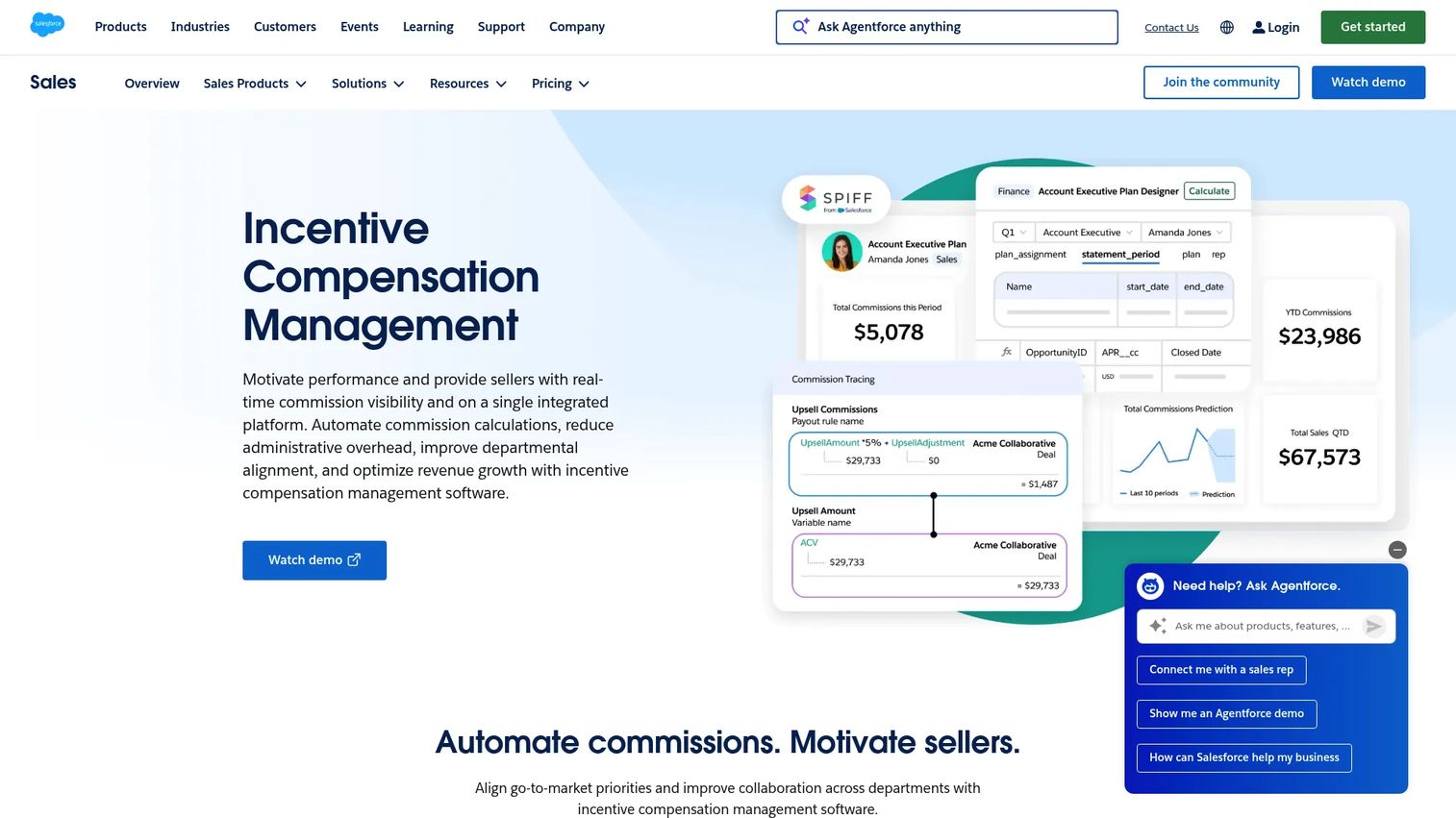
Salesforce Spiff is sales commission software built to automate incentive compensation and commission calculations, now part of Salesforce after the acquisition took effect February 1, 2024. Its core advantage is proximity to your CRM data. If your deals, quotas, and attainment already live in Salesforce, Spiff calculates against that data in real time without an export loop.
The product leans hard into rep visibility. Sellers get commission statements they can trace line by line, dashboards that show live earnings, and enough transparency that most "why is my number wrong" questions answer themselves before reaching an inbox.
Best for: mid-market and enterprise teams managing complex commission plans inside Salesforce.
Key strengths
- Real-time commission automation against live CRM data
- Complex incentive compensation plan management
- Commission tracing and rep-facing dashboards
- Analytics, reporting, and native Salesforce integrations
Why choose Salesforce Spiff: If Salesforce is your system of record, native tracing removes a whole class of reconciliation work. Teams with a stack centered elsewhere may weigh how tightly they want to sit inside the Salesforce ecosystem.
Salesforce Spiff pricing: G2 lists one publicly visible edition starting at $75 per user per year. The brand's own site did not expose a public pricing table, so confirm current figures directly with sales.
2. CaptivateIQ
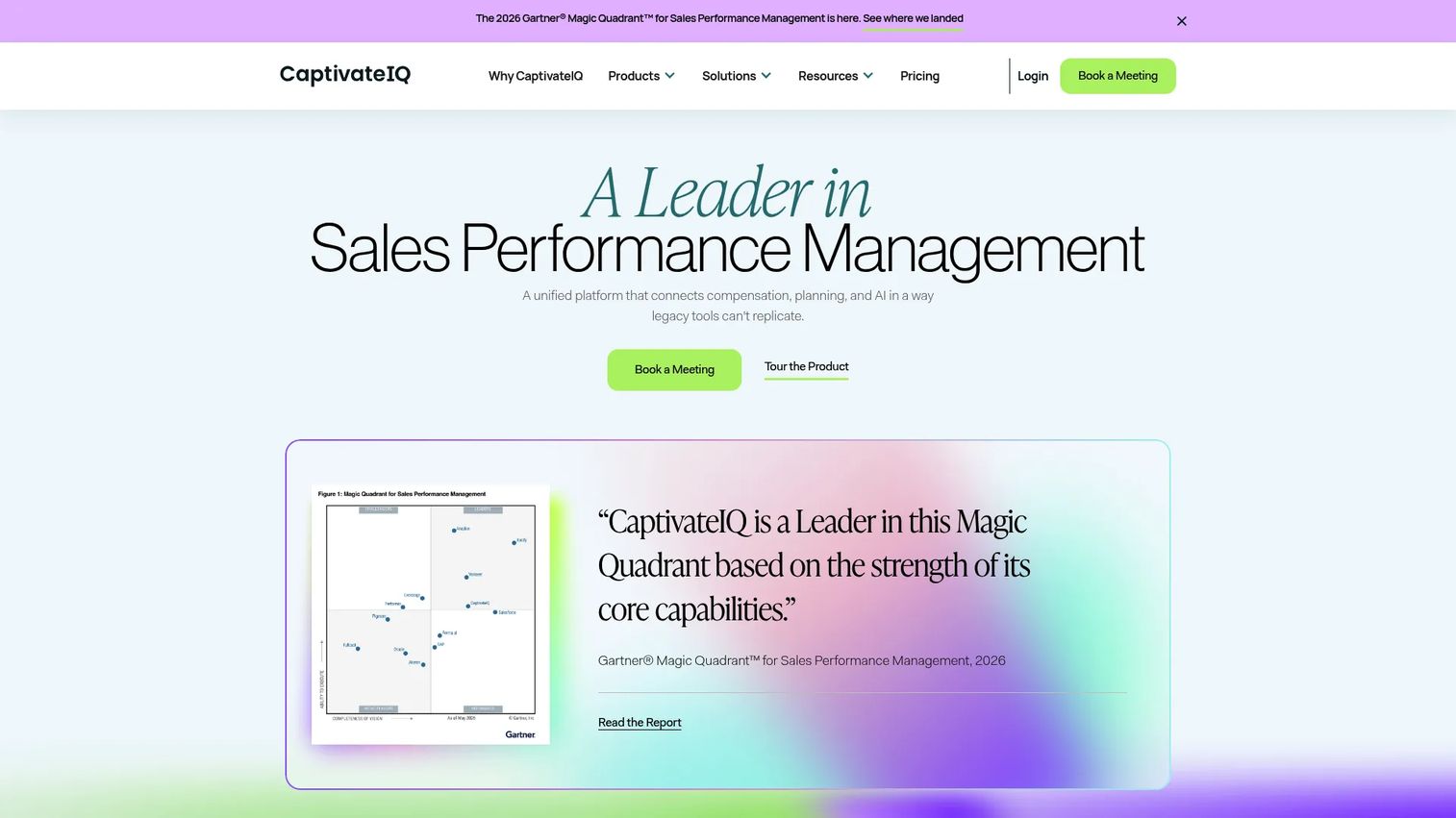
CaptivateIQ is a sales compensation and incentives platform covering commissions, planning, reporting, and payee visibility. Its SmartGrid engine gives comp admins a no-code way to model complex plans, which matters when your accelerators, splits, and clawbacks refuse to fit a template.
Teams that need a broader SPM layer, not just payout automation, tend to shortlist it. The analytics run deep, the plan builder flexes with unusual logic, and payees get their own transparency into how earnings accrue.
Best for: mid-market to enterprise teams managing complex sales commissions and incentive compensation.
Key strengths
- No-code commissions automation and reporting
- SmartGrid modeling for complex plan logic
- AI-powered assist for admins, payees, and plan analysis
- Per-seat pricing model with a one-time setup fee
Why choose CaptivateIQ: Pick it when plan complexity is the constraint and you want to model changes without engineering help. The flexibility rewards teams whose comp logic keeps evolving.
CaptivateIQ pricing: Pricing is customized. The site describes a per-seat model with a one-time setup fee and directs buyers to contact sales for a quote.
3. Everstage
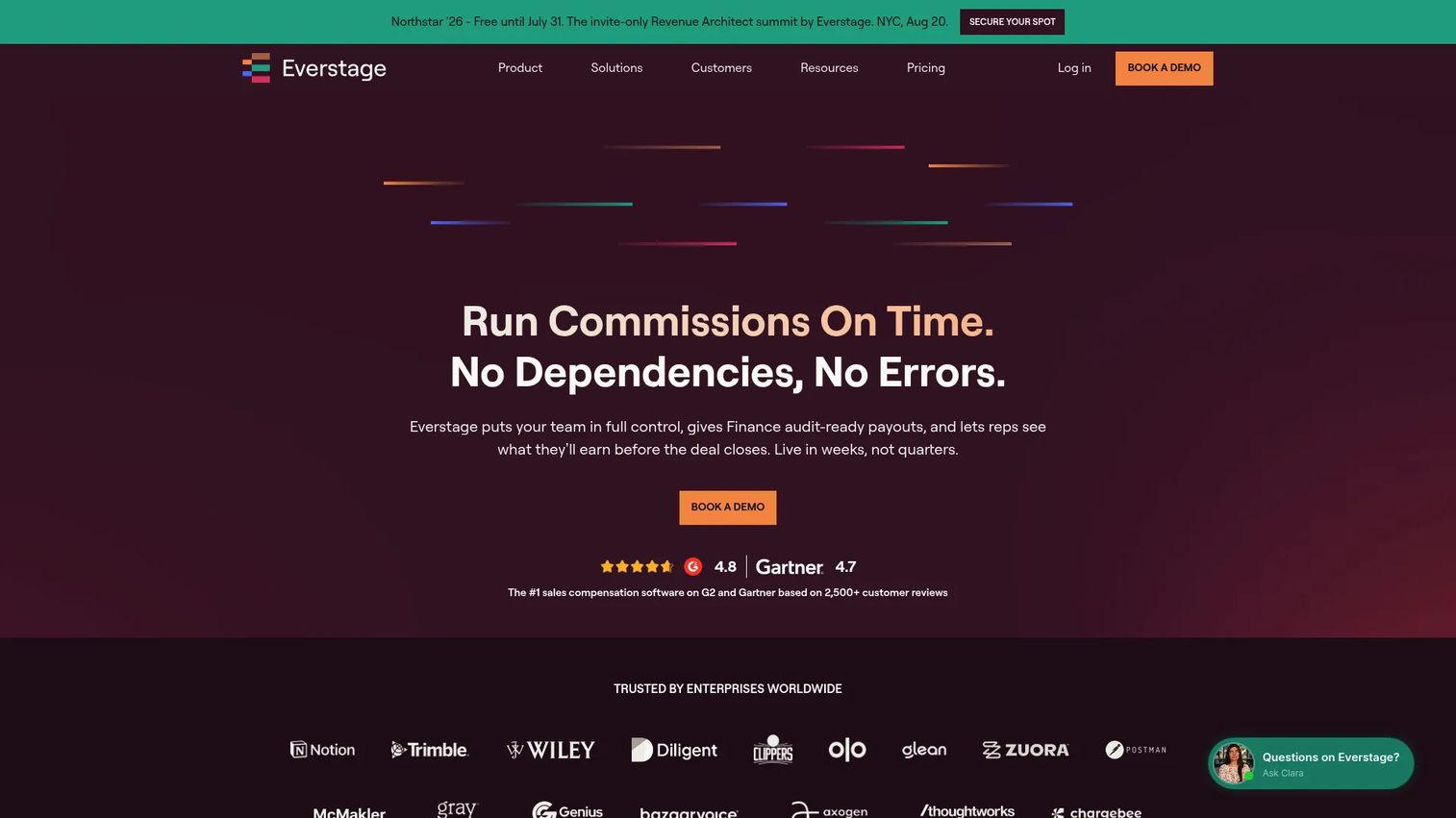
Everstage is sales compensation and commission management software built for RevOps, finance, and sales teams that want quick time-to-value. The no-code administration means comp changes do not queue behind a specialist, and rep dashboards surface live earnings and forecasting where sellers actually look.
Mid-market teams evaluate it often because it balances capability with speed. Plan simulation lets you preview payout impact, and the audit trail keeps finance comfortable when multiple people touch compensation.
Best for: enterprise and mid-market teams that want adoption-friendly commission management without a long rollout.
Key strengths
- Commission calculation and payout workflows
- Rep dashboards with live earnings and forecasting
- Plan management and plan simulation
- Audit trail supporting payout accuracy
Why choose Everstage: Choose it when adoption and time-to-value drive the decision. Sellers get visibility they trust and admins get a system they can change without filing a ticket.
Everstage pricing: Public pricing is quote-based and structured per payee. It includes platform license, enterprise support, and onboarding, with add-ons available.
4. Varicent
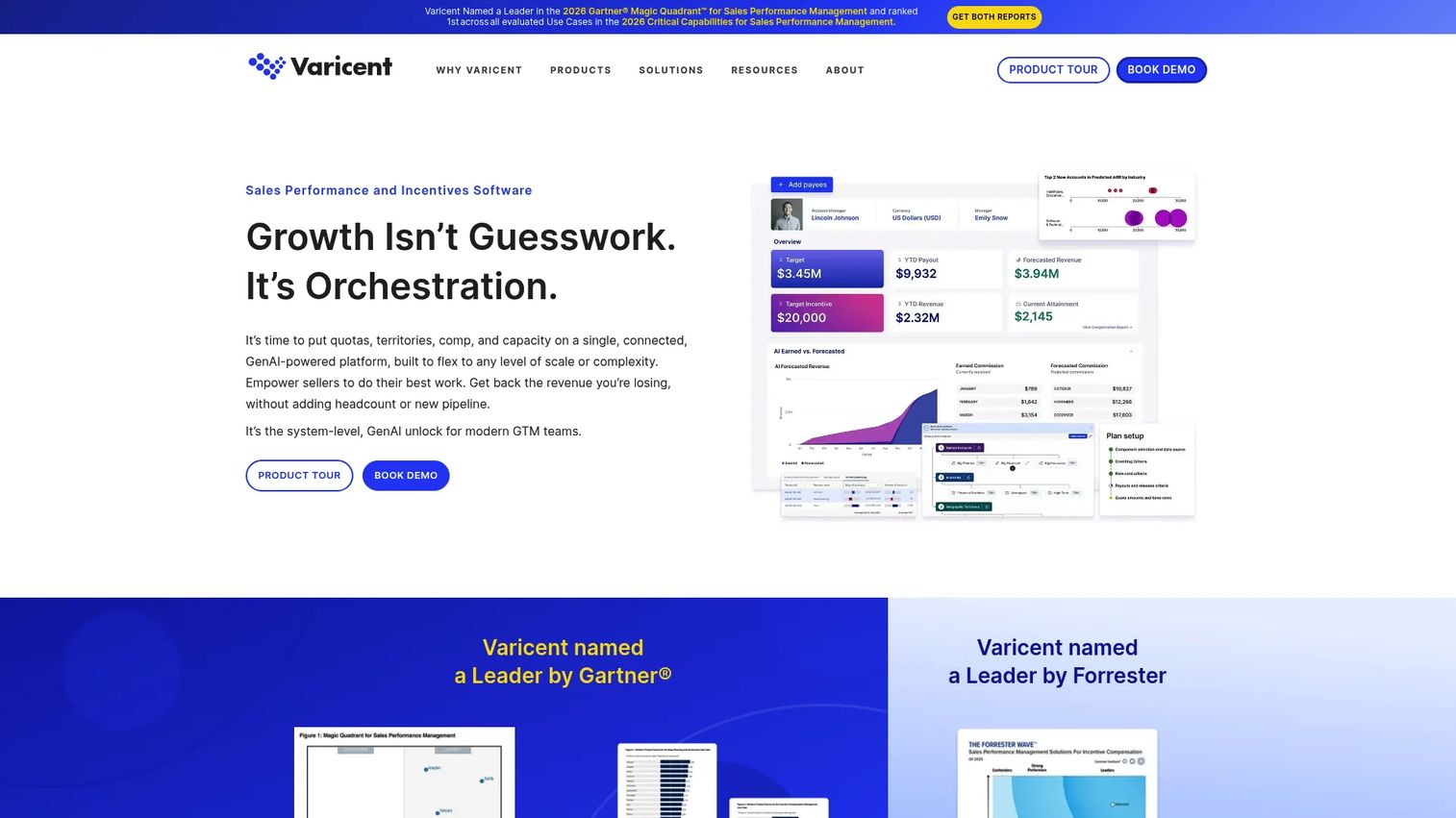
Varicent is sales performance and incentives software spanning planning, commissions, and revenue operations. It fits organizations whose comp logic is genuinely complex and whose compensation touches multiple teams, systems, and approval layers.
Beyond commission automation, Varicent connects incentives to sales planning for quotas, territories, and capacity. The version control and workflow governance matter most when finance, RevOps, and sales all need a defensible trail.
Best for: enterprise revenue teams managing complex commissions alongside sales planning.
Key strengths
- Incentive compensation and commission automation
- Sales planning for quotas, territories, and capacity
- AI-assisted reporting, analytics, and workflows
- Version control and approval governance
Why choose Varicent: Choose it when you need incentives and planning under one roof and your governance requirements are real. The broader SPM connection pays off at scale.
Varicent pricing: No public pricing is shown. The site directs visitors to talk to sales or request a demo.
5. Anaplan
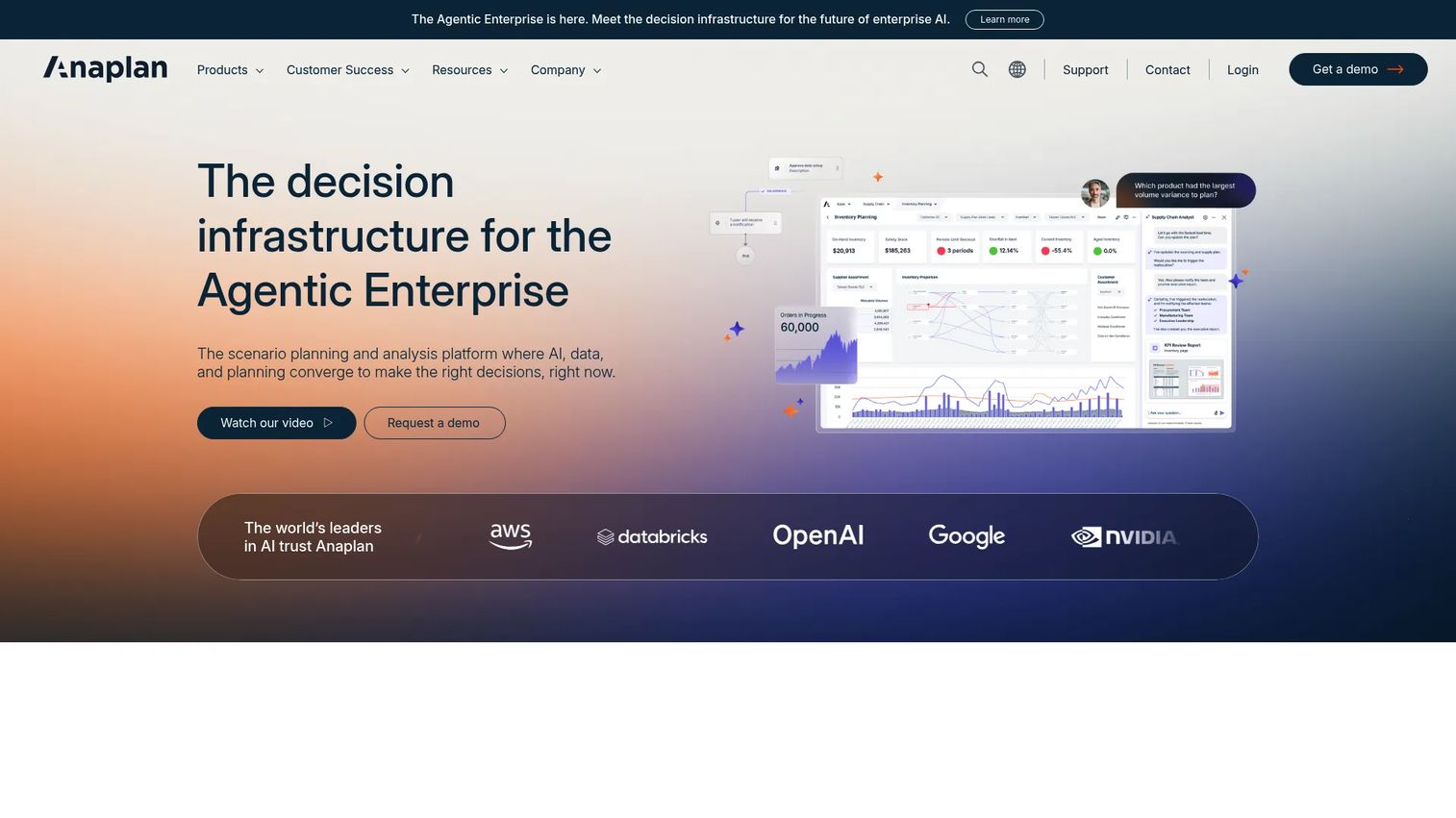
Anaplan is an AI-driven scenario planning and analysis platform for enterprise decision-making, with incentives sitting inside a connected planning model. Its strength is linking finance and sales planning so a comp change and its downstream cost surface in the same view.
Large organizations use it to model territory, quota, and incentive scenarios together rather than in isolated tools. This is enterprise planning depth, built for teams that treat compensation as one input in a larger financial picture.
Best for: large organizations that need connected enterprise planning and forecasting across functions.
Key strengths
- AI-driven scenario planning and analysis
- Connected data, workflows, and role-based agents
- Enterprise planning across finance, sales, supply chain, and operations
- Territory, quota, and incentive modeling in one model
Why choose Anaplan: Choose it when incentives are part of a bigger planning problem and cross-functional modeling is the point. It rewards teams that want finance and sales planning connected.
Anaplan pricing: Anaplan uses quote-based pricing and does not expose public numbers. Contact sales for a tailored quote.
6. Xactly Incent
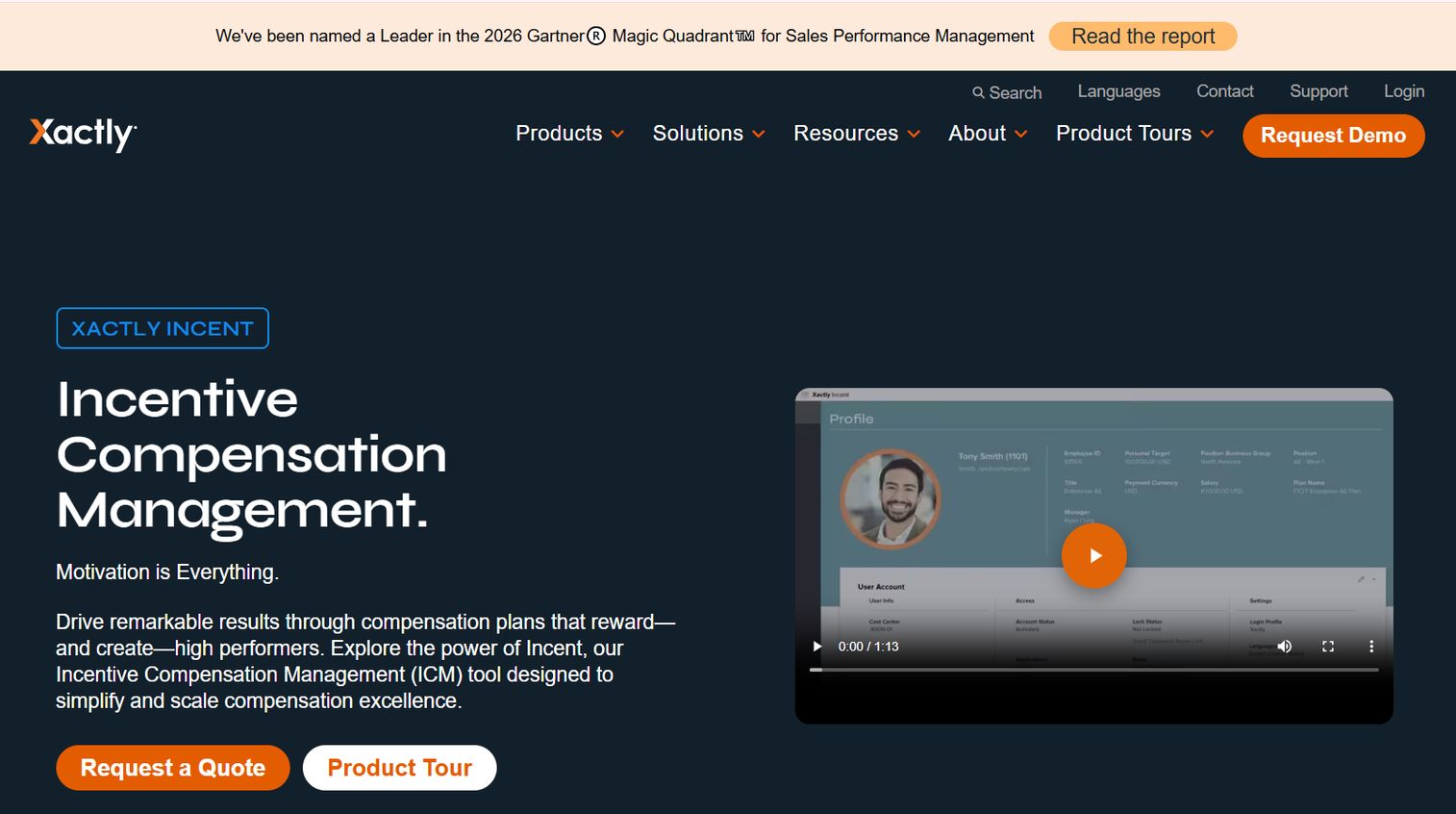
Xactly Incent is incentive compensation management software for automating commission calculations and the wider set of sales compensation workflows. It sits within a broader SPM portfolio, so enterprise teams with established comp operations often evaluate it when they want incentive, territory, quota, and forecasting capabilities under one vendor.
The platform emphasizes compliance and data governance, which matters when audit and revenue recognition are non-negotiable. For mature organizations, that maturity is the draw.
Best for: enterprises managing complex sales compensation and commission plans with established operations.
Key strengths
- Commission calculation automation
- Incentive compensation management at scale
- Sales performance and revenue intelligence modules
- Compliance and data governance controls
Why choose Xactly Incent: Choose it when you want a mature ICM platform with SPM breadth and governance built in. It fits teams whose comp operations are already established and need to scale.
Xactly Incent pricing: Pricing is not publicly listed and is quote-based. Contact the vendor for current figures.
7. Performio
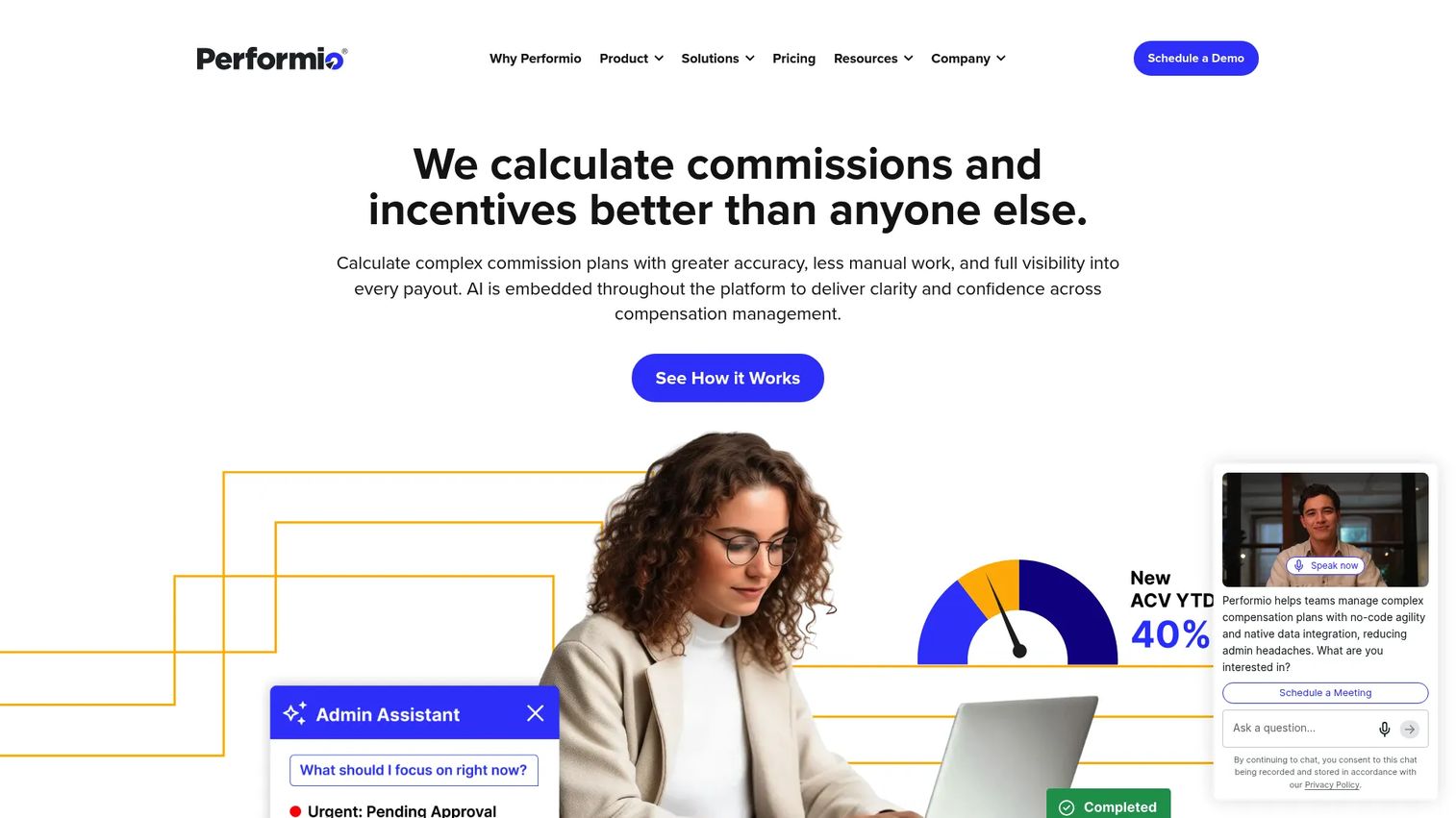
Performio is sales compensation and incentive compensation software built around a component-based plan builder. That structure lets admins assemble complex plans from reusable pieces, then trace any payout back to its source, which is exactly what teams want when they outgrow spreadsheets but do not need full enterprise weight.
Real-time commission tracking gives sellers visibility, and the AI-driven admin assistant reduces the manual load. It lands in a useful middle: more capable than a spreadsheet, less involved than a top-tier enterprise rollout.
Best for: mid-market and enterprise teams managing complex commissions that want admin simplicity.
Key strengths
- Component-based commission plan management
- Real-time commission tracking and seller visibility
- AI-driven admin assistant and automation
- Payout traceability for disputes and audit
Why choose Performio: Choose it when you want traceable, reliable commission tracking software without a heavy administrative burden. It balances functionality and usability well.
Performio pricing: Pricing is quote-based. The site asks visitors to request a pricing estimate and does not show public plan prices.
8. QuotaPath
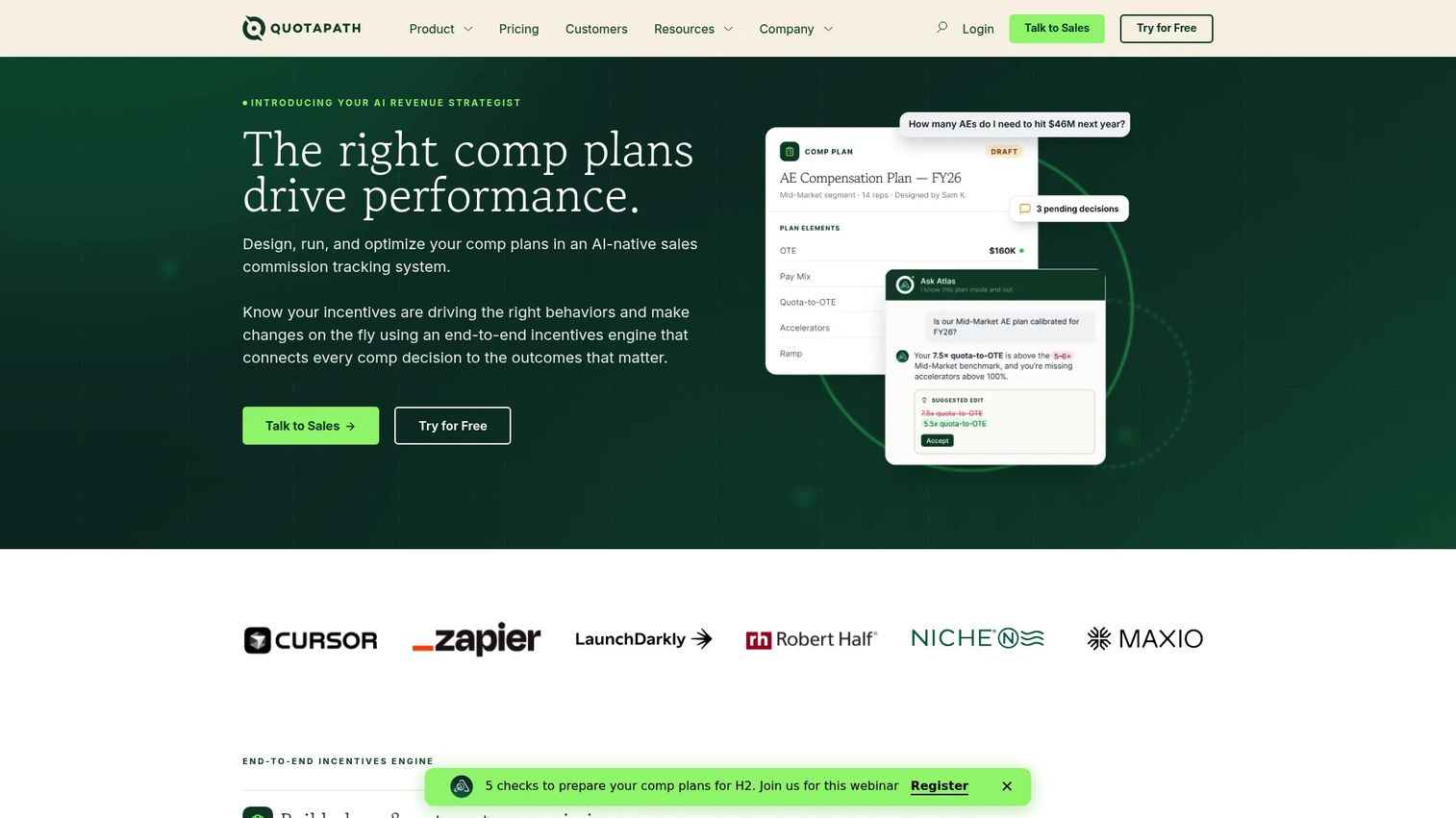
QuotaPath is sales compensation management software for building, tracking, and paying commissions, aimed at smaller and growing teams. It stands out for transparent public pricing and straightforward setup, which matters when you want commission automation without a long implementation.
The AI-powered plan builder and unlimited custom plans handle the common cases well, and a commission calculator gives reps forecasting they can act on. For highly complex enterprise structures, teams often step up to a heavier platform, but for straightforward plans QuotaPath keeps operational overhead low.
Best for: revenue operations, finance, and sales teams managing commission plans and payouts without enterprise complexity.
Key strengths
- AI-powered plan builder
- Unlimited custom plans
- Commission forecasting and payout workflows
- Transparent, published pricing
Why choose QuotaPath: Choose it when simplicity and cost transparency matter more than deep enterprise governance. It gets growing teams off spreadsheets fast.
QuotaPath pricing: The Growth plan is $35 per user per month plus a $525 monthly platform fee, billed annually. Premium is $50 per user per month plus an $800 monthly platform fee. A Strategic plan for managed commissions is sales-led, and a free tier is available.
9. SAP SuccessFactors Incentive Management
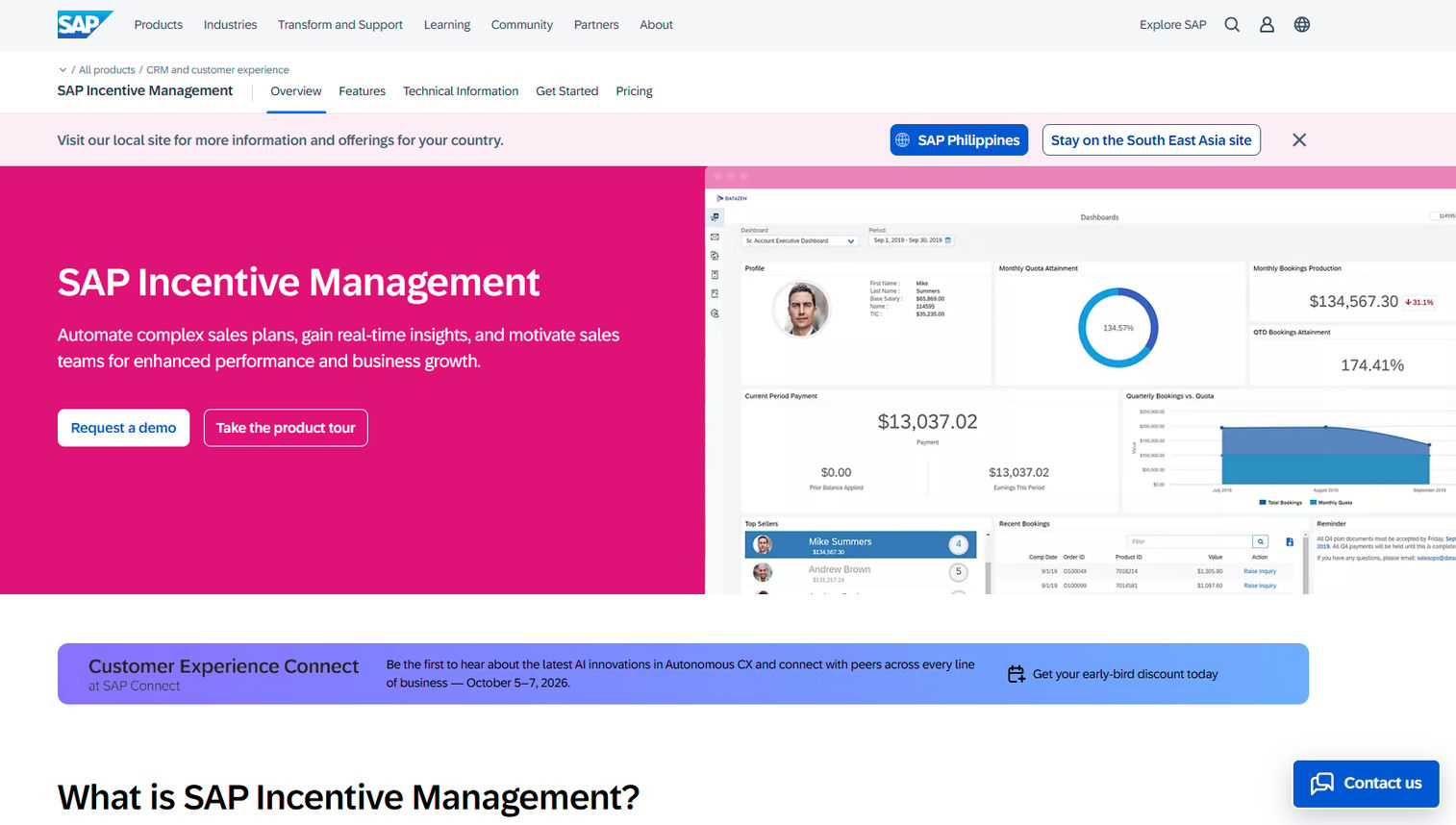
SAP SuccessFactors Incentive Management is cloud-based incentive compensation software for designing, automating, and optimizing sales incentive plans. Its clearest fit is inside SAP-centric organizations, where native alignment with the broader SAP stack keeps compensation data consistent across enterprise systems.
The platform offers persona-based dashboards, a flexible rules engine, and inquiry management for handling disputes at scale. For enterprises already standardized on SAP, the process alignment and governance are the reasons it makes the shortlist.
Best for: enterprises managing complex sales incentive and commission programs within an SAP environment.
Key strengths
- Persona-based dashboards
- Flexible rules engine for complex plans
- Inquiry management for dispute handling
- Native integration with the SAP stack
Why choose SAP SuccessFactors Incentive Management: Choose it when SAP is your enterprise backbone and system consistency matters most. Process alignment across the SAP environment is the payoff.
SAP SuccessFactors Incentive Management pricing: Public pricing is hidden. SAP lists multiple editions, including a hyperscaler option and an enterprise edition, at price upon request, plus add-ons.
Considerations
Automation depth
Verify the platform handles your actual plan mechanics: accelerators, splits, clawbacks, draws, and tiered structures. A tool that models simple flat rates cleanly can still stumble on your real plans. Match the team's commission complexity to the platform before you sign.
Rep visibility
Check whether sellers can self-serve: statements, dashboards, commission tracing, and earnings forecasts. Rep trust usually depends on how easily a seller can answer their own "why is my number this" question. Visibility that lives where reps already work drives adoption.
Integrations and data model
Confirm support for CRM, ERP, HRIS, payroll, and BI tools. The bigger question is whether the platform can act as a single source of truth for compensation data, or whether it becomes one more system to reconcile. Data that flows without re-keying is the goal.
Governance and auditability
Evaluate approvals, version history, effective dates, and dispute handling. This matters most when multiple teams touch compensation and when ASC 606 or IFRS 15 revenue recognition is in scope. A clean audit trail is what lets finance defend every number.
Analytics and leadership reporting
Look for attainment tracking, payout forecasting, expense reporting, and performance trends. Leadership needs to connect comp cost to behavior and outcomes, not just see who got paid what. The analytics should tie spend to the results it was meant to drive.
Ease of administration
Determine how much expertise each plan change requires. A tool that works on paper but needs a specialist for every adjustment is a hidden risk. The best fit lets your team maintain plans as the business changes, without a standing dependency.
Conclusion
The best sales incentive software is not the one with the longest feature list. It is the one that matches your plan complexity, your stack, and your need for rep visibility.
If Salesforce is your system of record, Salesforce Spiff removes reconciliation work through native tracing. If plan complexity is the constraint, CaptivateIQ and Performio give you flexible modeling. If time-to-value matters most, Everstage ships fast with adoption-friendly dashboards. For enterprise planning depth, Varicent and Anaplan connect incentives to broader sales planning. Xactly Incent and SAP SuccessFactors Incentive Management fit mature enterprise and SAP-centric operations. And QuotaPath gets growing teams off spreadsheets with transparent pricing.
The decision rule is simple. Shortlist two or three tools, then validate each against your real commission scenarios, not a vendor's demo data. Run your messiest plan through the commission software before you commit. The tool that survives your edge cases is the one that will hold up when payroll depends on it.
FAQs
Sales incentive software automates commission plans, calculations, and payouts so teams stop maintaining fragile spreadsheets. It generates rep statements, provides earnings visibility, enforces governance, and produces reporting for finance and leadership. The goal is accurate, traceable, and trustworthy compensation with less manual work.
Sales performance management software is the broader category. It can include quota management, territory management, sales planning, and forecasting alongside compensation. Sales incentive software, sometimes called ICM software, is the compensation layer inside that stack, focused on calculating and paying commissions accurately.
Automation reduces disputes through tracing, audit trails, and transparent statements. When a rep can follow a payout back to the specific deal, most questions answer themselves. Fewer manual calculations and no conflicting spreadsheet versions means fewer errors reach the seller in the first place.
Sales ops, RevOps, finance, and compensation teams administer it, while leadership uses the analytics to connect comp cost to outcomes. Sellers and frontline managers are the visibility users, checking earnings, forecasting payouts, and coaching against transparent numbers.
Prioritize integrations with your CRM, ERP, HRIS, and payroll, plus admin controls, rep transparency, analytics, and compliance support for ASC 606 and IFRS 15. Above all, confirm it handles your actual plan complexity, including accelerators, splits, clawbacks, and draws.
No. Smaller teams can use simpler commission tracking software like QuotaPath, while enterprises lean on platforms such as Xactly Incent, Varicent, or SAP SuccessFactors Incentive Management. Complexity and scale drive the choice, not company size alone.
It depends on data quality, plan complexity, and integrations. Lightweight commission software with published pricing and no-code setup can go live quickly, while enterprise platforms with deep governance and multiple system connections take longer. Clean data and well-defined plans shorten any timeline.