Security reviews stall when nobody can prove what APIs exist, what data they expose, or how abuse gets detected. According to Salt Labs (2025), 99% of surveyed organizations reported an API security issue in the prior 12 months, and 55% said those concerns slowed a new application rollout. For presales and security engineering teams, that friction shows up in the worst places: A buyer asks for an API inventory during diligence, an RFP requires OWASP mapping, or a POC fails because the team could not demonstrate runtime detection against real traffic.
API sprawl makes the problem harder. Every microservice, partner integration, mobile client, and third-party connector adds endpoints that may not be documented, tested, or monitored. Shadow APIs, zombie APIs, and undocumented GraphQL endpoints sit quietly in production until someone discovers them the hard way.
The market for API security tools has matured enough that you have real choices across five distinct layers: Discovery and inventory, pre-production testing, runtime protection, WAAP and gateway controls, and sensitive-data governance. Matching the tool to the layer, not just the vendor logo, is the decision that matters.
What's inside
This guide is for security teams, DevSecOps engineers, platform architects, and presales teams supporting enterprise security diligence. Tools were selected based on:
- API lifecycle coverage: Does the tool address discovery, posture, testing, runtime, or all layers?
- Deployment and integration fit: Does it work with existing gateways, CRMs, CI/CD pipelines, and SIEMs?
- Testing and runtime depth: Are API-specific vulnerabilities and behavioral anomalies addressed?
- Governance and buyer readiness: Can the tool produce evidence for RFPs, audits, and procurement reviews?
Pricing and G2 ratings reflect verified values at generation time. Where no rating exists, the entry shows N/A.
TL;DR
- Best full-lifecycle API security platform: Traceable API Security Platform covers discovery, posture management, testing, and runtime protection in one platform
- Best for enterprise API and agentic security: Salt Security excels at behavioral threat detection across complex API environments and AI-connected workflows
- Best for cloud-native WAAP: Wallarm combines web application and API protection with bot mitigation and L7 DDoS defense
- Best for OpenAPI and CI/CD testing: 42Crunch is purpose-built for contract-first API security in development pipelines
- Best for developer-first DAST: StackHawk integrates API security testing directly into CI/CD with OpenAPI support starting at $10/user/month
- Best free open-source testing tool: ZAP (Zed Attack Proxy) gives security practitioners a full intercepting proxy and scanner at no cost
What is API security software?
API security software covers products that discover, test, monitor, protect, and govern APIs across development, deployment, and runtime. The category addresses a core problem: APIs are the primary attack surface for modern applications, yet most organizations lack complete visibility into what APIs they actually operate.
Core types of API security tools:
- API discovery and posture management: Finds APIs across gateways, traffic, code, and cloud, then scores risk against authentication, authorization, data exposure, and policy standards
- API security testing tools: Tests APIs before release using dynamic scanning, fuzzing, OWASP API Security Top 10 checks, and business-logic validation
- Runtime API protection: Analyzes production traffic for behavioral anomalies, bot patterns, credential misuse, and data leakage
- WAAP and gateway-based protection: Enforces policy at the traffic layer with web application firewall, DDoS defense, and rate limiting
- Open-source testing utilities: Provide flexible, extensible scanning and proxy capabilities for manual and automated testing
- Sensitive-data governance: Identifies exposed PII, tokens, credentials, and regulated data across API responses
Key features to look for:
- API inventory covering internal, external, and shadow APIs
- Shadow and zombie API detection
- OpenAPI, Swagger, REST, and GraphQL support
- CI/CD pipeline integration for shift-left testing
- Runtime behavioral analytics and anomaly detection
- Sensitive-data classification with OWASP API Security Top 10 mapping
- Integrations with SIEM, WAF, gateway, cloud, and ticketing tools
- Remediation workflows with ownership assignment and reporting
The boundary between a WAAP product and a dedicated API security platform matters for presales conversations. Gateway controls handle routing and policy enforcement but rarely deliver the depth of inventory, behavioral analysis, and test coverage that dedicated API security platforms provide. You often need both.
When to use API security tools
Find unmanaged APIs before buyers or attackers do
API sprawl creates risk that surfaces at the worst moments: During a security review, after a breach, or when a buyer asks for an inventory report. Discovery tools crawl traffic, gateways, code repositories, and cloud environments to produce an accurate API inventory with authentication status, data exposure, and ownership. For presales teams, an API inventory report is concrete evidence that the organization knows what it operates.
Test APIs before they reach production
Shift-left API security testing means running scans against OpenAPI specs and live endpoints inside CI/CD pipelines. This catches broken object-level authorization, injection flaws, and authentication gaps before they hit production. During an enterprise security review, test results mapped to OWASP API Security Top 10 categories give procurement teams something they can act on rather than a generic assurance letter.
Detect runtime abuse and sensitive-data exposure
Production monitoring catches what testing misses: Bot-driven credential stuffing, excessive data exposure, object-level authorization abuse, and anomalous query patterns. Runtime detection generates the incident timeline and alert evidence that compliance teams, legal, and buyers ask for during diligence. Tools that track sensitive-data flows across API responses add another layer for regulated data environments.
API security tools comparison
Not every API security tool solves the same job. Full-lifecycle platforms cover discovery through runtime in one product. Scanners focus on pre-production testing. WAAP tools enforce policy at the traffic layer. Gateway products manage routing, authentication, and rate limiting. Open-source tools give practitioners flexible manual testing. Match the category to your validation need before comparing vendors within it.
The table below uses verified pricing and G2 ratings. Where no rating is available on the live G2 listing, the entry shows N/A.
| # | Product | Best for | Key differentiator | Pricing | G2 rating |
|---|---|---|---|---|---|
| 1 | Traceable API Security Platform | Full-lifecycle API protection | Discovery, posture, testing, and runtime in one platform | Contact sales | N/A |
| 2 | Salt Security API Protection Platform | Enterprise API and agentic security | AI-powered behavioral detection and posture governance | Contact sales | 4.7/5 |
| 3 | Wallarm Cloud-Native WAAP | Cloud-native WAAP | WAAP plus API protection, bot defense, and L7 DDoS | Contact sales (free tier available) | 4.7/5 |
| 4 | Akamai API Security | Large-enterprise API discovery and testing | Cross-environment discovery, CI/CD testing, and compliance mapping | Contact sales | 3.6/5 |
| 5 | Cequence Application & API Protection | API abuse and bot defense | Unified app and API protection with bot management | Contact sales | 4.6/5 |
| 6 | 42Crunch API Security Platform | OpenAPI and CI/CD security | Contract-first API security testing with micro-firewall | From $9/month | N/A |
| 7 | Akto API Security Platform | Developer-friendly API security | Continuous discovery, testing, and runtime protection | Contact sales | 4.5/5 |
| 8 | APISec | Automated API business-logic testing | AI-generated attacks tied to business logic | Free tier; paid from $690/month per 100 endpoints | 4.7/5 |
| 9 | AppSentinels Platform | Full-lifecycle API and business-logic security | Discovery, AI-driven penetration testing, and runtime protection | Contact sales | 4.9/5 |
| 10 | Imperva API Security | Enterprise application and API protection | API discovery with OWASP and BOLA detection | Contact sales | N/A |
| 11 | Cloudflare API Gateway | Gateway-level API controls | Native API discovery, schema validation, and policy enforcement | Enterprise add-on; contact account team | 4.5/5 |
| 12 | F5 Distributed Cloud API Security | Distributed hybrid API environments | API discovery, risk scoring, and WAF-layer enforcement | Contact sales | 4.4/5 |
| 13 | Data Theorem API Secure | Mobile and web API attack surface | Discovery and testing across mobile, web, and cloud APIs | Contact sales | 4.4/5 |
| 14 | Levo.ai | API and AI system visibility | Unified runtime security for APIs, AI agents, and MCP servers | Custom pricing; contact sales | 4.8/5 |
| 15 | Astra | Physical security system integration | Bespoke CCTV, access control, and monitoring installations | Contact sales | N/A |
| 16 | Orca Security | Cloud security with API exposure context | Agentless CNAPP with attack-path analysis and DSPM | Contact sales | 4.7/5 |
| 17 | AppTrana WAAP | Managed WAAP protection | Managed WAF, API security, bot, and DDoS protection | From $99/app/month | N/A |
| 18 | Threatspy | Continuous DAST and API security testing | Exploitability-based prioritization with developer remediation | Contact sales (14-day trial) | 4.7/5 |
| 19 | Acunetix | Web and API vulnerability scanning | Proof-based DAST scanning with DeepScan crawling | Contact sales | N/A |
| 20 | StackHawk | Developer-first API DAST | CI/CD DAST with OpenAPI scanning and AI remediation | From $10/user/month | 4.6/5 |
| 21 | Zed Attack Proxy (ZAP) | Open-source API testing | Free intercepting proxy and extensible scanner | Free | 4.7/5 |
Best 21 API security tools for 2026
1. Traceable API Security Platform
Traceable API Security Platform provides application and API security across the full lifecycle, covering continuous discovery, posture management, security testing, and real-time runtime protection. It targets enterprise security teams that need a single platform to answer every API security question from a buyer committee, not just one layer of it. Traceable applies distributed tracing to analyze API behavior, which gives it unusually deep context on how APIs are used versus how they are being abused.
Best for: Enterprise security teams needing unified discovery, testing, monitoring, and runtime defense across complex API estates.
Key features
- Continuous API discovery and posture management
- Application and API security testing across the SDLC
- Real-time protection against API vulnerabilities, bots, and DDoS attacks
- Sensitive-data visibility and exposure detection
- Risk-based analytics and security reporting
Why choose Traceable API Security Platform: Traceable suits security teams preparing for enterprise security reviews where buyers need evidence across every API lifecycle layer. A single platform answer is cleaner to defend during technical validation than stitching together four point tools.
Traceable API Security Platform pricing: Traceable does not display pricing on its website. Buyers work with the sales team for a custom quote based on their API environment size and coverage needs.
2. Salt Security API Protection Platform
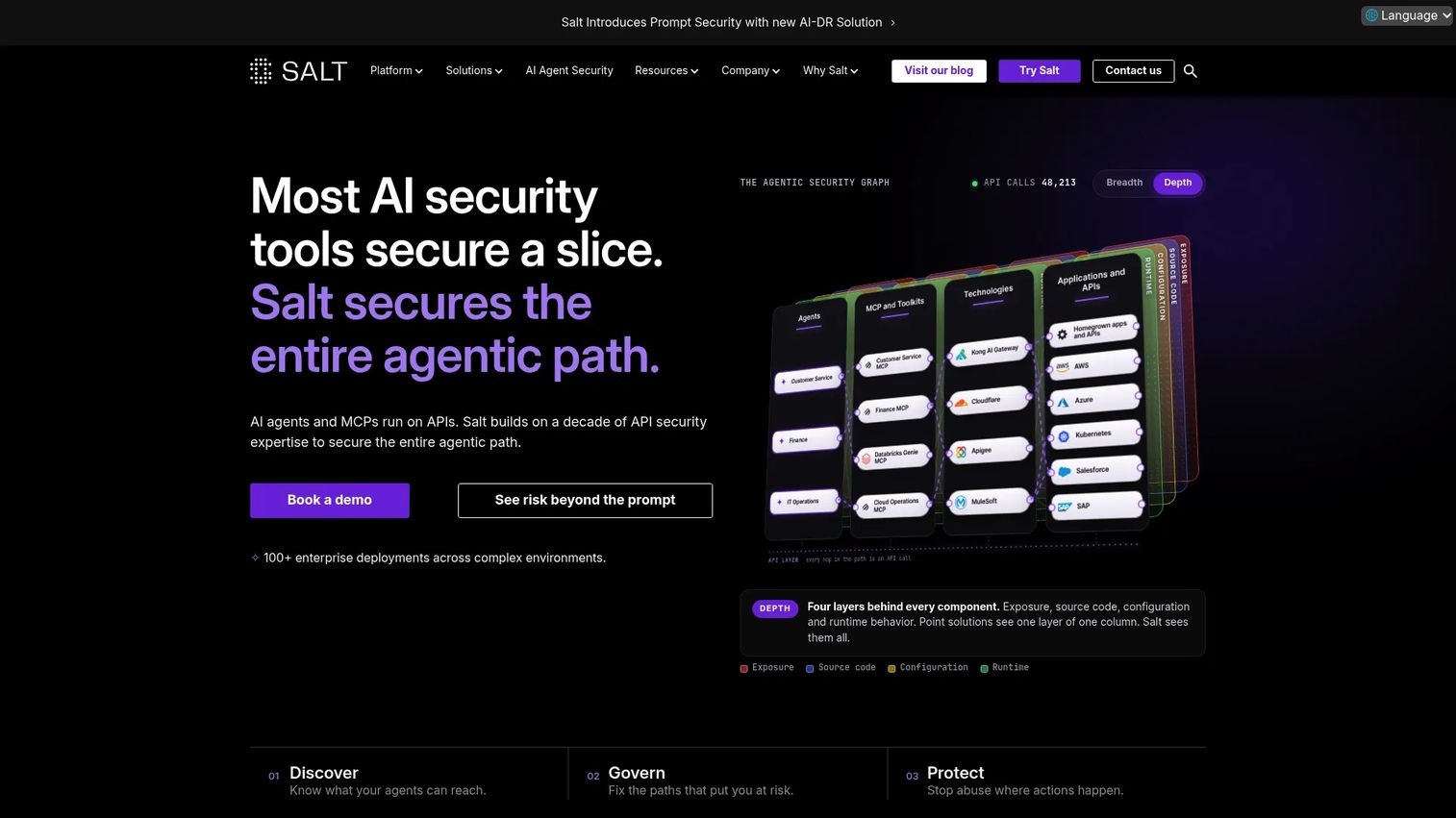
Salt Security API Protection Platform discovers APIs across the environment, including shadow and undocumented endpoints, then applies AI and ML-powered behavioral analysis to detect threats and guide remediation. The platform has expanded its positioning around agentic security, covering API connections between AI agents, MCP servers, and downstream data systems. Enterprise organizations with complex API environments and AI-connected workflows make up Salt's primary buyer profile.
Best for: Large organizations securing APIs across cloud, gateway, and AI-connected environments where behavioral detection depth matters.
Key features
- Continuous API discovery and inventory, including shadow APIs
- AI and ML-powered behavioral threat detection and attack prevention
- API posture governance with sensitive-data exposure tracking
- Remediation guidance with workflow integrations
- AI agent and agentic workflow risk visibility
Why choose Salt Security API Protection Platform: Salt's behavioral detection depth is a strong fit when buyers ask how runtime attacks are identified without signature rules. The agentic security angle addresses an emerging diligence question around AI-connected API exposure.
Salt Security API Protection Platform pricing: Salt does not publish pricing. Enterprise packaging is handled through a sales conversation.
G2 rating: 4.7/5
3. Wallarm Cloud-Native WAAP
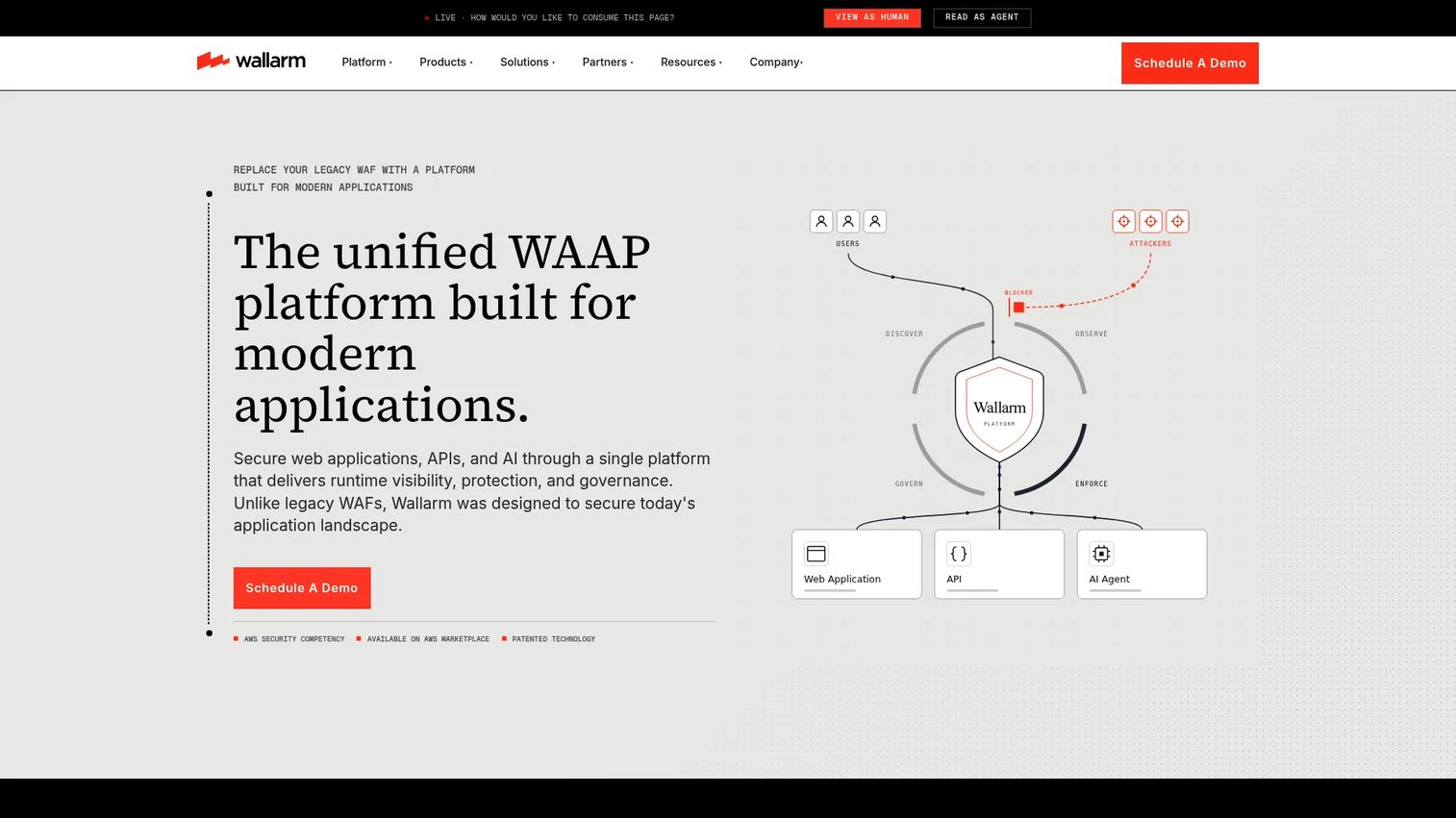
Wallarm Cloud-Native WAAP delivers web application and API protection as a unified cloud-native platform. It covers REST, GraphQL, gRPC, SOAP, and WebSocket APIs alongside OWASP Top 10 protection, L7 DDoS defense, bot and credential-stuffing mitigation, and virtual patching. Deployment options include cloud, Kubernetes, edge, on-premises, and out-of-band configurations, making it operationally flexible for teams with mixed infrastructure.
Best for: Security teams wanting runtime defense close to application traffic, covering both web applications and APIs in one product.
Key features
- WAAP with OWASP Top 10 API protection
- API support across REST, GraphQL, gRPC, SOAP, and WebSocket
- L7 DDoS protection and distributed rate limiting
- Bot and credential-stuffing mitigation
- Cloud, Kubernetes, edge, and on-premises deployment options
Why choose Wallarm Cloud-Native WAAP: Wallarm is strongest when buyers need production runtime defense rather than pre-production testing depth. It covers the traffic layer without requiring a separate gateway product for enforcement.
Wallarm Cloud-Native WAAP pricing: Paid WAAP plans require contacting Wallarm sales. A Security Edge Free Tier is available and handles up to 500,000 requests per month at no cost.
G2 rating: 4.7/5
4. Akamai API Security
Akamai API Security is a platform-agnostic API security product that covers discovery, posture governance, CI/CD-integrated testing, and runtime behavioral analysis. It maps findings to OWASP API Security, PCI DSS, HIPAA, GDPR, ISO 27001, and NIST control frameworks, and connects remediation workflows to owners, repositories, SIEM tools, and ITSM systems. The platform works across cloud, on-premises, and external exposure points, not just Akamai's own CDN infrastructure.
Best for: Large enterprises operating across multiple environments that need cross-ecosystem API discovery, compliance mapping, and CI/CD-integrated testing.
Key features
- Continuous API discovery across traffic, code, specs, gateways, and cloud
- API posture management with compliance mapping (OWASP, PCI, HIPAA, GDPR, NIST)
- Runtime behavioral analysis for abuse, scraping, tampering, and sensitive-data exposure
- CI/CD-integrated API security testing with 200 or more tests
- Remediation workflows connecting to SIEM, ITSM, and developer tools
Why choose Akamai API Security: Akamai fits enterprises that need compliance-mapped reporting as a deliverable, not just runtime alerts. The remediation workflow depth helps security teams assign ownership and close findings faster.
Akamai API Security pricing: Akamai does not display pricing. Buyers contact the sales team for enterprise packaging.
G2 rating: 3.6/5 (based on 2 reviews)
5. Cequence Application & API Protection
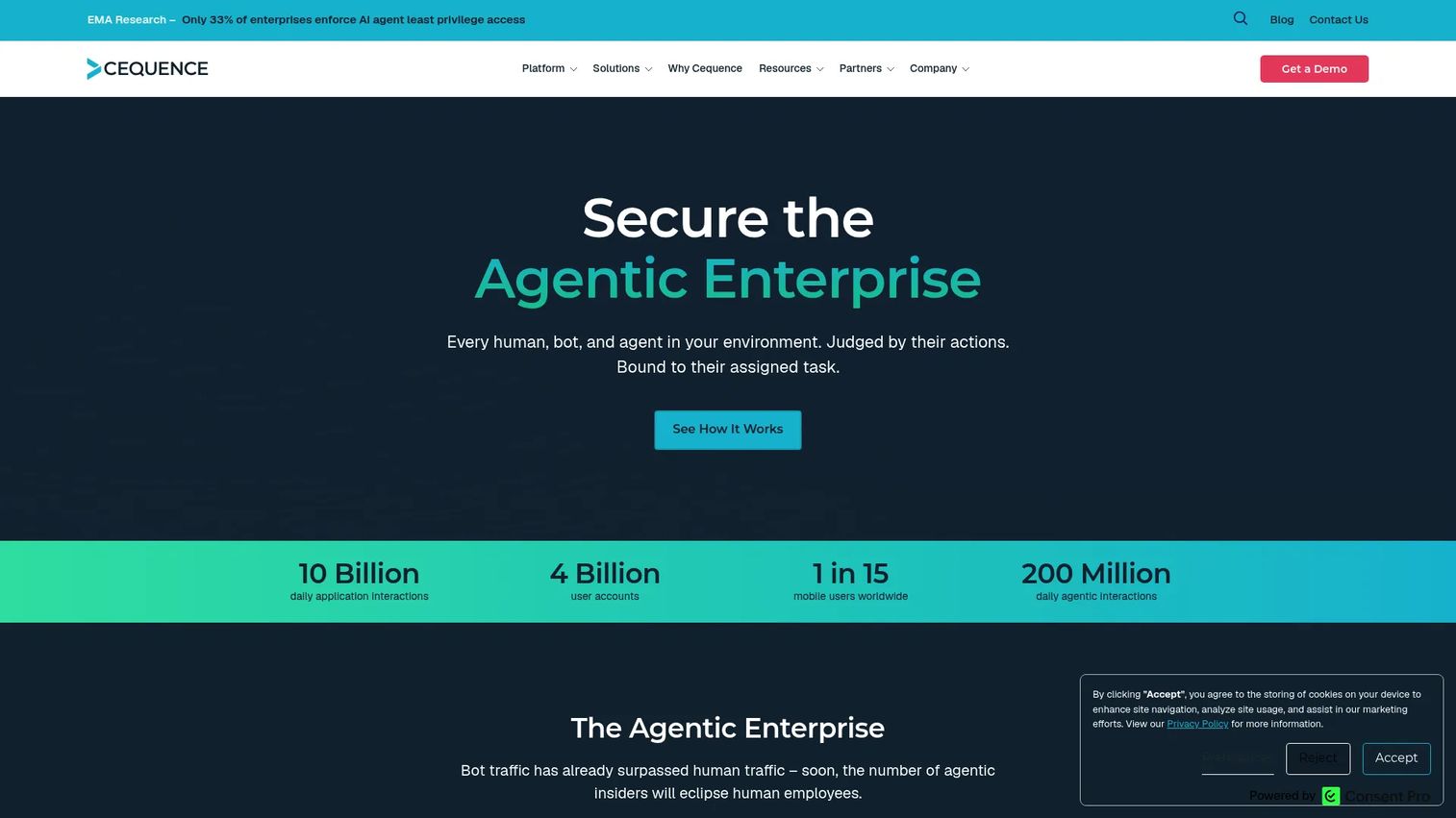
Cequence Application & API Protection unifies API security, bot management, WAF, and DDoS protection into one platform. It covers API discovery, inventory, testing, and risk classification, then adds behavioral bot management and real-time attack mitigation. Its positioning has expanded to cover AI agent governance, addressing the risk of automated workflows that interact with APIs in ways traditional rules cannot model.
Best for: Enterprise organizations facing API abuse, malicious automation, account takeover, scraping, and fraud at scale.
Key features
- API discovery, inventory, testing, and risk classification
- Behavioral bot management and real-time attack mitigation
- WAF and DDoS protection
- Sensitive-data detection, masking, and exposure prevention
- AI agent governance capabilities
Why choose Cequence Application & API Protection: Cequence is the right shortlist entry when buyers specifically ask how business-logic abuse and malicious automation are detected. It goes beyond signature-based blocking into behavioral analysis of automated traffic patterns.
Cequence Application & API Protection pricing: Cequence does not display pricing. Buyers contact the sales team for enterprise packaging.
G2 rating: 4.6/5
6. 42Crunch API Security Platform
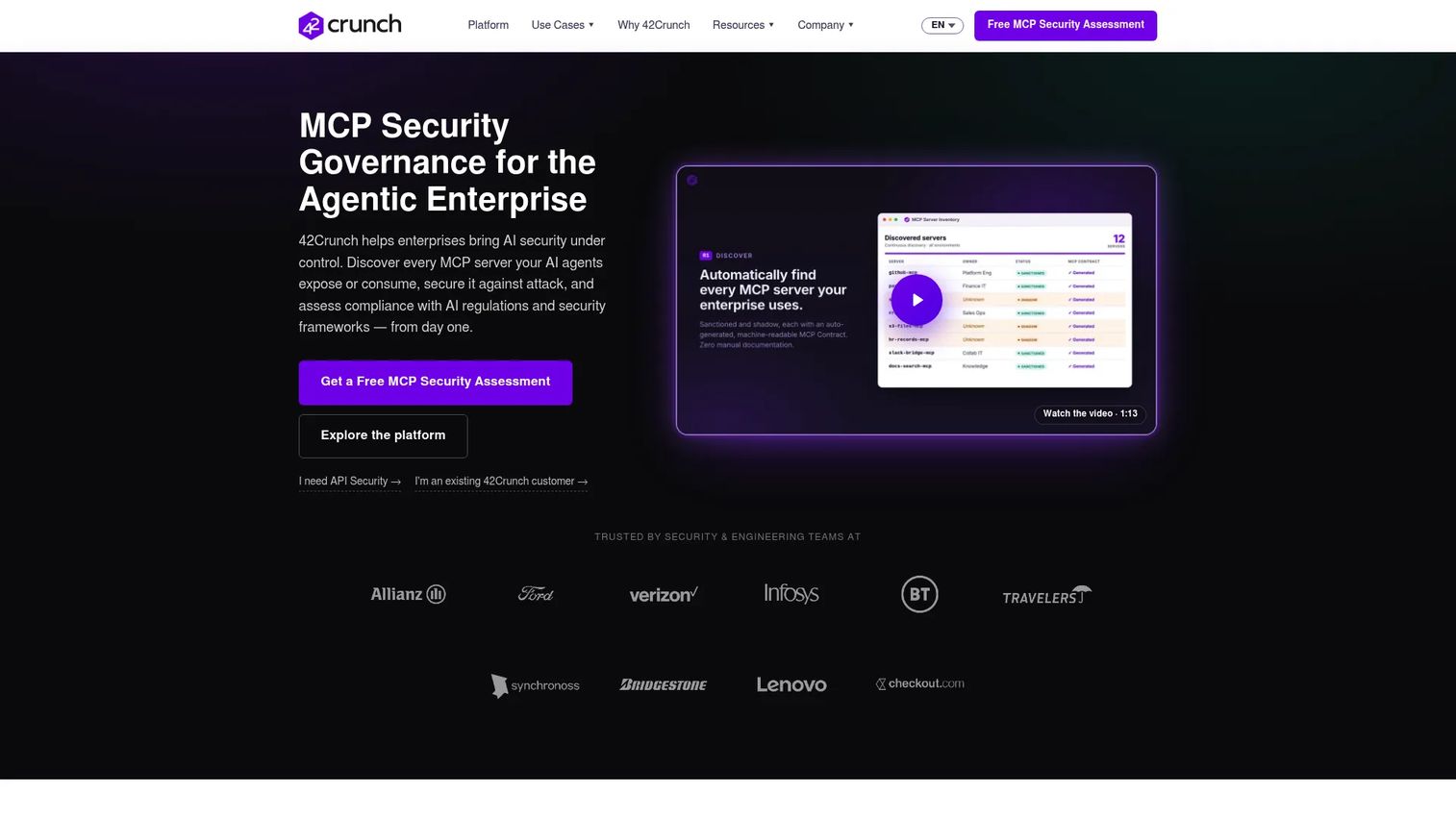
42Crunch API Security Platform takes a contract-first approach, auditing OpenAPI specifications with 300 or more automated security and quality checks before APIs reach production. It adds dynamic API scanning, vulnerability testing, and a runtime API micro-firewall. Teams that rely on OpenAPI-driven development workflows get security integrated at the design and code stage rather than bolted on after deployment. The application security testing angle is particularly strong for organizations running structured SDLC processes.
Best for: Development, security, and platform teams that want API security built into OpenAPI-driven development workflows from design through runtime.
Key features
- API audit with 300 or more automated security and quality checks
- Dynamic API scanning and vulnerability testing
- Runtime API micro-firewall protection
- CI/CD integration for shift-left testing
- GraphQL API security coverage
Why choose 42Crunch API Security Platform: 42Crunch is the clearest answer when buyers ask how API security is enforced at the design stage, not just at runtime. It generates the audit trail that enterprise security reviews look for in secure development practice documentation.
42Crunch API Security Platform pricing: Individual plans start at $9/month. Team plans start at $349/month for up to 10 users. Enterprise pricing is custom. A 14-day Starter trial is available.
7. Akto API Security Platform
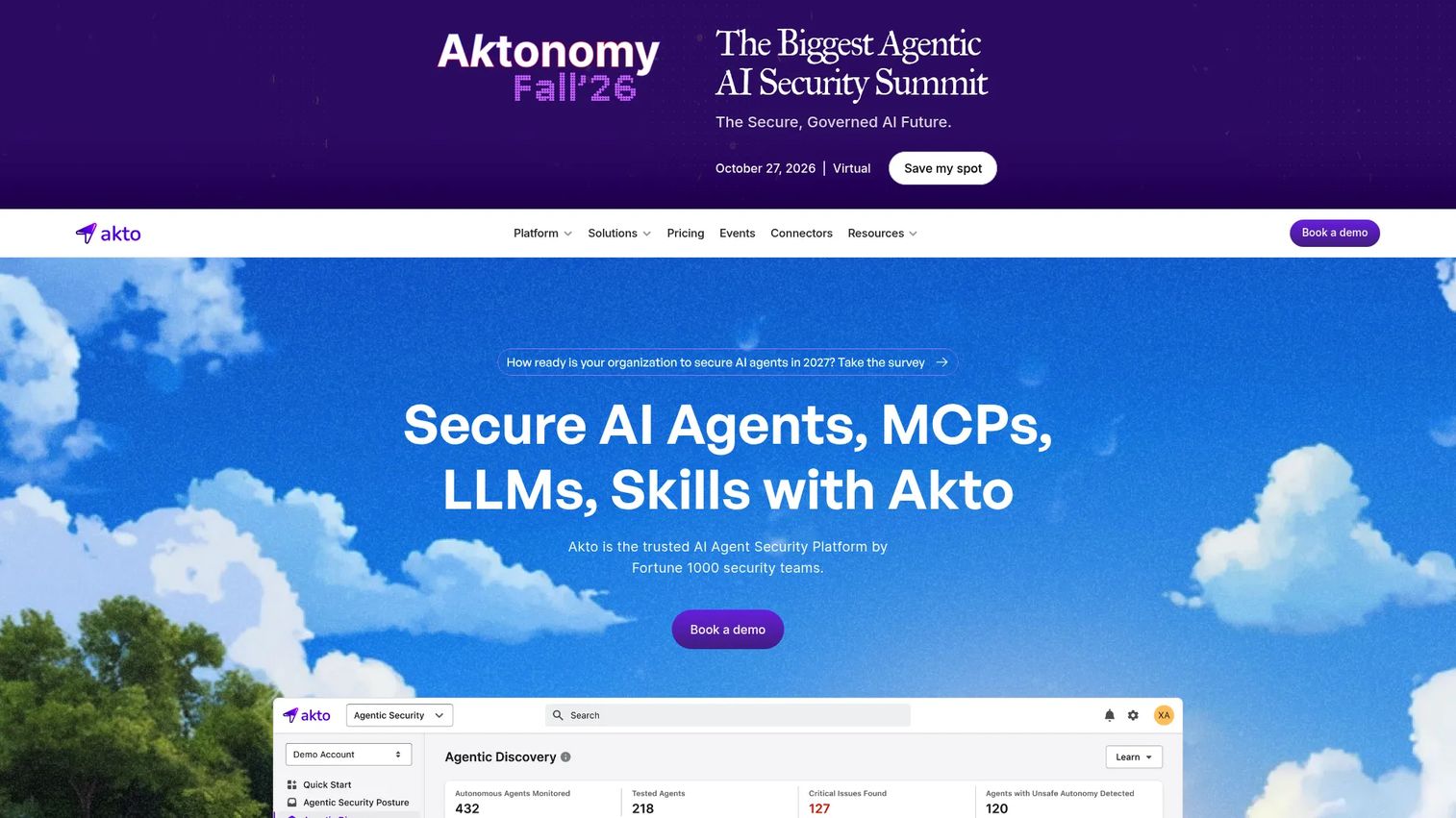
Akto API Security Platform covers API discovery, continuously updated inventory, automated security testing, posture management, sensitive-data exposure detection, and real-time threat protection. Its 50 or more API traffic connectors pull inventory from diverse sources without requiring infrastructure changes. Akto's design leans toward engineering and DevSecOps teams that want security feedback as part of their normal development cycle rather than a separate audit process. The platform also addresses CI/CD tools integration for teams running modern delivery pipelines.
Best for: Security and application teams that need continuous API discovery and OWASP-mapped testing integrated into development workflows.
Key features
- API discovery and continuously updated inventory
- Automated testing covering OWASP API Top 10 and business-logic vulnerabilities
- API security posture management and sensitive-data detection
- Real-time API threat detection and blocking
- 50 or more API traffic connectors for inventory collection
Why choose Akto API Security Platform: Akto gives engineering teams security feedback without slowing delivery. It belongs on shortlists when developer adoption is a selection criterion alongside security depth.
Akto API Security Platform pricing: Akto's pricing page shows Contact Sales for current plan pricing. A free trial is available on the Professional plan.
G2 rating: 4.5/5
8. APISec
APISec discovers applications and APIs, models how they work including authentication, roles, permissions, and business logic, then generates AI-driven attack simulations with replayable exploit evidence. This approach tests API vulnerabilities that generic DAST tools miss because they require understanding of the application's data model and access-control structure. Teams that need to demonstrate that API business logic was actually tested, not just scanned, get concrete evidence they can include in security reviews.
Best for: Security and development teams needing continuous, automated validation of API exploitability across business logic and access-control risks.
Key features
- Continuous application and API discovery with dynamic application modeling
- AI-generated attack simulations with replayable exploit evidence
- Business-logic and access-control vulnerability testing
- CI/CD and workflow integrations
- Private, public, cloud, and on-premises API coverage
Why choose APISec: APISec is the answer when a buyer asks what happens if an attacker knows the API schema and probes business logic directly. The replayable exploit evidence gives security teams a report artifact that is hard to dismiss.
APISec pricing: A free tier is available. The Standard plan runs $690/month per 100 endpoints (or $8,275 annually). The Pro plan is $2,750/month per 100 endpoints (or $33,075 annually). A Bug Bounty option uses custom pricing.
G2 rating: 4.7/5
9. AppSentinels Platform
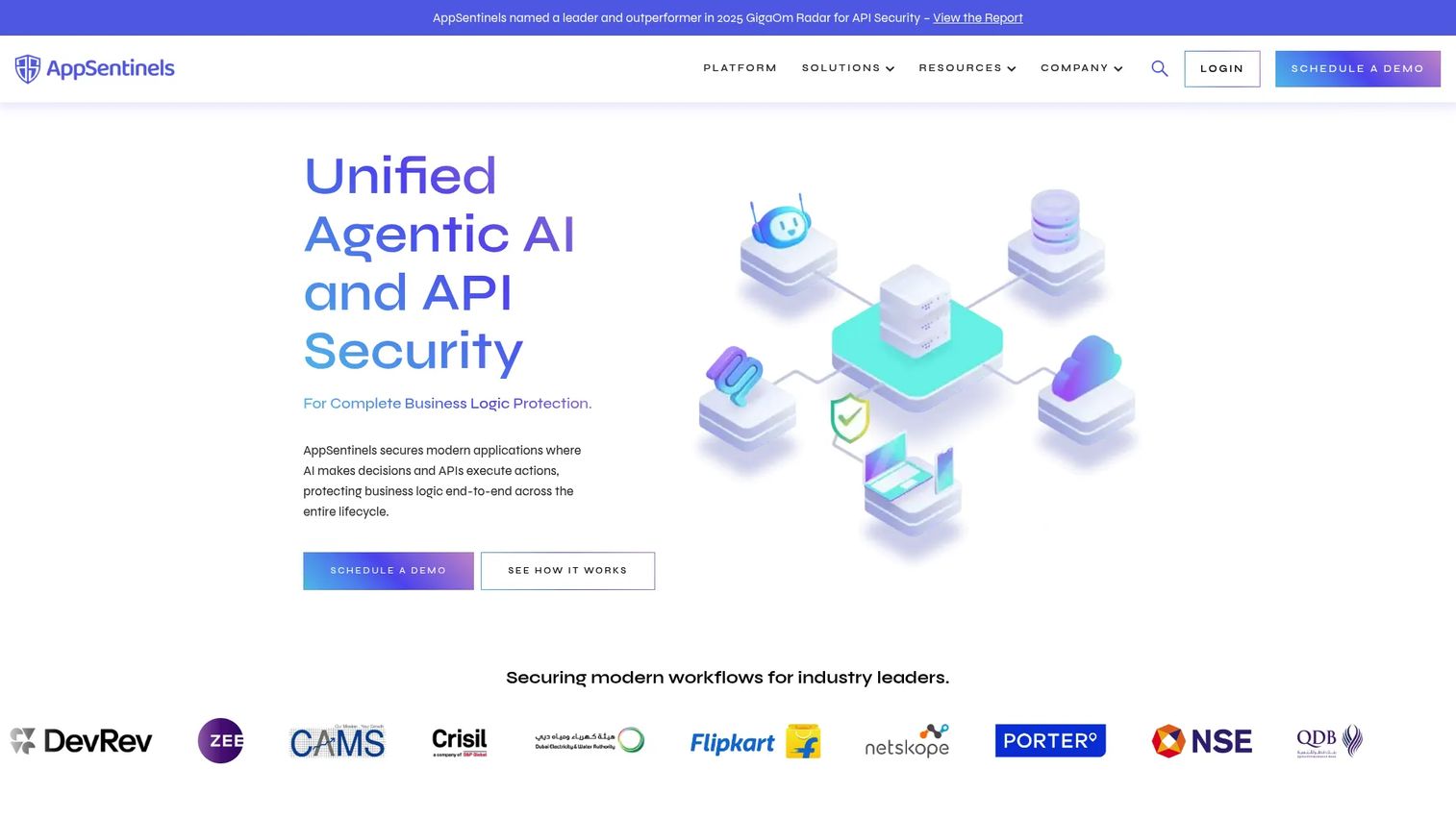
AppSentinels Platform covers API discovery, posture management, AI-driven automated penetration testing, runtime protection against API and business-logic attacks, and rapid incident response support. The sensitive-data and PII discovery layer means it addresses regulated-data exposure alongside functional API security risks. Enterprise organizations building a compliance-ready API security program find AppSentinels worth evaluating because it addresses multiple RFP categories from one platform.
Best for: Enterprise organizations needing full-lifecycle API security with business-logic protection, sensitive-data discovery, and automated penetration testing.
Key features
- API discovery and posture management
- Sensitive data and PII discovery across API responses
- AI-driven automated API penetration testing
- Runtime protection against API, business-logic, bot, and abuse attacks
- Rapid incident response and compliance support
Why choose AppSentinels Platform: AppSentinels belongs on the shortlist when buyers need evidence of automated penetration testing alongside runtime monitoring. The PII discovery layer addresses data-privacy questions that often surface in procurement diligence.
AppSentinels Platform pricing: AppSentinels does not display pricing. Buyers contact the sales team for enterprise packaging.
G2 rating: 4.9/5
10. Imperva API Security
Imperva API Security provides continuous API discovery and classification, OWASP API Security Top 10 risk assessment, and real-time BOLA (Broken Object Level Authorization) detection and response. It sits inside Imperva's broader application security portfolio, which includes WAF, DDoS protection, data security, and bot management. Teams already invested in Imperva's security stack can add API visibility without introducing a separate vendor.
Best for: Organizations needing API protection integrated inside a mature application and data security program.
Key features
- Continuous API discovery and classification
- OWASP API Security Top 10 risk assessment
- Real-time BOLA detection and response
- Integration with Imperva WAF and broader security controls
- Cloud, on-premises, hybrid, and microservices coverage
Why choose Imperva API Security: Imperva is the right choice when the buyer is already using Imperva and wants to close the API visibility gap without adding a new vendor relationship. The OWASP and BOLA coverage answers two of the most common enterprise security questionnaire questions.
Imperva API Security pricing: Imperva does not display pricing for this product. Buyers request a demo or quote through the sales team.
11. Cloudflare API Gateway
Cloudflare API Gateway provides API endpoint discovery and management, OpenAPI schema validation, JWT validation, mutual TLS authentication, API analytics and logging, API routing, and OWASP Top 10 API protection, all running inside Cloudflare's global network. For organizations already operating on Cloudflare, adding API Gateway controls avoids introducing a separate security layer. Gateway controls enforce policy at the traffic entry point but do not replace the depth of behavioral analysis that dedicated API security platforms provide.
Best for: Enterprise organizations using Cloudflare that want gateway-level API discovery, schema validation, and policy enforcement.
Key features
- API endpoint discovery and management
- OpenAPI schema validation and JWT authentication
- Mutual TLS and authentication controls
- API analytics, logging, and routing
- OWASP Top 10 API protection
Why choose Cloudflare API Gateway: Cloudflare's API Gateway is operationally straightforward for teams already on the platform. Gateway-level controls handle authentication, rate limiting, and schema enforcement cleanly, but plan for a separate testing and behavioral analysis tool to cover pre-production and anomaly detection.
Cloudflare API Gateway pricing: Available as an Enterprise-only paid add-on. Buyers contact their Cloudflare account team for pricing.
G2 rating: 4.5/5
12. F5 Distributed Cloud API Security
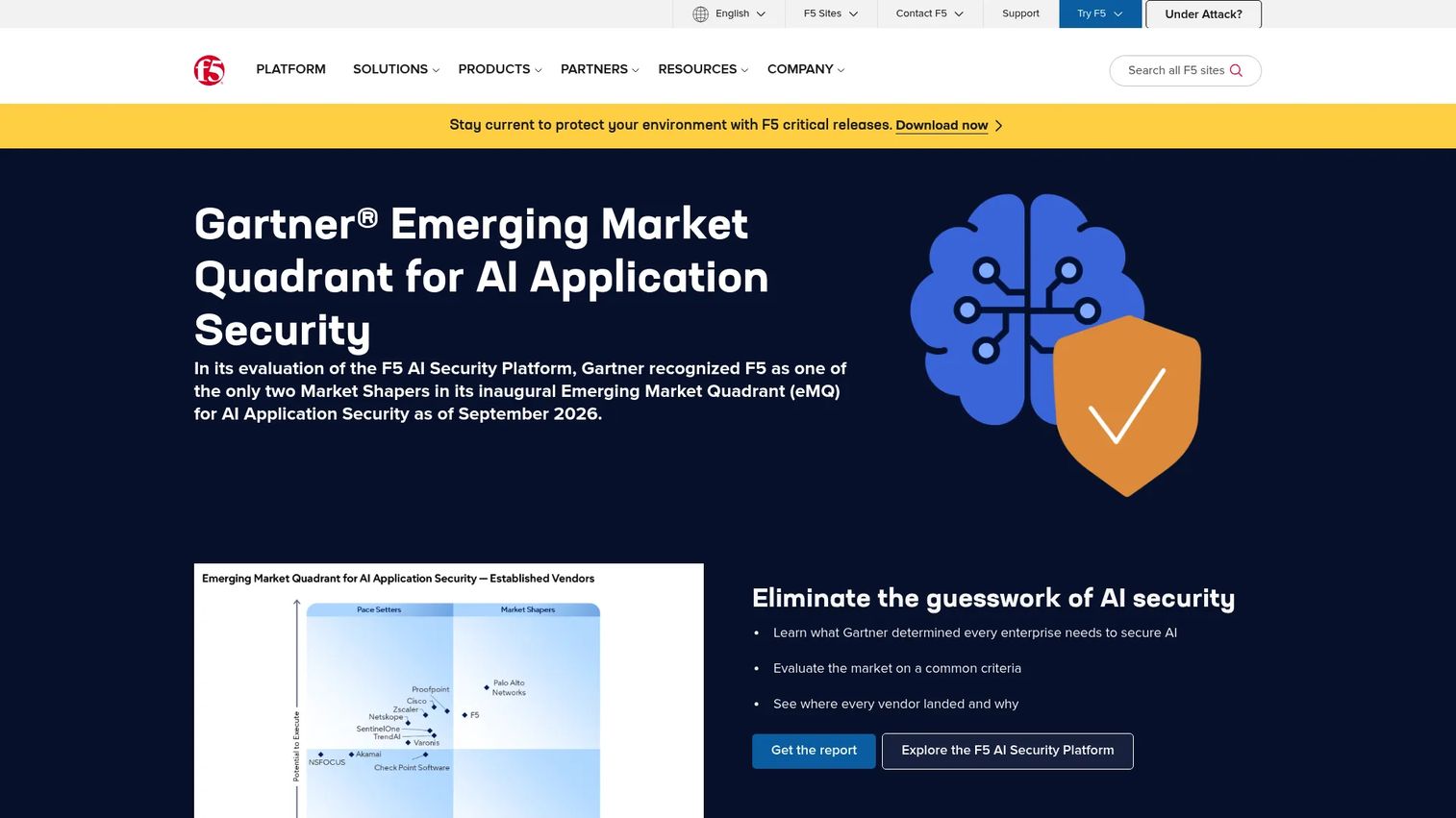
F5 Distributed Cloud API Security discovers APIs automatically and generates OpenAPI specifications, detects sensitive data across API traffic, applies ML-based monitoring with AI-assisted event analysis, scores authentication risk, and enforces protection through WAF and granular Layer 7 policies. It operates across cloud, on-premises, and edge environments, making it practical for organizations with distributed infrastructure that does not fit a purely cloud-native model.
Best for: Organizations securing APIs across distributed hybrid, multicloud, on-premises, and edge environments.
Key features
- Automatic API discovery with OpenAPI specification generation
- Sensitive-data detection and masking across API responses
- ML-based traffic monitoring with AI-assisted event analysis
- Authentication discovery and API risk scoring
- WAF and granular Layer 7 API enforcement
Why choose F5 Distributed Cloud API Security: F5 fits buyers already invested in F5 architecture who need API security that covers their distributed footprint without requiring a rearchitecture. The ML-based monitoring adds behavioral depth beyond policy-only enforcement.
F5 Distributed Cloud API Security pricing: F5 uses annual Distributed Cloud subscriptions with request-based metering and Essentials or Enterprise packaging. Contact F5 sales for current pricing.
G2 rating: 4.4/5
13. Data Theorem API Secure
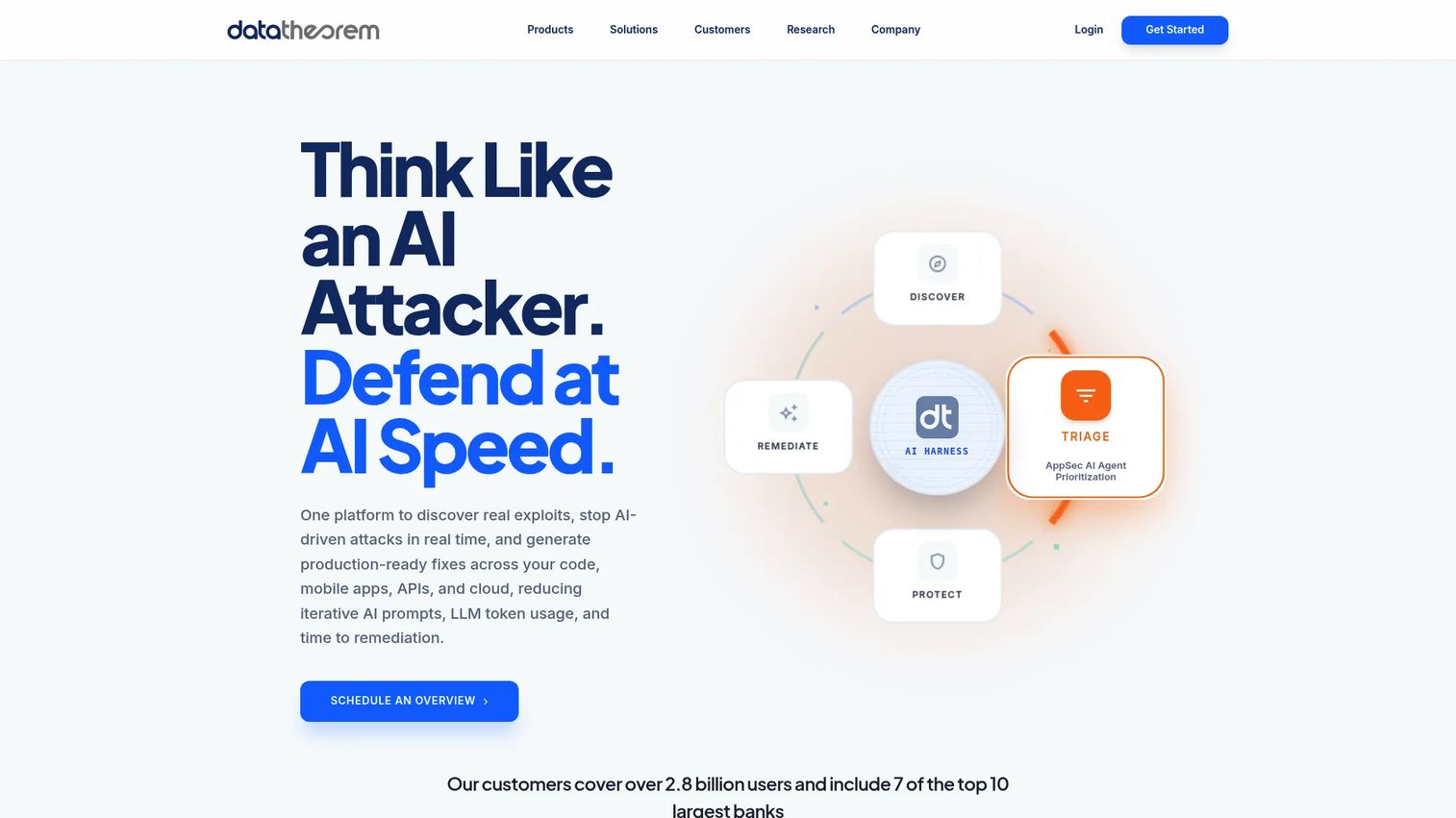
Data Theorem API Secure provides automated API discovery across public, multi-cloud, on-premises, gateway, and developer environments, then runs SAST, DAST, SCA, and customized testing against the discovered attack surface. Runtime protection covers AI-augmented attacks, bots, abuse, anomalies, and malicious domains. The platform's breadth across mobile, web, and cloud API surfaces makes it a practical shortlist entry when the buyer's APIs are exposed through multiple client types rather than a single web application.
Best for: Organizations securing APIs connected to mobile apps, web apps, and multiple cloud attack surfaces.
Key features
- API discovery across public, multi-cloud, on-premises, and gateway sources
- API posture management covering authentication, authorization, and zombie APIs
- Testing using SAST, DAST, SCA, and customized attack patterns
- Runtime protection against bots, AI-augmented attacks, and anomalies
- Security remediation guidance with risk context
Why choose Data Theorem API Secure: Data Theorem addresses the full application attack surface, not just server-side APIs. Teams whose products expose APIs through mobile clients benefit from the mobile API testing depth alongside standard web coverage.
Data Theorem API Secure pricing: Data Theorem handles pricing through a demo and quote process. Contact the sales team for current packaging.
G2 rating: 4.4/5
14. Levo.ai
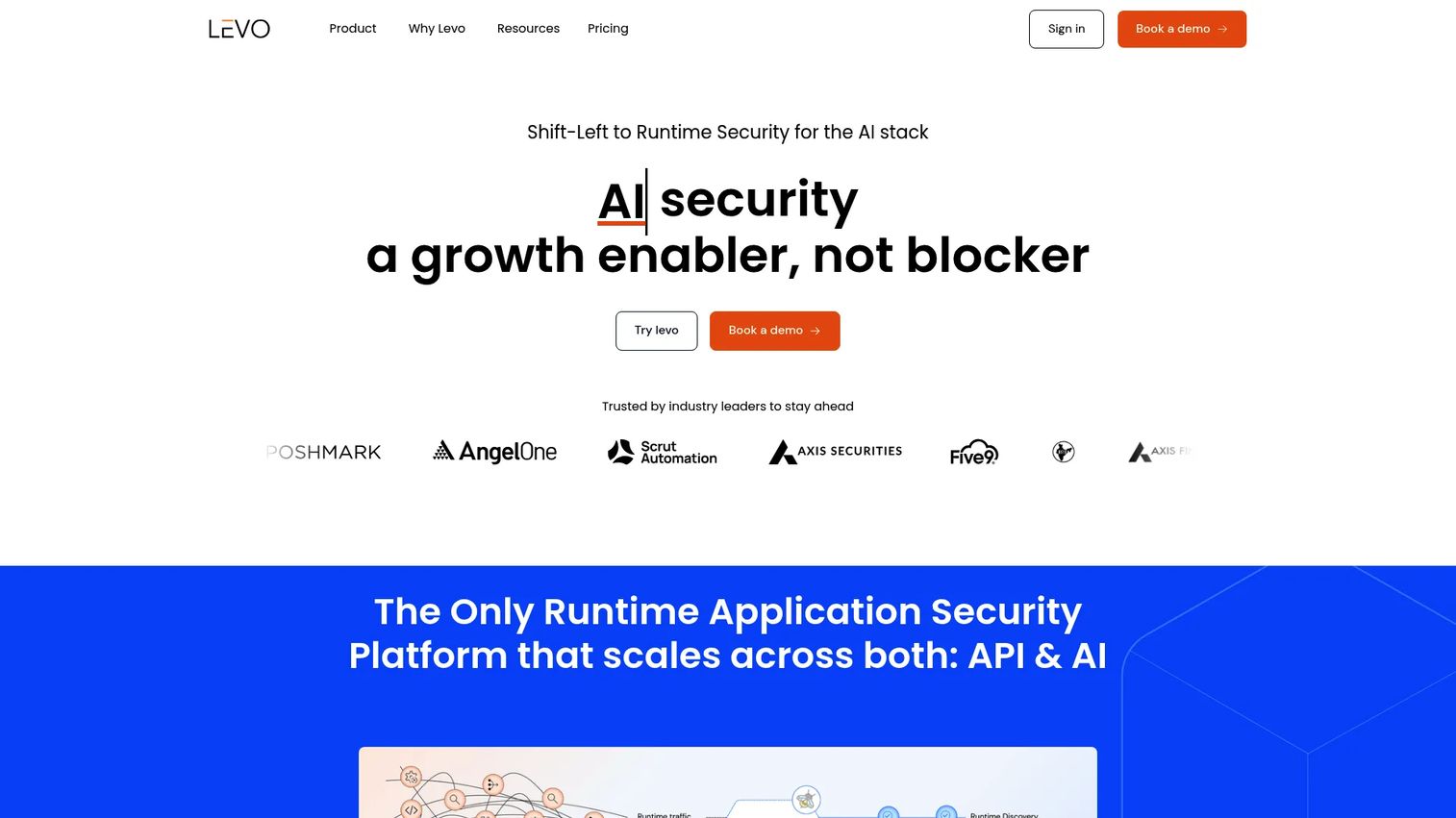
Levo.ai provides unified runtime visibility across APIs, AI agents, MCP servers, LLMs, and vector stores, then layers offensive security testing, continuous monitoring, policy enforcement, and inline threat protection on top of that visibility. Sensitive-data detection and vulnerability remediation complete the coverage. As AI-connected architectures introduce new API exposure through agent-to-agent communication and MCP server integrations, Levo's visibility layer addresses a gap that traditional API scanners were not built for. This is also relevant for teams evaluating attack surface management software across modern AI-enabled stacks.
Best for: Organizations needing unified API and AI security visibility, testing, and runtime protection across modern AI-connected environments.
Key features
- Unified runtime visibility across APIs, AI agents, MCP servers, LLMs, and vector stores
- Offensive security testing for APIs and AI applications
- Continuous runtime monitoring and policy enforcement
- Sensitive-data detection and protection
- Inline threat protection and vulnerability remediation
Why choose Levo.ai: Levo is the strongest shortlist entry when buyers specifically ask how API security extends to AI-agent workflows and MCP-connected systems. Traditional API security tools do not yet cover that surface.
Levo.ai pricing: Custom pricing based on API endpoints. Contact Levo sales for current packaging.
G2 rating: 4.8/5
15. Astra
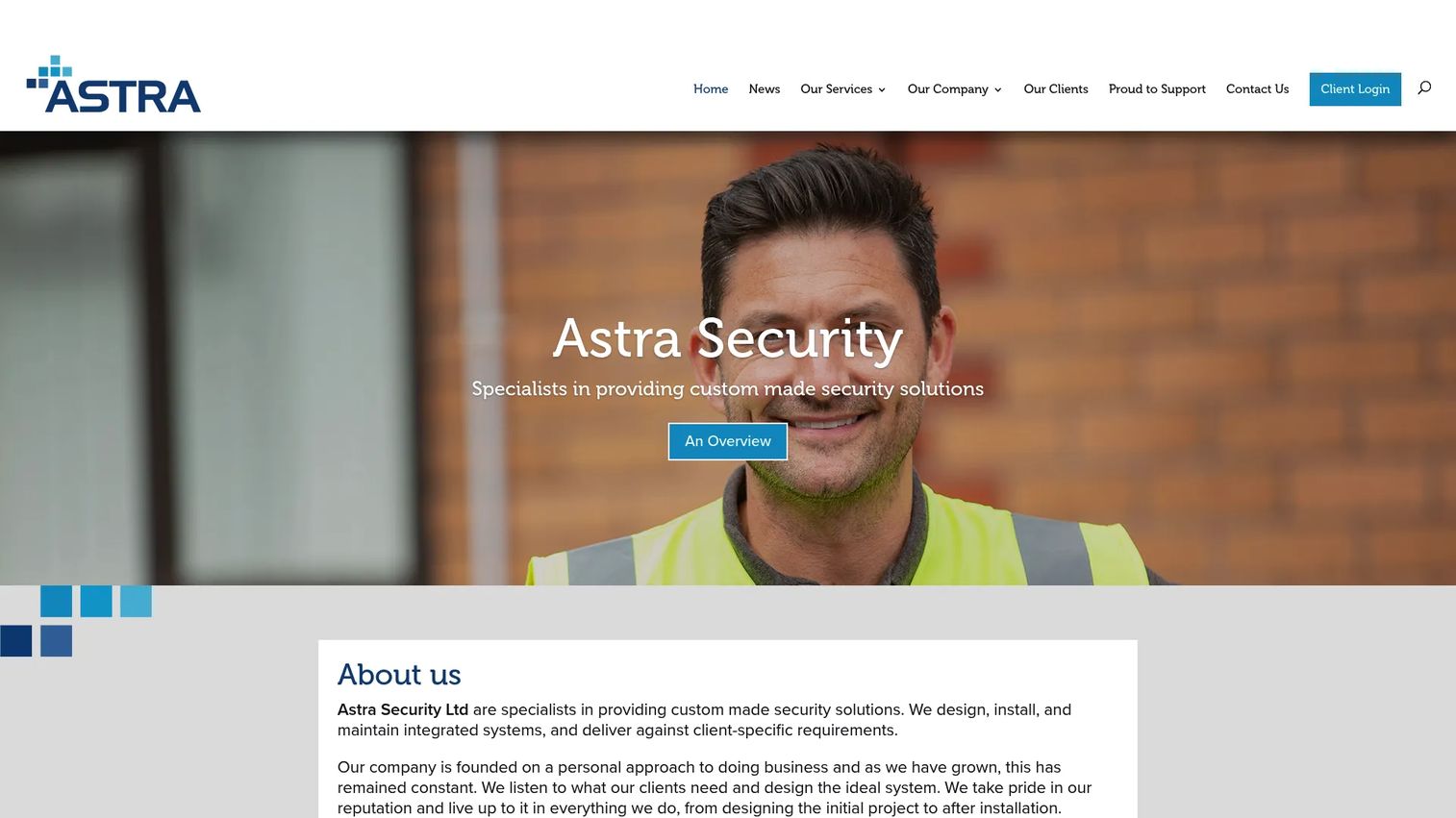
Astra Security Ltd provides bespoke integrated security solutions including CCTV system design, installation, monitoring, and maintenance, along with access control, facial recognition, and thermal technology. The company primarily serves organizations in the UK, Ireland, and parts of Europe seeking custom-designed and managed physical security systems.
Best for: Organizations seeking custom-designed and managed physical security systems with professional installation and monitoring support.
Key features
- Integrated CCTV system design, installation, and maintenance
- Remote CCTV monitoring and automated maintenance checks
- Access control, facial recognition, and customer flow control
- Thermal technology integration
- On-site and remote security management
Why choose Astra: Astra suits organizations that need a managed physical security partner rather than a software product. It is not a software-based API security testing tool and does not belong in a software-only API security shortlist.
Astra pricing: Contact Astra for a custom quote based on system scope and monitoring requirements.
16. Orca Security
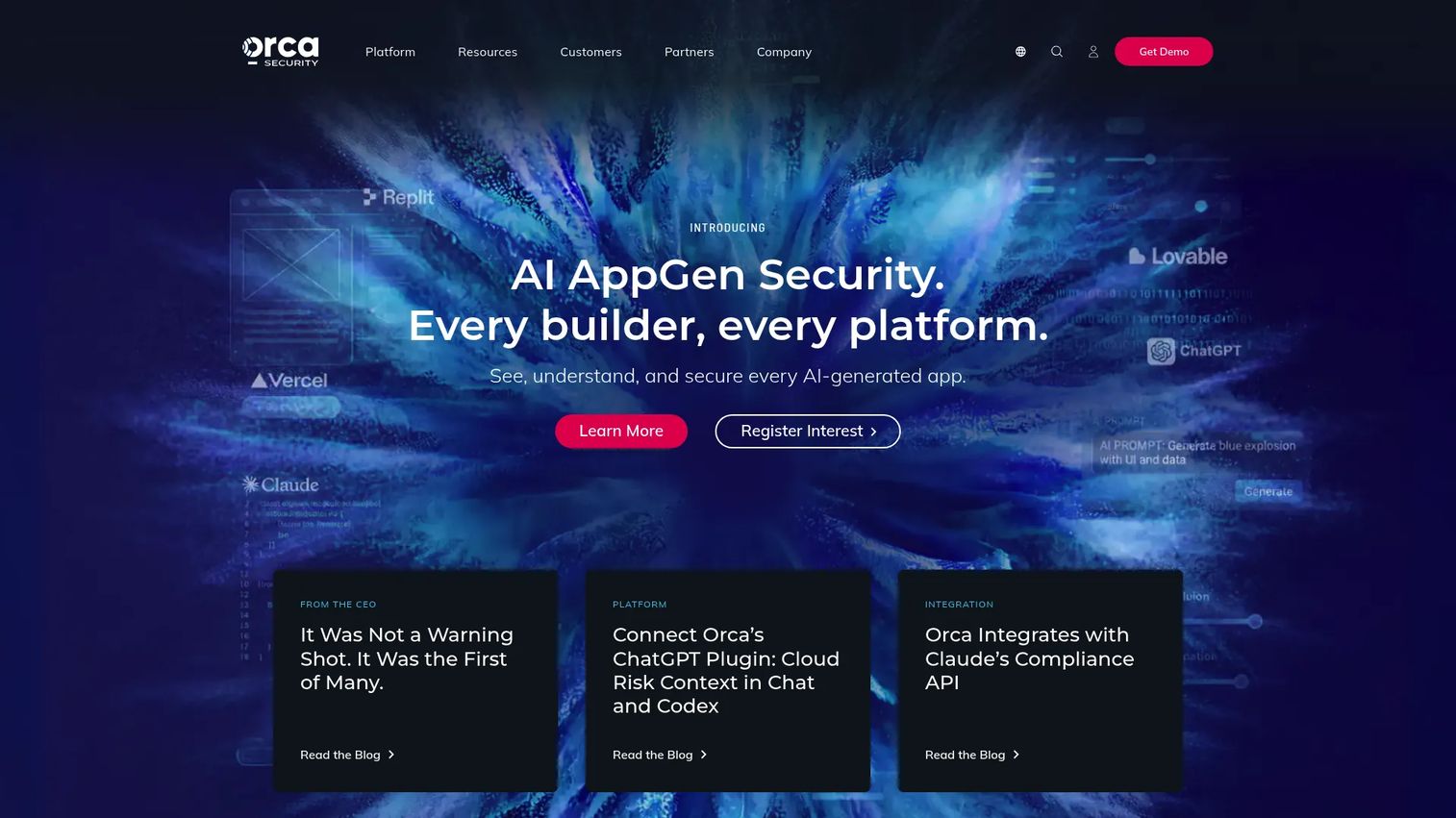
Orca Security is a unified, agentless-first cloud and AI security platform covering cloud security posture management, CIEM, vulnerability management, container and Kubernetes security, SAST, IaC security, DSPM, and cloud detection and response. Its attack-path analysis contextualizes risk across the cloud environment, including where API exposure contributes to a broader attack path. Orca does not position itself as a dedicated API security testing platform, but teams that need API risk within broader cloud exposure analysis will find relevant coverage.
Best for: Enterprise cloud security and DevSecOps teams that want API exposure context within broader cloud risk and attack-path analysis.
Key features
- Agentless SideScanning across cloud workloads
- Cloud security posture management, CIEM, and vulnerability management
- Attack-path analysis with unified risk context
- AI security and AI asset discovery
- DSPM and sensitive-data detection
Why choose Orca Security: Orca fits when API risk is part of a broader cloud security program rather than the primary security question. Plan for a dedicated API testing or runtime tool alongside Orca for deeper API-specific coverage.
Orca Security pricing: One all-inclusive SKU priced by the number of cloud workloads protected. Contact Orca for a personalized quote.
G2 rating: 4.7/5
17. AppTrana WAAP
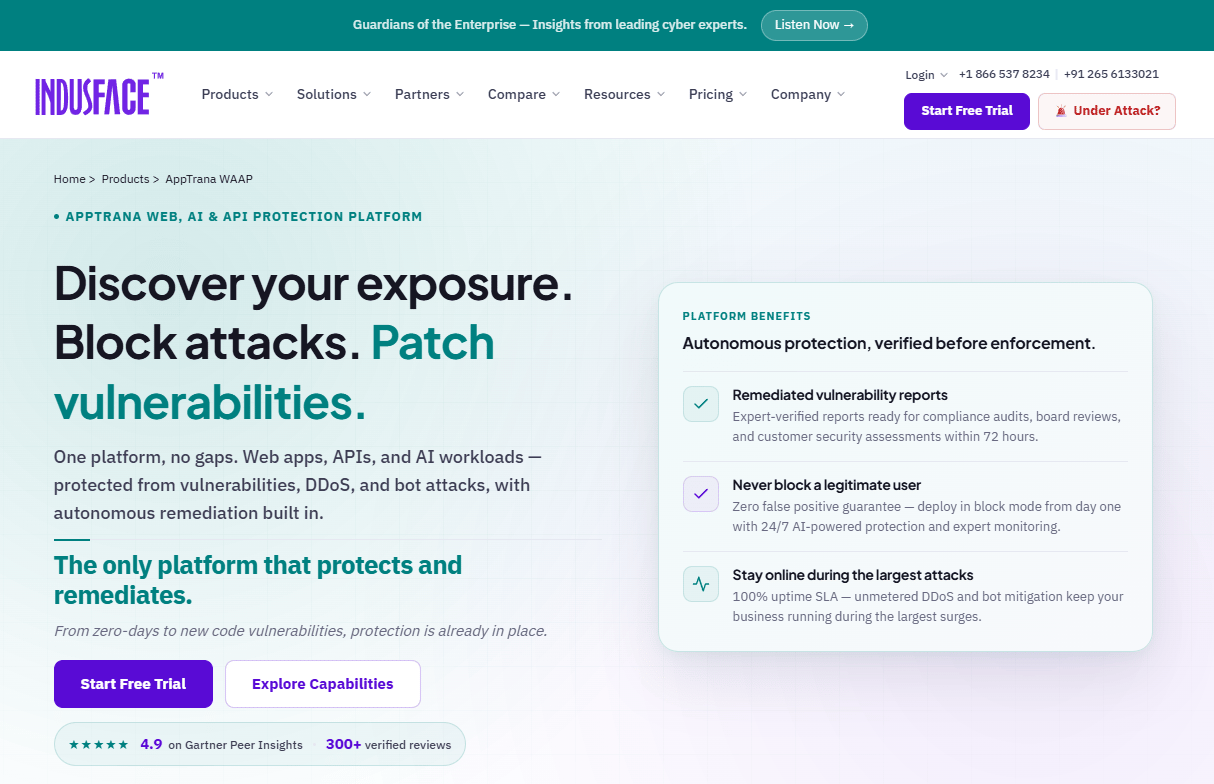
AppTrana WAAP from Indusface is a fully managed web application and API protection platform covering WAF, API security, shadow API discovery, bot protection, DDoS defense, AI workload and LLM protection, continuous DAST, and autonomous vulnerability remediation. The managed-service model means security experts handle monitoring and tuning rather than leaving it to the customer's internal team. CDN and application acceleration come included, which reduces the vendor count for teams consolidating infrastructure.
Best for: Organizations that need managed WAAP and API protection without the overhead of operating a self-managed security product.
Key features
- Managed WAF and web application protection
- API security and shadow API discovery
- DDoS and bot protection
- AI workload and LLM protection
- 24x7 managed security services with continuous DAST
Why choose AppTrana WAAP: AppTrana suits lean security teams that want protection and operations support together. The managed-service component removes the internal tuning and alert triage burden that self-managed WAF and API tools require.
AppTrana WAAP pricing: The Advanced plan starts at $99 per app per month. Premium and Enterprise plans use custom pricing billed annually.
18. Threatspy
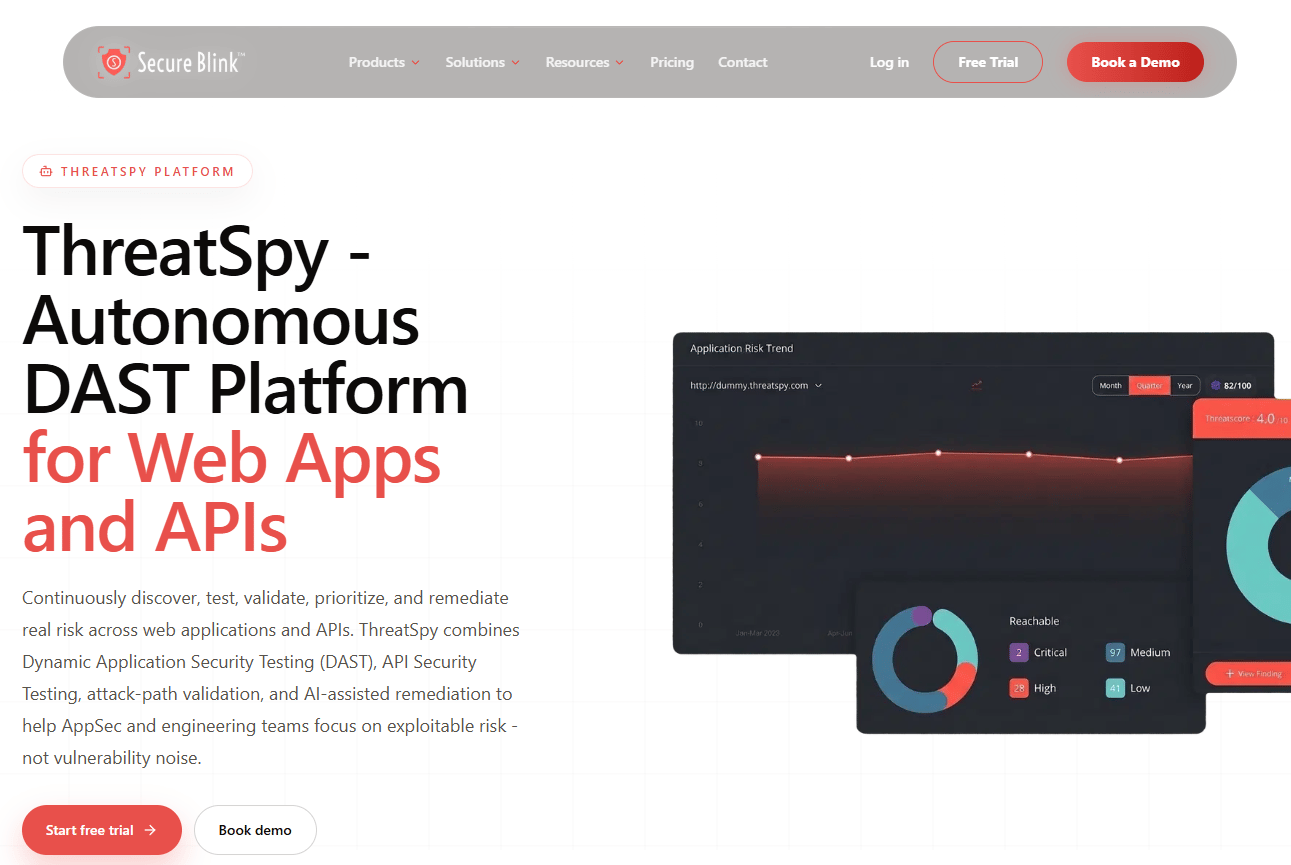
Threatspy is an autonomous DAST and API security testing platform from Secure Blink. It continuously discovers, validates, prioritizes, and remediates risks across web applications and APIs. API security testing covers Postman, OpenAPI, SOAP, and GraphQL. Risk prioritization is based on exploitability and reachability rather than generic severity scores, which cuts down the noise that slows remediation. AI-assisted security review and automated remediation playbooks help development teams act on findings without waiting for a separate security triage cycle.
Best for: Security and engineering teams needing continuous API and web application vulnerability testing with developer-ready, prioritized remediation.
Key features
- Dynamic Application Security Testing (DAST) for APIs and web apps
- API security testing via Postman, OpenAPI, SOAP, and GraphQL
- Exploitability and reachability-based risk prioritization
- AI-assisted security review and remediation guidance
- CI/CD and workflow integrations
Why choose Threatspy: Threatspy's exploitability-based prioritization means fewer wasted remediation cycles on theoretical vulnerabilities. It is a practical fit when the security team needs to give developers a prioritized fix list rather than a raw vulnerability dump.
Threatspy pricing: A Starter plan includes a 14-day free trial. Pro and Enterprise plans use custom annual pricing. Contact Secure Blink for current rates.
G2 rating: 4.7/5
19. Acunetix
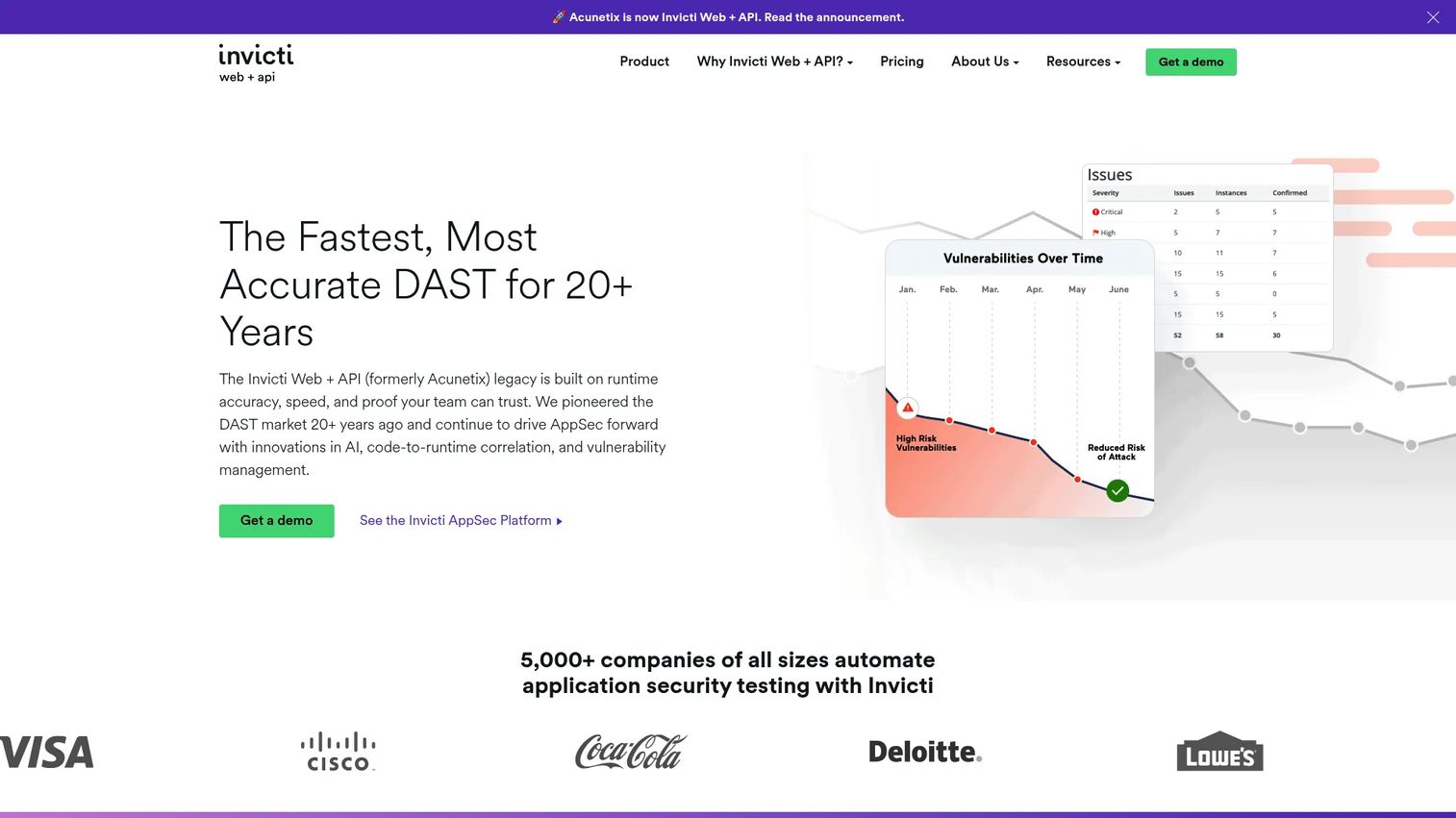
Acunetix, now positioned as Invicti Web + API, is a DAST scanner with DeepScan crawling for modern JavaScript and dynamic applications. It covers web application and API vulnerability scanning, proof-based vulnerability validation, AcuSensor source-code insight, Predictive Risk Scoring, and CI/CD and issue-tracker integrations. The proof-based validation is particularly useful for presales conversations: It generates evidence that a vulnerability is exploitable rather than theoretically possible, which is a stronger artifact for security reviews.
Best for: Security teams wanting mature web application scanning with API coverage and proof-based exploitability validation.
Key features
- Automated web application and API vulnerability scanning
- DeepScan crawling for JavaScript and dynamic applications
- Proof-based vulnerability validation
- AcuSensor source-code insight
- Predictive Risk Scoring with CI/CD integrations
Why choose Acunetix: Acunetix suits teams that need scanner maturity and documented proof of exploitability for security audits. It covers API scanning as part of broader web application testing, so plan for a dedicated runtime tool if production behavioral analysis is also required.
Acunetix pricing: Pricing is quote-based across Agentic Pentest and Web + API packages. Contact Acunetix for current subscription pricing.
20. StackHawk
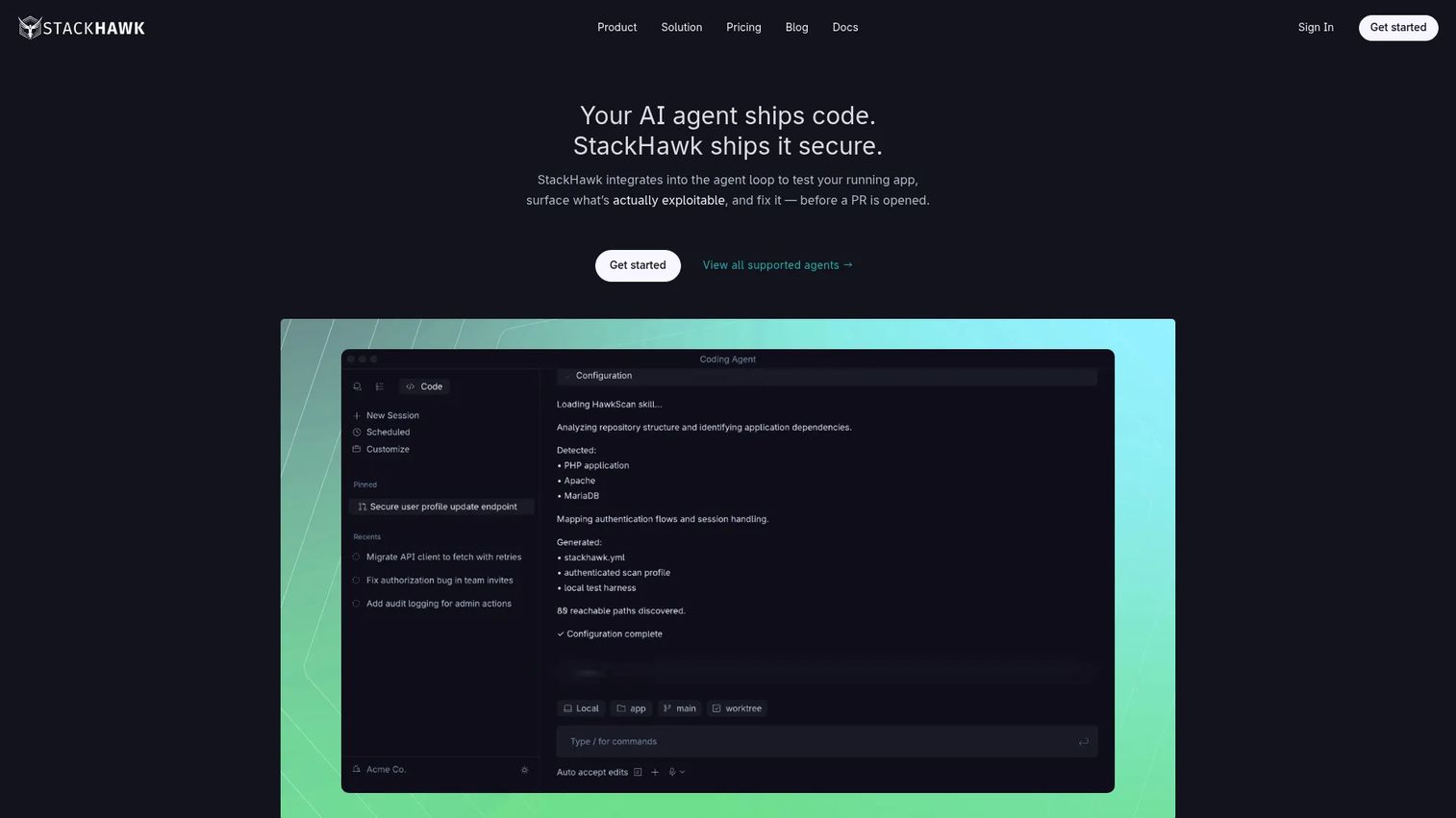
StackHawk is an AI-driven application security platform that runs DAST testing for APIs, microservices, and web applications inside CI/CD pipelines and pull-request workflows. It discovers the API and application attack surface, generates OpenAPI specifications, tests against that surface at runtime, and provides AI-assisted vulnerability remediation and verification. For teams running CI/CD tools and wanting security feedback before code merges, StackHawk is the clearest developer-first option in this list.
Best for: Engineering and AppSec teams that want API security testing embedded in CI/CD pipelines with developer-friendly remediation feedback.
Key features
- API and application attack-surface discovery
- Runtime DAST for APIs, microservices, and web applications
- CI/CD and pull-request security testing
- OpenAPI specification generation
- AI-assisted vulnerability remediation and verification
Why choose StackHawk: StackHawk's developer workflow integration means security findings arrive where developers already work. The pull-request testing model catches API issues before production without requiring a separate security sprint.
StackHawk pricing: The Wingman plan starts at $10/user/month and includes a 14-day free trial, unlimited apps, and 50 scans per user per month. The Scale plan includes unlimited apps and agentic scans; contact StackHawk for pricing.
G2 rating: 4.6/5
21. Zed Attack Proxy (ZAP)
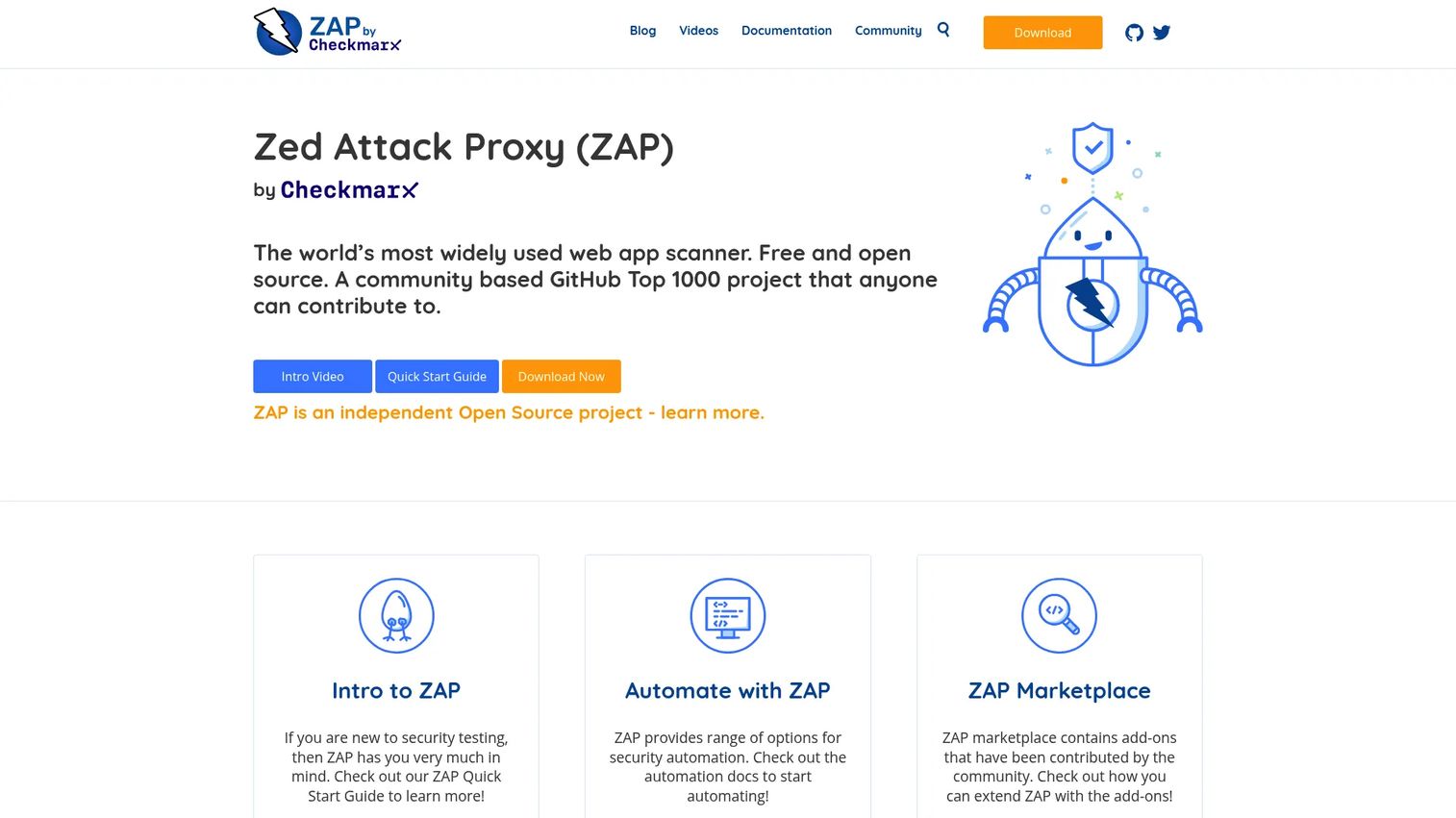
Zed Attack Proxy (ZAP) is a free, open-source penetration testing tool maintained with community and Checkmarx backing. It provides active and passive scanning, a manipulator-in-the-middle proxy with full request and response interception, spidering, automated scanning, API support, command-line usage, and an extensible add-on marketplace. Security practitioners use ZAP for manual testing, automated scanning in CI/CD pipelines, and learning API security testing techniques without a commercial license commitment. The API testing tools community treats ZAP as a foundational utility.
Best for: Security practitioners, developers, and budget-constrained teams that need a free API and web application security testing tool.
Key features
- Active and passive scanning
- Manipulator-in-the-middle proxy with request/response interception
- Spidering and automated scanning
- API and command-line support
- Extensible add-on marketplace with scripting support
Why choose Zed Attack Proxy (ZAP): ZAP gives practitioners the flexibility to test manually, automate scans, and customize testing logic without any licensing cost. Enterprise teams often still need commercial tooling for inventory, governance, runtime detection, and formal reporting, but ZAP handles the scanning foundation well.
Zed Attack Proxy (ZAP) pricing: Free and open source. All Marketplace add-ons are also free and open source.
G2 rating: 4.7/5
Considerations when choosing API security tools
Match the tool to the security layer
API security tools are not interchangeable across layers. A CI/CD DAST tool does not replace a runtime behavioral protection platform. A gateway product enforces policy but does not generate an API inventory with ownership data. Build your shortlist by layer first, then compare vendors within each layer. For most enterprise environments, you will need at least two layers covered.
Verify API discovery depth
During a POC, ask the vendor to discover APIs in your actual environment and produce an inventory report. Evaluate whether it finds internal APIs, external endpoints, shadow APIs, zombie APIs, and undocumented GraphQL or gRPC services. A vendor that shows strong discovery breadth in demo traffic but misses half your endpoints in production is not ready for your environment.
Test the tool inside your actual stack
Map your CI/CD pipeline, gateways, cloud platforms, SIEM, and ticketing tools before evaluating integration claims. For presales teams building a technical validation checklist, ask vendors for integration documentation specific to the buyer's stack. A tool that integrates with five CRMs none of which the buyer uses is not an integration win.
Review sensitive-data and governance reporting
API security tools should identify and classify exposed credentials, tokens, regulated personal data, and high-risk endpoints. Ask whether reports map findings to OWASP API Security Top 10 categories or internal control frameworks your security team is already using. Generic vulnerability counts without classification context are harder to act on during procurement review.
Measure false positives and remediation workflow
A high false-positive rate slows remediation and erodes developer trust in the tooling. During a POC, review alert quality and ask whether the tool assigns ownership, routes tickets to the right team, and provides fix guidance. A tool that generates accurate findings but cannot drive remediation forward stalls the security program rather than advancing it.
Conclusion
API security tools are not interchangeable, and the selection mistake that costs the most is comparing a runtime protection platform against a CI/CD scanner as if they do the same job. They do not.
For enterprises with significant API sprawl, full-lifecycle platforms like Traceable, Salt Security, and AppSentinels provide the inventory, posture, testing, and runtime coverage that complex environments need. For DevSecOps teams running structured CI/CD pipelines, 42Crunch, Akto, StackHawk, and APISec deliver testing depth at the development stage. For traffic-layer enforcement, Wallarm, AppTrana, Cloudflare API Gateway, and F5 provide WAAP and gateway controls. For practitioners who need a flexible, cost-free testing utility, ZAP remains the reference tool.
Start by shortlisting three to five tools, organized by the lifecycle layer that represents your most urgent gap. Then run a POC against real APIs, real traffic patterns, and real reporting requirements, not sample endpoints and synthetic data. That is how you build technical validation evidence that holds up during enterprise security diligence.
If your team also needs to explain complex technical workflows to buyers without scheduling additional live calls, you can build a clickable interactive demo that buyers explore on their own schedule.
Start your journey with Guideflow today!
FAQs
API security tools are software products that discover, test, monitor, protect, and govern APIs across development, deployment, and runtime. They address API inventory and visibility, pre-production vulnerability testing, runtime behavioral detection, sensitive-data exposure, and remediation workflows. Most enterprise environments need coverage across several of these layers rather than a single product.
API gateways route traffic and enforce policy controls such as authentication, rate limiting, and schema validation. Dedicated API security tools go deeper on discovery, posture assessment, behavioral analysis, and pre-production testing. Some gateway platforms include basic API security features, but they rarely provide the inventory depth, OWASP mapping, or behavioral runtime analytics that security teams need for enterprise diligence.
Enterprise teams typically need API inventory and discovery, posture management mapped to OWASP or compliance frameworks, runtime protection, sensitive-data reporting, and integrations with SIEM, ITSM, and existing security tools. Traceable, Salt Security, Akamai API Security, and AppSentinels each address multiple of those requirements. Match the tool to the gaps your security review has exposed rather than selecting on brand recognition alone.
Developer-first tools integrate into CI/CD pipelines and provide clear remediation guidance alongside findings. StackHawk, 42Crunch, Akto, and Threatspy all fit engineering workflows and support OpenAPI-driven testing. The key criterion is whether the tool delivers actionable fix guidance at the point in the development cycle when it is cheapest to fix, not just at the end of a sprint.
Many tools map findings to OWASP API Security Top 10 categories, but coverage depth varies significantly. Some tools address all ten categories through a combination of static analysis, dynamic testing, and runtime detection. Others focus on a subset. Ask vendors for a sample report generated against your own API patterns rather than a generic demo environment, and verify which categories are covered at each tier.
Open-source tools like ZAP are excellent for manual testing, learning, and early scanning. They give practitioners direct control over testing logic and cost nothing to run. Enterprise environments typically need capabilities beyond what open-source tooling provides: Centralized API inventory, governance reporting, runtime behavioral detection, SLA-backed support, and evidence artifacts for audits and procurement reviews. Most enterprise programs use open-source tools alongside commercial products rather than instead of them.
Build a POC checklist tied to the buyer's actual security questions, not generic vendor scenarios. Cover API inventory completeness, shadow API detection against real traffic, sensitive-data findings from actual API responses, test coverage and OWASP mapping, runtime alert quality and false-positive rate, integration with the buyer's SIEM and ticketing tools, and report quality for compliance or procurement deliverables. A POC that tests vendor sample endpoints and produces a clean report but misses half the buyer's actual APIs fails the technical validation.
A useful API security comparison table covers the tool's best fit by lifecycle layer, deployment model, supported API types (REST, GraphQL, gRPC, SOAP), integrations with gateways and SIEM, pricing model, G2 rating, and whether OWASP API Security Top 10 mapping is available in reports. Pricing and ratings change often, so verify both against live vendor pages and G2 listings at the time you are building your shortlist.