The asset that gets you breached is almost never the one in your spreadsheet. It is the forgotten staging server, the marketing subdomain a contractor spun up two years ago, or the cloud bucket someone left public during a launch. Attackers do not respect your asset inventory. They scan the entire internet, find what you forgot, and move on it before you know it exists.
That gap is widening. Gartner projected that by 2026, 20% of companies will have at least 95% visibility of their assets, up from less than 1% in 2022 (via Ionix, 2022). Read that again: three years ago, almost no organization could see most of what it owned online. The attack surface management market is growing to match the problem, from roughly $0.9 billion in 2024 to a projected $3.3 billion by 2029 at a 29.3% CAGR, according to MarketsandMarkets (2024).
For security teams and the presales engineers who defend product architecture during security reviews, this is a visibility and prioritization problem, not a scanner problem. You need continuous discovery of what is internet-facing, context on who owns each asset, a way to rank exposures by real risk, and remediation workflows that actually close the loop. This shortlist compares the attack surface management tools worth evaluating, judged on discovery breadth, change detection, prioritization depth, and how they fit an existing stack. If you are also mapping adjacent categories, our roundups of AI security posture management tools and application performance monitoring tools pair well with this one.
What's inside
This is a buyer-focused shortlist of attack surface management software for security teams, security operations, and the presales engineers who field exposure questions during technical diligence. It is not a glossary page.
We selected platforms based on four criteria that matter when you have to defend a purchase internally: discovery breadth across cloud, SaaS, on-prem, and third-party assets; change detection and continuous monitoring quality; prioritization depth that separates noise from real exposure; and remediation workflow support plus integrations into your existing security stack. The list spans external exposure monitoring, broader exposure management, and enterprise security operations, so you can match a tool to your motion rather than a generic ranking.
TL;DR
- Best for Microsoft-centric security teams: Microsoft Defender External Attack Surface Management, for outside-in visibility that plugs into an existing Defender footprint.
- Best for broad external exposure intelligence: CyCognito Platform, for discovery plus active testing and exploit-informed risk prioritization.
- Best for unified platform buyers: CrowdStrike Falcon Surface, when you already standardize on Falcon and want exposure inside it.
- Best for enterprise exposure management workflows: Palo Alto Networks Cortex Xpanse, for large environments needing ownership mapping and automated response.
- Best for review-friendly breadth: Qualys External Attack Surface Management, for teams tying EASM into established vulnerability workflows.
- Best for internet-wide discovery speed: Censys Attack Surface Management, and Intruder for lean teams wanting straightforward attack surface monitoring.
What is attack surface management software?
Attack surface management (ASM) software continuously discovers, monitors, and prioritizes all of an organization's internet-facing and reachable assets so security teams can reduce exposure before attackers exploit it. It answers a deceptively hard question: what do we actually have exposed to the internet right now?
The category splits into a few related terms worth knowing. External attack surface management (EASM) takes an outside-in view, mapping only what an attacker can see from the public internet: domains, IPs, certificates, exposed services, and shadow IT. CAASM (cyber asset attack surface management) takes an inside-out view, consolidating asset data from your existing tools and APIs. Broader exposure management wraps both together with threat context and business risk. Most vendors on this list lead with EASM and extend toward full exposure management.
A modern attack surface management platform typically delivers:
- Continuous asset discovery: ongoing mapping of internet-facing assets, including unknown and unmanaged shadow IT, across domains, subdomains, IPs, and cloud exposure.
- Asset inventory and ownership mapping: attribution of each asset to a business unit, team, or owner so remediation lands with the right person.
- Change detection: alerting when new assets appear, services open, or configurations shift, so your view stays current instead of going stale.
- Exposure scoring and risk prioritization: ranking findings by exploitability and business impact rather than dumping a flat vulnerability list.
- Remediation workflows: routing issues into ticketing, SIEM, and SOAR tools so exposures get fixed and tracked.
- Compliance reporting: defensible, exportable evidence of exposure posture for audits and security reviews.
The defining shift is from periodic scanning to continuous attack surface monitoring. Attackers operate continuously, so point-in-time snapshots leave windows open. The tools below all aim to close those windows.
When to use attack surface management
When shadow IT and unknown assets are a concern
If your organization ships fast, uses multiple cloud accounts, or has grown through acquisition, assets appear faster than any team can track manually. ASM finds the internet-facing assets nobody documented: forgotten subdomains, orphaned cloud instances, exposed dev environments. That continuous asset discovery is the whole point when your real attack surface is larger than your asset inventory.
When security reviews need defensible exposure reporting
Recurring audits, board updates, and customer security questionnaires all demand evidence, not assurances. ASM gives you exportable compliance reporting that shows what is exposed, what changed, and how quickly you remediate. For presales engineers, this is the artifact that answers a prospect's security diligence without a scramble.
When vulnerability management lacks discovery context
Traditional vulnerability scanning tells you about assets you already know. It says nothing about the ones you do not. ASM feeds discovery context into vulnerability management, so scanning covers your full external attack surface rather than a partial list.
When cloud, SaaS, and third-party sprawl is expanding exposure
Remote work, SaaS adoption, and multi-cloud deployments push assets outside the traditional perimeter. When cloud exposure and third-party connections keep growing, attack surface monitoring becomes the way to keep pace with an attack surface that never stops changing.
Comparison table
Here is a compact view of the 11 attack surface management tools in this guide, oriented around buyer fit and evaluation intent. Pricing across this category is largely quote-based, so verify current figures with each vendor during evaluation.
| # | Product | Intent | Key use case | Pricing | G2 rating |
|---|---|---|---|---|---|
| 1 | Microsoft Defender EASM | Microsoft-native EASM | Outside-in visibility for Defender shops | From $2.00 user/month | 4.3/5 |
| 2 | CyCognito Platform | External exposure intelligence | Discovery plus active testing | Custom quote | 4.3/5 |
| 3 | CrowdStrike Falcon Surface | Platform consolidation | EASM inside the Falcon platform | Contact sales | Not listed |
| 4 | Palo Alto Cortex Xpanse | Enterprise exposure management | Discovery plus automated response | Contact sales | Not listed |
| 5 | Qualys EASM | Review-friendly breadth | EASM tied to vulnerability workflows | Contact sales | Not listed |
| 6 | Tenable ASM | Vulnerability-adjacent ASM | Discovery with business context | Contact sales | Not listed |
| 7 | Rapid7 | Modular exposure management | Unified exposure across the stack | From $1.62/mo (InsightVM) | 4.3/5 |
| 8 | Censys ASM | Internet-wide discovery | Fast exposure mapping across all ports | Contact sales | 4.8/5 |
| 9 | Intruder | Lean-team monitoring | Continuous external scanning | Free plan; from $3,500/test | 4.8/5 |
| 10 | Bitsight | Cyber risk intelligence | Third-party and posture insight | Request pricing | 4.5/5 |
| 11 | Recorded Future ASI | Threat-informed exposure | Intelligence-driven prioritization | Contact sales | Not listed |
The 11 best attack surface management software for 2026
1. Microsoft Defender External Attack Surface Management
Microsoft Defender External Attack Surface Management gives security teams an outside-in view of their internet-exposed assets, mapping what an attacker would see and continuously classifying exposures, vulnerabilities, and misconfigurations. For organizations already invested in the Microsoft security stack, it slots into an existing Defender footprint without introducing a separate vendor relationship. The value is a continuously updated inventory of managed and unmanaged external resources tied into the broader Defender ecosystem.
Best for: Microsoft-centric security teams that want outside-in visibility into internet-facing assets and exposures without adding a standalone vendor.
Key strengths
- Continuous external visibility: ongoing discovery of internet-exposed assets keeps your view of the attack surface current.
- Managed and unmanaged discovery: surfaces both documented resources and unknown shadow IT reachable from the public internet.
- Exposure classification and prioritization: ranks vulnerabilities and misconfigurations so teams focus on what matters first.
Why choose Microsoft Defender EASM: If your organization runs on Microsoft security tooling, the value is consolidation. Exposure data flows into a stack your team already knows, which shortens ramp time and simplifies the story you tell during internal security reviews. It fits teams that prize integration over a best-of-breed point tool.
Microsoft Defender EASM pricing: Microsoft lists the product as pay-as-you-go on its EASM pricing page, and its broader Defender pricing page shows a starting price of $2.00 per user per month. No free tier was verified on Microsoft's primary sources, and pricing may vary by agreement and region, so confirm current terms directly.
2. CyCognito Platform
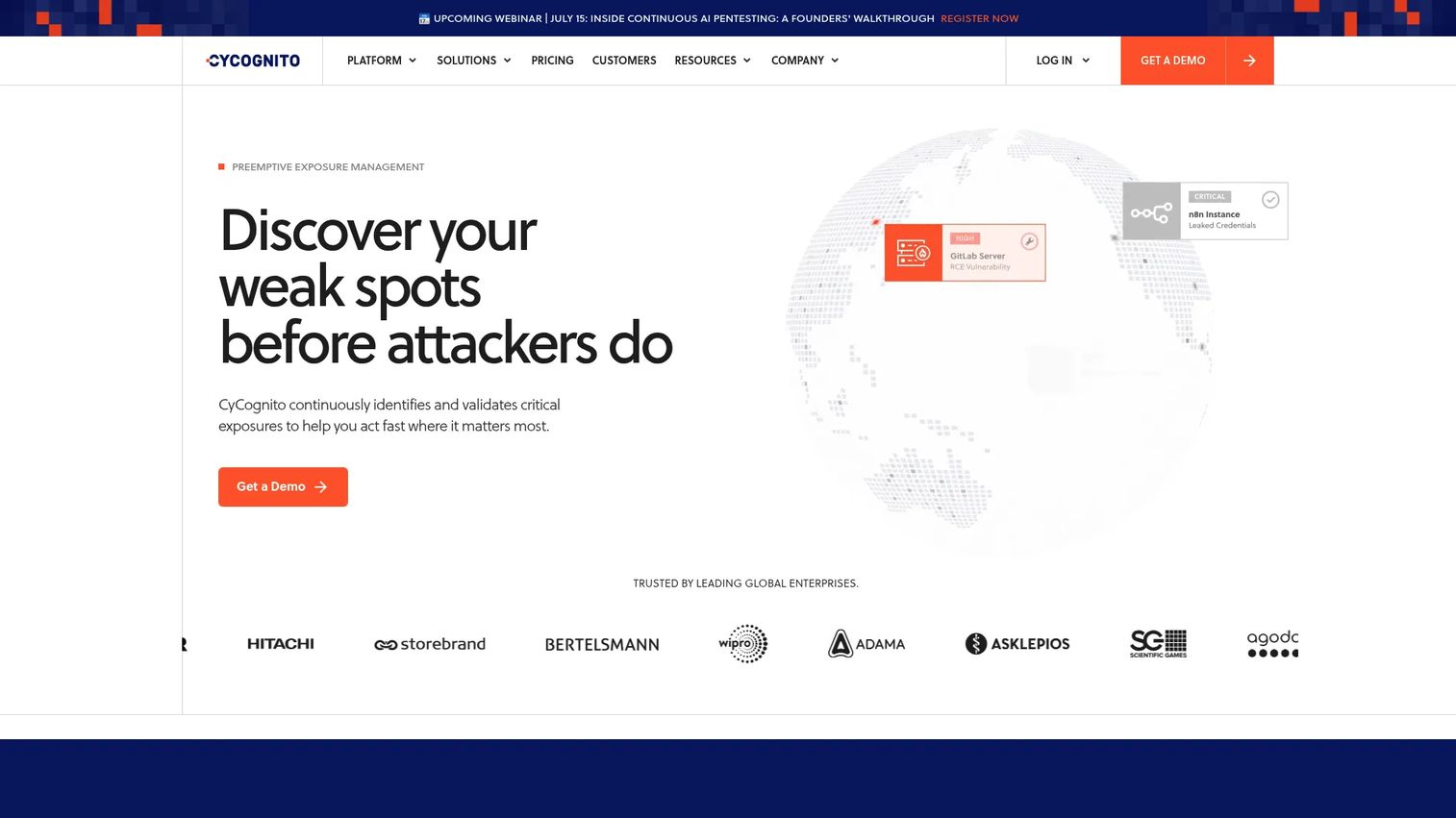
CyCognito is an external exposure management platform built to discover, test, and prioritize internet-facing risk. It goes beyond passive discovery by running active security testing across the attack surface and layering in exploit intelligence, so the risk picture reflects what is actually exploitable rather than a raw list of open assets. That combination appeals to enterprise teams that want deeper external exposure intelligence.
Best for: Enterprise security teams managing a large external attack surface that want discovery paired with active testing and exploit-informed prioritization.
Key strengths
- Continuous external discovery: maps internet-facing assets across the organization, including unknown exposures.
- Active security testing: probes discovered assets rather than relying on inventory alone, surfacing real weaknesses.
- Exploit intelligence and prioritization: ranks exposures by exploitability so remediation effort targets genuine risk.
Why choose CyCognito: The active testing layer is the differentiator. Teams drowning in low-context findings get a prioritized view that reflects exploitability, which makes remediation routing more defensible. Evaluate how its findings feed your ticketing and SIEM tools during a proof of concept, since that integration path is where value gets realized.
CyCognito pricing: CyCognito uses custom, quote-based pricing. Its offerings, attack surface management, automated security testing, and exploit intelligence, can be purchased individually or together on annual terms. No public numeric price or free tier is listed, so request a quote scoped to your asset volume.
3. CrowdStrike Falcon Surface
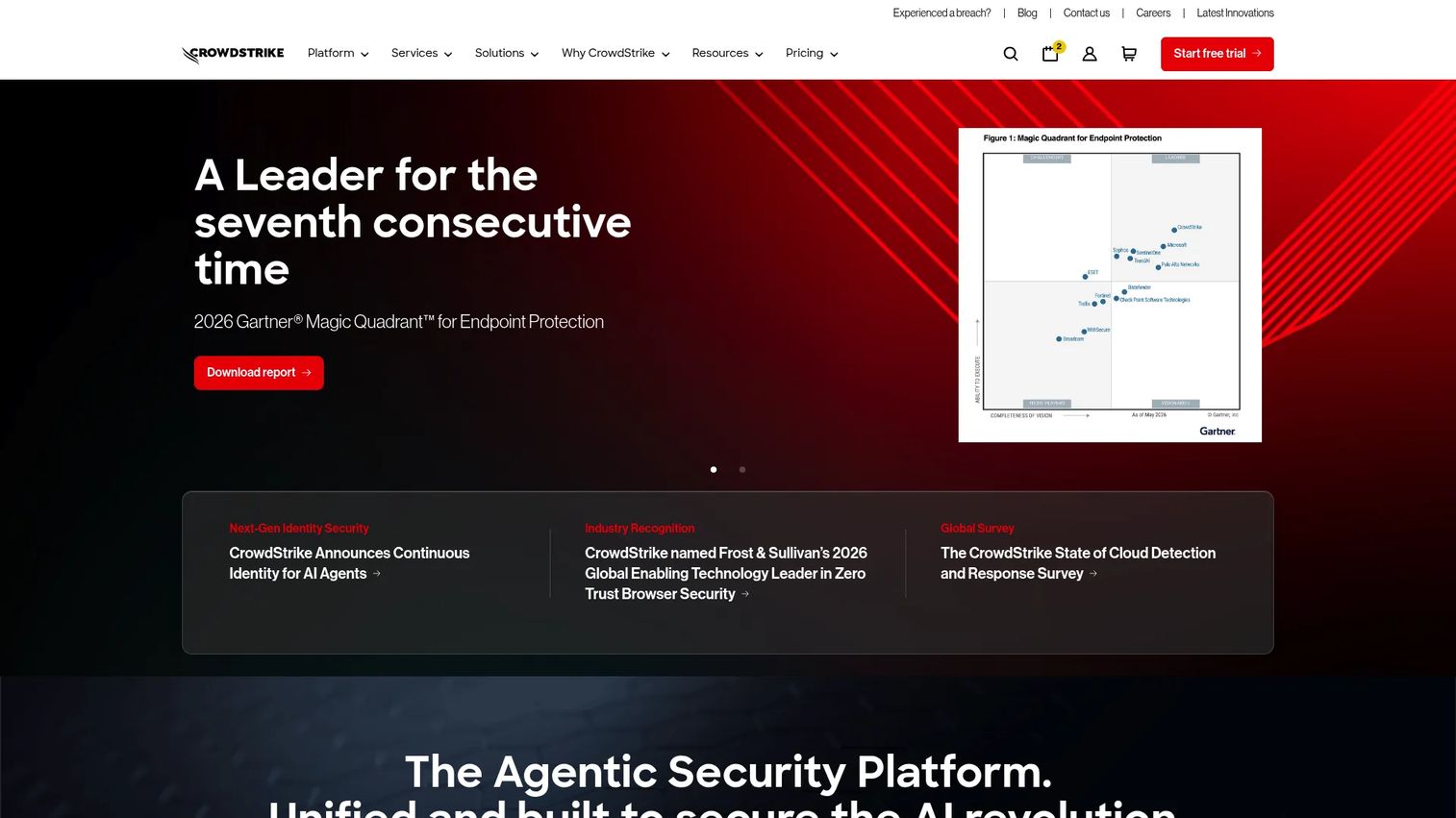
CrowdStrike Falcon Surface is CrowdStrike's external attack surface management module for discovering, prioritizing, and managing exposed internet-facing assets. It delivers an outside-in view of the enterprise attack surface and detects unknown exposed assets across on-premises, cloud, and third-party or vendor environments. For teams already standardized on the Falcon platform, exposure data lives alongside endpoint and threat intelligence in one console.
Best for: Security teams that already run the Falcon platform and want external attack surface visibility inside the same console.
Key strengths
- Outside-in attack surface view: maps the enterprise perimeter the way an attacker would see it.
- Unknown asset detection: surfaces exposed internet-facing assets the team did not know existed.
- Cross-environment coverage: spans on-premises, cloud, and third-party or vendor assets in one view.
Why choose CrowdStrike Falcon Surface: The consolidation argument is strong here. If your SOC already lives in Falcon, adding Surface means exposure findings share context with detection and response workflows, which tightens triage handoff. Evaluate how exposure alerts flow into your existing Falcon-based operations before committing.
CrowdStrike Falcon Surface pricing: CrowdStrike's first-party pricing pages do not show a public Falcon Surface price on this review. Pricing appears to be bundled within Falcon modules or handled through sales, so request a scoped quote that reflects your existing CrowdStrike licensing.
4. Palo Alto Networks Cortex Xpanse

Palo Alto Networks Cortex Xpanse is a cloud-based attack surface management platform for discovering and managing internet-facing assets and exposures. It leans on machine-learning-assisted mapping and prioritization, then adds built-in automated response and playbooks to reduce exposure without manual toil. For large security teams with complex, sprawling environments, that automation and ownership context is the draw.
Best for: Large security teams that need continuous external attack surface visibility with automated remediation across complex environments.
Key strengths
- Continuous internet-facing discovery: finds and tracks exposed assets across the organization automatically.
- ML-assisted mapping and prioritization: uses machine learning to surface and rank exposures at scale.
- Automated response playbooks: built-in playbooks help reduce exposure without waiting on manual steps.
Why choose Palo Alto Networks Cortex Xpanse: Scale is the reason. Enterprises with vast, changing environments benefit from automated mapping and response rather than manual triage. Its management and reporting depth also make it easier to communicate exposure posture upward, which matters during audits and board reviews. Evaluate the automated playbooks against your remediation workflows.
Cortex Xpanse pricing: Palo Alto Networks does not publish a numeric price for Cortex Xpanse on its product pages. Pricing is handled through sales, so plan a scoped conversation that accounts for your asset volume and environment complexity.
5. Qualys External Attack Surface Management
Qualys External Attack Surface Management extends Qualys's platform to discover and assess internet-facing assets and their risk. It continuously discovers external assets, assesses risk for unknown and unmanaged resources, and detects risky ports, misconfigurations, and vulnerabilities. For teams already running Qualys for vulnerability management, EASM adds outside-in discovery to workflows they already operate.
Best for: Enterprises that want continuous external visibility tied into established Qualys vulnerability workflows.
Key strengths
- Continuous external discovery: maps internet-facing assets on an ongoing basis.
- Risk assessment for unknown assets: evaluates unmanaged and previously undiscovered resources.
- Port, misconfiguration, and vulnerability detection: surfaces the specific exposures attackers probe for.
Why choose Qualys EASM: Qualys-native customers get the most value. Adding EASM means external discovery feeds directly into vulnerability workflows and reporting your team already knows, which reduces tool sprawl and keeps remediation in one place. Evaluate how the discovery data enriches your existing Qualys reporting during a trial.
Qualys EASM pricing: Qualys does not display a public price on its EASM product page and directs visitors to try the product or speak with an expert. Request a scoped quote or trial to see pricing tied to your asset footprint.
6. Tenable Attack Surface Management
Tenable Attack Surface Management discovers, contextualizes, and helps assess internet-exposed assets. It continuously discovers internet-connected assets, attaches business-context metadata for filtering, and supports ongoing risk assessment and monitoring. For teams already invested in Tenable for vulnerability management, ASM extends that footprint outward to the external attack surface.
Best for: Security teams already using Tenable that want external attack surface discovery with business context feeding their vulnerability program.
Key strengths
- Continuous asset discovery: finds internet-connected assets across the external attack surface.
- Business-context metadata: tags and filters assets so teams can focus on what matters to the business.
- Ongoing risk assessment: monitors discovered assets for changing risk over time.
Why choose Tenable Attack Surface Management: The tie-in to Tenable's broader vulnerability management is the fit. Teams standardized on Tenable get external discovery that feeds context into prioritization and ongoing monitoring they already run. Evaluate how the business-context metadata sharpens prioritization for your specific environment.
Tenable Attack Surface Management pricing: Tenable does not publish a numeric price for the product and directs visitors to request a demo, with Tenable One packages quoted on request. Plan a scoped quote conversation that reflects your asset volume.
7. Rapid7
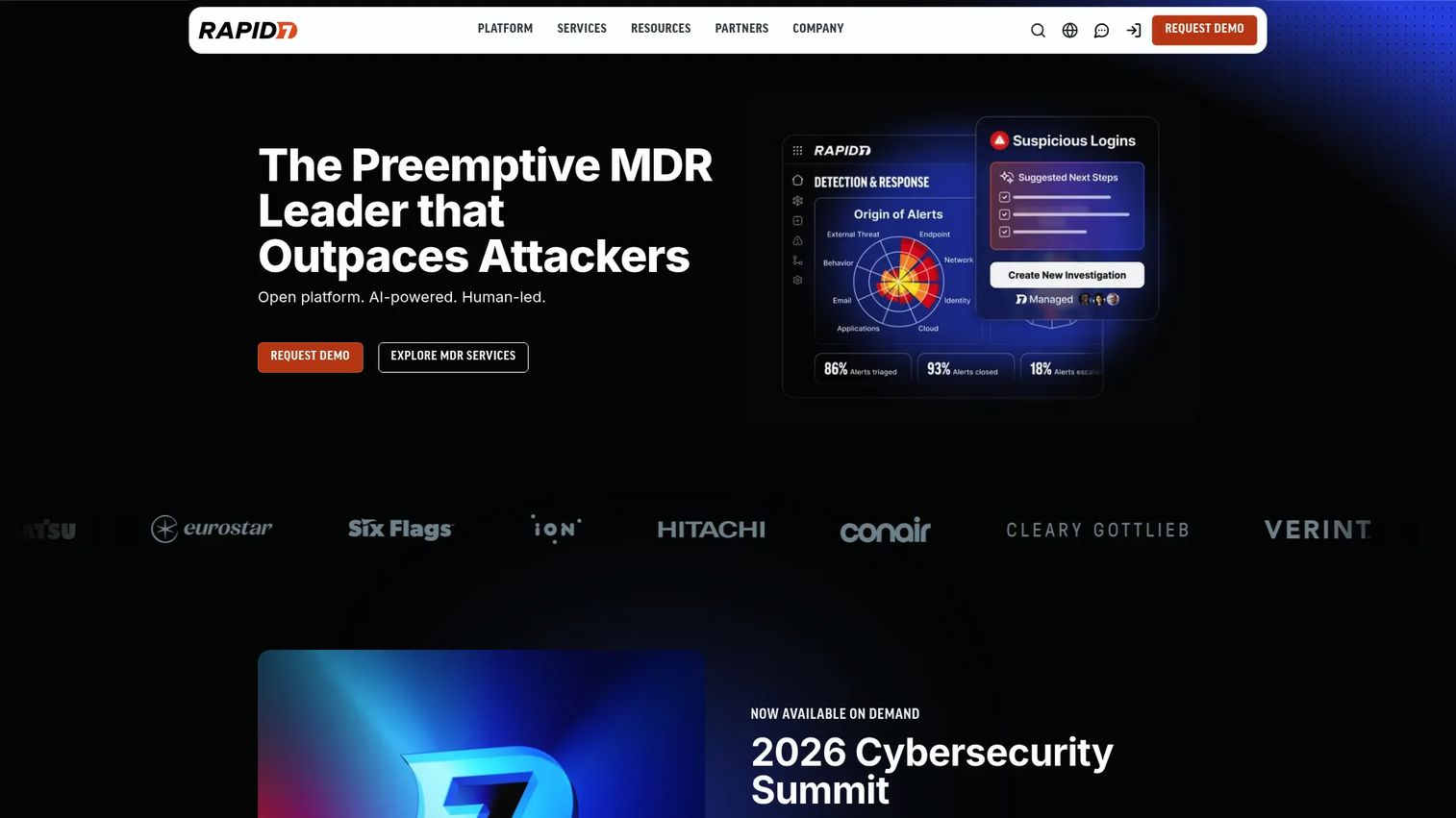
Rapid7 is a cybersecurity software and services provider spanning exposure management, vulnerability risk, application security, SIEM, and MDR. Its Exposure Command brings unified exposure management, while InsightAppSec covers web application security and InsightCloudSec handles cloud security. For teams that want operational clarity across multiple security domains, Rapid7's modular platform provides attack surface context inside a broader security operations footprint.
Best for: Security teams wanting a modular platform that unifies vulnerability, cloud, application, and detection coverage with exposure context.
Key strengths
- Exposure Command: unifies exposure management across the environment for a single view of risk.
- InsightAppSec: provides web application security testing alongside exposure data.
- InsightCloudSec: extends coverage into cloud security posture and configuration.
Why choose Rapid7: The breadth is the case. Teams that want vulnerability, cloud, app security, and exposure management from one vendor get workflow alignment and consolidated reporting. Evaluate which modules map to your needs, since the platform is modular and pricing follows the products you select.
Rapid7 pricing: Rapid7 publishes public pricing for select Insight products: InsightVM from $1.62 per asset per month for 500 assets, InsightAppSec at $175 per app per month, and InsightCloudSec at $5,775 per month for up to 500 instances. Other offerings, including MDR and Command packages, are quote-based, so confirm current pricing for the modules you need.
8. Censys Attack Surface Management
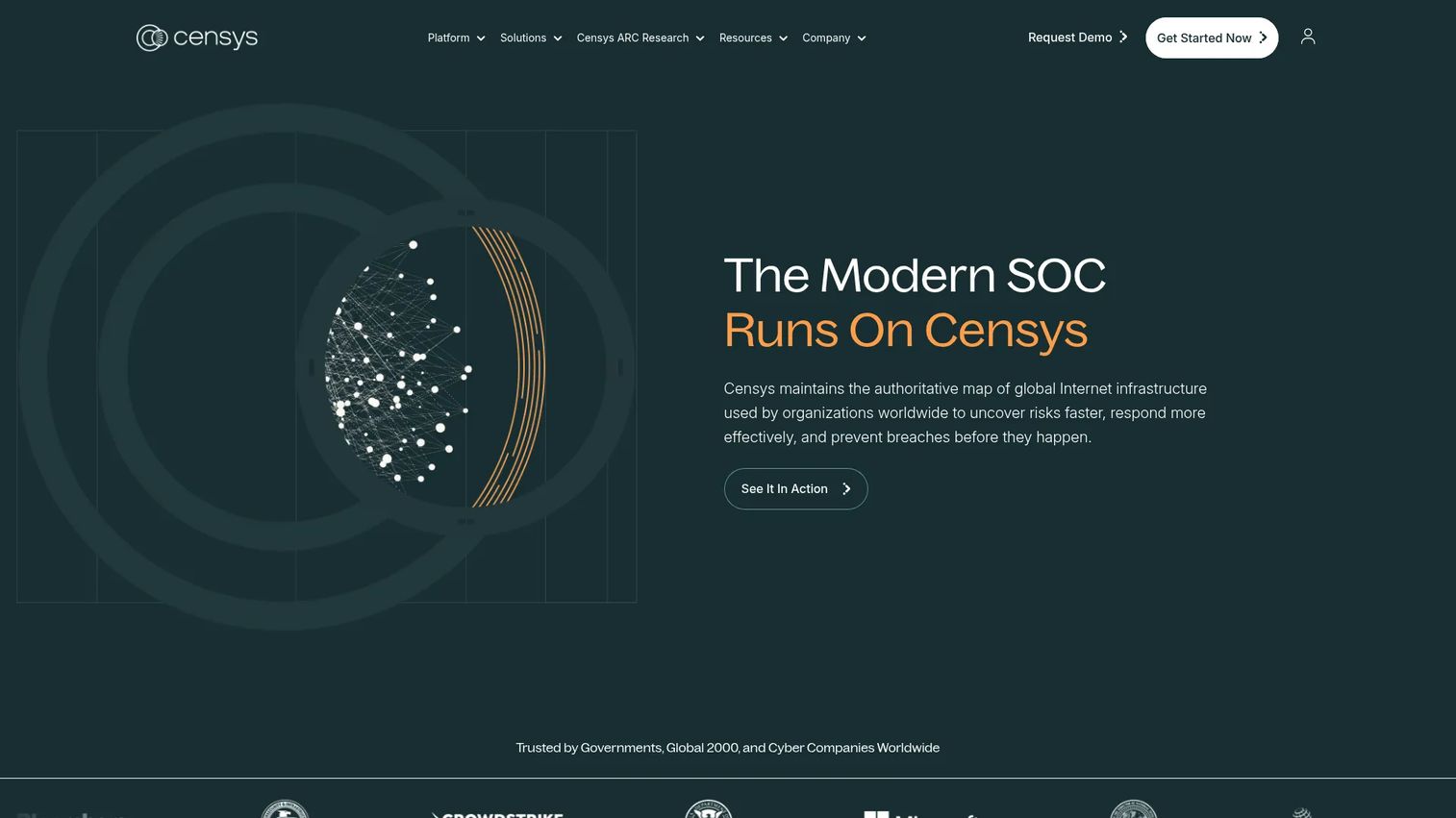
Censys Attack Surface Management is an internet-facing attack surface platform that discovers, monitors, and helps remediate exposed assets. It draws on internet-wide scanning across all 65,535 ports, updates the attack surface daily through continuous monitoring, and connects to AWS, Azure, and GCP through cloud connectors. Teams that want fast, comprehensive exposure mapping gravitate toward its internet-wide visibility.
Best for: Security teams that need continuous, internet-wide visibility into exposed assets and cloud exposure.
Key strengths
- All-ports discovery: scans across all 65,535 ports for a complete internet-facing view.
- Daily continuous monitoring: refreshes the attack surface daily so change detection stays current.
- Cloud connectors: integrates with AWS, Azure, and GCP to map cloud exposure directly.
Why choose Censys Attack Surface Management: The internet-wide scanning heritage is the differentiator, and it earns a strong 4.8/5 on G2. Teams that want breadth of discovery and fast exposure mapping get comprehensive coverage across ports and cloud. Evaluate how its alerting and prioritization fit your triage process during a trial.
Censys pricing: Censys does not display a public price and directs visitors to contact sales. Request a scoped quote based on your asset volume and cloud footprint.
9. Intruder
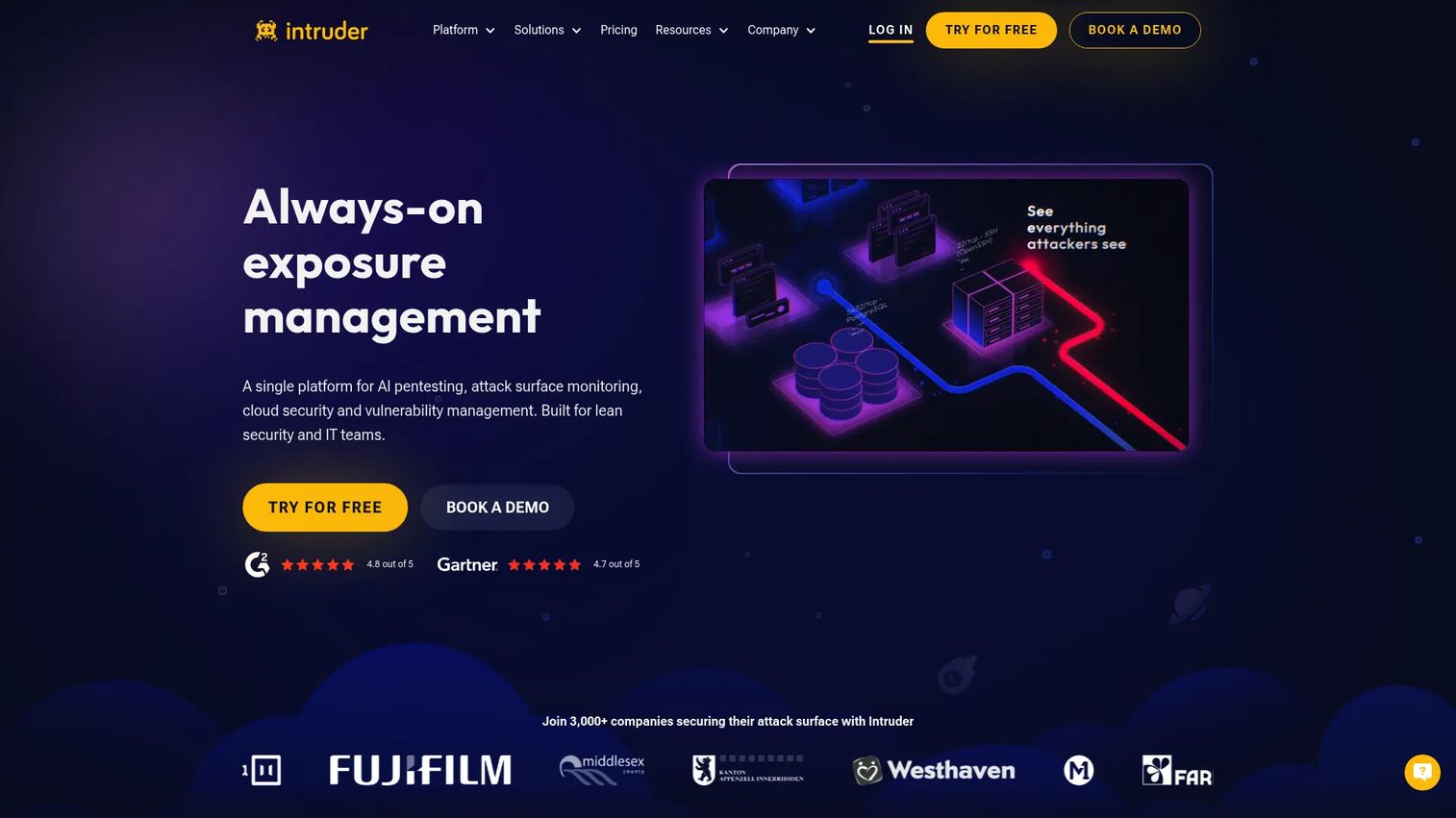
Intruder is a cloud-based vulnerability management and attack surface monitoring platform built for practical, ongoing coverage. It runs external infrastructure scanning, authenticated web application and API scanning, and attack surface monitoring with alerts. Its approachable model makes it a strong fit for lean security teams and mid-market organizations that want continuous monitoring without heavy operational overhead.
Best for: Lean security teams and mid-market organizations that want continuous external scanning and attack surface monitoring that is quick to adopt.
Key strengths
- External infrastructure scanning: continuously checks internet-facing infrastructure for exposures.
- Authenticated web app and API scanning: covers applications and APIs, not just network surfaces.
- Attack surface monitoring and alerts: notifies teams when the attack surface changes.
Why choose Intruder: Ease of adoption is the draw. Smaller teams get continuous attack surface monitoring and vulnerability scanning without a heavy rollout, and it holds a strong 4.8/5 on G2. It fits organizations that want practical coverage over enterprise-scale configurability.
Intruder pricing: Intruder offers a Free forever plan plus Cloud, Pro, and Enterprise tiers. Cloud and Pro use a base fee plus a per-target fee and bill monthly or annually, while Enterprise is quoted separately. Penetration testing starts at $3,500 per test, and a 14-day free trial includes Cloud features with five free licenses.
10. Bitsight Cyber Risk Intelligence
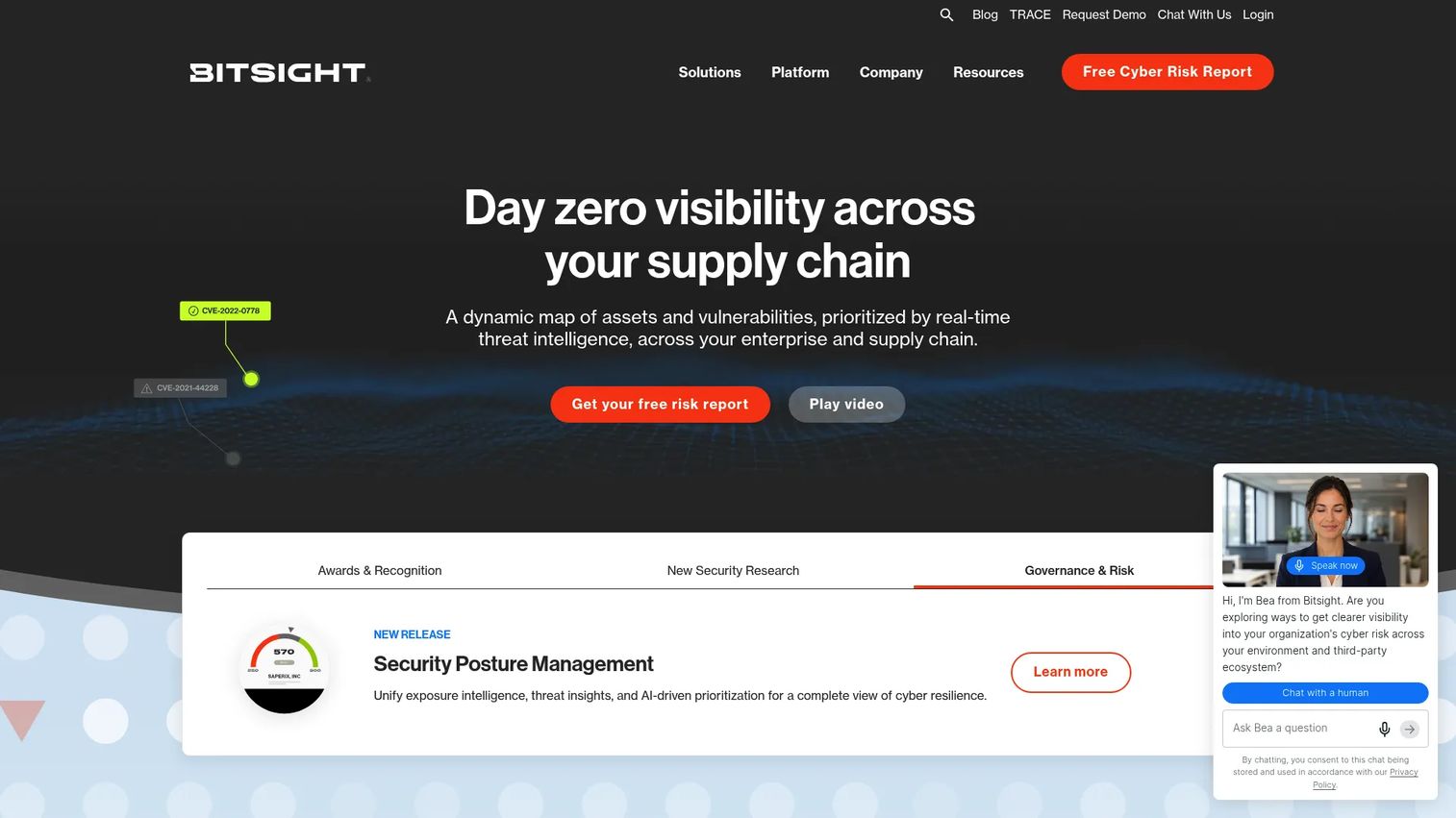
Bitsight is a cyber risk intelligence and management platform covering external attack surface, third-party risk, and threat intelligence. It provides continuous monitoring with real-time scoring, dark and deep web intelligence, and vendor risk management with workflow automation. Security and risk teams buy it for broader cyber posture insight that extends past their own perimeter into the vendor ecosystem.
Best for: Enterprises that need cyber risk intelligence across their own assets, third-party vendors, and emerging threats.
Key strengths
- Continuous monitoring and real-time scoring: tracks posture and quantifies risk on an ongoing basis.
- Dark and deep web intelligence: surfaces threat signals beyond the visible attack surface.
- Vendor risk management: monitors third-party exposure with workflow automation.
Why choose Bitsight: The third-party and posture-scoring angle sets it apart. Teams that must report cyber risk to executives and manage vendor exposure get quantified scores that translate well to board conversations. Evaluate how its reporting supports the executive communication your program requires.
Bitsight pricing: Bitsight offers Basic, Standard, and Advanced plans, all quote-based with no public numeric price and no free tier. Request pricing scoped to your monitoring and vendor-management needs.
11. Recorded Future Attack Surface Intelligence
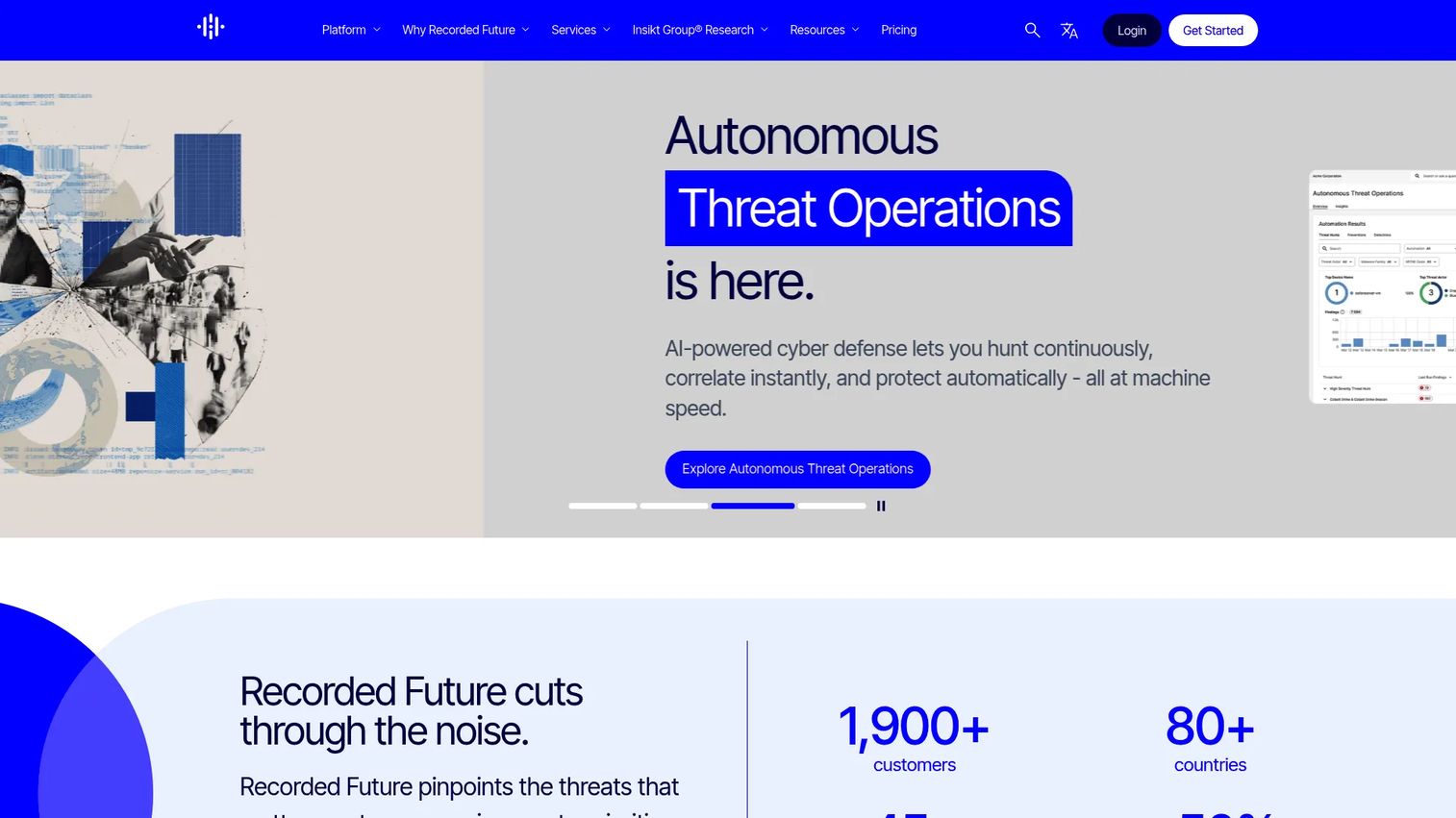
Recorded Future Attack Surface Intelligence is an external attack surface management module that discovers, prioritizes, and helps remediate internet-exposed assets and exposures. It automates discovery of unknown and unmanaged internet-facing assets, scores exposures using risk context, and integrates with ticketing, SIEM, SOAR, and workflow tools. Teams that want threat-informed context around risk prioritization gravitate toward its intelligence-driven approach.
Best for: Security teams that want outside-in discovery paired with threat intelligence to inform exposure prioritization.
Key strengths
- Automated asset discovery: finds unknown and unmanaged internet-facing assets automatically.
- Risk-context exposure scoring: prioritizes exposures using threat intelligence context.
- Broad workflow integrations: connects to ticketing, SIEM, SOAR, and other workflow tools.
Why choose Recorded Future Attack Surface Intelligence: The threat intelligence heritage is the reason. Teams that already lean on Recorded Future's intelligence get exposure prioritization informed by real-world threat context, which sharpens what to fix first. Evaluate how its scoring and integrations align with your intelligence-driven workflows.
Recorded Future Attack Surface Intelligence pricing: Recorded Future does not display a public module price. Its pricing page describes broader packages and success plans rather than a standalone module figure, so request a scoped quote for the Attack Surface Intelligence module.
Considerations before you buy
Discovery depth gets the marketing attention, but the buying decision usually turns on how a tool fits your operational reality. Here is what to weigh before shortlisting.
Discovery breadth across environments
Verify coverage across cloud, SaaS, on-prem, and third-party assets, not just domains and IPs. A tool that maps your cloud exposure but misses vendor connections leaves a gap. Ask how it handles multi-cloud accounts and acquired subsidiaries during a proof of concept.
Change detection and monitoring cadence
Point-in-time snapshots go stale fast. Confirm how often the platform refreshes its view and how it surfaces new assets, opened services, and configuration drift. Continuous change detection is what keeps your attack surface monitoring honest between reviews.
Prioritization and network path analysis
Discovery without prioritization just moves the noise. Evaluate how the platform ranks exposures, whether it uses exploit intelligence or behavioral baseline monitoring, and whether it maps network paths so you understand which exposures actually reach sensitive assets. Risk prioritization is where a tool earns or loses your team's trust.
Remediation workflows and integrations
A finding that does not reach the right owner never gets fixed. Check that the platform routes issues into your ticketing, SIEM, and SOAR tools with ownership mapping intact. Strong remediation workflows and clean integrations are what turn discovery into reduced exposure.
Reporting and compliance fit
Recurring audits and security reviews need defensible evidence. Confirm the platform produces exportable compliance reporting that shows exposure posture, change over time, and remediation speed. This is the artifact that survives scrutiny from auditors, boards, and prospect security teams.
Conclusion
The right attack surface management platform depends less on a generic ranking and more on your stack and your exposure scope. Microsoft Defender EASM and CrowdStrike Falcon Surface reward teams already standardized on those ecosystems. CyCognito and Recorded Future stand out when you want exposure intelligence enriched with active testing or threat context. Cortex Xpanse and Qualys fit large teams needing enterprise workflows and vulnerability tie-ins. Censys and Intruder serve teams that prioritize discovery breadth and fast, lean adoption, while Bitsight speaks to risk and vendor-posture reporting.
Your next step is practical: build a pilot shortlist of two or three tools around your current stack, the environments you most need to cover, and the remediation workflows your team already runs. Run a scoped proof of concept, measure how each handles continuous asset discovery and prioritization on your real environment, and confirm the integration path into your ticketing and SIEM tools. Exposure management is a continuous discipline, so choose the platform your team will actually operate every day, not the one with the longest feature list.
FAQs
Attack surface management software continuously discovers, monitors, and prioritizes an organization's internet-facing and reachable assets so security teams can reduce exposure before attackers exploit it. It maps known and unknown assets, detects change, ranks exposures by risk, and routes findings into remediation workflows. The goal is to shrink the gap between what you think you own and what is actually exposed.
Vulnerability management scans assets you already know about for known weaknesses. Attack surface management first finds all of your assets, including unknown and unmanaged shadow IT, then assesses their exposure. ASM answers "what do we have exposed," while vulnerability management answers "what is wrong with what we know." The two are complementary, and most mature programs run both.
ASM is the broad category of discovering and managing an attack surface. External attack surface management (EASM) is the outside-in subset that maps only what an attacker can see from the public internet, such as domains, IPs, certificates, and exposed services. CAASM, by contrast, takes an inside-out view by consolidating asset data from internal tools. Most vendors on this list lead with EASM and extend toward broader exposure management.
Enterprises with complex environments often favor Palo Alto Networks Cortex Xpanse for automated response at scale, CyCognito for active testing and exploit intelligence, and CrowdStrike Falcon Surface or Microsoft Defender EASM when consolidating within an existing platform. Bitsight adds strong third-party and executive-facing risk reporting. The best fit depends on your existing stack, asset volume, and remediation workflow needs.
Attack surface monitoring continuously scans the internet for assets tied to your organization, including forgotten subdomains, orphaned cloud instances, and dev environments nobody documented. Because it works from the outside in, it finds shadow IT that never made it into your asset inventory. That continuous discovery closes the visibility gap attackers exploit most.
Prioritize discovery breadth across cloud, SaaS, on-prem, and third-party assets, continuous change detection, risk prioritization that reflects real exploitability, and remediation workflows that route findings to the right owner. Then confirm integrations with your ticketing, SIEM, and SOAR tools, plus exportable compliance reporting. Fit with your existing stack usually matters more than raw feature count.
No. ASM and vulnerability scanning solve related but distinct problems. ASM discovers your full external attack surface and surfaces unknown assets, while vulnerability scanning tests assets for specific known weaknesses. ASM often feeds discovery context into vulnerability scanning so coverage is complete rather than partial. Run them together for the fullest picture.
Most ASM platforms produce exportable reports that document exposure posture, newly discovered assets, change over time, and remediation speed. That evidence supports audits, board updates, and customer security questionnaires by showing not just what is exposed but how quickly your team responds. For presales engineers, this reporting is the artifact that answers a prospect's security diligence with data rather than assurances.