You're spending thousands on mobile user acquisition, but when leadership asks which campaigns actually drove installs, you're stuck reconciling three different dashboards that don't agree. That gap between ad spend and provable results is exactly what mobile attribution platforms solve.
This guide breaks down how mobile attribution works, compares 11 leading platforms for 2026, and walks through the criteria that actually matter when choosing one for your app.
What's inside
This guide covers what mobile attribution platforms are, how they work, and which tools lead the market in 2026. You'll find a comparison of 11 top platforms, selection criteria for choosing the right one, and answers to common questions about mobile measurement.
TL;DR
AppsFlyer leads the market with strong privacy-preserving measurement for iOS.
Adjust is a G2 leader known for ease of use and powerful automation features.
Branch specializes in deep linking, making it ideal for web-to-app user journeys.
Singular combines attribution with cost aggregation for deep ROI analysis.
Kochava offers granular data exploration for enterprise advertisers.
Key selection factors include fraud prevention, SKAdNetwork support, and integration depth with your existing ad platforms.
What is a mobile attribution platform
Mobile attribution platforms, often called mobile measurement partners (MMPs), track and measure mobile marketing campaigns by connecting app installs and in-app actions to specific ad sources. They act as an unbiased third party, determining which campaigns, channels, and partners delivered each install so you can optimize your return on investment.
Think of an MMP as the neutral referee between your marketing spend and your results. Ad networks report their own numbers, but those are self-reported. An MMP provides a single source of truth.
Core functions of a mobile attribution platform:
Attribution tracking: Identifying which ad click or campaign resulted in an app install or action.
SDK integration: A small piece of code installed in your app to track user interactions.
Fraud prevention: Detecting and blocking fake clicks or installs to protect your ad budget.
Unified reporting: Providing a single, unbiased source of data from various ad networks.
ROI optimization: Showing which channels drive the highest lifetime value (LTV) users.
Why mobile app attribution matters
Without attribution, you cannot know which portion of your ad spend generates real users versus which part is wasted budget. Attribution provides the critical business case for your marketing efforts by connecting spend to results.
The stakes are high. Mobile ad spend continues to grow, and so does fraud - Fraudlogix's analysis of 105.7 billion impressions found a global invalid traffic rate of 20.64%. Teams running campaigns without proper attribution often discover they've been paying for bot traffic or misattributing conversions to the wrong channels.
Key use cases:
User acquisition optimization: Identify which ad networks generate the cheapest, most valuable users.
Retargeting efficiency: Re-engage existing users with personalized campaigns and measure the ROI of those efforts.
Budget reallocation: Shift spend from low-performing campaigns to high-performing ones based on actual data.
How mobile attribution works
The technical process of mobile attribution involves a series of steps that connect an ad interaction to an in-app conversion. Understanding this flow helps you troubleshoot discrepancies and evaluate platform capabilities.
1. User clicks an ad or views a campaign
The process begins when a user interacts with an ad. The attribution platform captures this touchpoint, recording the click or impression along with device identifiers and campaign metadata.
2. Attribution platform captures the touchpoint
The platform's SDK logs the interaction. This is often done through identifier matching (like Apple's IDFA or Google's GAID) or, in their absence, through probabilistic methods like device fingerprinting.
3. User installs and opens the app
After the ad interaction, the user is redirected to the app store to download the app. The attribution SDK fires when the user launches the app for the first time, signaling a conversion event.
4. Platform matches the install to the source
The attribution platform connects the install event back to the original ad click or impression. It uses the captured identifiers or probabilistic data to make the match and credit the correct marketing source.
Types of mobile attribution models
Different attribution models credit conversions differently, and the model you choose impacts how you evaluate campaign performance. There's no single "correct" model; the right choice depends on your user journey and what you're trying to learn.
First-click attribution
This model gives 100% of the credit for an install to the very first touchpoint a user had. It's best for understanding top-of-funnel discovery and initial brand awareness.
Last-click attribution
This model credits the final touchpoint a user interacted with before installing the app. It's the most common default model used by MMPs and ad networks.
Multi-touch attribution
This model distributes credit across multiple touchpoints in the user's journey. It provides a more holistic view of performance and is better for complex user journeys with several interactions.
Time-decay attribution
This model gives more credit to touchpoints that occurred closer in time to the conversion. It's useful for campaigns with longer consideration cycles where recent interactions are more influential.
View-through attribution
This model credits ad impressions (views) that did not result in a click but still led to an install. It's important for measuring the impact of brand awareness and video ad campaigns.
Best mobile attribution platforms compared
# | Product | Best for | Key differentiator | Pricing | G2 rating |
|---|---|---|---|---|---|
1 | AppsFlyer | Enterprise apps with large ad spend | Market leader with privacy-preserving iOS measurement | Usage-based | 4.4/5 |
2 | Adjust | Growth teams wanting fast implementation | Ease of use and automation | Custom | 4.5/5 |
3 | Branch | Web-to-app user experiences | Industry-leading deep linking | Custom | 4.3/5 |
4 | Kochava | Large-scale advertisers needing granular data | Log-level data access and cohort analysis | Custom | 4.4/5 |
5 | Singular | Data-driven teams focused on ROAS | Attribution + cost aggregation in one platform | Custom | 4.5/5 |
6 | Tenjin | Mobile game developers and indie studios | Gaming-focused features and free tier | Free + paid | 4.2/5 |
7 | Airbridge | Global teams with APAC presence | Unified web and app attribution | Custom | 4.5/5 |
8 | Affise MMP | Affiliate and partner programs | Integrated partner management | Custom | 4.6/5 |
9 | Trackier | Performance marketing teams | Real-time optimization tools | Custom | 4.5/5 |
10 | Appmetrica | Early-stage apps with limited budgets | Free unlimited tracking | Free | 4.5/5 |
11 | Voluum | Affiliate marketers and media buyers | Traffic distribution AI | $199/mo+ | 4.6/5 |
1. AppsFlyer

AppsFlyer is the market leader, known for privacy-preserving measurement models and strong iOS and Android coverage. It's best for enterprise apps with large ad spend that require a robust, scalable solution.
The platform is fully SKAdNetwork certified and offers advanced conversion modeling to help you measure iOS campaigns despite ATT limitations.
Key strengths
Comprehensive fraud protection suite (Protect360)
Privacy Cloud for secure data collaboration on iOS
Integrations with all major ad networks
Real-time, customizable dashboards
Predictive analytics for LTV and churn
Pricing: Usage-based, typically starting in the thousands per month for meaningful volume.
2. Adjust
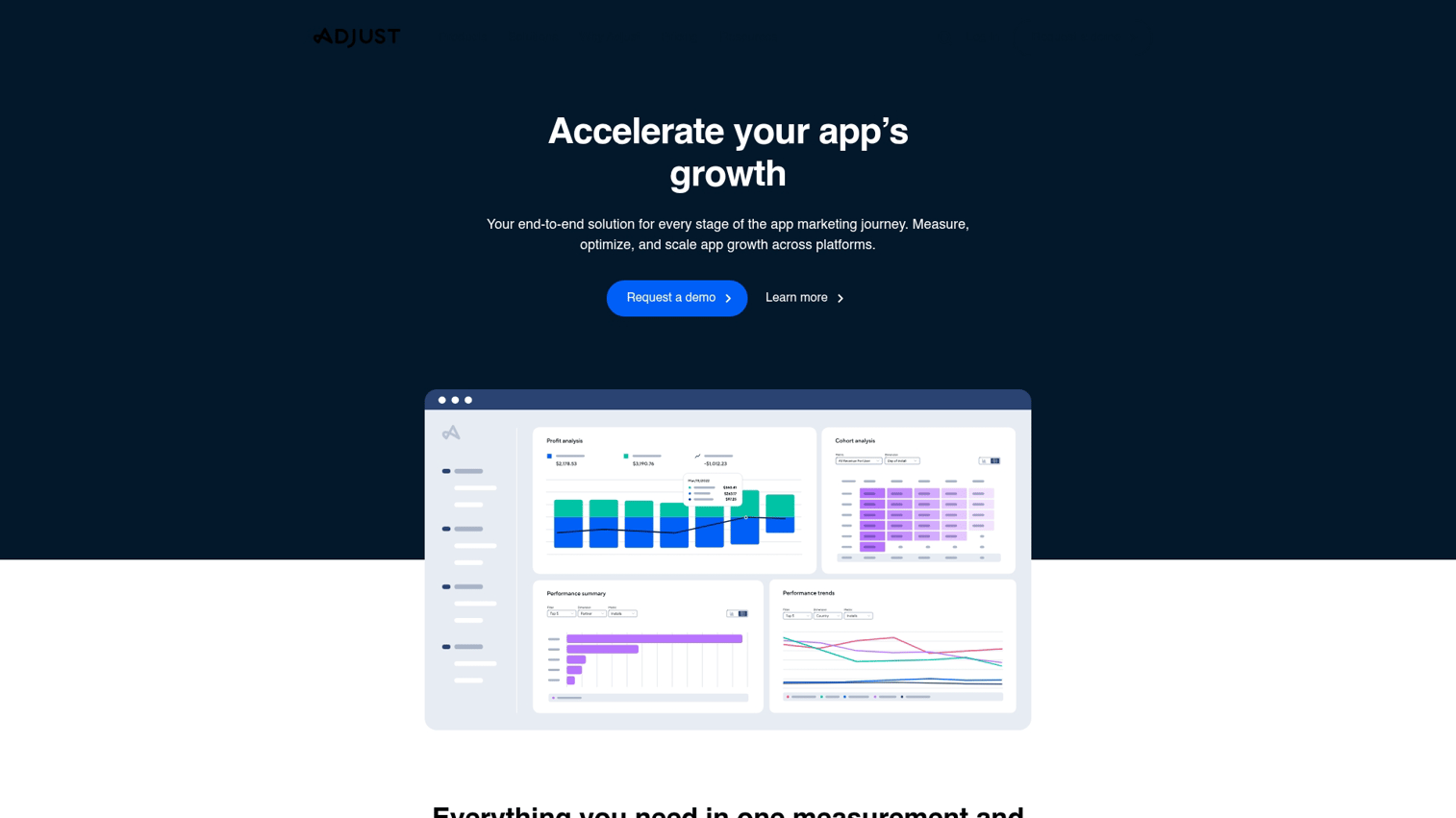
Adjust is known for ease of use and powerful automation capabilities, making it a G2 leader for usability. It's best for growth teams who want fast implementation and actionable insights without a steep learning curve.
Its Datascape analytics suite provides a unified view of marketing data, and the platform offers strong connected TV (CTV) measurement for teams expanding beyond mobile.
Key strengths
Intuitive and user-friendly interface
Strong automation features for campaign management
Comprehensive fraud prevention suite
Flexible attribution windows
Connected TV and cross-device measurement
Pricing: Custom, based on volume and features.
3. Branch
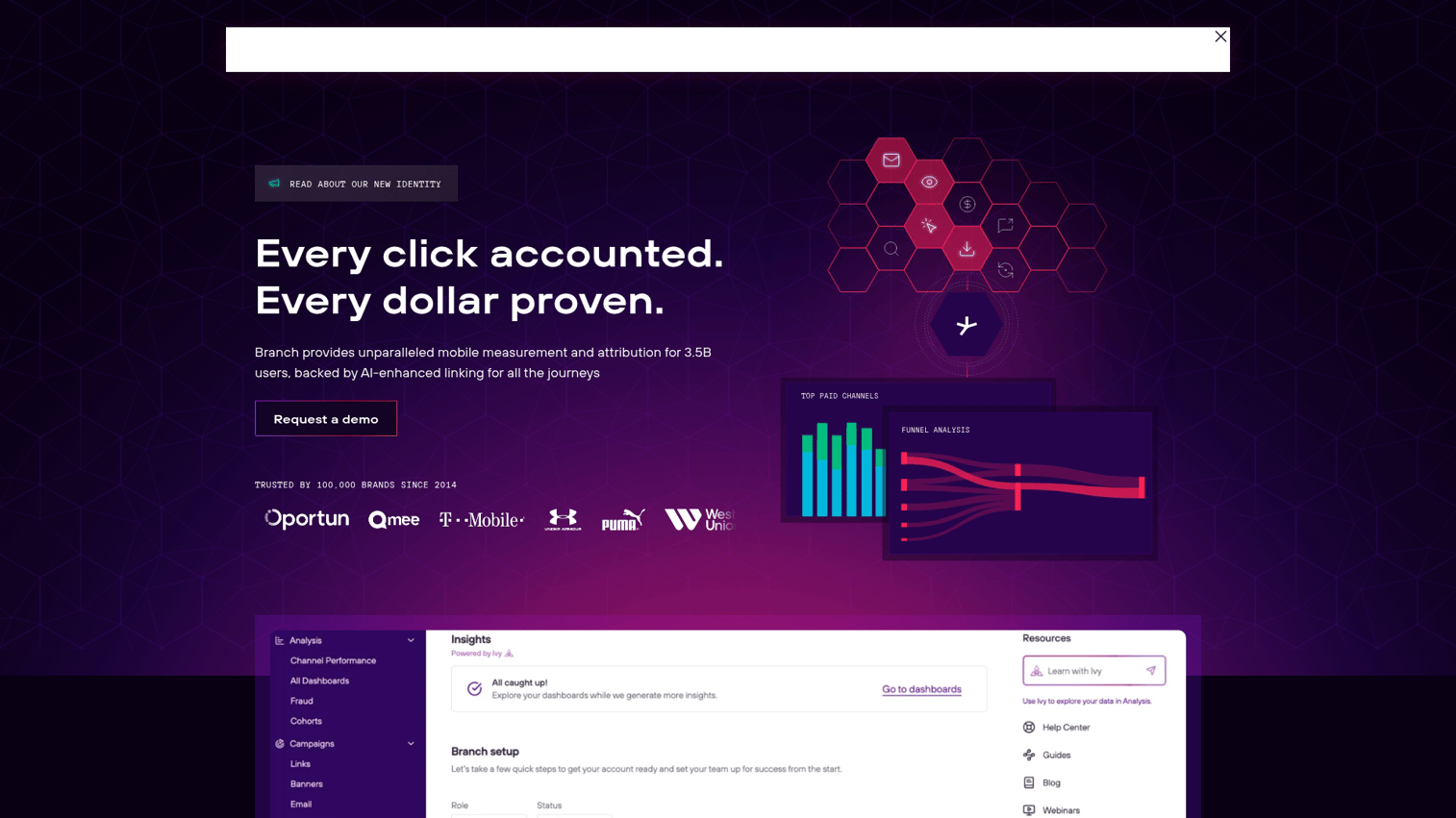
Branch specializes in deep linking alongside its attribution features. It's the best choice for teams prioritizing seamless web-to-app user experiences.
Deep linking connects web visitors directly to specific content within an app, dramatically improving the user journey. If someone clicks a link to a product on your website, Branch can route them directly to that product in your app after install.
Key strengths
Industry-leading deep linking technology
Cross-platform measurement for web and app
Deferred deep links for users who haven't installed the app yet
Journeys web-to-app smart banners
Referral and affiliate tracking capabilities
Pricing: Custom, with a free tier for basic deep linking.
4. Kochava

Kochava offers highly granular data exploration, making it ideal for large-scale advertisers and enterprise teams that need detailed cohort analysis. Its unified audience platform allows marketers to segment and target users across channels.
Key strengths
Granular, log-level data access
Advanced fraud detection with Traffic Verifier
Omni-channel attribution across mobile, web, and CTV
Identity resolution capabilities
Flexible data exports and reporting
Pricing: Custom, typically enterprise-level.
5. Singular

Singular excels at aggregating marketing data and providing deep ROI analysis. It uniquely combines attribution with cost aggregation in one platform, making it best for data-driven teams focused on optimizing return on ad spend (ROAS).
Instead of pulling cost data from each ad network separately, Singular automates that process and connects it directly to your attribution data.
Key strengths
Marketing ETL and automated cost aggregation
Creative analytics and optimization
SKAdNetwork certified with advanced modeling
Cross-device measurement and reporting
Automated, scheduled reporting
Pricing: Custom, based on volume.
6. Tenjin
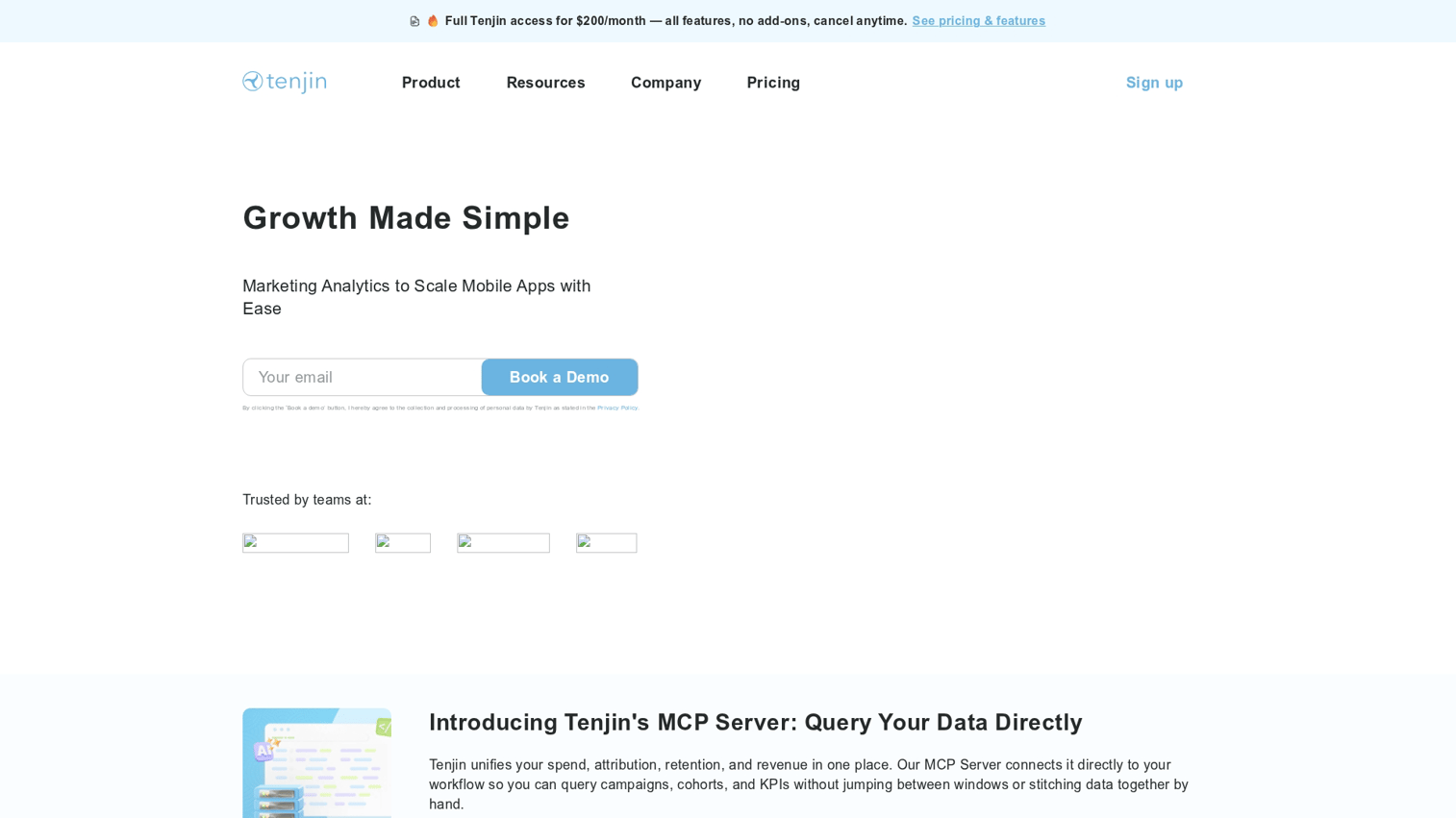
Built specifically for mobile game developers and indie studios, Tenjin offers a lower-cost entry point than enterprise-focused MMPs. It's the best option for gaming apps and teams with tighter budgets.
Key strengths
Gaming-focused features and benchmarks
DataVault for raw data access and analysis
No-code dashboard builder
Free tier available for small apps
LTV prediction for user cohorts
Pricing: Free tier available; paid plans scale with usage.
7. Airbridge
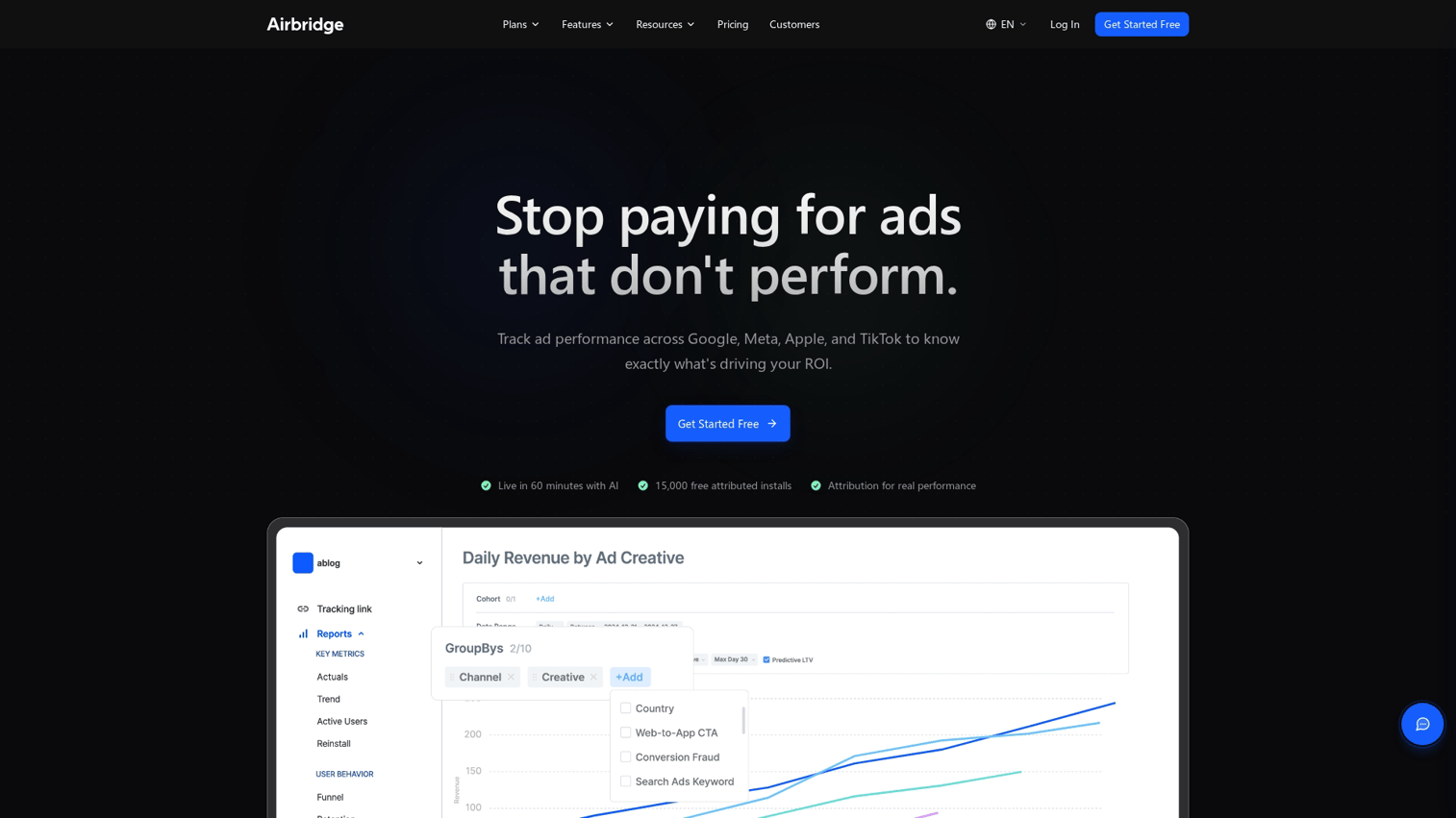
Airbridge is a strong player in Asian markets, offering unified measurement across both web and app. It's best for global teams with a significant presence in the APAC region who need a single view of the customer journey.
The platform also offers incrementality measurement, which helps you prove the causal lift of your campaigns rather than just correlation.
Key strengths
Unified web and app attribution
Incrementality measurement to prove causal lift
Uninstall tracking and analysis
Deep link support
Multi-touch attribution models
Pricing: Custom.
8. Affise MMP

Affise MMP is a partner marketing platform that includes mobile attribution capabilities. It's best for teams that run extensive affiliate and partner programs alongside their paid user acquisition efforts.
Key strengths
Integrated partner management features
Real-time reporting and dashboards
Automated fraud detection
Flexible API for custom integrations
White-label options for agencies and networks
Pricing: Custom.
9. Trackier
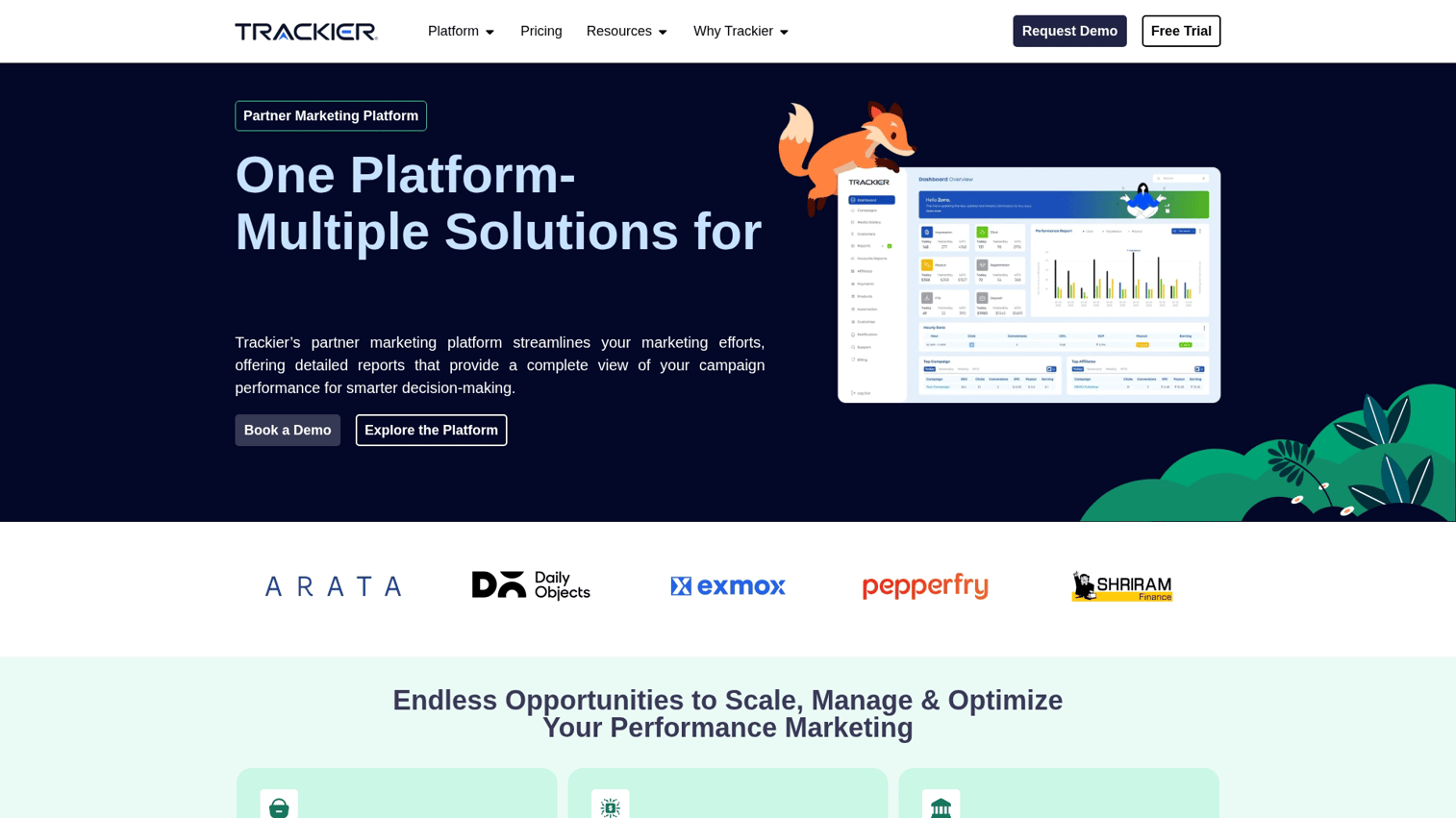
Trackier is best for performance marketing teams managing multiple traffic sources and partners. It's designed for real-time optimization and control, with customizable attribution rules.
Key strengths
Customizable attribution rules and windows
Real-time campaign optimization tools
Advanced anti-fraud suite
Integrated partner management portal
API-first architecture for high flexibility
Pricing: Custom.
10. Appmetrica
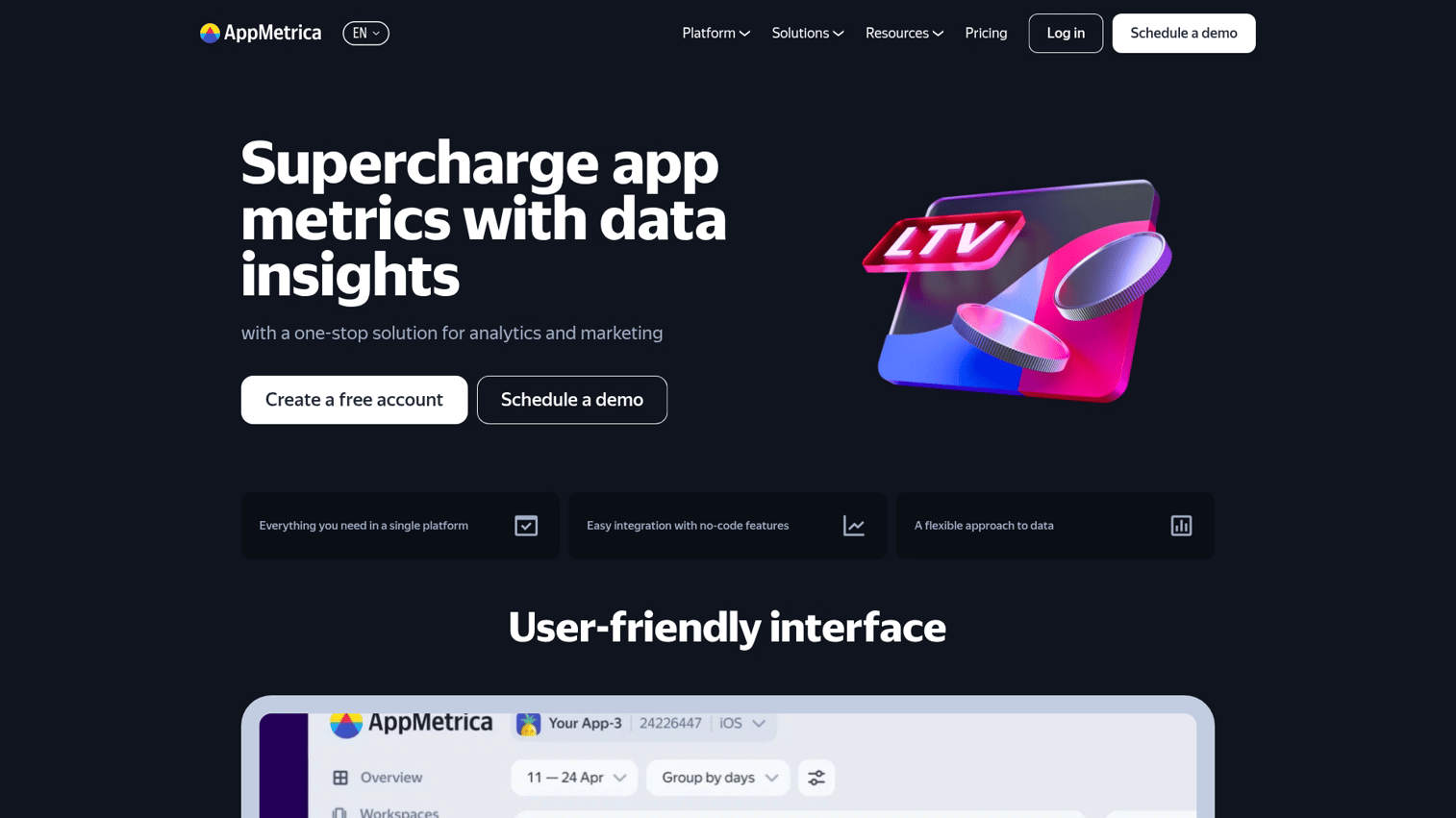
Appmetrica is a free attribution and analytics solution from Yandex. It's the best choice for early-stage apps or teams with limited attribution budgets who still need powerful tools.
Key strengths
Free, unlimited event and install tracking
Built-in push notification tools
Crash and error analytics
Revenue and e-commerce analytics
A/B testing for product features and marketing
Pricing: Free.
11. Voluum
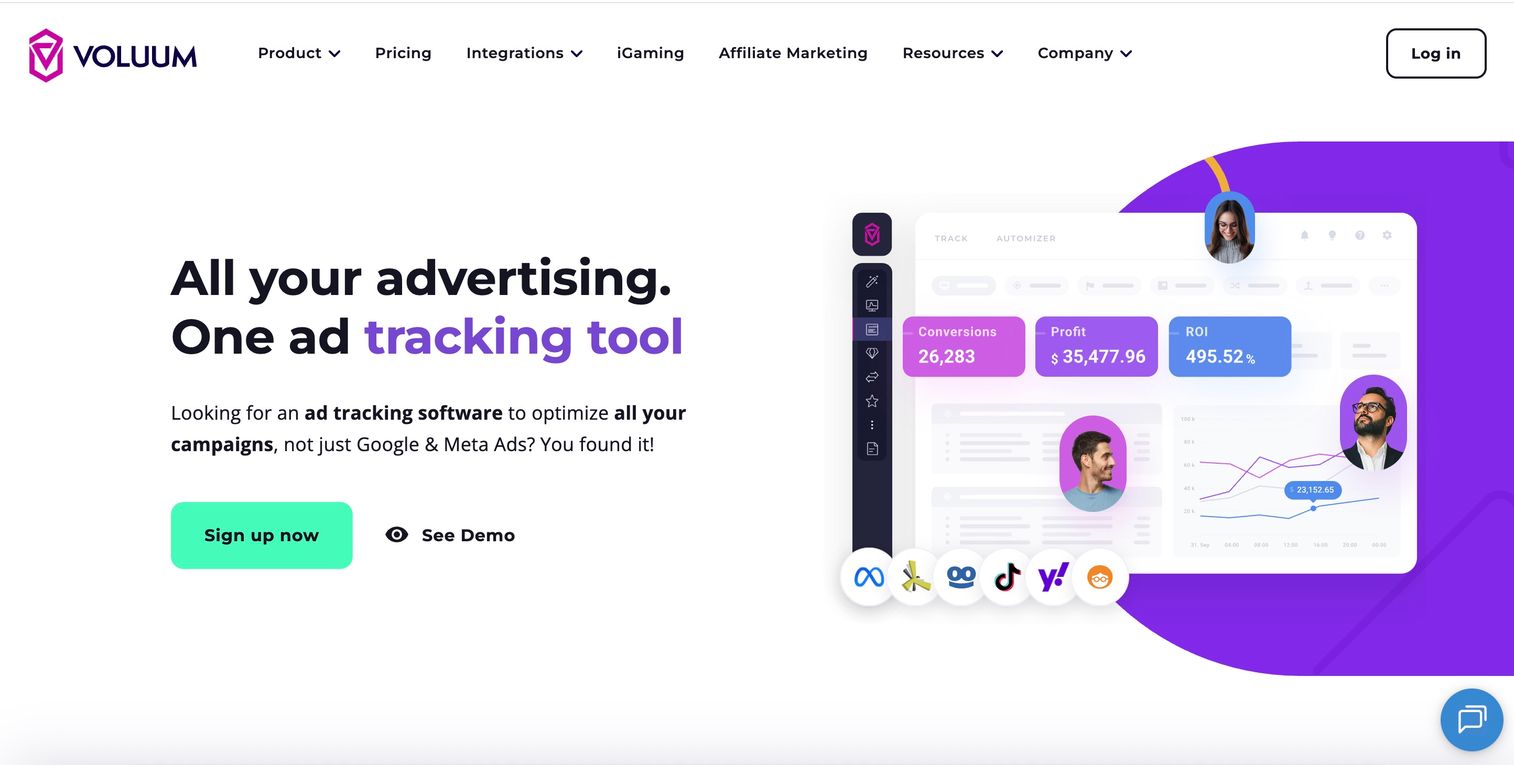
Voluum is a performance marketing tracker with robust mobile attribution features. It's best for affiliate marketers and media buyers who run a high volume of mobile campaigns and require granular optimization tools.
Key strengths
Real-time campaign optimization and reporting
Traffic distribution AI to automatically send users to the best offers
Landing page rotation and A/B testing
Collaborative workspaces for teams
Custom conversion tracking events
Pricing: Starts at $199/month.
How to choose the right mobile attribution tool
Selecting the right MMP is a critical decision. Use the following buying criteria to evaluate platforms and find the best fit for your app's needs.
Data accuracy and reporting quality
Unbiased, accurate data is the foundation of good decision-making. There are often discrepancies between an ad platform's self-reported numbers and the data from an MMP, which acts as a neutral source of truth.
Fraud detection and prevention
Ad fraud, including click injection, SDK spoofing, and fake installs, cost advertisers $41.4 billion in 2025 according to Spider Labs. A strong attribution platform has robust fraud protection to ensure you're paying for real users, not bots.
SKAdNetwork and privacy compliance
With Apple's App Tracking Transparency (ATT) framework, iOS measurement has fundamentally changed. Your chosen platform fully supports Apple's SKAdNetwork and provides advanced modeling to measure campaign performance in a privacy-compliant way.
Ad network and analytics integrations
An attribution platform sits at the center of your marketing tech stack. Ensure it has a deep integration ecosystem, including pre-built connections to all the ad platforms you use (Meta, Google, TikTok) and analytics tools you rely on.
Pricing and scalability
Pricing models vary, with common structures including event-based, install-based, and flat fees. Understand how costs will scale as your app grows in user base and event volume to avoid unexpected expenses.
Implementation and SDK complexity
Consider the technical lift required for integration. A lightweight SDK is crucial to avoid a negative impact on your app's performance. Evaluate the documentation, support, and estimated time for your development team to complete the implementation.
Common mobile attribution challenges
Even with the best tools, mobile attribution presents real-world friction points that marketers navigate daily.
iOS privacy changes and ATT opt-in rates
Apple's App Tracking Transparency framework limits deterministic attribution by requiring user consent to track. Since most users opt out, marketers rely on aggregated and probabilistic methods provided by MMPs to measure iOS campaigns.
Data discrepancies across platforms
It's common to see data discrepancies between your MMP dashboard and ad platform reports. This happens because they often use different attribution windows and methodologies, leading to mismatches in conversion counts.
Attribution fraud and invalid traffic
Common fraud types like click flooding, click injection, and device farms continue to be a major issue. This invalid traffic wastes ad spend and pollutes data, making it harder to identify true campaign performance.
Cross-device and web-to-app measurement
Tracking users as they move between your website and mobile app is a significant challenge. While probabilistic matching and deep linking help, creating a unified view of the user journey across devices remains complex.
How to evaluate attribution platforms before you commit
The best way to make a final decision is to run a pilot or free trial with your top two or three contenders. This allows you to compare data accuracy against known benchmarks and see how each platform works with your specific data. When evaluating mobile app platforms, experiencing the actual interface and workflow proves invaluable for making informed decisions.
For teams evaluating software, using interactive demos can be a powerful way to explore features and workflows before committing to a full implementation. You can experience the platform's interface and capabilities without the overhead of a full SDK integration.
Start your journey with Guideflow today!
FAQs about mobile attribution platforms
Mobile attribution is the process of identifying which marketing source (such as an ad campaign, channel, or partner) led a user to install your app and take specific in-app actions.
Tenjin and Appmetrica are excellent choices for indie developers. They offer free tiers and lower-cost options that are well-suited for early-stage apps and teams with limited budgets.
Pricing varies widely based on the volume of installs and events you track. Costs can range from free tiers for small apps to large enterprise contracts based on usage, often billed per thousand events.
Yes, mobile attribution still works, but with limitations. Platforms now rely heavily on Apple's SKAdNetwork, probabilistic modeling, and aggregated measurement to attribute iOS installs while respecting user privacy choices.
An MMP (mobile measurement partner) focuses on attributing installs and post-install events to external ad sources. In contrast, mobile analytics tools (like Amplitude or Mixpanel) focus on tracking in-app behavior and product usage after the install to understand user engagement.
The mobile attribution market, valued at $1.52 billion in 2025 according to Global Growth Insights, continues to grow as app install advertising expands globally. The major players in the market process billions of app installs and trillions of in-app events annually.
Switching MMPs typically means starting fresh with attribution data in the new platform. Historical data from the old MMP is not automatically transferred. However, some platforms offer data migration support or allow for parallel tracking during a transition period.
E-commerce apps, gaming studios, subscription services, and fintech companies commonly use mobile retargeting. They combine it with attribution data to re-engage existing users with personalized campaigns and accurately measure the performance and ROI of those efforts.