A rebate program almost always starts in a spreadsheet. One tab tracks supplier agreements. Another holds tiered volume thresholds. A third reconciles what you think you are owed against what actually landed in the bank. It works until it doesn't, and the moment it breaks, you feel it in the worst place: your margin.
Here is the problem nobody flags until quarter close. Rebate accruals get estimated, then forgotten. Tier breakpoints get missed. Claims get filed late or never. A receivable rebate you were genuinely owed quietly expires because no one validated the volume against the agreement in time. Each of these is small in isolation. Together, they become margin leakage, and the leak rarely shows up on a single line item. It hides across hundreds of agreements that no human can reconcile by hand at scale.
The global rebate management software market was valued at $3.8 billion in 2025 and is projected to reach $9.6 billion by 2034, a CAGR of 10.9%, according to Dataintelo. That growth is not vanity. It reflects a real shift in how finance and commercial teams think about rebates. The category is no longer an accounting afterthought. It is a margin control system. In 2024, over 60% of companies reported integrating AI into their rebate programs, contributing to a 15% reduction in processing time, per OpenPR.
This guide treats rebate software as exactly that: a system for protecting profit you have already earned. If your team is comparing platforms, the same discipline you would apply to evaluating contract lifecycle management software or audit management software applies here. Match the tool to your rebate complexity, your ERP, and your governance needs.
What's inside
This guide compares seven rebate management software platforms for 2026: Enable, Vistex, Pricefx, IMA360, e-bate, 360insights, and Voucherify. We selected each platform on four criteria that actually matter to rebate teams: automation depth across calculations and claims, ERP integration, reporting and real-time visibility, and auditability and governance. We weighted fit for B2B rebate programs in distribution, manufacturing, and channel-heavy businesses over generic feature counts. Pricing and G2 ratings reflect verified, current values where vendors publish them. Where a vendor gates pricing behind sales, we say so plainly rather than guess.
TL;DR
- Best for enterprise rebate operations: Enable, an AI-powered pricing and rebate management platform built for complex commercial teams.
- Best for ERP-heavy and SAP-native teams: Vistex, which aligns rebates, incentives, and gross-to-net margin inside the enterprise stack.
- Best for margin and pricing optimization: Pricefx, when pricing, optimization, rebates, and CPQ need to live in one cloud-native system.
- Best for broad revenue management: IMA360, for rebates, chargebacks, contracts, and incentives in a single workflow.
- Best for visibility and audit control: e-bate, with real-time analytics, custom dashboards, and strong audit capabilities.
- Best for channel and partner incentives: 360insights, when rebates sit inside a wider partner program. Voucherify fits teams running rebate logic inside modern, API-first digital stacks.
What is rebate management software?
Rebate management software is a finance and commercial operations platform that automates the design, tracking, calculation, validation, settlement, and reporting of rebate programs so teams can manage incentives accurately and protect margin at scale.
The workflow it replaces is messier than most spreadsheets admit. A complete rebate management system covers the full lifecycle:
- Program design: model rebate structures, tiers, thresholds, and eligibility rules using program templates.
- Agreement tracking: store supplier and customer agreements with versioned terms and effective dates.
- Rebate calculations: compute accruals against actual transaction volume in real time, not at quarter end.
- Claims validation: match claims to agreement terms and flag discrepancies before they become disputes.
- Settlement and payout: execute payments, credit notes, and reconciliations accurately and on schedule.
- Reporting: surface accruals, liabilities, and performance through dashboards and reporting.
The category splits cleanly into two halves. Payable rebates are what you owe customers or channel partners. Receivable rebates are what suppliers owe you. A strong rebate management platform handles both, because most distributors and manufacturers sit in the middle, paying down-channel and claiming up-channel at the same time. The platforms that win are the ones that hold an audit trail across every calculation, so finance can defend any number to an auditor or a partner without rebuilding it from raw data.
Core capabilities to expect:
- Automated rebate calculations with real-time accruals
- Claims validation and dispute management
- Settlement and payout execution
- ERP integration for transaction data and financial posting
- Audit trail and compliance controls
- Dashboards and reporting for finance and commercial teams
- Forecasting and commercial intelligence on program performance
When to use rebate management software
Replace spreadsheets and manual tracking
Spreadsheets do not scale past a handful of simple agreements. Once you manage dozens of suppliers with tiered, retrospective, or mixed-basis rebates, manual tracking becomes a source of error rather than control. Formulas break silently. Version control collapses. The person who built the model leaves, and nobody else can read it. Rebate processing software replaces that fragility with automation, so accruals update as transactions post and nobody is reverse-engineering a spreadsheet at month end.
Protect margin and reduce leakage
Margin leakage is the quiet killer. An accrual that overstates what you owe inflates your liability and understates profit. A receivable rebate you fail to claim is money left on the table. Accurate, automated rebate calculations close both gaps. When the system computes entitlements against real volume and validates claims against agreement terms, the guesswork that drives leakage disappears. This is the difference between tracking rebates and controlling them.
Improve visibility into claims, accruals, and payouts
Finance cannot forecast what it cannot see. Real-time dashboards and reporting turn rebate data into decision input: which programs are performing, which accruals are growing, where claims are stuck, and what payout obligations are coming due. That visibility also shortens close cycles, because the numbers are already reconciled and defensible rather than assembled in a panic. The same governance logic applies whether you are managing rebates or contract management: if you cannot audit it, you cannot trust it.
Comparison table
Sorted by relevance to rebate management as a core job. Pricing reflects what each vendor publishes; several gate pricing behind sales conversations.
| # | Product | Intent | Key differentiation | Pricing | G2 rating |
|---|---|---|---|---|---|
| 1 | Enable | Enterprise rebate and pricing management | AI-powered pricing execution, centralized logic, margin visibility | Custom pricing | 4.5/5 |
| 2 | Vistex | ERP-native rebates and incentives | SAP margin optimization, gross-to-net, incentive management | Custom pricing | 4.3/5 |
| 3 | Pricefx | Pricing plus rebate management | Cloud-native AI pricing, optimization, CPQ, free Plan package | Free Plan; custom for Price and Profit | 4.4/5 |
| 4 | IMA360 | Broad revenue management | Rebates, chargebacks, contracts, incentives, CPQ, AI agents | Custom pricing | Not listed |
| 5 | e-bate | Rebate-first automation and audit | Real-time analytics, custom dashboards, audit capabilities | Custom pricing | 4.8/5 |
| 6 | 360insights | Channel and partner incentives | Partner experience orchestration, incentives suite, services | Custom pricing | 4.3/5 |
| 7 | Voucherify | API-first incentive optimization | Composable promotions, loyalty, referrals, rebate logic | Free tier; from €1,200/month | 4.6/5 |
1. Enable
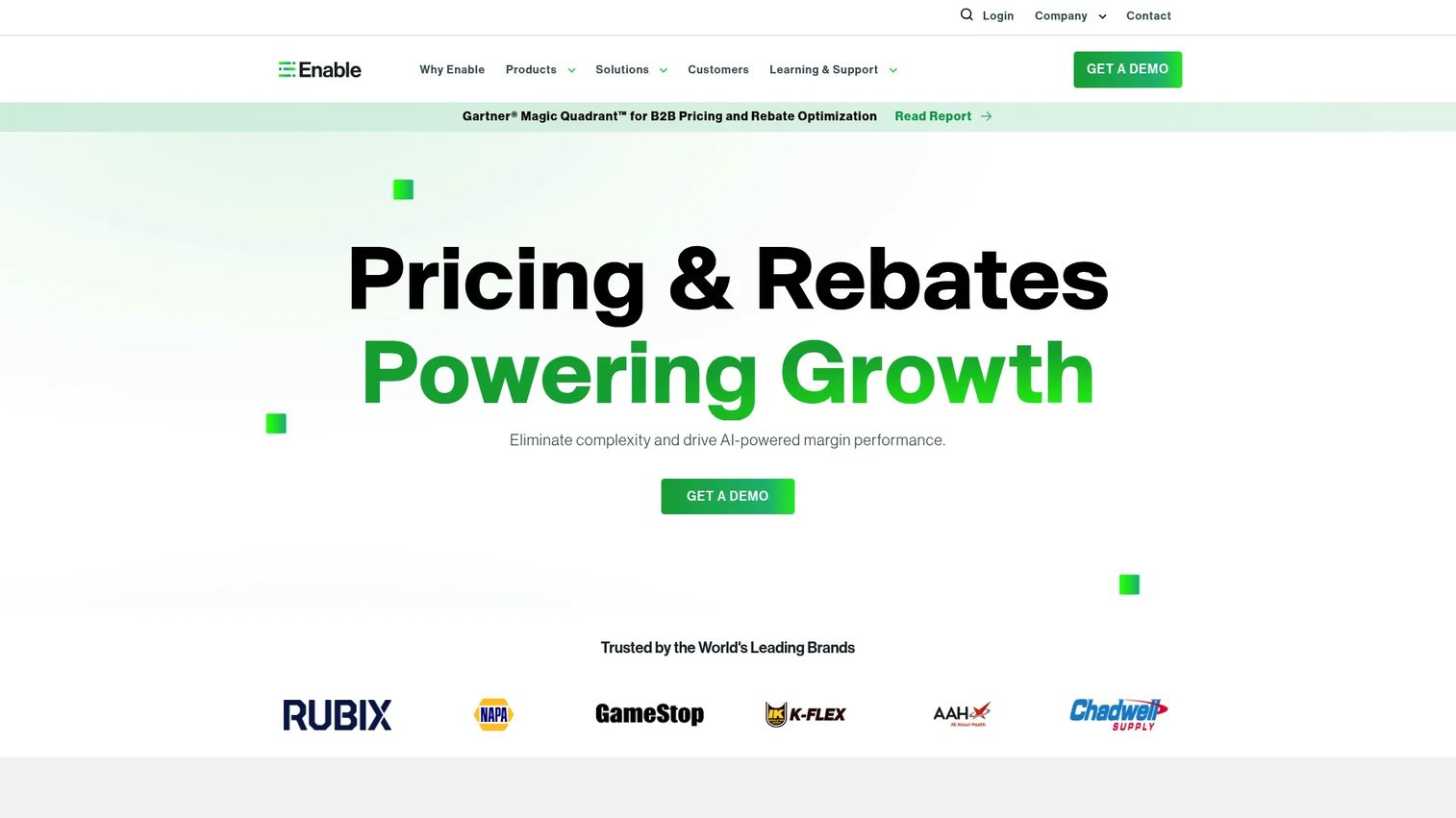
Enable provides AI-powered pricing and rebate management software built for enterprise commercial teams. It positions rebates not as a back-office chore but as a lever on profitability, connecting pricing logic, rebate programs, and margin visibility in one platform. For finance, commercial, and revenue teams managing thousands of agreements across suppliers and customers, Enable is built to keep accruals accurate and claims defensible at scale.
Best for: Enterprise manufacturers, distributors, and retailers managing complex pricing and rebate programs.
Key strengths
- Real-time pricing execution: rebate and [price logic update live, so accruals reflect actual transaction volume rather than period-end estimates.
- Centralized pricing logic: one source of truth for rebate terms and pricing rules, reducing the version drift that drives margin leakage.
- Price waterfalls](https://www.pricefx.com/learning-center/what-is-a-pricing-waterfall-a-complete-overview) and margin visibility: see exactly where margin is created and eroded across every agreement and tier.
Why choose Enable: Enable suits teams that treat rebates as commercial strategy, not just accounting. It earns its place for organizations with deep, multi-tier agreement structures where a single missed threshold compounds into real money. The platform's emphasis on collaboration means finance and commercial teams work from the same numbers, which shortens disputes and tightens forecasting. Reviewers consistently point to its category depth and ability to handle programs spreadsheets cannot.
Enable pricing: Enable does not publish public pricing or plan names. Its pricing page describes the product and offers a demo request rather than listing tiers, so expect a quote-based, enterprise model scoped to your agreement volume and program complexity. Contact sales for a tailored quote.
2. Vistex
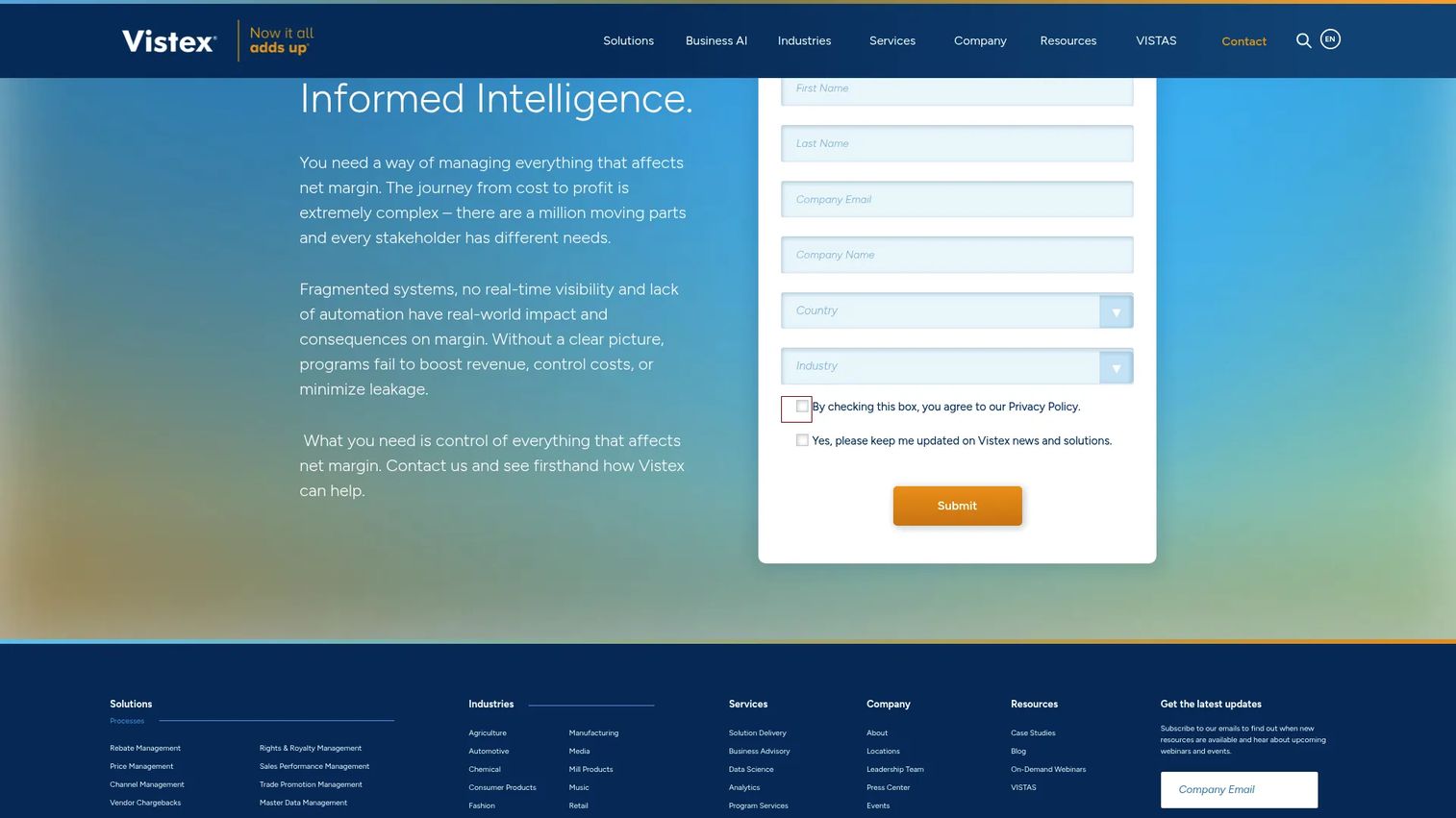
Vistex is enterprise software for revenue management, covering pricing, rebates, incentives, royalties, and related go-to-market processes. Its defining strength is alignment with the enterprise stack, particularly SAP, where it handles margin optimization and gross-to-net calculations natively. For organizations already standardized on a major ERP, Vistex keeps rebate data, financial posting, and incentive logic inside one governed environment.
Best for: Large B2B enterprises managing complex pricing and incentive programs.
Key strengths
- Price management with setting, execution, and intelligence: model and execute pricing and rebate programs with analytics layered on top.
- Rebate, incentive, and gross-to-net margin management: handle payable and receivable rebates alongside broader incentive programs in one system.
- SAP margin optimization and cloud-based extensions: native ERP integration keeps transaction data and financial posting tightly coupled.
Why choose Vistex: Vistex fits when rebates are one piece of a sprawling commercial operation that also spans royalties, chargebacks, and channel incentives. The deep ERP alignment is the draw for manufacturing and distribution environments where rebate data must reconcile cleanly with the general ledger. If your finance team values posting accuracy and a single audit trail across the commercial stack over a lightweight standalone tool, Vistex is built for that complexity.
Vistex pricing: Vistex does not publicly display pricing on its website. Pricing appears to be quote-based and scoped to deployment, so plan to engage sales for a scoped estimate based on your ERP environment and program breadth.
3. Pricefx

Pricefx is a cloud-native AI pricing and CPQ platform for enterprise price management, optimization, and quoting, with rebate management built in. It is the strongest pick when pricing and rebates need to live in one system rather than two disconnected tools. Because rebate entitlements are downstream of pricing decisions, keeping both in a single platform reduces the reconciliation gaps that creep in when pricing and rebate data live apart.
Best for: Large B2B enterprises needing pricing, optimization, rebates, and CPQ in one platform.
Key strengths
- Price management: centralized control over price lists, rules, and rebate structures across products and segments.
- AI optimization: model and optimize pricing and rebate scenarios to protect and improve margin.
- CPQ and quoting: connect quotes directly to rebate eligibility so commercial terms stay consistent end to end.
Why choose Pricefx: Pricefx earns its spot for commercial teams who see pricing and rebates as the same margin problem viewed from two angles. The cloud-native architecture means faster deployment than legacy on-premise alternatives, and the AI optimization layer is genuinely useful for testing rebate structures before committing to them. Reviewers cite flexibility and breadth across the commercial workflow.
Pricefx pricing: Pricefx offers a simplified three-package structure: Plan, Price, and Profit. The Plan package is now free, other than necessary set-up costs, with no recurring payments or time limitations. Pricing for the Price and Profit packages is not publicly listed and is quote-based, so contact Pricefx for a scoped estimate.
4. IMA360
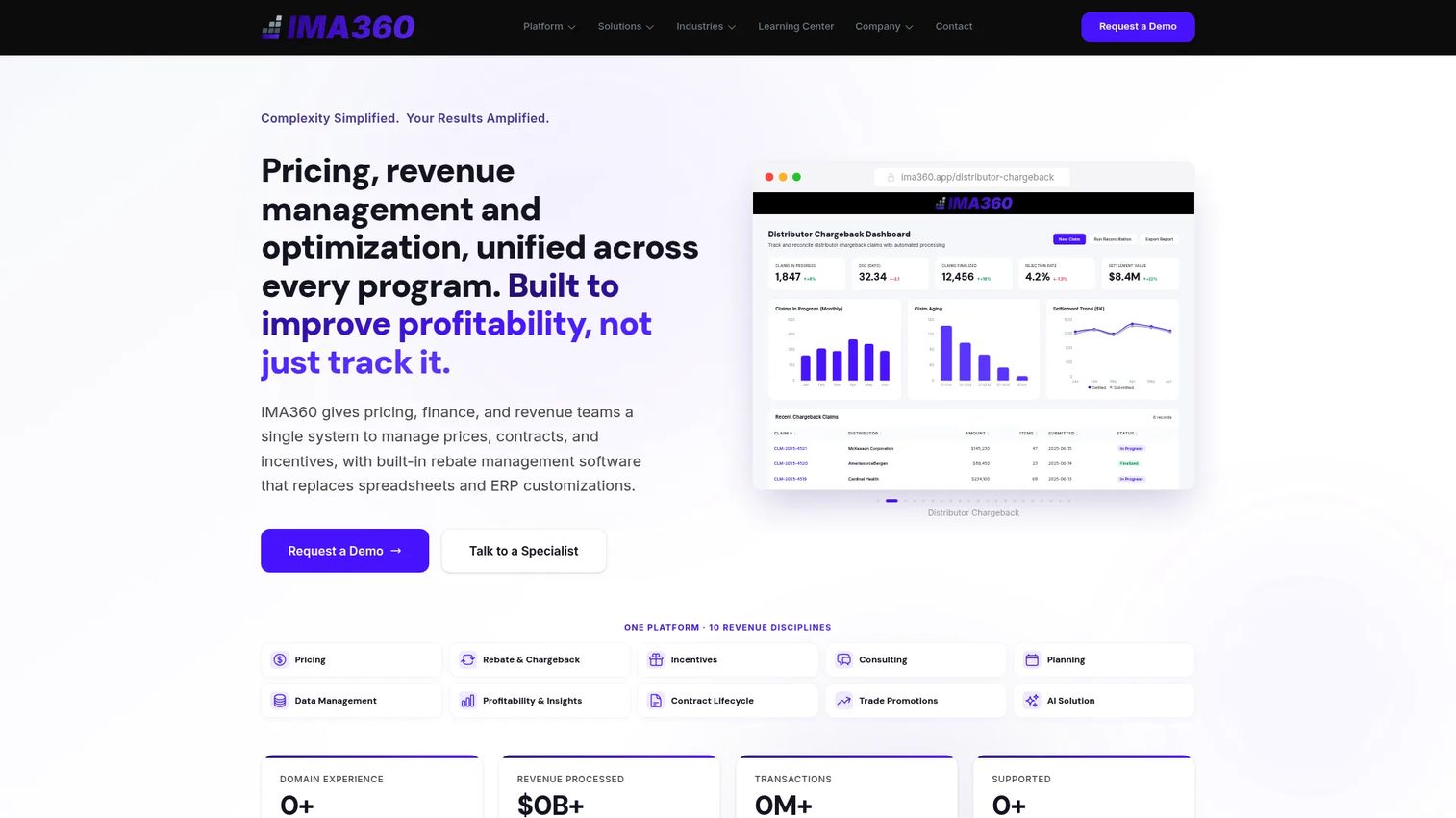
IMA360 is enterprise revenue management software spanning pricing, rebates, contracts, and incentives. It is a newer product with notable capability breadth, bringing rebates, chargebacks, contract lifecycle, trade promotions, CPQ, and AI-powered agents into one revenue management workflow. For organizations that want rebates managed inside a broader commercial system rather than a standalone tool, IMA360 covers a wide footprint.
Best for: Enterprises managing complex pricing, rebates, and revenue workflows.
Key strengths
- Pricing management with centralized governance and approvals: control pricing and rebate logic with structured approval workflows and an audit trail.
- Price optimization, scenario modeling, and dynamic pricing: test and refine rebate and pricing scenarios before they hit production.
- Rebate, chargeback, contract lifecycle, incentives, trade promotions, and CPQ: a single platform for the full gross-to-net commercial picture.
Why choose IMA360: IMA360 fits teams that want consolidation. Instead of stitching rebates to a separate contract tool and a separate chargeback process, the platform holds them together with shared governance. The AI-powered agents and forecasting capabilities suit organizations modernizing their commercial stack. As a newer entrant, it competes on breadth and on a willingness to handle the messy, interconnected reality of enterprise revenue management.
IMA360 pricing: IMA360's pricing page is public but does not display numeric prices, plan names, or free-tier details. It uses demo and specialist contact CTAs instead, so pricing is quote-based and scoped to your requirements. Contact the vendor for a tailored quote.
5. e-bate
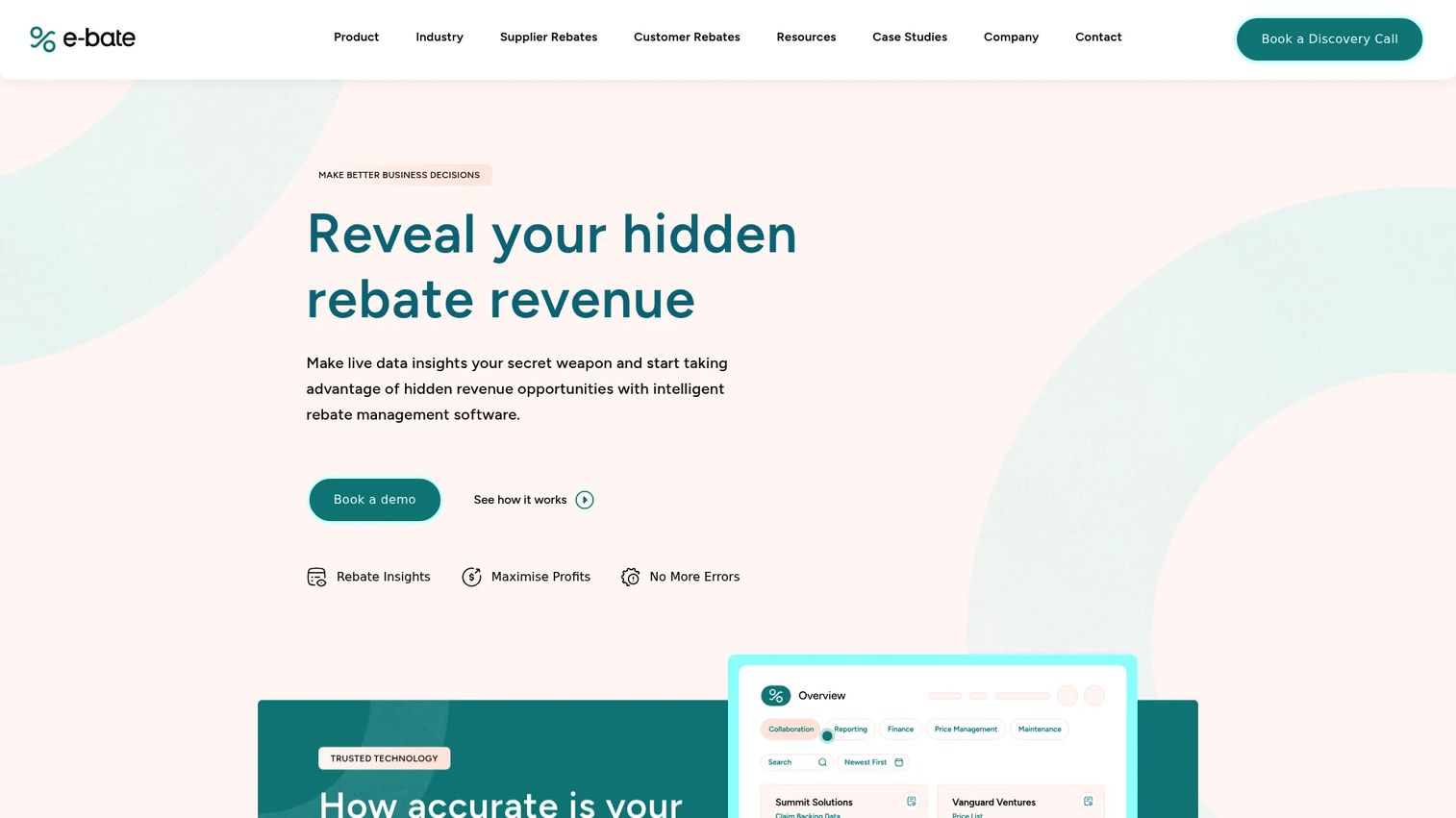
e-bate is rebate management software focused squarely on automating complex rebate processes and improving revenue visibility. Where broader platforms treat rebates as one module among many, e-bate is rebate-first by design, with real-time analytics, custom dashboards, and audit capabilities built into the core. For teams that want clear visibility and control over agreements, claims, accruals, and payouts, that focus shows.
Best for: Businesses managing complex rebate agreements and claims.
Key strengths
- Automates rebate management workflows: end-to-end automation across agreements, calculations, and settlement reduces manual handling.
- Real-time analytics and custom dashboards: finance and commercial teams see accruals, performance, and liabilities as they move.
- Payments, claims, accruals, and audit capabilities: a full claims-to-payout path with the audit trail finance needs to defend every figure.
Why choose e-bate: e-bate is the pick when rebates are the problem you are solving, not a side effect of a pricing or ERP project. Its rebate-first design and strong audit capabilities make it especially useful for UK and international teams managing intricate agreement structures and supplier visibility. The platform earns a high G2 rating from reviewers who value the clarity of its dashboards and the control it gives over claims validation and settlement.
e-bate pricing: e-bate does not publish public pricing. G2 indicates pricing information is not provided and recommends contacting e-bate directly, so expect a quote scoped to your program complexity and agreement volume.
6. 360insights
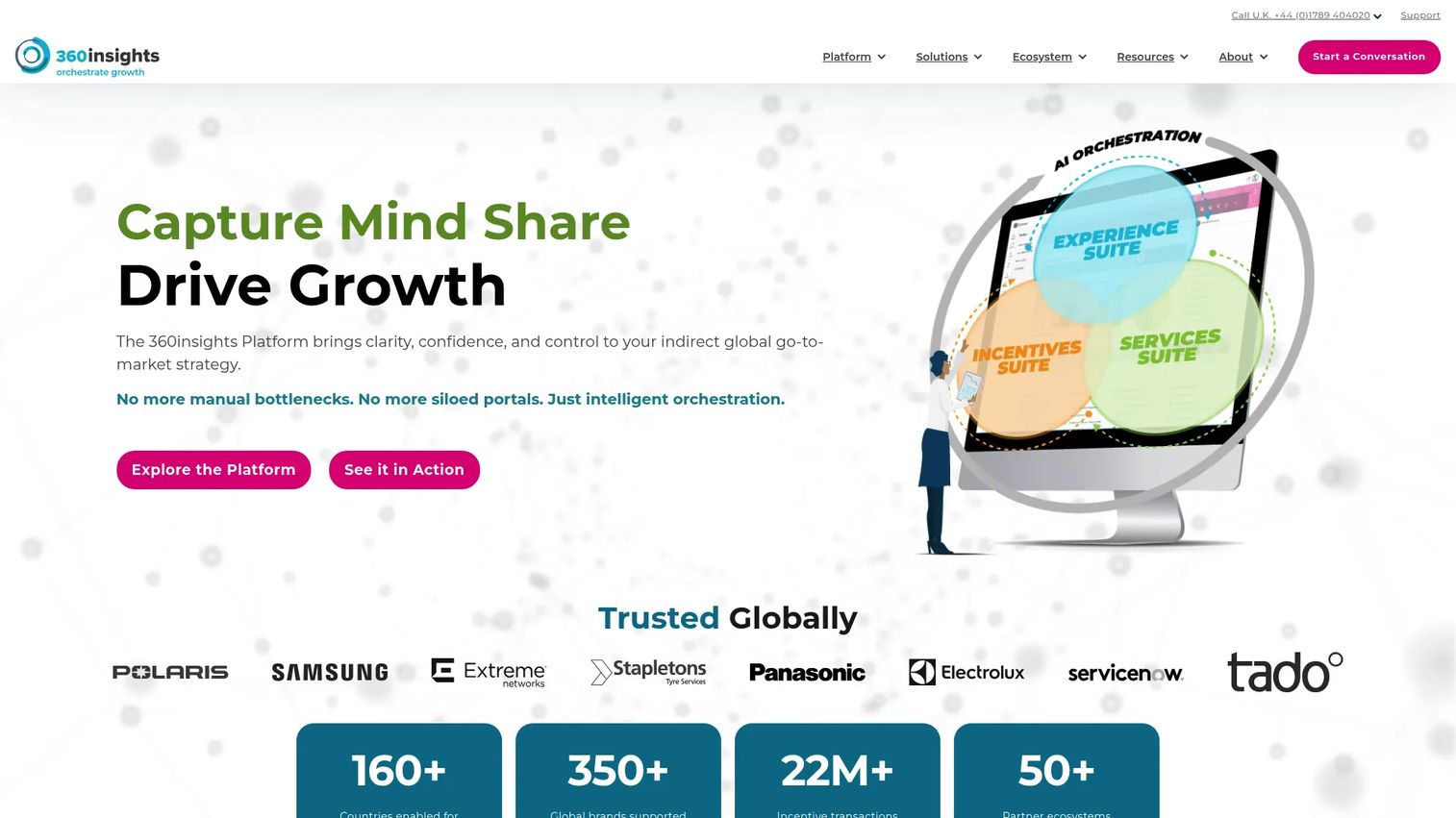
360insights is a partner engagement and business optimization platform for orchestrating incentives, partner experiences, and related services across channel ecosystems. Rebates here sit inside a wider story about channel incentives, co-marketing funds, consumer promotions, and rewards. For organizations whose rebate programs are part of a broader indirect-channel motion, 360insights manages incentives and partner engagement in one place.
Best for: Enterprises managing complex indirect channel, partner, and incentive programs.
Key strengths
- Partner experience orchestration: manage how partners interact with incentive programs across the channel ecosystem.
- Incentives suite: rebates, co-marketing funds, consumer promotions, rewards, and pricing and promotions in a single suite.
- Services suite: operations, creative, optimization, and analytics support layered on top of the platform.
Why choose 360insights: 360insights is the strong option when rebates are one of several channel incentive types you run, not a standalone finance function. Centralized tracking and reporting across the partner ecosystem give channel and commercial teams a single view of incentive spend and performance. If your rebate programs live alongside MDF, SPIFFs, and consumer promotions, managing them in a unified partner platform beats running each through a separate tool. The same consolidation logic applies to teams evaluating loyalty management software for adjacent incentive programs.
360insights pricing: 360insights does not publish public pricing on its site. Pricing appears to be request-based and scoped to program complexity, so engage sales for an estimate aligned to your channel and incentive footprint.
7. Voucherify
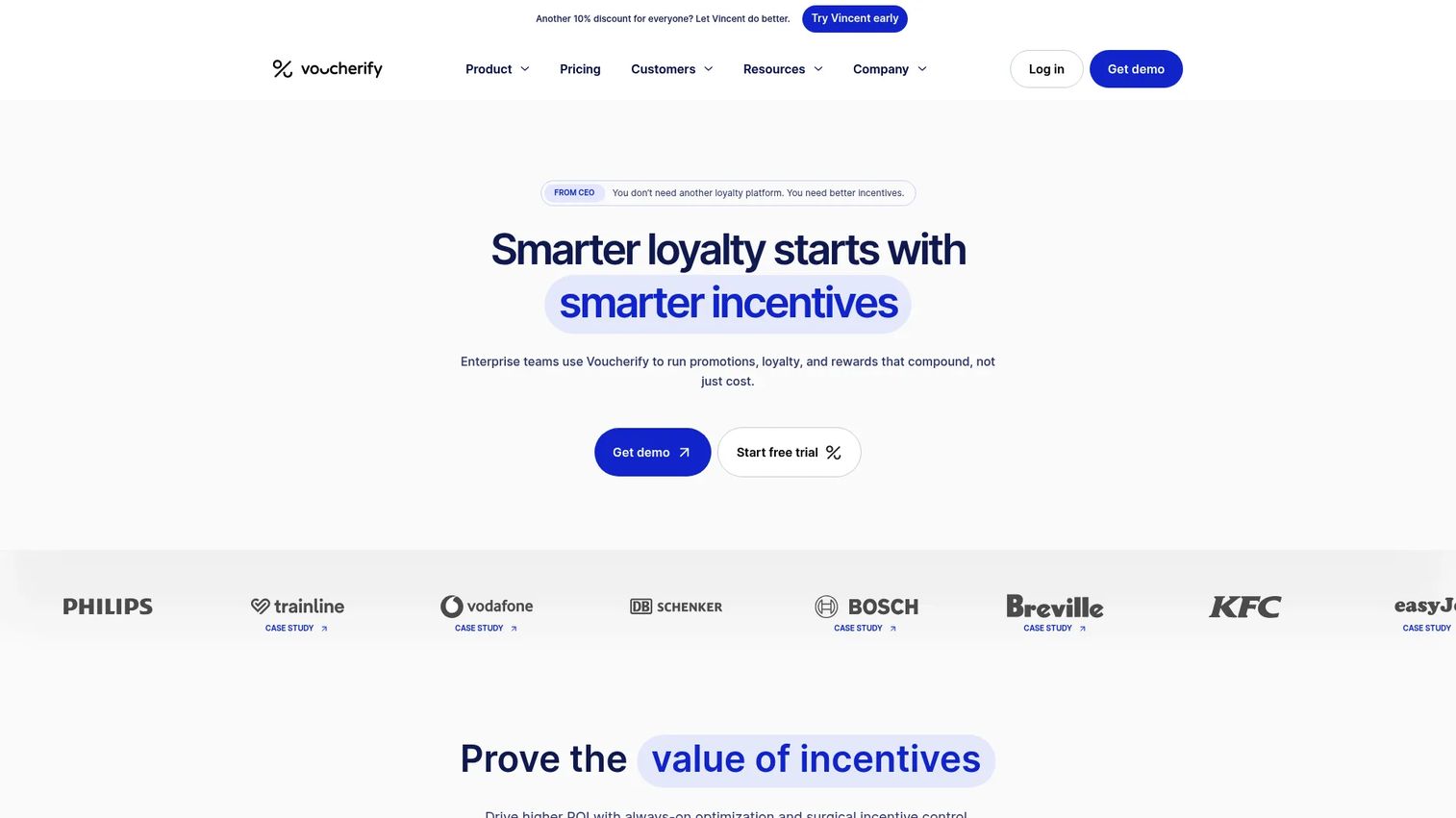
Voucherify is an API-first incentive optimization engine for promotions, loyalty, referrals, and rewards. It is not a classic rebate-only platform, and that is the point. For teams running rebate logic inside modern digital stacks, Voucherify's composable architecture lets engineering and commercial teams build, test, and iterate on incentive programs without rebuilding the underlying plumbing each time. It belongs on this list for organizations that treat rebates as one configurable incentive among many.
Best for: Enterprises and product teams running API-driven promotions and loyalty programs.
Key strengths
- Dynamic coupons and personalized promotions: build incentive logic, including rebate-style rewards, through a flexible API-first engine.
- Loyalty management and referrals: run loyalty, referral, and advocacy programs alongside rebate and promotion logic.
- Gift cards, credit, wallets, and bundling: a composable toolkit for teams experimenting with incentive structures at scale.
Why choose Voucherify: Voucherify fits product and commercial teams that want experimentation and control over incentive logic rather than a packaged finance workflow. The API-first design suits digital-native businesses running rebates, promotions, and loyalty inside the same composable stack. If your team prizes flexibility and the ability to test incentive structures rapidly, Voucherify offers that latitude where a traditional rebate-only platform would not.
Voucherify pricing: Voucherify publishes its pricing. The Organization plan starts at €1,200 per month, with a six-month option at €1,020 per month. An Enterprise plan is available with custom pricing, and a 60-day free trial lets teams evaluate before committing.
What to evaluate before you buy
Automation depth across the rebate lifecycle
Look beyond the demo flow. The real test is whether the platform automates calculations, claims validation, settlement, and payout without manual intervention at each step. Ask how accruals update against live transaction data and how the system handles retrospective and tiered agreements. Automation that breaks on complex structures is automation in name only.
ERP integration
Rebate data is only as trustworthy as the transaction data feeding it. Confirm how the platform handles ERP integration: which systems it connects to, whether posting is real-time or batch, and how cleanly rebate liabilities flow back to the general ledger. For SAP-native or ERP-heavy teams, this is often the single most important selection criterion.
Auditability and governance
Every accrual, claim, and payout needs an audit trail finance can defend. Evaluate versioning on agreements, approval workflows on program changes, and how the system documents the logic behind each calculation. Strong governance is what separates a margin control system from a glorified calculator. The same discipline you would expect from audit management tooling applies here.
Reporting and real-time visibility
You need dashboards and reporting that surface accruals, liabilities, claims status, and program performance without manual assembly. Check whether reporting is real-time, whether it serves both finance and commercial views, and whether you can forecast future rebate obligations from current data.
Fit for your rebate complexity
Match the tool to your actual programs. A team running a handful of straightforward payable rebates needs different depth than a distributor reconciling thousands of mixed payable and receivable agreements. Do not overbuy, and do not underbuy.
Conclusion
The right rebate management software depends on where your complexity lives. Enable leads for enterprise rebate operations where pricing and rebates are one strategic problem. Vistex is the pick for ERP-heavy and SAP-native teams that need rebates posting cleanly to the ledger. Pricefx wins when pricing optimization and rebates belong in one cloud-native system, and IMA360 suits teams consolidating rebates, chargebacks, and contracts into broad revenue management. For rebate-first focus with strong dashboards and audit capabilities, e-bate stands out. 360insights fits channel and partner incentive programs, and Voucherify serves teams running rebate logic inside modern, API-first stacks.
The core decision never changes: match the platform to your rebate complexity, your ERP environment, and your governance needs. The next step is practical. Shortlist two or three tools, then validate the parts that actually break in production: ERP integration, claims validation, and settlement and payout workflows. Run your messiest real agreement through each before you sign anything. The platform that handles your hardest case is the one that protects your margin.
FAQs
Rebate management software is a finance and commercial operations platform that automates the design, tracking, calculation, validation, settlement, and reporting of rebate programs. It replaces error-prone spreadsheets with a system that computes accruals against real transaction data, validates claims against agreement terms, and maintains an audit trail finance can defend.
The features that matter most are automated rebate calculations, claims validation, settlement and payout execution, ERP integration, an audit trail, and dashboards and reporting. Together these turn rebates from a manual reconciliation chore into a controlled, auditable process. Prioritize automation depth and integration over raw feature counts.
Margin leakage happens when accruals overstate what you owe or when receivable rebates go unclaimed. Rebate processing software closes both gaps by computing entitlements against actual volume and validating claims against agreement terms automatically. Accurate, real-time calculations remove the guesswork that quietly erodes profit across hundreds of agreements.
Yes. ERP integration is a core capability, since rebate calculations depend on accurate transaction data and rebate liabilities must post back to the general ledger. Platforms differ in which systems they connect to and whether posting is real-time or batch, so confirm the specifics for your ERP, particularly if you run SAP or another major enterprise system.
Pricing management sets and optimizes the prices you charge. Rebate management handles the incentives, both payable and receivable, that adjust the net value of those transactions after the fact. They are closely linked, which is why some platforms combine them, but rebate management adds claims validation, settlement and payout, and accrual tracking that pure pricing tools do not.
Finance teams use rebate software to track accruals and liabilities accurately, shorten close cycles, validate claims, execute settlements, and forecast rebate obligations. The audit trail lets them defend every figure to auditors and partners without rebuilding it from raw data. Real-time dashboards and reporting turn rebate data into reliable input for margin and profitability decisions.
Distributors sit in the middle of the channel, paying down-channel and claiming up-channel, so they need a vendor rebate management software platform that handles both payable and receivable rebates. Prioritize automation across tiered and retrospective agreements, clean ERP integration, claims validation, and strong reporting and audit capabilities to keep both sides of the rebate ledger accurate and defensible.