Your team needs one rule changed before a release. Security needs to check blast radius. Infrastructure needs to confirm the cloud equivalent. Someone needs evidence for the next audit. The request looks small. The workflow is not.
This is the shape of modern network security policy management (NSPM) for most organizations. Firewall rules accumulate faster than teams can document them. Cloud and on-premises controls live in separate consoles. Change approvals scatter across tickets, spreadsheets, and Slack threads. According to research by Dark Reading and Tufin published in their 2024 State of Firewall Security report, more than half of surveyed organizations manage over 50 firewalls, and nearly one-third manage 100 or more. Yet only half use any form of automation to govern those policies.
The result: Security reviews block releases, audit evidence takes too long to assemble, and engineering teams absorb the coordination cost. The right network security policy management software changes that equation. This guide helps you find it.
What's inside
This guide covers seven dedicated NSPM platforms and vendor-native management tools evaluated for 2026. It is written for product managers, security leaders, and infrastructure architects who need to reduce policy sprawl without sacrificing governance.
Selection criteria:
- Multi-vendor or vendor-native fit: Does the tool handle heterogeneous environments, or does it require standardization on one vendor?
- Policy lifecycle depth: Does it cover request, analysis, approval, deployment, and evidence retention?
- Integration breadth: Does it connect to ITSM, CMDB, cloud platforms, and identity systems?
- Verified pricing and ratings: All figures sourced from official vendor pages and current G2 listings
TL;DR
- Best overall for large multi-vendor environments: AlgoSec, with application-centric policy mapping across hybrid and multi-cloud estates
- Best for firewall policy lifecycle operations: FireMon Security Manager, with multi-vendor normalization across 120+ platforms and real-time drift detection
- Best for application connectivity and policy orchestration: Tufin, with automated change design and ITSM workflow integration
- Best for Palo Alto Networks estates: Palo Alto Networks Panorama, for centralized device and policy management within that vendor's stack
- Best for Cisco-centered hybrid security operations: Cisco Security Cloud Control, a cloud-delivered management layer across Cisco security infrastructure
- Best for virtualized and microsegmented environments: VMware NSX, with distributed firewalling and workload-level policy control
- Best for Cisco data-center fabric environments: Cisco ACI, with intent-based policy automation tied to application profiles
What is network security policy management software?
Network security policy management software (NSPM software) is a platform that centralizes how organizations create, analyze, change, enforce, document, and audit security policies across firewalls, cloud controls, segmentation platforms, and related network infrastructure.
NSPM differs from simply configuring a firewall. A firewall console manages that vendor's devices. NSPM adds a governance layer above those consoles: Normalizing policy data from multiple sources, automating change workflows, identifying risky or unused rules, and producing evidence for audits and enterprise security reviews.
What NSPM software manages:
- Firewall rules and associated objects
- Cloud security groups and access policies
- Network segmentation and microsegmentation policies
- Policy change requests, approvals, and version history
- Configuration drift and consistency across estates
- Audit evidence, compliance reports, and risk analysis
How NSPM compares to adjacent tools:
| Category | Primary job | What it does not replace |
|---|---|---|
| NSPM software | Governs policy lifecycle across network controls | Full SIEM, SOAR, or endpoint detection platform |
| Firewall management console | Manages one vendor's firewall estate | Multi-vendor normalization and enterprise workflow depth |
| Network analytics tool | Detects traffic patterns and anomalies | Policy change governance and rule lifecycle control |
| ITSM platform | Routes change requests | Technical policy analysis and rule validation |
NSPM is most valuable when policy changes cross multiple teams, vendors, or environments. The cloud compliance tools and cloud data security software categories address adjacent but distinct problems.
Key capabilities to look for:
- Centralized policy visibility across vendor-native consoles
- Automated risk analysis for overly permissive or conflicting rules
- Change workflow automation with approval chains and audit trails
- Configuration history and drift detection
- Compliance reporting tied to actual policy state
The NSPM software market was valued at $2.96 billion in 2025 and is projected to reach $5.55 billion by 2032, according to 360iResearch (2026). That growth reflects how governance requirements expand alongside hybrid infrastructure.
When to use network security policy management software
Standardize firewall changes across teams
Product releases and infrastructure changes regularly require security signoff. Without a repeatable request, review, approval, and implementation flow, each change becomes an ad-hoc coordination problem. NSPM platforms introduce structured change management, so security approvals become a predictable step in the release cadence rather than a recurring bottleneck. For product managers, this is a direct opportunity cost reduction.
Govern hybrid and multi-vendor network policies
Manual administration grows expensive when policy controls span appliance firewalls, cloud security groups, software-defined networking, and microsegmentation. Every new environment adds context-switching overhead for the teams responsible for maintaining consistency. A shared policy layer normalizes disparate controls into a single view, reducing the instrumentation debt that accumulates across estates. This matters especially when a product platform spans multiple infrastructure layers.
Prepare evidence for audits and customer security reviews
Enterprise customers increasingly require detailed security documentation before signing contracts. Regulatory audit cycles demand change records, rule analysis, and access evidence. NSPM platforms retain policy history and generate the reports those reviews require. Using these tools does not make an organization compliant with any regulation, but they do support the evidence collection that compliance programs depend on.
Network security policy management software comparison
The right platform depends on whether you need cross-vendor normalization, vendor-native control, application connectivity analysis, or data-center segmentation. Use this table as a starting shortlist, then match the tool to your estate's specific shape.
| # | Product | Best for | Key differentiator | Pricing | G2 rating |
|---|---|---|---|---|---|
| 1 | AlgoSec | Large multi-vendor enterprises | Application-centric policy management and AI-powered risk analysis | Contact for quote | 4.5/5 |
| 2 | FireMon Security Manager | Firewall policy lifecycle operations | Multi-vendor normalization across 120+ platforms | Contact for quote | 4.4/5 |
| 3 | Tufin | Application connectivity and policy orchestration | Automated change design with ITSM integration | Contact for quote | 4.4/5 |
| 4 | Palo Alto Networks Panorama | Palo Alto Networks firewall estates | Centralized device, policy, and logging management | Contact for quote | N/A |
| 5 | Cisco Security Cloud Control | Cisco-centered hybrid security operations | Cloud-delivered centralized Cisco security management | Contact for quote | N/A |
| 6 | VMware NSX | Virtualized and microsegmented environments | Distributed firewalling and software-defined segmentation | Contact for quote | N/A |
| 7 | Cisco ACI | Cisco data-center fabric environments | Intent-based policy control for application-centric infrastructure | Contact for quote | 4.3/5 |
Best 7 network security policy management software tools for 2026
1. AlgoSec

AlgoSec provides an AI-powered, application-centric security management platform built for organizations managing complex hybrid and multi-cloud networks. The platform maps application connectivity across data centers, public cloud, private cloud, and containers, then ties policy changes to the business applications they affect. Its AI assistant lets teams describe policy intent in plain language and receive analysis and recommendations without requiring deep firewall expertise.
Best for: Enterprise security teams managing policy across several firewall vendors, cloud platforms, and segmentation layers simultaneously.
Key features
- End-to-end application connectivity mapping across hybrid environments
- AI-powered natural-language security policy assistance
- Automated policy changes tied to application connectivity context
- Multi-cloud security management and CSPM capabilities
- Continuous compliance monitoring and risk prioritization
Why choose AlgoSec: AlgoSec fits organizations where policy decisions directly affect application delivery and cloud migration programs. The application-centric model reduces the coordination cost of large change requests by showing exactly which applications a proposed rule change would affect. For product managers whose releases regularly trigger security tickets, that visibility translates to faster approval cycles.
AlgoSec pricing: AlgoSec prices its platform based on the organization's network environment and protected information volume. Contact AlgoSec directly or through a reseller to request a quote.
G2 rating: 4.5/5, based on the current AlgoSec listing on G2.
2. FireMon Security Manager
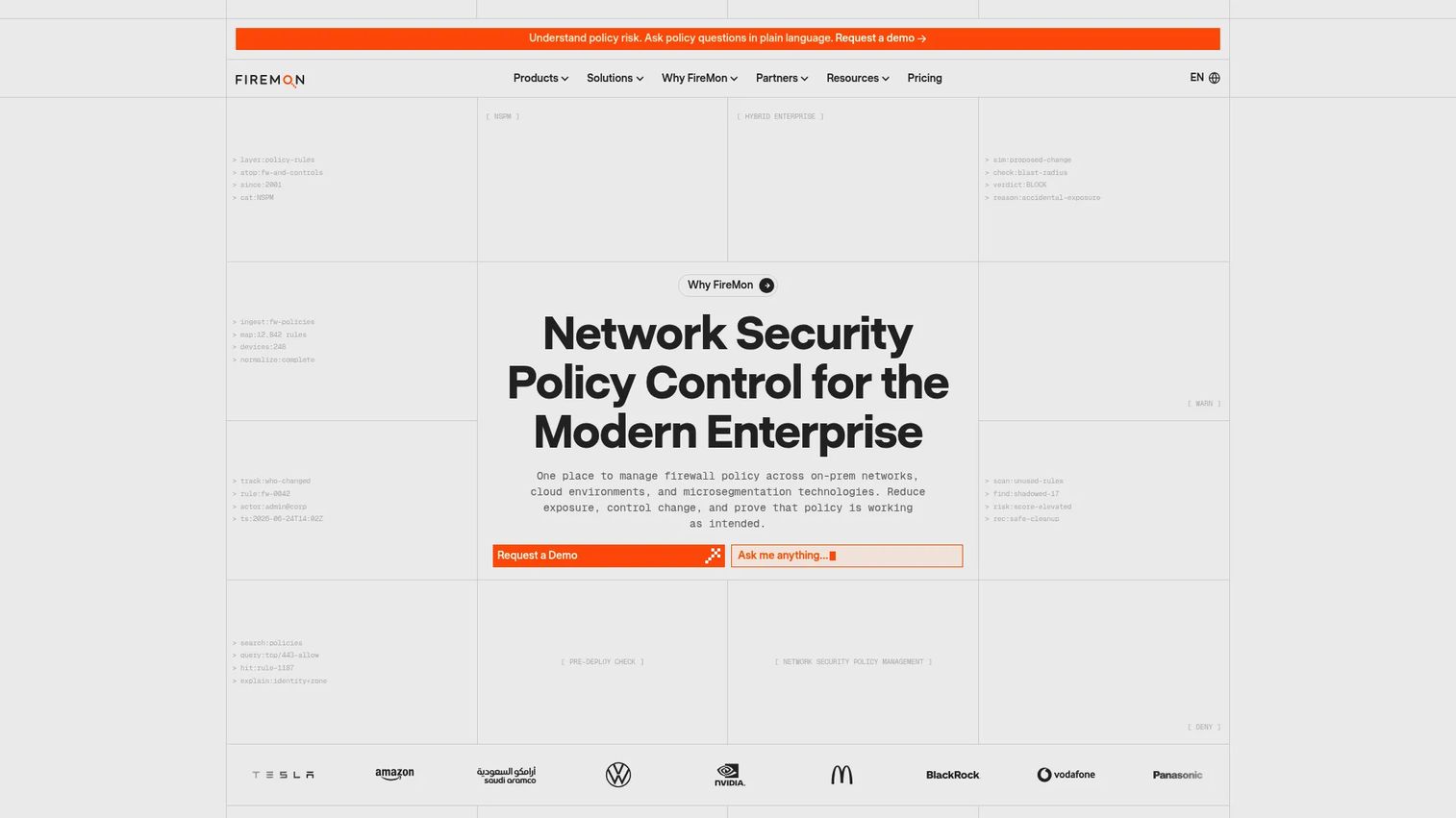
FireMon Security Manager is a dedicated NSPM platform that normalizes firewall and cloud policy data from more than 120 vendors into a single, searchable database. It detects rule changes in real time, tracks configuration history, and surfaces unused, duplicate, and shadowed rules that expand attack surface. The platform's API-first architecture connects to ITSM tools and CMDB systems, making it a strong fit for organizations that already have structured change management workflows.
Best for: Security operations teams whose primary challenge is firewall policy sprawl across a heterogeneous estate.
Key features
- Multi-vendor normalization across 120+ firewall and cloud platforms
- Real-time rule change detection and alerting
- Configuration history, version control, and drift detection
- Rule cleanup recommendations for unused, duplicate, and shadowed rules
- API-first architecture with centralized policy object library
Why choose FireMon Security Manager: FireMon excels when the main operational problem is policy sprawl and inconsistent change controls across many firewalls. Its normalization engine gives security teams a consistent data model regardless of the underlying vendor mix. Product managers who need predictable security approval timelines during releases or enterprise onboarding find the change workflow tooling directly relevant.
FireMon Security Manager pricing: Security Manager is the required foundation for FireMon deployments, and pricing is tailored to environment size, selected modules, and support tier. FireMon offers a free firewall assessment to help scope initial requirements. Request a customized quote through FireMon's sales team.
G2 rating: 4.4/5, based on the current FireMon listing on G2.
3. Tufin
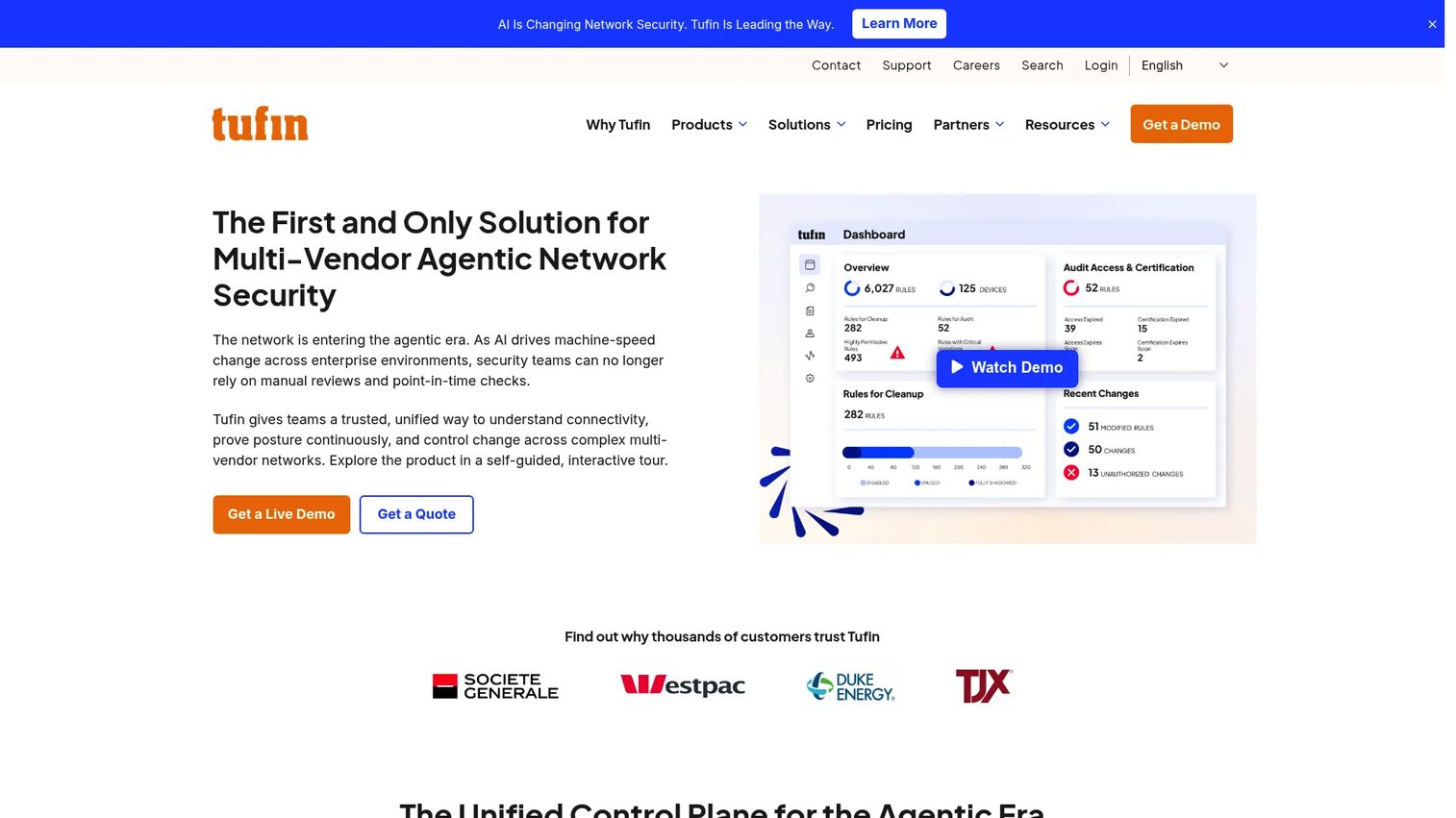
Tufin operates as an AI-powered unified control plane for network security policy management across multi-vendor hybrid environments. Its distinguishing capability is connecting application change requests to the network policy decisions they require, designing the necessary rule changes, assessing risk, and automating provisioning. Tufin integrates with ITSM platforms so that network policy changes follow the same approval workflows as other infrastructure changes.
Best for: Organizations where a policy request cannot be evaluated in isolation from the applications and connectivity paths it affects.
Key features
- Centralized visibility across firewalls, cloud, SASE, routers, and microsegmentation
- Automated network change design, risk assessment, and provisioning
- Security policy optimization and rule cleanup
- Vulnerability exposure prioritization across the network
- ITSM workflow integration for structured change approval
Why choose Tufin: Tufin is the strongest fit when release management and network policy are tightly coupled. Its ability to trace a change request through application dependencies, design the required firewall rules, and validate the result before provisioning reduces the engineering interruptions that policy bottlenecks create. For product teams managing complex platform dependencies, that automation shortens the feedback loop on security decisions.
Tufin pricing: Tufin offers three subscription tiers: SecureTrack+, SecureChange+, and Enterprise. All tiers use usage-based pricing by device and application count, with unlimited users. Contact Tufin to discuss your environment and receive a quote.
G2 rating: 4.4/5, based on the current Tufin listing on G2.
4. Palo Alto Networks Panorama
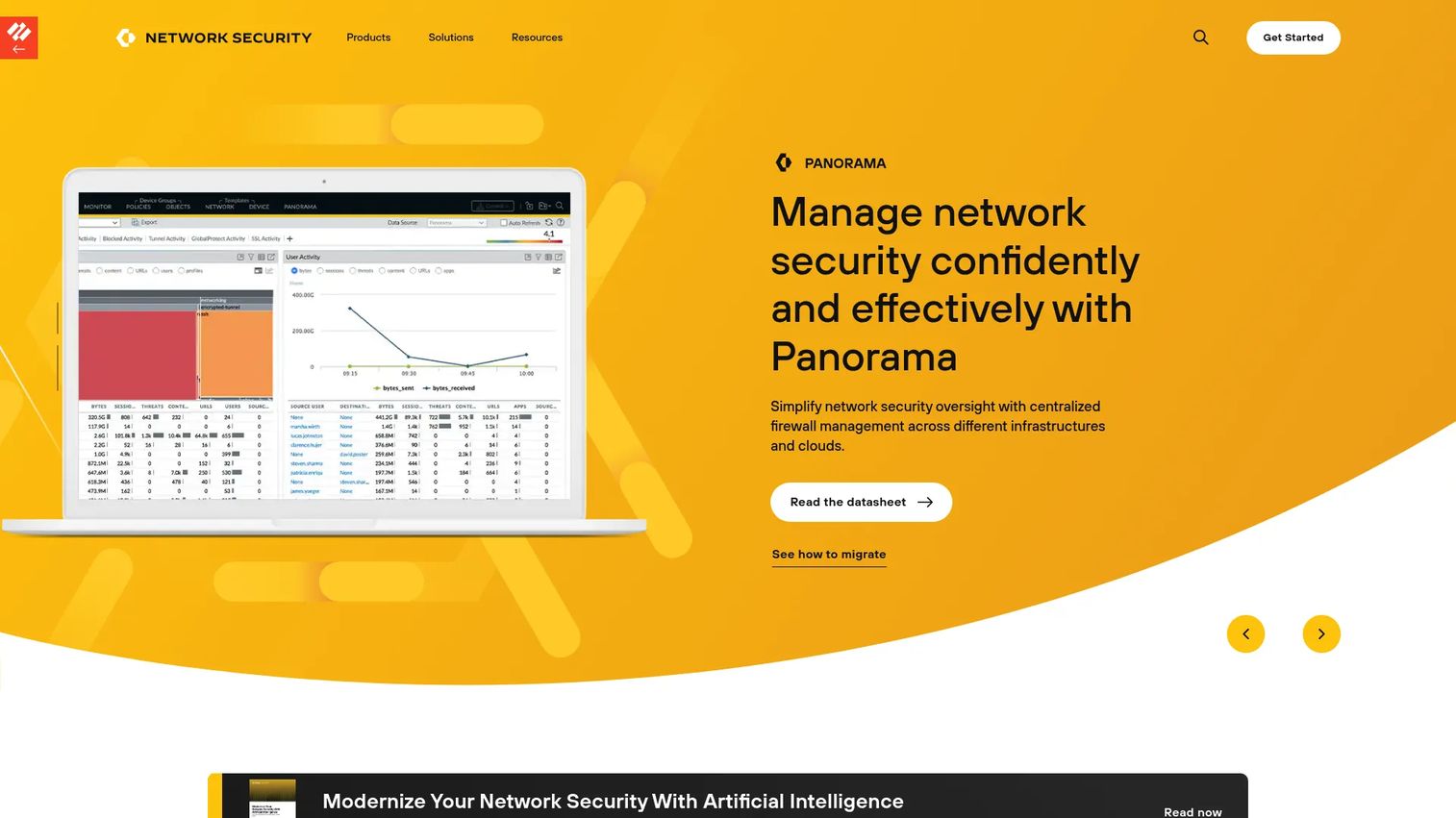
Palo Alto Networks Panorama is a vendor-native management center for organizations that have standardized on Palo Alto Networks firewalls. It provides centralized configuration and policy management, aggregated logging and monitoring, shared templates, device groups, role-based access control, and software and content update management across distributed firewall deployments.
Best for: Security teams operating predominantly within a Palo Alto Networks firewall estate that need centralized visibility and policy control.
Key features
- Centralized firewall configuration and shared policy management
- Aggregated logging, monitoring, analysis, and reporting
- Device group and template management for consistent configuration
- Role-based access control across the management environment
- Centralized software and content update management
Why choose Palo Alto Networks Panorama: Panorama delivers strong operational value when the infrastructure is already consolidated on Palo Alto Networks. It eliminates per-device management overhead and provides consistent policy enforcement across sites. The honest limitation to name here: Organizations with a mixed firewall estate that includes other vendors will encounter gaps in cross-vendor normalization and should evaluate whether a dedicated NSPM platform is more appropriate for their governance requirements.
Palo Alto Networks Panorama pricing: Panorama licensing varies by deployment model, hardware, or virtual appliance. Palo Alto Networks does not list prices on its product page. Contact a Palo Alto Networks partner or sales representative for current licensing details.
5. Cisco Security Cloud Control
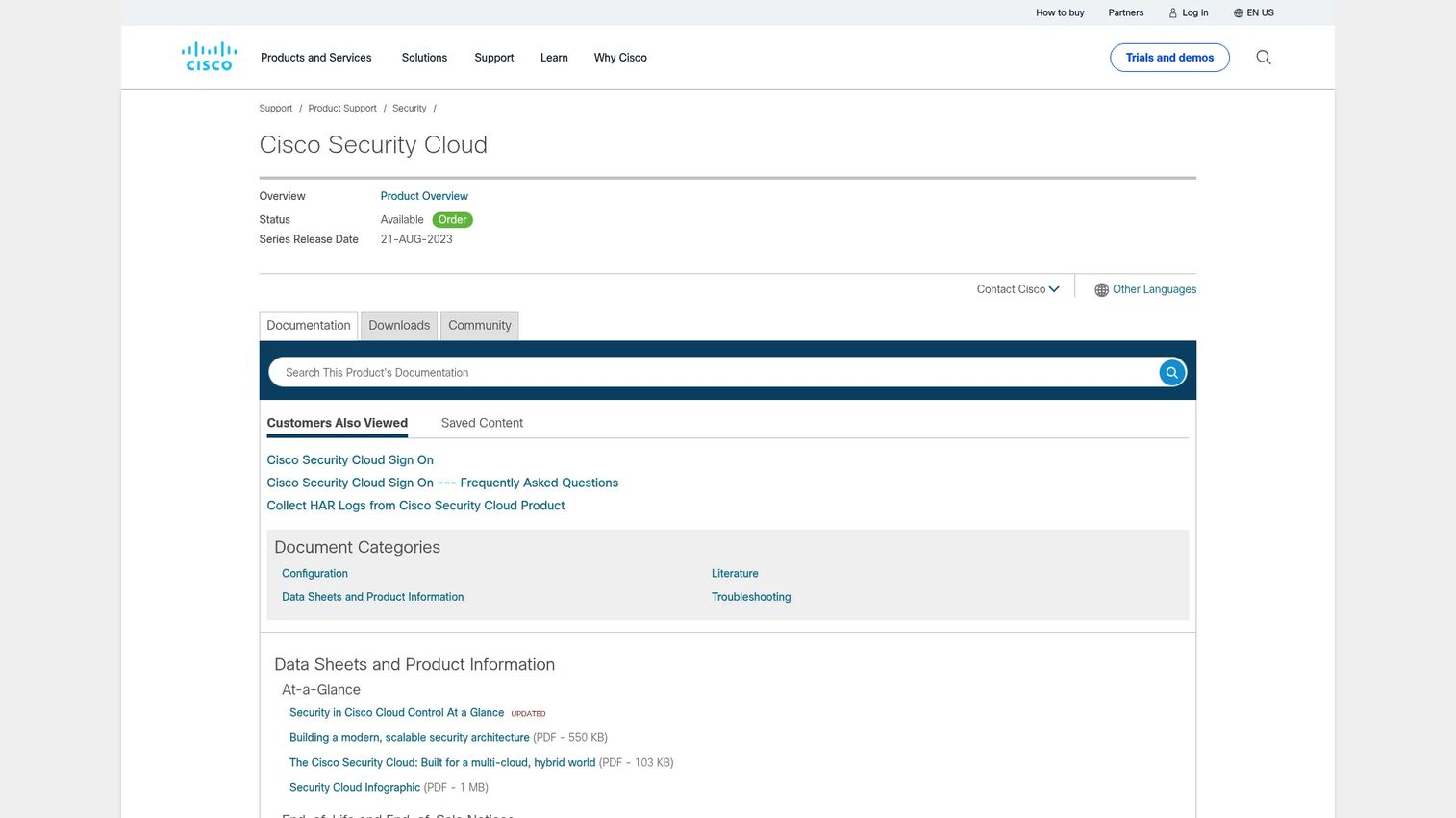
Cisco Security Cloud Control is a cloud-native management platform for centralizing operations across Cisco security infrastructure. It covers Cisco Secure Firewall, Multicloud Defense, Hypershield, Secure Workload, Secure Access, and AI Defense from a single interface. The platform includes an AI Assistant, AIOps capabilities, policy analysis, optimization tools, and automated workflow support for hybrid and multicloud deployments.
Best for: Organizations with a Cisco-centered security stack that want centralized, cloud-based management without running on-premises management infrastructure.
Key features
- Centralized management across Cisco Secure Firewall and related products
- Real-time network traffic visibility and security event monitoring
- AI Assistant and AIOps for policy analysis and optimization
- Automated workflows for policy changes across supported Cisco products
- Hybrid and multicloud deployment support
Why choose Cisco Security Cloud Control: This platform fits teams that have already invested in Cisco security infrastructure and want to reduce the operational overhead of managing multiple Cisco consoles separately. It is not a universal multi-vendor NSPM replacement, so organizations with significant non-Cisco firewall infrastructure should evaluate its coverage scope before committing. For product managers in Cisco-heavy environments, it supports roadmap predictability by reducing the number of operational handoffs during security reviews.
Cisco Security Cloud Control pricing: Certain Cloud-Assist capabilities are available without a subscription purchase. The firewall management subscription uses 12 to 60 month terms, with pricing determined by configured product SKUs, device quantities, and logging requirements. Contact Cisco or a certified reseller for a current quote.
6. VMware NSX

VMware NSX is a software-defined networking and security platform that delivers Layer 2 through Layer 7 services across private, public, hybrid, and multi-cloud environments. Its distributed firewall enforces policy at the workload level rather than at the network perimeter, making it purpose-built for microsegmentation in virtualized environments. NSX offers multiple editions, from NSX Professional through NSX+ Enterprise, covering logical switching, routing, gateway firewalling, VPN, load balancing, and centralized policy management.
Best for: Infrastructure teams building segmentation controls inside virtualized or software-defined data centers where policy follows workloads rather than physical appliances.
Key features
- Distributed firewall policy enforcement at the workload level
- Microsegmentation controls across virtual and cloud workloads
- Logical switching, routing, and gateway firewalling
- Multi-cloud networking and centralized policy management
- VPN and load balancing capabilities
Why choose VMware NSX: NSX excels when the policy boundary needs to follow individual workloads and application components rather than physical network perimeters. Its use case is architecturally distinct from a broad multi-vendor firewall governance platform. Teams designing private cloud or virtualized infrastructure where segmentation is a core platform requirement will find NSX directly relevant. Organizations primarily managing physical firewall estates should evaluate whether NSX alone addresses their governance needs.
VMware NSX pricing: VMware by Broadcom offers multiple NSX editions, including NSX Professional, Advanced, Enterprise Plus, and NSX+ Standard through Enterprise. Prices are not displayed on product materials. Contact Broadcom or an authorized reseller for current licensing terms.
7. Cisco ACI
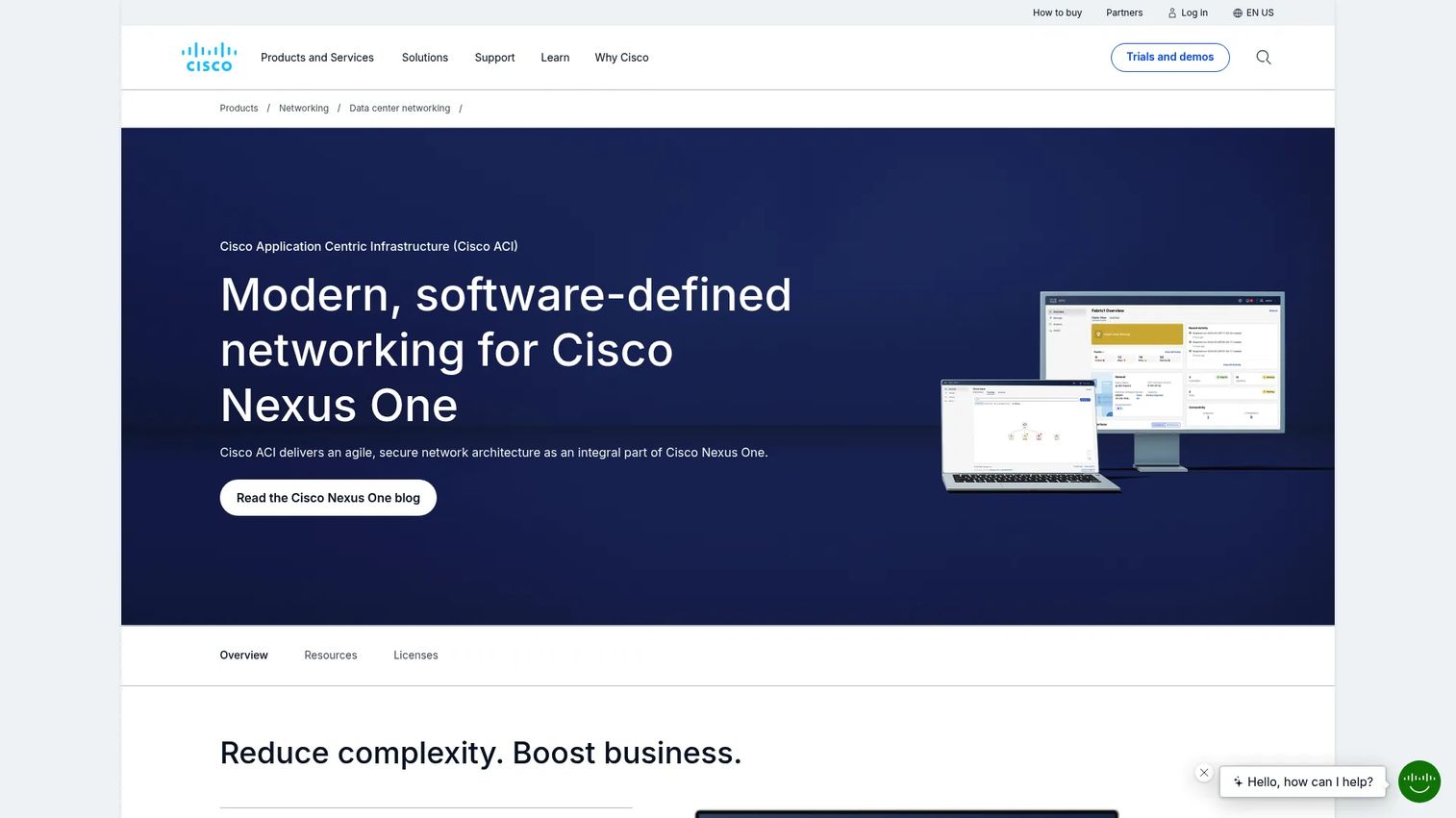
Cisco ACI (Application Centric Infrastructure) is a policy-based data-center networking platform that automates, secures, and manages physical and virtual workloads across on-premises, hybrid, and multicloud environments. ACI uses intent-based networking, where administrators define application profiles and connectivity requirements, and the system translates those requirements into network configuration. It requires Cisco APIC controllers and Nexus 9000 Series spine and leaf switches.
Best for: Cisco data-center teams managing application-centric network policy within ACI fabric environments.
Key features
- Policy-driven network automation and centralized management via APIC
- Zero-trust security, policy enforcement, and microsegmentation
- Real-time network health monitoring, visibility, and analytics
- Multisite, multipod, remote-leaf, and multicloud connectivity
- Open APIs and integrations with virtualization, Kubernetes, and ecosystem tooling
Why choose Cisco ACI: ACI is a strong fit when the data-center network architecture is built around Cisco ACI fabric and application-driven policy is a design requirement. Its intent-based model aligns network behavior to application needs rather than requiring manual rule construction for each connectivity path. For product managers making large-scale platform architecture decisions where application networking, security policy, and infrastructure automation are tightly linked, ACI represents a structural capability investment. It is less relevant for buyers who need broad third-party firewall policy governance across many different vendor consoles.
Cisco ACI pricing: Cisco offers Networking Essentials, Advantage, and Premier subscription tiers for ACI. Prices are not published on official pages. Contact Cisco or a certified partner for current licensing details.
G2 rating: 4.3/5, based on the current Cisco ACI listing on G2.
Considerations when choosing network security policy management software
Match the tool to your estate's shape
A vendor-native console can be sufficient when the environment is already standardized on one firewall vendor. Dedicated NSPM platforms become more valuable when policies cross multiple firewall vendors, cloud controls, ITSM workflows, or segmentation layers. Start by mapping your current estate before evaluating tools.
Evaluate the policy lifecycle, not just the dashboard
Ask how the platform supports each stage: Intake, analysis, approval, implementation, validation, evidence retention, and cleanup. A clear policy inventory is useful, but it does not solve change governance on its own. Push vendors to demonstrate the full workflow, not only the visibility layer. Also consider your audit management software requirements alongside NSPM, since the two categories address related but distinct evidence needs.
Check integration depth before committing
Verify integrations with your ITSM, CMDB, cloud platforms, network devices, and identity systems. Each integration gap creates recurring engineering work. Ask specifically which ITSM tickets can trigger automated policy analysis and which require manual steps. The application portfolio management software your team already uses may affect which NSPM integrations matter most.
Define the evidence you need before evaluating vendors
List the reports your audit, compliance, and enterprise sales teams require today. Confirm whether each candidate tool can produce policy history, rule analysis, and access evidence in the format those programs expect. Avoid discovering a gap after deployment.
Plan for ownership and ongoing maintenance
NSPM software surfaces policy debt. Identify who owns rule cleanup, exception workflows, and release-linked policy changes before selecting a platform. Without clear ownership, the tooling reveals the problem but cannot resolve it.
Conclusion
The seven tools above address different shapes of the same underlying problem: Policy accumulates faster than governance does.
For broad, multi-vendor estates, AlgoSec and FireMon Security Manager provide the deepest cross-platform normalization and lifecycle tooling. Tufin adds application connectivity context that matters when releases regularly trigger policy decisions. Palo Alto Networks Panorama and Cisco Security Cloud Control are strong choices when the infrastructure is already consolidated on those vendors' products, and the evaluation question is operational efficiency rather than cross-vendor coverage. VMware NSX and Cisco ACI address the segmentation and data-center layers that the other platforms treat as secondary concerns.
The right choice starts with the shape of your network, not a feature checklist. Map where policies are created, where changes stall, what evidence your teams must produce, and which releases depend on security signoff. That analysis will narrow this list faster than any demo will. For related context on governance and lifecycle management decisions, the guides on asset lifecycle management software and best contract lifecycle management software cover adjacent organizational concerns.
FAQs
Network security policy management software (NSPM software) is a platform that centralizes how organizations create, analyze, change, enforce, document, and audit security policies across firewalls, cloud controls, segmentation platforms, and related network infrastructure. It adds a governance layer above individual vendor consoles, normalizing policy data and automating change workflows across heterogeneous environments. NSPM is distinct from SIEM, SOAR, or endpoint security platforms, which address threat detection and response rather than policy lifecycle control.
Firewall management typically focuses on configuring and operating a single vendor's firewall estate, through that vendor's native console. NSPM adds multi-platform governance: Normalizing policy data from many sources, managing change request workflows with approval chains, analyzing risk across the full rule set, and retaining audit evidence. The key difference is scope. Firewall management is an operational function; NSPM is a governance function that sits above it.
Support for cloud security groups varies significantly by vendor and platform. AlgoSec and FireMon Security Manager both claim multi-cloud coverage, and Tufin supports cloud alongside on-premises and SASE environments. Cisco Security Cloud Control and VMware NSX address cloud within their respective infrastructure ecosystems. Before selecting any platform, verify coverage for your specific cloud providers, the cloud-native controls you use, and how the tool handles the shared responsibility model for cloud security.
NSPM platforms can support audit evidence collection by retaining policy history, change records, rule analysis, and configuration reporting. Teams use this retained data to answer questions from auditors, regulators, and enterprise security reviewers more quickly than manual methods allow. Using NSPM software does not make an organization compliant with any law or regulatory framework. Compliance requires controls, processes, and accountability structures that extend well beyond the tooling.
Prioritize multi-vendor coverage that matches your actual estate, a complete policy lifecycle workflow covering request through cleanup, risk analysis for unused and overly permissive rules, configuration history and drift detection, and integration with your ITSM and CMDB. Beyond those fundamentals, the weight of each feature depends on whether your primary challenge is operational hygiene, change governance, audit evidence, or platform scalability. The application security testing software and best AI security posture management tools categories address related but adjacent security concerns.
A vendor-native console can be sufficient for a standardized single-vendor estate. When the environment is homogeneous and change volumes are manageable, native tooling often covers the operational basics. Organizations with multiple firewall vendors, cloud security groups, or complex multi-team approval processes typically outgrow what native consoles offer. The gaps show up most clearly when policy changes require coordinating across different consoles simultaneously or when audit evidence must span multiple platforms.
NSPM platforms surface rules that are unused, duplicate, shadowed by other rules, or overly permissive. By making these patterns visible, they give security teams the data needed to prioritize cleanup and tighten the attack surface. Most platforms also run risk analysis on proposed changes before implementation, flagging connectivity paths that would create unacceptable exposure. Security teams still define the risk thresholds and approve changes; the software provides the analysis to make those decisions faster and more consistent.
Enterprise NSPM pricing is typically determined by device count, the number of environments covered, selected modules, integration requirements, support level, and contract duration. All seven platforms reviewed in this guide require a quote from the vendor or a reseller. None publish entry-level prices on their product pages. When building a business case, account for implementation, integration, and ongoing training costs alongside the license, since the total cost of ownership depends heavily on how complex the initial policy data migration turns out to be. For governance tools in adjacent categories, the guide on cloud compliance tools covers pricing patterns for related infrastructure.