Your team ships a new cloud data store. Two weeks later, another SaaS integration goes live. The AI assistant gets approved. Somewhere in that sequence, the data map expands faster than anyone can inspect it, and your release date does not move.
IBM's 2026 Cost of a Data Breach Report found that one in four malicious breaches are now AI-enabled, costing companies an average of $6 million per incident. That number matters less as a scare statistic and more as a signal: Cloud architectures that grow faster than their controls create a measurable financial exposure.
For product managers, this is not a security team problem to hand off. Every new integration, warehouse, or AI workflow your team owns adds to the data map. The real question is not which cybersecurity platform is most popular. It is which controls cover the specific risks your cloud architecture, SaaS stack, and AI usage introduce. Which platform gives your team enough visibility and control without creating another operational burden?
What's inside
This guide is built for product managers, security leads, and cloud architects who are actively shortlisting tools.
- Ten cloud data security software tools covering cloud, hybrid, and SaaS environments
- Selection criteria: Data discovery coverage, policy enforcement, AI governance, multicloud visibility, and integration depth
- A category map explaining where DSPM, DLP, CASB, and recovery each belong
- A verified comparison table with pricing posture and G2 ratings
- A PM-focused buying checklist covering engineering dependency, false-positive rate, and policy ownership
TL;DR
- Best for AI-native data discovery: Cyera for teams whose first gap is knowing what data exists and where AI can reach it
- Best for permissions and insider risk: Varonis for organizations that need to understand who can access sensitive data, not just where it sits
- Best for Microsoft-centric environments: Microsoft Purview for teams already running on Azure, Microsoft 365, and related services
- Best for unified SaaS and cloud protection: Netskope for enterprises applying consistent data controls across SaaS apps, web traffic, and cloud access
- Best for cyber resilience and recovery: Rubrik for organizations whose primary gap is restoring data after ransomware or operational failure
Start with your control gap. DSPM finds and prioritizes exposure. DLP applies enforcement policies. CASB governs SaaS usage. Recovery platforms restore data after an incident. No single tool covers all four jobs equally well.
What is cloud data security software?
Cloud data security software helps organizations discover, classify, govern, protect, monitor, and recover sensitive data stored or processed across cloud infrastructure, SaaS applications, cloud data platforms, and hybrid environments.
Core jobs cloud data security software performs
- Data discovery and classification: Locate regulated, confidential, and business-critical data across structured and unstructured repositories
- Data security posture management (DSPM): Identify exposure, excessive permissions, risky configurations, and policy gaps before they become incidents
- Data loss prevention (DLP): Apply controls that stop sensitive data from leaving approved channels, whether across endpoints, web, or SaaS
- SaaS and cloud access governance (CASB): Monitor data movement and risky behavior across cloud applications
- Detection and response: Investigate suspicious activity touching sensitive data and generate audit evidence
- Backup and recovery: Restore cloud data and workloads after deletion, ransomware, or operational failure
Key capabilities to evaluate
- Multicloud and SaaS coverage across AWS, Azure, Google Cloud, and SaaS platforms
- Sensitive-data classification accuracy and false-positive rate
- Identity and entitlement context tied to classification findings
- Policy creation, enforcement, and exception-handling workflows
- AI and generative AI governance across prompts, uploads, and agent actions
- Alert prioritization with routing into SIEM, ticketing, or SOAR
- Audit evidence and reporting for privacy, security, and procurement reviews
- Integration with identity providers, data catalogs, and incident-response tools
Category boundary
Cloud security posture management (CSPM) focuses on infrastructure configuration: Cloud accounts, workload settings, and identity permissions at the infrastructure layer. Cloud data security software centers on the data itself, covering where it lives, who can reach it, how it moves, and whether controls are functioning. Many organizations run both, but they answer different questions.
The control lifecycle runs: Discover → Classify → Protect → Detect → Recover. Tools in this guide each own a distinct part of that chain.
When to use cloud data security software
Launching new cloud data workflows
Use it before a new product feature introduces a data warehouse, object storage bucket, AI capability, or third-party analytics integration. Security reviews cost less when teams can map data before launch rather than reconstruct data flows after an incident creates an audit trail.
Governing sensitive data across hybrid and multicloud environments
Use it when customer data, health records, or financial information spans multiple cloud providers, SaaS platforms, and on-premises repositories. Consistent classification and policy coverage across environments is harder to maintain without a dedicated platform. Gaps between environments are where control failures tend to accumulate.
Addressing AI and shadow AI exposure
Use it when employees or product teams use generative AI tools, embedded AI features, internal copilots, or agentic workflows. The buyer needs visibility into what data flows into prompts and uploads, which AI applications are sanctioned, and whether sensitive-data paths run through models or agents without governance controls. Our AI governance tools roundup covers the tooling layer above these controls, if that context is useful.
Cloud data security software comparison
These tools overlap, but they do not solve identical problems. Start with the control gap your team needs to close. A DSPM platform will not replace recovery. A recovery platform will not replace SaaS policy enforcement. The right stack depends on where sensitive data lives and how your teams use it.
| # | Product | Best for | Key differentiator | Pricing | G2 rating |
|---|---|---|---|---|---|
| 1 | Cyera | AI-native data discovery and DSPM | Unified DSPM, DLP, and AI-SPM in one platform | Custom pricing | 4.6/5 |
| 2 | Varonis | Data permissions and insider risk | Deep access governance with behavioral analytics | Custom pricing | 4.7/5 |
| 3 | Microsoft Purview | Microsoft-first environments | Governance, compliance, and protection across Microsoft data estates | From $12/user/month | 4.7/5 |
| 4 | Netskope | Cloud, SaaS, and web data protection | Data-centric SSE with CASB, DLP, and cloud controls | Custom pricing | 4.4/5 |
| 5 | Palo Alto Networks | Consolidated enterprise security stacks | Broad cloud security portfolio with data protection controls | From $1.50/hr (Cloud NGFW) | 4.4/5 |
| 6 | Zscaler | Zero trust data protection | Inline data protection across users, apps, and cloud access | Custom pricing | 4.5/5 |
| 7 | BigID | Privacy, governance, and AI data discovery | Data intelligence spanning privacy, security, governance, and AI risk | Custom pricing; free trial available | 4.3/5 |
| 8 | Securiti | Data controls across privacy and AI | DataAI Command Platform for unified discovery and governance | Custom pricing | 4.6/5 |
| 9 | Forcepoint Data Security Cloud | Unified DLP and adaptive controls | DLP, DSPM, and cloud app security in one platform | Custom pricing | 4.2/5 |
| 10 | Rubrik | Cyber resilience and cloud data recovery | Backup, cyber recovery, and threat monitoring combined | Custom pricing | 4.6/5 |
Pricing and G2 ratings verified October 2026 from each vendor's official pricing page and live G2 listing.
Best 10 cloud data security software tools for 2026
1. Cyera
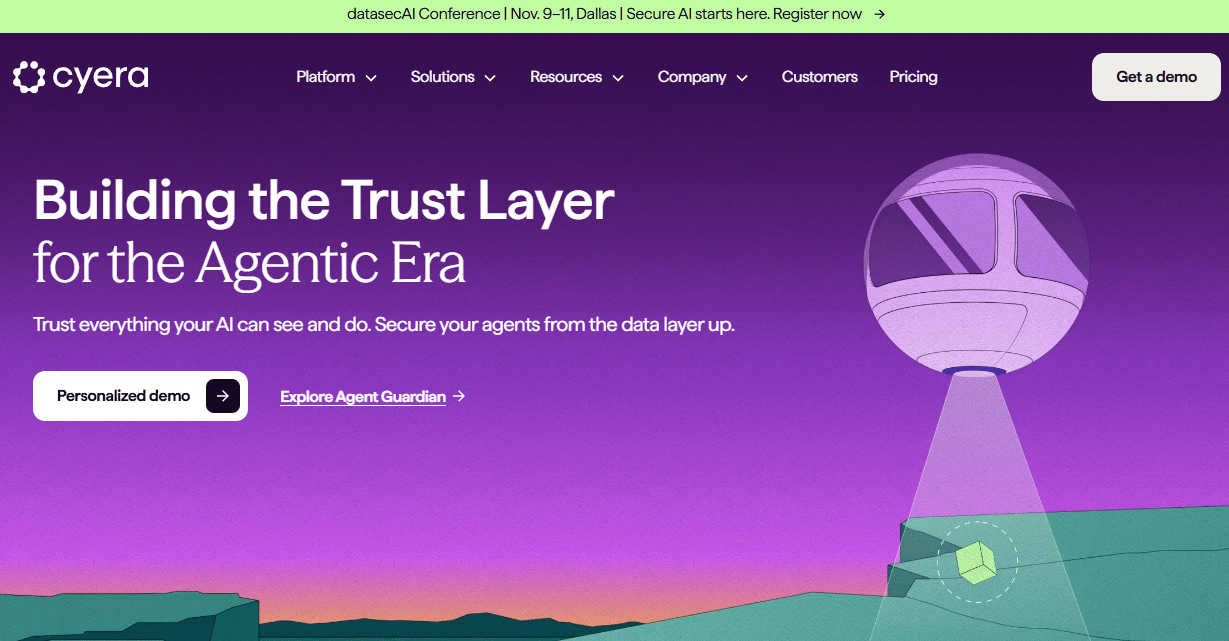
Cyera is an AI-native data security platform covering sensitive-data discovery, security posture management, and AI risk governance across cloud, SaaS, on-premises, and AI environments. It takes an agentless approach to discovery, which reduces the instrumentation burden on engineering teams. The platform combines DSPM, DLP, and AI-SPM into a single control layer.
Best for: Product and security teams whose first gap is understanding what sensitive data exists, where it lives across cloud and AI systems, and which exposures to address first.
Key features
- DSPM with agentless cloud and SaaS discovery
- AI-native data classification across structured and unstructured data
- AI-SPM for inventorying AI assets, identities, and access paths
- Real-time AI Runtime Protection covering DLP and browser controls
- Optional add-ons: Data Subject Request Automation, DataWatcher
Why choose Cyera: It fits organizations whose data-first security program needs a current, accurate inventory before policies can be written or enforced. Teams that already have enforcement tools but lack discovery and posture context get the most value here.
Cyera pricing: Cyera sells two comprehensive plans covering DSPM and DLP, with optional add-ons, all priced by custom quote from their sales team. Reviewer-reported pricing context can be found on G2's Cyera pricing tab for rough market benchmarks.
G2 rating: 4.6/5, verified October 2026.
2. Varonis
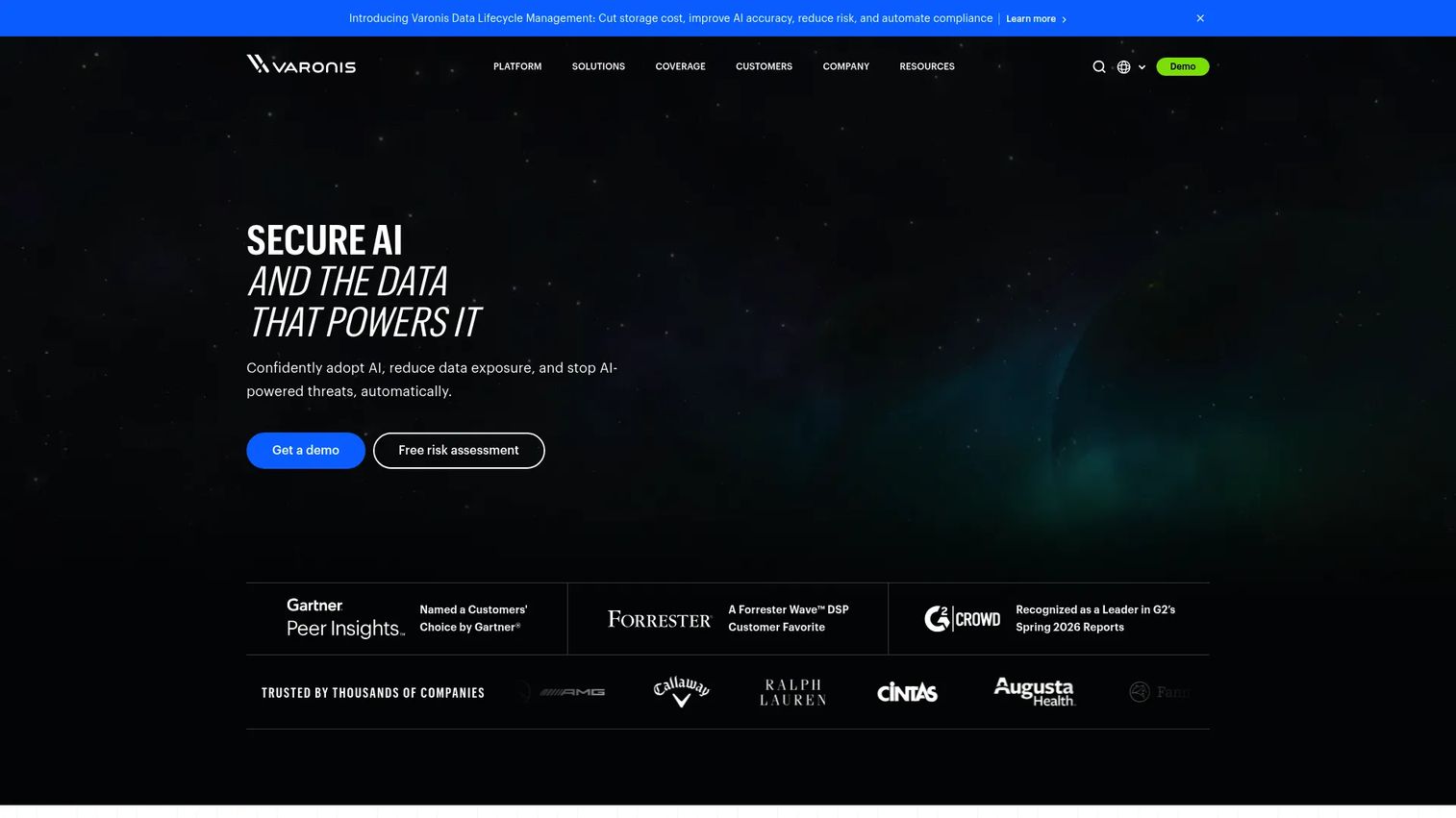
Varonis provides a data and AI security platform focused on access governance, sensitive-data discovery, and behavioral threat detection. Where many tools start with data classification, Varonis anchors its model in permissions and entitlements: Who can reach data, whether that access is justified, and whether behavior patterns signal a threat.
Best for: Organizations managing high-volume data estates where customer, analytics, support, and operations systems expose sensitive records to broad internal groups.
Key features
- Sensitive-data discovery and classification across cloud and on-premises
- Permissions analysis with exposure scoring
- Automated remediation of risky access and misconfigurations
- Behavioral threat detection and data-centric monitoring
- Access governance workflows with remediation tracking
Why choose Varonis: Permission sprawl becomes a direct product risk during rapid team growth, acquisitions, and new customer-data integrations. Varonis addresses the access layer that classification-first tools often skip, making it a strong fit for PMs who need to answer questions about who can read production customer records.
Varonis pricing: Varonis directs buyers to contact sales; pricing is quote-based with no publicly displayed tiers. G2's Varonis pricing tab carries reviewer-reported ranges that give a useful starting point for budget conversations.
G2 rating: 4.7/5, verified October 2026.
3. Microsoft Purview
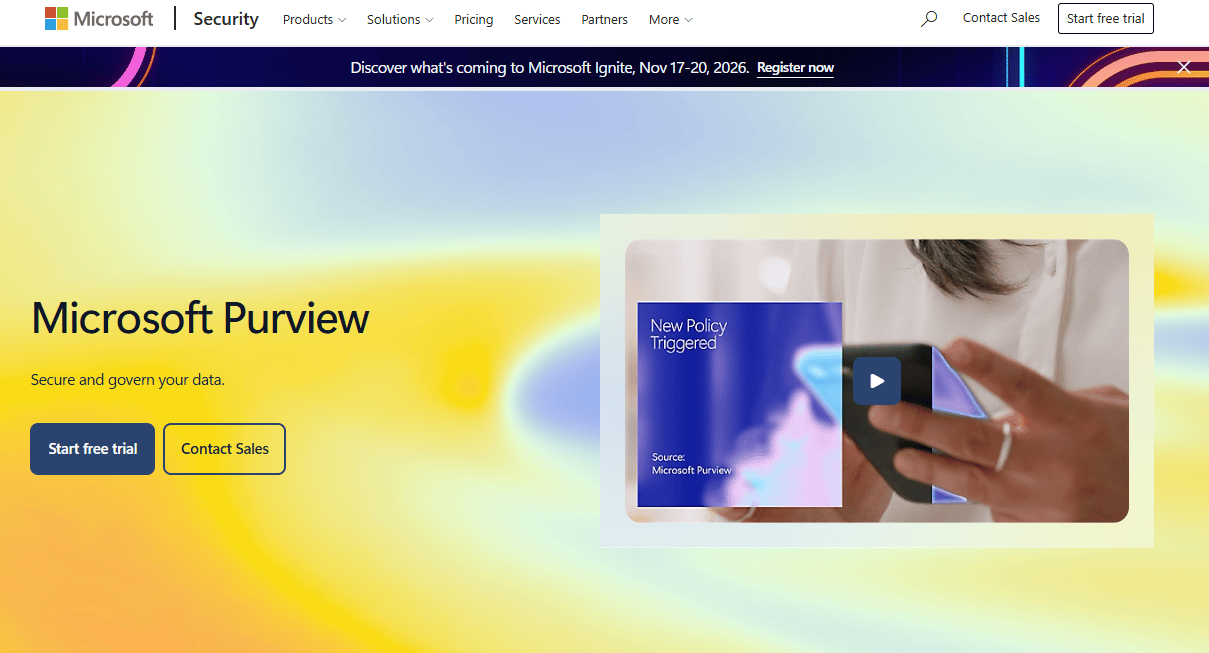
Microsoft Purview is a unified portfolio covering data governance, information protection, compliance, and data security for organizations running on Microsoft infrastructure. It includes a Unified Catalog, data classification labels, information protection policies, insider risk management, eDiscovery, and compliance management. Some governance capabilities are available at no additional cost within existing Microsoft 365 licensing.
Best for: Microsoft-centric companies that want security, governance, and compliance capabilities aligned with an existing Microsoft estate, without building a separate stack.
Key features
- Data classification labels and sensitivity policies across Microsoft 365 and Azure
- Information protection with DLP across endpoints and cloud
- Insider risk management with behavioral signal analysis
- Unified Catalog and Data Map for governance and lineage
- Compliance capabilities: Audit, eDiscovery, records management, Compliance Manager
Why choose Microsoft Purview: Integration overhead drops significantly when the organization's identity, collaboration, and data services already run on Microsoft. PMs building on Azure or handling customer data in Microsoft 365 workflows should evaluate which Purview features are included in existing licenses before assuming additional cost.
Microsoft Purview pricing: The Purview Suite starts at $12.00/user/month billed annually. Microsoft 365 E5 (no Teams) is $51.45/user/month annually; Microsoft 365 E5 is $60.00/user/month annually. Usage-based options exist for data governance and compliance features. Some governance capabilities are available within existing Microsoft 365 plans.
G2 rating: 4.7/5 for Microsoft Purview Data Governance, verified October 2026.
4. Netskope
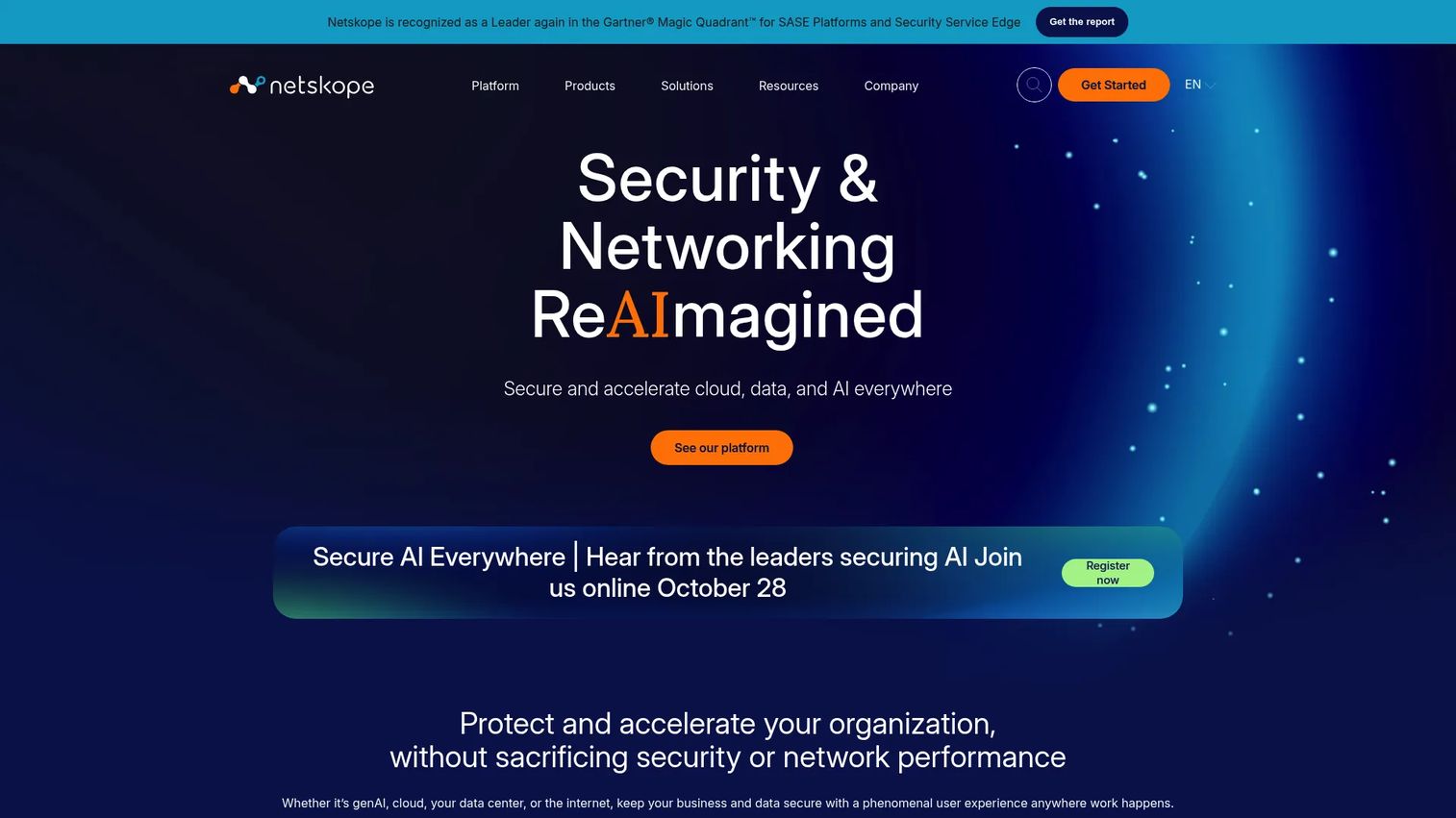
Netskope delivers a cloud-native platform converging Security Service Edge (SSE), AI security, and data security into one architecture. Its CASB, cloud and web DLP, and zero trust network access capabilities give enterprises a centralized way to see and control how users move data across SaaS applications, web traffic, and private apps.
Best for: Enterprises that need to apply data protection policies consistently across SaaS applications, web traffic, cloud access, and remote users from a single control plane.
Key features
- CASB with SaaS app visibility and access controls
- Cloud and web DLP with policy enforcement
- DSPM for cloud data posture visibility
- AI security covering AI app visibility, governance, and agent controls
- User behavior analytics for threat detection
Why choose Netskope: Product organizations that have adopted many SaaS tools, and need to understand how each new integration affects data-sharing pathways, benefit from Netskope's centralized, inline enforcement model. It is a particularly relevant evaluation when SaaS adoption and distributed teams have expanded the data perimeter. For broader AI security context, see our best AI cybersecurity solutions guide.
Netskope pricing: Netskope uses enterprise quote-based pricing with no publicly displayed numeric rates. Prospective buyers can request a quote through Netskope's sales team. G2's pricing tab includes reviewer-reported ranges for context.
G2 rating: 4.4/5, verified October 2026.
5. Palo Alto Networks
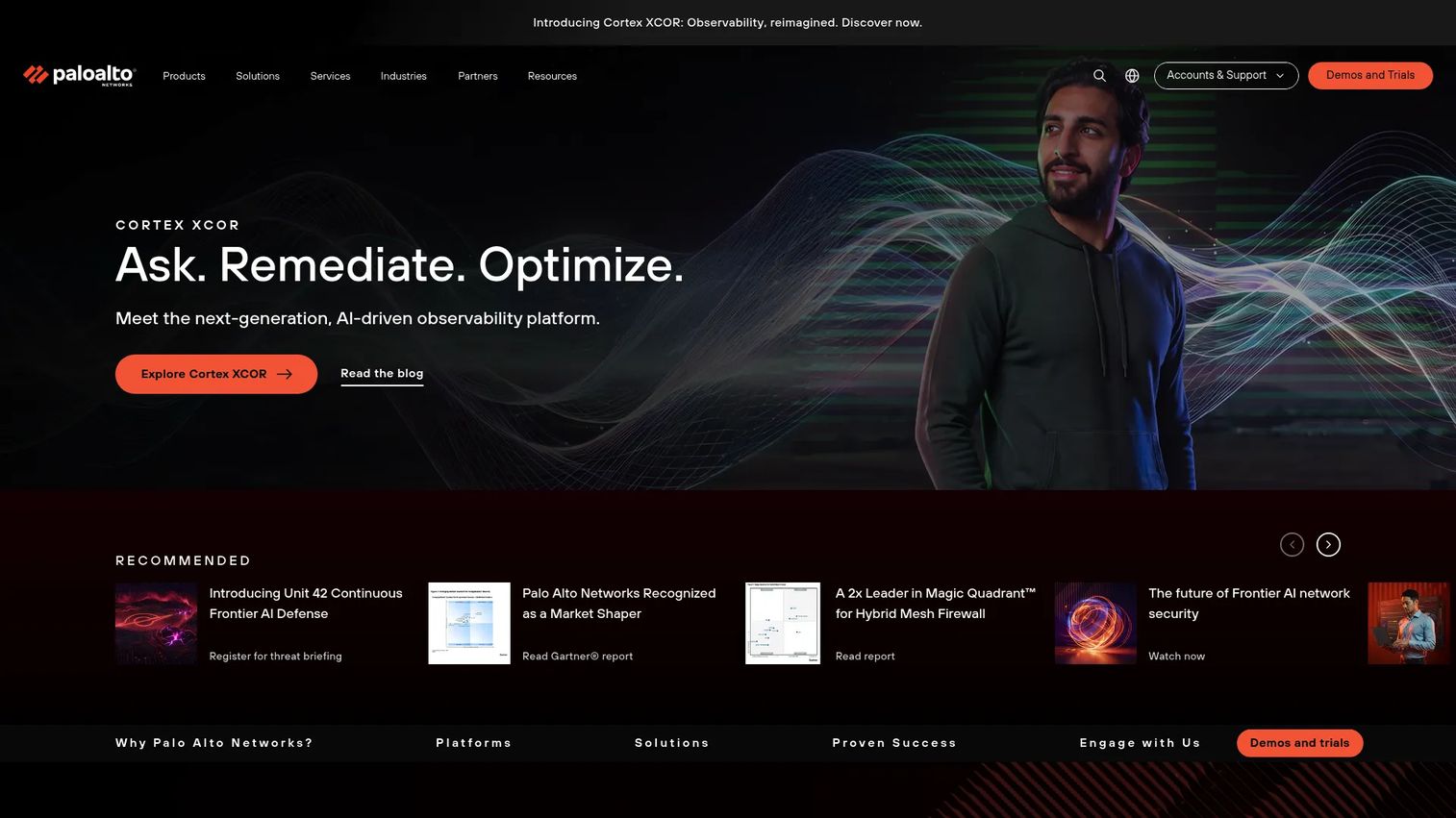
Palo Alto Networks is a broad enterprise security vendor spanning network security, cloud security, security operations, SASE, and identity security. Its cloud security capabilities include cloud-native application protection, ML-powered firewalls, AI-driven threat detection, and security orchestration. Data protection features sit within the broader Prisma and Cortex portfolio rather than as a standalone data discovery product.
Best for: Large organizations consolidating cloud security, network controls, and data protection under a broader security architecture rather than adding a specialist tool.
Key features
- Cloud-native application protection platform (CNAPP)
- ML-powered next-generation firewalls with data controls
- AI-driven threat detection and response across environments
- SASE architecture with inline enforcement
- Security orchestration and automated response workflows
Why choose Palo Alto Networks: Consolidation is the main argument. Teams already using Palo Alto for network or cloud security can extend data protection controls without a separate vendor relationship. PMs should validate which specific modules cover their data discovery, classification, and policy enforcement requirements, because the portfolio is broad and not every module addresses the data layer equally.
Palo Alto Networks pricing: Cloud NGFW pricing starts at $1.50/hr (Base) and $3.00/hr (Premium) for AWS and Azure deployments, based on the publicly available pricing estimator. Broader product pricing across Prisma, Cortex, and other modules is quote-based. Contact Palo Alto sales for module-level packaging details.
G2 rating: 4.4/5, verified October 2026.
6. Zscaler
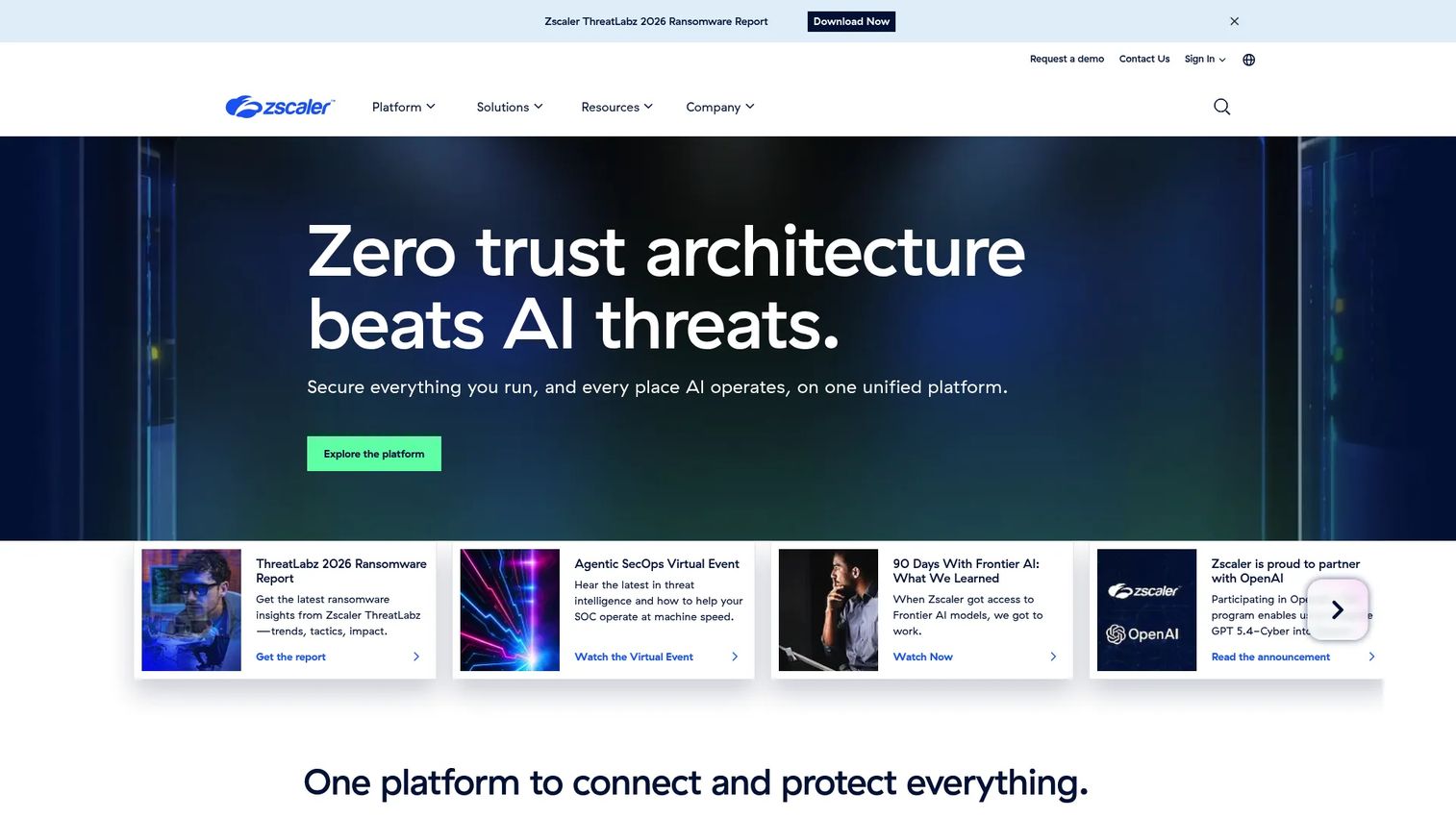
Zscaler is a cloud-native zero trust platform protecting users, applications, and data across cloud and internet access. Its Secure Internet Access (ZIA), Secure Private Access (ZPA), and inline DLP capabilities mean data protection operates inside the access layer rather than as a separate inspection tool. DSPM capabilities extend this to cloud data posture.
Best for: Companies modernizing remote-user access and applying data protection rules to cloud and SaaS usage within a zero trust architecture.
Key features
- Secure Internet Access with inline DLP and cloud sandbox
- Secure Private Access with zero trust network access
- Inline data loss prevention across users and applications
- DSPM for cloud data posture visibility
- Cloud application visibility and SaaS security controls
Why choose Zscaler: Data protection operates most effectively at Zscaler when security requirements align with a broader zero trust access modernization. For product roadmaps involving distributed testing teams, third-party SaaS integrations, and remote access to sensitive customer records, the inline enforcement model means controls do not depend on endpoint agents or separate inspection proxies.
Zscaler pricing: Zscaler offers two bundle tiers (Essentials Platform and Zscaler Platform) plus standalone products and add-ons. All are priced by custom quote from the sales team. Contact Zscaler directly for per-user licensing details and current contract terms.
G2 rating: 4.5/5, verified October 2026.
7. BigID
BigID is a data intelligence platform spanning privacy operations, security, governance, and AI risk management. Its discovery and classification engine handles both structured and unstructured data across cloud, SaaS, and on-premises repositories. Privacy automation, data catalog, and AI governance capabilities sit on top of a shared data inventory, which reduces duplication between security and privacy programs. A free trial is available.
Best for: Cross-functional data, privacy, security, and product teams that need a shared inventory and policy foundation across multiple organizational programs.
Key features
- Data discovery and classification across structured and unstructured data
- DSPM, access intelligence, DLP, and risk remediation workflows
- Privacy automation: Data rights, retention, and deletion management
- Data catalog with metadata enrichment and lineage
- AI security and governance for AI-connected data and model risk
Why choose BigID: Organizations whose data-security program overlaps heavily with privacy, retention, consent management, and AI training data governance get outsized value from a unified inventory. PMs can use BigID's data map to inform decisions about deletion workflows, consent records, and customer-data access, reducing conflict between feature delivery and privacy review.
BigID pricing: BigID prices by data sources, connectors, deployment type, and services scope, all by custom quote. The company does not display numeric prices. A free trial is available to evaluate the platform before committing. G2's pricing tab reflects reviewer-reported context.
G2 rating: 4.3/5, verified October 2026.
8. Securiti
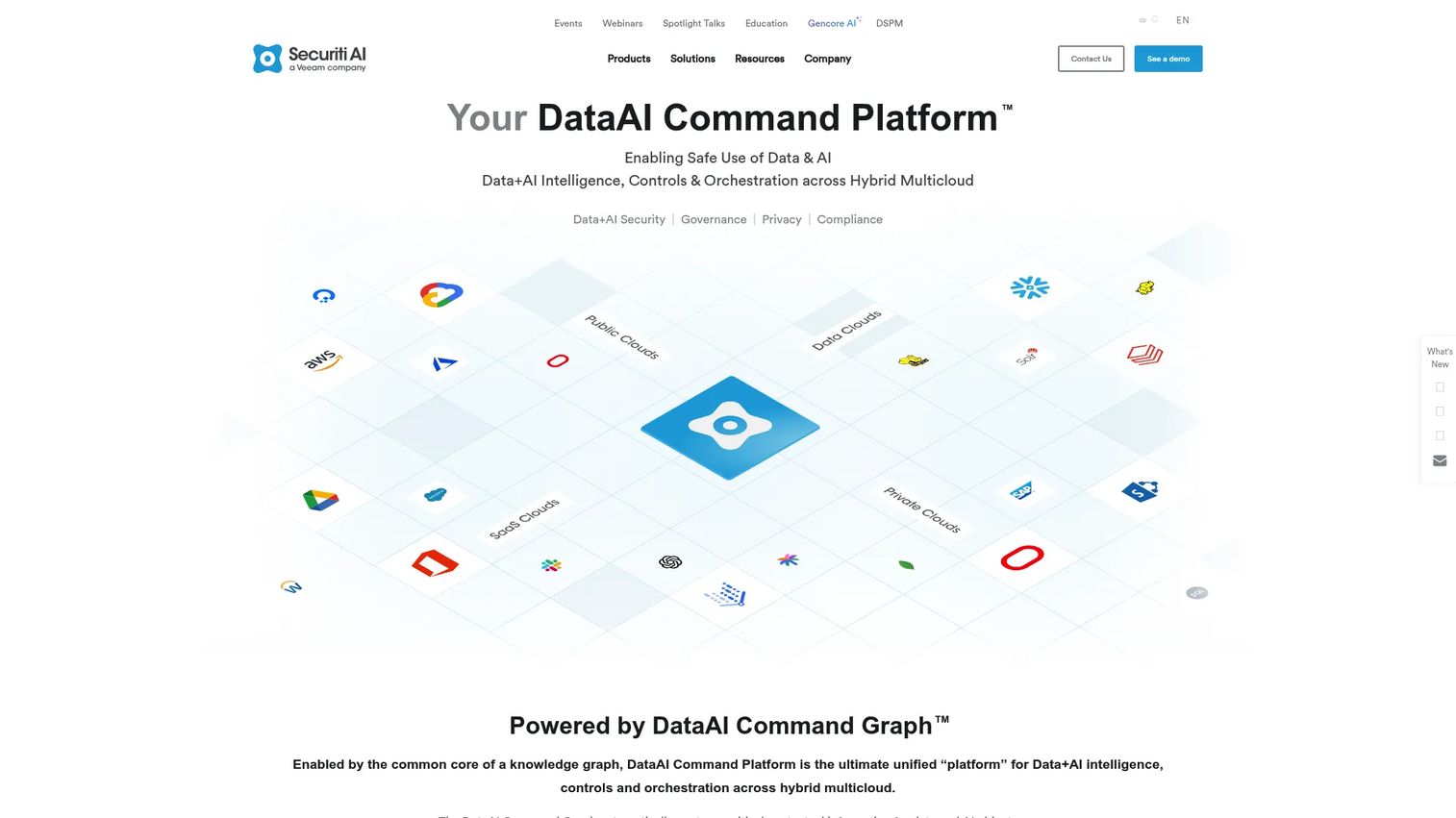
Securiti provides a DataAI Command Platform that brings together data security, privacy, governance, compliance, and AI security across hybrid multicloud and SaaS environments. Its architecture centers on a unified data intelligence layer, meaning discovery findings feed directly into privacy workflows, AI governance controls, and compliance reporting rather than operating in isolated modules.
Best for: Large enterprises that need consistent controls across data privacy, cloud data security, governance, and AI initiatives without maintaining separate programs for each.
Key features
- Data discovery and classification across hybrid multicloud and SaaS
- Data access intelligence with least-privilege controls
- AI security and governance for AI-connected data and agents
- Privacy operations including data subject request automation
- Data catalog, lineage, and breach management
Why choose Securiti: It is a strong option when privacy and security teams need to operate from the same data map. Product teams adding AI capabilities to existing workflows benefit particularly from Securiti's ability to extend governance controls to AI agents and embedded AI features. Consistent data definitions reduce approval friction between feature delivery, privacy review, and security sign-off.
Securiti pricing: Securiti offers module-based, personalized pricing by custom quote. Contact their sales team for package details and minimum contract terms. G2's enterprise data-centric security category includes reviewer context on typical pricing structures.
G2 rating: 4.6/5, verified October 2026.
9. Forcepoint Data Security Cloud
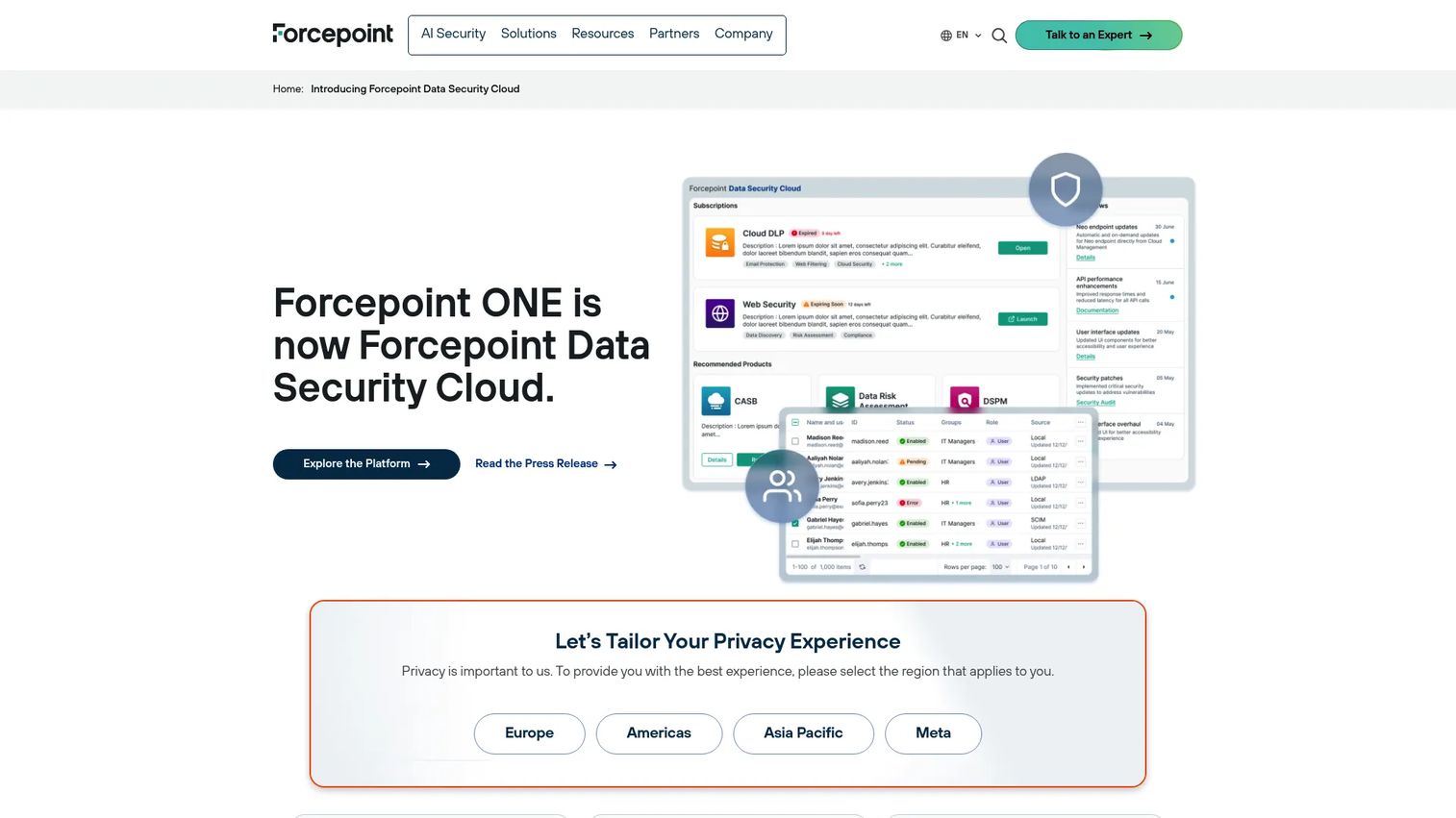
Forcepoint Data Security Cloud is a cloud-delivered data security platform providing visibility and enforcement across endpoints, web, email, SaaS, and private applications. Its coverage model combines DSPM with AI-powered discovery, DLP across channels, and cloud app security in a single architecture. Forcepoint has a particular presence in enterprise and government environments where cross-channel coverage and policy consistency are a priority.
Best for: Security teams that want unified DLP and data-risk controls across cloud, SaaS, endpoints, and AI use cases under one management interface.
Key features
- DSPM with AI-powered discovery and classification
- DLP across cloud, web, email, and endpoint channels
- Cloud App Security with application discovery and access controls
- Data detection and response workflows
- Centralized policy enforcement across channels
Why choose Forcepoint Data Security Cloud: It fits buyers seeking broad coverage without managing separate products for endpoint DLP, cloud DLP, and SaaS visibility. PMs whose product integrations create data movement across browser, SaaS, endpoint, and cloud contexts should verify which specific modules apply to their deployment model before finalizing the shortlist.
Forcepoint Data Security Cloud pricing: Forcepoint directs all pricing inquiries to sales; pricing is enterprise quote-based. Request pricing through Forcepoint's sales team. G2's Forcepoint Data Security Cloud listing includes reviewer-reported pricing context for budget estimation.
G2 rating: 4.2/5, verified October 2026.
10. Rubrik
Rubrik is a cyber resilience platform combining immutable backup, ransomware recovery, data threat monitoring, and data discovery across enterprise, cloud, SaaS, and identity environments. Unlike DSPM or DLP tools, Rubrik's primary job is ensuring data can be recovered and restored after an incident, not preventing the incident at the discovery or enforcement layer.
Best for: Organizations prioritizing ransomware recovery, cloud backup, and restoring critical data after an incident, with data discovery used primarily to inform recovery planning.
Key features
- Immutable and air-gapped backups for enterprise, cloud, and SaaS data
- Cyber recovery with threat monitoring and attack impact analysis
- Orchestrated recovery across hybrid environments
- Data discovery and classification across on-premises, cloud, and SaaS
- SaaS data protection for platforms like Microsoft 365 and Salesforce
Why choose Rubrik: Recovery is the control gap Rubrik addresses. When an organization's primary risk is business continuity after ransomware, accidental deletion, or operational failure, Rubrik belongs on the shortlist. PMs should include recoverability in launch planning, particularly for customer-facing workflows that depend on cloud data stores. Pair Rubrik with a DSPM or DLP tool to cover the discovery and prevention layers. For more context on backup tooling, see our cloud backup software guide.
Rubrik pricing: Rubrik uses quote-based pricing; the Enterprise Edition is described as a three-year subscription, with pricing tied to protected workloads, data volume, deployment model, and retention requirements. Contact Rubrik sales for current package details.
G2 rating: 4.6/5, verified October 2026.
Considerations when choosing cloud data security software
Data inventory accuracy
A platform cannot protect data it cannot find. Evaluate coverage across cloud providers, SaaS platforms, data warehouses, object storage, databases, and collaboration tools. Ask specifically how the tool handles unstructured data and AI-connected repositories, since those are frequently undercovered.
Policy enforcement vs. monitoring
Some platforms identify risk. Others apply controls that stop data movement. Others restore data after failure. Before comparing feature lists, map each shortlisted platform to its primary control objective: Discovery, prevention, access governance, or recovery. Buying a monitoring tool when you need enforcement produces a gap even after purchase.
Identity, access, and ownership context
Classification findings without access context produce long alert lists without prioritization. Verify that the platform can answer who can reach sensitive data, whether that access is justified, and who owns remediation. This is especially important for PMs coordinating between product, analytics, and support systems that share customer data.
AI governance coverage
Evaluate how the platform treats generative AI applications, embedded AI features, prompt inputs, file uploads, and agent-driven actions. Ask which controls are preventative, which are detective, and what audit evidence the platform produces for security review. Our best AI security posture management tools guide covers the posture layer above these controls.
Integration and operating model
Confirm integrations with your cloud providers, identity systems, SIEM, ticketing, data catalogs, and incident-response workflows. Product managers should also assess the operating burden: Required connectors, policy ownership, exception-handling processes, and the changes needed at each release cycle. A tool that requires engineering involvement for every policy update raises the opportunity cost of adopting it.
Conclusion
Cloud data security software is a control stack, not a single category with one winner. The right tool depends on where your team's first gap sits.
Start with Cyera or Varonis if the primary need is knowing what data exists and who can reach it. Choose Microsoft Purview if your organization runs heavily on Azure and Microsoft 365 and wants governance, compliance, and protection without a separate vendor. Netskope, Palo Alto Networks, Zscaler, and Forcepoint each fit teams that need consistent enforcement across SaaS, web, and cloud access layers. BigID and Securiti serve organizations whose data security program overlaps with privacy, AI governance, and retention. Rubrik belongs on the list when recovery is the primary concern.
The practical starting point: Diagram the data flows behind your highest-risk product workflows. Decide whether the first gap is discovery, prevention, access governance, AI controls, or recovery. A tool matched to that specific gap will produce a faster security outcome than a platform chosen for the breadth of its feature list.
Start your journey with Guideflow today!
FAQs
Cloud data security software discovers, classifies, protects, monitors, and helps recover sensitive data across cloud services, SaaS applications, cloud data platforms, and hybrid environments. Individual products vary significantly in focus: Some center on DSPM and data posture, others on DLP enforcement, CASB governance, access risk, or backup and recovery.
DSPM (data security posture management) identifies where sensitive data lives, who can access it, and which configurations create exposure risk. DLP (data loss prevention) applies controls that prevent sensitive data from leaving approved channels, such as blocking uploads to unauthorized SaaS apps or flagging email attachments containing regulated records. Most mature programs need both: Discovery to know what to protect, and enforcement to protect it.
No. Cloud security posture management (CSPM) focuses on cloud infrastructure configuration, including identity permissions, workload settings, and account-level misconfigurations. Cloud data security software focuses on the data layer: Classification, access, movement, protection, and recovery. Many organizations run both because they answer different operational questions.
Multicloud buyers should prioritize native coverage for their specific cloud providers, consistent classification policies across environments, identity and entitlement context, and integrations with existing security operations tools. The best fit depends on the primary gap: Cyera and BigID for discovery and posture, Netskope and Zscaler for cross-environment enforcement, Varonis for access governance, and Rubrik for recovery across hybrid workloads.
Start with the data flows your product owns, not with vendor demos. Identify sensitive data types, systems of record, new integrations, user roles with access, and third-party connectors. Then evaluate implementation effort, policy ownership model, instrumentation requirements, alert routing into existing workflows, and the evidence the tool produces for security and privacy reviews.
Look for discovery that covers AI-connected systems and data stores, protection for prompt inputs and file uploads, access governance for AI agents and embedded assistants, audit logs with enough detail for security review, and enforcement controls that apply policy before data reaches a model. Confirm which specific AI applications and enforcement points the platform supports, since coverage varies significantly across vendors.
Backup and recovery address availability and resilience after deletion, ransomware, or infrastructure failure. They do not replace sensitive-data discovery, classification, access governance, or preventive enforcement. A backup platform tells you that data can be restored. DSPM and DLP tools tell you what data exists, who can reach it, and whether it should have left the environment in the first place.
Review policies whenever a team launches a material product feature, adds a data store, adopts a new AI capability, enters a regulated market, changes identity architecture, or expands a SaaS vendor footprint. For established environments, scheduled reviews at least quarterly help catch policy gaps that accumulate between major changes. See our related guide on cloud compliance tools for frameworks that structure those reviews.