Most B2B marketing teams track dozens of metrics. Few can explain which ones actually predict revenue.
Demand generation analytics solves this problem by measuring how marketing activities create awareness, interest, and qualified pipeline before prospects ever talk to sales. This guide covers the 14 metrics that matter most, organized by funnel stage, plus the buyer intent signals that separate high-performing teams from everyone else.
TL;DR
- Demand generation analytics: tracks how marketing creates awareness, interest, and qualified pipeline before prospects talk to sales
- Four funnel stages: organize your metrics: top of funnel (traffic, engagement), middle of funnel (lead quality), bottom of funnel (revenue), and post-conversion (retention)
- Buyer intent signals: like demo completion and feature exploration reveal why prospects engage, not just that they did
- The goal: connect every marketing activity to pipeline and revenue, not vanity metrics like impressions or clicks
What is demand generation analytics
Demand generation analytics tracks metrics that measure buyer interest, brand awareness, and revenue pipeline creation before prospects enter the sales funnel. The focus sits on ROI, customer acquisition cost (CAC), customer lifetime value (CLV), and engagement across channels to optimize marketing spend and convert high-quality leads.
Think of it this way: marketing analytics tells you what happened. Demand generation analytics tells you whether what happened will turn into revenue.
Here's how the pieces fit together:
- Demand generation: The process of creating awareness and interest in your product to fill your sales pipeline
- Analytics: The measurement and interpretation of data to understand what's working
- Demand generation analytics: The specific metrics that connect marketing efforts to pipeline and revenue outcomes
Your demand generation strategy depends on clear visibility into what content and campaigns actually drive qualified interest. Without that visibility, you're optimizing for activity instead of outcomes.
Why demand generation analytics matter for pipeline growth
Without analytics, teams cannot distinguish between campaigns that generate activity versus campaigns that generate revenue. Marketing reports impressive MQL numbers. Sales complains about lead quality.
Leadership questions whether marketing spend is working.
This misalignment happens when marketing and sales use different definitions of success. Marketing optimizes for volume. Sales cares about close rates.
Neither connects their work to the same revenue number.
| Without demand gen analytics | With demand gen analytics |
|---|---|
| Budget based on gut feel | Budget tied to pipeline contribution |
| Marketing and sales blame each other | Shared metrics create accountability |
| Optimize for vanity metrics | Optimize for revenue outcomes |
| Cannot prove marketing ROI | Clear attribution to closed deals |
When both teams watch the same metrics, finger-pointing decreases and collaboration increases.
Top of funnel demand generation metrics
Top of funnel metrics measure how well you attract and engage potential buyers who may not know your product yet. The metrics in this category help you understand if your demand generation campaign ideas are reaching the right audience.
Website traffic and unique visitors
Website traffic measures the volume of people visiting your site. Raw traffic alone is misleading without context, though. 10,000 visitors from irrelevant sources creates zero pipeline.
Segment traffic by channel to understand which demand generation content drives qualified visitors. Organic search traffic often converts differently than paid social traffic. Knowing the difference helps you allocate budget.
Landing page conversion rate
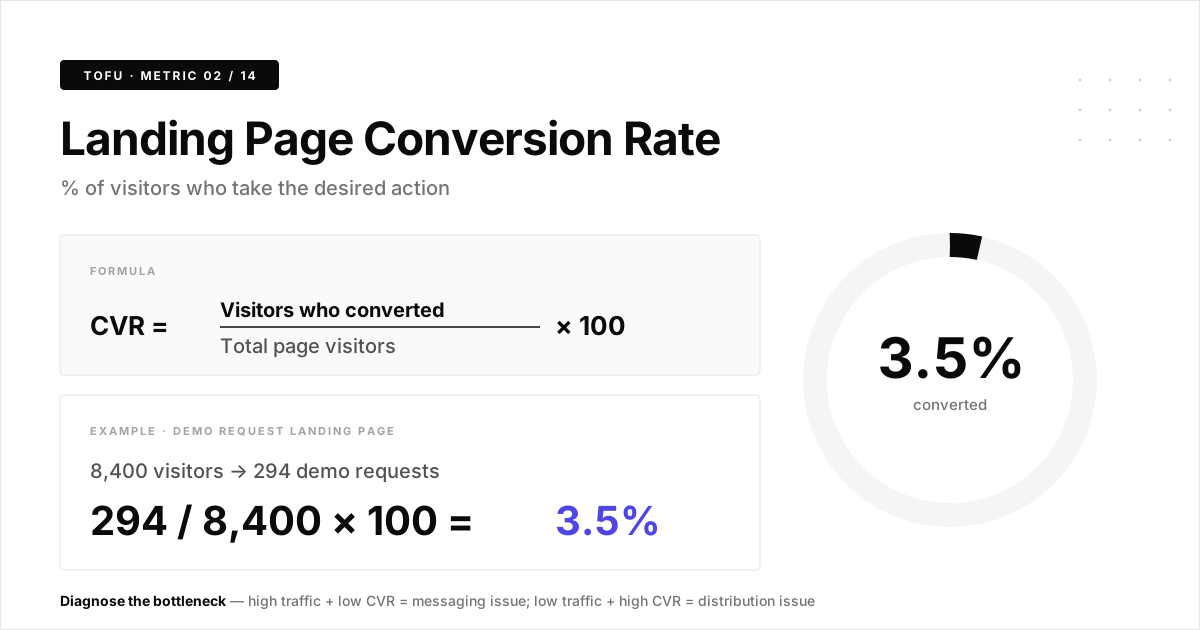
Conversion rate is the percentage of visitors who take a desired action. At top of funnel, that action might be a form fill, demo request, or content download.
This metric reveals messaging effectiveness. If traffic is high but conversion is low, your value proposition isn't landing. If conversion is high but traffic is low, you have a distribution problem, not a messaging problem.
Click through rate and content engagement
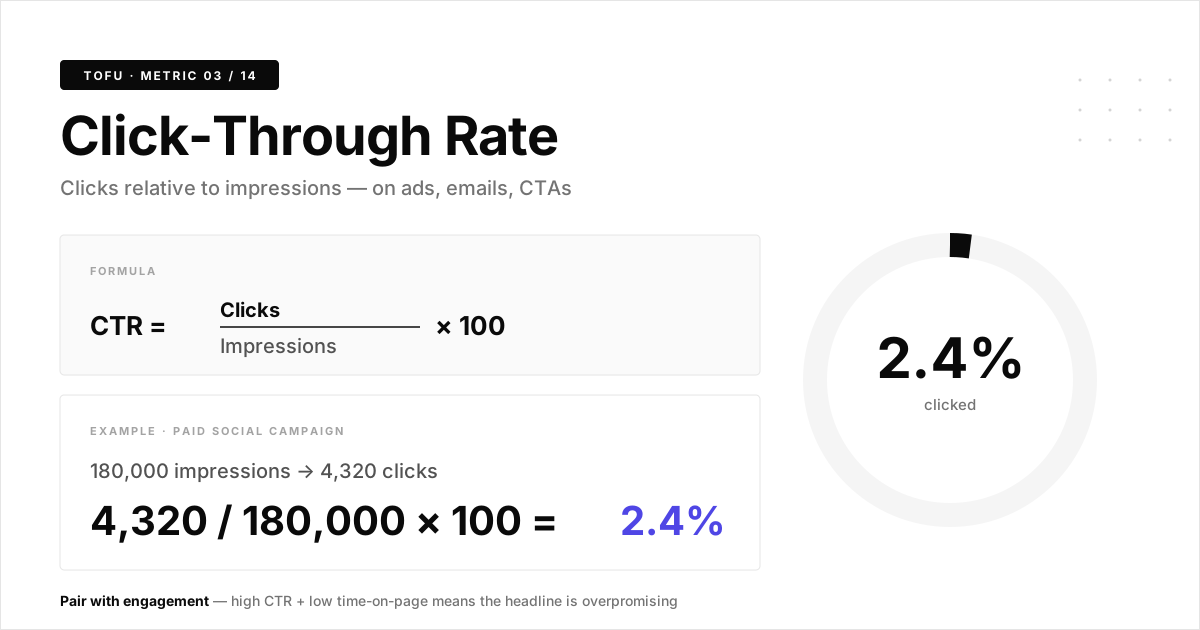
CTR measures the ratio of clicks to impressions on ads, emails, or CTAs. Content engagement metrics like time on page, scroll depth, and pages per session indicate whether your messaging resonates before someone converts.
High CTR with low engagement suggests your headline promises something your content doesn't deliver. Low CTR with high engagement means your content works, but your distribution doesn't.
Middle of funnel demand generation metrics
Middle of funnel metrics measure how effectively you nurture interested visitors into qualified leads. This is where sales demand generation alignment becomes critical because both teams agree on what qualifies as a "good" lead.
Lead to MQL conversion rate
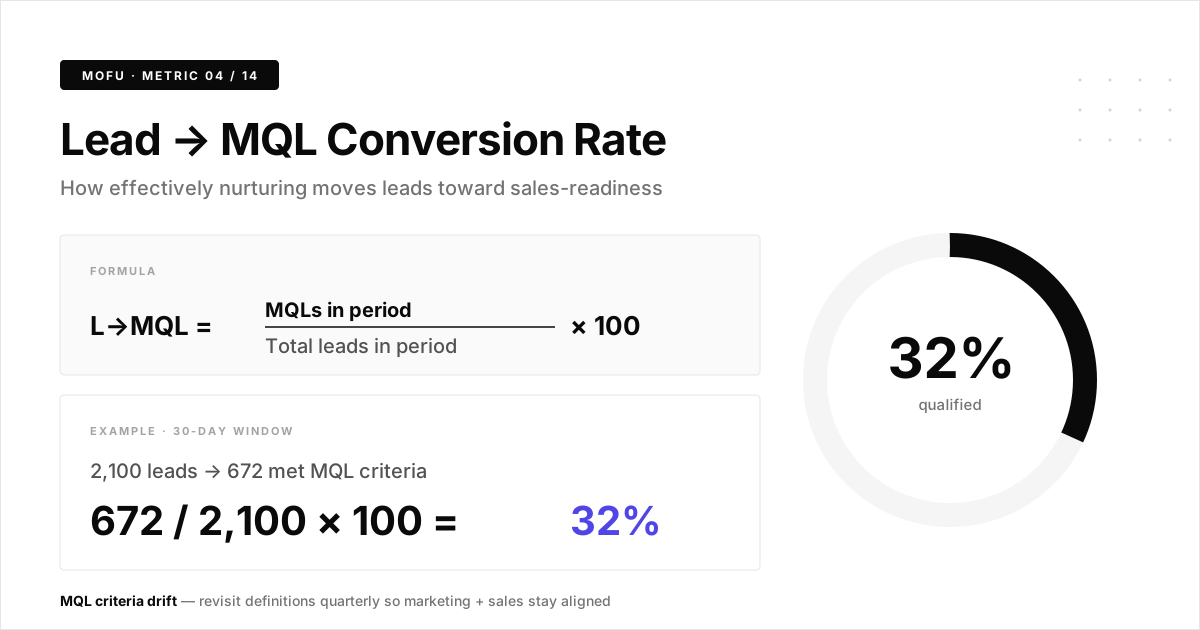
A Marketing Qualified Lead (MQL) is a lead that meets predefined criteria indicating readiness for sales outreach. The conversion rate measures how well your nurturing moves leads toward sales readiness.
MQL definitions vary by company. Some use demographic criteria like job title and company size. Others use behavioral signals like pages visited and content downloaded.
The best definitions reflect actual buying signals, not arbitrary thresholds.
Cost per lead
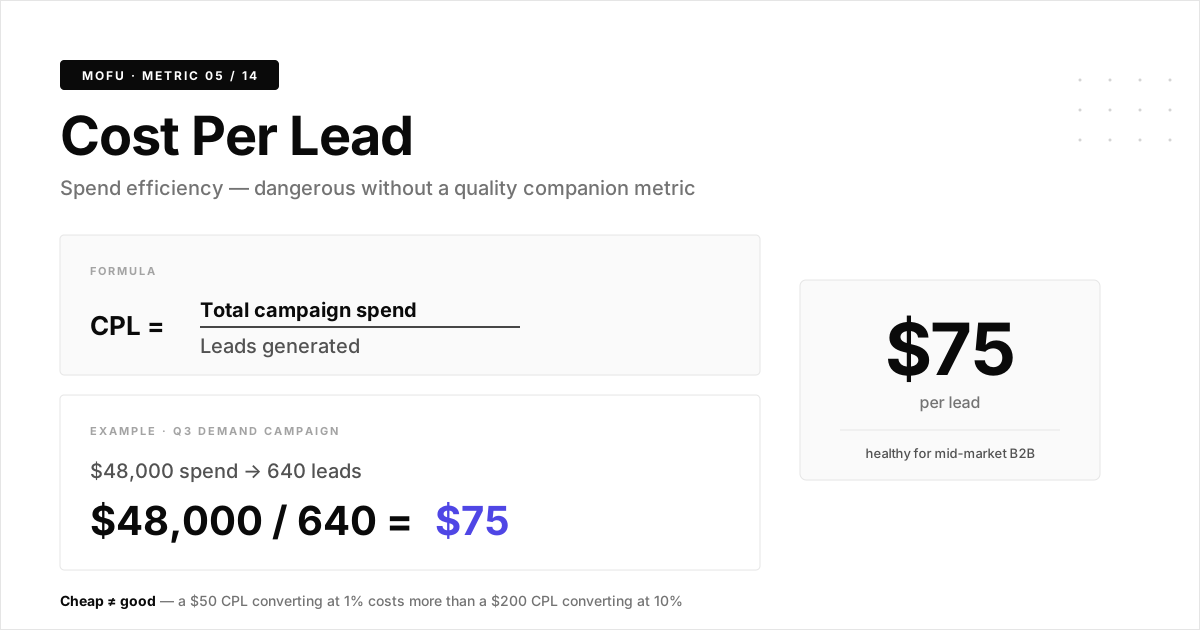
CPL equals total campaign spend divided by leads generated. Simple math, but dangerous if used alone.
Cheap leads may never close. A $50 CPL that converts at 1% costs more than a $200 CPL that converts at 10%. Track CPL alongside lead quality metrics to avoid optimizing for volume over value.
Marketing qualified lead volume
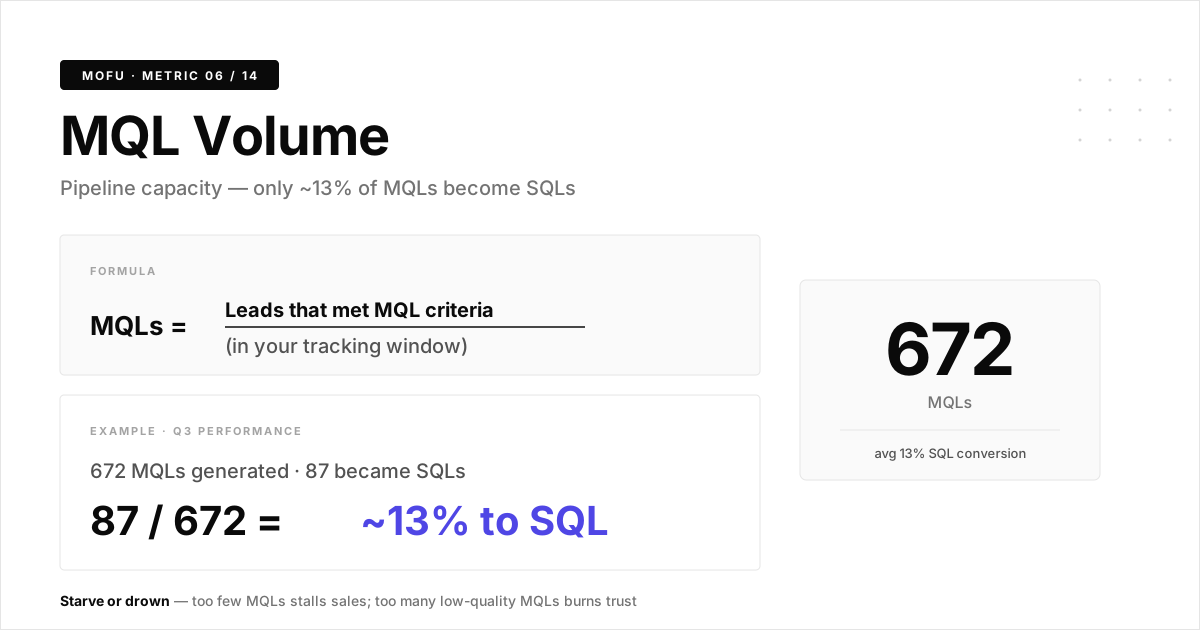
MQL volume indicates pipeline capacity because only 13% of MQLs convert to SQLs on average. Too few MQLs starves the sales team. Too many low-quality MQLs wastes sales time and damages the marketing-sales relationship.
For mid market demand generation solutions, this balance is especially critical. Enterprise deals require fewer, higher-quality leads. SMB motions require higher volume with efficient qualification.
Bottom of funnel demand generation metrics
Bottom of funnel metrics measure conversion to actual revenue. Executives care most about bottom of funnel metrics because they connect marketing directly to business outcomes.
Sales qualified leads
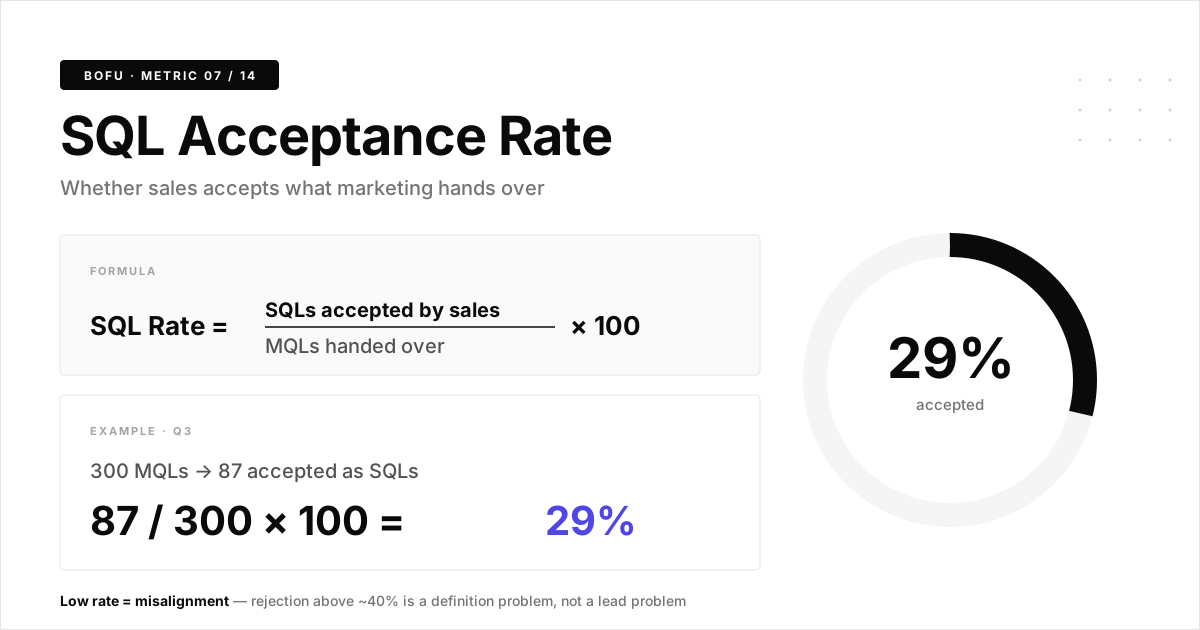
A Sales Qualified Lead (SQL) is a lead that sales has accepted and is actively working. The handoff from MQL to SQL reveals alignment between marketing and sales on lead quality definitions.
If marketing generates 100 MQLs and sales accepts 20 as SQLs, you have an 80% rejection rate. That's either a lead quality problem or a definition problem. Either way, it requires attention.
Customer acquisition cost
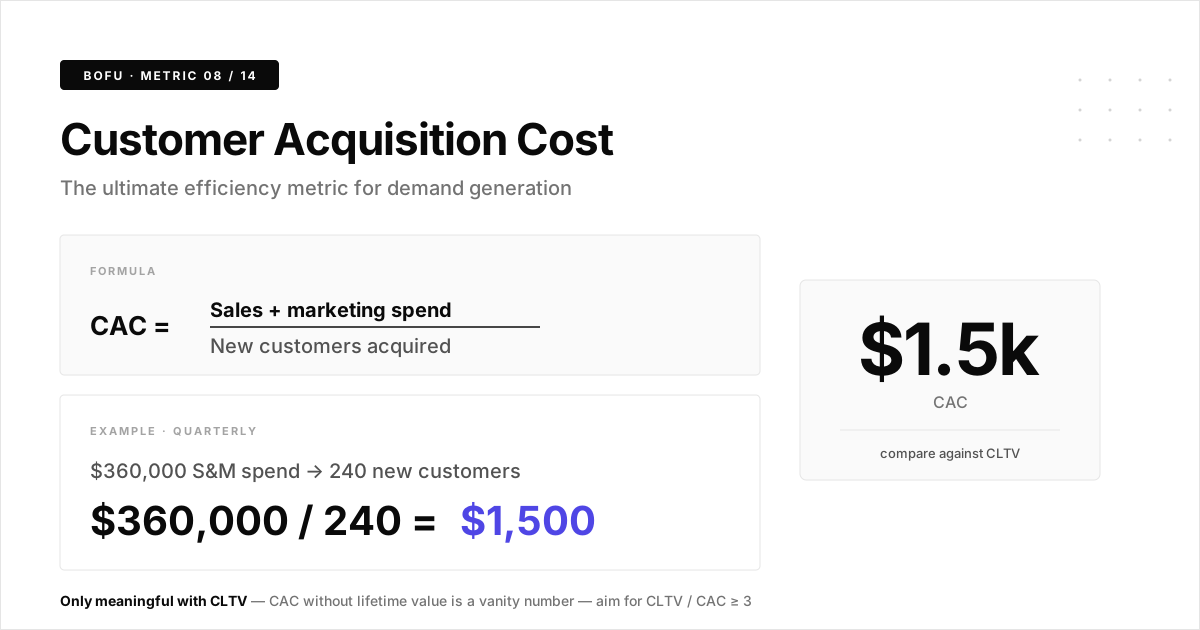
CAC equals total sales and marketing spend divided by new customers acquired. CAC is the ultimate efficiency metric for generating demand.
View CAC alongside customer lifetime value to understand whether your acquisition economics make sense. If CAC exceeds what a customer will ever pay you, the math doesn't work.
Sales cycle length
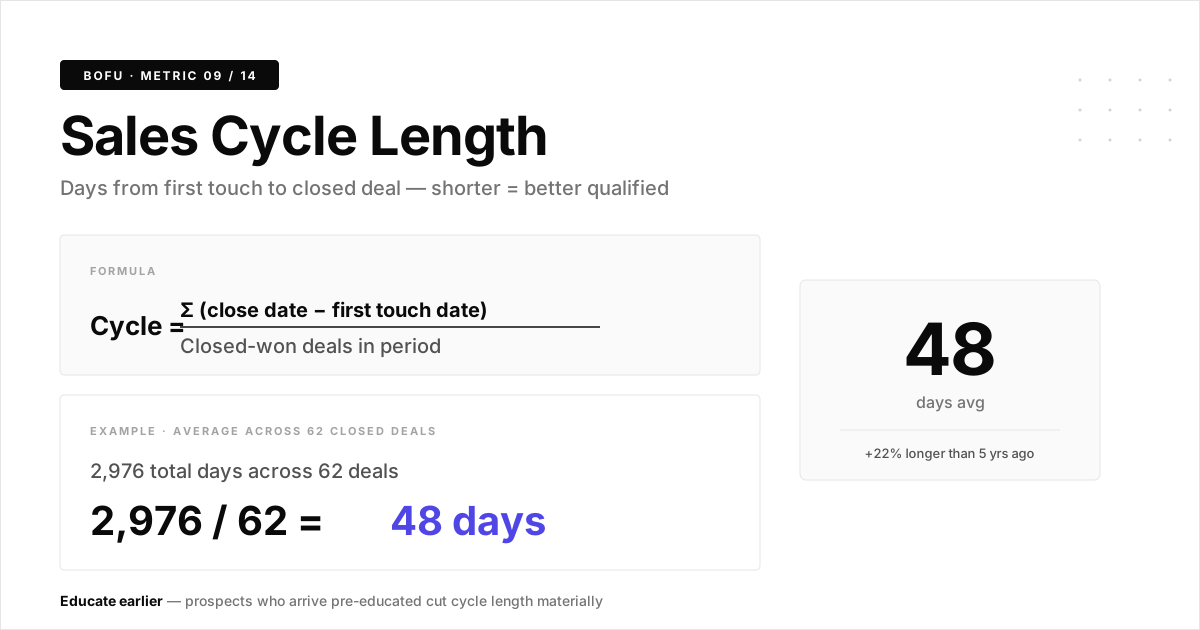
Sales cycle length is the average time from first touch to closed deal. Demand generation impacts cycle length by educating buyers before sales conversations because the average cycle is 22% longer than it was five years ago.
Shorter cycles often indicate better qualified leads entering the funnel. When prospects arrive already understanding your product's value, sales spends less time educating and more time closing. Live demos for sales teams can further accelerate this process by providing authentic product experiences during critical conversations.
Opportunity to win rate
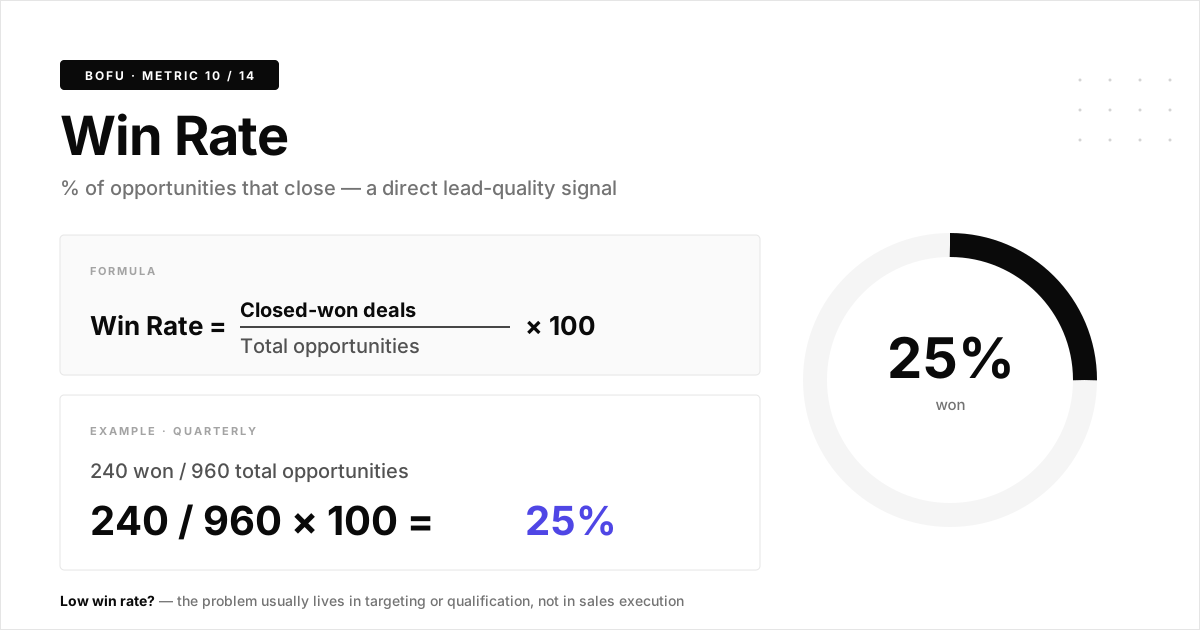
Win rate is the percentage of sales opportunities that close. This metric reveals whether marketing is generating genuinely interested buyers versus tire kickers.
Low win rates often signal a lead quality problem upstream. If sales closes 10% of opportunities, either targeting is off or qualification criteria are too loose.
Post conversion demand generation metrics
Post-conversion metrics reveal the long-term value of your demand generation efforts. The metrics in this category help you understand whether you're attracting the right customers, not just any customers.
Customer lifetime value
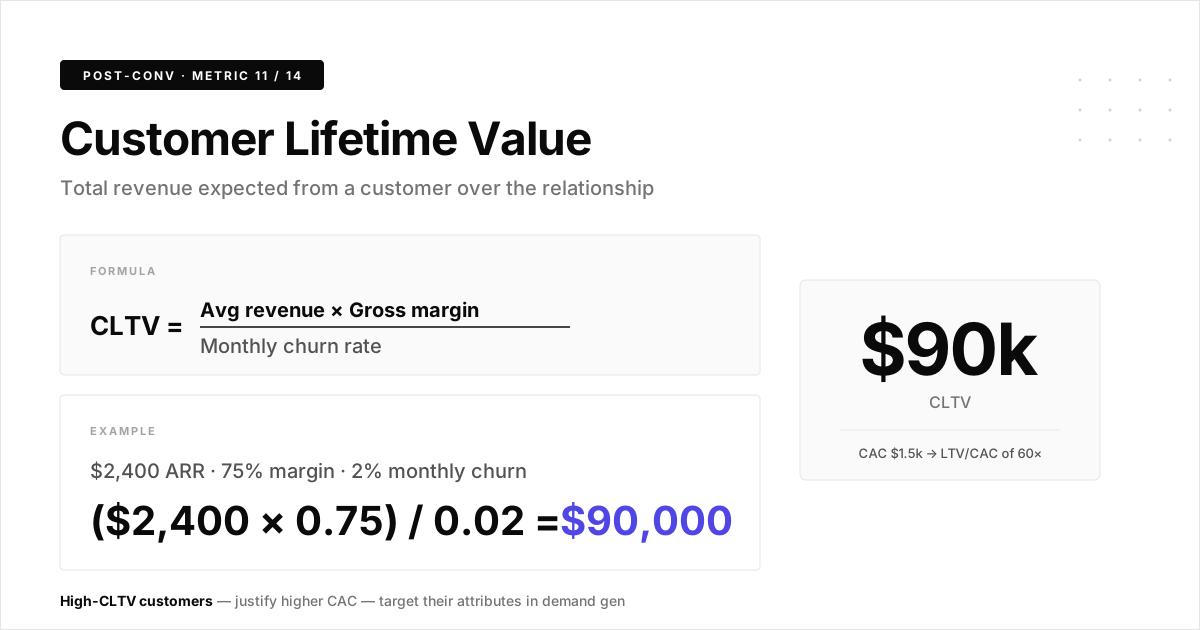
CLTV is the total revenue expected from a customer over the relationship. High CLTV customers justify higher acquisition costs.
This metric connects directly to targeting decisions. If your highest-value customers come from a specific industry or use case, your demand generation can prioritize those segments.
Churn rate
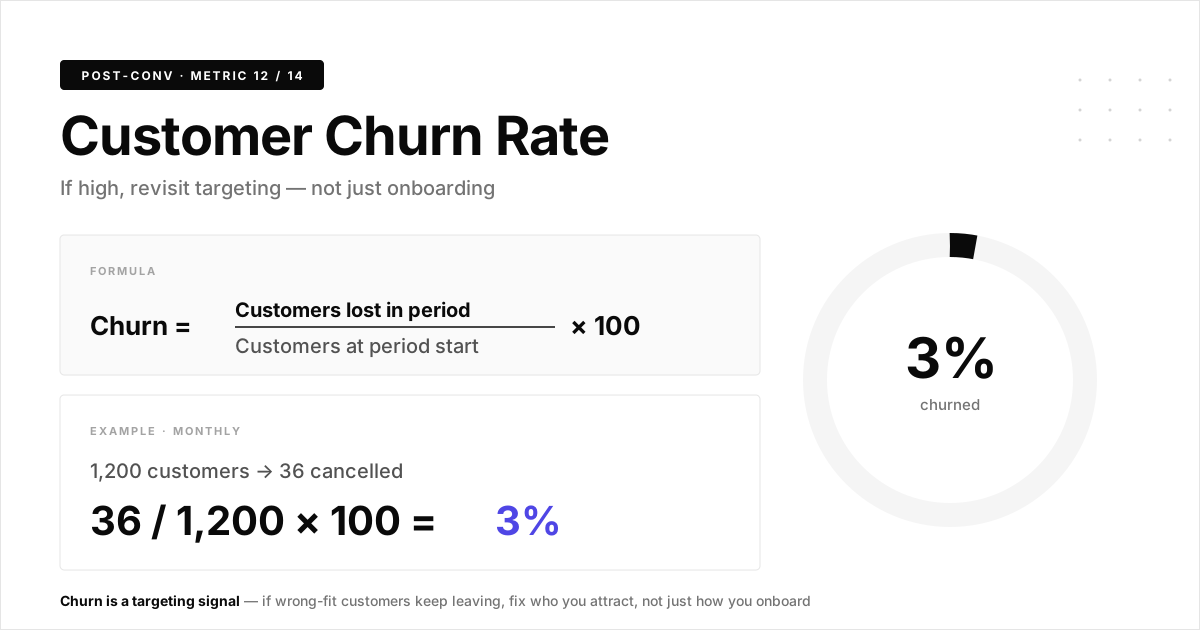
Churn rate is the percentage of customers who cancel or don't renew. High churn can indicate a demand generation problem, not just a product or success problem.
If you're attracting wrong-fit customers through aggressive targeting or misleading messaging, they'll churn. The fix isn't better onboarding. It's better targeting.
Marketing sourced pipeline and revenue attribution
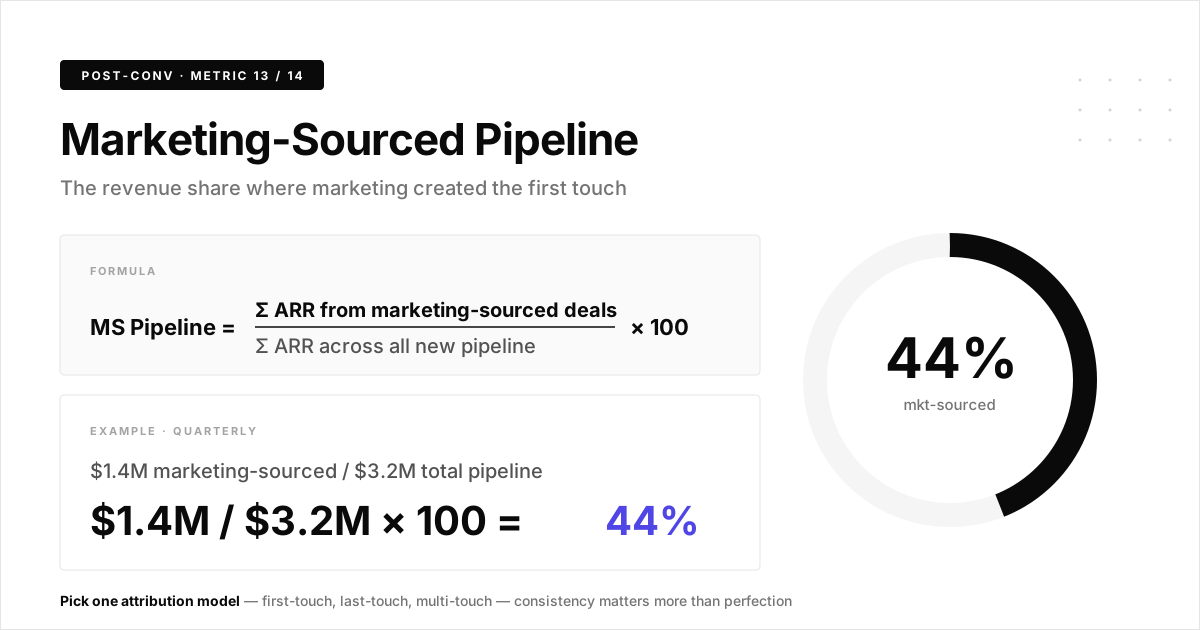
Marketing sourced pipeline includes deals where marketing created the first touch. Multi-touch attribution distributes credit across all touchpoints in the buyer journey.
Common attribution models include:
- First touch: Credits the channel that first brought the lead
- Last touch: Credits the channel that directly preceded conversion
- Multi-touch: Distributes credit across all touchpoints in the journey
- Time decay: Weights recent touchpoints more heavily
No attribution model is perfect. The goal is consistency, not perfection. Pick a model, stick with it, and optimize based on what it tells you.
Buyer intent signals and engagement analytics
Traditional metrics measure what happens. Intent signals reveal why and predict what's next. This is where demand generation analytics becomes truly actionable for sales follow-up, especially when combined with interactive marketing approaches that capture richer behavioral data.
Interactive demos create uniquely rich intent data compared to passive content. When a prospect clicks through a product experience, you learn exactly what features they explored and where they spent time.
Demo completion rate
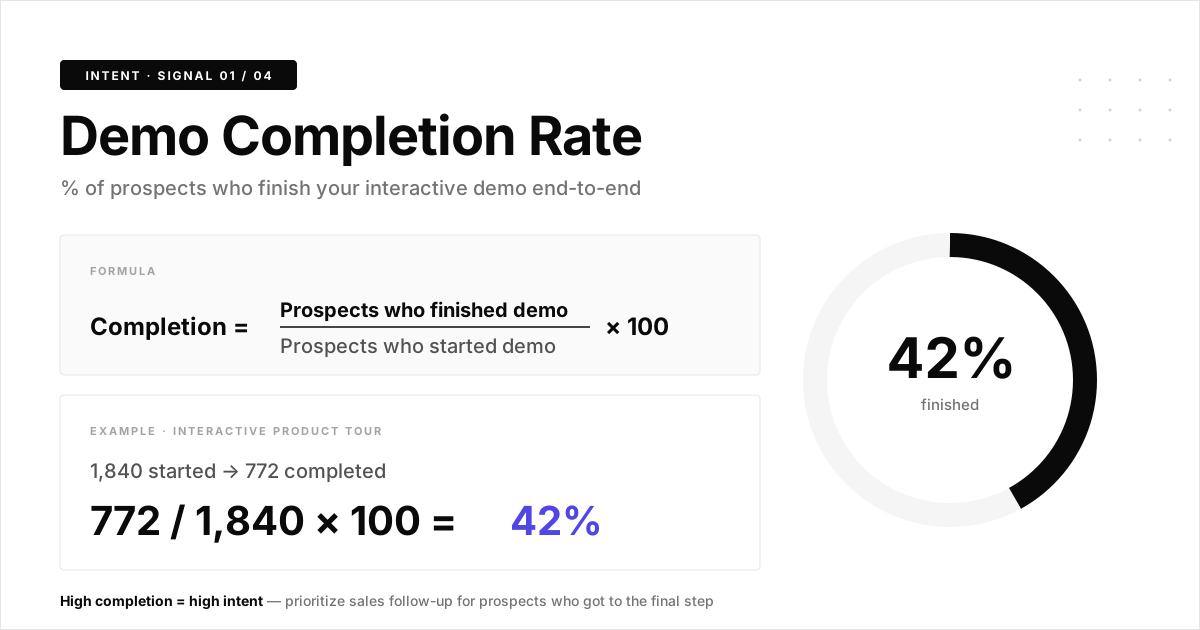
Demo completion rate is the percentage of people who finish an interactive demo or product tour. High completion rates signal engaged buyers worth prioritizing.
A prospect who completes 100% of a demo is more qualified than one who bounced after 10 seconds. This behavioral signal helps sales prioritize follow-up. Demo centers make it easy to track these completion patterns across all your product experiences.
Feature exploration depth
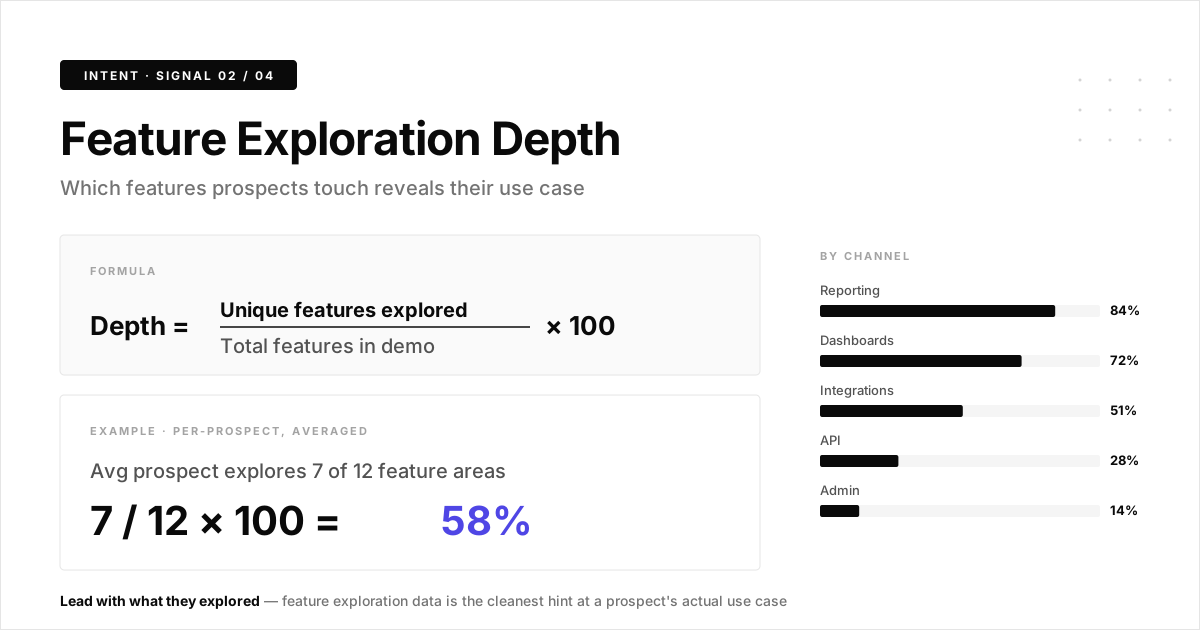
Tracking which features prospects explore reveals their specific use cases. This data helps sales personalize follow-up conversations.
If a prospect spent 80% of their demo time exploring reporting features, sales knows to lead with analytics capabilities. Self-serve product experiences generate this data automatically. Demo centers for sales teams centralize this behavioral intelligence for more effective follow-up.
Time spent per session
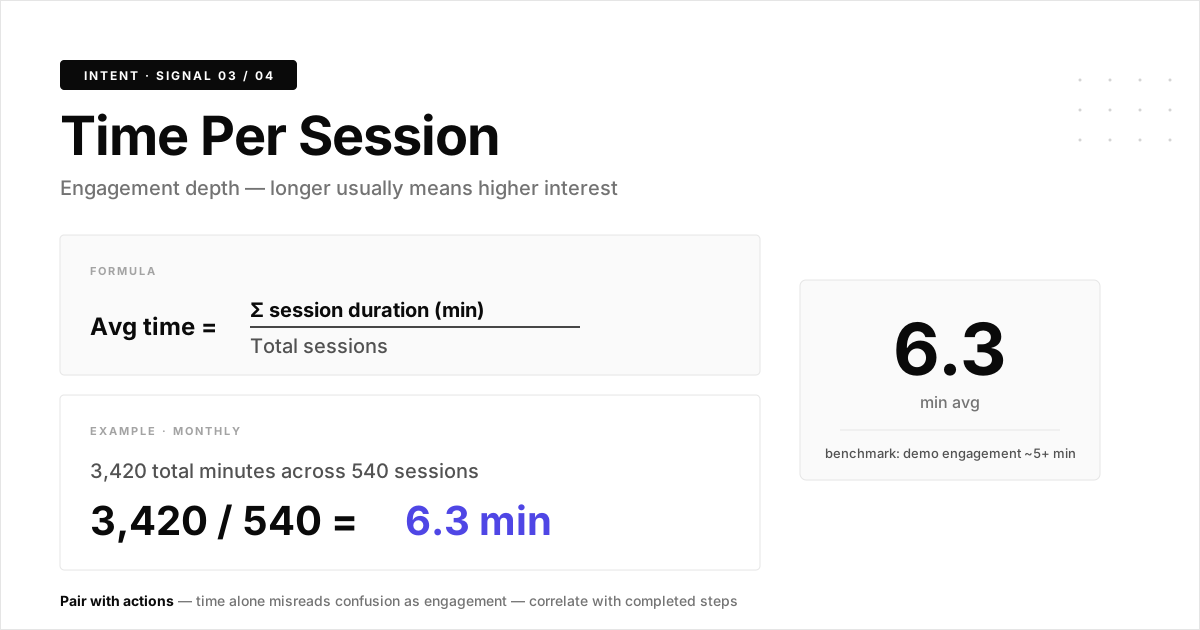
Session duration indicates engagement level. Longer sessions typically indicate higher interest, though context matters.
Someone stuck on a confusing step is different from someone deeply exploring. Correlate time with actions taken to understand the difference.
Return visit patterns
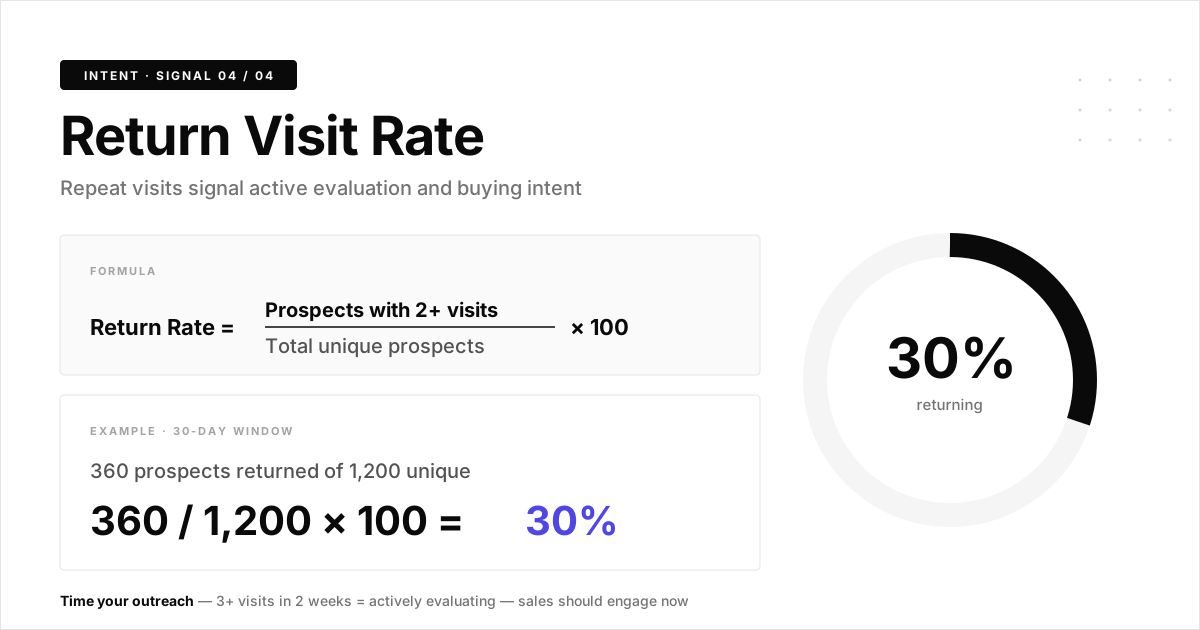
Repeat visits signal continued evaluation and buying intent. Track how many times a prospect returns and what they explore on each visit.
A prospect who returns three times over two weeks is actively evaluating. Sales can time outreach appropriately rather than reaching out too early or too late.
How to build a demand generation analytics strategy
Having metrics is useless without a system for tracking, reporting, and acting on them. Product marketing software tools can automate much of this tracking and reporting. Here's a practical framework for implementation.
1. Map each metric to a funnel stage
Organize metrics by funnel stage to avoid mixing awareness metrics with revenue metrics. Website traffic belongs at top of funnel. Win rate belongs at bottom of funnel.
This categorization matters for decision-making. A drop in website traffic requires different action than a drop in win rate.
2. Connect metrics to revenue outcomes
Every metric in your dashboard can ladder up to revenue. If you cannot draw a line from a metric to pipeline or closed deals, question whether it belongs.
This prevents vanity metric addiction. Likes feel good. Pipeline feels better.
3. Establish baselines before optimizing
You cannot improve what you haven't measured consistently. Track current performance for 30 to 60 days before setting improvement targets.
Optimizing too early without understanding normal variance leads to chasing noise instead of signal.
4. Align demand generation metrics with sales
Shared definitions and shared dashboards between marketing and sales create accountability and support 38% higher win rates.
Many demand generation services fail when marketing and sales operate from different data. Alignment starts with agreeing on what success looks like.
Common demand generation analytics mistakes
Even teams tracking the right metrics often misuse them. Here are the pitfalls to avoid.
Tracking vanity metrics instead of pipeline indicators
Vanity metrics like likes, impressions, and raw traffic feel good but don't predict revenue. They're easy to inflate and hard to connect to business outcomes.
Replace or supplement each vanity metric with a pipeline-connected alternative. Instead of tracking impressions, track impression-to-MQL conversion rate.
Measuring activity instead of buyer intent
Knowing someone clicked (activity) differs from knowing they're interested in buying (intent). Intent signals come from behavior patterns, not single actions, because 73% of B2B buyers avoid suppliers sending irrelevant outreach.
Interactive product experiences reveal intent more clearly than static content downloads. A completed demo shows more intent than a downloaded PDF. Sandbox demos for marketers create particularly rich behavioral data by letting prospects explore actual product functionality.
Ignoring post conversion signals
Many teams stop measuring after the deal closes. This misses critical feedback for demand generation targeting.
Churn and expansion data can feed back into who you target. The best customers inform your ideal customer profile, not just how many customers you acquire.
Reporting metrics without action plans
Dashboards without decisions are useless. For each metric, know what action you'll take if it goes up or down.
Build "if this, then that" rules into reporting processes. If MQL-to-SQL conversion drops below 30%, review lead scoring criteria. If CAC rises above a threshold, audit channel efficiency.
How to turn demand generation analytics into revenue
Analytics exist to drive action, not just reporting. The metrics covered in this guide connect to actual revenue outcomes when used correctly.
The shift from generating demand to closing revenue requires visibility into buyer behavior throughout the journey. Traditional analytics show you the what. Intent signals show you the why.
Guideflow helps teams capture buyer intent signals through interactive demos, providing analytics that show exactly what features prospects explored and where they spent time. When you know what a prospect cares about before the sales call, conversion rates improve.
FAQs about demand generation analytics
Most teams combine CRM platforms (Salesforce, HubSpot), marketing automation software, and product analytics tools. Interactive demo platforms add behavioral intent data that other tools miss.
Review operational metrics like traffic and conversion rates weekly. Review strategic metrics tied to pipeline and revenue monthly. Quarterly reviews work for longer-term trends like CAC and CLTV.
Demand generation creates awareness and interest broadly. Lead generation captures contact information from interested prospects. Demand gen is the broader strategy, and lead gen is a subset focused on capture.
Start with internal baselines before comparing to industry benchmarks. Benchmarks vary significantly by industry, deal size, and sales motion. A 2% conversion rate might be excellent for enterprise software and terrible for SMB tools.
Yes. Small teams succeed by focusing on fewer, higher-impact metrics rather than tracking everything. Prioritize metrics closest to revenue first: SQLs, CAC, and win rate.
Add top-of-funnel metrics as capacity grows.