A crew finishes a well at 4 p.m. The driller scribbles depth intervals, casing details, and static water level on a mud-splattered field sheet. That sheet rides in a truck for two days, gets rekeyed into a spreadsheet by someone in the office, and by the time the state report is due, three numbers don't match the invoice. The customer disputes the bill. The permit filing slips past deadline.
That gap between the field and the office is where drilling businesses lose money. And it is not rare. Business Research Insights (2026) reports that 47% of firms adopt drilling software specifically to reduce operational risk, while 62% deploy it to improve efficiency. The broader drilling software market sits at USD 4.17B in 2026 and is forecast to reach USD 7.29B by 2033 at an 8.3% CAGR, according to Coherent Market Insights (2026). Contractors are moving off paper because paper costs them jobs.
The problem is that "drilling software" covers wildly different tools. Some are built for water-well contractors who need quotes, field logs, permits, and billing in one place. Some are engineering platforms for planning complex well strings. Others are general field service systems that happen to fit service-heavy operators. Picking the wrong category wastes a quarter and a budget.
This guide breaks down which tools fit which operating model, so you can shortlist fast.
What's inside
This guide covers 7 well drilling software tools for contractors, service teams, and water-well operators. We selected each tool on the criteria that actually matter in the field: field usability including offline capture, compliance and reporting fit, workflow automation, record depth for logs and permits, map or data lookup, and whether the system supports both office staff and crews. We include verified pricing where a vendor publishes it, current G2 ratings where available, and honest notes on where each tool fits. The list spans three groups: contractor-first workflow platforms, engineering planning software, and broader field service systems.
TL;DR
- Best contractor-first all-in-one: DrillerDB. Built specifically for water well drilling software for contractors, with quotes, scheduling, offline field app, compliance forms, well map, and invoicing in one system.
- Best for well-data and lifecycle records: MyWaterWell. Strong on centralized well and pump data, document storage, and regulatory reporting.
- Best for engineering planning: Halliburton WellPlan. Purpose-built for hydraulics, torque and drag, and well control, not office or field operations.
- Best for job-heavy field control: RapidWorks. Dispatch, mobile job tickets, timecards, and billing for equipment and site service operations.
- Best broader field service platforms: FieldEdge, Jobber, and ServiceTitan cover scheduling, dispatch, work orders, and invoicing for service-heavy operators, including pump service management.
What is well drilling software?
Well drilling software is a system that helps drilling and water-well businesses manage quoting, field data capture, logs, permits, compliance, job history, billing, and map or engineering analysis across office and crew workflows. It replaces the paper sheets, spreadsheets, and disconnected tools that let field data and office records drift apart.
The category splits into a few core functions:
- Quoting and scheduling: turning site visits into proposals and getting crews booked without double-entry.
- Field app and offline capture: an offline field app lets crews log depth, casing, water level, and photos where cell signal drops, then sync when they reconnect.
- Logs, permits, and compliance: drilling report software and compliance reporting software generate the well logs and state forms regulators require, often with permitting and e-filing built in.
- Job history and customer records: every well, pump, and service call tied to a parcel or customer so the next crew has context.
- Billing and invoicing: invoicing software that pulls from the actual job, not a re-typed field sheet.
- Map-based lookup or engineering analysis: a well map for parcel-level records, or engineering models for well string design.
What good looks like, so you can self-qualify your current stack:
- Crews capture data once, in the field, and it flows to the office without rekeying.
- State reports and permits generate from job data instead of manual re-entry.
- Logs, photos, permits, and service history live on one customer or well record.
- Billing reflects what actually happened on the job.
- Office and field see the same data, updated the same day.
If your current setup misses two or more of these, you are carrying risk that well drilling software is designed to remove.
When to use well drilling software
When crews need to capture job data in the field without losing it
Drilling happens where signal is weak. A field app for drilling that only works online is not a field app. The moment that matters is when a driller logs a 240-foot borehole, casing schedule, and static water level standing in a field with one bar of service. An offline field app stores that entry locally and syncs it when the truck hits coverage. That single capability prevents the two-day paper lag and the transcription errors that trigger billing disputes. Cloud adoption backs this shift: Business Research Insights (2026) found 55% of drilling firms now run cloud-based platforms.
When compliance and reporting are eating office time
If someone in your office spends hours each week rebuilding state well reports from field sheets, compliance is your bottleneck. Compliance reporting software pulls the required fields straight from the logged job, formats them to your state's template, and in many cases handles permitting and e-filing directly. The payoff is fewer missed deadlines and cleaner audits. This is where drilling report software earns its cost fastest, because the time saved is measurable and the risk avoided is real.
When quotes, maps, service work, and billing need to live in one system
Point tools multiply errors. A quote in one app, a schedule in another, a well map in a third, and invoicing in accounting means four places for numbers to diverge. Job management software built for drilling ties the quote to the schedule, the schedule to the field log, the log to the well map, and all of it to the invoice. When a customer calls about a pump three years later, the whole history is on one record. That is when consolidation stops being a nice-to-have and starts saving jobs.
Comparison table
The table below sorts by relevance to water well drilling software for contractors. The first group is contractor and water-well focused, the middle is engineering planning, and the last group covers broader field service platforms that fit service-heavy operators.
| # | Product | Intent | Key use case | Pricing | G2 rating |
|---|---|---|---|---|---|
| 1 | DrillerDB | Contractor-first water-well ops | Quotes, offline field app, compliance forms, well map, invoicing | From $99/mo | Not available |
| 2 | MyWaterWell | Well-data lifecycle management | Well and pump data, document storage, regulatory reporting | From $29.99/yr | Not available |
| 3 | Halliburton WellPlan | Engineering planning | Hydraulics, torque and drag, well control | Not public | Not available |
| 4 | RapidWorks | Job management for site service | Dispatch, field management, invoicing, telematics | Custom quote | Not available |
| 5 | FieldEdge | Field service management | Dispatch board, work orders, quoting, payments | Request pricing | 4.0/5 |
| 6 | Jobber | Small-to-mid service business ops | Scheduling, quoting, invoicing, client hub | From $21/mo | 4.6/5 |
| 7 | ServiceTitan | Enterprise field service ops | Dispatch, invoicing, CRM, reporting | Request pricing | 4.5/5 |
The split matters. Contractor-first tools handle drilling records and field workflow natively. Engineering software solves a technical planning problem. Broader field service platforms bring scheduling and billing muscle but do not carry water-well record depth out of the box.
1. DrillerDB
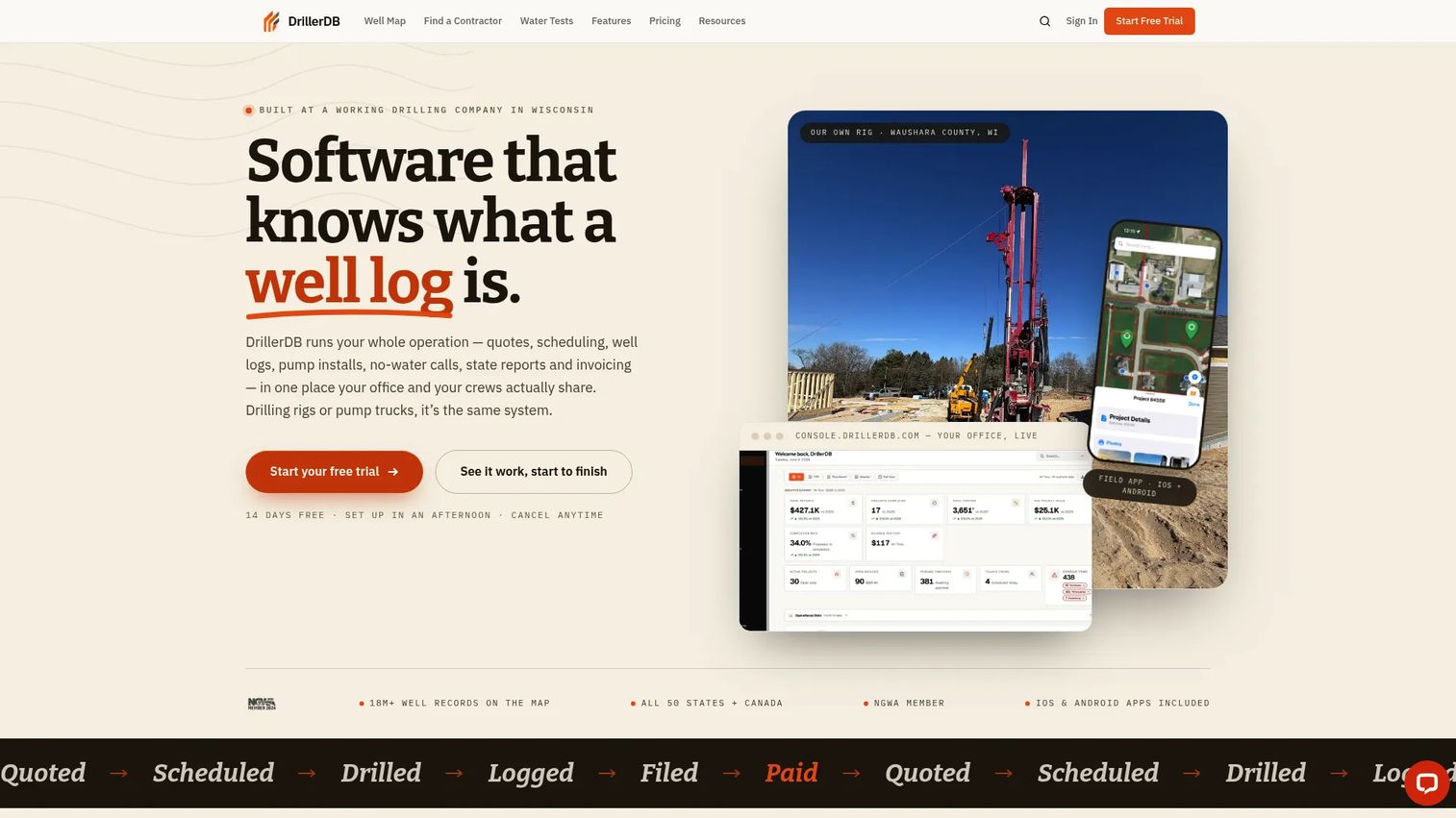
DrillerDB is water well drilling management software that ties projects, scheduling, compliance, maps, and billing into one system built for drillers. It is the most directly aligned tool on this list with the keyword, because it was designed around the water-well contractor operating model rather than adapted from generic field service. Proposals, field logs, state forms, and invoices all draw from the same job record.
Best for: Water well drilling contractors who need field operations, compliance, and billing running in one system without stitching point tools together.
Key strengths
- Offline field app: crews capture borehole depth, casing, water level, and photos where signal drops, then sync on reconnect, killing the paper-to-office lag.
- Compliance and e-filing: state compliance forms and permitting generate from logged job data, with parcel-level well records mapped for lookup.
- End-to-end billing: proposals, scheduling, and invoicing pull from the actual job, so the bill matches what the crew did.
Why choose DrillerDB: If drilling is your core business and compliance plus field logging is where you lose time, DrillerDB fits the operating model directly. It carries water-well record depth, offline capture, and a well map that broader field service platforms do not provide natively. For a founder or ops lead consolidating a messy stack, it replaces spreadsheets, paper logs, and separate billing.
DrillerDB pricing: Plans are public. Starter runs $99/month, Professional $299/month, and Enterprise starts at $799/month. Annual billing is available for Starter and Professional, with Enterprise on custom terms. All plans include a 14-day free trial, so you can validate field usability before committing.
2. MyWaterWell
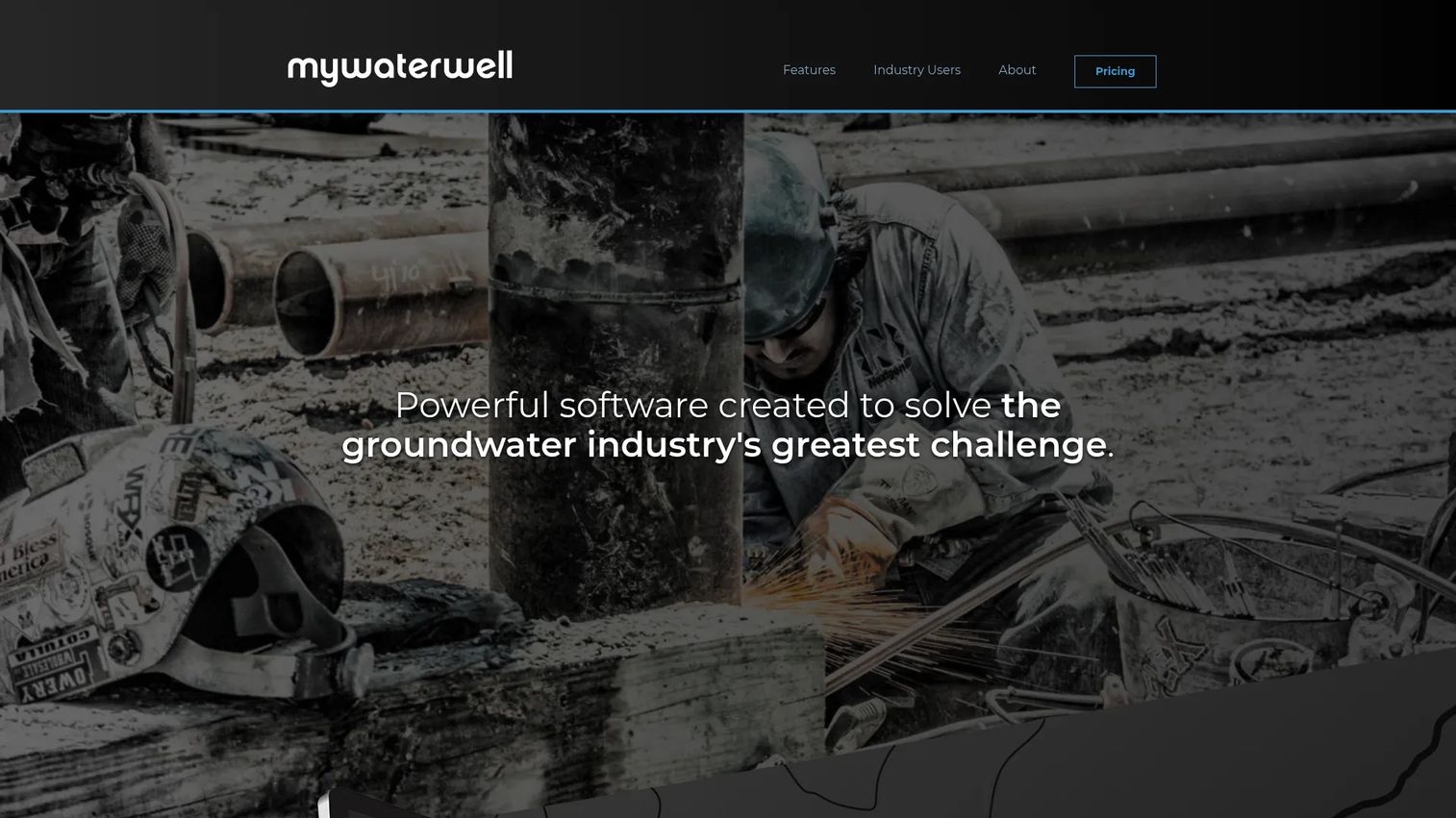
MyWaterWell is cloud-based groundwater industry software focused on managing well data, reporting, and related workflows. Its center of gravity is information management: keeping every well and pump record, drawing, and service history organized and accessible from field or office. It is a strong fit for teams whose biggest pain is data organization and regulatory submissions rather than heavy field dispatch.
Best for: Groundwater professionals who need a centralized well-data and reporting system accessible from any device.
Key strengths
- Well and pump data management: a single home for well location, drilling data, and pump records, so history is never scattered.
- Digital document storage: drawings and documents stored and retrievable against the well they belong to.
- Field and office access with reporting: cloud-hosted access on any device, with reporting and regulatory compliance built in.
Why choose MyWaterWell: Choose it when your priority is a clean, durable record system and regulatory reporting rather than crew dispatch. It is the well log software and record hub for teams that value data organization above field workflow automation. The lifecycle-data angle suits operators who manage many wells over time and need submissions to be fast and accurate.
MyWaterWell pricing: Pricing is public. The Single plan covers one well at $29.99 per year. Basic runs $199.99 per month and includes unlimited wells, customers, and admin users. An Enterprise plan is quote-based. There is no free tier listed, but the low Single entry point lets small operators test the record model cheaply.
3. Halliburton WellPlan
Halliburton WellPlan is well engineering software for designing complex well string operations. This is a different animal from contractor ops software. It solves the technical planning problem of getting a well drilled safely and efficiently, not the office problem of quotes, permits, and billing. It belongs in the hands of engineers and drilling teams planning demanding wells.
Best for: Operators and drilling engineers planning complex well string operations who need rigorous technical modeling.
Key strengths
- Hydraulics analysis: models circulating pressures and flow to plan the well safely.
- Torque and drag analysis: predicts mechanical loads across the drill string to avoid downhole problems.
- Well control: supports planning for pressure management and swab surge, underbalance hydraulics, and stuck pipe scenarios.
Why choose Halliburton WellPlan: Choose it when your challenge is engineering, not administration. If you are planning BHA dynamics, hydraulics, and well control for complex operations, this is the specialist tool. It will not run your field crew schedule or generate a customer invoice, and it is not meant to. Pair it with a contractor ops platform if you need both planning and operations.
Halliburton WellPlan pricing: Halliburton does not publish public pricing for WellPlan. Its product page confirms the feature set and positioning, but you will need to contact Halliburton directly for a quote based on your operation.
4. RapidWorks
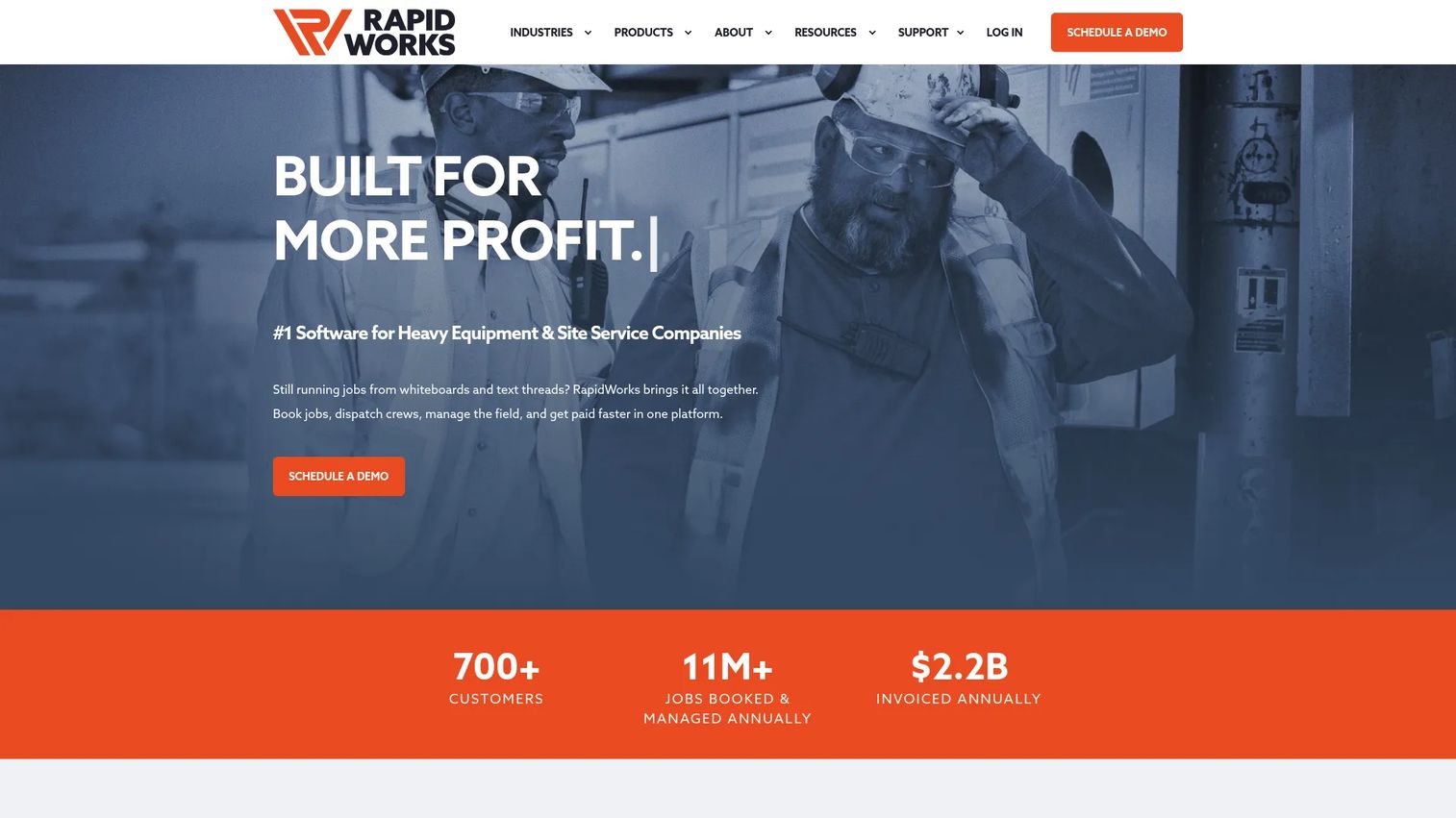
RapidWorks is heavy equipment and site service software covering booking, dispatch, field management, billing, and payments. It leans toward operators who run equipment-intensive site work and want tight control over jobs and invoicing. As job management software, it handles the operational side of drilling and boring work well, even if it does not carry the same water-well record depth as a purpose-built contractor tool.
Best for: Heavy equipment and site service companies that want an all-in-one operations platform for dispatch and billing.
Key strengths
- Scheduling and dispatching: book and dispatch crews and equipment from one board.
- Field management with GPS and telematics: track equipment and job progress in the field, with mobile job tickets and timecards.
- Invoicing and maintenance management: billing tied to jobs plus maintenance tracking for equipment uptime.
Why choose RapidWorks: Choose it when your operation is equipment-heavy and dispatch plus billing control is the priority. The telematics and maintenance management set it apart for fleets that need uptime visibility. It fits crews that want tighter job and invoicing control across drilling and boring work more than deep regulatory record-keeping.
RapidWorks pricing: RapidWorks does not display a public price. The pricing page describes user-based pricing and directs you to request a quote. Expect a conversation about team size before you see numbers.
5. FieldEdge
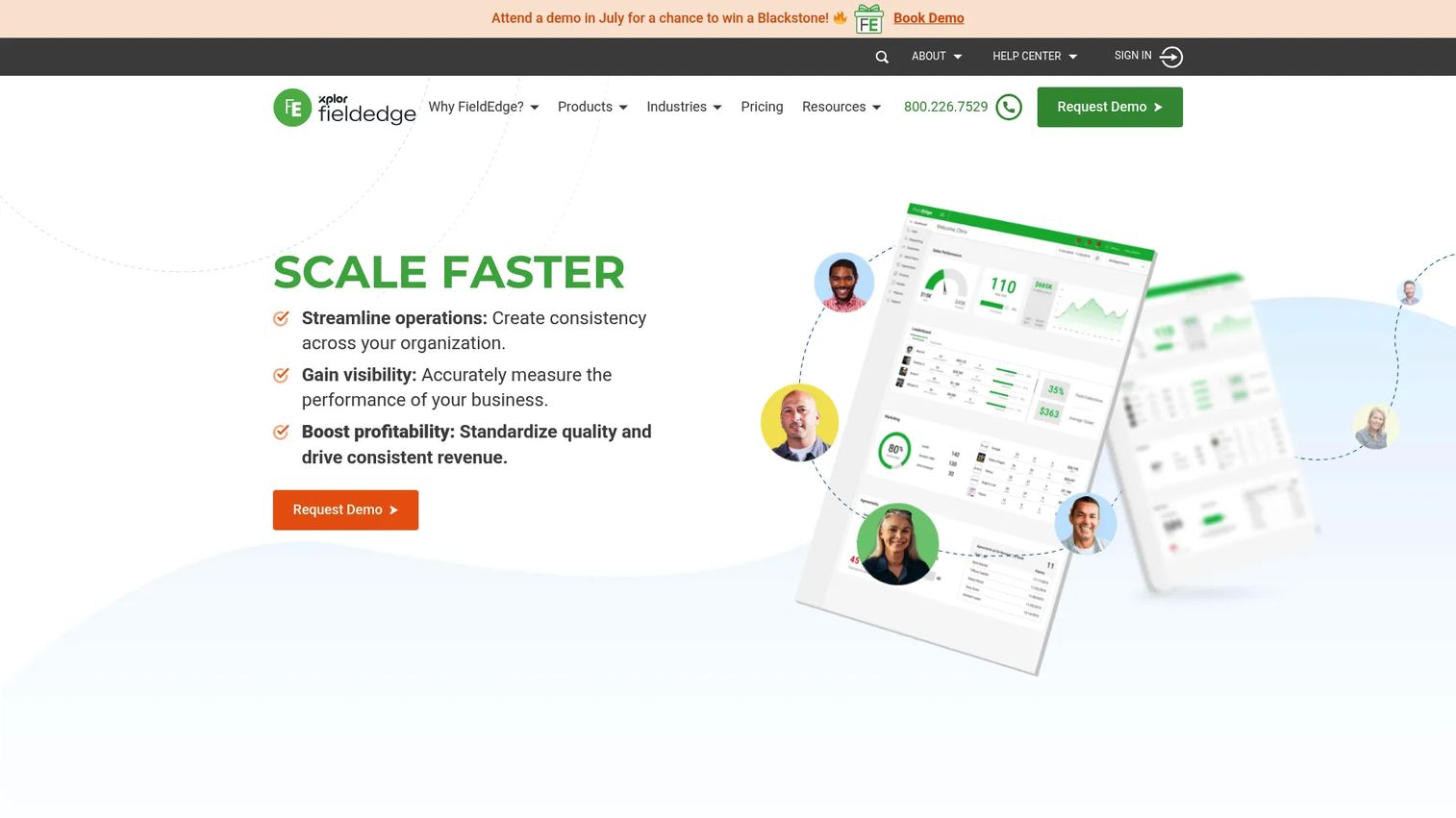
FieldEdge is field service management software built for multi-truck contractors. It is not drilling-specific, but service-heavy drilling operators, especially those doing pump service management and repeat maintenance, can make it fit. Its strength is the office-to-field service loop: dispatch, work orders, quoting, and payments moving cleanly between the board and the mobile app.
Best for: Service-heavy operators with multiple trucks who prioritize dispatch, work orders, and payment collection.
Key strengths
- Centralized dispatch board: see and assign every job and truck from one screen.
- Scheduling and work order management: build and track service work orders end to end.
- Payments, pricebook, and quoting: quote from a pricebook and collect payment in the field.
Why choose FieldEdge: Choose it when service work, not drilling records, is the bulk of your business. It brings mature dispatch and payment tooling that suits operators running many service calls. It does not carry native well logs or state drilling compliance, so pair it with a records approach if regulatory reporting is heavy in your business.
FieldEdge pricing: FieldEdge offers three plans, Select, Premier, and Elite, but does not publish numeric pricing. The vendor says pricing varies by team size and add-ons and directs visitors to book a demo. FieldEdge holds a 4.0/5 rating on G2.
6. Jobber
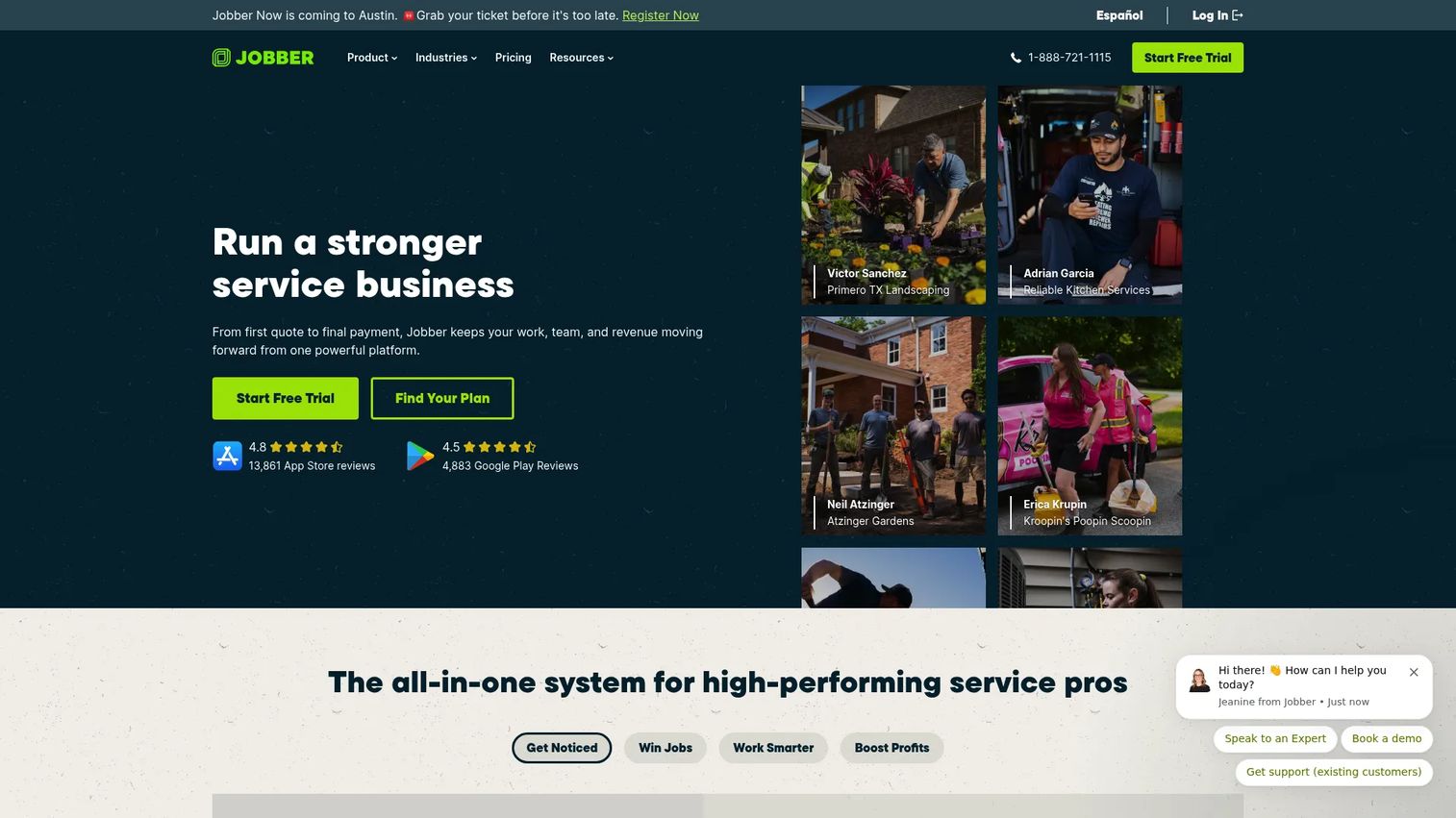
Jobber is field service management software for home and commercial service businesses. It is the most general-purpose tool on this list, but for small water-well or pump operators with simpler workflows, it covers the essentials well. Quoting, scheduling, online booking, invoicing, and a client hub all live in one clean system that a small team can run without heavy setup.
Best for: Small-to-mid-sized service teams that need scheduling, quoting, invoicing, and client communication without complexity.
Key strengths
- Job scheduling and online booking: book and schedule work, including customer-facing online booking.
- Quotes, invoicing, and online payments: move from quote to invoice to payment in one flow.
- Client hub and automation: a client portal plus automation, reporting, and team management.
Why choose Jobber: Choose it when your workflow is straightforward and you want fast time-to-value over drilling-specific depth. It is invoicing software and scheduling in an approachable package that small operators adopt quickly. It will not generate state drilling reports or carry well logs, so it fits simpler operations or service-side work rather than compliance-heavy drilling.
Jobber pricing: Pricing is public. Core starts at $21/month, Connect at $70/month, Grow at $105/month, and Plus at $280/month, with annual options billed annually. Jobber offers a free trial with no credit card required and rates 4.6/5 on G2, the highest on this list.
7. ServiceTitan
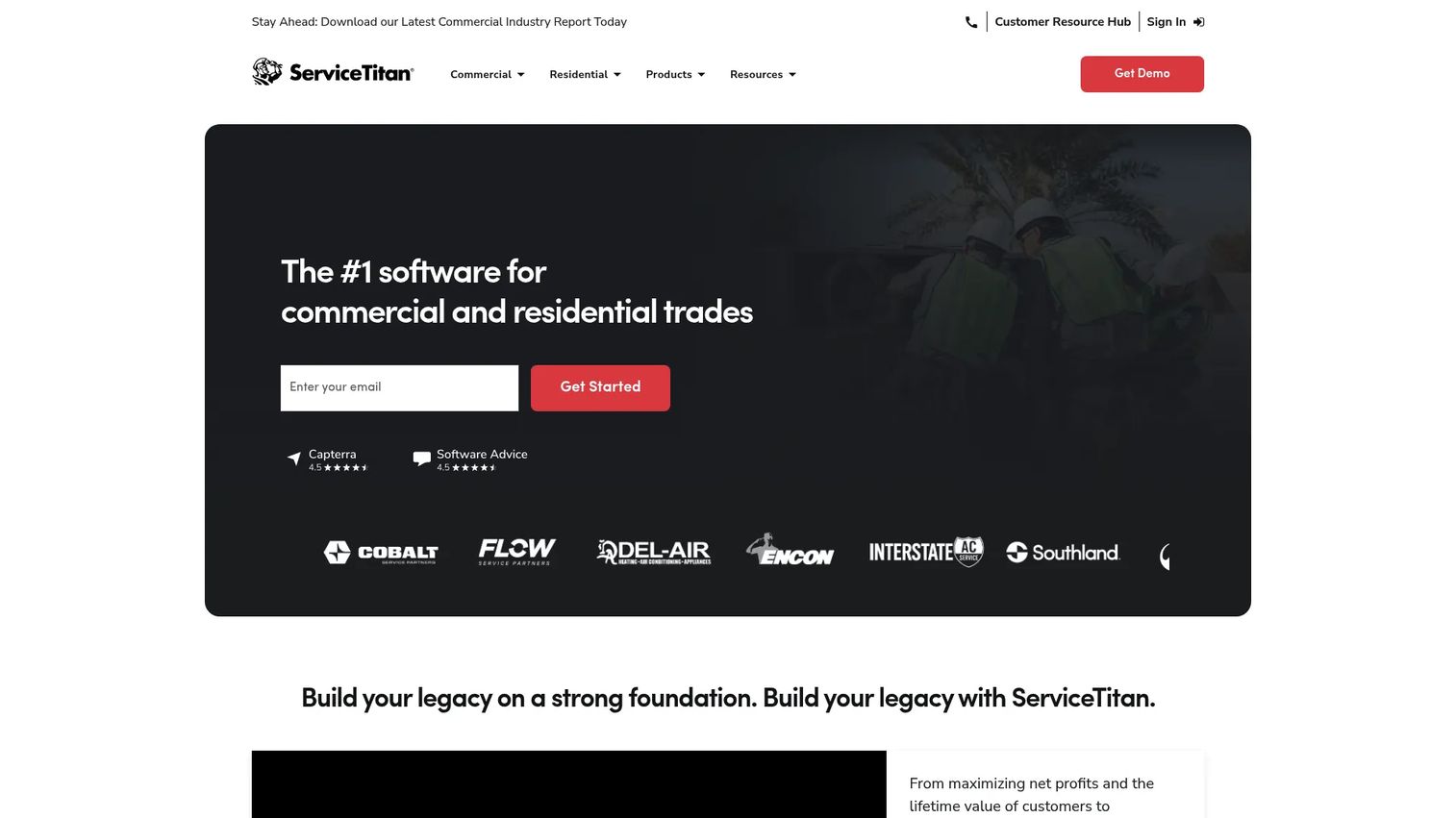
ServiceTitan is cloud software for contractors to manage scheduling, dispatching, invoicing, CRM, reporting, and related field service operations. It is built for scale and process control, which makes it a fit for larger service businesses rather than small drilling crews. For an operator with a big service arm and a need for tight operational reporting, it brings depth that lighter tools do not.
Best for: Residential and commercial contractors who need an all-in-one platform built for scale and process control.
Key strengths
- Dispatching and scheduling: manage high job volume with a robust dispatch engine.
- Call booking and invoicing: capture calls, book work, and invoice from one system.
- Pricebook, reporting, and mobile ops: structured pricebook, operational reporting, and mobile field tools with AI features.
Why choose ServiceTitan: Choose it when scale and process discipline matter more than drilling-specific records. It suits larger service organizations that need reporting depth and standardized operations across many technicians. Like the other broad platforms, it does not ship native well logs or state drilling compliance, so it fits service-heavy operations over pure drilling record-keeping.
ServiceTitan pricing: ServiceTitan sells per-technician packages, Starter, Essentials, and The Works, but does not display public numeric pricing. Each tier lists "Request Pricing," so plan a sales conversation. ServiceTitan rates 4.5/5 on G2.
Considerations before you buy
Use this checklist to pressure-test any tool against your real operating model, not the demo.
Field app usability in low signal
Test the offline field app where you actually work, not in the office. Have a crew log a full well, lose signal on purpose, and confirm the data survives and syncs cleanly. A field app that stumbles offline creates the exact paper lag you are trying to kill.
Compliance and state reporting fit
Confirm the tool supports your state's specific well report format and permitting and e-filing. Generic reporting is not the same as your state's template. Ask for a sample filing in your jurisdiction before you commit.
Record depth for logs, photos, permits, and service history
Check whether one well or customer record holds logs, photos, permits, and every service call over time. Shallow records mean the next crew shows up blind. Depth here is what separates a records-first tool from a scheduling tool.
Billing and accounting integration
Make sure billing pulls from the actual job and pushes to your accounting system. Re-typing invoices is where numbers drift and disputes start. Confirm the integration you need exists before signing.
Drilling only versus drilling plus service work
Be honest about your mix. Pure drilling favors contractor-first records tools. A heavy service arm, including pump service management, may point you toward a broader field service platform, or a pairing of both.
Conclusion
The decision comes down to what your business actually does. For a contractor-first, all-in-one option built around water-well workflow, offline field capture, compliance, and a well map, DrillerDB is the most directly aligned pick. For engineering planning of complex wells, Halliburton WellPlan is the specialist, and it is not trying to run your office. For broader field service and service-heavy operations, FieldEdge, Jobber, and ServiceTitan bring mature scheduling, dispatch, and billing, while MyWaterWell anchors the records-and-reporting angle for groundwater teams.
Your next step is simple. Narrow the list by three factors: workflow complexity, compliance burden, and whether service work is a real part of the business. If drilling records and state reporting dominate, start with the contractor-first tools and run the free trial where one exists. If service calls dominate, evaluate the field service platforms against your dispatch and billing needs. Pick the tool that matches your operating model, not the longest feature list, and this category of contractor software will earn its place in your stack inside a quarter.
FAQs
It manages the full drilling business workflow: quoting, field data capture, well logs, permits, compliance reporting, job history, and billing. The goal is to keep the field and office working from the same data so records stay accurate and reports get filed on time. It replaces paper sheets and disconnected spreadsheets.
An offline field app for reliable data capture, compliance reporting software matched to your state, deep well and customer records, and billing that pulls from the actual job. A well map for parcel-level lookup and clean accounting integration round out the list. Prioritize the features that remove your biggest current source of errors.
If your crews work anywhere with weak cell signal, yes. An offline field app lets a driller log depth, casing, and water level on site and sync when they reconnect, which prevents the two-day paper lag and the transcription errors that trigger billing disputes. It is one of the highest-value features for field-heavy operations.
Contractor-first tools like DrillerDB generate state compliance forms and well logs from job data, often with permitting and e-filing built in. MyWaterWell centers on well-data records and regulatory reporting for groundwater teams. Broader field service platforms handle scheduling and billing well but do not ship native drilling compliance.
No. Engineering software like Halliburton WellPlan models hydraulics, torque and drag, and well control to plan the well itself. Contractor software manages quotes, field logs, permits, and billing to run the business. Some operations need both, paired together, because they solve different problems.
Yes, especially the broader field service platforms. FieldEdge, Jobber, and ServiceTitan handle service work orders, dispatch, and pump service management well. Contractor-first tools cover service history tied to the well record. If service work is a large part of your business, weigh a field service platform or a pairing.
Accounting and billing integration first, so invoices never get re-typed. Then confirm any state e-filing or permitting connection you rely on, plus mapping or GPS if field location matters. Verify each integration exists for your specific tools and jurisdiction before buying, not after.
Compare on total operating fit, not just the sticker price. Public plans like DrillerDB from $99/month, MyWaterWell from $29.99/year, and Jobber from $21/month let you test quickly, while RapidWorks, FieldEdge, and ServiceTitan use quote-based pricing that depends on team size. Factor in the free trial where one exists and price the time saved on rekeying and missed filings.