Telecom spend leaks long before it shows up in a board deck. A contract auto-renews at a rate nobody re-negotiated. A dozen mobile lines keep billing for people who left months ago. An invoice arrives with charges nobody can trace, and it gets paid anyway because reconciling it by hand would eat a full afternoon.
The mess is bigger than telecom. The same blind spots that hide phone and network waste usually hide SaaS waste, cloud waste, and shadow IT everywhere else in the stack.
The market keeps growing because the problem keeps growing. The telecom expense management market was worth about USD 5.64 billion in 2026 and is projected to reach USD 10.85 billion by 2031, a 13.98% CAGR, according to Mordor Intelligence (2026). Companies are not buying this software for fun. They are buying it because manual control stopped scaling.
This guide compares seven telecom expense software platforms on the things that actually decide value: invoice control, contract compliance, inventory visibility, dispute recovery, and reporting a CFO can trust.
What's inside
- Who this is for: finance, RevOps, and IT owners at growing companies who suspect telecom and technology spend is leaking, and want software that makes it visible and controllable.
- How the tools were chosen: each platform is a real telecom expense management system with meaningful coverage across invoice, contract, inventory, and dispute workflows, plus reporting.
- Criteria that matter most: invoice accuracy and carrier parsing, contract and renewal tracking, inventory and provisioning visibility, dispute management, and executive-grade reporting.
- Why both software and services appear: some teams want a self-run system, others want managed services on top. The category covers both, so this list does too.
TL;DR
- Best for enterprise telecom estates: Upland Cimpl, strong on invoice, inventory, and workflow automation at scale.
- Best for lifecycle management and operational breadth: Tangoe One Telecom, end-to-end coverage across telecom, mobile, and cloud.
- Best for budget visibility and control: Calero, unified management across SaaS, mobility, telecom, and market data.
- Best for communications lifecycle coverage: Sakon, telecom and device management across large estates.
- Best for automated spend control on ServiceNow: brightfin, IT cost optimization built natively on ServiceNow.
- Best for managed telecom governance: Management of Things by Tellennium, platform plus managed services.
- Best for procurement and service visibility: Lightyear, telecom procurement, network inventory, and expense management.
What is telecom expense software
Telecom expense software is a system for tracking, validating, allocating, and optimizing telecom and related communications spend across an organization. It turns a pile of carrier invoices, contracts, and device records into a single source of truth you can audit and report on.
Most platforms in this category, also called telecom expense management software or a telecom expense management system, cover a common set of functions. Some vendors deliver these as software alone, others pair them with telecom expense management services and managed support.
Core functions of a telecom expense management system:
- Usage tracking: monitor voice, data, and device usage across carriers and locations.
- Invoice and contract management: parse carrier invoices, validate charges, and track contract terms and rates.
- Inventory and service lifecycle management: maintain a system of record for lines, devices, licenses, and services.
- Ordering and provisioning: manage moves, adds, changes, and disconnects through structured workflows.
- Dispute management: flag billing errors and recover credits from carriers.
- Reporting and BI: allocate cost by department, surface anomalies, and give leadership clear budget visibility.
The category sits next to broader technology expense management, which extends the same discipline to cloud, SaaS, and IT spend. Several vendors on this list already stretch into that territory, which matters if your telecom problem is really a stack-wide spend problem.
Why it matters now
Telecom and mobility sprawl faster than anyone owns it. New offices, new devices, new UCaaS tools, and new carriers pile on without a single person accountable for the total bill. Weak ownership plus rising volume equals hidden cost.
Two data points frame the pressure. Large enterprises held 71.35% of the telecom expense management market in 2025, per Mordor Intelligence (2026), which tells you where the spend concentration lives. And cloud-based deployment represented 71.2% of the market in 2024, per Premier Market Insights (2026), which tells you buyers now expect this control delivered as software, not spreadsheets.
For a founder or finance lead, the payoff is operational control: accurate budgets, fewer surprise charges, and reporting that survives board scrutiny.
When to use telecom expense software
When telecom invoices keep arriving out of sync
One carrier bills monthly, another bills on a broken cycle, and a third sends a PDF that doesn't match last month's format. As invoice volume grows, manual reconciliation quietly breaks. You stop catching errors because catching them costs more time than the errors seem worth. Telecom expense software parses invoices automatically and flags what doesn't add up.
When contracts and renewals are easy to miss
Multiple vendors, multiple devices, and multiple service tiers mean contract terms scatter across inboxes and drives. A renewal slips through, and you're locked into last year's rate for another term. A telecom expense management system tracks contract dates, rates, and compliance so renewals become decisions instead of accidents.
When inventory and provisioning are drifting
Lines, licenses, and hardware become invisible without a system of record. People leave, devices stay active, and licenses keep billing. Software gives you a live inventory tied to actual usage, so you disconnect what nobody uses and stop paying for ghosts.
When leadership needs clearer reporting
When a CFO asks "what are we spending on telecom, by team, and why did it move," a spreadsheet won't hold up. Reporting and BI features allocate cost, show trends, and support budgeting decisions with numbers leadership can trust.
Comparison table
The table below helps you compare fit fast across software-only platforms, lifecycle suites, and managed services. Pricing across this category is largely quote-based, so use the ratings and differentiators to shortlist, then request pricing for your estate size.
| # | Product | Best for | Key differentiator | Pricing | G2 rating |
|---|---|---|---|---|---|
| 1 | Upland Cimpl | Enterprise telecom invoice and inventory control | Workflow automation with 250+ integration and communication points | Quote-based | Not listed |
| 2 | Tangoe One Telecom | Lifecycle management and broad estate visibility | AI-assisted analytics across telecom, mobile, and cloud | Quote-based | Limited reviews |
| 3 | Calero | Contract, invoice, and reporting-heavy teams | Unified management across SaaS, mobility, telecom, and market data | Quote-based | 4.3/5 |
| 4 | Sakon | Communications lifecycle management | Telecom and device lifecycle for large estates | Quote-based | Limited reviews |
| 5 | brightfin | Automated telecom expense workflows | Built natively on ServiceNow | Quote-based | 4.4/5 |
| 6 | Management of Things | Managed mobility and telecom governance | Platform plus managed services for audits and optimization | Quote-based | 4.9/5 |
| 7 | Lightyear | Procurement and service management | Free procurement plus network inventory and expense management | Free procurement; contact for other modules | 5.0/5 |
Best 7 telecom expense software tools for 2026
1. Upland Cimpl
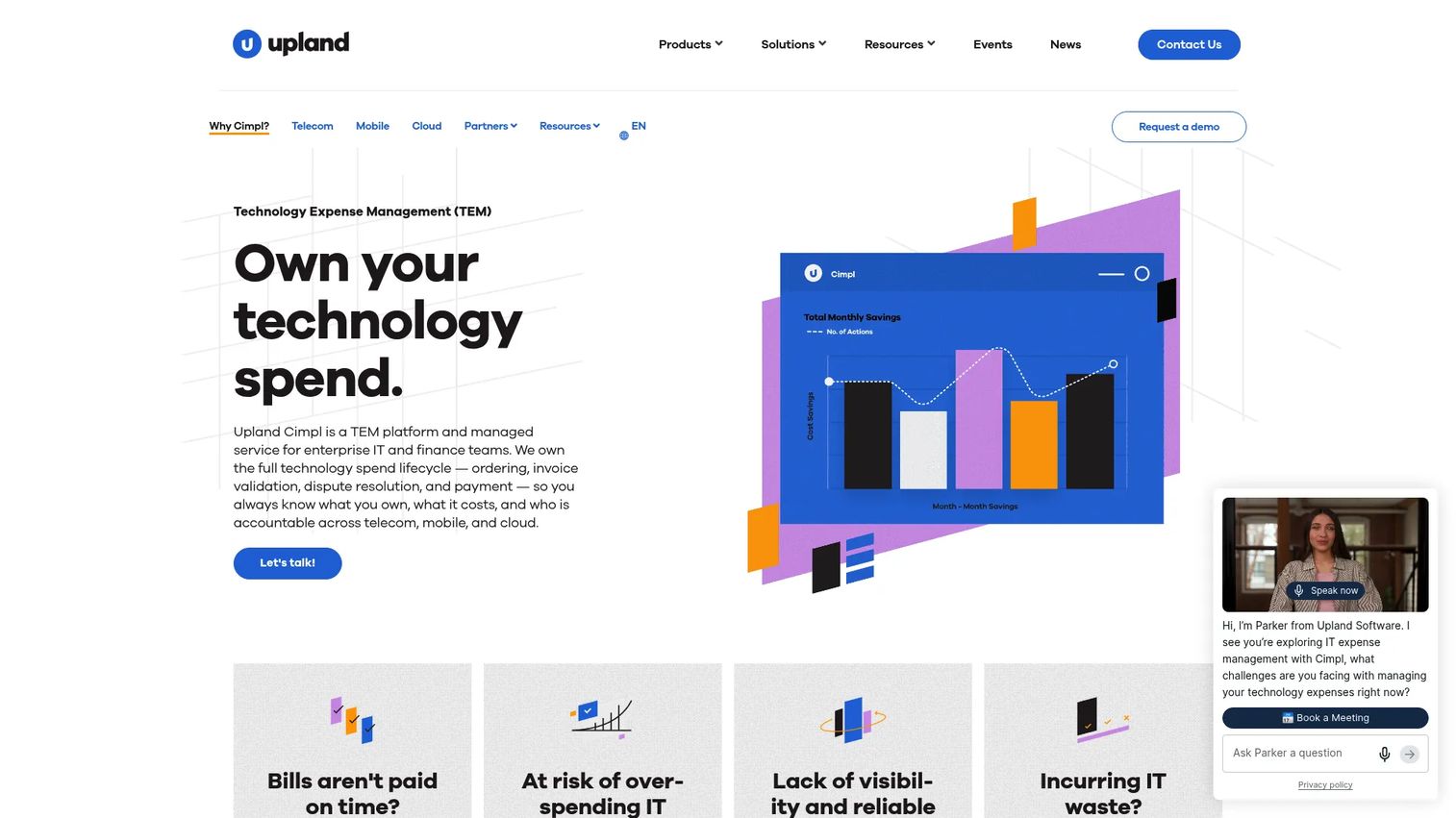
Upland Cimpl is technology expense management software for telecom, mobility, cloud, and UCaaS costs. It's built for organizations that need to track, manage, control, and report on technology expenses across a large estate, then automate the ordering and billing work that usually eats an ops team alive. If your telecom problem has already spilled into cloud and unified communications, Cimpl treats them as one spend picture rather than three.
The platform stands out for depth of workflow automation. It ships with more than 250 integration and communication points, which lets it slot into ordering and billing processes instead of forcing you to run them by hand. It also monitors usage, outliers, and billing discrepancies, so anomalies surface before they become paid line items.
Best for: enterprises that need telecom and cloud expense visibility with heavy workflow automation.
Key features
- Track, manage, control, and report on technology expenses
- Automate ordering and billing with 250+ integration points
- Monitor usage, outliers, and billing discrepancies
- Telecom, mobility, cloud, and UCaaS coverage in one view
Why choose Upland Cimpl: pick it when your estate is large, your spend spans telecom and cloud, and manual ordering has become the bottleneck. It excels at visibility, operational control, and telecom governance for teams that outgrew spreadsheets years ago.
Upland Cimpl pricing: Upland handles Cimpl pricing through its sales team rather than a public rate card, so you'll request a demo and a quote sized to your estate.
2. Tangoe One Telecom
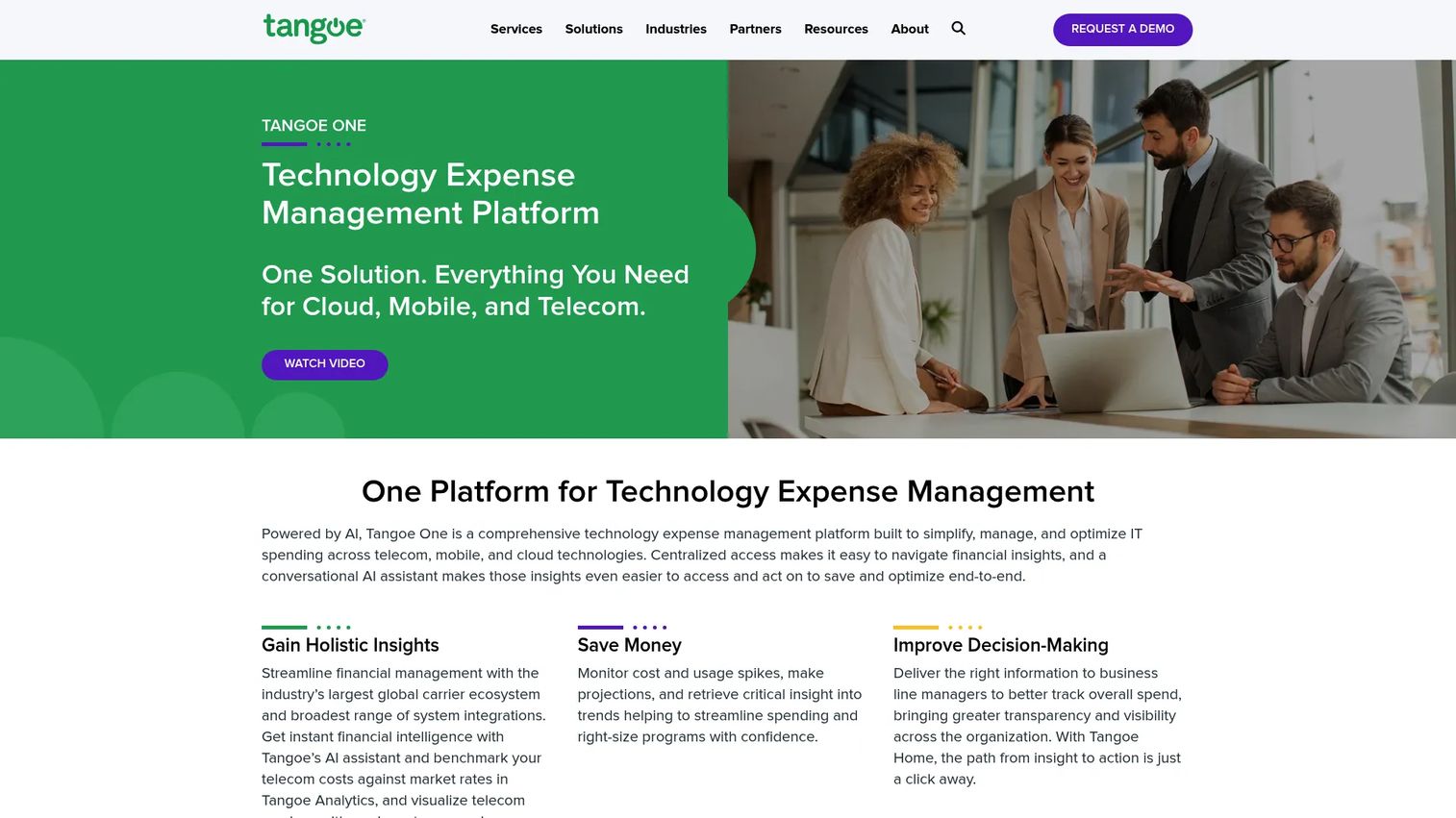
Tangoe One Telecom is an AI-powered technology expense management platform covering telecom, mobile, and cloud spend. It centralizes invoice, order, and inventory management, then layers AI-assisted analytics on top to surface optimization opportunities. The appeal is breadth: Tangoe aims to cover the full telecom lifecycle rather than one slice of it.
For a complex estate spread across devices, services, and locations, that end-to-end coverage matters. Ordering and provisioning, invoice review, and inventory all live in one system, which cuts the handoffs where telecom data usually gets lost.
Best for: enterprises managing telecom and broader technology expenses at scale.
Key features
- Centralized technology expense management
- Invoice, order, and inventory management
- AI-assisted analytics and cost optimization
- Telecom, mobile, and cloud coverage
Why choose Tangoe One Telecom: choose it when you need process coverage from order to invoice to inventory in a single platform, and you want AI helping flag where spend can come down. It fits organizations that treat telecom as an ongoing operational function, not a one-time cleanup.
Tangoe One Telecom pricing: Tangoe scopes pricing to your environment through a sales conversation rather than publishing plan tiers, so expect a custom quote after a demo.
3. Calero
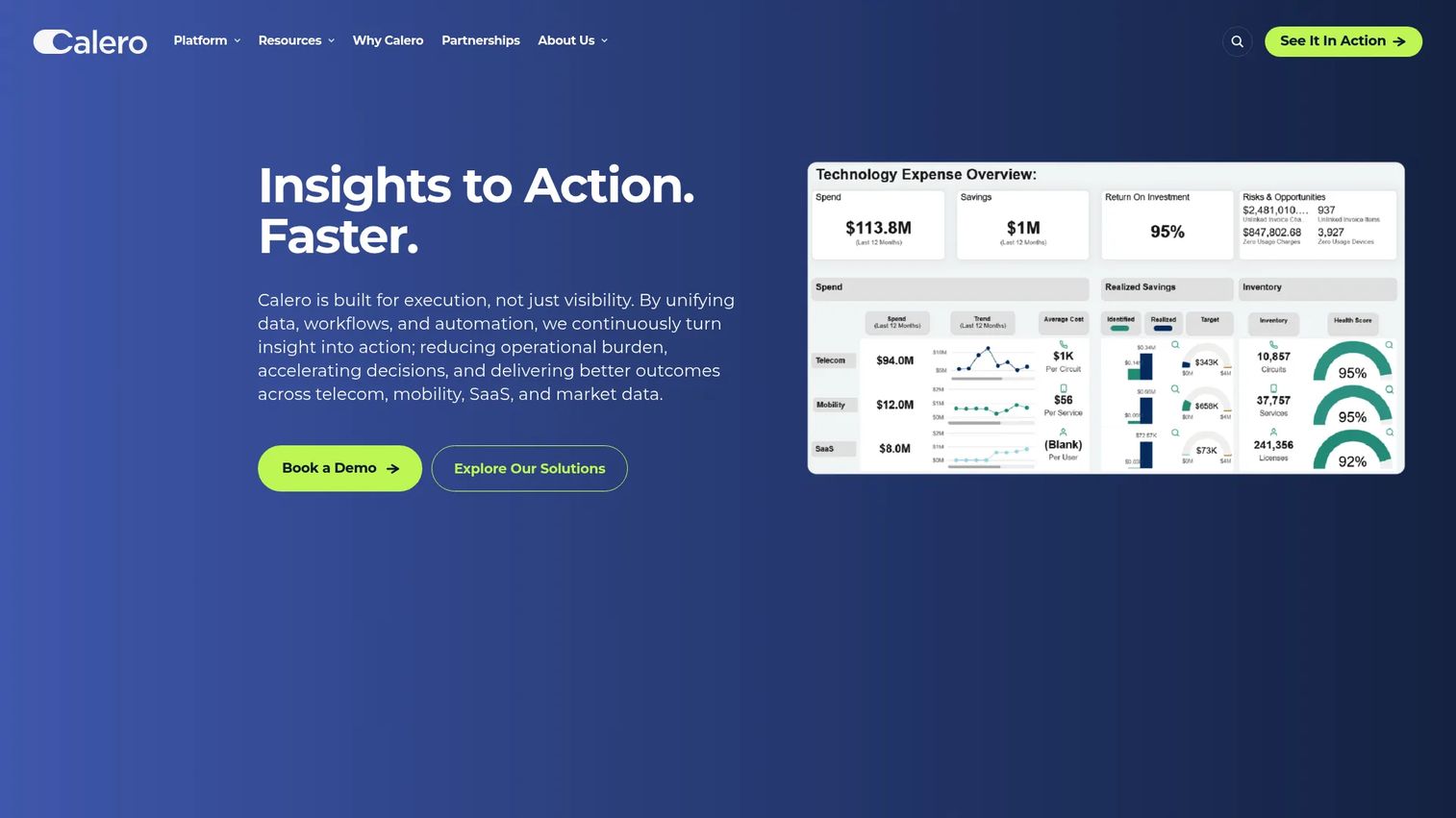
Calero is unified technology management software spanning SaaS, mobility, telecom, and market data expense management. It's built as a control tower: one place to manage contracts, invoices, and audits across several spend categories at once. That makes it a strong fit for finance and telecom admins who want deeper control and reporting they can defend in a budget review.
Calero's telecom management includes order, inventory, and audit/dispute workflows, so error recovery is part of the platform rather than a separate manual chase. Its mobility management covers the full device lifecycle, and its SaaS management adds contract optimization for software spend that often hides next to telecom.
Best for: enterprises managing telecom, mobility, SaaS, and market data spend in one platform.
Key features
- SaaS management and contract optimization
- Mobility management across the device lifecycle
- Telecom management with order, inventory, and audit/dispute workflows
- Unified reporting across spend categories
Why choose Calero: choose it when you want one control tower for technology spend, not a telecom-only point tool. It fits teams whose real problem is fragmented spend across telecom, mobility, and SaaS, and who need auditing and allocation in one view.
Calero pricing: Calero routes pricing through its team and leads with demos rather than a published price list, so you'll get a quote scoped to the categories and volume you manage.
4. Sakon
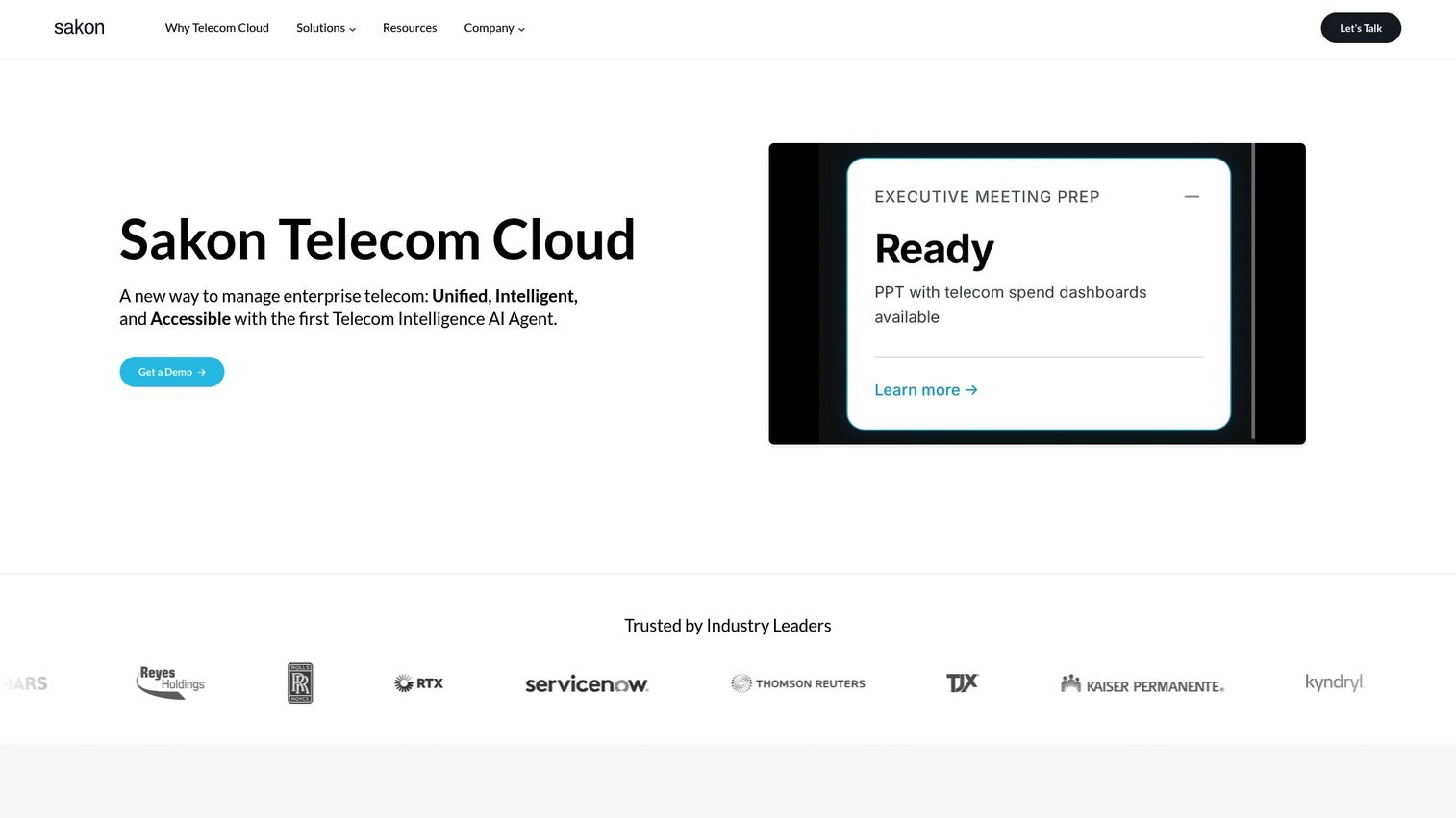
Sakon is an enterprise telecom and device management platform for running communications ecosystems at scale. It's positioned around communications lifecycle management, covering telecom expense management, telecom service management, and telecom cost optimization in one platform. For large organizations, that lifecycle framing keeps device and service management connected to the spend they generate.
The value shows up when operational breadth matters more than a single point fix. Managing thousands of lines and devices across locations creates constant churn, and Sakon is built to keep inventory, service, and cost aligned as that churn happens.
Best for: large enterprises needing telecom and device lifecycle management.
Key features
- Telecom expense management
- Telecom service management
- Telecom cost optimization
- Device lifecycle management across large estates
Why choose Sakon: choose it when your communications estate is large and you need lifecycle coverage across telecom and devices, not just invoice parsing. It suits enterprises where service management and cost control have to move together.
Sakon pricing: Sakon directs buyers to request a demo rather than showing a price, so pricing comes as a custom quote based on your environment.
5. brightfin
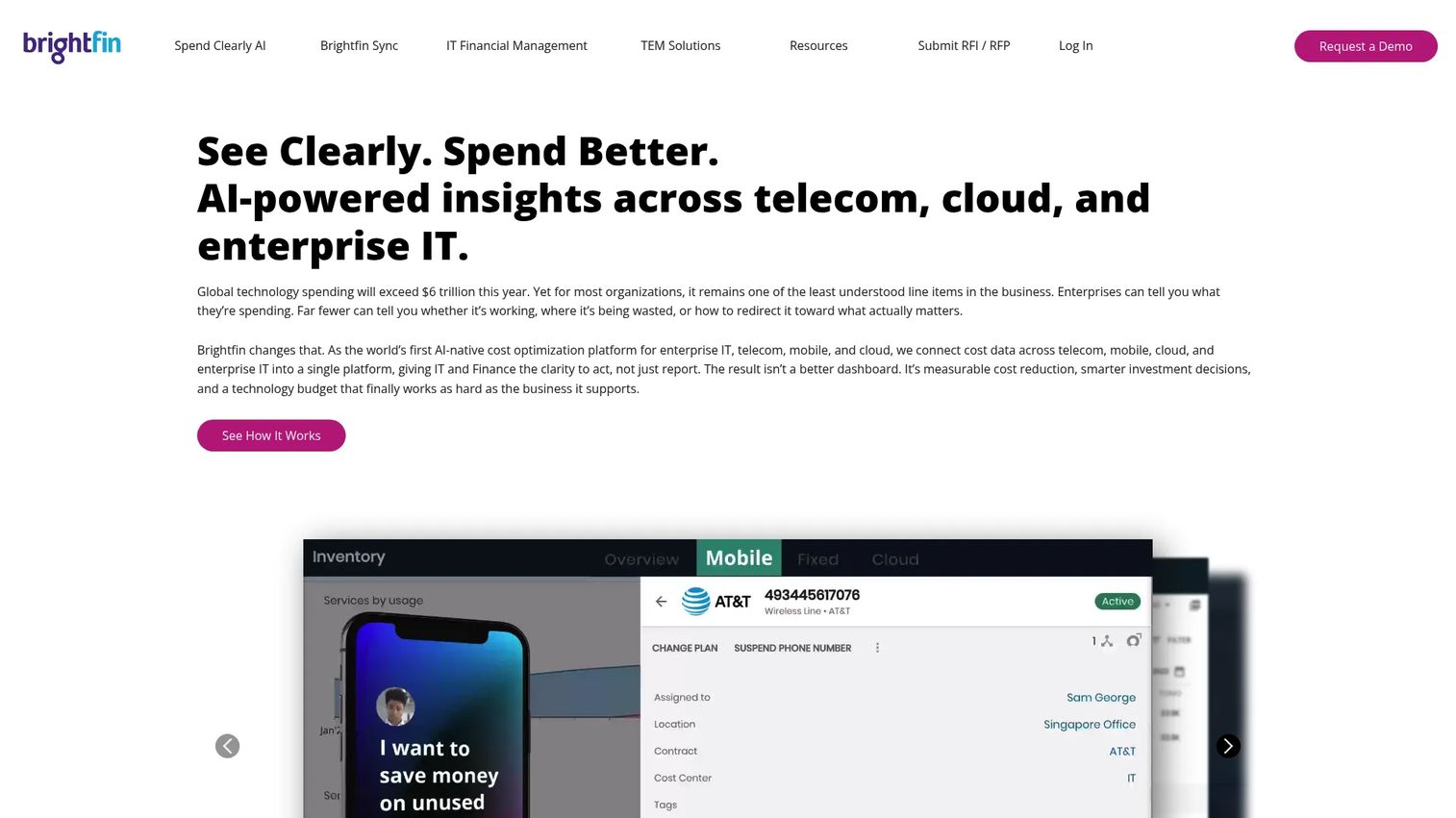
brightfin is AI-native IT cost optimization software for telecom, mobile, cloud, and broader IT spend, built natively on ServiceNow. That ServiceNow foundation is the differentiator: if your IT organization already runs on ServiceNow, brightfin lives inside the same platform instead of bolting on as another disconnected tool. Its telecom expense management includes invoice processing, contract management, and dispute handling.
The pitch is faster visibility with less manual work. brightfin unifies IT spend across mobile, fixed, cloud, procurement, UEM, and bill pay, so telecom sits inside a single IT cost view rather than isolated in its own report.
Best for: enterprises needing ServiceNow-native telecom and IT expense management.
Key features
- Native ServiceNow application
- Telecom expense management with invoice processing, contract management, and dispute handling
- Unified IT spend across mobile, fixed, cloud, procurement, UEM, and bill pay
- Workflow automation and spend governance
Why choose brightfin: choose it when ServiceNow is your system of record and you want telecom and IT spend managed inside it. It fits IT and finance teams that value automation and a single platform over stitching multiple tools together.
brightfin pricing: brightfin routes buyers to a demo and request form rather than a rate card, so pricing arrives as a quote scoped to your IT estate.
6. Management of Things
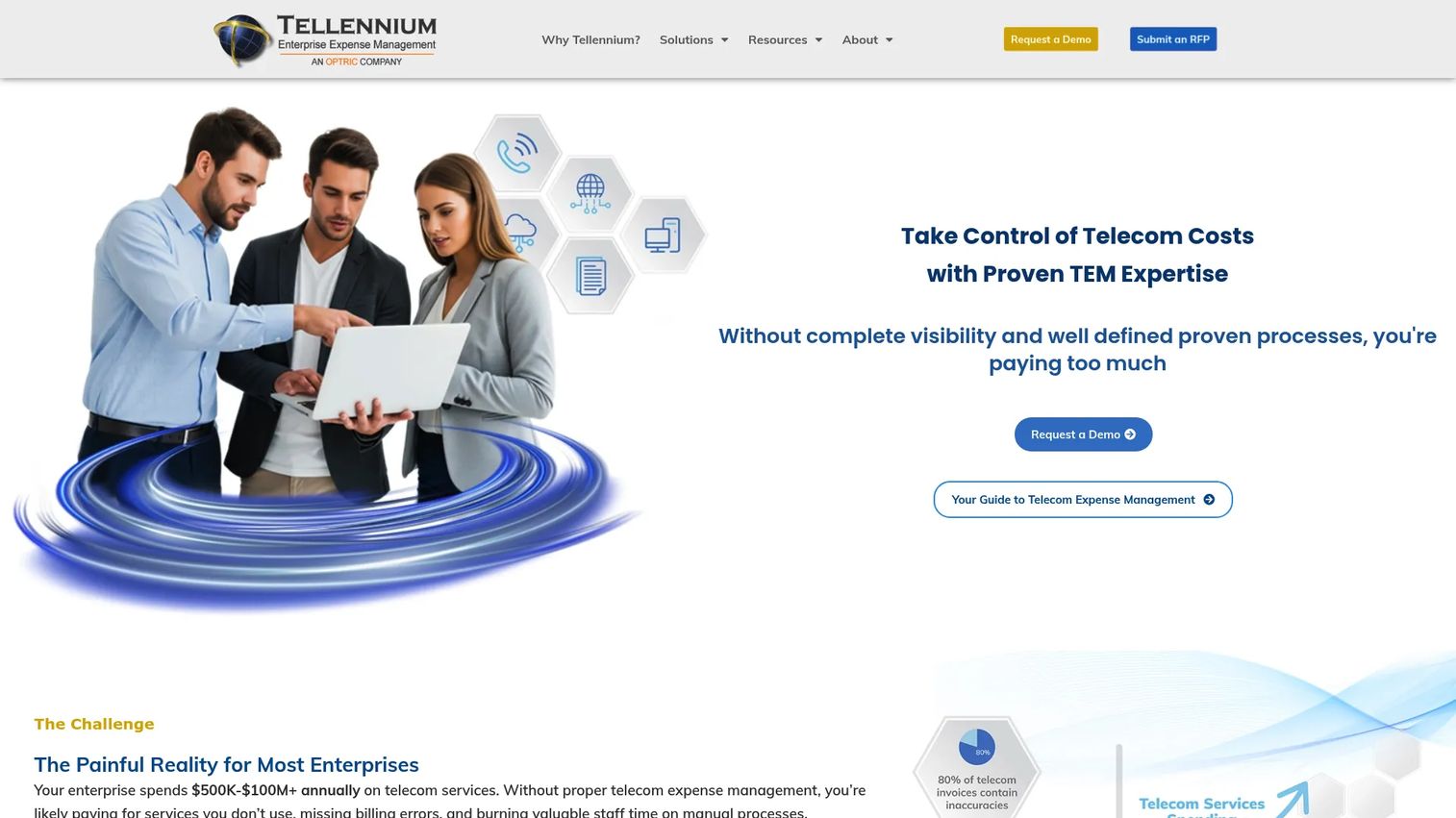
Management of Things, Tellennium's platform, pairs telecom and technology expense management with managed services for audits, optimization, invoicing, and inventory visibility. It runs from a single portal with automated workflow, and it's the pick for teams that want software plus a team behind it. When internal ops capacity is thin, the managed-services layer does the recurring work you don't have headcount for.
The platform handles full invoice management and the AP process, plus real-time inventory visibility and charge monitoring. Combined with managed services, that means someone is actively auditing bills and chasing optimization, not just handing you a dashboard.
Best for: mid-market and enterprise teams managing telecom and related technology expenses.
Key features
- Single portal with automated workflow
- Full invoice management and AP process
- Real-time inventory visibility and charge monitoring
- Managed services for audits and optimization
Why choose Management of Things: choose it when you want governance and managed telecom expense management services, especially in distributed device environments where internal capacity is limited. It fits teams that would rather buy an outcome than staff the work.
Management of Things pricing: Tellennium prices through a request and demo process rather than a public figure, so you'll receive a quote based on your telecom footprint.
7. Lightyear
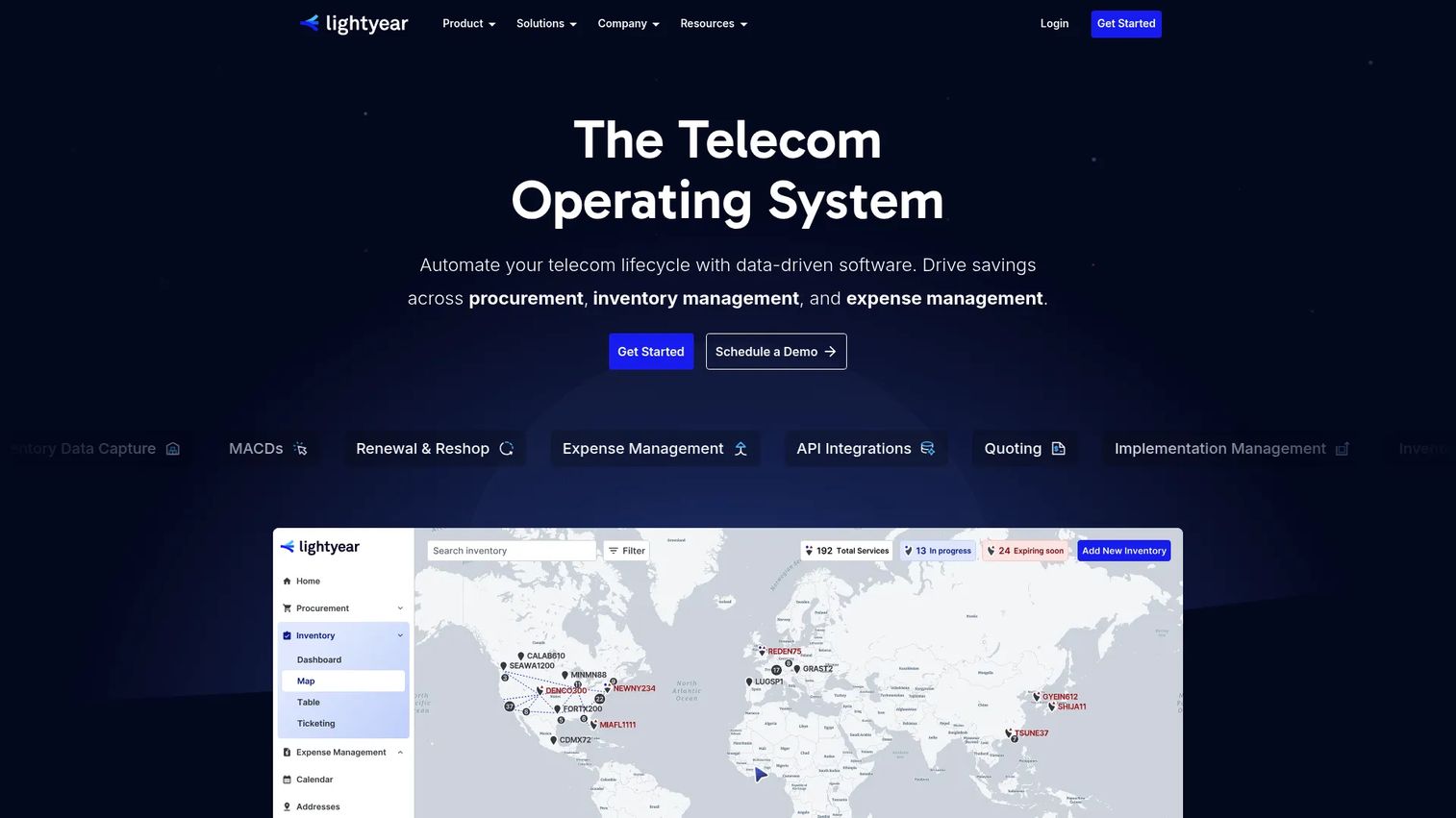
Lightyear is telecom lifecycle management software for procurement, network inventory, and expense management. It leans into procurement discipline: automated telecom procurement and RFPs sit at the front of the platform, with network inventory management and expense management behind them. For buyers who want to simplify how they source and track telecom services across locations, that procurement-first angle is distinctive.
Lightyear works as a system of record for your network inventory, then adds telecom expense management with invoice automation on top. That combination suits teams focused on cleaner buying and clearer service visibility rather than a heavy managed-services relationship.
Best for: enterprises managing telecom procurement, inventory, and billing across multiple locations.
Key features
- Automated telecom procurement and RFPs
- Network inventory management and system of record
- Telecom expense management and invoice automation
- Multi-location service visibility
Why choose Lightyear: choose it when procurement discipline and service simplification matter most, and you want a modern system of record for your network. It fits teams that see telecom as a sourcing and inventory problem first.
Lightyear pricing: Lightyear Procurement is free to use. Lightyear Network Inventory Manager and Lightyear Telecom Expense Management are priced based on your enterprise network size, so those modules come as a quote via Lightyear's team.
Considerations
Invoice accuracy and carrier parsing
The whole category lives or dies on invoice handling. Ask how the platform ingests carrier invoices in different formats, how it validates charges against contracted rates, and how it flags anomalies. Get specific about how many carriers and invoice formats it parses cleanly, because a platform that chokes on your primary carrier's bill won't save you much.
Contract and renewal control
Renewal tracking is where soft savings hide. Check whether the system stores contract terms, rates, and end dates, and whether it alerts you before a renewal window closes. Compliance tracking matters too: you want to know when a carrier bills off-contract so you can dispute it.
Inventory and provisioning visibility
A telecom expense management system is only as good as its inventory. Evaluate how it tracks lines, devices, licenses, and services, and whether that inventory ties back to real usage. The gap between what you pay for and what you actually use is usually the fastest source of savings, and you can't close it without a live system of record.
Reporting and executive visibility
Reporting is what turns telecom data into budget decisions. Look for cost allocation by department or cost center, trend views over time, and anomaly reporting a CFO can read without a translator. If the reporting can't answer "what moved and why," it won't survive a finance review.
Software-only vs managed services
Decide honestly how much of this work your team can own. Software alone fits teams with the capacity to run audits, disputes, and provisioning themselves. Managed services add value when internal ops capacity is thin and you'd rather buy the outcome, though they shift more of your process to an outside partner. Several vendors here offer both, so match the model to your headcount, not just your feature wishlist.
Conclusion
The right telecom expense software should do three things: reduce waste, improve visibility, and make telecom spend easier to govern. Every platform here does that, but they fit different messes.
Start with the problem you actually have, not the longest feature list. If your estate is large and workflow-heavy, Upland Cimpl and Tangoe One Telecom carry that weight. If fragmented spend across telecom, mobility, and SaaS is the real issue, Calero acts as a control tower. Sakon fits communications lifecycle management at scale, and brightfin fits teams already living inside ServiceNow. If internal capacity is thin, Management of Things adds managed telecom expense management services on top of the platform. And if procurement and service visibility come first, Lightyear starts you with free procurement and builds from there.
Shortlist two or three that match your current operational reality, then request quotes sized to your estate. The best next step is a demo where you feed the platform one of your messiest carrier invoices and watch how it handles it.
FAQs
It tracks, validates, allocates, and optimizes telecom and communications spend. In practice, that means parsing carrier invoices, catching billing errors, tracking contracts and inventory, and reporting cost by team so finance can budget accurately and control waste.
Savings depend on your estate size and how much waste already exists, so treat any single percentage with caution. Most value comes from three places: recovering credits on billing errors through dispute management, cutting unused lines and licenses through better inventory, and avoiding off-contract charges through renewal tracking.
Invoice parsing and validation, contract and renewal tracking, live inventory of lines and devices, dispute management for credit recovery, and reporting that allocates cost by department. If a platform is weak on invoice accuracy, the rest matters less, because that's where the recurring savings start.
Software gives your team the system to run telecom expense management yourselves. Telecom expense management services layer a provider's team on top to run audits, disputes, and optimization for you. Software suits teams with capacity to own the work; managed services suit teams with thin internal ops. Several vendors offer both models.
Yes. Most platforms in this category track both mobile and fixed telecom, and many extend into cloud, UCaaS, and broader IT spend. That combined view is the point: it keeps mobile devices, fixed circuits, and their contracts in one inventory instead of scattered across systems.
Yes. A telecom expense management system stores contract terms, rates, and end dates, then alerts you before renewal windows close. That turns renewals into deliberate decisions and helps you catch carriers billing off-contract, which is a common and recoverable source of overspend.
Reporting depth first: cost allocation by cost center, trend analysis, and anomaly flags a CFO can read. Then dispute recovery and inventory accuracy, since those drive hard savings. Finally, check whether it extends to technology expense management beyond telecom, because stack-wide visibility usually matters more than telecom alone.
If telecom and technology spend is leaking and nobody owns the total bill, yes. For a growing company, the value is less about telecom administration and more about operational control: accurate budgets, fewer surprise charges, and reporting that holds up under board scrutiny. Match the platform, and whether you want software or managed services, to your current headcount.