You built the procurement plan on last quarter's load curve. Then a heat wave hit, demand spiked 14% above your day-ahead forecast, and you covered the gap on the spot market at three times the price.
That is the cost of stale load assumptions. Weather swings, demand spikes, shifting market rules, and growing portfolio complexity all make static or spreadsheet forecasting fragile. A small accuracy gain is not cosmetic. It is money.
The numbers back this up. The load forecasting software market was valued at $3.61 billion and is projected to grow at a 15.8% CAGR through 2034, according to Data Insights Reports (2025). Machine learning and deep learning already accounted for 44% of the load forecasting solution market in 2025, per Precedence Research (2025).
So the question is not whether to move off manual forecasting. It is which electricity load forecasting software actually fits how your team plans, procures, and trades.
What's inside
This guide is built for teams choosing energy forecasting software across utilities, retailers, traders, grid operators, and industrial users. It stays comparative, not promotional.
We picked and ranked tools against the criteria that matter most to a real buyer:
- Forecast horizon coverage: short, mid, and long term load forecasting
- Weather driven forecasting and historical load data handling
- Forecast accuracy and how it is measured
- Integrations and data delivery (APIs, file export, cloud, Snowflake)
- Scenario planning, dashboards, alerts, and reporting
TL;DR
- Best for AI/ML-driven forecasting: Amperon, built for load, price, and renewable generation across grids and portfolios.
- Best for industrial and utility short-term load forecasting: ETAP, with adaptive forecasting inside a full power system model.
- Best for explainable, analyst-visible workflows: Yes Energy, pairing market data with regression and AI/ML modeling.
- Best for enterprise governance and traceability: SAS Energy Forecasting, with hierarchical forecasting and scenario planning.
- Best for building-level demand optimization: GridPoint, for multi-site consumption visibility.
- Best for broad energy management stacks: Schneider Electric, where forecasting sits inside enterprise energy operations.
What is load forecasting software
Load forecasting software predicts future electricity demand using historical load data, weather data, calendar patterns, meter reads, and market signals. It replaces spreadsheet guesswork with models that adapt as conditions change.
Most platforms in this category share a core set of capabilities. Here is what to expect from modern power forecasting software:
- Short, mid, and long horizon forecasting across a single forecast horizon framework
- Weather driven forecasting that ties temperature, humidity, and irradiance to demand
- Scenario planning and what-if analysis for procurement and risk
- Forecast accuracy benchmarking against actuals
- Data delivery and integrations through APIs, file export, dashboards, and cloud warehouses
- Alerts, dashboards, and reporting for operations and management
- Support for utilities, retailers, traders, and industrial users
One clarification that trips up buyers: load, net load, and price are different forecasts. Load forecasting predicts total demand. Net load subtracts behind-the-meter solar and wind to show what the grid must serve. Price forecasting predicts market clearing prices, which depend on load but also on fuel, congestion, and bidding. Many teams need two or three of these, so check what a platform actually models before you shortlist it.
The methodology split matters too. Regression models are transparent and easy to defend in a regulatory filing. AI/ML models often capture nonlinear weather and behavior patterns that regression misses. The regression vs AI/ML choice is not either/or for most teams. The strongest platforms let you run both and compare.
When to use load forecasting software
Short term load forecasting
Short term load forecasting covers intraday and day-ahead planning. Traders use it to position ahead of the market. Grid operators use it to balance supply and demand hour by hour. Accuracy here is measured in minutes and megawatts, and weather driven forecasting is the biggest lever. This is where a model that updates on new temperature data pays for itself fastest.
Mid term load forecasting
Mid term load forecasting spans weeks to a few seasons. It drives procurement, hedging, and seasonal risk management. A retailer building a supply plan for summer needs this horizon to decide how much to buy forward. Scenario planning matters most here, because you are pricing weather and demand ranges, not a single point.
Long term load forecasting
Long term load forecasting runs years out. It supports capacity planning, regulatory filings, and portfolio strategy. Utilities use it to justify infrastructure investment to regulators, so explainability and data lineage carry more weight than raw model complexity. This is where regression and hierarchical methods often win on defensibility.
Load forecasting software comparison
The table below compares the seven tools by primary user, key differentiator, pricing, and G2 rating. Most vendors in this category route pricing through a demo or quote rather than publishing a number, which is common for enterprise energy software. Read the differentiator column first, since horizon coverage and methodology separate these tools more than price does.
| # | Product | Best for | Key differentiator | Pricing | G2 rating |
|---|---|---|---|---|---|
| 1 | Amperon | Traders, retailers, utilities | AI and regression demand forecasting across 25+ grids | Quote-based | Not enough reviews |
| 2 | ETAP | Industrial and utility engineers | Adaptive short-term forecasting inside a power system model | Subscription, quote-based | 4.3/5 |
| 3 | Yes Energy | Power market teams | Market data plus regression and AI/ML modeling | Quote-based | Not listed |
| 4 | SAS Energy Forecasting | Enterprise utilities | Hierarchical forecasting and scenario planning | Quote-based | Not listed |
| 5 | GridPoint | Multi-site operations | Building-level energy optimization | Quote-based | Not rated |
| 6 | Schneider Electric | Enterprise energy operations | Forecasting inside a broad energy management stack | Quote-based | 4.4/5 |
| 7 | AutoGrid | Utility flexibility teams | Forecasting within DER and demand response | Quote-based | Not rated |
Best 7 load forecasting tools for 2026
1. Amperon
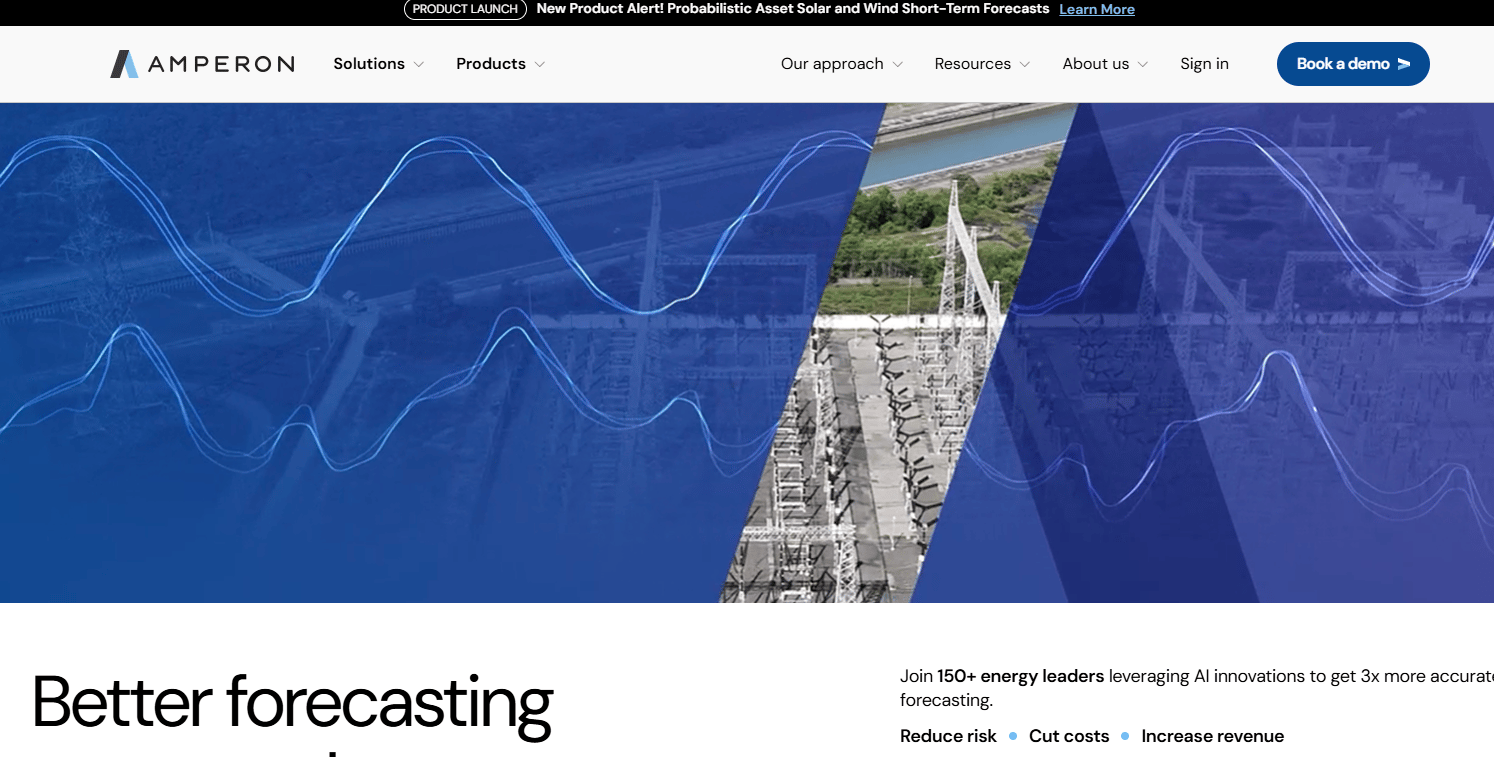
Amperon is AI and regression-based electricity demand forecasting software built for energy markets. It forecasts grid demand across more than 25 global grids, plus meter and portfolio demand, and extends into price, solar, wind, and coincident peak forecasting. That range makes it a fit for teams that need load, net load, and price signals from one platform.
The multi-horizon coverage is the draw. Traders get intraday and day-ahead numbers, planners get seasonal and longer views, and retailers get portfolio-level forecasts they can act on. Weather driven forecasting runs underneath all of it.
Best for: Utilities, traders, and energy operators who need forecasting for load, price, and renewable generation in one place.
Key features
- Grid demand forecasting for 25+ global grids
- Meter and portfolio demand forecasting
- Price, solar, wind, and coincident peak forecasting
- AI and regression modeling combined
- Weather-informed demand forecasts
Why choose Amperon: Pick it when you want one forecasting layer across load, renewables, and price rather than stitching separate tools together. The AI plus regression approach suits teams that value both accuracy and something they can explain.
Amperon pricing: Amperon does not display a public price. The site routes you to book a demo and covers pricing in its FAQs, so plan for a quote conversation.
G2 currently shows too few reviews to publish a rating for Amperon.
2. ETAP
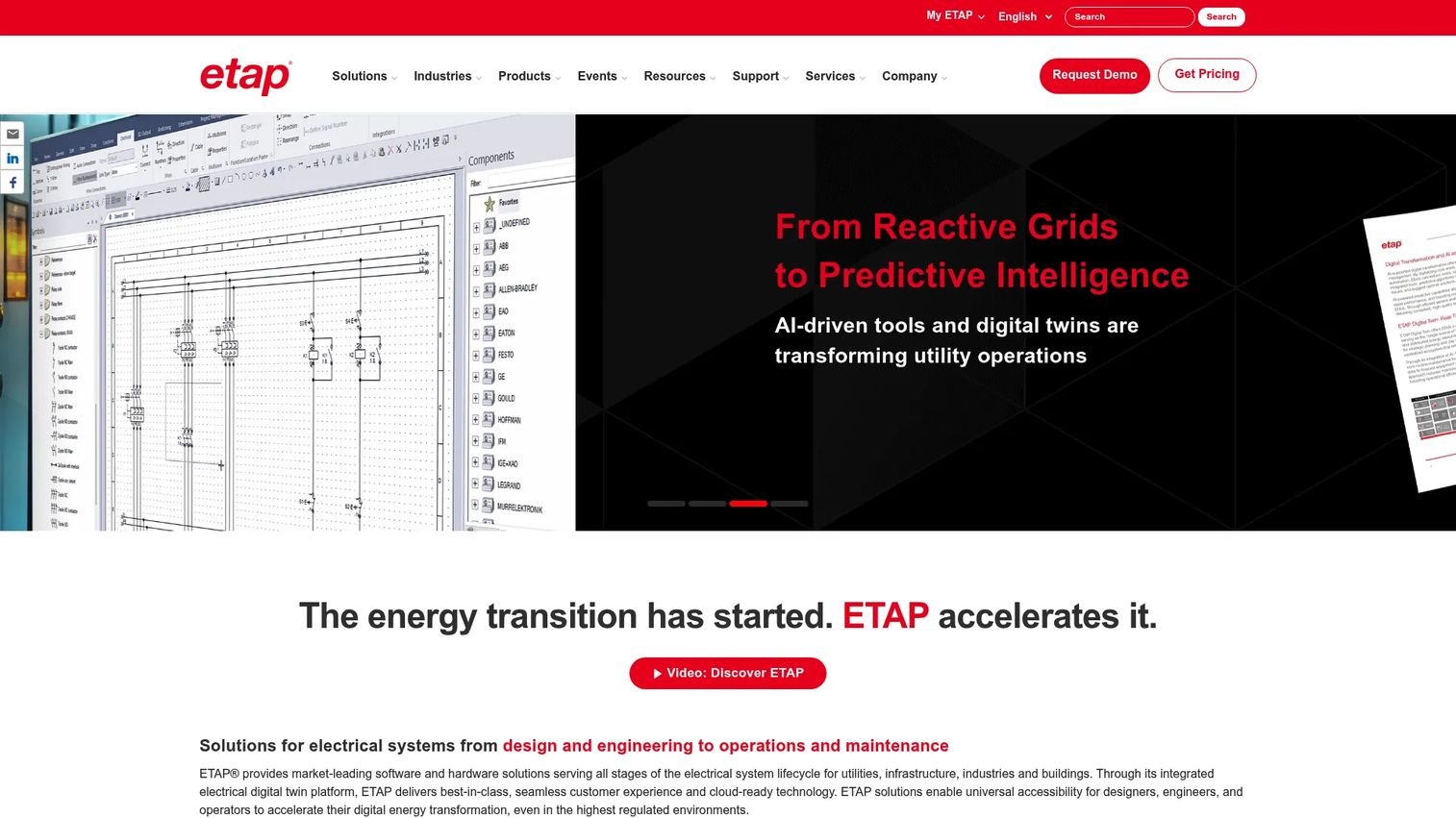
ETAP is an electrical digital twin and power system platform for design, analysis, operations, and automation. Load forecasting sits inside a much larger modeling environment, which is exactly why industrial and utility engineers reach for it. You forecast against a real network model, not an abstract demand curve.
Its short-term forecasting correlates weather and historical data, supports multiple load areas, and includes data trending. If your team already models load flow, short circuit, and protection in ETAP, adding forecasting keeps everything in one digital twin.
Best for: Utilities, industrials, and engineers who need integrated electrical power system design, analysis, and forecasting together.
Key features
- Integrated power simulator with load flow and network modeling
- Protection coordination and sequence-of-operation analysis
- Harmonics and motor analysis
- Adaptive short-term forecasting across multiple load areas
- Data exchange with Excel, AutoCAD, AVEVA, and Revit
Why choose ETAP: Choose it when forecasting is one job inside a broader engineering workflow, and you want the forecast tied to a validated network model rather than a standalone tool.
ETAP pricing: ETAP Power Simulator sells as subscription bundles named Launch, Grow, and Scale, with a free trial available. No public numeric prices are shown, so request a quote for your configuration.
ETAP holds a 4.3 out of 5 rating on G2.
3. Yes Energy
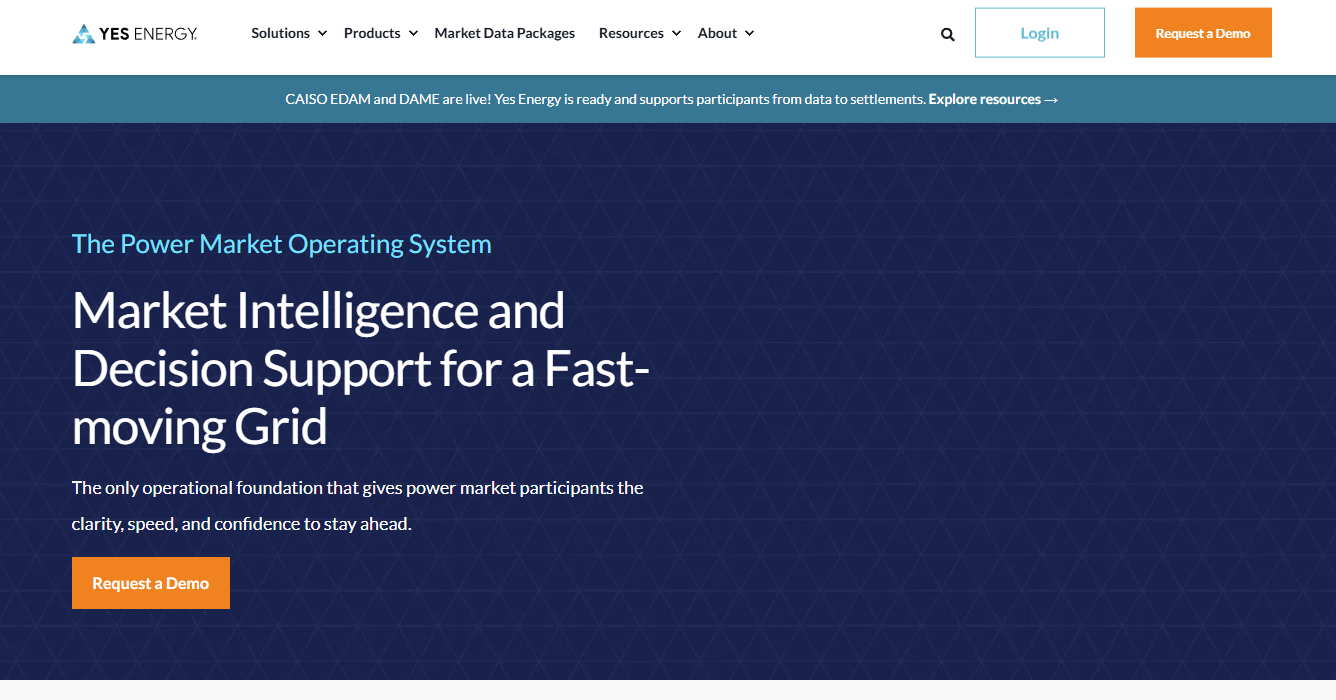
Yes Energy is power market data, modeling, and workflow automation software for market participants. Its demand forecasting is notable for framing regression against AI/ML openly, so analysts can see and defend the method behind a number. For traders who have to justify a position, that visibility is the point.
The platform pairs forecasting with deep market data, zonal and nodal modeling, and bid-to-bill workflow automation. That combination suits teams who want the forecast and the market context in the same place.
Best for: Power market teams who need integrated market data alongside explainable demand forecasts.
Key features
- Historical and real-time power market data dashboards
- Zonal and nodal analysis modeling
- Regression and AI/ML forecasting methods
- Weather-sensitive demand forecasting
- Bid-to-bill workflow automation
Why choose Yes Energy: Reach for it when explainability matters as much as accuracy, and when you want market data and forecasting under one roof rather than in separate systems.
Yes Energy pricing: Yes Energy describes Core, Pro, and Enterprise packages on its site but does not show numeric prices. Pricing comes through a direct conversation with their team.
A verified third-party rating was not available for Yes Energy during this review.
4. SAS Energy Forecasting
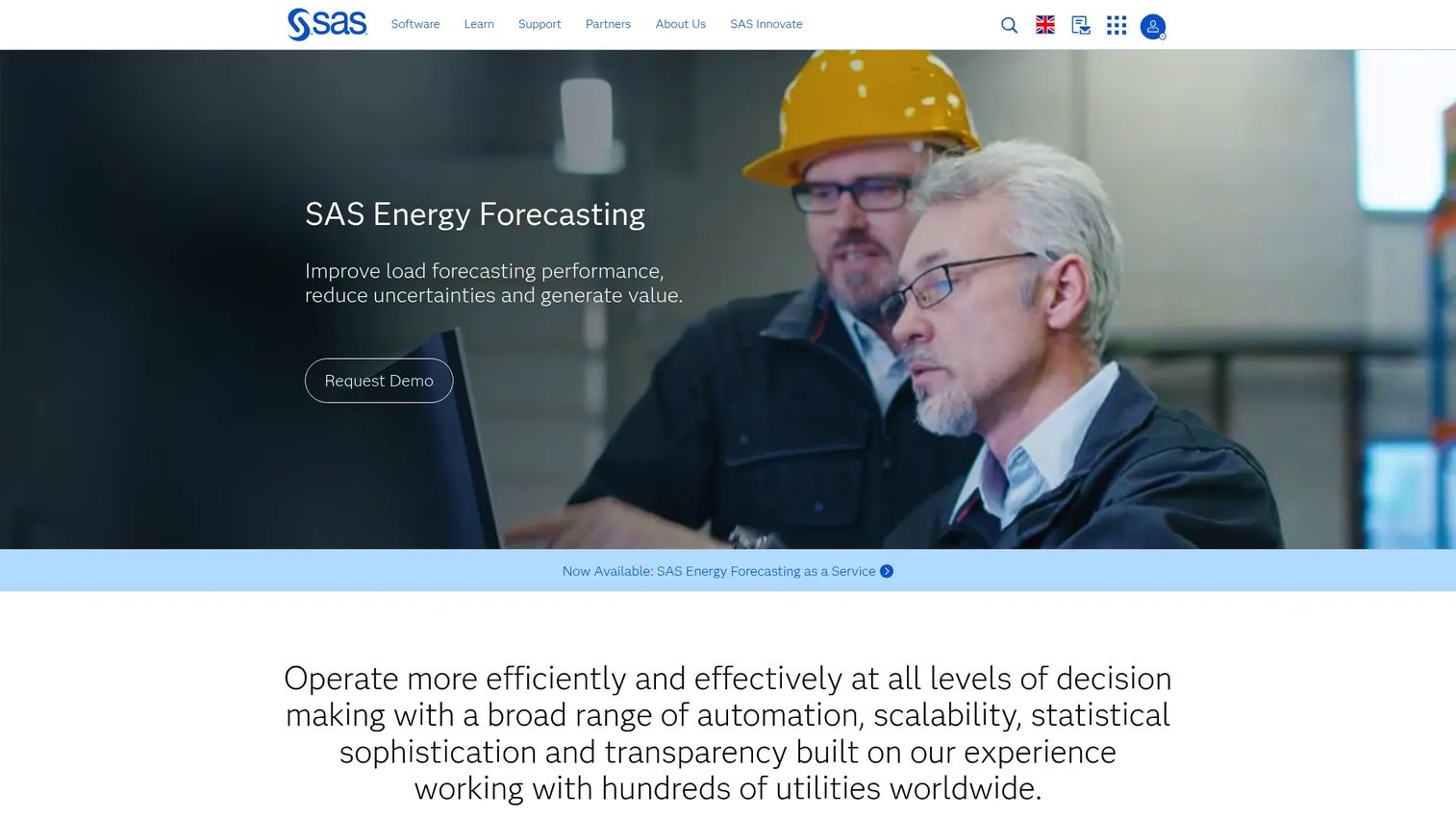
SAS Energy Forecasting is enterprise load forecasting software for utilities, built around automation, statistical modeling, and scenario planning on the Viya platform. Its strength is governance. Hierarchical forecasting, integrated data management, and traceable outputs make it a fit where forecasts have to survive an audit or a regulatory filing.
The what-if analysis and scenario planning support short, medium, and long horizons from one system. For utilities managing many feeders and regions, the hierarchical approach keeps the parts reconciled with the whole.
Best for: Utilities that need scalable load forecasting and scenario analysis across short, medium, and long term horizons.
Key features
- User-driven hierarchical forecasting
- Integrated data management
- What-if analysis and scenario planning
- Automation across the forecasting process
- Viya-based deployment
Why choose SAS Energy Forecasting: Choose it when traceability and defensibility outweigh everything else, especially for regulated long term load forecasting where you must show your work.
SAS Energy Forecasting pricing: The product page uses a Request Pricing call to action and does not list a number. Expect enterprise quote-based pricing tied to your deployment.
A verified third-party rating was not available for SAS Energy Forecasting during this review.
5. GridPoint

GridPoint is an energy intelligence platform for building operations, energy optimization, and demand management. It sits adjacent to pure market forecasting. Instead of predicting wholesale market load, it gives multi-site operators granular, equipment-level visibility into consumption and demand.
That makes it a fit for commercial and enterprise facilities focused on optimizing their own energy use. Real-time equipment data, automated building operations, and HVAC health monitoring drive the value. If your job is demand optimization across buildings rather than grid or market forecasting, this is the right shape of tool.
Best for: Multi-site businesses that want building energy optimization and HVAC monitoring rather than wholesale market forecasting.
Key features
- Real-time granular equipment-level data
- Automated building operations and anomaly detection
- HVAC health monitoring
- Advanced scheduling
- Multi-site consumption visibility
Why choose GridPoint: Choose it when the problem is your own facilities' consumption and demand, not grid-scale or market load. It suits operations teams optimizing energy at the building level.
GridPoint pricing: GridPoint offers a free energy analysis and a three-month pilot program. Packages are described as out-of-the-box or customized, with no numeric price shown, so contact the team for a quote.
GridPoint is not yet rated on G2 in a way that reflects broad user sentiment.
6. Schneider Electric
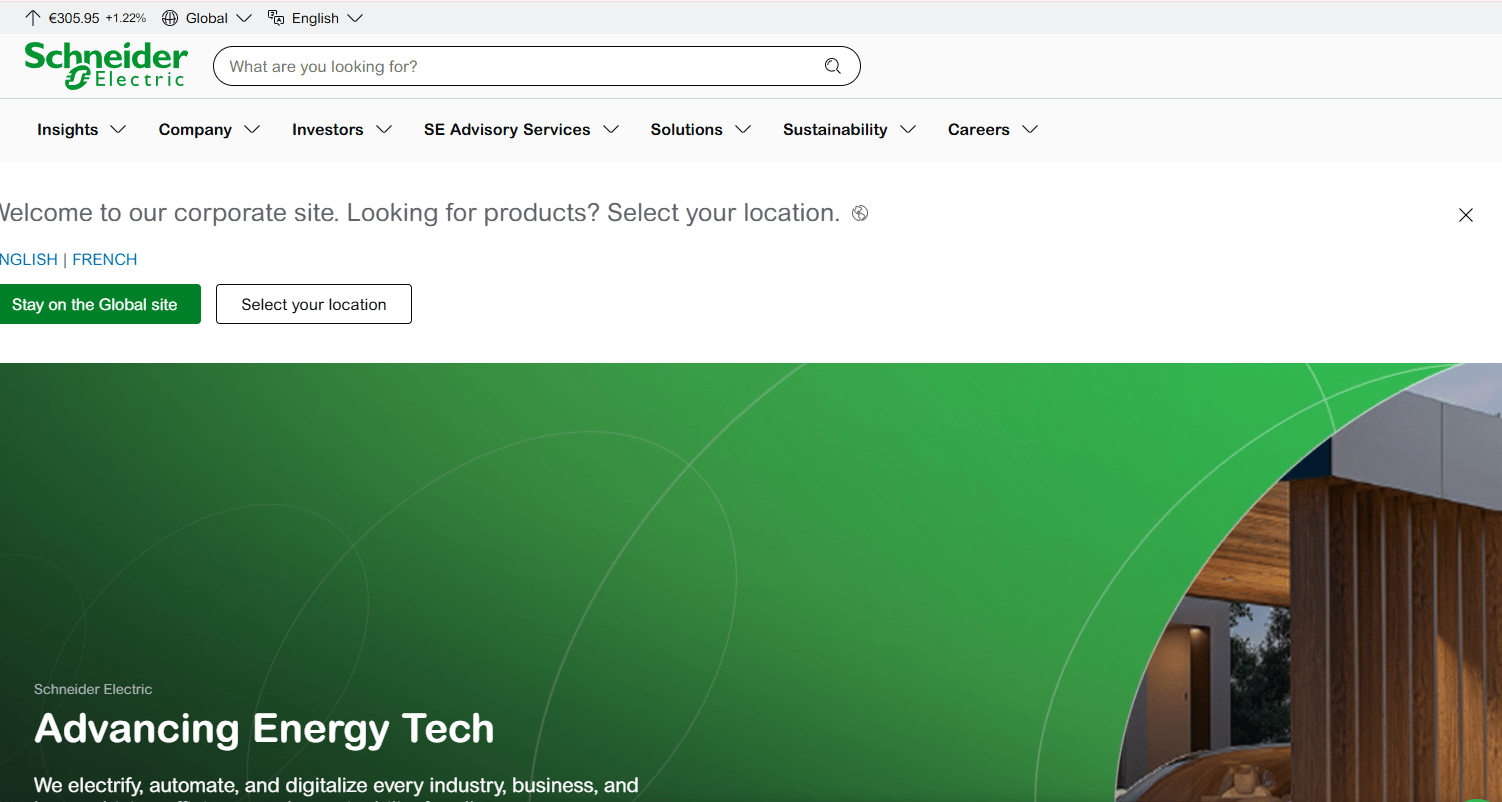
Schneider Electric is a global energy technology company focused on electrification, automation, and digitalization. Forecasting here is one capability inside a broad energy management stack that spans homes, buildings, data centers, and industry. For large organizations, that breadth is the appeal.
The EcoStruxure building and energy management software handles monitoring, reporting, and demand planning alongside forecasting. If you want forecasting to live inside the same platform that runs your electrical distribution and automation, Schneider fits that enterprise pattern.
Best for: Organizations that need broad energy management, electrical distribution, and industrial automation with forecasting inside one stack.
Key features
- Energy management and automation solutions
- Residential, commercial, and industrial electrical distribution
- EcoStruxure building and energy management software
- Monitoring, reporting, and demand planning
- Enterprise-scale scenario analysis
Why choose Schneider Electric: Choose it when forecasting is part of a larger energy operations picture and you value one vendor across distribution, automation, and energy management.
Schneider Electric pricing: Schneider Electric routes pricing through quotes and portals rather than a visible product price. Plan for a sales conversation tied to your deployment and product mix.
Schneider Electric holds a 4.4 out of 5 seller rating on G2.
7. AutoGrid

AutoGrid focuses on utility-facing flexibility, grid optimization, and demand-side capabilities where forecasting supports distributed energy resource and demand response programs. It fits teams whose main job is managing flexibility, not producing standalone load forecasts.
Forecasting here is the input that powers demand response and DER orchestration. If you run flexibility programs and need forecasting embedded in that workflow, AutoGrid targets exactly that use case rather than general market or portfolio forecasting.
Best for: Utility teams focused on demand response, flexibility, and distributed energy resource planning.
Key features
- Forecasting within flexibility management
- Grid optimization workflows
- Demand response program support
- Distributed energy resource orchestration
- Utility-facing operational tooling
Why choose AutoGrid: Choose it when flexibility and demand-side management are the goal and forecasting is the engine underneath, rather than the end product itself.
AutoGrid pricing: AutoGrid doesn't publish pricing for its utility flexibility software. The team needs to be contacted for a quote matched to program scope.
A broadly representative third-party rating was not available for AutoGrid during this review.
Considerations
Before you shortlist, run the platform against the criteria a cross-functional buyer actually has to defend.
Forecast horizon fit
Match the tool to the horizons your teams live in. Traders need short term load forecasting that updates fast. Procurement needs mid term. Planning and regulatory teams need long term. A tool that nails one horizon and stretches on the others will show up as accuracy gaps later, so confirm coverage across every forecast horizon you use.
Weather and historical data inputs
Weather driven forecasting is only as good as the data feeding it. Ask how the platform ingests weather data, how much historical load data it needs to train, and how it handles missing or dirty inputs. A model that quietly degrades on bad data is a hidden risk.
Explainability versus automation
Decide how much you need to defend a number. Regression and hierarchical methods are easier to explain in a filing. AI/ML often wins on raw accuracy. The regression vs AI/ML question is rarely binary, so favor tools that let you run both and compare against actuals.
Integration and delivery options
Forecasts are only useful where your teams work. Check for APIs, file export, dashboards, and warehouse delivery such as Snowflake. Weak integration means someone re-keys numbers into spreadsheets, which reintroduces the fragility you were trying to remove.
Measurement, scenario planning, and maintenance
Confirm how the tool measures forecast accuracy, whether it supports scenario planning for procurement and risk, and how much upkeep it demands as conditions shift. A forecast that decays silently as the grid changes costs more than the license.
Conclusion
The right load forecasting software depends less on a leaderboard and more on your workflow. Amperon suits teams that want AI and regression across load, renewables, and price. ETAP fits engineers who forecast inside a full power system model. Yes Energy serves market teams that need explainable methods with market data attached.
For enterprise governance and traceable long term load forecasting, SAS Energy Forecasting is the strong pick. GridPoint fits building-level demand optimization. Schneider Electric fits organizations that want forecasting inside a broad energy management stack, and AutoGrid fits utility flexibility and demand response programs.
The real decision is fit, not just accuracy. Map your horizons, weather inputs, integrations, and reporting needs first, then match a tool to that shape. Start with a demo of your top two, run them against your own historical load data, and compare forecast accuracy on your actuals before you commit.
Start your journey with Guideflow today!
FAQs
Load forecasting software predicts future electricity demand so teams can plan operations, procurement, trading, and grid reliability. Utilities use it for capacity and filings, retailers for supply planning, traders for market positions, and industrial users for consumption management. It replaces manual estimates with models that adapt to weather and market conditions.
Accurate forecasts rely on historical load data, weather data such as temperature and humidity, calendar and holiday patterns, and meter reads. Market signals and, where relevant, behind-the-meter solar and wind data improve net load accuracy. More clean, granular history generally means a stronger model, so data quality matters as much as data volume.
Neither wins outright. AI/ML often captures nonlinear weather and behavior patterns that regression misses, which can lift forecast accuracy. Regression is more transparent, which matters for regulatory filings and audits. Most strong energy forecasting software lets you run both and compare, so treat regression vs AI/ML as a choice per use case, not a rule.
It depends on the job. Short term load forecasting covers intraday and day-ahead for trading and grid balancing. Mid term load forecasting spans weeks to seasons for procurement and hedging. Long term load forecasting runs years out for capacity planning and filings. Pick the forecast horizon that matches the decision you are making.
Load forecasting predicts electricity demand specifically. Energy forecasting is a broader term that can also include price, generation, renewables, and net load. Many teams need several of these together, so when you evaluate power forecasting software, confirm whether it models load only or a wider set of energy signals.
Utilities compare forecasts against actual load using error metrics such as MAPE, the mean absolute percentage error, and related measures. They track accuracy by horizon and by region, since a model can be strong day-ahead and weaker seasonally. Consistent measurement against actuals is how teams catch a forecast that decays as conditions change.
Utilities, retailers, traders, grid operators, and industrial users all rely on it. Within those organizations, planners, procurement, trading desks, operations, and regulatory teams each use different horizons and outputs. That is why integration, dashboards, alerts, and reporting matter, since one forecast feeds several teams with different needs.
Look for APIs for real-time delivery, file export for ad hoc use, dashboards for operations, and warehouse delivery such as Snowflake for analytics teams. The goal is to get forecasts into the systems where people already work. Weak integration forces manual re-keying, which reintroduces the errors that better forecasting was meant to remove.