A driver skips two stops because the route was built by hand at 6am. A customer on autopay gets billed twice. Three empty 5-gallon bottles never make it back to the warehouse, and nobody notices until inventory is short. None of these are dramatic. They just quietly erode margin, week after week, until you can't tell whether the business is growing or leaking.
That is the real problem water delivery software solves. Not "digital transformation." Just the boring, expensive operational drift that happens when recurring orders, routes, drivers, billing, and bottle returns all live in different spreadsheets and someone's memory. The global water delivery service market hit USD 21.92B in 2025 and is projected to reach USD 30.38B by 2032, according to Research and Markets (2026). More telling for operators: 62% of water delivery service providers already use digital scheduling platforms to manage over 1,000 monthly orders, per Industry Research.biz (2026). Once you cross a few hundred recurring accounts, manual dispatch stops scaling.
This guide is a buyer's shortlist for operators, not a vendor pitch. If you run bottled water home delivery, office and B2B routes, or a mixed distribution operation, the right platform should make recurring delivery, driver coordination, billing, and bottle returns run on time without you babysitting them. Below are 5 tools worth comparing, sorted by how they fit different operational realities.
If you also sell software and want to see how interactive product experiences shorten buyer evaluation, you can explore Guideflow once you're done here, but this list stays focused on water delivery operations.
What's inside
This is a comparison guide for people who run or are building a water delivery business, from single-region home delivery to multi-depot B2B distribution. We selected tools based on four criteria that actually decide whether the software earns its place: route planning and dispatch depth, recurring order and subscription billing, proof of delivery and driver app workflows, and bottle lifecycle handling like inventory and empty bottle returns. We also noted pricing and public ratings where verifiable, and flagged where a tool fits a specific business size or region rather than everyone.
TL;DR
Short on time? Here are the fast picks:
- Best for route optimization and dispatch at scale: eLogii, if routing is your biggest bottleneck.
- Best for complete bottled water operations: Water Delivery Solutions, a water-specific ERP with customer app, driver app, and bottle tracking.
- Best for recurring delivery with a storefront: Delivery Biz Pro, which pairs subscriptions and billing with a branded ordering site.
- Best for route-heavy logistics control: WorkWave, for teams that need strong fleet and routing rules.
- Best for enterprise last-mile networks: Bringg, for large operations coordinating many carriers.
- Best for simpler or regional needs: Waterjarwala, focused on distributor and manufacturer billing workflows.
What is water delivery software?
Water delivery software is an operational platform that manages the full workflow of a bottled or bulk water delivery business, from recurring orders and route planning to driver dispatch, proof of delivery, billing, and bottle inventory. At its broadest, it acts as a water delivery ERP: one system where the back office, the customer app, and the driver mobile app share the same data instead of drifting apart.
Most bottled water delivery software clusters around a few core capabilities:
- Admin and back office: account management, pricing rules, deposits, reporting, and dispatch software controls.
- Customer app or portal: self-service ordering, subscription management, autopay, and delivery tracking for home and office customers.
- Driver mobile app: daily route lists, navigation, proof of delivery capture, bottle counts, and cash or card collection.
- Recurring orders and subscriptions: automated reorder schedules, subscription billing, and skip or pause handling.
- Route optimization: turning a day's stops into an efficient sequence, with re-optimization when things change.
- Billing and invoicing: invoices, statements, autopay, and payment reconciliation tied to each delivery.
- Delivery tracking and proof of delivery: live status, signatures, photos, and timestamps that settle disputes.
- Bottle lifecycle management: inventory management, empty bottle returns, deposits, and bottle return tracking across the fleet.
The strongest water delivery management software connects these so a completed delivery updates the route, the invoice, the bottle count, and the customer record in one motion. That single source of truth is what separates a real platform from a glorified spreadsheet.
When to use water delivery software
Not every operation needs the same depth. Here is when the software stops being optional.
Manage bottled water home deliveries
When you have hundreds of households on recurring schedules, manual tracking breaks. A customer app for reordering, autopay for subscription billing, and delivery tracking that texts an ETA cut the phone calls and no-shows. This is the moment bottled water delivery software pays for itself, usually before you hit 300 accounts.
Coordinate office and B2B delivery schedules
Office and B2B accounts have standing orders, purchase orders, and net terms. You need pricing rules per account, consolidated invoicing, and proof of delivery that a facilities manager will accept. Water delivery business software that handles both consumer and commercial billing in one place saves you from running two systems.
Reduce manual dispatch and missed deliveries
If a person builds routes by hand every morning, you are paying for wasted miles and missed stops. Route optimization and dispatch software rebuild the day automatically and re-sequence when a driver calls in sick or a stop cancels. That is where water delivery routing software earns its keep.
Track containers, returns, and deposits
Bottles are inventory with a deposit attached. Without bottle return tracking, you lose containers and lose money. Inventory management that logs every bottle out and every empty bottle return keeps deposits accurate and your fleet stocked.
Comparison table
Here is how the 5 tools stack up on intent, differentiation, water delivery software pricing, and public ratings. Use it to shortlist two or three before you book demos.
| # | Product | Intent | Key differentiation | Pricing | G2 rating |
|---|---|---|---|---|---|
| 1 | eLogii | Route optimization and dispatch at scale | Dynamic routing with live re-optimization | From $1,500/mo | 4.8/5 |
| 2 | Water Delivery Solutions | Complete bottled water operations | Water-specific ERP with app ecosystem | From $59/mo | 5.0/5 |
| 3 | Delivery Biz Pro | Recurring delivery with storefront | Branded ordering site plus logistics | Free tier available | 3.5/5 |
| 4 | WorkWave | Route-heavy field operations | Vertical field service platform | Not publicly listed | 4.1/5 |
| 5 | Bringg | Enterprise last-mile orchestration | Carrier network across 70+ countries | Not publicly listed | 4.6/5 |
1. eLogii
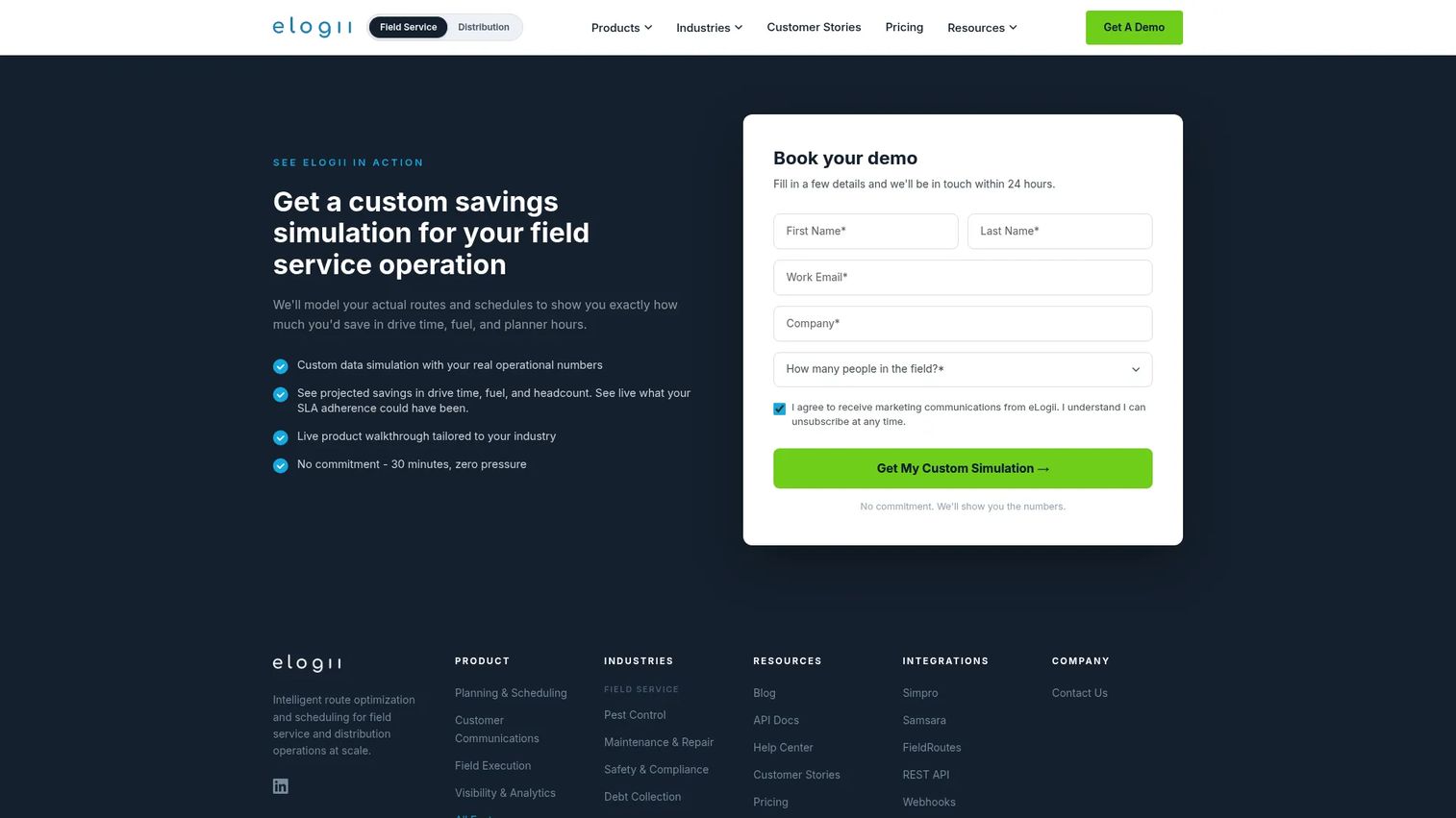
eLogii is cloud-based route optimization, dispatch, and scheduling software built for field service and delivery operations. It is not water-specific, but if the thing keeping you up at night is routing math and driver coordination across a growing fleet, this is the tool built for that job. It plans efficient routes, re-optimizes them live when the day changes, and gives dispatchers real control.
Best for: Field service and delivery teams that need serious route optimization at scale.
Key strengths
- Route optimization and dynamic scheduling: Turns a day of stops into efficient sequences and adjusts automatically.
- Live re-optimization and dispatch: Reroutes in real time when a driver is delayed or a stop cancels.
- Communications, field execution, and analytics: Customer notifications, driver execution, and reporting with integrations to your stack.
Why choose eLogii: If routing is your primary constraint and you run enough volume to justify it, eLogii gives you logistics depth most water-specific tools do not match. It fits operators who want fleet and dispatch control and are comfortable pairing it with a billing or subscription system for the water-specific pieces.
eLogii pricing: eLogii lists pricing starting from $1,500 per month, with plans offered on a custom, quote-based basis. There is no publicly listed free tier. Given the entry price, it is aimed at operations with real route volume rather than a handful of daily stops. It holds a 4.8/5 rating on G2.
2. Water Delivery Solutions
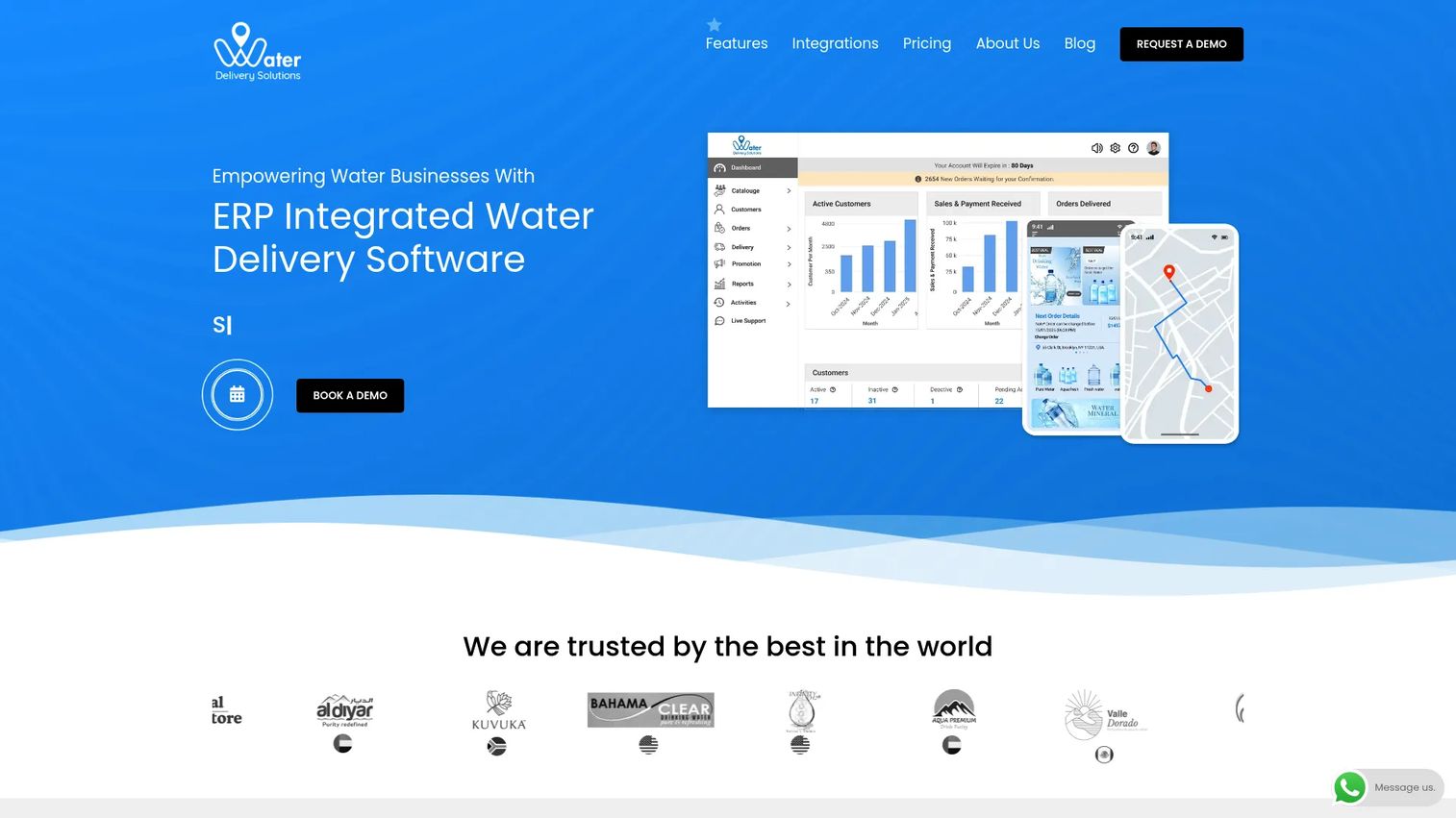
Water Delivery Solutions is bottled water delivery software and ERP built specifically for water distribution businesses. This is the most operationally complete option on the list for a pure water operation, because it was designed around the exact workflows you run: subscriptions, routes, bottles, deposits, and payments, all under one roof with a customer app and driver app.
Best for: Water delivery businesses that want an ERP plus customer, driver, and delivery workflow tools in one system.
Key strengths
- Subscription and one-time order management: Handles recurring orders and one-off deliveries with the same back office.
- Route planning and live delivery tracking: Builds routes and gives customers real-time delivery tracking.
- Inventory, bottle, and payment management: Tracks stock, bottle returns, and payments tied to each delivery.
Why choose Water Delivery Solutions: If you want one platform purpose-built for water rather than a general logistics tool bent to fit, this is the strongest match. The back office plus app ecosystem means your admin, your customers, and your drivers all work from the same data, which is what kills the reconciliation drift that eats margin.
Water Delivery Solutions pricing: The public pricing page lists Starter at US $59 per month and Professional at US $359 per month, both billed monthly. An Enterprise tier is available but its price is not publicly shown, and the page mentions a 7-day free trial for Enterprise. It holds a 5.0/5 rating on G2. The low entry price makes it accessible for smaller operators who still want full ERP-style coverage.
3. Delivery Biz Pro
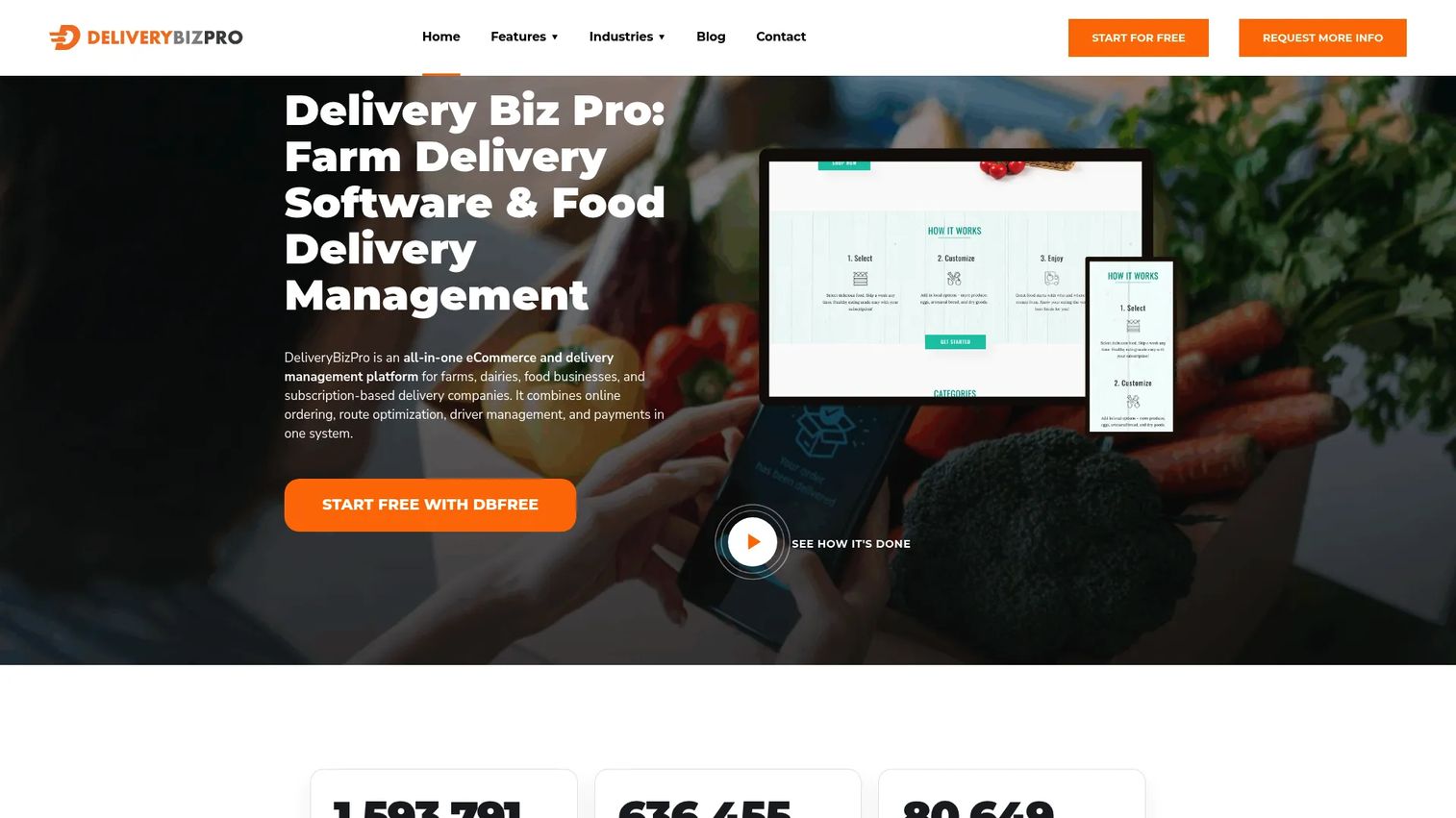
Delivery Biz Pro is all-in-one delivery management software for recurring local delivery businesses, including water. It pairs a branded online storefront with the logistics layer, so customers order through your site while you manage routes, subscriptions, and billing behind it. If you want ordering and delivery in one straightforward stack, this is a clean fit.
Best for: Recurring delivery businesses, from water to dairies and food hubs, that want a storefront plus logistics in one system.
Key strengths
- Branded online storefront: Customers order and manage subscriptions on your own branded site.
- Route optimization and driver management: Sequences routes and gives drivers their daily lists.
- Recurring orders, subscriptions, and billing: Automates reorders, autopay, and subscription billing.
Why choose Delivery Biz Pro: Choose it when you want core billing and delivery management without overcomplication, plus a customer-facing storefront out of the box. It suits operators who value a self-service ordering experience tied directly to recurring subscription billing and route optimization.
Delivery Biz Pro pricing: Delivery Biz Pro publicly lists a free tier called DBFree at $0, and presents its Pro plan as a free trial on the product pages. Paid Pro pricing beyond the free tier is not publicly disclosed, so plan to confirm it directly. It holds a 3.5/5 rating on G2 based on a small number of reviews. The free tier makes it a low-risk way to test the workflow before committing.
4. WorkWave
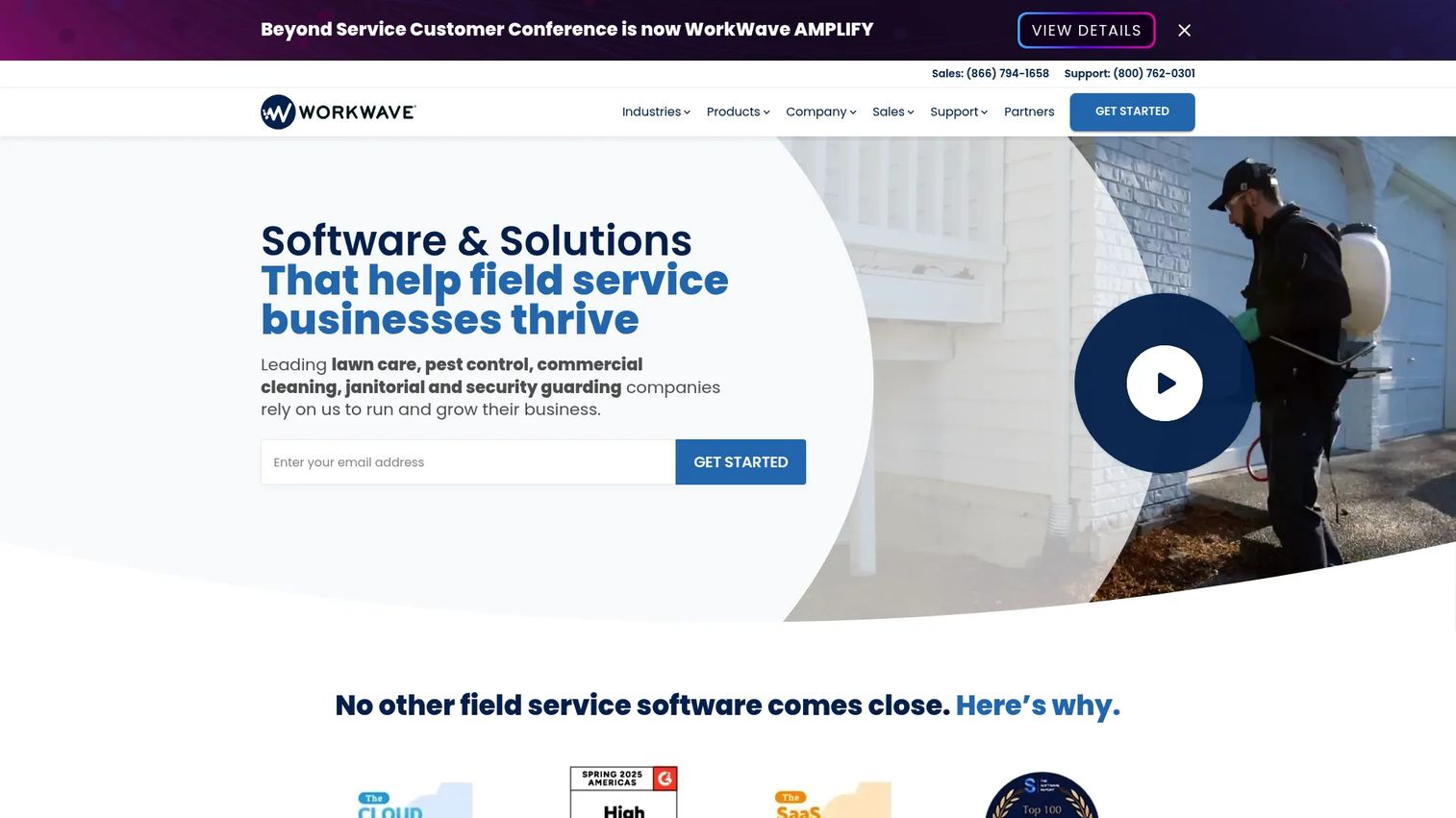
WorkWave is a vertical SaaS platform for field service businesses, offering industry-specific operations software and fintech tools. For water delivery, its value is in route-heavy logistics: planning rules, live route updates, navigation, fleet management, and reporting. If your operation is dominated by routing complexity and you want mature field service controls, WorkWave is built for that world.
Best for: Route-heavy delivery and field service businesses that need strong logistics and fleet controls.
Key strengths
- AI-driven operational tools: Automates planning and day-to-day field operations.
- Data-driven insights: Reporting and analytics across routes and fleet performance.
- Fintech offerings: Built-in payment and billing capabilities alongside operations.
Why choose WorkWave: WorkWave fits operators who treat routing and fleet management as the core of the business and want an established platform with deep field service pedigree. It is a broader field service play than a water-only tool, so it suits teams that value logistics depth and are ready to configure it to their delivery model.
WorkWave pricing: WorkWave does not publish plan prices on its site; billing is sales-led rather than publicly listed. It holds a 4.1/5 rating on G2. Expect a demo and a custom quote, and ask specifically how it handles recurring orders, proof of delivery, and bottle returns for water operations.
5. Bringg
Bringg is an enterprise last-mile delivery platform for planning, dispatch, driver management, and customer delivery experiences. It is the right lens when your operation is large and complex, with multiple carriers, high volume, and last-mile coordination that a standalone water tool would strain to handle. Bringg is orchestration software for delivery networks at scale.
Best for: Large retailers and logistics teams that need enterprise last-mile orchestration across many carriers.
Key strengths
- Modular last-mile platform: Planning, routing, dispatch, and driver management as connected modules.
- Integrated carrier network: Access to 250+ carriers across 70+ countries.
- Automation and secure connectivity: APIs, webhooks, SSO, and SOC 2 support for enterprise IT.
Why choose Bringg: Choose Bringg when scale and carrier complexity outgrow a single-fleet tool, and you need chain-of-custody, proof of delivery, and analytics across a distributed network. It is a better fit for larger delivery operations than for a regional water business with one or two depots.
Bringg pricing: Bringg does not publish numeric pricing; its site directs visitors to talk to sales and book a demo. It holds a 4.6/5 rating on G2. Given the enterprise positioning, budget for a sales-led evaluation and confirm which modules you actually need for water-specific workflows like bottle returns and deposits.
Considerations before you buy
Before you sign anything, run the shortlist through these checks. Most buyer's remorse in this category traces back to skipping one of them.
Recurring order and subscription depth
Water is a subscription business. Confirm the tool handles recurring orders, autopay, skips, pauses, and per-account pricing without manual workarounds. Ask how a failed payment is retried and how a customer changes their own schedule through the customer app.
Route optimization and dispatch fit
Test route optimization against your real stops, not a demo dataset. Check how it re-sequences when a driver is out or a stop cancels, and whether dispatchers can override the plan. Weak routing quietly adds miles and overtime every single day.
Proof of delivery and bottle returns
Proof of delivery should capture signatures, photos, and timestamps that settle disputes. Just as important, verify bottle return tracking: every container out and every empty bottle return should update inventory and deposits automatically, or you will lose bottles and money.
Billing, integrations, and total cost
Match water delivery software pricing to your account volume and margin, not just the sticker price. Confirm billing and invoicing tie to each delivery, and that the tool integrates with your payment processor and accounting. A cheap tool that forces double entry is not cheap.
Conclusion
The right pick depends on your operational reality, not a feature checklist. If routing is your bottleneck, eLogii gives you dispatch and route optimization depth. If you want a purpose-built water platform with a customer app, driver app, and bottle tracking in one place, Water Delivery Solutions is the most complete water-specific option. Delivery Biz Pro fits recurring delivery businesses that want a storefront with their logistics. For route-heavy field operations, WorkWave brings logistics maturity, Bringg handles enterprise last-mile networks, and Waterjarwala covers simpler, regionally focused billing needs.
Next step: shortlist your top two or three, then compare them head to head on the three workflows that actually run your business: route planning, recurring billing, and bottle return tracking. Run a real week of deliveries through each in a trial before you commit.
FAQs
Water delivery software runs the day-to-day operations of a bottled or bulk water business: recurring orders, route planning, driver dispatch, proof of delivery, billing, and bottle inventory. It connects the back office, customer app, and driver mobile app so a completed delivery updates the invoice, the route, and the bottle count at once. The point is to remove manual dispatch and reconciliation as you scale past a few hundred accounts.
Yes, and it should be a core capability. Good water delivery management software automates recurring orders, subscription billing, autopay, and skip or pause requests, and lets customers manage their own schedules through a portal or app. This matters because most water accounts are subscription-based, so manual reorder handling breaks down fast at volume.
Strong bottled water delivery software includes bottle return tracking and inventory management. Every container that leaves and every empty bottle that comes back should update stock and deposit balances automatically. Without it, containers and deposit money quietly disappear, so treat bottle lifecycle handling as a must-have rather than a nice-to-have.
The essentials are recurring orders and subscription billing, route optimization, a driver mobile app with proof of delivery, delivery tracking, and bottle return tracking with inventory management. A customer app for self-service ordering and autopay reduces phone calls. The best water delivery software connects all of these so nothing gets re-entered by hand.
A driver mobile app gives each driver the day's route, turn-by-turn navigation, and a way to capture proof of delivery with signatures or photos. It also logs bottle counts and returns and can collect card or cash payments at the door. Offline support keeps drivers working where signal drops, and every action syncs back to the back office automatically.
For anything past a handful of daily stops, yes. Route optimization and dispatch software sequence stops efficiently and re-optimize when a driver is out or an order cancels, which cuts wasted miles, fuel, and overtime. Manual routing quietly adds cost every day, so water delivery routing software usually pays for itself in reduced drive time alone.
Look for a low entry price or free tier, easy setup, and coverage of the core workflow: recurring orders, billing and invoicing, a driver app with proof of delivery, and bottle return tracking. Avoid overpaying for enterprise last-mile features you will not use. A hands-on trial across a real delivery week tells you more than any feature list.
Billing ties each invoice to a delivery and a customer account, supporting autopay, subscription billing, per-account pricing, and payment reconciliation. Proof of delivery captures a signature, photo, and timestamp at the stop, which settles disputes and confirms the order. When the two are linked, a completed delivery triggers the invoice automatically, so billing stays accurate without manual chasing.