A referral sits in an inbox for six days. A discharged patient never gets the follow-up call. A care manager pulls up three systems to answer one question about a single patient. None of these failures show up as a headline. They show up as readmissions, missed revenue, and burnt-out staff.
The money involved is not small. According to Frost & Sullivan (2019), providers lose up to 55% of potential revenue growth to poor referral management alone. The market is responding: the worldwide care coordination software market was valued at USD 6.12B in 2025 and is forecast to reach USD 17.77B by 2032 at a 16.5% CAGR, per PMarketResearch (2025).
Care coordination software exists to close those gaps. It routes referrals, tracks transitions, assigns tasks, and gives every member of a care team the same view of the same patient. But the label covers wildly different products. Some are dedicated coordination layers. Some are modules bolted onto a big EHR. Some are enterprise data platforms that happen to include care management.
This guide compares seven platforms that healthcare operations leaders, care managers, and clinical administrators actually evaluate in 2026. You will get a side-by-side comparison table, a breakdown of each tool, a buyer's checklist, and answers to the questions that come up in procurement.
What's inside
This guide is for healthcare operations leaders, care managers, clinicians, and administrative teams comparing a care coordination platform against real operational needs.
We chose tools based on four criteria that matter most to buyers:
- Interoperability: EHR integration, HIE integration, and clean data exchange across systems.
- Workflow automation: referral routing, task assignment, alerts, and shared care plans.
- Analytics and reporting: longitudinal patient visibility, outcomes reporting, and predictive analytics.
- Compliance and care-setting fit: HIPAA-aligned controls plus fit for post-acute, ambulatory, behavioral, or enterprise settings.
You will get a comparison table, a tool-by-tool breakdown, buying considerations, and FAQs.
TL;DR
- Best for value-based care programs: Innovaccer, for teams that need population health coordination and analytics across many source systems.
- Best for behavioral health practices: blueBriX, which pairs a purpose-built EHR with revenue-cycle workflows.
- Best for chronic care and specialized teams: ThoroughCare, built around CCM, RPM, TCM, and other reimbursable programs.
- Best for large Epic health systems: Epic Care Management, for internal coordination inside an existing Epic footprint.
- Best for enterprise interoperability: Oracle Health, for complex multi-site environments needing broad data exchange.
- Best for ambulatory practices: Athenahealth and NextGen Healthcare, for integrated EHR, billing, and referral workflows.
What is care coordination software?
Care coordination software is a category of healthcare technology that organizes and tracks patient care across multiple providers, settings, and stages so that referrals, transitions, tasks, and follow-ups do not fall through the cracks.
It sits alongside two related but distinct systems. An EHR stores the clinical record: notes, labs, medications, and history. A care management software layer manages the ongoing relationship with a patient enrolled in a program. Care coordination software is the connective tissue that moves work and information between people and places, especially across organizational boundaries where a single EHR does not reach.
Core capabilities most platforms share:
- Referral management: route, track, and close loop referrals so nothing stalls in an inbox.
- Care transitions: structure handoffs after discharge and between settings.
- Shared care plans: one plan every team member can see and update.
- Task assignment and alerts: assign work, flag overdue items, and surface risk.
- Analytics: longitudinal patient visibility, outcomes reporting, and predictive analytics.
- Interoperability: EHR integration, HIE integration, and standards-based data exchange.
Why multi-stakeholder coordination matters: a single patient episode can touch a hospital, a primary care office, a specialist, a home health agency, and a family caregiver. When each works from a different system, information decays at every handoff. Coordination software gives them a shared surface so the plan survives the transition.
When to use care coordination software
Not every team needs a dedicated coordination layer on day one. These three situations are where it earns its keep.
Coordinate referrals across multiple care settings
When referrals move between organizations, they stall. A referral management software workflow routes each referral to the right destination, tracks its status, and confirms the loop closed with a completed appointment and a note back to the sender. This matters most in post-acute care coordination and networked provider models, where a patient may pass through several organizations that do not share an EHR.
Improve transitions after discharge
The days after discharge are where continuity breaks. Care transitions software gives teams longitudinal patient visibility and shared care plans so the follow-up call, the medication reconciliation, and the specialist appointment all get owned by someone. Missed tasks here drive readmissions. A structured transition workflow assigns each step and flags what slips.
Track patients, caregivers, and care teams in one workflow
When a nurse, a social worker, a physician, and a family caregiver are all involved, shared visibility stops the duplicate calls and the contradictory instructions. A patient care coordination software workflow keeps everyone on one plan, with patient engagement portal and messaging tools looping the patient and family in where it helps. Care team collaboration works best when the plan lives in one place, not in five inboxes.
Comparison table
The table below sorts platforms by relevance to care coordination buyers rather than alphabetically. Read "Best for" as the setting where each tool fits most cleanly, and "Key differentiator" as the reason a team would shortlist it. Pricing across this category is almost entirely quote-based, so treat the pricing column as guidance and confirm figures directly with each vendor. G2 ratings reflect current listings; several enterprise platforms carry limited public review volume.
| # | Product | Best for | Key differentiator | Pricing | G2 rating |
|---|---|---|---|---|---|
| 1 | blueBriX | Behavioral health practices | Purpose-built behavioral health EHR plus revenue-cycle workflows | Quote-based | Not listed |
| 2 | Athenahealth | Ambulatory medical practices | AI-native EHR with integrated billing and patient engagement | Quote-based, percent of collections | 3.6/5 |
| 3 | ThoroughCare | Chronic care and specialized teams | Workflows for CCM, RPM, TCM, BHI, and more | Quote-based | Not rated |
| 4 | Innovaccer | Value-based care organizations | Data activation platform with healthcare AI | Quote-based | Not rated |
| 5 | Epic Care Management | Large Epic health systems | Enterprise care management inside Epic | Quote-based | 4.2/5 |
| 6 | Oracle Health | Complex multi-site enterprises | Interoperable cloud EHR with embedded AI | Quote-based | 4.1/5 |
| 7 | NextGen Healthcare | Ambulatory, multi-site practices | Integrated EHR and practice management | Quote-based | 3.7/5 |
Best 7 care coordination software tools for providers
1. blueBriX
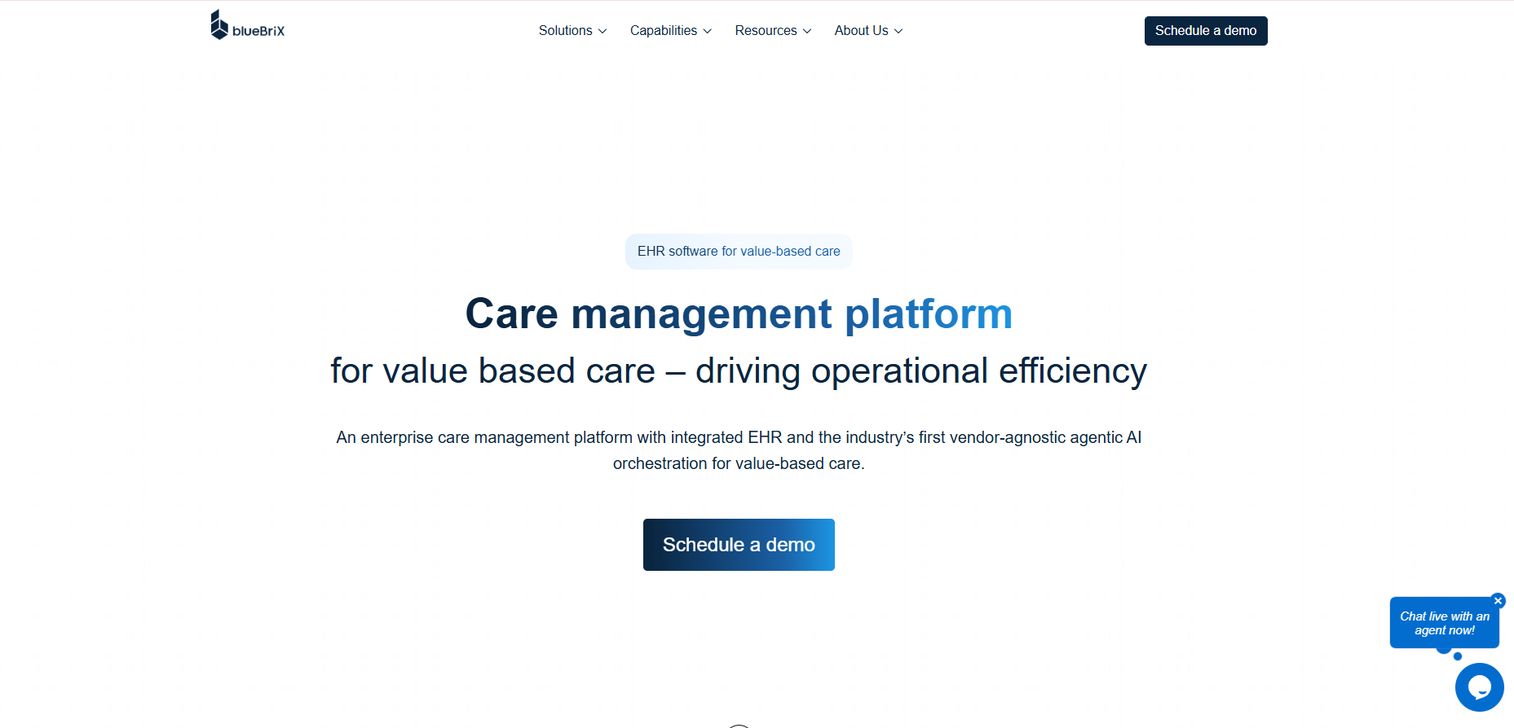
blueBriX is a healthcare software company offering a purpose-built behavioral health EHR paired with revenue cycle management workflows. It targets organizations that need clinical documentation and financial operations in the same platform, rather than stitching two systems together. For behavioral health teams, that pairing removes a common source of coordination friction: the gap between what happens in a visit and what gets billed.
The platform's strengths sit at the intersection of clinical and administrative work. Charge capture with real-time validation catches errors before they become denials. Prior authorization, accounts receivable, and payment posting workflows keep the revenue cycle moving without a separate billing tool. For a behavioral health practice coordinating care across therapists, prescribers, and case managers, having the EHR and the money in one place simplifies the handoffs that usually create administrative drag.
Best for: Behavioral health practices that need an EHR plus integrated revenue-cycle workflows in one system.
Key strengths
- Behavioral health EHR built for the specialty
- Charge capture with real-time validation
- Prior authorization, A/R, and payment posting workflows
- Clinical and financial operations in one platform
Why choose blueBriX: If your practice is behavioral health first and you are tired of running clinical documentation and billing as separate systems, blueBriX consolidates both. That fit is narrower than the enterprise platforms on this list, which is exactly the point for specialized teams.
blueBriX pricing: blueBriX does not publish public pricing. Contact the vendor for a quote based on your organization's size and workflows.
2. Athenahealth
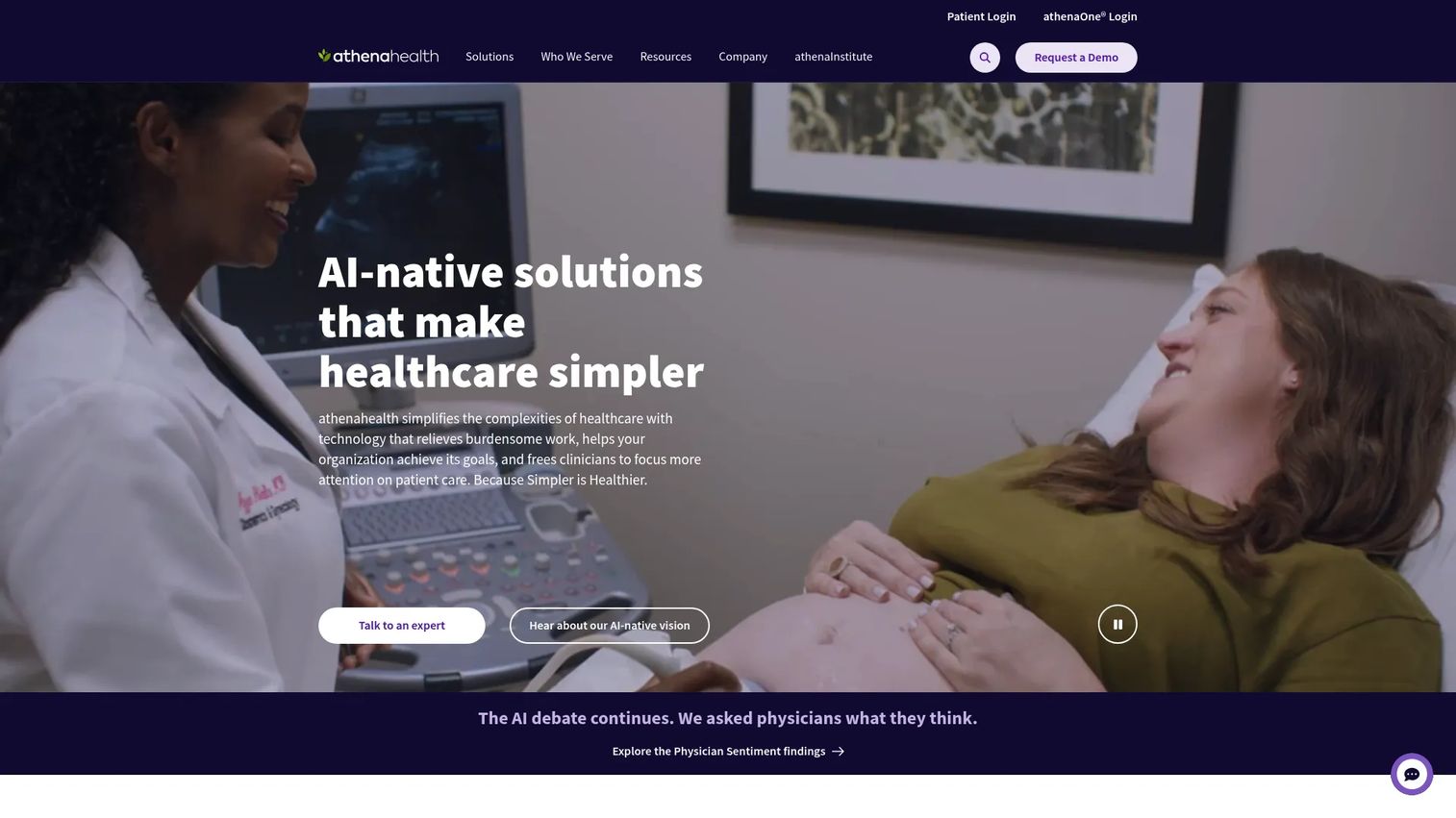
Athenahealth centers on athenaOne, an AI-native EHR that combines clinical documentation, practice management, revenue cycle, and patient engagement in a single ambulatory platform. It is an EHR-adjacent option rather than a standalone coordination layer, which suits provider groups that want referral and coordination workflows living inside the same system their clinicians already use daily.
For ambulatory practices, the appeal is integration. Referrals, billing, and patient communication run through one platform, so a referral is not a separate task in a separate tool. The AI-native documentation tools cut time spent on notes, and the patient portal handles engagement without a bolt-on. Practices already running athenaOne for billing and scheduling get coordination as part of the workflow rather than a new system to adopt.
Best for: Ambulatory medical practices that want an integrated EHR, billing, and patient engagement platform.
Key strengths
- AI-native EHR and documentation tools
- Practice management and medical billing
- Patient engagement and portal capabilities
- Referral workflows inside the clinical system
Why choose Athenahealth: Choose it when you want coordination to live inside your EHR rather than in a dedicated layer. If you need cross-organization referral tracking across many unaffiliated systems, evaluate that requirement carefully against a dedicated coordination platform.
Athenahealth pricing: Athenahealth prices individually, typically as a percent of collections, and provides customized quotes rather than public plan prices. Contact athenahealth for a quote.
3. ThoroughCare
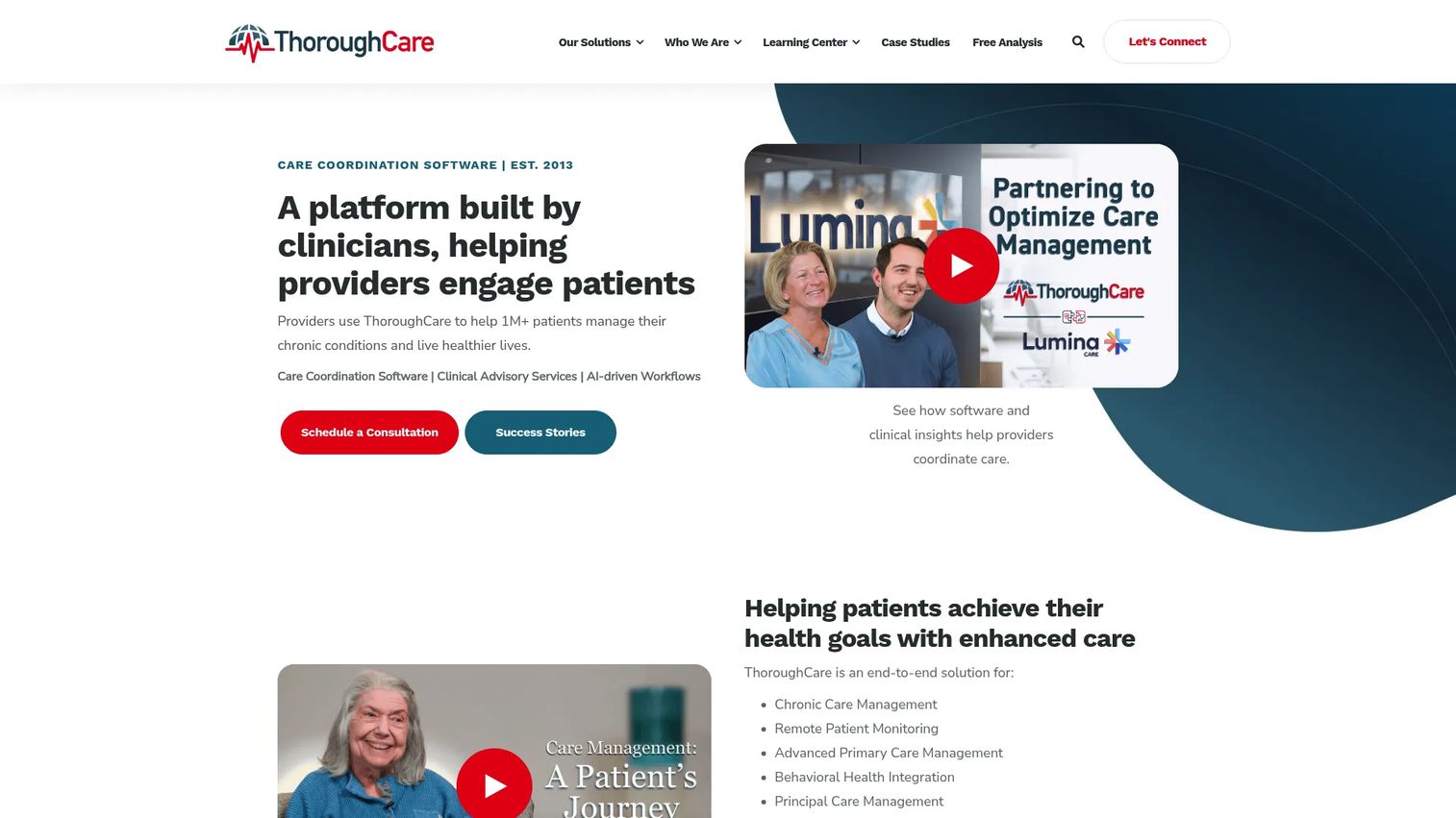
ThoroughCare is care coordination software built around reimbursable care management programs. It supports workflows for Chronic Care Management, Remote Patient Monitoring, Transitional Care Management, Behavioral Health Integration, Principal Care Management, Annual Wellness Visits, and Advance Care Planning. That program-first design makes it a fit for teams whose coordination work maps directly to billable Medicare programs.
The platform pairs guided care plans with a patient mobile app that handles messaging, telehealth, tasks, and education. A direct integration with WebMD Ignite provides evidence-based articles and videos that teams can share with patients by email and text. Analytics, reporting, and clinical advisory services round out the offering, which helps smaller or specialized teams run structured programs without building the workflow from scratch.
Best for: Care teams running chronic care and other reimbursable programs that need structured, program-specific workflows.
Key strengths
- Workflows for CCM, RPM, TCM, BHI, PCM, AWV, and ACP
- Patient mobile app with messaging, telehealth, tasks, and education
- Analytics, reporting, and clinical advisory services
- Patient education via WebMD Ignite integration
Why choose ThoroughCare: Choose it when your coordination work is organized around Medicare care management programs and you want software that mirrors those program requirements. It fits smaller and specialized teams better than sprawling enterprise deployments.
ThoroughCare pricing: ThoroughCare offers three pricing packages plus a separate patient app license, but does not publish numeric prices. Contact the vendor for a quote.
4. Innovaccer
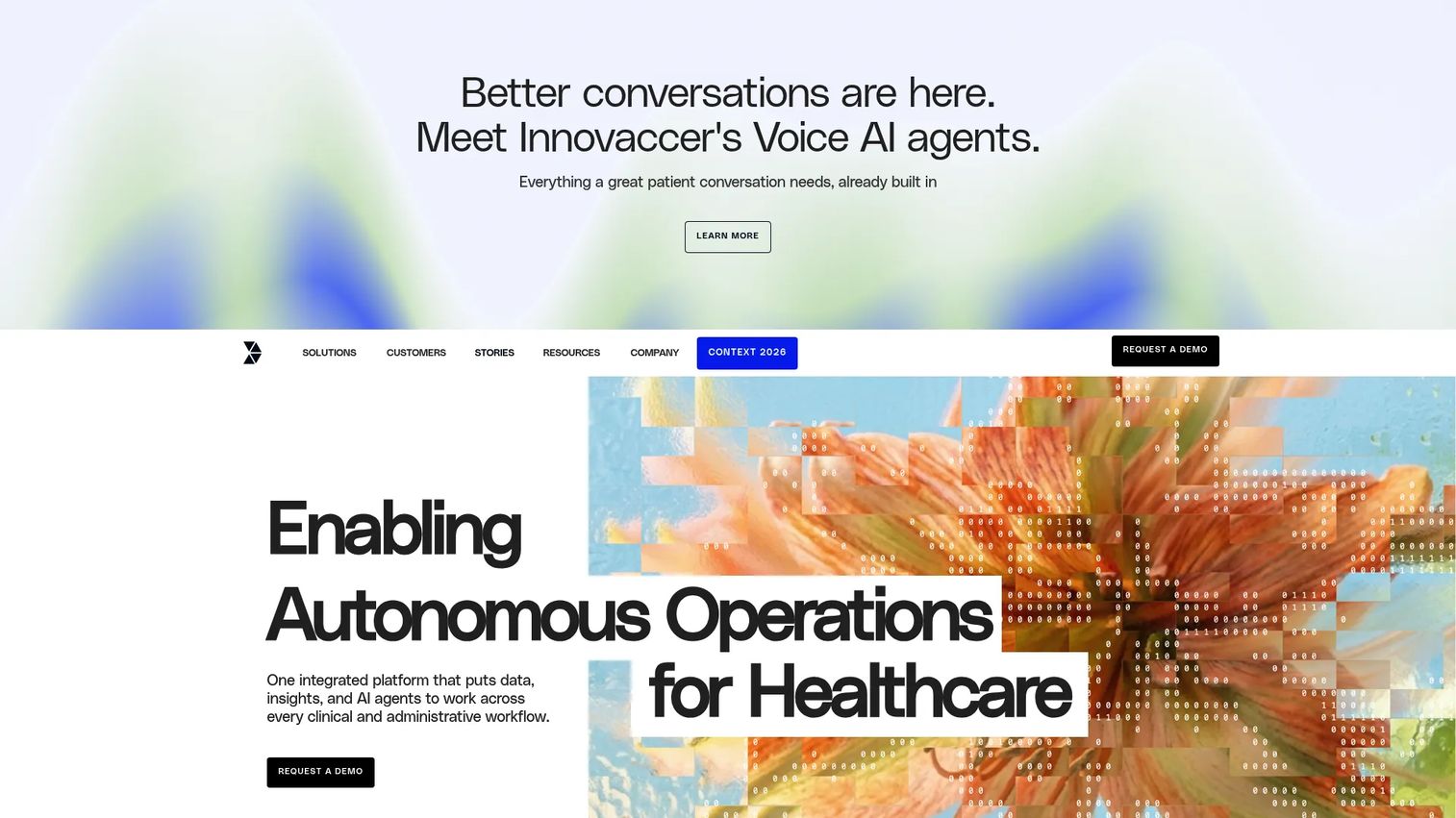
Innovaccer is a healthcare AI platform that unifies data and automates clinical and administrative workflows. Its Data Activation Platform pulls fragmented data from many source systems into one longitudinal record, which is the foundation most population health coordination work depends on. For teams whose problem is not one workflow but the state of their data across systems, that is the differentiator.
The platform layers an AI engine with healthcare-native copilots and agents on top of that unified data, plus unified quality management for value-based care workflows. This matters for organizations coordinating care across many providers and contracts, where the coordination challenge is as much about data integration and interoperability as it is about task routing. Predictive analytics and outcomes reporting sit on a clean data layer rather than a patchwork.
Best for: Healthcare organizations that need an enterprise data-and-AI platform for value-based care and population health.
Key strengths
- Data Activation Platform unifying multi-source data
- AI engine with healthcare-native copilots and agents
- Unified quality management for value-based care
- Predictive analytics and outcomes reporting
Why choose Innovaccer: Choose it when your core problem is fragmented data across systems and you need a platform that unifies it before coordinating on top. It is a heavier lift than a focused coordination tool, which suits enterprise value-based care programs.
Innovaccer pricing: Innovaccer does not publish public pricing or tier names. Contact the vendor for a quote scoped to your data and deployment needs.
5. Epic Care Management
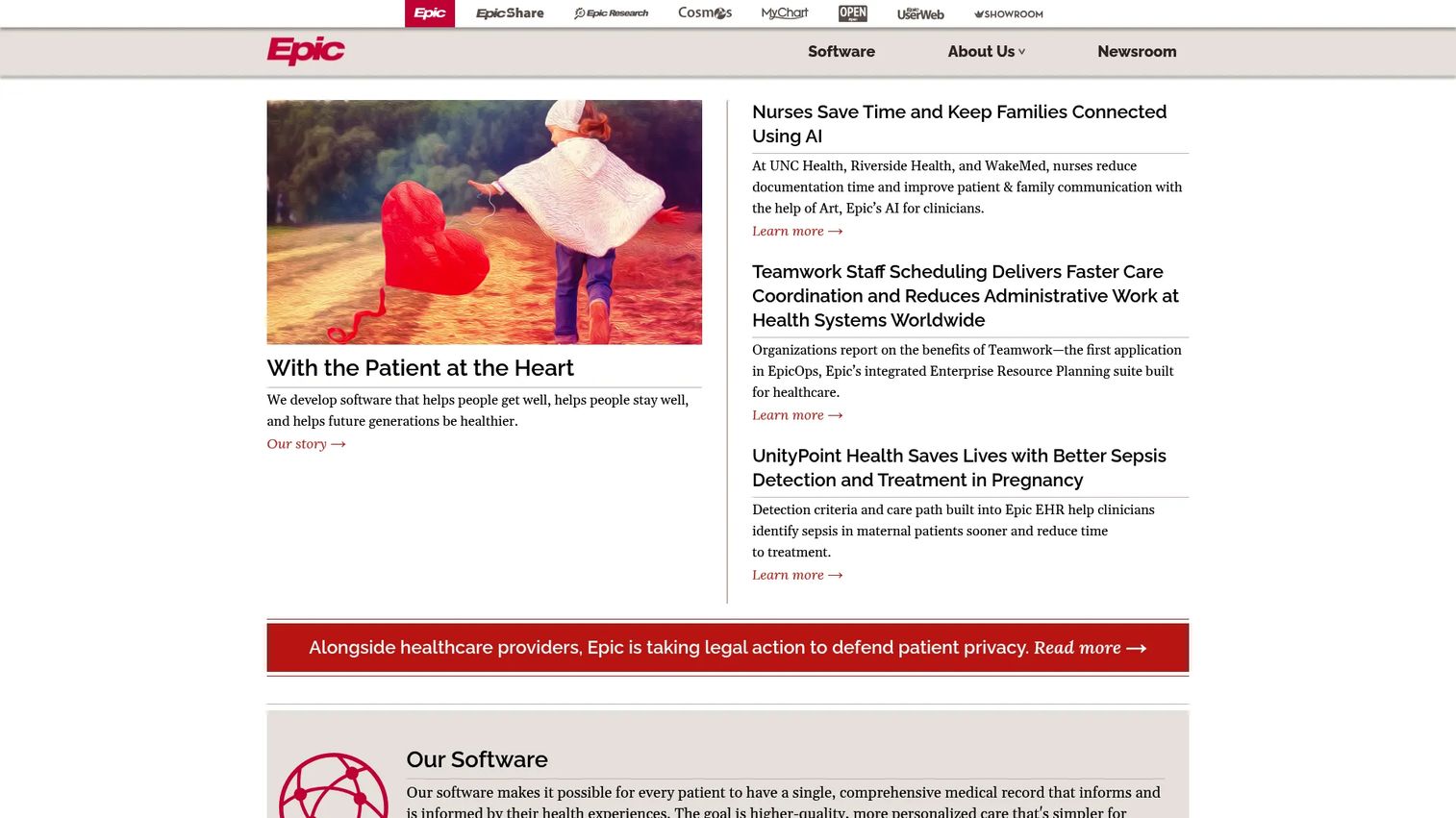
Epic Care Management is Epic's care management software for organizations already running Epic. It helps teams identify high and rising risk populations, enroll and manage patients with outreach calls and tasks, and track program outcomes. For a hospital or health system inside the Epic ecosystem, the value is that coordination happens on the same record clinicians already use, with no integration project to connect it.
Longitudinal patient visibility is the through-line. Because the care management workflow sits inside Epic, the data continuity is native rather than integrated, and internal care team collaboration happens in one place. The platform also connects patients to community resources and supports whole-person care, including social determinants of health. For large health systems, that depth of workflow and native data continuity is the reason to keep coordination inside Epic.
Best for: Large healthcare organizations that need enterprise care management inside an existing Epic footprint.
Key strengths
- Identify high and rising risk populations
- Enroll and manage patients with outreach, calls, and tasks
- Native data continuity inside Epic
- Connect patients to community resources for whole-person care
Why choose Epic Care Management: Choose it when you already run Epic and want coordination on the same record without an integration layer. Organizations outside the Epic ecosystem will find the enterprise platforms with broad interoperability a more natural fit.
Epic Care Management pricing: Epic does not publish public pricing for Care Management. Pricing and procurement run through Epic directly and typically fold into a broader Epic agreement.
6. Oracle Health
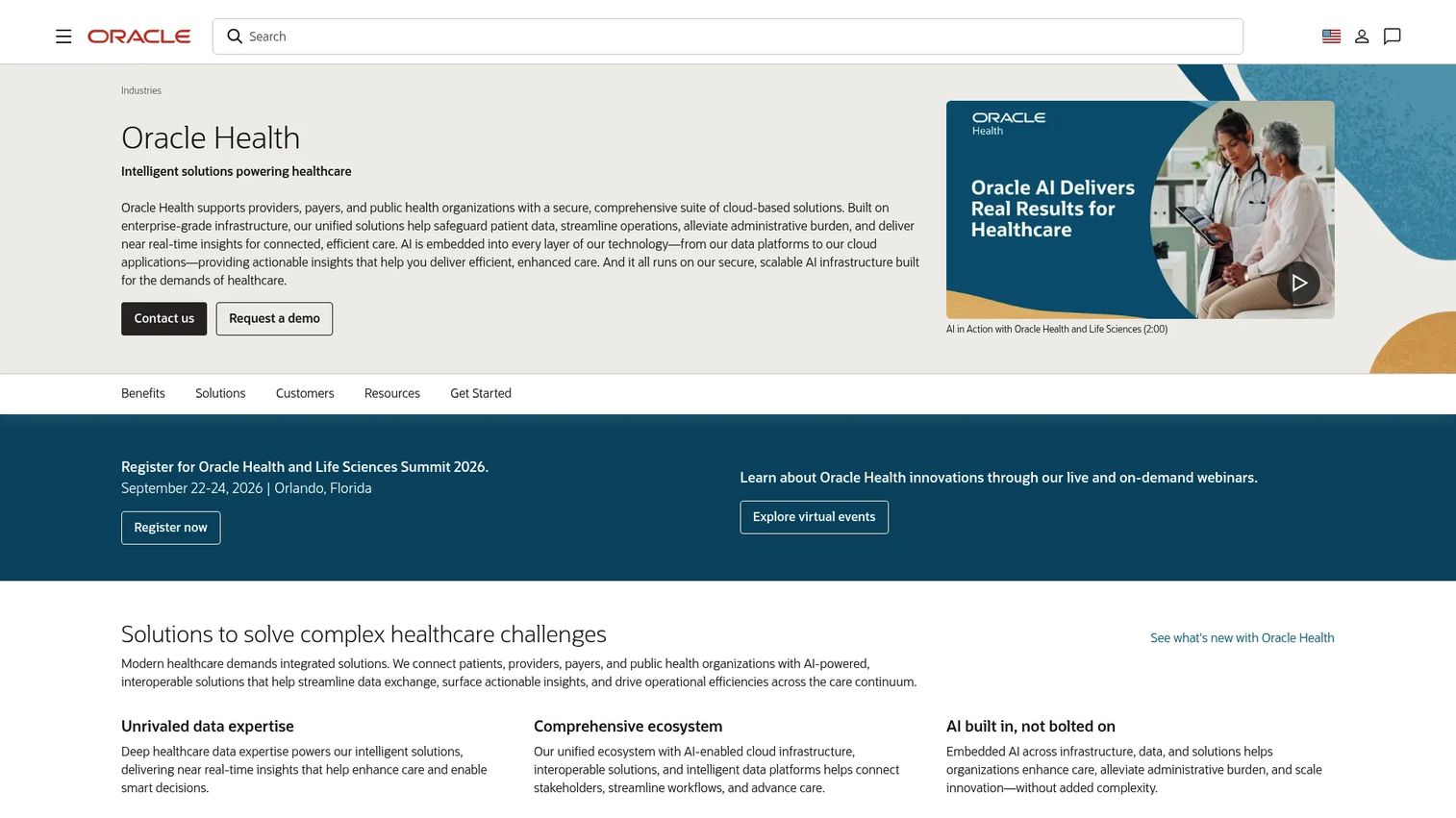
Oracle Health provides AI-powered, interoperable cloud-based healthcare software for providers, payers, and public health organizations. Its EHR embeds AI, voice commands, and clinical intelligence, and it is built for complex, multi-site environments where data exchange across many systems is the daily reality. For large organizations, the interoperability posture is the headline.
Beyond the EHR, Oracle Health includes consumer experience tools like a patient portal and video visits, plus reporting and analytics spanning clinical, financial, operational, and population health data. That breadth supports care transitions and care management across a large footprint, where coordination depends on moving data cleanly between settings. Organizations weighing enterprise-scale interoperability and analytics alongside their EHR often shortlist Oracle Health for that combination.
Best for: Large healthcare organizations that need enterprise EHR, analytics, and interoperability tooling.
Key strengths
- Oracle Health EHR with embedded AI and voice commands
- Consumer experience tools including patient portal and video visits
- Reporting and analytics across clinical, financial, and population health data
- Interoperable cloud architecture for multi-site environments
Why choose Oracle Health: Choose it when you are an enterprise organization that needs a cloud EHR with broad interoperability and analytics under one vendor. Smaller ambulatory practices will find the focused platforms on this list a lighter fit.
Oracle Health pricing: Oracle Health does not publish product pricing on its public pages and directs buyers to contact sales or request a demo. Contact the vendor for a quote scoped to your environment.
7. NextGen Healthcare
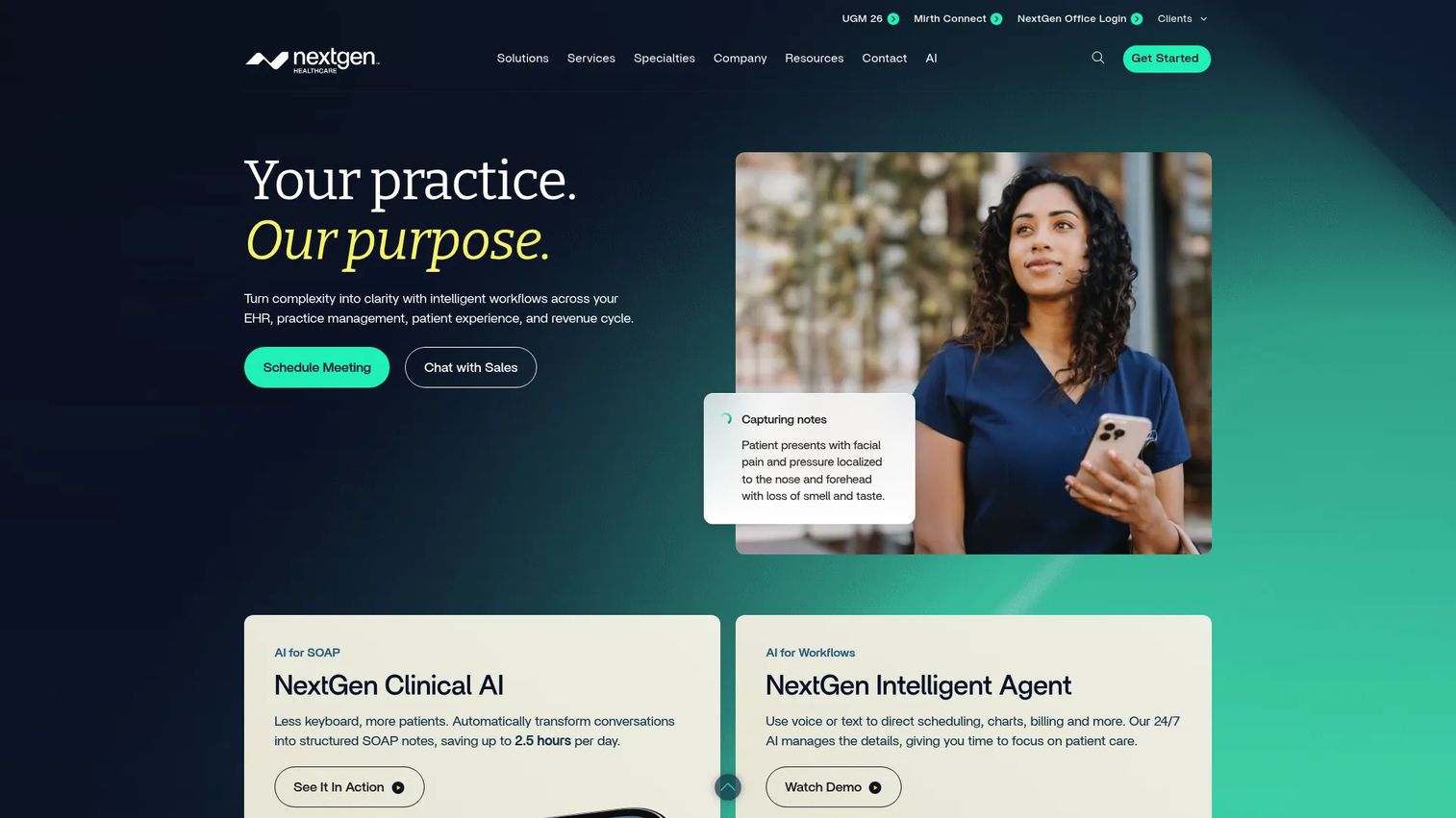
NextGen Healthcare is a healthcare software and services company focused on ambulatory EHR, practice management, patient experience, revenue cycle, and AI-enabled workflows. It fits ambulatory and multi-site practices that want referral management, care team communication, and coordination workflows inside an integrated EHR and practice management system.
The platform pairs a cloud-based EHR and practice management core with clinical AI and ambient documentation, plus patient engagement and virtual visit tools. For multi-site ambulatory groups, that combination supports coordination across locations without adding a separate system for every function. Referral workflows and interoperability handle the movement of patients and information between sites and outside providers, while specialty workflows adapt the system to different practice types.
Best for: Ambulatory and multi-site practices that need an integrated EHR and practice management platform with specialty workflows.
Key strengths
- Cloud-based EHR and practice management
- Clinical AI and ambient documentation
- Patient engagement and virtual visits
- Referral management across sites
Why choose NextGen Healthcare: Choose it when you run an ambulatory or multi-site practice and want coordination built into your EHR and practice management platform. Organizations needing enterprise-scale interoperability across many unaffiliated systems may need a broader platform.
NextGen Healthcare pricing: NextGen Healthcare does not publish public pricing and uses a demo and sales-contact model for its core products. Contact the vendor for a quote.
Considerations before you buy
A shortlist is only useful if you test it against your actual operating reality. Work through these criteria before you sign anything.
Interoperability and integration
Confirm exactly which EHR integration, HIE integration, and third-party connections a platform supports, and how. "Interoperable" is a claim; standards-based exchange with your specific systems is a fact you verify. Ask for named integrations, not categories.
Workflow fit for your care setting
Post-acute, ambulatory, behavioral, and enterprise settings coordinate differently. A platform built for chronic care programs will not map cleanly to a large Epic health system, and vice versa. Match the tool's native workflows to how your teams actually work.
Compliance and security
Any HIPAA compliant care coordination software should provide role-based access control, audit trails, and documented data-exchange safeguards. Ask how the vendor handles access management, logging, and breach response, and get it in writing.
Analytics and outcomes reporting
Coordination without measurement is guesswork. Evaluate whether the platform delivers longitudinal patient visibility, outcomes reporting, and predictive analytics you can actually act on, and whether you can export data on your terms.
Total cost and implementation
Pricing across this category is quote-based, so the sticker is only part of the story. Ask about implementation timelines, training, and ongoing support before you commit.
Conclusion
The right care coordination platform depends more on your care model than on any feature checklist. Innovaccer fits value-based care organizations that need to unify data before coordinating on it. blueBriX fits behavioral health practices wanting clinical and financial workflows together. ThoroughCare fits teams running reimbursable care management programs. Epic Care Management and Oracle Health fit large systems, one inside Epic and one across complex multi-site environments. Athenahealth and NextGen Healthcare fit ambulatory practices that want coordination inside their EHR.
Decide on the factors that survive procurement: interoperability with your actual systems, workflow fit for your setting, analytics you can act on, compliance you can document, and total cost including implementation.
The practical next step is to build a shortlist by care model and integration needs, then run a structured vendor demo against your real referral, transition, and reporting workflows. The tool that handles your hardest handoff is the one worth buying.
FAQs
It is used to organize patient care across providers and settings so nothing falls through the cracks. Core jobs include routing and closing referrals, managing care transitions after discharge, assigning tasks, and giving every team member shared visibility into the same patient. The goal is fewer missed handoffs and better continuity.
An EHR stores the clinical record: notes, labs, medications, and history. Care coordination software manages the workflows and communication that move across settings and stakeholders, especially where a single EHR does not reach. Many teams run both, with coordination software connecting the people and organizations an EHR alone cannot.
Interoperability comes first, because coordination fails when data cannot move. After that, prioritize shared care plans, task assignment and alerts, referral management, and analytics with longitudinal patient visibility. Strong care team collaboration ties them together so the plan lives in one place rather than scattered across inboxes.
Yes, and post-acute teams often need it most. The days after discharge are where continuity breaks: follow-up calls, medication reconciliation, and specialist appointments all need an owner. Post-acute care coordination software structures those handoffs, tracks discharge follow-up, and uses patient engagement tools to keep patients and families in the loop.
Confirm the platform meets HIPAA requirements with role-based access control, complete audit trails, and documented safeguards for data exchange. Ask how the vendor handles access management, logging, and breach response. For interoperability, verify that standards-based exchange with your specific systems is supported, not just claimed.
It reduces missed handoffs, improves follow-up after transitions, and gives teams more complete visibility into each patient. When a referral closes the loop and a discharge task gets owned instead of forgotten, readmissions drop and continuity improves. Analytics and outcomes reporting let teams see where coordination breaks and fix it.
Most platforms integrate with EHRs, HIEs, and third-party systems, though the depth varies widely. Some offer native continuity inside a single EHR ecosystem; others specialize in exchanging data across many unaffiliated systems. Always verify the specific integrations you need by name before you buy, rather than trusting a general interoperability claim.
Test your hardest workflows, not the vendor's demo script. Walk through a referral from creation to closed loop, a post-discharge transition with task assignment, and the analytics and outcomes reporting you would rely on. Check patient communication and the patient engagement portal too. The demo that handles your real coordination problems is the one that matters.