Your best engineer got a competing offer. Base salary was slightly higher. She almost took it.
Then she actually added up what she had with you: base, bonus, equity vesting next quarter, the 6% 401(k) match, the health premium you cover in full, the learning budget. The competing offer looked smaller once she saw the whole picture. She stayed.
Here is the problem most HR teams face. That full picture usually lives in five different systems. Payroll knows base pay. A separate platform tracks equity. Benefits sit with the broker. Bonuses live in a spreadsheet. Employees see a single number on their paystub and assume that number is the deal.
They undervalue what they cannot see. And a static PDF you email once a year goes stale within weeks, the moment someone gets a raise, changes plans, or hits a new vesting date.
The total rewards platform market reached USD 11.13 billion in 2025 and is projected to hit USD 19.22 billion by 2031, growing at 9.54% annually, according to Mordor Intelligence (2025). The category exists because scattered compensation data quietly costs companies retention.
What's inside
This guide is for HR leaders, total rewards managers, and compensation buyers comparing platforms for employee-facing communication. It is not a review of payroll or core HRIS tools, though several vendors here connect to both.
We selected and ranked these seven tools on the criteria that matter for total rewards work:
- Employee experience and clarity of the total compensation view
- Personalization and branding across groups, levels, and locations
- Integrations and how fresh the pay, benefits, and equity data stays
- Analytics, reporting, and governance for HR and executives
- Implementation effort and pricing model
Below you will find a comparison table, per-tool breakdowns, a buyer's checklist, and FAQs.
TL;DR
- Best for branded employee portals: TotalRewards Software, built specifically to market compensation to employees, candidates, and executives.
- Best for enterprise compensation cycles: CompLogix and HRSoft, both built to handle complex planning, approvals, and statements at scale.
- Best for teams already on a full HRIS: BambooHR, if you want total rewards tied to existing employee data and payroll.
- Best for pay benchmarking and market context: Pave, which pairs total comp communication with live market data.
- Best for pay transparency: Pequity, focused on clear pay bands and employee-facing communication.
- Best for large enterprises on one system: Workday, when total rewards must live inside a broader HCM.
What is total rewards software
Total rewards software is an employee-facing platform that consolidates pay, benefits, equity, perks, and recognition into a single personalized view so employees understand the full value of their compensation.
Unlike compensation management software, which is built for HR to plan and approve pay internally, total rewards software is built for the employee to see and understand what they receive. The two often overlap in one product, but the job is different.
Core capabilities to expect:
- Personalized total compensation statements: every element of an individual's package in one document
- Always-on employee portal access: a year-round view rather than a one-time annual PDF
- Branded communication and education: company logo, colors, and messaging around benefits and equity
- Equity and benefits visibility: vesting schedules, projections, and plan details in plain language
- Analytics and utilization tracking: which communications employees open and act on
- HR reporting and segmentation: executive-level views by group, level, location, or program
The best total compensation statement software makes the invisible visible. An employee who can see their equity vesting and employer-paid premiums makes better decisions about staying, and HR gets a communication channel instead of a filing cabinet.
When to use total rewards software
Improve employee understanding of total compensation
Employees anchor on base salary because that is the number they see most. When bonus, equity, retirement match, and benefits sit in separate systems, the perceived value of the package shrinks. Total rewards software helps most when your actual investment per employee is far larger than what shows up on a paystub, and you need employees to recognize that gap.
Replace static annual PDFs
A statement emailed once a year is accurate for about a week. Pay changes, plans switch during open enrollment, equity vests, new perks launch. An always-on total rewards portal keeps the numbers current without you rebuilding a document every quarter. Use it when your compensation data changes often enough that a static snapshot creates more confusion than clarity.
Support retention and communication programs
The moments that decide retention are predictable: onboarding, review cycles, promotions, and counteroffers. Total rewards software gives HR and managers a concrete artifact to reinforce value during those conversations. It works best when you want compensation communication to be a repeatable program rather than a scramble every time someone gets a competing offer.
Comparison table
Here is how the seven platforms compare on intent, differentiation, pricing, and G2 rating. Tools are sorted by relevance to employee-facing total rewards communication.
| # | Product | Best for | Key differentiator | Pricing | G2 rating |
|---|---|---|---|---|---|
| 1 | TotalRewards Software | Branded employee-facing communication | Total rewards marketing portal with campaign analytics | Free edition, paid quote-based | Not rated |
| 2 | CompLogix | Enterprise compensation cycles | Planning, calibration, and custom statements | Quote-based | Not rated |
| 3 | BambooHR | Teams on a full HRIS | Total rewards tied to core HR data | From $10/employee/mo | 4.4/5 |
| 4 | Pave | Pay benchmarking context | Total comp paired with market data | Free tier, paid demo-based | 4.5/5 |
| 5 | HRSoft | Complex comp administration | Comp lifecycle plus rewards communication | Quote-based | 4.4/5 |
| 6 | Pequity | Pay transparency | Pay bands plus employee communication | Quote-based | 4.7/5 |
| 7 | Workday | Large enterprises on one HCM | Rewards inside a unified HR and finance system | Quote-based | 4.2/5 |
Best 7 total rewards software tools for 2026
1. TotalRewards Software
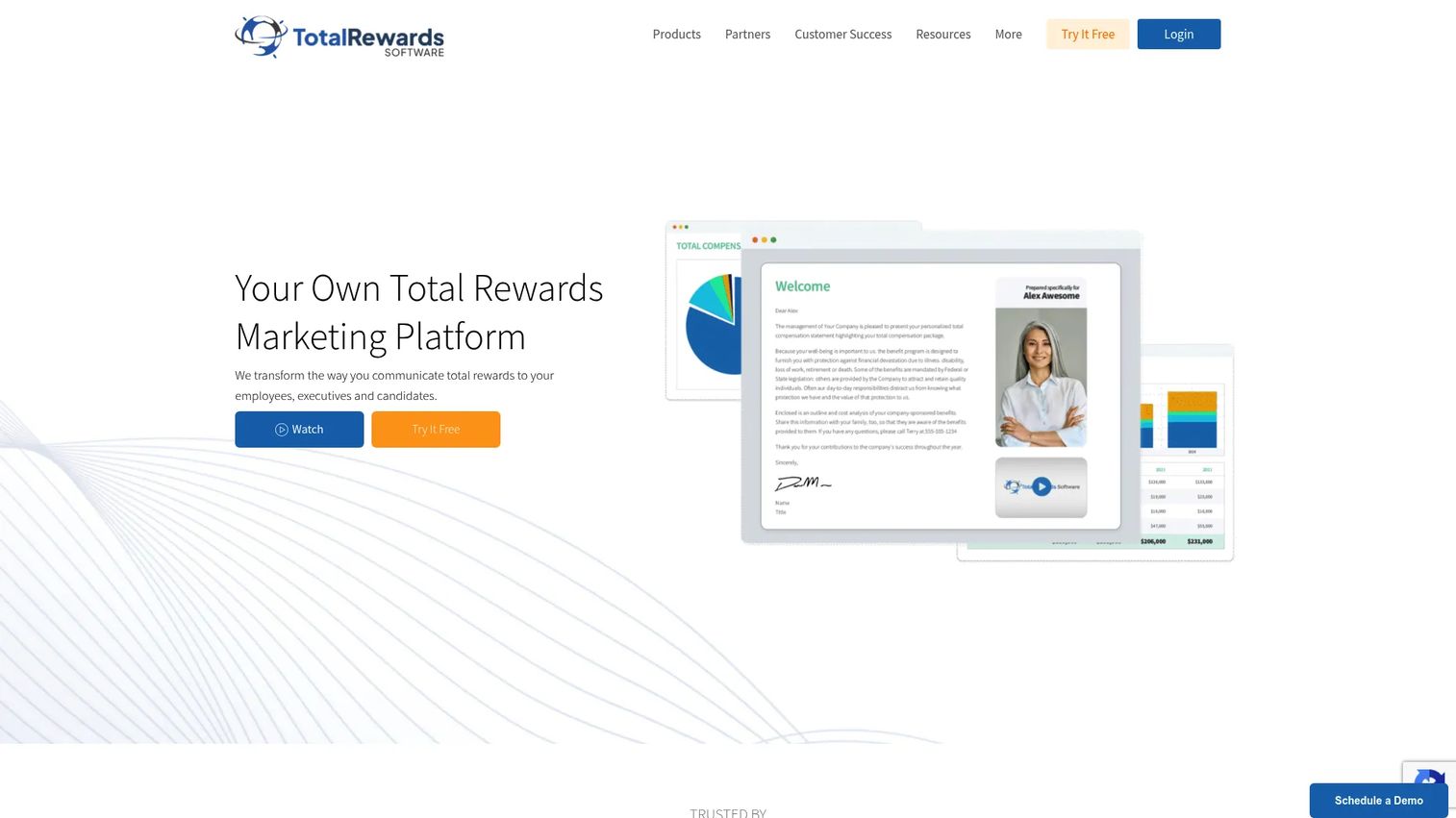
TotalRewards Software is built around one idea: compensation should be marketed to employees, not just recorded. It gives HR an interactive, branded online portal where employees, candidates, and executives can see the full value of their package. The platform treats total rewards as a communication campaign, with targeted email promotions and engagement tracking layered on top of the statements.
Best for: HR teams that want to actively market total rewards to employees, executives, candidates, and partners.
Key strengths
- Interactive, branded online total rewards portal
- Automated and targeted email promotions
- Campaign analytics, surveys, and engagement tracking
- Executive-friendly reporting on communication reach
- Editions spanning Free through Enterprise
Why choose it: If your problem is that employees do not know what they have, this is the most communication-first tool on the list. It is less a comp-planning engine and more a portal and campaign layer, which fits teams whose main goal is employee understanding and engagement.
Pricing: The site lists Free, Pro, Ultimate, Enterprise, and Xpress editions. No public numeric price is shown, and paid pricing is requested directly from the vendor.
2. CompLogix
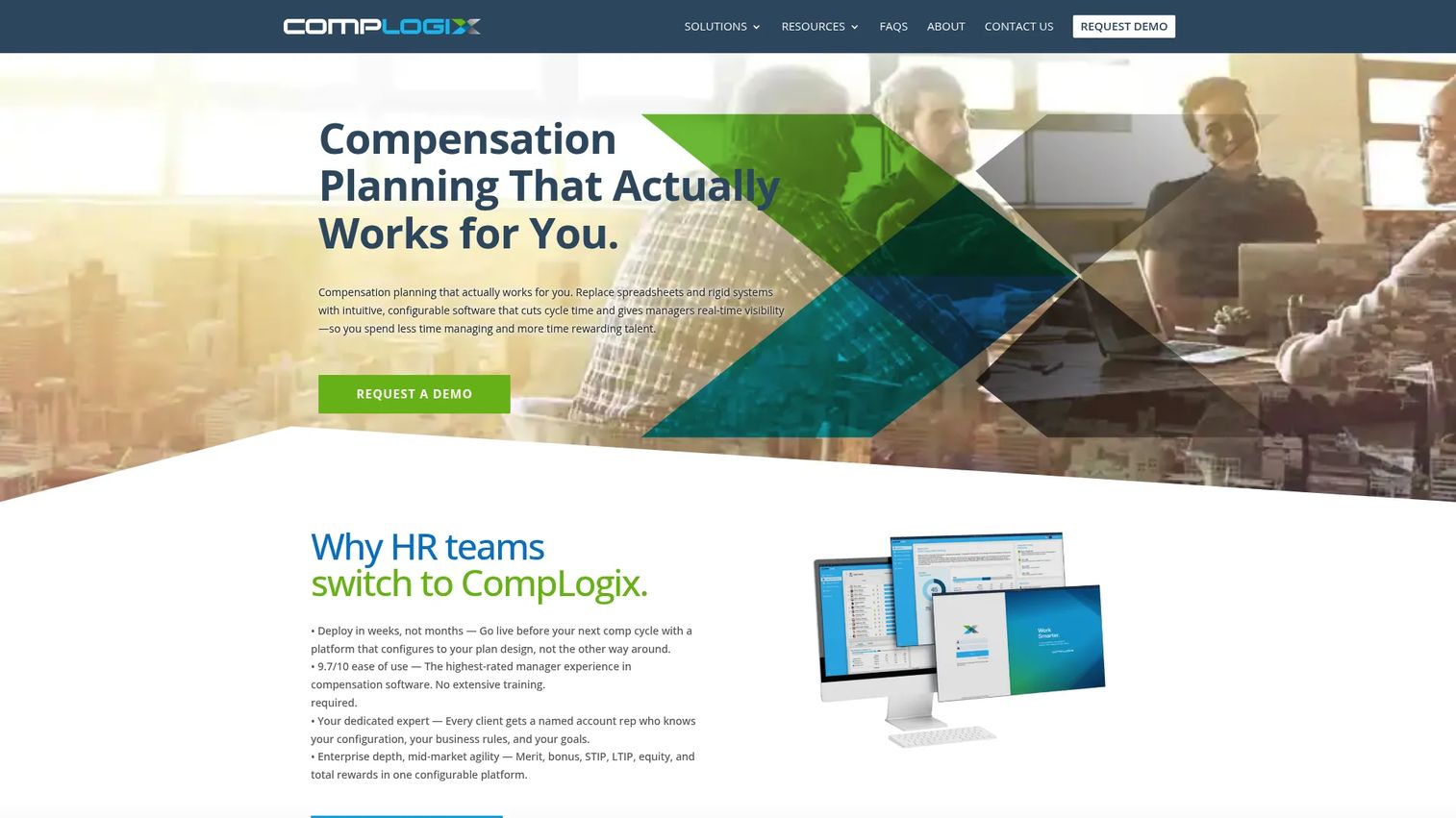
CompLogix is a compensation management platform that handles planning, budgeting, approvals, analysis, and calibration, then turns that data into employee statements. It fits enterprises where compensation is a structured cycle with multiple approvers, currencies, and rules, and where the total rewards statement is one output of a much larger process.
Best for: Mid-market and enterprise teams managing complex compensation planning cycles.
Key strengths
- Budget modeling and real-time analysis dashboards
- Calibration with 9-box and workforce planning
- Custom statements and multi-currency support
- Configurable roles, permissions, and HRIS integration
- Easy data import and export
Why choose it: Choose CompLogix when the statement is downstream of serious comp planning work. If you need incentive planning, calibration, and budget control alongside employee communication, the depth here is the point.
Pricing: CompLogix does not publish public pricing. The company states pricing is variable and quote-based, so you request a custom quote for your headcount and needs.
3. BambooHR
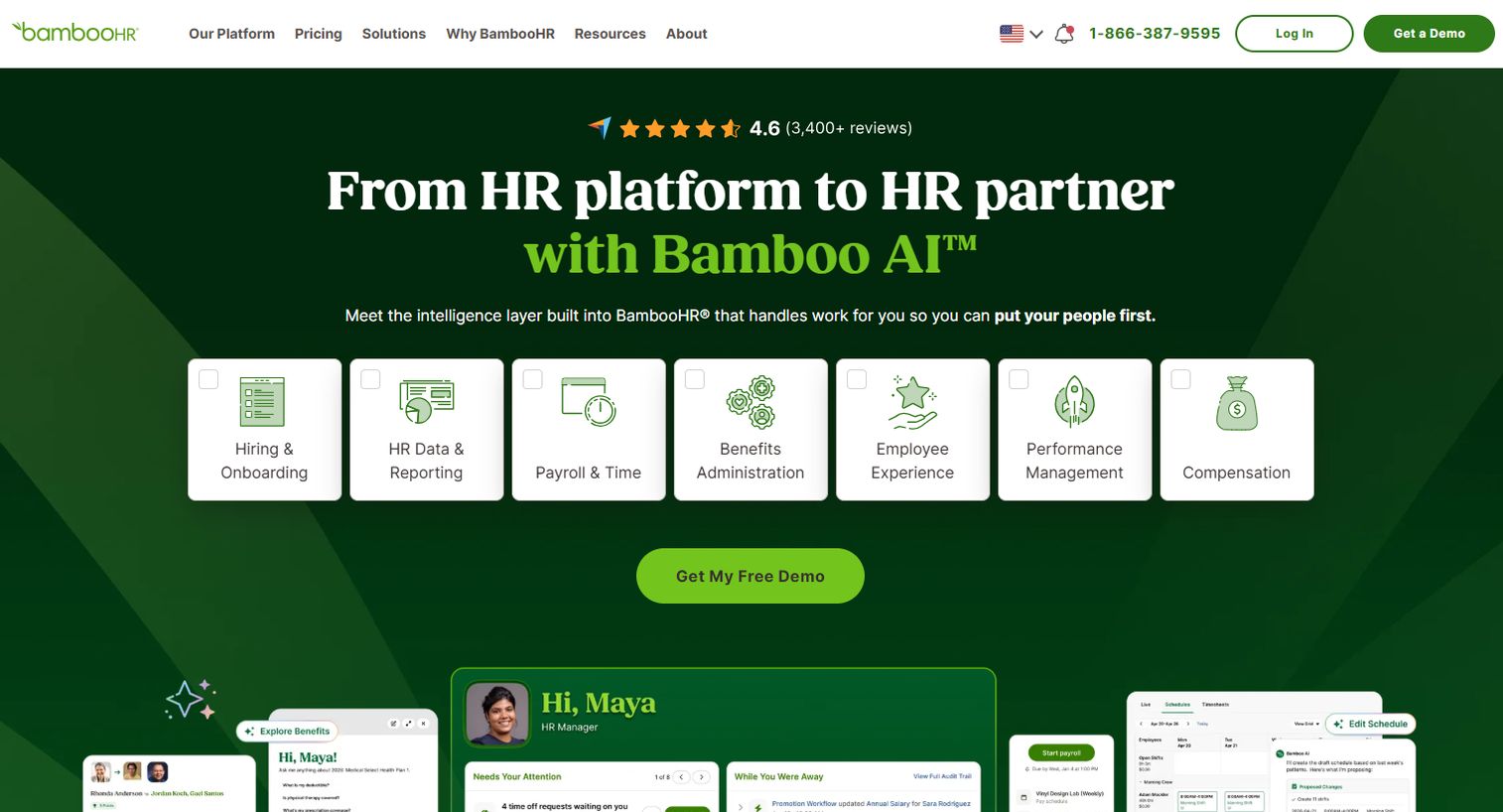
BambooHR is an all-in-one HR platform, and total rewards is one module inside it. That is its advantage: the compensation, benefits, and equity data an employee sees can pull directly from the same system that runs your records, hiring, onboarding, and time tracking. For teams already on BambooHR, the total rewards view is a natural extension rather than a separate integration project.
Best for: Growing organizations already using BambooHR for employee data workflows.
Key strengths
- Employee records, reporting, workflows, and dashboards
- Total rewards overview with equity projections
- Time and attendance with time-off and scheduling
- Permissions, access controls, and self-service
- Bamboo AI for HR insights and task automation
Why choose it: Choose BambooHR when you want total rewards connected to a broader HR platform rather than a standalone statement tool. The data sync with existing HR and payroll workflows is the reason to consolidate here.
Pricing: Public pricing shows Core at $10 per employee per month, Pro at $17, and Elite at $25, all billed per employee per month for companies with more than 25 employees. Companies with 25 or fewer employees pay a flat rate starting at $250 per month.
4. Pave
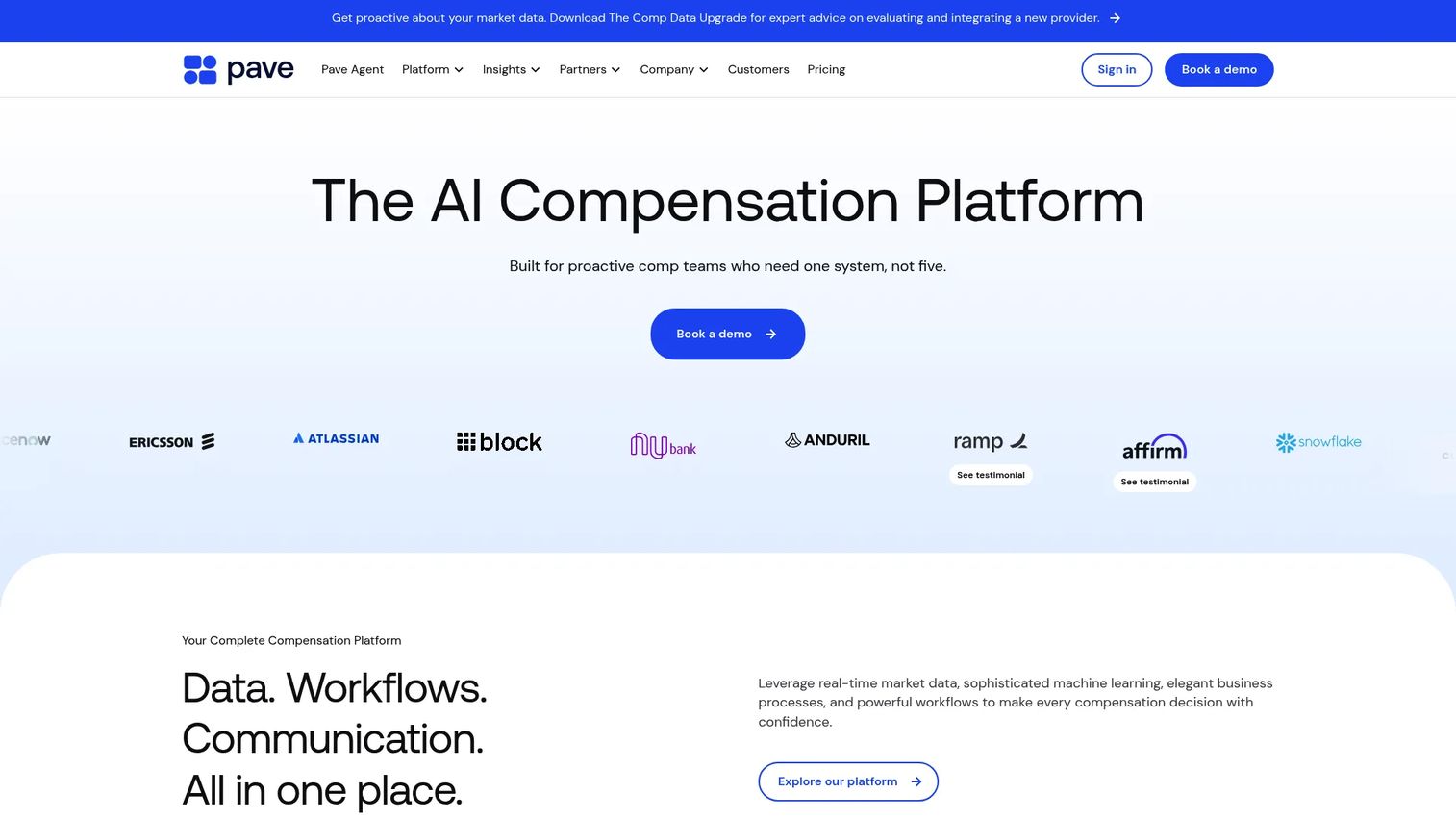
Pave approaches total rewards from the compensation intelligence side. It benchmarks pay against live market data, then helps teams communicate total compensation with that context attached. The result is pay storytelling backed by numbers, so an employee sees not just what they earn but how it sits against the market, and managers and HR stay aligned on the reasoning.
Best for: Mid-market and enterprise teams managing compensation benchmarking and planning.
Key strengths
- Market Data Lite: free salary and equity benchmarks
- Market Data Pro: global benchmarks and predictive insights
- Market Pricing for building pay ranges
- Total compensation communication for employees
- Manager and HR alignment on pay decisions
Why choose it: Choose Pave when market context is central to how you communicate pay. If you want employees and managers to understand compensation in relation to the market, not just in isolation, the benchmarking data is the differentiator.
Pricing: Market Data Lite is free. Market Data Pro and the Full Suite are demo-based, with no public numeric price listed. The pricing page also references individual products and workflow modules.
5. HRSoft
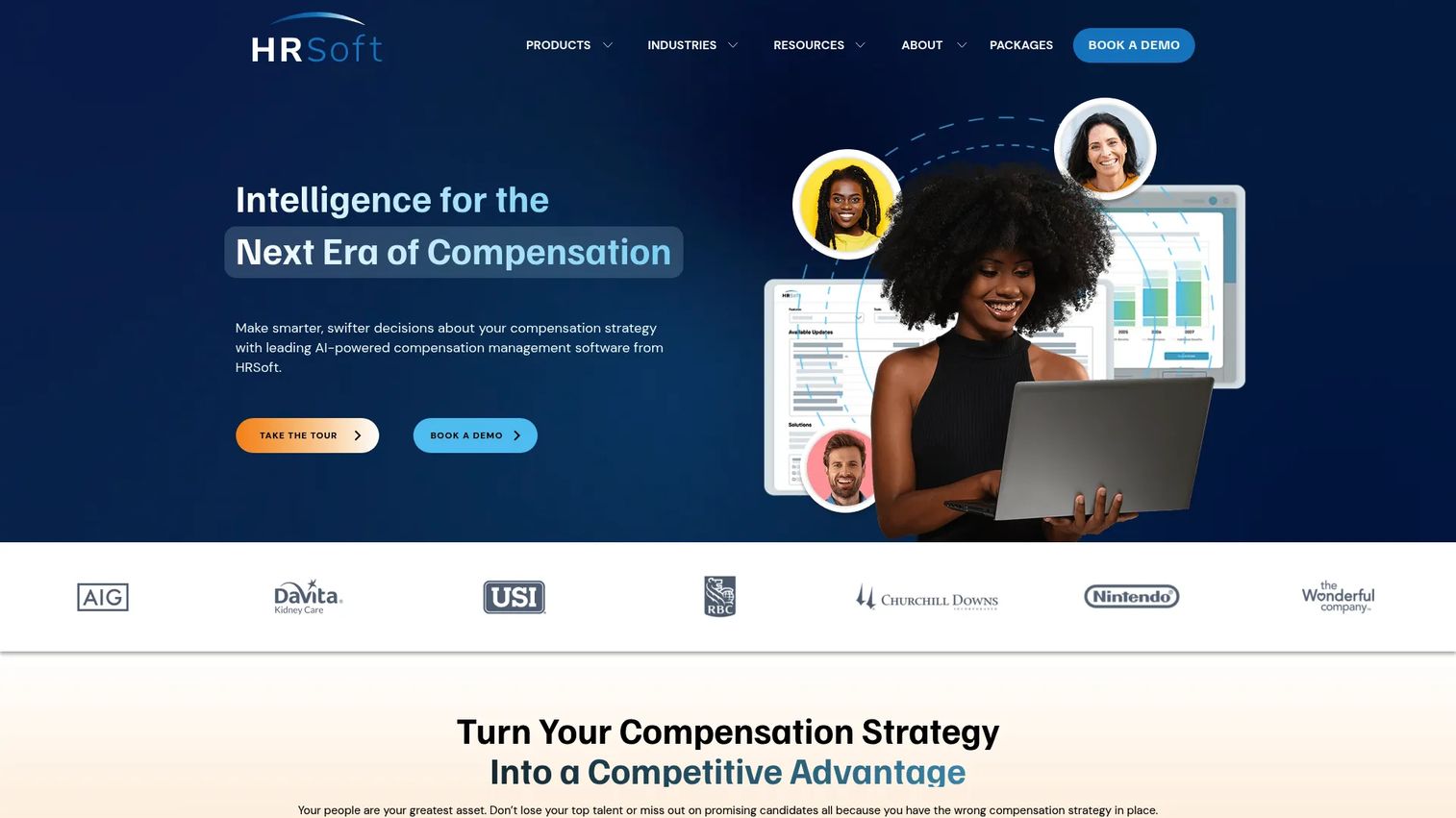
HRSoft manages the full compensation lifecycle, from planning and pay for performance to long-term incentives and variable comp, with total rewards communication built in. It is aimed at HR teams that need structured administration and control over complex compensation, plus the reporting to back it up. The total rewards statement sits alongside budgeting, LTI management, and administrative controls.
Best for: Mid-market to enterprise HR teams managing complex compensation cycles and rewards communication.
Key strengths
- Compensation planning and pay for performance
- Long-term incentive and variable compensation management
- Total rewards communication and statements
- Budgeting and administrative controls
- Reporting and governance for enterprise deployment
Why choose it: Choose HRSoft when administration and control matter as much as communication. Teams running multiple incentive plans and needing tight governance get a comp lifecycle system with employee statements as part of it.
Pricing: HRSoft lists three packages, GROW, SCALE, and ELEVATE, all with custom quote pricing. No numeric prices are published, so you request a quote based on your requirements.
6. Pequity
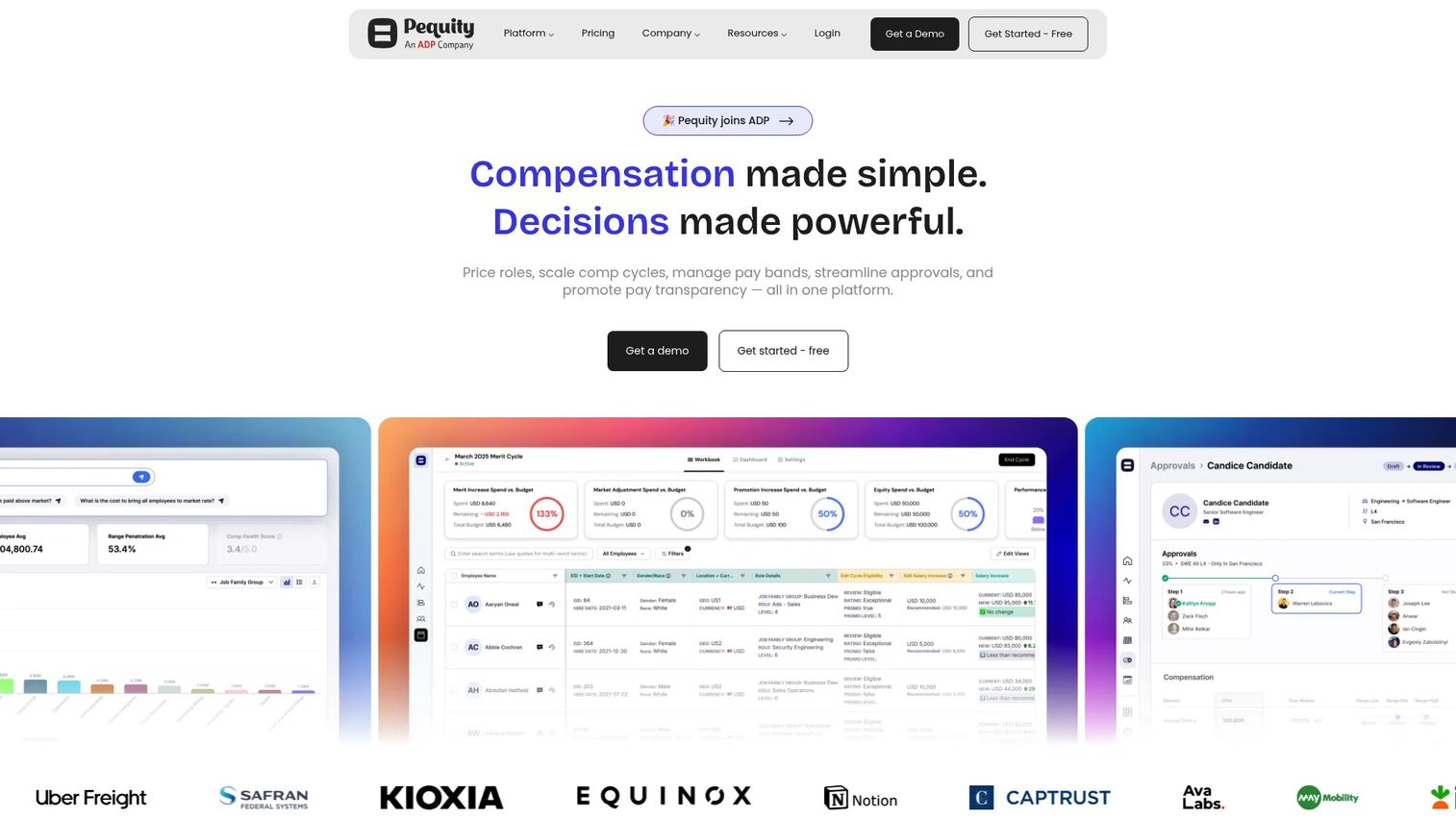
Pequity is compensation management software with a clear lean toward pay transparency. It handles planning workflows and pay band management, then supports total reward statements and employee communications built to make pay clear rather than opaque. For teams trying to communicate compensation more openly, the emphasis on bands and visibility fits the goal.
Best for: Teams needing flexible enterprise compensation planning with a transparency focus.
Key strengths
- Compensation planning workflows
- Pay band and range management
- Total reward statements and employee communications
- Collaboration across HR and managers
- Modern reporting and visibility
Why choose it: Choose Pequity when pay transparency is a stated goal, not an afterthought. The combination of structured pay bands and employee-facing statements supports clearer conversations about how pay is set.
Pricing: Pequity does not disclose public pricing. The pricing page asks visitors to request a custom quote, so cost depends on your headcount and configuration.
7. Workday
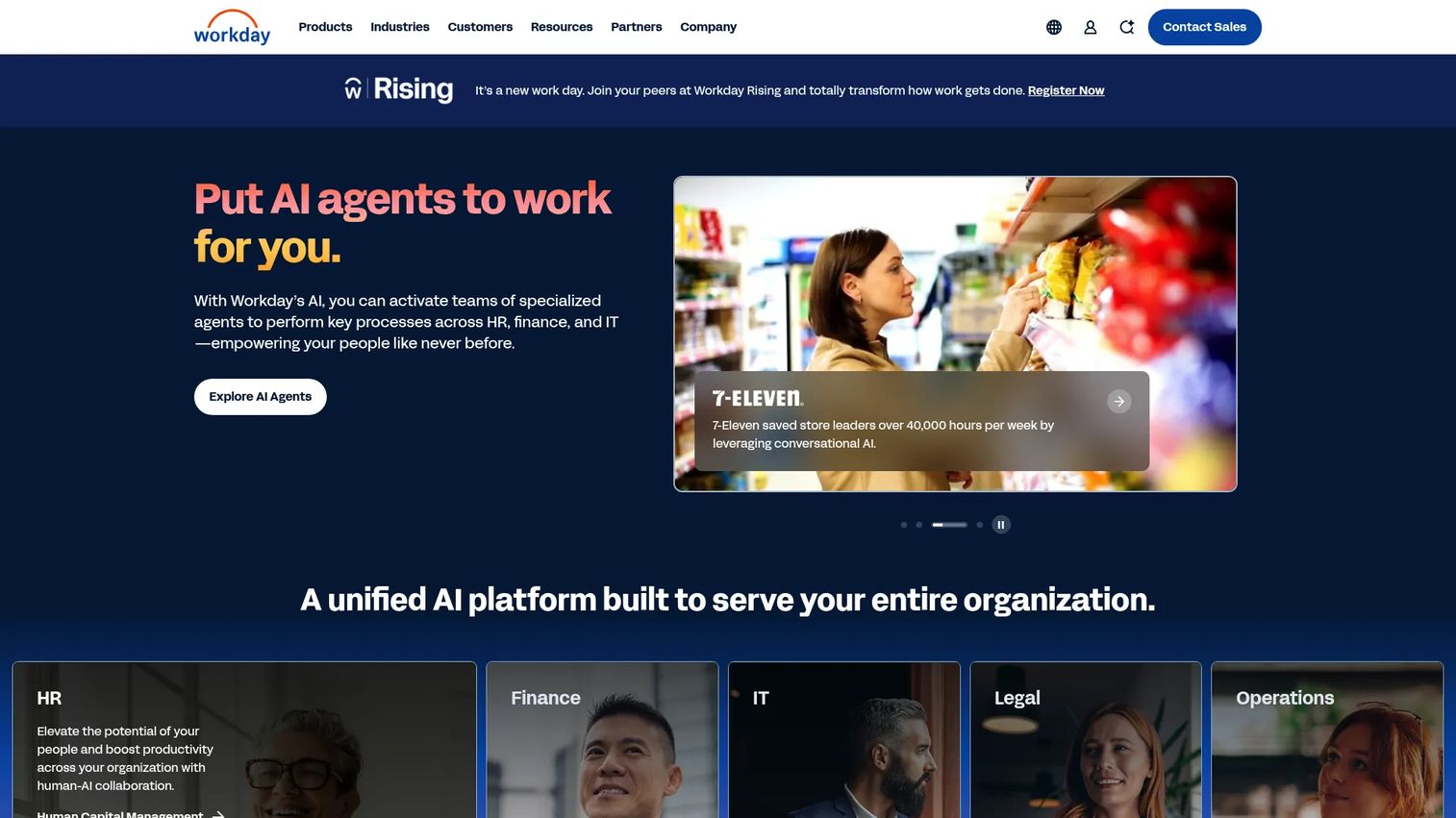
Workday is a cloud enterprise platform spanning HR, finance, payroll, and planning, with compensation and rewards data living inside that single system. For large organizations already running core HR on Workday, total rewards communication is one function within a unified environment, backed by the governance, security, and reporting depth an enterprise expects.
Best for: Mid-to-large organizations that want a unified HR and finance platform.
Key strengths
- Human Capital Management across the employee lifecycle
- Compensation and rewards data inside core HR
- Workflow integration across HR, finance, and planning
- Enterprise governance and security
- Deep reporting and analytics
Why choose it: Choose Workday when total rewards must live inside a larger enterprise system rather than as a standalone tool. If you already run HR and finance here, keeping rewards data in the same platform reduces fragmentation.
Pricing: Workday states its pricing is subscription-based and varies by employees, users, and usage. Product pages route to Contact Sales or Request a Quote, and no specific starting price is published.
Considerations
Before you shortlist, run each platform through these criteria.
Employee experience and clarity
Does the interface actually help employees understand their total compensation, or does it just display data fields? Ask to see a sample statement from an employee's point of view. If it reads like a spreadsheet export, it will not change how people value their package.
Personalization and branding
Check whether statements and portals can reflect different employee groups, locations, levels, and programs. A single generic template rarely fits a company with hourly and salaried staff, or multiple countries. Look for segmentation that matches your actual workforce structure.
Integrations and data freshness
Verify how often payroll, benefits, equity, and HRIS data syncs into the platform. A total rewards portal is only as trustworthy as its most recent update. Ask specifically which systems connect natively and which require manual imports.
Governance and permissions
Evaluate access controls and approvals. Can HR manage updates and publish statements without heavy admin or IT involvement every cycle? The lighter the ongoing lift, the more likely the program survives past year one.
Analytics and reporting
Look for engagement tracking, usage trends, and executive-level reporting. You want to know which communications employees actually open and which segments ignore them. Without that signal, you are guessing whether the investment moves retention.
Implementation complexity
Ask how long configuration takes, what data mapping is required, and whether the vendor supports the rollout. Enterprise comp systems can take months to stand up. Match the implementation timeline to your internal capacity and update cadence.
Conclusion
The right pick comes down to what you are actually solving for.
If your priority is employee understanding and branded communication, TotalRewards Software is purpose-built for marketing rewards to your people. For enterprise compensation buyers who need planning, calibration, and statements as one connected cycle, CompLogix and HRSoft carry the depth. Pave stands out when market benchmarking should sit alongside the numbers, and Pequity when pay transparency is the goal.
For HR teams that want total rewards tied to a broader platform, BambooHR fits companies consolidating on one HRIS, while Workday fits large enterprises that need rewards inside a unified HR and finance system.
Shortlist based on three things: your employee communication goals, the complexity of your compensation data, and the reporting your executives expect. Request sample statements and a live walkthrough from your top two before committing. The platform that makes your total investment visible to employees is the one that quietly protects retention.
FAQs
Compensation management software is built for HR to plan, model, budget, and approve pay internally. Total rewards software is built for the employee to see and understand the full value of their package. Many platforms do both, but the two jobs are distinct: one is an internal planning engine, the other is an employee-facing communication layer.
They use them most when the portal is always on and personalized, not a one-time annual PDF. A static statement gets opened once and forgotten. A year-round portal that reflects raises, vesting, and benefit changes gives employees a reason to return, especially around review cycles and open enrollment. Engagement analytics in most platforms show you exactly which segments log in and which do not.
As often as the underlying data changes. Pay adjustments, equity vesting, plan switches, and new perks all make a static statement inaccurate within weeks. This is why always-on portals outperform annual documents: the numbers stay current without you rebuilding anything. If you are stuck with periodic statements, quarterly is a practical minimum for most companies.
Payroll, benefits administration, equity management, and your core HRIS. Those four systems hold the data that makes a statement accurate. Confirm which connect natively versus which require manual imports, because manual data loads are where statements go stale and errors creep in. The fewer manual steps, the more reliable the employee-facing view.
Yes, and often more so, because small teams cannot afford to rebuild statements by hand every cycle. Platforms tied to an existing HRIS, like BambooHR, reduce the setup burden by reusing data you already maintain. The question for a small team is less about features and more about implementation effort and ongoing admin load.
Start with portal logins, statement open rates, and time spent, then segment by group, level, or location. Most platforms include utilization analytics for exactly this. The signal that matters is whether the segments you are trying to retain are actually engaging, and whether communication spikes around review and enrollment moments translate into logins.
It helps by closing the gap between what a company invests and what an employee perceives. When someone can see their equity, employer-paid premiums, bonus, and match in one place, a slightly higher base offer elsewhere looks less compelling. The software does not retain people on its own, but making total value visible removes a common blind spot that costs companies good employees.
Ask whether pricing is per employee, flat rate, or quote-based, and what drives the number as you scale headcount. Several platforms here, including CompLogix, HRSoft, Pequity, and Workday, use quote-based pricing, so get a written quote tied to your headcount. Also ask what implementation and data mapping cost separately, since setup fees often sit outside the subscription line.