Privacy work used to live in a spreadsheet and an email chain. A legal team tracked data subject requests in a shared doc, someone in security maintained a rough data map, and a quarterly scramble produced enough evidence to survive an audit. That model is breaking under load. TrustArc reports a 246% increase in data subject requests, and roughly 6.3 billion people, about 79.3% of the world's population, now fall under some form of national data privacy law. The manual approach does not scale to that volume across GDPR, CCPA/CPRA, HIPAA, Virginia DPDPA, and India DPDPA at the same time.
That is why teams are moving to a system instead of a process. A privacy management platform centralizes requests, consent, data mapping, risk assessments, and audit evidence in one place, so legal, security, product, and data teams stop reconstructing the same records by hand. The market reflects the shift: Mordor Intelligence projects data privacy software spend reaching USD 6.24B in 2026, growing at a 23.08% CAGR through 2031.
For product managers, this matters more than it looks. Privacy requirements show up in onboarding flows, consent banners, data retention rules, and the instrumentation you ship. The right data privacy software reduces cross-team coordination overhead instead of adding another maintenance-heavy system to own. If you are also evaluating adjacent compliance tooling, our roundups of audit management software and the best contract lifecycle management software cover neighboring categories most privacy programs touch.
What's inside
This guide is for privacy, legal, security, data, and product operations teams shortlisting a privacy management platform in 2026. It also speaks to product managers who own compliance-adjacent systems and need tooling that integrates with the product and analytics stack rather than sitting beside it.
We selected platforms on four criteria that matter most to buyers: workflow automation depth (DSR routing, consent, assessments), regulatory coverage across major frameworks, reporting and audit defensibility, and integration plus scalability across regions and teams. Every tool below is in active use by mid-market or enterprise privacy programs. Pricing and ratings reflect verified, current values where vendors publish them.
TL;DR
- Best for enterprise GRC workflows: LogicGate Risk Cloud, when privacy sits inside a broader governance and risk program.
- Best for broad privacy operations: TrustArc and OneTrust, for teams that need mapping, DSARs, consent, and assessments under one roof.
- Best for data governance plus privacy: OvalEdge, when you want a governed data catalog alongside privacy controls.
- Best for incident and AI governance: RadarFirst, for defensible, jurisdiction-aware breach and risk decisions.
- Best for consent management at scale: Usercentrics, for web, app, and CTV consent in regulated regions.
- Best for leaner teams wanting fast deployment: Osano, for all-in-one privacy operations without heavy lift.
What is data privacy management software?
Data privacy management software is a platform that centralizes the workflows a privacy program runs, including data discovery and mapping, data subject request handling, consent and preference management, risk assessments, and audit reporting, into a single system of record.
In practice, a privacy compliance software platform replaces the spreadsheet-and-inbox model with structured, automated workflows. The strongest tools share a common set of capabilities.
Core capabilities to expect:
- Data discovery and mapping: automated scanning to build and maintain an inventory of where personal data lives, feeding ROPA (records of processing activities).
- DSAR automation and DSR workflow automation: intake, identity verification, routing, fulfillment, and SLA tracking for data subject requests across jurisdictions.
- Consent management: capturing, storing, and honoring consent and preferences across web, app, and connected channels.
- Assessments: structured DPIA, PIA, and TIA workflows for processing activities, vendors, and cross-border transfers.
- Dashboards and audit trails: real-time compliance dashboards plus immutable evidence and audit trails for defensibility.
- Integrations: connectors into CRM, ticketing, identity, cloud, and analytics systems so privacy data stays in sync.
Regulations these platforms typically cover:
- GDPR (EU)
- CCPA/CPRA (California)
- HIPAA (US healthcare)
- Virginia DPDPA and other US state laws
- India DPDPA
- Sector and regional frameworks layered on top
Optimized for the way modern programs operate, these data privacy management tools treat privacy as continuous operations rather than a periodic legal checklist. For teams managing structured data assets alongside privacy, a customer data platform and strong data visualization tooling often sit adjacent in the same stack.
When to use data privacy management software
Not every team needs a full platform on day one. These three patterns signal that manual handling has reached its limit.
Automate privacy requests at scale
Manual DSR routing breaks down fast. When request volume climbs, jurisdictions multiply, and statutory SLAs tighten, a spreadsheet cannot track who verified identity, which systems were searched, or whether the 30-day or 45-day clock is about to expire. DSR workflow automation handles intake, verification, system search, and fulfillment with deadline tracking built in, so nothing slips because someone was on vacation.
Centralize data mapping and compliance evidence
Auditors and regulators want defensible records, not a story. Privacy platforms build and maintain ROPA, track processing activities, and link data flows to legal bases automatically. When a data map updates as systems change, your evidence stays current instead of going stale between annual reviews. That continuous accuracy is what makes an audit faster and a breach response calmer.
Standardize privacy risk reviews
Regulated and multi-region products generate constant assessment work: DPIA for new processing, PIA for feature launches, TIA for cross-border transfers, and vendor risk reviews for every new data processor. Standardizing these in a platform gives every reviewer the same template, the same scoring, and the same audit trail, which matters when a regulator asks how a decision was reached.
Comparison table
The table below ranks the seven platforms by relevance to a privacy management software buyer, covering primary intent, core use case, pricing visibility, and G2 rating. Pricing is shown only where vendors publish it; most enterprise privacy platforms quote based on usage, data volume, or seats.
| # | Product | Intent | Key use case | Pricing | G2 rating |
|---|---|---|---|---|---|
| 1 | LogicGate Risk Cloud | Enterprise GRC + privacy | Configurable risk and compliance workflows | Quote-based | 4.6/5 |
| 2 | TrustArc | Broad privacy operations | Compliance, consent, DSAR automation | Contact sales | 4.2/5 |
| 3 | OvalEdge | Data governance + privacy | Governed catalog with privacy controls | Custom | 5.0/5 |
| 4 | RadarFirst | Incident + AI governance | Privacy incident and risk decisions | Demo-based | 5.0/5 |
| 5 | OneTrust | Enterprise privacy suite | Privacy, consent, risk, third-party | Usage-based | 4.4/5 |
| 6 | Usercentrics | Consent management | Web, app, CTV consent compliance | From €0/mo | 4.3/5 |
| 7 | Osano | All-in-one privacy ops | Consent, DSAR, data mapping | Free trial | 4.5/5 |
A few platforms post low-sample G2 ratings (OvalEdge and RadarFirst each reflect a single review at the time of writing), so weigh those scores against your own evaluation and reference calls.
1. LogicGate Risk Cloud
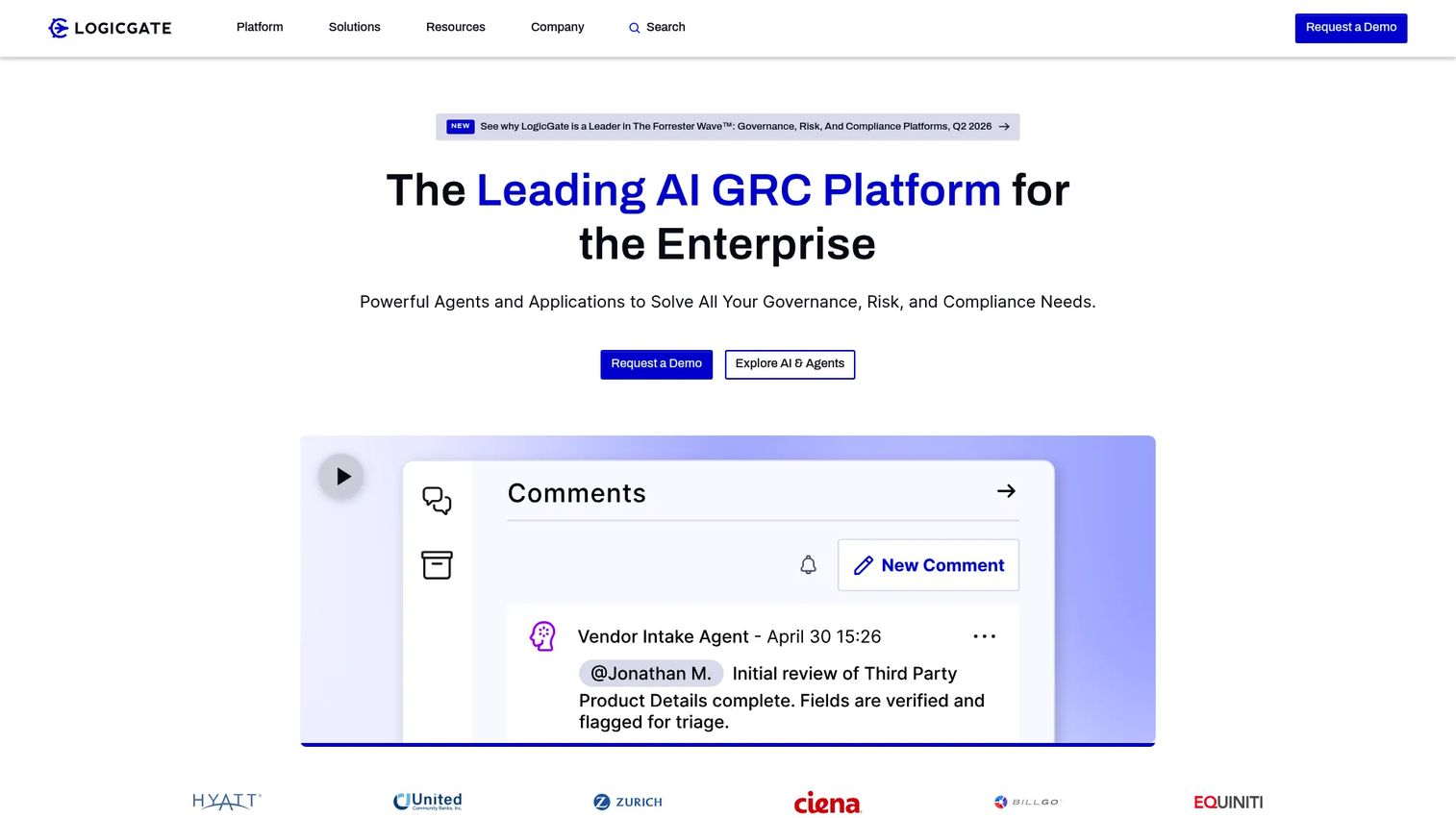
LogicGate Risk Cloud is an AI-powered GRC platform that handles enterprise risk, compliance, and governance workflows, with privacy operations sitting inside that broader program. Rather than treating privacy as an isolated function, LogicGate lets teams build data inventories, processing activity records, and privacy request workflows in the same environment they use for risk and audit. That makes it a fit for organizations that want privacy to share governance, evidence, and reporting with the rest of compliance.
Best for: Enterprise teams that need configurable GRC workflows with automation and reporting, where privacy is one program among several.
Key strengths
- No-code graph database: Model risk, data, and compliance relationships without engineering, then reconfigure as the program changes.
- Workflow automation: Route privacy requests, assessments, and approvals through automated, repeatable flows with clear ownership.
- Automated evidence collection: Gather audit trails and supporting documentation automatically, so defensibility is continuous rather than a quarterly scramble.
Why choose LogicGate Risk Cloud: If your organization already runs risk and audit programs and wants privacy to live in the same system rather than a separate silo, LogicGate's GRC-first design fits the operating model. Product and security teams benefit from configurable workflows that adapt to release cadence instead of forcing a fixed process.
LogicGate Risk Cloud pricing: LogicGate's public pricing page notes that only Power Users require paid licenses, while Standard and External user licenses are included at no additional cost. No public starting price is published, so plan to engage sales for a quote sized to your program. The platform holds a 4.6/5 rating on G2.
2. TrustArc
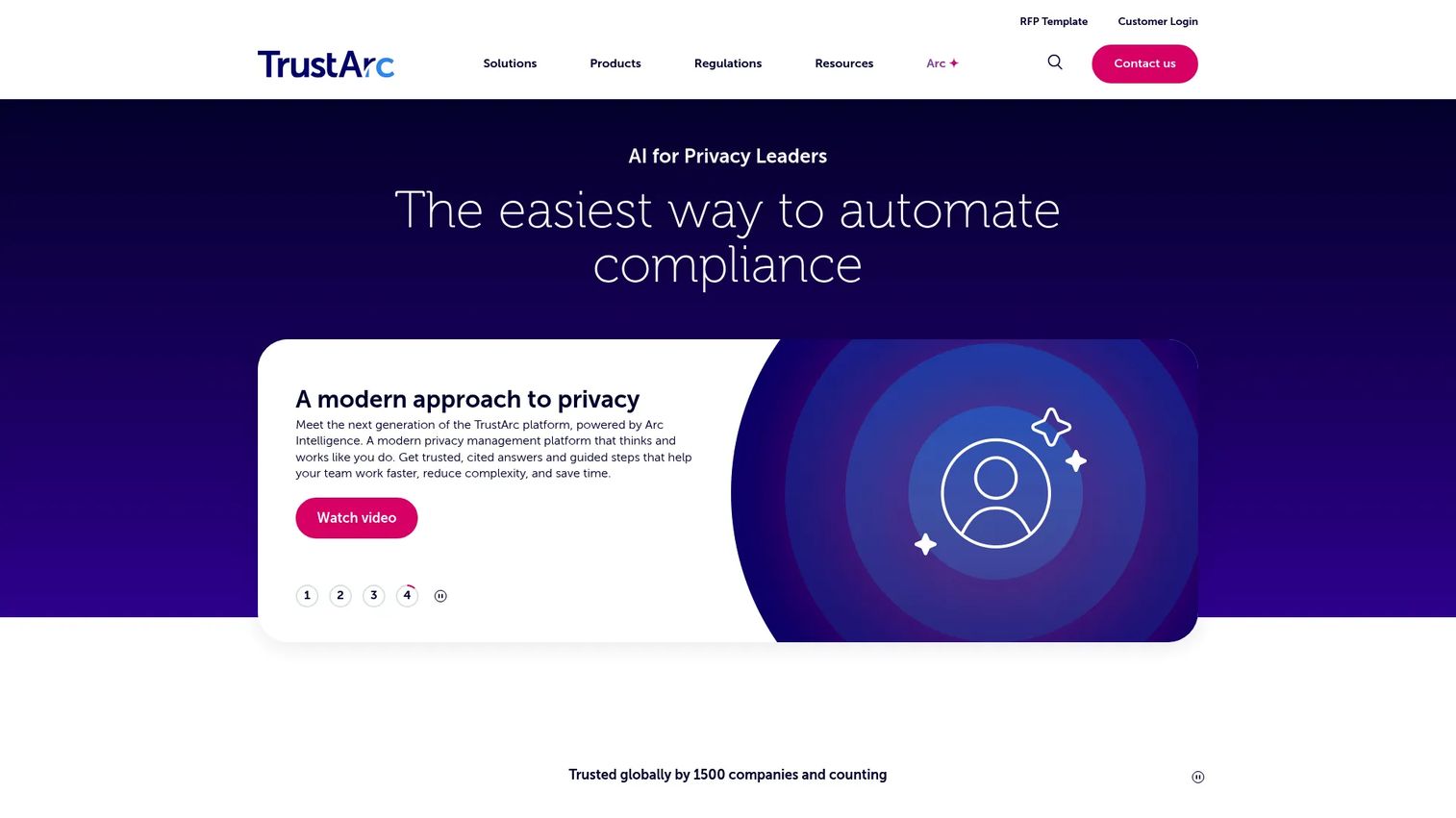
TrustArc is a privacy management platform built to automate compliance, consent, DSARs, and trust-center workflows in one place. Its platform approach spans data mapping, individual rights handling, consent and preference management, and structured assessments, with command-center style operations on top. For teams that want broad coverage and a structured way to evaluate their program against changing regulations, TrustArc leans into reporting depth and auditability.
Best for: Enterprise privacy teams needing compliance automation across consent, DSAR, and governance workflows.
Key strengths
- AI-powered privacy management: Automate routine compliance tasks and surface risk across the program with AI assistance.
- Data subject request automation: Handle intake, routing, and fulfillment for DSARs with tracking that holds up to scrutiny.
- Trust Center and consent management: Centralize consent, preferences, and a public-facing trust presence in one system.
Why choose TrustArc: TrustArc suits teams that want a privacy compliance software platform with strong reporting and audit defensibility rather than a point tool. Its structured assessment and command-center framing helps privacy leaders show regulators and executives a coherent program.
TrustArc pricing: TrustArc directs buyers to contact sales for pricing; no public list price was visible on the pages reviewed. Expect quote-based packaging sized to your data footprint and module mix. TrustArc holds a 4.2/5 rating on G2.
3. OvalEdge
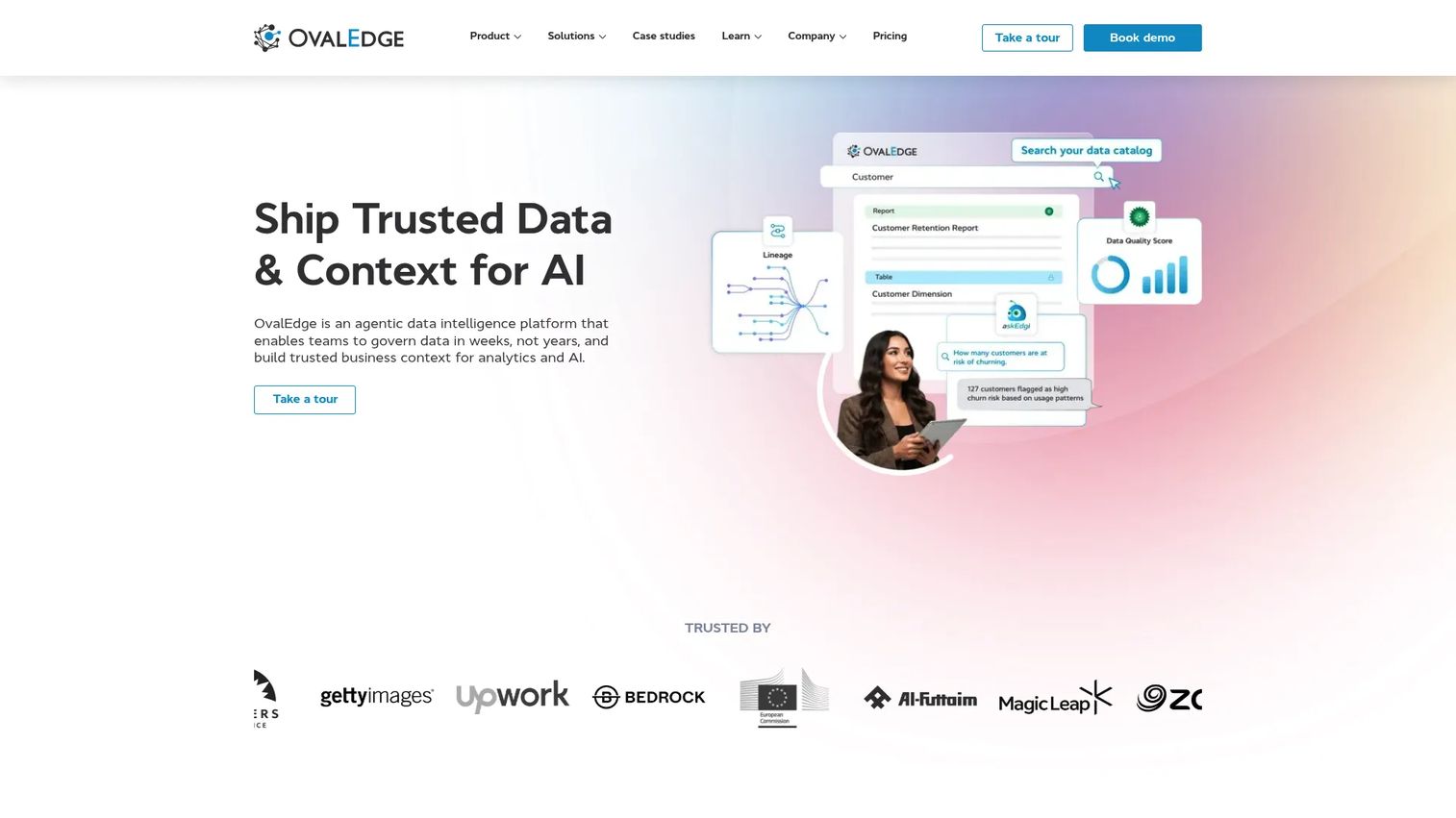
OvalEdge is an agentic data intelligence platform that combines data cataloging, governance, privacy, and data quality. Where most tools on this list start from privacy, OvalEdge starts from the data layer, then layers privacy and access controls on top of a governed catalog. That makes it a strong consideration for buyers who want privacy management plus broader data operations in a single platform rather than two separate tools that need stitching together.
Best for: Enterprises needing a governed data catalog with privacy, lineage, and data quality controls in one system.
Key strengths
- AI-driven data catalog and governance: Automate cataloging and governance workflows so privacy controls attach to accurate, current metadata.
- Auto lineage and impact analysis: Trace where data flows and what a change affects, which feeds defensible data mapping and ROPA.
- Privacy and access management with data quality: Apply access controls and quality checks alongside privacy policy enforcement.
Why choose OvalEdge: If your privacy gaps trace back to not knowing where data lives or how it moves, a catalog-first platform addresses the root cause. Data and product teams get lineage and quality tooling that also serves privacy, reducing the number of systems to maintain.
OvalEdge pricing: OvalEdge publishes three quote-based plans, Essential, Professional, and Enterprise, with deployment options spanning SaaS, on-premises, and private cloud. No public numeric price is shown, so pricing is custom per deployment. OvalEdge shows a 5.0/5 rating on G2 based on a single review, so treat that score cautiously.
4. RadarFirst
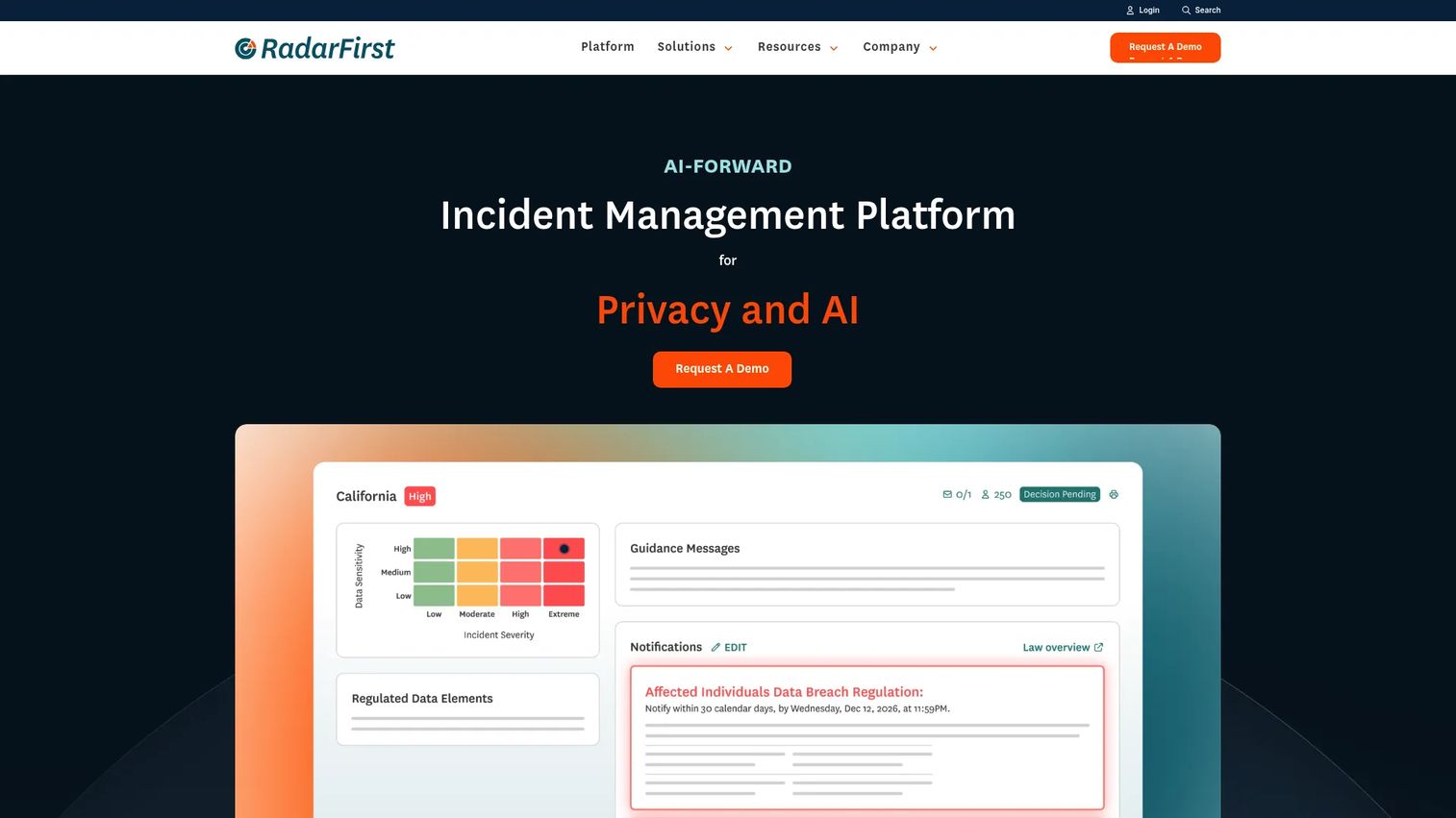
RadarFirst is an AI-forward regulatory risk management platform focused on privacy and AI incidents. Its specialty is the decision: when an incident happens, RadarFirst applies jurisdiction-specific legal logic to determine notification obligations and documents the reasoning in audit-ready form. That focus on defensible, repeatable decisions makes it a fit for programs where breach response and AI governance carry real regulatory weight.
Best for: Enterprises managing privacy incidents and AI governance workflows that need defensible, auditable decisions.
Key strengths
- Unified intake to documentation: Structured intake, assessment, regulatory interpretation, and documentation live in one system.
- Privacy incident management with legal logic: Apply jurisdiction-specific rules to incidents and produce audit-ready records.
- AI risk and incident management: Govern AI risk with rules-based decision support and traceable reasoning.
Why choose RadarFirst: When the hardest part of your program is making and defending notification decisions under pressure, RadarFirst's rules-based engine removes guesswork and creates a clean evidence trail. It pairs well with broader privacy suites that handle DSARs and consent.
RadarFirst pricing: RadarFirst does not publish a public pricing page; pricing appears to be demo-based. Engage the vendor for a quote scoped to your incident and AI governance needs. RadarFirst's G2 seller page shows a 5.0/5 rating based on a single review, so interpret that with caution.
5. OneTrust
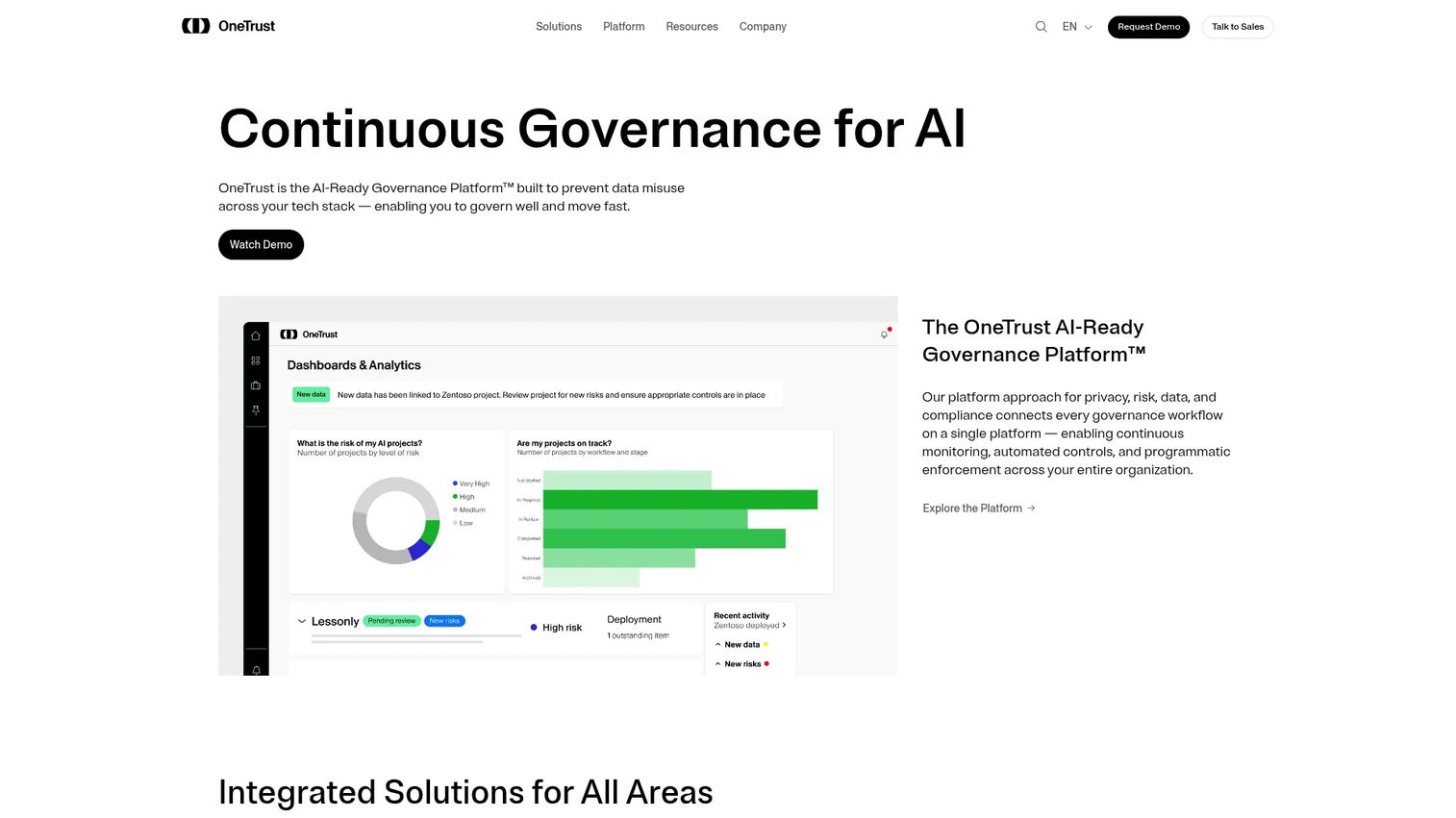
OneTrust is an AI-ready governance platform spanning privacy, consent, risk, and third-party management. It is the platform enterprise buyers most often shortlist when they want maximum coverage and deep functionality in one vendor. OneTrust handles consent and preference management across web, mobile, and OTT/CTV, privacy automation including DSRs and notices, and third-party risk management, making it a candidate for organizations consolidating multiple compliance functions.
Best for: Enterprises needing a single platform for privacy, consent, and governance workflows across many teams.
Key strengths
- Consent and preference management: Capture and honor consent across web, mobile, and OTT/CTV channels.
- Privacy automation: Run DSRs, notices, and risk workflows through automated, trackable processes.
- Third-party risk and compliance management: Assess and monitor vendor and processor risk alongside privacy.
Why choose OneTrust: OneTrust suits large, multi-team programs that want one vendor across privacy, consent, and risk rather than several point tools. Given the breadth, plan for a structured implementation and clear internal governance so the platform's depth maps to how your teams actually work.
OneTrust pricing: OneTrust does not display public numeric prices. Pricing is usage-based, tied to meters such as admin users, inventory size, visitors, data profiles, or data volume depending on the suite (AI Governance, CMP Suite, Privacy Automation Suite, Third-Party Risk Management). Expect a quote sized to your usage. OneTrust holds a 4.4/5 rating on G2.
6. Usercentrics
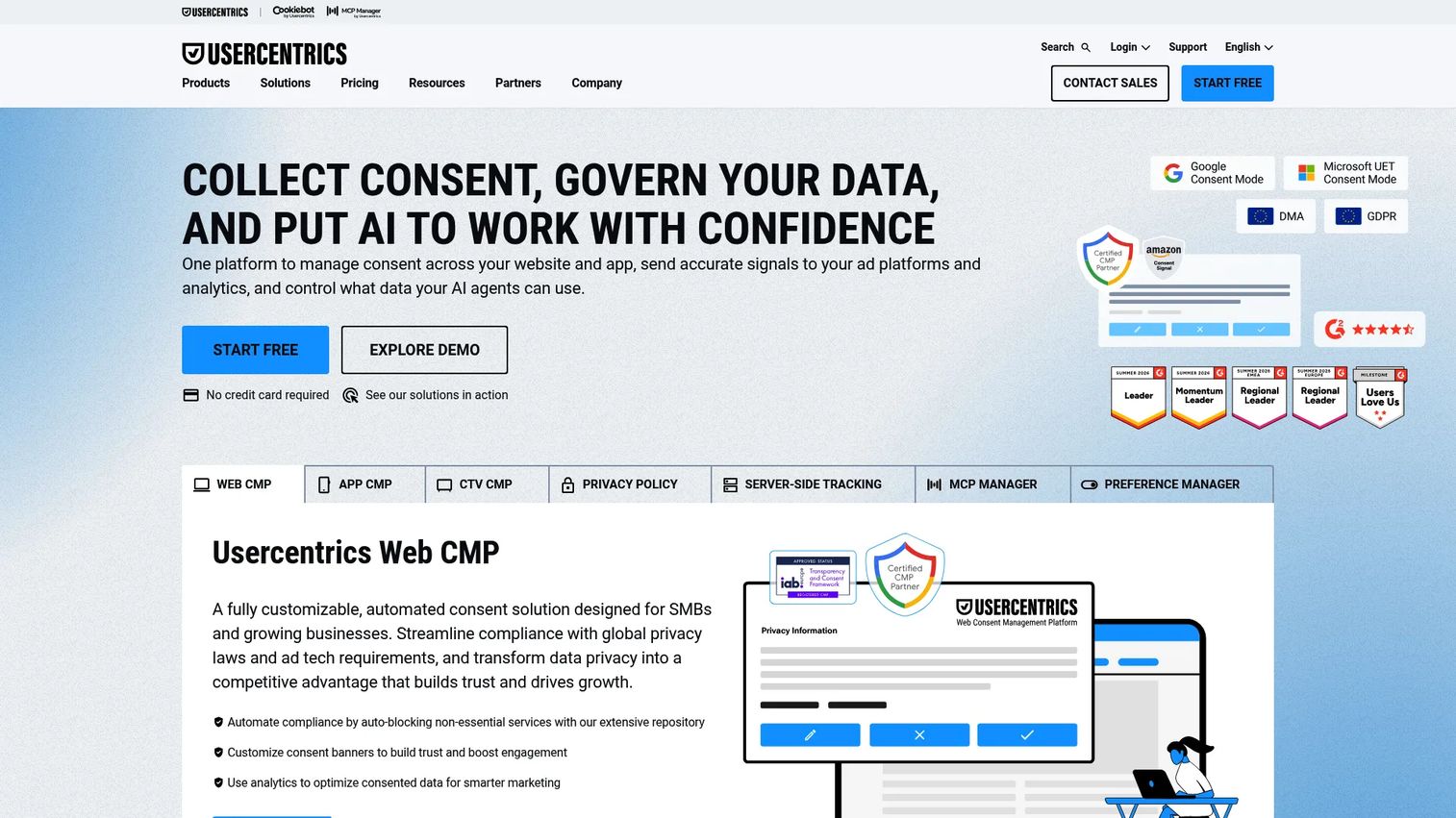
Usercentrics is a consent management platform for web, app, and CTV privacy compliance. It concentrates on consent and preference handling across digital properties, which makes it the focused choice for teams whose primary exposure is consent collection on websites and apps in regulated regions. Where full suites span the whole privacy program, Usercentrics goes deep on the consent layer with public, self-serve pricing that lowers the barrier to getting compliant fast.
Best for: Businesses needing consent management across web, app, or CTV, especially those wanting transparent self-serve pricing.
Key strengths
- Web CMP: Automate consent collection on websites with configurable banners and records.
- App CMP: Manage mobile consent natively for iOS and Android experiences.
- CTV CMP: Extend consent compliance to connected TV environments.
Why choose Usercentrics: If consent is your most acute risk, a dedicated CMP gives you depth and speed that a broad suite may not prioritize. The transparent pricing also helps smaller teams or product leaders validate the workflow before committing budget.
Usercentrics pricing: Usercentrics publishes pricing in EUR with a free tier. Plans run from a Free plan at €0/month, then Essential at €7/month, Plus at €15/month, Pro at €30/month, and Business at €50/month, all billed monthly, with a custom Corporate tier. A 14-day free trial is available. Usercentrics holds a 4.3/5 rating on G2.
7. Osano
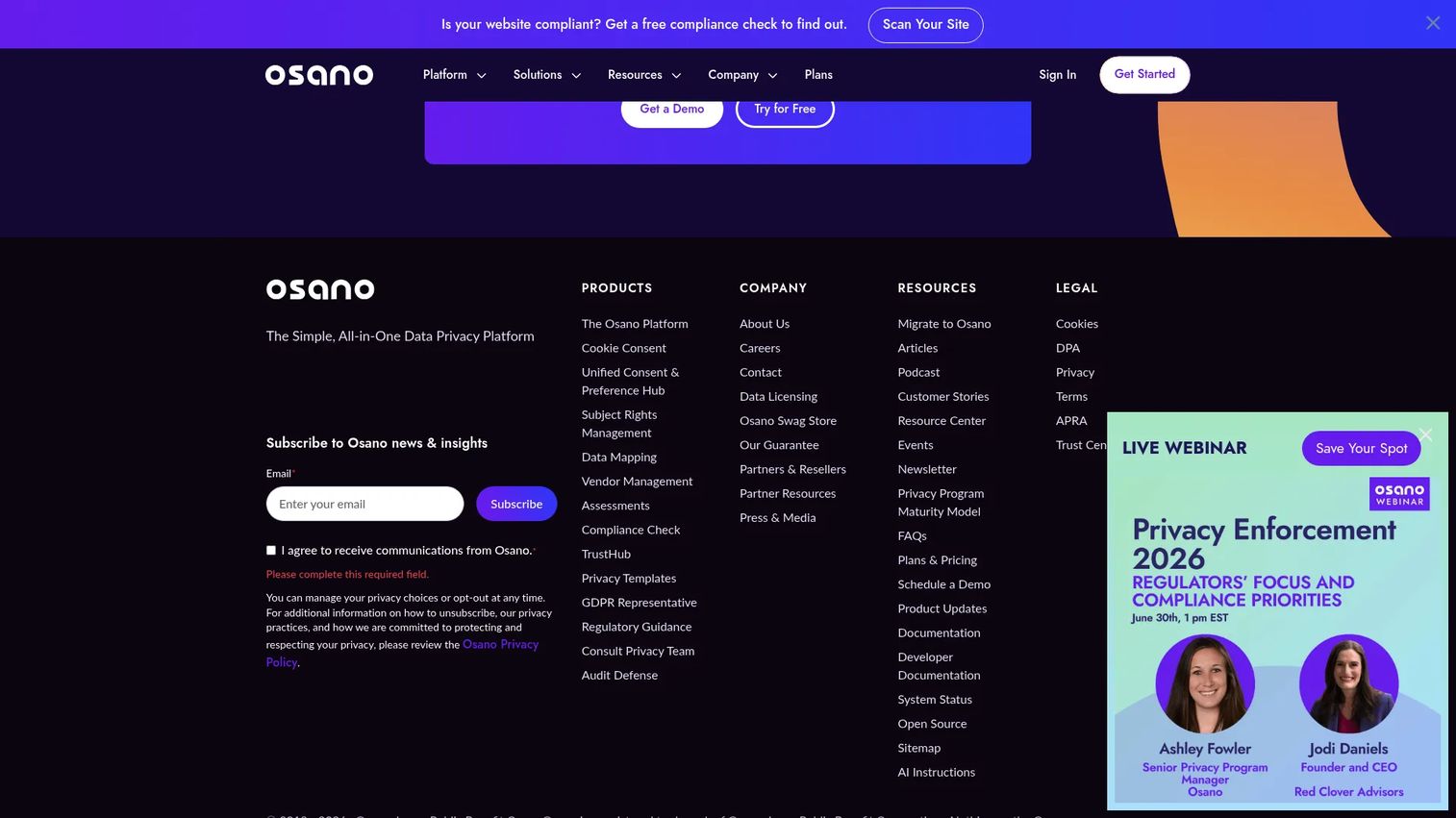
Osano is a data privacy platform covering cookie consent, DSARs, vendor risk, data mapping, and related compliance workflows. It positions itself as an all-in-one option that leaner teams can deploy without a long implementation runway. For buyers who want clear operational workflows and quicker time to value, Osano bundles the core privacy functions, consent, subject rights, and mapping, into one platform.
Best for: Teams needing an all-in-one privacy compliance platform with a fast path to deployment.
Key strengths
- Cookie consent: Collect and manage consent across web properties out of the box.
- Subject rights management: Handle DSAR intake, routing, and fulfillment in a single workflow.
- Data mapping: Build and maintain data inventories that feed ROPA and audit evidence.
Why choose Osano: Osano appeals to teams that want broad coverage without enterprise-scale complexity. It is a strong fit for mid-sized programs and product leaders who need privacy operations running quickly, with room to mature as the data footprint grows.
Osano pricing: Osano's pricing page invites buyers to book a demo or start a free 30-day trial; no public paid price is shown. The free trial lowers the risk of evaluating the workflows firsthand before committing. Osano holds a 4.5/5 rating on G2.
Considerations before you buy
The right platform depends on your privacy operating model more than any feature checklist. Run candidates through these criteria before signing.
Data map coverage and discovery
A privacy program is only as defensible as its data map. Evaluate how the platform discovers data, whether it scans your actual systems or relies on manual entry, and how it keeps the map current as systems change. Stale inventories undermine ROPA and slow every DSR.
DSR and assessment workflow depth
Look past "supports DSARs" to how the platform handles intake, identity verification, multi-system search, fulfillment, and SLA tracking across jurisdictions. The same applies to DPIA, PIA, and TIA workflows. Depth here is what reduces manual coordination across legal, security, and product.
Reporting and audit defensibility
Ask what evidence the platform produces and how immutable it is. Strong audit trails, exportable reports, and clear decision documentation are what make an audit or regulator inquiry manageable rather than a fire drill.
Integrations and scalability
For product teams especially, the platform has to fit the existing stack: CRM, ticketing, identity, cloud, and analytics. Check connector depth, API access, and how the system scales across regions, brands, and data volume without becoming a maintenance burden.
AI governance readiness
With AI features shipping into more products, evaluate whether the platform tracks AI systems, supports model and data risk assessments, and documents AI-related decisions. This is increasingly a buyer criterion, not a nice-to-have.
Conclusion
The right data privacy management software depends on your workflow complexity, compliance scope, integration needs, and team size, not on which vendor has the longest feature list. LogicGate Risk Cloud fits when privacy sits inside a broader GRC program. TrustArc and OneTrust suit teams that want broad privacy operations under one roof. OvalEdge is the pick when privacy gaps trace back to the data layer. RadarFirst excels at defensible incident and AI governance decisions. Usercentrics goes deep on consent across web, app, and CTV. Osano gives leaner teams an all-in-one platform with a fast path to value.
Start with the platform that matches your privacy operating model and regulatory burden, then validate it against the considerations above with a trial or reference call. If your stack also touches neighboring categories, our guides to the best contract management software tools and the best AI security posture management tools cover adjacent decisions most privacy programs face.
Start your journey with Guideflow today!
FAQs
It centralizes the workflows a privacy program runs: data discovery and mapping, data subject request handling, consent and preference management, risk assessments, and audit reporting. Instead of a spreadsheet-and-inbox model, a privacy management software platform automates these tasks and keeps a single system of record. That reduces manual coordination across legal, security, data, and product teams.
Consent management software focuses on one slice: capturing, storing, and honoring user consent across web, app, and connected channels. A full privacy management platform spans the entire program, including DSAR automation, data mapping, ROPA, DPIA and TIA assessments, and audit trails. Many teams start with consent management, then adopt a broader platform as obligations grow, or pick a suite that includes a CMP.
For GDPR, prioritize data mapping and ROPA, lawful-basis tracking, DSR workflow automation with deadline tracking, and DPIA workflows. For CCPA/CPRA, prioritize consumer rights request handling, opt-out and consent signals, and clear audit trails. Both benefit from defensible evidence and reporting, since the burden is proving compliance, not just claiming it.
Often, yes, even when they do not own it. Privacy requirements show up in onboarding flows, consent banners, data retention rules, and the instrumentation product teams ship. A platform that integrates with the product and analytics stack reduces ongoing overhead and prevents privacy work from becoming a recurring manual interrupt to the roadmap.
DSAR automation manages the full lifecycle: intake, identity verification, routing to the right systems, fulfillment, and SLA tracking against statutory deadlines. Audit trails capture each step as immutable evidence, so you can show a regulator exactly what happened and when. Together, these turn a high-volume, error-prone manual process into a trackable workflow.
Evaluate data map coverage and how discovery stays current, DSR and assessment workflow depth across jurisdictions, reporting and audit defensibility, integration depth with your existing stack, and scalability across regions, brands, and data volume. Implementation complexity and internal governance also matter, since the broadest platforms reward clear ownership and a structured rollout.
AI governance is becoming a core buyer criterion. Platforms increasingly track AI systems, support model and data risk assessments, and document AI-related decisions with audit trails. If your product ships AI features, look for a privacy management platform that treats AI risk as part of the same governance and evidence model rather than a separate bolt-on.
It varies with scope. A focused consent deployment or an all-in-one platform for a leaner team can go live quickly, sometimes within a free trial window. A broad enterprise suite spanning privacy, consent, risk, and third-party management typically needs a structured rollout with data discovery, integration work, and internal governance, measured in weeks to months depending on data footprint and team size.