Spreadsheets break when you're managing thousands of SKUs, customer-specific agreements, and regional price variations. Manual pricing processes create inconsistency, slow down deals, and leak margin in ways that are hard to track.
Pricing software replaces that chaos with systems that analyze market data, enforce pricing rules, and push approved prices to your sales channels automatically. This guide covers the four types of pricing software, 12 tools worth evaluating, and how to choose the right one for your business.
What's inside
This guide covers what pricing software does, the four main types, and 12 tools worth evaluating in 2026. We selected tools based on G2 ratings, integration depth with CRM and ERP systems, and fit for specific use cases like B2B deal pricing, retail dynamic pricing, or competitive intelligence. You'll find a comparison table, buying criteria, and practical guidance on testing tools before you commit.
TL;DR
- Pricing software helps businesses analyze, set, manage, and optimize prices using data and automation instead of spreadsheets
- Four main types exist: analytics, management, optimization, and execution software
- B2B companies, retailers, and SaaS businesses benefit most from dedicated pricing tools
- Guideflow lets you create interactive demos of pricing software so stakeholders can evaluate tools before signing contracts
What is pricing software
Pricing software helps businesses set and adjust prices using data, AI, and automation rather than gut instinct or static spreadsheets. Common pricing models include per-user, usage-based, tiered, and freemium approaches. The core function is replacing manual pricing processes with systems that analyze market conditions, enforce pricing rules, and push approved prices to sales channels automatically.
Key capabilities typically include
- Pricing analytics: Collects historical data and market signals to surface insights on margin leakage and price elasticity
- Price management: Centralizes price lists, discount rules, and approval workflows across regions and teams
- Price optimization: Uses algorithms or machine learning to recommend prices based on demand, competition, and willingness-to-pay
- Price execution: Deploys approved prices to CPQ, ERP, ecommerce, and CRM systems
Four types of pricing software
Pricing analytics software
Pricing analytics tools collect and analyze pricing data to help you understand what's working and what's leaking margin. Common use cases include benchmarking against competitors, measuring price elasticity, and identifying where discounts erode profitability.
Price management software
Price management solutions act as a centralized system for maintaining price lists, discount rules, and approval workflows. They prevent the inconsistency that happens when different sales reps or regions quote different prices for the same product.
Price optimization software
Price optimization tools use AI and algorithms to recommend optimal prices based on demand signals, competitive positioning, and customer willingness-to-pay. Dynamic pricing for ecommerce and deal-specific pricing for B2B sales are the most common applications.
Price execution software
Price execution software handles the "last mile" of pricing by pushing approved prices into your CPQ, ERP, ecommerce platform, and CRM. Speed and accuracy matter here because delays or errors in price deployment directly impact revenue.
Benefits of pricing software
- Pricing consistency: Eliminates manual errors and prevents rogue discounting across sales teams
- Faster deal cycles: Sales teams access approved prices instantly without waiting for approvals
- Margin protection: Guardrails prevent unnecessary discounts that erode profitability - McKinsey found digital pricing transformations can generate 2 to 7 percentage points of margin improvement
- Data-driven decisions: Replaces gut-feel pricing with market intelligence and competitive data - 85% of B2B executives believe their pricing decisions could improve
- Scalability: Manages thousands of SKUs or customer-specific prices without spreadsheet chaos
Comparison table
| No. | Product name | Intent | Key differentiator | Pricing | G2 rating |
|---|---|---|---|---|---|
| 1 | Zilliant | B2B manufacturers | AI-driven revenue intelligence | Custom | 4.4/5 |
| 2 | Vendavo | Enterprise B2B | Margin optimization and deal guidance | Custom | 4.3/5 |
| 3 | PROS Pricing | Cross-industry | Dynamic pricing and revenue management | Custom | 4.2/5 |
| 4 | Pricefx | Mid-market B2B | Fast implementation, cloud-native | Custom | 4.6/5 |
| 5 | Competera | Retail pricing | Competitive intelligence for ecommerce | Custom | 4.5/5 |
| 6 | Prisync | Ecommerce | Competitor price tracking | $99/mo | 4.7/5 |
| 7 | Intelligence Node | Retail analytics | Assortment optimization | Custom | 4.4/5 |
| 8 | Perfect Price | Hospitality and events | AI dynamic pricing | Custom | 4.3/5 |
| 9 | Omnia Retail | Retail repricing | Automated price elasticity modeling | Custom | 4.4/5 |
| 10 | Wiser Solutions | Retail intelligence | MAP compliance monitoring | Custom | 4.3/5 |
| 11 | Price2Spy | Price monitoring | Competitor tracking for brands | $23.95/mo | 4.6/5 |
| 12 | Quicklizard | Ecommerce | Real-time price adjustments | Custom | 4.2/5 |
12 best pricing software solutions
1. Zilliant
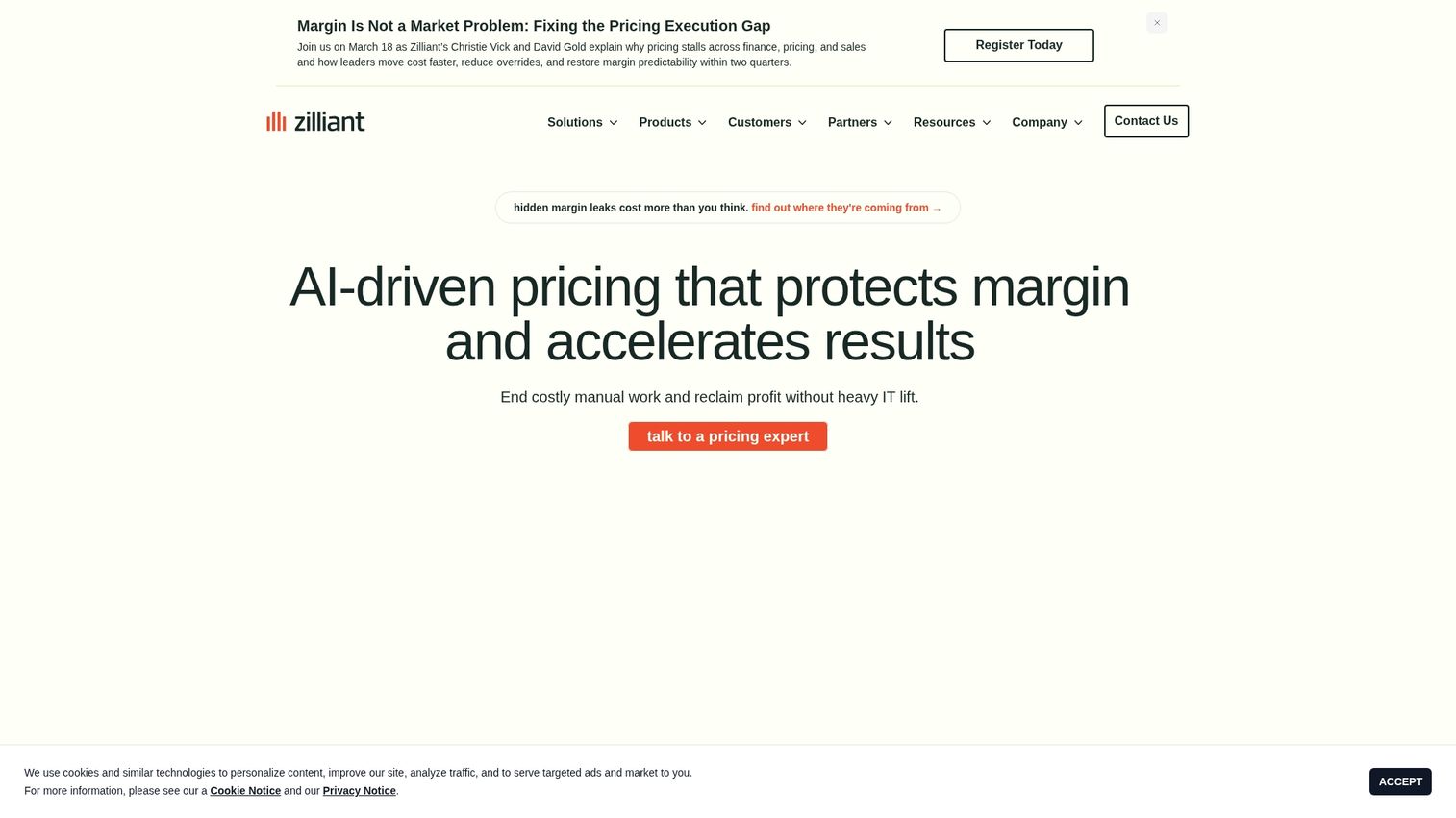
Zilliant provides B2B price optimization and management software built around AI-driven pricing recommendations and revenue intelligence. The platform focuses on manufacturers and distributors with complex pricing scenarios involving thousands of SKUs and customer-specific agreements.
Best for: B2B manufacturers and distributors needing AI-powered pricing recommendations at scale.
Key strengths
- Revenue intelligence identifies pricing opportunities across customer segments
- Deal guidance helps sales teams price complex quotes accurately
- Price management centralizes rules and approvals for enterprise pricing
- ERP and CRM integrations with SAP, Salesforce, and major platforms
Why pick Zilliant
Works well when you have complex B2B pricing with many variables like customer tiers, volume discounts, and regional differences.
Zilliant pricing
Custom pricing based on implementation scope and user count.
2. Vendavo
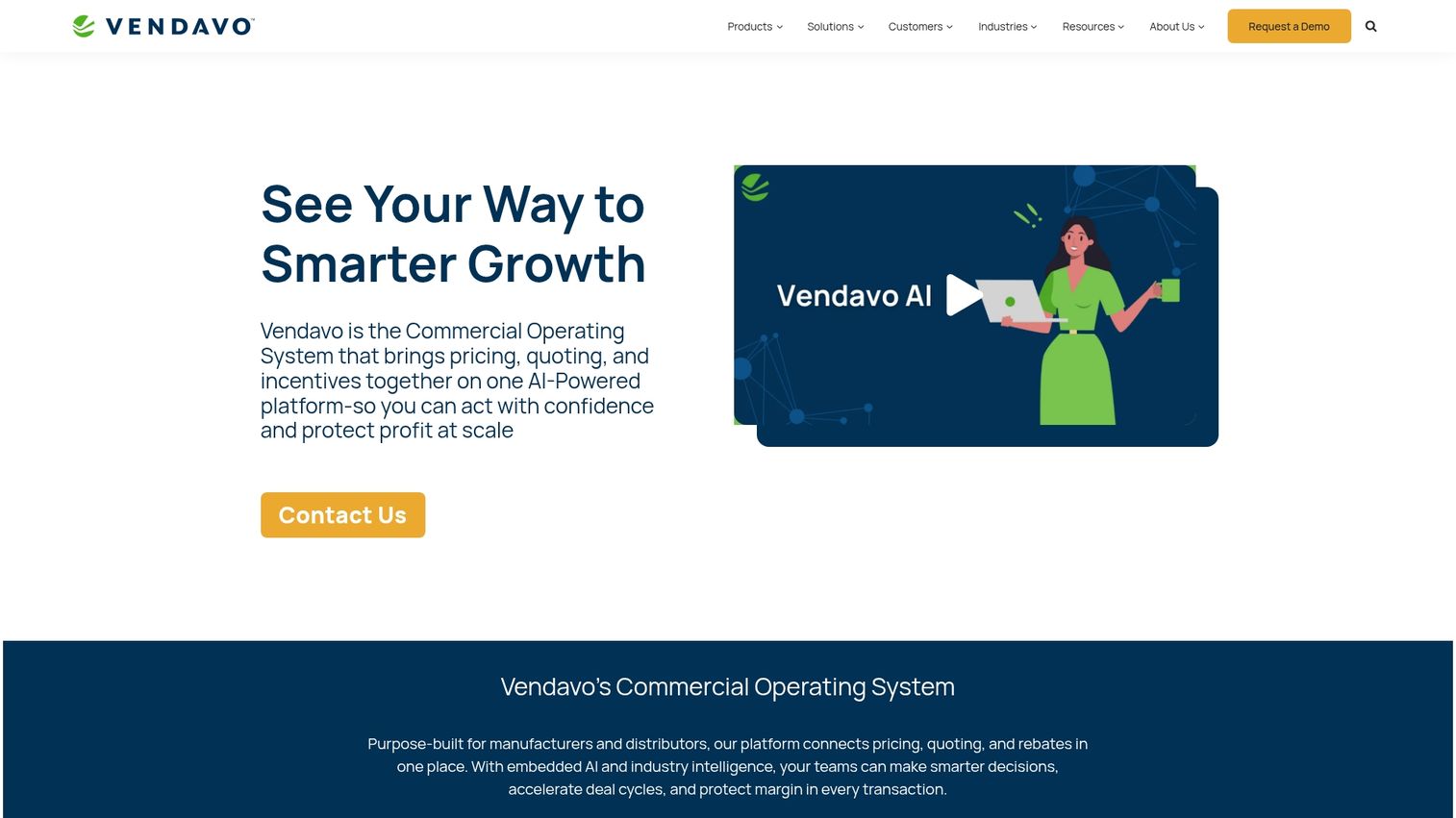
Vendavo offers enterprise price management software designed for complex B2B pricing scenarios. The platform emphasizes margin optimization and deal guidance, helping companies identify where they're leaving money on the table.
Best for: Large enterprises with complex pricing structures needing margin optimization.
Key strengths
- Margin analytics surfaces profit leakage across products and customers
- Deal guidance provides real-time pricing recommendations during negotiations
- Price management handles global price lists and approval workflows
- CPQ integration connects pricing decisions to quote generation
Why pick Vendavo
Choose Vendavo when margin optimization is the primary goal and you have the implementation resources for an enterprise deployment.
Vendavo pricing
Custom enterprise pricing with implementation services.
3. PROS Pricing
PROS delivers AI-powered pricing optimization across multiple industries including manufacturing, distribution, and travel. The platform combines dynamic pricing capabilities with revenue management features.
Best for: Companies needing cross-industry pricing optimization with strong AI capabilities.
Key strengths
- Dynamic pricing adjusts prices based on real-time demand and competitive signals
- Revenue management optimizes pricing across channels and customer segments
- AI recommendations learn from historical data to improve pricing accuracy
- Industry-specific solutions for airlines, hospitality, and B2B
Why pick PROS
Works well for companies operating across multiple industries or needing sophisticated AI-driven pricing that adapts to market conditions automatically.
PROS pricing
Custom pricing based on modules and implementation scope.
4. Pricefx
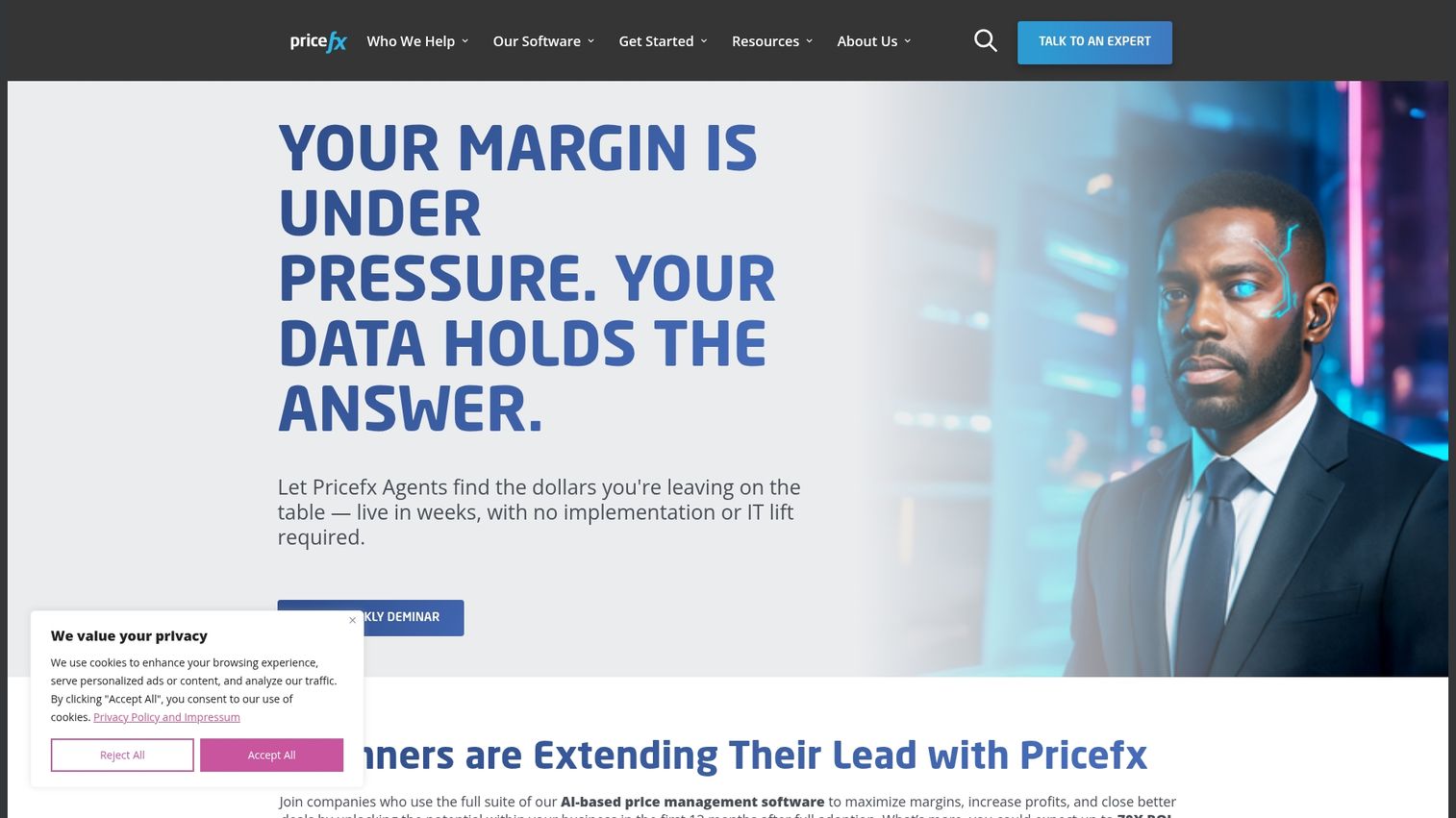
Pricefx is a cloud-native price optimization and management platform known for faster implementation times compared to legacy enterprise solutions. The platform targets mid-market and enterprise B2B companies.
Best for: Mid-market B2B companies wanting enterprise pricing capabilities without 12-month implementations.
Key strengths
- Fast deployment with cloud-native architecture
- Price optimization using AI and machine learning
- Rebate management handles complex incentive programs
- Flexible configuration adapts to different pricing models
Why pick Pricefx
Choose Pricefx when you want enterprise-grade pricing software but can't wait 6-12 months for implementation.
Pricefx pricing
Custom pricing with modular options.
5. Competera
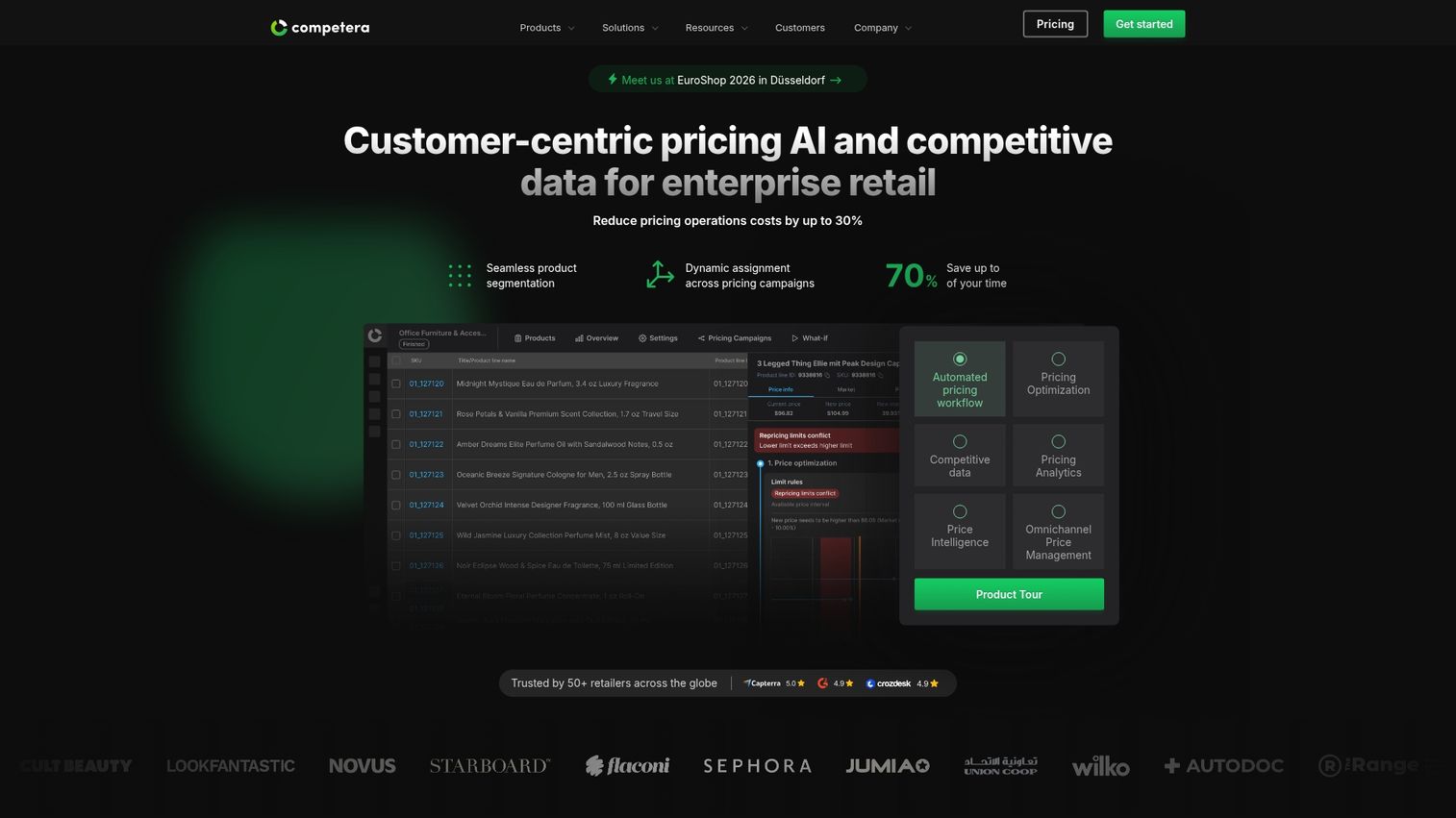
Competera provides retail pricing optimization software focused on competitive intelligence and dynamic pricing for ecommerce. The platform uses AI to recommend prices based on competitor movements and demand patterns.
Best for: Retailers and ecommerce companies needing competitive pricing intelligence.
Key strengths
- Competitive monitoring tracks competitor prices across channels
- Dynamic pricing adjusts prices based on demand and competition
- Price elasticity modeling predicts how price changes affect sales
- Assortment optimization identifies pricing opportunities by category
Why pick Competera
Works well for retailers competing on price who need real-time visibility into competitor movements and automated repricing capabilities.
Competera pricing
Custom pricing based on SKU count and features.
6. Prisync
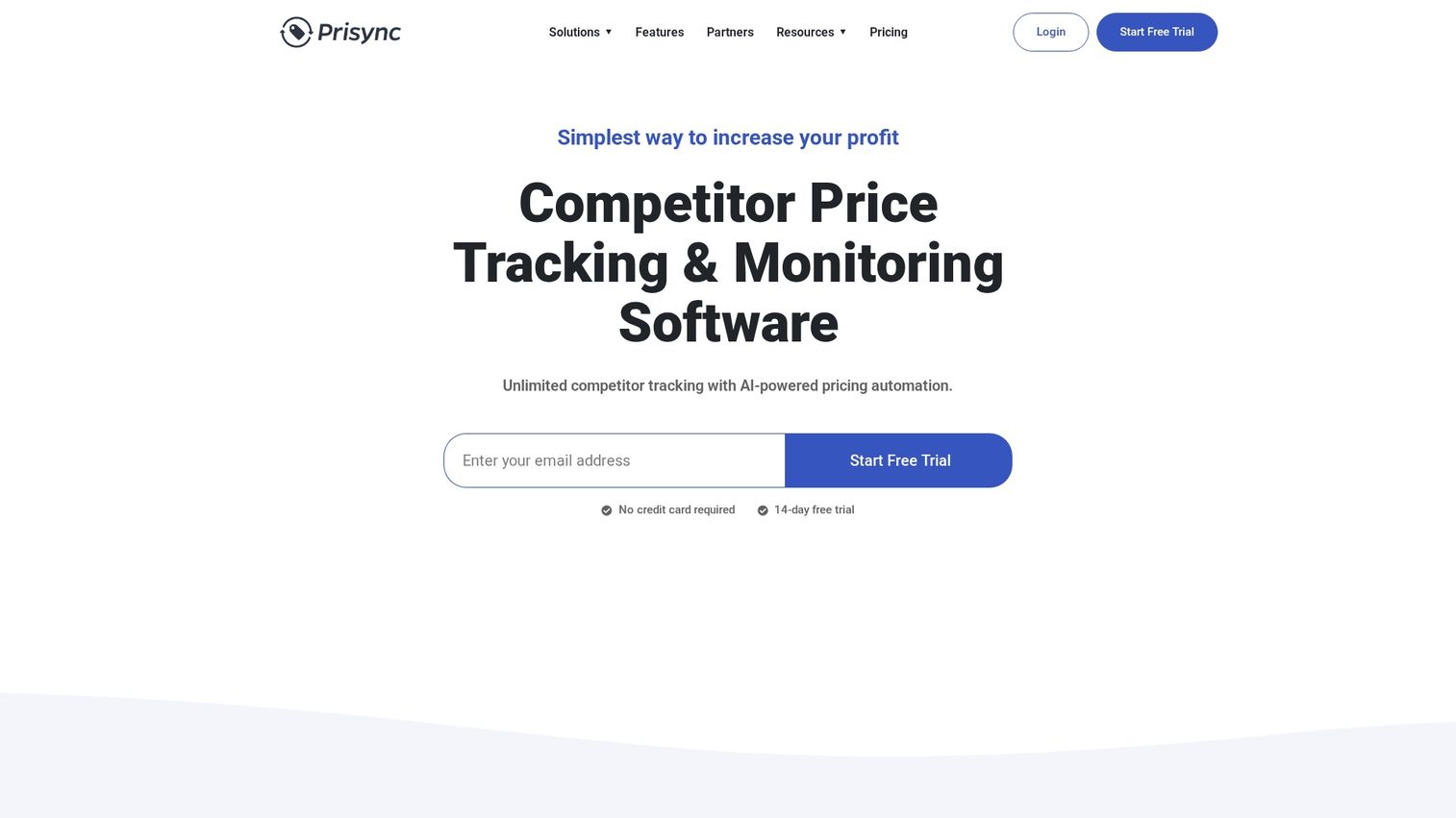
Prisync offers competitor price tracking and dynamic pricing software designed for ecommerce and retail businesses. The platform focuses on monitoring competitor prices and automating repricing rules.
Best for: Ecommerce businesses needing affordable competitor price monitoring.
Key strengths
- Competitor tracking monitors prices across hundreds of competitors
- Dynamic repricing automates price adjustments based on rules
- Price history shows competitor pricing trends over time
- Easy setup with minimal technical requirements
Why pick Prisync
Choose Prisync when competitor price monitoring is the primary need and you want a straightforward tool without enterprise complexity.
Prisync pricing
Plans start at $99/month for up to 100 products, scaling with product count.
7. Intelligence Node
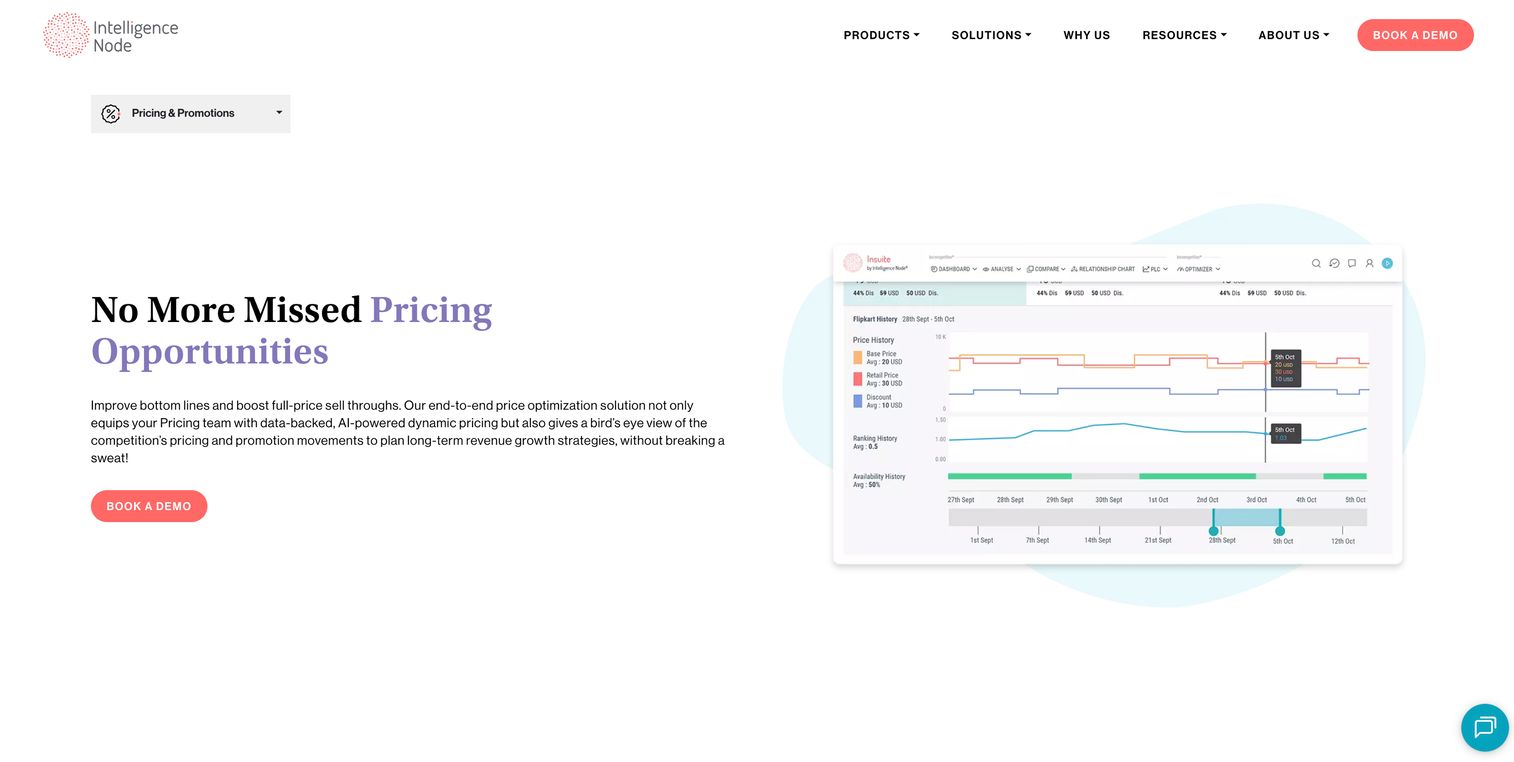
Intelligence Node provides retail pricing analytics software with a focus on competitive intelligence and assortment optimization. The platform helps retailers understand market positioning and identify pricing opportunities.
Best for: Retailers needing deep competitive analytics and assortment insights.
Key strengths
- Competitive intelligence across pricing, assortment, and promotions
- Assortment optimization identifies gaps and opportunities
- MAP monitoring tracks minimum advertised price compliance
- Market analytics provides category-level insights
Why pick Intelligence Node
Works well for retailers who need comprehensive competitive intelligence beyond just pricing, including assortment and promotional analysis.
Intelligence Node pricing
Custom pricing based on data scope and features.
8. Perfect Price
Perfect Price delivers AI-driven dynamic pricing optimization for hospitality, travel, and events industries. The platform focuses on revenue management through automated price adjustments.
Best for: Hospitality, travel, and events companies needing dynamic pricing.
Key strengths
- Revenue management optimizes pricing for perishable inventory
- Dynamic pricing adjusts based on demand patterns
- Forecasting predicts demand to inform pricing decisions
- Industry focus on hospitality and events use cases
Why pick Perfect Price
Choose Perfect Price when you're in hospitality, travel, or events and need pricing software built specifically for perishable inventory.
Perfect Price pricing
Custom pricing based on implementation scope.
9. Omnia Retail
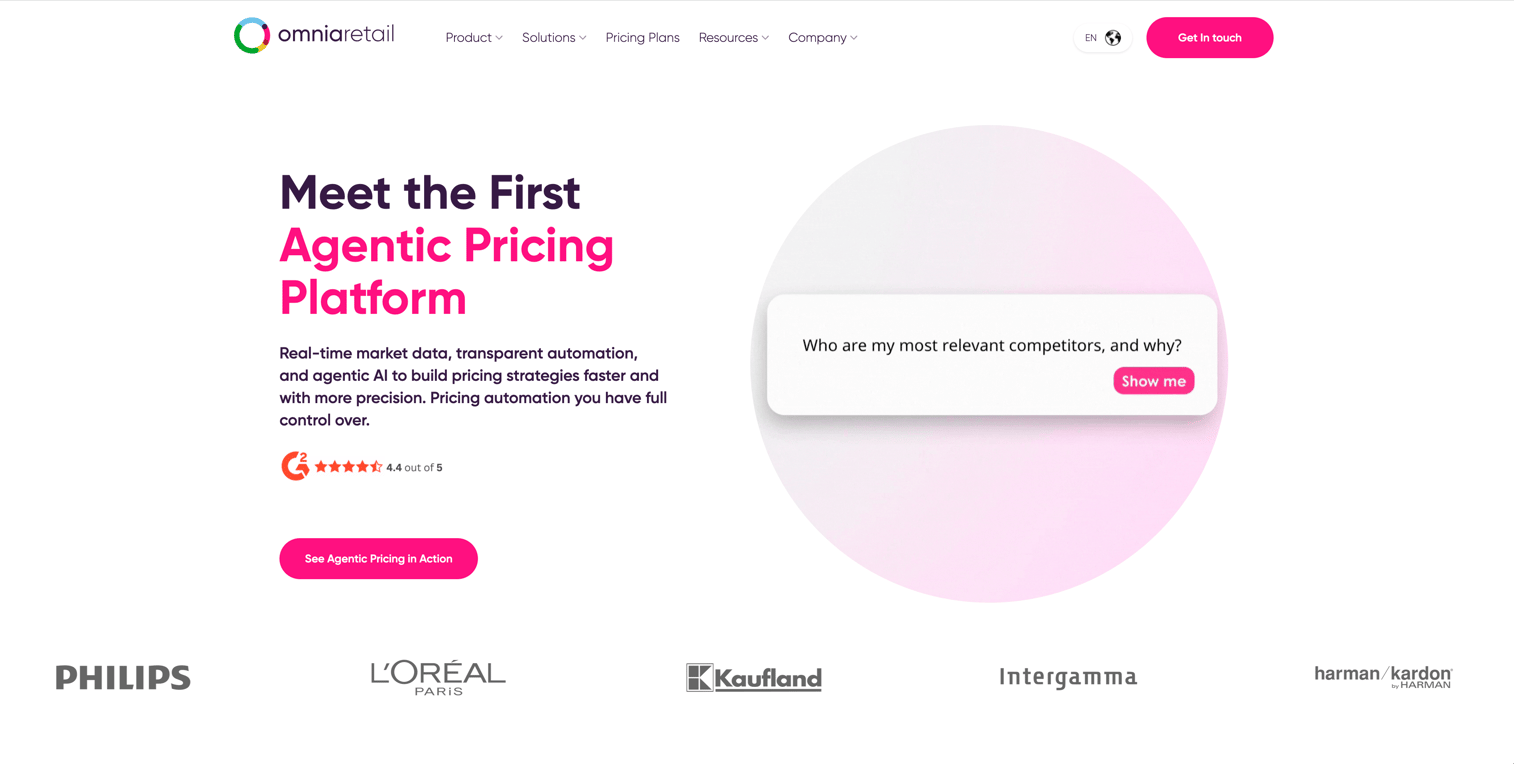
Omnia Retail provides dynamic pricing management software for retailers with automated repricing and price elasticity modeling.
Best for: Retailers wanting automated repricing with elasticity modeling.
Key strengths
- Automated repricing based on configurable rules
- Price elasticity modeling predicts sales impact of price changes
- Competitive monitoring tracks market prices
- Multi-channel support manages pricing across platforms
Why pick Omnia Retail
Works well for retailers who want to automate repricing decisions based on competitive data and demand elasticity.
Omnia Retail pricing
Custom pricing based on SKU count and features.
10. Wiser Solutions
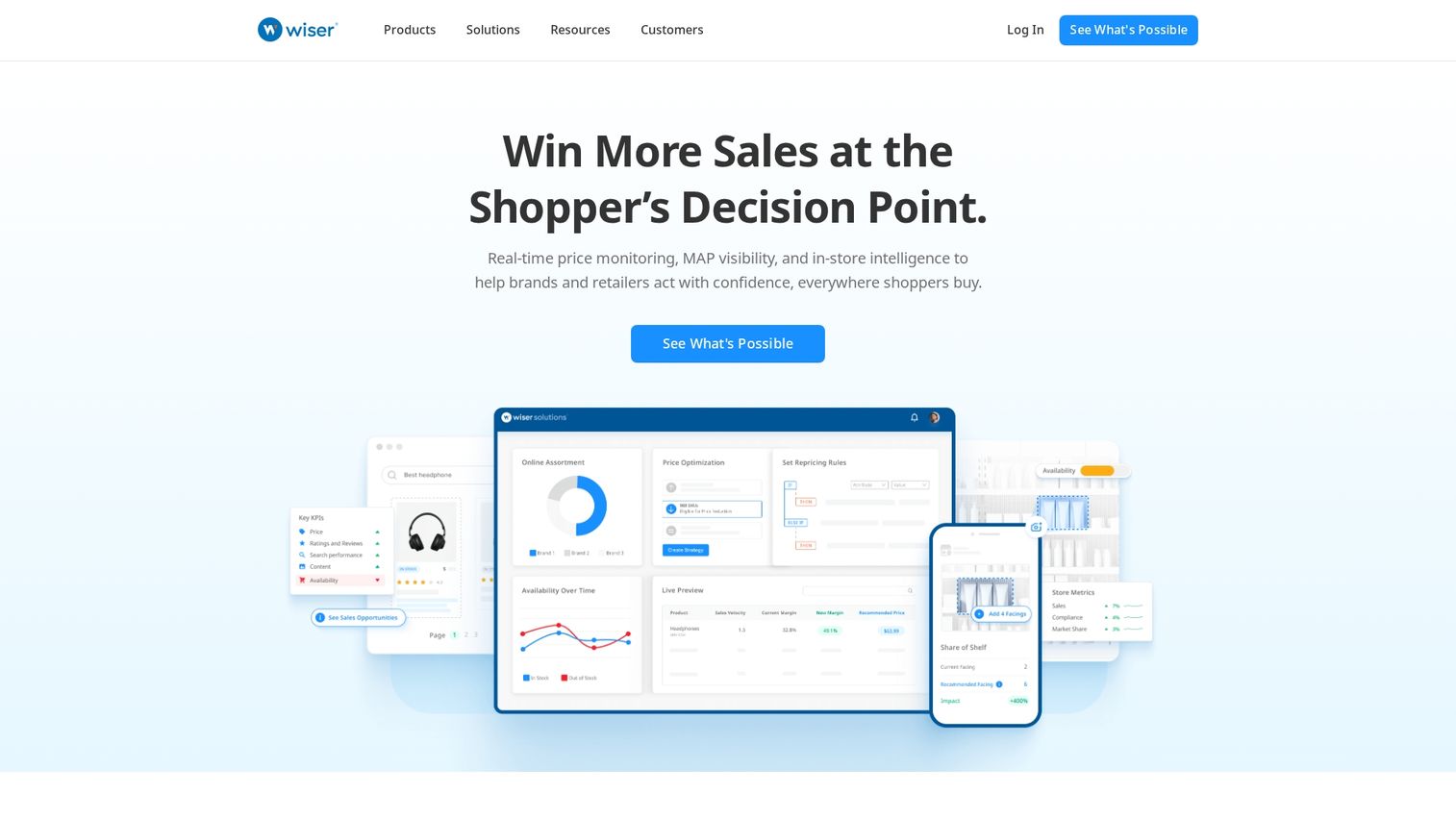
Wiser Solutions offers retail price intelligence and optimization with strong capabilities in competitive monitoring and MAP compliance.
Best for: Brands and retailers needing MAP compliance monitoring alongside pricing intelligence.
Key strengths
- MAP monitoring tracks minimum advertised price violations
- Competitive intelligence monitors pricing across channels
- Retail execution provides in-store pricing visibility
- Brand protection identifies unauthorized sellers
Why pick Wiser Solutions
Choose Wiser when MAP compliance and brand protection are priorities alongside competitive pricing intelligence.
Wiser Solutions pricing
Custom pricing based on monitoring scope.
11. Price2Spy
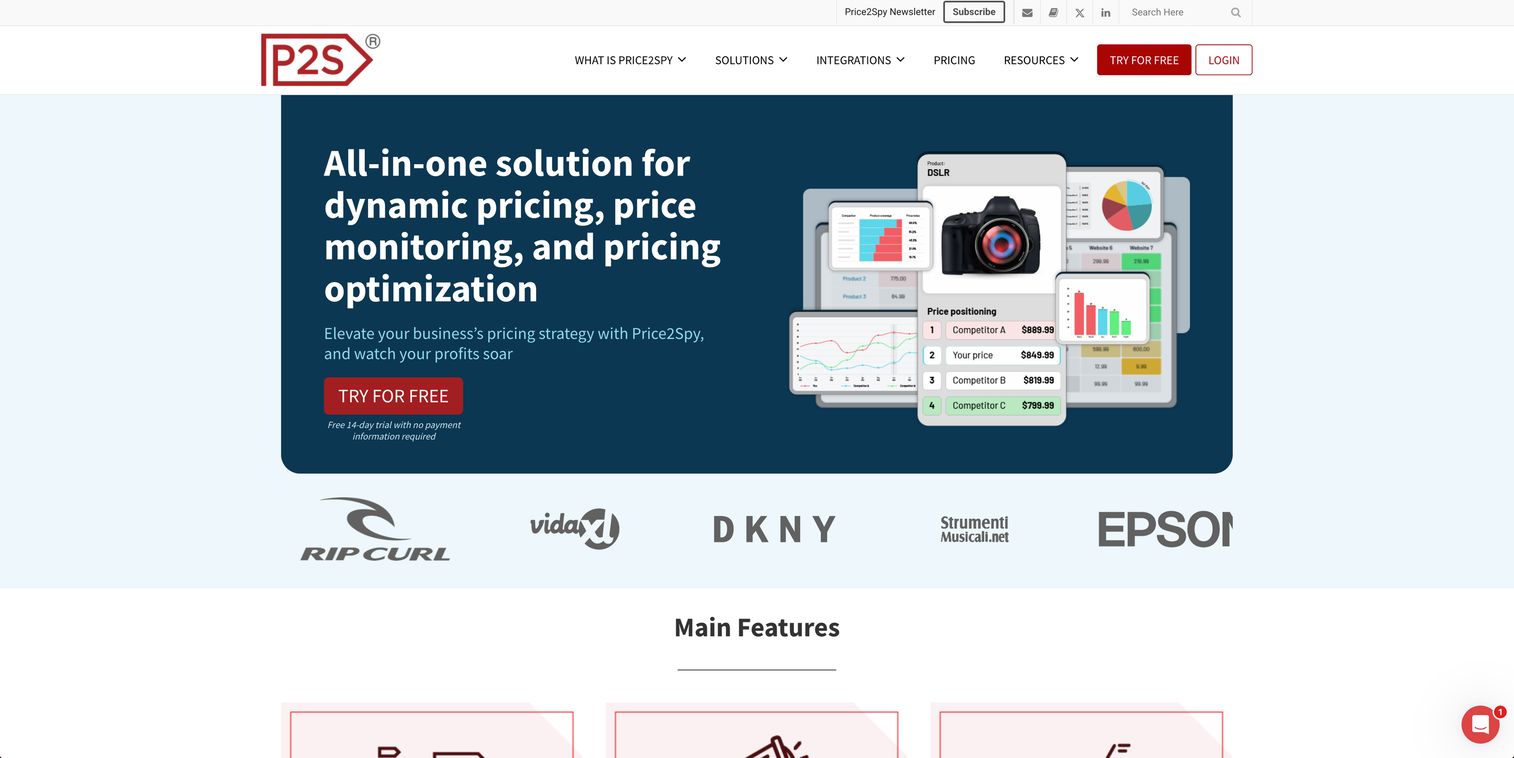
Price2Spy provides price monitoring and analytics software for brands and retailers tracking competitor prices.
Best for: Brands and retailers needing affordable competitor price monitoring.
Key strengths
- Price monitoring tracks competitors across websites and marketplaces
- Price change alerts notify you of competitor movements
- Historical data shows pricing trends over time n- Reporting provides insights on competitive positioning
Why pick Price2Spy
Works well when you need reliable competitor price data without the complexity of full pricing optimization platforms.
Price2Spy pricing
Plans start at $23.95/month for basic monitoring, scaling with URL count.
12. Quicklizard
Quicklizard delivers a dynamic pricing engine for retail and ecommerce with real-time price adjustments.
Best for: Ecommerce companies needing real-time dynamic pricing automation.
Key strengths
- Real-time repricing adjusts prices automatically based on market conditions
- AI optimization learns from sales data to improve pricing
- Inventory-aware pricing factors stock levels into decisions
- Multi-channel support manages pricing across platforms
Why pick Quicklizard
Choose Quicklizard when you need automated, real-time price adjustments that factor in inventory levels and competitive positioning.
Quicklizard pricing
Custom pricing based on SKU count and transaction volume.
How to choose the right pricing software
Match software type to your pricing model
B2B companies with complex negotiations typically need optimization plus management capabilities. Retailers competing on price need dynamic pricing plus competitive intelligence. Start by identifying which of the four software types aligns with your primary pricing challenge.
Evaluate integration with your CRM and ERP
Pricing software only works if it connects to your existing systems. Look for pre-built connectors to Salesforce, SAP, Oracle, or whatever platforms you use. Custom API work adds months to implementation and ongoing maintenance burden.
Assess AI and machine learning capabilities
Not all "AI-powered" pricing tools are equal. Some use basic rules engines while others employ sophisticated machine learning that has enhanced margins by 2 to 6 percent of sales. Ask vendors to explain specifically how their AI works and what data it requires.
Calculate total cost of ownership
License fees are just the starting point. Factor in implementation services, training, ongoing support, and the internal resources required to maintain the system. Enterprise pricing software often requires 3-6 month deployments.
Test the product before you commit
Pricing software purchases often involve multiple stakeholders with different priorities. Creating interactive demos lets your buying committee explore tools hands-on without scheduling calls or waiting for sandbox access.
What to look for in pricing management software
- Centralized price list management: Single source of truth for all prices across products and regions
- Approval workflows: Discount guardrails and escalation rules that prevent margin erosion
- Multi-currency and regional pricing: Support for global operations with local pricing requirements
- Audit trails: Track who changed what and when for compliance and analysis
- Role-based access: Control who can view and edit prices based on job function
- Real-time sync: Push updates to sales channels instantly without manual intervention
How to evaluate pricing software with interactive demos
Most pricing software vendors require scheduled calls and lengthy POC processes before you can see the actual product. This creates friction when you have multiple stakeholders who need to evaluate the tool.
Interactive demos let your buying committee explore pricing software interfaces on their own time. Finance can focus on reporting capabilities while sales ops examines deal guidance features. You can personalize demos for each stakeholder group and track which features get the most engagement.
Start optimizing your pricing strategy
Pricing software eliminates the spreadsheet chaos that leads to inconsistent quotes, margin leakage, and slow deal cycles. The right tool depends on whether you're solving for B2B deal pricing, retail competitive positioning, or something else entirely.
Start by identifying your primary pricing challenge, then match it to the appropriate software type. Test tools with your actual stakeholders before committing to lengthy implementations.
Start your journey with Guideflow today!
FAQs about pricing software
A pricing engine is software that calculates and delivers prices based on predefined rules, customer segments, or real-time market data. It sits between your price management system and sales channels to ensure consistent, accurate pricing at the point of transaction.
Pricing software focuses on setting, optimizing, and managing prices across your business, while CPQ (configure, price, quote) software helps sales teams build accurate quotes for complex products. Many companies use both together, with pricing software feeding optimized prices into CPQ.
Small businesses typically benefit from lighter-weight tools like Prisync or Price2Spy that focus on competitive monitoring and basic dynamic pricing without requiring enterprise implementation resources.
Implementation ranges from a few weeks for SaaS-based competitive intelligence tools to six months or more for enterprise B2B price optimization platforms that require deep ERP and CRM integration.
At minimum, B2B pricing tools integrate with Salesforce and major ERP systems like SAP or Oracle. Look for pre-built connectors rather than custom API work to reduce implementation time and maintenance burden.
Many modern pricing platforms support subscription and consumption-based models, but capabilities vary. If you sell SaaS or metered services, confirm the software can manage recurring billing rules, usage thresholds, and mid-cycle price changes.