The RPM program looked viable on the spreadsheet. Then the first hundred patients enrolled. Device replacements piled up, alerts had no clear owner, and the billing team started chasing missing documentation.
That gap between the business case and the operating reality is where most RPM programs stall. According to CMS, remote patient monitoring falls under specific physician supervision and clinical eligibility requirements that many organizations underestimate at the planning stage. RPM software is not a dashboard you buy and plug in. It affects clinical capacity, device logistics, patient adherence, reimbursement workflows, and your ability to scale across locations.
The real question is not which platform has the best feature list. It is: Which operating model fits your team, staffing plan, and growth target?
This guide helps you answer that. It covers 10 remote patient monitoring platforms, how they differ by operating model, and what to validate before you sign.
Note: This article does not constitute medical, billing, legal, or compliance advice. Reimbursement eligibility, CPT coding, and clinical protocols require review by your organization's qualified teams.
What's inside
This guide is for founders, operators, and clinical leaders evaluating RPM infrastructure. Tools were selected based on:
- Operating model fit: Software-first, managed program, or enterprise virtual-care infrastructure
- Device coverage and connectivity model
- EHR integration and billing workflow support
- Implementation complexity and total cost of ownership
TL;DR
- Best for integrated remote-care workflows: Prevounce covers RPM, CCM, APCM, devices, and billing support from a single platform
- Best for configurable multi-program care management: HealthArc supports nine CMS care programs on a shared platform
- Best for managed RPM without building an internal monitoring team: Optimize Health (now redirecting to Vivo Care) handles device logistics and program operations
- Best for coaching-led chronic condition programs: CoachCare pairs monitoring with nutrition and behavior-change workflows
- Best for hospital-at-home and high-acuity virtual care: Current Health delivers enterprise remote-care infrastructure with 24/7 clinical oversight
- Before you sign: Decide first whether you need software your clinical team operates, or a managed model that supplies devices, monitoring capacity, and billing support
What is remote patient monitoring software?
Remote patient monitoring software collects patient health data from connected devices or patient-entered inputs, routes it to care teams, and supports review, communication, documentation, and follow-up outside the clinic.
A complete RPM system typically includes software, devices, connectivity, and clinical workflows. Vendors differ significantly in which of those layers they own versus which they expect you to operate.
Core capabilities
- Device and wearable data ingestion (cellular scales, blood-pressure cuffs, glucometers, pulse oximeters, wearables)
- Patient enrollment and device activation workflows
- Dashboards for longitudinal vital-sign review
- Threshold-based alerts and escalation routing
- Patient messaging, reminders, and adherence tracking
- EHR connections via native integrations, HL7, FHIR, or APIs
- Time tracking, documentation, and billing workflow support
- Audit trails, access controls, and data-governance features
Three RPM buying models
| Model | What the buyer receives | Best fit |
|---|---|---|
| Software-first RPM platform | Core software, integrations, and device connections operated by the buyer's clinical staff | Organizations with existing clinical capacity and defined workflows |
| Managed RPM program | Software plus device logistics, monitoring support, enrollment help, or billing operations | Teams launching without a large internal monitoring operation |
| Enterprise virtual-care infrastructure | Broad remote-care capabilities across multiple conditions and care settings | Health systems, payers, and complex care-delivery organizations |
Choosing the wrong model is the most common implementation mistake. A software-first platform will not substitute for clinical staffing you do not have.
When to use remote patient monitoring software
Manage chronic conditions between appointments
Hypertension, diabetes, heart failure, and COPD all require repeatable review between visits. RPM creates structured check-ins and a documented data trail. The value is in the workflow, not the device reading alone; someone must own review, response, and escalation.
Support post-discharge and transitional care
Patients discharged after hospitalization or surgery need early warning if their condition changes. Fast enrollment, clear escalation ownership, and a defined clinical response protocol determine whether monitoring prevents a readmission or just generates ignored alerts.
Expand care access without adding in-person capacity
RPM can create more clinical touchpoints per provider. Whether that scales depends heavily on staffing design, patient-engagement quality, and how alert thresholds are configured. More data without a workflow to act on it creates noise, not value.
Remote patient monitoring software comparison
The tools below differ most by operating model. Use this table to narrow the field before involving your VP of Clinical Operations, IT lead, and finance team in deeper diligence.
Pricing and G2 ratings verified October 2026 from each vendor's official website and G2 listing. Several vendors require a direct quote; pricing notes below reflect that.
| # | Product | Best for | Key differentiator | Pricing | G2 rating |
|---|---|---|---|---|---|
| 1 | Prevounce | Integrated remote-care programs with devices and billing support | AI-powered platform covering RPM, CCM, APCM, and wellness | Contact for quote | Not listed |
| 2 | HealthArc | Configurable multi-program care management | Supports nine CMS programs on one platform, 40+ connected devices | Contact for quote | 5.0/5 |
| 3 | Optimize Health | Managed RPM program support | Device logistics, monitoring, and program operations (now Vivo Care) | Contact for quote | 0.0/5 (0 reviews) |
| 4 | CoachCare | Coaching-led chronic condition programs | Nutrition, behavior-change, and patient engagement workflows | Contact for quote | 0.0/5 (0 reviews) |
| 5 | Accuhealth | Practices needing RPM with clinical monitoring and billing support | Turnkey RPM with $15 patient onboarding and CPT-linked service pricing | From $15/patient | Not listed |
| 6 | Health Recovery Solutions | Enterprise post-acute and hospital-at-home programs | Multi-condition care pathways, patient education, and EHR integrations | Contact for quote | Not listed |
| 7 | MedM | Device-agnostic monitoring and data aggregation | 1,000+ device integrations; $10/patient/month (Basic) | From $100/month | Not listed |
| 8 | Current Health | Hospital-at-home and enterprise virtual care | 24/7 nurse-led Clinical Command Center with HL7/FHIR integrations | Contact for quote | Not listed |
| 9 | Biofourmis | Advanced analytics and hospital-at-home programs | FDA-cleared AI-driven analytics and coordinated in-home services | Contact for quote | 0.0/5 (0 reviews) |
| 10 | WellWink | Small to midsize practices running RPM and CCM | Patient engagement, CCM/RPM workflows, telehealth, and EHR integration | Contact for quote | 4.8/5 |
Best 10 remote patient monitoring software tools for 2026
1. Prevounce
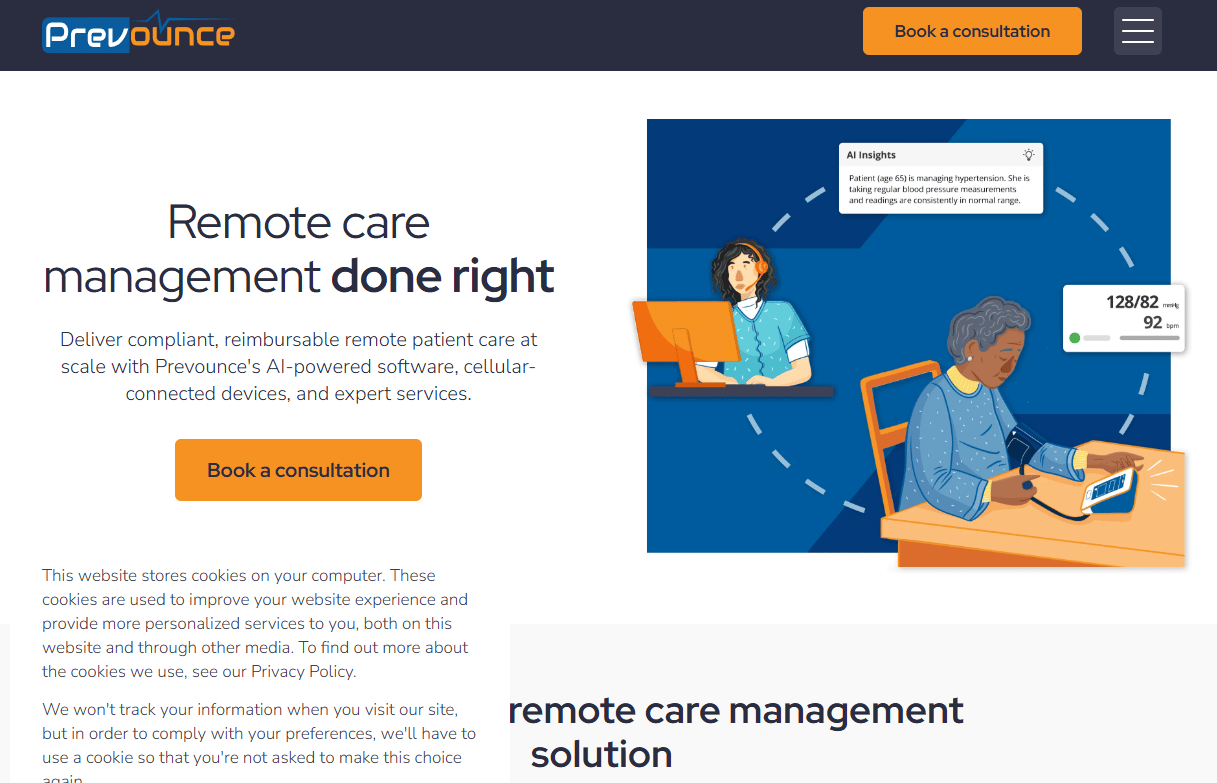
Prevounce is an AI-powered remote care platform covering remote patient monitoring, chronic care management, advanced primary care management, and annual wellness visits. The platform combines software, cellular-connected clinically validated devices, and optional care management services. It is designed for practices, FQHCs, RHCs, ACOs, and other provider organizations that want one partner across the software, device, and operational layers.
Best for: Healthcare organizations that need RPM software alongside device fulfillment, billing workflow support, and the option to expand into adjacent care-management programs.
Key features
- RPM, CCM, APCM, and annual wellness workflows
- AI-powered patient data visualization and trend tracking
- Cellular-connected, clinically validated monitoring devices
- Automated patient and staff notifications
- Billing and compliance tracking support
- Optional care management services
Why choose Prevounce: The breadth of program coverage makes it a strong fit when you want a single vendor relationship for software, devices, care workflows, and reimbursement-oriented program operations. That matters if your new VP of Clinical Operations needs a working system on day one rather than a patchwork of vendors.
Prevounce pricing: Prevounce does not display pricing on its website; contact the team directly for a quote. The cost structure varies by program scope, patient volume, device needs, and whether you use optional managed services. Request a breakdown that separates software, device, and service fees before comparing.
2. HealthArc
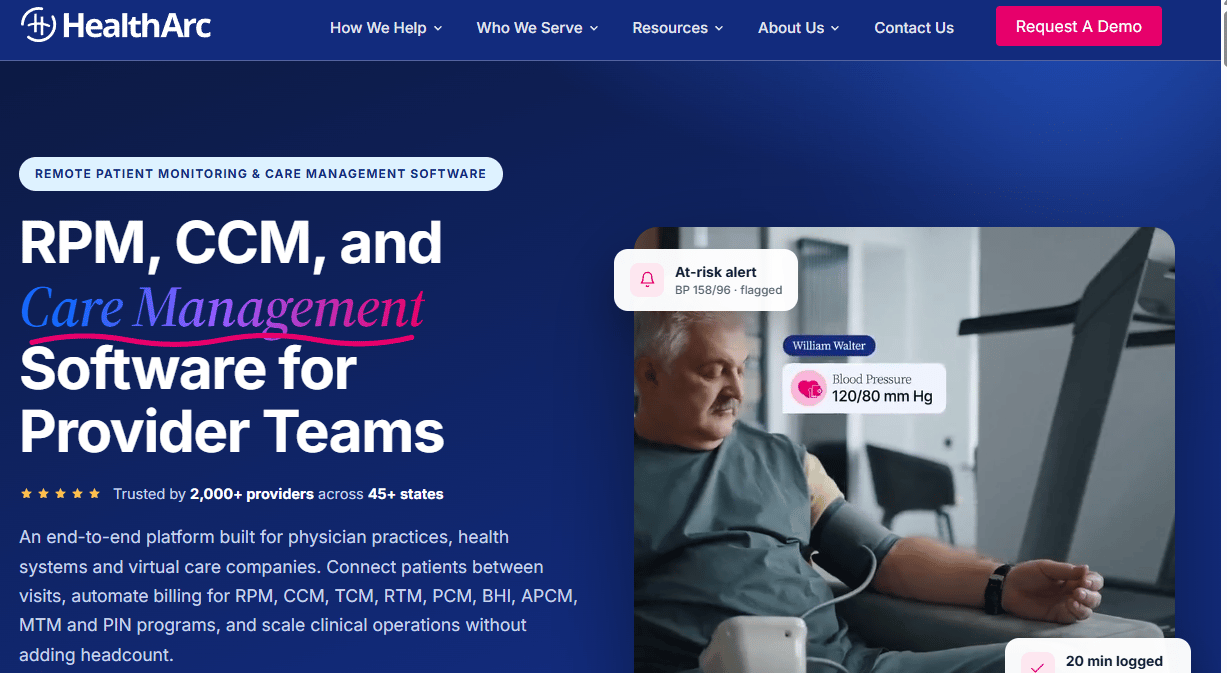
HealthArc is a configurable care-management platform for healthcare provider teams. Its unified dashboard consolidates device data, care plans, alerts, and billing workflows. The platform supports nine CMS programs, including RPM, CCM, RTM, TCM, PCM, BHI, APCM, MTM, and PIN, making it one of the broadest multi-program platforms in the RPM category. It connects to 40+ devices and integrates with major EHR systems.
Best for: Provider groups and digital-health operators that plan to run several CMS care-management programs from a shared platform rather than deploying separate point solutions.
Key features
- Nine CMS program modules on a unified platform
- Support for 40+ connected monitoring devices
- EHR integration with major systems
- Unified dashboard covering device data, care plans, alerts, and billing
- Automated patient reminders and care-team task management
Why choose HealthArc: Multi-program configurability is the central advantage. If your roadmap includes CCM and RTM alongside RPM, building on a platform designed for that breadth avoids a painful migration later. Verify which EHR integrations are native and which require implementation work from your team.
HealthArc pricing: HealthArc does not display pricing on its website; contact the team for a quote. Confirm platform fees, device costs, implementation scope, and any service components separately before signing.
HealthArc holds a 5.0/5 rating on G2 (verified October 2026).
3. Optimize Health
Optimize Health provides remote patient monitoring and chronic care management services, with a focus on managed program support that includes device logistics, clinical monitoring, and operational workflows. Note that the Optimize Health homepage currently redirects to Vivo Care at vivocaresolutions.com; verify the current brand status and product availability directly with the vendor before proceeding.
Best for: Provider organizations that need to launch RPM without first building a large internal monitoring operation.
Key features
- Managed RPM program support and clinical monitoring
- Cellular-connected device logistics and fulfillment
- Patient onboarding and enrollment workflows
- Reporting and billing support
- US nurse-led monitoring options
Why choose Optimize Health: The operating model is the differentiator. If internal clinical capacity is the constraint, a managed program that supplies monitoring staff and device logistics addresses that gap in a way a software-only purchase cannot. Ask specifically who owns escalation, device replacement, and documentation before committing.
Optimize Health pricing: Contact the team for a current quote. The commercial model may include enrollment, device, monitoring, billing, or revenue-share components depending on program structure.
4. CoachCare
CoachCare combines remote monitoring with coaching, nutrition, behavior-change, and chronic condition support. Its model differs from a traditional vital-sign-focused RPM vendor by centering patient engagement and coaching workflows alongside device data. CoachCare is particularly relevant for organizations delivering weight management, nutrition-focused chronic disease programs, or behavior-driven care models.
Best for: Organizations whose care model depends on coaching and patient behavior change alongside physiological monitoring.
Key features
- Patient mobile application for engagement and data entry
- Nutrition and coaching workflow tools
- Connected-device integration
- Messaging and adherence tracking
- Custom program configuration
Why choose CoachCare: Choose it when patient engagement and coaching are core to the clinical model rather than ancillary. It is a different product category from a straight RPM dashboard; verify that its device connectivity and billing documentation depth match your reimbursement requirements.
CoachCare pricing: CoachCare's website was inaccessible during research verification. Contact the team directly for current pricing. Confirm whether pricing changes by program type, patient volume, provider seats, branded app requirements, or device needs.
G2 lists 0 reviews and a 0.0 rating for CoachCare at the time of publication, reflecting insufficient review data.
5. Accuhealth
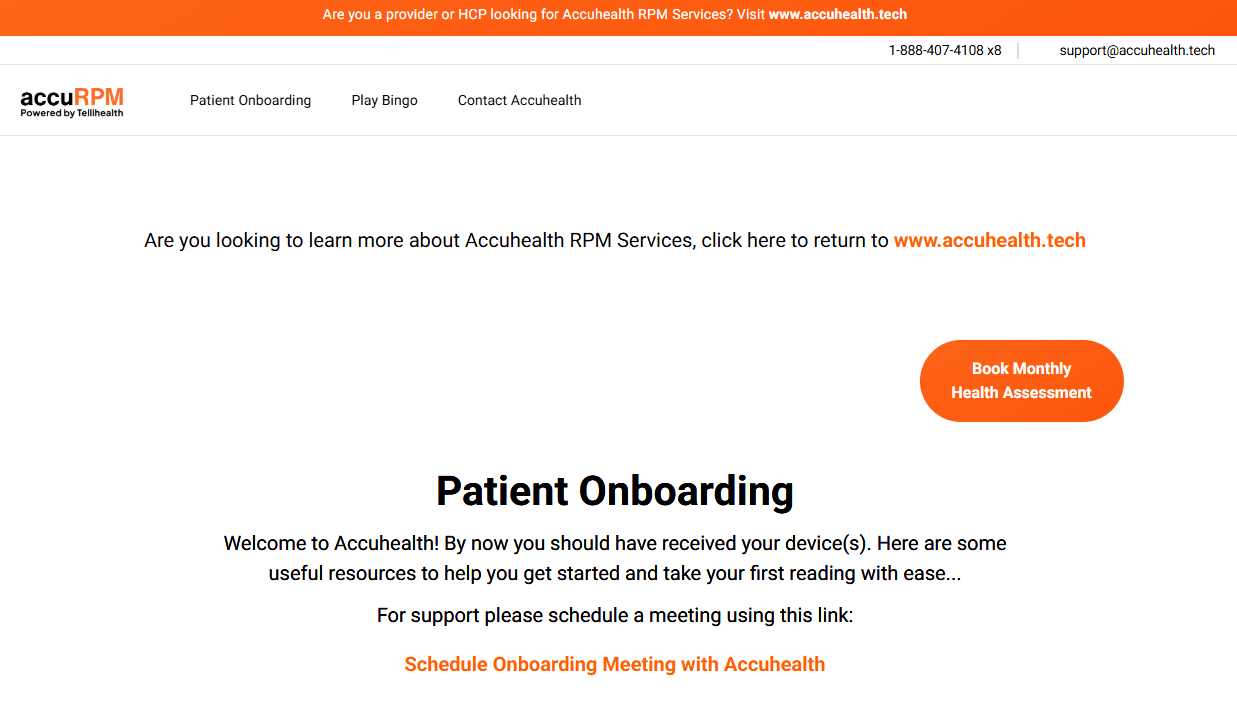
Accuhealth provides turnkey RPM and chronic care management for healthcare providers and payors. The platform pairs cellular-enabled devices with 24/7 clinical monitoring, EHR integration at no added cost, automated patient outreach, and AI-powered analytics. Note that Accuhealth's homepage states the company is now operating as Tellihealth; confirm current branding and product continuity directly with the vendor.
Best for: Practices that need a guided path from enrollment through monitoring and billing, without building the operational infrastructure in-house.
Key features
- 24/7 clinical monitoring and escalation support
- Cellular-enabled remote monitoring devices
- EHR integration included at no additional cost
- Automated patient reminders and outreach
- AI-powered predictive analytics
- Unlimited telemedicine for enrolled patients
Why choose Accuhealth: Turnkey program support with CPT-linked service pricing gives practices a clearer path to understanding per-patient economics before enrolling at scale. The $15 one-time patient onboarding fee and monthly CPT-code-aligned charges make cost modeling more tractable than fully custom quotes.
Accuhealth pricing: Accuhealth lists a one-time patient onboarding fee of $15 per patient, a device-related fee of $25 per patient every 30 days (aligned with CPT 99454), and $20 per patient monthly for monitoring time (aligned with CPT codes 99457 and 99458). Payor-facing PMPM pricing starts as low as $19 for Tier 1 and $65 for Tier 2. These figures were verified on Accuhealth's website in October 2026; confirm current rates and any platform subscription components directly.
6. Health Recovery Solutions
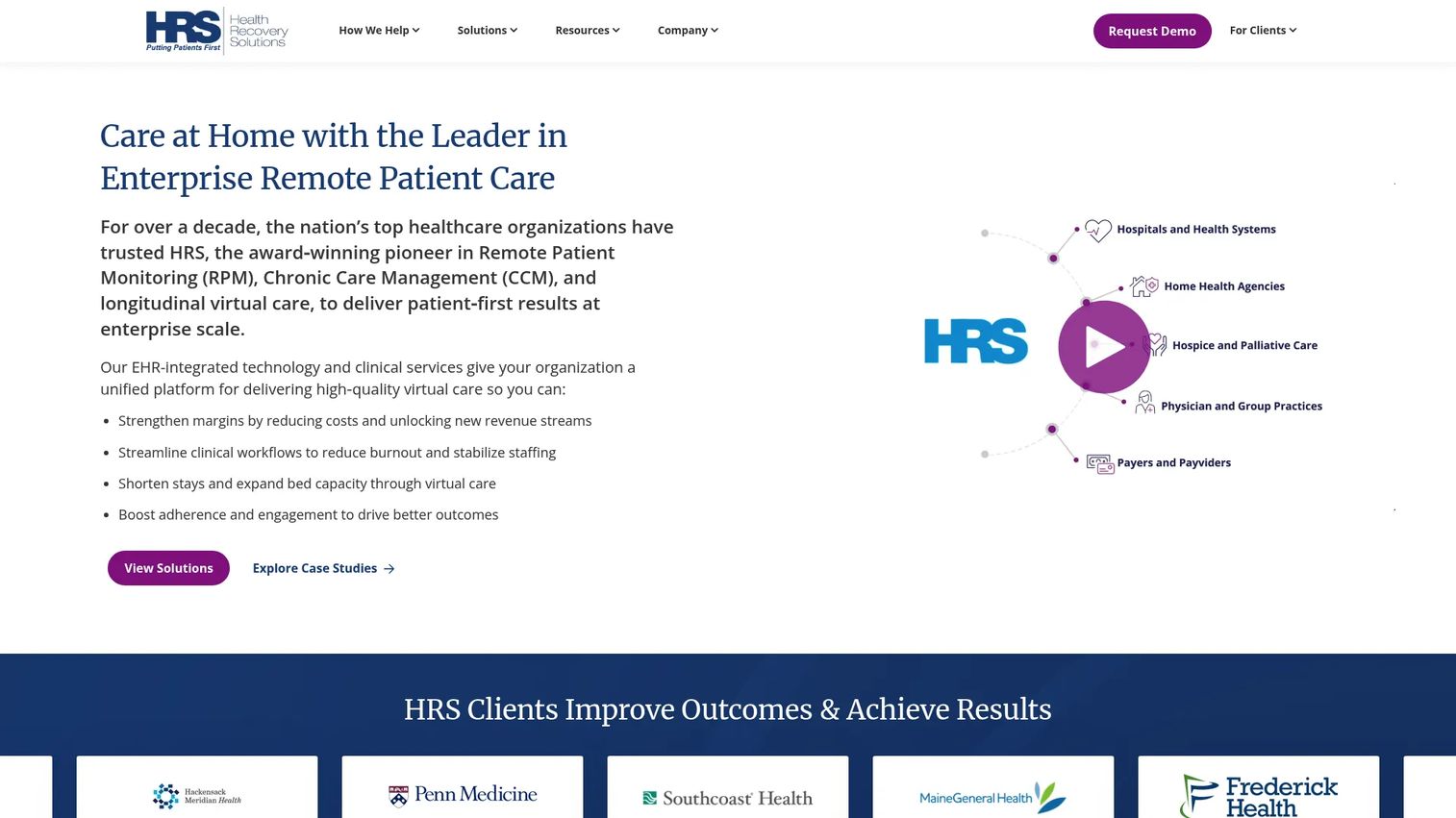
Health Recovery Solutions is an enterprise remote care platform built for health systems and post-acute programs. It combines remote patient monitoring with patient engagement, condition-specific educational pathways, virtual visits, medication reminders, and caregiver tools. EHR and EMR integrations support real-time data exchange. HRS focuses on hospital-at-home, chronic care, and post-discharge monitoring across larger clinical populations.
Best for: Health systems and post-acute programs that need patient engagement, remote monitoring, and care-pathway orchestration across multiple care settings.
Key features
- Remote monitoring with biometric data and symptom surveys
- EHR/EMR integrations with real-time data exchange
- Virtual visits and patient-provider communication tools
- Medication reminders and condition-specific patient education
- Analytics, reimbursement guidance, device logistics, and 24/7 technical support
Why choose Health Recovery Solutions: Enterprise deployment scale and patient-experience depth are the distinguishing factors. It fits organizations managing large patient populations across multiple care settings where clinical governance and care-pathway structure matter as much as device connectivity.
Health Recovery Solutions pricing: HRS customizes pricing based on patient population, program scope, contract terms, hardware, software, logistics, and services. Contact the team for a current quote structured around your specific program and volume.
7. MedM
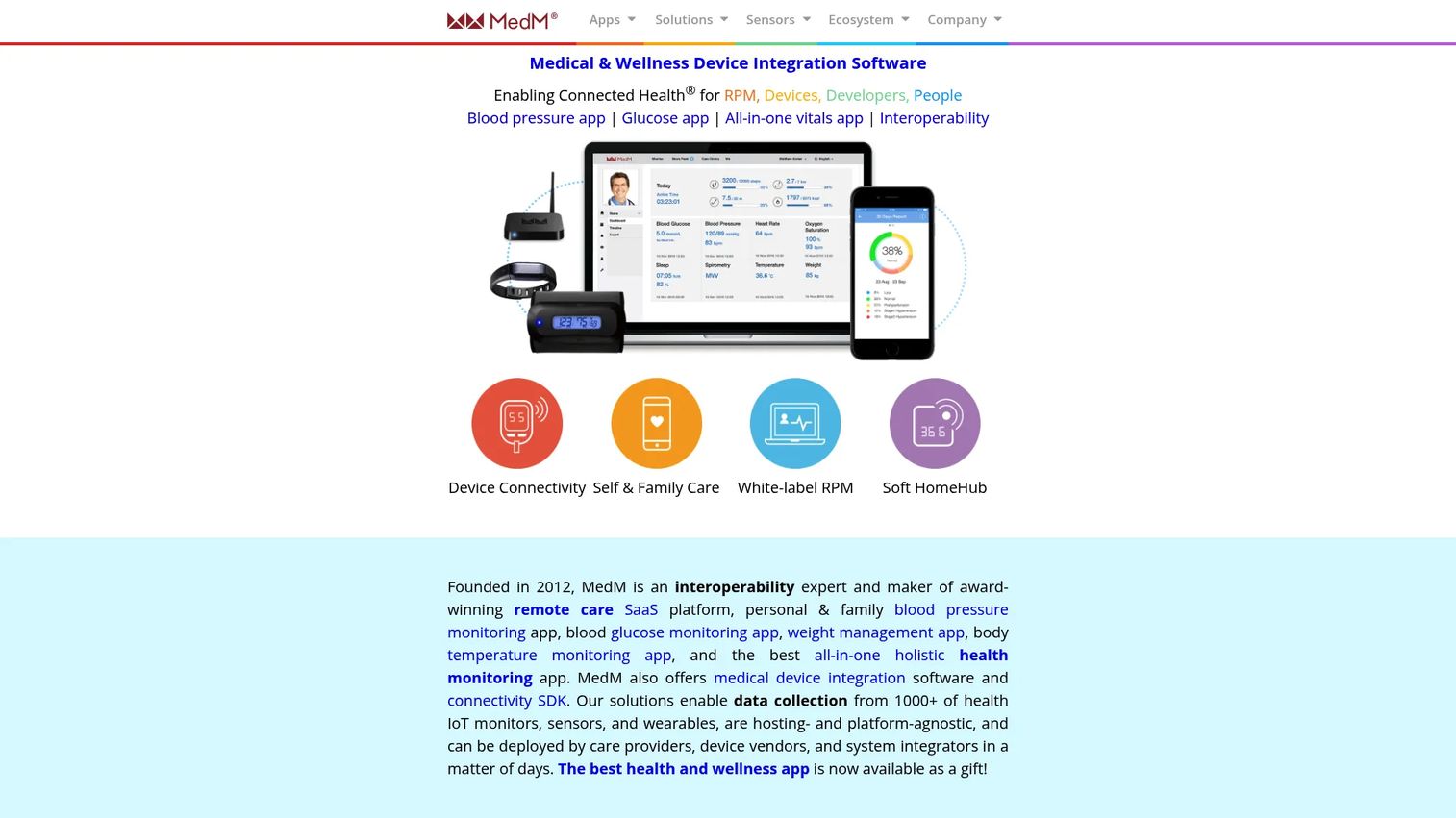
MedM provides connected-health apps, RPM software, device integration, and SDK services. Its platform connects to more than 1,000 health devices and wearables, tracking over 30 health and wellness measurement types. MedM's device-agnostic architecture makes it relevant for organizations that need broad device support without locking into one hardware vendor. The platform includes dashboards, notifications, reminders, reports, and APIs.
Best for: Digital-health businesses and care programs that prioritize broad device connectivity and structured data ingestion over a fully managed program model.
Key features
- Integration with 1,000+ health devices and wearables
- Tracking of 30+ health and wellness measurement types
- RPM dashboards, notifications, reminders, and reports
- API and integration options for custom workflows
- Configurable monitoring workflows by program type
Why choose MedM: Device-agnostic strategy is the core use case. If your program needs to support multiple consumer or medical devices without committing to one hardware ecosystem, MedM's breadth reduces lock-in. Your team will own the clinical workflow layer, so factor that implementation cost into the total model.
MedM pricing: MedM Care plans are priced at $10 per patient per month, with a Basic plan requiring a $100 monthly minimum (10 patients), a Pro plan at $1,000 monthly minimum (100 patients), and an Enterprise plan starting at $5,000 per month with tiered pricing. A one-month free trial is available. These figures were verified on MedM's website in October 2026.
8. Current Health
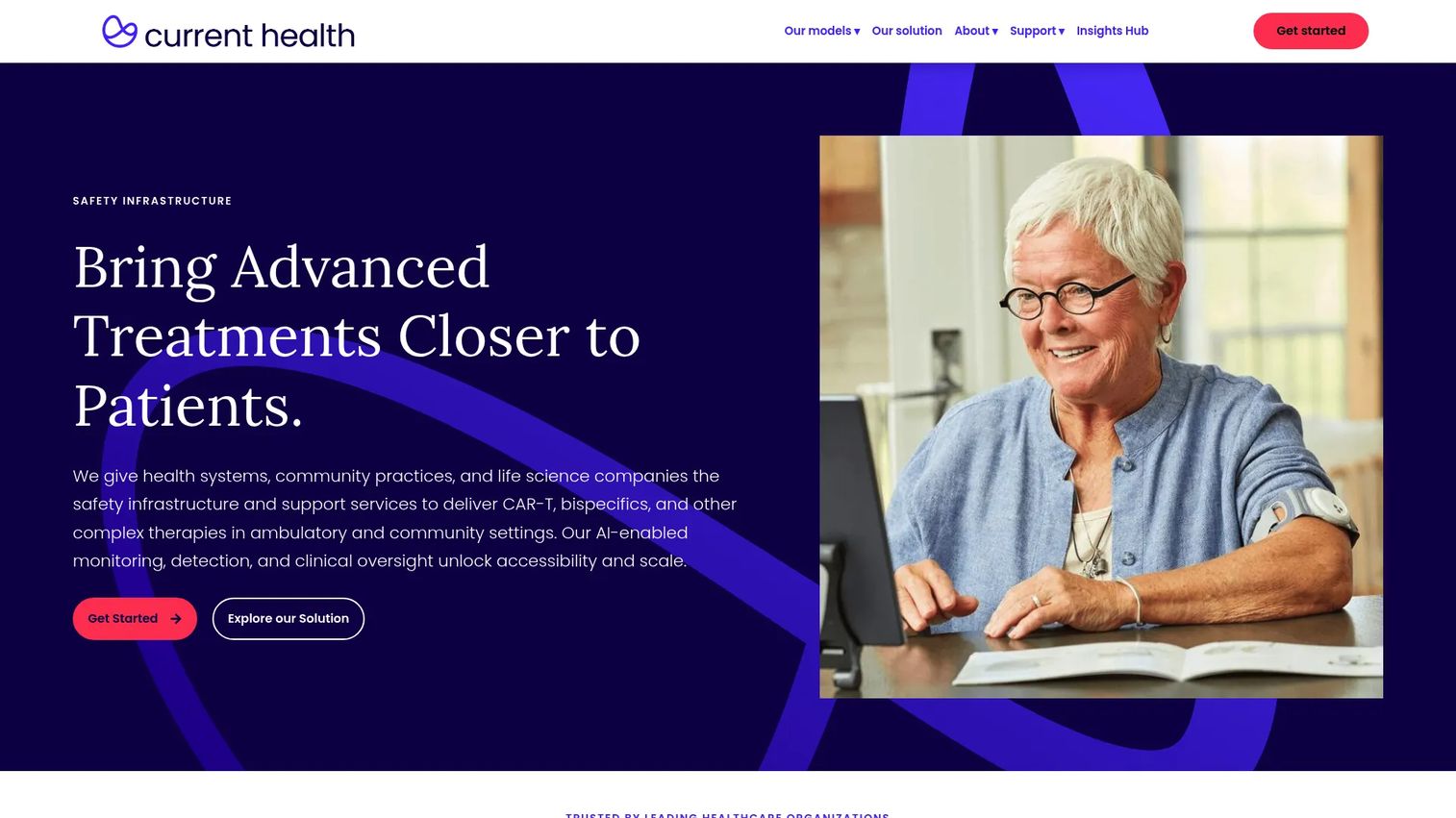
Current Health provides infrastructure, remote monitoring, clinical oversight, and integrations for hospital-at-home and complex therapy programs. Its platform combines real-time monitoring with customizable care pathways, acuity-based patient prioritization, task management, HL7/FHIR integrations, and a 24/7 nurse-led Clinical Command Center. Current Health is built for organizations delivering high-acuity remote care where clinical governance and continuous monitoring are non-negotiable.
Best for: Health systems and enterprise care providers operating hospital-at-home programs or complex outpatient advanced-therapy monitoring.
Key features
- Real-time remote monitoring with clinical dashboard
- Customizable alerts, alarms, and care pathways
- Acuity-based patient prioritization and task management
- HL7/FHIR and EHR integrations
- 24/7 nurse-led Clinical Command Center
Why choose Current Health: High-acuity program complexity is the differentiating factor. This is enterprise virtual-care infrastructure, not a practice-level RPM dashboard. Verify current ownership, product availability, geographic coverage, and deployment scope directly with the vendor before beginning evaluation.
Current Health pricing: Current Health does not display pricing on its website; contact the team for a current quote. Confirm contract structure, device costs, implementation scope, enterprise integration fees, and clinical service requirements.
9. Biofourmis
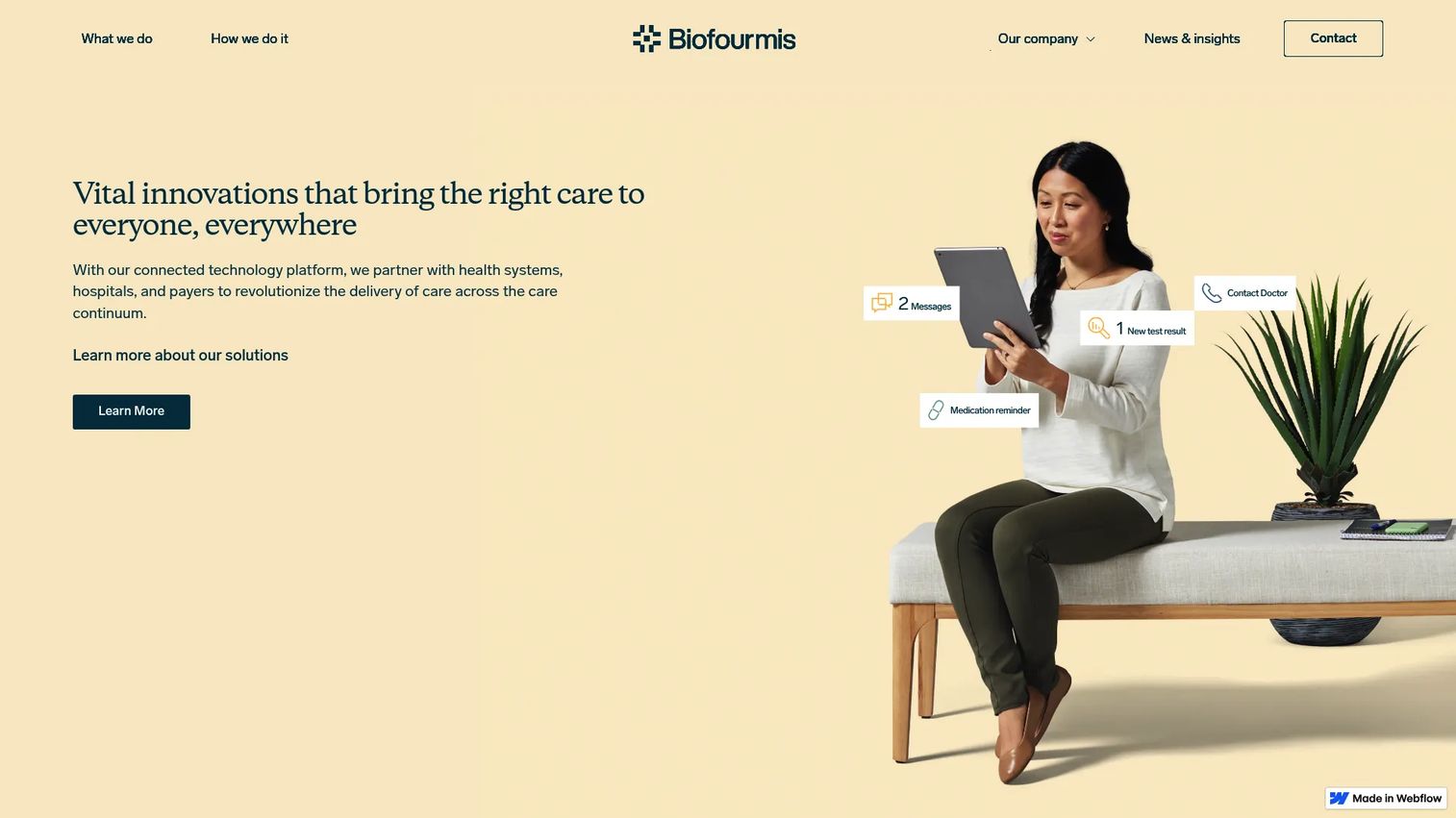
Biofourmis delivers connected, technology-enabled care for health systems, hospitals, payers, and life sciences organizations. Its platform connects to medical devices and sensors for continuous and episodic monitoring, with FDA-cleared AI-driven analytics designed to detect early patient deterioration. Disease-specific care pathways, EMR integration, and coordinated in-home services (including nursing, diagnostics, infusion, and transportation) extend the platform beyond software-only RPM.
Best for: Enterprise healthcare organizations evaluating advanced analytics, condition-specific remote care, or coordinated in-home care delivery at scale.
Key features
- Medical-device and sensor connectivity for continuous and episodic monitoring
- FDA-cleared AI-driven analytics for personalized baselines and early deterioration signals
- Dynamic disease-specific and acuity-specific care pathways
- Patient and clinician dashboards with triage, medication management, and communication tools
- EMR integration and coordinated in-home services including nursing, diagnostics, and infusion
Why choose Biofourmis: Advanced analytics and coordinated care delivery are the differentiators. Organizations that need more than routine vital-sign collection, specifically clinical intelligence and in-home service orchestration, will find this model harder to replicate with simpler RPM platforms. Implementation complexity and enterprise contract requirements reflect that scope.
Biofourmis pricing: Biofourmis does not display pricing. Contact the team for a quote that reflects implementation requirements, platform scope, analytics packaging, device support, and clinical service options.
10. WellWink
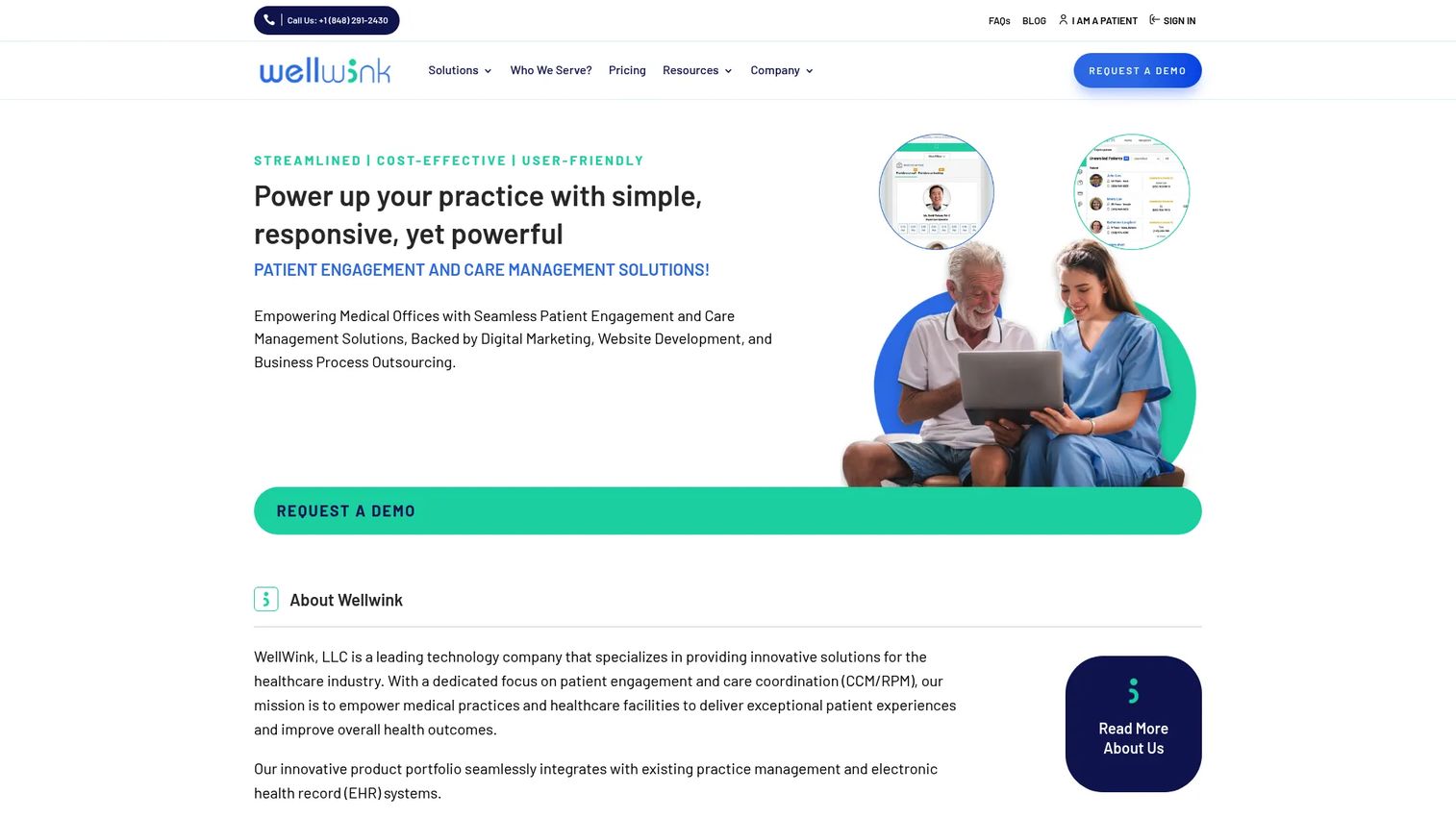
WellWink is a patient engagement and care-management platform covering RPM, CCM, telehealth, online appointment booking, patient portal access, and EHR/PMS integration. It is designed for practices that want care-management workflows without deploying a large enterprise virtual-care stack. WellWink also offers a Master Patient Index and consolidated patient records across systems.
Best for: Small to midsize practices that want RPM and CCM workflows, patient communication tools, and EHR integration in a single platform.
Key features
- Remote Patient Monitoring and Chronic Care Management workflows
- Connected-device support for physiological data
- Patient engagement, messaging, and portal access
- Telehealth and online appointment booking
- EHR/PMS integration and Master Patient Index
Why choose WellWink: Practice-level usability and care-management coverage are the practical advantages. For smaller organizations that do not need enterprise infrastructure, WellWink covers RPM and CCM workflows, billing guidance, and patient communication in a focused package. Confirm which clinical monitoring services, if any, the platform includes versus what your team must staff.
WellWink pricing: WellWink does not display pricing on its website; contact the team to discuss options based on your patient volume, program scope, and integration requirements. Ask about setup fees, monthly platform costs, and any device charges separately.
WellWink holds a 4.8/5 rating on G2, based on 2 reviews (verified October 2026).
Considerations when choosing remote patient monitoring software
Choose the operating model before the feature set
Decide whether your team needs software only, a managed monitoring program, or enterprise virtual-care infrastructure. A clinical staffing gap is an operations problem; a better dashboard does not close it. Map the ownership of monitoring, escalation, documentation, and device logistics before you evaluate features.
Validate device coverage and connectivity
Ask which specific devices are supported, whether connectivity is cellular or Bluetooth-dependent, who handles device replacement when hardware fails, and what happens when a patient cannot complete setup independently. Device attrition and support burden are among the most underestimated costs in RPM programs.
Test alert routing and escalation ownership
Review threshold configuration, alert prioritization, staff queue management, and escalation rules before signing. Request a live walkthrough of what happens after an abnormal reading. Alert fatigue is an operating risk, not a software setting; thresholds and escalation paths require clinical governance to stay useful.
Map EHR and billing workflow integration
Confirm how device data enters the patient record, how staff document time against CMS requirements, and how billing teams receive supporting information. Ask which interfaces are native and which require implementation work you must fund and staff. This distinction drives more post-go-live cost than almost any other factor.
Model total operating cost, not subscription cost
Software fees are one line item. Total cost includes devices, cellular connectivity, shipping, patient enrollment support, clinical monitoring staff, implementation services, training, and ongoing support. Treat RPM as an operating model with technology attached, and build a full P&L before committing to a vendor.
Conclusion
The right RPM platform is the one that matches your operating model, not the one with the longest feature list.
Prevounce covers the broadest range of care programs with devices and billing support in a single relationship. HealthArc suits teams planning multiple CMS programs on a shared platform. Optimize Health and Accuhealth serve organizations that need managed operational support. CoachCare fits coaching-led chronic condition programs. Health Recovery Solutions and Current Health are built for enterprise deployment across complex care settings. MedM serves organizations that prioritize device-agnostic data strategy. Biofourmis addresses advanced analytics and coordinated care delivery. WellWink serves smaller practices running RPM and CCM without enterprise infrastructure.
Before you commit: Shortlist three vendors, then run a narrowly scoped pilot. Test enrollment, device activation, alert routing, clinical follow-up, billing documentation, and EHR handoff from day one. The operational evidence from a 30-day pilot tells you more than any demo. For related healthcare technology evaluation frameworks, see our guide to clinical trial management software and our roundup of aged care management software.
Start your journey with Guideflow today!
FAQs
Small practices should prioritize platforms with straightforward patient enrollment, cellular-connected devices that work without patient technical support, manageable alert workflows, and clear billing documentation. WellWink and Accuhealth both address this segment with RPM and CCM workflows designed for practice-level scale. Validate how much clinical monitoring the practice must staff itself before signing; many "turnkey" solutions still require internal clinical time to be useful.
Core features include device data ingestion, longitudinal vital-sign dashboards, threshold-based alerts with configurable escalation, patient communication and reminder tools, time tracking for billing documentation, EHR integration, and audit trails. The right feature mix depends on the care model and staffing structure. A managed program may handle some of those layers for you; a software-first platform expects your team to own them.
Many platforms support integration through native connectors, APIs, HL7, or FHIR. The critical diligence is confirming exactly which patient data flows into the EHR automatically, which requires manual entry, and whether notes, tasks, and billing records are included. Native integrations and API-based connectors carry different implementation costs and maintenance requirements.
RPM software focuses on collecting and reviewing physiological data from connected devices, with workflows for alert review, escalation, and documentation. Remote care management software extends that foundation to include chronic care management, transitional care, annual wellness, outreach tasking, and longitudinal care coordination. Several platforms in this list cover both; HealthArc, for example, supports nine distinct CMS program types on a single platform.
Some vendors sell or manage cellular-connected devices as part of their program, while others integrate with devices you source separately. Buyers should confirm the device catalog, connectivity model (cellular versus Bluetooth), replacement process for failed devices, and patient setup support. Device logistics are often where managed programs justify their cost compared to software-only platforms.
Most RPM vendors use custom pricing because cost drivers vary: Patient volume, device type and quantity, clinical monitoring services, EHR integration complexity, implementation scope, and billing support. Accuhealth is an exception, listing CPT-aligned service fees starting at $15 per patient for onboarding and $25 per 30-day device period. MedM publishes $10 per patient per month with a $100 monthly minimum. For all other vendors on this list, model total operating cost including devices, connectivity, enrollment, monitoring staff, and implementation before comparing platform fees alone.
Many vendors provide documentation, time tracking, and billing workflow support aligned with RPM CPT codes. Reimbursement eligibility, coding accuracy, payer-specific rules, and clinical supervision requirements must be validated by your billing and compliance teams. This article does not constitute billing or reimbursement guidance. Review current CMS documentation and consult qualified billing professionals before designing your program's reimbursement model.
Run a narrow pilot with one patient population, defined enrollment criteria, documented alert protocols, a named clinical owner for escalation, and tested device fulfillment from end to end. Agree on success metrics before launch: Enrollment completion rate, device activation rate, alert response time, staff time per patient per month, and documentation completeness. A 30-day pilot with 20 to 50 patients will surface implementation gaps that no vendor demo reveals. Scale only after that operational evidence is clear. For a broader framework on evaluating healthcare software programs, see our guide to care coordination software.
Ask who owns escalation when a patient's reading crosses a threshold at 2am. Ask what happens when a device fails or a patient cannot set it up independently. Ask whether EHR integration is native or requires a third-party implementation. Ask how billing documentation reaches your billing team and in what format. These operational questions reveal more about fit than any feature comparison. Also confirm the contract's minimum commitment, patient-volume terms, and exit conditions. For additional software evaluation frameworks, see our account management software buyer's guide.