A generic medical EHR does not know what a diabetic foot exam looks like. It does not have templates for wound depth, ulcer staging, or nail debridement. It does not code an ingrown toenail procedure without you fighting the system. That gap costs podiatry practices time on every visit and money on every claim.
That is the real problem podiatry software solves. You are not shopping for another database. You are trying to run charting, scheduling, claims, patient communication, and compliance from one system that actually understands foot and ankle care. The global podiatry software market reflects that demand, projected to grow from USD 0.52 billion in 2022 to USD 1.06 billion by 2030 at a 9.4% CAGR, according to Trend Visions (2024). The broader healthcare information software market is forecast to reach USD 53.22 billion by 2029 at an 11.3% CAGR, per Data Bridge Market Research (2022).
The catch: most vendors sell the same "all-in-one" story. The differences that matter to a clinic owner are buried under feature checklists. Which platform documents a foot exam without 12 clicks? Which one processes clean claims the first time? Which one your front desk can learn in a week, not a quarter?
What's inside
This guide is for podiatry clinic owners, practice administrators, and operators comparing podiatry EHR software, EMR, practice management, and billing tools for 2026. We picked seven platforms and evaluated each on four things that decide daily reality: specialty documentation fit, clinical workflow coverage, billing and RCM depth, and implementation practicality. We looked at how each handles foot and ankle charting, scheduling, patient portal access, claims processing, and telehealth. Pricing and G2 ratings reflect the most recent verified figures at the time of writing. Where a vendor keeps pricing private, we say so instead of guessing.
TL;DR
Short on time? Here is the shortlist by buyer scenario.
- Best all-in-one modular suite: PracticeSuite, for clinics that want practice management, EHR, and billing in configurable pieces.
- Best for integrated billing services: CureMD, for practices that want EHR plus revenue cycle handled together.
- Best for specialty workflow depth: Modernizing Medicine, built around specialty-specific documentation and an anatomical approach.
- Best broad specialty EHR: PrognoCIS, for clinics wanting customizable charting, labs, imaging, and referral workflows.
- Best general ambulatory strength: AdvancedMD, for practices prioritizing practice automation and revenue cycle tooling.
- Best mobile-first workflow: DrChrono, for smaller or mobile clinics that chart on tablets.
- Best practical consolidation for small groups: Tebra, for independent practices wanting billing, EHR, and patient engagement in one place.
What is podiatry software?
Podiatry software is a specialty healthcare platform that combines electronic health records, practice management, billing, and patient engagement into one system built for foot and ankle care. Unlike a general EHR, it ships with podiatry-specific documentation templates, coding support, and workflows that match how a podiatry clinic actually operates.
The core product stack buyers expect in 2026 covers several connected functions. A clinic evaluating options should look for:
- Podiatry EHR or EMR: Specialty charting with foot and ankle documentation, SOAP notes, and templates for common procedures.
- Practice management: Appointment scheduling, check-in workflows, patient intake forms, and multi-location support.
- Billing and RCM: Claims processing, insurance verification, denial management, and revenue cycle analytics.
- Patient portal: Secure messaging, online payments, e-statements, and self-service scheduling.
- Telehealth: Video visits integrated with charting and billing.
- E-prescribing: Standard and controlled-substance e-prescribing with medication history.
- Imaging and diagrams: Image management and anatomical diagrams for wound tracking and documentation.
- Compliance and reporting: MIPS tracking and audit-ready records.
The difference between a general EHR and podiatry EMR software comes down to fit. A general system can be bent to handle foot care, but you pay for that bend in extra clicks, custom-built templates, and coding errors. Podiatry practice management software removes that friction by shipping the specialty logic out of the box.
When to use podiatry software
Not every clinic needs to switch systems this quarter. These are the situations where the move pays off.
Replacing disconnected clinic systems
If your scheduling lives in one tool, charting in another, and billing in a third, staff spend the day re-entering data and reconciling records. A unified podiatry platform collapses that into one workflow. The payback shows up in fewer handoffs and cleaner data across the practice.
Reducing coding and claims errors
Podiatry billing has specialty-specific coding rules that general systems handle poorly. When denials pile up and reimbursements slow, podiatry billing software with built-in coding support and claim scrubbing cuts the error rate at the source. Fewer reworks means faster cash.
Improving intake and scheduling
Long check-in lines and no-shows drain a clinic. Digital patient intake forms, online appointment scheduling, and automated reminders shift work off the front desk and reduce gaps in the schedule. Patients complete paperwork before they arrive.
Consolidating patient communication
Phone tag on results, refills, and follow-ups eats staff time. A patient portal with secure messaging, e-statements, and online payments moves routine communication to self-service, so your team handles exceptions instead of every request.
Comparison table: podiatry software at a glance
Here is how the seven platforms compare on intent, differentiation, pricing, and G2 rating. Use it to narrow to two or three before reading the full sections. Pricing reflects verified figures at the time of writing; several vendors quote custom pricing based on providers and configuration.
| # | Product | Intent | Key differentiation | Pricing | G2 rating |
|---|---|---|---|---|---|
| 1 | PracticeSuite | Modular all-in-one suite | Configurable PM, EHR, and billing modules | From $34.95/user/mo (G2-reported); custom on site | 4.3/5 |
| 2 | CureMD | Integrated EHR plus billing services | AI-native platform with RCM handled together | Personalized; billing from ~3% of collections | 3.1/5 |
| 3 | Modernizing Medicine | Specialty workflow depth | Specialty-specific documentation approach | Custom quote | Not listed |
| 4 | PrognoCIS | Broad specialty EHR | Customizable charting, labs, imaging, referrals | Custom quote | 4.1/5 |
| 5 | AdvancedMD | General ambulatory strength | Practice automation and RCM tooling | From $130/mo per provider | 3.6/5 |
| 6 | DrChrono | Mobile-first workflow | Tablet-based charting and scheduling | Quote-based tiers | 3.4/5 |
| 7 | Tebra | Small-practice consolidation | Billing, EHR, and patient engagement combined | From $599/mo per provider | 4.1/5 |
1. PracticeSuite
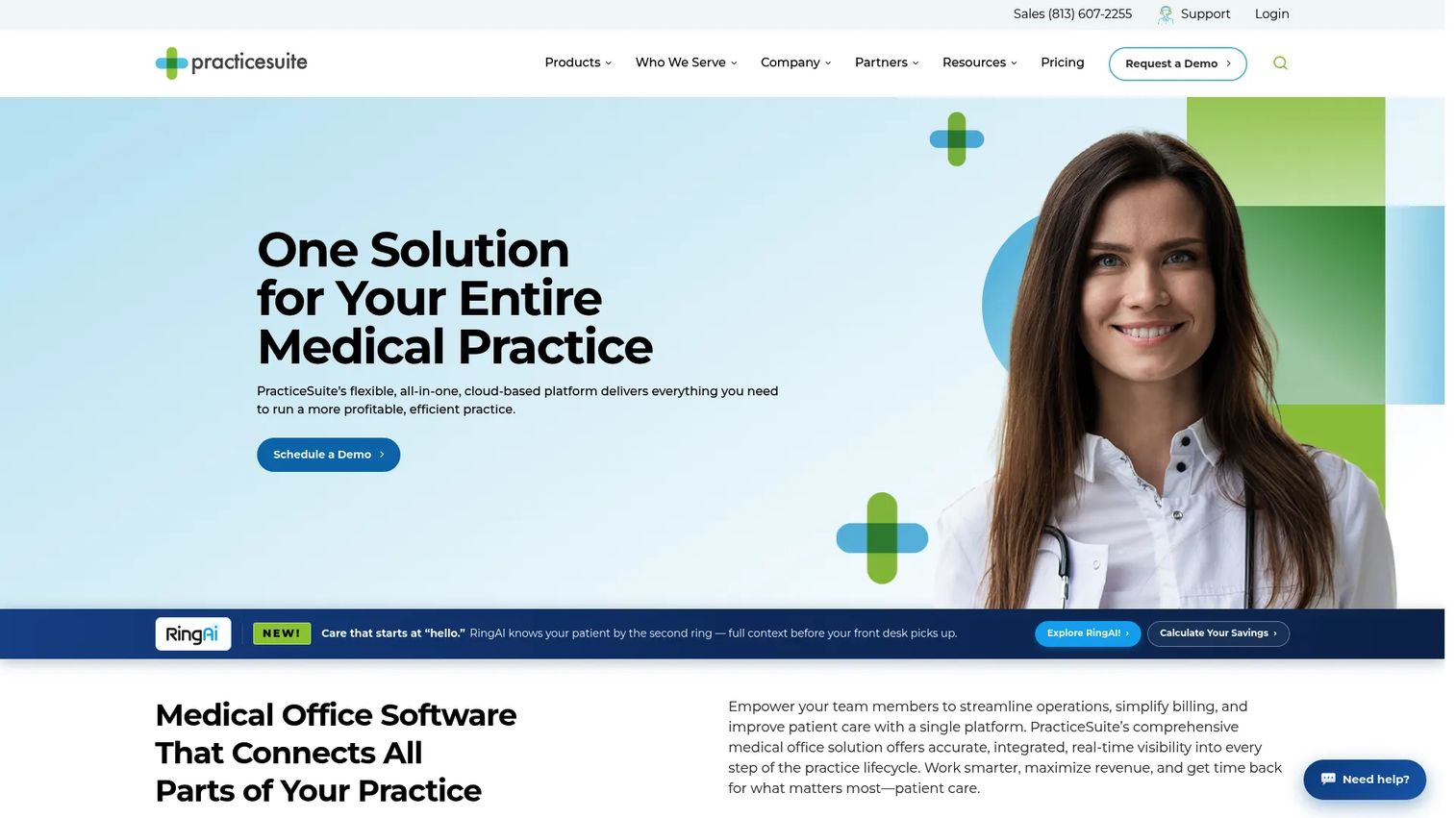
PracticeSuite is cloud-based medical office software that brings practice management, EHR, billing, and patient engagement into one modular platform. For a podiatry clinic, the appeal is configuration: you turn on the pieces you need and add more as the practice grows. That modular approach suits independent practices and multi-location groups that do not want to pay for a monolithic suite before they use it.
The platform covers the full operational spine of a podiatry practice, from scheduling and check-in through charting, claims, and patient communication. Because practice management, EHR, and billing sit in one system, data flows from the front desk to the exam room to the claim without re-entry.
Best for: Independent podiatry practices that want modular practice management, EHR, and billing they can scale up over time.
Key strengths
- Modular architecture: Turn on practice management, EHR, or billing independently, so you buy what the clinic actually uses.
- Integrated revenue cycle: Claims processing and billing connect directly to charting, reducing re-entry and coding gaps.
- Multi-location support: Manage scheduling and records across sites from one platform.
Why choose PracticeSuite: If you want to start with billing or practice management and layer in EHR later, the modular model fits how many clinics actually buy. It rewards practices that want operational consolidation without committing to every module on day one.
PracticeSuite pricing: PracticeSuite's own site describes tailored, quote-based pricing for its medical software. Publicly on G2, Secure Office tiers show a free Starter edition, a Practice edition at $34.95 per user per month, and a Facility edition at $49.95 per user per month. Confirm your configuration directly, since the platform pricing is custom.
2. CureMD

CureMD is an AI-native healthcare platform spanning EHR, practice management, revenue cycle management, patient engagement, and medical billing. For podiatry practices, the draw is the combination of clinical documentation and billing services under one roof. If you would rather hand off claims and denials to a service tied to your EHR, CureMD is built for that model.
The platform handles SOAP notes, patient portal access, insurance verification, telehealth, and imaging alongside its billing services. Practices that want a broad healthcare platform, not a niche point tool, get wider coverage here.
Best for: Healthcare practices wanting an integrated EHR, practice management, and billing platform with revenue cycle handled as a service.
Key strengths
- Integrated billing services: Revenue cycle management runs alongside the EHR, so documentation and claims stay connected.
- Broad platform coverage: SOAP notes, patient portal, insurance verification, telehealth, and imaging in one system.
- Documentation support: Clinical charting tools designed to reduce time spent per note.
Why choose CureMD: Choose CureMD when you want to outsource the revenue cycle without decoupling it from your clinical records. It fits practices that value one vendor accountable for both charting and collections.
CureMD pricing: CureMD lists personalized pricing for practice management, EHR, and all-in-one plans. Billing services start as low as 3% of collections. A first-party document states pricing starts at approximately $295 per provider per month. Confirm the exact figure for your practice, since most tiers are quoted.
3. Modernizing Medicine

Modernizing Medicine builds specialty-specific cloud software, with EHR, practice management, patient engagement, analytics, and related services designed around how a specialty clinic works. For podiatry, that means documentation and coding support shaped by the specialty rather than a general template retrofitted for feet.
The platform leans into an anatomical, specialty-first approach to charting, paired with coding support, patient engagement tools, and revenue cycle management. Practices that want workflow depth built for the specialty, not a generalist system, tend to gravitate here.
Best for: Specialty podiatry practices that want an all-in-one, specialty-specific platform with deep workflow design.
Key strengths
- Specialty-specific workflows: Documentation designed around specialty care rather than adapted from a general EHR.
- Coding support: Built-in coding assistance aimed at cleaner claims from the exam room.
- Analytics and RCM: Revenue cycle management paired with practice analytics for operational visibility.
Why choose Modernizing Medicine: Choose it when specialty documentation depth is your top priority and you want a platform engineered around the specialty from the ground up. It fits clinics that value clinical fit over a lowest-common-denominator EHR.
Modernizing Medicine pricing: Pricing is presented as solution bundles, and the site directs prospects to speak with a representative. No public numeric pricing was visible at the time of writing, so request a quote scoped to your practice size and modules.
4. PrognoCIS
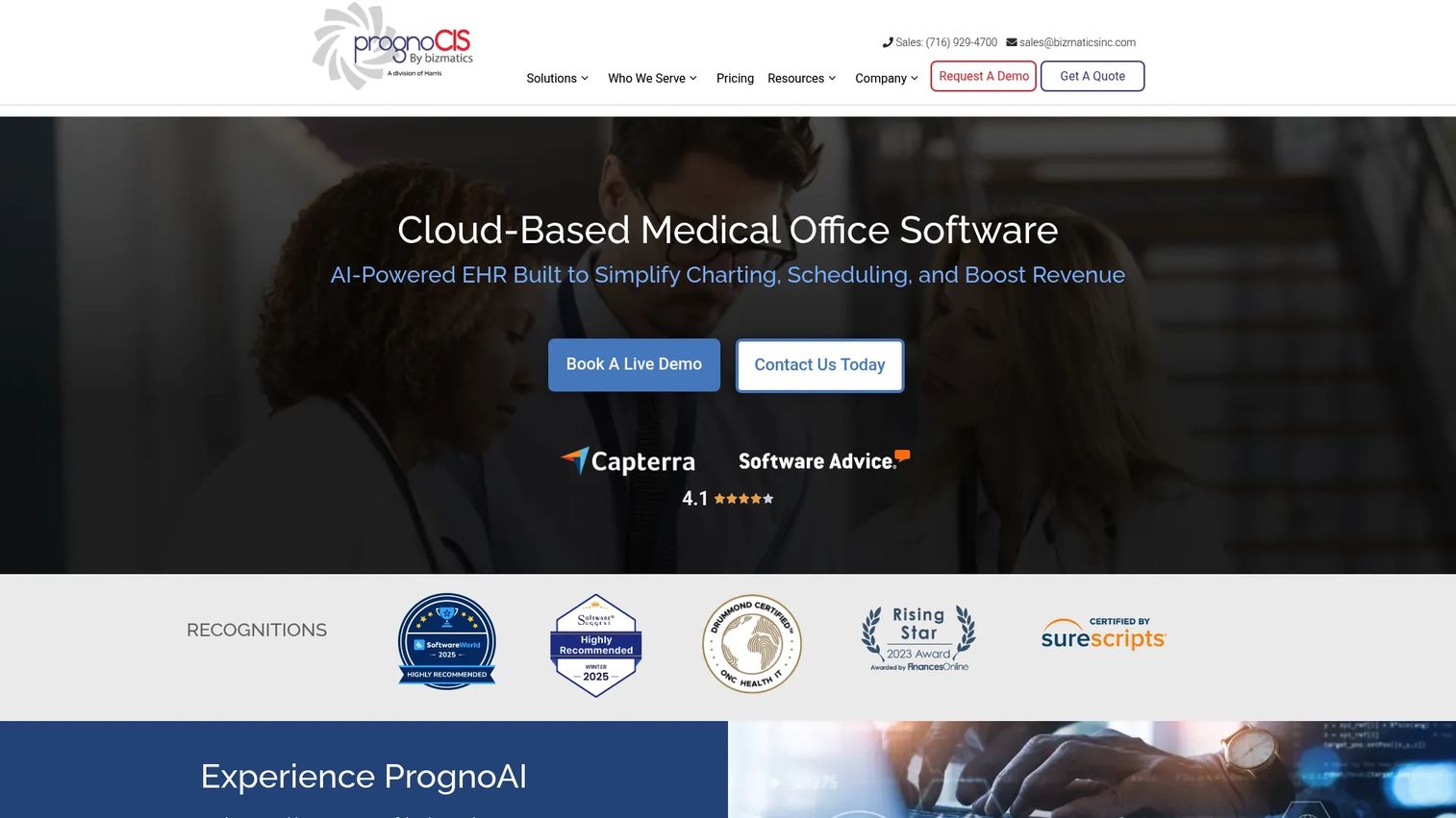
PrognoCIS is a cloud-based EHR, practice management, billing, and patient engagement platform with a reputation for customizable charting. For podiatry, the strength is flexibility: templates, labs, imaging, and referral workflows you can shape to match how your clinic documents foot and ankle care.
The platform covers charting templates, appointment scheduling, patient portal access, lab and imaging integrations, billing, and referral management. It reads as a broad specialty EHR with operational depth rather than a narrow niche tool.
Best for: Podiatry practices needing a customizable cloud EHR with billing, imaging, and patient communication in one place.
Key strengths
- Customizable charting: Templates you can adapt to your documentation style and specialty needs.
- Lab and imaging integrations: Connected labs and image management support wound and diagnostic tracking.
- Referral workflows: Built-in referral management for practices coordinating care across providers.
Why choose PrognoCIS: Choose PrognoCIS when template flexibility matters and you want to mold the EHR to your workflow rather than adapt to a fixed one. It fits clinics that value configurability and connected labs and imaging.
PrognoCIS pricing: PrognoCIS states that pricing varies by clinic size and structure, including per-provider, per-user, or per-encounter models. No public numeric price was shown at the time of writing, so request a quote based on your provider count and billing model.
5. AdvancedMD
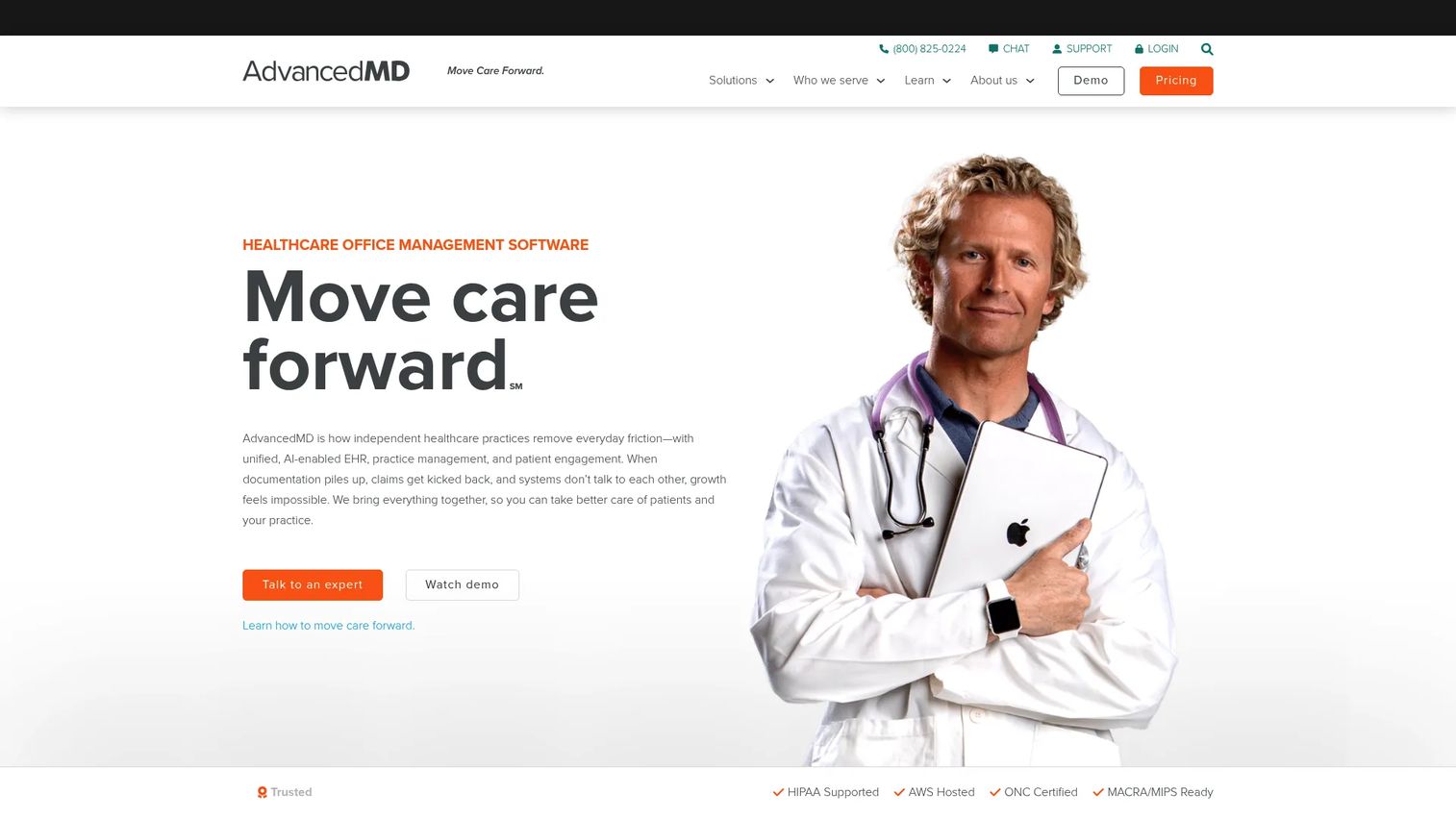
AdvancedMD is cloud-based healthcare software for independent practices, combining EHR, practice management, patient engagement, and revenue cycle management. Its strength is general ambulatory depth: a mature practice automation and billing stack that a podiatry clinic can lean on for operational scale.
The platform pairs a unified EHR and practice management core with an AI-enabled clinical assistant, workflow automation, and claims and billing tools. Podiatry practices that prioritize broad practice automation and revenue cycle tooling over specialty-first charting benefit most here.
Best for: Independent podiatry practices needing an all-in-one clinical, billing, and patient-engagement platform with strong practice automation.
Key strengths
- Unified platform: EHR, practice management, and patient engagement in one connected system.
- Workflow automation: AI-enabled clinical assistant and automation to reduce administrative load.
- Revenue cycle tooling: Claims and billing tools plus optional RCM services.
Why choose AdvancedMD: Choose AdvancedMD when practice automation and revenue cycle depth outweigh specialty-specific documentation. It fits practices that want a proven ambulatory platform they can configure for podiatry.
AdvancedMD pricing: AdvancedMD publishes pricing that varies by specialty and service. Software starts at $130 per provider per month for small practices, with medical specialty bundles ranging from $429 to $1,070 per provider per month. RCM services run 4 to 8% of collections. Confirm the bundle scoped to podiatry directly.
6. DrChrono
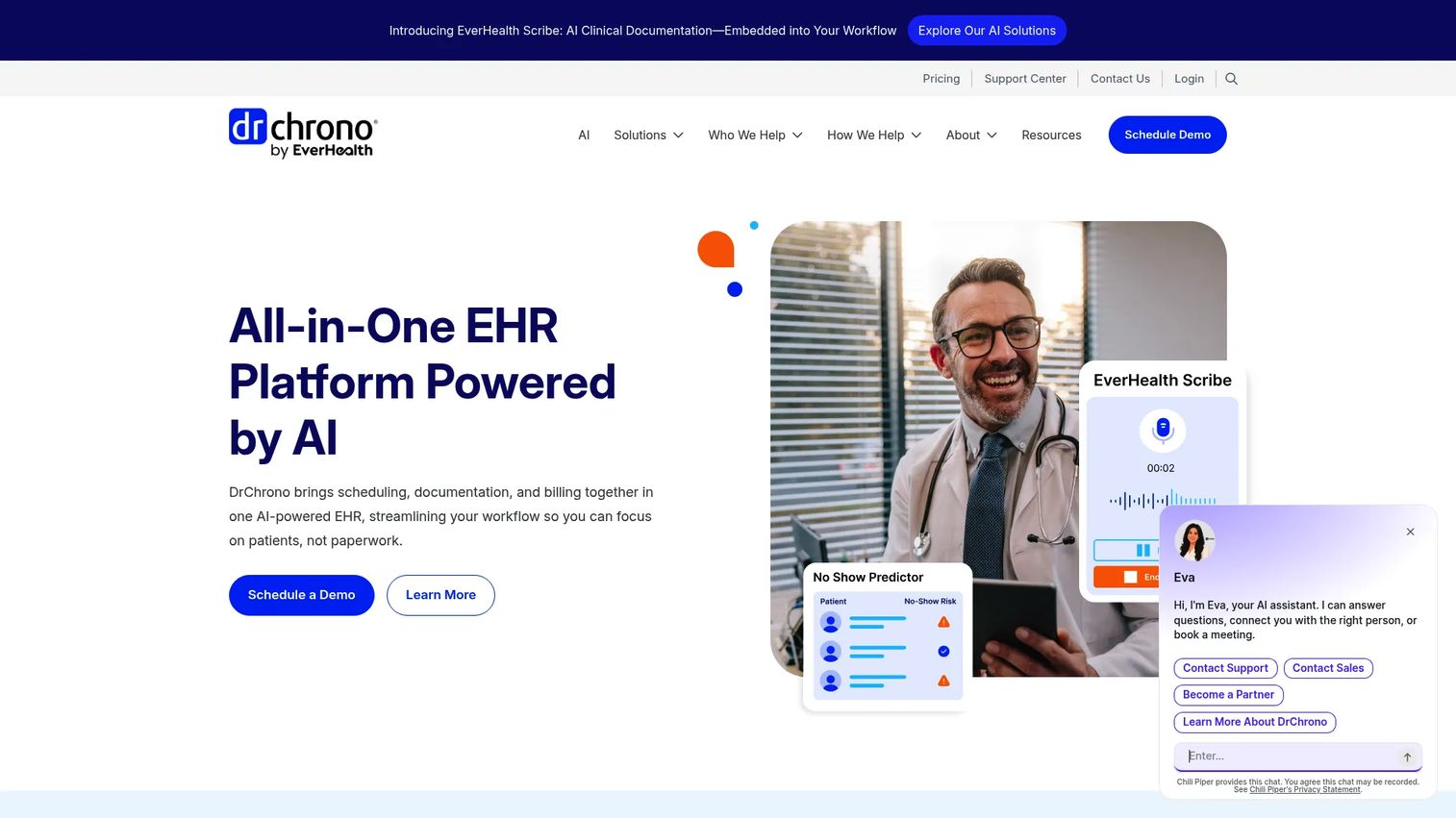
DrChrono is a cloud-based EHR, practice management, billing, and patient engagement platform known for its mobile-first design. For a podiatry clinic that charts on tablets or runs a leaner, more mobile operation, the appeal is charting and scheduling built to work on a device in the exam room.
The platform covers mobile-first charting, appointment scheduling, e-prescribing, patient intake forms, and practice management, with AI-powered workflow automation layered on top. Smaller and mobile clinic workflows fit this model well.
Best for: Independent practices that want an integrated, mobile-first EHR and practice management suite.
Key strengths
- Mobile-first charting: Tablet-based documentation designed for the exam room, not just the desktop.
- Integrated scheduling and e-prescribing: Appointment scheduling, patient forms, and e-prescribing in one flow.
- Workflow automation: AI-powered automation to streamline routine practice tasks.
Why choose DrChrono: Choose DrChrono when mobility matters and your team charts on tablets. It fits smaller or more mobile podiatry clinics that want an integrated suite without a desktop-bound workflow.
DrChrono pricing: DrChrono, now branded DrChrono by EverHealth in places, shows plan tiers named Prometheus, Hippocrates, Apollo, and Apollo Plus. Pricing is quote-based, with no public dollar amounts listed at the time of writing. Request a quote for the tier that matches your feature needs.
7. Tebra

Tebra is all-in-one software for private medical practices, combining EHR, billing, telehealth, and patient engagement. For a small podiatry group, the value is practical consolidation: charting, claims, and patient communication in one platform sized for independent practices.
The platform includes AI-powered charting, electronic prescriptions and labs, telehealth, and a patient portal, alongside medical billing and practice management. Groups that want operational consolidation without enterprise complexity fit here.
Best for: Independent podiatry practices wanting integrated billing, EHR, and patient engagement tools.
Key strengths
- AI-powered charting: Documentation tools designed to reduce time spent per note.
- Integrated telehealth and portal: Video visits, secure messaging, and a patient portal in one system.
- Medical billing: Claims and billing built for independent practice cash flow.
Why choose Tebra: Choose Tebra when you want a practical, consolidated platform for a small or independent group without enterprise overhead. It fits practices prioritizing patient engagement and integrated billing.
Tebra pricing: Tebra publishes tier pricing that varies by provider count, provider type, and claim volume. Practice Essentials starts at $599 per provider per month and Practice Automation at $799 per provider per month. Single-solution starters include Patient Experience and Marketing from $49 per month and EHR Starter from $99 per month. Confirm the bundle for your practice.
Considerations before you buy
Before you sign, run each shortlisted platform against these criteria. They separate a demo that looks good from software your staff can actually run.
Specialty documentation fit
Ask the vendor to show a diabetic foot exam and a common procedure like nail debridement, documented live. Count the clicks. Podiatry EMR software should ship foot and ankle documentation templates and anatomical diagrams out of the box, not require you to build them.
Billing and RCM depth
Test claims processing, insurance verification, and claim denial management against your real payer mix. Ask whether coding support and billing safeguards flag errors before submission. If the vendor offers podiatry RCM software as a service, confirm what percentage of collections they charge.
Patient experience and communication
Check that the patient portal covers secure messaging, online payments, e-statements, appointment scheduling, and telehealth. Patients judge your practice by these touchpoints, and self-service here directly reduces front-desk load.
Implementation timeline and onboarding speed
Ask for a realistic implementation timeline and what onboarding looks like week one. A platform that takes two quarters to go live costs you more than the license. Confirm data migration, training, and support before you commit.
Conclusion
The best podiatry software depends on what your clinic is trying to fix. If you want modular practice management, EHR, and billing you can scale, PracticeSuite fits. If integrated billing services matter most, CureMD handles charting and collections together. Modernizing Medicine leads on specialty documentation depth, while PrognoCIS wins on customizable charting, labs, and imaging. AdvancedMD brings general ambulatory strength and practice automation, DrChrono suits mobile-first and smaller clinics, and Tebra offers practical consolidation for independent groups.
There is no single best EHR for podiatry. The right pick depends on whether your practice prioritizes specialty documentation, revenue cycle and claims processing, patient experience, or implementation speed. Shortlist two or three platforms, then evaluate each against your current bottlenecks: the charting clicks, the denial rate, the front-desk load. Run a live walkthrough with your own workflows before you decide.
FAQs
A small clinic needs podiatry-specific documentation templates, appointment scheduling, billing with claims processing, a patient portal, and telehealth in one system. Prioritize software that reduces charting clicks and handles insurance verification, since staff time is your scarcest resource. Avoid paying for enterprise modules you will not use.
A general EHR is built to be broadly adaptable, so you spend time bending it to foot and ankle care. Podiatry EHR software ships specialty documentation templates, anatomical diagrams, and coding support out of the box. The result is fewer clicks per exam and cleaner claims, because the specialty logic is built in rather than configured.
Look for built-in coding support, claim scrubbing, insurance verification, and claim denial management. These features catch errors before submission, which is where podiatry billing software earns its cost. If a vendor offers RCM as a service, confirm the percentage of collections they charge and how denials are handled.
Most modern platforms include a patient portal with secure messaging, online payments, and e-statements, plus online appointment scheduling. These features shift routine communication and intake to self-service, reducing front-desk load. Confirm that scheduling and the portal are integrated with charting and billing, not bolted on separately.
They are core to podiatry, not optional. Image management supports wound tracking and diagnostic records, while anatomical diagrams speed documentation and make notes clearer for coding and referrals. When comparing an EMR for podiatry, check that imaging and diagrams are built into the charting flow rather than an add-on.
Yes. Most platforms on this list include telehealth video visits integrated with charting and billing, plus standard and controlled-substance e-prescribing with medication history. Confirm that telehealth visits flow into documentation and claims automatically, so a virtual visit does not create extra manual work.
Multi-location practices should prioritize centralized scheduling, shared records across sites, consolidated billing, and revenue cycle analytics that report across locations. Look for role-based access and reporting that rolls up to a practice view. Confirm the platform handles multiple providers and sites without duplicate data entry.
Ask each vendor for a realistic implementation timeline, what data migration involves, and what week-one onboarding looks like. Request references from practices your size. A platform that takes two quarters to go live costs more than the license, so weigh onboarding speed alongside features when you compare the best podiatry EHR options.