Growth paths live in the wrong places. They sit in a manager's head, in a slide deck from last year's offsite, in a half-updated Notion doc nobody opens after week two. Then a strong engineer asks where they go next, the manager improvises, and six weeks later that person is interviewing elsewhere.
This is not an HR problem. It is a retention, role readiness, and leadership bench problem, and it hits scaling companies hardest. When you cross 50 or 60 people, ad hoc management stops working. You need consistent progression, competency management, and succession planning that does not route through the founder or a single overloaded VP.
The stakes are getting bigger, not smaller. The global career management software market was valued at USD 5.23 billion in 2024 and is projected to reach USD 10.5 billion by 2035, according to WiseGuy Reports (2025). Buyers are investing because clearer paths reduce uncertainty, and uncertainty is what drives your best people out.
This guide gives you a practical shortlist. We compare eight tools by career pathing, competency management, succession planning, and analytics, so you can decide based on operational fit instead of feature marketing. If you also want context on how growth software fits a wider adoption strategy, our roundup of the best digital adoption platforms is a useful companion read.
What's inside
This list is built for founders, HR leaders, and people teams evaluating career management software as part of a broader talent management software decision. Each tool supports some mix of progression, internal mobility software, skills frameworks, employee development plans, and succession planning software.
We selected and ranked tools on four criteria that matter for scaling teams:
- Workflow depth: how well it handles career pathing, competencies, and succession planning end to end.
- Manager adoption: whether managers actually run the process, not just HR.
- Analytics: visibility into role readiness, risk, and bench strength.
- Fit for scaling teams: integrations and stack fit for a 50 to 500 person company.
TL;DR
- Best overall for structured talent workflows: Paycor, with role profiles, competencies, a 9-box grid, and a clean succession planning workflow.
- Best for skills-based pathing: Dayforce, for skills inventory and internal mobility software driven by matching.
- Best for all-in-one talent management: Deel Engage, combining career roadmaps, learning, goals, and reviews.
- Best for performance-led development: Lattice, when growth lives inside your performance cadence.
- Best for competency-driven development: Leapsome, balancing performance, learning, and career growth.
- Best for engagement-linked development: Culture Amp, when sentiment data should inform development.
- Best for enterprise HCM buyers: Workday HCM, for complex, global talent architecture.
- Best for SMB and international teams: Personio, for career development inside a lighter HR platform.
What is career management software?
Career management software is a platform that helps employees see growth paths, helps managers run consistent development conversations, and helps HR standardize progression and succession planning across roles, levels, and teams.
It differs from broad performance management by adding forward-looking structure. Performance management asks how someone did last quarter. Career management software asks where they go next, what competencies close the gap, and who is ready to step up when a role opens.
The core capabilities usually include:
- Career pathing and progression: visible routes between roles and levels, so growth is explicit rather than assumed.
- Competency and skills frameworks: a shared skills framework that defines what "good" looks like at each level.
- Employee development plans: structured plans tied to competencies and role targets.
- Succession planning: mapping future roles, identifying candidates, and tracking role readiness.
- Performance review alignment: connecting reviews, feedback, and goals to growth plans.
- Dashboards and workforce insights: analytics on bench strength, flight risk, and skill gaps.
- Internal mobility and role readiness: surfacing open roles and matching internal candidates before you hire externally.
Strong career development software ties these together into one operating rhythm. Weak setups scatter them across spreadsheets, docs, and disconnected review tools. If you are also mapping the wider people stack, our guide to the best employee advocacy software tools covers an adjacent piece of the engagement puzzle.
When to use career management software
When you need managers to run consistent growth conversations
If two managers on the same team give wildly different answers to "how do I get promoted," you have a consistency problem. Career management software gives every manager the same career frameworks, competency definitions, and development templates. That is what turns ad hoc coaching into a repeatable process, and it is where manager adoption becomes the real success metric.
When retention risk is rising in key roles
Attrition in critical roles is expensive and slow to recover from. When your best people cannot see a path, they assume there isn't one. Clear progression and honest development plans reduce that uncertainty. This is the moment career management software earns its place, well before the exit interviews start.
When leadership needs succession visibility before the next hiring wave
Before you scale headcount, you need to know who is ready to lead. Succession planning software maps future roles, flags gaps, and tracks role readiness so you are not caught flat-footed when a key person leaves or a new team spins up. For founders preparing for a fundraise or a reorg, this visibility is board-ready evidence that the bench is real.
Comparison table
Here is the shortlist at a glance. Pricing and G2 ratings reflect publicly available values at the time of writing. Many enterprise HR platforms quote custom pricing, so treat starting prices as directional and confirm during your evaluation.
| # | Product | Intent | Key use case | Pricing | G2 rating |
|---|---|---|---|---|---|
| 1 | Paycor | Structured HR-led talent workflows | Role profiles, competencies, 9-box grid, succession planning | From $99/mo + $5 per employee | 3.9/5 |
| 2 | Dayforce | Skills-based mobility | Skills inventory, job matching, self-service development | Custom | 4.2/5 |
| 3 | Deel Engage | All-in-one talent management | Career roadmaps, learning, goals, reviews | From $20 per worker/mo | 4.8/5 |
| 4 | Lattice | Performance-led development | Reviews, goals, growth plans, succession | From $4 seat/mo | 4.7/5 |
| 5 | Leapsome | Competency-driven development | Development planning, competencies, reviews | From €199/mo (module-based) | 4.8/5 |
| 6 | Culture Amp | Engagement-linked development | Surveys, performance, career paths, competencies | Contact sales | 4.5/5 |
| 7 | Workday HCM | Enterprise talent management | Career frameworks, succession, workforce planning | Contact sales | 4.1/5 |
| 8 | Personio | SMB and international HR | Career development inside a broader HR platform | From €7.60 per employee/mo | 4.4/5 |
1. Paycor
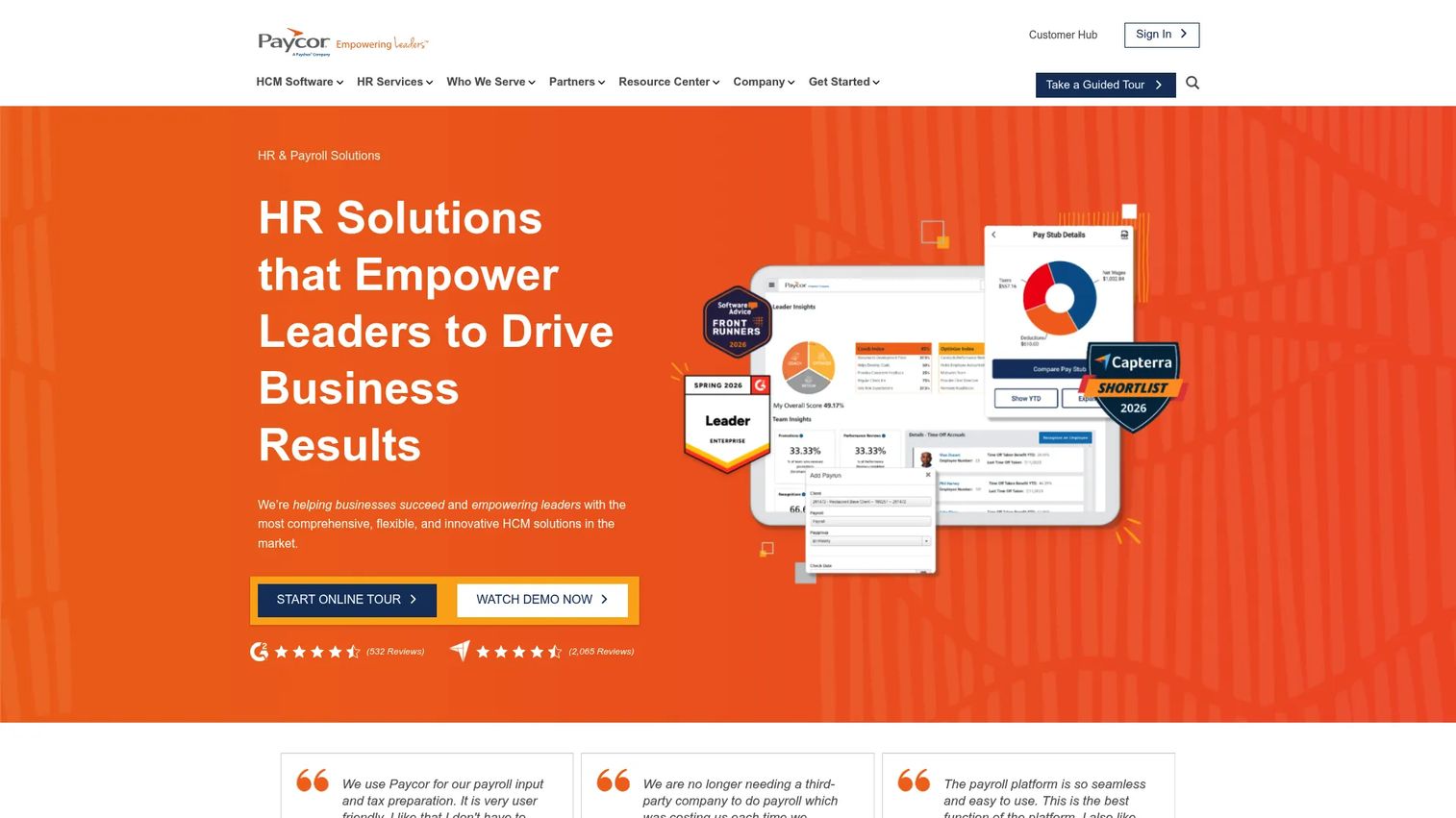
Paycor is a cloud-based HCM platform covering payroll, HR, talent, time, and benefits, with a talent layer built for structured, HR-led career management. Its career module leans on role and growth profiles, competencies, and job assessments, then rolls that data up into dashboards and a succession planning workflow. For teams that want a defined process rather than a loose set of tools, it is a strong anchor.
Best for: small to mid-sized businesses that want an integrated HR and payroll suite with real succession planning mechanics.
Key strengths
- Role and growth profiles: define competencies and talent attributes per role, so progression criteria are explicit and consistent.
- 9-box grid: plot performance against potential to identify high performers and succession candidates at a glance.
- Succession planning workflow: connect role-based reviews, assessments, and dashboards into a repeatable bench-planning process.
Why choose Paycor: If your career management needs sit inside a broader payroll and HR system, Paycor keeps the whole employee lifecycle in one place. The 9-box grid and role profiles give HR a concrete, defensible framework for promotion and succession decisions, which matters when leadership asks for evidence rather than gut feel. It suits companies that value structure and want implementation support to stand the process up.
Paycor pricing: Publicly listed small-business plans start with Basic at $99 monthly plus $5 per employee per month, and Complete at $199 monthly plus $7 per employee per month. There is no free tier. Mid-market plans and larger deployments are quoted separately, so request a custom quote if you are past the small-business bracket. Paycor holds a 3.9/5 rating on G2.
2. Dayforce
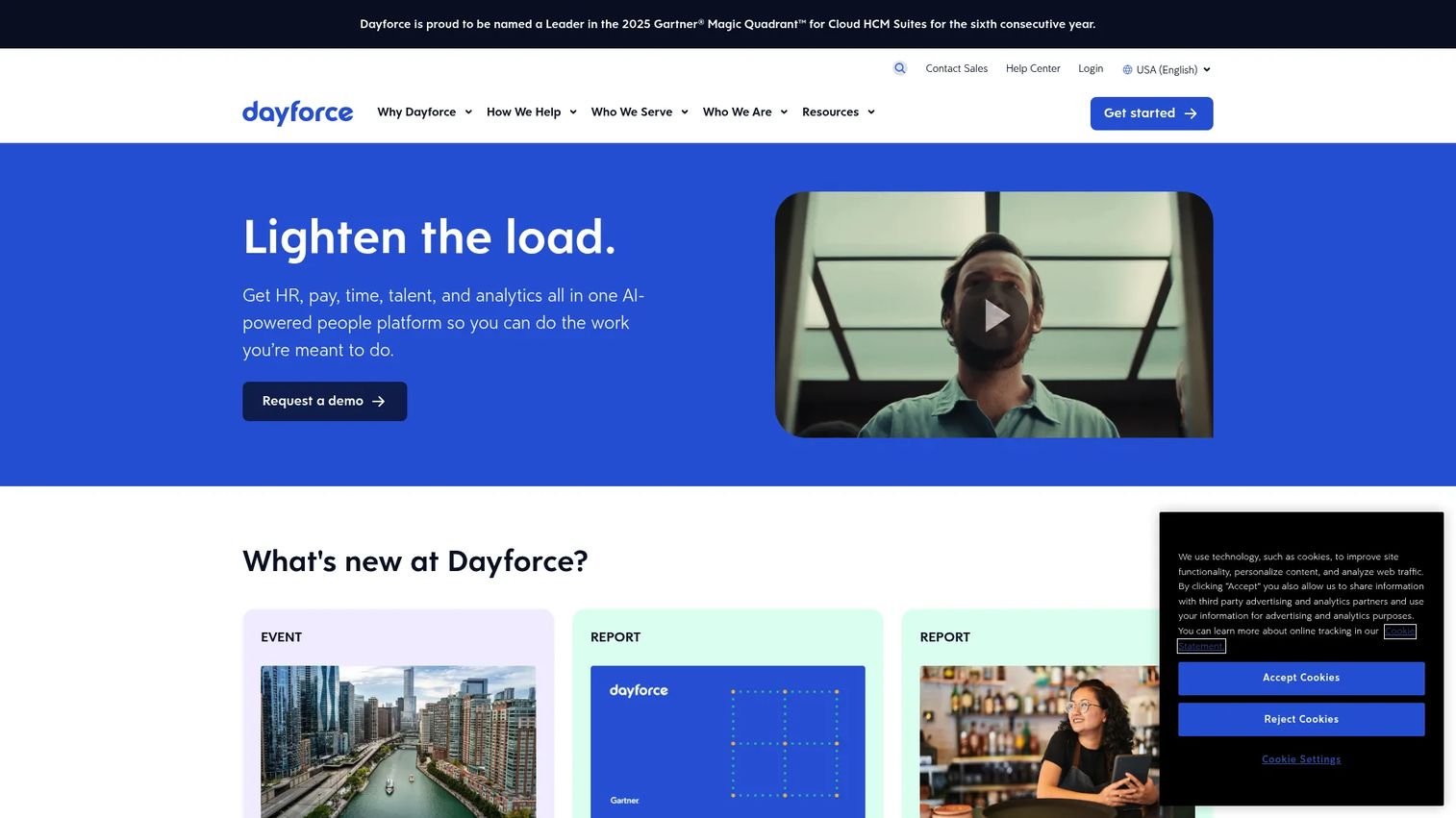
Dayforce is an AI-powered global HCM platform spanning HR, payroll, time, talent, and analytics. Its career management strength is skills-based: a living skills inventory feeds job and opportunity matching, so employees can see internal roles that fit their current and adjacent competencies. That makes it a natural fit for internal mobility software use cases where you want people moving toward opportunity rather than out the door.
Best for: mid-to-large enterprises that want career pathing tied to skills visibility and strong employee self-service.
Key strengths
- Skills inventory: maintain a structured view of employee skills that powers matching, gap analysis, and workforce planning.
- Job and opportunity matching: surface internal roles, gigs, and mentorship connections based on skills and interests.
- Self-service development: let employees explore paths, request mentorship, and act on recommendations without waiting on HR.
Why choose Dayforce: If you believe growth should follow skills rather than tenure, Dayforce's matching model puts that into practice. Manager endorsements and reminders keep development moving, and employee self-service reduces the load on HR to broker every conversation. It fits companies that already run global payroll and workforce management in one system and want talent to live there too.
Dayforce pricing: Dayforce is sold by module and does not publish prices on its site, so licensing is quoted through sales based on the modules and headcount you need. Dayforce holds a 4.2/5 rating on G2.
3. Deel Engage
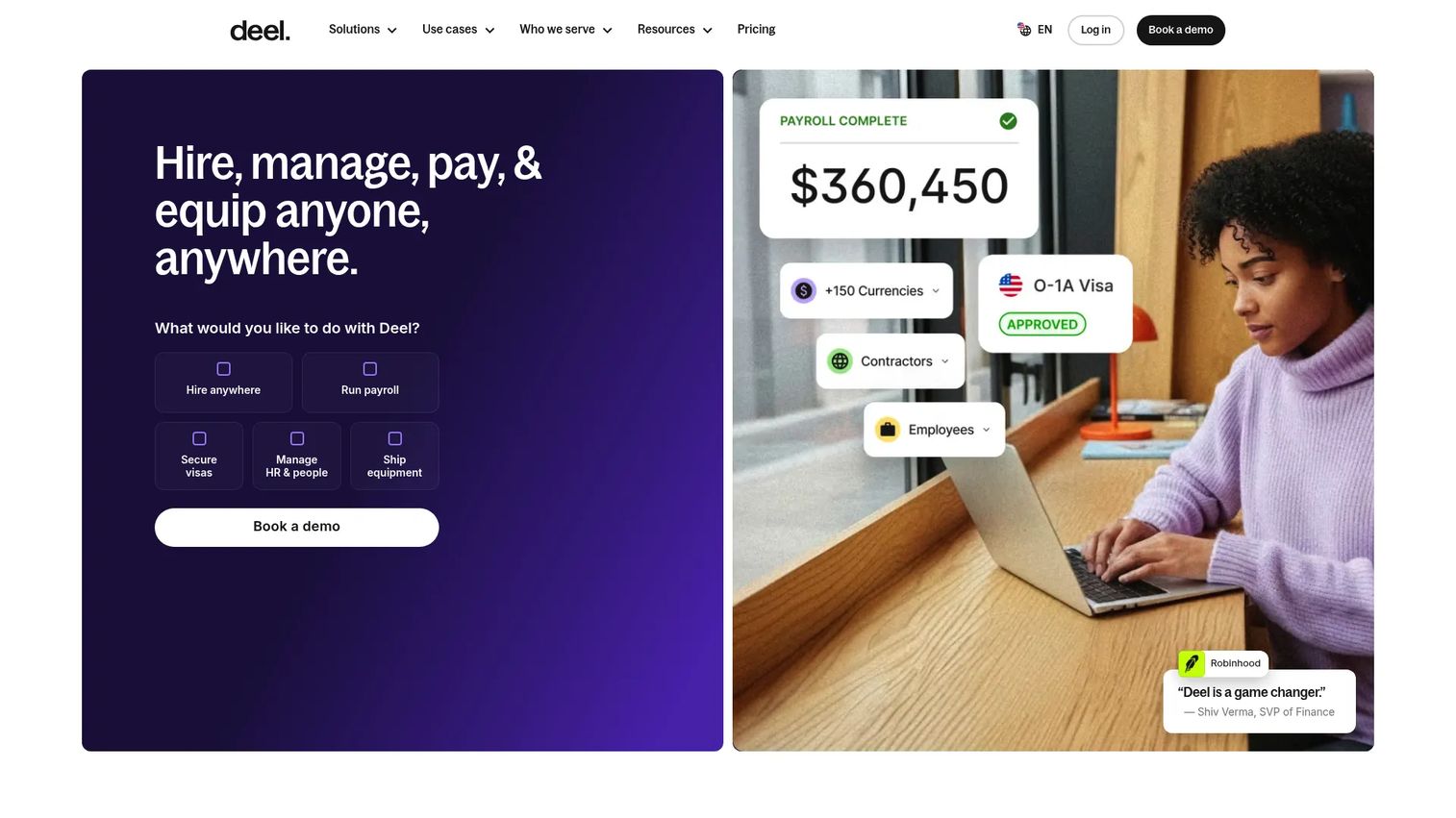
Deel Engage is AI-powered talent management software that bundles performance, learning, goals, surveys, development, and career management into one system. Career roadmaps are built on a competency library, so progression is anchored to defined skills rather than vague expectations. Because it sits inside Deel's broader platform, it appeals to teams that want career management woven into an integrated talent management stack rather than bolted on.
Best for: companies that want a single HR suite for talent development, performance management, and career growth.
Key strengths
- Competency-based career paths: define career frameworks with a competency library that maps skills to levels and roles.
- Integrated learning: connect development plans to an LMS with an AI course builder, so gaps turn into assigned learning.
- Goals, reviews, and check-ins: link OKRs, review cycles, and one-on-ones to the same growth plans for a continuous rhythm.
Why choose Deel Engage: The appeal is consolidation. Instead of stitching a review tool to a learning tool to a career pathing tool, Deel Engage runs them as one system with shared competency data. That reduces the "who owns this workflow" confusion that slows people teams down. It fits companies that want fewer tools and more signal across development, performance, and engagement.
Deel Engage pricing: Engage is sold as an all-in-one bundle starting at $20 per worker per month, covering learning, performance reviews and goals, career management, development, and surveys. The tools are not sold individually, and there is no free tier. Deel holds a 4.8/5 rating on G2 across its seller profile.
4. Lattice
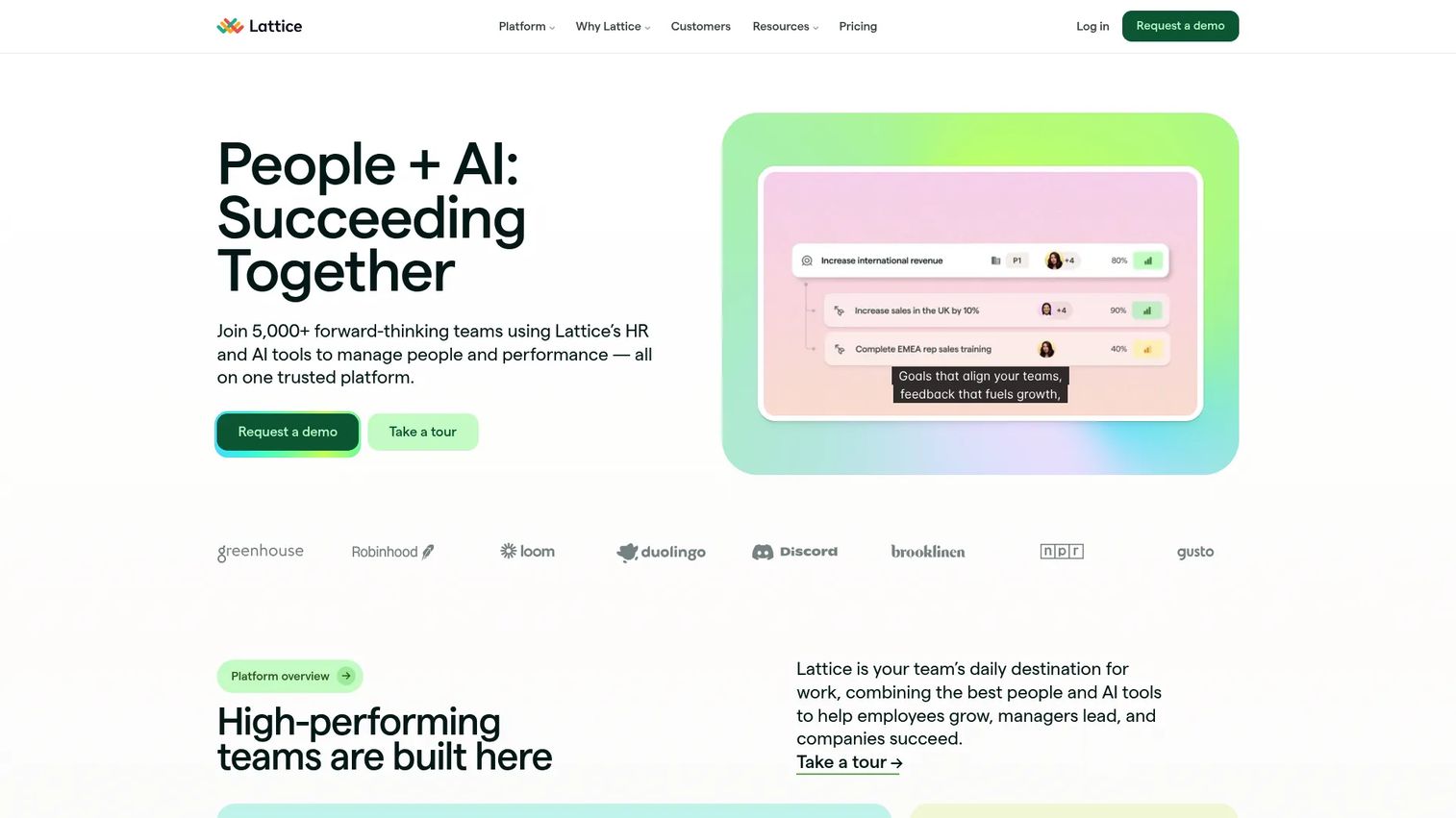
Lattice is a people success platform covering performance, goals, engagement, compensation, and career growth. Its distinguishing move is tying development directly to the performance operating rhythm: reviews, talent reviews, promotions, calibration, and succession planning all live in one flow. For teams that already run a tight review cadence, layering growth plans on top is a natural extension rather than a separate initiative.
Best for: mid-market and enterprise HR teams that want career management to live inside their performance cadence.
Key strengths
- Performance and growth plans: connect review cycles, feedback, and development conversations so growth is a continuous output of the cadence.
- Goals and OKRs: cascade goals with progress updates and reminders that keep development tied to real work.
- Talent reviews and succession: run calibration, promotions, and succession planning with the same data you use for reviews.
Why choose Lattice: If your development conversations keep getting lost between review cycles, Lattice fixes the sequencing by making growth part of the same rhythm. Managers work in one place for feedback, goals, and career discussions, which lifts manager adoption because there is no separate tool to remember. It suits performance-forward cultures that want structure without a heavy suite.
Lattice pricing: Lattice uses modular, seat-based pricing billed annually in USD, with a minimum annual agreement of $4,000. Base products start around $4 seat/month for Engagement, with Performance at $10 seat/month, Goals and OKRs at $8 seat/month, and add-ons layered on top. Enterprise is custom quote only. Lattice holds a 4.7/5 rating on G2.
5. Leapsome
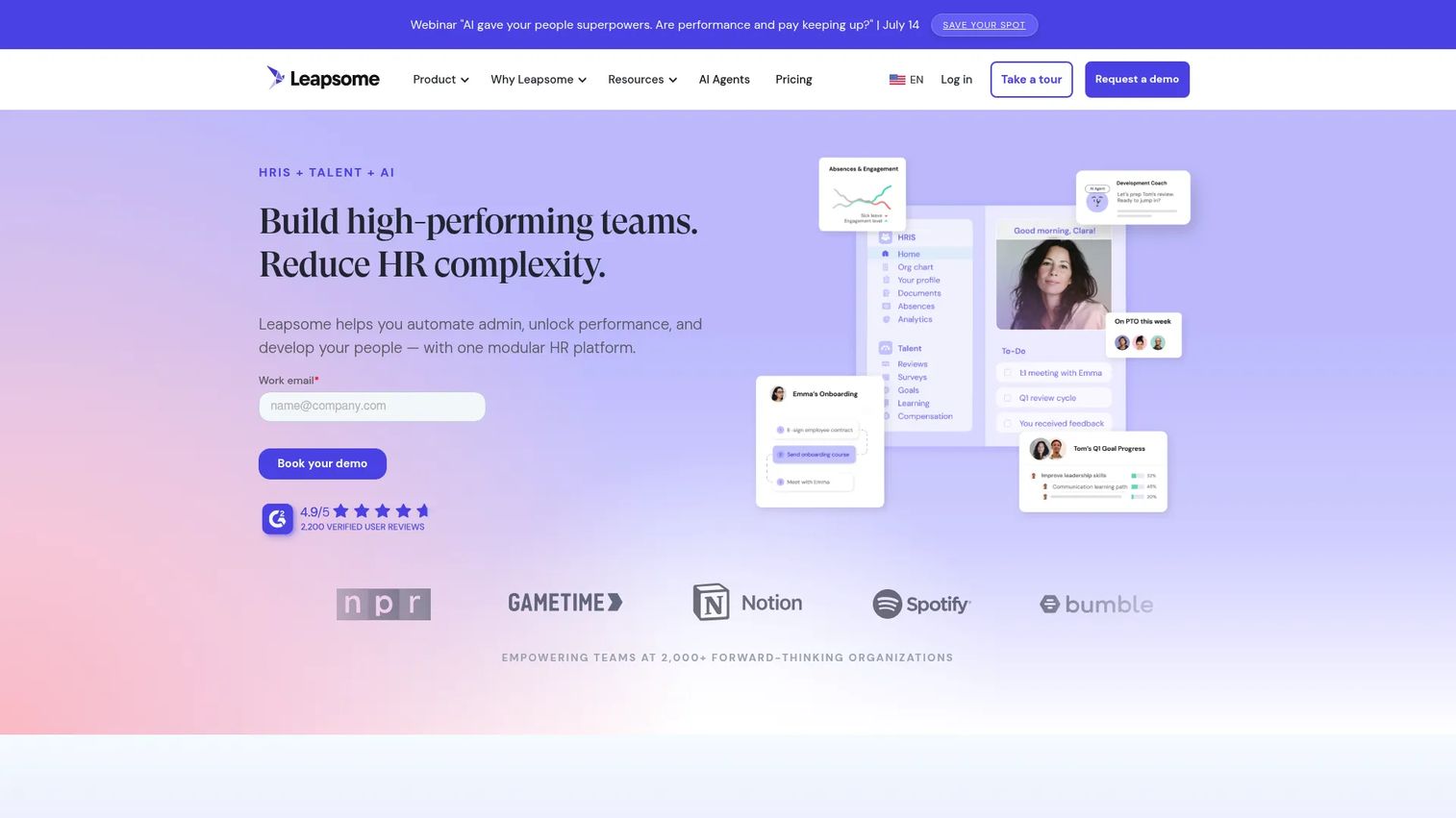
Leapsome is an AI-powered people platform spanning HR, performance, learning, and engagement. It sits in a sweet spot between a lightweight review tool and a heavy enterprise suite, with competency frameworks, reviews, goals, feedback, and learning paths that connect development to measurable skills. Modules can be bought individually or combined, so you can start with career development and expand as your process matures.
Best for: mid-market and enterprise HR teams that want an integrated people platform balancing performance, learning, and career growth.
Key strengths
- Competency frameworks: define skills frameworks by role and level, then measure development against them in reviews.
- Development and learning paths: connect employee development plans to integrated learning content and structured paths.
- Reviews, goals, and feedback: run the full performance rhythm alongside development, so growth and evaluation share one dataset.
Why choose Leapsome: Leapsome balances performance, learning, and career growth without forcing you into a full HCM migration. Compared with more suite-heavy tools, it lets you adopt the modules you need now and add the rest later, which keeps early-stage complexity down. It fits teams that want serious competency management and manager workflows without buying an entire HR system to get them.
Leapsome pricing: Leapsome sells modules individually or in combination, with multi-module and volume discounts available. Its HRIS starts around €199/month, and module pricing depends on employee count, contract length, and modules selected, so a customized quote is standard. A 14-day free trial is available. Leapsome holds a 4.8/5 rating on G2.
6. Culture Amp
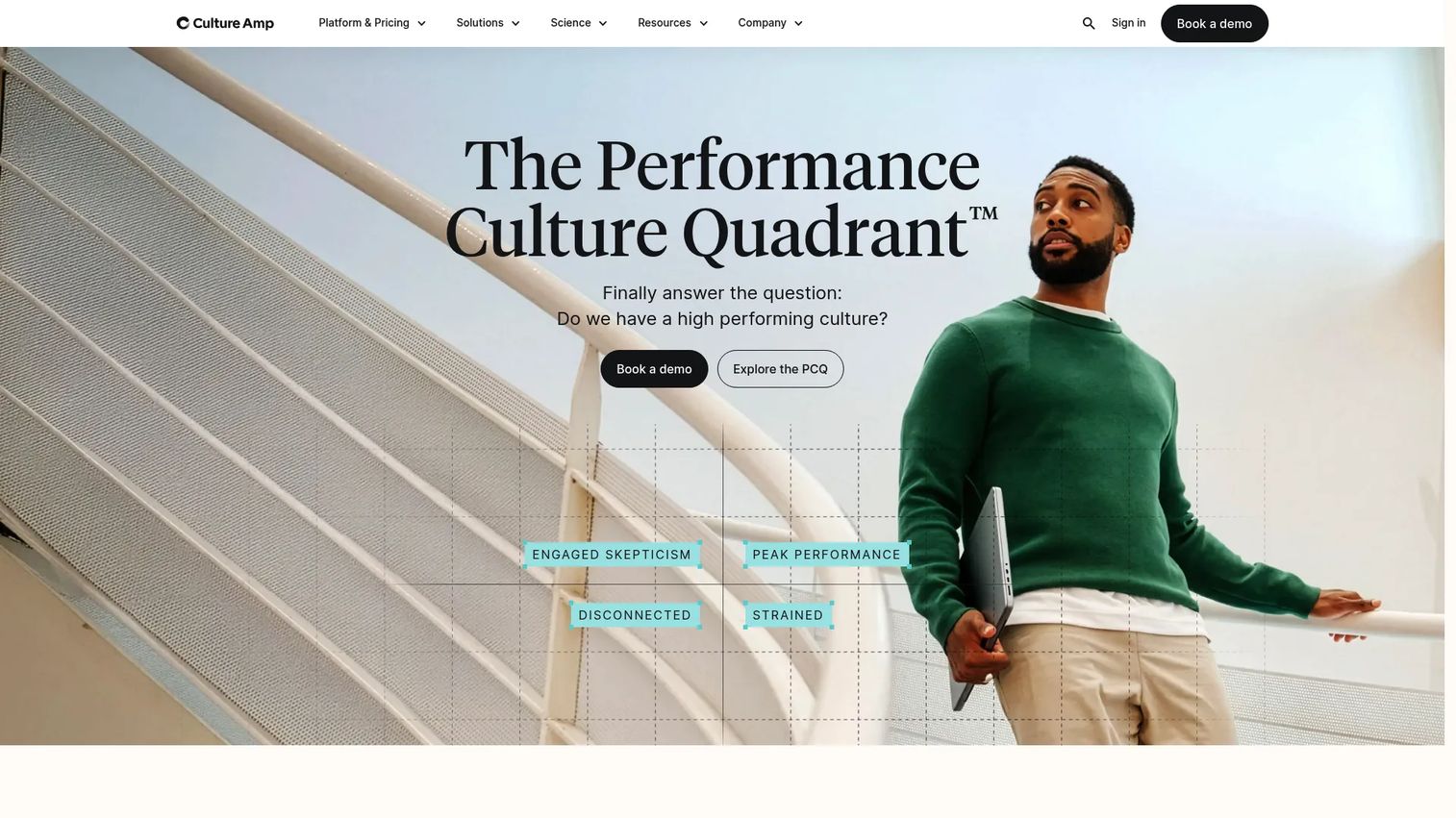
Culture Amp is an employee experience platform built around engagement, performance, and development. Its differentiator is connective tissue: engagement and pulse surveys feed directly into performance reviews, one-on-ones, career paths, and competencies. When you want development decisions grounded in how people actually feel about their work and growth, that link between sentiment and pathing is the draw.
Best for: companies that want engagement data to inform development and career growth decisions.
Key strengths
- Engagement and pulse surveys: capture employee sentiment continuously and turn it into action planning.
- Performance and 1-on-1s: run reviews, feedback, and check-ins that connect to growth conversations.
- Career paths and competencies: define paths and development plans informed by real engagement signals.
Why choose Culture Amp: If retention risk shows up first in engagement scores, Culture Amp lets you act on it before it becomes attrition. The platform ties employee engagement data to career paths and development plans, so you are not guessing which teams need attention. It fits people-first cultures that treat engagement and growth as two sides of the same problem rather than separate programs.
Culture Amp pricing: Culture Amp does not publish numeric prices. Plans are grouped into Standard and Enterprise service tiers, all billed annually, with cost depending on employee count and the products chosen. Contact sales for a quote. Culture Amp holds a 4.5/5 rating on G2.
7. Workday HCM
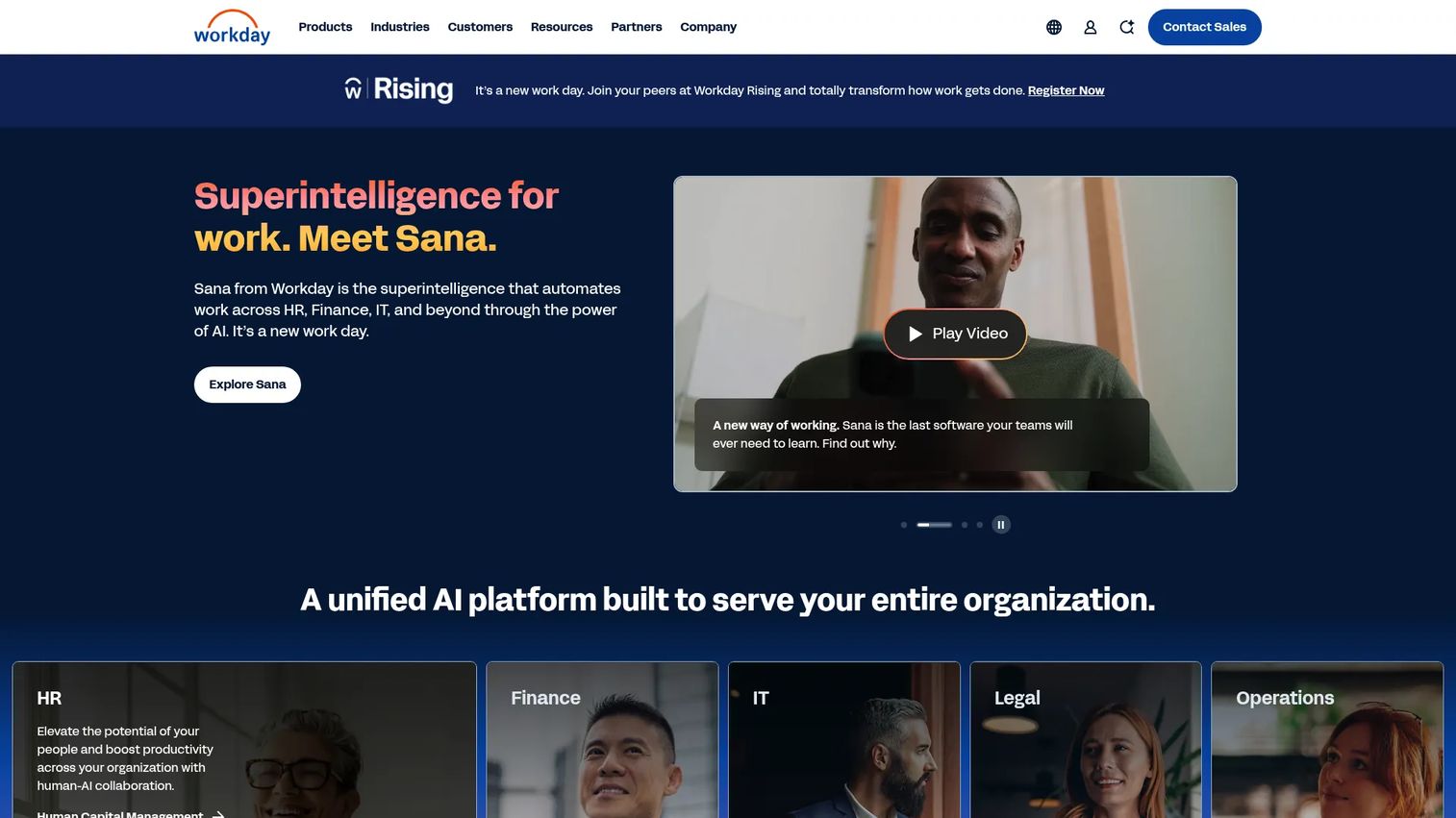
Workday HCM is enterprise human capital management software covering core HR, payroll, talent, workforce management, and employee experience. Its career management depth comes from enterprise-grade career frameworks, talent management, succession planning, workforce planning, and analytics that hold up across thousands of employees and multiple geographies. For large organizations with complex HR architecture, it is built to be the system of record.
Best for: large enterprises that need a unified, global, scalable HR suite with deep talent capabilities.
Key strengths
- Enterprise career frameworks: define and govern career frameworks and competencies across a large, distributed org.
- Succession and workforce planning: connect succession planning to workforce planning and analytics for forward-looking bench strategy.
- Talent analytics: surface role readiness, skill gaps, and mobility trends at scale for executive reporting.
Why choose Workday HCM: When your talent decisions involve global compliance, complex org structures, and board-level workforce planning, Workday's depth and governance are the point. It is heavier than the mid-market tools here, which is exactly what large enterprises need for consistency and control. It fits organizations that want one governed platform behind every HR, talent, and planning decision.
Workday HCM pricing: Workday does not publish pricing and quotes deployments through sales based on scope and headcount. Workday HCM holds a 4.1/5 rating on G2.
8. Personio
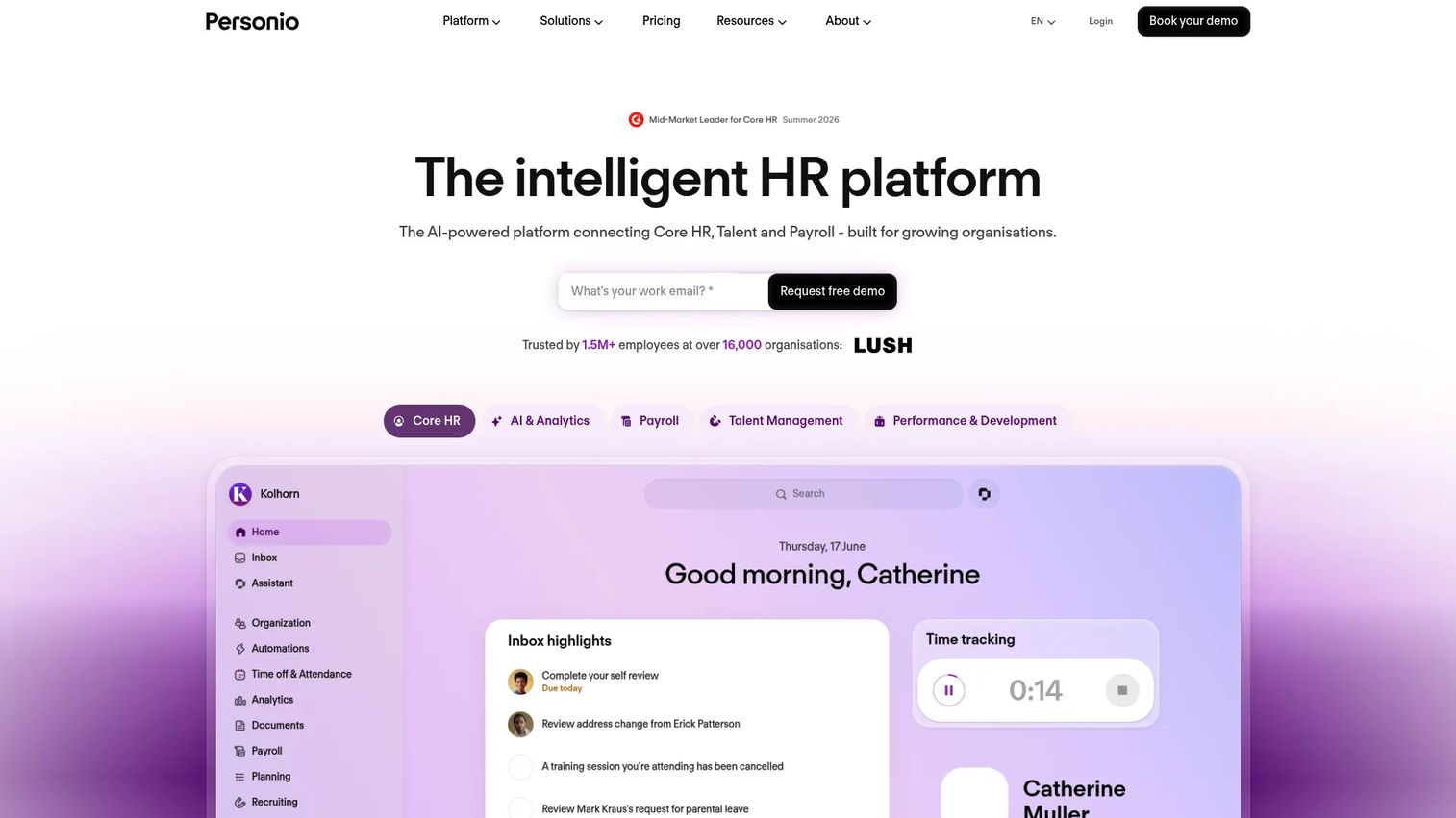
Personio is an AI-powered HR platform for small and mid-sized businesses, covering core HR, payroll, and talent workflows. Its career development capabilities sit inside a broader, lighter HR system, with performance and development apps that layer onto core HR records. For growing companies, especially those operating across multiple European countries, it offers career development without the weight of a full enterprise HCM.
Best for: SMBs and mid-market teams, particularly international ones, that want an all-in-one HR platform with modular add-ons.
Key strengths
- Core HR foundation: manage employee profiles, documents, time tracking, and workflow automation in one place.
- Performance and development apps: add reviews and development modules that connect to core HR records.
- Integrations and workforce planning: use 200+ integrations plus workforce planning and access controls to fit a growing stack.
Why choose Personio: Personio fits companies that want career development as one part of a broader, well-run HR platform rather than a dedicated talent suite. Its modular apps let you start with core HR and add performance and development as you scale, which suits fast-growing international teams. It is a pragmatic pick when you need solid HR workflows first and structured career management as a growing add-on.
Personio pricing: Personio uses per-employee pricing starting at €7.60 per month per employee. Core and Core Pro plans require a personalized offer rather than listing public numbers, and nonprofits get 10% off with annual upfront payment. Personio holds a 4.4/5 rating on G2.
Considerations before you buy
The right tool depends less on feature counts and more on how your process actually runs today. Use this checklist before you commit.
Manager adoption
The best framework fails if managers ignore it. Ask whether the tool lives where managers already work, or whether it adds another tab they will forget. Tools that fold career conversations into the existing review and one-on-one rhythm tend to see far higher manager adoption than standalone systems.
Depth of competency and skills frameworks
Not every team needs a granular skills framework. If you are early, a simple set of role profiles may be enough. If you are scaling fast across functions, you need competency management that can define, measure, and update skills by level without becoming a maintenance burden.
Succession planning and role readiness
Look at how the tool handles role readiness, not just current performance. A real succession capability maps future roles, identifies candidates, and tracks readiness over time. A 9-box grid is a good start, but check whether it connects to development plans that actually close the gaps it surfaces.
Analytics and reporting
You want visibility into bench strength, flight risk, and skill gaps that you can put in front of a board. Evaluate whether reporting is exportable and whether it segments by team, level, and role. Thin dashboards make it hard to prove the program is working.
Stack fit and whether it replaces spreadsheets
The real test is whether the tool retires your spreadsheets and disconnected docs. Check integrations with your HRIS, payroll, and performance data, and confirm the tool consolidates rather than adding another silo to maintain.
Conclusion
The best career management software depends on where your process sits today. If you want structured, HR-led talent workflows with strong succession mechanics, Paycor is the anchor pick. If growth should follow skills, Dayforce's matching model leads. For an all-in-one talent management stack, Deel Engage consolidates learning, goals, reviews, and career roadmaps in one place.
For performance-forward teams, Lattice keeps development inside the review cadence, while Leapsome offers competency-driven development you can adopt module by module. When employee engagement should inform growth decisions, Culture Amp connects sentiment to career paths. At the enterprise end, Workday HCM delivers governed, global talent and workforce planning depth, and Personio fits growing international teams that want career development inside a lighter HR platform.
Start with the tool that best matches your current process maturity, not the one with the longest feature list. If managers already run a tight review rhythm, extend it. If you are still living in spreadsheets, prioritize adoption and reporting over depth. The goal is the same either way: make growth paths visible, consistent, and measurable, so employee retention and leadership bench strength stop depending on any single person.
FAQs
Career management software helps employees understand growth paths, helps managers run consistent development conversations, and helps HR standardize progression and succession planning. It turns informal, manager-dependent coaching into a repeatable process backed by competencies and data. The goal is visible, measurable career development across every role and level.
Performance management focuses on review cycles, goals, and how someone performed. Career management software adds forward-looking structure: growth paths, competencies, employee development plans, and internal mobility. In practice the two overlap, and many platforms combine them, but career management is defined by its focus on where an employee goes next.
Prioritize career paths, competency frameworks, employee development plans, succession planning, manager adoption, and analytics. The features that matter most are the ones your managers will actually use and the reporting that shows leadership whether the program is working. Depth only helps if the workflow gets adopted.
Yes. When employees can see a clear path and have honest development conversations, uncertainty drops, and uncertainty is a major driver of attrition. The effect is strongest in critical roles where losing one person is expensive. Clearer paths plus consistent manager conversations tend to improve employee retention over time.
Companies usually start needing it once growth makes ad hoc, manager-driven development inconsistent, often around 50 to 100 employees. Below that, spreadsheets and direct conversations can work. Past it, you need structured progression, competency management, and succession planning that does not route through one person.
It helps define role readiness, map future roles, and track who is developing toward them. Tools like a 9-box grid identify high performers and potential successors, while development plans close the gaps the map reveals. Good succession planning software connects that readiness data to real development actions rather than leaving it static.
Yes. Reviews, feedback, and goals create the operating rhythm that keeps growth plans alive between cycles. When development lives inside the same cadence as performance, managers engage with it more consistently. Disconnecting the two is how development conversations get forgotten until the next annual review.
Prioritize visibility, manager adoption, and reporting, and confirm the tool actually replaces spreadsheets and inconsistent processes. For a scaling company, the win is a repeatable talent system that does not depend on founder oversight. Choose based on process maturity: extend what already works, and fix adoption before chasing depth.