Your procurement data lives in six places. Two ERPs from an acquisition. A card program nobody fully reconciles. Supplier names spelled four different ways across systems. When finance asks how much you spend with a single vendor, the honest answer takes three analysts a week of spreadsheet surgery.
That is the problem spend analysis software exists to fix. It pulls fragmented transaction data into one place, cleanses it, classifies it into consistent categories, and turns it into reporting you can actually defend in a budget meeting. Done well, it surfaces duplicate suppliers, off-contract buying, and tail spend you did not know existed.
The market is moving fast on this. Spend analysis software is projected to grow from $2.84 billion in 2024 to $6.14 billion in 2029, a 16.6% CAGR, according to Research and Markets (2024). More telling: over 78% of large organizations now use some form of spend analysis software to control costs and improve sourcing, per Market Growth Reports (2024). Cloud delivery dominates, accounting for roughly 67 to 68% of deployments in 2024.
But "spend analysis software" covers a wide spread. Some tools are dedicated analytics layers. Others are analytics modules bundled inside a full source-to-pay suite. The difference matters more than any feature checklist, because it decides how much of procurement the platform has to touch, how transparent the classification is, and how often your data refreshes. This guide breaks down seven platforms and where each one fits.
What's inside
This guide is for procurement, finance, and operations teams actively shortlisting a spend analytics platform, plus the cross-functional stakeholders (RevOps, enablement, FP&A) who need clean spend data for planning. We evaluated each tool against four criteria that separate a usable platform from a black box: classification transparency and accuracy, data integration across multiple ERPs and sources, refresh cadence, and how much of the procurement workflow the platform is built to cover. We prioritized verified capabilities and current G2 ratings over marketing claims.
TL;DR
- Best for standardizing source-to-pay: Coupa, if you want AI-driven spend visibility inside a full business spend management platform.
- Best for a unified enterprise data model: Ivalua, when one platform needs to own intake through AP automation.
- Best dedicated analytics layer: SpendHQ, for teams that want spend intelligence and performance tracking without buying a whole suite.
- Best for complex, messy data: Sievo, when 360-degree visibility across many sources is the hard part.
- Best AI-first suite: GEP SMART, for end-to-end source-to-pay with native analytics.
- Best for AI-assisted classification: Zycus, if agent-driven category management is the priority.
- Best for SAP-standardized orgs: SAP Ariba, when your procurement already lives in the SAP ecosystem.
What is spend analysis software?
Spend analysis software is a procurement analytics platform that collects, cleanses, classifies, and visualizes an organization's spend data so teams can find savings, control compliance, and make sourcing decisions with confidence. It answers three questions most companies struggle to answer cleanly: what are we buying, from whom, and at what price.
Under the hood, a spend analysis platform runs a repeatable pipeline. The mechanics differ by vendor, but the core stages are consistent.
- Data integration: Ingesting transactions from ERPs, P2P systems, card programs, and spreadsheets, often across multiple entities and currencies.
- Data cleansing: Normalizing supplier names, de-duplicating records, and fixing inconsistent or missing fields.
- Spend classification: Mapping every transaction to a category taxonomy (UNSPSC or a custom scheme) using rules, machine learning, or a hybrid approach.
- Analytics and dashboards: Slicing spend by category, supplier, business unit, and time, with drill-down to the transaction level.
- Reporting and governance: Auditable views, saved reports, and controls that finance and audit teams can trust.
- Savings identification: Surfacing consolidation opportunities, tail spend, maverick buying, and off-contract leakage.
The best automated spend analysis software treats classification as continuous, not a one-time project. Data refreshes on a schedule, reclassification is transparent and reviewable, and analysts can trace any number back to its source. That auditability is what separates a spend analytics tool you can present to your CFO from one that produces figures nobody quite trusts.
When to use spend analysis software
Consolidate spend across multiple ERPs
If a merger, acquisition, or regional sprawl left you with more than one ERP, spend lives in incompatible formats with no shared supplier IDs. A spend analysis platform harmonizes those sources into one taxonomy, so you can see total spend with a supplier that appears under five different names. This is where multi-ERP spend visibility earns its keep and where spreadsheets break down entirely.
Find and cut tail spend
Roughly 80% of suppliers usually account for a small fraction of spend, yet they create most of the administrative noise and compliance risk. Spend analytics software surfaces that long tail, groups it by category, and highlights consolidation candidates. Tail spend reduction is often the fastest, most defensible savings a procurement team can bring to leadership.
Build reporting finance actually trusts
When budget season arrives, procurement is asked to justify every category. A spend analysis solution gives you auditable, refreshable reporting mapped to a consistent taxonomy, so cross-functional teams, from FP&A to enablement, plan against the same numbers. Clean spend controls translate into budget confidence that ripples well beyond procurement.
Comparison table
Here is how the seven spend analysis tools compare at a glance. All are enterprise-oriented, and every vendor on this list uses quote-based pricing rather than public price points, so evaluate commercial terms directly with each. Ratings reflect current G2 listings where available.
| # | Product | Intent | Key use case | Pricing | G2 rating |
|---|---|---|---|---|---|
| 1 | Coupa | Business spend management suite | AI-driven spend visibility across source-to-pay | Quote-based | 4.2/5 |
| 2 | Ivalua | Unified source-to-pay platform | One data model from intake to AP automation | Quote-based | 4.3/5 |
| 3 | SpendHQ | Dedicated spend analytics | Spend intelligence and performance tracking | Quote-based | 4.4/5 |
| 4 | Sievo | Procurement analytics | 360-degree visibility across complex data | Quote-based | Not listed |
| 5 | GEP SMART | AI-first source-to-pay suite | End-to-end procurement with native analytics | Quote-based | Not listed |
| 6 | Zycus | AI source-to-pay suite | AI-assisted classification and category management | Quote-based | 3.6/5 |
| 7 | SAP Ariba | SAP spend management suite | Enterprise spend analysis inside the SAP ecosystem | Quote-based | 4.1/5 |
1. Coupa
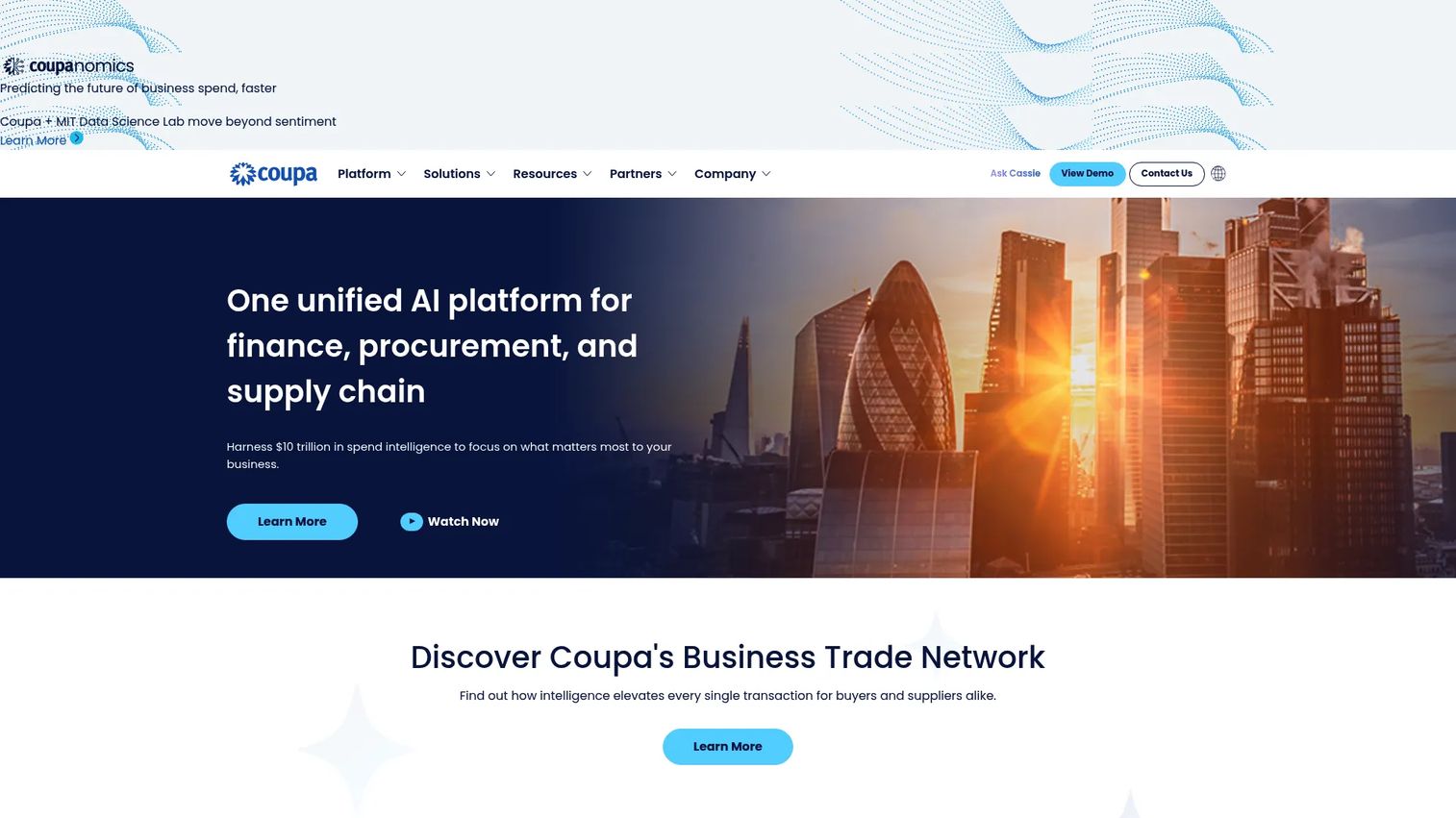
Coupa is an AI-driven business spend management platform covering procurement, invoicing, expenses, payments, and the analytics that sit across them. Its spend analysis capability is not a standalone product but a layer inside a broader suite, which means classification, benchmarking, and fraud or error detection all draw on the same transaction data flowing through procurement and AP. For teams that want spend visibility tied directly to the workflows that generate the spend, that integration is the point.
Best for: Mid-market and enterprise teams standardizing source-to-pay and spend controls on a single platform.
Key strengths
- Unified spend platform: Shared capabilities across procurement, contracts, budgets, and compliance mean analytics run on live operational data.
- AI-driven insights: Machine learning surfaces anomalies, duplicate invoices, and savings opportunities without manual query-building.
- Community benchmarking: Aggregated, anonymized spend data lets you compare your category costs against peers.
Why choose Coupa: Choose Coupa when spend analysis is one piece of a larger source-to-pay standardization, not a bolt-on. Because analytics live inside the same platform as procurement, contracts, and Open Buy workflows, the classification you rely on for reporting is the same data driving compliance and budget controls. That end-to-end coverage is the trade-off: you get depth across the spend lifecycle rather than a specialized analytics tool you plug in.
Coupa pricing: Coupa uses quote-based pricing, and public price points were not exposed on its site at the time of writing. Platform tiers, including Platform Plus with embedded apps and custom objects, are documented, but commercial terms are handled through sales. Coupa holds a 4.2/5 rating on G2.
2. Ivalua
Ivalua is an enterprise procurement and source-to-pay platform built around a single data model and one user experience across the entire procurement lifecycle. Its spend analytics sit inside that unified architecture, which means the same data powering sourcing, contracts, supplier management, and AP automation also feeds your classification and reporting. For large organizations that want one system of record rather than a stitched-together stack, that architectural consistency is the differentiator.
Best for: Large organizations that need a unified source-to-pay procurement platform with analytics built in, not bolted on.
Key strengths
- One data model: A single model spanning intake to AP automation removes the reconciliation gaps that fragment spend visibility.
- On-demand classification: Analysts can reclassify and re-cut spend without a lengthy re-engagement, keeping the taxonomy current.
- Built-in integration layer: Native APIs, ETL, and EAI tooling pull data from external ERPs and legacy systems into one view.
Why choose Ivalua: Choose Ivalua when the mandate is to unify procurement, not just analyze it. The strength here is breadth with cohesion: because intake, sourcing, contracts, and AP all share one data model, spend analysis reflects reality rather than a snapshot exported into a separate tool. Ivalua's own site directs pricing conversations to sales, and the platform is positioned for organizations ready to commit to a single source-to-pay backbone.
Ivalua pricing: Ivalua does not publish pricing; its site directs prospects to contact sales, confirmed on its first-party pages. The platform is enterprise-focused, and commercial terms depend on scope and modules. Ivalua carries a 4.3/5 rating on G2.
3. SpendHQ
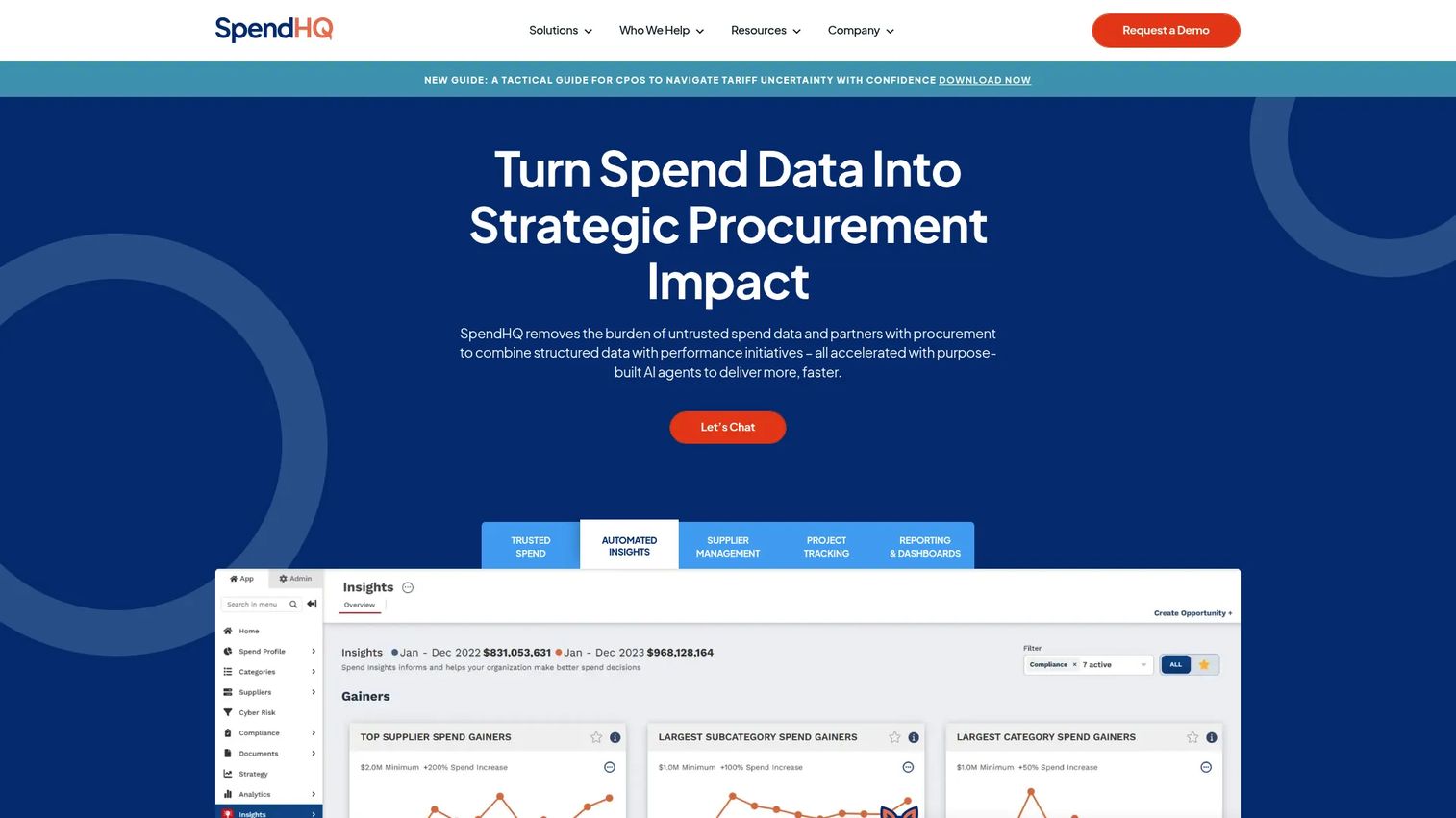
SpendHQ is a dedicated procurement analytics tool focused on spend intelligence, performance management, and procurement transformation. Unlike the suite platforms on this list, SpendHQ is built as a specialized analytics layer, so teams that already have a P2P or ERP stack can add spend visibility without replacing their operational systems. It pairs spend classification and AI-driven insights with initiative tracking, so savings identified in analysis get followed through to realized value.
Best for: Enterprise procurement teams that want a dedicated analytics and performance layer without buying a full source-to-pay suite.
Key strengths
- Spend intelligence: Classification and AI-driven insights turn raw transaction data into category-level visibility fast.
- Performance management: Tracks procurement initiatives from identified opportunity to realized savings, closing the loop on analysis.
- 40+ integrations: A broad connector library pulls data from ERPs, P2P systems, and other sources without heavy custom work.
Why choose SpendHQ: Choose SpendHQ when you want best-of-breed analytics rather than analytics that come along with a suite you did not need. The persona fit is a procurement team confident in its transactional systems but frustrated by fragmented, low-trust reporting. SpendHQ's separation from the operational stack is deliberate: it layers visibility and performance tracking on top of what you already run.
SpendHQ pricing: SpendHQ does not list public pricing; its site routes prospects to a demo or sales conversation. It is positioned for enterprise procurement, and terms scale with data volume and scope. SpendHQ holds a 4.4/5 rating on G2, the highest among the tools reviewed here.
4. Sievo
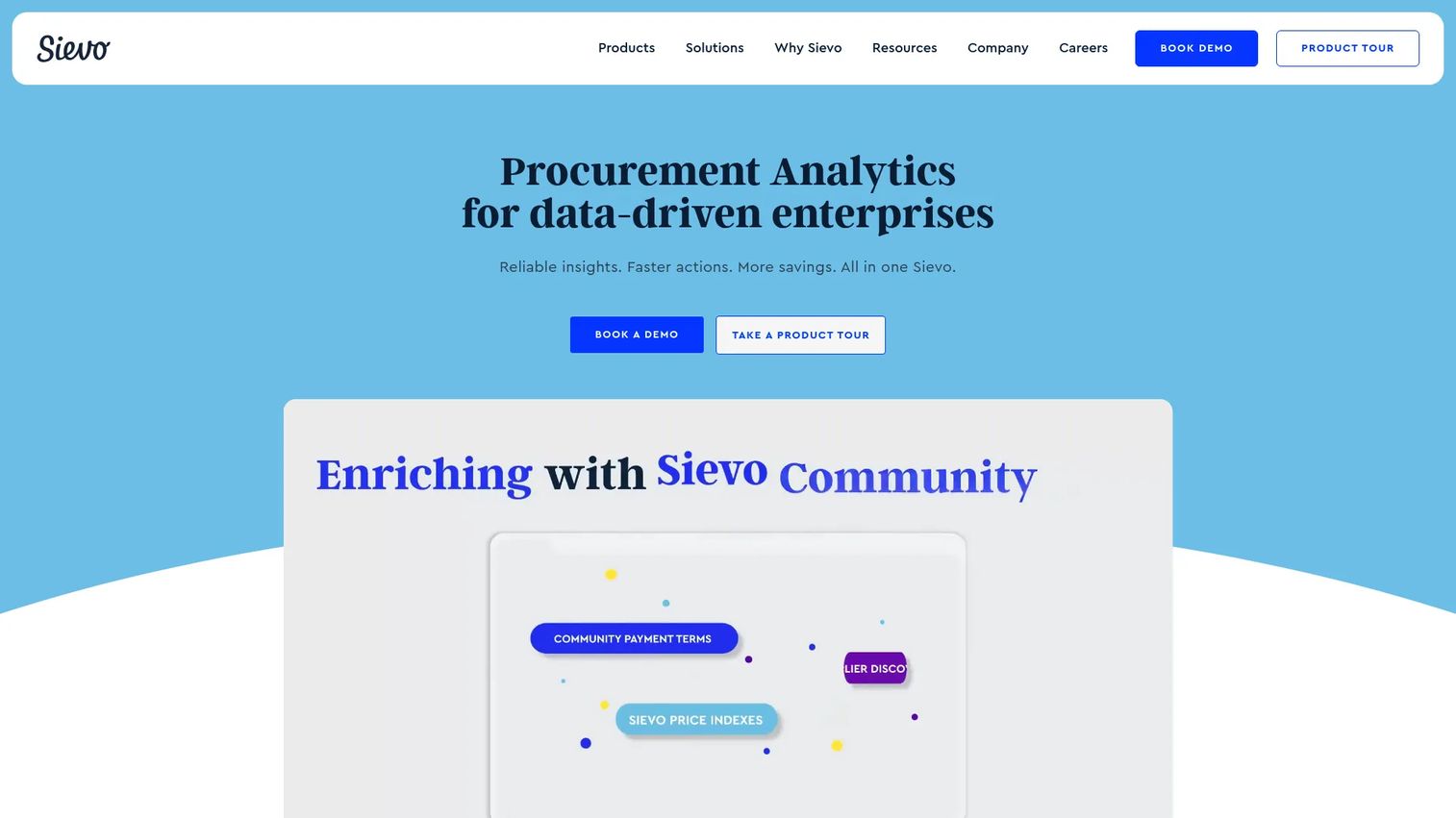
Sievo is an enterprise procurement analytics platform built for the hard part of spend analysis: making messy, high-volume data usable. It combines spend analytics with AI-assisted classification, supplier normalization, and material harmonization, then extends into initiative management, CO2 analytics, and direct materials budgeting and forecasting. For organizations where the data itself is the obstacle, Sievo's focus on 360-degree visibility across complex sources is the reason to look.
Best for: Large enterprises that need procurement analytics and data-driven savings workflows across complex, high-volume data sources.
Key strengths
- 360-degree spend visibility: Consolidates spend across many sources into one coherent view, even at high transaction volumes.
- AI-assisted classification: Machine learning handles classification, supplier normalization, and material harmonization at scale.
- Beyond spend: Initiative management, CO2 analytics, and direct materials forecasting extend analysis into planning and ESG reporting.
Why choose Sievo: Choose Sievo when your primary challenge is data complexity rather than workflow coverage. The differentiation is depth on the analytics and classification side, plus extensions into forecasting and sustainability that most spend analysis tools do not touch. It fits enterprises with direct materials spend, ESG reporting mandates, or the kind of fragmented data landscape that defeats general-purpose tools.
Sievo pricing: Sievo does not display public pricing; its site uses demo and contact-sales calls to action. The platform is enterprise-oriented, and terms depend on data scope and modules. A current G2 rating was not listed at the time of writing, so evaluate reviews directly during your shortlist.
5. GEP SMART
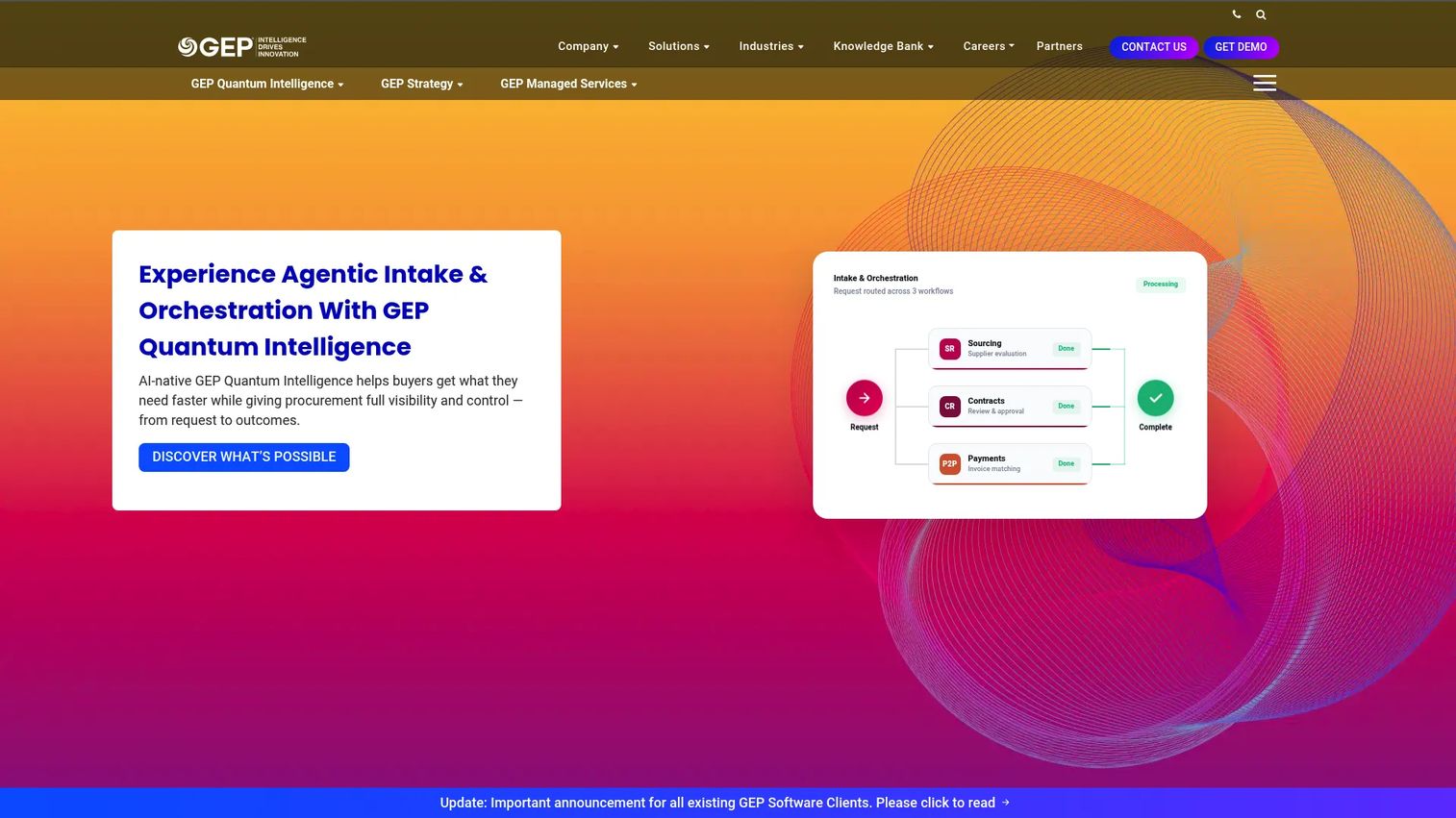
GEP SMART is an AI-powered, cloud-native source-to-pay platform with spend analysis built in alongside sourcing, contract management, supplier management, and procure-to-pay. Because analytics are native to the suite rather than a separate module, spend visibility draws on the same data as the transactional workflows around it. GEP has also noted it is consolidating GEP SMART into GEP Quantum Intelligence, with contracts, pricing, and support unchanged, so factor that direction into a longer evaluation.
Best for: Enterprise procurement teams that need an end-to-end source-to-pay platform with native spend analytics.
Key strengths
- End-to-end source-to-pay: Sourcing, contracts, supplier management, and procure-to-pay share one platform with analytics native throughout.
- AI-first architecture: Machine learning is built into classification and insight generation rather than added as an afterthought.
- Unified workflow: Spend analysis connects directly to sourcing and contract actions, so insight leads to procurement decisions.
Why choose GEP SMART: Choose GEP SMART when suite depth matters and you want analytics that live where the buying happens. The strength is integration: spend insight is not stranded in a reporting tool but wired into sourcing and contract workflows. Because GEP is evolving the product into its Quantum Intelligence line, confirm the roadmap fits your timeline during evaluation.
GEP SMART pricing: GEP uses quote-based pricing, and public figures were not accessible at the time of writing. The platform is enterprise-focused with terms tied to scope and modules. A current G2 rating was not confirmed from an accessible source, so review recent third-party feedback as part of your shortlist.
6. Zycus
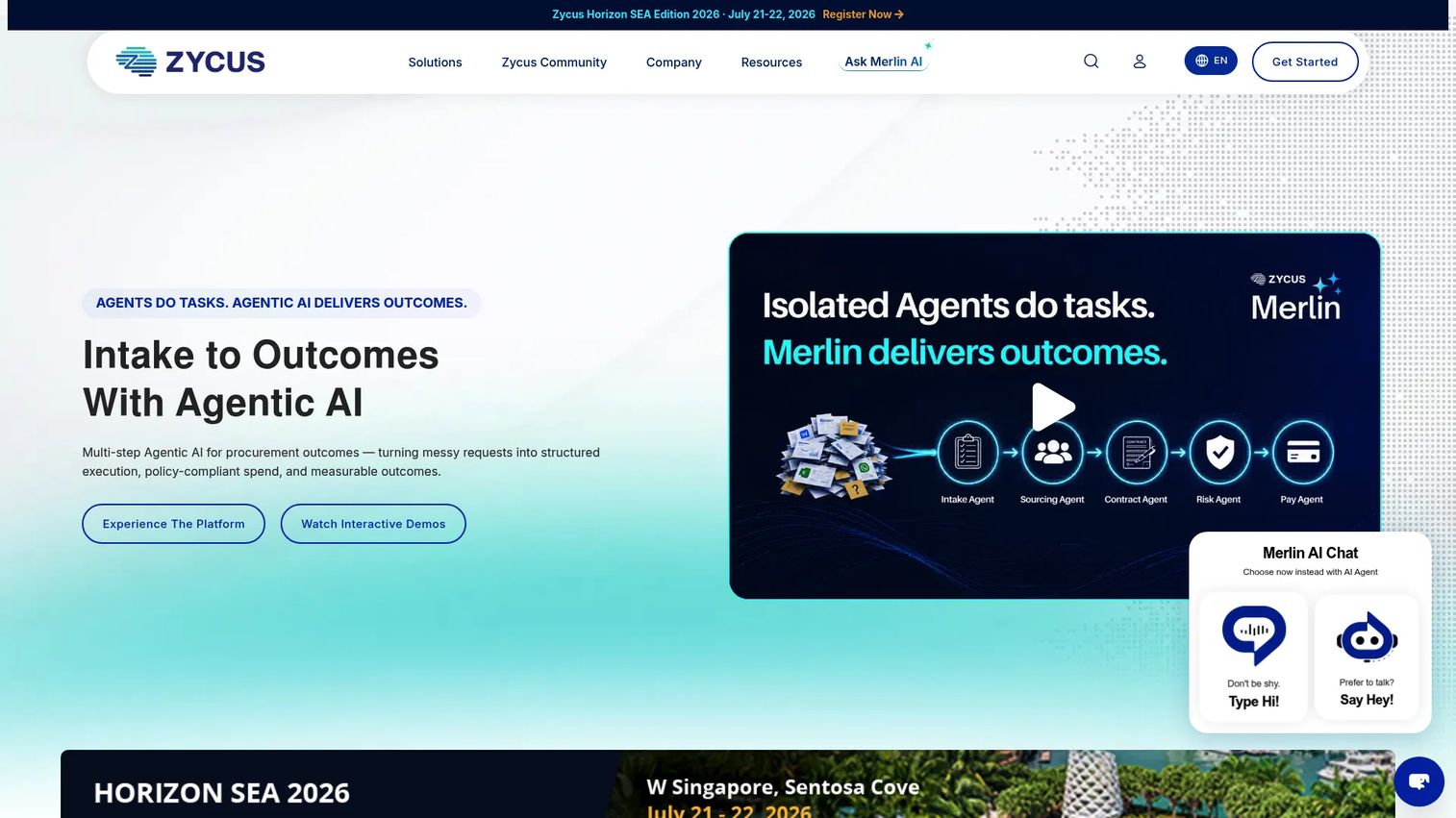
Zycus is an AI-powered source-to-pay platform whose spend analysis centers on AI-assisted classification and category management. Its Merlin AI agents and procurement orchestration extend that analytics foundation across the wider source-to-pay motion, from intake through pay. For teams that treat classification accuracy and anomaly detection as the make-or-break of spend analysis, Zycus frames its product squarely around that.
Best for: Large enterprises modernizing procurement from intake through pay with AI-driven classification at the core.
Key strengths
- AI-assisted classification: Automated classification maps transactions to categories with machine learning, reducing manual taxonomy work.
- Merlin AI agents: Agent-driven automation supports category management, anomaly alerts, and procurement workflows.
- Source-to-pay context: Spend analysis sits inside a full suite, so insight connects to sourcing and orchestration.
Why choose Zycus: Choose Zycus when AI-assisted classification and category management are the priority and you want them inside a broader source-to-pay platform. The fit is enterprises modernizing procurement end to end who value automation in how spend gets classified and monitored. Zycus carries a 3.6/5 rating on G2, so weigh recent reviews on support and usability against your own evaluation criteria.
Zycus pricing: Zycus does not publish public pricing; access is request-based through sales. The platform is enterprise-oriented with terms tied to scope. Its G2 rating stands at 3.6/5, and Zycus also displays a separate Gartner Peer Insights score on its own site.
7. SAP Ariba
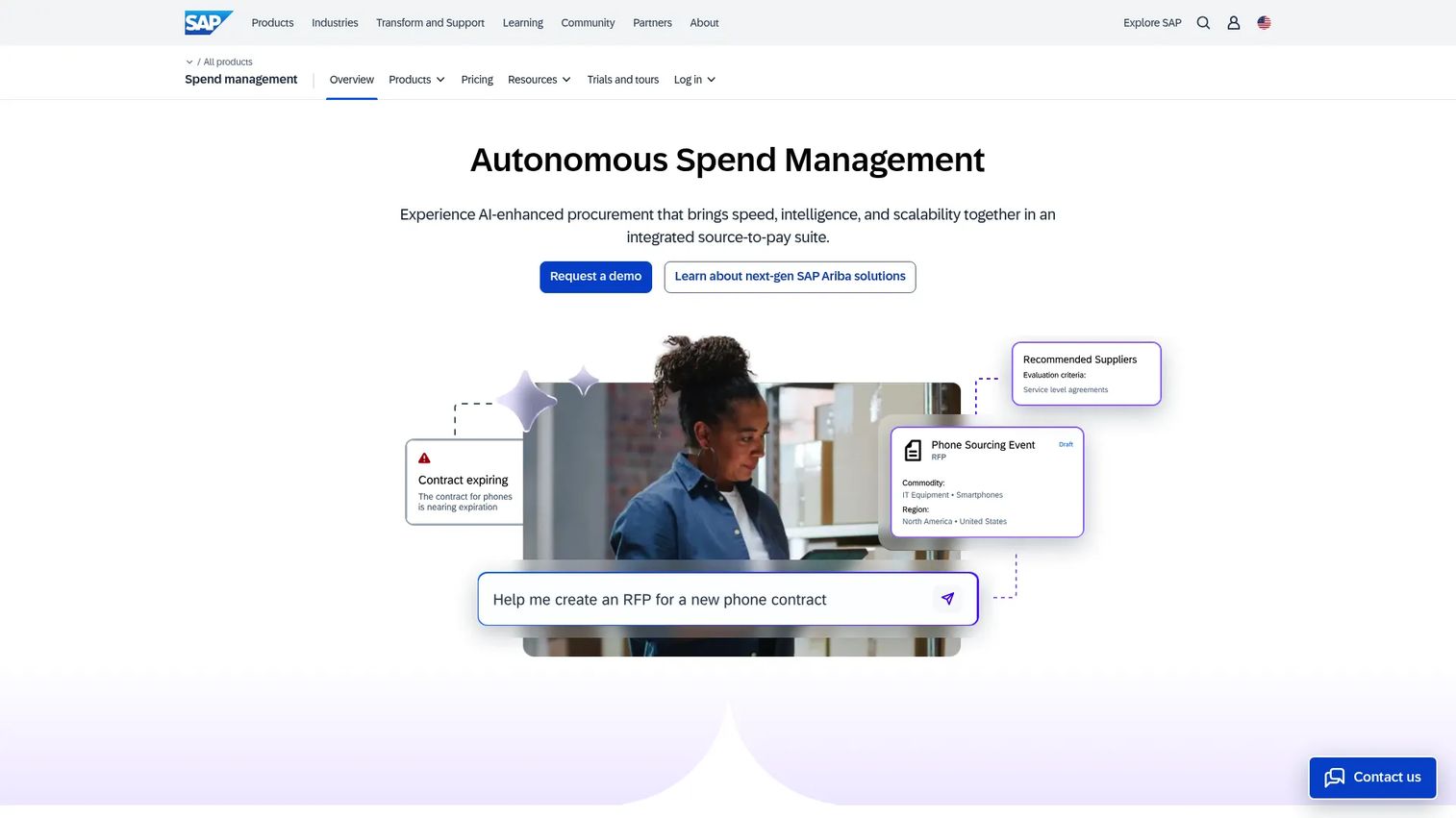
SAP Ariba is SAP's spend management suite covering sourcing, procurement, invoicing, and supplier collaboration, with spend analysis living inside that ecosystem. Its natural advantage is fit: organizations already standardized on SAP get spend analytics that align with their ERP, master data, and supplier records without a separate integration project. For SAP-centric enterprises, that alignment often outweighs any single feature comparison.
Best for: Enterprises needing centralized procurement and supplier collaboration, especially those already standardized on SAP.
Key strengths
- SAP ecosystem fit: Spend analysis aligns with existing SAP ERP data, master records, and supplier information natively.
- Sourcing and procurement workflows: Analysis connects to the sourcing and buy-to-pay processes that generate the spend.
- Supplier collaboration: Supplier data and interactions live on the same platform, enriching spend context.
Why choose SAP Ariba: Choose SAP Ariba when your procurement already runs on SAP and ERP fit is the deciding factor. The persona is an enterprise where standardization on one vendor's stack reduces integration risk and keeps master data consistent. The trade-off is ecosystem gravity: the value compounds when you are already invested in SAP and is less obvious for organizations running a mixed stack.
SAP Ariba pricing: SAP Ariba uses request-based pricing; its Buying and Invoicing page shows quote-on-request rather than a public number, and there is no free tier. Terms depend on modules and scope. SAP Ariba holds a 4.1/5 rating on G2.
Considerations before you buy
Every platform here can produce a dashboard. The difference shows up in the details that decide whether you trust the numbers a year in. Use this checklist to pressure-test your shortlist.
Classification transparency and accuracy
Ask how classification works and, more importantly, whether you can see and correct it. A high accuracy percentage means little if the logic is a black box you cannot audit. Look for reviewable rules, human-in-the-loop correction, and a clear audit trail from any figure back to its source transaction.
Data integration across sources
Confirm the platform ingests every source that matters: multiple ERPs, P2P systems, card programs, and spreadsheets, across entities and currencies. Ask specifically about multi-ERP spend visibility and how the tool handles conflicting supplier IDs. Integration depth, not dashboard polish, is what determines whether your view is complete.
Refresh cadence
Spend analysis is only as current as its last data load. Confirm how often data refreshes, whether reclassification is continuous or a periodic project, and who owns the ongoing cadence. A platform that treats classification as a one-time engagement will drift out of date fast.
Suite fit versus specialized analytics
Decide how much of procurement the platform needs to cover. A dedicated analytics tool layers onto your existing stack; a source-to-pay suite replaces more of it. Neither is universally better, and the right answer depends on what you already run and how much you want one vendor to own.
Conclusion
There is no single best spend analysis software, only the best fit for your data reality and how much of procurement you want one platform to touch. If you are standardizing source-to-pay, Coupa and Ivalua give you analytics inside a full platform. If you want a dedicated analytics layer on top of an existing stack, SpendHQ is built for exactly that. When the data itself is the obstacle, Sievo focuses on 360-degree visibility across complex sources. GEP SMART and Zycus fit enterprises modernizing end to end with AI-first classification, and SAP Ariba is the natural choice for SAP-standardized organizations.
Shortlist based on two questions: how complex and fragmented is your data, and how much of procurement should the platform cover? Then pressure-test each finalist on the criteria that actually matter, classification transparency, integration depth, refresh cadence, and governance. Those decide whether you get a spend analytics platform your CFO trusts or another dashboard nobody quite believes.
If clear, self-serve product experiences are part of how your team evaluates and rolls out new software, Guideflow helps you build interactive demos, sandboxes, and demo centers that let stakeholders explore a tool before committing. You can capture a product flow in a few clicks, personalize it for each audience, share it anywhere, and analyze engagement in real time. Start your journey with Guideflow today!
FAQs
Spend analysis software is a procurement analytics platform that collects, cleanses, classifies, and visualizes an organization's spend data. It answers what you buy, from whom, and at what price, so teams can find savings, control compliance, and make sourcing decisions with confidence. The strongest platforms treat classification as continuous and keep every figure traceable back to its source transaction.
Most platforms map each transaction to a category taxonomy, such as UNSPSC or a custom scheme, using rules, machine learning, or a hybrid of both. Modern tools lean on AI-assisted classification to handle volume, then let analysts review and correct results. The classification you can trust is the one you can see and audit, not a black box that produces numbers without explanation.
Focus on four things: classification transparency and accuracy, data integration across every source that matters, refresh cadence, and how much of procurement the platform is built to cover. Dashboards are easy to demo, but integration depth and auditable classification decide whether you trust the output a year later. Match the tool to your data complexity, not to a feature checklist.
Neither is universally better. A dedicated analytics tool layers spend visibility onto an existing ERP and P2P stack without replacing it, which suits teams confident in their transactional systems. A source-to-pay suite wires analytics into sourcing, contracts, and AP, which suits teams standardizing procurement on one platform. The right answer depends on what you already run.
It surfaces the long tail of low-volume suppliers that create most of the administrative noise and compliance risk, then groups that spend by category. From there you can spot consolidation candidates, off-contract buying, and duplicate suppliers. Tail spend reduction is often the fastest, most defensible savings a procurement team can bring to leadership.
Timelines vary with data complexity and how many sources you connect. A dedicated analytics layer on a clean stack can go live faster than a full source-to-pay deployment across multiple ERPs. The heaviest lift is usually the first data integration and classification pass, so scope that work carefully and confirm who owns the ongoing refresh cadence.
Yes, and multi-ERP spend visibility is a core reason many teams buy it. The platform ingests transactions from each system, normalizes supplier names, and maps everything to one taxonomy, so a supplier appearing under different names in different ERPs shows as a single view. Confirm during evaluation how the tool handles conflicting supplier IDs and mismatched fields.
Spend analysis is the analytics discipline: collecting, classifying, and reporting on what has already been spent to find savings and control compliance. Spend management is the broader operational function that includes sourcing, procurement, contracts, invoicing, and payments. Spend analysis tells you where the money went; spend management governs how it gets committed in the first place.