

Your company page reach is dying. Organic posts from LinkedIn brand accounts now hit 2–5% of followers. Paid social CPMs climbed 20–30% year-over-year. Leadership still expects more pipeline from social without a bigger budget.
The math points to one answer: employee advocacy software. Employee networks deliver 561% more reach than brand channels (MSLGroup). Leads from employee social marketing convert 7x more frequently (IBM). The data on brand awareness through employee sharing isn't subtle.
But knowing this and operationalizing it are different problems. Getting 50, 200, or 1,000 employees to consistently share on-brand content is where most advocacy software programs fall apart. The tool you pick matters less than whether your people will actually open it.
We evaluated 15 employee advocacy tools for this guide. You'll get honest trade-offs for each, pricing context where available, and a framework for choosing based on your specific situation.
What's inside
This guide covers 15 employee advocacy platforms for 2026, evaluated across features, pricing, integrations, and ideal use cases. Tools were selected based on G2 and Gartner presence, active product development in 2025–2026, documented customer outcomes, and clear category relevance. You'll find a side-by-side comparison table, individual breakdowns for each tool, a buying criteria checklist, and an FAQ section covering the most common questions.
TL;DR
- What it does: Employee advocacy software distributes company-approved content through employees' personal social accounts, amplifying reach and generating leads at scale.
- Top picks by use case: Hootsuite Amplify for enterprises already on Hootsuite, EveryoneSocial for large-scale programs, DSMN8 for automation-first teams, GaggleAMP for sales-driven advocacy, Sociuu for SMBs on a budget.
- Pricing range: Free tiers to $10,000+/year for enterprise. Most dedicated platforms require custom quotes.
- The most important insight: The biggest risk isn't choosing the wrong tool. It's choosing a tool employees won't use. Adoption features (mobile UX, gamification, one-click sharing) matter more than admin dashboards.
- AI content creation is now table stakes. It's not a differentiator in 2026. How well AI personalizes to each employee's voice is what separates tools.
What is employee advocacy software?
Employee advocacy software is a platform that enables organizations to distribute company-approved content through employees' personal social media accounts, amplifying brand reach, generating leads, and building thought leadership at scale. The market is growing fast: valued at $587 million in 2025, it's projected to reach $1.33 billion by 2035 (Research Nester).
Here are the core components that define the category:
- Content library and curation: A central hub where marketing stages pre-approved posts, articles, and media for employees to share through social media advocacy channels.
- One-click sharing: Employees select content and post to LinkedIn, X, or Facebook in a single action, reducing employee social sharing friction to seconds.
- Compliance and approval workflows: Pre-approved messaging, legal disclaimers, and audit trails that ensure every shared post meets brand and regulatory standards.
- Gamification and incentives: Leaderboards, points, and rewards that encourage consistent participation across the organization. If you're exploring gamification in a sales context specifically, our guide to the best sales gamification software covers dedicated tools for that use case.
- Analytics and attribution: Tracking shares, clicks, reach, earned media value, and (in some tools) CRM-attributed pipeline from employee-shared content.
- AI content assistance: Automated caption generation, post personalization, and content recommendations tailored to each employee's audience.
- Integrations: Connections to CRM, communication tools (Slack, Teams), social management platforms, and HRIS systems.
One distinction worth noting: employee advocacy software is not the same as social media management tools (which manage brand accounts, not employee accounts) or influencer platforms (which manage external creators, not internal employees). If you're evaluating social management tools separately, our roundup of the best social media marketing tools covers that category. If you're evaluating across categories, this difference matters for how you structure your content sharing platform strategy.
When to use employee advocacy software
Scaling organic social reach without increasing ad spend
When paid social CPMs rise and organic brand page reach drops below 3–5%, employee networks become the most cost-effective distribution channel. The signal: your social ad budget grew 20%+ last year but pipeline from social didn't grow proportionally. An employee advocacy program turns your headcount into a distribution network.
Activating sales teams for social selling
When sales leadership wants reps active on LinkedIn but reps don't know what to post or don't have time to find content. The signal: your sales team has LinkedIn profiles but posts fewer than once a month. Social selling through structured advocacy gives reps ready-made content without the blank-page problem. Teams pairing advocacy with broader sales engagement tools tend to see the strongest pipeline impact.
Building employer brand and recruiting
When talent acquisition wants authentic employee voices on social media to attract candidates. The signal: your Glassdoor reviews are fine but your careers page gets low organic traffic. Employee advocacy benefits extend beyond marketing into recruiting pipeline.
Regulated industry compliance
When financial services, healthcare, or government teams need employees sharing content within strict compliance guardrails. The signal: legal has blocked previous informal sharing initiatives because there was no approval workflow.
Executive thought leadership programs
When the C-suite wants a visible social presence but doesn't have time to create or curate content independently. The signal: your CEO has 10,000 LinkedIn followers and posts twice a year.
Employee advocacy software comparison table
Before diving into individual reviews, here's a side-by-side comparison of all 15 employee advocacy tools. Use this to scan for your priorities, then jump to the detailed breakdown for any advocacy software that fits.
15 best employee advocacy software tools reviewed
1. Hootsuite Amplify
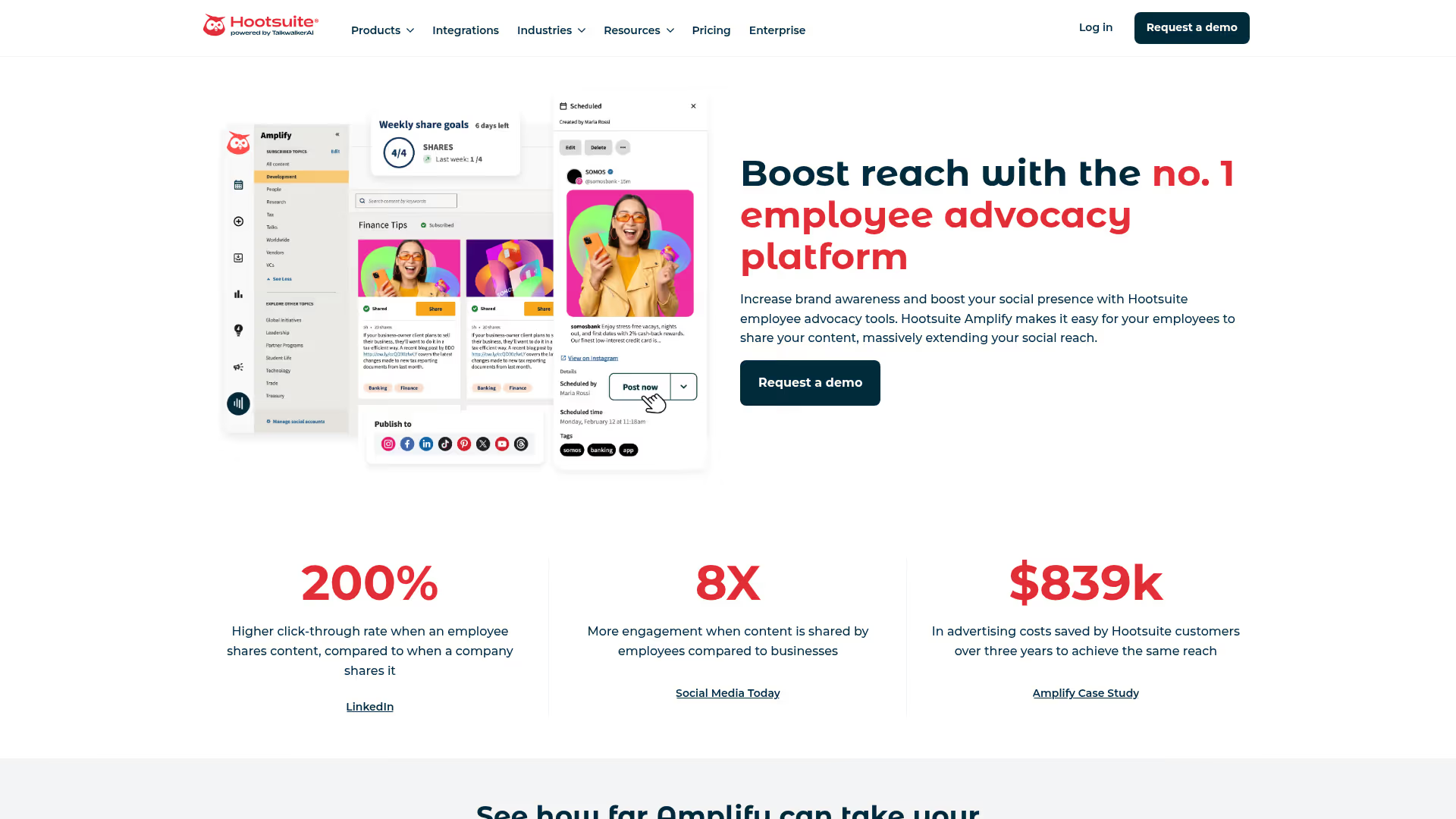
Hootsuite Amplify is the employee advocacy module within Hootsuite's broader social media management platform. The value proposition isn't advocacy features in isolation. It's unified reporting across paid, organic, and employee-shared content in a single dashboard.
For teams already running their social operations through Hootsuite, Amplify eliminates the need to add another tool to the stack. You get one view of how brand posts, paid campaigns, and employee shares perform relative to each other. The AI content writer generates suggested captions, and Slack/Teams integrations push content to employees where they already work.
Best for: Enterprise marketing teams already using Hootsuite for social media management who want a unified employee advocacy platform without adding another vendor.
Key strengths
- Unified analytics across paid, organic, and employee channels
- AI-powered content suggestions and caption generation
- Native Slack and Microsoft Teams integrations
- Compliance controls with pre-approved content libraries
- Single admin console for all social activity
Why choose Hootsuite Amplify: If your team already lives in Hootsuite, Amplify is the path of least resistance. You avoid a separate login, separate reporting, and separate vendor relationship. The consolidated view of all social performance in one place is genuinely useful for proving ROI to leadership. The trade-off: if you don't already use Hootsuite for social management, Amplify alone doesn't justify the platform cost. The advocacy features are solid but not as deep as dedicated tools like EveryoneSocial or DSMN8.
Pricing: Enterprise-tier. Expect $10,000+/year. Custom quotes required.
2. EveryoneSocial
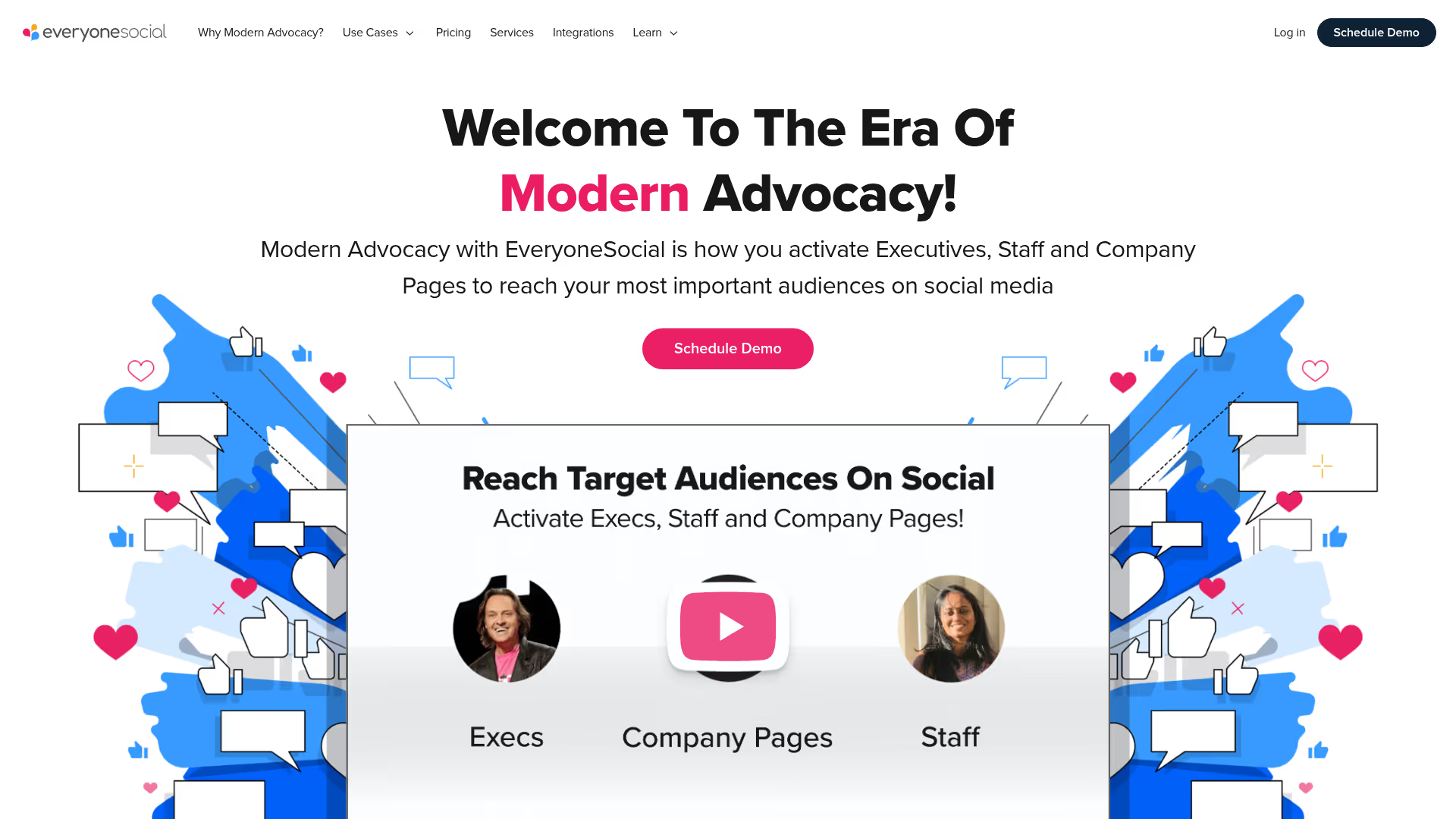
EveryoneSocial is a dedicated employee advocacy platform built for organizations running advocacy as a strategic program, not a side feature. The content curation depth sets it apart: marketing teams can pull from RSS feeds, internal content, third-party articles, and user-generated posts to keep the content library fresh without constant manual effort.
The executive advocacy tools deserve specific mention. EveryoneSocial offers C-suite social presence management, where a comms team can draft, schedule, and publish content on behalf of executives with their approval. Mobile-first sharing and compliance workflows make it work for regulated industries. The employee advocacy program management features are built for scale.
Best for: Organizations with 500+ employees running advocacy as a formal, strategic employee advocacy program with dedicated program management.
Key strengths
- Deep content curation from multiple internal and external sources
- Executive advocacy and ghostwriting workflows
- Mobile-first design with push notification sharing
- Compliance and approval workflows for regulated industries
- Advanced analytics with earned media value tracking
Why choose EveryoneSocial: This is the tool for teams that take advocacy seriously as a channel, not as an experiment. The content curation depth means your library stays fresh, and the executive advocacy features fill a gap most competitors ignore. The trade-off: it's a dedicated tool, so you're adding to the stack rather than consolidating. If you need advocacy as a feature within your existing social management platform, Hootsuite Amplify or Sprinklr is a better fit.
Pricing: Custom pricing. Expect mid-to-high five figures annually for enterprise deployments.
3. DSMN8
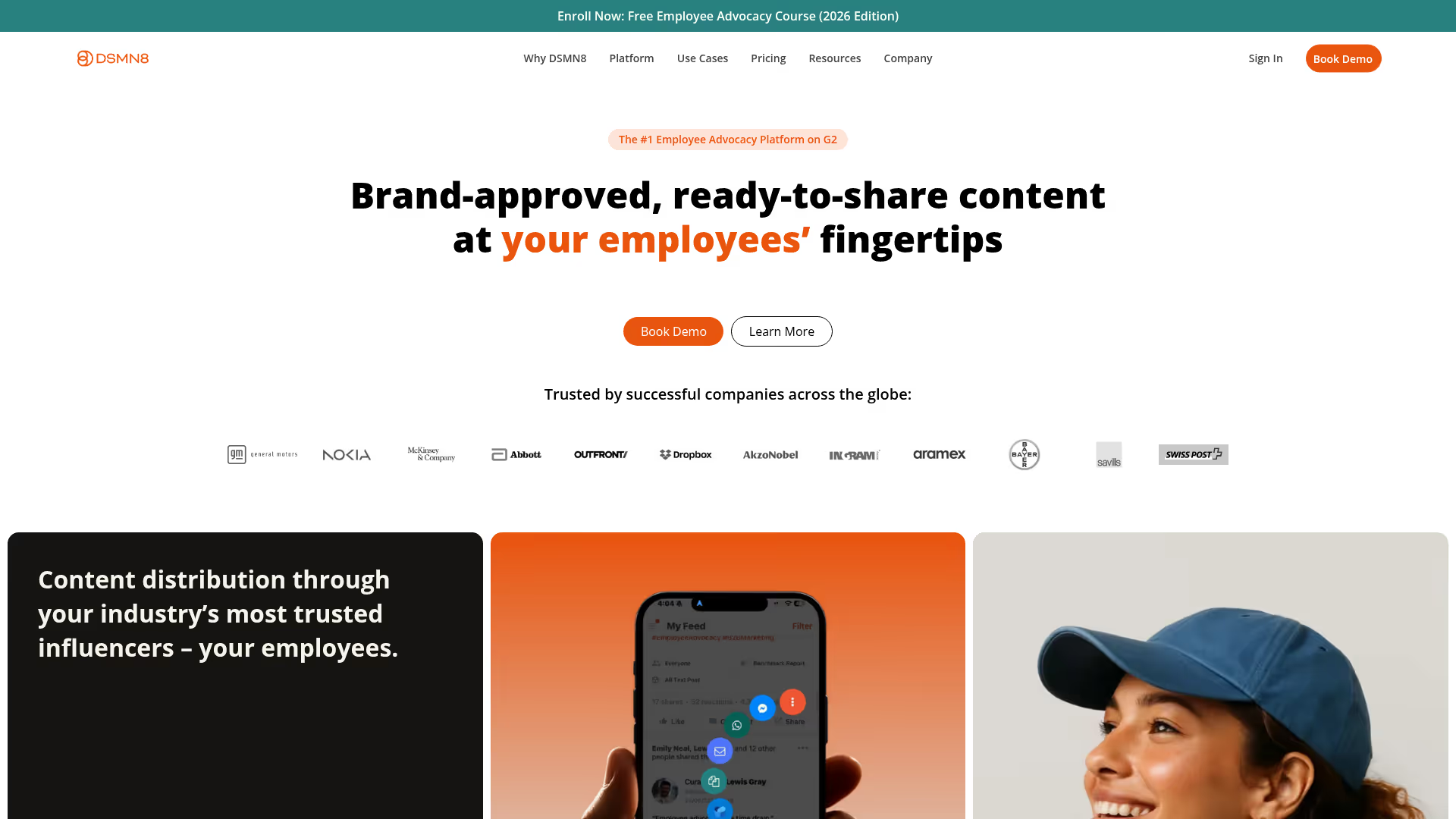
DSMN8 solves the adoption problem differently than any other tool on this list. The core differentiator is reducing employee effort to near-zero through auto-share functionality. With employee permission, DSMN8 can automatically post content to their social accounts on a schedule, with AI-generated personalized captions that vary by employee.
This is the advocacy software for teams whose previous platform failed because employees didn't use it. Instead of hoping people browse a content library, DSMN8 handles the employee social sharing mechanics automatically. Employees opt in, set preferences, and the platform does the rest. For teams that want more control, manual sharing with AI-suggested captions is also available.
Best for: Teams that tried advocacy before and failed on adoption, or organizations where employees are willing to participate but won't log into another app daily.
Key strengths
- Auto-share with employee permission and scheduling
- AI-generated personalized captions per employee
- Automated content distribution based on employee preferences
- Strong mobile app with minimal friction sharing
- Analytics dashboard with earned media value calculations
Why choose DSMN8: If your biggest problem is getting employees to actually share, DSMN8 addresses that head-on. The automation-first approach means participation rates tend to be higher than platforms that rely on employees taking initiative. The trade-off: auto-sharing can feel inauthentic if not configured carefully. Some employees push back on content posted "on their behalf," and prospects may notice when 50 employees share identical content within the same hour.
Pricing: Custom pricing. Positioned in the mid-market range based on company size and employee count.
4. GaggleAMP

GaggleAMP takes a manager-driven, activity-based approach to advocacy. Instead of hoping employees browse a content library, managers assign specific actions to individuals or groups: share this post, comment on this article, like this update. This creates accountability and measurability at the individual level.
The model works particularly well for social selling programs where sales leadership wants to track rep activity on LinkedIn. Each assigned action has a point value, feeding into leaderboards and gamification. The employee advocacy program structure is built around directed engagement, not passive content browsing.
Best for: Sales-driven organizations where managers want to assign specific social activities to reps and track completion rates.
Key strengths
- Manager-assigned activity model with individual tracking
- 50+ activity types beyond just sharing (comment, like, follow)
- Points-based gamification with customizable rewards
- ROI measurement tied to specific activities and campaigns
- CRM integration for connecting advocacy to pipeline
Why choose GaggleAMP: If your primary goal is activating a sales team for social selling, GaggleAMP's directed model creates the structure and accountability that passive content libraries can't. The activity variety (not just "share this") drives more authentic engagement. The trade-off: the directed approach can feel micromanaged if your company culture doesn't support top-down activity assignments. Teams that value employee autonomy may resist the assigned-task model.
Pricing: Custom pricing. Mid-market positioning based on team size.
5. Sociabble
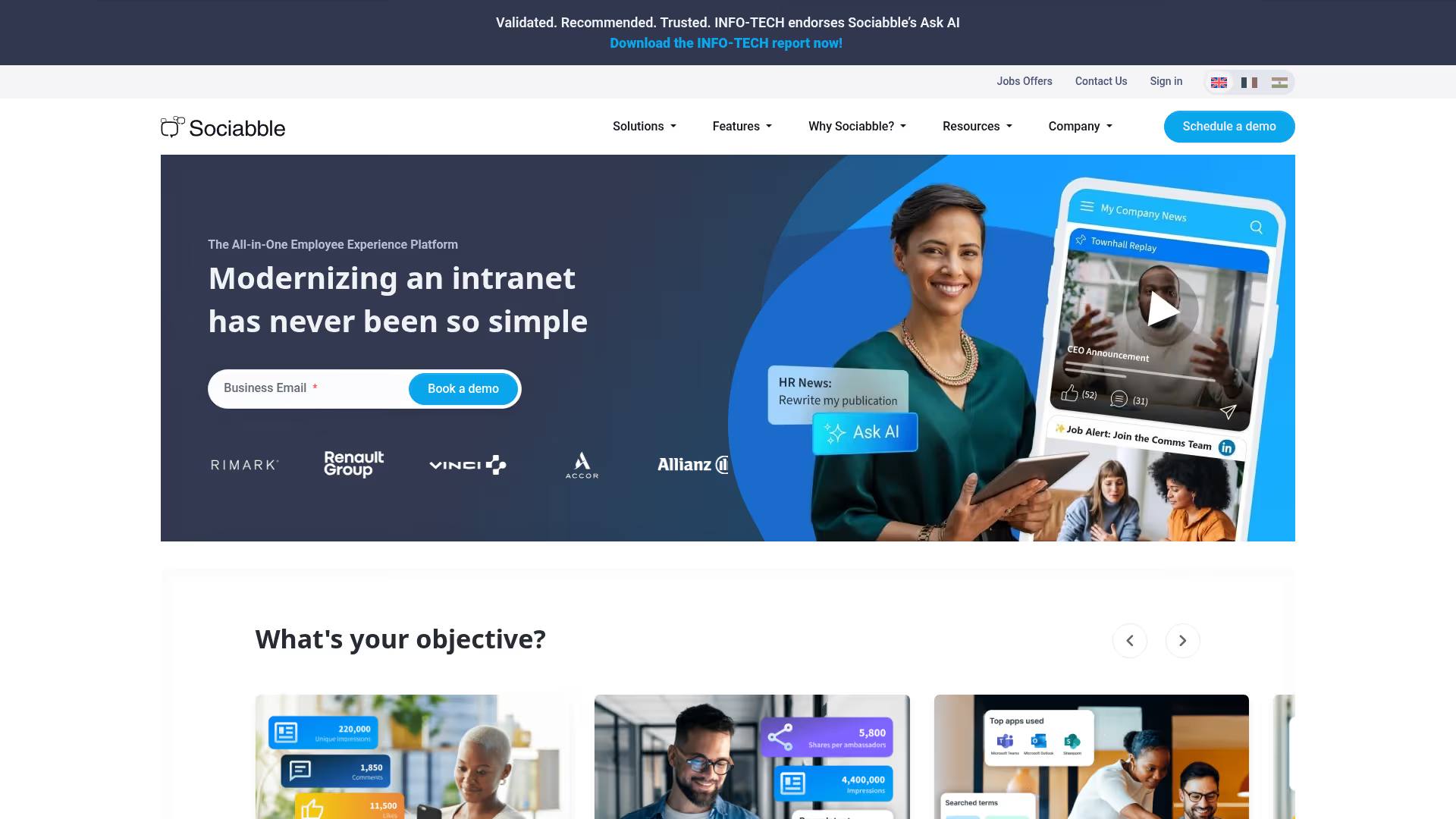
Sociabble combines internal communications and external advocacy in a single employee engagement software platform. The unique angle is CSR engagement: tree planting challenges, donation matching tied to sharing activity, and sustainability-focused gamification that gives employees a reason to participate beyond company metrics.
Multi-language support and global content targeting make it a strong fit for enterprises operating across regions. The internal comms side means employees are already in the platform for company news, making the step to external sharing smaller.
Best for: Global enterprises that need multi-language support and want to combine internal comms with external employee advocacy in one platform.
Key strengths
- Combined internal communications and external advocacy
- CSR engagement features (tree planting, donation matching)
- Multi-language content targeting for global teams
- Strong compliance and approval workflows
- Gamification tied to both business and social impact goals
Why choose Sociabble: If you need one platform for both internal comms and external advocacy, Sociabble covers both. The CSR angle gives employees intrinsic motivation to participate, which tends to drive more sustainable engagement than points alone. The trade-off: the dual-purpose design means neither the comms nor the advocacy module is as deep as a dedicated tool in either category. Teams that only need advocacy may find themselves paying for features they won't use.
Pricing: Custom enterprise pricing. Expect high five figures annually for global deployments.
6. Ambassify
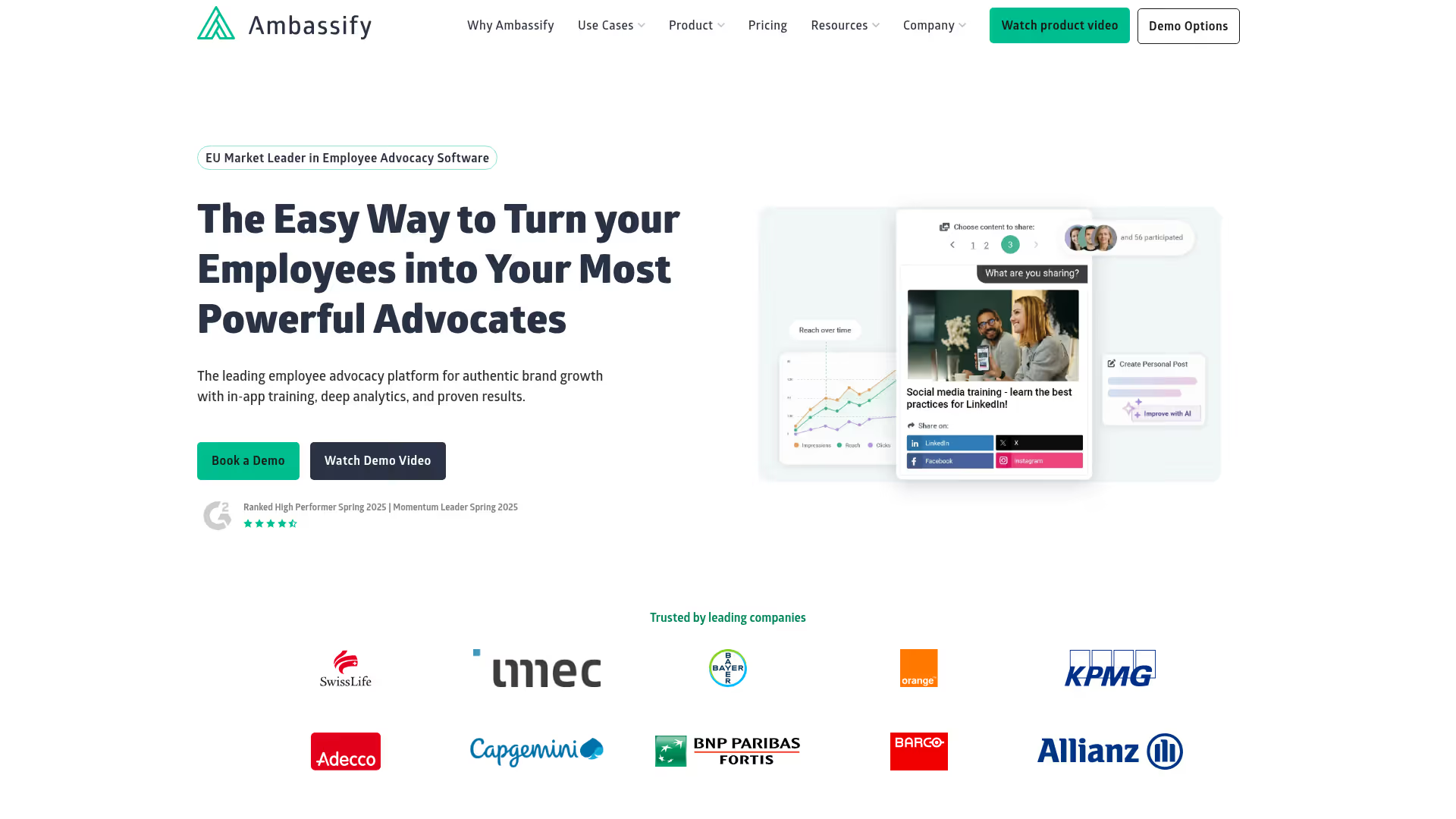
Ambassify takes a campaign-based approach to advocacy. Instead of an always-on content feed, marketing teams create specific campaigns with defined goals, timelines, and success metrics. Each campaign can target different employee segments with different content.
The UGC (user-generated content) collection angle is a differentiator. Ambassify encourages employees to create original content, not just reshare pre-written posts. A/B testing on campaigns lets you compare messaging variations and optimize before scaling. This makes it a strong fit for teams running an employee advocacy program with structured quarterly goals.
Best for: Marketing teams that prefer structured, time-bound advocacy campaigns over always-on content feeds.
Key strengths
- Campaign-based structure with goals and timelines
- UGC collection encouraging original employee content
- A/B testing on campaign messaging and content
- Segmented targeting by department, role, or region
- Detailed campaign-level analytics and reporting
Why choose Ambassify: If your advocacy strategy runs in sprints (product launches, events, quarterly pushes), Ambassify's campaign model matches how you already work. The UGC angle produces more authentic content than everyone resharing the same post. The trade-off: less effective for teams that want continuous, daily sharing behavior. The campaign structure can create gaps between initiatives where sharing drops off.
Pricing: Custom pricing. Mid-market positioning.
7. PostBeyond

PostBeyond (by Influitive) is the simplicity play for mid-market B2B teams. Clean content library, one-click sharing, straightforward analytics. No steep learning curve. The Influitive acquisition adds customer advocacy alongside employee advocacy, creating a content sharing platform that covers both internal and external advocates.
The interface is intentionally minimal. Marketing curates content, employees share it, analytics show what worked. For teams that don't need advanced automation, AI personalization, or complex gamification, PostBeyond delivers the core advocacy workflow without the overhead.
Best for: Mid-market B2B teams that want a clean, simple advocacy tool without the complexity of enterprise platforms.
Key strengths
- Clean, minimal interface with low learning curve
- One-click sharing across multiple social networks
- Combined employee and customer advocacy (via Influitive)
- Straightforward content library and curation
- Basic analytics with engagement and reach tracking
Why choose PostBeyond: If your team doesn't need bells and whistles and just wants employees sharing content consistently, PostBeyond gets out of the way. The Influitive connection is a bonus if you're also running customer advocacy. The trade-off: fewer advanced features than competitors like EveryoneSocial or Sociabble. No AI content generation, limited gamification, and basic analytics. You'll outgrow it if your program scales significantly.
Pricing: Custom pricing. Mid-market range.
8. Firstup
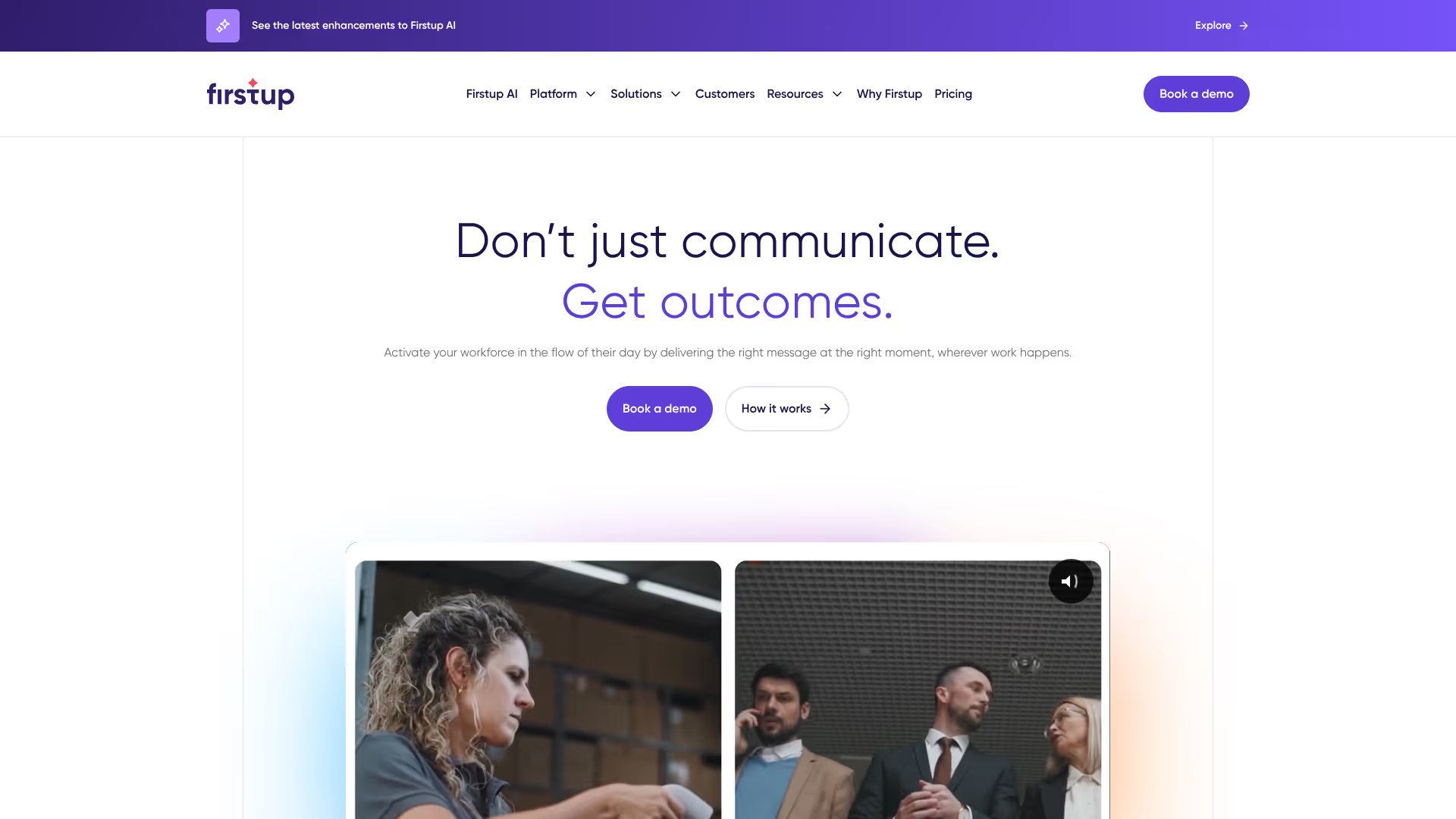
Firstup is an intelligent communication platform built for large enterprises with deskless and frontline workforces. Most advocacy tools fail for deskless workers because those employees don't sit at computers. Firstup reaches them through mobile push notifications, email, SMS, and digital signage first, then enables sharing.
AI personalizes content delivery by role, interests, and engagement history. An employee in manufacturing sees different content than someone in corporate marketing. This employee engagement software approach means the platform adapts to each person rather than presenting a one-size-fits-all feed.
Best for: Large enterprises with significant deskless or frontline workforces who need to reach employees through channels beyond desktop apps.
Key strengths
- Multi-channel delivery: mobile push, email, SMS, digital signage
- AI-personalized content by role, interests, and history
- Built for deskless and frontline workforce engagement
- Enterprise-grade security and compliance features
- Advanced segmentation by department, location, and role
Why choose Firstup: If a large portion of your workforce doesn't sit at a desk, Firstup is one of the few platforms that can actually reach them. The multi-channel delivery and AI personalization create a more relevant experience per employee. The trade-off: it's a workforce communication platform first and an advocacy tool second. The advocacy features are less specialized than dedicated platforms like DSMN8 or EveryoneSocial.
Pricing: Custom enterprise pricing. Expect high five figures to six figures annually.
9. Haiilo

Haiilo combines an intranet with an employee advocacy platform, and it's especially strong for European and global enterprises. Formerly Coyo and Smarp (merged in 2022), the platform's adoption advantage is straightforward: employees are already in the tool daily for internal content, so the step to external sharing is smaller.
GDPR-compliant by design with European headquarters, Haiilo is a natural fit for organizations where data privacy requirements shape tool selection. The social advocacy module sits alongside the intranet, meaning employees don't need a separate app to participate.
Best for: European and global enterprises that want a combined intranet and advocacy platform with strong GDPR compliance.
Key strengths
- Combined intranet and social advocacy in one platform
- GDPR-compliant by design with European data hosting
- High adoption rates from daily intranet usage
- Multi-language support for global organizations
- Employee engagement analytics across internal and external content
Why choose Haiilo: If you need an intranet and advocacy in one tool, Haiilo reduces the number of platforms employees need to use. The daily intranet habit creates a natural on-ramp to sharing. The trade-off: if you only need advocacy, you're paying for intranet features you won't use. And if you already have an intranet you're happy with, adding Haiilo means migrating or running two systems.
Pricing: Custom enterprise pricing. Mid-to-high five figures annually.
10. Sprinklr
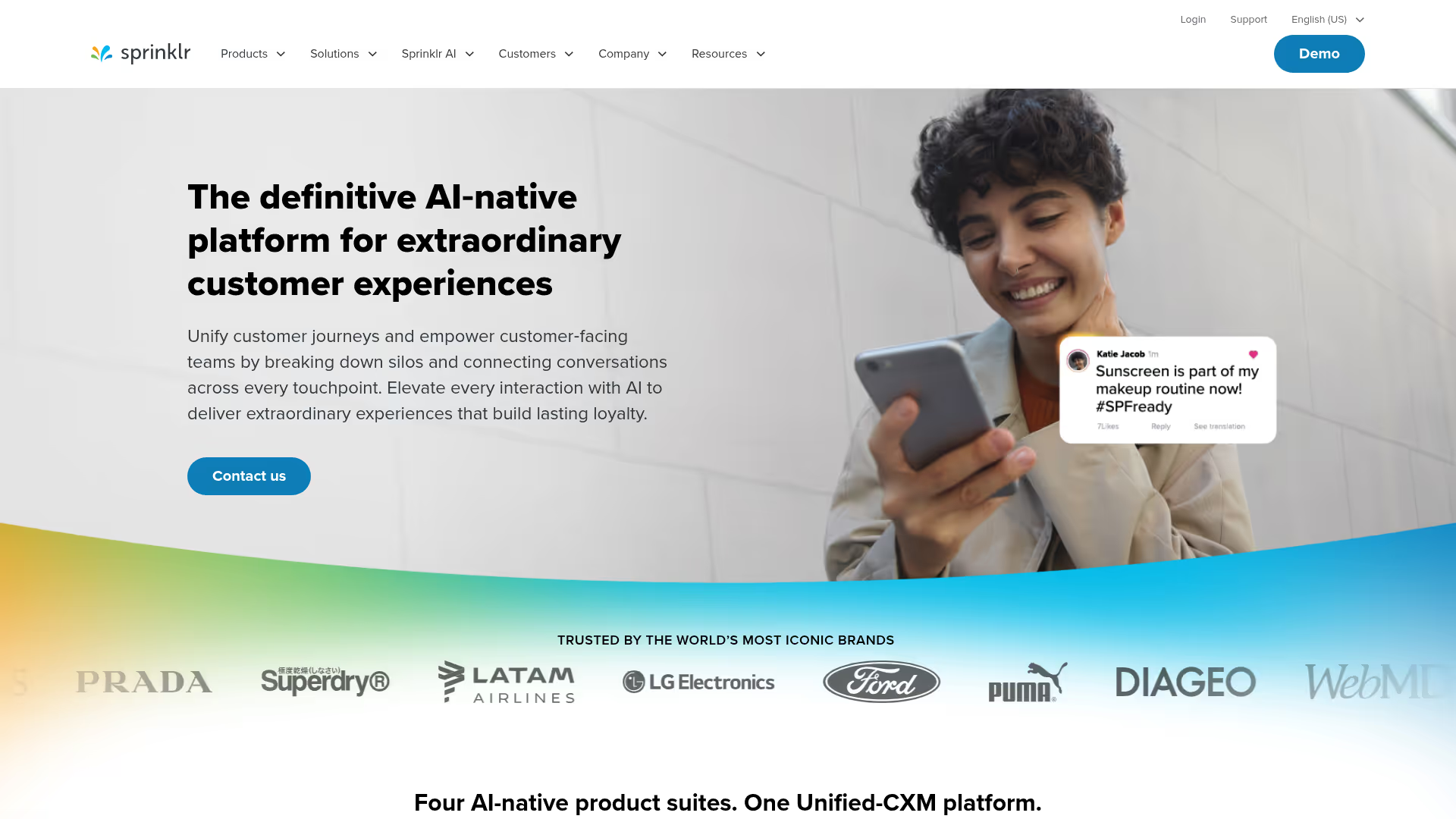
Sprinklr is the enterprise consolidation play at a larger scale than Hootsuite Amplify. It's part of Sprinklr's Unified-CXM platform, which means advocacy data flows into the same system as customer service, social listening, marketing, and advertising data.
Enterprise-grade governance, AI-powered content recommendations, and global scalability make this advocacy software a fit for organizations already invested in the Sprinklr stack. The reporting depth is significant: you can trace employee-shared content performance alongside every other customer touchpoint.
Best for: Large enterprises already using Sprinklr for social management or customer experience who want advocacy integrated into their existing platform.
Key strengths
- Part of Sprinklr's Unified-CXM platform
- Enterprise-grade governance and approval workflows
- AI-powered content recommendations and optimization
- Global scalability with multi-language support
- Unified reporting across all customer touchpoints
Why choose Sprinklr Advocacy: If you're already a Sprinklr customer, adding advocacy keeps everything in one platform with unified reporting. The governance features are among the strongest in the category. The trade-off: Sprinklr is expensive and complex. If you're not already a Sprinklr customer, the advocacy module alone doesn't justify the platform investment. Contracts typically start at $30,000+/year, and implementation requires dedicated resources.
Pricing: From $30,000+/year. Custom enterprise contracts.
11. Oktopost

Oktopost is the B2B pipeline attribution play. The core differentiator: Oktopost tracks social engagement from employee-shared content all the way through to CRM opportunities and revenue. It integrates natively with Salesforce, HubSpot, Marketo, and Eloqua.
If your CMO asks "what pipeline did our employee advocacy program generate?" and you can't answer, Oktopost solves that specific problem. The social selling features let you track individual rep activity and connect it to deals. For B2B marketers who need to prove ROI in CRM terms, not just earned media value, this is the tool that closes the attribution gap. Teams already investing in CRM software will find Oktopost's native integrations particularly valuable.
Best for: B2B marketing teams that need to attribute employee advocacy directly to CRM pipeline and revenue.
Key strengths
- Social-to-CRM pipeline attribution (Salesforce, HubSpot)
- Native integration with Marketo and Eloqua
- Individual rep social selling activity tracking
- B2B-specific social management alongside advocacy
- Lead source tracking from employee-shared content
Why choose Oktopost: If proving pipeline ROI from advocacy is your primary requirement, Oktopost is the only tool on this list that connects employee shares to CRM revenue natively. The attribution depth is unmatched. The trade-off: it's a B2B social platform with advocacy built in, not a dedicated advocacy tool. Advocacy features are solid but not as deep as EveryoneSocial or DSMN8 for pure advocacy use cases.
Pricing: Custom pricing. Mid-market to enterprise range.
12. Sociuu

Sociuu is the lightweight, affordable entry point for SMBs. Simple interface, minimal learning curve, per-user pricing starting around $2/user/month. This is the advocacy software for a 50-person company testing whether employee advocacy works before investing in an enterprise platform.
The setup takes minutes, not weeks. Marketing adds content, employees get notified, they share with one click. No complex workflows, no elaborate gamification, no AI content engine. Just the core loop: curate, notify, share, measure.
Best for: SMBs and small teams (under 200 employees) testing employee advocacy for the first time on a limited budget.
Key strengths
- Per-user pricing starting at ~$2/user/month
- Simple setup with minimal learning curve
- One-click sharing across major social networks
- Basic analytics with engagement tracking
- Clean, uncluttered employee experience
Why choose Sociuu: If you want to validate whether advocacy works for your organization before committing to an enterprise contract, Sociuu is the lowest-risk way to test. The per-user pricing means you can start with 20 people and scale up. The trade-off: limited advanced features. No AI content generation, limited gamification, basic analytics. You'll likely outgrow it if your program succeeds and scales past 200 employees.
Pricing: From ~$2/user/month.
13. Social Champ
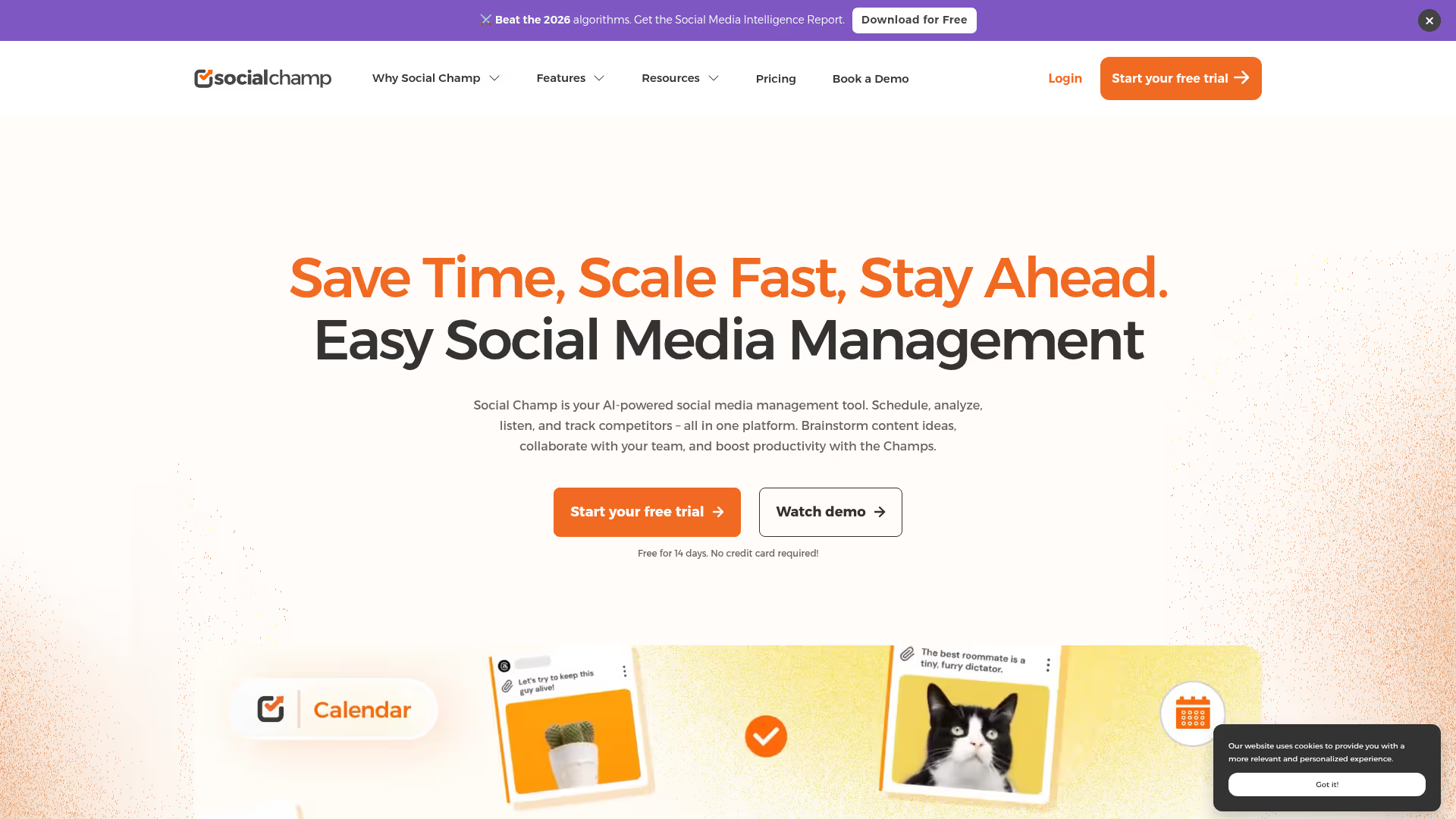
Social Champ is the budget consolidation play: social media scheduling and basic advocacy in one affordable tool. Starting at $29/month, it covers multi-network posting (including Pinterest and Google Business Profile) alongside a content sharing platform for employee advocacy.
For small teams that need both a social scheduler and a way to get employees sharing content, Social Champ avoids the cost of two separate tools. The content suggestion feature helps keep the library fresh without constant manual curation.
Best for: Small teams that need social media scheduling and basic employee advocacy in one affordable tool.
Key strengths
- Combined social scheduling and basic advocacy features
- Multi-network support including Pinterest and Google Business Profile
- Content suggestion and recycling features
- Affordable starting price at $29/month
- Bulk scheduling and content calendar view
Why choose Social Champ: If your budget is tight and you need a social scheduler anyway, Social Champ gives you basic advocacy without a separate tool or contract. The trade-off: advocacy features are basic compared to dedicated platforms. No advanced gamification, limited analytics, no AI content personalization. This is a social scheduling tool with advocacy bolted on, not the other way around.
Pricing: From $29/month.
14. Heyoo.ai
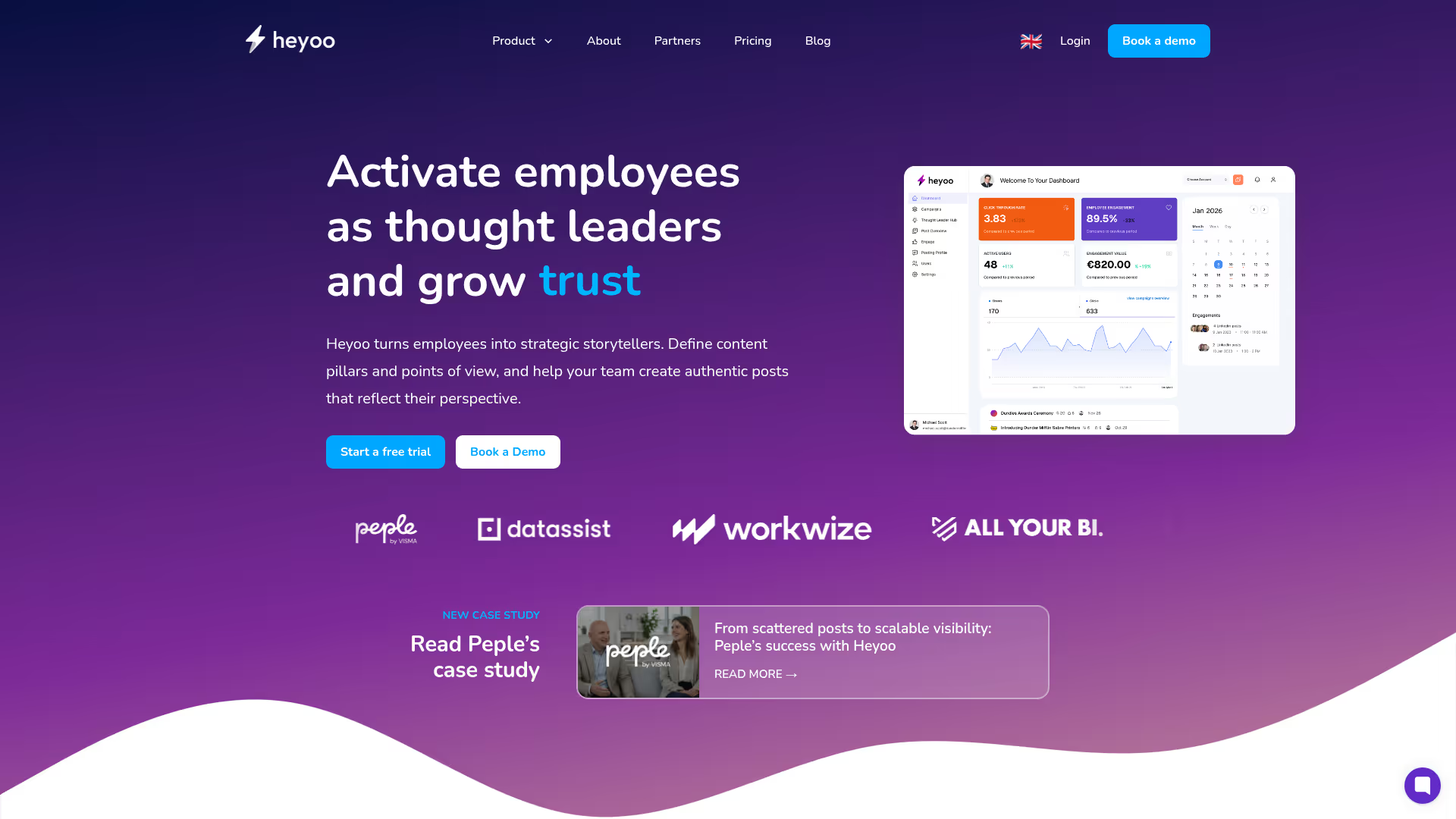
Heyoo.ai is the AI-native newcomer in the advocacy space. The core differentiator: generative AI creates personalized content for each employee based on their professional profile, industry, and audience. Instead of everyone sharing identical pre-written posts, each employee gets content that sounds like them.
This approach addresses one of the biggest authenticity problems in advocacy: when 30 employees share the exact same post within an hour, it looks like what it is. Heyoo.ai's per-employee personalization makes shared content feel organic. The platform is LinkedIn-first, reflecting where most B2B advocacy happens.
Best for: Teams that prioritize authentic, personalized employee content over volume and want an AI-first approach to advocacy.
Key strengths
- Generative AI creates unique content per employee
- Personalization based on professional profile and audience
- LinkedIn-first design for B2B advocacy
- Reduces the "identical post" problem in advocacy
- Modern interface built for individual employee experience
Why choose Heyoo.ai: If authenticity is your top concern and you want each employee's shared content to sound like them (not like marketing), Heyoo.ai's approach is the most differentiated in the category. The trade-off: newer platform with a smaller customer base, less proven at enterprise scale. AI quality depends on the underlying models, and personalization accuracy varies by how much profile data is available.
Pricing: Custom pricing. Early-stage platform with flexible terms.
15. Vulse
Vulse flips the advocacy model. Instead of "share this company content," Vulse starts with "build your professional presence" and layers company content on top. Employees participate because it helps their career, not just the company's reach.
This personal branding approach addresses the motivation problem at its root. The platform provides AI writing assistance, content ideas, and scheduling tools focused on helping employees grow their LinkedIn presence. Company content gets woven into a broader personal content strategy. It's LinkedIn-centric and designed for individual employees, not marketing admins.
Best for: Organizations that want to drive advocacy through employee personal branding and career development, not top-down content distribution.
Key strengths
- Personal branding-first approach to advocacy
- AI writing assistance for individual LinkedIn content
- Employee-centric design focused on career growth
- Content scheduling and LinkedIn optimization tools
- Company content integrated into personal content strategy
Why choose Vulse: If you believe the most sustainable advocacy comes from employees who genuinely want to be active on LinkedIn, Vulse's approach creates intrinsic motivation. Employees build their professional brand; the company benefits from the reach. The trade-off: the personal branding focus means less control over messaging for marketing teams. The platform is newer with a smaller enterprise customer base, and the employee-first model requires trust that employees will stay on-brand without heavy guardrails.
Pricing: From ~$8/user/month.
Key features to compare in employee advocacy platforms
Content curation and AI-assisted creation
Look at how the platform helps marketing stage content and whether AI generates variations, captions, or personalized posts. In 2026, AI content suggestions are expected, not differentiating. The differentiator is how well the AI personalizes to each employee's voice versus generating generic variations that everyone posts identically. If content creation is a broader challenge for your team, our guide to the best content creation software tools covers the full landscape.
Employee adoption and mobile experience
This is the most important factor that most buyers underweight. Cover mobile app quality, one-click sharing, auto-share options, and push notifications. Programs with mobile-first tools see 2–3x higher participation rates. If your employees won't open the app on their phone before their first meeting, the features don't matter. Social media advocacy only works when people participate.
Gamification and incentive systems
Leaderboards, points, rewards, and recognition drive initial adoption. But sustained participation requires intrinsic motivation (personal branding benefits, career development) alongside extrinsic rewards. The employee advocacy benefits of gamification fade after 3–6 months if there's no deeper reason to participate.
Analytics, attribution, and ROI measurement
The range spans from basic (shares and clicks) to advanced (CRM pipeline attribution). Most tools measure vanity metrics like impressions and earned media value. Only a few (Oktopost, GaggleAMP) connect advocacy to pipeline revenue. If your CMO needs pipeline numbers, this is the filter. For a deeper look at measuring social performance, see our roundup of the best social media analytics tools.
Compliance and approval workflows
Critical for regulated industries: financial services, healthcare, government. Look for pre-approved messaging, legal disclaimers, audit trails, and multi-level approval workflows. The tools with strongest compliance features: Sociabble, EveryoneSocial, and Hootsuite Amplify.
Integrations
CRM (Salesforce, HubSpot), communication (Slack, Microsoft Teams), social management (Hootsuite, Sprinklr), SSO, and HRIS platforms. Check integration fit before feature fit. A feature-rich employee advocacy platform with no integrations creates a data silo that makes reporting harder, not easier.
How to choose the right employee advocacy software
Start with your adoption problem, not your feature wishlist
The number one reason advocacy programs fail is employees don't use the tool. Prioritize UX and mobile experience over admin dashboards. Ask yourself: "Will my employees open this app on their phone at 8am and share something before their first meeting?" If the answer isn't a confident yes, the features don't matter.
Match the tool to your program maturity
First-time programs: Sociuu, Social Champ, or Vulse (low cost, simple, validates the concept). Scaling programs: DSMN8, GaggleAMP, or EveryoneSocial (deeper features, better analytics). Enterprise integration: Hootsuite Amplify, Sprinklr, or Sociabble (unified employee advocacy platform, governance at scale).
Define your attribution requirements
If you need to prove pipeline ROI in CRM terms, Oktopost is the clear choice. If earned media value is sufficient for your reporting, most tools cover this. Be honest with yourself about what your leadership actually requires from your employee advocacy program. Teams focused on broader marketing analytics should ensure their advocacy tool feeds into their existing measurement stack.
Check integration fit before feature fit
The tool needs to connect to your CRM, your communication platform (Slack/Teams), and ideally your social management tool. A feature-rich platform with no integrations creates a data silo that makes reporting harder, not easier.
Budget realistically
Enterprise platforms: $10,000–$50,000+/year. Mid-market tools: $5,000–$15,000/year. SMB options: under $1,000/year. Factor in implementation time and ongoing program management (someone has to curate content weekly), not just software cost.
Conclusion
Employee advocacy software works when employees actually use it. That's the filter every evaluation should start with. The spectrum runs from lightweight SMB options like Sociuu and Vulse to enterprise platforms like Sprinklr and Firstup. The right choice depends on team size, budget, program maturity, and whether you need advocacy standalone or integrated into your existing stack.
Start with a pilot. Pick 20–30 employees, run a 60-day test, measure participation rate and content reach before committing to an annual contract. The data from that pilot will tell you more than any vendor demo.
If you're evaluating marketing tools and want to see how interactive demos can support your team's go-to-market efforts - from embedding product walkthroughs in social posts to building a demo center that employees can share - explore Guideflow's platform.