
Social media analytics software tracks engagement, audience demographics, and campaign performance across platforms so you can optimize content and prove ROI without logging into five different dashboards. The category, projected at $20.3 billion in 2026, includes everything from simple reporting tools to enterprise platforms with competitive intelligence and AI-powered recommendations.
This guide covers 15 tools worth evaluating, explains when dedicated software beats native platform analytics, and breaks down what actually matters when choosing between them.
Social media analytics software tracks engagement, audience demographics, and campaign performance across platforms like Instagram, TikTok, LinkedIn, Facebook, X, and YouTube. Marketing teams use these tools to optimize content strategy and prove ROI to stakeholders. Top platforms include Hootsuite for enterprise management, Sprout Social for team collaboration, Rival IQ for competitive analysis, and Metricool for AI-powered reporting.
The real challenge in 2026 isn't finding analytics tools. It's finding one that consolidates your data without creating more dashboards to check.
What's inside
This guide covers 15 social media analytics tools selected for network coverage, reporting depth, ease of use, and value across different team sizes. You'll find practical guidance on when dedicated software beats native platform analytics, how to evaluate tools based on your specific needs, and honest assessments of each platform's strengths and limitations.
TL;DR
Best for enterprise teams: Hootsuite Analytics, Sprout Social, Brandwatch
Best for competitive benchmarking: Rival IQ, Socialinsider
Best for agencies needing white-label reports: Social Status, DashThis, Sendible
Best for creators and small teams: Buffer Analyze, Later Analytics, Zoho Social
Key decision factor: Choose based on which networks you prioritize and whether you want cross-platform dashboards or deep single-channel insights
What social media analytics software does
Social media analytics software pulls performance data from your social accounts into unified dashboards. Instead of logging into five different platforms to check metrics, you get engagement rates, follower growth, and content performance in one place.
Core metrics these tools track
Engagement rate: Interactions divided by reach or followers, showing how actively your audience responds
Impressions and reach: Total views versus unique viewers who saw your content
Follower growth: Net new followers over time, indicating audience building momentum
Click-through rate: Clicks on links in posts, measuring traffic generation
Audience demographics: Age, location, and interests of your followers
Content performance: Which posts drive the most engagement by format, topic, or timing
Sentiment analysis: Whether comments and mentions skew positive, negative, or neutral
Native platform analytics vs dedicated software
Native tools like Instagram Insights and Meta Business Suite provide the most accurate, real-time data for single platforms. They're free and always current.
Third-party social media analytics platforms consolidate multiple channels into one dashboard. This makes cross-platform comparison and historical trend analysis much easier. The tradeoff is slight data delays and occasional API limitations.
If you manage two or fewer networks, native analytics often suffice. Once you're juggling three or more platforms, dedicated software saves hours of manual compilation.
Social analytics tools vs social management platforms
Management tools handle scheduling, publishing, and inbox management. They typically include basic analytics as a feature.
Dedicated social media analysis tools go deeper with competitor tracking, extended historical data, custom reports, and industry benchmarking. Some platforms do both well, while others specialize. Understanding this distinction helps you avoid paying for publishing features you don't use or settling for shallow analytics when you want depth.
When to use social media analytics tools
Not every team requires paid analytics software. Here's when the investment makes sense.
Scaling reporting across multiple channels
Managing more than two or three social networks makes manual reporting time-consuming. You're logging into each platform, exporting data, and building spreadsheets that are outdated by the time you finish. Dedicated social media reporting tools pull all metrics into unified dashboards and automate exports.
Proving social media ROI to stakeholders
Leadership wants to know if social efforts drive business results, yet only 15% of marketers have proven that impact quantitatively. Native analytics show likes and comments, but connecting engagement to pipeline or revenue requires more sophisticated tracking. Analytics tools generate professional reports showing content performance, ad ROI, and follower sentiment tied to business outcomes.
Running systematic competitor analysis
Native analytics only show your own data. You can't see how competitors perform, what content they post, or how their engagement compares to yours. Social network analytics tools let you benchmark against competitors, track their posting frequency and engagement rates, and identify content approaches worth testing.
Automating agency client reporting
For agencies managing multiple brands, manual reporting is unsustainable. Each client wants customized reports on their schedule, often with agency branding removed. White-label social media reporting software automates client-ready reports with custom branding, scheduled delivery, and per-client dashboards.
How to choose the right social analytics platform
The best tool depends on your team size, priority networks, and reporting requirements.
Platform and network coverage
Not all tools support every platform equally. Check coverage for the networks that matter most to your approach.
Network | Coverage notes |
|---|---|
Facebook/Instagram | Nearly universal support |
TikTok | Growing but varies by tool |
Often limited to company pages | |
YouTube | Channel metrics common, Shorts less so |
X (Twitter) | API changes have affected some tools |
Less common, check specifically |
Reporting dashboards and export formats
Dashboard customization matters when different stakeholders want different views. Look for drag-and-drop report builders, automated scheduling, and export options including PDF, CSV, and branded presentations.
Competitor tracking and benchmarking
Good competitive analysis includes tracking competitor accounts, industry benchmarks, and alerts for competitor activity spikes. Ask how many competitors you can track, how far back historical data goes, and whether benchmarks are available for your industry.
AI-powered insights and recommendations
Newer tools offer AI features like best time to post suggestions, content performance predictions, and automated insight summaries. The quality varies significantly. Some AI features genuinely save time, while others generate generic recommendations.
Integrations with CRM and marketing tools
Connecting analytics to HubSpot, Salesforce, Slack, or Google Analytics creates a complete view of how social drives pipeline. Check whether integrations are native or require middleware like Zapier, and whether they sync data bidirectionally.
Pricing models and team scalability
Pricing varies widely. Some tools charge per social profile, others per user seat, others by feature tier. Consider what happens as you add more channels or team members.
Social media analytics tools comparison table
Rank | Product | Best for | Key differentiator | Pricing | G2 Rating |
|---|---|---|---|---|---|
1 | Hootsuite Analytics | Enterprise management | All-in-one with AI insights | From $99/mo | 4.2/5 |
2 | Sprout Social | Team collaboration | Deep analytics + social CRM | From $249/mo | 4.4/5 |
3 | Socialinsider | Competitor benchmarking | Multi-platform content analysis | From $99/mo | 4.6/5 |
4 | Buffer Analyze | Creators and small teams | Simple, clean interface | From $6/mo | 4.3/5 |
5 | Social Status | Ads and influencer tracking | White-label agency reports | From $29/mo | 4.7/5 |
6 | Keyhole | Hashtag and campaign tracking | Real-time keyword monitoring | From $89/mo | 4.3/5 |
7 | Rival IQ | Competitive analysis | Automated competitor alerts | From $239/mo | 4.5/5 |
8 | Sendible | Agency client management | Campaign-level reporting | From $29/mo | 4.5/5 |
9 | Iconosquare | Instagram and TikTok depth | Visual-first analytics | From $49/mo | 4.4/5 |
10 | Brandwatch | Enterprise listening | Consumer intelligence platform | Contact sales | 4.4/5 |
11 | Talkwalker | Audience insights | AI-powered sentiment analysis | Contact sales | 4.3/5 |
12 | Agorapulse | Mid-size teams | Unified inbox + analytics | From $49/mo | 4.5/5 |
13 | Zoho Social | Zoho ecosystem users | Native CRM integration | From $15/mo | 4.6/5 |
14 | Later Analytics | Visual content planning | Link-in-bio analytics | From $25/mo | 4.5/5 |
15 | DashThis | Marketing dashboards | Multi-source report builder | From $49/mo | 4.5/5 |
15 best social media analytics tools for data-driven teams
1. Hootsuite Analytics
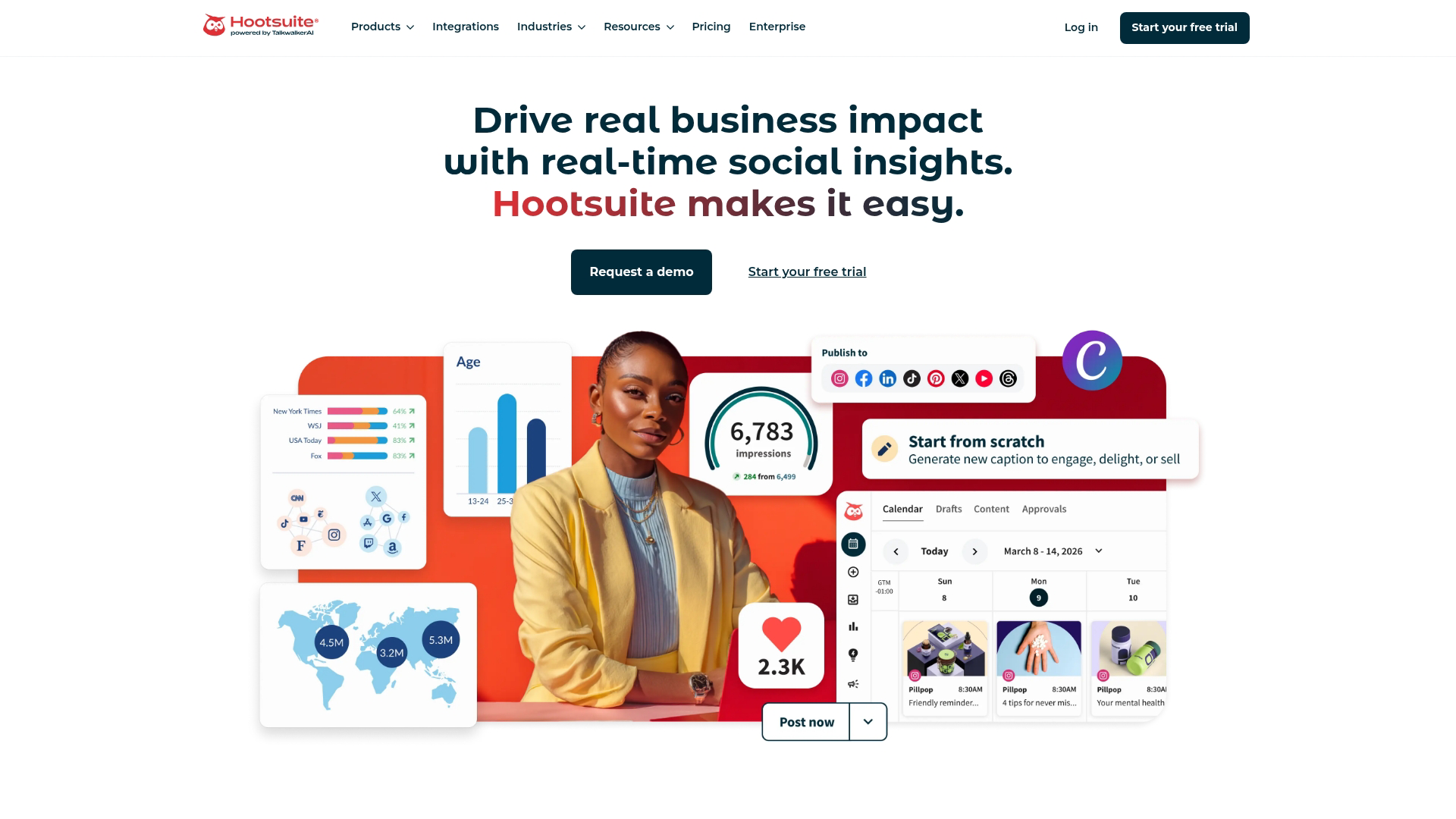
Hootsuite is an all-in-one social media management and analytics platform. The analytics module pulls data from all major networks into customizable dashboards, with AI-powered recommendations for posting times and content optimization.
Best for: Enterprise teams already using Hootsuite for publishing who want unified analytics without adding another tool.
Key strengths
Cross-network dashboard: Consolidates Facebook, Instagram, TikTok, X, LinkedIn, YouTube, and Pinterest
Competitive benchmarking: Compare against industry averages and specific competitors
AI recommendations: Best posting times based on your audience behavior
Integration ecosystem: 150+ apps connect to the platform
Pricing: Plans start at $99/month for professionals, with team and enterprise tiers scaling up.
2. Sprout Social
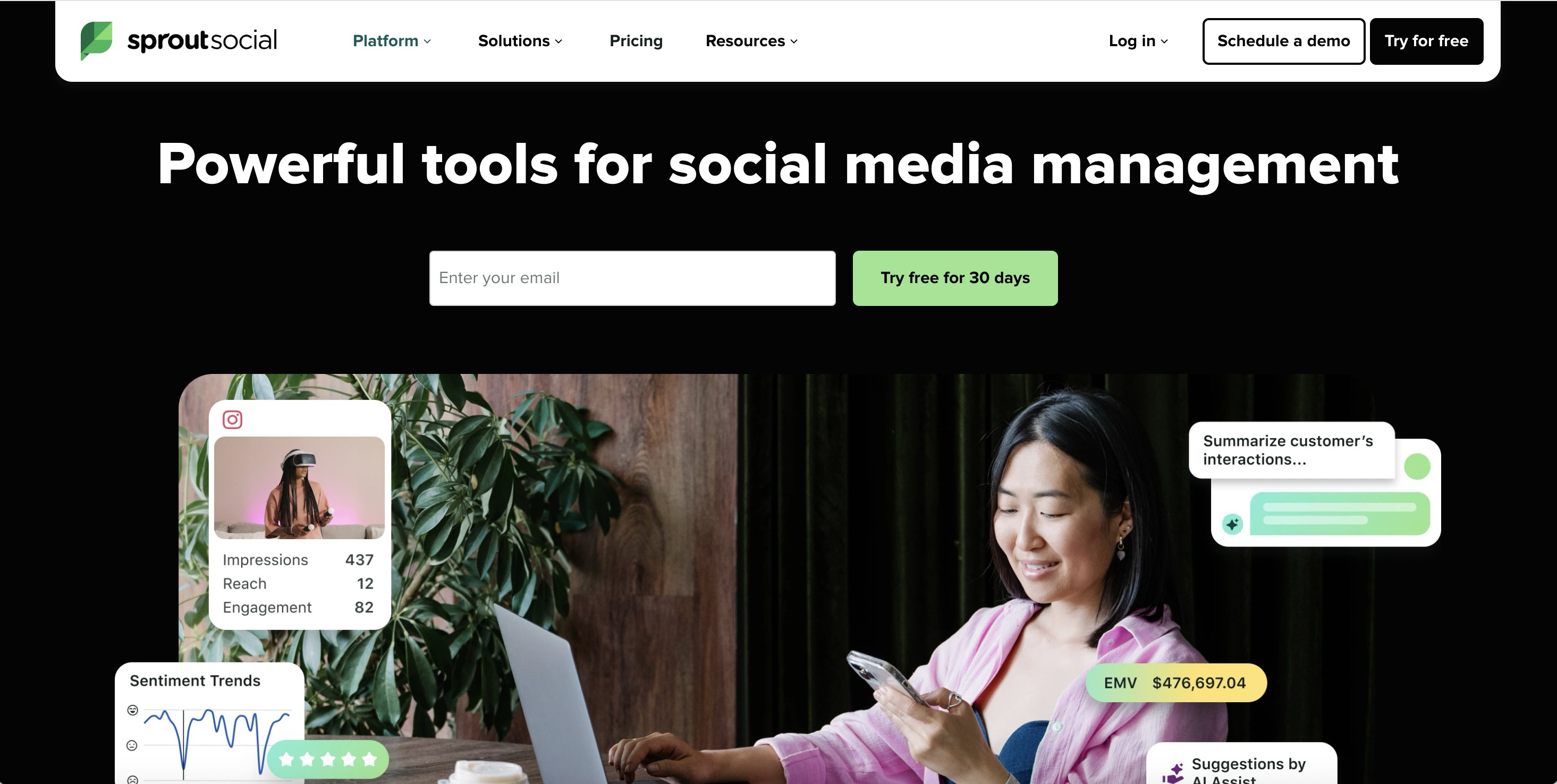
Sprout Social positions itself as the analytics choice for teams prioritizing collaboration and presentation-ready reports. The platform combines deep social media insights with social CRM features that track individual customer interactions.
Best for: Mid-to-large marketing teams that present regularly to stakeholders and want polished reports without manual formatting.
Key strengths
Presentation-ready reports: Export cleanly for executive reviews
Social CRM: Track individual customer interactions across channels
Team performance metrics: Response times and resolution rates
Listening tools: Brand mention monitoring and sentiment tracking
Pricing: Plans start at $249/month per seat, with Professional and Advanced tiers adding features.
3. Socialinsider
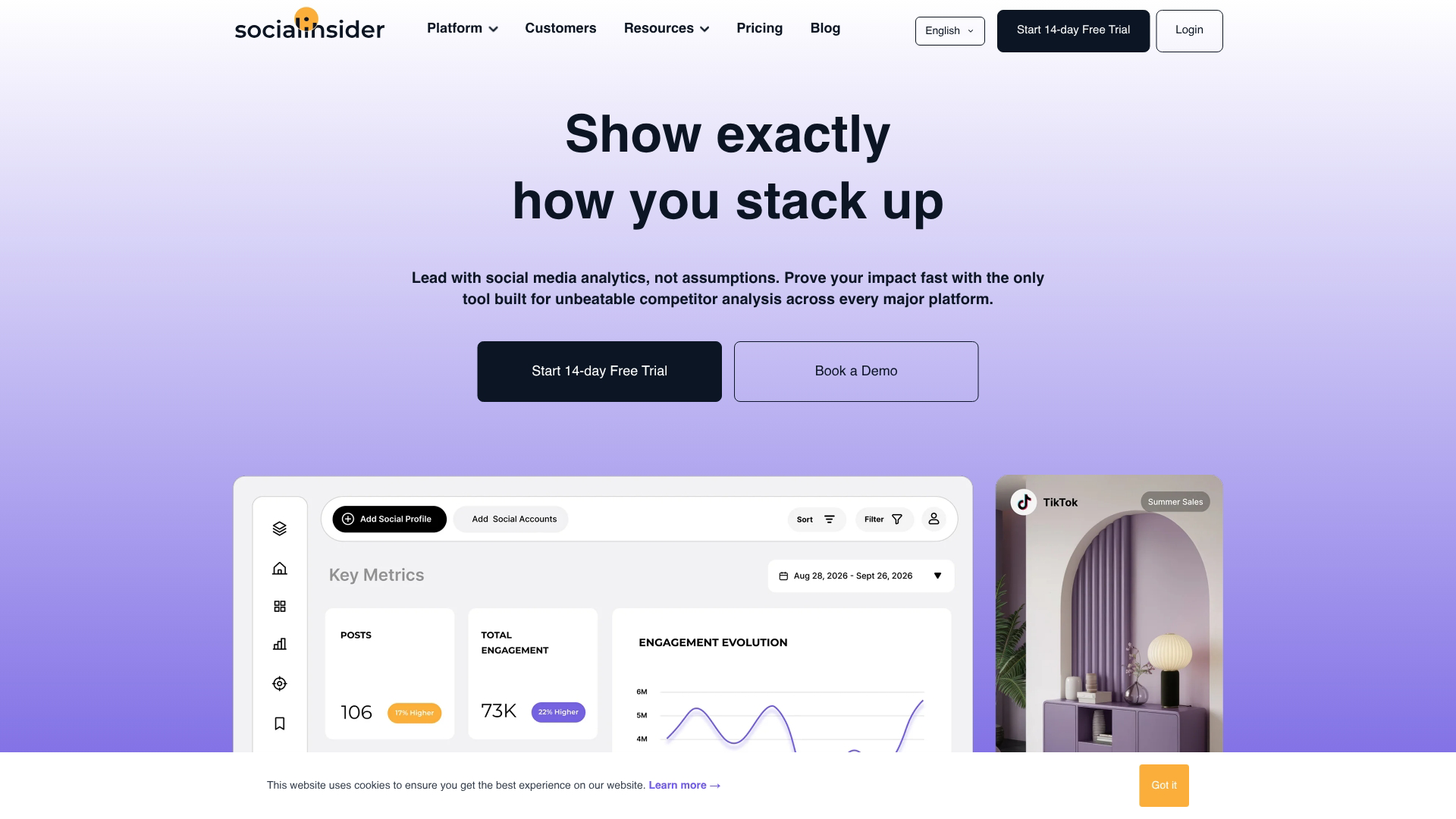
Socialinsider focuses on multi-platform analytics and competitor benchmarking. The tool excels at content pillar analysis, showing which topics and formats perform best across your accounts and competitors.
Best for: Social media managers who want to understand what competitors post and how it performs relative to their own content.
Key strengths
Content pillar analysis: Categorize posts by topic and format performance
Competitive benchmarking: Side-by-side comparisons with competitors
Historical data access: Goes back further than most tools
Campaign tracking: Group posts by initiative
Pricing: Plans start at $99/month with pricing scaling by features and competitor tracking limits.
4. Buffer Analyze
Buffer offers a clean, simple analytics option for creators and small teams. The interface prioritizes clarity over feature density.
Best for: Solopreneurs and small marketing teams wanting straightforward social media analytics without complexity.
Key strengths
Intuitive dashboard: Learnable in minutes
Engagement metrics: Clear visualizations of performance
Audience demographics: Who follows and engages with your content
Affordable pricing: Accessible to individual creators
Pricing: Free plan available with limited features. Paid plans start at $6/month per channel.
5. Social Status
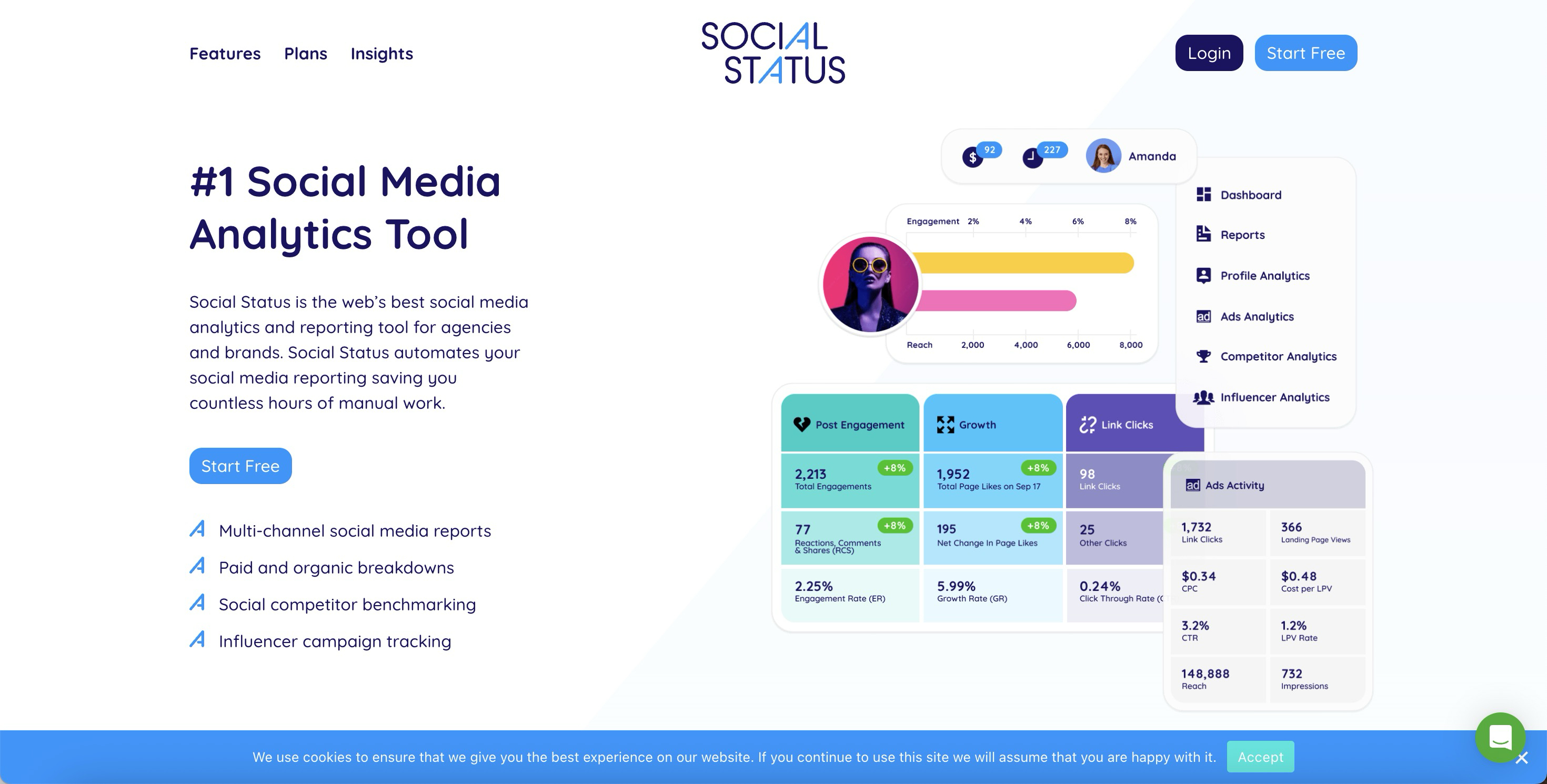
Social Status specializes in ads analytics and influencer campaign tracking. The platform unifies organic, paid, and influencer metrics in one place, with white-label reporting designed for agencies.
Best for: Brands running paid social and influencer partnerships who want unified reporting across all three.
Key strengths
Ads analytics: Track paid performance alongside organic
Influencer tracking: Monitor campaign performance from creators
Competitor monitoring: Across all major platforms
White-label reports: Custom branding for agency clients
Pricing: Plans start at $29/month with pricing scaling by profiles and features.
6. Keyhole
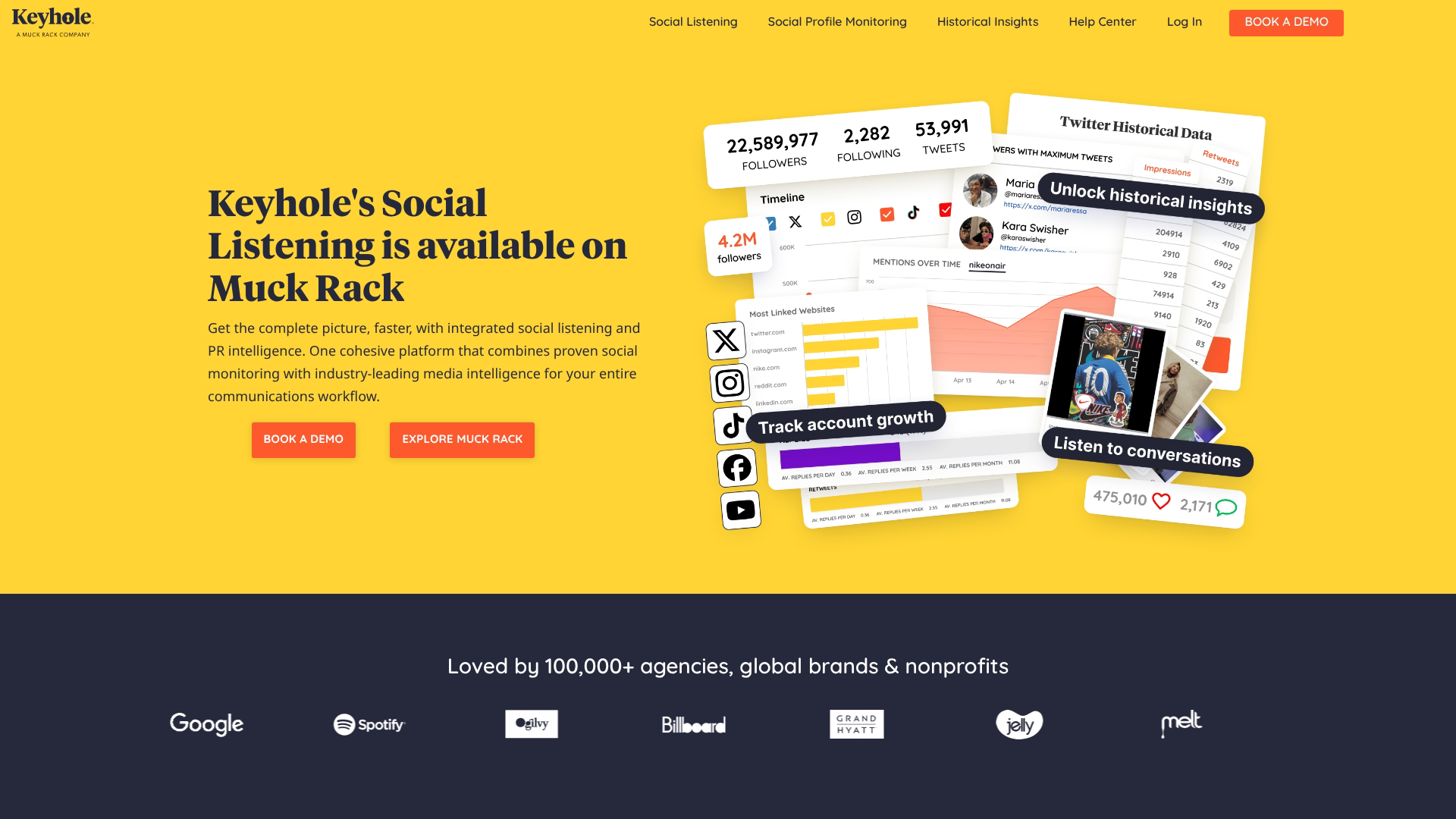
Keyhole focuses on real-time hashtag, keyword, and campaign analytics. The platform excels at tracking specific conversations and campaigns rather than general account performance.
Best for: PR teams, event marketers, and anyone tracking specific campaigns or brand conversations in real time.
Key strengths
Hashtag tracking: Real-time volume and sentiment
Real-time monitoring: Brand mentions and keywords
Influencer identification: Find accounts driving conversation
Campaign tracking: Custom date ranges and comparisons
Pricing: Plans start at $89/month with pricing varying by tracking volume and features.
7. Rival IQ
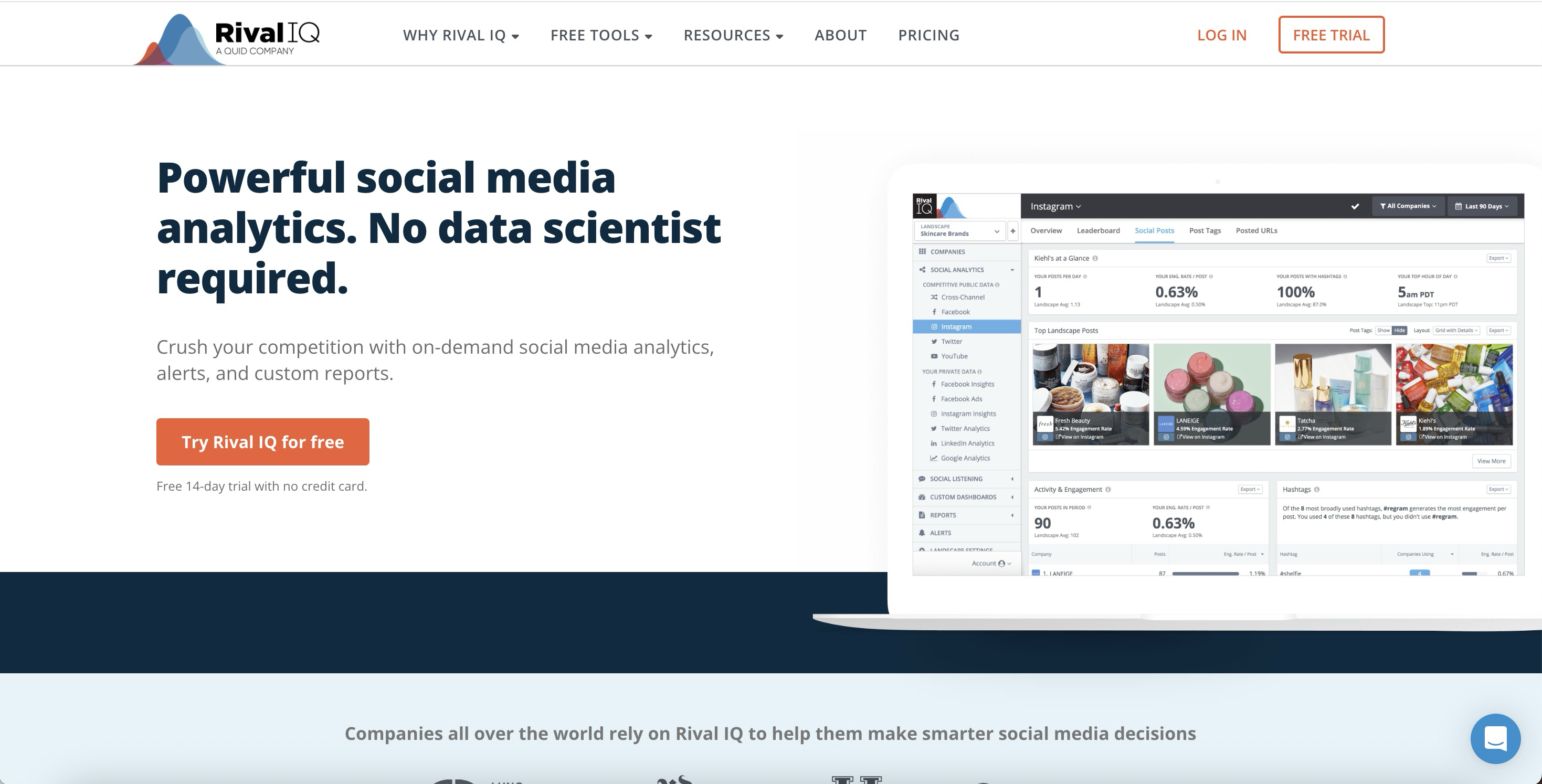
Rival IQ specializes in competitive social media analysis. The platform provides automated alerts when competitors post high-performing content and detailed benchmarking against industry averages.
Best for: Agencies and brands where competitive positioning drives decisions and leadership asks about competitor performance regularly.
Key strengths
Automated competitive alerts: Notifications of competitor wins
Industry benchmarks: Compare your performance to sector averages
Content analysis: What topics and formats work for competitors
Social audit reports: Comprehensive competitive reviews
Pricing: Plans start at $239/month with pricing scaling by competitors tracked and features.
8. Sendible
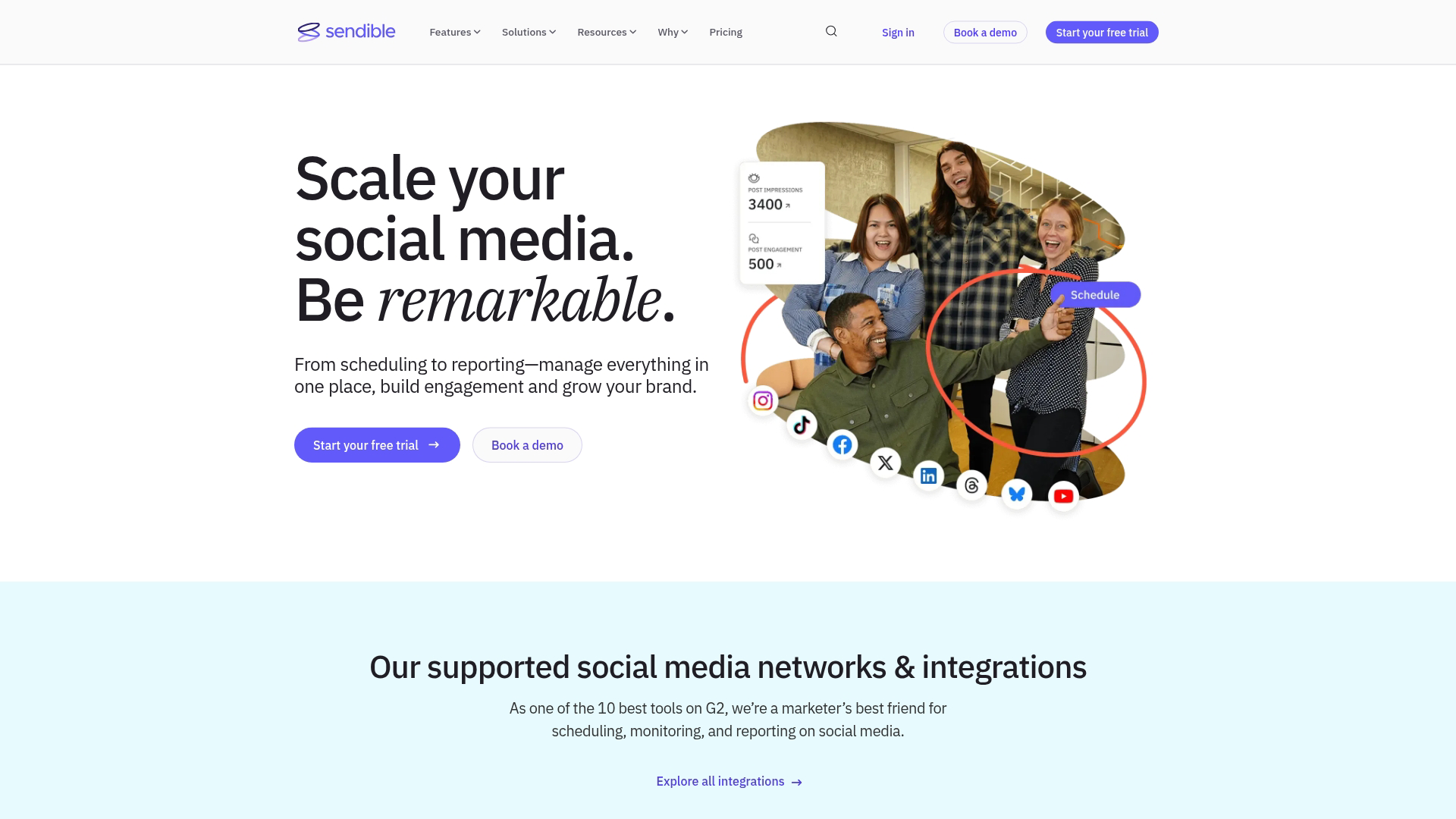
Sendible serves agencies managing multiple client accounts with organized, scalable reporting. The platform combines management and analytics with client-specific dashboards and campaign grouping.
Best for: Agencies wanting management and analytics in one platform with clear client separation.
Key strengths
Client management: Separate dashboards per account
Campaign grouping: Organize posts by initiative
Custom reports: Agency branding options
Approval workflows: Client sign-off processes
Pricing: Plans start at $29/month with pricing scaling by users and features.
9. Iconosquare
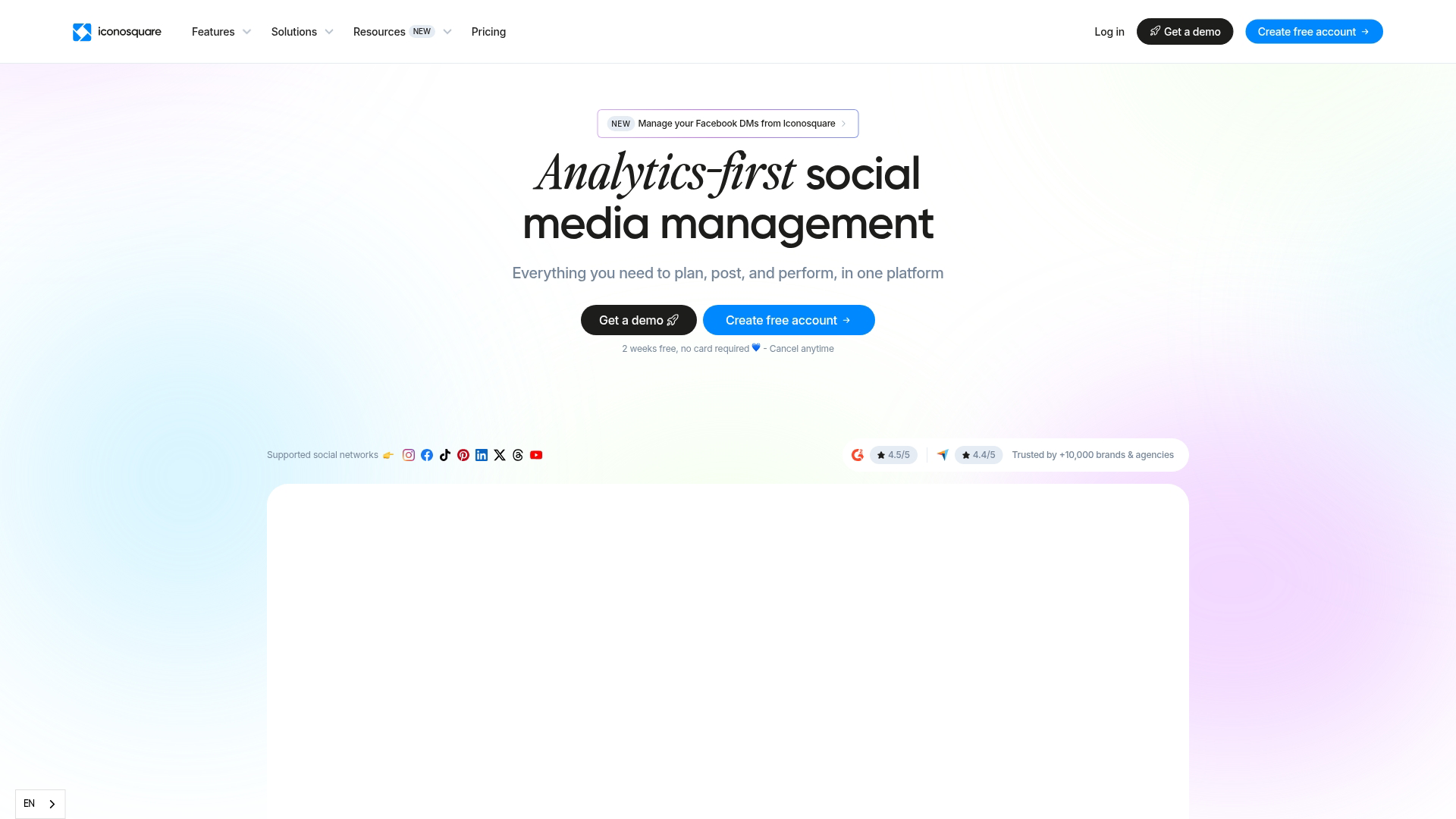
Iconosquare provides deep analytics for visual platforms, particularly Instagram and TikTok. The tool offers granular data on Stories, Reels, and visual content performance.
Best for: Brands where Instagram and TikTok drive primary social activity and visual content performance matters most.
Key strengths
Stories and Reels analytics: Completion rates and engagement
Hashtag tracking: Instagram optimization
Competitor monitoring: On visual platforms
Industry benchmarks: Visual content performance
Pricing: Plans start at $49/month with pricing scaling by profiles and features.
10. Brandwatch
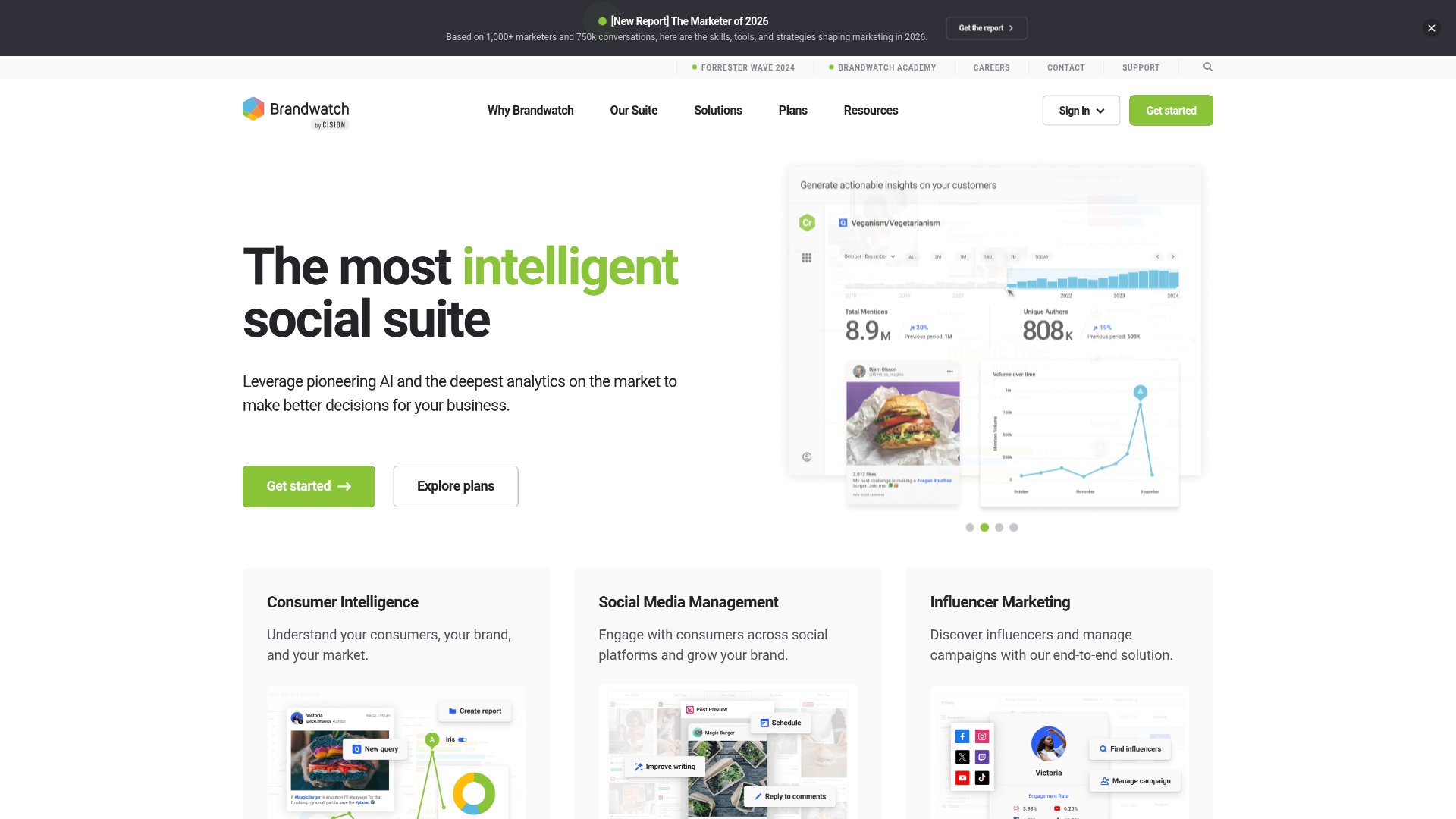
Brandwatch operates as an enterprise consumer intelligence platform that goes beyond basic social analytics. The tool combines social listening, trend analysis, and consumer research at scale.
Best for: Large organizations wanting social data as part of broader market intelligence and consumer research.
Key strengths
Social listening: Across platforms and the broader web
Audience research: Demographic and psychographic insights
Trend detection: Identify emerging topics and conversations
Crisis monitoring: Real-time alerts
Pricing: Contact sales for custom pricing based on requirements and scale.
11. Talkwalker
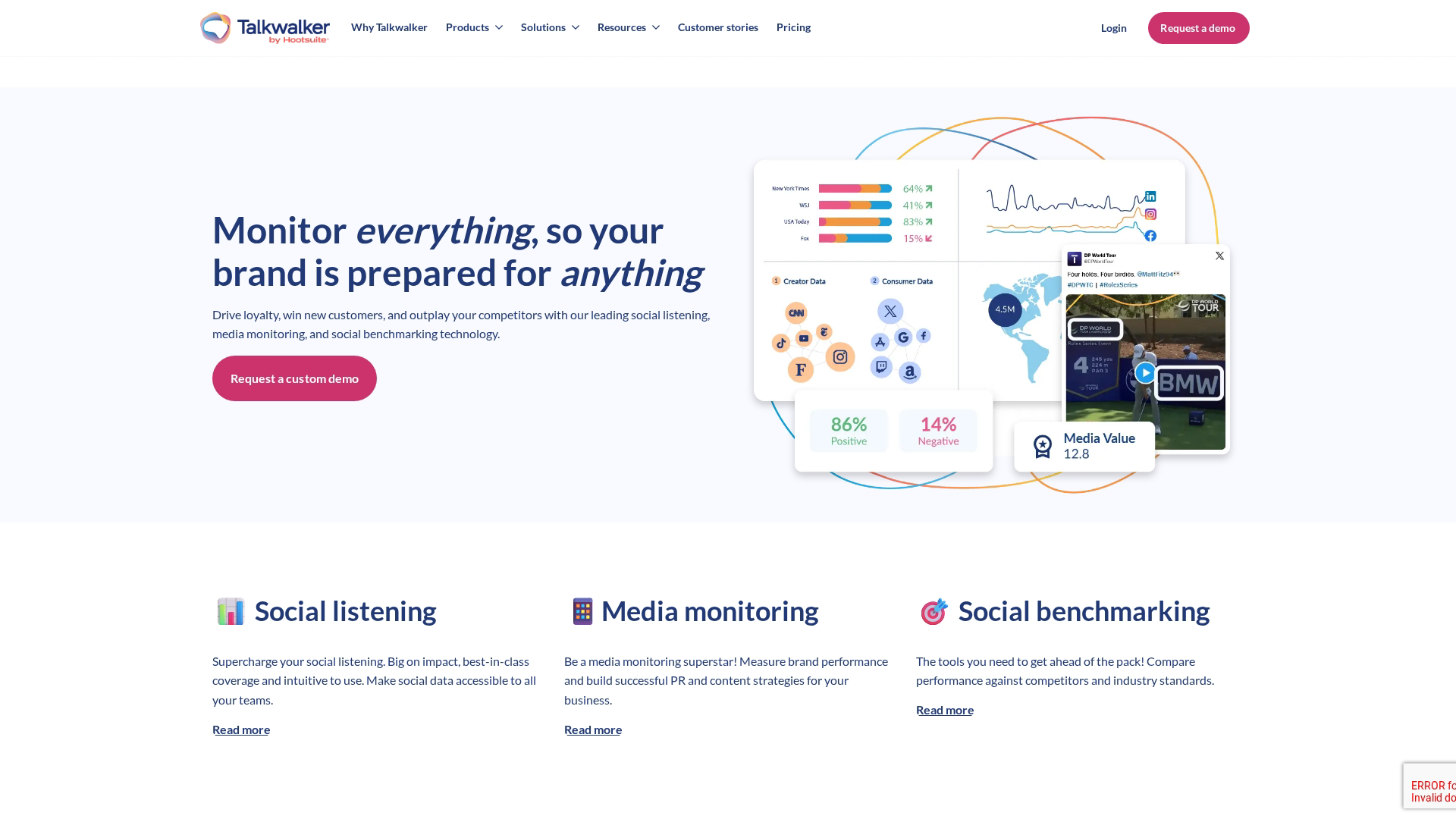
Talkwalker focuses on AI-powered audience insights and sentiment analysis. The platform serves global brands tracking brand perception across languages and regions.
Best for: Multinational teams tracking brand perception across languages and wanting deep audience understanding.
Key strengths
Sentiment analysis: Nuanced positive/negative/neutral classification
Image recognition: Identify brand logos in visual content
Multi-language support: Global brand tracking
Crisis alerts: Reputation management
Pricing: Contact sales for custom pricing based on requirements and scale.
12. Agorapulse
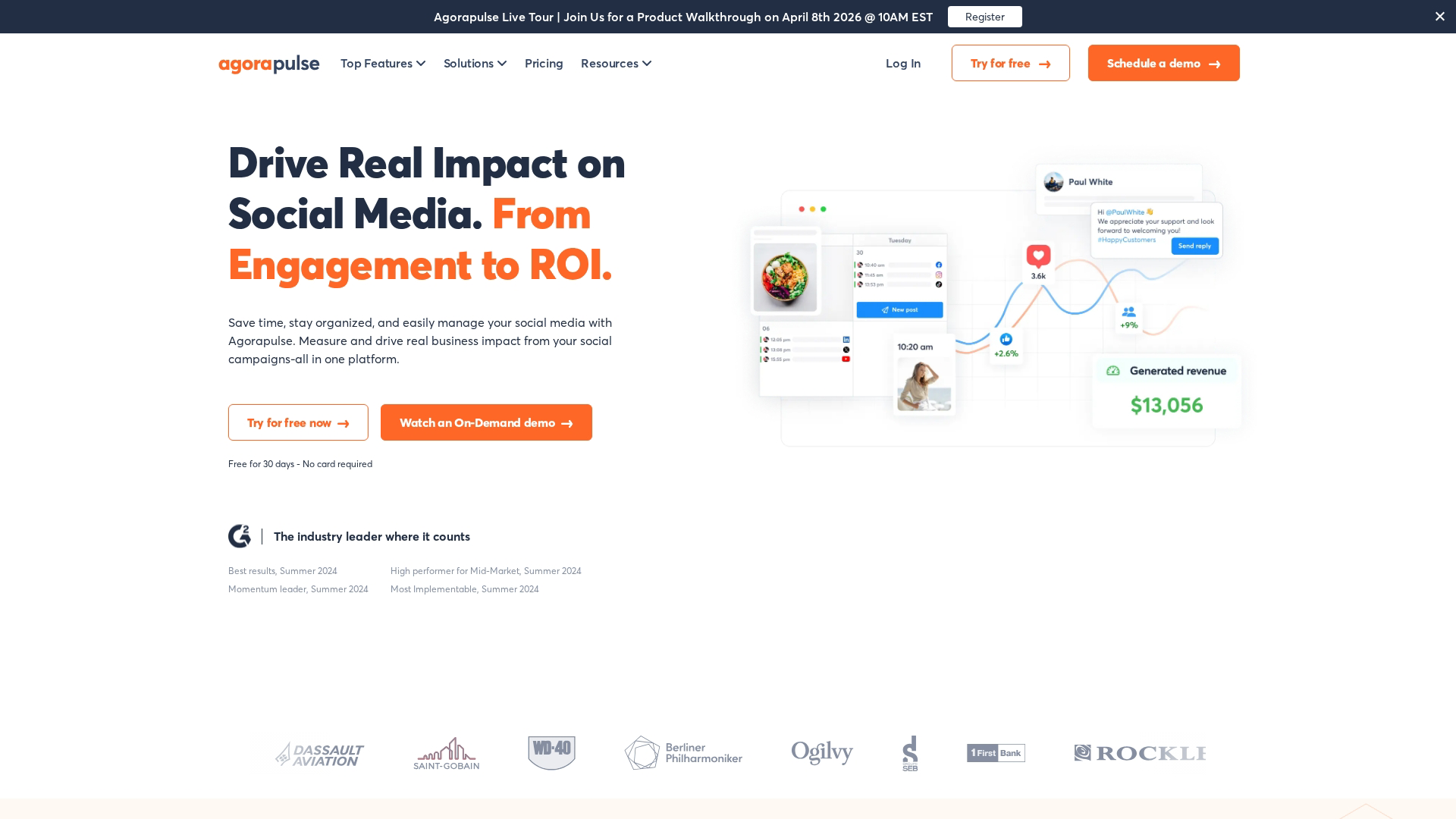
Agorapulse combines inbox management with solid analytics for mid-market teams. The platform offers publishing, engagement, and reporting unified without enterprise complexity or pricing.
Best for: Growing marketing teams wanting publishing, engagement, and reporting unified without enterprise pricing.
Key strengths
Social inbox: Consolidate messages and comments
ROI tracking: Connect social to conversions
Team collaboration: Assignment and approval workflows
Automated reports: Scheduling and delivery
Pricing: Plans start at $49/month with pricing scaling by users and features.
13. Zoho Social
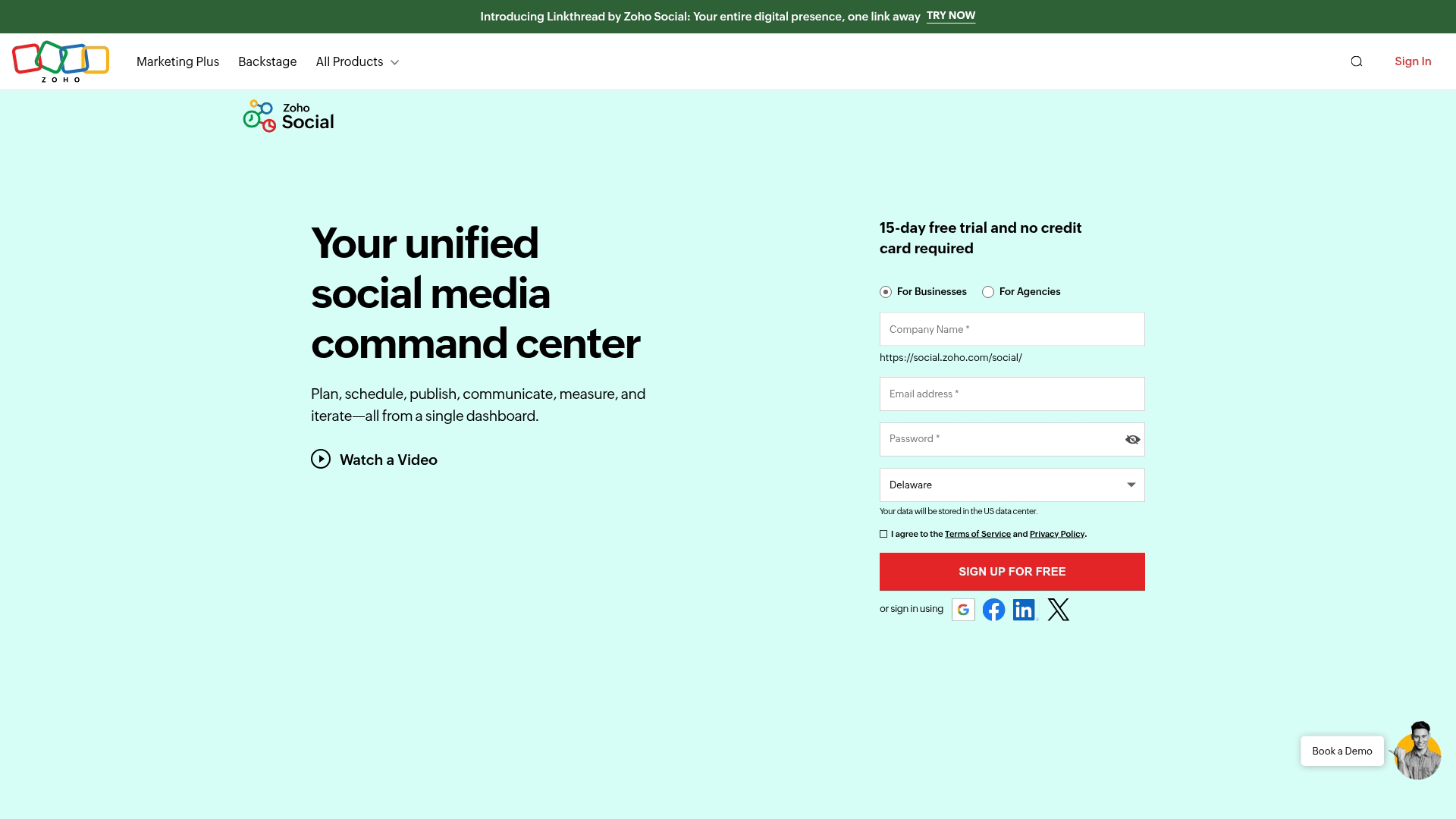
Zoho Social integrates natively with the Zoho CRM ecosystem. The tool connects social analytics with customer data for teams already using Zoho products.
Best for: Companies already using Zoho products who want social data flowing into their existing stack.
Key strengths
CRM integration: Connect social interactions to customer records
Lead tracking: From social engagement
Affordable pricing: Compared to standalone tools
Publishing and analytics: In one platform
Pricing: Plans start at $15/month with pricing scaling by features and users.
14. Later Analytics
Later focuses on visual content planning with link-in-bio analytics. The platform serves creators and e-commerce brands using Instagram and TikTok for direct traffic and sales.
Best for: Creators and e-commerce brands treating social as a direct traffic and sales channel.
Key strengths
Link-in-bio tracking: Which links drive clicks
Visual content calendar: Planning and scheduling
Best time to post: Recommendations based on your audience
E-commerce integrations: Product tagging
Pricing: Plans start at $25/month with pricing scaling by features and social sets.
15. DashThis
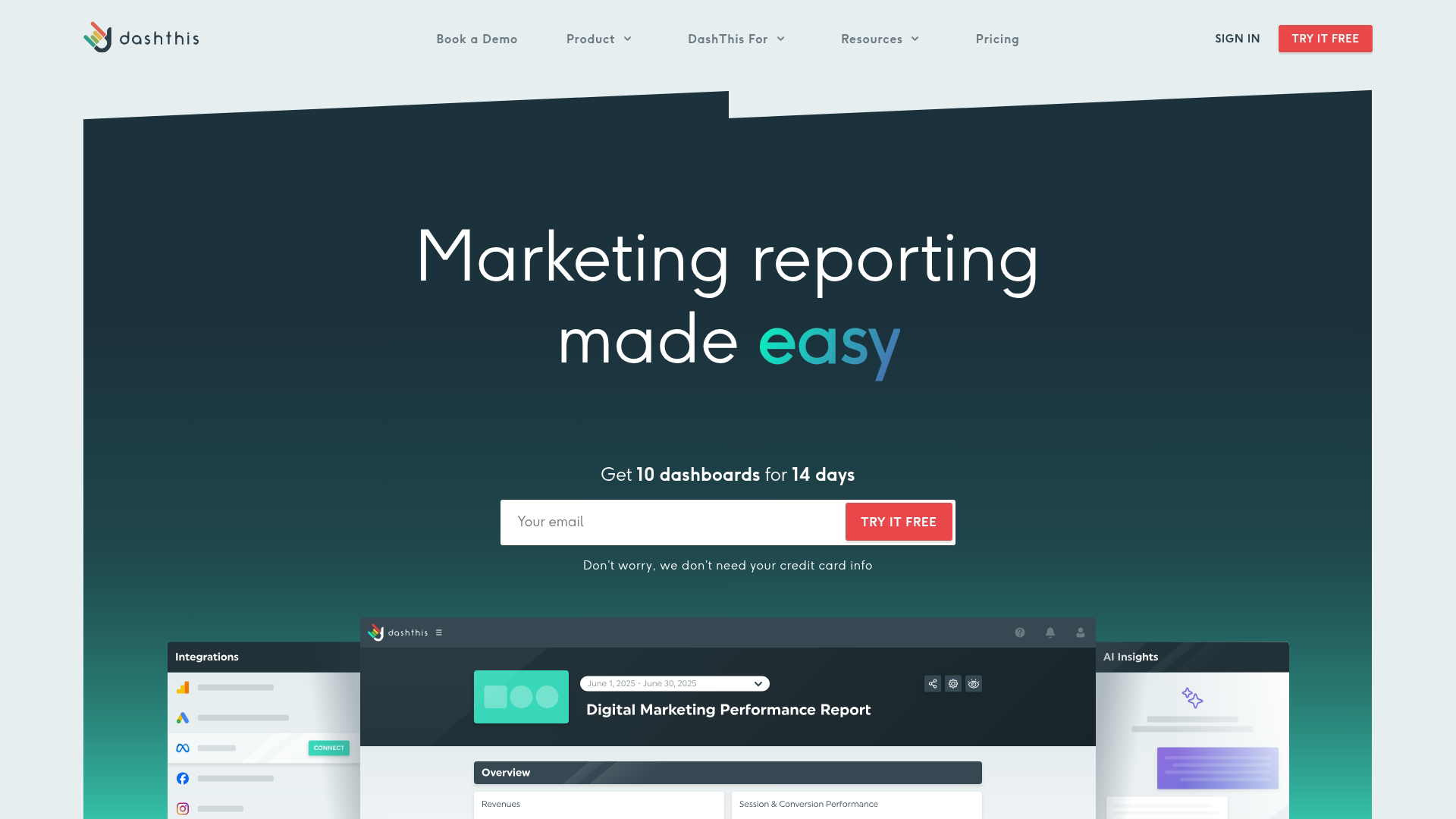
DashThis builds multi-source marketing dashboards that combine social analytics with other marketing data. The platform serves marketers who want executive dashboards spanning social, ads, SEO, and web analytics.
Best for: Marketers building executive dashboards that go beyond social alone.
Key strengths
Multi-source integration: Pull from 30+ marketing platforms
White-label reports: Custom branding
Automated scheduling: Report delivery
Custom KPIs: Calculated metrics
Pricing: Plans start at $49/month with pricing scaling by dashboards and data sources.
Key considerations before buying social media reporting software
Tool selection depends on current requirements and growth trajectory.
Matching features to team size and budget
Solopreneurs and small teams rarely require enterprise features. Start with tools matching current complexity. Upgrading later is easier than paying for unused capabilities.
A creator managing two platforms doesn't require competitive analysis across ten competitors. An agency managing twenty clients does.
Free social media analytics vs paid plans
Free tiers typically include basic metrics, limited history, and single user access. Paid plans add competitor tracking, historical data, team seats, and custom reports.
Upgrade when reporting becomes a manual bottleneck or competitive insights become critical to your approach.
Data accuracy and reporting refresh rates
All third-party tools pull from platform APIs, which have limitations. Native analytics remain most accurate for real-time data. Third-party tools excel at consolidation and historical trends. Check refresh rates if real-time matters for your use case.
Turn social media insights into pipeline
Tracking engagement is only valuable if insights inform action. The best analytics tools help you understand what content resonates, but converting attention into qualified leads requires showing product value.
For teams wanting to convert social traffic into pipeline, interactive demos can close the gap between social engagement and actual product experience. Instead of sending traffic to static landing pages, you can let prospects experience your product directly.
Start your journey with Guideflow today!
FAQs about social media analytics software
Can ChatGPT analyze social media accounts directly?
ChatGPT cannot access private social media data or pull real-time metrics from accounts. For actual analytics, you want dedicated social media analytics software that connects to platform APIs.
How do you track social media analytics for free?
Use native platform analytics like Instagram Insights, Meta Business Suite, or TikTok Analytics. Free tiers from tools like Buffer, Later, or Zoho Social also work for single-platform tracking but lack cross-channel dashboards and competitor data.
What is the difference between social media analytics and social listening?
Analytics tracks performance metrics for your owned accounts including engagement, reach, and follower growth. Social listening monitors broader conversations, brand mentions, and sentiment across the entire platform, including accounts you don't own.
How accurate are third-party analytics tools compared to native platform data?
Third-party tools pull data from the same APIs but may have slight delays or rounding differences. Native analytics provide the most granular, real-time data. Third-party tools excel at cross-platform comparison and historical trends.
Which social media analytics tool works best for agencies managing multiple clients?
Social Status, Sendible, and DashThis offer white-label reporting and multi-client management features. Look for tools with client-specific dashboards, automated report scheduling, and custom branding options.
Do most social analytics tools support TikTok and YouTube Shorts?
Coverage varies significantly with TikTok engagement growing 49% year-over-year, strong support matters. Hootsuite, Sprout Social, Iconosquare, and Social Status offer TikTok analytics. YouTube Shorts support is less common and often limited to overall channel metrics rather than Shorts-specific data.
How far back can you access historical data in social media analytics platforms?
Historical data access depends on the tool and pricing tier. Some platforms offer unlimited history while others restrict to 30-90 days on lower plans. Check data retention before committing if historical analysis matters.
What metrics prove social media ROI to leadership?
Focus on metrics tied to business outcomes: click-through rate, conversions from social traffic, cost per lead from paid social, and engagement-to-pipeline correlation. Vanity metrics like likes and followers matter less than actions that drive revenue.