Your product charges by the seat. Your customers consume by the API call, the gigabyte, the inference token, the transaction. Those two facts no longer line up, and the gap is showing up in revenue you never billed for and deals that stall on a pricing model nobody can explain.
This is the core friction behind the shift to consumption pricing. As of 2023, OpenView found that 41% of SaaS companies already had a usage-based component in their pricing, with another 17% testing one. The pull is strongest in AI, API, and infrastructure businesses, where value tracks consumption almost perfectly and flat subscriptions leave money on the table. The global usage-based billing software market reflects the same momentum, sized at roughly USD 6.86B in 2025 and projected to reach USD 7.37B in 2026 by 360iResearch.
The problem is that metering usage at scale is hard. You have to capture events accurately, deduplicate them, rate them against tiers and commitments, reconcile overages, then push clean numbers into invoicing and revenue recognition without breaking your close. A spreadsheet handles the first 50 customers. It does not handle 5,000 customers on hybrid billing models with credits, minimums, and mid-cycle plan changes.
For a sales enablement manager, this is not abstract finance plumbing. The pricing model your finance team picks becomes the talk track your reps have to defend, the battlecard your deal desk has to enforce, and the launch you have to operationalize. When the billing platform supports the model cleanly, reps explain it in one sentence. When it does not, every deal turns into a custom negotiation. The right usage-based billing platform makes a complex commercial model easy to sell, not just easy to invoice.
What's inside
This guide compares 10 real usage-based billing software platforms shipping in 2026. It is built for teams evaluating commercial models, not just finance tooling, so it weighs how each platform handles the full path from usage capture to revenue, not only the invoice at the end.
We selected and ordered tools on five criteria that matter when consumption pricing is on the table:
- Usage metering and ingestion at scale, including deduplication and validation
- Hybrid pricing support across pure usage, tiers, volume, credits, and commitments
- Invoicing and revenue recognition that finance and auditors can trust
- Scale and reliability for high-volume event data
- Ease of configuration so pricing can change without an engineering project
This is a shortlist, not a complete market map. Plenty of capable tools exist beyond these 10.
TL;DR
- Best for enterprise revenue lifecycle: BillingPlatform, for large organizations running complex quote-to-cash across usage, subscription, and hybrid models.
- Best for Stripe-native teams: Stripe Billing, when payments and billing already live inside Stripe and you want usage metering in the same place.
- Best for AI monetization: Metronome and Chargebee both target consumption pricing for AI and software companies that change pricing often.
- Best for finance-heavy workflows: Zuora and Zenskar, for teams that need billing, revenue recognition, and accounting to stay aligned.
- Best for quote-to-revenue in one system: Sequence, for B2B SaaS teams that want CPQ, billing, and revenue recognition under one roof.
- Best for category research: the G2 usage-based billing software category, to validate any shortlist against verified reviews.
If your team is also evaluating how consumption maps to AI products specifically, our roundups of agentic ai platforms and agentic ai tools for sales give useful context on where usage-based models are heading.
What is usage based billing software?
Usage-based billing software is a system that charges customers based on their actual consumption of a product or service rather than a flat seat or subscription fee. It captures usage events, meters and rates them against a pricing model, generates invoices, and feeds the results into revenue reporting.
In practice, a usage-based billing platform runs four jobs in sequence:
- Usage capture and metering: ingest events such as API calls, compute hours, data volume, or transactions from your product, using real-time usage data where possible.
- Rating: apply the pricing logic, including tiers, volume breaks, credits, minimums, and overages.
- Invoicing: turn rated usage into accurate invoices, with billing automation handling proration, mid-cycle changes, and currency.
- Reporting and revenue recognition: reconcile billed usage with recognized revenue so finance closes cleanly.
Metered billing software supports several pricing models, and most modern platforms mix them:
- Pure usage: pay only for what you consume, the classic pay as you go billing software model.
- Tiered: unit price changes as cumulative usage crosses thresholds.
- Volume: the whole bill is priced at the tier the customer lands in.
- Hybrid billing models: a base subscription plus usage, the most common enterprise pattern.
- Credits and commitments: prepaid balances or minimum spend drawn down by usage.
- Outcome-based pricing: charges tied to a business result, not raw consumption.
One callout for 2026: AI monetization has sharply increased demand for usage billing software. Token, inference, and agent-call costs are inherently consumption-based, so AI companies need usage metering that can change as fast as their pricing does. OpenView data, cited by OneBill in 2026, put 60% of companies as either fully implementing or experimenting with consumption-based pricing.
When to use usage-based billing software
Launch a usage-based or hybrid model
If product, sales, and finance are aligning on consumption pricing, you need a platform that lets you model it before you sell it. The moment you introduce tiers, credits, or commitments, manual billing breaks. A usage-based billing platform lets you configure the model once, test it, and ship pricing changes without an engineering ticket every time packaging shifts.
Replace manual billing workflows
Spreadsheet billing scales until it does not. Errors creep in, invoices go out wrong, and finance spends the close chasing reconciliation instead of reporting. Billing automation removes the manual rating step, improves invoice accuracy, and gives RevOps a clean audit trail. The payoff is fewer billing disputes and a shorter month-end close.
Support enterprise or AI monetization
Enterprise deals carry complex contract logic: custom rates, negotiated commitments, ramped minimums, and multi-entity billing. AI products add real-time usage at a volume spreadsheets cannot touch. Both cases need a platform with strong usage metering, contract-aware rating, and revenue recognition that holds up under audit. This is where finance-aware platforms earn their keep.
Comparison table
This is a shortlist of 10 strong options, not a complete market map. Pricing and ratings reflect verified, first-party and G2 sources at the time of writing; where a vendor gates pricing behind sales, that is noted.
| # | Product | Intent | Key use case | Pricing | G2 rating |
|---|---|---|---|---|---|
| 1 | BillingPlatform | Enterprise | Complex quote-to-cash across usage, subscription, and hybrid | Custom, demo-led | 4.8/5 |
| 2 | Stripe Billing | Stripe-native | Usage and subscription billing inside Stripe | From 0.7% of billing volume | 4.4/5 |
| 3 | Chargebee | SaaS and AI | Subscription plus usage and hybrid monetization | Free Starter; Performance $7,188/yr | 4.4/5 |
| 4 | Metronome | AI monetization | Real-time usage and fast pricing iteration | Free Starter; Custom | Not listed |
| 5 | Zuora | Enterprise finance | Billing plus revenue recognition alignment | Quote-based | 3.9/5 |
| 6 | Sequence | B2B SaaS finance | CPQ, billing, metering, and rev rec in one | From $799/mo | Not listed |
| 7 | Zenskar | Modern finance | AI-native order-to-cash automation | Custom | Not listed |
| 8 | G2 category | Research | Validating a shortlist against reviews | Not applicable | 4.6/5 |
| 9 | Gotransverse | Enterprise | High-volume usage and mediation | Demo-led | 4.2/5 |
| 10 | Ordway | As-a-service | Flexible billing plus revenue automation | Demo-led | 4.6/5 |
1. BillingPlatform
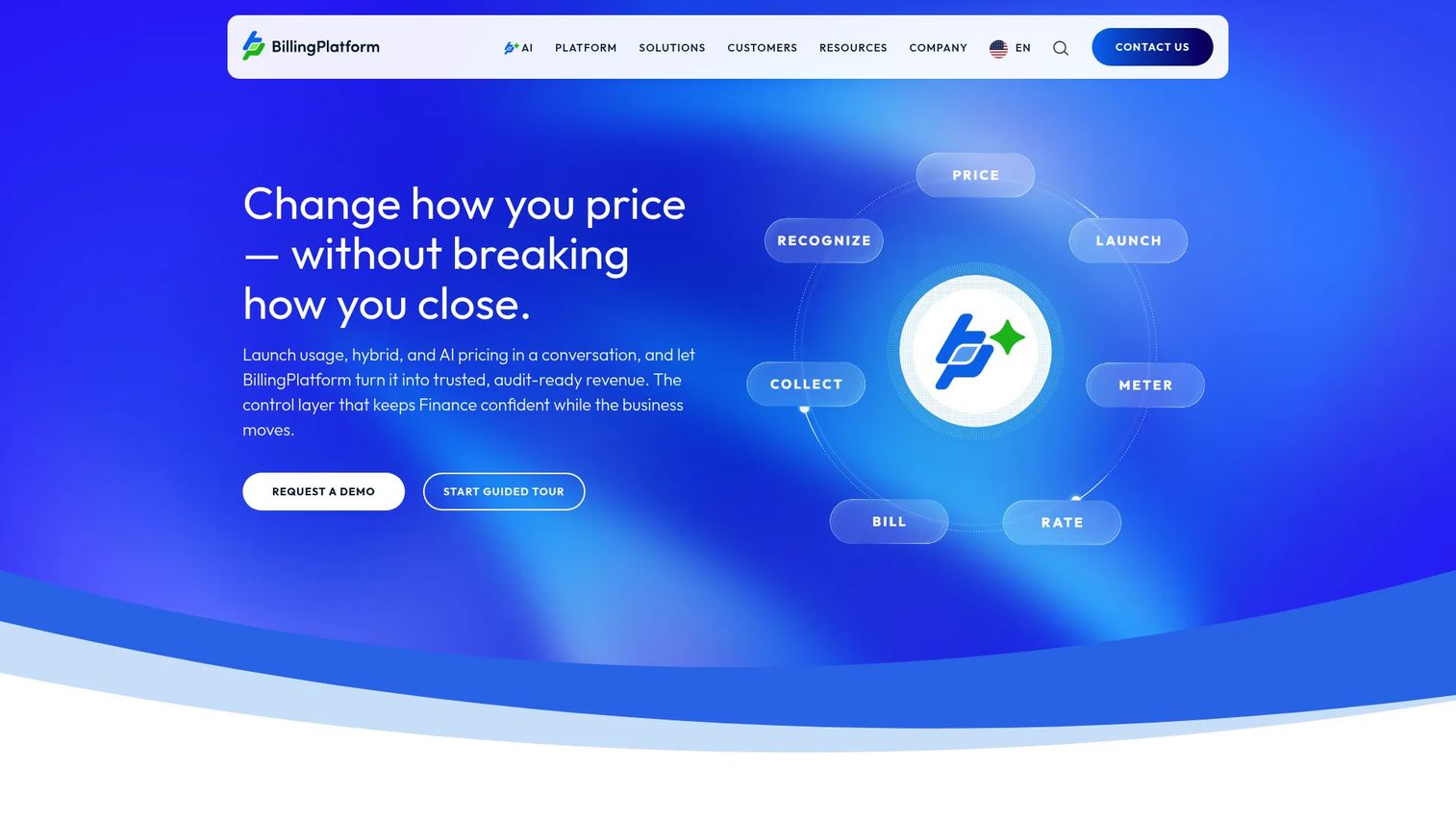
BillingPlatform is an enterprise revenue lifecycle and billing platform built to automate quote-to-cash across subscription, usage-based, and hybrid monetization. It leads the list because it handles the hardest end of the market: large organizations with complex pricing, high usage volumes, and strict revenue requirements. The platform pairs product catalog and pricing controls with mediation, rating, accounts receivable, invoicing, and revenue recognition in one system.
Best for: large enterprises that need flexible billing and monetization across genuinely complex pricing models.
Key strengths
- No-code pricing configuration: model usage, tiered, and outcome-based pricing without engineering, so packaging changes ship fast.
- Mediation and rating at scale: ingest and rate high-volume usage data before it ever reaches an invoice.
- Full revenue lifecycle: AR, invoicing, and revenue recognition live in one platform, keeping finance and billing aligned.
Why choose BillingPlatform: if your commercial model spans usage, subscription, and hybrid at once, and finance needs audit-grade revenue recognition, this is the platform built for that scope. It fits organizations where billing complexity is a feature of the business, not an edge case. For a sales enablement team, that means reps can sell custom commercial terms knowing the back office can actually bill them.
BillingPlatform pricing: public pricing is not listed on the site, which directs visitors to request a demo rather than showing plan tiers. Pricing is sales-led and scoped to deployment complexity. BillingPlatform holds a 4.8/5 rating on G2.
2. Stripe Billing
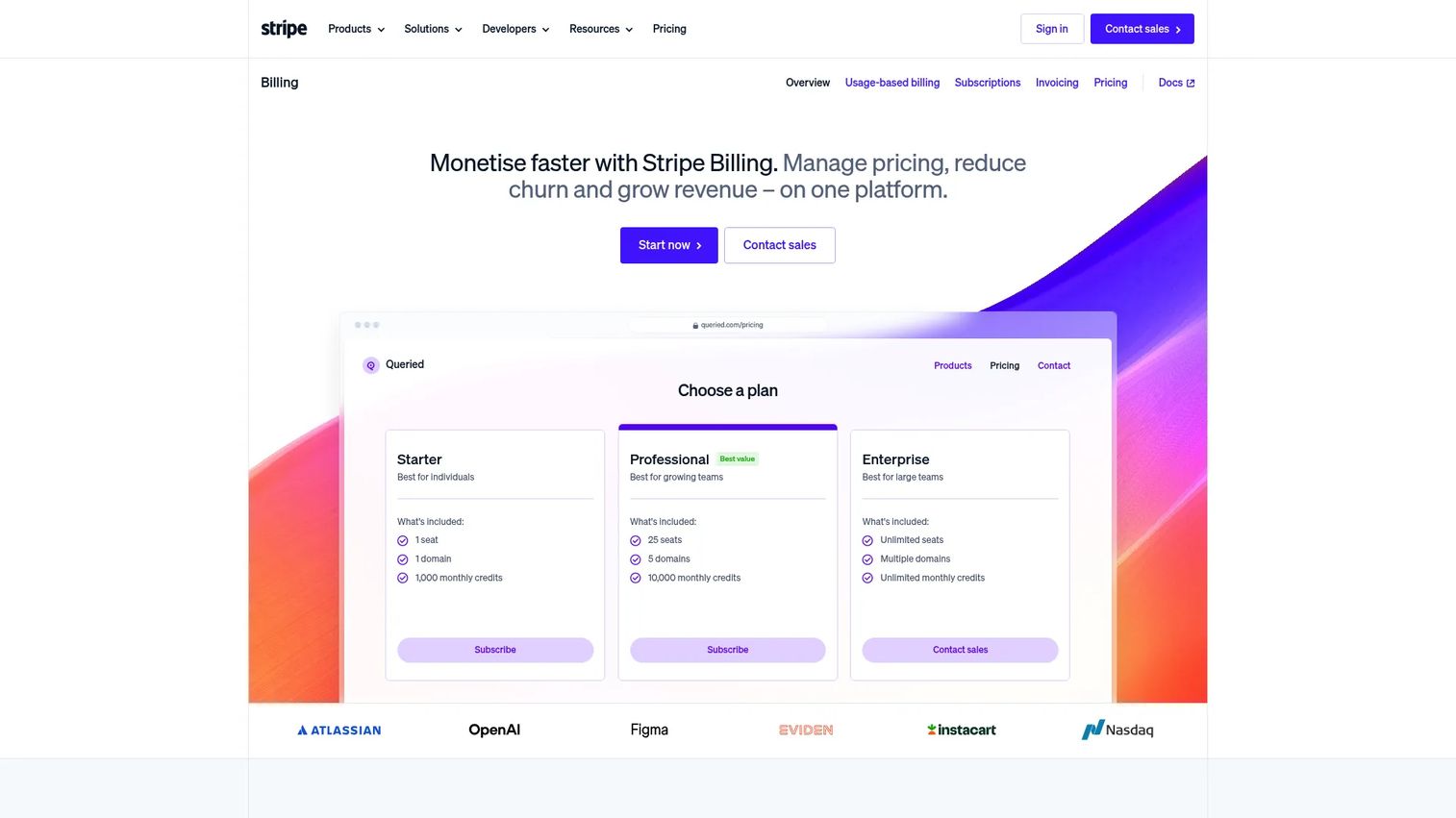
Stripe Billing is Stripe's subscription and invoicing product, with usage-based billing handled through its Meters API. It is the natural choice for teams that already run payments on Stripe and want recurring, usage, and hybrid billing in the same place. Because billing sits next to payments, dunning, and the customer portal, there is little to stitch together.
Best for: businesses that need subscription, usage-based, and invoicing workflows on top of Stripe payments.
Key strengths
- Usage metering with Meters API: report usage events and rate them against pay as you go or hybrid plans natively.
- Recurring and hybrid billing: combine fixed subscriptions with metered usage without leaving Stripe.
- Recovery automation: built-in dunning and a customer portal reduce involuntary churn and manual invoice work.
Why choose Stripe Billing: if Stripe is already your payments backbone, keeping billing in the same ecosystem cuts integration overhead and keeps usage data, payments, and invoicing under one roof. It performs best for product-led and developer-led teams who value staying inside one platform. Deal desks like that pricing and payment terms reconcile automatically.
Stripe Billing pricing: Stripe lists a pay as you go option at 0.7% of billing volume, plus pay monthly tiers under a one-year contract starting at $620/month and rising through $1,500, $2,950, and $5,750 per month for higher volumes. Custom pricing covers large-volume or unique business models. Stripe Billing holds a 4.4/5 rating on G2.
3. Chargebee
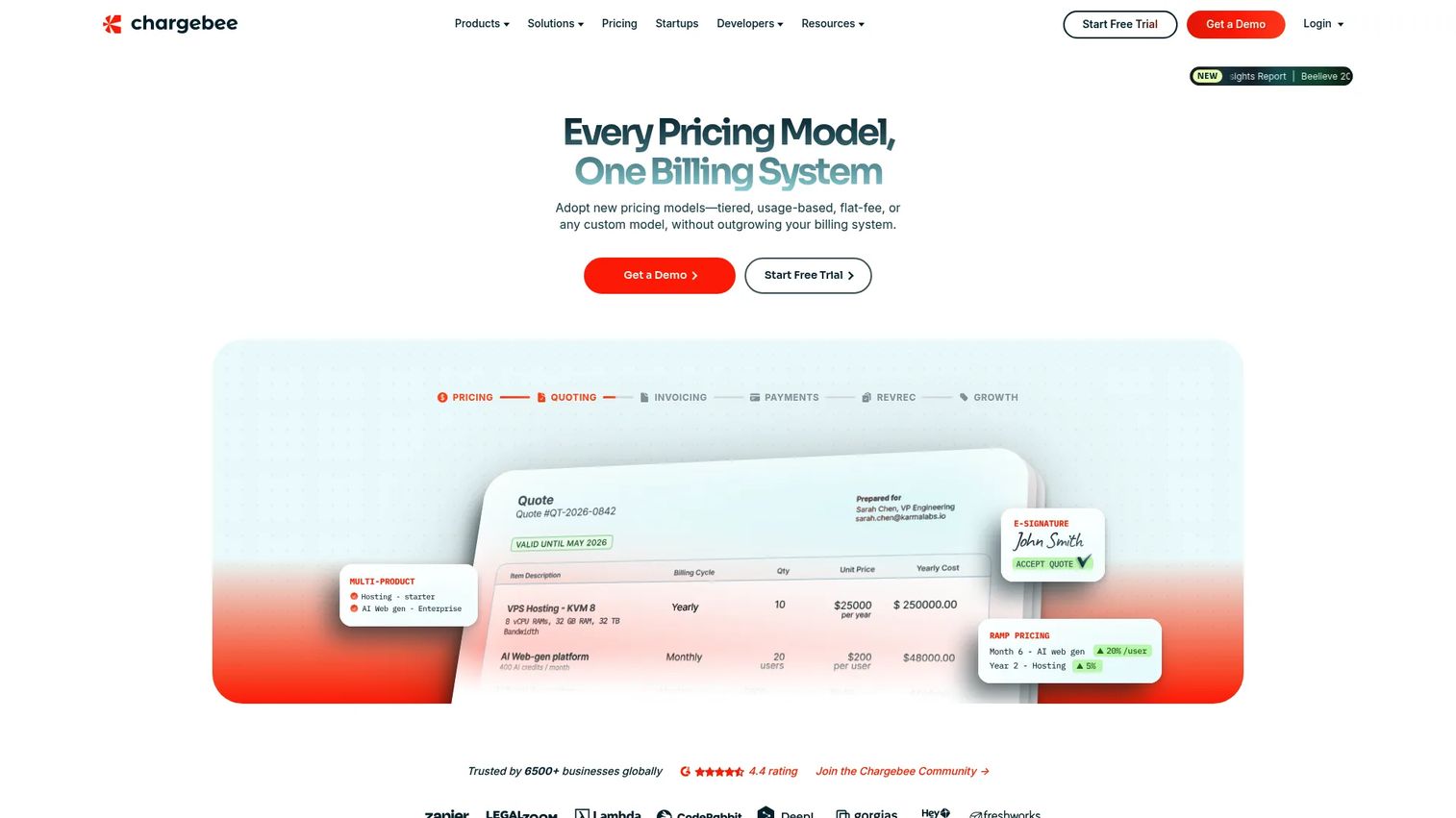
Chargebee is a subscription billing and monetization platform that supports recurring, usage-based, and hybrid revenue models, and it positions itself for the AI economy. It is strong for SaaS and AI companies because it combines subscription management, usage ingestion, entitlements, and configuration flexibility with hosted checkout and a self-serve customer portal.
Best for: SaaS and subscription businesses that need billing, CPQ, revenue recognition, and usage-based monetization together.
Key strengths
- Usage and hybrid billing: combine recurring plans with metered usage and entitlements to match modern pricing.
- Hosted checkout and self-serve portal: let customers subscribe and manage plans without manual intervention.
- Configuration flexibility: adjust pricing and packaging as the product and go-to-market evolve.
Why choose Chargebee: if you run subscriptions today and are layering usage on top, Chargebee handles both without forcing a rebuild. It fits companies iterating on packaging frequently, including AI products moving toward consumption pricing. For enablement teams, the self-serve flows mean reps and CS spend less time on plan changes.
Chargebee pricing: Chargebee's public pricing page shows a Starter plan at $0/month, free for the first USD 250K of cumulative billing and then 0.75% on billing, a Performance plan at $7,188/year on an annual commitment billed monthly, and an Enterprise plan with custom quote-based pricing. Chargebee holds a 4.4/5 rating on G2.
4. Metronome
Metronome is usage-based billing and monetization infrastructure built for software companies, with a clear focus on real-time usage visibility and fast pricing iteration. It ingests events in real time and supports usage-based, seat-based, subscription, and hybrid pricing through flexible billable metrics and modular pricing building blocks. That makes it a strong fit for AI monetization, where pricing changes constantly.
Best for: B2B SaaS and AI teams that need usage-based or hybrid billing infrastructure with frequent pricing changes.
Key strengths
- Real-time event ingestion: stream usage as it happens so customers and finance see spend live.
- Modular pricing building blocks: assemble usage, seat, subscription, and hybrid pricing from reusable parts.
- Customer spend controls: give customers visibility and guardrails on consumption to reduce billing surprises.
Why choose Metronome: Metronome performs best where pricing is a moving target. If your team reprices often, runs experiments, or sells AI products metered by token or compute, real-time ingestion and modular pricing keep billing in step with the model. Reps can quote new packaging without waiting on a billing rebuild.
Metronome pricing: Metronome's pricing page shows a free Starter plan for teams launching usage-based products and a Custom plan with tailored pricing for companies scaling revenue or transforming pricing. No public numeric price is displayed, and a G2 star rating is not currently listed for the profile.
5. Zuora
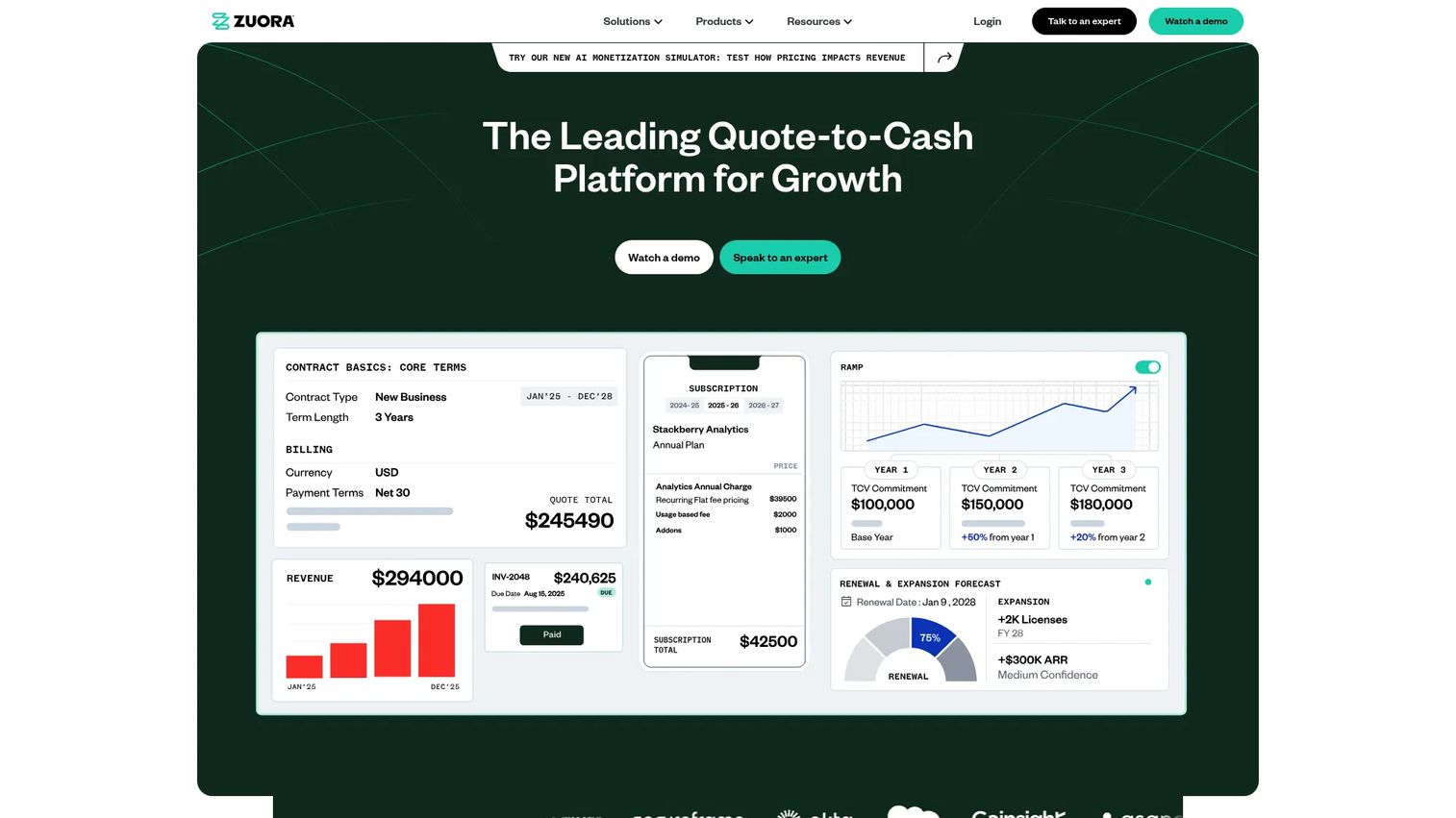
Zuora is a monetization platform for subscription, usage-based, and hybrid recurring revenue businesses. It suits larger teams that need billing, revenue recognition, and accounting to stay aligned across the order-to-cash cycle. Zuora pairs pricing and packaging management with billing and revenue recognition automation, which is why finance-led organizations gravitate to it.
Best for: enterprise companies managing complex recurring revenue and monetization models.
Key strengths
- Billing and revenue recognition automation: keep billed usage and recognized revenue aligned for a clean close.
- Pricing and packaging management: model and adjust commercial offers across products and segments.
- Usage-based and hybrid support: handle commitments, overages, and mixed models at enterprise scale.
Why choose Zuora: if finance owns the decision and revenue recognition is non-negotiable, Zuora's depth across billing and accounting alignment is the draw. It fits organizations where the order-to-cash process spans many systems and needs a finance-aware backbone. For RevOps, that alignment reduces the reconciliation tax at every close.
Zuora pricing: Zuora's pricing is sales-led and quote-based, with no public price confirmed on the site. Zuora holds a 3.9/5 rating on G2.
6. Sequence
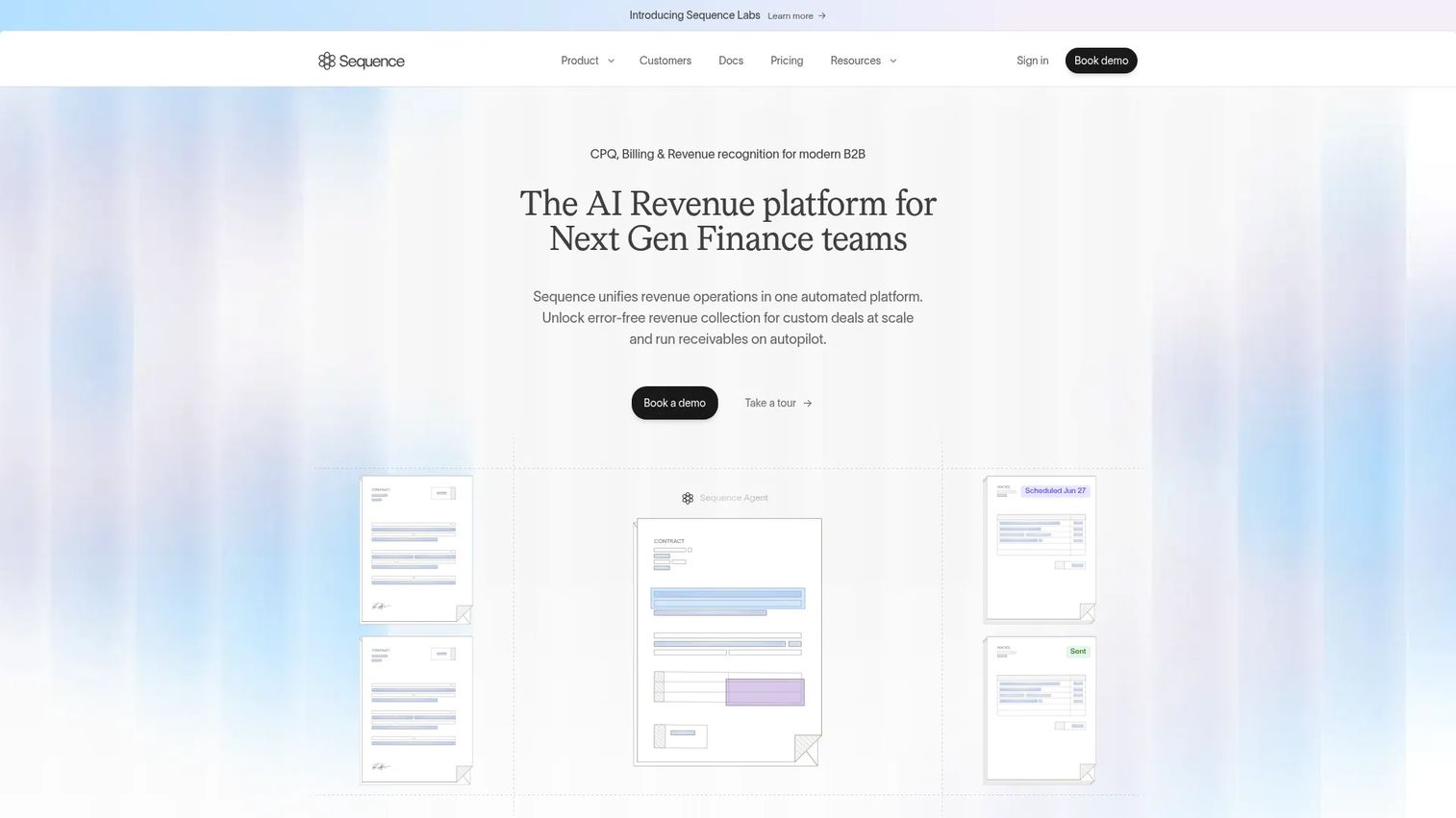
Sequence is an all-in-one CPQ, billing, metering, and revenue recognition platform for B2B SaaS companies. It appeals to teams with custom contracts and quote-to-revenue needs, because it covers the path from a quote through billing and revenue recognition in one platform rather than across stitched-together tools.
Best for: B2B finance teams automating quote-to-cash and revenue operations.
Key strengths
- CPQ plus billing: quote custom deals and bill them from the same system, keeping contract terms intact.
- Usage metering: rate consumption against negotiated rates and commitments.
- Revenue recognition: turn billed usage into recognized revenue without a separate tool.
Why choose Sequence: if your deals are bespoke and your finance team wants quote, billing, and rev rec in one place, Sequence removes the handoffs between systems. It fits B2B SaaS companies where custom contracts are the norm rather than the exception. That single source of truth helps deal desk and finance stay in sync.
Sequence pricing: Sequence's Growth plan starts at $799/month and targets startups under $1M annual revenue. Core covers $1M to $10M and Scale covers $10M+, both with bespoke pricing. A current G2 star rating was not confirmed on a dedicated rating page.
7. Zenskar
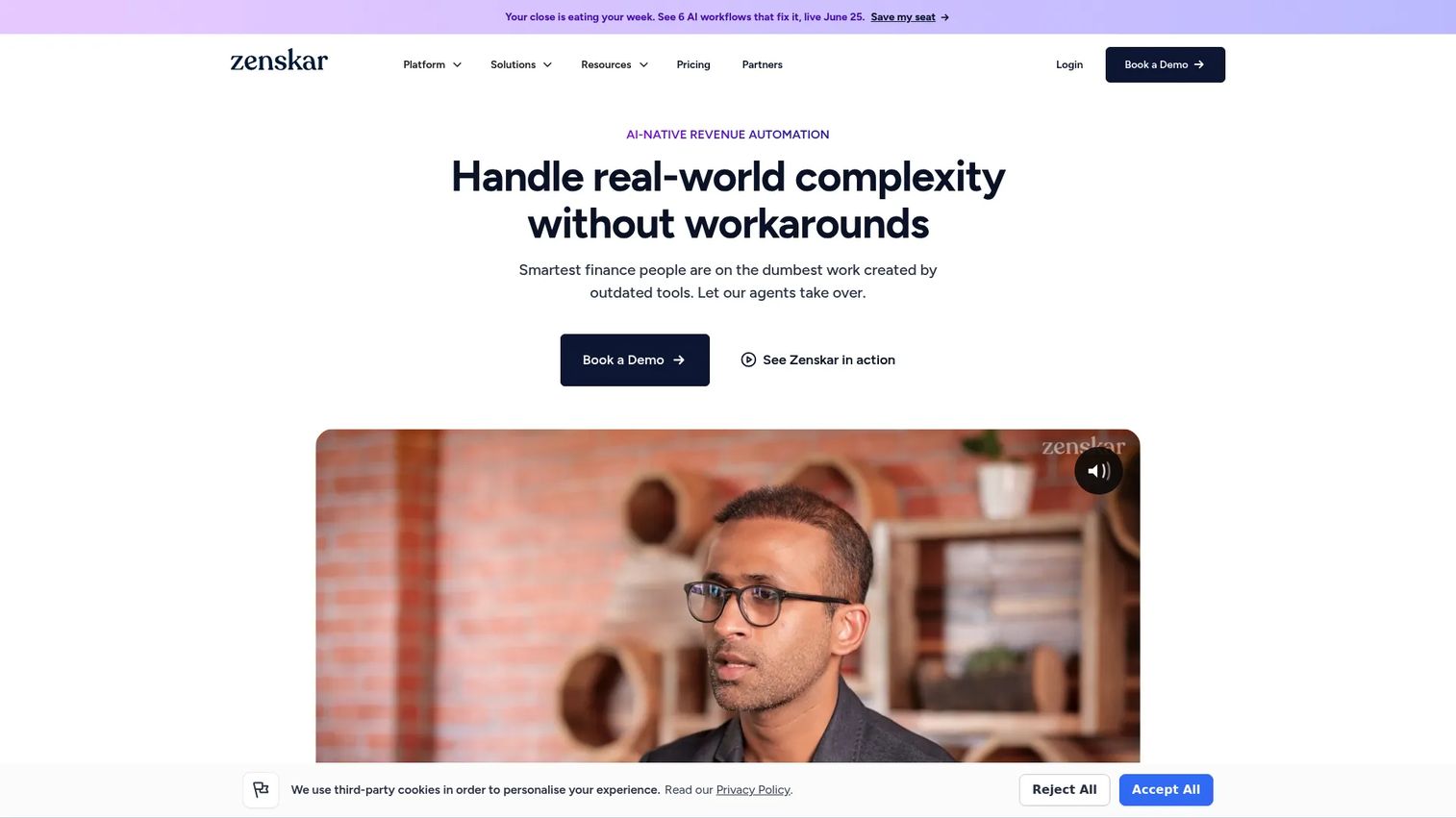
Zenskar is an AI-native order-to-cash platform that automates billing, revenue recognition, collections, metering, and SaaS metrics for modern finance teams. It is attractive to finance teams managing usage and recurring models together, because it pairs billing automation with usage metering, analytics, and receivables management in one platform.
Best for: finance and billing teams needing flexible order-to-cash automation for complex pricing models.
Key strengths
- Billing automation across models: handle subscriptions, usage, and custom contracts in one place.
- Revenue recognition and receivables: keep recognized revenue and collections aligned with billing.
- Usage metering and analytics: meter consumption and surface SaaS reporting for finance.
Why choose Zenskar: if your finance team manages a mix of usage and recurring models and wants automation across the full order-to-cash cycle, Zenskar's AI-native approach is built for that complexity. It fits modern finance teams that value flexible configuration over rigid templates. The pricing page also notes a sandbox and flexible pilots for teams that want to validate before committing.
Zenskar pricing: Zenskar lists three plans, Starter, Standard, and Enterprise, each with custom pricing behind a "Talk to us" CTA. No public numeric price is shown, and a single authoritative G2 star rating was not clearly readable from the accessed source.
8. G2 usage-based billing software category
The G2 usage-based billing software category is not a vendor. It is the market map you use to validate a shortlist like this one against verified buyer reviews. G2 curates products that support usage-based billing, shows representative tools with verified ratings, and explains the inclusion criteria for the category.
Best for: buyers comparing usage-based billing software options and pressure-testing a shortlist before demos.
Key strengths
- Curated category: see which products G2 qualifies as usage-based billing software and why.
- Verified ratings: compare tools against reviews from real users, not vendor marketing.
- Inclusion criteria: understand how the category is defined so you evaluate apples to apples.
Why use the G2 category: treat it as category intelligence, not a recommendation. G2's theme pages note that the products shown represent a defining sample for usage-based billing, not an exhaustive list, which is the right framing for any shortlist. Use it to confirm a vendor belongs in the category and to scan sentiment before you book demos. The usage-based billing theme page carries a 4.6/5 rating.
G2 category pricing: not applicable. This is a category page, not a software product, so there is no pricing or trial to evaluate.
9. Gotransverse
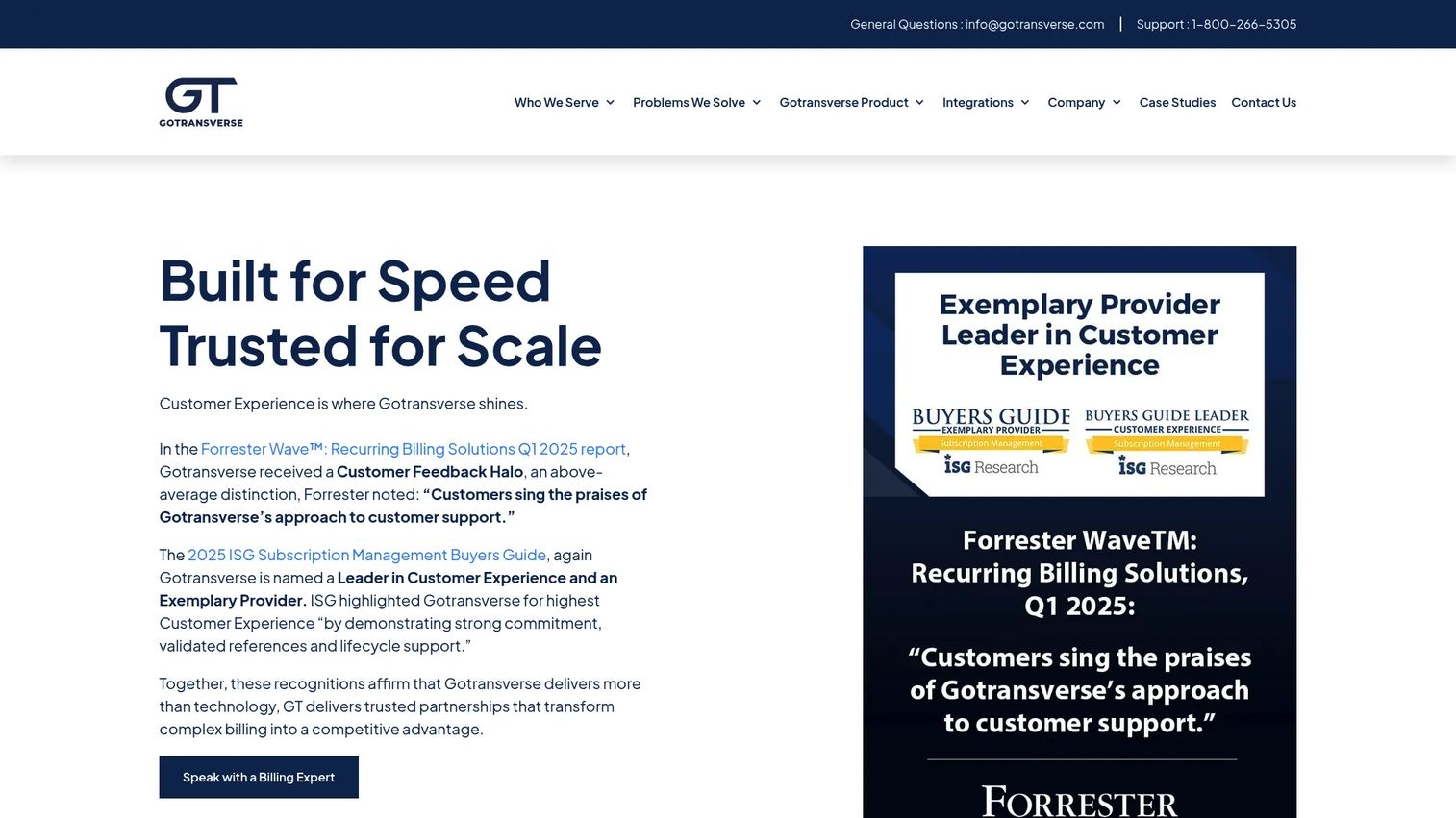
Gotransverse is an enterprise billing and revenue management platform for complex subscription, usage-based, hybrid, and prepaid monetization. It fits organizations with large-scale contract structures and high-volume usage data, where mediation and a flexible product catalog matter as much as the invoice itself.
Best for: large enterprises needing configurable monetization and billing for complex pricing models.
Key strengths
- Product catalog for complex pricing: model intricate usage, hybrid, and prepaid structures.
- Usage and mediation: ingest and process high-volume usage data before rating.
- Billing and invoicing automation: automate invoicing across one-time, recurring, and usage charges.
Why choose Gotransverse: if your billing operations run at high volume with complex contracts, Gotransverse is built for that scale. It fits enterprises where usage mediation and catalog flexibility are core requirements rather than nice-to-haves. For enablement, that means even unusual commercial terms can be billed without custom workarounds.
Gotransverse pricing: public pricing is not displayed on the site, which directs visitors to request a demo. Pricing is sales-led and scoped to deployment. Gotransverse holds a 4.2/5 rating on G2.
10. Ordway
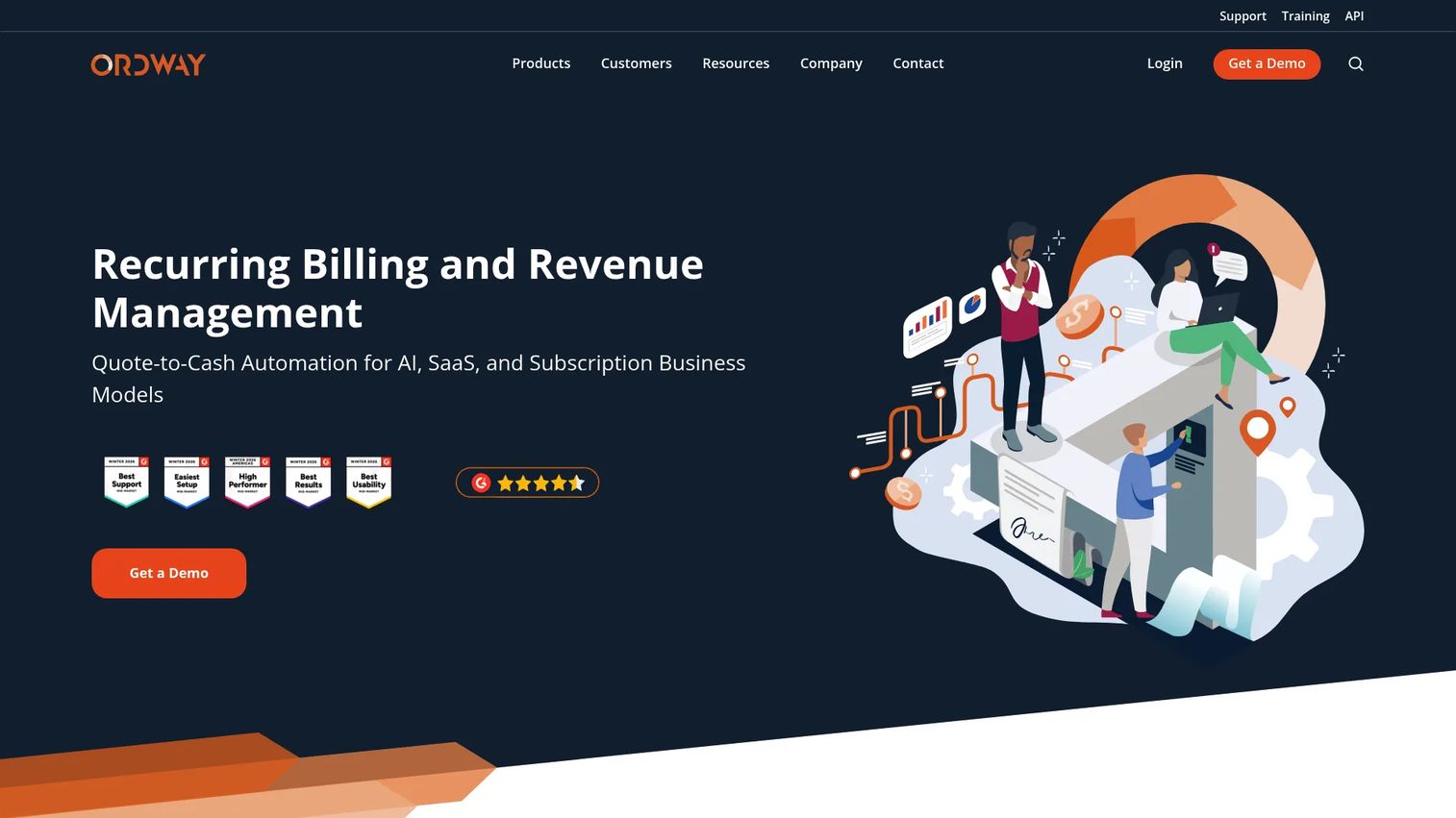
Ordway is a B2B billing, revenue management, and quote-to-cash platform for subscription, usage-based, transaction, and dynamic pricing models. It fits teams balancing subscriptions and usage models, with revenue recognition and billing automation handled in one platform across the as-a-service lifecycle.
Best for: SaaS and other recurring-revenue companies needing flexible billing and revenue automation.
Key strengths
- Flexible pricing structures: support usage-based, percentage, dynamic, and one-time pricing in one platform.
- Revenue management: keep billing and revenue recognition aligned across models.
- Billing automation: automate invoicing and the quote-to-cash flow for as-a-service businesses.
Why choose Ordway: if your business mixes subscription and usage and you want billing plus revenue automation without enterprise-scale overhead, Ordway is built for that middle ground. It fits as-a-service companies that need flexibility and scalability without a multi-quarter implementation. The platform is positioned around configurability, so packaging can evolve as the business grows.
Ordway pricing: public pricing figures are not displayed on Ordway's site, which uses demo CTAs rather than a plan table. Ordway holds a 4.6/5 rating on G2.
Considerations before you choose
Usage-based billing touches finance, RevOps, product, and the field at once. Run any shortlist through this checklist before you commit.
Usage data pipeline and accuracy
The invoice is only as good as the usage data behind it. Check how the platform ingests events, whether it supports real-time usage data, and how it handles deduplication and validation. Ask what happens when an event arrives late or twice, because that is where revenue leakage and billing disputes start.
Pricing model coverage
Map your current and planned pricing to the platform's rating engine. Confirm it supports pure usage, tiered, volume, hybrid billing models, credits, commitments, and overages. If you expect to reprice often, weigh how fast pricing configuration can change without engineering.
Revenue recognition and finance fit
Finance and finance ops need recognized revenue to reconcile with billed usage. Confirm the platform's revenue recognition aligns with your accounting standards and whether it integrates with your ERP. A clean handoff here is what shortens the close.
Integrations and billing workflows
A billing platform that does not talk to your CRM, payment processor, and data warehouse creates manual work. Check the integration depth for the systems you already run, and how billing workflows trigger downstream actions like dunning and collections.
Ownership and scale
Decide who owns the platform day to day: finance, RevOps, or engineering. Then confirm it scales to your projected event volume and customer count. The right tool depends on usage complexity and who maintains it internally.
Conclusion
The best usage based billing software depends on usage complexity and who owns it internally. There is no universal winner, only the right fit for your model.
Finance-led enterprises with complex quote-to-cash should start with enterprise-grade platforms like BillingPlatform, Zuora, or Gotransverse, where revenue recognition and high-volume usage metering are first-class. Stripe-native teams should evaluate Stripe Billing first, since keeping billing next to payments removes integration overhead. AI companies and any team with fast-changing pricing should prioritize platforms built for pricing agility, where Metronome and Chargebee stand out. B2B SaaS teams that want quote to cash in one system should look at Sequence, Zenskar, and Ordway.
Whatever you shortlist, validate it against the G2 usage-based billing software category before you book demos, then run each finalist through the considerations checklist above. Pick the platform that matches your pricing model today and the one you expect to be selling in 12 months.
FAQs
Most platforms support pure usage (pay as you go), tiered, volume, hybrid billing models that combine a base fee with usage, credits and commitments, and increasingly outcome-based pricing. The strongest tools let you mix these in a single contract. That flexibility matters because real commercial deals rarely fit one clean model.
Yes. Enterprise-grade platforms are built to ingest and rate high-volume usage data, handle complex contract logic like ramped commitments and negotiated rates, and keep revenue recognition aligned. AI products with token or compute metering push event volumes high, so look for real-time ingestion and mediation that can scale with consumption.
The terms overlap heavily and are often used interchangeably. Metered billing software emphasizes the measurement step, capturing and counting usage events accurately. Usage-based billing describes the broader commercial model and the full path from metering through rating, invoicing, and revenue recognition. In practice, metering is one stage inside a usage-based billing platform.
Selection typically sits with finance or RevOps, since billing accuracy and revenue recognition are their accountability. Product and engineering weigh in on usage capture and integration, and sales enablement cares because the pricing model becomes the talk track reps defend. The best decisions involve all four, because a model finance can bill but reps cannot explain still loses deals.
Stronger platforms tie billed usage directly to recognized revenue, applying recognition rules as usage is rated and invoiced. This keeps billing and accounting aligned and shortens the close. When evaluating, confirm the platform supports your accounting standards and integrates with your ERP so recognized revenue reconciles without manual journal entries.
Check usage data accuracy, including how events are deduplicated and validated, pricing model coverage against your current and planned packaging, revenue recognition fit with your accounting standards, and integration depth with your CRM, ERP, and payment processor. Also confirm who will own and maintain the platform, since billing workflows need a clear internal owner.
Stripe Billing makes the most sense when payments already run on Stripe and you want subscription, usage, and invoicing in the same ecosystem. Its Meters API handles usage metering natively, and keeping billing next to payments and the customer portal reduces integration work. Teams that are product-led or developer-led often value staying inside one platform.
The biggest risk is dirty usage data feeding the rating engine. If events are missed, duplicated, or arrive late, invoices are wrong and trust erodes fast. Validate the usage pipeline first, including deduplication and late-event handling, before optimizing pricing logic. Getting the data layer right is what makes everything downstream, from invoicing to revenue recognition, reliable.