You launched the campaign in 20 minutes. Proving it worked took three weeks of stitching dashboards together.
That is the real tension with display advertising in 2026. Spinning up a campaign is easy. Tying it back to defensible ROAS, while juggling audience targeting, creative refreshes, and tracking, is the hard part. And the stakes keep rising. US display ad spend is projected to reach $217 billion in 2026, up from roughly $193 billion in 2025, according to DigitalApplied. That is a lot of budget riding on whether your platform can buy smart, serve fresh creative, and report cleanly.
Most growth marketers do not need another tool. They need the right one, ideally one that replaces two or three others. So this guide compares platforms by five things that actually move the number: targeting depth, creative workflow, reporting and performance tracking, automation, and fit for your team size. If you are also auditing the rest of your stack, our roundups on marketing automation and audience intelligence pair well with this one, and our email tracking guide covers the downstream side of attribution.
The point is not to crown one winner for everyone. It is to help you match a platform to your actual bottleneck, whether that is buying, creative throughput, or measurement.
What's inside
This guide compares seven display advertising software options for marketers who need better control over buying, managing, and optimizing campaigns. The shortlist mixes ad buying platforms, creative automation tools, and campaign management software, so you can find the fit for your motion rather than a generic top-of-the-list pick.
We chose these seven based on four criteria that matter to growth teams: category relevance to display, current market presence, depth of campaign and creative workflow, and review signal across G2 and Capterra. We also weighted fit for different team sizes, from lean startup squads to enterprise demand gen. Each entry below covers what it does, who it is for, key strengths, and pricing context.
TL;DR
- Best overall for performance teams: StackAdapt, for multi-channel programmatic display, deep audience targeting, and AI-driven optimization in one platform.
- Best for enterprise creative automation: Celtra, for GenAI production, brand governance, and dynamic creative across 100+ media platforms.
- Best for high-volume ad variations: Bannerflow, for template-based creative production, localization, and multichannel publishing.
- Best for media plus creative in one workflow: Smartly, for cross-channel paid media with AI creative and automation built in.
- Best for fast setup and retargeting: AdRoll, for lean teams that want remarketing and cross-channel measurement without heavy ops.
- Best for advanced programmatic buyers: The Trade Desk, for sophisticated audience targeting, real-time bidding, and cross-device planning.
- Best for AI ad creative at speed: AdCreative.ai, for generating conversion-focused ad variants in seconds for any platform.
What is display advertising software?
Display advertising software is a category of tools that help marketers buy, manage, serve, target, and measure visual banner, native, video, and rich media ads across websites, apps, and connected screens. Some platforms focus on buying inventory and optimizing media. Others focus on producing and personalizing the creative. The strongest platforms cover both, plus the reporting layer that ties spend to outcomes.
The category exists because manual ad operations do not scale. Programmatic now dominates: programmatic display accounts for 91% of US display advertising dollars and 76% globally, per DigitalApplied. When near every dollar flows through automated buying, your platform is doing the heavy lifting on bidding, pacing, and optimization.
Core jobs these platforms handle:
- Audience targeting: Segment by behavior, intent, demographics, CRM data, and contextual signals to reach the right people.
- Real-time bidding: Buy impressions through automated auctions in milliseconds across exchanges and supply.
- Campaign reporting: Track impressions, clicks, conversions, viewability, and ROAS in dashboards your CFO will believe.
- Creative testing: Run dynamic creative optimization to find the variants and messages that convert.
- Retargeting: Re-engage visitors who left without converting, across display, native, and social.
- Cross-channel execution: Coordinate display alongside CTV, video, audio, and social from one place.
Mobile dominates delivery, driving 63% of display ad impressions versus 28% on desktop, so any platform you pick should treat mobile as the default surface, not an afterthought.
When to use display advertising software
Not every team needs every capability. Here is how to pattern-match your situation to the right kind of platform.
Launch or scale paid display campaigns
When you are ready to buy and manage display inventory at scale, you need a platform with real campaign control. That means granular audience targeting, budget management, pacing rules, and bidding logic you can tune. Programmatic platforms shine here because they handle real-time bidding across exchanges while you set strategy. If your bottleneck is reaching the right audiences efficiently, this is your category.
Refresh creative faster
Sometimes the constraint is not buying. It is production. When you are stuck versioning, localizing, or refreshing ad units fast enough to fight creative fatigue, creative automation is the answer. These platforms use templates, feeds, and dynamic creative optimization to produce hundreds of on-brand variants without a designer touching every one. If rising CPMs and stale creative are dragging your ROAS, prioritize this.
Improve measurement and iteration
When you cannot clearly tie clicks and conversions back to spend, you need stronger performance tracking. Look for platforms with clean dashboards, conversion attribution, and fast experiment velocity. The goal is shorter loops between insight and action, so you scale what works before it stops working. Pairing display reporting with broader audience intelligence and your marketing automation stack closes the measurement gap.
Comparison table
Use this table as a quick filter. Scan by primary intent, key differentiation, pricing model, and G2 rating to shortlist two or three platforms, then read the full sections below. Rows are ordered by relevance to the keyword and buyer intent. Many of these vendors use quote-based pricing, so we note that where no public number is published rather than guess at a figure.
| # | Product | Intent | Key differentiation | Pricing | G2 rating |
|---|---|---|---|---|---|
| 1 | StackAdapt | Multi-channel programmatic buying | AI optimization across CTV, display, native, audio, video | Self-serve and managed; quote-based | 4.7/5 |
| 2 | Celtra | Enterprise creative automation | GenAI production, brand governance, live-data creatives | Custom quote | 4.4/5 |
| 3 | Bannerflow | High-volume creative production | AI Creative Studio, dynamic ads, localization | Grow, Pro, Enterprise; custom quote | 4.5/5 |
| 4 | Smartly | Media plus creative automation | AI Studio, automated ads, cross-channel DCO | Quote-based | 4.4/5 |
| 5 | AdRoll | Retargeting and cross-channel | Pay-as-you-go retargeting and attribution | Pay-as-you-go; no fee to start | Capterra 4/5 |
| 6 | The Trade Desk | Advanced programmatic buying | Omnichannel DSP, deep targeting, cross-device | Quote-based | 4.4/5 |
| 7 | AdCreative.ai | AI ad creative generation | Conversion-focused creative and scoring | From $20/mo | 4.3/5 |
1. StackAdapt
StackAdapt is an AI-powered programmatic advertising and marketing platform built for teams running campaigns across many channels at once. It covers a multi-channel programmatic suite spanning CTV, DOOH, display, native, audio, video, and email, with AI-driven optimization, measurement, and forecasting layered on top. For performance marketers who want one buying engine instead of five point tools, it is the strongest all-around fit on this list.
What sets StackAdapt apart for display is the combination of breadth and control. You get deep audience targeting, real-time bidding, and campaign optimization in a workflow that supports self-serve, managed, or hybrid models. That flexibility matters when your team grows from one generalist to a specialized pod, because the platform scales with you instead of forcing a migration.
Best for: Marketers and agencies running multi-channel programmatic campaigns who want AI optimization and reporting in one place.
Key strengths
- Multi-channel reach: Buy display alongside CTV, native, audio, video, and email from a single programmatic suite.
- AI optimization: Built-in optimization, measurement, and forecasting tools tune bidding and pacing automatically.
- Flexible support models: Self-serve, managed, or hybrid setups with orchestration and reporting that fit your team's bandwidth.
Why choose StackAdapt: If your bottleneck is buying efficiently across channels while keeping clean visibility into performance, StackAdapt consolidates the work. It suits teams that want programmatic depth without stitching together separate display, CTV, and native tools, and its reporting depth helps you defend ROAS to leadership.
StackAdapt pricing: StackAdapt does not publish numeric pricing publicly. Its plans-and-packages page lists Self-Serve and Self-Serve or Managed options with payment terms ranging from credit card to net and custom terms, rather than a fixed starting price. There is no free tier listed; you contact the team for a quote based on your spend and support model. The platform holds a 4.7/5 rating on G2, the strongest score in this comparison.
2. Celtra
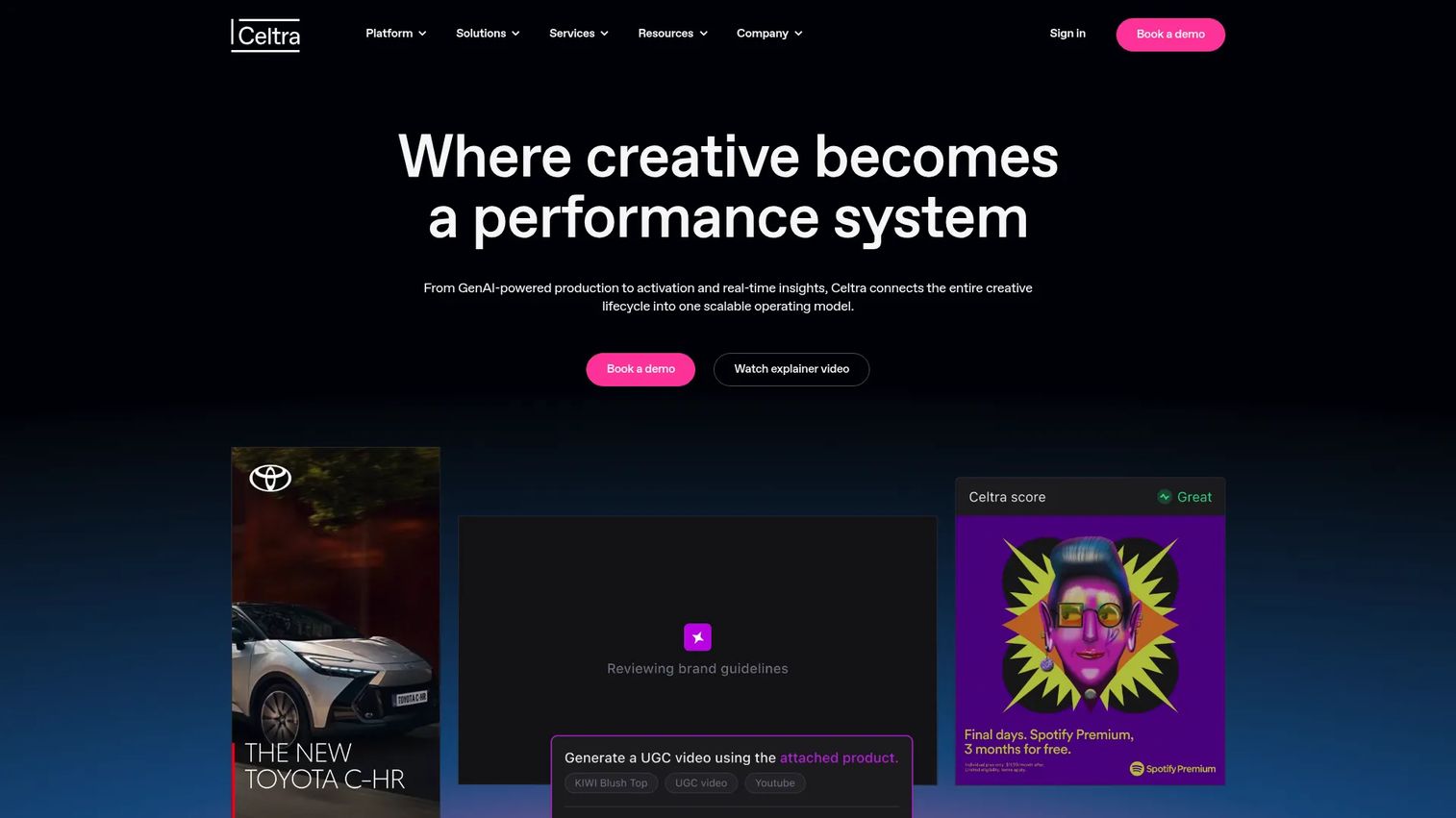
Celtra is an enterprise creative automation platform for producing, personalizing, and activating digital ads at scale. Where StackAdapt focuses on buying, Celtra owns the creative side: GenAI-powered production, brand governance, and live-data creatives that publish across 100+ media platforms. For large teams drowning in ad variations and approval cycles, this is the engine that keeps output on-brand and on-time.
The standout for enterprise teams is governance paired with volume. Celtra layers creative performance intelligence and scoring on top of production, so you are not just shipping more ads, you are shipping ads the data says will perform. Its dynamic creative optimization adapts messaging by audience, feed, and context, which directly attacks creative fatigue at scale.
Best for: Enterprise teams that need scalable creative automation, brand control, and ad production across many markets and formats.
Key strengths
- GenAI production: Generate and adapt creative at volume while keeping brand governance intact.
- Creative intelligence: Performance scoring tells you which variants to scale before you spend behind them.
- Live-data creatives: Publish dynamic, data-driven ads across 100+ media platforms from one system.
Why choose Celtra: Choose Celtra when ad production, versioning, and brand consistency are your bottleneck, not media buying. It fits enterprise creative and PMM teams who need to produce many formats and localizations without losing governance. It is heavier than a lean team needs, but for high-volume operations it removes a real production wall.
Celtra pricing: Celtra does not list public pricing. The company says cost depends on use case and scale, and directs you to a personalized quote and demo. Plan on an enterprise-oriented engagement rather than a self-serve credit-card signup. Celtra carries a 4.4/5 rating on G2.
3. Bannerflow
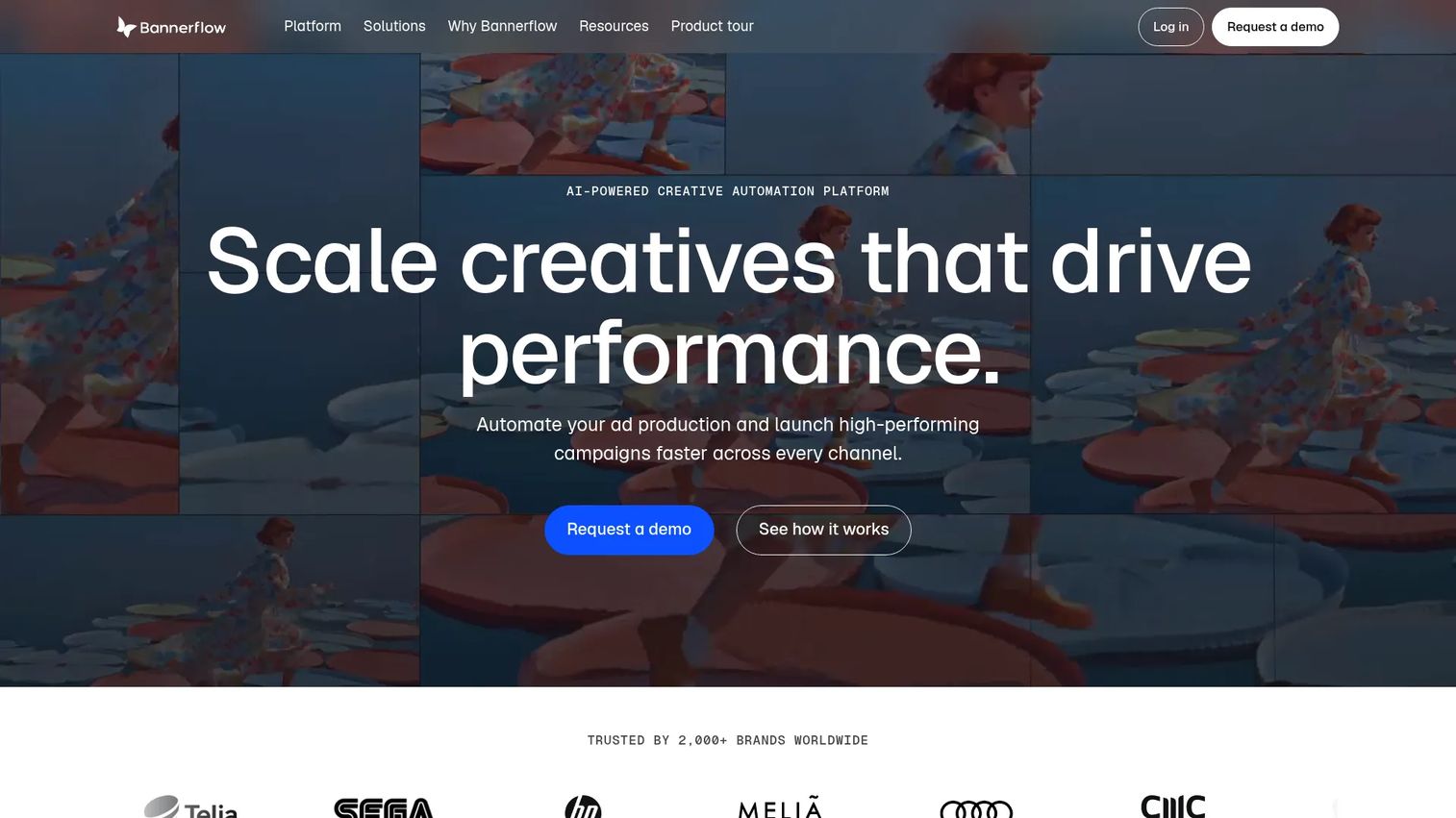
Bannerflow is a creative automation platform for designing, scaling, publishing, and optimizing digital ad campaigns. It is built for teams that produce many ad variations and need to keep them fresh across markets. Think template-based production, dynamic ads driven by feeds, and built-in localization and translation, all managed in one place with real-time campaign data.
Bannerflow sits between a pure media buying platform and a design tool. Its AI-powered Creative Studio handles the production load, while publishing and scheduling features push variants live across channels. If your team manages many campaigns across regions and languages, the localization workflow alone can save hours of manual rework every week.
Best for: Teams that need scalable creative production and dynamic ad personalization across channels and markets.
Key strengths
- AI Creative Studio: Produce and adapt large volumes of on-brand ad variations without rebuilding from scratch.
- Dynamic ads with feeds: Power personalized creative from product and data feeds for relevance at scale.
- Localization and translation: Adapt campaigns across markets and languages inside one workflow.
Why choose Bannerflow: Choose Bannerflow over a media buying platform when your constraint is producing and updating creative, not buying inventory. It fits in-house teams and brands running multichannel campaigns who want control over creative ops and real-time updates. Pair it with a DSP for the buying side and you cover the full display workflow.
Bannerflow pricing: Bannerflow publicly lists three plans, Grow, Pro, and Enterprise, but does not show numeric prices. Instead, it provides a tailored pricing estimate based on your needs. There is no public free tier listed, so expect a quote-based engagement. Bannerflow holds a 4.5/5 rating on G2.
4. Smartly
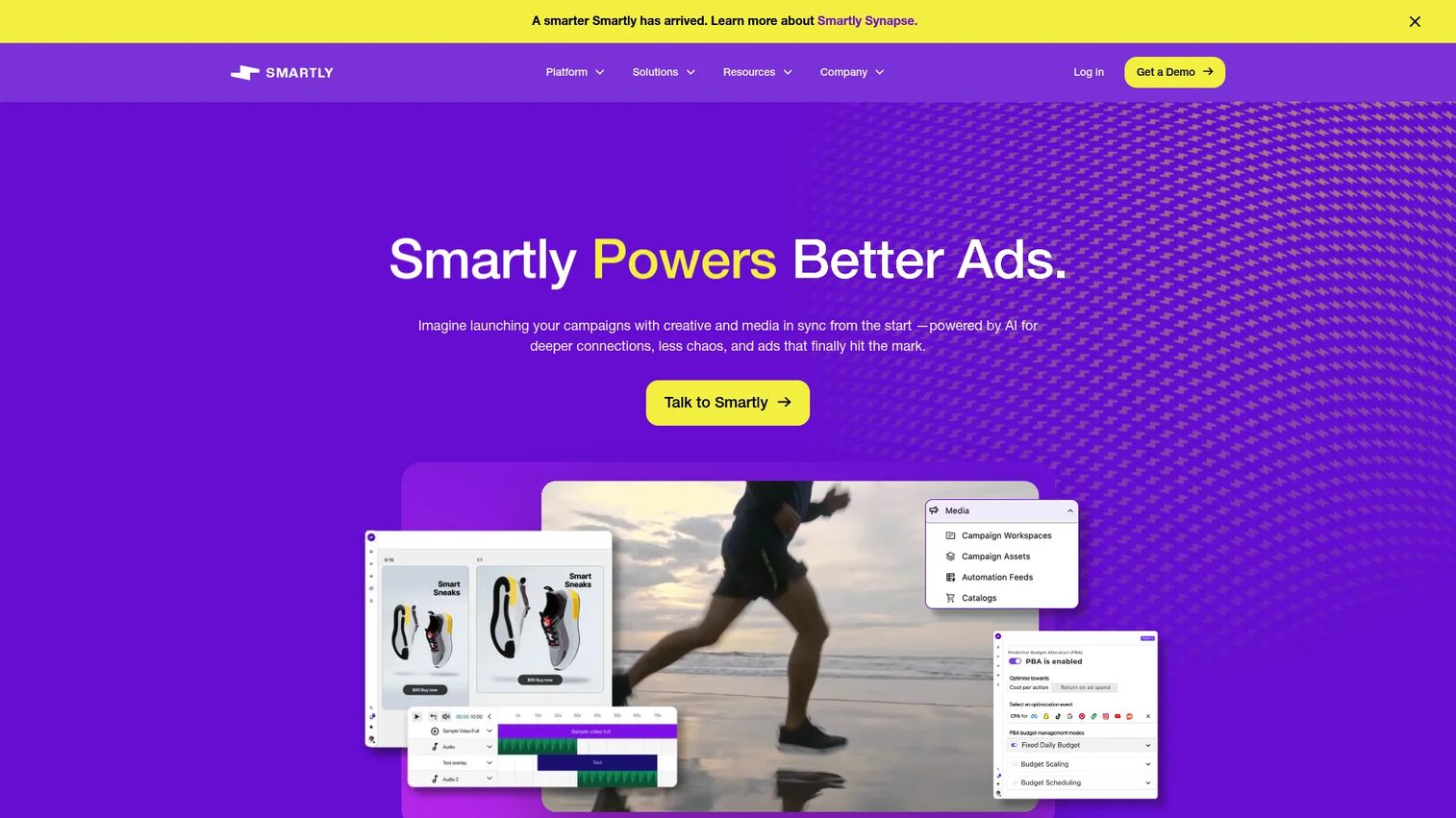
Smartly is an AI-powered advertising platform for managing creative, media, and measurement across channels in one workflow. It brings AI into every step, from production to cross-channel performance, which makes it a strong pick for teams that want creative and media optimization unified rather than split across tools. Smartly is built for high-volume paid media, with particular strength in paid social and cross-channel execution.
The differentiator is the combined workflow. AI Studio generates and enhances images and video, Automated Ads scale and update ads from feeds or launch docs, and dynamic creative optimization plus a reporting dashboard close the loop. For enterprise brands and agencies, that consolidation reduces the handoffs that usually slow campaigns down.
Best for: Enterprise brands and agencies running high-volume cross-channel paid media who want creative and media in one platform.
Key strengths
- AI Studio: Generate and enhance image and video creative directly inside the platform.
- Automated Ads: Scale and refresh ads from feeds or launch documents to fight creative fatigue.
- Cross-channel DCO and reporting: Run dynamic creative optimization and measure performance across social, video, and display.
Why choose Smartly: Choose Smartly when you want creative production and media optimization governed in a single system, especially across social and display. It suits larger teams managing high ad volume who need scale and governance together. The combined workflow is its edge over tools that handle only one side.
Smartly pricing: Smartly does not publish pricing on its site. It routes prospects to book a demo or contact sales, so expect quote-based, enterprise-oriented packaging rather than a self-serve tier. Smartly carries a 4.4/5 rating on G2.
5. AdRoll
AdRoll is a digital advertising platform built around retargeting, brand awareness, and cross-channel attribution. It is the practical choice for smaller teams or anyone who needs to move fast without a dedicated ad operations function. AdRoll runs retargeting campaigns across display, native, video, mobile, and social, and pulls audience segments from website, app, CRM, and ecommerce data.
The appeal is ease of use. You can build audiences, launch remarketing, and see cross-channel reporting and attribution without wrestling with a complex DSP interface. For lean teams that want to re-engage site visitors and measure the impact in one place, AdRoll removes the operational overhead that bigger platforms assume you have.
Best for: Lean teams that want retargeting and cross-channel ad measurement in one platform without heavy setup.
Key strengths
- Cross-channel retargeting: Re-engage visitors across display, native, video, mobile, and social.
- Flexible audience segmentation: Build segments from website, app, CRM, and ecommerce data.
- Built-in attribution: See cross-channel reporting and attribution in one dashboard.
Why choose AdRoll: Choose AdRoll when retargeting is your primary play and you want speed over deep programmatic control. It fits startups and small marketing teams with limited ops support who need remarketing and measurement working quickly. It trades the advanced buying levers of an enterprise DSP for approachability, which is exactly the point for a lean team.
AdRoll pricing: AdRoll uses a pay-as-you-go model. Its Self-Service Ads run on dynamic CPM with no fee to get started, while Managed Services Ads, an Advanced Package, and Account-Based Retargeting are quoted by sales or run on media-only spend. The no-fee-to-start option makes it easy to test before committing budget. AdRoll holds a 4/5 rating on Capterra.
6. The Trade Desk
The Trade Desk is an omnichannel demand-side platform for programmatic advertising, built for advertisers and agencies who buy at scale across many channels. It is a serious tool for serious buyers: deep audience targeting, cross-channel campaign management, and measurement and reporting designed for teams with media expertise. If you have the people to operate it, the control is hard to match.
The strength is sophistication. The Trade Desk gives advanced buyers granular control over real-time bidding, audience strategy, and cross-device planning. That power is the reason it suits experienced in-house teams and agencies rather than first-time advertisers. The platform assumes you know what you want to do and gives you the levers to do it precisely.
Best for: Advertisers and agencies running programmatic campaigns across multiple channels who have media buying expertise in-house.
Key strengths
- Deep audience targeting: Build and reach precise audiences across the open internet.
- Cross-channel management: Coordinate display, video, CTV, audio, and more from one DSP.
- Measurement and reporting: Track performance with the depth advanced buyers need to optimize.
Why choose The Trade Desk: Choose The Trade Desk when you have the media expertise to wield a powerful, full-featured DSP and want maximum control over programmatic buying. It rewards teams that can operate complexity with precision and reach. For experienced buyers and agencies, the depth is the draw; for lean teams, a simpler platform like AdRoll fits better.
The Trade Desk pricing: The Trade Desk does not publish public pricing. The site routes prospects to contact sales, so expect a quote-based engagement aligned to your spend and channel mix. The Trade Desk carries a 4.4/5 rating on G2.
7. AdCreative.ai
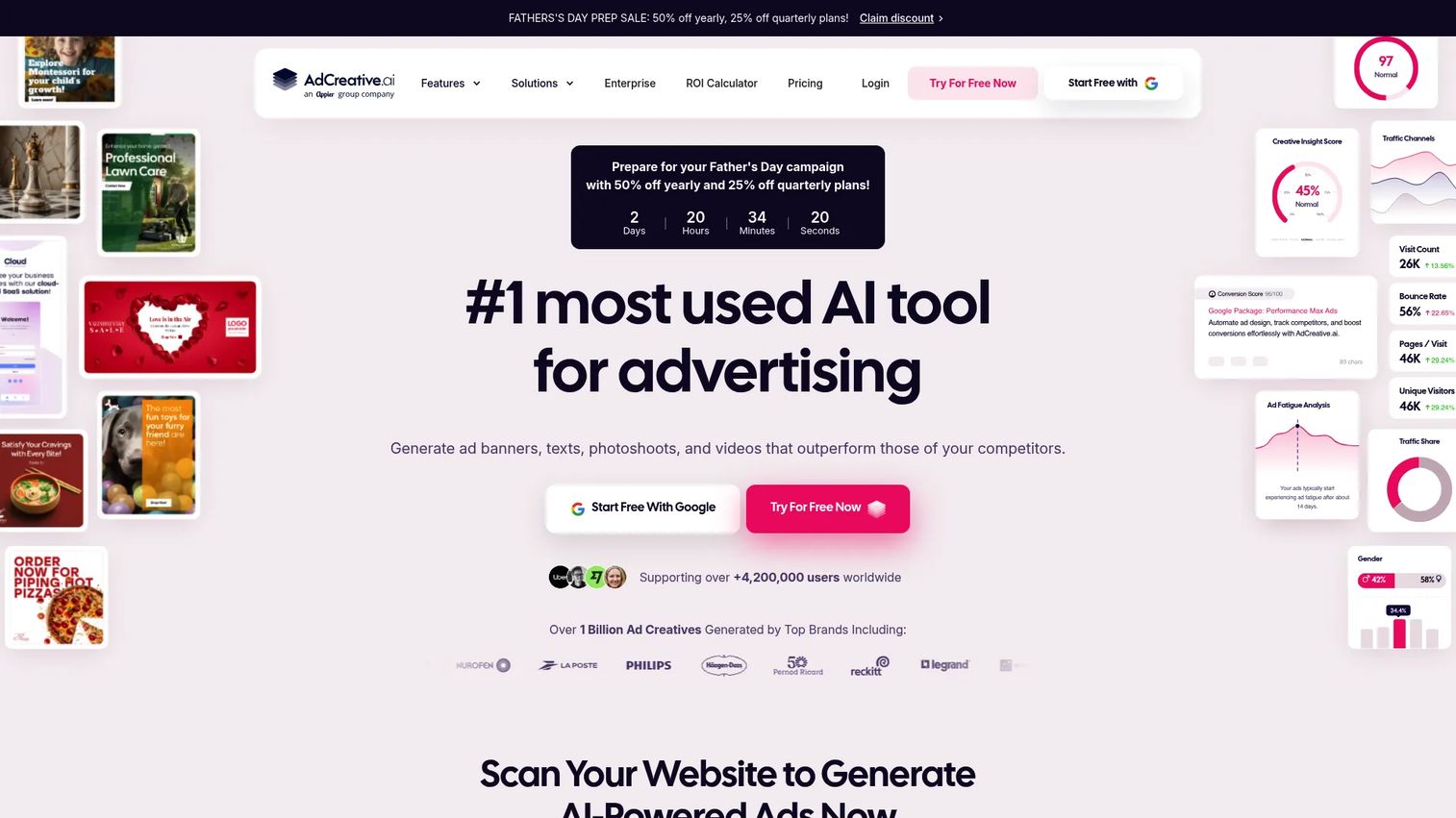
AdCreative.ai is an AI-powered ad creative generation platform for advertisers who need conversion-focused creative fast. It is the pick when creative throughput matters more than deep buying infrastructure. Feed it your brand, and it generates ad creatives, text, and headlines, then scores them so you can prioritize the variants most likely to convert.
The value is speed and volume. For growth marketers fighting creative fatigue and rising CPMs, AI ad creative lets you test many concepts without a designer in the loop for every one. Creative scoring and competitor insights add a layer of direction, so you are not generating blindly. It does not buy media, so pair it with a DSP or retargeting platform for distribution.
Best for: Teams that need fast, conversion-focused ad creative generation at scale across any advertising platform.
Key strengths
- AI creative generation: Produce ad creatives and variants in seconds for any platform.
- Text and headline generation: Generate ad copy alongside visuals to test full concepts quickly.
- Creative scoring and insights: Rank variants by predicted performance and study competitor creative.
Why choose AdCreative.ai: Choose AdCreative.ai when your bottleneck is producing enough fresh creative to keep tests running, not buying inventory. It fits lean and mid-market teams that want high creative volume without expanding headcount. Treat it as the creative engine that feeds your media buying tools, not a replacement for them.
AdCreative.ai pricing: AdCreative.ai publishes public tiers. The Starter plan begins at $20/mo, with Professional at $125/mo and Ultimate at $500/mo, plus a custom-priced Enterprise tier. Monthly, quarterly, and yearly billing views are shown, with the lowest visible public price reflecting yearly billing. A free trial is available, though no permanent free tier is confirmed. AdCreative.ai holds a 4.3/5 rating on G2.
Considerations before you buy
The right platform depends on your bottleneck, but a few criteria apply across every option. Run your shortlist through this checklist before committing budget.
Targeting and audience depth
Evaluate how the platform builds and reaches audiences. Can it pull from your CRM, website, app, and ecommerce data? Does it support contextual and behavioral signals? Strong audience targeting is the difference between efficient spend and wasted impressions, so test it against your real segments, not a demo dataset.
Creative workflow and automation
Decide whether your constraint is buying or creative production. If you ship many variations across markets, prioritize creative automation and dynamic creative optimization. If you mostly need to buy efficiently, a DSP matters more. Some teams run a creative tool and a buying platform together rather than forcing one tool to do both.
Reporting and ROAS visibility
Look closely at performance tracking. You want clean dashboards covering impressions, clicks, conversions, viewability, and ROAS, plus attribution your finance team will trust. Check how reporting exports and whether it reconciles with your other platforms, because mismatched numbers create more work than they save.
Integration and team fit
Confirm the platform fits your stack and your team size. Does it connect to your CRM, marketing automation, and analytics tools? A powerful DSP is wasted on a lean team with no media expertise, just as a simple retargeting tool may cap an enterprise operation. Match capability to the people who will run it.
Conclusion
The best display advertising software is the one that fixes your actual bottleneck. If that bottleneck is buying, StackAdapt is the strongest all-around pick for multi-channel programmatic, with The Trade Desk as the choice for advanced buyers who have media expertise in-house, and AdRoll for lean teams that want fast retargeting. If the bottleneck is creative production, Celtra and Bannerflow lead for enterprise and high-volume creative automation, Smartly unifies media and creative in one workflow, and AdCreative.ai delivers AI ad creative at speed.
So the framework is simple. Diagnose whether your constraint is buying, creative throughput, or measurement, then shortlist the two or three platforms above that target it. Scroll back to the comparison table, narrow by intent and pricing model, and book demos with the finalists. The platform that improves ROAS while replacing a tool you already pay for is the one worth your budget. Pairing your choice with stronger audience intelligence and a tight marketing automation layer will compound the results.
FAQs
Display advertising software is used to buy, place, manage, and measure visual ads across websites, apps, and connected screens. It handles audience targeting, real-time bidding, campaign management, creative serving, and performance tracking so marketers can run display campaigns at scale and tie spend back to conversions and ROAS.
Enterprise teams usually need governance, targeting depth, and workflow control. For programmatic buying at scale, StackAdapt and The Trade Desk fit well. For creative automation with brand governance across many markets, Celtra and Smartly are built for enterprise volume. The right pick depends on whether your priority is buying or creative production.
A demand-side platform, or DSP, is a type of display advertising software focused specifically on buying ad inventory programmatically through real-time bidding. Display advertising software is the broader category, which also includes creative automation, dynamic creative optimization, retargeting, and reporting tools. The Trade Desk and StackAdapt are DSPs, while Celtra and Bannerflow focus on the creative side.
It depends on the platform. Some tools, like Celtra and Bannerflow, focus on creative automation and dynamic creative optimization, producing many on-brand ad variations from templates and feeds. Others, like The Trade Desk, focus on media buying. Platforms such as Smartly combine creative and media in one workflow. Match the tool to whether your bottleneck is production or buying.
Lean teams should prioritize ease of use, fast setup, and integrated reporting over advanced buying levers they will not staff. A retargeting and cross-channel platform like AdRoll lets a small team launch remarketing and measure attribution quickly. For creative volume without a designer, an AI tool like AdCreative.ai keeps tests running. Avoid complex DSPs unless you have media expertise in-house.
Retargeting re-engages people who visited but did not convert, and it is one of the highest-ROI display plays. AdRoll is purpose-built for retargeting across display, native, video, mobile, and social, with built-in attribution. StackAdapt and The Trade Desk also support retargeting within broader programmatic suites, which suits teams that want it alongside other channels.
ROAS tracking is essential, because display spend is easy to launch and hard to prove. Prioritize platforms with clean performance tracking, conversion attribution, and dashboards that reconcile with your other tools. If you cannot tie impressions and clicks back to revenue, you cannot defend the budget or know what to scale, which makes measurement a top selection criterion.