
A claim sits in a queue for six days because three systems disagree on eligibility. A quality report takes a week to assemble because the data lives in four places. A member calls twice about the same denial and gets two different answers.
That is the daily reality inside most health plans. The work is not hard because payer operations are inherently messy. It is hard because the software underneath them was never built to talk to itself.
The market is moving fast to fix that. The global healthcare SaaS market was worth USD 25.13 billion in 2024 and is expected to reach USD 74.74 billion by 2030 at a 20% CAGR, according to Grand View Research (2024). Non-clinical systems, which include plan administration and payer operations tools, held 53.62% of that market in 2025 per Mordor Intelligence.
More spend does not mean more clarity. Picking the wrong platform means integration work you did not budget for, and reporting that still lives in spreadsheets. This guide breaks down seven platforms so you can shortlist by actual fit, not marketing copy.
What's inside
This guide is for health plan operators, payer IT and operations leaders, and product teams comparing platforms across claims, care management, analytics, and member experience.
We evaluated each tool on the factors that decide real-world fit:
- Workflow automation: how much manual claims, care, and admin work the platform removes
- Data integration and interoperability: how cleanly it connects to your existing systems of record
- Analytics and reporting: whether leaders get decision-ready dashboards or raw exports
- Line-of-business breadth: support for commercial, Medicare, Medicaid, and dental
- Healthcare-specific specialization: depth built for payers, not generic enterprise software
TL;DR
- Best for broad health plan operations: HealthEdge, for plans that want claims, payment integrity, and care management on one platform.
- Best for enterprise healthcare ecosystem depth: Epic, when payer workflows sit inside a larger health system.
- Best for performance planning and dashboards: Envisio, for teams that live in strategy execution and public reporting.
- Best for payer analytics and workflow automation: Arcadia, for data-driven teams modernizing operations.
- Best for Medicaid and government programs: Gainwell Technologies, for public sector payer complexity.
- Best for care management and population workflows: ZeOmega, when care coordination is the core driver.
- Best for utilization and care coordination modernization: Medecision, for plans replacing legacy processes.
What is health plan software?
Health plan software is a category of healthcare payer software that helps insurers and plan administrators manage claims, care management, quality measurement, risk adjustment, reporting, and member service from a central system.
Payers use it to reduce manual processing, connect fragmented data, and give operations and executive teams clearer visibility into performance across every line of business.
Core capabilities most platforms cover:
- Claims processing: adjudication, pricing, editing, and payment integrity
- Centralized data exchange: integration and interoperability across systems of record
- Quality and risk reporting: quality measurement, risk adjustment, and compliance-ready outputs
- Workflow automation: rules-driven routing that cuts repetitive manual steps
- Line-of-business configuration: commercial, Medicare, Medicaid, and dental support
- Member experience tools: service workflows, communication, and self-serve access
The strongest platforms do not just digitize existing tasks. They connect claims, care, and quality data so a decision made in one workflow is visible in the next.
When to use health plan software
Streamline claims and reimbursement
Manual claims work is where time and accuracy leak. Every touch adds delay, and every disagreement between systems creates rework.
Health plan software applies pricing, editing, and payment integrity rules automatically, so cleaner claims move faster. That means more predictable reimbursement cycles and fewer disputes downstream. For payers processing high volume, the difference between a manual and an automated pipeline shows up directly in cost per claim.
Centralize data and reporting
Disconnected systems slow every decision. When eligibility lives in one place, claims in another, and quality data in a third, weekly operations reviews turn into data-gathering exercises.
A platform that centralizes data exchange lets you run quality measurement, risk adjustment, and performance reporting from a single source. Leaders stop waiting on manual pulls. Instead of reconciling four exports, your team reviews one dashboard and moves on to the actual decision.
Improve member and stakeholder experience
Member frustration usually traces back to internal friction. A denial handled by three uncoordinated teams produces three different answers, and the member feels every handoff.
Better workflows fix the experience on both sides. Members get faster, more consistent responses, and internal teams stop chasing context across systems. The same coordination helps partner stakeholders, from providers to state agencies, get accurate answers without a phone tree.
Comparison table
This table compares the seven platforms by best fit, what sets each apart, pricing, and G2 rating. Most payer platforms use quote-based pricing, so treat pricing as directional and confirm current packaging with each vendor.
| # | Product | Best for | Key differentiator | Pricing | G2 rating |
|---|---|---|---|---|---|
| 1 | HealthEdge | Broad health plan operations | Claims, payment integrity, and care management on one platform | Quote-based | 4.3/5 |
| 2 | Epic | Enterprise healthcare ecosystem depth | Unified record infrastructure across a health system | Quote-based | 4.2/5 |
| 3 | Envisio | Performance planning and dashboards | Strategy execution with public-facing dashboards | Quote-based | 4.7/5 |
| 4 | Arcadia | Payer analytics and workflow automation | Healthcare data lakehouse for aggregation and analytics | Quote-based | Not listed |
| 5 | Gainwell Technologies | Medicaid and government programs | Purpose-built Medicaid enterprise operations | Quote-based | Not listed |
| 6 | ZeOmega | Care management and population workflows | Jiva platform for care and utilization management | Quote-based | 4.0/5 |
| 7 | Medecision | Utilization and care coordination modernization | Unified data platform with agentic AI automation | Quote-based | Not listed |
Best 7 health plan software for 2026
1. HealthEdge
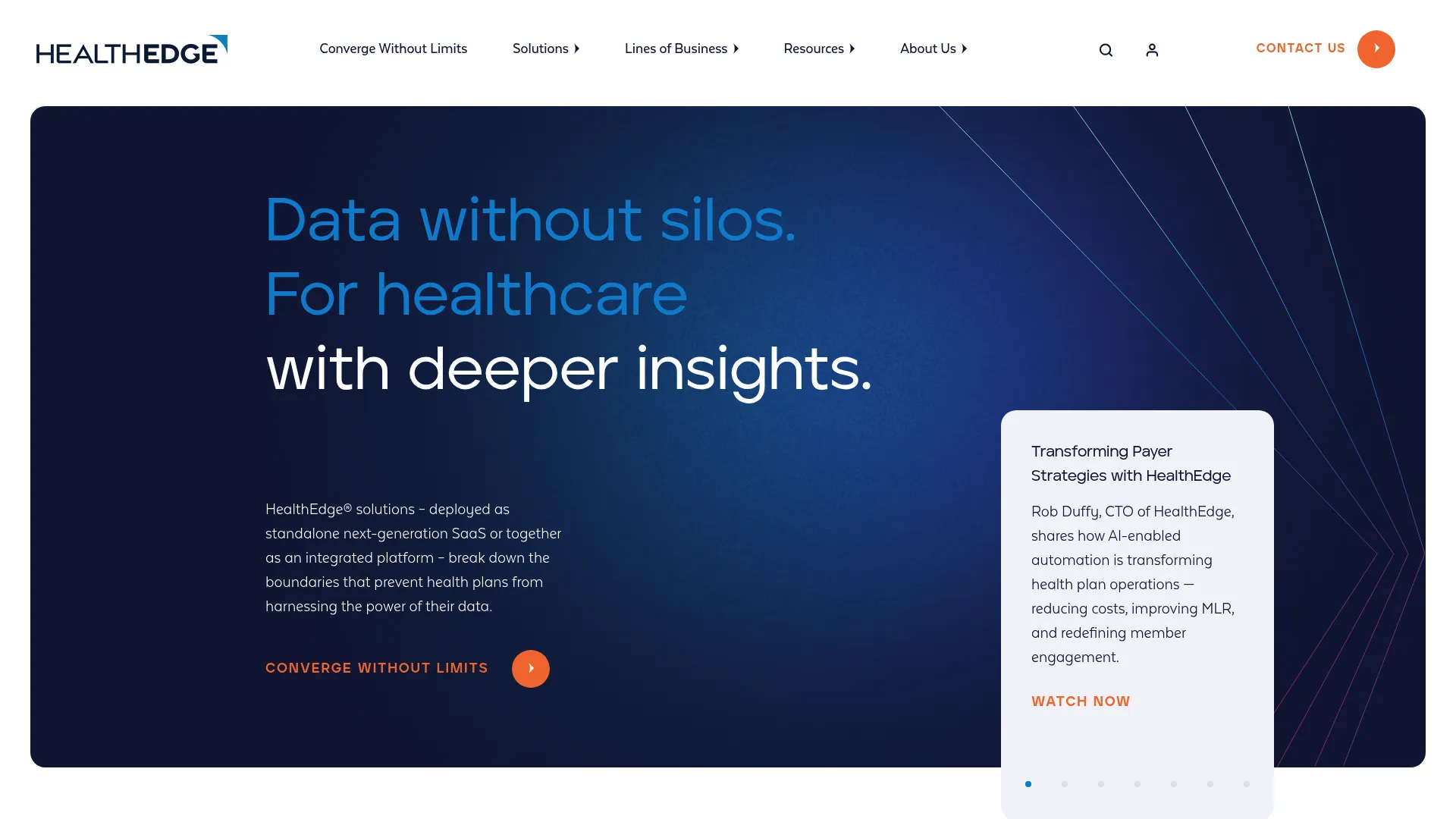
HealthEdge is a healthcare software platform built for health plans, centered on payer operations, payment accuracy, and care management. It brings claims processing, pricing, editing, and care workflows onto one integrated platform, which is why it fits plans that want to reduce the number of systems they stitch together. For enterprise payers managing multiple lines of business, that consolidation is the whole appeal.
Best for: Health plans that need enterprise payer operations software across commercial, government, and specialized segments.
Key strengths
- Integrated platform for health plan operations
- Claims, pricing, editing, and payment integrity
- Care management workflow tools
- Support for commercial and government lines of business
- Configurable workflows across plan types
Why choose HealthEdge: If your operational pain is too many disconnected systems handling claims and care, HealthEdge trades a patchwork for one platform. It suits plans ready to commit to a broad payer operations stack rather than assembling point tools.
HealthEdge pricing: Pricing is quote-based and not published publicly. Contact HealthEdge for packaging tied to your plan size and lines of business.
2. Epic
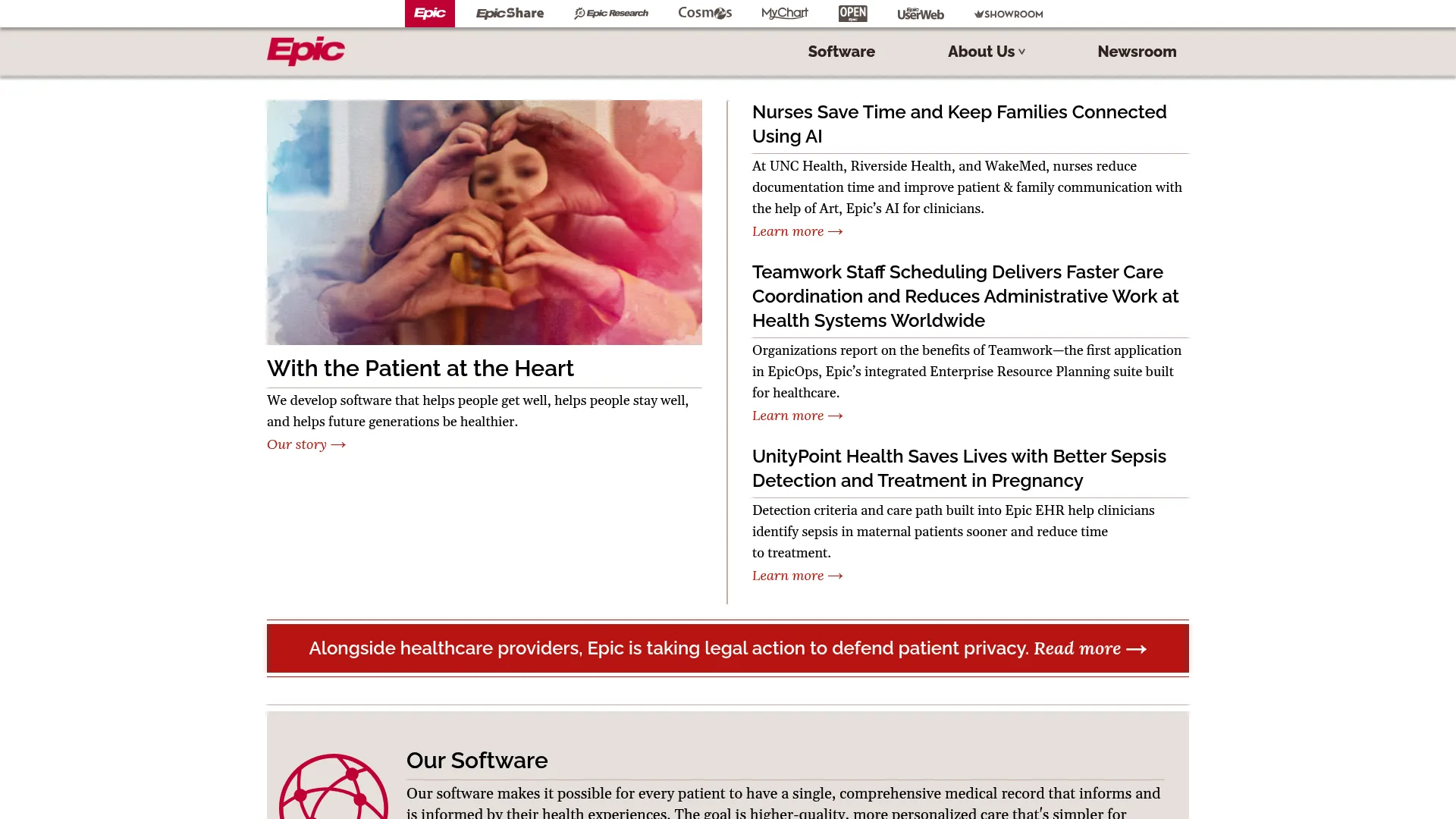
Epic is best known as a comprehensive healthcare record and operations platform used across large health systems. For payers, its value shows up when health plan workflows sit inside a broader network that already runs on Epic. That shared infrastructure means claims, clinical, and operational data can move through one environment rather than across vendor boundaries.
Best for: Large organizations that want a comprehensive system and broad enterprise coordination across clinical and plan operations.
Key strengths
- Unified record infrastructure
- AI and workflow support
- Staff scheduling and operations tools
- Patient and member engagement features
- Strong interoperability across the network
Why choose Epic: Choose Epic when your health plan is part of an integrated delivery network and you want payer and provider data in one environment. It performs best where the plan is not a standalone operation but one piece of a larger healthcare organization.
Epic pricing: Public pricing is not listed. Pricing is handled through direct sales and varies by organization scope and deployment.
3. Envisio
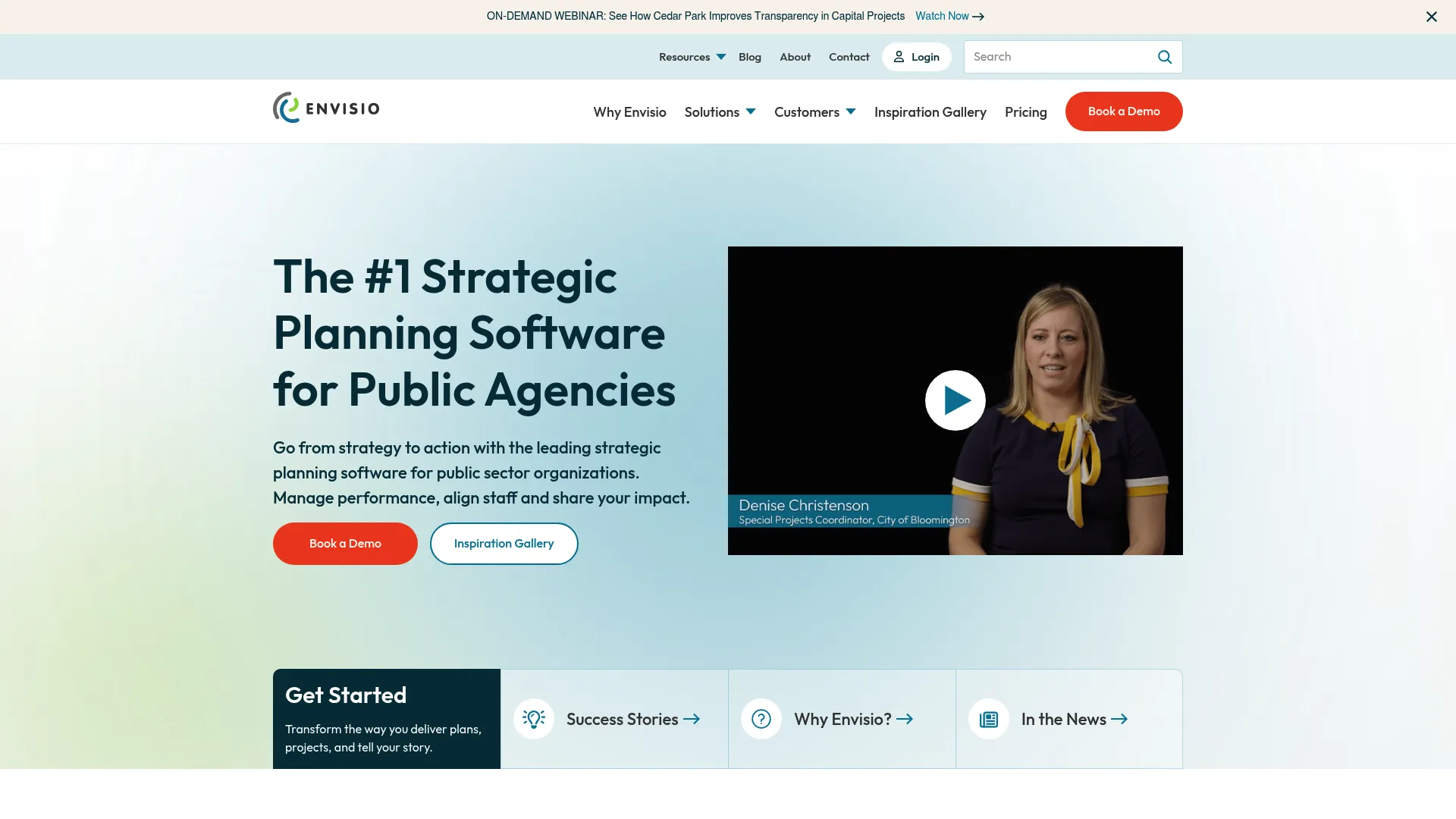
Envisio is strategic planning and performance management software with a strong focus on dashboards and public reporting. For health plans and public health teams, it excels at turning strategy into tracked, measurable performance rather than deep claims processing. Its multi-plan management makes it useful for teams overseeing several plans or programs at once.
Best for: Teams that need structured performance visibility, strategy execution, and public-facing reporting.
Key strengths
- Create, track, link, and report across multiple organizational plans
- AI Assist for plan creation and editable workplans
- Unlimited users, projects, measures, reports, and dashboards
- Public dashboards for transparency
- Healthcare performance measurement support
Why choose Envisio: Envisio is the strongest fit when performance management and reporting are your priority, not transactional claims work. It suits teams accountable for outcomes and public transparency who need to show progress against goals.
Envisio pricing: Envisio offers a Get Started tier for a single plan and public dashboard, and an Enterprise tier for unlimited plans and multi-plan management. Pricing is quote-based, billed annually, with no public numeric price listed.
4. Arcadia
Arcadia is a healthcare data and analytics platform serving providers, payers, and value-based care organizations. Its differentiator is a data lakehouse that aggregates healthcare data for analytics, benchmarking, and care management. For payers modernizing operations, that data foundation supports risk adjustment, quality measurement, and workflow automation across teams.
Best for: Payers that want stronger analytics and operational efficiency built on aggregated data.
Key strengths
- Data lakehouse for healthcare data aggregation
- Analytics, dashboards, and benchmark reporting
- Care management and point-of-care insights
- Contract analytics for value-based arrangements
- Interoperability across data sources
Why choose Arcadia: Arcadia fits data-driven teams that treat analytics as the operating layer, not an afterthought. If your goal is to unify fragmented data before layering workflow automation on top, its lakehouse approach is the anchor.
Arcadia pricing: Arcadia does not publish public pricing. The site directs prospects to request a demo and talk to sales for packaging.
5. Gainwell Technologies
Gainwell Technologies provides digital and cloud-enabled solutions and services for Medicaid and public health programs. Where most platforms serve commercial payers first, Gainwell is built for the complexity of state Medicaid and government programs. That focus covers claims, provider management, and health services operations under public sector requirements.
Best for: State Medicaid and government health plans modernizing claims, provider, and health services operations.
Key strengths
- Medicaid enterprise solutions
- Provider solutions and management
- Data and analytics for public programs
- Administrative automation
- Compliance-oriented operations
Why choose Gainwell Technologies: Gainwell is the strongest fit where public payer complexity and government program requirements dominate. It suits agencies and Medicaid plans that need software built around their regulatory reality, not adapted from a commercial product.
Gainwell Technologies pricing: No public pricing is available. Gainwell directs prospects to contact the company for solutions scoped to their program.
6. ZeOmega
ZeOmega is a healthcare software company built around Jiva, its platform for population health, care management, and utilization management. For plans where care coordination is the operational core, ZeOmega provides configurable workflows and automation rather than a broad claims suite. That specialization makes it a fit for risk-bearing organizations managing complex care programs.
Best for: Health plans and risk-bearing organizations that need enterprise care management software.
Key strengths
- Population health analytics
- Care management workflow automation
- Utilization management and prior authorization automation
- Configurable care programs
- Quality improvement support
Why choose ZeOmega: ZeOmega is a strong pick when care management is a core operational driver rather than a side function. It suits plans that need deep, configurable care and utilization workflows over a generalist platform.
ZeOmega pricing: Pricing is not publicly displayed and appears quote-based. ZeOmega directs prospects to contact sales, with pricing reportedly tied to member count and concurrent users.
7. Medecision
Medecision is a healthcare software and services platform for health plans and providers focused on care management, utilization management, and member engagement. Its emphasis on a unified data platform with event-driven automation and agentic AI positions it for teams replacing legacy coordination processes. For plans modernizing utilization and care workflows, that automation layer is the draw.
Best for: Health plans modernizing coordination, utilization, and member workflows off legacy systems.
Key strengths
- Unified data platform
- Event-driven workflow automation
- Agentic AI and autonomous agents
- Care coordination workflows
- Utilization management support
Why choose Medecision: Medecision is useful for teams that want to modernize legacy payer processes with automation and AI rather than maintain aging systems. It fits plans prioritizing care coordination and utilization management as the areas most in need of a refresh.
Medecision pricing: No public pricing page or figures are available. Medecision uses demo and contact-sales flows to scope pricing per organization.
Considerations
Workflow breadth
Check whether the platform covers claims, care management, quality, reporting, and member service, or just one slice. Narrow tools look cheaper up front, but they push integration work onto you later. A platform that handles more of the workflow natively usually means fewer handoffs and fewer systems to reconcile.
Data integration and interoperability
Map what the platform must connect to before you buy: eligibility systems, provider directories, clinical feeds, and your data warehouse. Fragmented data creates operational blind spots that no dashboard can fix. Confirm the platform supports the interoperability and data exchange standards your existing stack already uses.
Line-of-business fit
Commercial, Medicare, Medicaid, and dental plans run different workflows and rules. A platform strong in commercial may not handle Medicaid complexity, and vice versa. Look for real specialization in your lines of business rather than generic payer language that claims to cover everything equally.
Member and stakeholder experience
The best software reduces friction for members, operations teams, and partner stakeholders at the same time. Evaluate how quickly a member issue can be resolved end to end, and how much context a service rep has to chase. Response speed and consistency are the signals that separate a real experience layer from a form-filling tool.
Analytics and reporting
You need dashboards that answer questions, not exports that create more work. Evaluate whether reporting is decision-ready for weekly operations and executive review, or whether someone still has to assemble it by hand. Clear analytics tie software capability directly to measurable performance.
Conclusion
The right health plan software depends on where your operational pressure actually sits. If you want broad payer operations on one platform, HealthEdge is the natural starting point. If your plan lives inside a larger health system, Epic's shared infrastructure is hard to beat.
For performance planning and public reporting, Envisio leads. Arcadia is the pick when analytics and data aggregation are your foundation. Gainwell Technologies owns the Medicaid and government space, while ZeOmega and Medecision both go deep on care and utilization management for plans where coordination is the core driver.
Next step: shortlist three vendors and map each one against your three biggest goals, likely some mix of claims automation, centralized reporting, and member experience. Score them on line-of-business fit and integration effort, not feature lists. The platform that reduces the most manual work while connecting your data is the one that earns its place in your stack.
FAQs
Health plan software is used by payers to manage claims processing, care management, quality measurement, risk adjustment, reporting, and member service from a central platform. It replaces fragmented manual workflows with automation and connected data, which reduces processing time and gives leaders clearer performance visibility across lines of business.
They apply pricing, editing, and payment integrity rules automatically, so clean claims move through adjudication faster with fewer manual touches. That cuts rework, reduces disputes, and makes reimbursement cycles more predictable. For high-volume payers, automated adjudication directly lowers cost per claim compared with manual review.
Look for workflow breadth across claims, care, quality, and member service, plus strong interoperability with your existing systems of record. Confirm the platform specializes in your lines of business, whether commercial, Medicare, Medicaid, or dental. Decision-ready analytics and clear reporting matter as much as transactional features.
Commercial plans emphasize competitive benefit design, employer group administration, and flexible product configuration. Government programs like Medicaid and Medicare carry heavier compliance, reporting, and eligibility requirements set by state and federal rules. A platform strong in one area does not automatically handle the other, so verify real specialization for your programs.
The integrations that matter most are eligibility and enrollment systems, provider directories, clinical and claims data feeds, and your data warehouse for analytics. Support for common interoperability and data exchange standards keeps these connections clean. Without them, you get operational blind spots and manual reconciliation that undermine the platform's value.
It improves member experience by removing internal friction, so a member issue is handled consistently instead of bouncing between uncoordinated teams. Connected workflows give service reps full context, which speeds resolution and reduces repeat contacts. Self-serve access and clearer communication further cut the effort a member has to spend.
Payer software manages the insurer side: claims, care management, quality, risk adjustment, and member administration across lines of business. EHR software manages the provider side: clinical records, orders, and care documentation for patients. Some enterprise platforms span both, but the core jobs and primary users are different.