
Most teams track brand awareness through surveys and social listening. They measure whether people have heard of them. But there's a gap between "I've heard of your product" and "I understand what your product does," and that gap is where deals stall.
Product awareness tools help you close that gap by measuring recognition and actively creating understanding. This guide covers 9 tools across both categories: brand tracking platforms that measure recall, and interactive demo tools that let prospects experience your product before a call.
What's inside
This guide covers 9 product awareness tools that help you measure how well buyers recognize your product and actively grow that recognition. You'll find tools for brand tracking surveys, social listening, SEO visibility, and interactive product experiences.
We selected tools based on three criteria:
- Measurement depth: How well does the tool track recognition, recall, and perception?
- Growth capability: Does it help you actively increase awareness, not just measure it?
- Integration with GTM workflows: Can you connect awareness data to pipeline and revenue?
If you're a PMM, demand gen lead, or GTM operator evaluating brand awareness tools for the first time, this guide gives you a practical starting point. For a broader view of product marketing software tools, check out our comprehensive guide.
TL;DR
- Best for always-on brand tracking: Tracksuit
- Best for enterprise brand health: Latana
- Best for custom awareness surveys: Attest
- Best for social listening: Brandwatch
- Best for SEO-driven awareness: Semrush
- Best free option: Google Analytics
What are product awareness tools
Product awareness tools are specialized software platforms designed to help you track product health, monitor online visibility, and measure consumer perception. While this guide focuses on awareness measurement and growth, product tour software represents another category that helps with product understanding and adoption.
Product awareness tools fall into two main categories:
- Brand awareness measurement tools: Track recognition, recall, and perception through surveys, social listening, and search data. They answer the question: "Do people know our product exists?"
- Product awareness growth tools: Actively increase visibility through demos, content, and campaigns. They answer the question: "How do we get more people to understand what our product does?"
Most teams use both types together. Measurement tools tell you where you stand. Growth tools help you move the needle. A demo center can serve as a hub for both measurement and growth initiatives.
Tip: Product awareness is a subset of brand awareness. If you're tracking overall company recognition, you're doing brand awareness. If you're tracking recognition of a specific product or feature, you're doing product awareness.
When to use product awareness tools
Measure how many buyers recognize your product
Survey-based tools and brand tracking platforms excel at measuring aided and unaided recall. Aided recall asks: "Have you heard of [Product Name]?" Unaided recall asks: "What products come to mind when you think of [Category]?"
Tracking recall matters when you're launching a new product, entering a new market, or trying to understand baseline awareness before a campaign.
Track brand awareness across competitors
Share of voice tells you how much of the conversation your brand owns compared to competitors. Social listening tools track mentions across platforms, while 45.7% of Google searches are branded.
If you're losing deals to competitors and don't know why, competitive awareness data helps you understand whether it's a recognition problem or a positioning problem.
Show your product in action before the first call
Interactive demos let prospects experience your product without scheduling friction. This is the "growth" side of awareness: instead of just measuring whether people know you exist, you're actively creating product understanding.
When a prospect clicks through your product and explores features on their own, they move from "I've heard of this" to "I understand what this does." That's a different kind of awareness, and it's measurable through engagement data.
Product awareness tools at a glance
| # | Product | Intent | Key differentiation | Pricing | G2 rating |
|---|---|---|---|---|---|
| 1 | Tracksuit | Brand tracking | Always-on awareness measurement | Custom pricing | 4.8/5 |
| 2 | Latana | Enterprise brand health | AI-powered audience segmentation | Custom pricing | 4.5/5 |
| 3 | Attest | Consumer research | Fast custom surveys with large panels | From $0.50/response | 4.5/5 |
| 4 | Brandwatch | Social listening | Real-time mention tracking and sentiment | Custom pricing | 4.4/5 |
| 5 | Sprout Social | Social management | Publishing plus awareness analytics | From $199/mo | 4.4/5 |
| 6 | Semrush | SEO visibility | Branded search volume tracking | From $139.95/mo | 4.5/5 |
| 7 | Google Analytics | Web analytics | Direct traffic and referral signals | Free (GA360 custom) | 4.5/5 |
| 8 | Typeform | Survey builder | Conversational surveys with high completion | From $25/mo | 4.5/5 |
| 9 | Hootsuite | Social management | Multi-platform reach and impression tracking | From $99/mo | 4.2/5 |
9 best product awareness tools for 2026
1. Tracksuit
Tracksuit is an always-on brand tracking platform that measures awareness, consideration, and preference continuously rather than through point-in-time surveys. You set up your brand and competitors once, and Tracksuit delivers ongoing data on how your awareness metrics change over time.
Best for: Marketing teams who want continuous brand awareness measurement without running one-off surveys every quarter.
Key strengths
- Always-on tracking: Continuous measurement rather than quarterly snapshots. You see trends as they happen, not months later.
- Funnel metrics: Track awareness through to preference in one dashboard. Understand where prospects drop off in the consideration journey.
- Competitor benchmarking: See how your brand stacks up against named competitors on the same metrics.
Why choose Tracksuit
Tracksuit works well for teams who want set-it-and-forget-it brand tracking. Once configured, it runs in the background and alerts you to changes. The tradeoff: it's primarily a measurement tool, not a growth tool. You'll know where you stand, but you'll use other tools to move the needle.
Tracksuit pricing
Custom pricing based on markets tracked and survey volume. Contact sales for a quote.
3. Latana
Latana is an AI-powered brand tracking platform built for enterprise teams tracking awareness across multiple markets and audience segments. It uses machine learning to deliver statistically significant insights from smaller sample sizes.
Best for: Enterprise brands tracking awareness across multiple countries, languages, and audience segments.
Key strengths
- Audience segmentation: Slice awareness data by demographics, behaviors, and custom segments. Understand which audiences know you and which don't.
- Global coverage: Track brand health across multiple countries and languages from a single dashboard.
- AI-powered insights: Surface trends and anomalies automatically. The platform flags when awareness shifts significantly in any segment.
Why choose Latana
Latana fits larger organizations with complex segmentation requirements. If you're tracking awareness across 10 countries and 15 audience segments, Latana handles that complexity. Smaller teams with simpler requirements may find it overkill.
Latana pricing
Custom pricing based on markets, segments, and survey volume. Enterprise contracts typically start in the five-figure range annually.
4. Attest
Attest is a consumer research platform with strong survey capabilities for brand awareness studies. You get access to large consumer panels and can run custom surveys with fast turnaround.
Best for: Teams who want to run custom brand awareness surveys with flexibility beyond standard tracking metrics.
Key strengths
- Survey templates: Pre-built brand awareness and tracking survey templates get you started quickly. Customize as needed.
- Fast results: Access to large consumer panels means you can collect statistically significant data in days, not weeks.
- Custom research: Build bespoke studies beyond standard awareness metrics. Test messaging, positioning, or creative alongside awareness.
Why choose Attest
Attest works well when you want flexibility to ask custom questions, not just track standard metrics. If you're testing new positioning or want to understand why awareness is low (not just that it's low), Attest gives you that depth.
Attest pricing
Pay-per-response model starting around $0.50 per response. Subscription plans available for teams running regular research.
5. Brandwatch
Brandwatch is a social listening and consumer intelligence platform for tracking brand mentions and sentiment across social platforms, forums, news sites, and the broader web.
Best for: Teams who want to measure organic brand awareness through social and web mentions rather than surveys.
Key strengths
- Social listening: Track brand mentions across social platforms, forums, news sites, and blogs. See every conversation about your brand.
- Sentiment analysis: Understand how people feel when they mention your brand. Positive, negative, or neutral sentiment over time.
- Trend detection: Spot emerging conversations before they peak. Get early warning on reputation issues or viral moments.
Why choose Brandwatch
Brandwatch gives you real-time awareness signals from organic conversations. Unlike surveys (which measure stated awareness), social listening measures actual behavior: people talking about you unprompted. The tradeoff: it only captures public conversations, not private consideration.
Brandwatch pricing
Custom pricing based on data volume and features. Enterprise contracts typically start in the mid-five-figure range annually.
6. Sprout Social
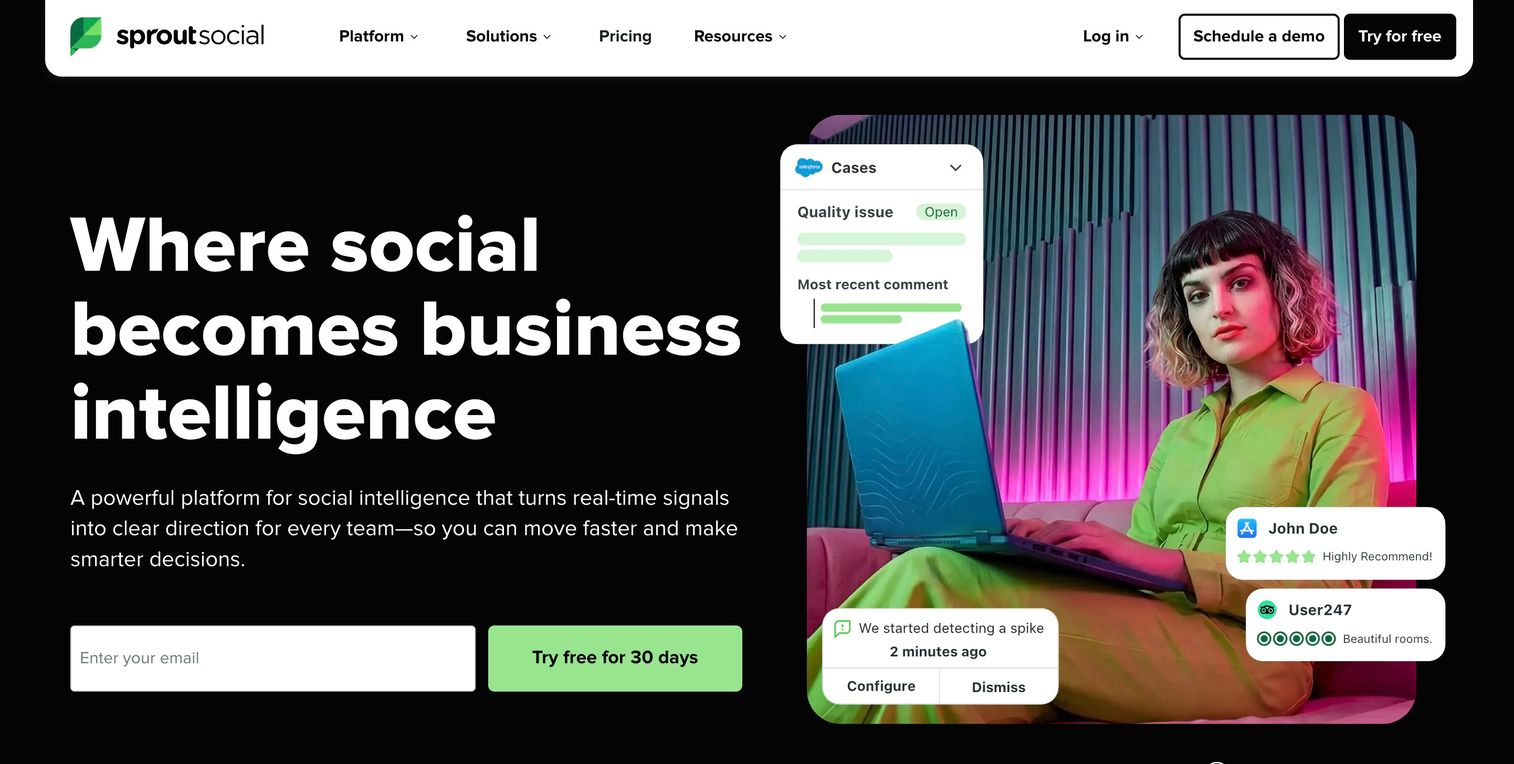
Sprout Social is a social media management platform with built-in analytics for tracking brand awareness on social channels. You manage publishing and engagement in the same tool where you track awareness metrics.
Best for: Social media teams who manage publishing and want awareness metrics in the same tool.
Key strengths
- Unified inbox: Manage and respond to brand mentions across platforms. Never miss a conversation about your brand.
- Share of voice reports: Track how much of the conversation your brand owns compared to competitors.
- Publishing and scheduling: Build awareness through consistent content presence. Plan and schedule posts alongside your analytics.
Why choose Sprout Social
Sprout Social works well when social is your primary awareness channel and you want publishing plus analytics in one place. If you're already using a separate publishing tool, the overlap may not justify the cost.
Sprout Social pricing
Standard plan starts at $199/month per seat. Professional and Advanced tiers add features like competitive reports and sentiment analysis.
7. Semrush
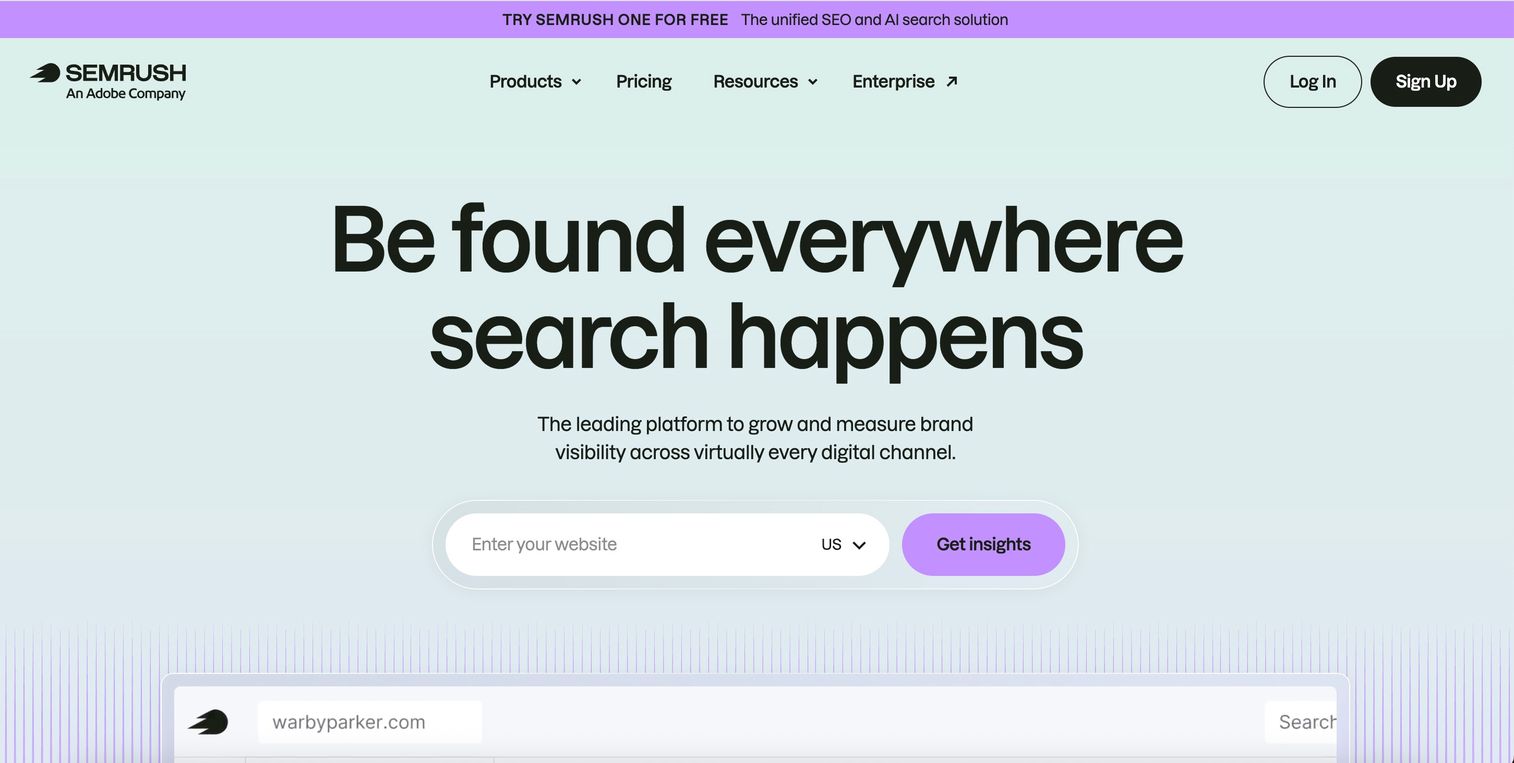
Semrush is an SEO and competitive intelligence platform that tracks branded search volume and online visibility. It treats search behavior as a proxy for awareness: when more people search for your brand name, awareness is growing.
Best for: Marketing teams who want to measure awareness through search behavior and organic visibility.
Key strengths
- Branded search tracking: Monitor how often people search for your brand or product name. Track trends over time and by geography.
- Competitive visibility: Compare your search presence against competitors. See who's winning the awareness battle in search.
- Content gap analysis: Find awareness-building content opportunities. Understand what topics your audience searches for that you're not covering.
Why choose Semrush
Semrush works well for teams who view search volume as a leading indicator of awareness. If branded search is growing, 6 to 24 months often separate that growth from market share gains. The tradeoff: search data doesn't tell you about awareness among people who don't search (yet).
Semrush pricing
Pro plan starts at $139.95/month. Guru plan at $249.95/month adds historical data and content marketing features. Business plan at $499.95/month adds API access and extended limits.
8. Google Analytics
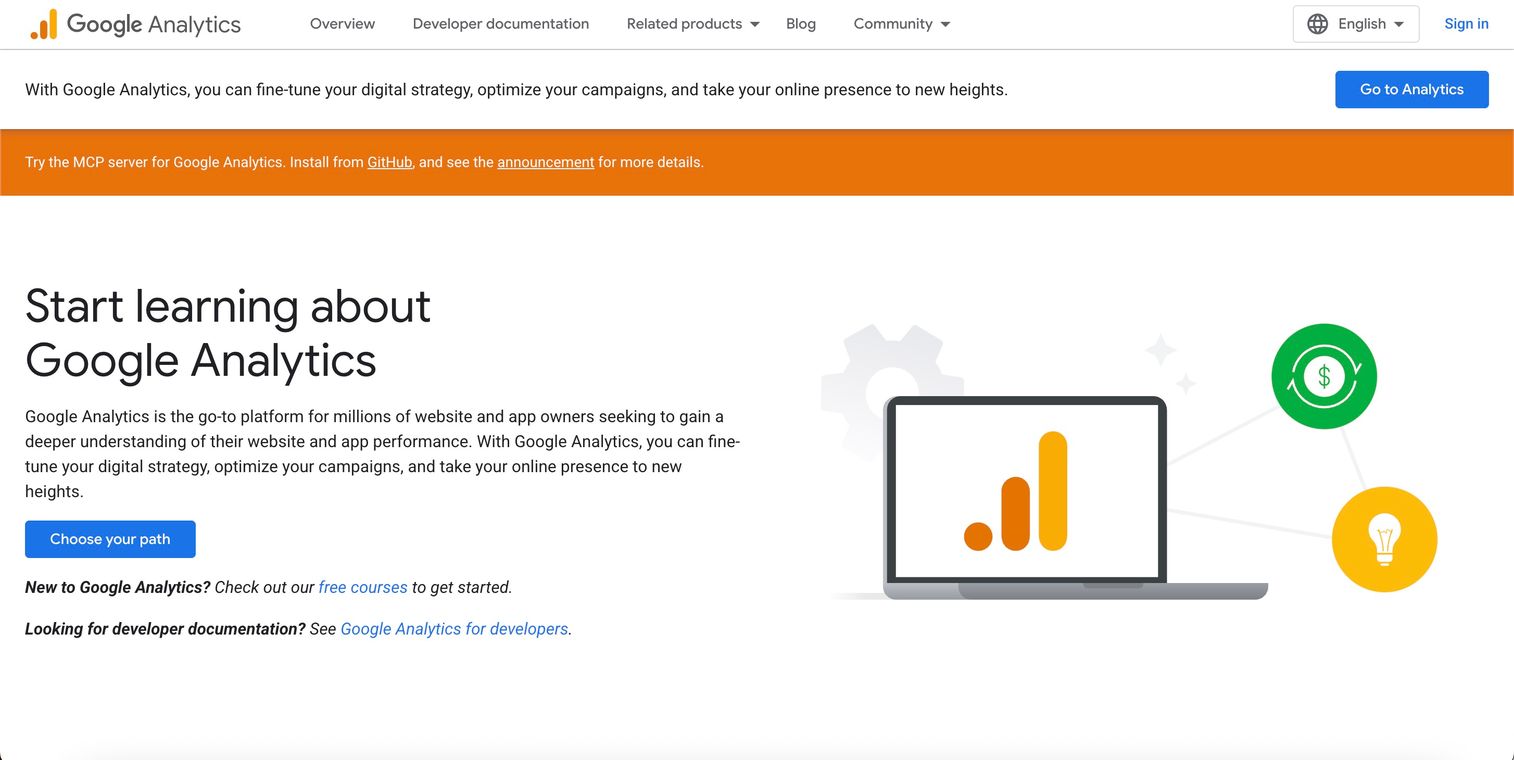
Google Analytics is a free web analytics platform that provides indirect awareness signals through traffic and engagement data. Direct traffic (people typing your URL) and branded search referrals indicate awareness.
Best for: Teams on a budget who want basic awareness signals from website traffic.
Key strengths
- Direct traffic monitoring: Track visits from people who type your URL directly. This indicates brand recall.
- Referral source analysis: See which channels drive awareness and discovery. Understand where new visitors come from.
- Free tier: No cost for standard implementation. Most teams already have it installed.
Why choose Google Analytics
Google Analytics works as a baseline awareness tool. It measures behavior (visits, engagement) rather than recognition or recall. Use it alongside survey-based tools for a complete picture.
Google Analytics pricing
Free for standard implementation. GA360 (enterprise version) requires custom pricing.
9. Typeform
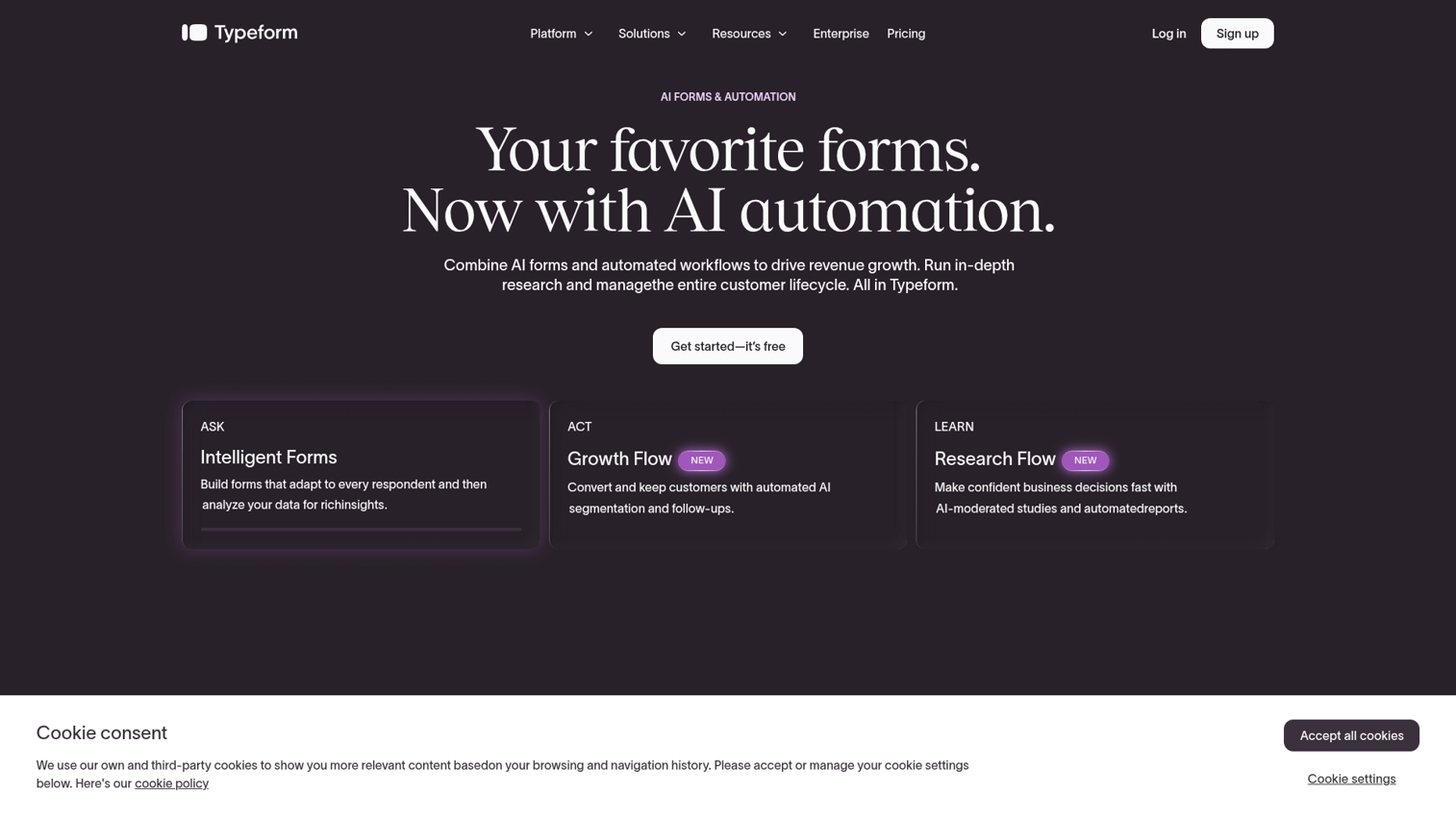
Typeform is a survey and form builder that teams use to collect brand awareness data through custom questionnaires. The conversational, one-question-at-a-time format drives higher completion rates than traditional surveys.
Best for: Teams who want to build custom brand awareness surveys with a polished user experience.
Key strengths
- Conversational surveys: Higher completion rates through one-question-at-a-time format. Respondents stay engaged longer.
- Logic branching: Route respondents based on awareness levels. Ask different follow-up questions based on whether they've heard of you.
- Integrations: Push survey data to CRM and marketing automation tools. Connect awareness data to your broader GTM stack.
Why choose Typeform
Typeform works well for teams who want branded, engaging surveys without a full research platform. You build the survey yourself and distribute it through your own channels. The tradeoff: you don't get access to consumer panels like Attest provides.
Typeform pricing
Basic plan starts at $25/month. Plus plan at $50/month adds logic branching and integrations. Business plan at $83/month adds advanced analytics.
10. Hootsuite
Hootsuite is a social media management platform with analytics for tracking brand awareness across social channels. Like Sprout Social, it combines publishing with awareness reporting.
Best for: Teams managing multiple social accounts who want awareness reporting alongside publishing.
Key strengths
- Multi-platform analytics: Track reach and impressions across all major social networks. See awareness metrics in one dashboard.
- Social listening add-on: Monitor brand mentions and sentiment. Available as an add-on to core plans.
- Team collaboration: Coordinate awareness campaigns across team members. Approval workflows and shared calendars.
Why choose Hootsuite
Hootsuite works well for teams who prioritize social as their primary awareness channel and want a mature, established platform. The social listening features require an add-on, so factor that into pricing.
Hootsuite pricing
Professional plan starts at $99/month. Team plan at $249/month adds multiple users. Enterprise pricing is custom.
How to choose the right brand awareness measurement tool
The right tool depends on whether you want to measure awareness, grow it, or both. Most teams end up using multiple tools together.
Measurement depth versus growth focus
Some tools measure awareness (surveys, social listening, search data). Others actively build it (interactive demos, content platforms). A few do both.
- Measurement-focused tools: Tracksuit, Latana, Attest, Brandwatch, Google Analytics
- Growth-focused tools: Guideflow, content marketing platforms, advertising tools
- Hybrid tools: Semrush (measures search awareness, helps you create content to grow it)
Start by asking: "Do I know where my awareness stands?" If not, start with measurement. If you know awareness is low and want to fix it, prioritize growth tools.
Survey and audience targeting capabilities
If you're a B2B company with a niche ICP (say, "VP of Engineering at Series B SaaS companies"), you'll want tools with advanced audience targeting. Latana and Attest offer this capability. Tracksuit focuses more on broader consumer audiences.
For B2B, also consider whether survey-based awareness metrics even capture your audience. Your buyers may not show up in consumer panels. In that case, behavioral signals (search volume, direct traffic, demo engagement) may be more reliable.
Integration with your CRM and marketing stack
Awareness data becomes more valuable when connected to pipeline. Look for tools that sync with Salesforce, HubSpot, or your marketing automation platform.
Guideflow, for example, integrates with major CRM and MAP tools so demo engagement data flows into your lead scoring and sales follow-up workflows. Survey tools like Typeform also offer CRM integrations.
Analytics quality and intent signals
There's a difference between vanity metrics (impressions, reach) and intent signals (feature exploration, time spent, return visits).
- Vanity metrics: Tell you how many people saw your content
- Intent signals: Tell you who actually engaged and what they cared about
When evaluating tools, ask: "Does this data help my sales team prioritize follow-up?"
Turn product awareness into pipeline with the right tools
Product awareness tools fall into two camps: tools that measure recognition and tools that create it through product experiences. Most teams benefit from using both.
Start with a tool that matches your primary goal. If you don't know where your awareness stands, start with measurement (Tracksuit, Latana, or Attest). If you know awareness is low and want to fix it, start with growth tools that let prospects experience your product directly.
Start your journey with Guideflow today!
FAQs about product awareness tools
Product awareness tools focus on recognition of a specific product or feature, while brand awareness tools measure overall company recognition. Product awareness is a subset of brand awareness. You might have high brand awareness ("I've heard of Salesforce") but low product awareness for a specific feature ("I didn't know Salesforce had a CDP").
Interactive demos measure engagement and intent (what features prospects explored, how long they spent, where they dropped off) rather than recognition or recall. This engagement data indicates product interest and consideration. It's a different kind of awareness signal: not "have they heard of us" but "do they understand what we do."
Key metrics include aided and unaided recall (survey-based), branded search volume (SEO tools), share of voice (social listening), direct website traffic (web analytics), and social mention volume. Strong awareness typically shows up across multiple metrics, not just one.
Always-on tracking is ideal because it catches trends as they happen. If budget is limited, quarterly surveys work for most teams. The right frequency depends on how fast your market moves. If you're in a rapidly changing category with aggressive competitors, measure more often.
Most teams combine a measurement tool (surveys or social listening) with a growth tool (interactive demos or content platform) to both track and build awareness. The measurement tool tells you where you stand. The growth tool helps you move the needle. Using both gives you a complete picture.
Awareness metrics become valuable when tied to downstream conversion. Look for tools that integrate with your CRM or provide intent signals that sales can act on. For example, demo engagement data (which features a prospect explored) helps sales prioritize follow-up and personalize conversations. Survey data alone doesn't connect to pipeline unless you match respondents to accounts.