
The front desk phone rings forty times before lunch. Half the calls are reschedules. A third of the morning's appointments arrive with blank intake forms. Two patients skipped without notice, and the recall list from last quarter never got worked. Every one of these moments costs staff time, revenue, or both.
Patient engagement software exists to move that work off the front desk and onto automated rails. It now spans the entire patient journey: self-scheduling before the visit, digital intake and eligibility checks at arrival, two-way texting and reminders during care, payments after the appointment, and recall campaigns that pull people back in for preventive care. Instead of a single reminder tool bolted onto a practice management system, the category has consolidated into full platforms that touch scheduling, communication, payments, and outreach in one place.
The demand behind this shift is real. The global patient engagement solutions market is expected to grow from USD 30.41 billion in 2026 to USD 54.16 billion in 2031, a 12.2% CAGR, according to MarketsandMarkets (2024). Software components already represent roughly 59.3% of that market in 2025, which tells you practices are choosing software-based automation over manual services. North America accounts for close to 46% of global revenue.
If you run a clinic, manage a multi-location group, or lead healthcare operations, the hard part is not deciding whether to buy. It is matching the right platform to your actual bottleneck. This guide ranks ten platforms and frames each one around the workflow it handles best.
What's inside
This guide covers ten patient engagement platforms built for scheduling, digital intake, two-way texting, reminders, payments, outreach campaigns, and reporting. It is written for practice managers, clinic administrators, operations leads, and healthcare IT buyers building a shortlist before demos.
We selected and ranked each platform on four criteria:
- Workflow coverage across the patient journey, from booking to payments to recalls
- Integration depth with EHR and practice management systems
- Compliance posture for HIPAA-compliant patient messaging and data handling
- Fit by practice type, whether you run a single specialty office or a health system
Pricing and ratings reflect publicly available information at the time of writing. Verify current figures with each vendor.
TL;DR
- Best for full-journey intake and payments: Phreesia handles registration, scheduling, eligibility, and point-of-service collections in one platform.
- Best for high-volume, multi-location check-in: Clearwave automates self-scheduling, registration, and eligibility across kiosk, tablet, and mobile.
- Best for app-less secure messaging: QliqSOFT delivers HIPAA-compliant patient communication and chat workflows without forcing a patient app.
- Best for AI-assisted patient communication: OhMD pairs two-way texting with an AI voice assistant that answers and routes patient calls.
- Best for patient access and outreach: Luma Health automates scheduling, referrals, reminders, and campaign-driven engagement across the journey.
- Best for all-in-one practice communication: Weave combines VoIP phones, texting, and reminders for practices that want calls and messages in one layer.
What is patient engagement software?
Patient engagement software is a category of healthcare technology that automates communication and administrative workflows across the patient journey, from scheduling and intake to reminders, payments, and follow-up outreach. A patient engagement platform brings these functions into a single connected system rather than a stack of disconnected point tools.
The category spans four stages of the patient journey:
- Before the visit: self-scheduling, waitlist automation, appointment reminders, and confirmations
- During intake: digital registration, pre-visit forms, insurance eligibility verification, and check-in automation
- After the visit: balance messaging, patient payments and collections, satisfaction surveys, and reputation workflows
- Between visits: recall campaigns, preventive care outreach, and re-engagement messaging
Most digital patient engagement software clusters around a consistent set of capabilities. Understanding these clusters helps you compare patient engagement software companies on the same terms:
- Scheduling and appointment management: online booking, self-scheduling, waitlists, and confirmations
- Digital intake and registration: pre-visit forms, mobile check-in, and insurance capture
- Two-way texting and reminders: HIPAA-compliant patient messaging, automated patient reminders, and broadcast messages
- Payments and collections: eligibility checks, copay capture, and post-visit balance collection
- Campaigns, recalls, and preventive care outreach: patient recalls, outreach campaigns, and re-engagement flows
- Analytics and compliance: patient satisfaction surveys, engagement reporting, and audit-ready data handling
- EHR and PMS integrations: bidirectional sync with the systems of record your staff already use
The strongest patient engagement solutions connect these clusters so a booking flows into intake, intake flows into the EHR, and unpaid balances flow into automated messaging without manual re-entry. That connective tissue is what separates a true platform from patient communication software that only handles one layer.
When to use patient engagement software
Not every practice needs every capability. These are the three moments where automated patient engagement pays for itself fastest.
Reduce no-shows and improve schedule fill
Reminders, confirmations, waitlists, and self-scheduling are the most direct lever on missed appointments. When a patient can confirm by text or rebook from their phone, the front desk stops chasing. High-volume and specialty practices feel this first because a single empty chair represents real lost revenue. Waitlist automation fills a canceled slot in minutes instead of leaving it dark for the day.
Speed up intake and front desk operations
Pre-visit forms, digital check-in, insurance capture, and registration workflows move data collection off the clipboard and onto the patient's device before they arrive. Staff spend less time transcribing and correcting, and the data lands cleaner in the EHR. Multi-location groups gain the most here because consistent digital intake standardizes how every site captures registration and eligibility.
Improve follow-up, recalls, and payments
The visit is not the end of the workflow. Two-way texting, recall campaigns, and payment tools keep patients moving after they leave. Preventive care outreach pulls overdue patients back in for screenings and annual visits. Automated balance messaging and point-of-service collections capture revenue that otherwise slips into aging receivables. Practices focused on retention and collections should weight these workflows heavily.
Comparison table
The table below ranks all ten platforms by relevance to the core patient engagement job. Read the Intent column to find your primary workflow, then the Key use case column to confirm fit. Pricing for most vendors is quote-based, which is standard in healthcare software where practice size and integrations drive cost. G2 ratings reflect current listings where available.
| # | Product | Intent | Key use case | Pricing | G2 rating |
|---|---|---|---|---|---|
| 1 | Phreesia | Intake and payments | Registration, scheduling, eligibility, and collections | Custom quote | 4.1/5 |
| 2 | Clearwave | Check-in automation | Self-scheduling, registration, and eligibility at scale | Custom quote | 4.7/5 |
| 3 | QliqSOFT | Secure messaging | App-less HIPAA-compliant patient communication | Sales-assisted | Not listed |
| 4 | OhMD | AI communication | Two-way texting and AI call handling | From $300/month | Not listed |
| 5 | Klara | Patient messaging | Coordination and front desk communication | Custom quote | Not listed |
| 6 | Luma Health | Access and outreach | Scheduling, referrals, reminders, and campaigns | Custom quote | 4.8/5 |
| 7 | Solutionreach | Follow-up and retention | Reminders, recalls, and reputation workflows | Custom quote | 4.3/5 |
| 8 | NexHealth | Admin operations | Scheduling, forms, messaging, and payments | Custom quote | 4.8/5 |
| 9 | Artera | Communication at scale | Multi-channel patient messaging for health systems | Custom quote | 4.8/5 |
| 10 | Weave | All-in-one communication | Phone, text, reminders, and front desk workflows | From $199/month | 4.6/5 |
1. Phreesia
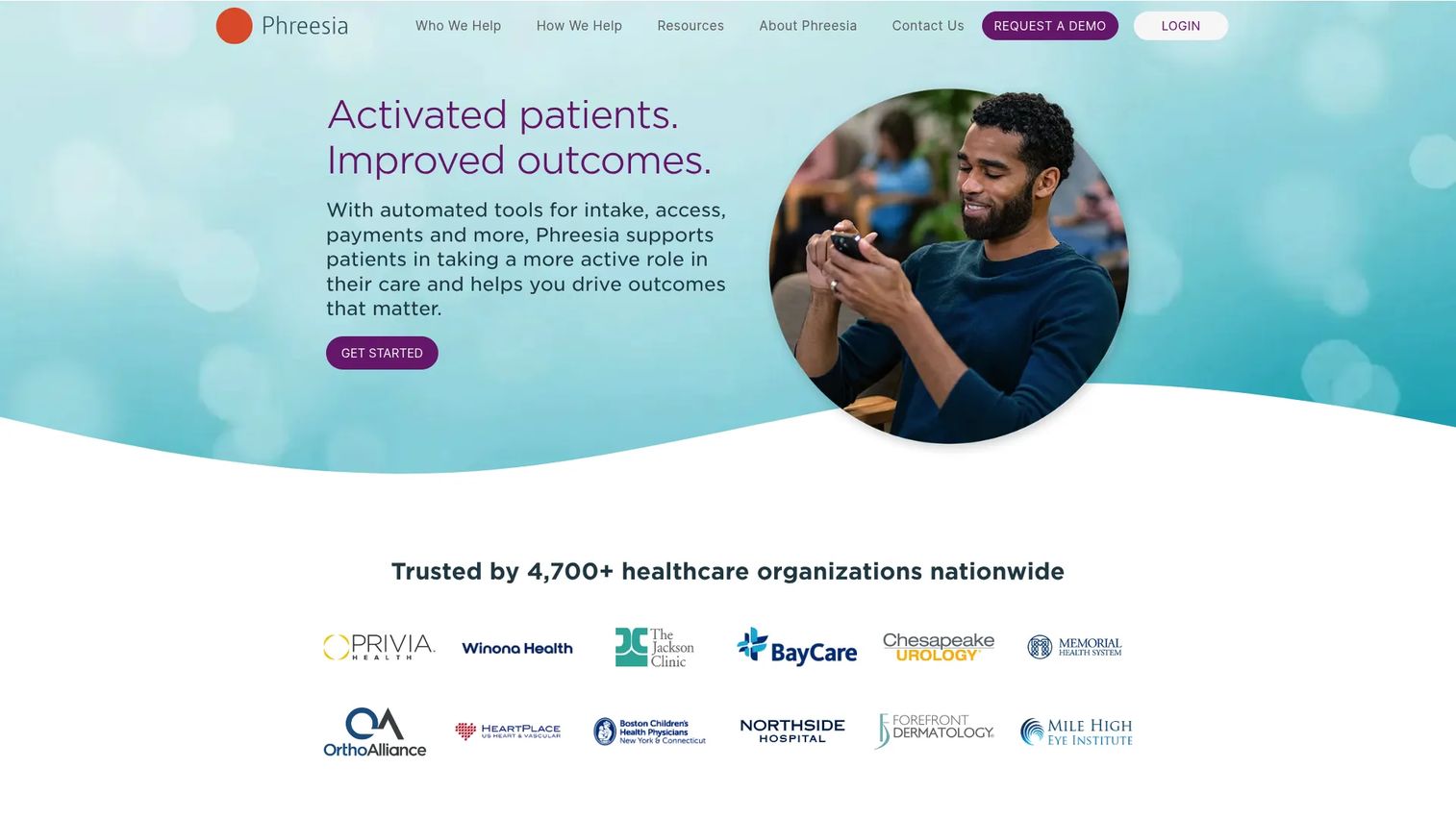
Phreesia is healthcare patient intake and scheduling software built to streamline pre-visit, visit, and payment workflows in one platform. It covers patient registration, AI-powered scheduling with waitlist automation, real-time insurance eligibility, and copay collection. For larger practices and groups that want a single system spanning the full patient journey, Phreesia is one of the most complete options on the market.
The platform's strength is depth across intake and payments. Registration workflows collect and validate patient data before arrival, eligibility checks run in real time, and collections happen at the point of service instead of weeks later through statements. That combination reduces both front desk labor and days in accounts receivable.
Best for: Healthcare organizations that want a patient intake platform to streamline pre-visit, visit, and payment workflows in one place.
Key strengths
- Patient registration and intake: Structured pre-visit workflows collect and validate patient data before the appointment.
- AI-powered scheduling: Self-scheduling and waitlist automation fill open slots and reduce phone volume.
- Eligibility and collections: Real-time insurance verification and point-of-service copay capture protect revenue.
Why choose Phreesia: If your bottleneck is intake volume, dirty registration data, or slow collections, Phreesia consolidates those workflows into one platform rather than stitching together separate reminder, forms, and payment tools. It fits medical groups and organizations that run high intake volume across multiple providers.
Phreesia pricing: Phreesia uses customized pricing and does not publish public prices. The company asks practices to request a free quote. G2 reviewers rate the platform 4.1 out of 5.
2. Clearwave
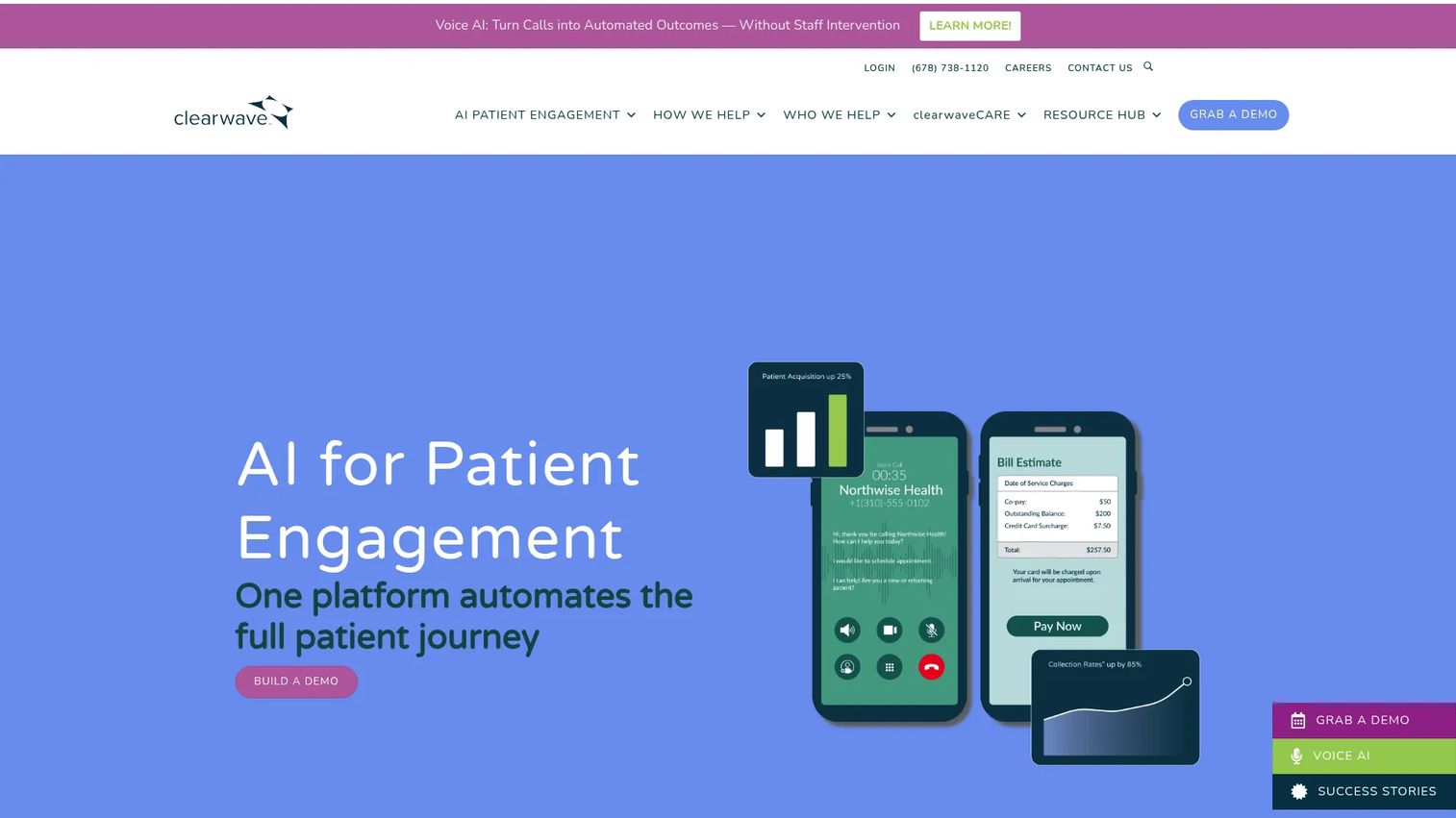
Clearwave is an AI patient engagement platform that automates scheduling, check-in, eligibility, collections, and communications for healthcare organizations. It offers 24/7 patient scheduling and check-in and registration across mobile, tablet, and kiosk. For multi-location and workflow-heavy practices, Clearwave stands out on check-in automation and operational visibility.
The platform is built for volume. Self-scheduling runs around the clock, registration adapts across whatever device a patient uses, and insurance eligibility verification plus point-of-service collections run automatically. Multi-specialty groups use it to standardize how every location handles check-in and eligibility, which cuts variation between sites.
Best for: Multi-specialty healthcare groups and health systems that need patient engagement automation at scale.
Key strengths
- 24/7 patient scheduling: Around-the-clock self-scheduling captures bookings outside office hours.
- Multi-device check-in: Registration works across mobile, tablet, and kiosk for consistent front desk flow.
- Eligibility and collections: Automated insurance verification and point-of-service collections protect revenue.
Why choose Clearwave: If you operate several locations and want every site checking patients in the same way, Clearwave's device-flexible registration and automated eligibility give operations leaders consistency and visibility across the group.
Clearwave pricing: Clearwave customizes pricing to practice size, patient volume, provider count, and requirements, and directs buyers to request a personalized quote. G2 reviewers rate it 4.7 out of 5.
3. QliqSOFT
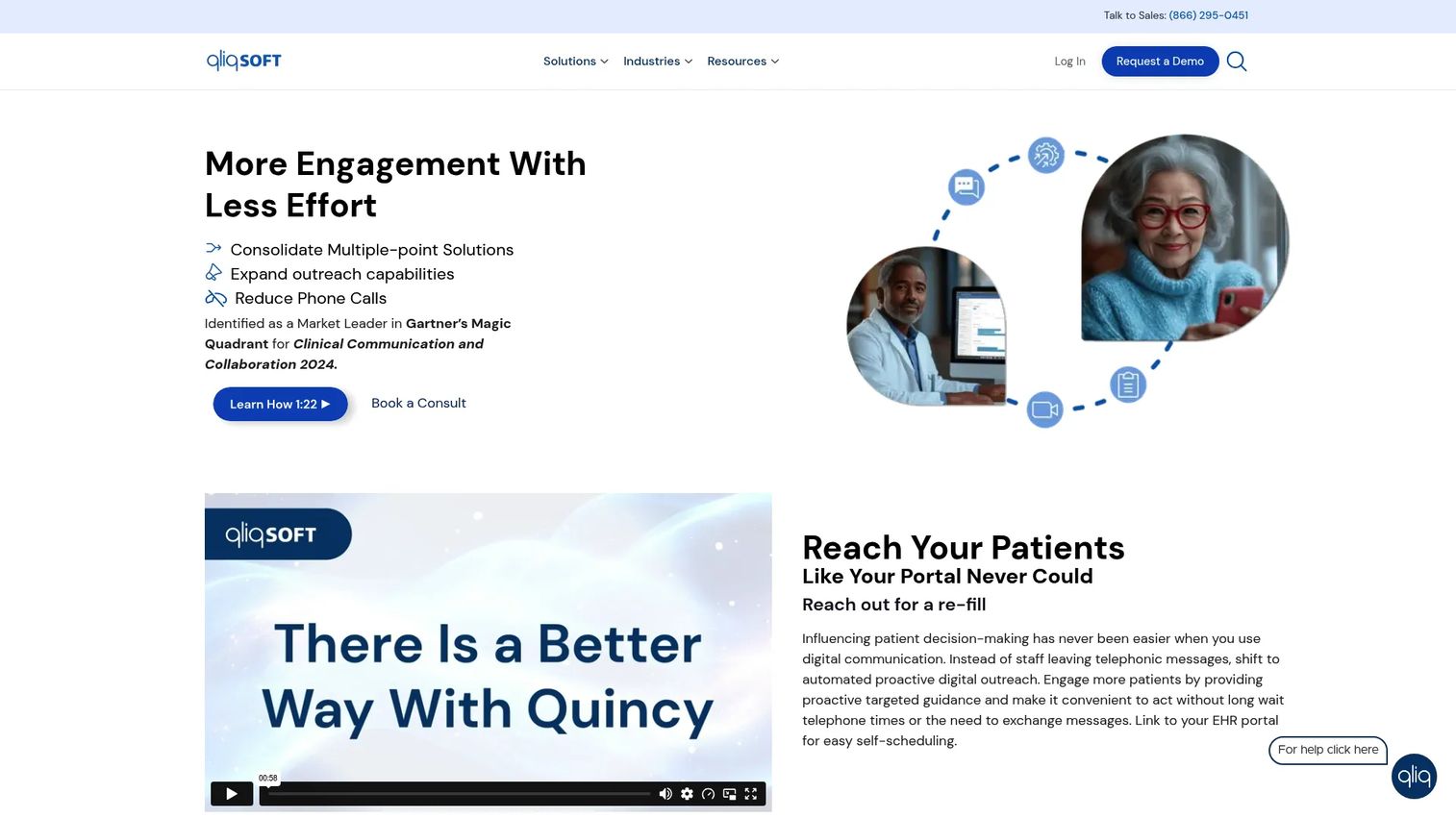
QliqSOFT is healthcare communication software for HIPAA-compliant patient engagement, clinical collaboration, and virtual care. It centers on automated patient communication, streamlined clinical collaboration, and integrated virtual care. For practices that want conversational engagement without forcing patients to download an app, QliqSOFT is a strong fit.
The platform emphasizes secure, app-less messaging. Patients receive and respond to communication through channels they already use, while the practice keeps messaging HIPAA-compliant. QliqSOFT also supports no-code chat workflows, so teams can build and adjust conversational flows without engineering help, and connect them to broader outreach and clinical collaboration use cases.
Best for: Healthcare organizations that need secure patient-provider messaging and workflow automation without a patient app.
Key strengths
- Automated patient communication: Secure, app-less messaging reaches patients on channels they already use.
- Clinical collaboration: Streamlined internal communication keeps care teams coordinated.
- Integrated virtual care: Chat and virtual care workflows extend engagement beyond the office.
Why choose QliqSOFT: If forcing a patient app has stalled adoption before, QliqSOFT's app-less approach removes that barrier. Its no-code workflow builder suits teams that want to shape conversational engagement without developer involvement.
QliqSOFT pricing: QliqSOFT does not display public pricing. A sales representative discusses pricing with prospective customers based on their needs.
4. OhMD
OhMD is AI-powered patient communication software for physician practices. It combines two-way SMS and secure texting with an AI voice assistant that answers patient calls and routes or resolves them by voice or text. The platform also includes EHR and PM integrations, forms, voicemail transcription, web chat, and broadcast messaging. Its clearest angle is reducing the phone burden on smaller and mid-sized practices.
The AI voice assistant is the standout. It picks up patient calls, then routes or resolves them across voice and text, which keeps the front desk from drowning in the phone queue. Paired with HIPAA-compliant texting and broadcast messaging, OhMD gives practices a practical way to handle patient communication across channels.
Best for: Physician practices that need HIPAA-compliant patient texting and AI call handling.
Key strengths
- AI voice assistant: Answers patient calls and routes or resolves them by voice or text.
- Two-way secure texting: HIPAA-compliant SMS keeps patient conversations on record and compliant.
- Broadcast and forms: Broadcast messaging, web chat, and forms extend engagement across channels.
Why choose OhMD: If phone volume is your primary pain and you want AI to absorb routine calls, OhMD is built around that job. Published pricing also makes budgeting easier than with quote-only vendors.
OhMD pricing: OhMD lists three plans. Communicate starts at $300 per month and Automate starts at $500 per month, both billed monthly, with Enterprise on custom pricing. Calling usage is billed separately. There is no free tier.
5. Klara
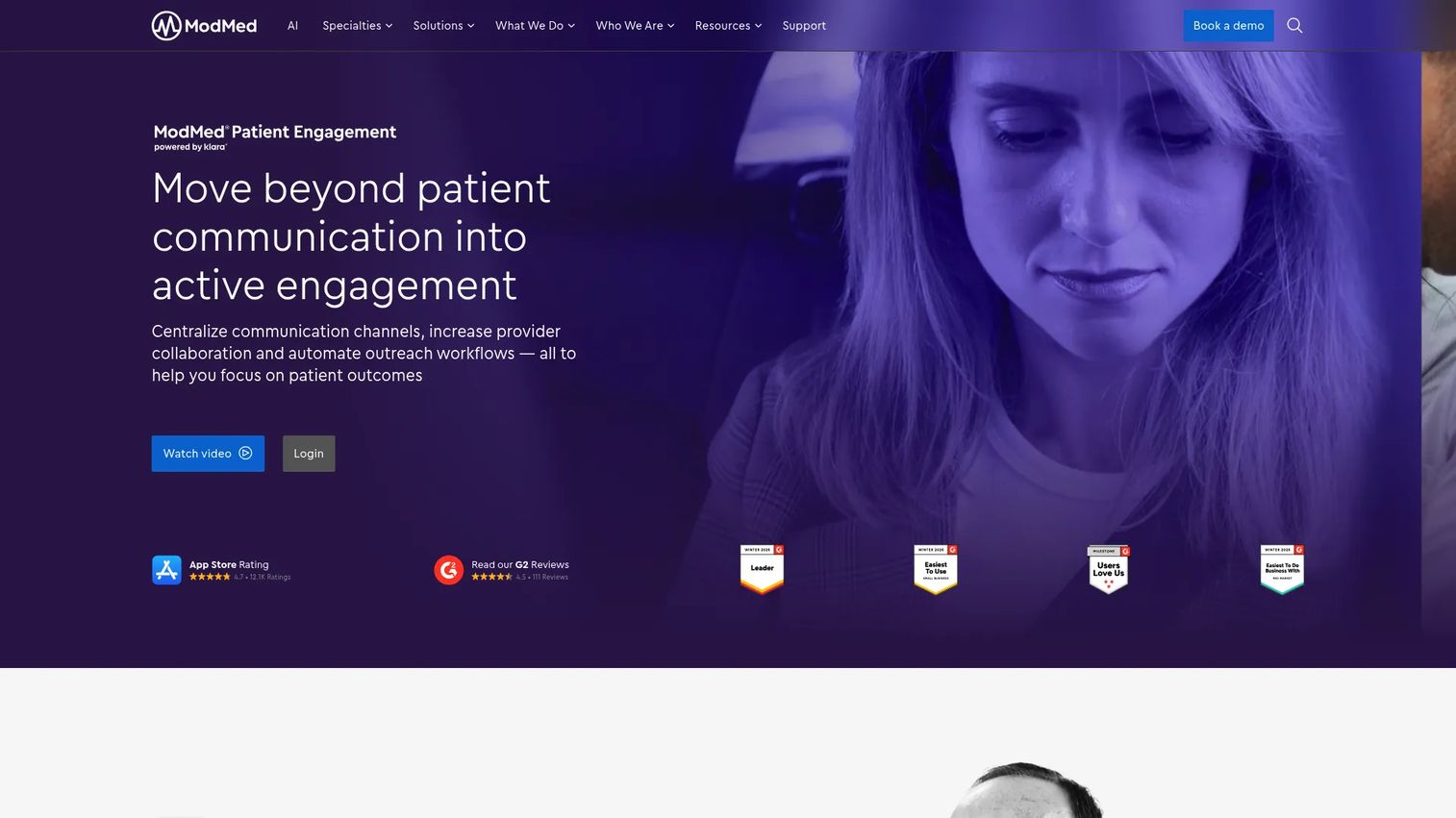
Klara focuses on patient messaging, coordination, and front desk automation. It brings patient interactions into a single communication workflow so staff spend less time juggling phone calls, voicemails, and disconnected messages. For teams that want stronger operational communication and intake coordination, Klara centers the conversation around the patient thread.
The platform's value is in consolidation. Patient messages, reminders, and coordination flow through one place, which reduces the back-and-forth that eats front desk time. That helps practices streamline how they route questions, confirm appointments, and hand off between staff without losing context.
Best for: Practices that want stronger operational communication and intake coordination in a single messaging workflow.
Key strengths
- Unified patient messaging: Consolidates patient conversations into a single thread and workflow.
- Front desk automation: Reduces manual phone and voicemail handling for staff.
- Intake coordination: Keeps appointment confirmations and handoffs organized in one place.
Why choose Klara: If your team loses time and context switching between phone, voicemail, and scattered messages, Klara's single-thread model brings patient communication together. It suits practices prioritizing operational communication over broad payment or scheduling automation.
Klara pricing: Klara does not publish public pricing. Practices should contact the vendor for a quote based on size and workflow needs.
6. Luma Health
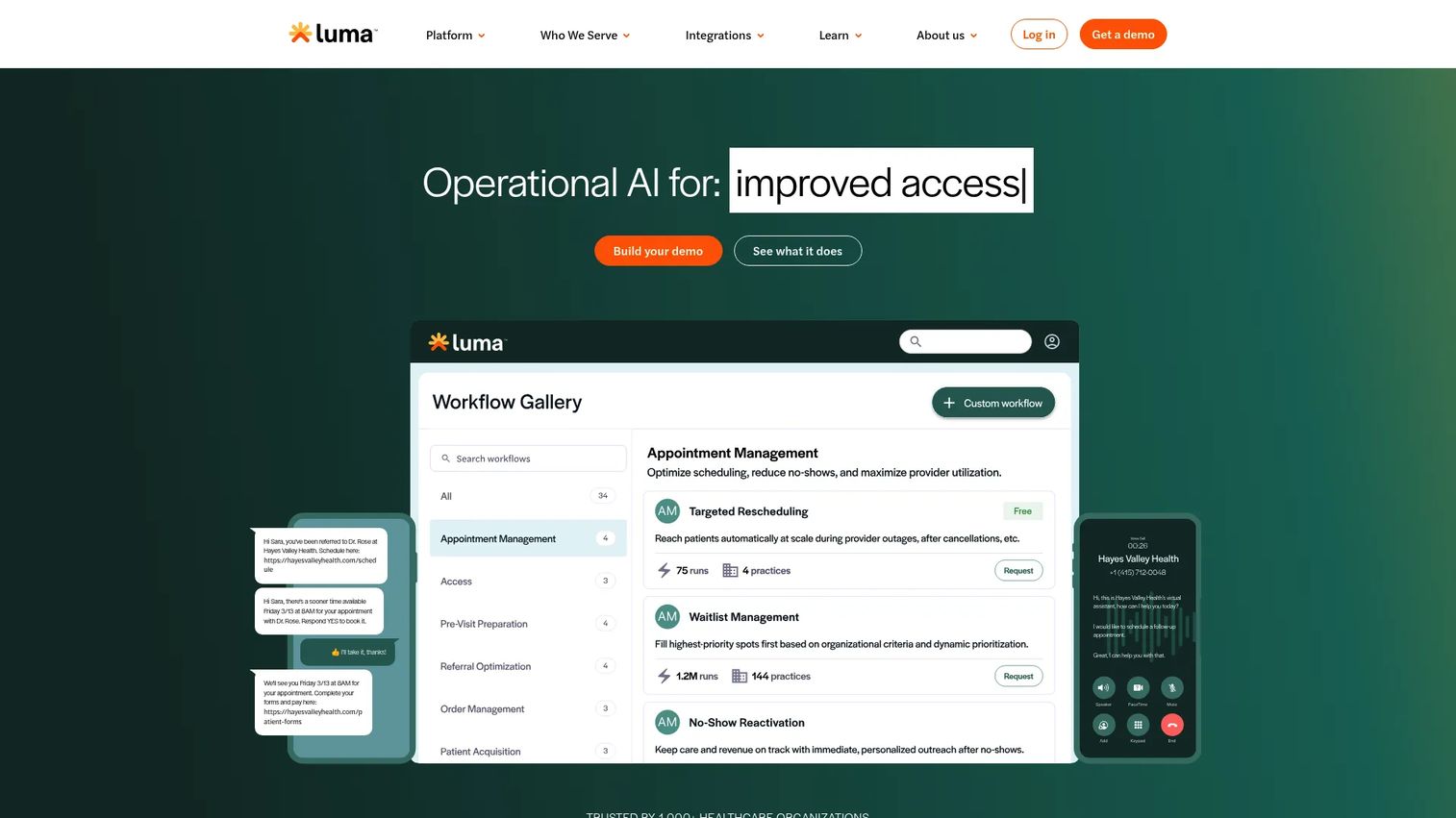
Luma Health is a healthcare operational platform for patient access, engagement, intake, and payments. It offers EHR-integrated scheduling and referrals, two-way messaging with AI-powered web chat, and intake forms with check-in and eligibility and payments workflows. Its focus on patient access and campaign-driven engagement makes it a strong fit for health systems and clinics automating the full journey.
Luma Health's differentiator is access management. EHR-integrated scheduling and referral workflows keep patients moving through the system, while AI web chat and two-way messaging handle communication. Campaign-driven outreach pulls patients back for preventive care, so the platform works across acquisition, access, and retention rather than a single stage.
Best for: Health systems and clinics that want to automate patient access and communication workflows.
Key strengths
- EHR-integrated scheduling: Scheduling and referral workflows sync directly with the system of record.
- Two-way messaging and AI chat: Automated web chat and texting handle patient communication at scale.
- Intake and payments: Forms, check-in, eligibility, and payments workflows cover pre- and post-visit steps.
Why choose Luma Health: If patient access and preventive care outreach are your priorities, Luma Health's referral and campaign workflows are built for that motion. Deep EHR integration suits larger clinics and systems that need scheduling tied to the record.
Luma Health pricing: Luma Health does not publish public pricing and uses a demo and contact-sales model. G2 reviewers rate the platform 4.8 out of 5.
7. Solutionreach
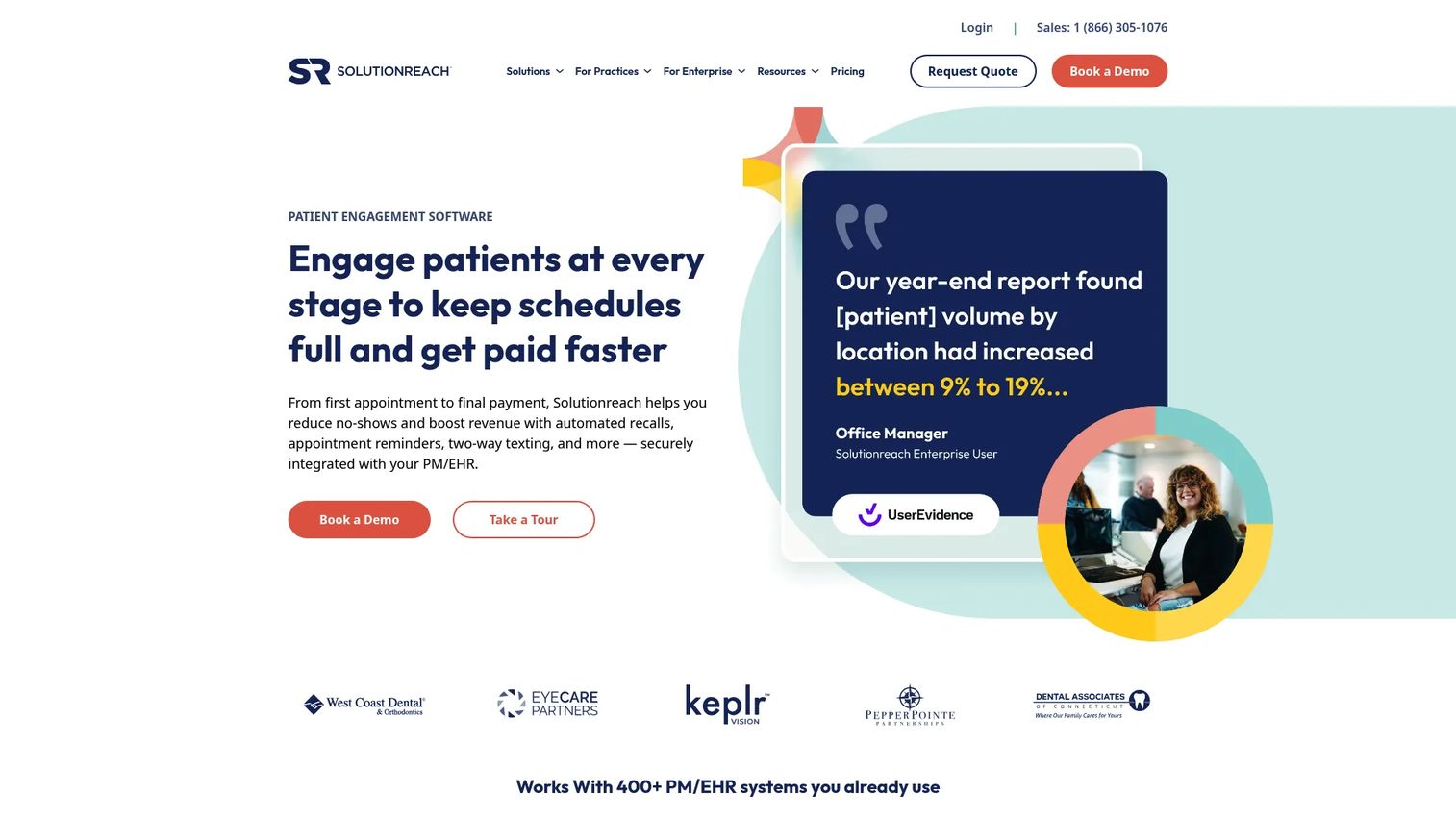
Solutionreach is patient engagement software for healthcare practices, built around communication and retention workflows. It offers two-way texting, appointment reminders, and patient check-in with digital intake. For practices that care about follow-up, recalls, and reputation, Solutionreach leans into the after-visit and between-visit stages.
The platform's strength is retention. Automated reminders reduce no-shows, recall campaigns pull overdue patients back in, and satisfaction and reputation workflows help practices stay ahead of reviews. Two-way texting keeps the conversation open between visits, which is where many practices lose contact with patients.
Best for: Healthcare practices that want automated patient communication and retention workflows.
Key strengths
- Two-way texting: Keeps patient conversations open between appointments.
- Appointment reminders: Automated reminders reduce no-shows and missed visits.
- Check-in and intake: Digital check-in and intake streamline arrival workflows.
Why choose Solutionreach: If your priority is keeping patients engaged after the visit through reminders, recalls, and reputation management, Solutionreach is built around retention rather than intake-heavy operations.
Solutionreach pricing: Solutionreach lists Essentials, Plus, and Enterprise tiers, all requiring a quote or sales contact, with annual contract options. Public prices are not shown. G2 reviewers rate it 4.3 out of 5.
8. NexHealth
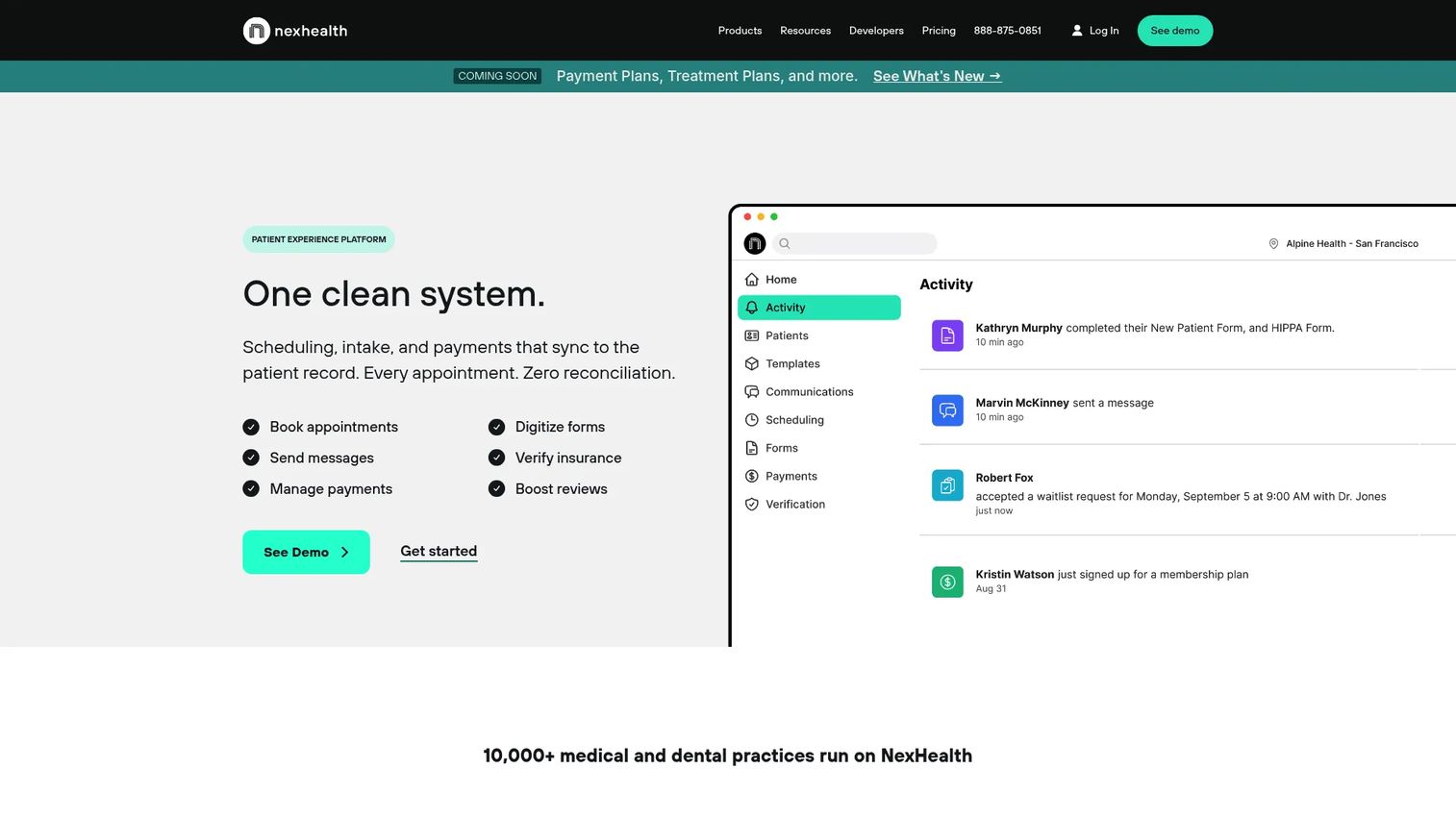
NexHealth is a patient experience platform for healthcare practices covering scheduling, forms, communications, payments, and insurance verification. It offers online booking, one-click recalls, and waitlists, plus digital forms, a forms widget, and an iPad app. For practices that want a modern patient experience with strong administrative support, NexHealth ties intake and operations together.
The platform is built for administrative flow. Online booking and waitlists keep the schedule full, one-click recalls bring patients back, digital forms move intake off paper, and payments plus insurance verification round out the workflow. Both medical and dental practices use it to run scheduling, intake, messaging, and payments in one system.
Best for: Medical and dental practices that want scheduling, intake, messaging, payments, and insurance checks in one system.
Key strengths
- Scheduling and recalls: Online booking, one-click recalls, and waitlists keep the calendar full.
- Digital forms: Forms, a widget, and an iPad app move intake off paper.
- Payments and verification: Communications, payments, and insurance verification complete the workflow.
Why choose NexHealth: If you want a modern, patient-friendly front end backed by solid administrative workflows, NexHealth covers scheduling through payments in one platform. Its dental and medical fit makes it flexible across practice types.
NexHealth pricing: NexHealth offers custom plans and asks practices to request a quote; public prices are not shown. G2 reviewers rate the platform 4.8 out of 5.
9. Artera
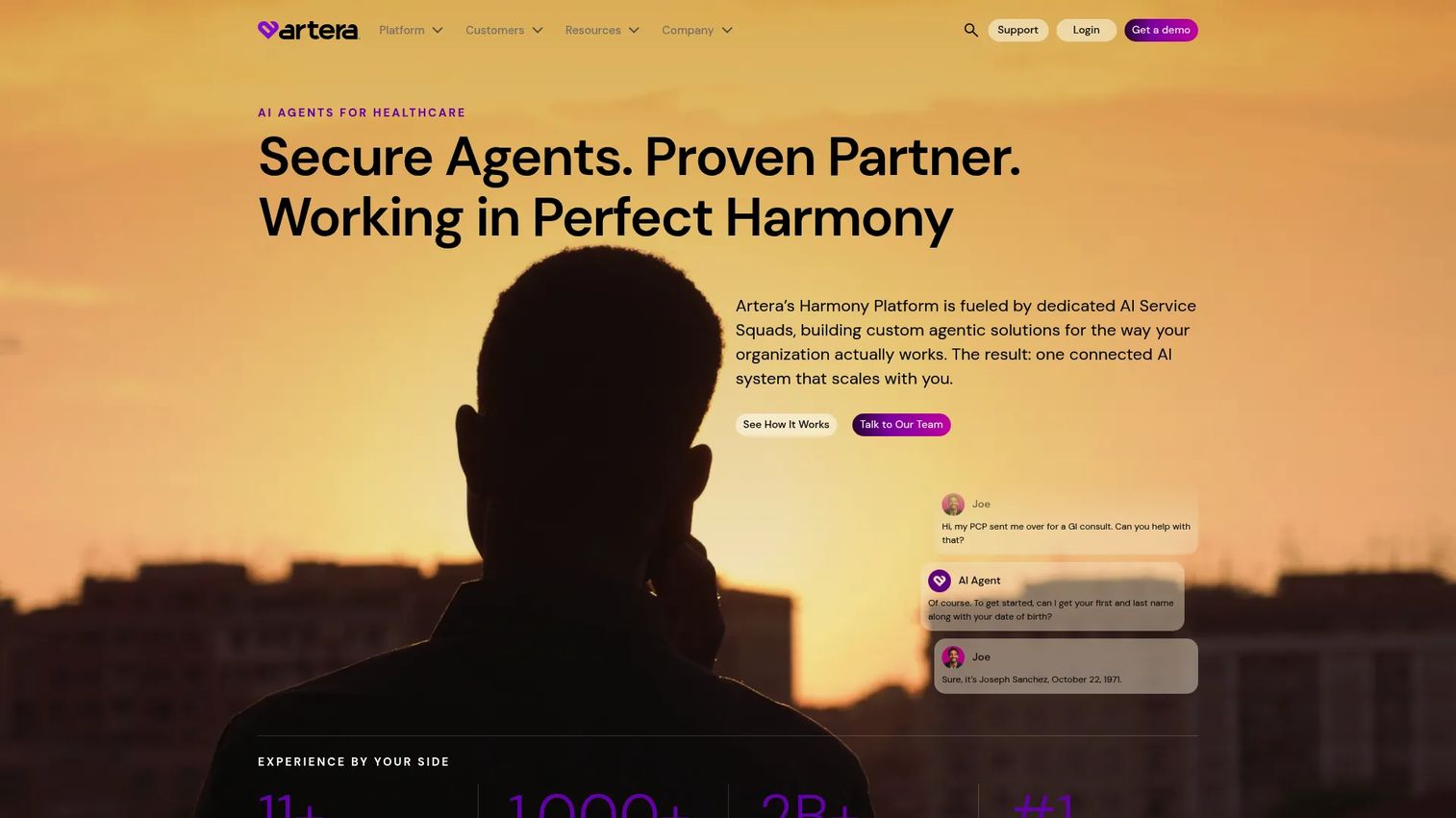
Artera is an AI-powered patient communication platform for healthcare providers. It offers AI agents for patient communications across voice, text, and web, plus scheduling, intake, billing, and post-visit workflows, all with HIPAA-compliant messaging and security features. Its focus on coordinated messaging at scale makes it a fit for large practices and health systems.
Artera is built for volume and coordination. AI agents handle communication across voice, text, and web, which lets health systems manage patient messaging consistently across many locations and service lines. Scheduling, intake, billing, and post-visit workflows extend that communication layer across the full journey.
Best for: Healthcare organizations that need patient communication automation across large, distributed operations.
Key strengths
- Multi-channel AI agents: Handle patient communications across voice, text, and web.
- Full-journey workflows: Scheduling, intake, billing, and post-visit messaging in one platform.
- HIPAA-compliant security: Compliant messaging and security features built for scale.
Why choose Artera: If you run a large practice or health system that needs coordinated patient messaging across many sites, Artera's multi-channel AI agents are designed for that scale rather than single-office communication.
Artera pricing: Artera does not publish public pricing and uses a contact-sales model. G2 reviewers rate the platform 4.8 out of 5.
10. Weave
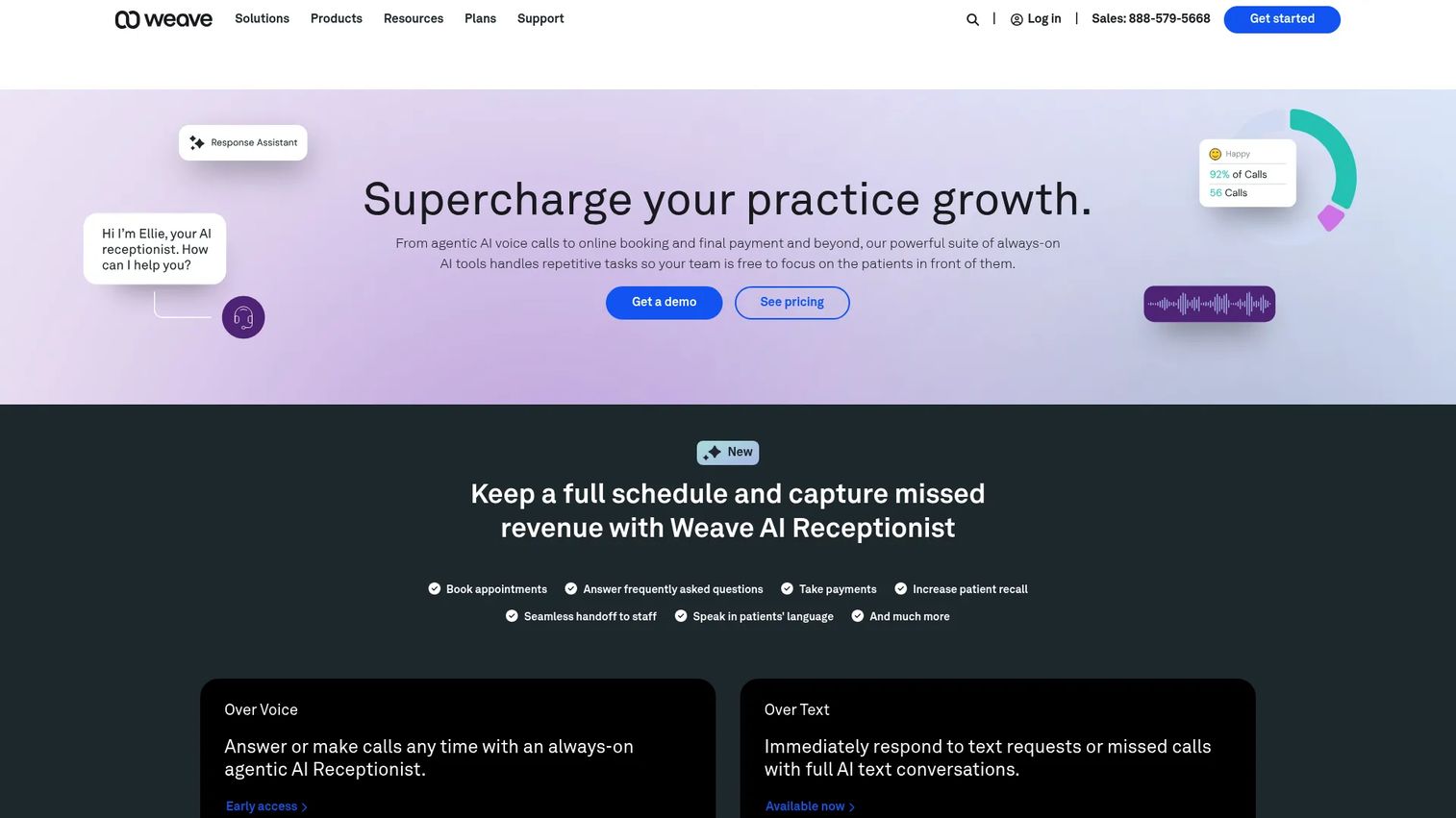
Weave is a healthcare practice communication and patient engagement platform that combines phone and messaging in one system. It offers VoIP phones, two-way text messaging, and appointment reminders and confirmations. For practices that want a communication layer spanning calls and messages, Weave unifies the channels the front desk uses most.
Weave's strength is bringing the phone system and patient messaging together. VoIP calling, two-way texting, and automated reminders live in one place, so staff handle calls and texts from the same interface. Published starting pricing also makes it easier to budget than quote-only platforms.
Best for: Healthcare and dental practices that want an all-in-one communication platform across calls and messages.
Key strengths
- VoIP phones: Integrated calling ties the phone system to patient records and messaging.
- Two-way text messaging: Patients confirm, reschedule, and ask questions by text.
- Reminders and confirmations: Automated appointment reminders reduce no-shows.
Why choose Weave: If your practice wants one system for both phone and text rather than separate tools, Weave's combined communication layer fits front-desk-heavy operations. Public starting pricing helps smaller practices plan.
Weave pricing: Weave publicly lists Pro, Elite, and Ultimate plans with pricing starting from $199 per month, billed monthly. Exact per-tier prices are not publicly shown, and there is no free tier. G2 reviewers rate the platform 4.6 out of 5.
What to look for when choosing patient engagement software
The right platform depends on your workflow, not the longest feature list. Weigh these criteria against your actual bottleneck.
Workflow coverage across the journey
Map the platform to your patient journey before comparing features. A practice drowning in phone volume needs different tools than one leaking revenue through slow collections. Confirm the platform handles the stages where you lose the most time or money, whether that is scheduling, intake, payments, or outreach.
EHR and PMS integration depth
Integration is often the make-or-break criterion. A platform that syncs bidirectionally with your EHR and practice management system saves staff from double entry and keeps data clean. Ask which specific systems the vendor supports, whether the sync is real-time, and what implementation involves. Shallow integration undermines even the best communication features.
HIPAA compliance and data handling
Any platform touching patient data must support HIPAA-compliant patient messaging and secure data handling. Ask for security documentation, a business associate agreement, and details on how patient data is stored and transmitted. Compliance depends on both the vendor and how you configure the tool, so verify both.
Usability and staff adoption
The best workflow automation fails if staff will not use it. Evaluate how quickly your front desk can learn the interface and how much training rollout requires. Involve the people who will use it daily in the demo, because their buy-in determines whether the platform actually reduces work.
Conclusion
There is no single best patient engagement platform, only the best fit for your bottleneck. If intake volume and collections are the problem, Phreesia and Clearwave lead on registration, eligibility, and payments. If phone volume and communication are the pain, OhMD, Weave, and Klara center the conversation. For patient access and preventive care outreach, Luma Health and Solutionreach are built around access and retention. For coordinated messaging across a large system, Artera scales across channels, while NexHealth ties scheduling, forms, and payments into a modern patient experience.
The move now is not to pick a universal winner. It is to name your two or three worst workflow bottlenecks, shortlist the platforms that target them directly, and put each one in front of the staff who will use it every day. Run the demo against your real numbers, no-show rate, days in AR, front desk call volume, and let the workflow decide.
FAQs
Patient engagement software automates communication and administrative workflows across the patient journey. It handles scheduling and self-booking before the visit, digital intake and eligibility at arrival, two-way texting and reminders during care, payments afterward, and recall and outreach campaigns between visits. The goal is to reduce front desk labor, cut no-shows, and keep patients moving through the practice without manual chasing.
Pricing varies widely by practice size, the modules you enable, and integration requirements. Many patient engagement software companies use custom or quote-based pricing, so exact figures depend on your setup. A few vendors publish starting prices; OhMD lists plans from $300 per month and Weave starts from $199 per month. For most enterprise-grade platforms, expect to request a personalized quote.
The core benefits are fewer no-shows through reminders and self-scheduling, less staff burden through digital intake and automated communication, stronger collections through point-of-service payments and balance messaging, and better follow-through through recalls and preventive care outreach. Together these reduce administrative cost while improving both revenue capture and patient retention.
Integration is usually one of the most important buying criteria. Most platforms connect to common EHR and practice management systems, but depth varies. Some offer real-time bidirectional sync, while others push data one way or on a delay. Confirm which specific systems a vendor supports, how the sync works, and what implementation requires before committing.
Prioritize the workflows that match your bottleneck: scheduling and self-booking, digital intake and registration, two-way texting and reminders, payments and collections, recall and outreach campaigns, analytics and satisfaction surveys, and HIPAA-compliant data handling. Then weigh integration depth with your EHR and how quickly staff can adopt the interface.
Compliance depends on the vendor, your configuration, and how you use the tool. Reputable platforms support HIPAA-compliant patient messaging, sign a business associate agreement, and document their security practices. Before buying, ask for security documentation, confirm data handling and encryption, and verify that the way your team plans to use the tool stays within compliance requirements.
The best choice depends on practice size and workflow rather than a single universal winner. Larger groups with heavy intake and collections often fit Phreesia or Clearwave. Smaller and mid-sized practices focused on communication lean toward OhMD, Weave, or Klara. Health systems automating access and outreach at scale gravitate to Luma Health or Artera.
Patient communication software handles one layer of the stack: messaging, texting, reminders, and calls. A patient engagement platform is broader, covering scheduling, intake, payments, outreach, and analytics on top of communication. Communication is a component of engagement, so a full platform connects those messaging functions to the rest of the patient journey rather than operating in isolation.